Category: iWorld

  • ‘Udta Punjab’ exclusively available on Netflix Worldwide

    ‘Udta Punjab’ exclusively available on Netflix Worldwide

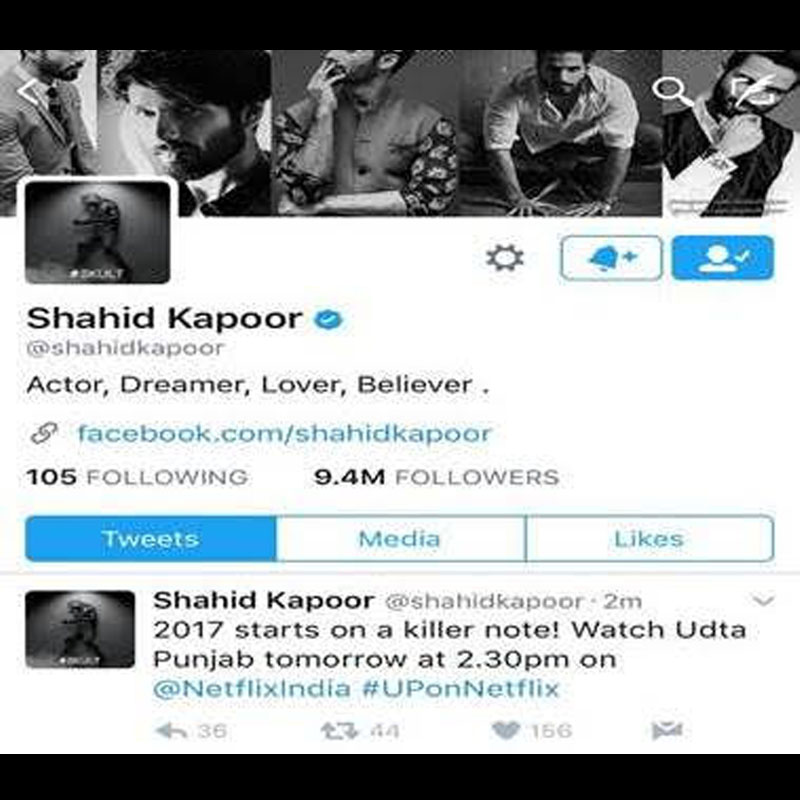
    MUMBAI: Netflix is the exclusive home of critically-acclaimed crime film Udta Punjab from 1 January. Netflix members in 190 countries around the world will be able to stream the original film for the first time after its theatrical release.

    Udta Punjab tells the story of socio-economic decline in the affluent north Indian state of Punjab due to drug abuse. Shahid Kapoor, Kareena Kapoor, Alia Bhatt and Diljit Dosanjh in the lead roles play characters from different walks of life, and the film journeys into the artificial highs and the real lows they face in their fight against drugs.

    Above all, the movie explores that the famed Punjabi spirit – you may be knocked down, but this never-say-die attitude means you’ll have the audacity to look drugs in the eye and say, “Drugs di maa di!”

    Directed by Abhishek Chaubey, Udta Punjab is produced by Balaji Motion Pictures in collaboration with Phantom Productions.

    Video:

    Watch the trailer here.

  • ‘Udta Punjab’ exclusively available on Netflix Worldwide

    ‘Udta Punjab’ exclusively available on Netflix Worldwide

    MUMBAI: Netflix is the exclusive home of critically-acclaimed crime film Udta Punjab from 1 January. Netflix members in 190 countries around the world will be able to stream the original film for the first time after its theatrical release.

    Udta Punjab tells the story of socio-economic decline in the affluent north Indian state of Punjab due to drug abuse. Shahid Kapoor, Kareena Kapoor, Alia Bhatt and Diljit Dosanjh in the lead roles play characters from different walks of life, and the film journeys into the artificial highs and the real lows they face in their fight against drugs.

    Above all, the movie explores that the famed Punjabi spirit – you may be knocked down, but this never-say-die attitude means you’ll have the audacity to look drugs in the eye and say, “Drugs di maa di!”

    Directed by Abhishek Chaubey, Udta Punjab is produced by Balaji Motion Pictures in collaboration with Phantom Productions.

    Video:

    Watch the trailer here.

  • Telecom to be among 2017’s top employment generators; rise in women pro predicted

    MUMBAI: The Year 2017 is bringing good news for job seekers, with an expected 10-15 per cent rise in hiring activity in 2017 as reported by over 2000 employers across India Inc. according to a private survey. This points towards a cheerful year for the hiring industry, as employers’ expectations are greater than what they were last year.

    In the survey last year (2015-16), employers had anticipated a lower 5-10 per cent rise in hiring while now they are upbeat about seeing a 10-15 per cent rise in 2017. “There is a clear paradigm shift in the Indian economy, with the support of the government’s efforts and focus on IT, entrepreneurship and manufacturing, India Inc. is steering itself for strong growth that is seen to be impacting job growth and employment in the country next year,” says Times Business Solutions head of strategy Nilanjan Roy.

    In the TimesJobs survey 2016-17, 30 per cent organisations felt the IT and telecom sectors will hire the biggest numbers, 20 per cent said the healthcare sector and 15 per cent said that manufacturing will be the top employment generator. Another 15 per cent voted for automobile and 10 per cent for infrastructure and retail sectors.

    The focus on gender diversity will also continue to take shape in 2017, as highlighted by India Inc. in the 2016-17 study. Over 70 per cent organisations plan to increase the ratio of women in their workforce. This is a significant 10 per cent rise in employer expectations as compared to that in 2016, showing a heightened awareness of the gender diversity challenge faced by India Inc. About 60 per cent employers foresee a higher demand for women professionals at the middle level positions, 20 per cent see maximum hires at the entry level while another 20 percent say they will hire women professional for CXO level leadership roles in 2017.

    Nearly 25% of organisations voted that IT would be the most sought after profile followed by another 20 per cent organizations that feel the demand for sales, business development professionals and research and development profiles will rise considerably in 2017. About 15 per cent organisations said that they expect marketing and advertising professionals to see maximum demand in 2017.

    The most optimistic hiring expectations are for middle-level professionals, according to the survey 2016-17. The study reveals professionals with 5-10 years of experience will see the maximum demand across sectors. Nearly 30 per cent of the organisations surveyed stated mid-level managers with 5-10 years of experience would be most sought in 2017. About 20 per cent employers see greater demand for young professionals with less than 2 years of experience in 2017 while 15 per cent said experienced professionals with 10-20 years of experience will be most in demand.

    While positive hiring activity is being reported in Tier I cities and state capitals, the major metros will continue to be the top job hubs in 2017 according to the survey. Nearly 45 per cent organisations said job opportunities will be maximum in metro cities, including, Delhi-NCR, Mumbai, Bengaluru and Chennai while 40 per cent see a rise in employment opportunities in Tier I locations. Overall, the survey 2016-17 reports the second and fourth-quarters of 2017 as the hottest for hiring in India Inc.

  • Telecom to be among 2017’s top employment generators; rise in women pro predicted

    MUMBAI: The Year 2017 is bringing good news for job seekers, with an expected 10-15 per cent rise in hiring activity in 2017 as reported by over 2000 employers across India Inc. according to a private survey. This points towards a cheerful year for the hiring industry, as employers’ expectations are greater than what they were last year.

    In the survey last year (2015-16), employers had anticipated a lower 5-10 per cent rise in hiring while now they are upbeat about seeing a 10-15 per cent rise in 2017. “There is a clear paradigm shift in the Indian economy, with the support of the government’s efforts and focus on IT, entrepreneurship and manufacturing, India Inc. is steering itself for strong growth that is seen to be impacting job growth and employment in the country next year,” says Times Business Solutions head of strategy Nilanjan Roy.

    In the TimesJobs survey 2016-17, 30 per cent organisations felt the IT and telecom sectors will hire the biggest numbers, 20 per cent said the healthcare sector and 15 per cent said that manufacturing will be the top employment generator. Another 15 per cent voted for automobile and 10 per cent for infrastructure and retail sectors.

    The focus on gender diversity will also continue to take shape in 2017, as highlighted by India Inc. in the 2016-17 study. Over 70 per cent organisations plan to increase the ratio of women in their workforce. This is a significant 10 per cent rise in employer expectations as compared to that in 2016, showing a heightened awareness of the gender diversity challenge faced by India Inc. About 60 per cent employers foresee a higher demand for women professionals at the middle level positions, 20 per cent see maximum hires at the entry level while another 20 percent say they will hire women professional for CXO level leadership roles in 2017.

    Nearly 25% of organisations voted that IT would be the most sought after profile followed by another 20 per cent organizations that feel the demand for sales, business development professionals and research and development profiles will rise considerably in 2017. About 15 per cent organisations said that they expect marketing and advertising professionals to see maximum demand in 2017.

    The most optimistic hiring expectations are for middle-level professionals, according to the survey 2016-17. The study reveals professionals with 5-10 years of experience will see the maximum demand across sectors. Nearly 30 per cent of the organisations surveyed stated mid-level managers with 5-10 years of experience would be most sought in 2017. About 20 per cent employers see greater demand for young professionals with less than 2 years of experience in 2017 while 15 per cent said experienced professionals with 10-20 years of experience will be most in demand.

    While positive hiring activity is being reported in Tier I cities and state capitals, the major metros will continue to be the top job hubs in 2017 according to the survey. Nearly 45 per cent organisations said job opportunities will be maximum in metro cities, including, Delhi-NCR, Mumbai, Bengaluru and Chennai while 40 per cent see a rise in employment opportunities in Tier I locations. Overall, the survey 2016-17 reports the second and fourth-quarters of 2017 as the hottest for hiring in India Inc.

  • Copyright Force finally here to fight online piracy

    Copyright Force finally here to fight online piracy

    NEW DELHI: The Copyright Force is finally here to fight online content piracy, which has been bleeding the Indian content companies, from film, music and TV world, billions of rupees in revenues as pirates have been making hay.

    It seems in co-ordinated movements by the Indian government and the industry, plans have been initiated to seriously fight the online piracy menace. While the Department of Industrial Policy and Promotion (DIPP), under Commerce Ministry, earlier this week discussed the copyright and piracy issues with stakeholders, industry body FICCI sent out notes to stakeholders to be part of  Copyright Force, a unique cross-industry coalition.

    Globally online piracy of content costs trillions of dollars that have prompted several industry organisations to focus specifically on arresting online piracy. According to Dubai-based GO-Gulf, there are $12.5 billion in economic losses each year due to piracy in the music industry alone; 71,060 jobs are lost in the United States every year due to piracy and $2.7 billion in workers’ earnings are lost each year due to online piracy. Interestingly, according to the research, India is ranked 5th (60 per cent) in the Top 10 countries with online piracy, while China tops the list with 91 per cent piracy.

    The DIPP meeting of stakeholders, including producers from film and TV industry, was held to discuss issues related to copyright infringement and ways to tackle online piracy. The meeting, chaired DIPP joint secretary Rajiv Aggarwal, not only appreciated efforts being initiated by the Telangana Intellectual Property Crime Unit or TIPCU to curb piracy of copyright protected material, but expressed the need to adopt this model by other states also to check the menace within their respective jurisdiction.

    Incidentally, TIPCU is a motivated version of Police Intellectual Property Crime Unit (PIPCU), funded by the Intellectual Property Office of the UK and run by the City of London Police with a special focus on offences committed online.

    The industry initiative, helmed by FICCI, is on the lines of discussions at DIPP — to facilitate exchange of global best practices, support platforms that encourage B2G and G2B dialogue and encourage initiatives to promote and protect copyright and possibly take action against offenders, along with law enforcement agencies.
    While highlighting the need for a robust copyright eco-system and acknowledging the National IPR Policy was as a step in the right direction, FICCI outlined the objectives of the Copyright Force:

    # Highlight vital role that copyright plays in fostering creativity and culture, stimulating investmentsand economic growth, while serving to enhance the competitiveness of industry and business
    # Encourage innovation and improved consumer experience through legitimate content delivery platforms
    #Address the challenge of piracy that undermines the growth potential of this sector.

    The  Copyright Force, which  will bring together leaders in the fields of film, television, music, media, Internet, technology and OTT content delivery platforms, likely to have its first formal meeting sometime in January 2017. Some of the biggest broadcasting companies in India have been part of initial discussion on the formation of Copyright Force.

    ALSO READ:

    Online pirates beware, Copyright Force on way

    Internet included in broadcasting for purpose of Copyright

  • Copyright Force finally here to fight online piracy

    Copyright Force finally here to fight online piracy

    NEW DELHI: The Copyright Force is finally here to fight online content piracy, which has been bleeding the Indian content companies, from film, music and TV world, billions of rupees in revenues as pirates have been making hay.

    It seems in co-ordinated movements by the Indian government and the industry, plans have been initiated to seriously fight the online piracy menace. While the Department of Industrial Policy and Promotion (DIPP), under Commerce Ministry, earlier this week discussed the copyright and piracy issues with stakeholders, industry body FICCI sent out notes to stakeholders to be part of  Copyright Force, a unique cross-industry coalition.

    Globally online piracy of content costs trillions of dollars that have prompted several industry organisations to focus specifically on arresting online piracy. According to Dubai-based GO-Gulf, there are $12.5 billion in economic losses each year due to piracy in the music industry alone; 71,060 jobs are lost in the United States every year due to piracy and $2.7 billion in workers’ earnings are lost each year due to online piracy. Interestingly, according to the research, India is ranked 5th (60 per cent) in the Top 10 countries with online piracy, while China tops the list with 91 per cent piracy.

    The DIPP meeting of stakeholders, including producers from film and TV industry, was held to discuss issues related to copyright infringement and ways to tackle online piracy. The meeting, chaired DIPP joint secretary Rajiv Aggarwal, not only appreciated efforts being initiated by the Telangana Intellectual Property Crime Unit or TIPCU to curb piracy of copyright protected material, but expressed the need to adopt this model by other states also to check the menace within their respective jurisdiction.

    Incidentally, TIPCU is a motivated version of Police Intellectual Property Crime Unit (PIPCU), funded by the Intellectual Property Office of the UK and run by the City of London Police with a special focus on offences committed online.

    The industry initiative, helmed by FICCI, is on the lines of discussions at DIPP — to facilitate exchange of global best practices, support platforms that encourage B2G and G2B dialogue and encourage initiatives to promote and protect copyright and possibly take action against offenders, along with law enforcement agencies.
    While highlighting the need for a robust copyright eco-system and acknowledging the National IPR Policy was as a step in the right direction, FICCI outlined the objectives of the Copyright Force:

    # Highlight vital role that copyright plays in fostering creativity and culture, stimulating investmentsand economic growth, while serving to enhance the competitiveness of industry and business
    # Encourage innovation and improved consumer experience through legitimate content delivery platforms
    #Address the challenge of piracy that undermines the growth potential of this sector.

    The  Copyright Force, which  will bring together leaders in the fields of film, television, music, media, Internet, technology and OTT content delivery platforms, likely to have its first formal meeting sometime in January 2017. Some of the biggest broadcasting companies in India have been part of initial discussion on the formation of Copyright Force.

    ALSO READ:

    Online pirates beware, Copyright Force on way

    Internet included in broadcasting for purpose of Copyright

  • Holiday season specials on Amazon Prime Video

    Holiday season specials on Amazon Prime Video

    MUMBAI: Amazon Prime Video has the largest selection of latest and exclusive movies and TV shows, ad-free across Indian and Hollywood movies, US TV shows, top/popular Indian and international kids’ shows, award winning Amazon Original shows along with content from top Bollywood, regional, Indian and international studios will be available in one location/service.

    This holiday season, catch the excitement with binge-worthy shows, kids’ favorites, thrill, drama, comedy, suspense and fun all in one place on Amazon Prime Video.

    Highlights:

    Watch the online streaming premieres of the latest movies like Bengali hit film, Zulfiqar and Sidharth Malhotra and Katrina Kaif starrer, Baar Baar Dekho.  Watch the latest season of Man in the High Castle season 2, only on Amazon Prime Video.

    Celebrate Salman Khan’s birthday with Amazon Prime Video. Catch him all this week with smash hits like Sultan, Ek Tha Tiger, Prem Ratan Dhan Payo, Ready or get nostalgic with his popular classics such as Maine Pyar Kiya, Andaz Apna Apna or Hum Saath Saath Hain.   

    Few Highlighted shows in the line-up

    Mr. Robot

    Follow Elliot, a young programmer working as a cyber-security engineer by day, and a vigilante hacker by night. Watch the exciting drama-thriller, Mr. Robot, only on Amazon Prime Video.

    Seinfeld

    Watch the continuing misadventures of neurotic New York stand-up comedian Jerry Seinfeld and his equally neurotic New York friends in the comic drama Seinfeld.

    Mad Men

    Don Draper has an exceptional professional life but a wavering personal life. Watch him try to maintain a balance in the amazing drama series, Mad Men, only on Amazon Prime Video.

    Mozart in the Jungle

    Love, money, ambition and music intertwine in Mozart in the Jungle, a half hour comedic drama that looks at finding yourself and finding love while conquering New York City. Catch this lovely ride only on Amazon Prime Video.

    Kids’ Special Line Up

    Kids have a lot to look forward to this vacation on Amazon Prime Video.  With a curated line-up that includes top Indian and international shows and movies and much-loved animated series like Chhota Bheem, Oggy and the Cockroaches, Mighty Raju, Super Bheem, Swami Ayappan, Kid Krrish, Doraemon, Shin chan, SpongeBob SquarePants, Ninja Hattori and much more.

    Tumble leaf

    Watch the explorations of a blue fox named Fig and his friends go on adventures and learn how things work in the world, only on Amazon Prime Video.

    Wishenpoof

    Bianca is a young girl with the power to make wishes come true. How does she use this gift? To find out, watch Wishenpoof only on Amazon Prime Video.

    Gortimer Gibbons

    Gortimer and his two best friends navigate life on a magical street. Watch this live action series with your kids, only on Amazon Prime Video.


  • Holiday season specials on Amazon Prime Video

    Holiday season specials on Amazon Prime Video

    MUMBAI: Amazon Prime Video has the largest selection of latest and exclusive movies and TV shows, ad-free across Indian and Hollywood movies, US TV shows, top/popular Indian and international kids’ shows, award winning Amazon Original shows along with content from top Bollywood, regional, Indian and international studios will be available in one location/service.

    This holiday season, catch the excitement with binge-worthy shows, kids’ favorites, thrill, drama, comedy, suspense and fun all in one place on Amazon Prime Video.

    Highlights:

    Watch the online streaming premieres of the latest movies like Bengali hit film, Zulfiqar and Sidharth Malhotra and Katrina Kaif starrer, Baar Baar Dekho.  Watch the latest season of Man in the High Castle season 2, only on Amazon Prime Video.

    Celebrate Salman Khan’s birthday with Amazon Prime Video. Catch him all this week with smash hits like Sultan, Ek Tha Tiger, Prem Ratan Dhan Payo, Ready or get nostalgic with his popular classics such as Maine Pyar Kiya, Andaz Apna Apna or Hum Saath Saath Hain.   

    Few Highlighted shows in the line-up

    Mr. Robot

    Follow Elliot, a young programmer working as a cyber-security engineer by day, and a vigilante hacker by night. Watch the exciting drama-thriller, Mr. Robot, only on Amazon Prime Video.

    Seinfeld

    Watch the continuing misadventures of neurotic New York stand-up comedian Jerry Seinfeld and his equally neurotic New York friends in the comic drama Seinfeld.

    Mad Men

    Don Draper has an exceptional professional life but a wavering personal life. Watch him try to maintain a balance in the amazing drama series, Mad Men, only on Amazon Prime Video.

    Mozart in the Jungle

    Love, money, ambition and music intertwine in Mozart in the Jungle, a half hour comedic drama that looks at finding yourself and finding love while conquering New York City. Catch this lovely ride only on Amazon Prime Video.

    Kids’ Special Line Up

    Kids have a lot to look forward to this vacation on Amazon Prime Video.  With a curated line-up that includes top Indian and international shows and movies and much-loved animated series like Chhota Bheem, Oggy and the Cockroaches, Mighty Raju, Super Bheem, Swami Ayappan, Kid Krrish, Doraemon, Shin chan, SpongeBob SquarePants, Ninja Hattori and much more.

    Tumble leaf

    Watch the explorations of a blue fox named Fig and his friends go on adventures and learn how things work in the world, only on Amazon Prime Video.

    Wishenpoof

    Bianca is a young girl with the power to make wishes come true. How does she use this gift? To find out, watch Wishenpoof only on Amazon Prime Video.

    Gortimer Gibbons

    Gortimer and his two best friends navigate life on a magical street. Watch this live action series with your kids, only on Amazon Prime Video.


  • Hoarded cash is flowing back into financial system, asserts Modi

    Hoarded cash is flowing back into financial system, asserts Modi

    MUMBAI: Economists, and not the government, had floated estimates that Rs 3 lakh crore black money was in circulation and would be extinguished as a result of demonetisation, the prime minister Narendra Modi said commenting on the dichotomy between the fact that almost 90 per cent of the demonetised currency returned to the banks and the perception that the above-stated figure of black money was in circulation.

    In his first interview after the 8 November demonetisation move, Modi has said that the exercise has achieved the goals it had set out, in an interview to India Today.

    In fact the government wanted the black money, which was “hoarded and kept out of the regular transactional economy, by people storing them in suitcases and cupboards or under the mattress” to flow back to the banking system. “This has left behind a permanent financial trail. This changes the game as the black money that did not have an address till now, has been tagged with one.”

    Modi has said that the exercise has achieved the goals it had set out—to attack corruption, black money, counterfeit notes, financing of terrorism and other activities threatening national security. “Decisive outcomes are clearly visible on all these fronts,” said the prime minister in an exclusive interaction with Raj Chengappa.

    “I was well aware of the magnitude and complexity of the challenge we faced in implementation. And I believe we have lived up to the same. It is no small thing that no significant incident of unrest has taken place in the country.”

    The prime minister defended frequent and multiple changes in the notifications regarding the implementation of demonetisation saying that there was a distinction between the government’s Niti (policy) and Ran-niti (execution strategy and tactics) and the two must not be put in the same basket. “The decision of demonetisation which reflects our Niti,is unequivocally clear, unwavering and categorical. Our Ran-niti however, needed to be different, aptly summarized by the age old saying of Tu Daal-Daal, Main Paat-Paat.”

    Modi also came candid about the rationale and timing of this historic yet controversial decision to render nearly 86 per cent of the country’s currency invalid. “We took the decision not for some short-term windfall gain, but for a long-term structural transformation. Our objective was to clean our economy and society of the menace of black money, purging the distrust, artificial pressures and other ills that came with it,” he said.

    Quoting global economists such as James Henry, Kenneth Rogoff and Larry Summers and recommendations of the 1971 Wanchoo Committee, the prime minister averred that the decision to demonetise high value currencies was taken 40 years late. “This step was in fact a critical crisis avoidance measure, as, if we had delayed it any further, the problem and its corresponding correction would have magnified exponentially in size and complexity,” he said.

    Countering the criticism that such a move was unwarranted when the economy was in good shape Modi said that the timing of it was a matter of common sense. “If India’s economy was weak, this decision could not have been made. It was consciously taken when the economy is in good shape, as such a sharp correction could have only been made then to fortify its foundations and give it a further boost.”

    The prime minister also sought to allay fears that country was staring at a cash crisis, which was unlikely to end, even after 30 December deadline. “Regarding printing of notes, the planning and strategy was based on India’s usage and requirements of currency. Very few people know that as per RBI’s evaluation, a substantial part of the Rs 1,000 and Rs 500 notes printed never make it into everyday circulation, and are instead hoarded and stocked away. Furthermore, the common man now has access to a wide variety of alternate digital payment mechanisms ranging from Rupay cards to online wallets and USSD payments,” he said.

    Modi also dismissed the Opposition’s allegation that the decision was a political move keeping an eye on the Assembly election in Uttar Pradesh. “On one hand they say I took this decision for political dividend, and on the other they say the people have been troubled and are deeply unhappy. How can the two go together?”

    The prime minister indicated that the government would carry forward tax reforms reducing the scope of discretion for income tax department officials. “The Revenue Department is already building a system where the entire process of assessment is done on-line without any need for the assesse to appear before the officer… selection of cases for scrutiny will be based on objective evidence rather than the whims and fancies of officers. The aim is to ensure that the honest tax-payer is not harassed or inconvenienced, while the tax-evader is efficiently caught and punished.”

    As the BJP-led NDA government has completed half of its five-year tenure, Modi envisaged his vision for India: “An India where the farmer is happy, the trader is prosperous, every woman is empowered and the youth gainfully employed. An India where every family has a house, and every household has access to the basic amenities of electricity, water and a toilet. An India which is Swachh from all forms of filth.”
  • Hoarded cash is flowing back into financial system, asserts Modi

    Hoarded cash is flowing back into financial system, asserts Modi

    MUMBAI: Economists, and not the government, had floated estimates that Rs 3 lakh crore black money was in circulation and would be extinguished as a result of demonetisation, the prime minister Narendra Modi said commenting on the dichotomy between the fact that almost 90 per cent of the demonetised currency returned to the banks and the perception that the above-stated figure of black money was in circulation.

    In his first interview after the 8 November demonetisation move, Modi has said that the exercise has achieved the goals it had set out, in an interview to India Today.

    In fact the government wanted the black money, which was “hoarded and kept out of the regular transactional economy, by people storing them in suitcases and cupboards or under the mattress” to flow back to the banking system. “This has left behind a permanent financial trail. This changes the game as the black money that did not have an address till now, has been tagged with one.”

    Modi has said that the exercise has achieved the goals it had set out—to attack corruption, black money, counterfeit notes, financing of terrorism and other activities threatening national security. “Decisive outcomes are clearly visible on all these fronts,” said the prime minister in an exclusive interaction with Raj Chengappa.

    “I was well aware of the magnitude and complexity of the challenge we faced in implementation. And I believe we have lived up to the same. It is no small thing that no significant incident of unrest has taken place in the country.”

    The prime minister defended frequent and multiple changes in the notifications regarding the implementation of demonetisation saying that there was a distinction between the government’s Niti (policy) and Ran-niti (execution strategy and tactics) and the two must not be put in the same basket. “The decision of demonetisation which reflects our Niti,is unequivocally clear, unwavering and categorical. Our Ran-niti however, needed to be different, aptly summarized by the age old saying of Tu Daal-Daal, Main Paat-Paat.”

    Modi also came candid about the rationale and timing of this historic yet controversial decision to render nearly 86 per cent of the country’s currency invalid. “We took the decision not for some short-term windfall gain, but for a long-term structural transformation. Our objective was to clean our economy and society of the menace of black money, purging the distrust, artificial pressures and other ills that came with it,” he said.

    Quoting global economists such as James Henry, Kenneth Rogoff and Larry Summers and recommendations of the 1971 Wanchoo Committee, the prime minister averred that the decision to demonetise high value currencies was taken 40 years late. “This step was in fact a critical crisis avoidance measure, as, if we had delayed it any further, the problem and its corresponding correction would have magnified exponentially in size and complexity,” he said.

    Countering the criticism that such a move was unwarranted when the economy was in good shape Modi said that the timing of it was a matter of common sense. “If India’s economy was weak, this decision could not have been made. It was consciously taken when the economy is in good shape, as such a sharp correction could have only been made then to fortify its foundations and give it a further boost.”

    The prime minister also sought to allay fears that country was staring at a cash crisis, which was unlikely to end, even after 30 December deadline. “Regarding printing of notes, the planning and strategy was based on India’s usage and requirements of currency. Very few people know that as per RBI’s evaluation, a substantial part of the Rs 1,000 and Rs 500 notes printed never make it into everyday circulation, and are instead hoarded and stocked away. Furthermore, the common man now has access to a wide variety of alternate digital payment mechanisms ranging from Rupay cards to online wallets and USSD payments,” he said.

    Modi also dismissed the Opposition’s allegation that the decision was a political move keeping an eye on the Assembly election in Uttar Pradesh. “On one hand they say I took this decision for political dividend, and on the other they say the people have been troubled and are deeply unhappy. How can the two go together?”

    The prime minister indicated that the government would carry forward tax reforms reducing the scope of discretion for income tax department officials. “The Revenue Department is already building a system where the entire process of assessment is done on-line without any need for the assesse to appear before the officer… selection of cases for scrutiny will be based on objective evidence rather than the whims and fancies of officers. The aim is to ensure that the honest tax-payer is not harassed or inconvenienced, while the tax-evader is efficiently caught and punished.”

    As the BJP-led NDA government has completed half of its five-year tenure, Modi envisaged his vision for India: “An India where the farmer is happy, the trader is prosperous, every woman is empowered and the youth gainfully employed. An India where every family has a house, and every household has access to the basic amenities of electricity, water and a toilet. An India which is Swachh from all forms of filth.”