Category: iWorld

  • AI writes the next scene in storytelling

    AI writes the next scene in storytelling

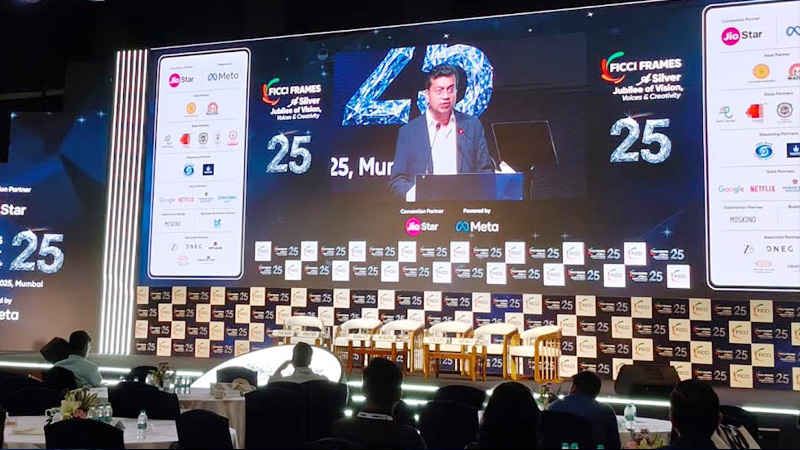
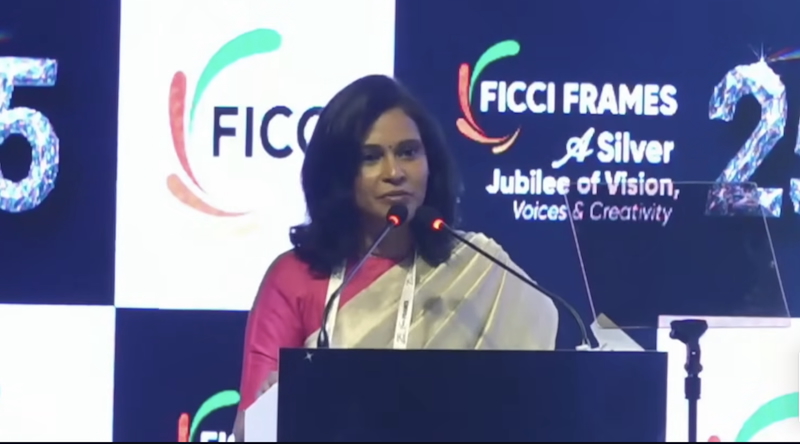
    MUMBAI: From scripts to circuits, storytelling just got smarter. At FICCI Frames 2025, the stage buzzed with ideas as tech titans from Jiohotstar, Meta, and Google explored how artificial intelligence is reshaping the way India watches, interacts, and connects with stories.

    In a session titled “The AI-Powered Media Revolution: From Personalisation to Interactive Storytelling,” the panel featured Jiohotstar chief product officer Bharath Ram, Meta India group director – finserv, media, travel and services Shweta Bajpai, and Google India head of industry for tech, media & telecom Siddharth Shekhar, moderated by NDTV Entertainment editor Abira Dhar

    Bharath Ram highlighted how Jiohotstar’s India-built AI is revolutionising both content and advertising. “The biggest advantage of developing AI solutions in India is the ability to iterate fast, learn fast, and build products rooted in local sensibilities,” he said, adding that Jiohotstar’s vast catalogue, from Special Ops to Bigg Boss, provides fertile ground for AI-driven insights.

    “Our AI helps us decode what truly captures viewers’ imagination and connects brands to audiences more meaningfully,” he explained, noting that smarter prediction models are already enabling advertisers to reach the right audience at the right moment.

    Taking storytelling beyond the screen, Bharath also spoke about the rise of fandom participation, where viewers don’t just watch content, they live it. “People want to be part of the story. The future lies in building interactive experiences that let fans express their passion,” he said, hinting at Jiohotstar’s plans to boost audience engagement across its entertainment properties.

    The discussion painted a vivid picture of a media landscape in motion, one where AI transforms viewers into collaborators, and platforms like Jiohotstar, Meta, and Google are scripting a new era of personalised, participatory entertainment.

    Because in the age of AI, the story doesn’t just unfold, it evolves with you.

  • Vertigo TV gets viewers giddy with global micro & vertical dramas

    Vertigo TV gets viewers giddy with global micro & vertical dramas

    MUMBAI: Vertigo TV, the newly launched vertical drama app from One Take Media, is off to a flying start—grabbing eyeballs with its snackable, binge-worthy content that’s tailor-made for the smartphone generation.

    In just three months, Vertigo TV has packed in over 100 shows, offering a dizzying mix of Chinese, Korean, Japanese, Spanish, English, and Hindi micro-dramas. Each series unfolds in ultra-short, one-to-two-minute episodes, with entire story arcs wrapped up in 40 to 60 instalments—perfect for on-the-go binge sessions.
    vertigo TV

    “The app of today,” as founder and CEO Anil Khera calls it, Vertigo TV mirrors a fast-twitch attention economy where Gen Z and millennials crave instant storytelling hits without the drag. Every drama is shot vertically, optimised for quick breaks, commutes, or those between-meeting scrolls.

    Built to hook viewers within 10 seconds, the app’s catalogue pairs high-octane plots with slick production values and a global-meets-local flavour. Subtitled international dramas sit alongside desi originals, giving Indian audiences a front-row seat to the world’s fastest-growing storytelling trend.

    Priced at Rs 499 a year, Vertigo TV is now live on Android and iOS, and ready to rattle India’s crowded streaming scene. With its bold micro-drama format and lightning pace, One Take Media isn’t just chasing attention—it’s rewriting how India watches stories, one vertical at a time.

    For partnerships, email info@onetakemedia.in or visit www.onetakemedia.in

  • Nearly 25 per cent of Prime Video’s Indian content viewership comes from abroad

    Nearly 25 per cent of Prime Video’s Indian content viewership comes from abroad

    MUMBAI: Indian stories are winning hearts worldwide. At Ficci Frames 2025, Prime Video India’s senior leadership showcased how Indian content is not only thriving domestically but also making waves internationally.

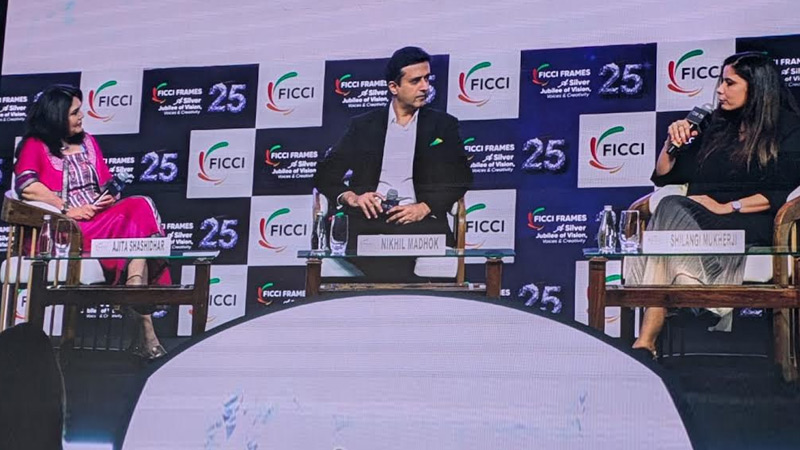
    Under the session titled “Made in India: I-Dramas — Are Our Stories Ready to Travel Across Borders?” SVOD director & head Shilangi Mukherji and Originals director & head Nikhil Madhok, shared insights with journalist Ajita Shashidhar about what makes Indian narratives resonate globally.

    The stats speak for themselves: Indian content has consistently trended in the top 10 on Prime Video worldwide in 2024, with nearly 25 per cent of viewership coming from outside India. According to Madhok, the key is authenticity. “Original, rooted stories travel beyond Indian shores. While production quality matters, it’s authenticity that connects with global audiences,” he explained.

    Mukherji highlighted Prime Video’s localisation strategy, ensuring content reaches multi-lingual audiences in India and internationally. “Through subtitles, dubbing, and culturally relevant storytelling, we surprise and delight viewers everywhere,” she said. About 60 per cent of Indian users stream content in four or more languages, reflecting the platform’s pan-Indian appeal.

    Prime Video’s originals, from The Family Man and Mirzapur to Paatal Lok and Dupahiya, have become global favourites, with most franchises renewing for multiple seasons. Madhok emphasised the platform’s commitment to nurturing new talent alongside established creators, enabling first-time filmmakers to reach worldwide audiences.

    The platform’s growth in India is backed by innovation in access and pricing, including Prime Lite, mobile-first annual plans, and tiered subscriptions. Prime Video also combines theatrical releases with streaming, ensuring filmmakers can choose the best format for their stories. Starting 2026, three to four Indian films from Amazon MGM Studios will premiere in theatres annually.

    Mukherji concluded that global resonance requires intentional localisation and collaboration across the industry. Madhok added, “All it takes is one standout story to spark wider recognition. We’re seeing green shoots in all our Originals, and the future is bright for Indian storytelling.”

  • Rejected by Google in 2013, entrepreneur returns as boss of startup division

    Rejected by Google in 2013, entrepreneur returns as boss of startup division

    GURUGRAM: Life moves in circles, not straight lines. Ragini Das, who fumbled Google’s final interview round in 2013, has just been handed the keys to Google for Startups India this October—a delicious plot twist that took 12 years, two groundbreaking ventures and one failed final round to materialise.

    Back in 2013, Das had two shots on goal: Google and Zomato. Google said no. Zomato said yes. That rejection turned into a six-year masterclass in building consumer-tech brands. She went from selling ad space across Hyderabad, Bangalore and Delhi to spearheading Zomato Gold’s meteoric rise from zero to 2 million users, launching the subscription service across ten international markets from Australia to Lebanon. The company awarded her its first-ever “spark award” for spreading Zomato’s culture inside and outside the firm.

    In 2020, Das took the entrepreneurial plunge, co-founding leap.club—India’s largest social-professional network for women. Over five-and-a-half years, she scaled it to 25,000-plus paid members and $3 million-plus in revenue, creating an online app and India’s first women-only offline club. The  venture raised $2.2 million from venture capitalists and angel investors, with women comprising half the cap table. “If member love was an actual currency, leap.club would have been a unicorn,” Das wrote when announcing the pause in operations this June.

    After the shutdown, Das spent the summer recharging: creating art, chasing fitness goals, travelling and photographing Jimmy, her dog. Then August arrived with a role at Google that sat squarely at the intersection of everything she’d built—zero-to-ten ventures, founders, growth. Two months of conversations later, the job was hers.

    Now Das leads Google’s mission to connect Indian startups with the right people, products and practices to scale. She’s also taken on a voluntary role as chair of FICCI’s women in startups committee, championing visibility, capital access and policy influence for women-led ventures. A member of the 6 am club, she reserves weekends for mentoring young women in business and, naturally, Jimmy.

    Twelve years ago, Google’s rejection stung. Today, Das walks through the front door—as the boss. Full circle doesn’t begin to cover it.

  • Explurger goes global: India’s travel social app wins praise from Sonu Sood

    Explurger goes global: India’s travel social app wins praise from Sonu Sood

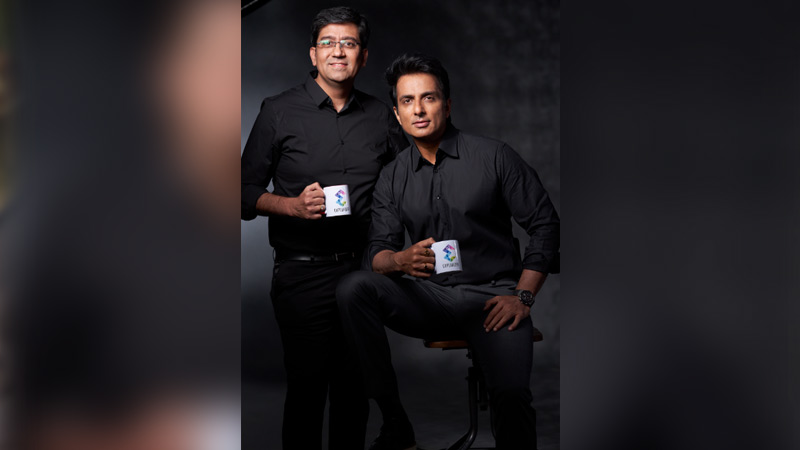
    MUMBAI: Bollywood actor and philanthropist Sonu Sood has put the spotlight on Explurger, a homegrown social media platform for travellers, echoing prime Minister Narendra Modi’s call for Indian innovation to go global.


    Launched three years ago by Jitin Bhatia and Sonu Sood, Explurger has rapidly grown to over 17 million users worldwide. The travel-focused app combines AI-powered travelogues, real-time journey tracking, and community sharing, all under the mantra ‘Get Out – Get Social.’ Rather than endless scrolling, the platform encourages users to explore new destinations, check in with Explurge-ins, complete bucket lists, and earn gamified rewards.

    “The Prime Minister’s call for innovation within India’s digital ecosystem highlights the country’s confidence in building its own technology frameworks,” said founder and CEO Jitin Bhatia. “Explurger embodies that mindset entirely developed in India, powered by Indian talent, and designed to resonate globally. We want to show that Indian tech can innovate and inspire on the world stage.”

    PM Modi has repeatedly emphasised the importance of homegrown solutions. In a recent speech, he urged Indians to buy and sell Swadeshi goods and nurture platforms that meet domestic needs while competing internationally.

    With its unique blend of real-world adventure and social connectivity, Explurger has become a shining example of Make-in-India ingenuity in the social media space. As the platform continues its global push, it demonstrates that India isn’t just building apps, it’s building experiences that travel the world.


  • Stories from the heartland go global

    Stories from the heartland go global

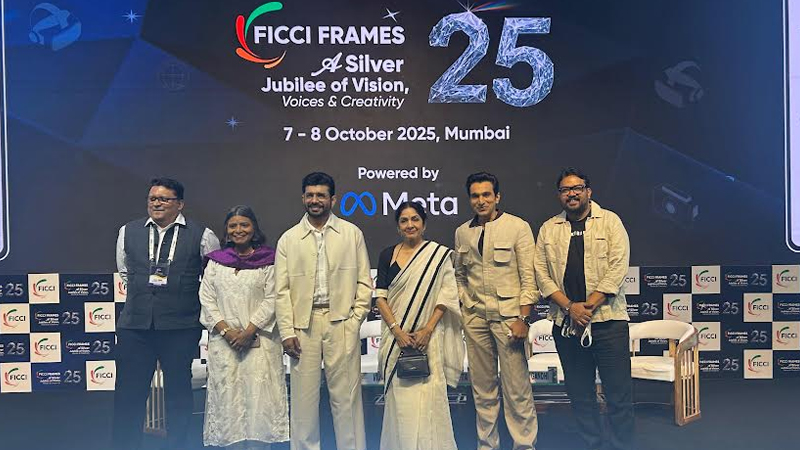
    MUMBAI: Stories that stay rooted, yet take flight, that’s the new India calling. At FICCI Frames 2025, a star-studded panel on “Local Roots, Global Reach: Indian Storytelling from the Heartland” turned into a masterclass on why stories told with heart are now travelling the farthest.

    Moderated by broadcast journalist Anuradha Sengupta, the session featured The Viral Fever president Vijay Koshy, actors Neena Gupta, Pratik Gandhi, Faisal Malik, and Vineet Kumar Singh, voices that have lived and shaped India’s storytelling renaissance.

    “Anything that comes from the heart will touch the heart,” said Neena Gupta, drawing applause as she spoke of how authenticity, not algorithms, drives real connection.

    Pratik Gandhi reflected on his own journey after Scam 1992, “Stories can come from anywhere, but emotions are universal,” he added, noting how success opened creative doors rather than data dashboards.

    Vijay Koshy traced this evolution from Youtube freedom to OTT patronage. “We learnt the hard way in the digital world. Platforms are the new patrons, much like kings once funded artists,” he said, recalling how Panchayat, a show rejected by many, went on to become a cultural phenomenon precisely because “nothing was happening” in it.

    For Vineet Kumar Singh, heartland tales are India’s timeless truth. “Whether it’s Mother India or Panchayat, every story that mirrors real life finds its way to people’s hearts,” he said, reflecting on how viewers discover themselves in the stories of small towns and forgotten bylanes.

    Neena Gupta, ever candid, summed it up, “I think we should always try to go to the resources you have,” underlining how creators can draw on their own experiences and surroundings to tell authentic stories.

    The discussion also delved into the shifting sands of streaming. Sengupta reminded the panel that subscription models are giving way to ad-led formats. Koshy, however, remained optimistic. “We are not afraid. Authenticity will always survive,” he said with quiet conviction.

    As the session wrapped, Vineet shared a moving anecdote about Supermen of Malegaon, a small-town film that won hearts globally. “When it ended at the Toronto International Film Festival, the applause didn’t stop. That’s the power of stories from our soil,” he smiled.

    From villages to viral screens, India’s storytellers seem to have found their sweet spot: telling tales that are homegrown, heartfelt, and now, truly world-bound.

  • Orange Alert as Media Chiefs Call Time on Sour Regulation

    Orange Alert as Media Chiefs Call Time on Sour Regulation

    MUMBAI: When your brightest industry minds start comparing creativity to citrus fruit, you know the discussion’s got some zest. At FICCI FRAMES 2025, the session titled “Regulating the Orange Economy: Past, Present, and Future” turned into a spirited masterclass on what’s holding back India’s most vibrant export creativity itself.

    Moderated by Koan Advisory’s Vivan Sharan, the panel brought together some of the sharpest voices in Indian broadcasting Avinash Pandey (CEO, Indian Broadcasting and Digital Foundation), Krishnan Kutty, head of cluster, Entertainment (South) – JioStar, Anil Malhotra (COO, Zee Media), and Yatin Gupta (COO, GTPL Hathway). Together, they dissected the bitter-sweet evolution of India’s media and entertainment (M&E) industry from its liberalisation glory days to today’s tangled web of red tape and regulation.

    Avinash Pandey kicked things off with a nostalgic rewind. “We were declared an industry in 1996, and for a brief while, we were actually treated like one,” he said dryly, drawing laughter from the crowd. He recounted how the early 2000s saw broadcasting boom as a sunrise sector driven by investment, private innovation, and minimal interference.

    “Then came a time when the government helped us grow,” he continued. “But today, every little aspect from pricing to packaging is regulated. We are living under a 2005 framework in a 2025 economy.”

    Pandey’s lament set the tone. The orange economy shorthand for industries fuelled by creativity and culture has turned ripe, but over-regulation, panelists warned, risks turning it sour.

    Krishnan Kutty of JioStar took the baton, calling for “a lighter hand and a smarter head” in policymaking. He drew a sharp comparison between legacy broadcasters and digital-first platforms. “Television is capped, controlled, and scrutinised. OTT platforms, meanwhile, stream what they want with almost no oversight,” he said.

    Kutty argued that the answer isn’t to regulate the new, but to liberate the old. “Over-prescription kills innovation. Consumers don’t need protection from choice they need access to more of it.” His words echoed across an audience that included broadcasters, policymakers, and streaming executives all trying to decode the new power balance between screens.

    Anil Malhotra from Zee Media added historical perspective and a dose of irony. “Cable TV arrived in India in 1985. It was regulated only in 1995. Broadcasting began in 2005, got regulated much later,” he said. “Regulation always comes late to the party and then overstays its welcome.”

    Malhotra argued that in a digital-first world, it makes no sense to hold traditional media hostage to older rulebooks. “If the government doesn’t regulate new tech like OTT and AI, it must deregulate the old. Otherwise, you’re penalising the legacy systems that built India’s media strength in the first place.”

    He also called for a “policy audit,” a comprehensive review of old broadcasting rules to identify those that have outlived their relevance. “We need regulation that enables, not restricts,” he stressed.

    GTPL Hathway’s Yatin Gupta brought the discussion closer to ground reality and homes still running on coaxial cables. “We’re the most regulated part of the media chain,” he said bluntly. “Every rate, every fee, every package is dictated. Yet, we’re expected to compete with digital platforms that face no such limits.”

    Gupta pointed out that India’s cable homes have dropped from 150 million a few years ago to around 100 million today, a staggering 30 per cent loss in a market still hungry for affordable entertainment. “We can’t evolve if we’re boxed in,” he added. “If the aim is to take India fully digital, we must support the legacy infrastructure that connects Bharat to the world.”

    He called for skill development, broadband integration, and hybrid models that let cable operators transform into full-fledged digital service providers. “If we don’t, we’ll end up with an uneven playing field and an excluded audience.”

    By the time Avinash Pandey took the mic again, his tone had sharpened. “Regulators talk about ‘orderly growth’,” he said with a knowing smile. “That’s a Soviet-era phrase. You can’t dictate how creativity grows, it defeats the very nature of innovation.”

    He urged policymakers to think of the media sector as a living organism, one that thrives on unpredictability. “Creativity doesn’t follow command-and-control models. It needs chaos, experimentation, and freedom to fail.”

    The audience broke into applause when he declared, “If you want free markets, let the market breathe.”

    Despite the fiery debate, the panel didn’t write television off. Far from it. “TV still delivers high-quality entertainment at the lowest cost per viewer,” Pandey noted. “There are over 100 million Indians yet to own a television. Growth is far from over but it will stall if innovation is strangled.”

    The panellists agreed that the future of India’s media sector lies in convergence television and digital not competing, but coexisting. With global streamers investing heavily in Indian stories and regional content booming across states, the creative economy stands at a crossroads.

    As the discussion wound down, what emerged was less of a gripe and more of a roadmap: deregulate the old, modernise the law, empower talent, and let creativity not bureaucracy set the tone.

    In a nation bursting with storytellers, artists, and innovators, the message was clear: the Orange Economy shouldn’t be juiced dry by rules made for an analogue age.

    If India truly wants to be a global creative powerhouse exporting not just IT services but imagination, it must give its creators the same freedom its coders enjoy. Or as one delegate quipped while leaving the hall, “You can’t make lemonade with red tape.”


  • From Bahubali to Billion Views India Aims for a Creative Content Super League

    From Bahubali to Billion Views India Aims for a Creative Content Super League

    MUMBAI: If cricket can become a family blockbuster, why not Indian stories? That was the rallying cry from Sony Pictures Networks India managing director & CEO Gaurav Banerjee at FICCI Frames 2025. Addressing a packed room of media moguls, policymakers, and creators, he asked a question that hit home: What’s stopping India from birthing a content giant, an IPL of entertainment that’s global in scale yet rooted in our own stories?

    Banerjee painted a vivid timeline of India’s entertainment inflexion points. First, the early 2000s witnessed Kaun Banega Crorepati, a game show with a Bollywood superstar as its face, a world-first. Then came the 2008 Indian Premier League, which turned cricket into family entertainment and spawned a robust talent pipeline. And more recently, pan-India phenomena like Satyamev Jayate, Anupama, and films like Bahubali showcased the universal appeal of Indian storytelling. But, he pointed out, the last big leap happened nearly a decade ago leaving a glaring creative gap waiting to be filled.

    “The challenge,” he said, “is building an ecosystem where creativity meets scale where every year can give rise to a new Lagaan or a Squid Game created right here in India.” Banerjee argued that the key lies in aggregating human capital. Citing Enrico Moretti’s The New Geography of Jobs, he explained that regions flourish when innovation-driven industries cluster talent, research, and enterprise, essentially a Silicon Valley of creativity.

    Drawing a parallel with the IPL, Banerjee highlighted how structured scouting, talent pipelines, and consistent investment can create world-class outputs. “Every season in the IPL introduces at least six new cricketers,” he said. “We need a similar mechanism to unearth and nurture storytellers local, authentic, and ready for global stages.”

    The proof, he noted, already exists in pockets. The Malayalam film industry has produced films like Loka Chapter 1, which, despite a budget under Rs 30 crore, has raked in over Rs 300 crore at the box office. “This is not a one-off,” Banerjee enthused. “Films like Avesham, 2080, and Manjula Boys have built an ecosystem of excellence. Loka is the latest chapter in this evolution.”

    So how can India scale this success? Banerjee outlined three steps. First, building creative institutions and centres of excellence to scout and nurture talent. Second, forging deep collaboration between academic centres and creative firms akin to Stanford and Silicon Valley to create a continuous dialogue between innovation and execution. Third, reforming regulation to be enabling rather than restrictive. “Creativity is human capital at its purest,” he said. “Yet, current labour and regulatory frameworks are anchored in a colonial past. To unleash India’s creative potential, we must reimagine rules and give imagination room to breathe.”

    Banerjee stressed that creativity is no longer peripheral. It fuels jobs, innovation, exports India’s identity, and amplifies soft power. “If India wants to write the next chapter of global leadership,” he said, “we must invest in creativity with the same vision and boldness as we do in new technologies.”

    Closing with a clarion call, Banerjee urged policymakers, media leaders, and creators to think globally, experiment boldly, and champion a future where India’s creative economy sits at the heart, not the margins, of the nation’s growth story.

    From the IPL’s cricketing pitches to the studios of Kochi and Mumbai, India’s content revolution is poised to go prime time and this time, the audience is the world.

  • Meta maps India’s digital evolution from creators to AI and micro dramas

    Meta maps India’s digital evolution from creators to AI and micro dramas

    MUMBAI: At the 25th edition of Ficci Frames, Meta’s top leadership: Sandhya Devanathan, vice president, Meta India, and Meta India managing director and country head Arun Srinivas, laid out a comprehensive view of how India’s digital, entertainment, and creator ecosystems are evolving at breakneck speed. 

    From the rise of Gen Z as the dominant consumer force to the explosion of short-form video, AI-driven content, and micro-dramas, both leaders stressed on how India is not just adapting to global digital trends, it is carving them. 

    “India’s growth is unique and inevitable,” Devanathan said, opening her session on New Age Tech Platforms: Redefining Access, Innovation and Scale. “One trillion dollars of our future economy will be driven by digital.”  

    With over four billion reels shared globally every day, she noted, India stands out as both the largest creator market and a leader in the innovation of content. 
    That digital drive, she explained, rests on India’s growing online base of over 650 million social media users and 270 million online shoppers. Yet, she noted that to make prosperity more inclusive, more small businesses need to come online. Only about five million of India’s 65 million SMEs are currently digitally enabled.
    “The Indian creator economy is among the most vibrant in the world,” Devanathan noted. “Creators here aren’t just entertainers, they are entrepreneurs, cultural catalysts, and small businesses rolled into one.”

    Meta, she explained, continues to invest heavily in tools that empower creators to monetise their craft: from performance insights and AI-powered production aids to immersive advertising formats that help brands connect authentically with their digital-native audiences. 

    Devanathan also highlighted the versatility of “many Indias”: the digitally savvy India, the vernacular-first India, and the emerging India Each requires its own approach to content, access and engagement. “Winning in India,” she said, “means understanding these layers of India and building for all.”
    Meta, she noted, sits at the heart of this digital revolution. India is now home to the largest community of Instagram creators and the biggest user base for Meta AI worldwide. The country also boasts one of the world’s largest Whatsapp communities, with over 200,000 small businesses using “Click to Whatsapp” to drive sales every month.
    Beyond platforms, Meta is investing in digital infrastructure, from the Project Waterworth subsea cable (a subsea cable network that will span 50,000 kilometres and will reach depths of up to 7000 metres) to supporting data centres that fuel AI innovation. Devanathan also spoke about Meta’s work with the Nudge Institute and Pragati AI for Impact, which harnesses artificial intelligence for social good. 

    Building on that foundation, Arun Srinivas focused on the behavioural shifts defining media and entertainment consumption in India today, particularly among Gen Z and gen Alpha audiences.

    “Gen Z isn’t the future; they’re the present,” he exclaimed. “They are already shaping how content is discovered, processed, and shared.”

    According to Srinivas, the average Gen Z consumer processes information three times faster than previous generations and takes less than 1.5 seconds to decide whether to engage with a piece of content. “They need less attention, but more repetition,” he noted, explaining how frequency, rather than single exposure, now drives brand recall and conversions.

    He also pointed to India’s massive short-form video boom, with 97 per cent of Indians watching short videos daily, surpassing television viewership. “Linear TV time is declining month on month,” he said, adding that this isn’t limited to urban India, “rural and small-town audiences are consuming just as much, if not more.”

    Among the new frontiers Srinivas spotlighted was the rise of micro dramas: serialised short videos running between one and five minutes per episode.

    “This is storytelling redesigned for the mobile-first world,” he said. “India’s short-form drama market could touch 10 billion dollars by 2030, driven by vernacular content and tier-II and tier-III audiences.”

    Startups and creators are already experimenting with dubbed Korean and Chinese mini-series adapted for Indian viewers, marking a new phase in the fusion of entertainment and digital innovation.

    Both Devanathan and Srinivas emphasised the transformative role of artificial intelligence across Meta’s platforms, from content creation and personalisation to ad optimisation and discovery.

    “AI isn’t replacing creativity; it’s amplifying it,” Devanathan said. “It’s enabling creators to produce higher-quality work faster, and helping brands find the right audiences with precision.”

    Srinivas added that more than four million advertisers globally used AI-generated creatives last quarter, producing over 15 million ad assets  and achieving double-digit ROI improvements compared to campaigns created by humans. 

    Outlining Meta’s larger ambition, he noted that the company aims to make Meta AI the world’s most widely used personal assistant. “With more than 100 billion dollars invested in AI in just four years, we’re building systems that make digital creativity more accessible and intelligent for everyone,” he said.
    Bringing that vision to life, Devanathan closed her session with an AI-generated video: a vivid cascade of colours that unfolded into the words, “Change is the canvas from which opportunity paints its masterpiece.” 

    Both leaders saw eye to eye on one message, that India’s digital future will be built at the intersection of creators, commerce, and connection.

    Srinivas highlighted how Meta’s latest tools, such as the Edits app for easy video production and new AI-powered creative platforms, are enabling India’s vast creator base to thrive. Meanwhile, Devanathan emphasised Meta’s partnerships with brands, small businesses, and policymakers to foster a sustainable, inclusive digital ecosystem.

    “Our goal,” she said, “is to ensure that India’s creative economy doesn’t just grow in size, it grows in diversity, opportunity, and global influence.”

    Concluding the session, Srinivas offered a peek into Meta’s newest innovation, the Ray-Ban Meta smart glasses, designed to merge content, communication, and AI assistance in one device.

    “These glasses are a glimpse of a future where connection becomes truly immersive,” he said.

    As both Devanathan and Srinivas made clear, India’s digital landscape is entering a new chapter, one driven by speed, creativity, and intelligence. With the next generation of consumers redefining how content is created and consumed, Meta’s vision is not just to keep pace, but to help build the infrastructure of tomorrow’s digital culture. 


  • Gamingcon Bharat 2025 set to level up India’s gaming scene

    Gamingcon Bharat 2025 set to level up India’s gaming scene

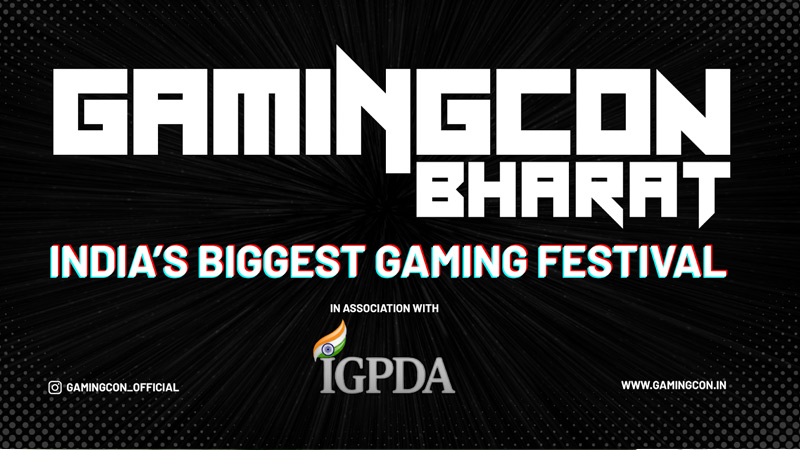
    MUMBAI: India’s gaming revolution is about to hit a new high score. The Indian Game Publishers and Developers Association (IGPDA) has announced Gamingcon Bharat 2025, taking place at the NESCO Bombay exhibition centre on 29–30 November. Billed as India’s largest gaming festival and industry conference, the event promises to unite gamers, developers, publishers, investors, and policymakers under one roof.

    With over 10,000 attendees expected, Gamingcon Bharat will feature epic esports showdowns including FAU-G: Domination, Indus Battle Royale, BGMI, and Valorant, alongside the Indieverse Showcase highlighting Made-in-India IPs such as Mukti, Age of Bhaarat, and Ludo King. Fans can also catch the Cosplay Grand Finale, explore 100 plus tech and gaming brands in the Expo zone, and enjoy eight action-packed fan zones and stages.

    For creators and industry leaders, the IGPDA India Gaming Conference will run alongside, offering insights on AI, cloud gaming, global IPs, and policy frameworks. Senior government officials and policymakers will engage directly with the gaming ecosystem.

    Nazara Technologies CEO Nitesh Mittersain said, “For the first time, India has a platform of this magnitude to showcase its own IPs to the world. Gamingcon Bharat is the launchpad for India’s next gaming success stories.”

    Tara Gaming co-founder and best-selling author Amish Tripathi added, “Video gaming is the biggest creative industry, and it’s about time India had a rallying point for gamers and the industry to call its own. Gamingcon Bharat 2025 is that rallying point.”

    Gametion CEO Vikash Jaiswal summed it up, “For culturally-rich Indian games to succeed globally, they first need to succeed at home. Gamingcon Bharat 2025 is the home for Indian gaming. The world has Gamescom, we have Gamingcon.”

    From indie developers to global investors, Gamingcon Bharat 2025 aims to level up India’s gaming industry, creating a home-grown stage where local talent can shine globally.