Category: iWorld

  • Rs 30k cr to enhance Jio coverage; A-G clears DoT’s power to penalise telcos

    Rs 30k cr to enhance Jio coverage; A-G clears DoT’s power to penalise telcos

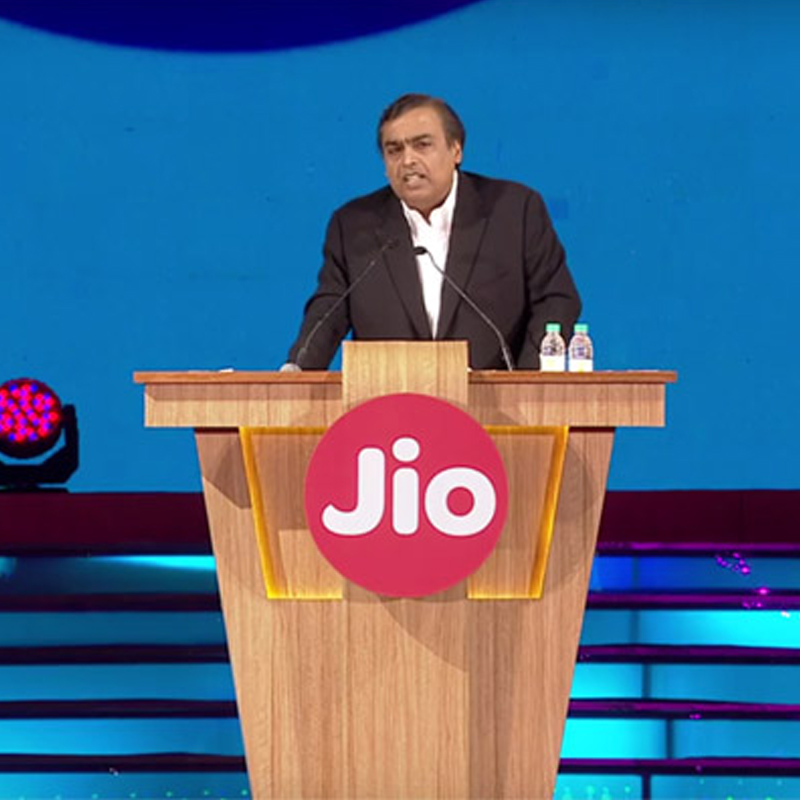
    MUMBAI: Even as India’s attorney-general cleared a Rs 3,050 crore penal action against the leading telcos, Reliance CMD Mukesh Ambani is planning to infuse Rs 30,000 crore in Reliance Jio telecom venture which has caused a major disruption in India’s fiercely-competitive mobile market.

    The attorney-general is understood to have opined that the Department of Telecom (DoT) has the power to impose penalty on grounds of poor quality of service of telecom operators Vodafone, Bharti Airtel and Idea Cellular, sources told PTI.

    Reliance Jio, which reportedly had a subscriber base of 72.4 million at 2016-end, plans to collect funds via a rights issue that was approved at a recent board meeting, the Times of India reported.

    In view of the unprecedented customer response and to address the anticipated growth in demand for digital services, Jio stated, additional investments were proposed to be made into the network to enhance its capacity and coverage. The new funds will come on top of the Rs 1.7 lakh crore that Reliance Jio has already invested.

    The rights issue has been planned to be for six billion nine per cent non-cumulative optionally convertible preference shares (OCPS) of Rs 10 each for cash, at a premium of Rs 40 per OCPS. The amount subscribed/paid on each OCPS will be either redeemed at Rs 50 or converted into five equity shares of Rs 10 each at any time at the option of the company, but not later than 10 years from the date of allotment.

    The new entrant Jio caused a considerable disruption in the space. In broadband services, with 35.94 million (3.594 crore), Jio had, in October 2016, joined the top five subscribers list. No matter it is working out to the benefit of the consumer and helping the industry expand albeit at a much lower cost to the end-user, well-entrenched rivals now are on a slippery wicket. Meanwhile, other telecom operators in the country are scrambling to catch up.

    Telecom tribunal TDSAT has ordered the Telecom Regulatory Authority of India (TRAI) to take a stand on Reliance Jio’s free 4G offer in reasonable time. A tribunal bench heard arguments of both sides — TRAI and Airtel — and posted the matter for 1 February.

    Reliance Jio earlier chose not to respond to queries regarding its reply to TRAI in connection with questions raised against alleged violations in extending its free offer till 31 March 2017 much beyond its introductory offer. Airtel had filed a petition before TDSAT accusing TRAI of being ‘sleeping trustee’ and a ‘mute spectator’ to the violations carried out by Jio.

    Also Read:

    Darwin effect: 3-4 telcos may Jio after potential M&As

    Jio HNY: TDSAT raps TRAI as contest deepens

    Respond to Vodafone’s TRAI challenge in two weeks, govt directed


  • Rs 30k cr to enhance Jio coverage; A-G clears DoT’s power to penalise telcos

    Rs 30k cr to enhance Jio coverage; A-G clears DoT’s power to penalise telcos

    MUMBAI: Even as India’s attorney-general cleared a Rs 3,050 crore penal action against the leading telcos, Reliance CMD Mukesh Ambani is planning to infuse Rs 30,000 crore in Reliance Jio telecom venture which has caused a major disruption in India’s fiercely-competitive mobile market.

    The attorney-general is understood to have opined that the Department of Telecom (DoT) has the power to impose penalty on grounds of poor quality of service of telecom operators Vodafone, Bharti Airtel and Idea Cellular, sources told PTI.

    Reliance Jio, which reportedly had a subscriber base of 72.4 million at 2016-end, plans to collect funds via a rights issue that was approved at a recent board meeting, the Times of India reported.

    In view of the unprecedented customer response and to address the anticipated growth in demand for digital services, Jio stated, additional investments were proposed to be made into the network to enhance its capacity and coverage. The new funds will come on top of the Rs 1.7 lakh crore that Reliance Jio has already invested.

    The rights issue has been planned to be for six billion nine per cent non-cumulative optionally convertible preference shares (OCPS) of Rs 10 each for cash, at a premium of Rs 40 per OCPS. The amount subscribed/paid on each OCPS will be either redeemed at Rs 50 or converted into five equity shares of Rs 10 each at any time at the option of the company, but not later than 10 years from the date of allotment.

    The new entrant Jio caused a considerable disruption in the space. In broadband services, with 35.94 million (3.594 crore), Jio had, in October 2016, joined the top five subscribers list. No matter it is working out to the benefit of the consumer and helping the industry expand albeit at a much lower cost to the end-user, well-entrenched rivals now are on a slippery wicket. Meanwhile, other telecom operators in the country are scrambling to catch up.

    Telecom tribunal TDSAT has ordered the Telecom Regulatory Authority of India (TRAI) to take a stand on Reliance Jio’s free 4G offer in reasonable time. A tribunal bench heard arguments of both sides — TRAI and Airtel — and posted the matter for 1 February.

    Reliance Jio earlier chose not to respond to queries regarding its reply to TRAI in connection with questions raised against alleged violations in extending its free offer till 31 March 2017 much beyond its introductory offer. Airtel had filed a petition before TDSAT accusing TRAI of being ‘sleeping trustee’ and a ‘mute spectator’ to the violations carried out by Jio.

    Also Read:

    Darwin effect: 3-4 telcos may Jio after potential M&As

    Jio HNY: TDSAT raps TRAI as contest deepens

    Respond to Vodafone’s TRAI challenge in two weeks, govt directed


  • ‘India needs 80 lakh hotspots; metros’ spectrum 1/10th of U.S’

    ‘India needs 80 lakh hotspots; metros’ spectrum 1/10th of U.S’

    MUMBAI: India needs over 80 lakhs hotspots as against the availability of about 31,000 hotspots with a view to reach the global level of one Wi-Fi hotspot penetration for every 150 people, according to ASSOCHAM-Deloitte joint study.

    There are currently over 31,000 public Wi-Fi hotspots installed in India. However, for India to match the current global average of one public Wi-Fi hotspot per 150 people, an additional 80 lakhs hotspots need to be deployed, noted the study titled ‘Digital India: Unlocking the Trillion Dollar opportunity,’ jointly conducted by ASSOCHAM and research firm Deloitte.

    The biggest challenge faced by the Digital India programme is the slow/delayed infrastructure development. Spectrum availability in Indian metros is about a tenth of the same in cities in developed countries (such as the U.S, U.K, Russia, etc). This has put a major roadblock in providing high speed data services (such as OTT and VOD).

    For Digital India to have a large scale impact on citizens across the nation, the digital divide needs to be addressed through last mile connectivity in remote rural areas. Currently, over 55,000 villages remain deprived of mobile connectivity. This is largely due to the fact that providing mobile connectivity in such locations is not commercially viable for service providers, adds the joint study.

    “For digital technology to be accessible to every citizen significant efforts are needed to customise apps and services to cater to local needs. Finding vendors who can provide such applications has become a challenge”.

    Policy framework for Digital India: Challenges in policy, such as taxation, right of way, restrictive regulations etc. are major roadblocks in realizing the vision of Digital India.

    Some of the common policy hurdles includes lack of clarity in FDI policies, for instance, have impacted the growth of e-commerce. Transport services like Uber have had frequent run-ins with the local government due to legacy policy frameworks which have not become attuned to the changing business landscape.

    Implementation of the Digital India programme has been hampered by contracting challenges such as several projects assigned to PSUs are delayed given challenges related to skills, experience and technical capabilities. Several RFPs issued by the government are not picked up by competent private sector organizations since they are not commercially feasible.

    The reports suggest that, as recently as 2014, nearly 70 per cent of Indian consumers indicated that lack of awareness was the main reason for not using internet services. Non-availability of digital services in local languages is also a major concern, noted the study.

    With the proliferation of cloud-based services like DigiLocker, data security has emerged as a major challenge. The recent data breach in August 2016, in which debit card data for more than 3.2 million subscribers was stolen highlights the importance of implementing foolproof security systems, adds the study.

    Development of digital infrastructure is a critical component of Digital India. To further enable development of digital infrastructure, the following measures should be considered as uniform policies for deploying telecom and optic fibre infrastructure.

    A uniform RoW policy across all states with a reasonable cost structure is required along with a single window mechanism for granting RoW permissions. PPP models need to be explored for sustainable development of digital infrastructure, as has been the case for civic infrastructure projects like roads and metro project. In addition, the government should make efforts to make additional spectrum available to telecom service providers for deployment of high speed data networks.

    Encourage collaboration with the private sector; Effective collaboration with the private sector is critical to the development of the digital infrastructure. Innovative engagement models that ensure commercial viability needs to developed jointly through consultation with industry bodies. This will encourage private sector participation and ensure a better response to infrastructure RFPs. In addition, startups need to be incentivised for the development of the last mile infrastructure and localized services and applications.

    Existing government infrastructure assets (e.g., post offices, government buildings, CSCs) should be further leveraged for provision of digital services. In rural and remote areas, private sector players should be incentivised to provide last mile connectivity. USOF can be effectively used to incentivise and create a viable business model. The deployment of funds so far has been erratic and not been used to effectively to fund the cost of infrastructure creation in rural areas. Currently, the fund has over Rs 451 billion in reserves which can be used to finance rural digital infrastructure growth in India through direct investment or subsidies.

    Satellite communication solutions could be used to speed up broadband access in rural and remote areas. For instance, banks can use VSAT technology to connect remote ATMs, remote branches that need instant access to customer data. It could be used as a last mile connectivity solution in rural areas which lack telecom networks. Another example could be of the navigational system NAVIC (Navigation with Indian Constellation), which can have applications in terrestrial, aerial and marine navigation, disaster management, vehicle tracking and fleet management, integration with mobile phones, precise timing, mapping and geodetic data capture, terrestrial navigation aid for hikers and travellers and visual/ voice navigation for drivers.
  • ‘India needs 80 lakh hotspots; metros’ spectrum 1/10th of U.S’

    ‘India needs 80 lakh hotspots; metros’ spectrum 1/10th of U.S’

    MUMBAI: India needs over 80 lakhs hotspots as against the availability of about 31,000 hotspots with a view to reach the global level of one Wi-Fi hotspot penetration for every 150 people, according to ASSOCHAM-Deloitte joint study.

    There are currently over 31,000 public Wi-Fi hotspots installed in India. However, for India to match the current global average of one public Wi-Fi hotspot per 150 people, an additional 80 lakhs hotspots need to be deployed, noted the study titled ‘Digital India: Unlocking the Trillion Dollar opportunity,’ jointly conducted by ASSOCHAM and research firm Deloitte.

    The biggest challenge faced by the Digital India programme is the slow/delayed infrastructure development. Spectrum availability in Indian metros is about a tenth of the same in cities in developed countries (such as the U.S, U.K, Russia, etc). This has put a major roadblock in providing high speed data services (such as OTT and VOD).

    For Digital India to have a large scale impact on citizens across the nation, the digital divide needs to be addressed through last mile connectivity in remote rural areas. Currently, over 55,000 villages remain deprived of mobile connectivity. This is largely due to the fact that providing mobile connectivity in such locations is not commercially viable for service providers, adds the joint study.

    “For digital technology to be accessible to every citizen significant efforts are needed to customise apps and services to cater to local needs. Finding vendors who can provide such applications has become a challenge”.

    Policy framework for Digital India: Challenges in policy, such as taxation, right of way, restrictive regulations etc. are major roadblocks in realizing the vision of Digital India.

    Some of the common policy hurdles includes lack of clarity in FDI policies, for instance, have impacted the growth of e-commerce. Transport services like Uber have had frequent run-ins with the local government due to legacy policy frameworks which have not become attuned to the changing business landscape.

    Implementation of the Digital India programme has been hampered by contracting challenges such as several projects assigned to PSUs are delayed given challenges related to skills, experience and technical capabilities. Several RFPs issued by the government are not picked up by competent private sector organizations since they are not commercially feasible.

    The reports suggest that, as recently as 2014, nearly 70 per cent of Indian consumers indicated that lack of awareness was the main reason for not using internet services. Non-availability of digital services in local languages is also a major concern, noted the study.

    With the proliferation of cloud-based services like DigiLocker, data security has emerged as a major challenge. The recent data breach in August 2016, in which debit card data for more than 3.2 million subscribers was stolen highlights the importance of implementing foolproof security systems, adds the study.

    Development of digital infrastructure is a critical component of Digital India. To further enable development of digital infrastructure, the following measures should be considered as uniform policies for deploying telecom and optic fibre infrastructure.

    A uniform RoW policy across all states with a reasonable cost structure is required along with a single window mechanism for granting RoW permissions. PPP models need to be explored for sustainable development of digital infrastructure, as has been the case for civic infrastructure projects like roads and metro project. In addition, the government should make efforts to make additional spectrum available to telecom service providers for deployment of high speed data networks.

    Encourage collaboration with the private sector; Effective collaboration with the private sector is critical to the development of the digital infrastructure. Innovative engagement models that ensure commercial viability needs to developed jointly through consultation with industry bodies. This will encourage private sector participation and ensure a better response to infrastructure RFPs. In addition, startups need to be incentivised for the development of the last mile infrastructure and localized services and applications.

    Existing government infrastructure assets (e.g., post offices, government buildings, CSCs) should be further leveraged for provision of digital services. In rural and remote areas, private sector players should be incentivised to provide last mile connectivity. USOF can be effectively used to incentivise and create a viable business model. The deployment of funds so far has been erratic and not been used to effectively to fund the cost of infrastructure creation in rural areas. Currently, the fund has over Rs 451 billion in reserves which can be used to finance rural digital infrastructure growth in India through direct investment or subsidies.

    Satellite communication solutions could be used to speed up broadband access in rural and remote areas. For instance, banks can use VSAT technology to connect remote ATMs, remote branches that need instant access to customer data. It could be used as a last mile connectivity solution in rural areas which lack telecom networks. Another example could be of the navigational system NAVIC (Navigation with Indian Constellation), which can have applications in terrestrial, aerial and marine navigation, disaster management, vehicle tracking and fleet management, integration with mobile phones, precise timing, mapping and geodetic data capture, terrestrial navigation aid for hikers and travellers and visual/ voice navigation for drivers.
  • SonyLiv launches original Marathi web-series ‘YOLO’

    SonyLiv launches original Marathi web-series ‘YOLO’

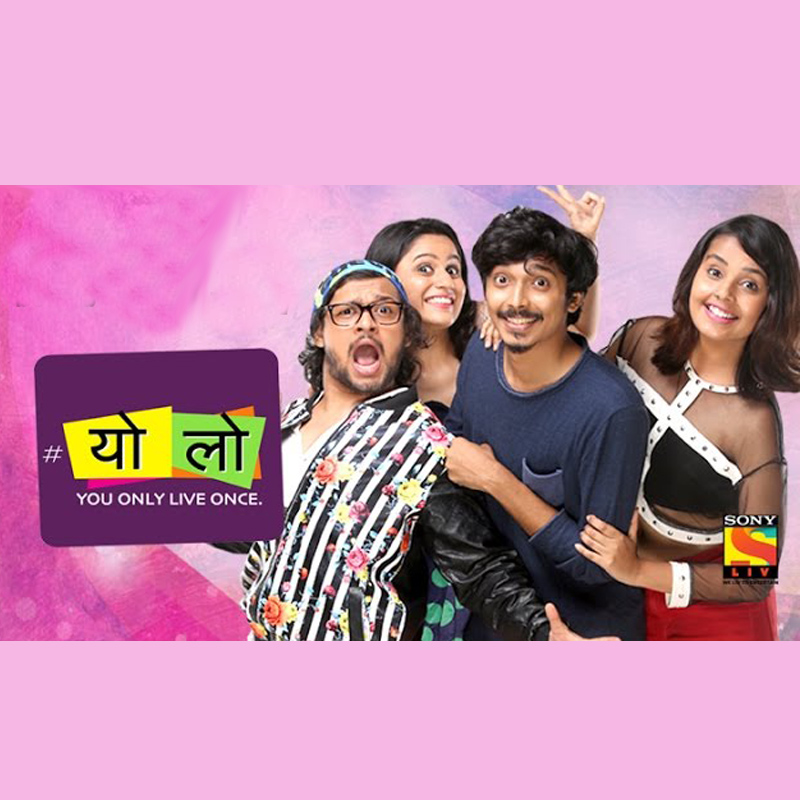
    MUMBAI: SonyLiv has announced the launch of  an original regional language web-series. Titled, YOLO – You only live once, the show has been conceptualized and developed by Indian Magic Eye (IMEPL).

    YOLO is a Marathi web-series that is centred around  the coming-of-age story of four young adults – Choko aka Shivraj Waichal, Sarika aka Shivani Rangole, Rochak aka Ruturaj Shinde and Pari aka Shashwati Pimplikar. Sai Tamhankar, Nagesh Bhosale and Anand Ingle who are the well known faces in Marathi Entertainment industry also feature in this web series.

    Directed by Sameer Vidwans, the show is the story of four young adults who unexpectedly go through a series of dramatic events that transforms their perspectves on love, relationships, sex and life in general. The story also involves differences of opinion between two generations on concepts of morality and ethics.

    “The Marathi regional audience is gradually emerging as a large and strong consumer base for original content on the digital medium. To cater to their emerging desire for high-quality entertainment intheir language and with a cultural essence, they can relate to, we at SonyLIV are proud to roll out ‘YOLO’, the country’s first-ever web series in a regional language. This move underlines our commitment to deliver the most appealing original content across the traditional boundaries of genres, languages or geographies. The motive is to delight and entertain, whilst also raising the common issues surrounding the youth,” said Sony Pictures Networks India EVP and head digital business Uday Sodhi.

    The story begins when Choko’s family members are going away for a week. An incident takes place which involves a lot of  drama.They learn to think beyond their own selves and start seeing each other and their own parents in a different light. They evolve as better human beings. This coming of age story will have an extremely humorous yet deep, bold yet not below the belt treatment. It will be relatable to the youth as well as the elderly since it also reflects their experience and mature point of view.

    YOLO not only enhances the entertainment options available to SonyLiv’s Marathi viewers, but also adds great value to their viewing experience by offering original entertainment content that they can relate to and associate with.

    The launch of YOLO is in sync with SonyLic’s uplifted brand ethos of ‘We Liv to Entertain’, which is aimed at providing the most comprehensive entertainment content to meet the varied requirements of its diverse audience base. It is also a strategic move on the part of SonyLiv to augment the traction that it is currently receiving from regional audiences who are actively embracing the digital platform as a primary means of content consumption.

    Link for the Episode: www.sonyliv.com/dplnk?schema=sony://asset/5276724430001

  • SonyLiv launches original Marathi web-series ‘YOLO’

    SonyLiv launches original Marathi web-series ‘YOLO’

    MUMBAI: SonyLiv has announced the launch of  an original regional language web-series. Titled, YOLO – You only live once, the show has been conceptualized and developed by Indian Magic Eye (IMEPL).

    YOLO is a Marathi web-series that is centred around  the coming-of-age story of four young adults – Choko aka Shivraj Waichal, Sarika aka Shivani Rangole, Rochak aka Ruturaj Shinde and Pari aka Shashwati Pimplikar. Sai Tamhankar, Nagesh Bhosale and Anand Ingle who are the well known faces in Marathi Entertainment industry also feature in this web series.

    Directed by Sameer Vidwans, the show is the story of four young adults who unexpectedly go through a series of dramatic events that transforms their perspectves on love, relationships, sex and life in general. The story also involves differences of opinion between two generations on concepts of morality and ethics.

    “The Marathi regional audience is gradually emerging as a large and strong consumer base for original content on the digital medium. To cater to their emerging desire for high-quality entertainment intheir language and with a cultural essence, they can relate to, we at SonyLIV are proud to roll out ‘YOLO’, the country’s first-ever web series in a regional language. This move underlines our commitment to deliver the most appealing original content across the traditional boundaries of genres, languages or geographies. The motive is to delight and entertain, whilst also raising the common issues surrounding the youth,” said Sony Pictures Networks India EVP and head digital business Uday Sodhi.

    The story begins when Choko’s family members are going away for a week. An incident takes place which involves a lot of  drama.They learn to think beyond their own selves and start seeing each other and their own parents in a different light. They evolve as better human beings. This coming of age story will have an extremely humorous yet deep, bold yet not below the belt treatment. It will be relatable to the youth as well as the elderly since it also reflects their experience and mature point of view.

    YOLO not only enhances the entertainment options available to SonyLiv’s Marathi viewers, but also adds great value to their viewing experience by offering original entertainment content that they can relate to and associate with.

    The launch of YOLO is in sync with SonyLic’s uplifted brand ethos of ‘We Liv to Entertain’, which is aimed at providing the most comprehensive entertainment content to meet the varied requirements of its diverse audience base. It is also a strategic move on the part of SonyLiv to augment the traction that it is currently receiving from regional audiences who are actively embracing the digital platform as a primary means of content consumption.

    Link for the Episode: www.sonyliv.com/dplnk?schema=sony://asset/5276724430001

  • Pongal: Amazon Prime to premiere ‘Kaashmora’; stream ‘Kabali’ & ‘Theri’

    Pongal: Amazon Prime to premiere ‘Kaashmora’; stream ‘Kabali’ & ‘Theri’

    MUMBAI: The festival of Pongal brings families and loved ones together for grand celebrations which involve shopping and gorging on yummylicious food. But now, Amazon Prime Video gives you another reason to celebrate Pongal with your entire family.

    Amazon Prime Video has invited all with family to experience the best in Tamil entertainment by watching the latest Tamil movie blockbusters exclusively on its platform. The platform will air the world digital premiere of Kaashmora starring Karthi and Nayantara, before its TV release. Also watch political satire Joker, Rajinikanth starrer Kabali and Theri starring Vijay and Amy Jackson.

    Kaashmora is a Tamil supernatural comedy fantasy film written and directed by Gokul. It revolves around Kaashmora and his family who live by cheating people in the name of black magic and dark spirits. One day, a PhD research student Yamini joins Kaashmora, only to gather evidence and expose him to the public.

    Joker is a political satire which criticizes the present political absurdities. Mannar (protagonist), a villager, who declares himself as the Indian president protests against the government for absurdities. On a trial, he reveals his past. Everyone sees him as a joker, and the audience is questioned at the end.

    Kabali, a revolutionary who fights for the betterment of his people in a foreign land, is falsely implicated and thrown behind bars. When he returns after his prison term, he starts a search for his wife and ends up confronting those who were the reason behind his miseries. What follows is a tale of revenge, emotion and payback. As a movie mounted on a huge scale, it truly brings a larger-than-life and much loved superstar to the streaming audiences.

    In Theri, when an honest cop, Vijay Kumar’s family is ruthlessly slaughtered by a politician and his aides, he decides to change his identity and commits his life to bringing up his daughter in a serene atmosphere. But, when some events compromise his identity, he does what he must to save his daughter and avenge the death of his family.

    Amazon Prime already offers unlimited free one-day and two-day delivery to over 100 cities on eligible items from India’s largest selection of products, 30 minutes early access for members on top deals and more benefits for an unparalleled shopping experience.

  • Pongal: Amazon Prime to premiere ‘Kaashmora’; stream ‘Kabali’ & ‘Theri’

    Pongal: Amazon Prime to premiere ‘Kaashmora’; stream ‘Kabali’ & ‘Theri’

    MUMBAI: The festival of Pongal brings families and loved ones together for grand celebrations which involve shopping and gorging on yummylicious food. But now, Amazon Prime Video gives you another reason to celebrate Pongal with your entire family.

    Amazon Prime Video has invited all with family to experience the best in Tamil entertainment by watching the latest Tamil movie blockbusters exclusively on its platform. The platform will air the world digital premiere of Kaashmora starring Karthi and Nayantara, before its TV release. Also watch political satire Joker, Rajinikanth starrer Kabali and Theri starring Vijay and Amy Jackson.

    Kaashmora is a Tamil supernatural comedy fantasy film written and directed by Gokul. It revolves around Kaashmora and his family who live by cheating people in the name of black magic and dark spirits. One day, a PhD research student Yamini joins Kaashmora, only to gather evidence and expose him to the public.

    Joker is a political satire which criticizes the present political absurdities. Mannar (protagonist), a villager, who declares himself as the Indian president protests against the government for absurdities. On a trial, he reveals his past. Everyone sees him as a joker, and the audience is questioned at the end.

    Kabali, a revolutionary who fights for the betterment of his people in a foreign land, is falsely implicated and thrown behind bars. When he returns after his prison term, he starts a search for his wife and ends up confronting those who were the reason behind his miseries. What follows is a tale of revenge, emotion and payback. As a movie mounted on a huge scale, it truly brings a larger-than-life and much loved superstar to the streaming audiences.

    In Theri, when an honest cop, Vijay Kumar’s family is ruthlessly slaughtered by a politician and his aides, he decides to change his identity and commits his life to bringing up his daughter in a serene atmosphere. But, when some events compromise his identity, he does what he must to save his daughter and avenge the death of his family.

    Amazon Prime already offers unlimited free one-day and two-day delivery to over 100 cities on eligible items from India’s largest selection of products, 30 minutes early access for members on top deals and more benefits for an unparalleled shopping experience.

  • Jio Fibre rolls out in Mumbai; Airtel FTTH, ACT to match pace

    Jio Fibre rolls out in Mumbai; Airtel FTTH, ACT to match pace

    MUMBAI: The rollout of Reliance Jio fibre has begun. Jio has started laying Jio Fibre in Mumbai. It will soon help provide a speed of up to 100mbps. People living in several buildings in Mumbai would be able to subscribe to the service.

    Jio however is not the only company that upping its FTTH game. Most of the major internet service providers as well as startups such as ACT are offering new FTTH plans in select areas. Airtel too is planning to expand its FTTH services. Late last year, Airtel used ‘V Fibre’ technology to start FTTH service in Chennai, assuring 100mbps speed to subscribers and also offered three months of free service, India Today reported.

    The wireless 4G services of Jio are happening. A part of its upcoming plans is soon to come Fibre To The Home (FTTH) service. In November 2016, the company had stated that it would soon plan to “disrupt” the broadband market. Reliance already has an extensive backbone of the fibre network across the length and breadth of India.

    Jio has established up Jio Fibre connectivity inside a number of buildings and people are already using it. For the first three months, the service is reportedly free. Although Jio had earlier planned to deliver speeds of up to 1 GBPs with its FTTH service; however users are receiving a speed between 70mbps and 100mbps. Jio may prepare to ramp up speed in a few days.

    In November, Reliance had stated that it planned to bundle fast broadband service with multimedia services. Jio Fibre is being offered for free; however there would be a one-time charge of Rs 4500 for the router that it is installing in user homes.

    Also Read :

    ‘Broadcasters could consider different pricing for rural-urban subscribers’

    Reliance Jio to offer 1GBps broadband service to homes

    Reliance Jio declares readiness for 4G launch; imports IPTV STBs

  • Jio Fibre rolls out in Mumbai; Airtel FTTH, ACT to match pace

    Jio Fibre rolls out in Mumbai; Airtel FTTH, ACT to match pace

    MUMBAI: The rollout of Reliance Jio fibre has begun. Jio has started laying Jio Fibre in Mumbai. It will soon help provide a speed of up to 100mbps. People living in several buildings in Mumbai would be able to subscribe to the service.

    Jio however is not the only company that upping its FTTH game. Most of the major internet service providers as well as startups such as ACT are offering new FTTH plans in select areas. Airtel too is planning to expand its FTTH services. Late last year, Airtel used ‘V Fibre’ technology to start FTTH service in Chennai, assuring 100mbps speed to subscribers and also offered three months of free service, India Today reported.

    The wireless 4G services of Jio are happening. A part of its upcoming plans is soon to come Fibre To The Home (FTTH) service. In November 2016, the company had stated that it would soon plan to “disrupt” the broadband market. Reliance already has an extensive backbone of the fibre network across the length and breadth of India.

    Jio has established up Jio Fibre connectivity inside a number of buildings and people are already using it. For the first three months, the service is reportedly free. Although Jio had earlier planned to deliver speeds of up to 1 GBPs with its FTTH service; however users are receiving a speed between 70mbps and 100mbps. Jio may prepare to ramp up speed in a few days.

    In November, Reliance had stated that it planned to bundle fast broadband service with multimedia services. Jio Fibre is being offered for free; however there would be a one-time charge of Rs 4500 for the router that it is installing in user homes.

    Also Read :

    ‘Broadcasters could consider different pricing for rural-urban subscribers’

    Reliance Jio to offer 1GBps broadband service to homes

    Reliance Jio declares readiness for 4G launch; imports IPTV STBs