Category: iWorld

  • Global OTT may expand at 14.5 per cent CAGR

    Global OTT may expand at 14.5 per cent CAGR

    MUMBAI: Over-the-top (OTT) content is the delivery of audio, video, images, and other media over the internet and bypasses traditional content distribution services. OTT services are mostly related to communication and media and are generally lower in cost than the traditional method of content delivery. OTT content, applications, and services are increasingly being adopted in all segments of commerce and society and are affecting and disrupting traditional industries at a significant pace.

    Consumers use online video instead of traditional television; online communications platforms instead of traditional telephone services; and today are able to download films and music that were once provided only on physical media. Additionally, the process of advertising and searching for services is increasingly moving to these online platforms. This has led to an exponential market growth globally. The global OTT content market is estimated to be valued at US$ 53.2 Bn by the end of 2016 and is expected to register a CAGR of 14.5% during the forecast period (2016–2026).

    Top OTT content market players are developing innovative marketing and distribution channels to enter and rule untapped markets. Some of the top companies operating in the global OTT content market include Akamai Technologies, Amazon.com Inc., Apple Inc., Facebook Inc., Google Inc., IBM, LeEco, Limelight Networks, Microsoft Corporation, and Netflix Inc. Several Indian companies have also entered the OTT content market in a big way. Some of the Indian OTT content market players include Star India Pvt. Ltd., Zee Entertainment Enterprises Ltd., Spuul, Eros International Plc., and Viacom 18 Media Pvt. Ltd, according to a PRNewswire release.

    Penetration of high speed broadband

    Growth in the penetration of high speed broadband, increasing mobile subscriptions and adoption of mobile connected devices, new features and advanced capabilities in smartphones, attractive pricing, and more content options are some of the major drivers fuelling the growth of the global OTT content market. Also, a shift in viewer preferences from the television format to a more customised, anytime, anywhere content viewing format is also boosting the growth of the global OTT content market.

    However this growth is hampered by factors such as online piracy activities, low bandwidth in emerging countries, lack of offline content availability, and technical challenges faced during OTT content delivery.

    Video content

    Video content type segment projected to be the most attractive segment over the forecast period. In terms of revenue, the video segment is anticipated to register a relatively higher CAGR of 15.8% between 2016 and 2026. This growth is attributed to extensive growth of high speed broadband infrastructure in emerging economies and popularity of subscription-based models in developed economies. This segment is expected to register high Y-o-Y growth rates throughout the forecast period.

    TVOD revenue model segment expected to register high Y-o-Y growth rates throughout the forecast period. The TVOD segment is estimated to register a CAGR of 15.8% during the forecast period. The AVOD segment is expected to witness significant revenue growth due to its ease of use; personalized, modern interface; and better viewing experience of AVOD services.

    Smartphones and Tablets

    Smartphones and Tablets device / platform type segment projected to be the most attractive segment over the forecast period. The smartphones and tablets segment accounted for a relatively high market value share in 2015 and this segment is anticipated to remain dominant through 2026. The dominance of the smartphones and tablets segment is attributed to increasing consumer preference towards these devices for availing OTT services such as video and audio streaming, social networking, and texting. The Smart TVs segment is expected to register high Y-o-Y growth rates throughout the forecast period and is anticipated to register a CAGR of 18.7% between 2016 and 2026.

    APEJ and Latin America

    APEJ and Latin America expected to be the fastest growing markets over 2016–2026. The APEJ OTT content market is projected to be the most attractive regional market in the global OTT content market and is anticipated to witness a CAGR of 24.6% over the forecast period. The market in North America accounted for a relatively high value share in 2015.

  • Global OTT may expand at 14.5 per cent CAGR

    Global OTT may expand at 14.5 per cent CAGR

    MUMBAI: Over-the-top (OTT) content is the delivery of audio, video, images, and other media over the internet and bypasses traditional content distribution services. OTT services are mostly related to communication and media and are generally lower in cost than the traditional method of content delivery. OTT content, applications, and services are increasingly being adopted in all segments of commerce and society and are affecting and disrupting traditional industries at a significant pace.

    Consumers use online video instead of traditional television; online communications platforms instead of traditional telephone services; and today are able to download films and music that were once provided only on physical media. Additionally, the process of advertising and searching for services is increasingly moving to these online platforms. This has led to an exponential market growth globally. The global OTT content market is estimated to be valued at US$ 53.2 Bn by the end of 2016 and is expected to register a CAGR of 14.5% during the forecast period (2016–2026).

    Top OTT content market players are developing innovative marketing and distribution channels to enter and rule untapped markets. Some of the top companies operating in the global OTT content market include Akamai Technologies, Amazon.com Inc., Apple Inc., Facebook Inc., Google Inc., IBM, LeEco, Limelight Networks, Microsoft Corporation, and Netflix Inc. Several Indian companies have also entered the OTT content market in a big way. Some of the Indian OTT content market players include Star India Pvt. Ltd., Zee Entertainment Enterprises Ltd., Spuul, Eros International Plc., and Viacom 18 Media Pvt. Ltd, according to a PRNewswire release.

    Penetration of high speed broadband

    Growth in the penetration of high speed broadband, increasing mobile subscriptions and adoption of mobile connected devices, new features and advanced capabilities in smartphones, attractive pricing, and more content options are some of the major drivers fuelling the growth of the global OTT content market. Also, a shift in viewer preferences from the television format to a more customised, anytime, anywhere content viewing format is also boosting the growth of the global OTT content market.

    However this growth is hampered by factors such as online piracy activities, low bandwidth in emerging countries, lack of offline content availability, and technical challenges faced during OTT content delivery.

    Video content

    Video content type segment projected to be the most attractive segment over the forecast period. In terms of revenue, the video segment is anticipated to register a relatively higher CAGR of 15.8% between 2016 and 2026. This growth is attributed to extensive growth of high speed broadband infrastructure in emerging economies and popularity of subscription-based models in developed economies. This segment is expected to register high Y-o-Y growth rates throughout the forecast period.

    TVOD revenue model segment expected to register high Y-o-Y growth rates throughout the forecast period. The TVOD segment is estimated to register a CAGR of 15.8% during the forecast period. The AVOD segment is expected to witness significant revenue growth due to its ease of use; personalized, modern interface; and better viewing experience of AVOD services.

    Smartphones and Tablets

    Smartphones and Tablets device / platform type segment projected to be the most attractive segment over the forecast period. The smartphones and tablets segment accounted for a relatively high market value share in 2015 and this segment is anticipated to remain dominant through 2026. The dominance of the smartphones and tablets segment is attributed to increasing consumer preference towards these devices for availing OTT services such as video and audio streaming, social networking, and texting. The Smart TVs segment is expected to register high Y-o-Y growth rates throughout the forecast period and is anticipated to register a CAGR of 18.7% between 2016 and 2026.

    APEJ and Latin America

    APEJ and Latin America expected to be the fastest growing markets over 2016–2026. The APEJ OTT content market is projected to be the most attractive regional market in the global OTT content market and is anticipated to witness a CAGR of 24.6% over the forecast period. The market in North America accounted for a relatively high value share in 2015.

  • Q3-17: Reliance: Jio busts records, organized retail op profit grows 55 percent

    Q3-17: Reliance: Jio busts records, organized retail op profit grows 55 percent

    BENGALURU: The Mukesh D Ambani led Reliance Industries Limited (RIL) organized retail segment – Reliance Retail,  continued its growth momentum and profitability in the quarter ended 31 December 2016 (Q3-17, current quarter), while its digital services offering Jio has broken all records in terms of subscriber acquisition.

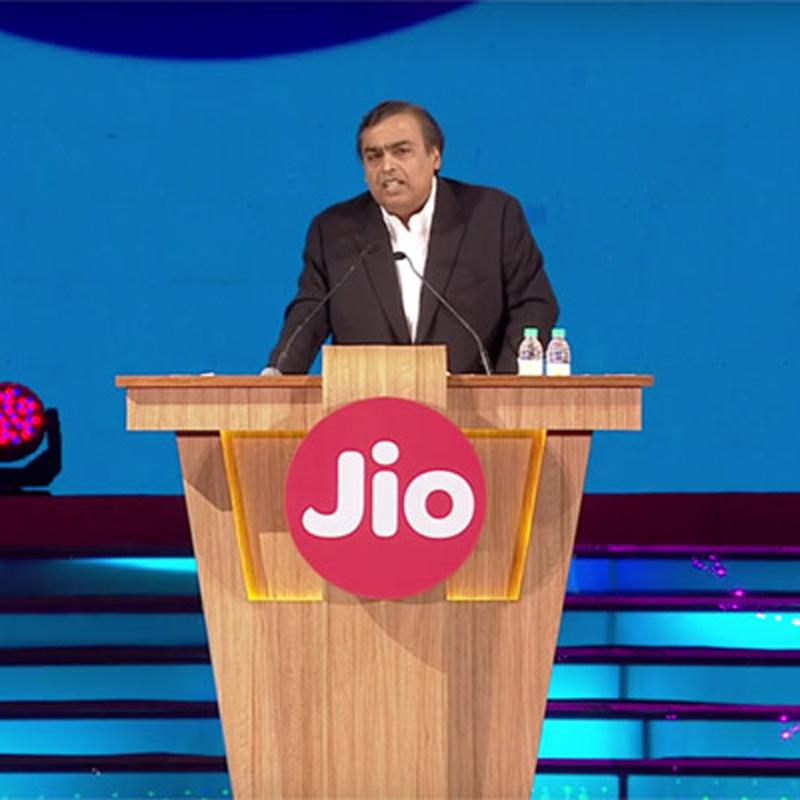
    The RIL earnings release for Q3-17 says that Jio has created a world record by crossing 5 crore (50 million) subscribers in 83 days of operations. The company says that this subscriber addition rate is the fastest achieved by any company in the world including the likes of Facebook, WhatsApp and Skype. It says further that Jio continues its rapid ramp up of subscriber base and as of 31 December 2016, in less than 4 months from commencement of services, there were 7.24 crore or 72.4 million subscribers on the network.

    Ambani, said, “I am also delighted by our country’s eagerness to adopt to a digital life as witnessed by the record breaking launch of Jio. Its comprehensive ecosystem has enabled millions of Indians to lead a richer life through its offerings.”

    Organised Retail

    RIL’s Organised Retail segment revenue in the current quarter increased 47.2 percent year-over-year (y-o-y) to Rs 8,688 crore as compared to Rs 5,901 crore and increased 7.5 percent quarter-over-quarter (q-o-q) from Rs 8,079 crore. 

    The segment’s EBIT increased 55 percent y-o-y to Rs 231 crore from Rs 149 crore and increased 42.6 percent q-o-q from Rs 162 crore.

    The company says that overall impact from demonetization has been positive for core retail business with favourable long-term implications for modern trade. It says further that according to Nielsen, Reliance Fresh and Smart stores grew faster than the modern trade during the demonetization period and its share of trade went up from 26.2 percent pre demonetization to 27.8 percent post demonetization

    RIL says that during the quarter, Reliance Retail added 111 stores across various store concepts. As on 31 December 2016, Reliance Retail operated 3,553 stores across 686 cities with an area of over 13.25 million square feet.

    RIL numbers

    RIL achieved a turnover of 84,189 crore ($ 12.4 billion), an increase of 16.1 percent, as compared to Rs 72,513 crorein the corresponding period of the previous year. The company says that increase in revenue is primarily on account of increase in prices of refining and petrochemical products led by 13 percent increase in Brent crude prices. Turnover was also boosted by robust growth in retail business.

    Operating profit before other income and depreciation increased by 2.7 percent on a y-o-y basis to Rs 11,552 crore ($ 1.7 billion) from Rs 11,248 crore in the previous year. The company attribute the growth to strong operating performance from petrochemicals businesses, sustained strength in refining business and favourable exchange rate movement. This was partially offset by losses in Oil & Gas business due to lower volumes and weak domestic price environment.

    Profit after tax was higher by 3.6 percent at Rs 7,506 crore ($ 1.1 billion) as against Rs 7,245 crore in the corresponding period of the previous year. 

    Basic earnings per share (EPS) excluding exceptional items for the quarter ended 30th September 2016 was Rs 25.4 as against Rs 24.6 in the corresponding period of the previous year.

    Note:The unit of currency in this report is the Indian rupee – Rs (also conventionally represented by INR).The Indian numbering system or the Vedic numbering system has been used to denote money values. The basic conversion to the international norm would be:

    (a) 100,00,000 = 100 lakh = 10,000,000 = 10 million = 1 crore.

    (b) 10,000 lakh = 100 crore = 1 arab = 1 billion.

  • Q3-17: Reliance: Jio busts records, organized retail op profit grows 55 percent

    Q3-17: Reliance: Jio busts records, organized retail op profit grows 55 percent

    BENGALURU: The Mukesh D Ambani led Reliance Industries Limited (RIL) organized retail segment – Reliance Retail,  continued its growth momentum and profitability in the quarter ended 31 December 2016 (Q3-17, current quarter), while its digital services offering Jio has broken all records in terms of subscriber acquisition.

    The RIL earnings release for Q3-17 says that Jio has created a world record by crossing 5 crore (50 million) subscribers in 83 days of operations. The company says that this subscriber addition rate is the fastest achieved by any company in the world including the likes of Facebook, WhatsApp and Skype. It says further that Jio continues its rapid ramp up of subscriber base and as of 31 December 2016, in less than 4 months from commencement of services, there were 7.24 crore or 72.4 million subscribers on the network.

    Ambani, said, “I am also delighted by our country’s eagerness to adopt to a digital life as witnessed by the record breaking launch of Jio. Its comprehensive ecosystem has enabled millions of Indians to lead a richer life through its offerings.”

    Organised Retail

    RIL’s Organised Retail segment revenue in the current quarter increased 47.2 percent year-over-year (y-o-y) to Rs 8,688 crore as compared to Rs 5,901 crore and increased 7.5 percent quarter-over-quarter (q-o-q) from Rs 8,079 crore. 

    The segment’s EBIT increased 55 percent y-o-y to Rs 231 crore from Rs 149 crore and increased 42.6 percent q-o-q from Rs 162 crore.

    The company says that overall impact from demonetization has been positive for core retail business with favourable long-term implications for modern trade. It says further that according to Nielsen, Reliance Fresh and Smart stores grew faster than the modern trade during the demonetization period and its share of trade went up from 26.2 percent pre demonetization to 27.8 percent post demonetization

    RIL says that during the quarter, Reliance Retail added 111 stores across various store concepts. As on 31 December 2016, Reliance Retail operated 3,553 stores across 686 cities with an area of over 13.25 million square feet.

    RIL numbers

    RIL achieved a turnover of 84,189 crore ($ 12.4 billion), an increase of 16.1 percent, as compared to Rs 72,513 crorein the corresponding period of the previous year. The company says that increase in revenue is primarily on account of increase in prices of refining and petrochemical products led by 13 percent increase in Brent crude prices. Turnover was also boosted by robust growth in retail business.

    Operating profit before other income and depreciation increased by 2.7 percent on a y-o-y basis to Rs 11,552 crore ($ 1.7 billion) from Rs 11,248 crore in the previous year. The company attribute the growth to strong operating performance from petrochemicals businesses, sustained strength in refining business and favourable exchange rate movement. This was partially offset by losses in Oil & Gas business due to lower volumes and weak domestic price environment.

    Profit after tax was higher by 3.6 percent at Rs 7,506 crore ($ 1.1 billion) as against Rs 7,245 crore in the corresponding period of the previous year. 

    Basic earnings per share (EPS) excluding exceptional items for the quarter ended 30th September 2016 was Rs 25.4 as against Rs 24.6 in the corresponding period of the previous year.

    Note:The unit of currency in this report is the Indian rupee – Rs (also conventionally represented by INR).The Indian numbering system or the Vedic numbering system has been used to denote money values. The basic conversion to the international norm would be:

    (a) 100,00,000 = 100 lakh = 10,000,000 = 10 million = 1 crore.

    (b) 10,000 lakh = 100 crore = 1 arab = 1 billion.

  • Disney, Pixar & Marvel movies available on Hotstar; exclusive deal signed

    Disney, Pixar & Marvel movies available on Hotstar; exclusive deal signed

    MUMBAI: This year Disney India has witnessed spectacular success with its Hollywood movies setting benchmarks that reflect the increasing popularity of English movies in the country. Similarly, Hotstar has emerged as a market leader signaling the rise of digital and mobile entertainment platforms. Hotstar has now announced a new studio partnership with Disney India to dramatically augment its Premium service. It has inked a multi-year SVOD deal with Disney India to showcase the studio’s biggest hits exclusively on Hotstar Premium in India which includes movies like Lucasfilm Star Wars: The Force Awakens, Disney’s The Jungle Book and Moana, Marvel’s Captain America: Civil War and Doctor Strange, Disney.Pixar’s Finding Dory amongst others.

    In addition, Hotstar premium subscribers will also have access to popular movies and classics from Disney’s library including Disney.Pixar’s Ratatouille, Brave, Toy Story 3; Disney’s The Lion King, Pirates of the Caribbean: Dead Man’s Chest as well as popular American TV series from ABC Studios such as Castle and Desperate Housewives. Hotstar subscribers will be able to access this content conveniently through Disney, Marvel and ABC Studios branded sections on the homepage of Hotstar.

    Hotstar CEO Ajit Mohan said, “Over the last 6 months, we have established Premium as an exciting new service for an Indian audience that is interested in international stories. The deal with Disney is in line with our strategy of bringing the best of new shows and movies from around the world to our Premium subscribers. This partnership signals our continuing strategy: we will invest deeply and widely with the best story tellers in the world to ensure that Premium continues as the standout streaming service in the country.”

    “Our movies have met with much success in theatres this year. This deal is important for us as it enables us to offer our movies across Disney, Marvel, Star Wars and Pixar brands and our ABC Studios’ TV shows to our audience wherever they are. Hotstar Premium is an ideal home for our content and it gives subscribers across the country, the chance to revisit their loved stories,” said Disney India VP Studios Amrita Pandey.

    Setting its sights on shaping the connected TV experience in India, Hotstar recently appropriated the top spot on iTunes as Apple TV’s App of the Year for India 2016. The recognition came on the back of a breakthrough year in which Hotstar continued to lead and disrupt the Indian market place. The service now has more than 140 million downloads to date. According to third party tracking provider App Annie, that tracks app usage of video streaming platforms, more than 50 million users used the service in India in the month of December.

  • Disney, Pixar & Marvel movies available on Hotstar; exclusive deal signed

    Disney, Pixar & Marvel movies available on Hotstar; exclusive deal signed

    MUMBAI: This year Disney India has witnessed spectacular success with its Hollywood movies setting benchmarks that reflect the increasing popularity of English movies in the country. Similarly, Hotstar has emerged as a market leader signaling the rise of digital and mobile entertainment platforms. Hotstar has now announced a new studio partnership with Disney India to dramatically augment its Premium service. It has inked a multi-year SVOD deal with Disney India to showcase the studio’s biggest hits exclusively on Hotstar Premium in India which includes movies like Lucasfilm Star Wars: The Force Awakens, Disney’s The Jungle Book and Moana, Marvel’s Captain America: Civil War and Doctor Strange, Disney.Pixar’s Finding Dory amongst others.

    In addition, Hotstar premium subscribers will also have access to popular movies and classics from Disney’s library including Disney.Pixar’s Ratatouille, Brave, Toy Story 3; Disney’s The Lion King, Pirates of the Caribbean: Dead Man’s Chest as well as popular American TV series from ABC Studios such as Castle and Desperate Housewives. Hotstar subscribers will be able to access this content conveniently through Disney, Marvel and ABC Studios branded sections on the homepage of Hotstar.

    Hotstar CEO Ajit Mohan said, “Over the last 6 months, we have established Premium as an exciting new service for an Indian audience that is interested in international stories. The deal with Disney is in line with our strategy of bringing the best of new shows and movies from around the world to our Premium subscribers. This partnership signals our continuing strategy: we will invest deeply and widely with the best story tellers in the world to ensure that Premium continues as the standout streaming service in the country.”

    “Our movies have met with much success in theatres this year. This deal is important for us as it enables us to offer our movies across Disney, Marvel, Star Wars and Pixar brands and our ABC Studios’ TV shows to our audience wherever they are. Hotstar Premium is an ideal home for our content and it gives subscribers across the country, the chance to revisit their loved stories,” said Disney India VP Studios Amrita Pandey.

    Setting its sights on shaping the connected TV experience in India, Hotstar recently appropriated the top spot on iTunes as Apple TV’s App of the Year for India 2016. The recognition came on the back of a breakthrough year in which Hotstar continued to lead and disrupt the Indian market place. The service now has more than 140 million downloads to date. According to third party tracking provider App Annie, that tracks app usage of video streaming platforms, more than 50 million users used the service in India in the month of December.

  • India, US renew commitment to work on cyber security

    India, US renew commitment to work on cyber security

    NEW DELHI: India and the United States have signed a Memorandum of Understanding (MoU) to promote closer co-operation and the exchange of information pertaining to the Cyber Security in accordance with the relevant laws, rules and regulations of each economy on the basis of equality, reciprocity and mutual benefit.

    The MoU was signed between the Indian Computer Emergency Response Team (CERT- In) under the Electronics and Information technology Ministry and the US Department of Homeland Security on cooperation in the field of cyber Security. The MoU was signed by MeITY Secretary Aruna Sundararajan and US Ambassador Richard Verma.

    Earlier, United States and India signed an MoU on 19 July 2011 to promote a closer cooperation and timely exchange of information between the organisations of their respective Governments responsible for Cyber Security. Since 19 July 2011 regular interactions between CERT-In and US CERT are taking place to share the information and discuss cyber security related issues.

    The present MoU is in continuation to the cooperation in cyber security areas.

    Also Read:

    ‘Force 2’ piracy: Viacom18 registers FIR; KSS blames it on a theatre

    Guest Column: As digital spreads wings, bolstering security is paramount


  • India, US renew commitment to work on cyber security

    India, US renew commitment to work on cyber security

    NEW DELHI: India and the United States have signed a Memorandum of Understanding (MoU) to promote closer co-operation and the exchange of information pertaining to the Cyber Security in accordance with the relevant laws, rules and regulations of each economy on the basis of equality, reciprocity and mutual benefit.

    The MoU was signed between the Indian Computer Emergency Response Team (CERT- In) under the Electronics and Information technology Ministry and the US Department of Homeland Security on cooperation in the field of cyber Security. The MoU was signed by MeITY Secretary Aruna Sundararajan and US Ambassador Richard Verma.

    Earlier, United States and India signed an MoU on 19 July 2011 to promote a closer cooperation and timely exchange of information between the organisations of their respective Governments responsible for Cyber Security. Since 19 July 2011 regular interactions between CERT-In and US CERT are taking place to share the information and discuss cyber security related issues.

    The present MoU is in continuation to the cooperation in cyber security areas.

    Also Read:

    ‘Force 2’ piracy: Viacom18 registers FIR; KSS blames it on a theatre

    Guest Column: As digital spreads wings, bolstering security is paramount


  • IPR Policy expected to speed up clearances

    IPR Policy expected to speed up clearances

    NEW DELHI: Trademark pendency, which is at three months, is expected to come down further to one month by March 2017 following the shifting of the Intellectual Rights Property portfolio to the Department of Industrial Policy and Promotion.

    Trademarks filing increased by around 10 per cent and Trademark examination increased by around 250 per cent during FY16 till November as compared to FY15.

    A comprehensive National Intellectual Property Rights (IPR) policy was adopted for the first time in May 2016 to lay future roadmap for intellectual property. The aim was to improve Indian intellectual property ecosystem, hoping to create an innovation movement in the country and aspires towards “Creative India; Innovative India.”

    This becomes relevant in view of the large number of cases pending in courts on copyright and the emergence of newer vehicles where software can be used, including smartphones and OTT.
     
    The objectives of this policy are to increase IPR awareness; stimulate generation of IPRs; have strong and effective IPR laws; modernize and strengthen service-oriented IPR administration; get value for IPRs through commercialisation; strengthen enforcement and adjudicatory mechanisms for combating IPR infringements; and to strengthen and expand human resources, institutions and capacities for teaching, training, research and skill building in IPRs.

    Subsequently, a Cell for Intellectual Property Rights Promotion and Management (CIPAM) has been created as a professional body which will be working under the aegis of DIPP for addressing seven identified objectives of the Policy.

    During 2016, India signed memorandums of understanding in the field of Intellectual Property signed with U.K, Singapore and the European Union. An India-US Workshop was held on Protection of Trade Secrets organized by CIPAM.

    DIPP Secretary Rajiv Aggarwal had recently said India’s IP framework was in the midst of a paradigm shift following the announcement of the National IPR Policy.

    Aggarwal said while the Department was spearheading the overall policy, specific recommendations listed in the policy were being taken up for action by concerned ministries and departments.

    Also Read

    Govt launches IPR toolkit for enforcement agencies

    Copyright Force finally here to fight online piracy   

    India, US should resolve IPR issues at earliest: IACC


  • IPR Policy expected to speed up clearances

    IPR Policy expected to speed up clearances

    NEW DELHI: Trademark pendency, which is at three months, is expected to come down further to one month by March 2017 following the shifting of the Intellectual Rights Property portfolio to the Department of Industrial Policy and Promotion.

    Trademarks filing increased by around 10 per cent and Trademark examination increased by around 250 per cent during FY16 till November as compared to FY15.

    A comprehensive National Intellectual Property Rights (IPR) policy was adopted for the first time in May 2016 to lay future roadmap for intellectual property. The aim was to improve Indian intellectual property ecosystem, hoping to create an innovation movement in the country and aspires towards “Creative India; Innovative India.”

    This becomes relevant in view of the large number of cases pending in courts on copyright and the emergence of newer vehicles where software can be used, including smartphones and OTT.
     
    The objectives of this policy are to increase IPR awareness; stimulate generation of IPRs; have strong and effective IPR laws; modernize and strengthen service-oriented IPR administration; get value for IPRs through commercialisation; strengthen enforcement and adjudicatory mechanisms for combating IPR infringements; and to strengthen and expand human resources, institutions and capacities for teaching, training, research and skill building in IPRs.

    Subsequently, a Cell for Intellectual Property Rights Promotion and Management (CIPAM) has been created as a professional body which will be working under the aegis of DIPP for addressing seven identified objectives of the Policy.

    During 2016, India signed memorandums of understanding in the field of Intellectual Property signed with U.K, Singapore and the European Union. An India-US Workshop was held on Protection of Trade Secrets organized by CIPAM.

    DIPP Secretary Rajiv Aggarwal had recently said India’s IP framework was in the midst of a paradigm shift following the announcement of the National IPR Policy.

    Aggarwal said while the Department was spearheading the overall policy, specific recommendations listed in the policy were being taken up for action by concerned ministries and departments.

    Also Read

    Govt launches IPR toolkit for enforcement agencies

    Copyright Force finally here to fight online piracy   

    India, US should resolve IPR issues at earliest: IACC