Category: iWorld

  • FCC gets Indian origin Ajit Pai as its chairman

    FCC gets Indian origin Ajit Pai as its chairman

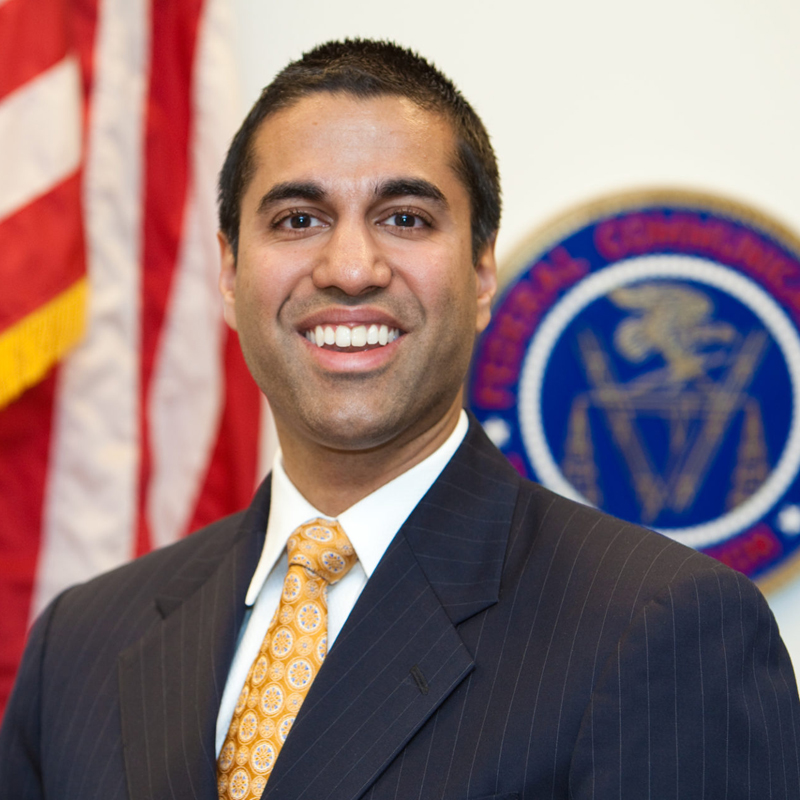
    MUMBAI: Indians are familiar with Ajit Pai who addressed Ficci Frames as a keynote speaker just three years ago. But Pai is the point man designated by US president Donald Trump as the 34th chairman of the Federal Communications Commission (FCC) who will be drawing up communications policy in one of the most highly networked and communications heavy nations on earth.

    Pai, a senior republican on the FCC, was appointed as a commissioner in 2012 by the then President Barack Obama and later confirmed by the senate. He replaces outgoing chairman Tom Wheeler.

    “I look forward to working with the new administration, my colleagues at the Commission, members of Congress and the American public to bring the benefits of the digital age to all Americans,” Pai said in a statement.

    Ajit Pai had credited his family for his successful rise as communications regulator during his Ficci Frames speech: Said he: “I was born and brought up in the United States, but my family’s roots are here in India. My mother grew up in Bangalore, and my father was raised in Hyderabad. In 1971, they came to the United States with just a radio and ten dollars in their pockets. Now, forty-three years later, here I am, in the country of my forefathers, speaking to you as the first Indian-American to serve on the FCC. The credit for this goes to my parents, who, like many immigrants, sacrificed to give me opportunities not available to them as children. It goes to my grandparents, who instilled in my parents the value of hard work and the vision to dream big.”

    According to the FCC website Pai’s rules on communication regulations are as follows:

    * Consumers benefit most from competition, not preemptive regulation. Free markets have delivered more value to American consumers than highly regulated ones.

    * No regulatory system should indulge arbitrage; regulators should be skeptical of pleas to regulate rivals, dispense favors, or otherwise afford special treatment.

    * Particularly given how rapidly the communications sector is changing, the FCC should do everything it can to ensure that its rules reflect the realities of the current marketplace and basic principles of economics.

    * As a creature of Congress, the FCC must respect the law as set forth by the legislature.

    * The FCC is at its best when it proceeds on the basis of consensus; good communications policy knows no partisan affiliation.

    Pai as the commissioner had proposed a:

    * Comprehensive plan to promote broadband deployment to all Americans. The federal government must make it easier to for broadband providers to retire increasingly obsolete copper lines in favor of next-generation technologies like fiber.”

    • It must enable rural residents to have the same choice for stand-alone broadband typically found in cities.

    • It must create a roadmap for state and local governments so that companies that want to compete in the broadband market don’t have to jump through unnecessary regulatory hoops in order to lay fiber to consumers.

    • It must promote common-sense policies like “Dig Once” and reform pole attachment rules to reduce the costs of building digital networks.

    • It must streamline the process for deploying wireless infrastructure, from big towers to small cells.

    • It must free up more licensed spectrum for use by wireless carriers and more unlicensed spectrum for things like Wi-Fi.

    • And it must preserve Internet freedom here and abroad, so that the online world can flourish free from heavy-handed government intervention.

    Additionally, Pai ai was the first member of the FCC in over two decades to call for revitalizing the AM radio band; the basic reforms he proposed were adopted in 2015. He also urged the FCC to create a task force to study the “Internet Protocol Transition” and report on obsolete rules that could be repealed; that task force was created.

    He is likely to undo the net neutrality regime that the FCC had been pursuing under outgoing chairman Wheeler.
  • FCC gets Indian origin Ajit Pai as its chairman

    FCC gets Indian origin Ajit Pai as its chairman

    MUMBAI: Indians are familiar with Ajit Pai who addressed Ficci Frames as a keynote speaker just three years ago. But Pai is the point man designated by US president Donald Trump as the 34th chairman of the Federal Communications Commission (FCC) who will be drawing up communications policy in one of the most highly networked and communications heavy nations on earth.

    Pai, a senior republican on the FCC, was appointed as a commissioner in 2012 by the then President Barack Obama and later confirmed by the senate. He replaces outgoing chairman Tom Wheeler.

    “I look forward to working with the new administration, my colleagues at the Commission, members of Congress and the American public to bring the benefits of the digital age to all Americans,” Pai said in a statement.

    Ajit Pai had credited his family for his successful rise as communications regulator during his Ficci Frames speech: Said he: “I was born and brought up in the United States, but my family’s roots are here in India. My mother grew up in Bangalore, and my father was raised in Hyderabad. In 1971, they came to the United States with just a radio and ten dollars in their pockets. Now, forty-three years later, here I am, in the country of my forefathers, speaking to you as the first Indian-American to serve on the FCC. The credit for this goes to my parents, who, like many immigrants, sacrificed to give me opportunities not available to them as children. It goes to my grandparents, who instilled in my parents the value of hard work and the vision to dream big.”

    According to the FCC website Pai’s rules on communication regulations are as follows:

    * Consumers benefit most from competition, not preemptive regulation. Free markets have delivered more value to American consumers than highly regulated ones.

    * No regulatory system should indulge arbitrage; regulators should be skeptical of pleas to regulate rivals, dispense favors, or otherwise afford special treatment.

    * Particularly given how rapidly the communications sector is changing, the FCC should do everything it can to ensure that its rules reflect the realities of the current marketplace and basic principles of economics.

    * As a creature of Congress, the FCC must respect the law as set forth by the legislature.

    * The FCC is at its best when it proceeds on the basis of consensus; good communications policy knows no partisan affiliation.

    Pai as the commissioner had proposed a:

    * Comprehensive plan to promote broadband deployment to all Americans. The federal government must make it easier to for broadband providers to retire increasingly obsolete copper lines in favor of next-generation technologies like fiber.”

    • It must enable rural residents to have the same choice for stand-alone broadband typically found in cities.

    • It must create a roadmap for state and local governments so that companies that want to compete in the broadband market don’t have to jump through unnecessary regulatory hoops in order to lay fiber to consumers.

    • It must promote common-sense policies like “Dig Once” and reform pole attachment rules to reduce the costs of building digital networks.

    • It must streamline the process for deploying wireless infrastructure, from big towers to small cells.

    • It must free up more licensed spectrum for use by wireless carriers and more unlicensed spectrum for things like Wi-Fi.

    • And it must preserve Internet freedom here and abroad, so that the online world can flourish free from heavy-handed government intervention.

    Additionally, Pai ai was the first member of the FCC in over two decades to call for revitalizing the AM radio band; the basic reforms he proposed were adopted in 2015. He also urged the FCC to create a task force to study the “Internet Protocol Transition” and report on obsolete rules that could be repealed; that task force was created.

    He is likely to undo the net neutrality regime that the FCC had been pursuing under outgoing chairman Wheeler.
  • Q3-17: Jio affects Airtel revenue; Digital TV segment numbers up

    Q3-17: Jio affects Airtel revenue; Digital TV segment numbers up

    BENGALURU: Indian telecom major Bharti Airtel Limited (Airtel) reported 3 percent decline in total revenue for the quarter ended 31 December 2016 (Q3-17, current quarter) as compared to the corresponding year ago quarter. The drop was partially affected by a drop in revenue due to divestments of its Africa operating units, tower assets sale and merger of Bangladesh operations. However, like in the previous quarter, Reliance Jio’s entry has resulted in a drop in the company’s India mobile revenues which contribute a lion’s share to overall revenue.

    Airtel MD and CEO of India and South Asia regions Gopal Vittal said, “The quarter has seen turbulence due to the continued predatory pricing by a new operator. The present termination costs at 14 paise which are well below cost has resulted in a tsunami of minutes terminating into our network. This has led to an unprecedented year on year revenue decline for the industry, pressure on margins and a serious impact on the financial health of the sector. At the same time our commitment to provide a superior experience to our customers has led to revenue market share crossing a lifetime high of 33 percent. Airtel revenues grew by 1.8 percent Y-o-Y and our non-mobile businesses continue to grow at a healthy clip and now contribute a sizable 24 percent of our total revenues.”

    In consonance with Vittal statement, Airtel’s Digital TV Services segment (DTH segment) reported 17.7 percent year-over-year (y-o-y) increase in operating revenues for the quarter ended 31 December 2016 (Q3-17, current quarter). Also, Operating Profit (Earnings Before interest and Tax – EBIT) of the DTH segment in the current quarter increased 27.1 percent year-over-year (y-o-y).

    Airtel DTH reported revenues of Rs 873.5 crore in Q3-17 and Rs 742.2 crore in Q3-16. EBIT for the corresponding periods was Rs 68.4 crore (7.8 percent margin of the segment’s operating revenue) and Rs 53.8 crore (7.2 percent margin of the segment’s operating revenue), respectively.

    EBIDTA in Q3-17 also increased y-o-y – by 22.3 percent to Rs 302.6 crore (34.6 percent margin of the segment’s operating revenue) in the current quarter from Rs 247.4 crore (33.3 percent margin of the segment’s operating revenue).

    Subscription numbers, ARPU

    Airtel’s DTH segment added 14.82 lakh subscribers between Q3-16 and Q3-17, or a 17.3 percent y-o-y increase. It had 125.88 lakh subscribers as on 31 December 2016. Q-o-q, the segment witnessed a 1.5 percent growth (1.83 lakh adds) in subscribers from 124.05 lakh in Q2-17.

    ARPU in Q3-17 increased to Rs 232 from Rs 229 in the corresponding year ago quarter, but remained flat q-o-q as compared to the immediate trailing quarter.

    Airtel numbers

    Bharti Airtel Limited saw a 3 percent decline in operating revenue to Rs 23335.7crore in Q3-17 as compared to Rs 24065.9 crore in Q3-16.. Profit after tax (PAT) in the current quarter declined to less than half (declined by 54.5 percent) y-o-y to Rs 504 crore (2.2 percent margin) from Rs 1,108 crore (4.6 percent margin). The company attributes decline in profits to net interest costs of Rs 1,810 crore that have risen from Rs 1,360 crore in the corresponding quarter last year largely due to increased spectrum related interest costs. Further, forex and derivative losses for the quarter came in at Rs 126 crore compared to Rs 57 crore in the corresponding quarter last year as well as exceptional items net losses of Rs 114 crore.

  • Q3-17: Jio affects Airtel revenue; Digital TV segment numbers up

    Q3-17: Jio affects Airtel revenue; Digital TV segment numbers up

    BENGALURU: Indian telecom major Bharti Airtel Limited (Airtel) reported 3 percent decline in total revenue for the quarter ended 31 December 2016 (Q3-17, current quarter) as compared to the corresponding year ago quarter. The drop was partially affected by a drop in revenue due to divestments of its Africa operating units, tower assets sale and merger of Bangladesh operations. However, like in the previous quarter, Reliance Jio’s entry has resulted in a drop in the company’s India mobile revenues which contribute a lion’s share to overall revenue.

    Airtel MD and CEO of India and South Asia regions Gopal Vittal said, “The quarter has seen turbulence due to the continued predatory pricing by a new operator. The present termination costs at 14 paise which are well below cost has resulted in a tsunami of minutes terminating into our network. This has led to an unprecedented year on year revenue decline for the industry, pressure on margins and a serious impact on the financial health of the sector. At the same time our commitment to provide a superior experience to our customers has led to revenue market share crossing a lifetime high of 33 percent. Airtel revenues grew by 1.8 percent Y-o-Y and our non-mobile businesses continue to grow at a healthy clip and now contribute a sizable 24 percent of our total revenues.”

    In consonance with Vittal statement, Airtel’s Digital TV Services segment (DTH segment) reported 17.7 percent year-over-year (y-o-y) increase in operating revenues for the quarter ended 31 December 2016 (Q3-17, current quarter). Also, Operating Profit (Earnings Before interest and Tax – EBIT) of the DTH segment in the current quarter increased 27.1 percent year-over-year (y-o-y).

    Airtel DTH reported revenues of Rs 873.5 crore in Q3-17 and Rs 742.2 crore in Q3-16. EBIT for the corresponding periods was Rs 68.4 crore (7.8 percent margin of the segment’s operating revenue) and Rs 53.8 crore (7.2 percent margin of the segment’s operating revenue), respectively.

    EBIDTA in Q3-17 also increased y-o-y – by 22.3 percent to Rs 302.6 crore (34.6 percent margin of the segment’s operating revenue) in the current quarter from Rs 247.4 crore (33.3 percent margin of the segment’s operating revenue).

    Subscription numbers, ARPU

    Airtel’s DTH segment added 14.82 lakh subscribers between Q3-16 and Q3-17, or a 17.3 percent y-o-y increase. It had 125.88 lakh subscribers as on 31 December 2016. Q-o-q, the segment witnessed a 1.5 percent growth (1.83 lakh adds) in subscribers from 124.05 lakh in Q2-17.

    ARPU in Q3-17 increased to Rs 232 from Rs 229 in the corresponding year ago quarter, but remained flat q-o-q as compared to the immediate trailing quarter.

    Airtel numbers

    Bharti Airtel Limited saw a 3 percent decline in operating revenue to Rs 23335.7crore in Q3-17 as compared to Rs 24065.9 crore in Q3-16.. Profit after tax (PAT) in the current quarter declined to less than half (declined by 54.5 percent) y-o-y to Rs 504 crore (2.2 percent margin) from Rs 1,108 crore (4.6 percent margin). The company attributes decline in profits to net interest costs of Rs 1,810 crore that have risen from Rs 1,360 crore in the corresponding quarter last year largely due to increased spectrum related interest costs. Further, forex and derivative losses for the quarter came in at Rs 126 crore compared to Rs 57 crore in the corresponding quarter last year as well as exceptional items net losses of Rs 114 crore.

  • BBC Worldwide to provide 600 hours of content to Amazon India

    BBC Worldwide to provide 600 hours of content to Amazon India

    MUMBAI: BBC Worldwide announced a licensing deal with Amazon that will give Amazon Prime members in India access to over 600 hours of factual and pre-school content from BBC.

    “In the last year or so, we have seen digital consumption in India increase exponentially. We are very excited to be partnering with Amazon Prime Video India to satisfy viewers’ demands for quality, premium programmes from the BBC,” said BBC Worldwide SVP and GM Myleeta Aga.

    Indian subscribers to Amazon Prime Video now have access to CBeebies programs, which have never been broadcast before in India, including Clangers, the pink, long-nosed, inventive and lovable mouse-shaped creatures who live on a little blue planet, out in the starry stretches of space, not far from Earth; Dinopaws, an animation series about the delightful adventures of a trio of very young, inquisitive dinos; and Hey Duggee, the animated series narrated by award-winning comedian Alexander Armstrongo.

    Subscribers to the service will also able to watch award-winning and highly-rated BBC factual programs such as Gandhi, The World’s Weirdest Weapons, and The Genius of Inventions.

    Amazon Prime Video India director and country head Nitesh Kripalani added, “We are pleased to work with BBC Worldwide to avail premium quality pre-school and documentary programmes to our Prime Video customers. We are very humbled by the positive response from customers to Prime Video and we are confident that the BBC’s programmes will resonate with customers. We look forward to a long and fruitful relationship with BBC Worldwide.”

  • BBC Worldwide to provide 600 hours of content to Amazon India

    BBC Worldwide to provide 600 hours of content to Amazon India

    MUMBAI: BBC Worldwide announced a licensing deal with Amazon that will give Amazon Prime members in India access to over 600 hours of factual and pre-school content from BBC.

    “In the last year or so, we have seen digital consumption in India increase exponentially. We are very excited to be partnering with Amazon Prime Video India to satisfy viewers’ demands for quality, premium programmes from the BBC,” said BBC Worldwide SVP and GM Myleeta Aga.

    Indian subscribers to Amazon Prime Video now have access to CBeebies programs, which have never been broadcast before in India, including Clangers, the pink, long-nosed, inventive and lovable mouse-shaped creatures who live on a little blue planet, out in the starry stretches of space, not far from Earth; Dinopaws, an animation series about the delightful adventures of a trio of very young, inquisitive dinos; and Hey Duggee, the animated series narrated by award-winning comedian Alexander Armstrongo.

    Subscribers to the service will also able to watch award-winning and highly-rated BBC factual programs such as Gandhi, The World’s Weirdest Weapons, and The Genius of Inventions.

    Amazon Prime Video India director and country head Nitesh Kripalani added, “We are pleased to work with BBC Worldwide to avail premium quality pre-school and documentary programmes to our Prime Video customers. We are very humbled by the positive response from customers to Prime Video and we are confident that the BBC’s programmes will resonate with customers. We look forward to a long and fruitful relationship with BBC Worldwide.”

  • Amazon to aid Nagaland women entrepreneurs

    Amazon to aid Nagaland women entrepreneurs

    MUMBAI: Amazon.in will work closely with the Nagaland government to enable women sellers in the state to embrace digital commerce through training, mentorship & skill development workshops.

    In line with its vision to transform the way India sells, Amazon India today announced its partnership with the Government of Nagaland and National Skill Development Corporation (NSDC) to empower and enable women entrepreneurs in the state by providing them with a global platform to sell their products at zero initial cost. Under the partnership, Amazon.in will conduct extensive training & skill development workshops to help women entrepreneurs in Nagaland understand nuances related to online selling and develop skills and capabilities necessary to nurture successful online enterprises. The programme also aims to encourage cottage industries in Nagaland by helping them grow through online commerce.

    As part of the initiative, a one-stop center equipped with state-of-the-art infrastructure will be created to train & equip women entrepreneurs to open their own ‘E-shop’ on Amazon.in. With this, Amazon India aims to promote the flourishing cottage industries in the region and unlock unique selection of products such as hand-woven items, intricate metalwork, woodwork, stonework, pottery and basketry. Spinning and weaving have been very significant in the Naga Hills and in the recent times mill-made yarn is also fast gaining popularity from this region. The government has also been very active in promoting industries like soap-making, candle-making, bee-keeping, and the association with Amazon will definitely aid in this direction.

    Starting today, the first workshop spanning over two days will be conducted in Kohima. The participants of the workshop will be endowed with essential skills required to help them start an online business. The training workshops will comprise of sessions on listing of products, imaging & cataloguing, packaging & shipping, inventory & account management and customer service to name a few. This will be a free workshop offering several exclusive benefits including assisted onboarding and mentorship programs.

    Commenting on the partnership, Nagaland chief minister’s principal secretary Temjin Toy said,“Today, digital commerce has dissolved geographical boundaries and enabled millions of Indians to consume products & services from all corners of the country leading to a massive economic transformation. We hope to drive this transformation in Nagaland by helping our women become e-entrepreneurs on Amazon. We look forward to extending all possible support to Amazon India in helping women artisans & entrepreneurs to participate in India’s vibrant digital economy.”

    Expressing his sentiments on empowering women entrepreneurs through this programme, Amazon India director & GM – seller services Gopal Pillai said, “Our entrepreneurial culture and initiatives have always been aligned with our vision of transforming the way India buys and sells. Through this partnership, we look forward to fostering entrepreneurship and empowerment among women in Nagaland by giving them the opportunity to experience India’s digital economy firsthand. With specialised training, skill development workshops, technology support and market access at zero initial cost, the initiative will not only boost the cottage industry run by women in Nagaland, but also lead to the overall advancement of women e-entrepreneurs from the state.”

    On taking this partnership to other states, Gopal added “We see this as an important milestone in our journey and look forward to extending our partnership with NSDC to other states in India.”

    “The SMB sector in Nagaland is largely women dominated. We believe that with adequate training, skill development and e-commerce exposure, this industry can grow exponentially and lift the economic landscape of the region and its people, especially women entrepreneurs. With Amazon’s training and development program and its massive digital reach, we are confident that the women sellers from the region can not only accelerate their business growth but can also get the required global platform to showcase their products. We look forward to providing all possible support to Amazon in their initiative,“ said NSDC head – Jammu, Kashmir and North East Region Dr. Sapna Poti.

    With its flagship initiatives like Seller University that trains and nurture sellers, fulfilment and assisted shipping service via Fulfilment by Amazon (FBA), Seller Flex and Easy Ship, Amazon Tatkal that helps SMBs get online within 60 minutes and lending program to provide comprehensive financial solutions to sellers, Amazon.in has rolled out several such initiatives and has been working extensively to meet different business requirements of sellers and small entrepreneurs and help them grow their business profitably online.

    The company’s Global Selling Program launched in India in May last year has over 18,000 sellers today selling their ‘Make in India’ products on Amazon’s 9 global marketplaces to millions of active worldwide customers. With the recently launched Prime service, Indian customers in over 100 cities can enjoy unlimited free one-day and two-day delivery on lakhs of eligible products from India’s largest online shopping selection.Customers on Amazon benefit from a safe and secure ordering experience, convenient electronic payments, Cash on Delivery, Amazon’s 24×7 customer service support, and a globally recognized and comprehensive 100% purchase protection provided by Amazon’s A-to-Z Guarantee.

  • Amazon to aid Nagaland women entrepreneurs

    Amazon to aid Nagaland women entrepreneurs

    MUMBAI: Amazon.in will work closely with the Nagaland government to enable women sellers in the state to embrace digital commerce through training, mentorship & skill development workshops.

    In line with its vision to transform the way India sells, Amazon India today announced its partnership with the Government of Nagaland and National Skill Development Corporation (NSDC) to empower and enable women entrepreneurs in the state by providing them with a global platform to sell their products at zero initial cost. Under the partnership, Amazon.in will conduct extensive training & skill development workshops to help women entrepreneurs in Nagaland understand nuances related to online selling and develop skills and capabilities necessary to nurture successful online enterprises. The programme also aims to encourage cottage industries in Nagaland by helping them grow through online commerce.

    As part of the initiative, a one-stop center equipped with state-of-the-art infrastructure will be created to train & equip women entrepreneurs to open their own ‘E-shop’ on Amazon.in. With this, Amazon India aims to promote the flourishing cottage industries in the region and unlock unique selection of products such as hand-woven items, intricate metalwork, woodwork, stonework, pottery and basketry. Spinning and weaving have been very significant in the Naga Hills and in the recent times mill-made yarn is also fast gaining popularity from this region. The government has also been very active in promoting industries like soap-making, candle-making, bee-keeping, and the association with Amazon will definitely aid in this direction.

    Starting today, the first workshop spanning over two days will be conducted in Kohima. The participants of the workshop will be endowed with essential skills required to help them start an online business. The training workshops will comprise of sessions on listing of products, imaging & cataloguing, packaging & shipping, inventory & account management and customer service to name a few. This will be a free workshop offering several exclusive benefits including assisted onboarding and mentorship programs.

    Commenting on the partnership, Nagaland chief minister’s principal secretary Temjin Toy said,“Today, digital commerce has dissolved geographical boundaries and enabled millions of Indians to consume products & services from all corners of the country leading to a massive economic transformation. We hope to drive this transformation in Nagaland by helping our women become e-entrepreneurs on Amazon. We look forward to extending all possible support to Amazon India in helping women artisans & entrepreneurs to participate in India’s vibrant digital economy.”

    Expressing his sentiments on empowering women entrepreneurs through this programme, Amazon India director & GM – seller services Gopal Pillai said, “Our entrepreneurial culture and initiatives have always been aligned with our vision of transforming the way India buys and sells. Through this partnership, we look forward to fostering entrepreneurship and empowerment among women in Nagaland by giving them the opportunity to experience India’s digital economy firsthand. With specialised training, skill development workshops, technology support and market access at zero initial cost, the initiative will not only boost the cottage industry run by women in Nagaland, but also lead to the overall advancement of women e-entrepreneurs from the state.”

    On taking this partnership to other states, Gopal added “We see this as an important milestone in our journey and look forward to extending our partnership with NSDC to other states in India.”

    “The SMB sector in Nagaland is largely women dominated. We believe that with adequate training, skill development and e-commerce exposure, this industry can grow exponentially and lift the economic landscape of the region and its people, especially women entrepreneurs. With Amazon’s training and development program and its massive digital reach, we are confident that the women sellers from the region can not only accelerate their business growth but can also get the required global platform to showcase their products. We look forward to providing all possible support to Amazon in their initiative,“ said NSDC head – Jammu, Kashmir and North East Region Dr. Sapna Poti.

    With its flagship initiatives like Seller University that trains and nurture sellers, fulfilment and assisted shipping service via Fulfilment by Amazon (FBA), Seller Flex and Easy Ship, Amazon Tatkal that helps SMBs get online within 60 minutes and lending program to provide comprehensive financial solutions to sellers, Amazon.in has rolled out several such initiatives and has been working extensively to meet different business requirements of sellers and small entrepreneurs and help them grow their business profitably online.

    The company’s Global Selling Program launched in India in May last year has over 18,000 sellers today selling their ‘Make in India’ products on Amazon’s 9 global marketplaces to millions of active worldwide customers. With the recently launched Prime service, Indian customers in over 100 cities can enjoy unlimited free one-day and two-day delivery on lakhs of eligible products from India’s largest online shopping selection.Customers on Amazon benefit from a safe and secure ordering experience, convenient electronic payments, Cash on Delivery, Amazon’s 24×7 customer service support, and a globally recognized and comprehensive 100% purchase protection provided by Amazon’s A-to-Z Guarantee.

  • Fazed by expensive 4G spectrum, BSNL gifting Kerala 1k hotspots

    Fazed by expensive 4G spectrum, BSNL gifting Kerala 1k hotspots

    NEW DELHI: Public sector telco BSNL will launch 1,000 high-speed Wi-Fi hotspots across the state of Kerala to address the challenges posed by its absence in the 4G data services, a top BSNL official has said.

    BSNL’s Kerala circle CGM R Mani told reporters that the proposed hotspots would provide 4.5G speed and would be commissioned within a months’ time. Huge cost to buy the 4G spectrum was the hindrance for the state-run service provider to plunge into 4G services, but it is expected to happen by this March, Mani was quoted by a PTI report, carried by Firstpost, as saying, who added that wherever BSNL’s 3G tower experienced a lot of traffic, Wi-Fi hotspots are being put up.

    With the commissioning of the hotspots, when a customer is using his mobile phone, his network service would be directly taken over to the Wi-Fi hotspot. “Then, he will not be on 3G… but will be on 4.5G,” the BSNL official is reported to have said. The project is being implemented in collaboration with equipment from Larsen & Toubro.

    The official explained that the high cost of 4G spectrum was an impediment for the State-run telco, though the initiative was “under evaluation” at the headquarters in Delhi.

    The rollout of 1,000 Wi-Fi hotspots in Kerala is part of an effort to provide Wi-Fi hotspots all across the country. In 2015, it was announced that BSNL would be investing Rs. 7, 0000 million to set up Wi-Fi hotspots across the country over the course of two to three years. BSNL has partnered with QuadGen Wireless to set up Wi-Fi hotspots in south and west zones, under a revenue sharing model.

    According to the report, BSNL plans to set up 40,000 Wi-Fi hotspots across the country by 2018 and the company already offers Wi-Fi services in tourist destinations such as the Taj Mahal, Khajuraho and Varanasi. The first 30 minutes of Wi-Fi connectivity is free, after which users will have to pay between Rs 20 to Rs 70 for access between 30 minutes to 24 hours. The free access is provided three times a month per user.

    Facebook has sponsored 100 hotspots across the country in partnership with BSNL and the social media company (hauled up by the government last year for offering, what the telecom regulator said, services that breached principles of Net Neutrality via Internet.org) is paying BSNL Rs 500,000 per hotspot annually. There is no revenue sharing agreement with Facebook.

  • Netflix confirms seven million subs; picks up Amazon gauntlet

    Netflix confirms seven million subs; picks up Amazon gauntlet

    MUMBAI: For all those media watchers who have been writing Netflix’s obituary in India, here’s a note of caution: take a few steps back, hold on to your fingers before banging in any other words on your keyboards. The global streaming services has come back with some smashing numbers in the latest quarter which should make the critics go red in their faces – with embarrassment, of course. And it is quite likely it will go back to the drawing board with a review of its India strategy.

    The company announced over the weekend that it had added 19 million new net subs in the year 2016 as against 17.4 million in 2015, finishing the year with 93.8 million subs. Its global streaming revenue during the period: a mindboggling $8.3 billion, reflecting a 35 per cent year on year growth.

    And its figures for the quarter ended 31 December 2016 are also noteworthy: it notched up its historical best Q4 net adds number at 7.05 million (against 5.20 million forecast and 5.59 million in Q42015). These net adds came both courtesy the US (1.93 million vs forecast 1.54 million) and the 190 countries it is present in (5.12 million Q4 2016 as against the 3.75 million forecast and 4.04 million achieved in the year ago quarter). The company says in a release that the contribution was broad based geographically and the impact of its content slate is likely to be felt even more in Q2 2017 as it rolls out the new shows it has commissioned and libraries it has acquired.

    The Reed Hastings-Ted Sarandos team has upped Netflix’s content budget to $6 billion for 2017 – 20 per cent more than it had laid out for 2016. The company has given a guidance of 5.12 million new net adds for Q1 2017 (3.7 million of these will be from outside the US).

    Estimates are that it has managed to rope in sub-100,000 subscribers in India and renewals have been tough to achieve. In fact, it sent down a team on a fact finding mission to figure out why uptake has not been blazing like in other parts of the world. And how it can appeal better to potential subscribers.

    Analysts expect some pricing corrections going forward, considering the aggressive pricing that streaming services such as Hotstar, Amazon Prime, ErosNow, YuppTV, Hooq are adopting.
    Then it hopes that its offline viewing mode it launched in Q42016 will also help do the trick in India where bandwidth is patchy at best, despite the speedy rollout of 4G services by Jio, Airtel, Idea and the freebie offers they are dishing out.

    The Netflix offline mode allows viewers on iOS and Android devices to download content for viewing later while traveling to work on subways, buses, planes etc. The company hopes that this feature will do well in countries with limited or expensive bandwidth. Says the press release: “We are pleased with the initial results and as expected enjoyment of offline viewing is greatest where the broadband infrastructure is less than robust.”

    Netflix is also banking on the appeal of Shah Rukh Khan to help do the magic in India and south Asia. Speculation is that it has invested hundreds of crores to acquire Red Chilies Entertainment’s forward and back catalogue. Then of course its first series adapted from Vikram Chandra’s Mumbai underworld thriller Sacred Games and produced by the edgy production house Phantom Films should see the light of day by mid to end 2017.

    If it does anywhere as well as Netflix’s first Brazilian original series 3% did, it could catapult the SVOD service to cult status amongst India’s millenials and mobile-toting generation. The Portuguese language scifi post apocalyptic thriller premiered last year as one of the most watched originals in Brazil as well as Latin America and was also watched by millions of subscribers in the US dubbed and subtitled in English.

    Netflix is quite confident that its 2016 global slate – which included award winning shows such as The Crown, Marvel’s Luke Cage, Gilmore Girls: A Year in the Life, The OA, Troll Hunters – will continue to generate traction in India.

    Netflix acknowledges in the investor release that Internet TV is evolving fast and becoming hyper competitive. Says the company: “Internet video is a global phenomenon. Amazon Prime Video expanded recently to match our territory footprint, while YouTube remains far larger than either of us in terms of global video enjoyment minutes. Video consumption is growing on Facebook, and Apple is rumored to be adding video to its music service. Satellite TV operators are moving to become internet MVPDs, such as ViaSat to ViaPlay in the Nordics, DISH to Sling, and DirecTV to DirecTV Now. Insurgent firms such as Molotov.tv in France and Hulu are building native-internet interfaces for TV network bundles. CBS is releasing a major original series ( Star Trek) exclusively on its domestic SVOD service (with us as international partner). Finally, the BBC has become the first major linear network to announce plans to go binge-first with new seasons, favoring internet over linear viewers. We presume HBO is not far behind the BBC. In short, it’s becoming an internet TV world, which presents both challenges and opportunities for Netflix as we strive to earn screen time. “

    It additionally states that Q42016 marked the tenth anniversary of its streaming launch. And the road ahead is quite clearly laid out. “The next decade will be even more amazing and tumultuous as Internet TV supplants linear TV and we strive to remain a leader.”