Category: iWorld

  • Swiggy’s landmark IPO wins equity issue of the year at IFR Asia Awards 2024

    Swiggy’s landmark IPO wins equity issue of the year at IFR Asia Awards 2024

    MUMBAI : Swiggy has made headlines by clinching the Equity Issue of the Year 2024 award at the IFR Asia Awards, recognising its record-breaking IPO that raised Rs 11,327.43 crore. As India’s top on-demand convenience platform, Swiggy’s public debut wasn’t just a financial milestone but a statement of its growing influence in the consumer-tech space.

    Swiggy’s shares debuted on the Bombay Stock Exchange (BSE) and the National Stock Exchange (NSE) on 13 November 2024, receiving a strong market response.

    Swiggy CFO Rahul Bothra said , “Receiving the ‘Equity Issue of the Year’ award from IFR Asia is a significant honour. This recognition reflects our strong business fundamentals, operational excellence, and the confidence of both Indian and global investors. The overwhelming response to our IPO underscores our vision to redefine convenience while fostering a sustainable, technology-driven ecosystem. We remain committed to delivering long-term value to all stakeholders.”

    Presented by the International Finance Review (IFR), the IFR Asia Awards are among the most prestigious honours in the financial industry, celebrating excellence in capital markets across the Asia-Pacific region. Swiggy’s IPO has set a new benchmark in the consumer technology sector, highlighting its scale, resilience, and promising growth trajectory.

  • Reliance Communications comprehensive loses amount to Rs 2,068 crore in Q3

    Reliance Communications comprehensive loses amount to Rs 2,068 crore in Q3

    MUMBAI: Reliance Communications Ltd (RCom.), once a dominant force in the Indian telecom sector, continues its painful spiral into financial oblivion. The latest Q3 FY25 results make for grim reading, with deepening losses, shrinking revenues, and an insolvency process that looks more like a never-ending courtroom drama. The company, under corporate insolvency resolution since 2019, posted a staggering net loss of Rs 2,068 crore for the quarter ending 31 December 2024, further extending its financial nightmare.

    But is there a miracle in sight? Or is RCom. doomed to be a cautionary tale in corporate history?

    Standalone Results

    RCom.’s revenue from operations in Q3 FY25 stood at Rs 65 crore, marginally slipping from Rs 66 crore in the previous quarter. Compared to Rs 71 crore in the same period last year, the company seems to be on a never-ending treadmill-moving, but going nowhere. The nine-month revenue isn’t offering much comfort either, standing at Rs 206 crore, a dip from Rs 220 crore in FY24. With operations at a standstill and no meaningful revenue streams, RCom.’s survival depends on asset monetisation. However, that process has been moving at the pace of a turtle on vacation.

    Consolidated Results

    RCom.’s financials for Q3 reveal a disaster unfolding in slow motion. If numbers could scream, these would be deafening.

    RCom.’s profit after tax (PAT) might as well be renamed loss after tax, as it posted a net loss of Rs 2323 crore for Q3 and a whopping Rs 6779 crore for the nine-month period. The losses are on autopilot, and there’s no emergency landing in sight. The EBITDA situation? Let’s just say it stands for “Empty Bucket DA”. There’s no sign of improvement, and the company continues to hemorrhage cash.

    Revenue from operations came in at Rs 87 crore for Q3, which, in telecom terms, is barely enough to keep the call centers running. The nine-month revenue stands at Rs 272 crore, proving that RCom.’s once-mighty earnings have taken a permanent vacation.

    If you’re an RCom. shareholder, consider looking away. The earnings per share (EPS) before exceptional items was (Rs 8.67) per share for Q3 and (Rs 25.10) per share for the nine-month period. After exceptional items? Let’s not even go there.

    To top it all off, the comprehensive loss for Q3 stood at Rs 2,373 crore, ballooning to Rs 6,878 crore for the nine-month period-because apparently, one kind of loss just wasn’t enough.

    The financial report reads less like a balance sheet and more like a horror novel. With no operational revenue and a debt mountain that refuses to shrink, the road ahead is looking rockier than ever.

    Discontinued Operations

    RCom.’s discontinued operations, including its wireless spectrum, towers, fibre, and media convergence nodes, continue to be the financial equivalent of quicksand. Despite being classified as “held for sale” since 2018, these assets remain unsold, haunting the company’s balance sheet like a ghost that refuses to be exorcised.

    The real horror story lies in the discontinued operations segment, where the company booked a massive provision of Rs 1,840 crore towards license and spectrum fees, sending the total net loss soaring to Rs 2,068 crore. For the nine-month period, RCom.’s total losses ballooned to Rs 6,012 crore, with discontinued operations contributing Rs 5,874 crore in losses. If you’re looking for signs of improvement, well, there aren’t any-the loss for the same period last year was Rs 6,232 crore.

    The segment’s revenue was a pathetic Rs 3 crore, against expenses of Rs 160 crore, leading to a Rs 156 crore loss. Making matters worse, the company has not accounted for interest on loans amounting to Rs 1,327 crore for Q3, further distorting its actual financial position.

    Debt and Insolvency

    RCom.’s financial position is about as stable as a house of cards in a hurricane. The company has defaulted on both interest and principal payments for years. Its total debts now exceed total assets, with a debt-to-assets ratio of 1.02. Net worth? Completely wiped out, standing at a shocking negative Rs 68,490 crore as of December 31, 2024.

    The insolvency resolution process remains stuck in legal limbo, with creditors desperately waiting for some sort of recovery. But with Supreme Court and NCLT hearings stretching on indefinitely, they might be waiting for a long, long time.

    Segment-wise performance

    . Telecom services: With just Rs 65 crore in revenue, the core business has all but collapsed. The segment continues to operate at a loss, and there’s no revival plan in sight.

    Infrastructure and enterprise solutions: This segment is in hibernation mode, waiting for the insolvency proceedings to play out.

    Discontinued operations: The spectrum, towers, and fibre assets remain stranded, with no buyers in sight, making them a financial black hole.

    With no revenue growth, no operational revival, and mounting liabilities, RCom.’s future looks about as promising as a sinking ship without a lifeboat. The resolution process remains entangled in legal battles, and the much-needed asset sales haven’t made any progress. Creditors are frustrated, and shareholders have zero hope of recovery.

    Unless a miraculous acquisition or restructuring deal materialises, RCom. is likely to become a footnote in India’s corporate history-a grim reminder of how unchecked expansion, debt mismanagement, and regulatory battles can sink even the biggest players.
  • Amazon rakes in $187.8 billion in Q4-Because breaking records is a habit

    Amazon rakes in $187.8 billion in Q4-Because breaking records is a habit

    MUMBAI: Jeff Bezos may be off enjoying space tourism, but Amazon is still launching financial rockets. The retail and tech giant didn’t just end 2024 on a high note—it dropped a financial mixtape that went platinum. With a blockbuster fourth quarter, Amazon smashed expectations, delivering record-breaking revenue, sky-high profits, and a holiday shopping season that made Santa look like an amateur.

    Amazon reported net sales of $187.8 billion in Q4, marking a 10 per cent year-over-year (YoY) increase, with north America leading the charge at $115.6 billion. Meanwhile, AWS, Amazon’s cloud computing juggernaut, flexed its muscle with a 19 per cent YoY jump, raking in $28.8 billion.

    Profits weren’t just strong—they were Amazon-strong. Operating income skyrocketed to $21.2 billion, up from $13.2 billion in Q4 2023, while net income nearly doubled to $20.0 billion-or $1.86 per diluted share. Amazon’s international segment pulled off an impressive turnaround, swinging from a $400 million loss last year to a $1.3 billion profit.

    For the full year, Amazon’s revenue soared to $638 billion, an 11 per cent increase from 2023, with AWS contributing $107.6 billion. North America’s sales hit $387.5 billion, while international revenue climbed to $142.9 billion. Operating income more than doubled to $68.6 billion, cementing Amazon’s digital dominance.

    Amazon’s free cash flow swelled to $38.2 billion, up from $36.8 billion last year, while operating cash flow leapt 36 per cent to $115.9 billion. The company stepped up investments, pumping $82.9 billion into fulfillment, technology, and AWS infrastructure.

    Meanwhile, advertising revenue proved a bright spot, growing 18 per cent YoY to $17.3 billion-a clear sign that Amazon’s ad business is going toe-to-toe with industry giants. At the same time, third-party seller services surged 9 per cent to $47.5 billion, highlighting Amazon’s commitment to its marketplace model.

    Reflecting on the company’s record-breaking year, Amazon CEO Andy Jassy remarked, “2024 was a transformational year for Amazon, with innovation at the core of our growth. From AWS advancements to Prime’s fastest-ever deliveries, we are building for the future.”

    Looking ahead, Amazon projects Q1 2025 net sales between $151 billion and $155.5 billion, signaling 5-9 per cent growth, despite a $2.1 billion currency headwind. Operating income is expected to land between $14 billion and $18 billion, as the company strikes a balance between profitability and reinvestment.

    With Amazon delivering results like a Prime package on express shipping, 2025 is already shaping up to be another blockbuster year.

  • India, Africa growth propels Bharti Airtel to  strong Q3 FY25

    India, Africa growth propels Bharti Airtel to strong Q3 FY25

    MUMBAI:  It is one of the two telco bellwethers in India, the other being Jio. And it appears to be doing very well, thank you going by Bharti Airtel Ltd’s  consolidated results for the third quarter ended 31 December 2024. It reported significant growth driven by momentum in India and stable performance in Africa.

    Financial Highlights:

    * Consolidated revenue rose 19.1 per cent  year-on-year (YoY) to Rs 45,129 crore, up 8.8 per cent  sequentially.
    * Consolidated EBITDA stood at Rs 24,880 crore, marking a 24.1 per cent  YoY increase, with a margin of 55.1 per cent.
    * EBITDA after lease expenses (EBITDAaL) increased by 26.1 per cent  YoY to Rs 21,474 crore, reflecting a margin of 47.6 per cent .
    * EBIT grew 33.3 per cent  YoY to Rs 13,126 crore, with a margin of 29.1 per cent .
    * Net income (before exceptional items) reached Rs 5,514 crore, up 121.3 per cent  YoY.
    * Capex for the quarter totalled Rs 9,161 crore.

    India Business Performance:
    * Revenue from India operations rose 24.6 per cent  YoY to Rs 34,654 crore.
    * Mobile services revenue increased by 21.4 per cent  YoY, driven by tariff adjustments, higher smartphone adoption, and portfolio premiumisation.
    * Mobile average revenue per user (ARPU) improved to Rs 245, up from Rs 208 in Q3 FY24.
    * Mobile data consumption surged by 23.2 per cent  YoY, with average consumption per customer at 24.5 GB per month.
    * EBITDA rose 32.3 per cent  YoY to Rs 19,850 crore, with an EBITDA margin of 57.3 per cent .
    * EBITDAaL stood at Rs 17,641 crore, with a margin of 50.9 per cent .
    * Capex for India operations was Rs 7,980 crore.
     

    Segment Highlights:

    * Homes Business: Revenue grew by 18.7 per cent  YoY, with 674,000 net customer additions driven by fibre-to-the-home (FTTH) and fixed wireless access (FWA). The customer base reached 9.2 million.
    * Airtel Business: Revenue increased by 8.7 per cent  YoY despite global pressures. Emerging digital services, including cloud and security, showed strong growth.
    * Digital TV: Revenue declined by 2.9 per cent  YoY to Rs 761 crore. The customer base stood at 15.8 million.
    * Passive Infrastructure Services: Contributed 5.7 per cent  YoY and 5 per cent  quarter-on-quarter (QoQ) to India revenue growth.

    Africa Operations:
    * Revenue in constant currency rose by 21.3 per cent  YoY.
    * EBITDA margin stood at 47.1 per cent , while EBIT margin was 29.4 per cent .
    * Customer base reached 163.1 million.
    * Capex for Africa operations totalled Rs 1,181 crore.

    Operational Achievements:
    * Bharti Airtel rolled out approximately 5,200 towers and 16,300 mobile broadband stations during the quarter.
    * The company expanded its fibre network by 47,100 km YoY.
    * The anti-spam tool notified 252 million customers and identified over 1 million spammers.
    * Airtel’s AI-driven network detected over 7 million spam SMS daily.
    * Zee5 was added to the Airtel Xstream Play platform, enhancing content offerings.

    Debt Management:
    * Net debt to EBITDAaL ratio (excluding lease obligations) stood at 1.56 times.
    * The company prepaid Rs 3,626 crore towards deferred spectrum liabilities.

    Vice-chairman &  managing director Gopal Vittal commented: “We delivered a strong quarter with consolidated revenue of Rs 45,129 crore. Our India mobile business showed robust performance, driven by tariff adjustments and premiumisation. We continued to lead the industry with ARPU growth and added 6.5 million smartphone users. Homes business saw accelerated customer additions, while Airtel Business navigated global headwinds with stability.

    “Our strong cash generation and prudent capital allocation allowed us to continue deleveraging and prepay high-cost spectrum dues. Further tariff corrections are necessary to sustain investments and create long-term value for the industry,” he added.

  • Why legal professional Kiran Desai swears by Netflix

    Why legal professional Kiran Desai swears by Netflix

    MUMBAI: From being a partner in a successful law firm to taking up employment  in a global corporation can sound strange to some –  but not to Kiran Desai. The legal professional-turned-entrepreneur founded and led Desai & Partners,  a prominent law firm specialising in media, entertainment, intellectual property, and sports law in 2007. Over a 12-year tenure, he built a thriving practice, representing high-profile clients in a rapidly evolving digital media landscape. 

    Then Netflix came knocking in 2019, as he explained in a note on linkedin in 2020: “When I was offered a position at Netflix, I saw an opportunity to be a part of a rapidly growing organisation that could veritably build and help influence the manner in which entertainment is consumed in India. I took a leap of faith and decided to join Netflix. 

    “To leave a law firm which I had founded and built over the better part of my professional career was a difficult decision, fraught with emotion. It was tough explaining to my colleagues and clients that I was moving on and needed to do so for my own personal development. While I had many doubts, one thing I was sure of was self-belief, stemming from the years of experience I had gathered as an entrepreneur, having seen both, success and failure. I was willing to start all over again, without fear of the unknown. While few could confidently predict the future trajectory of this fast-paced industry at the time, by joining the team at Netflix, I believed I would be standing at the leading edge of it. Now, a little over a year later, I can confidently say that it was the right decision.”
    Kiran Desai with colleaguesHe joined Netflix in July 2019 as director – business & legal affairs. Nearly six years later in February 2025, Kiran  was promoted to the role of vice president – India general counsel, from senior director – India general counsel.  
    Over this period, Desai has played a pivotal role in Netflix’s legal strategy in India, helping the company navigate complex regulatory landscapes, forge critical content deals, and support the company’s expansion in a highly competitive market.

    As India remains a key growth territory for Netflix, Desai’s promotion signals a continued commitment to strengthening operations and compliance frameworks in the region.  

    Desai holds an LLM  from Georgetown University Law Center, where he focused on intellectual property, antitrust, and international environmental law, as well as an LLB  and BCom from the University of Mumbai. He actively participated in leadership roles during his academic years, including serving as general secretary of the sports council at the University of Mumbai. His earlier legal roles include serving as counsel at the chambers of senior advocate Shyam Divan and as an associate at DSK Legal.

    Reflecting on his journey with Netflix, Desai said, “Joining Netflix was a leap of faith after years of running my own practice. The company’s culture, built on the values of freedom with responsibility, context over control, and open feedback, has been transformative both personally and professionally. Working here has not only made me a better lawyer but also a better person.”

    Desai highlighted the importance of Netflix’s unique working culture, where employees are empowered to make independent decisions while being supported with extensive contextual information. “The open feedback culture initially felt unfamiliar but has become one of the most impactful aspects of my professional growth,” he added.

    Going by Desai’s admissions, the Netflix culture, which Ted Sarandos and team have built is not just a folklore of books written to make it attractive  for talent to join, it is  reality. Even in India. 

    Desai’s  leadership has been instrumental in supporting Netflix’s ambitious content strategy in India, fostering legal frameworks that enable creative freedom while ensuring regulatory compliance.

    As Desai steps into his new role, Netflix continues to fortify its position as a leader in India’s rapidly growing streaming market, which has seen intensified competition alongside shifting consumer behaviours and expanding internet accessibility.

  • Hungama Digital Media rebrands as Hungama OTT for a bigger, bolder future

    Hungama Digital Media rebrands as Hungama OTT for a bigger, bolder future

    MUMBAI: Was Hungama fashionably late to the OTT party, or are they about to crash it in style? With competitors already miles ahead, it’s time to see what game-changing surprises they have in store.

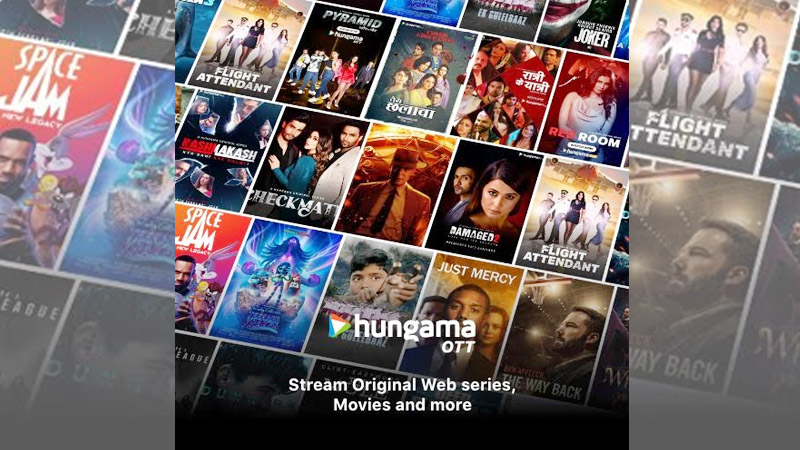
    In a move that screams bigger, better, and bolder, Hungama Digital Media has rebranded its flagship Hungama app as Hungama OTT. This strategic transformation marks a major step in Hungama’s mission to create an all-in-one entertainment powerhouse, bringing together originals, blockbuster films, music, podcasts, and more under one digital roof.

    Gone are the days of juggling multiple platforms—Hungama OTT offers an extensive premium content library, featuring binge-worthy Hungama originals, chart-topping music videos, Hollywood and Indian cinema blockbusters, and a treasure trove of podcasts and audiobooks. With an impressive collection of regional and international content, Hungama OTT promises something for every kind of entertainment lover.

    Since its inception, Hungama has been a trailblazer in digital entertainment, constantly evolving to keep up with user preferences and technological advancements. This rebranding reaffirms its commitment to making entertainment effortlessly accessible, ensuring that users always have something exciting to watch, listen to, or groove to.

    Movie buffs can explore 5,000+ films in English, Hindi, and regional languages, while short-film enthusiasts get access to 1,500+ critically acclaimed short films. The platform also boasts 7,500+ hours of kids’ and television content, along with 150,000+ short-format videos covering music, film gossip, humour, and spirituality.

    Hungama OTT is not just an update—it’s an entertainment glow-up of epic proportions. With a fresh identity and a content universe that keeps expanding faster than your watchlist, Hungama is redefining digital entertainment, offering users a dynamic, immersive, and endlessly binge-worthy experience.

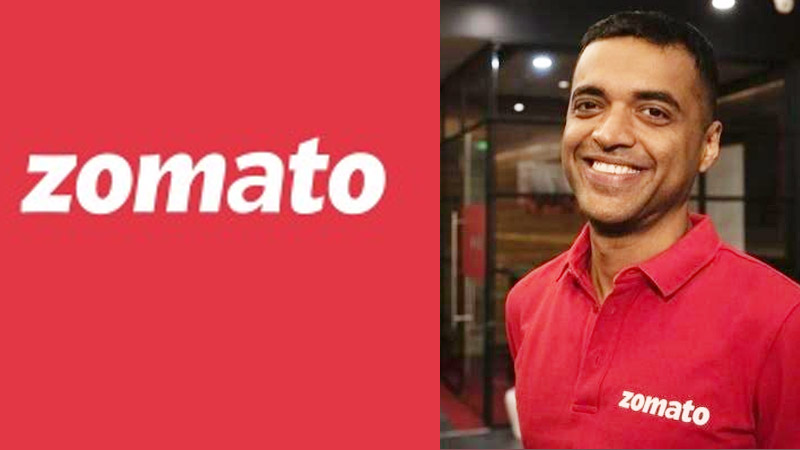
  • Deepinder Goyal’s Zomato levels up to its final form: Eternal Ltd.

    Deepinder Goyal’s Zomato levels up to its final form: Eternal Ltd.

    MUMBAI: It’s official! Zomato, the brand that revolutionised food delivery in India, is stepping into a new era under the corporate name Eternal Ltd. Founder & CEO Deepinder Goyal has revealed this strategic transformation, marking a significant shift in the company’s vision beyond food delivery and into a broader, more enduring business ecosystem.

    Why the change? Well, when you’ve built a brand that’s synonymous with convenience, innovation, and sheer hustle, the next step is to future-proof it. Eternal Ltd. isn’t just a name—it’s a mindset. It represents a company that is built to last, a powerhouse that goes beyond Zomato’s food delivery dominance to encompass Blinkit, District, and Hyperpure.

    Revealing the motivation behind the rebrand, Goyal shared that Eternal isn’t about claiming invincibility—it’s about acknowledging the journey, the challenges, and the constant evolution required to stay relevant. “True permanence isn’t built on bold claims. It is forged in self-doubt, hunger, and the relentless pursuit of being better than yesterday,” he wrote in his letter to shareholders. Talk about poetic business moves!

    Beyond food, this marks the birth of a new age conglomerate. This shift signifies a larger play— Our beloved Zomato is no longer just about food. Eternal Ltd. will house four key businesses:

    Zomato (Food delivery and dining services)

     Blinkit (Quick-commerce champion)

     District (A yet-to-be-revealed exciting venture)

     Hyperpure (B2B food supply for restaurants)

    The company has already received Board approval for the name change, and once shareholders give the green light, Zomato Ltd. will officially become Eternal Ltd. The stock ticker will change from ZOMATO to ETERNAL, and the corporate website will transition from zomato.com to eternal.com.

    Seventeen years ago, Goyal started Zomato—then Foodiebay—by simply uploading restaurant menus online. Fast forward to today, and the company has become India’s first tech startup to enter the BSE Sensex, creating significant wealth for employees, investors, and shareholders alike. The journey from a menu aggregator to a top-30 listed Indian company has been nothing short of legendary.

    Eternal Ltd. aims to be bigger, bolder, and broader in its impact. With Blinkit’s meteoric rise in quick-commerce, the food-tech giant is looking at new growth engines that will keep it relevant for decades to come. This isn’t just a name change-it’s a statement of intent.

    For customers, nothing changes-Zomato will remain your favourite go-to for food cravings. But as a company, Eternal Ltd. is setting its sights on an even grander future, one where it plays a bigger role in shaping India’s digital commerce landscape.

    Final bite – A food delivery empire turning into a multi-industry conglomerate? That’s one eternal glow-up! Now, the only question that remains-what’s next on the menu?

  • Spotify Q4 strikes a chord with record-breaking 16 per cent revenue uptick

    Spotify Q4 strikes a chord with record-breaking 16 per cent revenue uptick

    MUMBAI: Spotify has cranked up the volume on success, wrapping up 2024 with a Q4 that hit all the right notes. The music streaming powerhouse saw nearly every key metric outperform expectations, proving that when it comes to growth, Spotify is playing a chart-topping hit.

    The platform’s monthly active users (MAUs) surged to 675 million, marking a 12 per cent year-on-year (YoY) increase, while premium subscribers climbed 11 per cent to 263 million. Clearly, more people than ever are hitting play on Spotify’s offerings, and the company isn’t skipping a beat.

    Revenue swelled to €4.24 billion, reflecting a 16 per cent YoY increase, with both premium and ad-supported segments driving the momentum. The premium segment alone raked in €3.7 billion, up 17 per cent, fueled by strong subscriber growth and an uptick in average revenue per user (ARPU). Meanwhile, ad-supported revenue reached €537 million, a seven per cent annual rise, even as the global ad market faced turbulence.

    Spotify’s advertising business continued its ascent, with both music and podcast ad revenue showing solid gains. However, pricing softness in some regions tempered overall ad growth. Automated sales channels played a pivotal role in pushing ad revenue higher, especially in fast-growing markets. The ad-supported gross margin rose to 15.1 per cent, an increase of 351 basis points (bps) YoY, reflecting smarter monetisation strategies and enhanced content efficiencies.

    Not to be outdone, Spotify’s gross margin soared to 32.2 per cent, a resounding 555 bps increase YoY. And for the real showstopper: the company recorded an operating income of €477 million—its highest ever—securing its first full year of operating profitability.

    In the realm of free cash flow (FCF), Spotify turned the dial all the way up. The company generated €877 million in Q4, pushing its total FCF for 2024 to a record-breaking €2.3 billion. That’s a lot of cash dancing to the beat of Spotify’s success.

    With the company in full growth mode and its financials singing a happy tune, 2025 looks like another year where Spotify will keep the hits—and the numbers—rolling.

  • Nu Republic-Blinkit team up to deliver love-infused tech this Valentine’s

    Nu Republic-Blinkit team up to deliver love-infused tech this Valentine’s

    MUMBAI: Forget roses and chocolates—this Valentine’s Day, Nu Republic® and Blinkit are turning up the volume on love with an exclusive collection of tech gifts that fuse high performance with bold style. The leading lifestyle technology brand has joined hands with India’s fastest quick-commerce platform to make last-minute gifting as seamless as a bluetooth connection.

    Why settle for the usual when you can gift cutting-edge sound wrapped in sleek, romantic designs? Nu Republic’s latest Valentine’s Day lineup introduces the Pop Love Wireless Speaker and Epic X3 Wireless Earbuds Love Edition—both drenched in a striking red that screams passion. Designed to elevate both aesthetics and performance, these devices ensure that lovebirds can groove to their favorite tunes with premium sound quality.

    Key Highlights of the Collection:

    . Pop Love wireless speaker: A 6W RMS output powerhouse featuring Nu Republic’s signature X-Bass® technology, Bluetooth v5.3, and an impressive 14-hour playtime—because love (and playlists) should never run out.

    .  Epic X3 wireless earbuds love edition: Engineered with ENC technology for crystal-clear calls, X-Bass® for deep sound, and a 48-hour battery life—perfect for those who like their music (and relationships) long-lasting.

    .  Blinkit exclusive: Quick, last-minute gifting made effortless with instant doorstep delivery—because love shouldn’t have to wait!

    In an era where speed is everything, Nu Republic and Blinkit are making premium wear-tech gifts more accessible than ever. This collaboration guarantees that procrastinators (or spontaneous romantics) can still impress their special someone with top-notch gadgets, delivered in minutes.

    “We are thrilled to collaborate with Blinkit to introduce this exclusive Valentine’s Day collection,” said Nu Republic founder Ujjwal Sarin. “At Nu Republic, we believe in fusing technology with self-expression, and this collection embodies that ethos—bold, powerful, and designed for those who seek innovation in every aspect of life.”

    Echoing the excitement, Blinkit category and revenue lead, Anish Shrivastava stated, “At Blinkit, we are always looking for ways to bring joy and convenience to our customers. This partnership with Nu Republic is a perfect fit, combining fast delivery with stylish and thoughtful gifting options to make this Valentine’s Day truly special.”

    The Nu Republic Valentine’s Day Collection is available exclusively on Blinkit, ensuring instant access to these must-have gifts.

    .  Pop Love wireless speaker – Rs 699

    .  Epic X3 wireless earbuds – Rs 699

    This Valentine’s Day, ditch the clichés—because love sounds better with music! 

  • PlaySuper lands $500K to make in-game shopping seamless

    PlaySuper lands $500K to make in-game shopping seamless

    MUMBAI : Gaming commerce startup, PlaySuper, has secured $500 thousand in seed funding, led by IAN Angel Fund and 100X.VC. The round attracted notable angel investors, including Uday Sodhi, KRS Jamwal, Pratham Mittal, Rajit Bhattacharya, and Ankit Das, reinforcing confidence in PlaySuper’s vision to revolutionise in-game shopping.

    The funding will accelerate product development, expand market reach, and support key hires. PlaySuper is set to launch its next-generation, hyper-personalised in-game store, enabling seamless integration without requiring game updates. The company also plans to expand into southeast Asia within six months, followed by Mena  and Latam. Additionally, it will onboard a world-class product head and strengthen its B2B partnerships team to collaborate with more gaming studios.

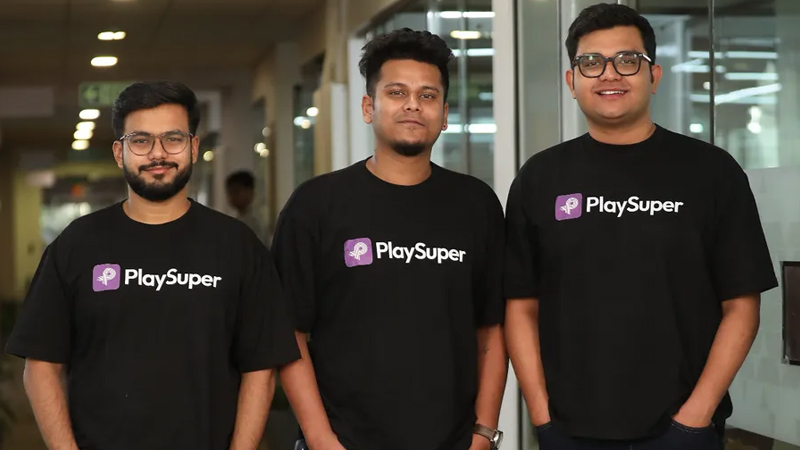
    Founded in April 2024 and headquartered in Gurgaon, PlaySuper is pioneering gaming commerce by allowing gamers to shop within mobile games in real time.

    PlaySuper co-founder & COO Shouradeep Chakraborty commented: ‘Gaming is the largest entertainment sector, yet mobile game retention remains a challenge. At PlaySuper, we’re transforming gaming into an interactive, rewarding, and commerce-driven experience. This funding will help us drive product innovation and strategic partnerships to make in-game commerce mainstream.’

    IAN Group co-founder Padmaja Ruparel added: ‘The gaming industry in India is expanding, but retention and monetisation remain key hurdles. PlaySuper is pioneering a new model that benefits both developers and players. With their deep industry expertise, we are confident in the team’s ability to drive this transformation.’

    PlaySuper’s founding team—Shouradeep, Upamanyu, and Abhir—are lifelong gamers and second-time entrepreneurs. Shouradeep and Upamanyu previously co-founded LectureNotes, an edtech platform that secured $2.5 million in funding in 2022. With backgrounds in gaming, Web3, and edtech, they have identified a significant opportunity at the intersection of gaming, fintech, and commerce.

    With mobile gaming retention rates in India facing a 98 per cent churn, PlaySuper introduces an innovative solution by embedding real-world rewards into games. This approach enhances player engagement while helping developers monetise effectively.

    The global gaming commerce market is valued at over $500 billion, with India’s gaming sector projected to exceed $5 billion.