Category: iWorld

  • Alternative sports has big demand in India & consumers willing to pay for premium content: Veqta

    Alternative sports has big demand in India & consumers willing to pay for premium content: Veqta

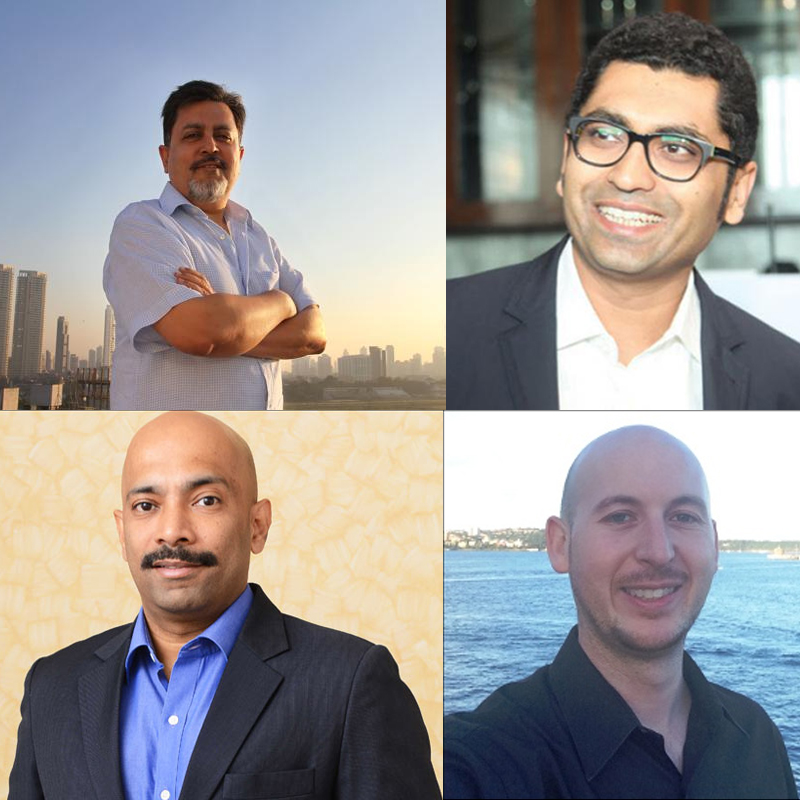
    Where there’s a will, there’s a way. And three sports enthusiasts live up to this adage beautifully. Building a company from ground zero to a level where it’s considered a leading digital media company is no mean achievement. The company: Veqta. The persons involved: co-founders Varun Mathur, Vikram Tanwar and Gaurav Gill.

    So, what does Veqta do? It is a leading (some say the first) Indian OTT subscription service dedicated exclusively to sports. It brings a unique selection of sports action across football, basketball, motorsports, tennis, MMA, Baseball, Fight Sports, badminton, etc. from authentic sources all over the world and the best analysis/opinions from world-class experts.

    Mathur is a former management consultant having worked with companies like TCS, Accenture, Nimbus, IMG and PGTI in leadership positions. Tanwar, apart from being a member of the founding team of Veqta, was previously the founder, CEO and MD of ITW Consulting. Similarly, Gill is also the founding partner and director at Chatsworth Management & Advisors. The company, now gets viewers for sports content, which is not available on other broadcasting and OTT platforms.       

    The business whiz-cum-sports-enthusiasts talk about their journey of a year and a half at Veqta in a free-wheeling conversation with Indiantelevision.com’s Kirti Chauhan. Edited excerpts from the interview follows:

    Q. How was Veqta conceptualized and what are the changes today from the time the platform was launched?

    Gaurav Gill (GG): To design Veqta’s offerings, we were looking at the biggest catchment areas in the Indian context outside the cricket and then we started handpicking our choice of sports properties to serve the needs and demands of the Indian market. Undoubtedly, we have a sound and solid offering in fight sports like wrestling, martial art and boxing, which is the biggest category in the country after cricket. We have a strong offering for basketball lovers because the game has a high demand in urban India. South India has a fan following for motorsports. As tennis is heavily demanded but underserved sports property in India, we have kept a wide offering in the tennis category.

    Varun Mathur (VM): Life certainly has changed from the time we started this OTT platform in many ways. Most notably, when we started, it was us who chased various sports league and federations for content, but today many global sports leagues, federations and sports companies get in touch with us to have their content on Veqta.

    Q. As you have chosen a niche area of sports streaming, how much traction and viewership you are netting? What is the average time spending on Veqta?

    Vikram Tanwar (VT): We monitor user engagement on a day to day basis and have observed that users are spending fairly large time on our platform. 1.2 minute per page is the average time spent by a user and statistics say that we have an average of 11 unique page views for every user. We have crossed 150,000 downloads within a month post the subscription service launch. We have catered 1.8 million page views on Veqta’s website within the first two weeks of the subscription launch. Our digital campaign has got 1.4 billion impressions across various mediums and the campaign video has crossed five million views.

    Q. Recently, you broadcast the boxing bout between Floyd Mayweather and Conor McGregor. How was the response in India?

    VT: Boxing bout between Floyd Mayweather and Conor McGregor was our first live property after the launch of subscription package on Veqta. Our strategy was to make the battle available only on Veqta not even on television. The boxing battle and the digital campaign was a huge success, gathering around 1.4 billion digital impressions across various mediums. Within a month of activation of a subscription package, we have crossed over 150,000 downloads. This made it clear to us that in India there is a big demand for alternative sports, apart from mainline sports like cricket, and there are people willing to pay for premium sports content.

    Q. What is the strategy behind keeping subscription low, compared to other OTT platforms’ rates?

    VT: India was an unexplored market for sports outside cricket and that’s one of the main reasons for Veqta to come alive. As sports fans, our aim was to make Veqta available to as many people and give them the comfort and flexibility to watch sports whenever and wherever on the go.

    GG: Initially, we have kept the pricing very low to make people aware of the product. If the person is genuinely interested in sports, the pricing context should not be a deterrent factor. We have an introductory offer of Rs 99 (actual cost Rs 399) to attract viewers, but it is for a limited time period. We surely want to have a sound subscription revenue based model, but at the same time, we don’t want the journey of watching sports to be difficult in India.

    Q. What is your revenue model?

    VM: Veqta is primarily a subscription-based service and so a bigger share of revenue will come from subscription. According to us, India is completely ready for a very large subscription service. For certain events, Veqta will look at sponsorship and advertising revenue, but that would be the secondary focus. In India, currently, advertisement rate is low for non-cricket sports. Being a sports-oriented service, we don’t want too much of clutter with lots of advertising on our page currently. In future, we might have sponsors’ logo along with sports content.

    Q. Do you presently have advertisers on board?

    VT: Although we do not have any advertiser on board currently, we would look forward getting them. At this juncture, we want our consumers to experience the uninterrupted live sport. Every sport is designed differently. Some sports allow us to showcase ads during a game, while some don’t. While we can fill airtime during a cricket match with ads, sports like basketball, football or tennis do not allow us to showcase uninterrupted feed along with advertising spots as in-between breaks in such games are absent.

    Q. What is your marketing strategy?

    VT: We have a focused marketing strategy, which is to acquire exclusive content rights without sharing it with any other broadcaster. We have adopted this marketing strategy from the time we have launched our subscription service and it is working efficiently. The big fight between Floyd Mayweather and Conor McGregor exemplified our marketing strategy of streaming exclusive content. Also, we are using a targeted digital marketing approach through which our marketing campaign focuses on identifying the sports fan segment specifically in the country. We then interact with them over various digital platforms to engage them with Veqta.

    GG: We are currently focusing on the digital-driven campaign. Our user acquisition cost is currently exciting vis-a-vis industry norms. But in future, we would look forward at above the line (ATL) campaigns. Considering the user demographics, digital is a more efficient and effective medium compared to television in the entire spectrum of various age groups. Based on the matrix, a majority of our users currently are under 15-28 age group, which is active on digital mediums. With the help of our analytics, it is easy to track and grab more subscribers.

    Q. How is the customer acquisition done?

    VT: Our customer acquisition strategy is centered on unique content offering across sports that have a very strong offering via exclusive rights to top sports leagues, events and tournaments for the Indian territory. We use targeted digital marketing to amplify our content package with our target customers.

    Q. Do you think there is a space for a service such as Veqta when domestic players such as SonyLiv, Hotstar, Jio and international ones like Amazon and Perform Group are getting into the business of sports streaming in India?

    VM: Based on Veqta’s offerings, we don’t have direct competitors at this juncture. As compared to us, other OTT platforms like SonyLiv and Hotstar, which offer sports, talk to a different audience with different content offerings. The competitive market of OTT platforms is extremely large and diverse, which has space for multiple service providers. The OTT market space of China has got 11 sports platforms, which are running successfully. Currently, in India, we are the only dedicated sports platform. And, we believe to have a great growth opportunity having crossed the benchmark of a million users within a year. Veqta is turning out to be a great piece of a compact show for which Indian consumers are willing to pay for high-quality content.

    Q. Do you think is there any opportunity for Veqta in cricket?

    VT: We are not targeting cricket at present. At this stage, our bouquet is full of other sports like fight sports, football, basketball, table tennis and much more. We are aware of the fact that India can’t be a single sports country.

    GG: The reason cricket fans are receiving a good experience is the quality and quantity of coverage by various broadcasters and OTT platforms. At the same time, fans of other sports do not receive the same quality experience generally. Looking at this scenario, our prime focus is to address the need of non-cricket sports fans.

    Q. Are you looking at adding any new sport in Veqta’s kitty?

    VM: Veqta would be adding Cue Sports, squash, American sports, eSports, indoor sports and games and much more very soon. Apart from this, we would look to add more properties of basketball and football and more of racquet sports like tennis, badminton and squash in our kitty.

    Q. It would be really helpful if you can enumerate the sports being showcased on Veqta presently.

    VM: VEQTA is currently covering a broad spectrum of sports including boxing, MMA, wrestling, baseball, basketball, tennis, table tennis, and rugby. In tennis, we are exclusive rights holder of WTA (Women’s Tennis Association). We have the rights to broadcast International Table Tennis games. In rugby, we own the rights to stream HSBC Sevens World Series. In the rally category, we own rights to broadcast World Rally Championship. 

    Q. Would you explore adding talk shows-type content on Veqta?

    GG: We are progressively into acquiring content rights to create Veqta as the biggest sports library. We are not targeting producing content ourselves, but we have explored sports reviews, sports analysis, and pre-news shows. in the near future, we would be looking at adding sports reviews, comments, analysis, and pre-match shows. We will be focusing towards reality instead of fiction. Our immediate priority is to make sure that live sports offerings keep growing.

    Q. What type of distribution alliances would be useful for Veqta?

    VT: OTT adoption and consumption is constantly evolving and we believe that distribution alliances will help realise the true potential of any OTT offering. We are already in advanced discussions with two large telecom service providers and with one of the largest OEM handset manufacturers for distribution alliances. We are also having discussions with hardware providers to offer Veqta for the home screen and large screen viewing. These alliances might be done by pre-embedding the Veqta flagship platform in hardware and on handsets or by offering limited Veqta content through a specialist Veqta Sports offering as a part of an OTT listing/marketplace offering by the respective service providers.

    Q. As sports rights are expensive propositions how such acquisitions are funded — internal accruals or are you looking at raising funds?

    VM: We are in active discussions with companies to raise more capital. However, we have spoken about our seed funding once in media, which was Rs. 33.5 million.

    Q.  Since Veqta was a late entrant in the Indian OTT space, what were the challenges faced and benefits reaped?

    GG: OTT as a concept in India is in an evolutionary stage, so we do not consider ourselves a late entrant. As far as dedicated sports platform is concerned, we are one of the early players. Earlier entrants into space successfully introduced the term OTT to the masses, which was not only welcomed but also got a great push from the likes of Reliance Jio. After studying the market and scenario, we decided to be in the SVoD category through which we are netting good subscriber numbers. We feel the subscription-based model is the correct approach to generate good revenue.

    Q: Would you be offering sports content in Indian regional languages and from when?

    VM: We firmly believe that sports still need to touch its potential reach in India. The basic problem we face is the offering of sports in India is limited to a few languages. For example, a sport like a football has a big fan following in pockets like Kerala, West Bengal and North-East, but if the nuances are not understood by a consumer other than his/her mother tongue or in the language spoken in the region, the viewing experience could diminish. We are aiming to go forward and give more customized experience to our viewers, but not immediately. In near future, we would be able to choose some sports properties and offer commentaries and related information in various regional languages.

    Q. Is there a possibility that in future Veqta transforms into a television broadcaster?

    VT: We strongly believe in the long run OTT consumption and viewership globally across general entertainment genres will replace (traditional) television. But, our key business strategy is “never say never” as we keep striving for improvements.

    Q. What technology are you using and who has designed your backend technology?

    VT: Veqta uses the services of multiple third-party technology companies like MultiTv, Switch, Amazon Web Services (AWS), Limelight and a few more. Earlier, people were putting a lot of money in developing in-house technology. As it is difficult for niche digital broadcasters to put a huge amount of money in developing in-house technology, we prefer to use various third-party operators, including those for satellite downlink. Unlike other OTT platforms like Hotstar, Amazon Prime, SonyLiv and Voot, we play 6,000 hours of live content, which has to be accurate and efficient in terms of streaming. Ours is a tougher job as we receive IP feeds from many of our partners who are pushing content from various corners of the globe. This content bounces of several servers and IPs, so we have deployed servers closer to source to receive LIVE match feed and process it there itself, before pushing it on to the CDN. For certain other partners, we receive the LIVE matches through satellite and process the feeds here in India after downlinking them.


    Q. What is your glass-to-glass latency?

    VM: The signals we receive are delivered on CDN (content delivery networks), which are the high-speed global servers that cache and deliver web content instantly. With the help of good internet connectivity, our glass-to-glass latency level maintains less than one second, which is around 300 milli-seconds, much less than television and other sports OTT platforms. It is one of the reasons that we are getting more subscribers as they are willing to pay less and get quick sports updates instead of investing time and money on subscribing television channels.

    Q. Where do you see Veqta over the next five years?

    GG: Five years down the line, Veqta will be one of the dominant forces in the sports streaming and OTT ecosystems. It will evolve into a world-class sports network in terms of number of a sports broadcast, number of customers and in the number of geographies we operate in. Most probably, Veqta will be a global player in the coming five years. Also, we want every sports fan to have a fabulous world-class experience while watching best of sports from all over the world at any point of time.

    ALSO READ:

    Floyd Mayweather vs Conor McGregor boxing fight on Indian OTT VEQTA4

    OTT: VEQTA is exclusive Major League Baseball partner for India

    Sports OTT VEQTA launches its mobile app for sports programming

  • Guest Column: Race to the bottom(line) – From consumption to subscription

    Guest Column: Race to the bottom(line) – From consumption to subscription

    It’s been a quick and busy 36 months since the advent of the very first OTT services and between all of the media-owning majors, the flush-with-money global players and the battling aggregators and the ever-growing flock of Indie hot-shops, it’s a whole load of original and aggregated content that has been unloaded on the Indian consumer. Complemented by falling data costs, average consumption (data) has shot up 6 times with video being the clear driver.

    One thing is for sure. 100 million+ video consumers on OTT (predominantly the phone) within the year is a certainty and a target of 200 Mn+ in the coming 24 months seems a very realistic possibility. And to get to that goal, almost everyone is working to make the consumption process from app download to sign-ups to browse and watch to recommend and return an almost frictionless experience. The question of payment and monetization is a reality for everyone with the only variable being ‘when is the right time to bring it up?’

    With all the tentative attempts so far, and piecing together a lot of disparate data, and depending on how optimistic a view you would like to take, it looks like we may have anywhere between two to three million viewers paying something for their OTT video. And these payments range from Rs.500/- at the highest end (admittedly an exception) to Rs.20/- at its friendliest, and with an average possibly in the early triple figures. Now, admittedly this is small change compared to the investments in content that is being witnessed.

    From the wildly astronomical figures witnessed in recent sporting acquisitions to the scarily exuberant movie acquisitions by global majors to even the more measured investments from the original content creators, it all adds up to a serious amount of investment that is all being gussied up to make these 100 million and the next 100 million users default to their connected devices for video. Everyone realizes the habit has to come before the money. And, the majors opening that tap in full force and running it mostly for free makes it pretty difficult for the others to push the monetisation button on the subscription front.

    Having said that, the move towards subscription has begun in earnest over the last year with all major services. The likes of Netflix and Amazon Prime have always been pay. And, arguably while Hotstar’s conversion of free to pay was pretty low, this has to be seen in the light of the monstrous funnel of free users that they have been able to create. From hereon, one could assume that the subscription push will begin to intensify, already in evidence through the live cricket feed versus delayed cricket feed as a strategy to push conversions. Bolder new launches like ALTBalaji and SunNxt have started off with a paid model. 

    So, is there still a question about whether a subscription model will work in India where content has famously been sold cheap historically? There is no data that shouts an emphatic NO to that question but emerging models are clearly making it less of an unknown. 

    To my mind, among all the things happening, two aspects that pretty much decide the issue of subscription success are:

    a. Distinctive content – without a doubt, this seems to be the most crucial factor in your ability to find a core audience that will evangelise your stories. Youtube is crawling with a lot of me-toos with a phone-cam, hastily pulling together half-baked stories of clichéd youth issues presented sensationally with a liberal dash of promiscuity and abuse. As a way to make people sit up and take notice, promiscuity and abuse did show promise but as a means to create a distinctive and engaging story-telling equity, they don’t take you much past the gate. And that’s where a lot of the focus will need to be, if you hope to ever get even a part of your audience to pay. A frequently asked question is how many apps/ services is a user going to have on their devices. Well, everyone cannot and will not have everything. It’s a country of a billion different people with demographic, ethnographic and psychographic variations. 

    Finding a meaningful core audience will probably become the most critical skillset for survival. A case in point is the south-focussed offering of a SunNxt. 

    b. Charging (payments) – for a long time since the advent of e-commerce we have bemoaned the low credit card penetration and how cash on delivery is still a reality of our market. Neither helps the small-ticket digital products business. However, the one tsunami of payment enablement rapidly bubbling up is the rise of wallets. From telcos to transporters and banks to Google, everyone will have one and a significant part of their customer base can be expected to adopt. Pricing, for almost all the Indian services, is at a very realistic level. It was charging where a bulk of the problem lay. And the wallets in this context can only be good news. This can and will change the charging and subscription scenario. Examples like the Vodafone Play service with a single gate-pass for a wide ranging content offering will showcase the difference that frictionless charging can make. Thus also making the case for more charging platforms/ wallets to offer aggregated media services. 

    As this drama unfolds over the next 24 months and as the majors, minors and everyone in between tries out various strategies to bring you into their subscription net, sit back (or stand), pop the screen of your choice, choose your poison and hit Play. 

    public://vamsi.jpgThe writer is the founder and CEO of Apalya Technologies. The views expressed here are of the writer’s, and Indiantelevision.com may not subscribe to  them.
     

  • ALTBalaji identified local talent for regional language comedy shows, says Manav Sethi

    ALTBalaji identified local talent for regional language comedy shows, says Manav Sethi

    MUMBAI: ALTBalaji, an OTT platform for original and exclusive shows, has launched regional stand-up comedy in Marathi, Punjabi, Gujarati and more Hindi videos on its digital platform.

    The short, snacky and hilarious videos feature famous comic artistes – Bharat Ganeshpure, Sagar Karande, Anirudh Madesia, Suresh Albela, Pratap Faujdar, Amit Khuva and Dharsi Baredia. The entire library offers English subtitles for easy understanding.

    ALTBalaji is catering to the diversified needs of a population that speaks multiple language and experience life differently as per their culture. The content offers a slice of life of these cultures, be it anecdotes of a Sardar traveling to Germany, a Gujarati stuck in a bizarre situation in Bengaluru or a Marathi talking about cricket. The comedians add tadka to everyday mundane events and serve them up loaded with the perfect garnish of humour. They leave nothing and no one, from Lucknow to Valentine’s Day to Dhoklas to Rajinikanth! The laughing riot is bound to tickle audience’s funny bone.

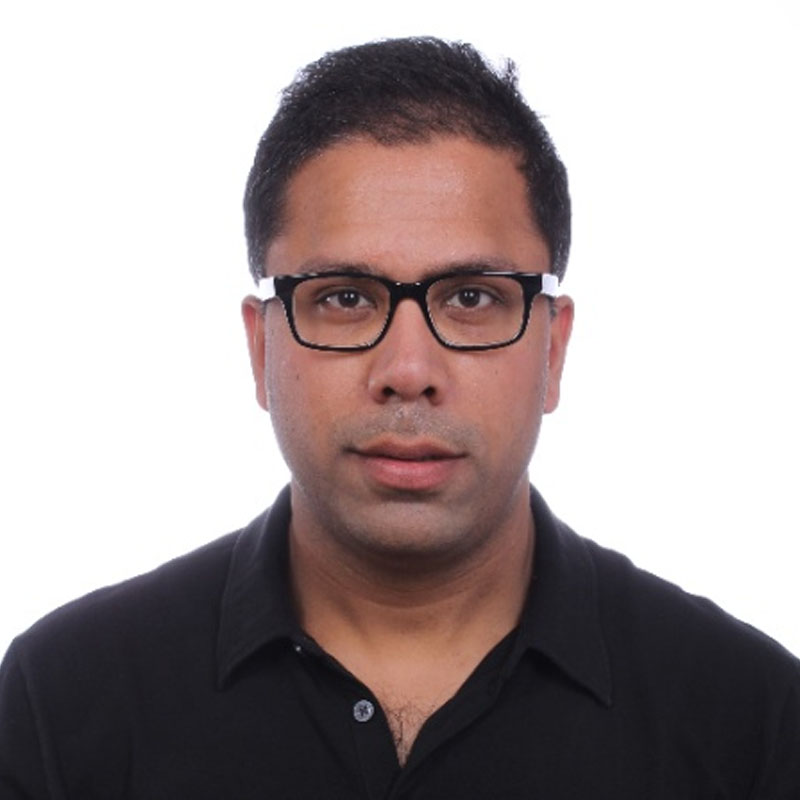
    ALTBalaji CMO Manav Sethi said, “Based on consumer insight, we understood that the stand-up available to viewers is mostly English or Hindi, neglecting the regional language demand and so we have identified local talents from these regions and got them on board. The highly talented, witty and humorous artistes bring in the flavour of their language and culture on stage; hope the viewers like it.”

  • Nick and Colors Kannada among top FB, YouTube monthly views: Culture Machine analysis

    Nick and Colors Kannada among top FB, YouTube monthly views: Culture Machine analysis

    MUMBAI: Culture Machine, a subsidiary of The Aleph Group, Singapore, has established a leaderboard for publishers across multiple categories in India.

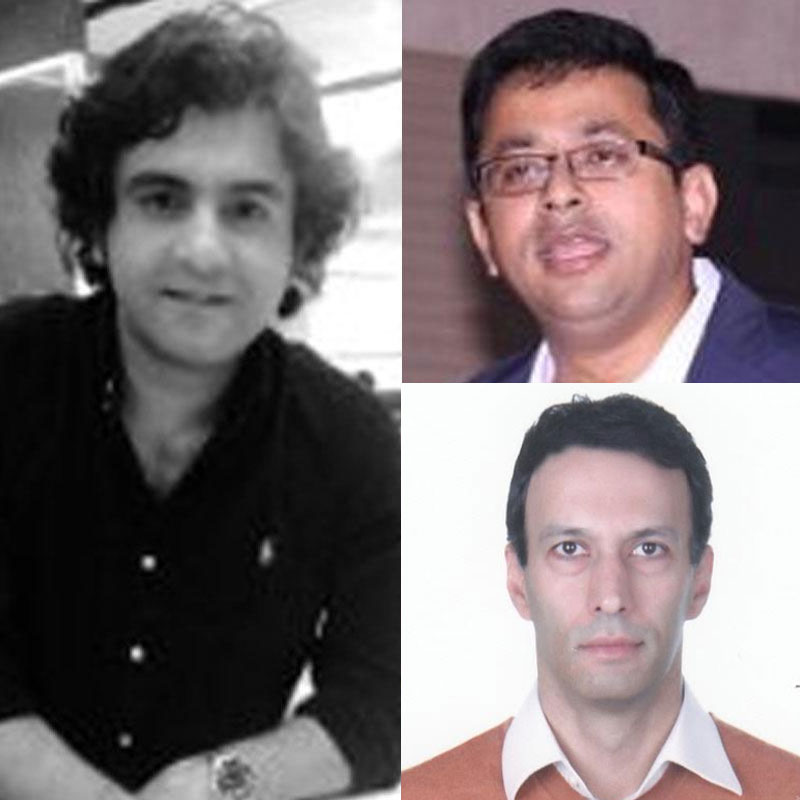
    Founded by Sameer Pitalwalla and Venkat Prasad in 2013, Culture Machine’s patent-pending tech IP ‘Intelligence Machine’ tracked the month on month performance of Indian channels on YouTube and Facebook to provide a comprehensive view of which publisher has a maximum engagement in terms of views, likes, comments, shares and subscribers.

    The partnerships with Google and Facebook, and with the use of proprietary algorithms, Intelligence Machine has the ability to track three billion videos, categorise the publishers and rank the publishers extensively.

    The current report provides insights on the entertainment and news category. Future analyses by the end of 2017 will include sports, fashion, beauty, automobile and food industry.

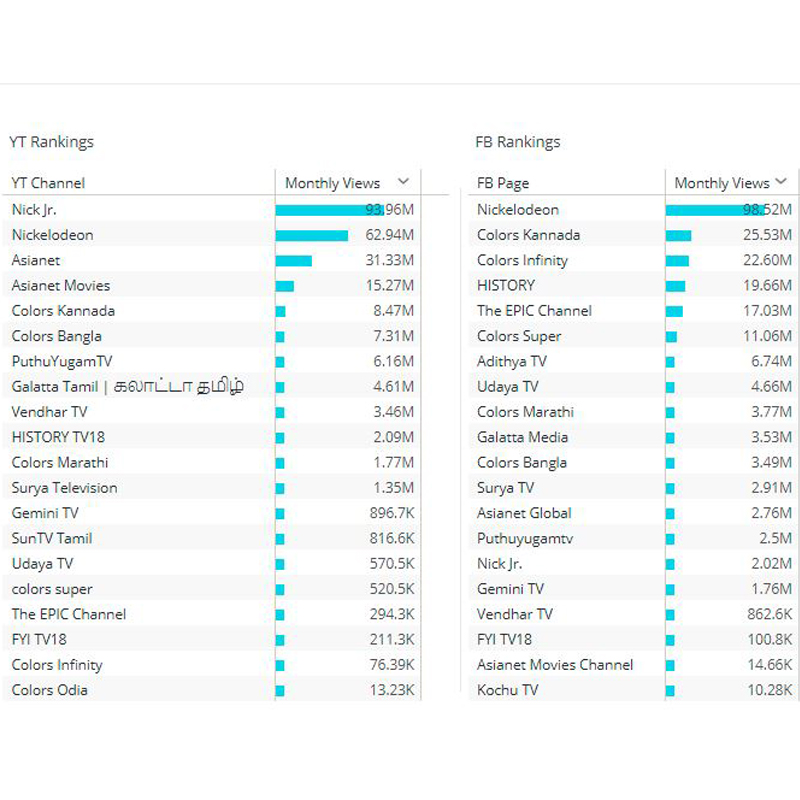
    According to Culture Machine’s report, the top five positions in Youtube ranking have been grabbed by Nick Jr. with 93.96 million monthly views, Nickelodeon with 62.94 million monthly views, Asianet with 31.33 million monthly views, Asianet Movies with 15.27 million monthly views and Colors Kannada with 8.47 million monthly views.

    In the Facebook ranking list, the top five positions were taken by Nickelodeon with 98.52 million monthly views, Colors Kannada with 25.53 million monthly views, Colors Infinity with 22.60 million monthly views, History TV18 with 19.66 million monthly views and The Epic Channel with 17.03 million monthly views.

  • LG India’s ‘Astronaut video’ garners 104 mn views on social media

    LG India’s ‘Astronaut video’ garners 104 mn views on social media

    MUMBAI: LG India’s 20th anniversary’s unique digital ‘Astronaut video’ showcasing how dreams come true has received 104 million views across its website and other digital platforms including its social media channels.

    This viewership reiterates that LG has yet again struck the right chord with Indian consumers and understands their story like no other brand. LG has not just sold products, but the dream of a better lifestyle.

    LG’s 20-year journey in India has been told through an inspiring story of a single mom and her daughter who goes on to become an astronaut. The little girl dreams to reach for the stars after watching the inspirational journey of the famous Indian astronaut, Kalpana Chawla, on LG Golden Eye TV. 

    https://www.youtube.com/watch?v=60zlBxiUwxQ

    In fact, LG TV is one of the things which her mother sells to make money for her daughter’s dream, though it leaves them both sad. 

    The little girl, with her dedication goes on to become an astronaut at NASA, just like her idol. While she undergoes rigorous training, she finds herself surrounded by LG’s wide range of products for her comfort and care. The video ends with the girl, who is now grown up and an astronaut, gifting a brand-new LG OLED TV to her mother as a gesture for her sacrifices. 

    With this story, LG salutes the loving bond in Indian families.
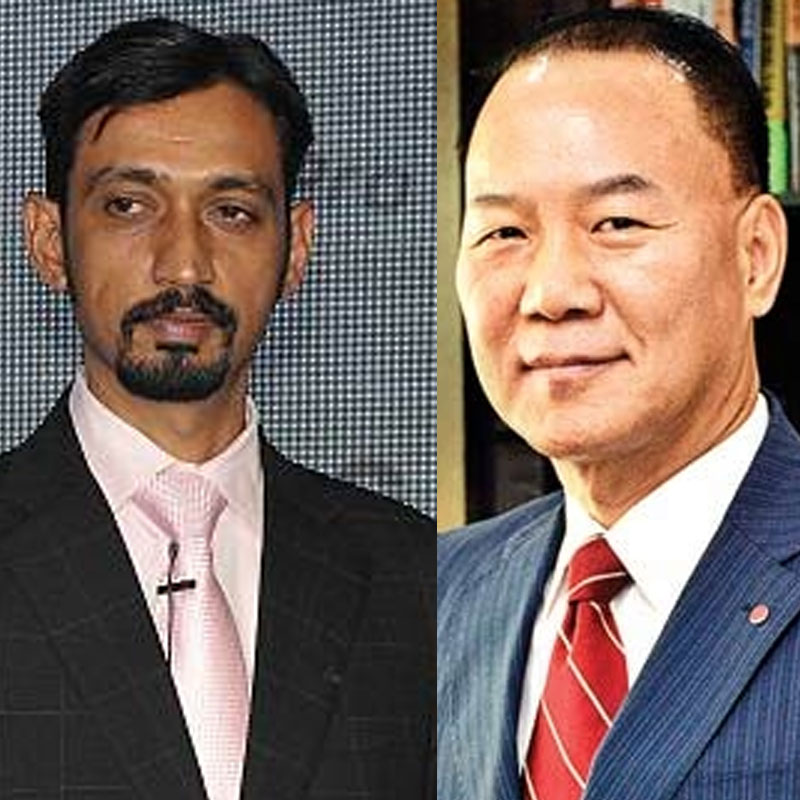
    LG Electronics India MD Kim Ki Wan said, “The Astronaut video has found immense appreciation of viewers. As a company, we base our initiatives in customers’ insights and this video was dedicated to honour their dreams.”

    LG Electronics India head – corporate marketing Amit Gujral said, “This gesture shows how much the consumers love brand LG. It encourages us to make aspirations a reality and continue to live up to our brand promise – Life’s Good.’’

  • Hoichoi launches ‘Paranoia’ thriller series

    Hoichoi launches ‘Paranoia’ thriller series

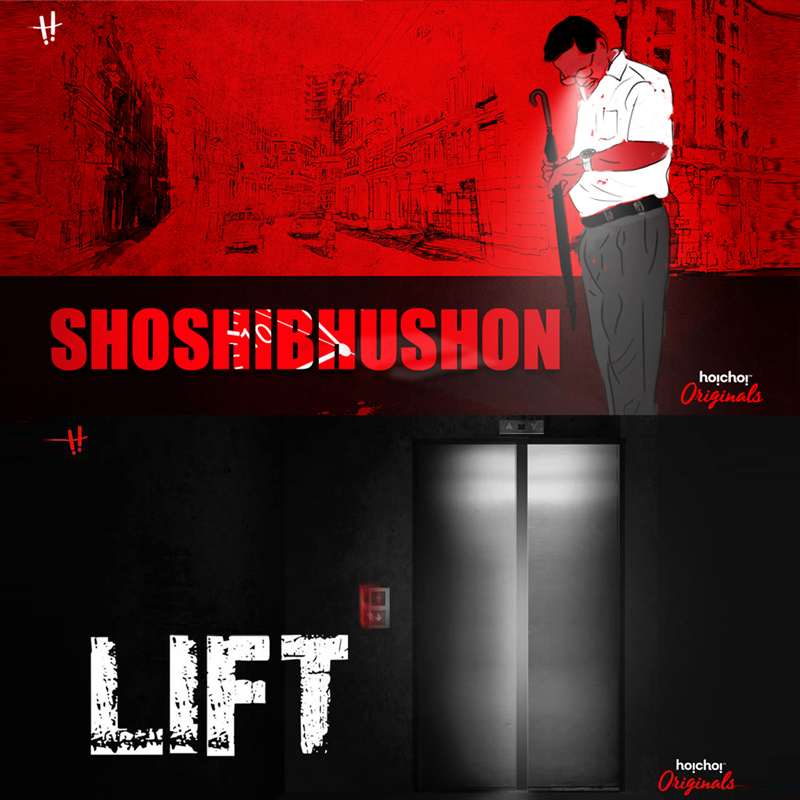
    MUMBAI: Paranoia, a compilation of short-format thrillers, is now live on Hoichoi, a digital Bengali entertainment content platform. At present, six original web series and shorts: – Hello, Cartoon, Dupur Thakurpo, Holy Faak, Lift and Shoshibhushon are streaming on Hoichoi.

    Paranoia is a collection of different short stories under Hoichoi Originals that deals with various psychological disorders and treats them accordingly.

    Hoichoi, recently launched by SVF, an entertainment company, has a large collection of content in Bengali, including 500 plus movies, 10 original web series and shorts. 1000+ songs to be added soon in the app.

    Even though each story in the series has a different tale to tell, Paranoia remains the connecting theme. Currently, two stories, Lift and Shoshibhushon, are live on Hoichoi in the Paranoia series.

    Lift: Lift is about a renowned journalist called Nandita, who has recently moved to her new apartment on the 25th floor of a city high-rise. Newly built and almost unoccupied, Nandita feels uneasy about staying there. Wracked by paranoia, Nandita feels unsafe, with the liftman Kartik staring at her, his gaze unblinking, every time she uses the Lift.

    Her dislike of him intensifies when the elevator gets stuck one night between two floors and the light goes out with Nandita and Kartik inside.

    Will Nandita’s paranoia about Kartik be justified?

    The second story Shoshibhushon revolves around a disciplined man Shoshi Babu. His life falls apart one day when everything goes out of control for him and things do not work according to his plan. Renowned director Kamaleshwar Mukherjee has donned the hat of an actor here playing the protagonist.

  • Global OTT rev to touch $83 bn by ’22, India could improve ranking: Study

    Global OTT rev to touch $83 bn by ’22, India could improve ranking: Study

    NEW DELHI: A global study projects that OTT TV episode and movie revenues would touch $ 83 billion by 2022, more than double the $ 37 billion recorded in 2016  with India expected to clock $ 1.5 billion by then, which will help it go up the pecking order that is presently led by the US.

    The US will remain the dominant territory for online TV and video revenues by some distance, though the its share of the global market will fall from 51 per cent in 2016 to 40 per cent in 2022, The Global OTT TV & Video Forecasts report stated, adding contributing half the Asia Pacific total, China will add a further $7.6 billion with its total revenues reaching $12 billion in 2022.

    Digital TV Research principal analyst Simon Murray told Indiantelevision.com via an email exchange, “We estimate that OTT revenues reached $246 million in India in 2016. We forecast that this figure will be $1501 million by 2022.”

    Pointing out that India’s OTT revenue growth will be “pretty impressive”, Murray said India is also likely to improve its ranking from No. 18 in 2016 to No. 11 by 2022. The present report studied OTT trends in 138 countries.

    public://Untitled-3_19.jpg

    Interestingly, Asia-based research firm Media Partners Asia (MPA) few months back estimated the Indian online video industry generated approximately US$ 230 million in total sales in 2016, and is on course to reach approximately US$340 million in 2017. MPA projected a 35 percent CAGR to 2022 as total industry sales top US$1.6 billion.

    Meanwhile, the Digital TV Research, released recently, went on to add global SVOD (subscription video on-demand) became the largest OTT revenue source in 2013. It will generate half of the OTT revenues by 2022. SVOD will add $24 billion in revenues between 2016 and 2022, with AVOD up by $17 billion. AVOD will total $29 billion by 2022; up from $12 billion in 2016.

    According to Murray, “OTT revenues will exceed $1 billion in 14 countries by 2022; double the count at end-2017. The top five nations will command two-thirds of global revenues.”


  • Vikram Bhatt’s LoneRanger taps Brightcove for TVoD service by mid-Nov

    Vikram Bhatt’s LoneRanger taps Brightcove for TVoD service by mid-Nov

    MUMBAI: A US video firm has started working with a Bollywood producer on a streaming service soon after developments in India where VoD services such as Amazon and Netflix tried to get a toehold in the OTT market through original content agreements.

    Netflix, late last year, signed a deal with Shah Rukh Khan’s Red Chillies to distribute the studio’s films. Shortly later, Amazon announced its own content agreement in India with Xilam Animation, making the former the exclusive streaming platform for kids’ shows such as “Zig & Sharko” and “Oggy & the Cockroaches.”

    Brightcove, a provider of cloud services for video, has now partnered LoneRanger Productions to develop an over-the-top (OTT) service for the production company. The deal represents Brightcove’s maiden deal with a Bollywood production company.

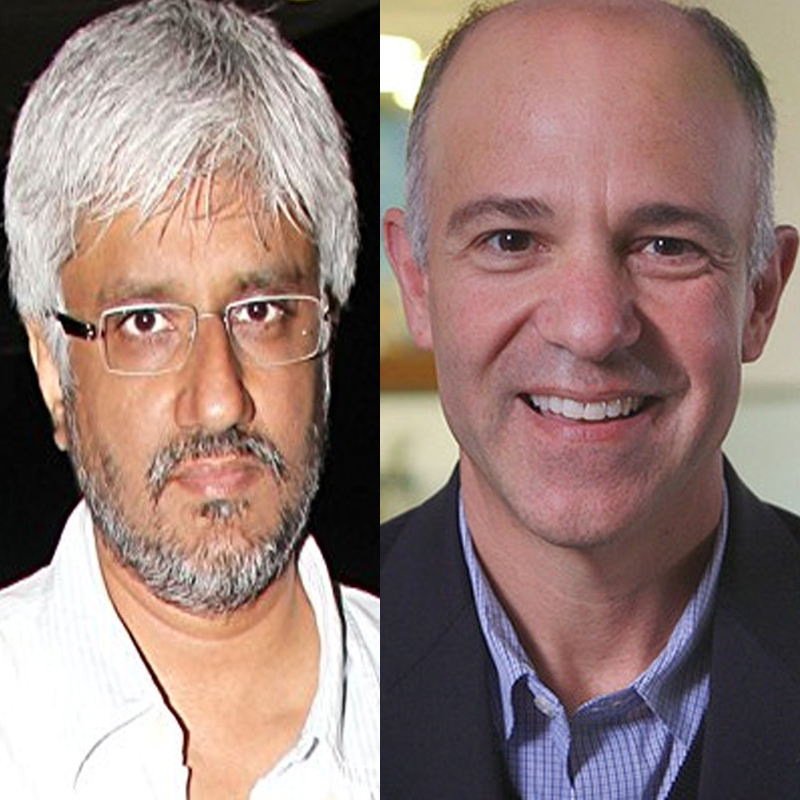
    LoneRanger is headed by Vikram Bhatt, a 30-plus year veteran of the Bollywood market and the director of classic films such as Ghulam, Raaz, and 1920. With its transactional video on demand (TVoD) OTT service, LoneRanger claims to deliver the best of its mystery and suspense content to consumers. The service is expected to launch in mid-November.

    “Today’s viewing experience is as much about mobile delivery as it is about television. So, we have been looking for a partner that could help us revolutionise the user experience,” Bhatt said.

    “Brightcove’s platform performance, player speed and technology stack were real differentiators in creating a service that was theater-like. We also wanted a vendor that could help us get to market quickly — able to stand up our service within weeks after signing the contract,” he added.

    Brightcove CEO Andrew Feinberg said: “India has an enormous opportunity because of the explosive growth in online video in the region.

  • Differentiated brand critical as online video, mobile ads may expand at 40-51 pc CAGR by ’21: KPMG-FICCI

    Differentiated brand critical as online video, mobile ads may expand at 40-51 pc CAGR by ’21: KPMG-FICCI

    MUMBAI: The ‘Over the top’ (OTT) video consumption in India has rapidly evolved over the last year, given the advancements in digital infrastructure and efforts by platforms to create compelling content for consumers at price points which provide value.

    Growing internet penetration and data consumption is likely to help increase digital advertisement spends in India at 30.8 per cent CAGR between 2016 and 2021 with mobile advertisement spends and social media-aided digital video advertisement spends expected to expand at 50.9 per cent and 40 per cent CAGR between 2016 and 2021, respectively, according to the KMPG’s “The ‘Digital First’ Journey” report launched in FICCI Knowledge series 2017 conference – Fast Track India.

    The Fast Track India conference, in association with LA India film Council (LAIFC), was focused on building out a digital company, the impact of evolving digital infrastructure on content consumption and rise in online piracy.

    Fox Star Studios India CEO Vijay Singh highlighted the need for M&E businesses to be future-ready in his keynote speech. He said, “Digital transformation of the M&E industry is unstoppable, and companies will need to focus on innovation and disruption. It will be important to get the digital building blocks to fall in place – be it in content creation or getting the right business model.”

    At the inaugural, KPMG India partner and co-head of media and entertainment Girish Menon said, “OTT consumption in India has reached a tipping point, with the 4G rollout and related data wars which have resulted in a dramatic and rapid growth in internet penetration and video consumption. Building a digital business is an evolving process and organizations would need to adopt a systematic approach balancing scalability and flexibility with speed to market and customer centricity.”

    The conference focused on three key features, i.e., evolution of content strategies from creation to monetisation, the impact of evolving digital infrastructure on content consumption patterns and the rise of online piracy – threats and remedies.

    OTT consumers continue to demand seamless access to services, compelling stories and value for money. The era of on-demand content has reached a tipping point with consumption becoming on-demand across mobile screens and going ‘mass’ – particularly on the back of pan India 4G roll outs by telecom operators.

    During the discussion, panellist agreed upon the fact that the mass launch of 4G services by Reliance Jio in 2016 and subsequent launches by incumbents was an inflection point in India’s data story. This disruption led to a rapid surge in data usage on the back of promotional offers by all leading telecom operators.

    The conference was divided into three panel discussions. The first panel, who have discussed broadly on building a digital platform, was held with Arre co-founder Ajay Chacko, Culture machine president Tuhin Menon, Qyuki Digital Media COO Sagar Gokhale and ALTBalaji CEO Nachiket Pantvaidya and moderated by KPMG management consulting Neha Punater.

    Next panel on digital infrastructure transforming consumption of the content was addressed by the BARC business head Jamie Kenny, the Facebook India content head and media partnerships India-South Asia Saurabh Doshi, the Voot marketing head Akash Banerji and the Shemaroo director Hiren Gada.

    Lastly, on the protection of the online content in a digital economy, Disney India assistant regional counsel Anju Jain, the Viacom 18 SVP Thomas George, the Eros International general counsel Aamod Gupte, the TFCC governing council executive member Rajkumar Akella, the MPA Asia Pacific VP communications Stephen Jenner and The Indian Music Industry president and CEO Blaise Fernandes. Punnaryug Artvisions’ founder Ashish Kulkarni deliverd the welcome note.

    About the roadmap to become a digital company, Pantvaidya said, “The focus has to shift from just getting big numbers to actually engaging audiences. Watching videos on internet especially shows is slowly becoming an integral part of every Indian’s life – Thanks to quality internet being offered by Telco’s at affordable prices. We, at AltBalaji, believe that this trend can be effectively monetized by offering multi targeted, exclusive, original Indian content at a never before seen scale.”

    Qyuki Digital Media COO Sagar Gokhale said, “It’s a changing market, when we started, we saw 50 per cent split between mobile and computers but today it exceeds to 80 per cent towards mobile. Understanding of content is very important according to the consumer’s need. In India, large platform like Youtube is male dominated precisely under the age group of 18-35. So easy understanding is to create male centric content like comedy and music which works out the most. According to our data analysis, post-Jio, a lot of viewership was noted from tier 2-tier 3 cities like Jharkhand.”

    The four pillars of digital transformation outlined in the report comprise a holistic approach including; clearly defining the organisation’s digital vision and strategy, thorough understanding of the customer proposition, accurately assessing the business design and, lastly, carefully designing the execution plan.

    On building a robust enforcement model to protect content in a digital economy, MPA Asia Pacific VP communications Stephen Jenner said, “Around the globe, close collaborations between multiple stakeholders have lead to a number of successful content protection initiatives. This bodes well for growing digital economies, and the many creative people contributing to media and entertainment in those markets.”

    Doshi said, “Being passionate or even finicky about user experience is the key to building a successful digital platform. In this age of hyper-competition, it is imperative to focus on building a strong brand that is differentiated. With over 200 million people in India every month and millions globally on the platform, we think deeply on the best user experience we can provide and instant articles, live etc. are such examples.”

    Fernandes said, “Digital India is attracting lots of investments in content creation and distribution over the various digital platforms. This sets off a multiplier effect, employment generation, tax revenues and soft power. While all this happens it is necessary for protection measures to be in place, glad that FICCI and the LA India Film Council are giving copyright protection in the Internet age adequate weightage in their various forums”

    The path to digital transformation encompasses a holistic approach including; clearly defining the organisation’s digital vision and strategy, thorough understanding of the customer proposition, accurately assessing the business design and, finally, carefully designing the execution.

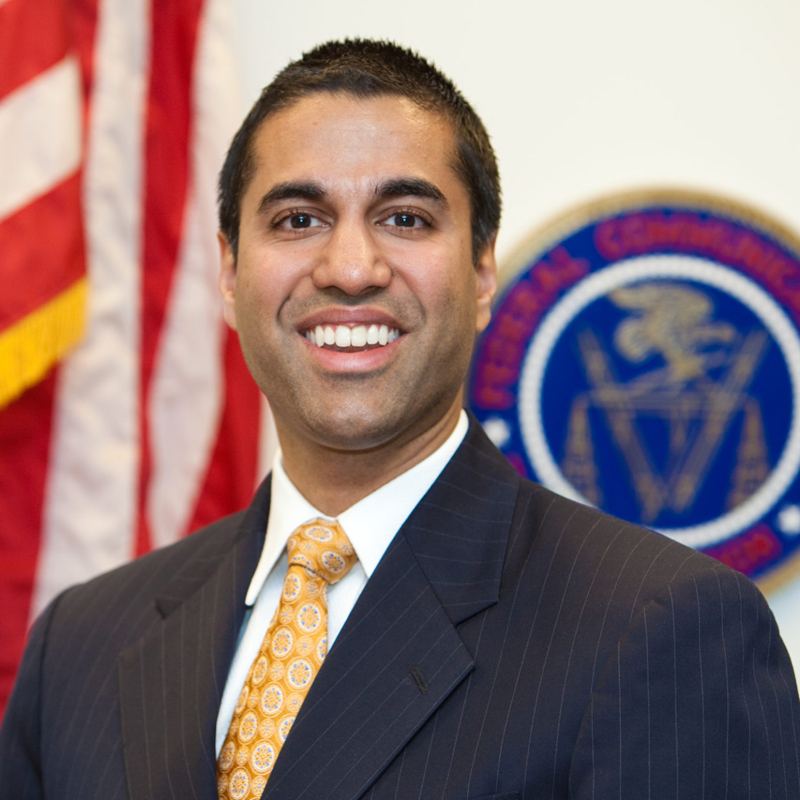
  • Indian-American Ajit Pai reappointed FCC chairman in US Senate split vote

    Indian-American Ajit Pai reappointed FCC chairman in US Senate split vote

    MUMBAI: The US Senate has confirmed the nomination of Indian-American Ajit Pai as the Federal Communications Commission (FCC) chairman for the second time despite complaints that he will undermine net neutrality. Pai, whose term was to end later this year, was reappointed for a five-year term after getting a majority of 52-41, with most of the Democrats voting against him.

    Pai was designated chairman by the President Donald J. Trump in January 2017. He had previously served as the commissioner at the FCC.

    Pai’s regulatory philosophy is informed by a few simple principles. Rules that reflect these principles will result in more innovation, more investment, better products and services, lower prices, more job creation, and faster economic growth.

    Senate minority leader Chuck Schumer accused Pai of establishing a record of favouring big corporations at the expense of consumers, innovators and small businesses. Pai, he said, supported Congressional attempts to reverse the FCC’s 2016 broadband privacy rule, which would have prevented big cable and internet companies from profiting off of personal internet data.

    He complained that internet service providers no longer have to obtain consumer consent before they sell or share sensitive personal data.

    Pai, he alleged, is now attempting to dismantle the Open Internet Order, the net neutrality rules under which millions of consumers currently have access to a free and open internet.

    Defending his work, Pai said: “Since January (2017), the FCC has focused on bridging the digital divide, promoting innovation, protecting consumers and public safety, and making the FCC more open and transparent.”