Category: iWorld

  • Sony’s New Strategic Vision: Inside CEO Gaurav Banerjee’s Transformation Plan

    Sony’s New Strategic Vision: Inside CEO Gaurav Banerjee’s Transformation Plan

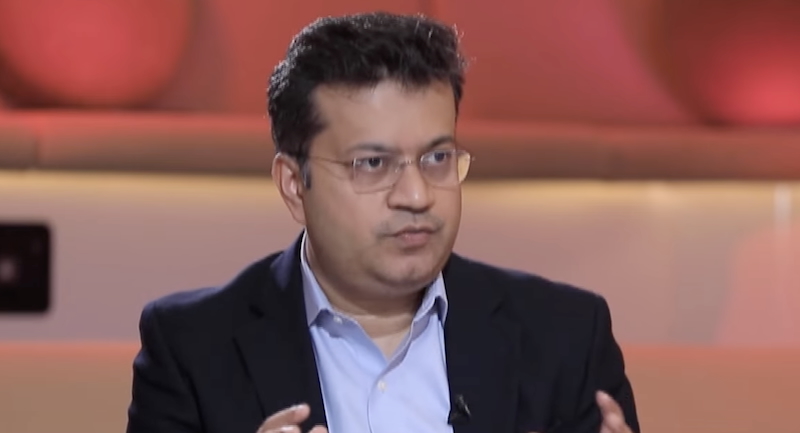
    MUMBAI: Six months into his tenure as CEO of Sony Pictures Networks India, Gaurav  Banerjee (GB as he is called internally and by those who know him)  is orchestrating a remarkable turnaround of the media giant’s Indian operations. In a detailed conversation with CNBC-TV18, GB  outlined his vision for revitalising Sony’s presence in both traditional television and digital streaming.

    Under Banerjee’s leadership, Sony Entertainment Television (SET) has witnessed a dramatic 70 per cent surge in ratings, climbing from the early 50s to the late 80s. This transformation has been driven by strategic content decisions, most notably the revival of the iconic crime drama CID, which achieved the channel’s strongest fiction launch in seven years.

    “Our flagship channel had not been doing well,” GB  acknowledged. “Some of that identity had got diluted”. 
    His response was decisive: streamline programming to reinforce Sony’s distinctive identity whilst reinvigorating successful formats. The strategy has paid dividends, with Indian Idol recording a 30 per cent increase in ratings compared to its previous season.

    “Programs like Shark Tank in its latest season were tweaked and put on the streamer  only and it has notched up a jump in viewership and viewers. 

    GB shocked
    Contrary to industry pessimism about traditional television, GB  remains bullish on linear TV’s prospects in India. “There is no evidence of TV’s decline. In fact, there is substantial evidence that TV is set to grow in our country”, he asserts, pointing to India’s massive television audience of 700 million viewers. This optimism is reinforced by continued support from major advertisers like Hindustan Unilever, who recognise television’s unique brand-building capabilities.

    For Sony as a group, GB  has implemented a four-pillar strategy encompassing sports, television content, original productions, and regional expansion. The company has secured rights to premium sporting events, including three Grand Slam tennis tournaments and 35 days of top-tier cricket coverage. Original content continues to be a priority, building on the success of acclaimed series like Scam and Rocket Boys.

    Addressing the aftermath of the failed Zee merger, GB  maintains a forward-looking stance. “The Sony group is a big believer in the potential of India”, he states, emphasising the company’s commitment to the market. On the competitive landscape of cricket rights, he advocated a measured approach: “We need to have an eye on profitability… Having two different revenue streams is very important Hence, SonyLiv will not be free.”

    GB  who previously held senior positions at Disney Star, brings a clear vision for Sony’s future: “We’re not here to count subscribers; we’re here to build a product.”

    This philosophy underpins his approach to both traditional and digital platforms, focusing on premium content creation and sustainable growth.

    GB refused to be drawn into any conversation about reviving discussions with Zeel about any merger possibilities in the light of the emergence of the JioStar megabeast. 

    “I think me and my team have a job on our hands and we are focused on that. What ever had to be said about it, has been,  before I entered this building,” he reparteed when pushed. ”I want us to build a great portfolio of amazing content and that’s what all of us in this building are focused on now. We have got great brands in-house and we have to grow them in Hindi and in other Indian languages. We have to grow them on television, we have to grow them on digital.” 
    GB smiling
    Looking ahead, Sony’s strategy under GB  appears focused on leveraging its strong heritage while embracing digital innovation. With significant improvements already visible in his first six months, the CEO’s vision for Sony India combines strategic content development with pragmatic business decisions, positioning the company for sustained growth in India’s evolving media landscape.

    “Entertainment isn’t just relaxation-it shapes society”, GB  reflects, highlighting the broader significance of his role in steering one of India’s major media enterprises. 

    As Sony continues its transformation, the early results suggest that Banerjee’s strategic repositioning is successfully reconnecting the brand with Indian audiences across both traditional and digital platforms. Viewers will agree he is the best man to remind India why it fell in love with Sony in the first place.

     If the past six months are anything to go by, Gaurav Banerjee and his team are just about getting started.

  • “Our focus remains on building a truly global gaming company from India”- Nazara  Technologies CEO Nitish Mittersain

    “Our focus remains on building a truly global gaming company from India”- Nazara Technologies CEO Nitish Mittersain

    It’s game to go global. In fact that’s the only game it looks like it is willing to play. Nazara Technologies, under the leadership of CEO Nitish Mittersain, is charting an ambitious course to become a global gaming powerhouse built from India.   One would find it hard to believe that Nitish is  anything more than 35 years of age, he carries oodles of boyish charm with him everywhere. (He’s actually 45). The boyish looking executive who’s grown Nazara from a bedroom operation to one of the most impressive gaming and experiences companies to emerge from India.

    Hailing from a business family, Mittersain began coding at  the age of eight, had tech pioneer and actor Shammi Kapoor as a mentor, set up a website building business when he was just 15.  Nazara followed when he was 19. It nearly went belly up with the dot com bust with huge debts piled up; its saving grace was that it  had a relationship with cricket’s God Sachin Tendulkar. Hence it  managed to attract investment from Westbridge Capital.

    Since then there’s been no looking back. A massive IPO has seen the company raise capital, followed by  acquisitions galore – both in India and overseas as Mittersain  goes about his business building a group touching various aspects of the gaming ecosystem and one which can rival other scaled enterprises globally.

    Nazara’s latest quarter financials saw a bunch of investors, analysts probing him during an investor call  to check if the company’s story still holds merit. He parried all with extreme ease, grace and aplomb.

    Indiantelevision.com decided to paraphrase Mittersain’s  responses during the investor call, to give you insights into how this young gaming entrepreneur is single mindedly cobbling together a global Indian gaming enterprise. Excerpts: 

    On Nazara’s great Q3 FY2025 performance.
    Our Q3FY25 performance demonstrates the strength of our diversified portfolio. Revenue reached Rs 534.7 crore, representing 67 per cent  year-on-year growth, while EBITDA grew 39 per cent to Rs  52.4 crore. The core gaming segment was particularly strong, growing 53 per cent  year-on-year, driven by our Fusebox Games acquisition and solid performance from existing titles like Animal Jam. 

    For the first nine months of FY25, we’ve reported revenue of Rs  1,103.7 crore and EBITDA of Rs  102.4 crore, showing consistent growth across our business segments.  Gaming contributed 29 per cent  of total revenues and 56 per cent of EBITDA in Q3, while eSports delivered 43 per cent of revenues and 32 per cent of EBITDA. This balance demonstrates the resilience of our business model and the success of our diversification strategy.

    On the strategic thinking behind the recent capital raises through preferential placement that the company has resorted to recently. 
    The Rs  495 crore raised through preferential placement to Aksana Estates LLP represents more than just capital – it’s a strategic partnership that validates our vision. Having established entrepreneurs like Arpit Khandelwal and Mithun Sacheti, the founder of CaratLane, join us as co-promoters brings valuable expertise to our growth journey and provides us with substantial financial flexibility. Having Plutus Wealth and Mithun Sacheti cross the 25 per cent  threshold and join as co-promoters is a significant validation of our business model.

    While some investors might view dilution with concern, we’re seeing unique opportunities in the global gaming market. The current environment, characterized by post-COVID normalization and higher interest rates, has created situations where high-quality assets are available at attractive valuations. Our strategy isn’t about short-term arbitrage – we’re building a sustainable global gaming company by acquiring strong assets and growing them systematically.

    Picture courtesy inc42

    On how the company evaluates potential acquisitions, particularly in terms of IP valuation
    We look at multiple factors. First, we assess the historical performance – app store ratings, download numbers, current user base, revenue trends, and profitability. Second, we evaluate growth potential under Nazara’s ownership – can we expand the business through improved live operations or market reach? Finally, we consider valuation metrics, typically based on EBITDA multiples within our acceptable range. For instance, with our recent game acquisitions from Zepto Labs, we saw strong existing performance metrics combined with clear opportunities for growth under our management.

    On the company’s IP licensing strategy, particularly with brands like Barbie and Big Brother.
    Our IP strategy represents a shift from our traditional approach of relying solely on original content. We’ve observed that popular IPs can significantly reduce user acquisition costs through organic downloads and improved click-through rates. These partnerships, such as Kiddopia’s agreements with Mattel for Barbie and Moonbug Entertainment for Little Angel, typically involve minimum guarantees plus revenue sharing arrangements. Even with these costs, we expect better profitability compared to traditional user acquisition spending. The success of Fusebox’s Love Island game has given us confidence to pursue similar partnerships with Big Brother globally and Bigg Boss in India.

    On  how  Nodwin  Gaming is performing, and what’s the path to profitability
    Nodwin continues to build market leadership in eSports and youth engagement. Their Q3 revenue grew 23 per cent  year-on-year, but the like-for-like growth was actually 48 per cent excluding Wings, which was deconsolidated. While profitability has been impacted by strategic investments and events like the NH7 Weekender cancellation, we’re seeing strong performance from proprietary IPs and live events. Nodwin has expanded its footprint to 20 countries and made strategic acquisitions in influencer management (Trinity Gaming), content distribution (AKF Gaming)  and event production (StarLadder). Their international revenues now account for 48 per cent of total revenue, demonstrating successful global expansion.

    We’re deliberately prioritising growth over immediate profitability because we believe building market leadership and strong moats now will create significant value in the future. The youth attention economy, particularly in emerging markets, represents a massive opportunity that requires scale and presence to capture effectively.
     

    On PokerBaazi, and its growth trajectory
    PokerBaazi is the dominant poker platform in India, and our strategy is focused on building an even stronger moat through brand development. Their gross gaming revenue grew 67 per cent  year-on-year in Q3, with healthy growth in both traded value and deposits. Rather than focusing on performance marketing, they’re investing heavily in brand building through strategic sponsorships like Shark Tank and IPL. The core business is very profitable – quarterly EBITDA fluctuations mainly reflect the timing of brand spending. This approach should create a more defensible market position over time.
     
    On the approach while developing games – both in India and internationally
    We’re implementing a hybrid model that leverages global expertise with Indian capabilities. Take Fusebox Games for example – their core team of about 35 people in the UK drives game design and narrative, while we’re increasingly shifting development and engineering work to India. This allows us to combine international design expertise with India’s strong engineering talent pool.

    Through Nazara Publishing, we’re also bringing international games to the Indian market, providing localised support and marketing. This aligns with our view that India’s gaming market will see significant growth in terms of paying users over the next five years. Simultaneously, we’re investing in local studios and capabilities to create games in India for the global market, responding to the government’s vision of India as a gaming development hub.

    Nitish and His brands

    On the company’s G-commerce initiative and its potential impact
    G-commerce addresses a fundamental challenge in the Indian gaming market – low monetisation through both in-app purchases and advertising. By integrating e-commerce within gaming environments, we aim to create new revenue streams through affiliate fees. We’re in advanced stages of a pilot with ONDC, scheduled for launch in Q4FY25. If successful, this could be a significant innovation not just for India but globally. The concept leverages Indians’ familiarity with online shopping while providing game developers with better monetisation options than traditional advertising.

    On challenges post Apple’s  IDFA changes and how Nazara addressing them.
    The post-IDFA environment has certainly changed the landscape for user acquisition. We’re adapting through multiple strategies. First, our IP partnerships help generate organic downloads and reduce acquisition costs. Second, we’re seeing ad agencies and platforms develop new models that work within the privacy-first framework. Third, we’re exploring alternative channels and focusing on markets where Android remains dominant. The situation has stabilised over the past 18 months, and we’re seeing companies, including ourselves, successfully adapt their user acquisition strategies to this new reality.

    On the  role  AI will play in Nazara’s future operations
    We see AI as both an opportunity and a tool across our business. In game development, we’re exploring AI applications for content creation, testing, and personalization. In user acquisition, AI helps optimize targeting and spending. For eSports, AI assists in content creation and production efficiency.
    However, we maintain a balanced view. While AI can enhance efficiency and create new possibilities, the core of gaming remains human creativity and engagement. We’re focused on using AI to augment rather than replace human capabilities, particularly in areas like game design and community engagement.
    The real opportunity lies in using AI to better understand and serve our users while maintaining the human elements that make games and eSports engaging. We’re investing in AI capabilities but always with a clear focus on enhancing rather than replacing the core gaming experience.

    On guidance for future growth
    We’re maintaining our FY27 EBITDA target of Rs  300 crores and are confident in achieving it. Our recent capital raise and strong cash position give us the flexibility to pursue both organic and inorganic growth opportunities. 2025 presents particularly attractive M&A opportunities in the global gaming market, especially given current valuations. We’re seeing potential in both established markets and emerging economies, particularly in mobile gaming and eSports. Our focus remains on building a truly global gaming company from India, leveraging our expertise across different segments and geographies.

    (Picture of Nitish punching courtesy INC42)
  • Swiggy to Invest Rs 1,000 Crore in subsidiary Scootsy Logistics

    Swiggy to Invest Rs 1,000 Crore in subsidiary Scootsy Logistics

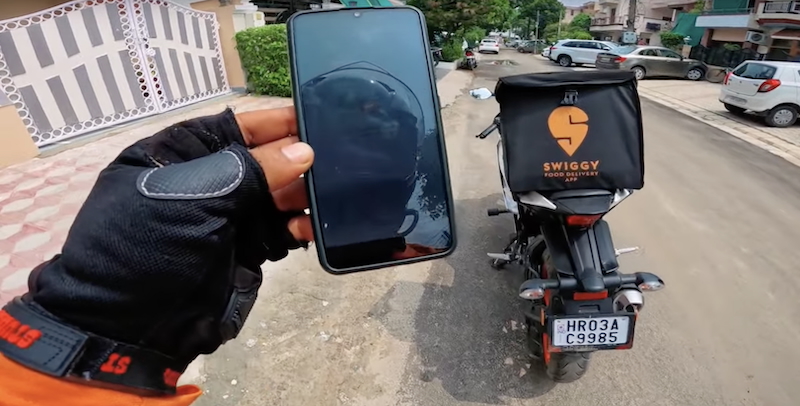
    MUMBAI: : Swiggy’s board has approved an investment of up to Rs 1,000 crore in its wholly owned subsidiary, Scootsy Logistics, through a rights issue. The investment will be made in multiple tranches and is aimed at strengthening working capital and funding expansion initiatives.

    Scootsy Logistics specialises in supply chain services, including warehouse management, in-warehouse processing, and efficient order fulfilment for wholesalers and retailers. The company plays a critical role in streamlining logistics and ensuring seamless deliveries across India. The transaction qualifies as a related party deal but is conducted at arm’s length, with Swiggy maintaining its existing shareholding without further financial interest beyond this investment.

    Scootsy did a turnover of Rs 57,957 million in FY 2024; Rs 36,862 million in FY 2023 and Rs 15,803 million in FY 2022.

    Shares under the rights issue will be issued at Rs 7,640 each, including a Rs 7,630 premium, or at a price determined through valuation.

    Established in 2014, Scootsy has been a key logistics partner in India’s fast-growing e-commerce sector, offering scalable and efficient logistics solutions. Swiggy’s investment underscores its commitment to bolstering supply chain infrastructure, enhancing operational efficiency, and supporting future growth in the evolving digital commerce landscape.

  • Navigating India’s Evolving Forex Landscape: How to Choose the Right Broker

    Navigating India’s Evolving Forex Landscape: How to Choose the Right Broker

    Forex trading in India has gained significant traction over the years, with an increasing number of individuals exploring the currency markets to diversify their portfolios and hedge against risks. The journey to becoming a successful forex trader begins with selecting the right broker. Among the many options available, comparisons such as Vantage vs OctaFX brokers often arise as traders analyze their options to find the perfect fit. Each broker offers unique features, tools, and benefits, but understanding how they align with India’s regulatory environment and individual trading goals is of crucial importance.

    Understanding the Role of a Forex Broker

    A forex broker acts as an intermediary between traders and the foreign exchange market, offering platforms, tools, and access to currency pairs. For Indian traders, the broker’s role extends beyond executing trades; it includes ensuring compliance with local regulations, offering INR-based currency pairs, and providing educational resources.

    Features such as competitive spreads, reliable execution speed, and robust security measures are non-negotiable when choosing a broker. Platforms such as Vantage and OctaFX offer these features, but they cater to different trader needs. Vantage is known for its advanced tools and transparency and OctaFX attracts users with its simplicity and affordability, making both worthy of consideration depending on your trading style.

    Factors to Consider When Choosing a Broker

    To find the right broker, Indian traders should evaluate several key factors. First and foremost is regulatory compliance. Trading with brokers regulated by globally recognized authorities or those who understand India’s unique legal framework ensures safety and reliability.

    The availability of INR-based currency pairs is another critical factor. While India restricts forex trading to pairs involving the Indian Rupee, brokers such as Vantage and OctaFX often offer demo accounts, allowing traders to practice and explore strategies without risking real money. Platform usability is also crucial. Advanced platforms with analytical tools appeal to experienced traders, while intuitive interfaces cater to beginners.

    Comparing Vantage and OctaFX for Indian Traders

    When debating Vantage vs OctaFX, it’s essential to consider what each broker brings to the table. Vantage offers a professional-grade trading environment with competitive spreads, advanced analytical tools, and a strong regulatory standing. It’s ideal for traders looking for transparency and access to high-quality tools.

    On the other hand, OctaFX focuses on simplicity and affordability, offering attractive bonuses, a user-friendly interface, and low trading costs. Its localised support and flexible funding options make it a popular choice among Indian traders who are new to forex or operate with limited capital.

    Conclusion

    Finding the right forex broker in India’s dynamic trading market is about balancing regulatory compliance, platform features, and personal trading preferences. Brokers such as Vantage and OctaFX cater to different needs, from advanced tools to beginner-friendly environments. By assessing these options against individual goals and the regulatory framework, traders can make informed decisions that set them up for long-term success. In a market as dynamic as forex trading, the right broker can make all the difference in your journey to financial growth.

    Disclaimer: This article does not have journalistic/ editorial involvement of indiantelevision.com. indiantelevision.com group or its websites does not endorse/ subscribe to the contents of the article/advertisement and/or views expressed herein.

    The reader is further advised that Online Casino, Betting, Online Gaming , Crypto products, Financial Investments/Engagement , NFTs, Products associated with health, wellness, and food are unregulated and can be highly risky. There may be no regulatory recourse for any loss from such transactions or risk associated with health conditions.

    Indiantelevision.com group shall not in any manner, be responsible and/or liable in any manner whatsoever for all that is stated in the article and/or also with regard to the views, opinions, announcements, declarations, affirmations etc., stated/featured in the same. The decision to read hereinafter is purely a matter of choice and shall be construed as an express undertaking/guarantee in favour of indiantelevision.com (indiantelevision.com group) of being absolved from any/ all potential legal action, or enforceable claims. The content may be for information and awareness purposes and does not constitute financial advice. 

  • Delta Corp to merge subsidiary Deltatech Gaming with Head Digital Works

    Delta Corp to merge subsidiary Deltatech Gaming with Head Digital Works

    MUMBAI: The casual dating is resulting in wedding wows. Delta Corp Ltd, India’s leading listed casino and gaming company, has agreed  with Head Digital Works Pvt  Ltd (Head Digital) for the acquisition of Deltatech Gaming Ltd (DGL), which operates the online poker platform Adda52, by Head Digital, which runs the online rummy and poker platform A23. 

    The transaction, valued at approximately Rs 491 crore, will take place in two phases: an initial acquisition of a 51 per cent  stake in DGL by Head Digital, followed by a merger of DGL with Head Digital.

    Upon completion of the merger, Delta Corp will hold a 5.7 per cent  stake in Head Digital. Adda52 is among India’s oldest online poker platforms, while Head Digital, a pioneer in online gaming, operates A23 Rummy, one of India’s largest real-money rummy platforms with over 75 million users.

    Delta Corp managing director Ashish Kapadia commented: “We are excited about this journey with Deepak and his team, whose leadership has been instrumental in shaping India’s online rummy market. We believe this transaction will strengthen Adda52’s leading position in the online poker sector.”

    Head Digital founder and chief executive officer Deepak Gullapalli said: “Head Digital is a pioneer in India’s online gaming industry, and we are thrilled to collaborate with one of the country’s most recognised poker brands, Adda52. This deal will enhance our poker business and help us build a leading diversified card gaming platform.”

    The acquisition of 51 per cent  of DGL by Head Digital is expected to be completed by 6 April 2025, at which point DGL will cease to be a subsidiary of Delta Corp. The subsequent merger of DGL with Head Digital is subject to approvals from the shareholders of both companies and the National Company Law Tribunal and is expected to be finalised by 30 June 2026.

    The transaction assigns an enterprise value of approximately Rs 491.26 crore to DGL. Head Digital’s 51 per cent  stake in DGL will be acquired through a combination of primary subscription and secondary acquisition from Delta Corp, for a total cash consideration of Rs 34.8 crore and an equity swap in Head Digital. Delta Corp is set to acquire approximately 2.8 per cent  of Head Digital’s shareholding by 6 April 2025, increasing to 5.7 per cent upon completion of the merger.

    For the financial year ending 31 March 2024, on a standalone basis, DGL reported revenue of Rs 92.93 crore, contributing 13.77 per cent  of Delta Corp’s total income. On a consolidated basis, its revenue stood at Rs 92.93 crore, representing 9.46 per cent  of Delta Corp’s total income. The company’s net worth stood at Rs -3.48 crore.

    Head Digital reported an annual turnover of Rs 841.39 crore in FY 2023-24, with a net worth of Rs 880.99 crore. In the previous financial years, its turnover was Rs 839.13 crore in FY 2022-23 and Rs 721.89 crore in FY 2021-22.

    The transaction is subject to customary conditions, including shareholder approvals. Delta Corp and Head Digital have provided mutual representations, warranties, and indemnities within agreed financial caps. Delta Corp has also agreed to a five-year non-compete and non-solicitation clause following Head Digital’s acquisition of the 51 per cent  stake in DGL. As a minority shareholder in Head Digital, Delta Corp will be subject to restrictions on dealing with its shares and will receive customary minority shareholder rights.

    Indium Capital Advisors acted as the exclusive investment banking advisor, with legal counsel provided by AZB & Partners for Delta Corp and Spice Route Legal for Head Digital.

  • India-UK strengthen ties in telecom, AI, and emerging technologies

    India-UK strengthen ties in telecom, AI, and emerging technologies

    MUMBAI: India’s push for technological leadership just got a major boost. Strengthening its global partnerships, India has expanded its collaboration with the United Kingdom in key areas, including telecommunications, artificial intelligence (AI), and emerging technologies. This move underscores India’s determination to shape the future of digital infrastructure and network security.

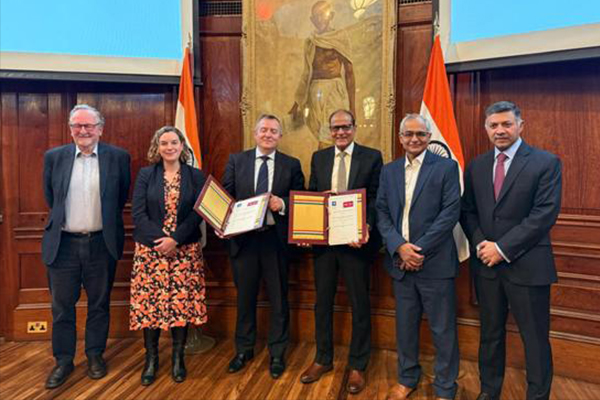
    During his visit to the UK, Telecom secretary of India Neeraj Mittal engaged with the department of science, innovation and technology (DSIT), discussing next-gen advancements in 5G, 6G, and digital security. He met with national scientific adviser Chris Johnson and national technology adviser Dave Smith to explore policy and technical frameworks aimed at fostering deeper cooperation.

    Mittal also met Govt of Scotland digital directorate director Geoff Huggins to discuss Scotland-India collaboration in digital transformation, telecom security, and emerging communication technologies. A field visit to one of the Federated Telecom Hubs (FTH) in the UK offered insights into cutting-edge research in 6G distributed cloud, AI for 6G, and green 6G solutions.

    In a significant step forward, Sonic Labs and India’s centre for development of telematics (CDOT) signed an MoU on Open RAN policy and technical cooperation, covering 5G Open RAN and AI-driven advancements in 4G/5G networks. This partnership signals an ambitious plan to push Open RAN innovation, bringing flexibility and efficiency to telecom infrastructures.

    India’s telecom delegation also met Alan Turing Institute CEO Jean Innes to explore collaboration in digital twins, AI-driven telecom security, and ethical AI. The discussions focused on fostering an AI-powered startup ecosystem, aiming to build robust, trustworthy, and scalable digital solutions.

    The visit also saw engagement with Scotland’s 5G centre at the University of Strathclyde and the 6G research centre at the University of Glasgow. These meetings opened doors for joint research, student exchange programmes, and collaborative work on 6G innovation and future sensing technologies.

    Building on the UK-India technology security initiative (TSI), a telecom roundtable brought together DSIT officials, business leaders from BT and Ericsson, and innovation hubs including UK Telecom Labs, Sonic Labs, and Titan. The High Commission of India (HCI) partnered with UKTIN (UK Technology Innovation Network) to organise the event, reinforcing India’s leadership in next-generation telecom development.

    During the discussions, key areas of Indo-UK collaboration were identified:

    1    Joint centres of excellence focused on telecom cybersecurity, AI in telecom, and digital twins.

    2    Partnerships with British telcos to leverage mobile data for urban infrastructure planning.

    3    Joint contributions to ITU’s 6G standards (IMT 2030).

    4    Mutual recognition of telecom testing labs and the creation of new facilities.

    5    Advancing quantum communication and submarine sea cable security.

    6    Promoting India’s indigenous 4G/5G telecom stack, developed by CDOT.

    7    Collaboration on space technology communication (TN-NTN) between Bharat 6G Alliance and UK entities.

    This visit cemented India’s role as a key global player in telecom innovation, reinforcing the country’s commitment to AI-driven connectivity and digital inclusion. By fostering strategic alliances with the UK, India is positioning itself at the forefront of 6G research, telecom security, and space communications.

    Mittal summed it up, “India’s telecom sector is at the cutting edge of global advancements. Strengthening our collaboration with the UK will further accelerate innovation in 6G, AI-driven security, and digital infrastructure, ensuring a resilient and connected future.”

    With this partnership, India and the UK have laid the groundwork for a digitally secure, AI-enhanced, and globally competitive telecom landscape. The future of connectivity just got brighter.

  • Netflix commits a billion dollar investment in Mexico’s entertainment sector

    Netflix commits a billion dollar investment in Mexico’s entertainment sector

    MUMBAI: President Trump wants immigrants from across the border out of the US. Where they go is none of his business. Netflix, on its part is clear where it  is headed –  to Mexico , where Trump wants the illegals to head. 

    Yesterday, the streamer announced that it is going to be pumping in  a billion dollars over the next four years into making entertainment content in the country.

    Ted Sarandos, the streaming giant’s co-chief executive, made the announcement alongside president Claudia Sheinbaum in Mexico City yesterday. The investment marks a significant expansion of Netflix’s presence in Latin America’s second-largest economy.


    The commitment aims to bolster local production companies and stimulate growth across Mexico’s audiovisual sector. Beyond film and television production, the investment is expected to create ripple effects in adjacent industries, from catering and hospitality to traditional craftsmanship.

    Mexican content has proven particularly successful for Netflix’s global audience. The streaming service has already produced hundreds of shows and films in the country, many achieving international acclaim. The new investment signals Netflix’s confidence in Mexico’s creative talent pool and its potential to generate content with worldwide appeal.

    The move comes as streaming platforms increasingly focus on local content production to differentiate their offerings and capture regional audiences. For Mexico, the investment represents a significant boost to its creative industries, potentially establishing the country as a leading hub for Spanish-language content production in the Americas.

  • Fubo unveils multicultural content bundles; Zee Family leads the charge

    Fubo unveils multicultural content bundles; Zee Family leads the charge

    MUMBAI: FuboTV Inc., the sports-first live TV streaming platform, has just upped its game with the launch of multicultural content bundles designed to cater to a growing demand for international programming. Available both as standalone subscriptions and as add-ons to English-language Fubo base plans, these bundles aim to provide diverse audiences with premium entertainment in multiple languages.

    Leading the charge is Zee Family, a suite of 18 linear entertainment channels from Asia TV USA Ltd., the independent distributor of Zee Entertainment. This offering is now live on Fubo, available as an annual subscription, with a monthly plan rolling out soon. The deal also paves the way for the addition of Zee5, Zee’s direct-to-consumer (D2C) streaming app, broadening Fubo’s South Asian content portfolio.

    The U.S. Census Bureau has highlighted a significant rise in Indian-language speakers, particularly Telugu, Tamil, Kannada, and Marathi, underscoring the need for diverse, regional content. By integrating Zee Family into its platform, Fubo is tapping into this growing demand, offering more entertainment choices to an increasingly diverse American audience.

    Asia TV USA Ltd. licensing, EVP, Zee5 B2B, operations, head of partnerships; distribution, ad sales, Akhilesh G. celebrated the collaboration on LinkedIn: “Happy to announce the partnership between Fubo and ZEE, making Zee Family the first multicultural offering on Fubo in the U.S.! This collaboration brings 18 linear ZEE channels and Zee5 to Fubo’s customers, expanding access to premium South Asian entertainment.”

    He further highlighted the importance of this partnership: “South Asian population in the U.S. has seen significant growth, as reflected in recent Census data. With millions of south Asians calling the U.S. home, the demand for premium, culturally relevant entertainment has never been greater. A huge thank you to Fubo for their collaboration in making this vision a reality. We are excited to deliver the best of south Asian entertainment to an even wider audience!”

    “The launch of multicultural bundles is a natural next step in our Super Aggregation strategy, as we seek to serve all consumers with flexible content bundles featuring the content they want to watch at an appropriate price point,” said Fubo executive vice president of content strategy and acquisition, Todd Mathers. “These skinnier content bundles enable Fubo subscribers to build the content package that’s right for them. We plan to offer additional new programming packages, and in multiple languages, to really put choice in the hands of consumers, as they deserve.”

    Zee Family brings a powerhouse lineup of channels that cater to various linguistic and cultural preferences. Some highlights include:

    1    Zee TV – The flagship Hindi general entertainment channel, renowned for its family dramas and reality shows.

    2    Zee Cinema – A treasure trove of Hindi movies spanning action, comedy, romance, and family films.

    3    Zee Telugu – A leading Telugu entertainment channel offering a mix of serials, films, and reality shows.

    4    Zee Tamil – A go-to Tamil entertainment hub with a rich blend of dramas, movies, and cultural programming.

    5    Zee Marathi – A favourite among Marathi-speaking audiences with its drama, movies, and lifestyle shows.

    6    Zee Bangla – A Bengali entertainment powerhouse, known for its innovative programming and viewer engagement.

    7    Zee Punjabi – A Punjabi-language entertainment channel featuring serials, reality shows, and cultural content.

    8    Zee World – A destination for Bollywood entertainment, bringing Indian series and films to global audiences.

    9    Zee Kannada – Offering everything from game shows to soap operas for Kannada-speaking viewers.

    10    Zee Keralam – A Malayalam channel reflecting the vibrant spirit of Kerala through fiction and non-fiction shows.

    11    &TV – A Hindi GEC (general entertainment channel) catering to modern Indian sensibilities.

    12    Zee Anmol – A collection of some of India’s most-loved television classics.

    13    Zee Classic – The channel that keeps the golden era of Bollywood alive with iconic films and talent spotlights.

    14    Zee Bollywood – A high-energy Bollywood channel showcasing masala entertainers.

    15    Zing – A Bollywood music and lifestyle channel featuring celebrity news and entertainment.

    16    Zee Talkies – A 24/7 Marathi movie channel celebrating the best of Marathi cinema.

    17    Alpha ETC Punjabi – A Punjabi entertainment channel covering drama, music, news, and cultural content.

    18    Zee Cinemalu – A Telugu movie channel offering world television premieres and an extensive film library.

    Fubo isn’t stopping with Zee Family. The streaming service plans to expand its multicultural content offering, bringing even more live and video-on-demand (VOD) options across various languages and cultures. The move positions Fubo as a serious contender in the battle for diverse, niche audiences who crave entertainment that reflects their heritage and preferences.

    For consumers, this means more ways to tailor their viewing experience, whether they want a full-fledged multicultural plan or just a few add-ons to complement their existing subscription.

    As the streaming wars intensify, will Fubo’s strategy of hyper-personalised content bundles prove to be a game-changer? 

  • BSNL rings in a revival with Rs 4,969 crore revenue

    BSNL rings in a revival with Rs 4,969 crore revenue

    MUMBAI: BSNL has dialled up a major financial comeback, posting a profit before tax of Rs 262 crore in Q3 FY25, a staggering reversal from a Rs 1,569 crore loss in the same quarter last year. With revenue growth, strategic cost reductions, and a push for 4G and fibre-optic expansion, the state-run telecom operator is charting a path to profitability while reinforcing its position in India’s evolving telecom landscape.

    BSNL’s revenue from operations climbed to Rs 4,969 crore in Q3 FY25, up from Rs 4,546 crore in Q3 FY24, reflecting a steady rise in demand for its mobility, fibre-to-the-home (FTTH), and leased line services. These key growth segments saw year-on-year increases of 15 per cent, 18 per cent, and 14 per cent, respectively.

    “This milestone reflects the company’s focus on innovation, aggressive network expansion, cost optimisation, and customer-centric service improvements,” the BSNL said in an official statement.

    With improved revenue and reduced costs, BSNL’s EBITDA surged to Rs 1,466 crore in Q3 FY25, up from just Rs 316 crore in the same quarter last year, marking a 364 per cent increase. For the nine-month period, EBITDA stood at Rs 2,369 crore, nearly tripling from Rs 893 crore in the previous year. 
    Total expenditure for Q3 FY25 (excluding depreciation and finance costs) was Rs 4,210 crore, significantly lower than Rs 4,741 crore in Q3 FY24, demonstrating effective cost control measures.

    For the nine-month period ending December 2024, revenue grew to Rs 14,197 crore, up from Rs 12,905 crore in the same period last year, demonstrating consistent business expansion. Other income for Q3 stood at Rs 706 crore, a significant 38 per cent increase from Rs 511 crore in the same quarter last year. However, for the nine-month period, other income was Rs 1,406 crore, slightly lower than Rs 1,528 crore in FY24. BSNL’s loss before tax for the nine-month period ending December 2024 was Rs 2,527 crore, a sharp improvement from the Rs 4,522 crore loss recorded last year. Significantly, 20 BSNL circles reported EBITDA-positive performance in Q3 FY25, compared to just 12 in Q3 FY24.

    Announcing the quarterly financial results, BSNL chairman & managing director Robert J. Ravi stated, “We are pleased with our financial performance this quarter, which reflects our focus on innovation, customer satisfaction, and aggressive network expansion.”

    “With these efforts, we expect revenue growth to improve further, exceeding 20 per cent by the end of the financial year. BSNL has successfully reduced its finance cost and overall expenditure, leading to a decline in losses by over Rs 1,800 crore compared to last year. To enhance our customer experience, we have introduced new innovations such as national wifi roaming, BiTV – free entertainment for all mobile customers, and IFTV for all FTTH customers. Our continuous focus on quality of service and service assurance has further strengthened customer trust and reinforced BSNL’s position as a leading telecom service provider in India.” Ravi added.

    Today is a significant day in the history of the Indian telecom industry, according to minister Jyotiraditya Scindia. He added, “the prime minister intends for the telecom industry to lead India’s digital future, and all the nation’s telecom service providers are honestly working towards this goal.”

    With total quarterly income touching Rs 5,675 crore, up from Rs 5,057 crore in Q3 FY24, BSNL is firmly on a growth trajectory as it expands its digital footprint. One of the biggest reductions came in network operating expenses, which dropped to Rs 1,336 crore, down from Rs 1,397 crore in Q3 FY24. This streamlined network management approach is helping BSNL maximise efficiency while maintaining service quality.

    Employee benefits expenses also saw a notable decline, falling to Rs 1,735 crore from Rs 2,011 crore in the same quarter last year. The reduction in workforce-related costs has played a crucial role in improving BSNL’s financial health while ensuring operational effectiveness.

    A significant shift in BSNL’s financial strategy is reflected in its depreciation and amortisation costs (DAC), which nearly halved to Rs 814 crore from Rs 1,443 crore. This sharp reduction underscores the company’s commitment to next-gen infrastructure and digital transformation, as BSNL accelerates investments in modern telecom technology while efficiently managing legacy assets.

    Meanwhile, finance costs saw a 12 per cent decline, falling to Rs 389 crore from Rs 442 crore, further easing financial pressure and contributing to stronger bottom-line performance.

    Ever since it last posted a quarterly net profit in 2007, the state-owned telecom services company turned a profit for the first time in the last quarter. In a remarkable turnaround, BSNL’s subscriber base has risen to about nine crore in December from 8.4 crore in June. During the same quarter, leased line services revenue increased by 14 per cent, mobility services revenue by 15 per cent, and fibre-to-the-home (FTTH) revenue by 18 per cent. A key priority is fast-tracking 4G and 5G rollouts, aimed at enhancing network coverage and service quality while keeping pace with industry advancements. 

  • Airtel lands major subsea data connectvity cable in Chennai

    Airtel lands major subsea data connectvity cable in Chennai

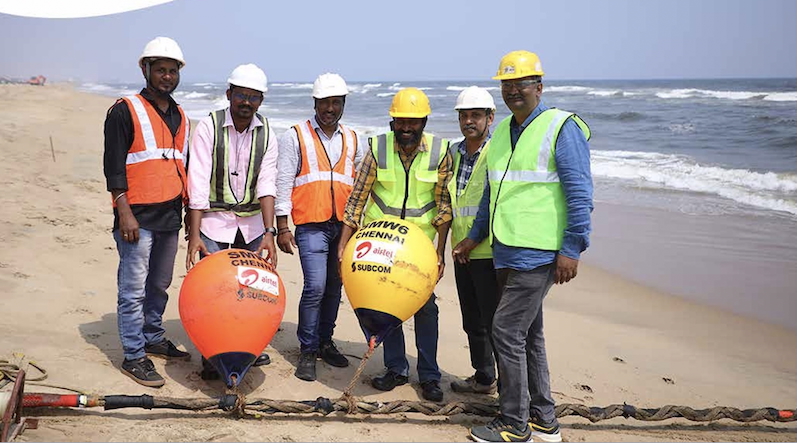
    MUMBAI: Bharti Airtel has completed the landing of the SEA-ME-WE-6 submarine cable in Chennai, following its earlier landing in Mumbai last December. The 21,700-kilometre system connects India with Singapore and Marseille, France, traversing Egypt via terrestrial routes.

    The telecommunications provider worked with SubCom, the system’s primary contractor, to complete both landings. The new cable will deliver 220 terabits per second of global capacity to India.

    Sharat Sinha

    “This investment strengthens our secure, diverse and scalable global network,” said Airtel Business director and chief executive Sharat Sinha. “Landing one of the largest cable systems into our facilities complements our existing network of 400,000 route-kilometres across 50 countries.”

    The cable will integrate with Nxtra by Airtel’s data centres in Mumbai and Chennai, enabling global hyperscalers and businesses to access international connectivity and data centre services seamlessly.

    As a consortium member, Airtel has invested in the main cable system and co-built a private network of four fibre pairs connecting Singapore, Chennai and Mumbai. 

    The company’s global network now includes investments in 34 submarine cables, with recent additions such as 2Africa, SJC2 and Equiano, linking India to key regions across Asia-Pacific, Europe, the Middle East and the United States. Its subsea network also includes i2i Cable Network, Europe India Gateway (EIG), IMEWE, SEA-ME-WE-4, AAG, Unity, EASSy, Gulf Bridge International (GBI), and the MENA Cable.