Category: iWorld

  • India congregates at Mipcom as TV industry grapples with streaming wars

    India congregates at Mipcom as TV industry grapples with streaming wars

    CANNES: Mipcom 2025 opens its doors on 13 October in Cannes, and India is making serious noise. Whilst the global television and streaming industries thrash about in existential angst—wondering what they are, where they’re going, and whether anyone still watches television—over 10,500 participants and 330-plus exhibitors from more than 100 countries are cramming into the Palais des Festivals. Identity crisis? Not on India’s watch.

    RX management, which runs this annual gathering, expects the gloom to lift the moment delegates start talking deals. And nowhere is the optimism more palpable than in the Indian contingent, which has arrived in force with more than 70 companies ready to do business.

    Centre stage sits the Indian Pavilion—a sprawling 100 sq m affair rebranded as the Bharat Pavilion/Waves Bazaar. It’s a joint initiative between the Indian consulate in Marseilles, the ministry of information and broadcasting, and the Services Export Promotion Council. More than 40 Indian companies have piled in under its banner: animation studios, video service outfits, content distributors, post-production houses—the full ecosystem.

    But the real heavyweights are flying solo. Eschewing the shared space, a formidable lineup of Indian firms have planted their own flags with independent exhibition stands: Animation Xpress, Amagi Media, Enterr10 Television (which runs the Dangal channel), GoQuest Media, JioStar India, One Life Studios, One Take Media, PowerKids Entertainment, Rajshri Entertainment, Rusk Media, Shemaroo Entertainment, and Zee Entertainment Enterprises. It’s a show of strength that reflects India’s growing clout in the global content economy.

    Indian delegates hunting for content—whether licensing hit formats or acquiring finished programming—number more than 120 this year, a figure that underscores the country’s voracious appetite for fresh material and its ambitions as both buyer and seller.

    Hiren Gada, chief executive of Shemaroo Entertainment, said he was returning to Mipcom after many years away and was “looking forward to some exciting meetings with international clients.” The veteran executive’s presence signals that even established players see renewed opportunity in the current market turbulence.

    Siddharth Kumar Tewary, founder of One Life Studios, called the atmosphere “electric,” adding that his company was now positioning itself as a global multiplatform content and production services partner—not merely an Indian supplier, but a genuine international player capable of creating content for any screen, anywhere.

    The Indian surge comes at a curious moment. Traditional broadcasters are bleeding viewers to streaming platforms – which are themselves struggling against the vertical and micro drama platforms and Fast services -trying to figure out sustainable business models. Studios are consolidating, mergers are multiplying, and nobody quite knows whether “peak TV” was last year or five years ago. Yet Cannes remains Cannes—a place where hope springs eternal and every conversation might be the one that spawns the next global hit.

    As deals snap shut and pitches fly across the sun-drenched Riviera, sleepy Cannes has morphed once more into the pulsing nerve centre of the global content trade. Champagne corks pop, business cards change hands at dizzying speed, and somewhere in the Palais a Hindi-language crime thriller is being sold to a Scandinavian broadcaster who’s convinced it’s the next Squid Game.

    Streaming uncertainty be damned. The curtain rises, the cameras roll, and India’s moment in the spotlight has arrived—louder, brighter and more confident than ever.
  • Hoopr hits the right note with Rs 4.5 crore payouts to 1,500 plus Indian artists

    Hoopr hits the right note with Rs 4.5 crore payouts to 1,500 plus Indian artists

    MUMBAI: Hoopr, India’s first music licensing platform, has struck a major chord in the country’s creator economy, disbursing over Rs 4.5 crore to more than 1,500 artists across 20 genres over the past three years. The milestone marks an industry first in micro-sync licensing payouts, underscoring Hoopr’s mission to build a transparent and sustainable revenue stream for India’s independent music community.

    Unlike traditional music models where earnings are often dominated by established labels and chart-topping artists, Hoopr’s system ensures fair compensation for those who typically remain behind the scenes: music producers, composers, and background score creators. Each time a brand or content creator licenses a track through the platform, the artist earns directly, taking home 50–65 per cent of the revenue.

    The platform’s roster includes both seasoned and emerging names such as Nilesh Dahanukar (Special 26, Tanhaji: The Unsung Warrior), Divya Limbasia (The Family Man), Aditya Kudalkar (Gathan), and Devashish Korani (Yeh Chahiye, Ruaa Ruaa).

    Hoopr currently powers over 30,000 creators, including Ashish Vidyarthi, chef Ranveer Brar, and Flying Beast and collaborates with more than 175 brands such as ITC, Himalaya, Myntra, Meesho, Marico and Ultratech.

    Highlighting the platform’s impact, emerging artist Trivarg Arandhara (Triv) from Assam earned more from a single micro-licensing deal on Hoopr than he would have from 4.8 lakh streams on Spotify or Youtube.

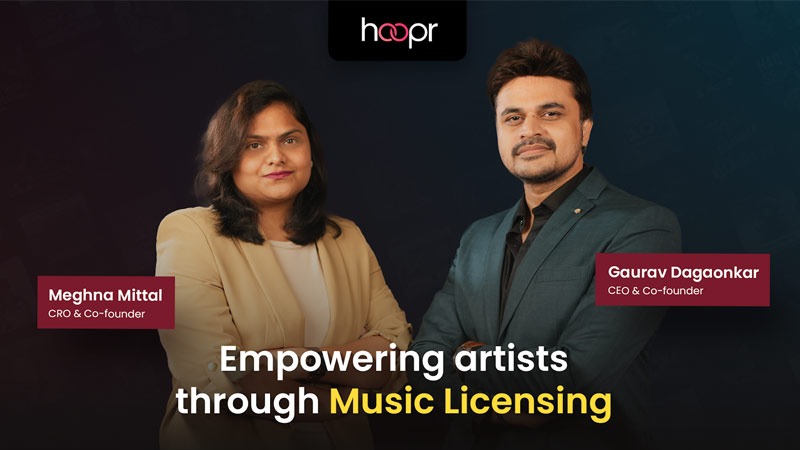
    Co-founder and CEO of Hoopr Gaurav Dagaonkar said, “This milestone goes beyond payouts, it signals a shift toward sustainable income for artists. Licensing is the future of creator monetisation, and Rs 4.5 crore is only the beginning. We aim to surpass Rs 100 crore in payouts by FY2028.”

    Co-founder and CRO Meghna Mittal added, “Transparency and trust have always been at the heart of Hoopr. Our tech-enabled backend ensures artists are paid promptly whenever their music is used. We’re building an inclusive ecosystem where every artist can thrive and where brands can easily access authentic, culturally resonant music.”


  • Gold and Frameboxx draw up a new script for animation education

    Gold and Frameboxx draw up a new script for animation education

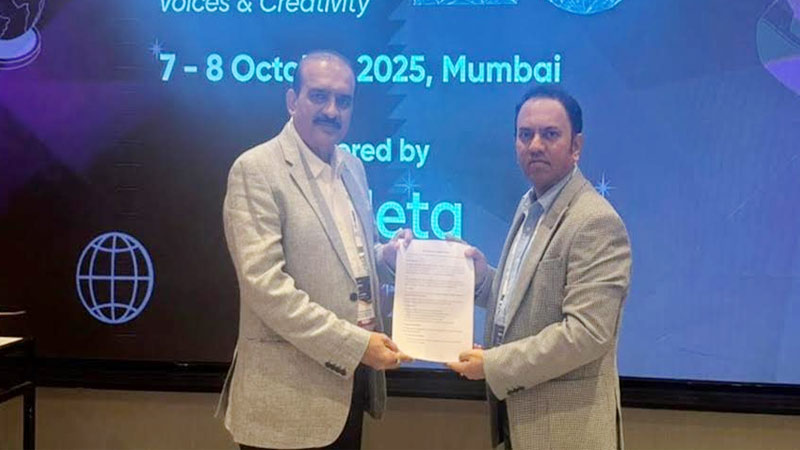
    MUMBAI: When academia meets animation, the result is pure motion magic. India’s pioneering animation studio Green Gold Animation pvt. ltd., the creative powerhouse behind some of the country’s most beloved animated universes, has teamed up with Frameboxx Animation & Visual Effects pvt. ltd., one of India’s top training institutes, to script a new chapter in animation education.

    The two industry leaders have signed a Memorandum of Understanding (MoU) to introduce an Industry Embedded Degree Programme in Animation and VFX, a first-of-its-kind initiative that fuses classroom learning with real-world studio experience. The MoU was signed by Sitarama Rajiv Chilakalapudi, founder and managing director of Green Gold Animation, and Rajesh Ramesh Turakhia, founder and managing director of Frameboxx.

    Under the partnership, Green Gold’s senior Subject Matter Experts (SMEs) will deliver 150 hours of in-class, hands-on training across three years, ensuring students learn not just the theory but the thrill of production itself. These will be live, interactive sessions with Green Gold’s artists and mentors people who’ve turned sketches into global success stories.

    Students will also work on live production projects during their final year, gaining direct exposure to industry workflows, pipelines, and creative challenges. The result: graduates who don’t just dream in animation, but think, design, and deliver like studio professionals from day one.

    “India’s animation industry is expanding rapidly, driven by global demand for quality content and the explosion of digital platforms,” said Green Gold Animation founder and CEO Rajiv Chilaka. “Yet, there’s a widening gap between what’s taught in classrooms and what studios need. Through this collaboration with Frameboxx, our goal is to bridge that gap by embedding real production expertise into academic learning. We want students to experience the pulse of a professional studio and understand how global projects are executed from concept to credits.”

    He added that this collaboration could help India emerge not just as a major consumer of animation content but as a consistent exporter of world-class animation talent.

    Echoing the sentiment Frameboxx founder and managing director Rajesh Ramesh Turakhia said, “This partnership marks a milestone in academic-industry collaboration. Students will benefit from live projects, masterclasses, workshops, and project reviews by Green Gold’s experts across Frameboxx centres nationwide. Together, we’re offering a learning experience that’s as real as it gets.”

    The programme will award a joint certification from Green Gold and Frameboxx, in addition to the degree from the affiliated university. Students will have access to cutting-edge technology, structured mentorship, and a well-defined career pathway that aligns with global production standards.

    Beyond academic reform, the alliance signals a shared mission to nurture India’s next generation of animators and visual storytellers. For Green Gold, it reinforces its role not just as a studio but as a mentor for the creative economy. For Frameboxx, it deepens its reputation as a bridge between education and employability.

    As the animation industry evolves from art to asset class, this partnership gives India’s young dreamers the tools to not only sketch their ideas but also shape their futures. After all, when the worlds of imagination and education collide the credits don’t roll, they begin.
     

  • India pitches homegrown large language model as AI summit pre-events kick off

    India pitches homegrown large language model as AI summit pre-events kick off

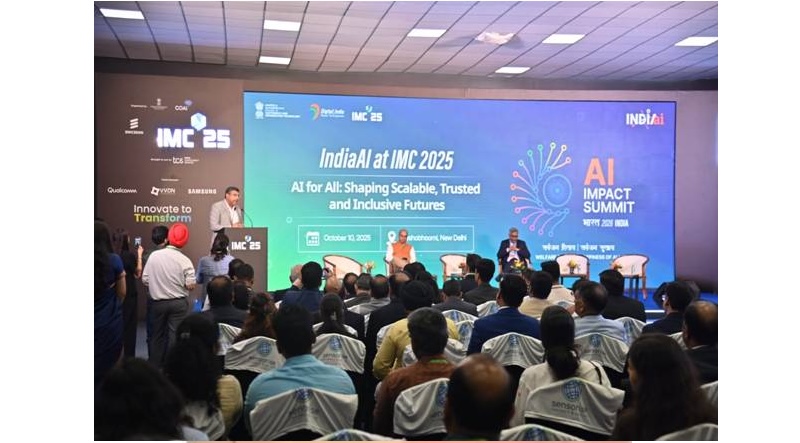
    NEW DELHI: India is making a play for AI self-reliance. At pre-summit events for the India–AI Impact Summit 2026, held during the India Mobile Congress in New Delhi, the government announced plans to launch an Indian large language model by year-end, aiming to cut dependence on foreign systems.

    The IndiaAI Mission, approved last year, is already delivering results: 38,000 graphics processing units are now available at Rs 65 per hour, whilst 12 companies are developing foundation models. “We envision to launch an Indian Large Language Model by year-end, reducing dependence on foreign systems,” says ministry of electronics and information technology additional secretary,  chief executive of IndiaAI and director general of the National Informatics Centre Abhishek Singh. 

    The pre-summit events drew leaders from government, industry and academia to explore how AI can drive inclusive growth across telecom and digital infrastructure. Four panels tackled AI’s role in telecom impact, trustworthy deployment, workforce development and social empowerment. Representatives from Reliance Jio, Tata Consultancy Services, Google, Airtel, Amazon Web Services and Microsoft joined government officials for the discussions.

    MeitY secretary S Krishnan framed India’s approach as both innovative and frugal. “We have adopted innovative means by learning from the experiences of others to build viable projects and products that will truly make a difference for us,” he says. “A number of international agencies have also found our approach very appealing, to build a model which can be used for the rest of the global South.”

    IndiaAI Mission chief operating officer and scientist G at MeitY Kavita Bhatia highlighted AI’s potential in telecom—from spectrum management to fraud detection. “AI in telecom holds immense potential. It can ensure reliable connectivity in rural areas, enhance resilience against network disruptions, and power new services across various sectors.”

    The main India–AI Impact Summit 2026 is scheduled for 19-20 February at Bharat Mandapam in New Delhi. Organised around three “sutras”—people, planet and progress—and seven thematic “chakras”, the summit will position India as a global convener on responsible AI deployment.

    Whether India can deliver a competitive LLM by December—or merely another government deadline—will test its ambitions. For now, the rhetoric is running ahead of the code.

  • YouTube adds Nykaa and Purplle to shopping affiliate programme as beauty commerce booms

    YouTube adds Nykaa and Purplle to shopping affiliate programme as beauty commerce booms

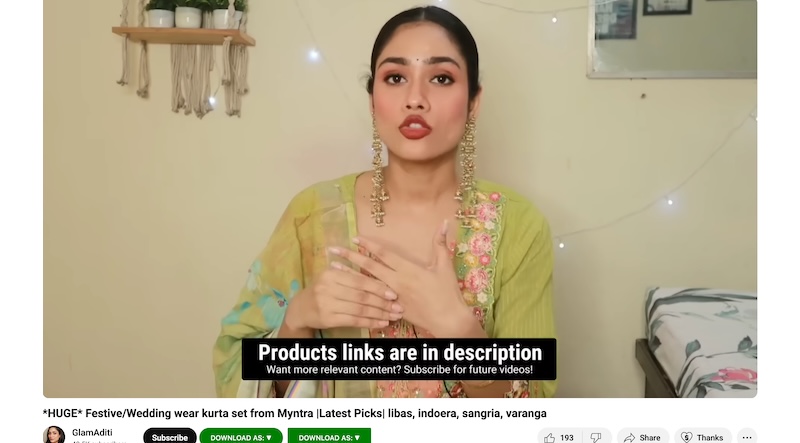
    MU7MBAI: YouTube is turning beauty tutorials into storefronts. The video platform has added Nykaa and Purplle to its shopping affiliate programme, expanding creators’ ability to monetise content as shopping-related watch time in India jumps 250 per cent year-on-year.

    The move doubles down on beauty and lifestyle, a category where 89 per cent of Indian shoppers say YouTube helps them make confident purchase decisions. Creators enrolled in the programme can now tag products from Nykaa and Purplle alongside existing partners Flipkart and Myntra, earning commissions when viewers buy.

    More than 40 per cent of eligible creators in India have signed up since the programme launched a year ago, tagging products in over three million videos. Over 200 million logged-in users in India have made shopping-related searches on YouTube, creating what the platform calls a “complete monetisation ecosystem”.

    “The next era of video commerce is already being defined by India’s vibrant creator economy on YouTube,” says YouTube India managing director Gunjan Soni. “We are scaling content-driven shopping from a successful programme to a complete monetisation ecosystem.”

    YouTube is sweetening the deal with artificial intelligence tools that automatically tag products the moment they’re mentioned in videos, capturing viewer interest at its peak. The platform will also test automatic product identification later this year.

    Flipkart vice president of growth and marketing Pratik Arun Shetty, frames the partnership as commerce meeting creativity. “India’s creator economy is transforming how people engage with brands,” he says. Myntra reports creator collaborations have grown threefold in the past year, whilst Nykaa positions itself as a pioneer in content-led commerce.

    YouTube is also rolling out tools to make brand deals more lucrative: a flexible format for inserting and replacing sponsored segments, links to brand sites in Shorts, and a Creator Partnerships Hub inside Google Ads to connect advertisers with influencers.

    It’s a bet that authenticity converts. Whether creators cash in or merely chase clicks will depend on whether viewers trust recommendations—or just skip to the comments.

  • Prime Volleyball League adds Kannada feed as regional push gathers pace

    Prime Volleyball League adds Kannada feed as regional push gathers pace

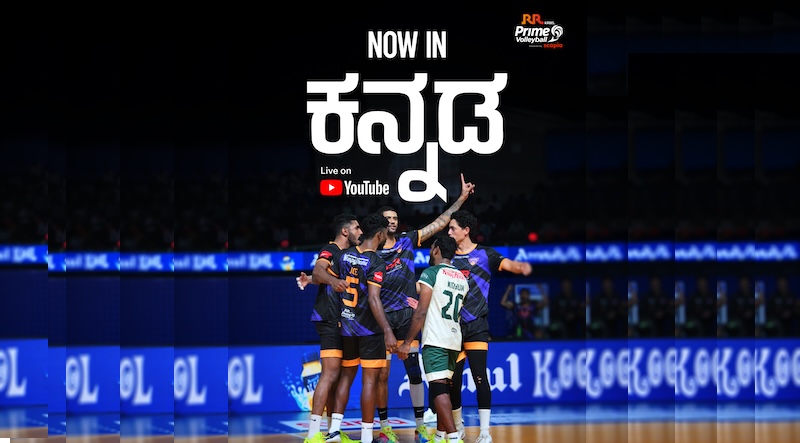
    HYDERABAD: The RR Kabel Prime Volleyball League powered by Scapia is betting big on regional languages. From Saturday, matches will be available in Kannada—the sixth tongue added to a lineup that already includes English, Hindi, Telugu, Tamil and Malayalam. The move targets Karnataka’s volleyball-mad fanbase, particularly supporters of the Bengaluru Torpedoes.

    The tournament, now in its fourth year, is underway at Gachibowli Indoor Stadium in Hyderabad. First-day viewership on YouTube was robust, with reach spread across all regional feeds. The Kannada addition comes as the league chases deeper penetration in southern markets.

    “The support we receive from Karnataka is immense,” says Bengaluru Torpedoes co-owner and director Yashwanth Biyyala. “Providing the livestream in our local language is a sincere effort to engage more deeply with our loyal fans.”

    Prime Volleyball League  chief executive Joy Bhattacharjya frames the expansion as nation-building. “Our large viewership on the opening day demonstrates the massive, multilingual appetite for volleyball across India,” he says. “This is about more than just numbers—it’s about creating a model for deep, inclusive fan engagement.”

    The 2025 season is being broadcast live on Sony Sports Network and streamed globally via YouTube. The channel offers match highlights, recaps, behind-the-scenes footage and other content designed to hook armchair fans. Four teams clash on Saturday: Kochi Blue Spikers face Bengaluru Torpedoes, whilst Chennai Blitz take on Kolkata Thunderbolts.

    The tournament runs until 26 October. By then, the league will know whether its multilingual gambit has scored the breakthrough it so craves.

  • Hrithik Roshan brews a storm with Prime Video

    Hrithik Roshan brews a storm with Prime Video

    MUMBAI: Hindi cinema’s Greek God is ready to stir up a storm, quite literally. Hrithik Roshan has joined hands with Prime Video for his first-ever streaming venture, producing a gripping new thriller series titled Storm (working title) under his banner HRX Films, a division of Filmkraft Productions.

    Created and directed by Ajitpal Singh, the series promises an intense cocktail of ambition, secrets, and survival set in the beating heart of Mumbai. With Parvathy Thiruvothu, Alaya F, Srishti Shrivastava, Rrama Sharma, and Saba Azad leading the cast, production is set to roll soon.

    Speaking about the collaboration, Prime Video vice president APAC & MENA Gaurav Gandhi said, “Hrithik is one of Indian cinema’s most distinguished creative forces. This partnership marks an exciting milestone for us, bringing together his artistic vision and our global storytelling platform.”

    HRX Films founder Hrithik Roshan said, “Storm presented the perfect opportunity to make my debut as a producer in the streaming space. The world Ajitpal has created is raw, layered, and powerful. It’s a story that will resonate with audiences not just in India but around the world.”

    Storm marks a dynamic new phase for HRX Films, led by Hrithik and Eshaan Roshan, and signals Prime Video’s continued investment in bold, homegrown narratives with international appeal.

    With its layered characters, powerhouse female leads, and an undercurrent of suspense, this is one storm viewers will want to get caught in.

  • Saatchi & Saatchi India turns gamers into drivers with Renault Kiger challenge

    Saatchi & Saatchi India turns gamers into drivers with Renault Kiger challenge

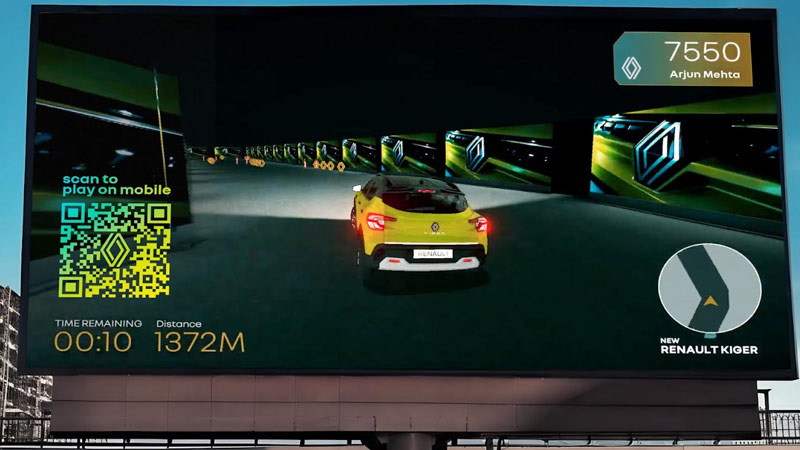
    MUMBAI: Saatchi & Saatchi India has given car launches a fresh spin with a gamified on-ground activation for the all-new Renault Kiger, designed to bring the brand’s “Rethink Performance, Rethink Kiger” positioning to life. The campaign turned bystanders into players, transforming a digital billboard into a live gaming experience that showcased the Kiger’s speed, agility, and responsiveness.

    Conceptualised by Saatchi & Saatchi India and executed by Digitas India, the activation ran from 23rd to 29th September at Dlf Cyberhub, Gurugram. Participants simply scanned a qr code to sync their smartphones as controllers and navigated a fast-paced, one-minute virtual course, complete with sharp turns and obstacles that mirrored the Kiger’s dynamic capabilities.

    To fuel the buzz, RJ Naved joined the challenge, inviting fans to beat his high score, a move that lit up social media. The activation trended as the 4th most talked-about topic on X, generated over 500,000 views, and drove strong engagement through influencer collaborations.

    “With the new Kiger, we wanted to shift the conversation from design to performance,” said Saatchi & Saatchi India chief creative officer Kartik Smetacek. “The playable billboard combined the reach of outdoor with the interactivity of gaming, an eye-catching way to make people experience performance rather than just hear about it.”

    Renault India VP – sales & marketing Francisco Hidalgo Marques added, “Innovation for Renault isn’t just in our cars, but in how we connect with people. Under the ‘Rethink’ umbrella, this activation turned a product showcase into an immersive gaming experience that redefined how consumers engage with the brand.”

    Following its on-ground success, the Kiger Challenge hit the digital racetrack, rolling out as playable ads online, allowing users to test their reflexes and experience the car’s performance anywhere, anytime.

  • Applause’s Sameer Nair spills the secret sauce for hit storytelling

    Applause’s Sameer Nair spills the secret sauce for hit storytelling

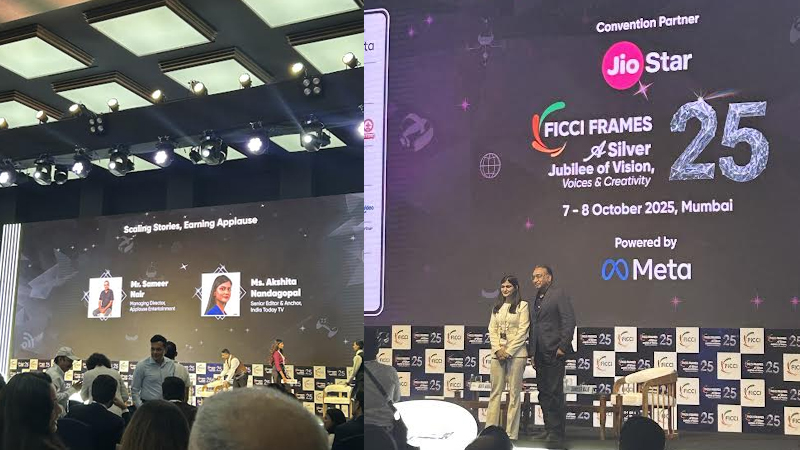
    MUMBAI: At Ficci Frames’ silver jubilee edition, a candid panel discussion between Applause Entertainment managing director Sameer Nair and India Today senior editor and anchor Akshita Nandagopal, brought the house down with humour, insight and a healthy dose of industry nostalgia.

    Moderating the fireside chat ‘Scaling stories, earning applause,’ Nandagopal kicked off by asking if Applause Entertainment had cracked the “OTT code,” given its slate of acclaimed shows like Criminal Justice (2019-present), The Hunt (2025) and Black Warrant (2025).

    Nair brushed off the idea of any secret formula. “Storytelling is a difficult enterprise,” he said. “You put in all the hard work and finally show it to an audience, sometimes they love it, sometimes they don’t. What we try to do is tell stories that feel real, even if they entertain first.”

    Citing his fondness for contemporary history, Nair explained how Applause often draws inspiration from real people and events, and banks on the entertainment factor. Black Warrant, he pointed out, isn’t about the dark underbelly of the Tihar Jail and the inmates as much as it is about “three young people on their first day at work; only, their workplace happens to be the Tihar Jail.” The company’s celebrated Criminal Justice series, meanwhile, has gone far beyond its British and American counterparts. “By the fourth season, we weren’t adapting anymore. We were living in the world of Madhav Mishra,” he said with a grin.

    Continuing the conversation on creativity in Indian storytelling, Nandagopal asked Nair, “Creativity is always a buzzword, but sometimes it feels boxed in a certain way. You can’t talk about uncomfortable topics; you have to be mindful of controversy and what entertains an Indian audience. Do you think creativity is constrained like that?”

    Amusedly, Nair interjected, noting that this isn’t unique to India. “In the eight years we’ve been doing this, we haven’t really got into much trouble, so we must be doing something right. We don’t have an agenda; we’re telling stories that make you think, but not what to think. We find compelling characters, research their worlds, and present their stories as balanced and entertaining as possible. They are people like you and me.”

    He brought up The Hunt as an example, which begins with the assassination of Rajiv Gandhi but quickly transitions into a police procedural. “It’s not about politics; it’s about crime and justice… In the process, you get to know the characters. There’s one scene where Sivarasan, the one-eyed LTTE mastermind, sits in a theater watching a Rajnikanth film. We loved putting that in, it humanises him without glorifying anything.”

    When Nandagopal brought up the theme of change, both broadly and through the lens of content, Nair noted how some formats have stood the test of time. “KBC is a classic because it has a great format and Mr. Bachchan,” he said, crediting both star power and familiarity for its relic appeal. “Audiences talk about change all the time, but they also love familiarity. Sometimes you don’t want a murder mystery; you just want to relax.” To which, Nandagopal nodded and said, ‘It’s a comfort watch. A lot of us do that. We’ve been watching a lot of the classics that we’ve seen before. Knowing that that’s something that’s predictable. We know what we’re expecting there. And yet we love to watch it.

    Looking back at the first Ficci Frames two decades ago, Nair painted a vivid picture of how dramatically the industry had evolved. “In 2005, television ruled everything. There was no Facebook, Twitter or Youtube, even the iphone didn’t exist. By 2015, digital platforms had become the barbarians at the gate. Now, in 2025, we’re minor players compared to Netflix, Youtube and social media. And just as we adjusted to that, AI arrived.”

    The conversation soon turned to the elephant in every creator’s room: will AI replace creativity or enhance it? Nair’s reply was measured. “AI will be a great tool if it can create that suspension of disbelief,” he said. “When you see a dinosaur chasing you in Jurassic Park, you believe it. If AI can make you believe without breaking the illusion, it’s magic. But if it looks fake, we might as well be watching animation.”

    He added that AI, much like earlier leaps in filmmaking, from special effects to computer graphics, would revolutionise the process but not erase human creativity. “Even an AI actor needs direction, a script and a story,” he said. “If machines create everything end to end, without human emotion, we’ll just be watching something intelligent but soulless. We must use it wisely.”

    As the conversation veered back to Applause’s future, Nair revealed that the company has recently acquired the rights to Jeffrey Archer’s books and has a robust slate of upcoming projects. Upcoming projects include new seasons of Criminal Justice and Black Warrant, the next installment of the Scam franchise, and a Tamil feature Bison directed by Tamil director and screenwriter Mari Selvaraj. He also teased Gandhi, a three-season epic inspired by Indian historian and author Ramachandra Guha’s books. “It’s not about Gandhi,” Nair chuckled and said, “it’s about Mohandas before he became the Mahatma: an 18-year-old who goes to college in London, and does all the standard things that rebellious teenagers do.”

    For Nair, storytelling remains deeply human: an approach that has shaped Applause Entertainment’s diverse slate, from thrillers rooted in true events to expansive biographical dramas.

    In a world where algorithms and art are learning to coexist, it’s a fitting reminder that great storytelling, no matter the medium, will always find its audience.

  • India orders streaming giants to make content accessible for disabled viewers

    India orders streaming giants to make content accessible for disabled viewers

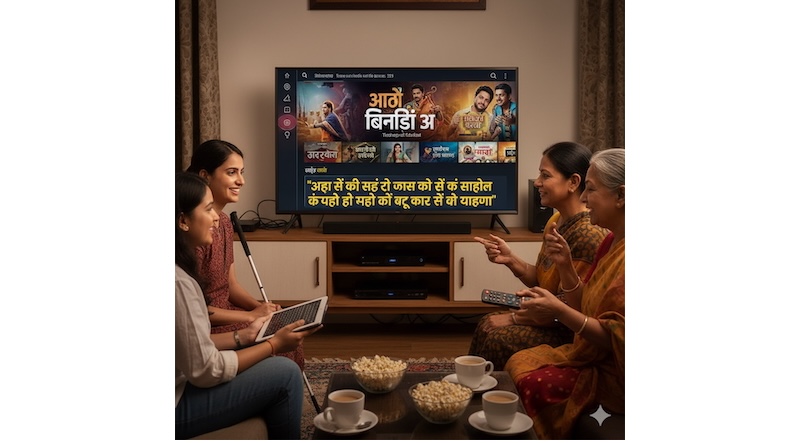
    NEW DELHI: India’s streaming platforms face a shake-up. The ministry of information and broadcasting has issued draft guidelines forcing OTT services to make their content accessible to people with hearing and visual impairments. The clock is ticking: platforms have six months to comply with the first phase, and two years to retrofit their entire libraries.

    The regulations, published on 7th October, mark the government’s most aggressive push yet to enforce disability rights in the digital sphere. Every new release must carry at least one accessibility feature—closed captioning for the deaf, audio descriptions for the blind, or Indian Sign Language interpretation. No exceptions for Bollywood blockbusters or binge-worthy series.

    The ministry is demanding 30 per cent of existing content be made accessible within a year, rising to 60 per cent after 18 months. The endgame? Full compliance across every title, from prestige dramas to reality shows, within 24 months. Platforms must also rewire their interfaces to work with assistive technologies and plaster accessibility indicators—(AD), (CC), (ISL)—on everything from trailers to thumbnails.

    The rules stem from the Rights of Persons with Disabilities Act, 2016, which the government has been nudging OTT platforms to follow since an advisory in April. India ratified the UN Convention on the Rights of Persons with Disabilities in 2008, but enforcement has lagged. Now the ministry wants quarterly reports tracking progress, with a joint secretary-led committee poised to police compliance.

    Live streams, podcasts and clips under ten minutes get a pass. But for everything else, the message is clear: subtitle it, describe it, sign it—or face scrutiny. The consultation period ends on 22 October.

    For India’s 26.8m disabled citizens—and the streamers courting them—the game just changed.