Category: iWorld

  • DHL-Sai Life Sciences go green with partnership to clean up pharma logistics

    DHL-Sai Life Sciences go green with partnership to clean up pharma logistics

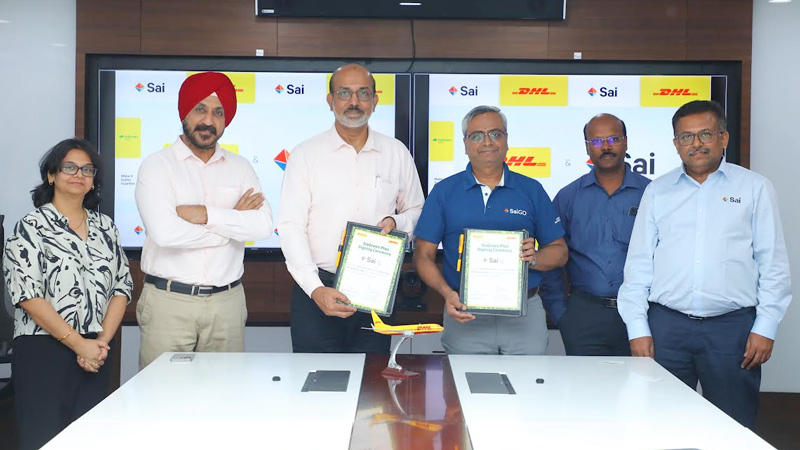
    MUMBAI: In a move that combines speed with sustainability, DHL Express and Sai Life Sciences have teamed up to slash carbon emissions from international pharma deliveries. Announced on 22 April 2025, the partnership sees Sai Life Sciences adopt DHL’s GoGreen Plus service to cut greenhouse gas emissions by up to 90 per cent through the use of sustainable aviation fuel (SAF).

    Sai Life Sciences, a contract research, development and manufacturing organisation (CRDMO) listed on BSE and NSE, serves over 300 global pharmaceutical and biotech firms. With operations spread across the US, Europe, and Japan, the company depends on precise, time-bound deliveries — now to be powered more responsibly.

    DHL Express SVP – south Asia, R.S. Subramanian stated, “Addressing Scope 3 emissions is critical to DHL for achieving the commitment to be carbon neutral by 2050. GoGreen Plus is a pioneering service that helps our customers address Scope 3 carbon emissions of their critical shipments to global destinations. The Life sciences and healthcare sector is a focus area for growth outlined in our Strategy 2030 and GoGreen Plus is very relevant to key players here who have a committed road map on carbon footprint reduction. We are incredibly proud to have Sai Life Sciences join us on our mission to reduce Scope 3 emissions with GoGreen Plus – the most technically viable option currently available.”

    Sai Life Sciences CFO Sivaramakrishnan Chittor added, “Sustainability is a priority woven into every part of our business — including logistics. With a global supplier network and customer base across the US, Europe, and Japan, time-sensitive deliveries are essential to our operations. Our partnership with DHL reflects a shared commitment to reducing environmental impact while maintaining the reliability and precision that our customers depend on. It’s one more way we’re integrating sustainability into how we work — with intent and consistency — to make it better together.”

    The GoGreen Plus service operates on an insetting model, reducing emissions within the logistics value chain, as opposed to offsetting. DHL’s SAF is sourced via partnerships with bp, Neste, Cosmo Oil Marketing, and World Energy, using feedstocks such as used cooking oil. In 2024, 3.5 per cent of the fuel used in DHL Group’s own fleet was SAF, despite supply constraints.

    Sai Life Sciences will implement the GoGreen Plus programme across its key international shipping routes, aligning with its ESG roadmap. DHL has also committed to investing €2 billion over the next five years to expand pharma logistics infrastructure, including GDP-certified hubs and temperature-controlled solutions.

    With ambitions to reduce absolute GHG emissions to 29 million metric tons by 2030 and hit net zero by 2050, DHL is pitching GoGreen Plus as the go-to product for clients eyeing low-carbon logistics.
  • Arjun Vaidya spices up Kiranapro’s future with investment and mentoring role

    Arjun Vaidya spices up Kiranapro’s future with investment and mentoring role

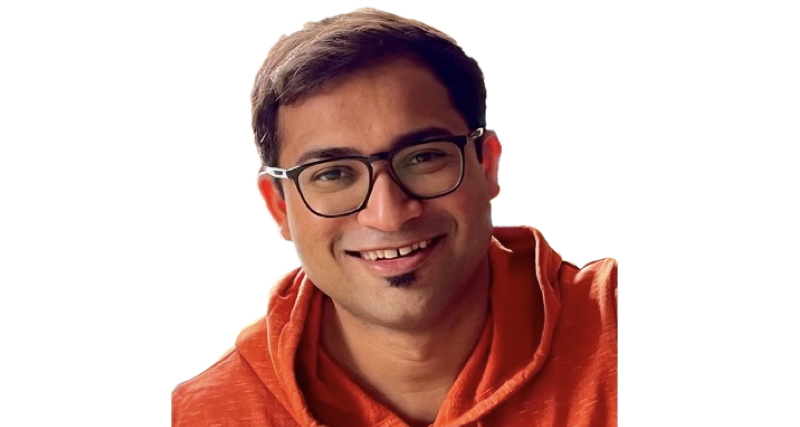
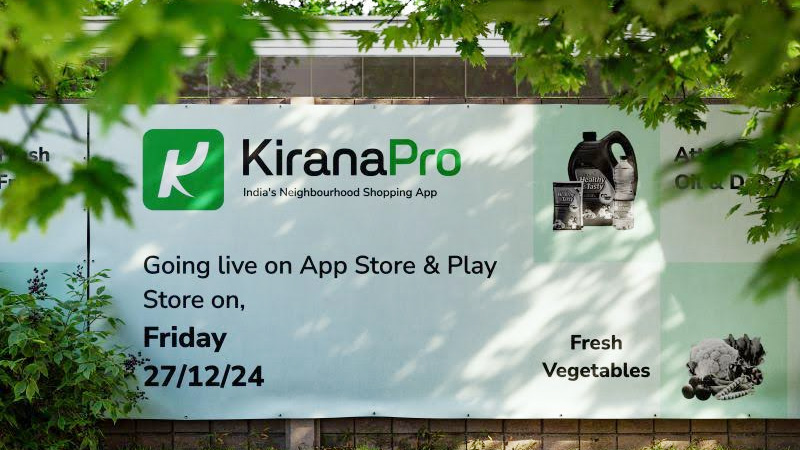
    MUMBAI: Arjun Vaidya, the entrepreneurial mind behind Dr. Vaidya’s Ayurvedic success, has stepped into Kiranapro’s corner with an undisclosed investment, promising a tech-infused retail revolution. India’s quick commerce platform powered by AI and integrated with ONDC, Kiranapro welcomed Vaidya aboard as mentor and investor, fueling its ambition to digitally empower 12 million kirana stores nationwide.

    Leveraging his knack for scaling consumer brands, Vaidya will guide strategic partnerships with leading D2C labels and enhance Kiranapro’s AI tech. His past achievements, notably scaling Dr. Vaidya’s to 5,000 daily orders and serving two million customers across 16,500 pin codes, underscore his value to Kiranapro.

    Kiranapro founder & CEO Deepak Ravindran

    Kiranapro founder & CEO Deepak Ravindran expressed enthusiasm about the move,“Arjun’s journey as a D2C pioneer and his deep understanding of India’s consumer landscape make him an invaluable addition to our leadership circle. His decision to back our vision is a shot in the arm for the entire team. Arjun’s mentorship will accelerate our efforts to build strategic brand partnerships and will help us scale Kiranapro into a nationwide movement for kirana empowerment.”

    Vaidya shared his perspective, “Kiranapro is redefining how technology can uplift India’s most trusted retail format—the kirana store. 
    Having built and scaled a D2C brand from the ground up, I understand the power of combining digital innovation with deep consumer trust. I’m excited to support Kiranapro’s mission to empower millions of small retailers while bringing modern commerce to every corner of India.”

    Already showing impressive traction, Kiranapro has onboarded over 30,000 kirana stores, achieving close to 1,000 daily orders in 35 cities. By the end of 2025, Kiranapro aims to expand to 1 million stores, serving nearly 100 million customers. With Vaidya’s seasoned guidance and strategic backing, the company looks set for a robust retail revival.

  • The Great Khali wrestles back into spotlight with Netflix’s WrestleMania promo

    The Great Khali wrestles back into spotlight with Netflix’s WrestleMania promo

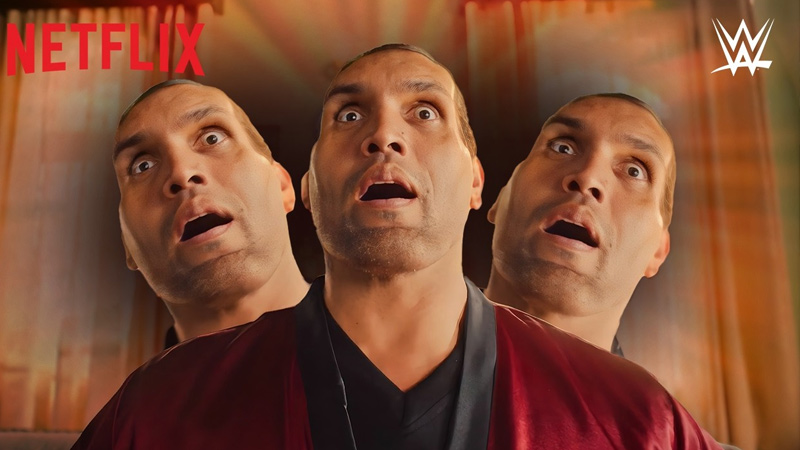
    MUMBAI: The Great Khali, India’s wrestling giant, swapped bodyslams for selfies, tried his hand at reality TV, and even tested the waters of a mundane 9-to-5 job, but nothing quite packed a punch like his wrestling glory days. In Netflix’s latest WrestleMania promo—crafted by Mumbai agency One Hand Clap—the towering star humorously navigates life’s less-exciting pursuits, only to rediscover his passion when WrestleMania lands on Netflix.

    Mixing warmth with gentle irony, the promo spotlights Khali’s softer, relatable side, cleverly contrasted against his imposing physique. One Hand Clap’s creative storytelling ensures the wrestling legend emerges both endearing and entertaining as he reconnects with his WWE roots.

    One Hand Clap co-founder Naveed Manakkodan expressed his eagerness for future collaborations, “This is the third time we’ve worked with Khali, and all I can say is I can’t wait to work with him for the fourth time.”

    One Hand Clap group creative manager Tarunark Vyas described the project’s intent, “The idea was about showing the human side of Khali — the gentle giant who needed a real spark to come alive again. WrestleMania gave us the perfect canvas to bring that story to life.”

    This Netflix promo adds another vibrant feather to One Hand Clap’s creative cap, known for turning brand messaging into culturally relevant, impactful narratives. The agency’s deep grasp of India’s digital culture consistently delivers content that resonates powerfully with audiences.

    Khali’s return to the ring—at least digitally—proves that while life’s daily grind might have its moments, nothing beats the thrill of the wrestling arena.

  • Why India’s Tech Industry is Positioning Itself as the New Major Player on the Global Market

    Why India’s Tech Industry is Positioning Itself as the New Major Player on the Global Market

    India is home to some of the world’s biggest tech companies, and over the past few years, the country has repositioned itself as a new major player on the global tech scene. 

    With that said, let’s dive straight in to discover why the Indian tech scene here is currently burgeoning and why it has become a key market for innovation and investment. 

    Where are the key tech hubs in India?

    Key Indian cities such as Bangalore, Hyderabad, and Chennai are the country’s major tech hubs for various reasons, and the digital economy here is rapidly growing due to its large pool of highly talented and skilled developers and engineers. 

    The key tech sectors with thriving and robust ecosystems in India are the following:

    . Data centers and semiconductors

    . AI (artificial intelligence)

    . Cloud computing

    . Cybersecurity

    . Gaming

    Other tech sectors in India that are also currently growing are IT services, mobile technology, and eCommerce.  
    The epicentre of India’s technology industry is Bangalore, which has been compared to Silicon Valley in the United States. It’s home to a growing number of tech startups and major tech companies, and it has a well-matured framework fostering growth and innovation. 

    Tech companies receive plenty of government support via numerous initiatives, and over the coming years, experts predict that India’s tech scene will continue to reposition itself as a key player on the global stage. 

    Chennai has become a hub of Software as a Service (SaaS) and currently has a burgeoning IT sector. Other Indian cities, such as Noida, Ahmedabad, Kochi, Kolkata, Mumbai, and Pune, have also emerged as key technology hubs thanks to continued investment, a well-matured ecosystem, and a tech-savvy population. 

    The iGaming scene, which is home to countless legally permitted websites with online slot machines and classic table and card games, also continues to grow thanks to the latest ground-breaking technologies and better regulations. 

    How has India become a major tech hub?

    India has a huge pool of graduates specialising in Science, Technology, Engineering, and Mathematics (STEM), which is helping its tech sector grow, and a significant portion of India’s talented workforce is proficient in English. 

    The lower labour costs here compared to other developed nations make India an ideal destination for offshoring and outsourcing, and there is continued investment in various key tech sectors, such as cloud computing, blockchain technology, the Internet of Things (IoT), and artificial intelligence. 

    Government-backed initiatives, such as Digital India and Startup India, have helped foster innovation and support tech startup companies, and according to recent statistics, India is now home to around 130,000 startup companies and more than 110 ‘unicorns.’

    There is a huge focus here on nurturing digital infrastructure to help support the continued growth of the tech sector, and India is starting to emerge as a leader in setting high standards on the global stage for data ethics and governance. 

    Expert analysts who follow the industry closely project that India’s Compound Annual Growth Rate (CAGR) will climb by around 6.5% between now and 2028, and by the end of last year (2024), India’s tech industry achieved an impressive 5.90% (year-over-year) growth. 

    Final thoughts

    Over the coming years, the future looks bright for India’s tech sector. Most of the revenue will be generated from significant exports to other countries in the IT and BPM sectors. It will also continue growing because of internet penetration and an ever-increasing population. 

    There’s no denying that India has become a true tech powerhouse on the global stage, and it is poised for unprecedented growth over the next decade. 

    However, there are still many challenges the country must overcome to assert itself as a true global tech leader, so it will be interesting to see what happens as the industry continues to evolve.

    Disclaimer: This article does not have journalistic/ editorial involvement of indiantelevision.com. indiantelevision.com group or its websites does not endorse/ subscribe to the contents of the article/advertisement and/or views expressed herein.

    The reader is further advised that Online Casino, Betting, Online Gaming , Crypto products, Financial Investments/Engagement , NFTs, Products associated with health, wellness, and food are unregulated and can be highly risky. There may be no regulatory recourse for any loss from such transactions or risk associated with health conditions.

    Indiantelevision.com group shall not in any manner, be responsible and/or liable in any manner whatsoever for all that is stated in the article and/or also with regard to the views, opinions, announcements, declarations, affirmations etc., stated/featured in the same. The decision to read hereinafter is purely a matter of choice and shall be construed as an express undertaking/guarantee in favour of indiantelevision.com (indiantelevision.com group) of being absolved from any/ all potential legal action, or enforceable claims. The content may be for information and awareness purposes and does not constitute financial advice. 

  • Spotify plays a new tune with product marketing promotion

    Spotify plays a new tune with product marketing promotion

    MUMBAI: After orchestrating marketing symphonies at Spotify India for nearly four years, Pulkit Mathur has scored a promotion to head of product and growth marketing at the streaming behemoth. The appointment, which took effect in February 2025, elevates Mathur from his previous role as marketing manager, where he had been spinning strategies since August 2021.

    Before joining the Swedish streaming service, Mathur spent over five years at Tata Sky Ltd, where he climbed the ranks from area sales manager to senior brand manager. His tenure at the satellite television provider saw him conducting successful campaigns that struck a chord with regional audiences.

    The marketing virtuoso also collaborated with Ogilvy to redefine Tata Sky’s brand purpose and worked with research teams to establish creative testing methods, including the use of neuroscience.

    Mathur’s earlier career movements included stints at Hero MotoCorp Ltd, where he served as assistant manager and graduate engineering trainee, as well as brief interludes at Unilever as a management intern and at the ColorssFoundation for community development work

  • MTNL dials into debt: telecom giant defaults on Rs 8,346 crore in bank loans

    MTNL dials into debt: telecom giant defaults on Rs 8,346 crore in bank loans

    MUMBAI: A telecom Goliath has tripped on its own cables. Mahanagar Telephone Nigam Limited (MTNL) has rung the wrong number with its bankers. The state-owned telco has officially defaulted on a jaw-dropping Rs 8,346 crore worth of loans—putting the “broke” in “dial tone broke”.

    While the rest of the world streams 4K videos and binge-watches on blazing fast connections, MTNL seems to be buffering… financially.

    On 19 April, MTNL told the bourses that it has failed to cough up both the principal and interest on loans taken from not one, not two, but seven state-run banks. Talk about spreading the love—and the liability.

    The missed payments include overdue interest worth Rs 551.90 crore and unpaid principal of Rs 1,635.39 crore. In total, it owes Rs 8,346.24 crore to the likes of Union Bank of India, Bank of India, Punjab National Bank, State Bank of India, UCO Bank, Punjab & Sind Bank, and Indian Overseas Bank. Every bank gets a slice of the default pie.

    The financial plot thickened with MTNL’s relationship with Union Bank of India turning sour on 12 August 2024, where a hefty Rs 3,334.57 crore in principal remained unpaid, and Rs 298.85 crore in interest hung in the air.

    Things didn’t improve—by 4 September 2024, Bank of India found itself on the default roster too, owed Rs 999.54 crore in principal and Rs 77.80 crore in interest.

    A few days later, on 9 September, Punjab National Bank’s dues followed suit, with Rs 432.16 crore in principal and Rs 32.10 crore interest unpaid.

    Come 28 September, State Bank of India and UCO Bank were both ghosted by MTNL, left with mounting dues and no callbacks. Then, on 8 October, Punjab & Sind Bank got stood up.

    Eventually, Indian Overseas Bank met the same fate on 3 February 2025, sealing MTNL’s full-blown debt drama.

    The situation isn’t just a few late EMIs. MTNL’s total financial baggage weighs in at a staggering Rs 33,568 crore, including Rs 8,346 crore in bank loans, Rs 24,071 crore in sovereign-guaranteed bonds, and a Rs 1,151 crore loan from the Department of Telecommunications just to pay interest on those bonds.

    That’s like borrowing money to pay the interest on money you borrowed to pay interest.

    Shakespeare would call this tragedy.

    Accountants call it Thursday.

    Despite this financial sinkhole, the company has maintained a straight face in its compliance filing with the Bombay Stock Exchange (BSE) and the National Stock Exchange (NSE), stating only that it’s defaulted, and here’s the Excel sheet to prove it. Bureaucratic honesty, if nothing else.

    The question now is: what next? Will the Department of Telecommunications come riding in with a fresh bailout cheque and a stern frown? Or is MTNL setting the stage for another round of disinvestment drama?

    For now, shareholders are left listening to static, and taxpayers are once again left wondering whether the “public” in public sector means “publicly funded bailouts” on loop.

  • Krafton India levels up with new batch of gaming startups

    Krafton India levels up with new batch of gaming startups

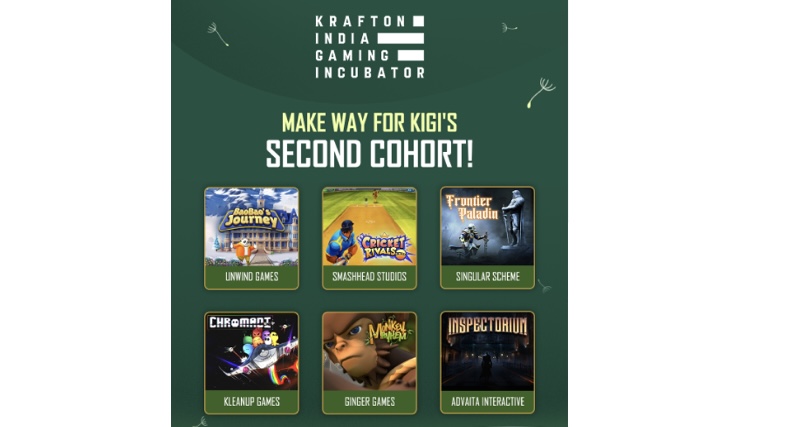
    MUMBAI: Krafton  India is doubling down on its mission to shape the future of gaming in the subcontinent, welcoming a cracking cohort of six new startups into the second round of its Krafton  India Gaming Incubator (Kigi). Building on the roaring success of its first batch, Kigi has upped its intake from four to six, casting its net wider to exciting new gaming hotspots like Kolkata and Madurai, among others. This move reinforces their grand plan to cultivate a nationwide ecosystem of top-tier game developers.

    Kigi is throwing its weight behind emerging game development talent in India with mentorship programmes lasting from six months to a year, and a financial boost of up to $150,000. This aims to give these studios the firepower they need to craft best-in-class games and inject some serious innovation into the industry.
    So, who are these bright sparks joining the fray?

    * Kleanup Games from Madurai, led by studio director Jaiwanth Shanmugam, is cooking up ChromadiI, a rapid, retro-inspired shoot-’em-up with a rather clever colour-mixing mechanic and a focus on bagging those high scores. With original tunes from audio director Niranjan Nair and production by Nandini Nachiar, this game looks set to blend old-school arcade thrills with a modern twist, slated for a 2026 release.

    * Advaita Interactive, hailing from Kolkata and founded by Judhajit Sarkar, is brewing Inspectorium, a hidden object detective game set in a steampunk-infused version of Victorian-era Calcutta. Expect episodic cases, real-time AI interrogations, and some proper immersive puzzle-solving. This one’s aiming for mobile, PC, and VR platforms between 2025 and 2026.

    * Singular Scheme, a Mumbai-founded indie outfit led by Ahad Oomerbhoy and a team of eight, is crafting Frontier Paladin, an RPG with action-tower defence bits set on a cursed battlefield brimming with divine relics and ancient baddies. Sounds like a proper rumble!

    * Smash Head Studio, a Bangalore-based crew with over a decade in the game, is gearing up to unleash Cricket Rivals, a fast-paced, real-time multiplayer mobile game that’s reimagining the spirit of cricket with quick, competitive matches designed to appeal to a global audience. That’s not cricket… it’s better!

    * Unwind Games, a mobile studio from Hyderabad founded by industry veterans Jayant Shukla and Khozema Abuwala, is developing BaoBao’s Journey, a heartwarming casual puzzle game starring a lovable panda on a quest to build his dream mountain lodge. Expect soothing puzzles and cozy customization for a relaxing and emotionally engaging experience. Aww, bless!

    * Ginger Games, a Delhi-based studio founded in 2024 by Shrey Mishra, Sumit Batheja, and Piyush Kumar, is conjuring up Monkey Mayhem, a vibrant hybrid-casual action-adventure mobile game set in the bonkers “Monkey Universe.” Featuring fast-paced auto-shooter gameplay, dynamic environments, crafting, combat, and a rich story following a brave monkey named Piklu on a chaotic mission to rescue his mates. Keep your bananas peeled for its February 2026 release.

    This new batch of Kigi hopefuls follows the successful completion of its first incubation cycle, where several gaming startups, spanning the length and breadth of India, wrapped up their development phases and are now prepping to officially launch their KIGI-built games.

    The first Kigi cohort is already making waves. ReDimension Games is live on Steam, while Shura Games and Dunali Games have successfully soft-launched their titles on the Play Store. Arjuna Studios is also gearing up for its own release. Their progress is a proper testament to Kigi’s mission to empower India’s next generation of game developers, giving them the tools, guidance, and support needed to bring world-class games to the market.

    Krafton India incubator program and India publishing advisor Anuj Sahani said, “India’s game development talent is brimming with potential, and at Kigi we are dedicated to unlocking new opportunities for them to thrive. With an expanded cohort, a wider regional focus, and strengthened partnerships with some of the biggest names in technology, we are equipping game developers with the resources, mentorship, and support they need to build games that can stand out globally. We look forward to seeing how these talented teams push creative and technical boundaries in the coming months.”

    Krafton India chief executive officer Sean Hyunil Sohn added, “At Krafton India, we see the future of gaming as a vibrant tapestry woven with diverse ideas and bold creativity. Gaming is more than just a form of entertainment, it’s a tool for connection, expression, and cultural influence. By empowering diverse voices and championing innovation, with our second cohort, we’re setting the stage for a future where Indian game developers are defining trends, telling new stories, and pushing the boundaries of what gaming can be.”

    AccelByte  chief commercial officer Rob Schoeppe chipped in, “Partnering with Krafton India’s Kigi program is a natural extension of our mission at AccelByte to empower developers with the tools they need to stay focused on making great and exceptional games. India’s gaming landscape is evolving rapidly, and we see immense potential in the talent and innovation emerging from this market. Through Kigi, we’re excited to support the next wave of Indian game studios by providing them with scalable, developer-friendly backend solutions that remove technical hurdles and accelerate their path to success.”

    By strategically spotting and nurturing these high-potential studios, Kigi is well on its way to shaping India’s growth as a proper powerhouse in the global game development and innovation scene. The second cohort is getting a leg up from an expanded network of global tech giants like AWS, AccelByte, AppMagic, and Liftoff’s GameRefinery, ensuring these incubated startups get crucial cloud computing power, backend infrastructure, and expert guidance to develop and scale cracking gaming experiences for the world stage. Game on, India!

  • Global smartphone shipments increase in first quarter amidst trade concerns

    Global smartphone shipments increase in first quarter amidst trade concerns

    MUMBAI: According to preliminary data from the International Data Corporation (IDC) Worldwide Quarterly Mobile Phone Tracker, global smartphone1 shipments experienced a 1.5 per cent year-over-year increase in the first quarter of 2025, reaching 304.9 million units. This performance aligned with IDC forecasts, attributed to manufacturers increasing production in anticipation of potential US tariffs on imports from China.

    IDC vice-president Francisco Jeronimo noted that geopolitical uncertainty and the threat of US tariff hikes on Chinese goods led vendors to accelerate production and pull forward significant shipment volumes, particularly into the US market, during the first quarter. This supply-side action resulted in shipment figures exceeding levels expected based on underlying consumer demand.

    IDC group vice president  Ryan Reith highlighted that while the US government’s recent pause on smartphone import tariffs from China provides temporary relief, the continued reliance on China’s supply chain and ongoing tariff volatility create challenges for future planning and decision-making for many companies. He suggested that US smartphone brands should leverage the tariff exemption to maximize building and shipping. Additionally, he cautioned that economic uncertainty could potentially dampen consumer demand in the coming months.

    The US smartphone market saw growth of over five per cent in the first quarter, despite the impact of tariffs and trade tensions on disposable income. IDC research director Anthony Scarsella attributed this growth to increased consumer interest in new models from leading manufacturers and a sense of urgency to purchase before potential price increases. He also suggested that the 90-day tariff pause could further boost sales in the second quarter.

    marketshare of phones

    Globally, the first quarter saw growth among major smartphone vendors, particularly Chinese companies in their domestic market, supported by government subsidies extended to smartphones in January 2025. This subsidy program aims to stimulate consumption for products priced below yuan 6,000 ($820).

    Among the top vendors:
    * Samsung regained market leadership, driven by the continued success of its Galaxy S25 premium devices and the mid-range Galaxy A series, including the latest Galaxy A36 and A56 featuring more affordable AI capabilities.

    * Apple achieved its highest first-quarter shipments ever, attributed to stockpiling to mitigate potential US ariffs and to address potential supply chain disruptions in other regions. However, its performance in China declined as its Pro models were not included in the Chinese government subsidy program.

    * Xiaomi’s performance was primarily driven by growth in China due to the government subsidies, positively impacting sales of its mid-range products.

    * Oppo regained the fourth position despite a decline in shipments due to weaker performance in international markets, which was not fully offset by growth in China.

    * Vivo experienced substantial year-on-year growth of 6.3 per cent, supported by subsidies in China and growth in international markets, with strong performance in low-end devices and the V series.

    In conclusion, while the global smartphone market showed positive shipment growth in the first quarter of 2025, the ongoing US-China trade war and tariff volatility continue to present significant concerns for the remainder of the year.

  • Netflix shrugs off downturn fears as ad tech rollout bears fruit

    Netflix shrugs off downturn fears as ad tech rollout bears fruit

    MUMBAI: Netflix executives are feeling rather chirpier about their prospects, even as storm clouds gather over the global economy. During their Q1 2025 earnings call, co-CEOs Ted Sarandos and Greg Peters dismissed concerns about consumer belt-tightening, insisting that home entertainment has historically been “resilient” during lean times.

    “Entertainment historically has been pretty resilient in tougher economic times,” Peters told analysts. “Netflix specifically also has been generally quite resilient, and we haven’t seen any major impacts during those tougher times.”

    The streaming behemoth is ploughing ahead with its advertising ambitions, having just rolled out its proprietary ad tech platform in Canada and the US, with plans to expand to its remaining 10 ad markets in the coming months. Peters confidently predicted the company would “roughly double” its advertising revenue in 2025.
    “We aren’t currently seeing any signs of softness from our direct interactions with buyers,” he said. “Actually, to the opposite, we’re seeing some positive indicators from clients as we approach our upfront event.”

    The firm’s first-party ad tech platform is already yielding dividends, offering “more flexibility for advertisers” and “fewer activation hurdles,” according to Peters. In the US, Netflix has significantly expanded its targeting capabilities based on “life stage, interest, viewing mood” and third-party data.

    Sarandos reiterated that the company’s live strategy extends beyond sports, though he confirmed Netflix will broadcast a second NFL Christmas Day game in December 2025. The company will also stream the Taylor-Serrano boxing rematch in July, following on from the Tyson-Paul fight that generated substantial buzz.

    When questioned about potentially competing head-to-head with YouTube in short-form content, Peters struck a pragmatic tone: “We think the biggest opportunity we’ve got is actually going after the roughly 80% share of TV time that neither Netflix nor YouTube have today.”

    Meanwhile, chief financial officer Spence Neumann assured investors that excess cash flow would predominantly be returned to shareholders through buybacks, absent any “meaningful M&A.” The company maintains its full-year operating margin guidance of 29 per cent.

  • Netflix steams ahead with blockbuster Q1 as profits pop; Reed Hastings moves to non-exec chair

    Netflix steams ahead with blockbuster Q1 as profits pop; Reed Hastings moves to non-exec chair

    MUMBAI: Netflix smashed expectations in its first quarter of 2025, raking in $10.54bn in revenue—up nearly 13 per cent from last year—as the streaming titan shifts the spotlight from subscriber counts to cold, hard cash.
    The platform’s earnings per share soared to $6.61, comfortably beating Wall Street’s forecast of $5.71, while net income hit $2.89bn, up from $2.33bn a year ago. Operating income leapt 27 per cent to $3.35bn, pushing the margin up to 31.7 per cent.

    This was Netflix’s first earnings show without revealing its subscriber count, a move designed to pivot focus onto financial muscle and engagement rather than the once-sacrosanct user numbers. With pricing bumped up in key markets and a small but growing ad business, the company managed to woo both viewers and investors alike.

    Shares gained around three per cent in after-hours trading, closing Thursday at a sizzling $973. Netflix also doubled down on its full-year revenue forecast of $43.5bn–$44.5bn, projecting a 15 per cent year-on-year lift for Q2, with a beefier operating margin of 33 per cent.

    By region, the US and Canada contributed $4.62bn (up 9 per cent), EMEA rose 15 per cent to $3.41bn, Latin America clocked $1.26bn (up 8 per cent), while Asia Pacific surged 23 per cent to hit the same $1.26bn mark.
    On the content front, the UK’s moody miniseries Adolescence got a nod for driving eyeballs, alongside action flicks Back in Action, Ad Vitam and Counterattack. WWE’s Monday Night Raw also proved a global hit, cracking the streamer’s weekly top 10 since its January debut.

    The company launched its in-house ad tech platform in the US in April, touting it as a foundation for “enhanced targeting, snazzier formats and programmatic wizardry” in the quarters ahead.

    While economic clouds hover—thanks to tariff turmoil under President Trump 2.0—co-chief executive Greg Peters struck a bullish tone.

    “Based on what we are seeing by actually operating the business right now, there’s nothing really significant to note. We also take some comfort that entertainment historically has been pretty resilient in tougher economic times. Netflix, specifically, also, has been generally quite resilient. We haven’t seen any major impacts during those tougher times, albeit over a much shorter history,”  he said, adding that Netflix’s cheaper ad tier gives it added economic resilience.

    The earnings bonanza was capped off with a curtain call from co-founder Reed Hastings, who stepped down as executive chairman to become a non-executive chair—marking the end of an era for the man who helped binge-watching go mainstream.

    And just to keep Wall Street happy, Netflix threw in some shareholder candy too—buying back 3.7 million shares for $3.5bn and paying down $800m in debt. Still, with $15.1bn in debt on the books and $7.2bn in the bank, the company isn’t quite ready to roll the end credits.