Category: iWorld

  • All that glitters floats as Tanishq debuts 40-foot holographic showcase

    All that glitters floats as Tanishq debuts 40-foot holographic showcase

    MUMBAI: Mumbai’s skyline got a shimmering makeover and this time, it wasn’t from the stars. In a dazzling fusion of tradition and tech, Tanishq lit up Bandra Bandstand with a 40-foot holographic projection that brought its new Kundan Stories collection to life. The towering display, India’s tallest of its kind, mesmerised passers-by with floating filigree, mid-air meenakari, and a jewellery showcase like no other.

    The large-scale outdoor activation, executed in partnership with Laqshya Media Group, wasn’t just another billboard campaign. It was a storytelling spectacle in 3D light, where ghungroos glimmered mid-air and delicate kundan motifs pirouetted above the crowd all thanks to Holo Mesh Projection Technology. Think laser light show meets heirloom artistry.

    Tanishq chief marketing officer Pelki Tshering said, “At Tanishq, every piece of jewellery is a story shaped by the hands of our karigars and inspired by the Tanishq woman. This season of new beginnings, our Kundan Stories collection brings heritage and modern elegance together, celebrating craft from the beauty of takkar ka kaam to the delicate lace of filigree. And now, we bring these stories to life with India’s tallest Holo stand—an immersive, one-of-a-kind tribute to intricacy, craft, and the jewellery that adorns the modern Indian woman.”

    Laqshya Media Ltd COO Amarjeet Hudda added, “This was a chance to do something the industry had never attempted before. Tanishq gave us a full creative room, and the result is something that goes beyond regular brand launches. It’s storytelling in mid-air. For us at Laqshya, it’s a proud milestone in blending tech, media, and emotion.”

    “The activation uses Holo Mesh Projection Technology, where a translucent mesh acts as a nearly invisible canvas for high-powered light mapping. Suspended in open space, it creates a surreal illusion where each design detail from ghungroos to flowing filigree appears to hover and move. The visuals were set to a specially composed sound design, turning the skyline into a moving story of craftsmanship and beauty. Every element was custom-built to perform in outdoor conditions, making it a true feat of execution,” said Inventech CEO Sommnath Sengupta.

    The installation was more than just a visual delight. The visuals were paired with custom-composed audio, transforming Mumbai’s breezy promenade into an open-air theatre of sparkle and sound. From tasselled necklaces to talaf-inspired motifs, each element was designed for the sky and for smartphones, as awestruck onlookers captured the show on social media.

    Timed with Akshaya Tritiya and wedding season, Kundan Stories dives deep into India’s rich jewellery traditions from die-stamping to pearl bunching with each piece demanding over 200 hours of painstaking craftsmanship. But while the collection honours age-old artistry, the campaign launches it in an entirely new idiom.

    With this bold activation, Tanishq has turned jewellery into theatre, blending cultural memory with cutting-edge innovation. In doing so, the brand hasn’t just launched a collection it’s set a new benchmark for how stories of heritage can shimmer in the digital age.

  • Soulcial strategy! Florasoul hands digital glow-up to Team Pumpkin

    Soulcial strategy! Florasoul hands digital glow-up to Team Pumpkin

    MUMBAI: In the world of skincare, Florasoul is all about the soul and now it’s ready to bring that essence online with a touch of mindful marketing. The luxury Ayurvedic skincare brand has handed over its social media mandate to integrated marketing agency Team Pumpkin, aiming to craft a digital presence that soothes, nourishes, and scrolls well.

    Rooted in ancient Ayurvedic wisdom but attuned to modern wellness sensibilities, Florasoul is looking to establish itself as more than just a beauty label. It’s positioning itself as a lifestyle philosophy, one where skincare is less routine and more ritual. With Team Pumpkin’s Bangalore office now taking the lead, the brand is looking to translate this quiet confidence into a scroll-stopping social experience.

    “At FloraSoul, our essence lies in soulful beauty, where purity, purpose, and presence meet. We needed a digital partner that could capture this essence without noise. Team Pumpkin’s thoughtful approach and creative strength felt aligned from the start,” says Florasoul founder Garima Ahuja.

    From curating serene content to scripting campaigns steeped in Ayurvedic calm, the agency’s mandate covers the entire digital ecosystem storytelling, strategy, and community building included. For Team Pumpkin, it’s a unique opportunity to flex its creative muscles in a space that demands sensitivity over sizzle.

    Team Pumpkin co-founder Swati Nathani added, “FloraSoul isn’t just a skincare brand. It’s about making a conscious lifestyle choice for a soulful experience. The opportunity to shape a digital narrative rooted in Ayurveda, yet relevant to today’s audience, is incredibly exciting for us.”

    Together, the two teams hope to create a content presence as nourishing as the products themselves, a feed that doesn’t just look pretty but feels like a deep breath.

    In a digital space cluttered with claims and chaos, FloraSoul’s quiet luxury is set to stand out not by shouting louder, but by whispering wisdom in every post. And with Team Pumpkin in the mix, this might just be the beginning of a beautifully balanced online journey.

  • India’s entertainment giants plot $6 billion global gold rush by 2030 with fresh new strategy

    India’s entertainment giants plot $6 billion global gold rush by 2030 with fresh new strategy

    MUMBAI: India’s entertainment scene has never lacked drama, but now it is scripting a blockbuster for the world stage. Content India’s latest report, ‘The Future Of The Indian Entertainment Business In Partnership With The World’, published today, sets a racy new agenda: a potential $6 billion boost to the industry by 2030 if India plays its cards right.

    The findings, drawn from the one-day Content India Summit in Mumbai on 1 April and powered by data from Allied Global Marketing, outline how global partnerships, technology adoption, and a sharper content game could fuel India’s charge. The event, a DishTV and C21Media collaboration, has paved the way for a three-day Content India bash in March 2026.

    “It is clear that the Indian entertainment business is a force to be reckoned with on the global stage. But it has the opportunity to make an even bigger impact globally by partnering with international players on its own terms,” said DishTV CEO & ED Manoj Dobhal.

    Currently, India’s 551 million OTT users deliver just $2.1 billion in revenue. In contrast, South Korea’s entertainment exports dominate global charts. Without change, India’s OTT pie might touch $5 billion, or $9 billion with minor local fixes. But bold action could unlock a whopping $15 billion market, transforming India into a global soft power, argued Allied’s Jamie Crick at the summit.

    The report flagged gaping gaps. Comedy tops audience preference (30 per cent), yet only 10 per cent of premium content serves laughs, while drama, crime, and thrillers hog 60 per cent of new releases. Authentic, local content—preferred by 86 per cent of OTT viewers—is a must.

    Mobile may be India’s stereotype, but connected TVs are booming. YouTube’s connected TV usage quadrupled between 2022 and 2024. Ninety-two percent of online video minutes flow through YouTube, not premium OTT.

    The report pushed for lighter, family-friendly formats and deeper collaboration with creator ecosystems.

    On the global stage, India can draw lessons from South Korea’s Hallyu wave and Spain’s Money Heist effect. Local authenticity with universal themes wins hearts—domestically and internationally.

    New growth drivers include positioning India as the world’s most cost-effective production partner, leveraging its premium series costs ($1 million-2 million per episode) compared to US ($5 million-15 million). AI-powered efficiencies can further sweeten the deal.

    The Indian diaspora—35 million affluent consumers—remains an underplayed hand. Targeting them with broader genres, beyond nostalgia, offers a smart bridge to global glory.

    C21Media founder and the report’s editor David Jenkinson summed it up, “The world is changing fast… India can be at the heart of that. Of course, there are many challenges. But they are all addressable and the upside is significant for all.”

    The report stressed a tight checklist for future growth: urgent action, strategic alliances, tech savviness, emotionally rich storytelling, and strong institutional backing.

    “The future of Indian entertainment will not be gifted. It must be built”, it concluded.

    C21Media


  • India tunes into the future: D2M phones set to beam broadcast content straight to mobiles

    India tunes into the future: D2M phones set to beam broadcast content straight to mobiles

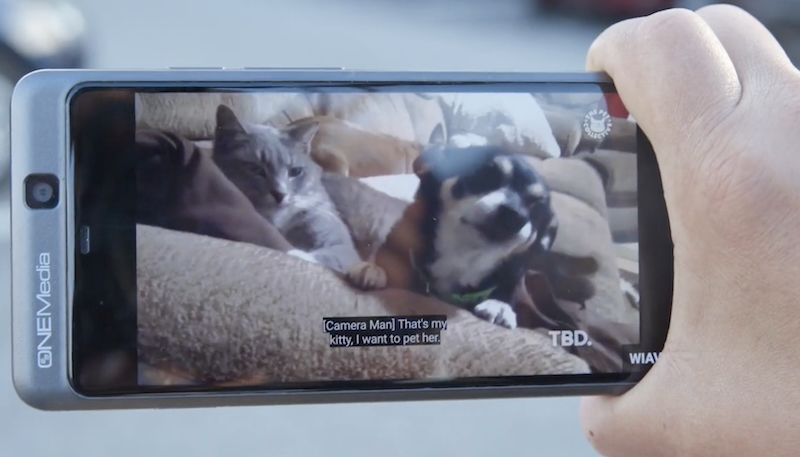
    MUMBAI: Say hello to television without the internet. At Waves 2025, India’s flagship World Audio Visual & Entertainment Summit to be held at Jio World Centre in Mumbai, a game-changing coalition of technology players will unveil the roadmap to bring direct-to-mobile (D2M) broadcasting to the fingertips of Indian consumers.

    The ambitious push is led by FreeStream Technologies, an IIT Kanpur-incubated deeptech startup, alongside mobile giants Lava International and HMD Global, powered by chipsets and infrastructure from Tejas Networks (formerly Saankhya Labs), with global validation from US-based broadcasting behemoth Sinclair Inc.
    The tech, hailed as a breakthrough in both communications and accessibility, allows live TV, emergency alerts, educational content, and multimedia programming to be delivered directly to mobile phones via terrestrial broadcast signals — bypassing internet or mobile data altogether.

    “This is India’s moment to lead the world in next-gen broadcasting. Lava and HMD are laying the foundation of a robust device ecosystem, and their commitment to scaling up proves D2M is more than a proof of concept — it’s a national opportunity,” said FreeStream Technologies director Sumeet Nindrajog.

    Lava, known for its made-in-India ethos, is ensuring that the price-point doesn’t become a hurdle. “Our D2M featurephone design cleverly integrates the modem and apps in a way that keeps costs low — something that has always defined Lava,” said Lava International executive director Sanjeev Agarwal.

    HMD — the home of Nokia phones — is matching that energy. “HMD has always been about delivering meaningful innovation. With D2M, we’re enabling consumers to access live content and alerts on their devices, without needing Wi-Fi or mobile data,” said HMD CEO & VP India & APAC. Ravi Kunwar. “This is a global first, and we’re proud to be building it in India.”

    Behind the scenes, it’s Tejas Networks’ award-winning SL-3000 D2M chipset — the tech’s beating heart — that makes it all possible. A product of Saankhya Labs (now part of Tejas and the Tata Group), the chip is designed for mobile broadcast reception, even in dense or low-connectivity environments.

    “This isn’t just about watching TV — this is about creating a national broadcast backbone that can deliver everything from emergency alerts to targeted education, from CDN offload to next-gen advertising,” said Tejas Networks  EVP and co-founder of Saankhya Labs Parag Naik. “It’s an empowerment platform, aligned with PM Modi’s vision of a digitally empowered India and Viksit Bharat.”

    Tejas has also built out the full core network platform to support nationwide rollout — integrating both broadcast and broadband layers, a capability rare even by global standards.

    From the other side of the Atlantic, Sinclair Inc, a pioneer of ATSC 3.0 — the broadcasting standard enabling D2M — praised India’s swift strides. “The adoption of ATSC 3.0 in affordable mobile devices underscores the foresight of our global investments, and vindicates our ‘mobile-first’ strategy,” said Sinclair Inc president & CEO Chris Ripley. ““India is now in the driver’s seat. Our next focus is B2X — Broadcast to Everything — which will be vital to achieving the goals of 6G and next-gen applications.”

    Sinclair’s One Media unit has been working with Indian partners to future-proof mobile broadcasting as a core digital infrastructure. Their role isn’t just investor — they’re co-developers and global evangelists.

    Backed by policy momentum and partnerships with Prasar Bharati, the D2M ecosystem has already undergone field trials across live networks. The next step? Nationwide field deployment, with Lava and HMD readying devices for market at scale.

    D2M is now not just a tech demonstration — it’s a political, social and commercial opportunity:
    * To decongest mobile data networks,
    * To deliver content equitably across rural and urban India,
    * And to anchor India’s leadership in media-tech manufacturing.

    With global standards, Indian R&D, and mass-market readiness coming together, Waves 2025 could well be remembered as the moment India turned its phones into broadcast hubs.

  • Top 10 Mistakes Beginners Make in Points Rummy

    Top 10 Mistakes Beginners Make in Points Rummy

    Rummy is quite a popular game in India and other countries.  It has inspired multiple variants like:

    1. Points Rummy

    2. Pool Rummy

    3. Gin Rummy

    4. Deal Rummy

    Now, all these games are quite simple to understand.

    Despite that, some people make mistakes when they begin playing the game. If you’re one of them, we’ll help you with the same. However, for those of you who have just downloaded a Rummy app, continue reading to learn more about it.

    Understanding Points Rummy

    This Rummy variant can be played by two to six players and involves one to two decks of cards, depending on the number of players. The fundamental objective of this game is to group all the cards into at least two sequences and sets*, one of which is a pure sequence.

    *Note: A sequence is a meld or group of consecutive cards belonging to the same suit or design printed on them. On the other hand, a set refers to a meld of cards belonging to the same rank, or number printed on them.

    Before The Game

    The dealer hands each player, including themselves, thirteen cards each. After that, the remaining cards form the draw and discard pile*.

    *Note: The draw pile is formed by the remaining facedown cards. The discard pile is formed from the topmost card of the draw pile, which is kept face up.

    Playing A Round

    As with other Rummy online or offline games, players seated to the left of the dealer can start a round in Points Rummy. They can do so by either drawing or discarding a card from the discard pile and the draw pile.

    If they:

    1. Draw a card from the discard pile or draw pile, then they will have to discard one of their cards.

    2. Draw a card from the discard pile, they must use it to meld their cards into valid sequences and sets.

    Ending a Round

    Your round is said to end when you or another player has managed to meld all your cards into acceptable sequences and sets. If you see that you have melded all your cards, then you can call out “Rummy” or press the relevant button in a game of Points Rummy to win.

    Scoring in Points Rummy

    You score zero points if you’ve melded all your cards into valid sequences and sets. The players who lose calculate scores by adding up the points held by the unmelded cards.

    In other words, the:

    1. King, Queen, Jack and Ace carry 10 points each

    2. Number cards from Two to Nine carry the points printed on them (two points for Number Two and so on)

    3. Joker card carries zero points

    Finally, if you ‘drop’ from the game or leave the game before drawing your first card, you will get a penalty of twenty points. On the other hand, you will get a penalty of forty points if you drop after drawing your first card.

    10 Common Beginner Mistakes in Points Rummy

    Let us now talk about the mistakes that beginners make during the game.

    Not Being Familiar With The Rules

    Most players often start playing Points Rummy without understanding and memorizing the rules. That’s because they assume that this game will be the same as other Rummy games.

    However, that’s not the case. That’s because each variant of Rummy is different. This is why you should download a Rummy app from a reputable website and play the other variants to understand them.

    For instance, in Gin Rummy, the person with a ‘deadwood’ value of ten or less, with valid sets and sequences, is declared to be the winner. ‘Deadwood’ refers to the number of unmelded cards.  

    On the other hand, in Points Rummy, the player who melds all their cards into valid sequences and sets is the winner.  So you should understand the rules of this game before you play it. Failing To Plan Ahead

    Usually, most beginners randomly draw and discard cards randomly without considering the possible sets and sequences that they can make.  They do not try to calculate the sequences and sets they can make with the cards they are dealt.

    This lack of pre-planning leads to mistakes like being left with too many high-value cards, or cards that cannot be melded into valid sequences and sets. Holding On To High-Value Cards

    As you’re aware, you should aim to score zero, or the lowest points to win in Points Rummy. However, this is not possible if you have unmelded high-value cards like any of the face cards, Number Nine, and Number Eight.

    That’s because you will incur a penalty based on the total value of the ungrouped cards. For example, say you have unmelded cards like Ace, Jack, Number Nine, Number Eight and Number Seven.

    You will get a penalty of forty-four points. So you will not win the game.

    Overusing Jokers

    The Joker card can:

    . Be used to replace a missing card 

    . Take on the value of any card to complete a missing sequence or set.

    However, that doesn’t mean that you can use two Joker cards in the same set or sequence. It will become an invalid sequence or set.

    Not Observing Your Opponents

    Another classic mistake that players make is not observing their opponents. The cards drawn or discarded by your opponent give you an insight into the possible melds that they might be forming.

    For example, if your opponent has drawn two Number Three cards, then they might be forming a set of Number Three cards.

    On the other hand, if your opponent has discarded two Number Five cards, then they might be trying to make a sequence with their other cards.

    So you should always observe your opponents and play your own hands accordingly.

    Incorrect Declarations

    Some players often “declare” or “show” their cards without melding all the cards into valid sequences and sets. For example, as per Points Rummy rules, you should meld your cards into at least two pure sequences to win.

    However, some players declare after forming only one set and one sequence. This leads to disqualification. So you should meld your cards into at least two pure sequences to win.

    Avoiding Pure Sequences

    Players utilize the Joker cards to complete sets or sequences when they can’t use the actual cards. However, those sequences or sets are called “impure” sets or sequences. While these melds will be valid, they will not be counted toward

    Poor Card Management

    This is another mistake that rookies make. They are unable to meld the cards they have into proper valid sequences or sets, or they discard valuable or wrong cards. For instance, if you have three Number Five cards and a sequence of Number Nine, Eight, Seven, and Six.

    Some players form a sequence with Number Eight, Seven, Six, and Five. This leaves them with one Number Nine and two Number Five cards, which they cannot use in any meld.

    Playing On With A Poor Hand

    Some people continue to play despite not having good cards. For example, let us consider the scenario mentioned in the previous section. You obviously cannot use the Number Nine and two Number Five cards to make a valid meld.

    Now, say you drew a card from the draw pile to form a valid meld. However, if that card is a Number Seven or Six, you cannot use it for that round either. In such a scenario, you should ideally drop from the game.

    However, some players don’t. They usually incur a penalty later on.

    Revealing Your Hand

    You should attempt not to draw any cards from the discard pile, since your opponent will be able to get an insight into the melds you’re forming. We would recommend avoiding this as much as possible.

    Wrapping Up

    Points Rummy is quite an engaging game, which you can enjoy playing once you master it. Do remember to read all the rules we’ve mentioned above to gain a better understanding of the game.

    Additionally, we would recommend downloading a Rummy app from a reputable website and playing practice games. You will be able to reduce the frequency of your mistakes in this way. We wish you all the best!

    Disclaimer: This article has been published without the journalistic or editorial involvement of indiantelevision..com, IndianTelevision.com Group, or any of its affiliated websites. IndianTelevision.com Group does not endorse, subscribe to, or take responsibility for the content, opinions, or views expressed herein.

    Readers are further advised that Online Casino, Betting, Cryptocurrency products, Financial Investments/Engagements, NFTs, and products or calls-to-action related to Health, Booking, Wellness, and Food are largely unregulated and carry significant risk. There may be no regulatory protections or avenues for recourse in the event of financial losses or health-related risks arising from engagement with such products or services.

    IndianTelevision.com Group expressly disclaims any responsibility or liability for the information, views, announcements, declarations, or affirmations presented in this article. By choosing to proceed, the reader acknowledges and agrees that they do so at their own discretion and risk, and expressly absolve indiantelevision.com (IndianTelevision.com Group) from any potential legal claims, liabilities, or actions.

    The content provided is solely for informational and awareness purposes.

  • Supreme Court puts OTT and social media sleaze on notice

    Supreme Court puts OTT and social media sleaze on notice

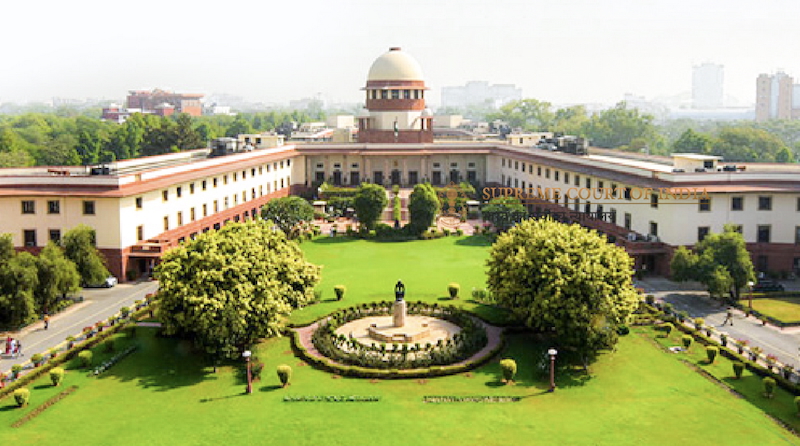
    MUMBAI:  The supreme court on Monday fired a warning shot across the bows of the government, streaming giants, and social media platforms, flagging the unchecked spread of obscene and sexually explicit content online.

    A bench led by justice B R Gavai and justice Augustine George Masih issued notices to the Centre and a who’s who of Big Tech — Netflix, Amazon Prime Video, Meta, X Corp, Google, Apple, Ullu, and ALTT — after a public interest litigation (PIL) filed by journalist Uday Mahurkar and others called for urgent curbs on indecent material floating unchecked across digital platforms.

    “This petition raises an important concern,” said justice Gavai, cautioning that the issue was best left to the executive or legislature lest the court be accused of overreach. Nevertheless, he nudged solicitor general Tushar Mehta, representing the Centre, to act: “Do something… something legislative.”

    Mehta did not dispute the concerns, describing some content as so perverted “that even two respectable people cannot sit together and watch,” but stressed that censorship was not an option. He added that regulations under the Information Technology (Intermediary Guidelines and Digital Media Ethics Code) Rules, 2021, were in place — and more were under contemplation.

    The petitioners, represented by advocate Vishnu Shankar Jain, called for the establishment of a National Content Control Authority to monitor and regulate streaming and social media output until a comprehensive law is enacted. The plea warned that without action, the flood of sexually explicit, paedophilic and perverse material could corrupt young minds, fuel deviant behaviour, and trigger a rise in crimes against women and children.

    “What was once an individual vice has now become a public menace,” the petition thundered, accusing platforms like X, Instagram, Facebook, YouTube, Netflix, and Ullu of promoting explicit content without adequate checks.

    While the Supreme Court has not set a timeline for the next hearing, the Centre’s response will be pivotal in shaping how India reins in its booming but increasingly controversial digital content ecosystem. For India’s streaming giants, the party might just be about to face a reality check.

  • YouTube India taps Gunjan Soni to drive next phase of growth

    YouTube India taps Gunjan Soni to drive next phase of growth

    MUMBAI: YouTube has picked a heavyweight to steer its India ambitions. Gunjan Soni, the former Zalora chief executive and Myntra marketing whiz, has been named country managing director, YouTube India — in a move that underlines the platform’s laser focus on India’s booming creator economy.

    Announcing the appointment, YouTube Asia Pacific vice-president and managing director Gautam Anand  hailed India as one of YouTube’s “most vibrant and crucial markets”, adding that Soni’s arrival signals an even stronger commitment to creators, users, and India’s digital future.

    With over two decades of leadership experience across e-commerce, tech, consulting, and media, Soni brings heavyweight credentials. Her CV reads like a greatest hits album: she led the turnaround of Jabong under Myntra, turbocharged Zalora’s regional expansion in southeast Asia, helped launch Hotstar at Star India, and pioneered data-led marketing at McKinsey.

    Fortune 40 under 40 honouree and board member at CBRE group, Soni is no stranger to building brands at scale — nor to nurturing ecosystems where creativity and commerce collide.

    Now based in Mumbai, Soni’s new playbook for YouTube India is packed with ambition: strengthening the creator economy, expanding shopping and video commerce, growing shorts and connected TV, and deepening user engagement across generations. In her own words, the goal is to “unlock intuitive, innovative formats” that empower Indian storytellers — from school kids shooting shorts to grandparents binge-watching devotional channels.

    “As a family of enthusiastic YouTube users ourselves — from my seven-year-old nephew to my 70-something mother — I’m truly excited to lead a platform that touches lives across generations,” said Soni in a spirited note to the community.

  • OTT, FAST, and freemium: Streamers sketch the new rules for India’s content boom

    OTT, FAST, and freemium: Streamers sketch the new rules for India’s content boom

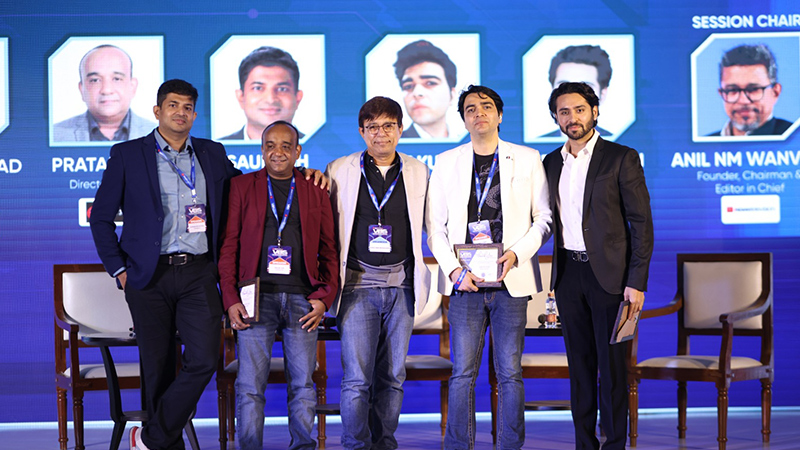
    MUMBAI: In India’s digital bazaar, content might be king—but figuring out how to sell it is the real blood sport. At IndianTelevision.com’s 21 Video and Broadband Summit 2025, the panel “Streaming and Distribution: Serving the Right Mix” brought together a lively brigade of streaming leaders to unpack how OTT, aggregators, and even Doordarshan’s new digital avatars are reshaping content distribution for the next three years.

    Session chair IndianTelevision.com Group founder, chairman & editor in chief Anil Wanvari guided a sharp conversation with Amazon MX Player director & head of content Amogh Dusad, Chana Jor director & CEO Pratap Jain, Shemaroo COO – digital Saurabh Srivastava, Prasar Bharati deputy director general Amit Kumar, and Jojo App founder Dhruvin Shah on what the future of streaming might really look like—and it wasn’t all glamour and glossy originals.

    Shah said they started with an ad-supported (AVOD) model because jumping straight into subscriptions would have sunk them. “Even with bigger value propositions, if we had slapped a price tag on day one, I don’t think we would have been where we are,” he confessed. Today, Jojo boasts over 5.5–6 million downloads and an emerging subscription base, with one paid user for every three free users.

    Srivastava remained cautious. While Shemaroo has built a direct-to-consumer OTT business, he acknowledged syndication continues to outpace subscription revenues. “In India, what should happen and what is happening are two different things,” Srivastava said, backing AVOD and hybrid models for immediate scalability. About 70–75 per cent of Shemaroo’s OTT revenue today still flows from its D2C subscription play, with Gujarati and Hindi content split evenly.

    Jain described aggregation as a double-edged sword. “Yes, you can scale fast through partnerships, but your net ARPU drops,” he admitted. Still, Chana Jor, live on Watcho and Airtel , boasts 40,000 direct paying users and around 400,000 downloads.

    Kumar meanwhile shared how their ‘Waves’ OTT platform—spun off from Doordarshan—was engineered differently. “We avoided brand confusion by keeping Waves separate from DD and AIR,” he said. Targeting a freemium model, Waves already hit three million downloads with a bold aim of 10 million by year-end. Unique shows like Kisan Cricket League and Kheton ke Khiladi are designed to tap the farmer and rural youth demographic, blending sports, farming and ground-level engagement.

    Monetisation challenges loomed large. Kumar flagged low CPM rates in India, high ad-serving costs, and patchy ad inventory. He suggested innovations like offering micro-credits to users to ease small-ticket payments and boost transaction volumes in TVOD models.

    The panel agreed: Indians don’t mind watching ads—evidenced by YouTube’s Indian dominance and DTH models— but purely ad-funded OTT isn’t a silver bullet. Subscription and freemium hybrids are the future, with content quality and clever marketing crucial to success.

    In a land of one billion screens, it’s not the platform with the loudest ad campaign that wins. It’s the one that convinces a user to stay—and maybe, just maybe, pay.

  • FAST rides the Indian wave: Free TV grows up as subscription fatigue hits prime time

    FAST rides the Indian wave: Free TV grows up as subscription fatigue hits prime time

    MUMBAI: There was a time when the battle for India’s living rooms was fought with a set-top box and a remote. Today, a new wave is washing ashore — lean, free, and impossibly fast.

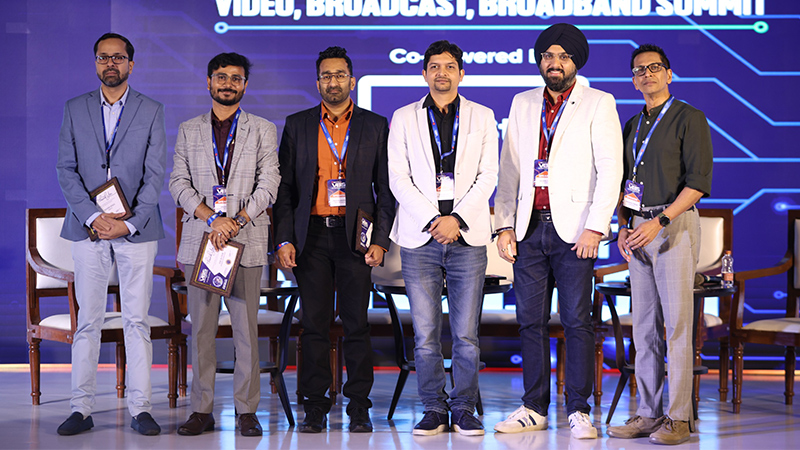
    At the IndianTelevision.com’s 21 Video and Broadband Summit 2025, the panel “FAST Services and the Subscriber: The Way Forward” unpacked how free ad-supported television (FAST) could become the next disruptor in India’s media landscape, pushing past subscription fatigue with a wink and a free pass.

    Samsung Electronics director of product services Vivek Mishra chaired a lively session featuring Planetcast COO – digital Venugopal Iyengar, Shemaroo DVP – India digital and international syndication Inderpal Singh, GroupM Nexus head (advanced TV and media solutions) Rajiv Rajagopal, Runn TV founder & CEO Manish Sinha, and Skandha Technologies director growth and business development Anil Kumar. Their consensus was clear: FAST isn’t just a buzzword — it is a full-blown revolution.

    Iyengar set the tone, noting that FAST addresses three critical consumer demands: accessibility, affordability, and simplicity. “It reduces cognitive overload. No 1,000 posters. Just click, watch, relax,” he quipped. FAST’s secret sauce? A curated, lean-back experience without subscription paywalls.

    Rajagopal put the numbers on the table, “FAST channels in India have exploded from 30–40 in 2021 to over 250 now, and are expected to top 1,000 within three years.” Connected TV ownership is also rising fast — from under 5 per cent before 2020 to 15 per cent today — and expected to surpass 35 per cent by 2030.

    Singh pointed out that India’s unique media clutter makes FAST even more necessary. “It’s not just quality platforms. It’s video, social, everything. FAST helps users escape decision fatigue,” he said. With 100 million TV-dark households still untapped, Singh predicted FAST would thrive alongside pay-TV and OTT services rather than replace them.

    Sinha brought it back to the user, “Most users don’t even know they’re watching FAST. They see content; they’re happy”. Sinha explained that audiences are appreciating the “click-and-consume” ease of FAST, where content discovery is baked into the platform rather than leaving users to search.

    Meanwhile, Kumar noted that the FAST ecosystem still rides largely on repurposed content. “It’s early days — we’re curating special-interest content, but still repurposing more than creating”, he said. Channels focused on genres like short films, poetry, and stand-up comedy are slowly emerging, tailored for highly targeted audiences.

    The panel didn’t shy away from the elephant in the room: monetisation. FAST’s ad revenues in India are still modest compared to western benchmarks. Iyengar noted that CPMs in India hover around $3 compared to $12–18 in the west. However, technology enablers like Planetcast are optimising delivery costs by over 50 per cent, making the FAST model increasingly viable.

    Caution remains, especially among traditional broadcasters. “Nobody’s making original content exclusively for FAST yet”, Iyengar admitted. “The push factor isn’t as strong here. Subscription TV still costs Rs 250, not Rs 8,000 like in the US.” But with 45 million connected TVs already lighting up Indian homes — and set to touch 60 million by year-end — momentum is building.

    FAST may be free to watch, but make no mistake — in India’s great TV revolution, it is playing for keeps.

  • CloudTV plugs in Harshad Wadivkar as new business head for monetisation

    CloudTV plugs in Harshad Wadivkar as new business head for monetisation

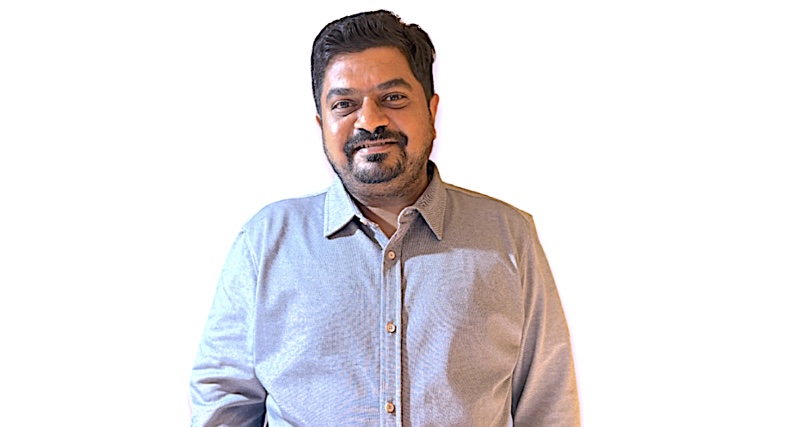
    MUMBAI:  CloudTV, India’s first certified Smart TV operating system, is switching to a higher gear on its monetisation plans with the appointment of Harshad Wadivkar as business head – monetisation. The move signals CloudTV’s growing ambitions to cash in on India’s fast-expanding connected TV (CTV) advertising wave.

    In his new role, Wadivkar will lead revenue strategies, forge fresh media partnerships, and unlock new monetisation channels across CloudTV’s platform, which today reaches more than 12 million viewers in regional markets across the country.

    A digital sales veteran with over 15 years under his belt, Wadivkar has previously clocked stints at Adscholars, Xapads Media, and Mediascope. His client roster reads like a brand who’s who — from DSP Mutual Fund and ESPN to Mahindra Auto and Jaguar Land Rover — and his agency links span GroupM, Madison, IPG, and Publicis. His knack for scaling revenues and building lasting partnerships makes him a prized recruit for CloudTV’s next growth lap.

    CloudTV COO  and co-founder Abhijeet Rajpurohit  said: “We are delighted to welcome Harshad aboard. His deep digital expertise and sharp monetisation focus will be pivotal as we strengthen our footprint in India’s rapidly evolving connected TV landscape.”

    With the CTV market shifting into overdrive, CloudTV is betting big on seasoned hands like Wadivkar to drive its revenue engine and bolster its standing as an indispensable advertising enabler for smart TV audiences.