Category: iWorld

  • Vi for victory? spectrum swaps, ARPU hikes and 5G boost Vodafone Idea

    Vi for victory? spectrum swaps, ARPU hikes and 5G boost Vodafone Idea

    MUMBAI: The fourth quarter of FY25 brought a much-needed signal boost for Vodafone Idea (Vi), as the beleaguered telco dialled up its strongest financial performance in years powered by equity infusions, spectrum-to-stock swaps, and an aggressive push into 5G and rural expansion.

    For the fiscal year ended 31 March 2025, Vi reported revenue of Rs 435.7 billion, marking a 2.2 per cent year-on-year increase. More notably, its annual cash EBITDA (pre-Ind AS 116) rose 9.5 per cent to Rs 92 billion, a third straight year of growth. The company’s Q4FY25 revenue hit Rs 110.1 billion, its highest average daily revenue in five years.

    But it’s not just numbers that changed. In a game-changing spectrum-to-equity conversion, Vi allotted 36.95 billion shares worth Rs 369.5 billion to the Government of India, boosting GoI’s stake to 49 per cent. With an additional Rs 180 billion from a public offer, and Rs 40 billion via preferential issues to Vodafone and Aditya Birla Group, Vi raised a total of Rs 614 billion in equity this year. That’s more than a capital top-up, it’s a lifeline.

    The subscriber base stood at 198.2 million at the end of Q4, with average revenue per user (ARPU) rising to Rs 175 up 14.2 per cent YoY. Vi also added over 6,900 new 4G towers this quarter (a company record since the merger), expanded 4G coverage to 83 per cent of India’s population, and improved 4G speeds by 28 per cent.

    Capex for FY25 totalled Rs 95.7 billion, with Q4 alone accounting for Rs 42.3 billion, Vi’s highest in a quarter post-merger. The company also brought down its bank debt from Rs 40.4 billion to Rs 23.3 billion and closed FY25 with a cash and bank balance of Rs 99.3 billion.

    However, challenges remain. Vi reported a consolidated loss of Rs 273.8 billion for the year and still holds spectrum and AGR liabilities aggregating over Ts 1.9 trillion. It has another Rs 164.3 billion in AGR dues falling due in FY26, and is in talks with banks for additional debt funding.

    To offset these burdens, Vi is diversifying its offerings. It launched new “Limitless” postpaid plans and hero prepaid plans to woo consumers, expanded its retail footprint to over 500 flagship stores and 2,500 touchpoints, and introduced premium international roaming benefits and lost baggage insurance.

    Even its B2B wing is flexing muscle, signing an MoU with West Bengal for MSME digital skilling and partnering with HPE to deliver enterprise-grade network solutions.

    Vi’s signal to the market is clear: it’s not just staying alive, it’s aiming for a comeback. With spectrum dues now equity, ARPU trending upwards, and credit ratings upgraded to BBB- (Stable) by ICRA and CARE, FY25 could be the year Vi finally got its second wind.

    Now, all eyes are on August 2025, when the company plans to beam 5G across all 17 of its spectrum circles. Until then, the mantra is clear: invest, expand, and connect.

  • The Gambling Strategy That’s Guaranteed to Make Money

    The Gambling Strategy That’s Guaranteed to Make Money

    Gambling has a rich cultural backdrop in India, from traditional games like Teen Patti and Rummy to modern online platforms offering cricket betting and casino games. The promise of a “guaranteed” gambling strategy that ensures profits is tantalizing, especially in a country where games of skill and chance captivate millions. One such strategy, the Martingale system, has lured countless gamblers with its apparent simplicity, only to be overshadowed by more sophisticated approaches like the Kelly Criterion. This article explores the Martingale strategy, its theoretical allure, and its fatal flaws, using examples rooted in popular Indian gambling scenarios.

    The House Always Wins

    Beneath the allure of trusted online casinos in India like 1Win or Parimatch, with their flashy IPL promotions and lucrative bonuses, the gambling industry in India is built on a foundation of mathematical precision designed to favor the house. Whether it’s a virtual roulette table or a Teen Patti game on a mobile app, operators ensure a statistical edge, slowly draining funds from unsuspecting players. Yet, mathematically inclined individuals have long sought to exploit loopholes in this system, using probability to tilt the odds in their favor.

    An anecdote from a 2019 betting conference in Goa illustrates this: when data scientists and statisticians gathered, local betting platforms reportedly saw their lowest profits ever. The rumor? These experts knew the ultimate strategy to beat the house: avoid gambling altogether. However, for those who engage, the Martingale system promises a way to outsmart the system; or so it seems.

    A Betting System Based on Probability

    The Martingale strategy hinges on the idea that, with enough bets, you’ll eventually win, theoretically guaranteeing a profit. Imagine betting on a simplified version of an online Teen Patti game or a cricket match outcome (e.g., Mumbai Indians vs. Chennai Super Kings in the IPL). The strategy assumes you can double your bet after each loss until you win, recovering all losses plus a small profit. For simplicity, let’s assume a 50-50 chance of winning, ignoring the house edge (e.g., platform commissions or rake in Teen Patti).

    The Martingale Strategy Explained

    Consider betting ₹100 on Mumbai Indians to win a match on an online platform like 10Cric, with even odds (2.0, meaning a ₹100 bet returns ₹200 if you win). If you lose, you double your bet and continue:

    ●    First Bet: ₹100 on Mumbai Indians. If they win, you gain ₹200 (₹100 profit). If they lose, you’re down ₹100.  
    ●    Second Bet: ₹200 on the next match. If you win, you get ₹400, covering the ₹300 total stake (₹100 + ₹200) and earning a ₹100 profit. If you lose, you’re down ₹300.  
    ●    Third Bet: ₹400. A win returns ₹800, covering the ₹700 stake (₹100 + ₹200 + ₹400) with a ₹100 profit. A loss puts you at ₹700 down.

    The pattern continues, doubling each time: ₹800, ₹1,600, ₹3,200, and so on. Each win recovers all previous losses plus a ₹100 profit. To scale up, start with a larger bet, say ₹1,000, and a win after several losses could yield ₹1,000 profit per cycle.

    The “Guaranteed” Profit Fallacy

    The Martingale system seems foolproof: since you’ll eventually win (e.g., Mumbai Indians can’t lose every IPL match), you’ll always profit. In a theoretical world with no house edge, the probability of losing every bet approaches zero as you play more rounds. Even with a real-world house edge (e.g., a 2–5% commission on betting platforms), there’s always a chance of winning, suggesting eventual success.

    The Problem With the Martingale System

    The Martingale strategy, while seductive, has been a siren song for gamblers since 18th-century Europe. In India, its allure persists among online bettors, from Teen Patti enthusiasts to cricket betting fans. Historical accounts, like those of European gamblers, echo modern tales of Indian players who’ve tried it on platforms like Bet365, only to face ruin.

    The Fatal Flaw in the Strategy

    The flaw becomes clear with an example. Suppose you start with ₹700 and bet on a 50-50 Teen Patti outcome online, with no house edge for simplicity:

    ●    Bet ₹100, lose: down ₹100.  
    ●    Bet ₹200, lose: down ₹300.  
    ●    Bet ₹400, lose: down ₹700.

    The chance of losing three bets in a row is 1/8 (12.5%). If you lose, you’re out of money. If you win any of the three bets (7/8 chance), you gain ₹100. Expected value: (7/8 × ₹100) + (1/8 × -₹700) = ₹87.50 – ₹87.50 = ₹0. The strategy breaks even on average, but the risk is asymmetrical: you’re far more likely to win small amounts frequently than to lose everything, but the losses are catastrophic.

    The “Guaranteed” Profit Depends on Unlimited Resources

    The Martingale system assumes infinite funds and no betting limits. In reality, Indian betting apps impose caps (e.g., ₹1,00,000 maximum bet on 10Cric for IPL matches). If you start with ₹1,000 and lose six bets (₹1,000, ₹2,000, ₹4,000, ₹8,000, ₹16,000, ₹32,000), you need ₹64,000 for the next bet. With only ₹10,000 initially, you’re bankrupt after four losses (total: ₹15,000). Even with a larger bankroll, exponential growth quickly outpaces affordability.

    Moreover, Indian platforms charge commissions (e.g., 5% on winnings), and the house edge in games like Teen Patti or roulette (with zero pockets) erodes profits. Cultural factors also play a role: gambling is stigmatized in many Indian communities, and chasing losses with Martingale can lead to financial and social ruin.

    The Challenges

    ●    Legal Ambiguity: The Public Gambling Act of 1867 doesn’t address online betting explicitly, but states like Goa and Sikkim permit certain forms. Offshore platforms operate in a grey area, and players risk account freezes or legal scrutiny.  
    ●    Bankroll Constraints: Many Indian bettors have limited disposable income, making the Martingale’s escalating bets impractical.  
    ●    Platform Restrictions: Online platforms may limit accounts showing Martingale patterns, suspecting bonus abuse or professional betting.  
    ●    Tax Implications: Gambling winnings above ₹10,000 are taxed at 30% under the Income Tax Act, 1961, reducing net profits.

    The Martingale strategy’s promise of “guaranteed” profits is a mirage in the Indian gambling landscape. While it may yield small wins in games like Teen Patti or cricket betting, the risk of catastrophic losses; coupled with India’s legal, financial, and cultural constraints, makes it unsustainable. Smarter approaches, like the Kelly Criterion, which balances risk and reward based on probability, offer a more disciplined path but require mathematical rigor beyond most casual bettors. The real lesson? The house always has the edge, and the only guaranteed win is not to play.  

     

  • Try and buy gets a tech glow up with Black’s virtual fashion mirror

    Try and buy gets a tech glow up with Black’s virtual fashion mirror

    MUMBAI: Why try when you can tap? With a flick of the screen and a dash of AI, Black, the fashion-first app from Kiranapro is turning your phone into a mirrorless fitting room. And with its latest acquisition of Likeo, things just got a whole lot more immersive. Kiranapro, India’s fully ONDC-integrated, AI-powered quick commerce platform, has zipped up a deal to acquire Likeo (likeo.me), a startup specialising in augmented reality–powered virtual try-ons. The strategic acquisition is stitched neatly into the rollout of Black, Kiranapro’s fashion-forward commerce app tailored for Gen Z, transforming shopping into a tech-fuelled playground of self-expression.

    With Likeo now in the closet, Black becomes India’s first app to offer a cross-category, AI-powered virtual trial room spanning apparel, jewellery, and eyewear. It’s a swipe, snap, and strut solution that replaces dressing room dilemmas with hyper-personalised, confidence-boosting previews.

    The acquisition also sees Likeo founder & CEO Saurav Kumar take the reins of AI and visual computing at Kiranapro, steering Black’s evolution into a tech-tuned fashion juggernaut. “We’ve always believed virtual try-on can remove hesitation and bring confidence to the online purchase journey,” said Kumar. “With Black, we finally have a canvas to scale this to millions.”

    The Likeo-powered trial room begins its runway rollout in the coming weeks, with early access opening for fashion and accessories. Designed to reduce return rates and elevate the joy of discovery, the feature transforms scrolling into strolling digitally, of course. From couture to casual, Black users can now see it, style it, and strut it virtually before they ever hit ‘buy’.

    Kiranapro founder and CEO Deepak Ravindran, called the acquisition “a bold step” in reinventing online shopping. “Black is not just an app, it’s a cultural movement,” he said. “Likeo’s tech allows us to give users a mirrorless shopping experience that’s deeply personal, fun, and frictionless.”

    The move cements Kiranapro’s twin strategy digitally empowering India’s local kirana network via ONDC on one end, while elevating e-commerce experiences for Gen Z on the other. With AI as the backbone and cultural cool as the vibe, Black positions itself as more than just a shopping app, it’s fast becoming India’s most stylish tech experiment.

    So if your fashion wishlist needs a test drive, Black’s new fitting room won’t just show you the look, it’ll help you own it, without ever leaving your screen.

  • Brandmusiq hits a six with Asian Paints in sonic spin on cricket fever

    Brandmusiq hits a six with Asian Paints in sonic spin on cricket fever

    MUMBAI: When cricket season hits India, everyone shows up batsmen, bowlers, brands, and now, basslines. In a pitch-perfect move, Brandmusiq and Asian Paints joined forces to create a rousing, regionally tuned campaign titled Coloursofcricket, turning fan passion into full-throttle soundscapes. Across the country, stadiums weren’t the only places roaring speakers were too. Crafted using the Asian Paints sonic identity, BrandMusiq composed distinct high-energy regional anthems laced with local instrumentation, language, and the emotional cues of each cricket-loving city. Think dhols in Punjab, Carnatic strains from Bengaluru, Mumbai’s bold brass and tutari, Hyderabad’s royal rhythms, Delhi’s street-style beats, and Kolkata’s folk soul, all seamlessly woven into sonic signatures that felt more like musical jerseys than just tunes.

    “India’s relationship with cricket is emotional, but every region expresses that emotion differently,” said Brandmusiq founder & soundsmith Rajeev Raja. “These aren’t just anthems, these are rallying cries, ‘musical jerseys’ for fans to wear with pride.”

    The campaign also drummed up digital participation with a contest encouraging fans to remix, dance to, or creatively express support using their city’s anthem turning passive viewing into creative cheerleading. The result? A campaign where sound met sentiment, and where branding hit a beat fans could move to.

    The Coloursofcricket initiative is a testament to the power of sonic branding done right cutting through the advertising noise, building recall, and fuelling fan pride with cultural authenticity and emotional punch.

    For a country that speaks in many tongues but cheers in one voice, this was the sound of India in surround sound.

  • Mouse house monsoon magic as Disney Jr. tour hits Mumbai stage

    Mouse house monsoon magic as Disney Jr. tour hits Mumbai stage

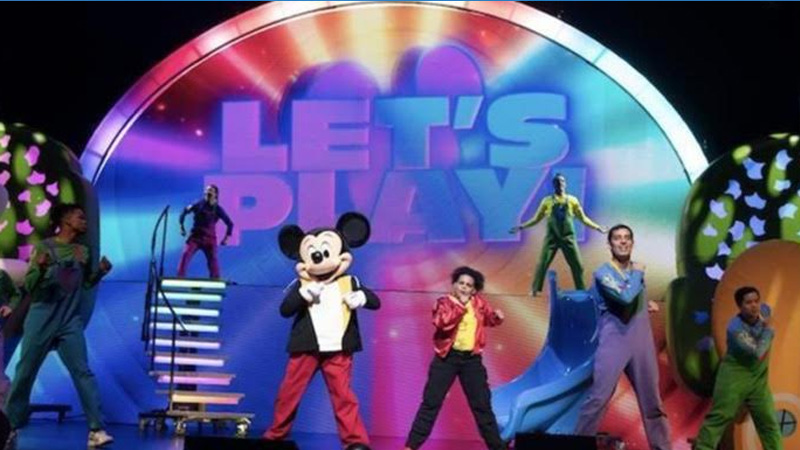
    MUMBAI: Grab your umbrellas and your little ones, this monsoon, Mumbai’s forecast is full of magic, music, and mouse ears. For the very first time, Disney Jr. Live On Tour: Let’s Play! is set to charm preschoolers and their families with a spectacular stage production from 4th to 6th July 2025 at the Dome, SVP Stadium, with eight exclusive shows over the weekend. The show is ticketed exclusively on District by Zomato, with pre-sales already creating quite the buzz.

    The high-energy, interactive concert will bring Mickey Mouse, Minnie, Ariel, Team Spidey, SuperKitties, and Puppy Dog Pals to life with 3D effects, acrobatics, and a setlist packed with singalongs like Hot Dog! and Do the Spidey. The story unfolds around Mickey’s playdate gone awry, thanks to some mysterious green weather and the arrival of Marvel’s mini superheroes to save the day.

    “After delighting audiences across the U.S. and marking its official international debut in London, we are so excited to share this magical production with families in Mumbai this summer,” said Terrapin Station Entertainment producer Jonathan Shank.

    The full schedule includes:

       * 4 July (Friday): 4 am, 7 pm

      * 5 July (Saturday): 11:30 am, 2:30 PM, 5:30 pm

       * 6 July (Sunday): 11:30 am, 2:30 PM, 5:30 pm

    An exclusive pre-sale for HSBC India cardholders is live until 29 May, 12 pm, followed by general ticket access at 1 pm the same day, only on the District app.

    “We are excited to team up with Disney and Terrapin Station Entertainment to bring the ‘Disney Jr. Live On Tour: Let’s Play!’ immersive concert experience to young children and their families. We firmly believe that live entertainment has the power to captivate audiences of all ages. Through these unique shows, we aim to provide young children and their families the chance to see many of their favourite Disney Jr. characters live on one stage,” said District by Zomato CEO Rahul Ganjoo.

    Whether your kid’s a Goofy giggler or a Spidey superfan, this is a playdate you won’t want to miss. Because when Mickey says, “Let’s play,” Mumbai listens.

  • Dialling into decline RCom posts heavy losses amid ongoing insolvency

    Dialling into decline RCom posts heavy losses amid ongoing insolvency

    MUMBAI: The lines are anything but clear at Reliance Communications (RCom), which dialled in a staggering consolidated loss of Rs 8,125 crore for the financial year ended 31 March 2025. With the telecom player still navigating the turbulent waters of insolvency, its latest audited results tell a tale of debt, deferred dreams, and deepening losses.

    Under the shadow of ongoing corporate insolvency proceedings since 2019, RCom’s affairs remain under the management of resolution professional Anish Niranjan Nanavaty. In a disclosure to stock exchanges, the company reported a loss of Rs 162 crore from continuing operations and an even steeper Rs 7,963 crore loss from discontinued operations, which include legacy telecom assets like spectrum, towers, and fibre assets still listed at 2018 valuations and now held for sale.

    Operating income slumped to Rs 278 crore for the year, against expenses of Rs 440 crore. The auditors, however, weren’t convinced everything adds up.

    The audit report issued by Pathak H.D. & Associates LLP is riddled with red flags from non-provisioning of interest on borrowings and foreign exchange fluctuations, to unauthorised asset sales and unresolved willful default allegations. “Had the interest and foreign exchange variation been provided,” the auditors note, “the reported loss would have been higher by Rs 5,110 crore, and the net worth lower by Rs 37,573 crore.”

    What’s more, RCom continues to default on statutory dues and has not implemented Ind AS 116 for lease accounting,  a miss that auditors flagged yet again.

    Even as a resolution plan remains pending before the NCLT and the Supreme Court battles over spectrum liabilities drag on, RCom maintains it has prepared its books on a ‘going concern’ basis. A claim auditors aren’t entirely buying, given the sustained erosion in net worth, which now stands at negative Rs 69,204 crore.

    Amidst it all, resolution efforts have hit pause. Applications to migrate telecom licences remain stuck in litigation. Multiple petitions before the NCLT, TDSAT, and the Supreme Court including the AGR dues dispute continue to cloud the future of RCom and its affiliates.”

    As India’s telecom landscape moves ahead with 5G and AI-driven innovations, RCom remains tethered to unresolved past dues and legal quicksand. Whether it can ring in a revival or continue to be stuck in voicemail remains a question only the courts and creditors can answer.

  • Infinix Levels Up with True Rippers for a Power-Packed BGMI Partnership

    Infinix Levels Up with True Rippers for a Power-Packed BGMI Partnership

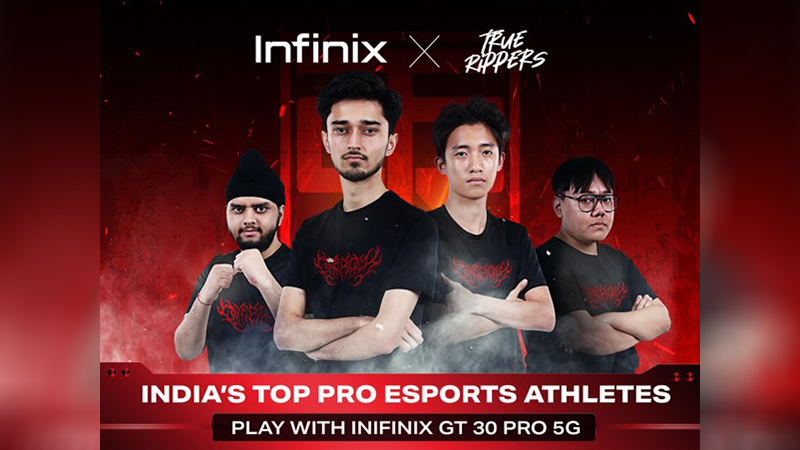
    MUMBAI: It’s game on in the world of mobile Esports and Infinix just hit a headshot with this one. In a move that fuses silicon with swagger, smartphone brand Infinix India has teamed up with one of the country’s top BGMI (Battlegrounds Mobile India) outfits, True Rippers. The team will now compete under the newly minted moniker Infinix True Rippers, marking Infinix’s maiden foray into the Esports arena and its first-ever global Esports team collaboration.

    This strategic alliance comes ahead of Infinix’s June 3 launch of the GT 30 Pro, a gaming-ready smartphone with 120 FPS BGMI certification and dual gaming shoulder triggers an Indian segment-first. With this hardware-meets-hustle partnership, Infinix is aiming squarely at India’s Gen Z gaming cohort, where play isn’t just pastime, it’s purpose.

    “At Infinix, we’re not just witnessing the gaming revolution, we’re driving it,” said Infinix India CEO Anish Kapoor. “Teams like True Rippers are the driving force behind India’s growing Esports culture. Our collaboration is rooted in a shared belief that gaming in India is more than just play; it’s a powerful aspiration for the youth… Together, we’re setting the stage towards strengthening the Indian Esports ecosystem.”

    Currently, Infinix True Rippers is battling it out in BMPS 2025, an invite-only Krafton-hosted tournament that wraps with a finale in New Delhi next month. The team’s form is impressive, having placed sixth at the BGIS in Kolkata just weeks ago.

    The roster includes:

    1    Gunjan Thakur aka Jelly
    2    Swaraj Singh aka KioLmao
    3    Ngurang Takar aka Ninzae
    4    Samuel Nabam aka SAM

    But this partnership isn’t just about trophies, it’s about storytelling. True Rippers will co-create content with Infinix, plugging directly into the lifestyle and aspirations of Indian gamers.

    “We’re thrilled to partner with Infinix, a brand that shares our vision for trendy storytelling and performance excellence,” said True Rippers CEO Yashwanth AR. “This carefully curated collaboration is a step towards redefining how brand narratives can go beyond conventional naming rights deals.”

    With 454 million gamers in India in 2023 (expected to hit 730 million by 2028), and BGMI contributing heavily to this boom, the Infinix–True Rippers union couldn’t have come at a better time.

    Earlier this year, BGIS 2025 notched a peak concurrent viewership of 485,132 and over 9.4 million watch hours, according to Esports Charts. It’s proof that this isn’t just about games, it’s about culture, community, and carving out a space in a booming economy of attention.

    With GT 30 Pro on deck and True Rippers on fire, this duo is ready to take the leaderboard and Indian gaming to the next level.

  • Scroll no more RunnTV streams ahead in instant entertainment game

    Scroll no more RunnTV streams ahead in instant entertainment game

    MUMBAI: Stuck in scroll purgatory again? RunnTV says it’s time to run from decision fatigue and straight into effortless binge mode. In a world where OTT fatigue is real and growing, RunnTV is ditching the dilemma with a cheeky new campaign that asks the eternal question: “Kab tak karoge scroll?”

    The digital-first push, launched across platforms, taps into a pain point that every streamer knows too well wasting minutes (sometimes hours) scrolling for something to watch, only to give up or rewatch the same old comfort show. The campaign’s ad films nail the mood: a remote-flipping viewer visibly exhausted by choice paralysis, a mobile scroller stuck in a never-ending loop both rescued by one smart switch to RunnTV.

    As India’s first independent FAST (Free Ad-supported Streaming TV) platform, RunnTV delivers lean-back, linear entertainment without the hassle of choosing. No subscriptions. No painful decisions. No more doomscrolling. Just tap in and zone out.

    The platform features a curated mix of live TV-style channels from movies, music, short films, and kids content to news and infotainment. RunnTV also auto-personalises your viewing experience based on your habits adjusting language, sequencing and channel preferences all while you watch.

    “We wanted to show people what they feel daily,” says the RunnTV marketing team. “The average user spends over 20 minutes daily just trying to decide what to watch. RunnTV is the antidote to that fatigue.”

    The campaign positions RunnTV not just as another app, but as a refreshing fix in an overcrowded OTT landscape. Whether you’re a casual viewer, serial scroller or a full-blown binge beast the message is clear: skip the search, ride the Runn.

    Available across TV and mobile, RunnTV doesn’t require a login but recommends one for a more customised feed. And with its no-subscription, ad-supported model, it’s aiming squarely at OTT-weary users across India who just want to watch something anything now.

    So, next time you find yourself endlessly scrolling through thumbnails, remember: entertainment shouldn’t feel like work. With RunnTV, it’s one tap and done.

  • Heena Chaudhari steps up as associate director for strategic activations at Sony group Corp

    Heena Chaudhari steps up as associate director for strategic activations at Sony group Corp

    MUMBAI: Heena Chaudhari has gone up a level once again. The seasoned strategist and investment ace has been promoted to associate director – strategic markets’ activations at Sony group Corp , where she’ll be steering high-impact business initiatives across India and the Middle East.

    With a power-packed portfolio that includes investment management at Sony Innovation Fund and a board observer role at Nodwin Gaming, Chaudhari is no stranger to spotting what’s hot in media, entertainment, and gaming before the world catches on. Now, in her new gig, she’s charged with turning strategic visions into high-octane action.

    Her Sony journey began in 2023 as strategic markets’ activations manager, and in just under two years, she’s earned her stripes by crafting clever market entry plays and forging high-value collaborations in two of Sony’s most promising growth zones.

    Before Sony, Chaudhari held leadership roles at Embold Technologies GmbH and Yoozoo Games, juggling strategy, HR, sales ops, and product development like a pro. She’s been in the trenches with startups, scaled up global projects, and even donned the CEO’s right-hand cap more than once.

    Armed with over a decade of experience and a resume that reads like a masterclass in cross-functional execution, Chaudhari isn’t just moving markets—she’s redesigning how legacy giants like Sony grow in emerging ones.

    Her superpowers? Investment foresight, operational precision, and boardroom charisma. With the gaming and streaming boom in full swing and the Middle East–India corridor heating up, Heena Chaudhari’s next play could very well be Sony’s best move yet.

  • Spain’s pirate party: nearly half of OTT viewers sail the high seas of illegal streaming

    Spain’s pirate party: nearly half of OTT viewers sail the high seas of illegal streaming

    MUMBAI:  While the Motion Pictures Association (MPA)  loves pointing fingers at India for its piracy woes, they may want to swivel their gaze towards Europe. New data from consultancy firm GECA reveals that a staggering 47.4 per cent of OTT viewers in Spain are tucking into pirated content—no paid subscription in sight.

    The pirate’s treasure chest? Movies top the loot list at 32.8 per cent, followed closely by TV series (30.6 per cent) and sports (18.4 per cent).

    The biggest buccaneers are aged 18–24, followed by the slightly older but no less rebellious 25–34 crew. Even the silver surfers are getting their share—piracy among the 55+ age group has jumped 4.5 points, now clocking in at 32.6 per cent.

    Notably, piracy among 25–34-year-olds surged 5.2 points, hinting at an underground boom even among the prime-income streamers. Whether it’s a protest against high prices or just a thrill of the steal, one thing’s clear—Spain’s illegal streaming scene is alive, well, and growing.