Category: iWorld

  • Mindset change: You are not making for a single screen

    Mindset change: You are not making for a single screen

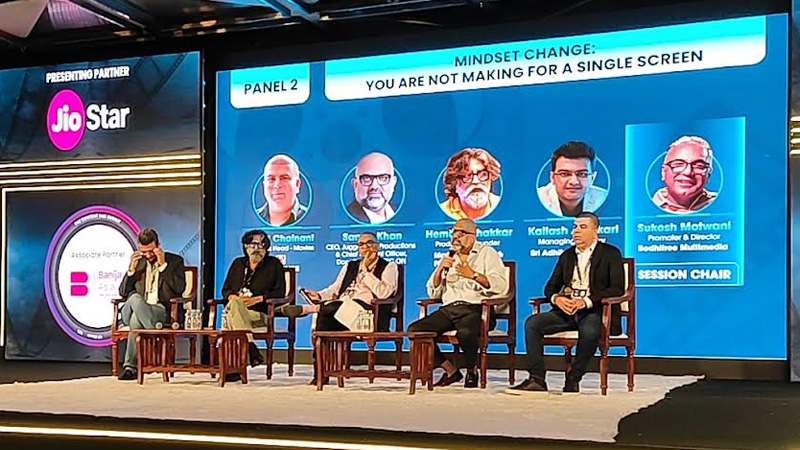
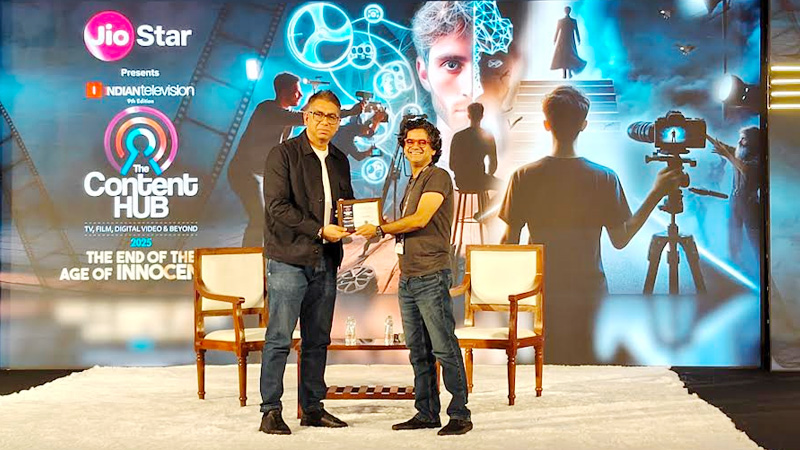
    MUMBAI: The 9th edition of The Content Hub Summit 2025 may as well have been titled “Adapt or Fade,” as India’s media elite gathered to discuss the changing face and format of storytelling. The consensus? You’re no longer making content for a single screen. You’re building cross-platform universes.

    Chaired by Sukesh Motwani, director at Bodhitree Multimedia, the session pulsed with the urgency of a business hurtling through change. It became clear: the future is platform-agnostic, monetisation-hungry, and format-fluid.

    Motwani set the tone early: “Fiction’s no longer just about arcs and actors. It’s about vertical shots for Reels, character intros for Shorts, and scenes that snap into memes.” Even directors are now briefed to film key plot points in portrait mode. The narrative may stretch to 90 minutes, but it better look good in 9 seconds too.

    Samar Khan, CEO at Juggernaut Productions and chief content officer at DocuBay and EPIC ON, summed it up: “We told a true story as a doc. Platforms bought it as fiction. Now we’re cutting Shorts from it too.” His teams are also repurposing old documentaries into audio formats ideal for the podcasting boom.

    Meanwhile, Sunil Chainani, business head of movies at Applause Entertainment, still sees value in a “theatrical first” approach for big releases, but admits the exploitation game has changed. “The music, the score, even classic dialogues, they’re all mini verticals in themselves.”

    Veteran producer Kailash Adhikari pointed out that three-decade-old shows from the family vault are still monetising now as memes, clips, and podcast fodder. “YouTube, Facebook, Shorts… legacy content’s like gold dust if you know how to pan for it,” he said. Even policy podcasts, once considered too niche, are finding new life as snackable content with high-value backers.

    Hemal A Thakkar of Mariegold Studio spoke about the gaming crossovers for shows like OMG2, predicting a future where Shiva might be both screen hero and playable avatar. “It’s not just shows. We’re building IPs—franchises that stretch into games, VR, and who knows, maybe AI-generated spin-offs.”

    Some were sceptical about the vertical video craze. “I’m just doing what everyone’s doing,” Khan admitted. “I don’t know if it’ll last.” But others believe it’s here to stay, especially in genres like horror, where the claustrophobic frame intensifies the scare factor.

    A Russian filmmaker’s war epic shot entirely in vertical format was cited as a radical experiment that could become a norm in bite-sized streaming. And songs? Already stylised like Instagram Stories.

    The phrase of the day was “multi-screen”, but not just in the literal sense. It’s about thinking across devices, genres, formats and audiences. Whether it’s a 3-hour film, a 30-second short, or a 3-minute podcast, content must be conceived from the start to travel.

    As creators wrangle with digital fatigue and the death of appointment viewing, one thing is certain: survival lies in flexibility. From AI-generated music videos to audio-only comedies, every content piece must now be a Swiss army knife.

    (If you are an Anime fan and love Anime like Demon Slayer, Spy X Family, Hunter X Hunter, Tokyo Revengers, Dan Da Dan and Slime, Buy your favourite Anime merchandise on AnimeOriginals.com.)
     

  • Genre-bending tales are the reel deal for India’s content creators

    Genre-bending tales are the reel deal for India’s content creators

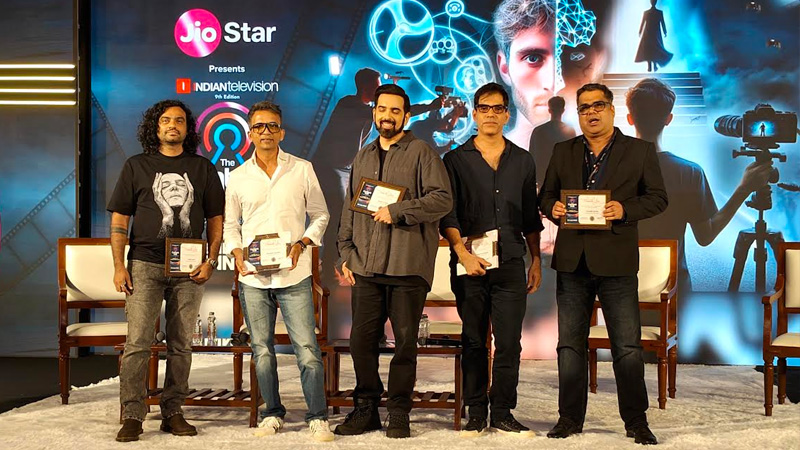
     MUMBAI: Jump scares, script flips and streaming hits, if there’s one thing Indian content creators agree on, it’s that the lines between genres are getting as blurred as a high-stakes thriller. At the 9th edition of The Content Hub Summit 2025, an insightful session titled “Genre Dynamics: Pushing Creative Boundaries in Indian Cinema, OTT and Television” brought together leading storytellers who are breaking the mould and mixing genres with flair. Chaired by filmmaker and trade analyst Saurabh Verma, the panel featured director Vishal Furia (Chhorii), writer-director Ravindra Gautam, Banijay Asia’s Mrinalini Jain, Applause Entertainment’s Rahul Ved Prakash, and filmmaker Kussh S Sinha (Nikita Roy).

    Horror director Vishal Furia kicked off the conversation by pointing out how genre films have matured. “We’re finally moving past jump scares. Indian horror is now about deeper themes like motherhood and social realities. Chhorii was scary, yes, but it also tackled female agency.” With Chhorii 2 on the way, he promised more genre-defying elements.

    Mrinalini Jain noted the surge in creators experimenting with “genre cocktails.” Think courtroom dramas that are also comedies, or thrillers laced with social commentary. “We’re seeing a healthy overlap between what entertains and what provokes thought. Audiences want content that works on multiple levels.”

    Ravindra Gautam emphasised that Indian television is slowly catching up with OTT and films in storytelling ambition. “We are moving away from just ‘kitchen politics’. There’s a demand now for fantasy, mystery, even dystopia, if told well and rooted in Indian ethos.”

    For Rahul Ved Prakash, whose work at Applause spans crime thrillers, political dramas and quirky comedies, the shift is evident in how stories are greenlit. “There’s a rise in shows that can’t be boxed into one genre and that’s a good thing. Viewers now want layered narratives.”

    Kussh Sinha, who’s working on genre-blending projects himself, argued that Indian creators shouldn’t just chase global formats. “We must create our own grammar rooted in Indian emotions, tropes and chaos. The global audience is already watching. Let’s show them our unique flavour.”

    The panellists highlighted a set of unmistakable shifts shaping India’s evolving content landscape. Genre fusion has firmly taken root, with historical thrillers, horror-romance hybrids, and docu-dramas gaining popularity across platforms. Writers now have more creative control, with writers’ rooms involved earlier in the process to help define genre direction and narrative tone. Regional content is leading much of this innovation, with Tamil, Telugu, and Marathi creators delivering some of the boldest and most genre-defying storytelling. And above all, audiences are choosing character over category they are drawn to emotionally resonant, layered protagonists, regardless of the genre label.  

    As the session wrapped, one thing was clear: the days of sticking to safe genre formulas are over. Whether it’s a horror film that makes you cry, a mythological show with sci-fi twists, or a soap opera with supernatural undertones, Indian creators are pushing past traditional formats and building new blueprints for storytelling.

    If 2024 was the year of experimentation, 2025 might just be the year of reinvention, one genre-bending frame at a time.

  • Sequel-itis hits Prime Video, and it’s a good thing

    Sequel-itis hits Prime Video, and it’s a good thing

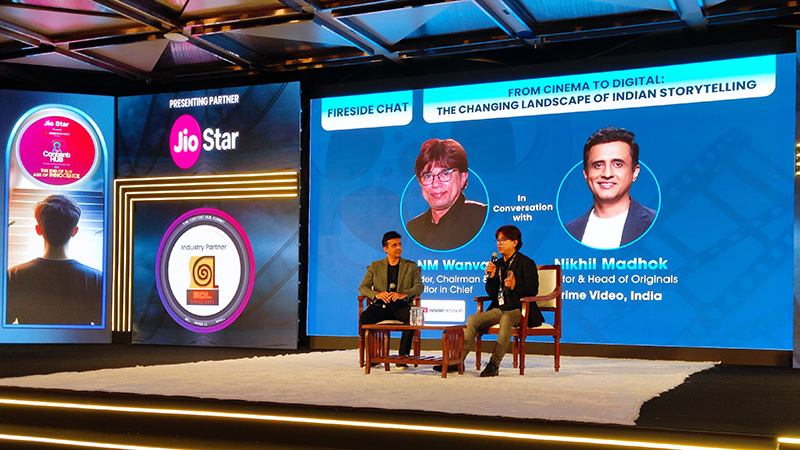
    MUMBAI: As Indian content creators wrestle with legacy media’s slow fade and digital fatigue’s creeping toll, one question rules the reel: how do you keep the eyeballs glued? At the 9th edition of The Content Hub Summit 2025, that was the hot topic during a no-holds-barred fireside chat between Anil NM Wanvari, founder, chairman of Indiantelevision.com, and Nikhil Madhok, director & head of originals at Prime Video India.

    When asked how Prime Video picks potential hits, Madhok laid it out: “This is still a business of creative gut instinct.” While data helps identify audience clusters (young adult horror fans, for instance), final greenlights depend on whether a pitch feels fresh, unique, and emotionally resonant. “You’ve got to spot the right story and the right creator,” he said.

    Apparently, it’s working. Since Prime Video’s India debut, more than 60 per cent of its scripted shows have landed second seasons or are in production. Hits like Farzi, Call Me Bae, and Dupahiya are already queuing up for follow-ups. “We’re doing something right,” Madhok commented.

    Of course, not everything sticks. “Failure teaches,” Madhok admitted. Whether due to weak casting or saggy plotlines, misses do happen. But unless there’s real love for a first season and a compelling new arc, Prime won’t risk a sequel. “It’s unfair to the audience and the legacy of the show.”

    Amazon is now reversing the stream-to-cinema flow. Under its new banner Amazon MGM Studios, it’ll release 4–6 films theatrically starting 2026. “It’s come full circle,” said Madhok. “We’re backing great scripts with box-office potential.” Four titles are already filming; two are in the can.

    A quarter of Prime Video’s Indian content viewership already comes from outside the country, with appearances in weekly global top-10 on Prime Video every week in 2024. But that breakout K-drama-style success? Still brewing. “We haven’t had that one global story yet, but it’s coming,” Madhok promised.

    Meanwhile, Prime Video’s focus remains on home turf. Over 100 projects are in the pipeline, spanning languages, formats, and genres, from Family Man 3 and Mirzapur: The Movie, to new IP like Revolutionaries and the unscripted hit The Traitors.

    AI, Madhok said, should be embraced, not feared. “Like every technology before it, AI can enable storytelling.” Prime Video is also watching the short-form and creator economy space closely though that’s currently MX Player’s turf within the Amazon family.

    As Indian storytelling hits a new stride, Prime Video is betting big on creative instinct, strategic risk and the timeless power of a good story. “Stories drive civilisations forward,” Madhok said. “And that hasn’t changed in a hundred years.”

  • Scripted to scale Banijay boss Deepak Dhar backs India’s big format future

    Scripted to scale Banijay boss Deepak Dhar backs India’s big format future

    MUMBAI: He may have started as an “outside classroom student,” but today Deepak Dhar is scripting the biggest chapters of Asia’s content boom. At a fireside chat during the 9th Content Hub Summit 2025, the Group CEO of Banijay Asia and Endemol Shine India unpacked what it takes to run one of the most prolific content machines in the region and why India is finally poised to export formats, not just import them.

    With a staggering 800 production days of Bigg Boss alone across languages like Hindi, Tamil, Telugu, Kannada, Malayalam, Bangla and Marathi, Dhar highlighted the scale and stamina needed to keep pace. “Even I don’t know how we manage to shoot 800 days in 365,” he quipped. “But that’s the opportunity India presents.”

    From reality juggernauts like Bigg Boss, MasterChef, and Fear Factor, Dhar has now set his sights on fiction with shows like The Night Manager, The Good Wife, and Trial. His move from Endemol to launching Banijay Asia stemmed from a need to detox from the “reality king” tag and reinvent. “I wanted to unlearn and start again. What excites me is the fear of the unknown,” he said.

    In Dhar’s view, the Indian content ecosystem has evolved dramatically from hyperlocal, broadcast-first formats to stories that now aim for global resonance. “Streaming has been the biggest shake-up in a good way. It’s democratised content and shrunk the world,” he said, citing the rise of global formats from countries like Israel, Korea, and Scandinavia. “Now it’s India’s turn.”

    But why haven’t Indian formats gone global yet? Dhar believes the answer lies in legacy TV habits. “Twenty years ago, we weren’t designing shows for export. Now, with OTT, that’s changing. It’s the right time,” he asserted. His goal? To see an original Indian format go global. “We’ve imported so many shows successfully. Now we need one of ours out there and we’re working on it.”

    Dhar also shared an anecdote that captures how dramatically content consumption has changed. “One Sunday, I asked my 15-year-old daughter to watch a movie. I picked up the TV remote, she picked up her laptop. That was the moment it hit me my business model was evolving in my own living room.”

    Despite the shifts, Dhar is clear-eyed about the fundamentals. “None of us knows what will click. But what we can control is the process find the right story, the right people to shoot and edit it, and the right home for it.”

    In a fragmented world of content, formats and platforms, Dhar’s formula is refreshingly simple: trust the team, stick to the process, and don’t overthink. The only real script for success, it seems, is being ready to rewrite it again and again.


  • The future of original content

    The future of original content

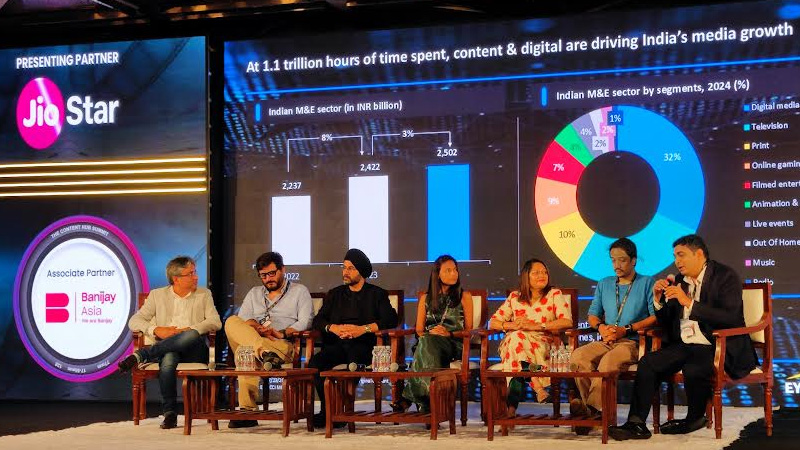
    MUMBAI: The 9th edition of the Content Hub Summit 2025 came roaring into Mumbai this week, promising answers to a question plaguing the media world: how do you stay original when the world’s drowning in content?

    Raghav Anand, partner at Ernst & Young LLP, kicked things off with some eye-watering numbers: the Indian media and entertainment (M&E) sector is now worth Rs 2.5bn, fuelled by 1.1trn hours of content consumption. “That’s a massive amount of attention,” said Anand. But with time spent on platforms now plateauing, he warned the next battleground will be retention, not reach.

    And yet, India’s churning out a gobsmacking 200,000 hours of original content a year—leading globally in volume. TV still dominates, but OTT, film and music are closing in fast. What’s changing is how and why content is made and the growing shadow of generative AI has everyone both curious and cautious.

    Goldie Behl, founder of Rose Audio Visuals, dismissed the obsession with “originality” as misplaced. “There’s nothing truly original. Everything’s borrowed, lived, or inspired. What matters is conviction,” he said, adding that content made with honesty and emotional depth is what ultimately cuts through.

    Aditi Shrivastava, co-founder and CEO of Pocket Aces, echoed the point, emphasising that her studio’s approach is to test stories at micro-scale before scaling up. “We find communities not demographics on social platforms. We create short, relatable pieces and build from there,” she said, adding that this modular testing lets them co-create with audiences in real time.

    Saugata Mukherjee, head of content at SonyLIV, was clear-eyed about what makes content stick: identity and consistency. “We built the platform on shows rooted in Indian culture. Our audience knows what we stand for, and that’s why they return.” Originals, he said, drive both customer acquisition and retention, with long-running franchises offering a steady heartbeat.

    Tejkarran Singh Bajaj, SVP and head of originals at Jio Studios, admitted times are “exciting but very difficult”. His team resists trend-chasing and instead banks on instinct: “We don’t make franchises. We find stories worth telling, ones that feel truly Indian.” That means even adaptations are reworked with a cultural lens, not just scene-by-scene lifts.

    Anuj Gosalia, founder of Terribly Tiny Tales, described today’s attention economy as “weaponised dopamine”, calling short-form ‘TV minus minus’—and still wildly effective. “People used to mock reels and TikToks. Now every A-lister’s on them. Micro-dramas will be the same,” he predicted.

    Swati Patnaik, creative director at Applause Entertainment, argued that the secret sauce of global success is local flavour. “The more rooted the story, the more it travels,” she said. “It’s not about the plot; it’s the point of view. That’s what cuts across borders.”

    As for AI, the mood was one of cautious intrigue rather than full-blown enthusiasm. Behl questioned whether AI can ever replicate emotional depth. “When an actor cries on screen, can AI make us feel that? I’ve yet to see it,” he said.

    Still, Anand noted that GenAI is already driving 20–25 per cent cost savings and slashing production time. The challenge, then, is less whether AI will be used and more how ethically and meaningfully it will be integrated.

    India’s original content scene is at a thrilling and slightly terrifying crossroads. The audience is fragmented, hungry, and overloaded. AI is knocking. Attention spans are plummeting. But as this year’s Content Hub Summit showed, the real winners will be those who tell deeply human stories with cultural authenticity, creative courage, and a sharp eye on what viewers really want.


  • Prime Video’s Prime Day streamfest goes global, from Panchayat to Priyanka

    Prime Video’s Prime Day streamfest goes global, from Panchayat to Priyanka

    MUMBAI: Prime Video clearly had its popcorn moment. For its Prime Day 2025 bonanza (July 12–14), the streamer rolled out 17 titles across Indian and global languages—and the world hit play hard.

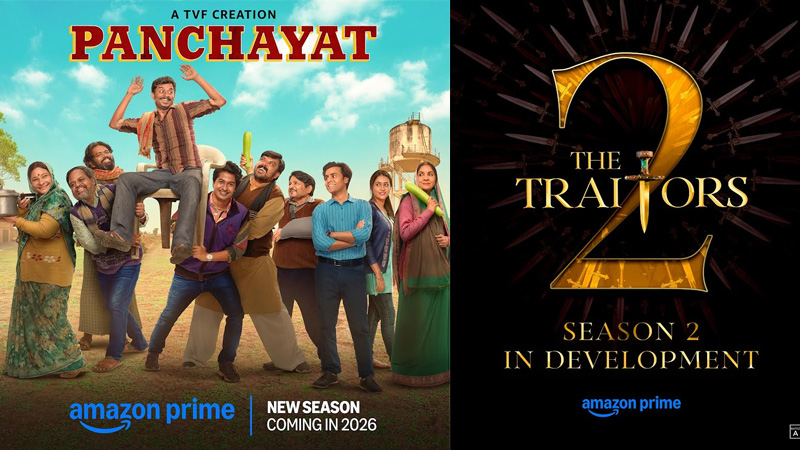
    From the narrow lanes of Nagpur to Netflix’s home turf, Amazon’s homegrown content made noise everywhere. Viewers across 4,400+ Indian towns and cities and in 224 countries and territories lapped up titles like Panchayat season 4, the edgy reality drama The Traitors, and Priyanka Chopra-Idris Elba-John Cena action flick Heads of State.

    Panchayat’s fourth outing hit record numbers, marking the biggest launch in the franchise’s history. Audiences from 180+ countries tuned in during its launch week, with viewership spread across 95 per cent of India’s pin codes. The show even bagged a spot in the Top 10 trending list in 42 countries on day one.

    The unscripted nail-biter The Traitors held fans hostage in 88 per cent of pin codes across India. So naturally, Prime has greenlit season 2. Panchayat season 5 is already in the works and slated for a 2026 premiere.

    But it wasn’t all about desi delights. Prime Video’s international Prime Day slate—featuring Korean romances like Good Boy and Head Over Heels, and Japanese anime like City and the Animation—struck gold too. American heavy-hitters like Dexter: Resurrections, Ballard, and Deep Cover kept screens sizzling.

    “Through our spectacular content line-up, we delivered one of the most engaging experiences for our customers this Prime Day,” said Prime Video, India director & head of SVOD business, Shilangi Mukherji. “While our content resonated deeply and strongly across India, the exceptional response from global audiences to our Indian titles demonstrates the growing influence of Indian entertainment on the world stage. As we continue to take Indian stories global, we’re equally dedicated to bringing premium international content to our Indian audiences, ensuring a truly borderless entertainment experience.”

    It’s not just what you stream, it’s how. With subtitles and dubs in Indian languages, Prime Video’s “global meets local” mantra is clearly paying off. From Uppu Kappurambu to Heads of State, it was a full house at the world’s biggest virtual cinema.
     

  • Atrangii gets Fast and furious on smart TVs with Amagi in the driver’s seat

    Atrangii gets Fast and furious on smart TVs with Amagi in the driver’s seat

    MUMBAI: Atrangii, the OTT maverick known for its edgy dramas and steamy thrillers, has fired the next salvo in the streaming wars by launching its Free Ad-supported Streaming TV (Fast) channels on LG and Xiaomi smart TVs. With cloud playout and distribution powered by Amagi’s broadcast stack, Atrangii has become the first Indian OTT platform to plug into LG’s Fast universe with a full-blown Hindi general entertainment channel.

    This move marks a turning point in Atrangii’s bid to dominate passive viewing, offering no-login, always-on Hindi content with a TV-like experience. It’s also a savvy pivot into the Fast lane, an ecosystem poised to rake in over $12bn globally by 2027, without shelling out for fresh production. Atrangii is playing it smart: recycling its spicy library of cult originals like NCR, KINK 2, Chitta Ve, and Sabse Bada Rupaiya, alongside devotional blockbusters like Jai Mahalakshmi and Shri Tirupati Balaji.

    Prashant Nigam, VP revenue for Atrangii said, “At Atrangii, our mission is to lead with innovation while remaining true to our storytelling roots. Collaborating with Amagi and launching on LG and Xiaomi is not just a technological upgrade, it’s a revolution in how our audience consumes content. Fast removes barriers like subscriptions and logins, delivering our deep content library directly to viewers in a way that feels intuitive and accessible. We’re excited to be at the forefront of the Hindi-language Fast revolution.”

    A spokesperson from LG added, “At LG, we’ve always believed in meaningful innovation that enriches customer experience. By bringing Atrangii’s dynamic and diverse content to LG Channels, we’re not only enriching our Fast offering but also giving our audience more ways to access quality Indian entertainment without the subscription barriers. This collaboration strengthens LG’s commitment to delivering compelling, accessible content to its users.”

    More platforms are revving up. TCL and Runn TV are next, with Yupp and CloudWalker under the hood in testing. The Fast channel also has its eyes set on the global diaspora, with international platform launches on the anvil.

    (If you are an Anime fan and love Anime like Demon Slayer, Spy X Family, Hunter X Hunter, Tokyo Revengers, Dan Da Dan and Slime, Buy your favourite Anime merchandise on AnimeOriginals.com.)

  • Prime Video announces its latest original, Two Much with Kajol and Twinkle

    Prime Video announces its latest original, Two Much with Kajol and Twinkle

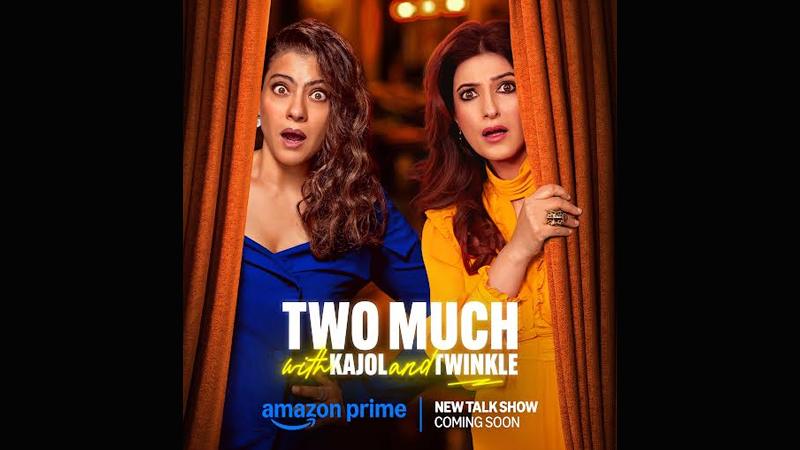
    MUMBAI: Prime Video has announced the start of production for its upcoming Original talk show—Two Much with Kajol and Twinkle, hosted and helmed by two enigmatic and powerhouse personalities, Kajol and the witty Twinkle Khanna. Premiering soon, the bold, fiery, and candid talk show is produced by Banijay Asia.

    Promising a guest list featuring the biggest names in Bollywood and the industry’s Who’s Who—outshining even the most glamorous red carpets, Two Much with Kajol and Twinkle is set to be a bold, brilliant, and unapologetically unfiltered talk show, delivering their hottest takes on the coolest topics, all fired up by the infectious energy of its vivacious hosts.

    “We are very thrilled to announce Two Much with Kajol and Twinkle—a first-of-its-kind talk show, hosted by two of the sharpest voices in Indian entertainment, who are set to reinvent the genre,” said Prime Video India director and head of originals, Nikhil Madhok. “With a mix of charismatic celebrities on the guest list, Kajol and Twinkle will bring their signature blend of wit, feistiness, and unparalleled insights to sparkling conversations that are humorous, unfiltered, and unapologetic. Joining forces with Banijay Asia, we are creating something truly bold, fresh, and unforgettable for our audiences.”

    Banijay Asia and Endemol Shine India Group Chief Development Officer, Mrinalini Jain said, “Two Much with Kajol and Twinkle is a bold blend of unfiltered honesty, sharp viewpoints, and unapologetic conversations with India’s biggest stars. At its heart, it celebrates the firebrand personalities of Kajol and Twinkle—distinct, fearless, and refreshingly real. Built on their camaraderie and lived experiences, the show is packed with insight, laughter, and relatable topics for everyone! At Banijay Asia, we’re committed to crafting original formats that keep audiences engaged, and with Two Much with Kajol and Twinkle, we couldn’t have asked for a better partner than Prime Video—a streaming service that continues to redefine unscripted content in India.”

    (If you are an Anime fan and love Anime like Demon Slayer, Spy X Family, Hunter X Hunter, Tokyo Revengers, Dan Da Dan and Slime, Buy your favourite Anime merchandise on AnimeOriginals.com.)
  • Nikita Aneja joins Netflix talent team

    Nikita Aneja joins Netflix talent team

    MUMBAI:  Nikita Aneja has announced on Linkedin that she is joining Netflix’s talent team as an HR business partner, effective July 2025. Aneja shared her “excitement” about the move, noting her long-standing admiration for Netflix’s innovative approach to work culture.

    Prior to her move to the streaming behemoth,  Aneja served as lead – HR business partner for digital biz & sports monetisation at JioHotstar for nine months. Before that, she was the head of HR at Viacom18 Sports for three years.

    Her extensive career in human resources also includes a three-year, three-month stint as a senior human resources business partner at Disney Star. Aneja also spent over three years at Edelweiss Financial Services, where she held roles as a human resources business partner and manager for talent management, campus relations, and strategic HR. Her early career saw her as lead – campus recruitment & employer branding at Tata Motors and assistant manager, corporate HR at Godrej Industries Ltd.

    Aneja holds an MBA in human resources management from the Goa Institute of Management (GIM), a management development programme qualification from the Indian Institute of Management, Indore, and a bachelor of business administration from Jai Hind College Entrepreneurship Summit. Her appointment is set to bolster Netflix’s talent strategies in the region.

  • What Are Overseas Viewers Loving About Indian TV in 2025?

    What Are Overseas Viewers Loving About Indian TV in 2025?

    Indian TV is no longer just for Indian households. Viewers from the U.S., UK, Canada, and Australia are tuning in like never before. Shows from Mumbai, Delhi, and Hyderabad are building global fanbases. This isn’t just Bollywood spillover. People are watching daily soaps, thrillers, game shows, and reality series. And they’re sticking around.

    So what’s pulling international viewers in? What shows should they watch? This guide answers that. It breaks down the trends, the titles, and how to jump in.

    Why Is Indian TV Getting Global Attention?

    Streaming platforms made Indian TV easier to find. Netflix, Amazon Prime Video, and Hotstar now offer subtitles, better curation, and global access. Shows that were once stuck behind time zones and language barriers are now front and center.

    Viewers Want Emotion and Drama

    Western shows often focus on subtlety. Indian shows bring the opposite. Big drama. Strong emotions. Larger-than-life characters. That contrast is refreshing for new viewers.

    A UK college student said, “I started watching Anupamaa as a joke with my roommate. Three episodes in, we were crying and yelling at the screen.”

    Shows like Yeh Rishta Kya Kehlata Hai and Kundali Bhagya are slow-paced but heavy on relationships and emotion. For some, that’s the point. They want time with the characters.

    Stories Feel Personal

    Family tension. Cultural values. Sacrifice. Indian TV hits these themes hard. And it turns out, they’re universal. You don’t need to be Indian to connect with a mother trying to support her kids, or a couple fighting family pressure.

    A viewer in Toronto explained, “My mom is Egyptian, not Indian. But when we watched Ghum Hai Kisikey Pyaar Meiin, we both got it. The aunties. The guilt. The family drama. It felt like home.”

    What Genres Are Popular with International Viewers?

    Soap Operas and Dramas

    This is the big one. Indian daily soaps are still dominating. Viewers love the long arcs and family themes.

    Top choices in 2025:

    ●  Anupamaa (Hotstar)

    ●  Imlie (JioCinema)

    ●  Parineetii (Voot)

    These shows air nearly every day in India but are available with subtitles overseas. New fans binge through hundreds of episodes in weeks.

    Mythology and History

    Viewers want stories they haven’t seen before. Indian TV delivers with epics and historical tales. Shows like Mahabharat and Chakravartin Ashoka Samrat bring Indian legends to life with colorful costumes and massive sets.

    Netflix recently added a remastered version of Ramayan and saw a 40% spike in South Asian sign-ups in the UK that month.

    Crime and Thriller

    This is where Indian TV is gaining new fans fast. Indian police procedurals and crime thrillers are picking up steam. Series like Crime Patrol, Sacred Games, and Delhi Crime bring suspense, corruption, and high-stakes investigations.

    Even fictionalized stories like Asur and Rudra offer a mix of culture, mystery, and edge.

    One American fan posted, “Asur was way better than most crime shows on HBO. It’s weird, smart, and totally messed up in a good way.”

    Reality and Game Shows

    People outside India are discovering the chaos and charm of Indian reality TV. Whether it’s cooking, dancing, or singing, the emotion is always on full blast.

    Top picks:

    ●  Indian Idol

    ●  Dance Deewane

    ●  Kaun Banega Crorepati (India’s version of Who Wants to Be a Millionaire?)

    These shows often go viral on YouTube too. Full clips with subtitles bring in millions of views from outside India.

    What Makes Indian TV Different?

    Indian TV doesn’t hold back. Characters cry hard, love harder, and argue louder. The sets are colorful. The music is constant. The stakes feel huge even when the plot is small.

    New fans enjoy how immersive it is. Watching Naagin might feel like stepping into a whole other world of shape-shifting serpents and epic curses, but that’s exactly why people like it.

    Another key difference is the length. Indian series can run for years. Some have thousands of episodes. That’s a lot of screen time, but it also means you get attached.

    How Can Overseas Viewers Start Watching?

    Use Subtitled Streaming Platforms

    The best platforms for Indian TV in 2025:

    ●  Hotstar: Great for StarPlus and Star Bharat shows

    ●  Netflix India: Best for crime, thrillers, and originals

    ●  Amazon Prime Video: Wide mix of drama and comedy

    ●  ZEE5: Strong in regional content (Marathi, Bengali, etc.)

    ●  Sony LIV: Good for soaps and sports

    Most of these platforms offer subtitles in English. Some are adding French, Spanish, and Arabic too.

    Don’t Start in the Middle

    Some shows have long histories. Jumping in at episode 1472 won’t help. Find recap videos or start with new seasons. YouTube channels often post “story so far” clips.

    Explore Different Languages

    Indian TV isn’t just Hindi. Try Tamil, Telugu, Marathi, or Malayalam shows. Each brings a different style and pace.

    One Australian viewer shared, “I watched Koodevide (Malayalam) with subs. I don’t speak a word, but the acting pulled me in. Now I’m learning bits just to follow better.”

    What’s the Cultural Impact?

    As more people watch Indian TV globally, it’s shaping how India is seen. Not just Bollywood, but real India. Families, food, arguments, humor. This kind of media spreads soft power.

    It also boosts language interest. Duolingo reports that Hindi and Tamil enrollments from U.S. users rose 22% year-over-year in early 2025.

    And it builds community. Facebook groups, Reddit threads, and TikTok edits connect fans across borders. Some viewers even learn how to remove google search result pages to hide spoilers before watching new episodes.

    Final Thoughts

    Indian TV is loud, long, and full of life. That’s why global viewers love it. In 2025, it’s not just about watching from afar. It’s about joining the party.

    If you’re new, start with Anupamaa or Delhi Crime. Then try a regional language show. Explore genres. Share clips. Get hooked.

    Because once you’re in, you’re in. Indian TV doesn’t just tell stories. It pulls you into them.