Category: iWorld

  • Gaming is witnessing an evolution in terms of time spent: dentsu’s MGEN Summit

    Gaming is witnessing an evolution in terms of time spent: dentsu’s MGEN Summit

    Mumbai: At the MGEN Summit organised by Animation Xpress in collaboration with dentsu Gaming on December 2, one of the sessions aimed to decode how the gaming consumers’ behaviour has evolved. The speakers were SuperGaming CEO and co-founder Roby John, CrazyLabs India head of studio Surojit Roy, Carat India director Faraz Sayed, Rooter revenue head Ayush Aggarwal and Yudiz Solutions chairman & director Bharat Patel. The session was moderated by Sony Pictures Networks India associate vice president strategic planning and insights of ad sales Sujai Rajapaul.

    One of the things noted was that there has been an evolution in terms of the time spent, in terms of new players coming in. And even in terms of general awareness. That’s something where one has seen an increase in the last two years. Moreover what is now being seen is that people have really taken it as a kind of a career. Therefore one needs to talk about the time that people are consuming specialty gamers which is close to eight and half hours a week from the gaming aspect. On the revenue front millions of dollars are being generated. In this manner a huge shift is happening from a non-gaming arena to a gaming arena. And so people are really coming in nicely. 

    The session noted that there is a tremendous scope, not only in India, but also abroad, which has been there since quite some time. 

    Moreover the session deciphered that one more aspect that has changed in the last two years is typically the uptake of digital not just to gaming. When one talks about people taking to gaming one has to factor in the depth and width as well. The penetration is increasing as far as the age group that’s coming in. 

    The panel was of the opinion that what has helped is that the internet and mobiles have become easily accessible for gamers, especially in the last few years. Gaming is spreading far and wide. Often top players in a game’s leaderboard are from tier II, tier III towns and cities. And in terms of demographics, it’s an interesting mix. Parents play with their children too. So there is a situation where gaming is cutting across demographic and psychographic lines.

    Another point made was that the gaming content creation has also become very significant over a period of time. It was also noted that the hyper casual gaming vertical has brought in a completely different audience into gaming. This is the mass market audience, which isn’t considered gamers at all. These people have not grown up on games but the older generation and a seven year old nephew, who’s never touched the game before, but is now coming on to this platform of gaming.

    This introduces parents to the gaming sphere. And what that does is it makes them educated about what games are, what their children are doing, and exposes them to this whole other sphere of actual gaming that we see today. The gaming penetration in the 35+ age group has increased a lot which is contrary to the belief that these people are not really into gaming. And the reason for that is the kind of offering gaming brings on board. Board games are helping in this regard and it is not just that those games are now digitised. It is the fact that it helps them get more connected to their set of friends or the people across age groups. 

    What helps here is that often the entry barrier is also very limited, that will keep the growth, the momentum of the growth for gaming going on for a very, very long time, said the panel. Smartphones are the area for PC and laptops, you have got everything if you really want to get into hyper casual gaming, you can do that if you want to get into high end PC gaming rigs, you can do that. 

    The panel noted that it sees game creation, or development, as you’d like to call it being player first and community driven. There will be a situation where you’re able to iterate and release a slice of your product, get it tested by your most dedicated fans, and iterate and build something even better on that. At the same time, game development is expensive. The costs involved are always rising, there’s always new tech, there’s always technical debt, there’s always a bunch of things you have to worry about. So iteration with the community building with the community is where gaming and getting patient is where it is going to be. 

    The process of making games is always rising, becoming harder and harder to make and get games out and release them. The panel emphasised that in the hyper casual games arena one approach that works could be just releasing a trailer. If that trailer doesn’t convert well on clicks and is also a no on performance on the ad networks, then do not go ahead and make the game just for the sake of wanting to make the game. And this can be completely data oriented. This kind of reduces the costs of production, because you don’t make the full game at all. So from 100 trailers you make only a set number of games from them. This way one can kind of address the market in real time.


  • dentsu’s ‘For the Game’ report: The Rise of the Gaming Culture

    dentsu’s ‘For the Game’ report: The Rise of the Gaming Culture

    Mumbai: dentsu Gaming has released its report – ‘For the Game’ – in collaboration with Indiantelevision.com. This report delves into the rise of the gaming culture, exploring the prevalence and variety of gaming behaviours, and how the gaming culture and the broader Indian culture influence one another.

    According to the dentsu Gaming survey, gaming has steadily crept into the virtual realm, exploding to an unfathomable degree. In fact, we are at a unique juncture where the virtual gaming ecosystem is also dabbling with realism. As gaming as a category expands in length and breadth, so do the gaming behaviors.

    The report found out that due to the changes in lifestyle brought on by the epidemic, gaming has become an even more common activity during the last two years.

    According to CCSxGWI statistics from the nine global markets they examined in segmentation,  34 per cent of gamers play daily, and 46 per cent  play weekly,  In contrast, 32 per cent  of gamers in India play every day, and 52 per cent  play every week. 

    People of all age play video games. Gen Z gamers play an average of 24 per cent per day and 40 per cent weekly, compared to 24 per cent and 38 per cent for millennials. 17 per cent of Gen X gamers play every day, and 35 per cent play once a week. This suggests that the gaming audience is multigenerational and primarily plays once a week. But more crucially, the CCSxGWI data demonstrates that gamers are a diverse population, not a monolithic one. 

    In Mumbai, the survey found out that 33 per cent of gamers play every day while 49 per cent play weekly and 12 per cent play monthly or less. In  Delhi, 31 per cent of gamers play every day while 54 per cent play weekly and 11 per cent play monthly or less. In Bengaluru, 34 per cent play every day while 51 per cent play weekly and 10 per cent play monthly or less.

    Games span a wide range of genres, from simple mobile games like Wordle to immersive virtual worlds like Roblox and everything in between. Today, gaming includes watching other people play, as evidenced by the success of platforms such as YouTube.

    The ecosystem of players is as diverse as the gaming universe itself. However, most existing gaming segmentations in the industry have resulted in groups being identified solely by the device used or the types of games played. Because gaming is so diverse, the players are equally so. However, most existing gaming segmentations in the industry have resulted in groups being identified solely by the device used or the types of games played.

    The Boom of Gaming Fandom

    In recent years, the transition from physical game copies to online ecosystems has increased the popularity of gaming. Technology platforms have enabled gamers to form vibrant communities and fandoms. The participatory nature of gaming, whether as a player, a viewer, or in any other capacity, is a major draw for people to get into gaming and fandoms. 

    According to the CCSxGWI survey, gaming serves as a platform for sense of belonging, community building, and even learning in Indian society. Peer dynamics are important for gamers, with 40 per cent turning to friends for gaming information and content, followed by 27 per cent turning to social media.

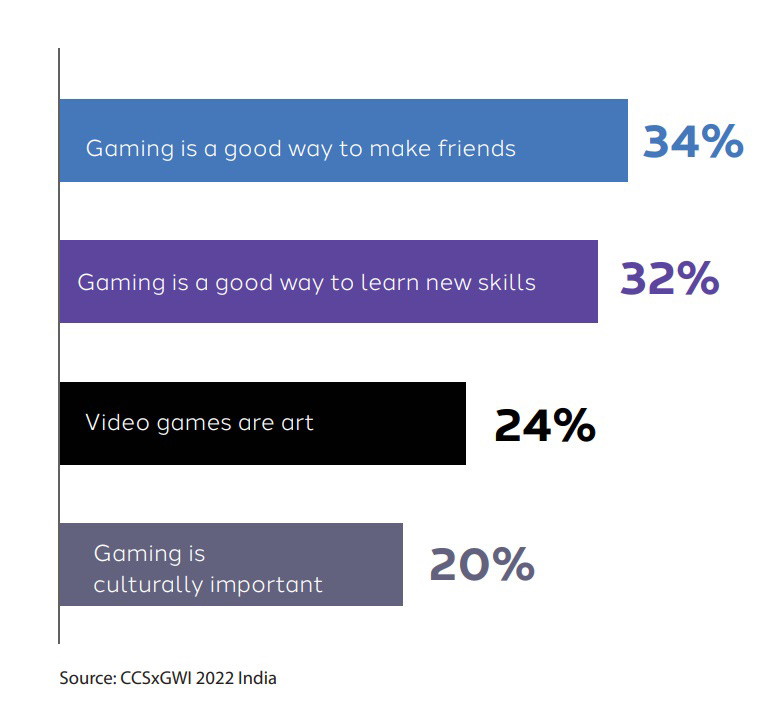
    According to the survey, 34 per cent believe gaming is a good way to make friends, 32 per cent said gaming is a good way to learn new skills , 24 per cent noted that video games are art and 20 per cent commented that gaming is culturally important.

    For brands, the fandom space is an exciting and potentially profitable one – if they can create new forms of reward and access for these highly engaged communities.

    Platforms like Discord, Reddit, and Facebook Groups allow gaming fandoms to grow and multiply at such a rapid pace that it has become a dominant form of online culture. Games like Fortnite bring fandoms together not only to play the game, but also to socialise and collect skins and collectibles associated with their favourite movies or sports teams in order to represent their chosen fandoms and subcultures. The success of Fortnite demonstrates the emergence of a new type of social experience dedicated to fandom culture.

    The For the Hype segment best captures the concept of gaming fandom. Gamers in this demographic enjoy not only playing but also sharing their enthusiasm with others through online forums, social media, messaging, and blogs. They enjoy discussing their game selections with their gaming buddies. Plays online but also has offline games for the family. In addition to a strong sense of belonging, the ‘For the Hype’ segment believes gaming is a part of their culture rather than just a way to unwind.

    Gamers have a wide range of personalities and interests, are often disproportionately passionate about other activities, and are voracious consumers of all forms of media.

    Gamers consume a significant amount of time-consuming media. CCSxGWI data show that in a typical week, gamers watch 28 hours of TV (including linear TV and on demand TV), 22.3 hours of internet on any device, 9 hours of social media sites or apps, and 10 hours of online videos (vs. 25, 20, 8, and 10 hours respectively, for the general population). Gamers have a voracious appetite for media. In India, most gamers are avid viewers of television and online videos. Up to 66 per cent of people get their entertainment from OTT platforms and audio OTTs like Spotify and Gaana.

    The generous media consumption of gamers, as well as the response from platforms and media networks, creates numerous opportunities for brands while also increasing pressure on them to be consistent across screens, channels, and formats.

    This is where fusing gaming data with broader behavioural and media data, such as the CCSxGWI fusion, enables brands to gain game-changing intelligence.

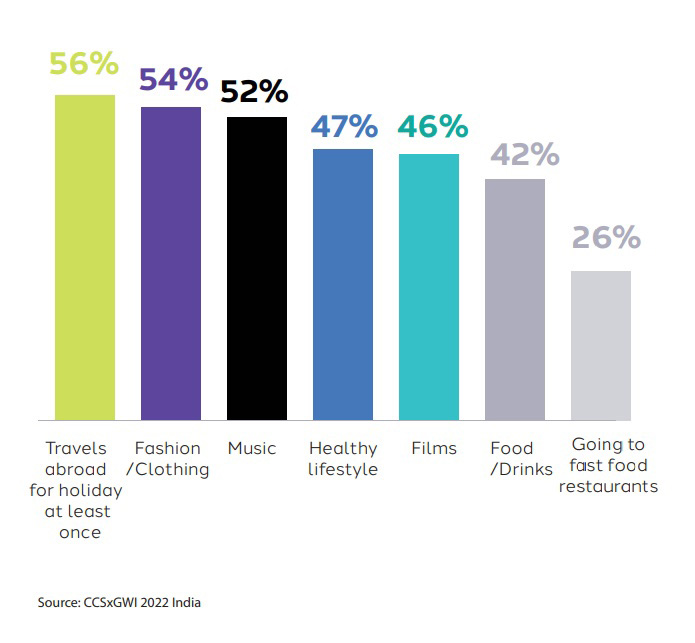
    The For the Party segment is made up of avid gamers who also have a variety of other interests. They enjoy travelling, fashion and clothing, and have a diverse media diet that supports their interests, which includes movies, television, and music. However, gaming is a critical component of this mix. 25 per cent usually play on their phones while watching television.

    Gaming influence in India

    With online gaming apps like Rummy and Teen Patti, gaming’s cultural influence flourished in India. Board games such as Ludo and UNO are also very popular among people of all ages and genders.

    Even shows on OTTs such as Clutch, Playground, and Mad House revolve entirely around gaming phenomena. Gaming as a form of entertainment has become so popular that popular youtubers and content creators have begun streaming games as well. Collaborations, gaming skills, and sponsors have accelerated their growth to the point where people have formed clans and fanclubs in their honor.

    Esports Popularity 

    Riot Games’ League of Legends was watched for over 660 million hours in 2021, a figure that many traditional sports could not even fathom. In 2022, esports had firmly established its grip on sports culture. The industry’s biggest names are eager to attract more advertisers by shifting to a 360-content strategy that includes everything from short reality shows to long-form documentaries. This opens up numerous opportunities for businesses interested in collaborating with sports.

    The fan base for esports is also growing as tournaments become larger and more intense.

    The demand for updates and content has exploded in recent years, and social media has been a major contributor to this in the country.

    Fans (47 per cent) and teams (41 per cent) enjoy following their favourite players and teams for a specific game or genre that they are interested in or play themselves. Esports has also become a spectator sport. It has evolved into a form of entertainment, with 38 per cent of the gamer audience watching it every day and another 49 per cent  watching it at least once a week. A typical gamer spends close to 4 hours per week watching esports.

    Gaming-gateway to the metaverse

    The gaming community is the ideal focus audience because they are most likely to make up the early majority segment when metaverse technology becomes widely available.

    The For the Win segment exemplifies how gaming is influencing culture in general. Gamers in this group are often at the cutting edge of culture, knowing the latest trends before many of their friends and being more likely to own new technology, such as a VR headset.

    According to the CCSxGWI survey, 64 per cent said they know the latest trends before most of their friends, 49 per cent believed gaming is a good way to make friends, 34 per cent said gaming is culturally important, 33 per cent said consider themselves an expert when it comes to new technology and 30 per cent said people come to them for advice before buying things.

  • 32 per cent of Indian gamers play daily and 52 per cent play weekly: says ‘For the Game’ report

    32 per cent of Indian gamers play daily and 52 per cent play weekly: says ‘For the Game’ report

    Mumbai: In an extravagant affair, dentsu Gaming launched its gaming report ‘For the Game’ in collaboration with Indiantelevision.com. The launch took place at The Lalit, Mumbai on 2 December.

    Gaming as an industry has grown by leaps and bounds in India and is now being considered as a serious profession. In the last couple of years all kinds of genres of gaming have seen an uptick from real money to casual gaming, fantasy gaming, e-sports seem to have found their share of users as well as revenue.

    Looking ahead, gaming arguably offers the best glimpse into the immersive experiences the metaverse promises, and with it, the future of connectivity. Fueled by an ever-growing community of virtual reality (VR) developers and the wider availability of 5G, popular intellectual properties (IPs) will pave the way for mainstream adoption of virtual experiences, both within and beyond gameplay.

    The report, ‘For the Game’ demonstrates, using a novel method for the market, that motivation-based segmentation is the most pertinent and efficient way for marketers to comprehend gamers deeply and to acquire insightful information for creative and media planning.

    It proves that gaming is a prime environment for brands looking to attract audience attention through quantifiable measurement. The report also looks at how focusing constantly on added value, authenticity, and proximity to gamers may help one develop a continuous brand presence in the gaming industry through time and across contexts.

    Carat India CEO & dentsu Gaming India lead Anita Kotwani said, “Gaming’s growing cultural impact, combined with the promise of the metaverse, has generated endless opportunities for advertisers. With the meteoric expansion of e-sports and streaming platforms, gaming has shifted from solitary play to spectator sport. Gaming platforms are now the main avenue for social connections and self-expression. One cannot follow the cookie-cutter approach anymore given the fluidity & dynamism of the industry.”

    She added, “dentsu Gaming offers the minds and tools necessary to create and develop strategies that are relevant to the culture, promote it and graduate the brand to be a cultural icon itself. dentsu Gaming was created to deliver the tremendous expansion of gaming needs to our clients through creative partnerships, products, and solutions. We bring together enthusiastic, diversified expertise to help brands add incremental value through mutually beneficial relationships with game publishers and partners. dentsu has access to in-depth gamer audience information via priority data and analytics. Our CCS (Consumer Connection Systems) data platform has been boosted by data fusions of unique bespoke gaming surveys as well as the GWI (Global Web Index) Gaming survey, providing us with advanced gaming audience data from across 24 markets.”

    According to the report’s findings, there is a game for everyone. In varying degrees, gaming is consumed across age groups as there is some or the other game available on some or the other device. People can choose their own devices, genre, and platform. The choices are virtually unlimited.

    The COVID-19 pandemic has acted as the biggest recruiter in the gaming pool. Around 45 per cent of the Indian population started playing games during this period. Cheaper internet and one’s need to kill time and connect with people were the biggest drivers.

    ‘Real Money Game’ revenues currently constitute 57 per cent of market size but future growth is projected to be driven by in-app purchases growing at a 34 per cent CAGR. There were 120 million paying users in FY’ 22, which represents a whopping 24 per cent conversion rate.

    Gaming-related content is on its way to be mainstream content. Gaming-related web series, merchandise, fashion, and music are all indicators of gaming culture making its way into the day-to-day lives of people.

    Across the nine global markets used in the report’s segmentation, CCS x GWI data shows that 34 per cent of gamers play daily and 46 per cent play weekly. Whereas, in India, 32 per cent of gamers play daily and 52 per cent play weekly.

    People across generations exhibit gaming habits. Among Gen Z gamers, 24 per cent play daily and 40 per cent weekly, while among millennials, the levels are 24 per cent and 38 per cent respectively. Among Gen X gamers, 17 per cent play daily and 35 per cent weekly. This implies, the gamer audience is spread across generations which predominantly plays once a week.

    Gamers are not media isolated. They watch and follow a lot of content on TV as well as online TV. They spend around 28 hours a week on the medium.

    Casual gamers make up the largest cohort in the gaming audience pool. They mostly prefer smartphones as their gaming device. They choose to play puzzles, trivia, 3match, and especially board games like ludo, scrabble, UNO, etc. They are not into spending a lot of money on gaming but are prone to In-App micro transactions to progress their game.

    E-sports in India has evolved as a new form of entertainment. The scope for brands to associate with e-sports is massive and the receptivity from the gaming community is also high. Gamers understand that brands & sponsors are vital for the e-sports industry to go big. The fan following of e-sports is on the rise as the tournaments are only becoming bigger and more intense. The demand for updates and content has exploded in recent times and social media has been one of the key factors for driving that in the country. Fans love to follow their favorite players (47 per cent) and teams (41 per cent) for a particular game and genre they are interested in or play themselves.

     AR/VR (Augmented Reality/Virtual Reality) in India is still at a nascent stage. The challenge in the market is due to high cost and lack of exposure and experience. Contrary to smartphone apps made in India, the apps and technology that employ AR and VR are also underdeveloped.

    The rapid rise of gaming in India has also affected the education and learning industry. A lot of education and coaching centers have now incorporated animation, game development, coding, etc. in their curriculum and offerings. Even the apps and education formats are gamified to engage the students and assist them in learning.

    Gamers are passionate about gaming-related stuff but are also quite interested in fashion, fitness, and food.

    Gaming as a habit is an expensive hobby. On average, a hardcore gamer spends Rs 6500 (approx) on accessories and peripherals to enhance the gaming experience.

    Please click here for the entire report.

  • BBC Studios invests in Turbine Studios

    BBC Studios invests in Turbine Studios

    Mumbai: BBC Studios, the main commercial arm of the BBC, has taken a minority investment in British premium scripted indie production company Turbine Studios, the company behind global hits such as Small Axe (BBC/Amazon), Munich: The Edge of War (Netflix) and Oscar and Bafta winning writer/director Steve McQueen’s Uprising.

    Established in 2020 by Andrew Eaton, Tracey Scoffield, Justin Thomson and David Tanner, Turbine Studios is considered one of the most dynamic and entrepreneurial scripted production companies currently working in the UK. The team creates distinctive content that focuses on returning drama for both UK broadcasters and global streaming platforms including the BBC, Netflix, Apple TV+ and Amazon Prime Video. The company has already in its short history garnered a considerable number of awards for its productions, not least for Small Axe, which is the most Bafta-nominated series ever. Uprising also won a Bafta for Best Factual Series.

    Their latest project, Constellation, an eight-part conspiracy-based, psychological thriller for Apple TV+ is written by Peter Harness and stars Noomi Rapace (The Girl with the Dragon Tattoo, Prometheus) and Jonathan Banks (Breaking Bad, Better Call Saul).

    BBC Studios managing director scripted Mark Linsey said, “Turbine Studios has an enviable reputation within our industry. Their focus on creating concept-led, franchise and premium thriller drama is matched by their ability to attract world-renowned talent from behind and in front of the camera. The team has an impressive slate of projects across both TV and film in the pipeline and exciting growth plans that our investment will help to deliver. We’re thrilled and excited to be partnering with them.”

    The deal includes the German based sister company Turbine Studios GmbH, which is a co-venture between Turbine Studios, Daniel Hetzer and Matthias Braun. Turbine Studios Germany specialises in original development and production services for the European market. Tom Manwaring of Helion Partners advised Turbine on the transaction.

    Turbine Studios said, “We’re proud to join this inspiring team and look forward to delivering on a slate of creatively original and ambitious projects using our extensive combined experience.”

  • dentsu’s GEM awards: Gaming, e-sports and metaverse shine all the way through

    dentsu’s GEM awards: Gaming, e-sports and metaverse shine all the way through

    Mumbai: In a star-studded event held at The Lalit, Mumbai, on 2 December, dentsu Gaming in partnership with Animation Xpress launched The Gem Awards to honour excellence throughout the gaming, e-sports, and metaverse industries. These awards are to celebrate the talents that influence and advance the medium and culture of gaming and technology. In addition to games and e-sports, the GEM Awards will also recognise the individuals and organisations that changed digital culture and had a positive social impact through the invention of ground-breaking Web3 applications, NFTs, and metaverses.

    For the first edition of The Gem Awards, the jury members included an interesting mix from the e-sports, gaming, and digital industry – Indiantelevison.com Group founder, CEO and editor-in-chief Anil NM Wanvari, Penta E-Sports founder & CEO Anurag Khurana, Guardian Link co-founder & chief technology officer Arjun Reddy, Punnaryug Artvision founder & AVGC Forum – FICCI chairman Ashish Kulkarni, Holy Cow Productions founder & director Goutham Dindukurthi, SuperGaming communications manager and writer Rishi Alwani and Sharmilee Daru PR and 4WD Gaming founder Sharmilee Daru.

    Gaurav Gambhir aka D-Cypher of Gully Boy fame also performed magnificently at the event. We all know him as the beatboxer in Gully Boy’s ‘Asli Hip Hop’ and ‘ Jingostan Beatbox’; he is a well-recognised name in the underground hip-hop community, a celebrity beatbox trainer and a part of Mumbai-based hip hop collective, Bombay Lokal.

    In the category of gaming genres, which had four sub-categories, the best casual game was put in place by Playbae called In My Shadow; the best hyper casual game was prepared by Weloadin Studio for Dessert DIY; the best midcore game was awarded to Zatun for its project Down and Out; and the award for the best hardcore game was given to Voidpeak Games Pvt. Ltd.

    The technical category had four sub-categories. The best gaming promo was prepared by Wayu Digital Studio for its project Mukti, and by GameEon Studios for its task on Mumbai Gullies; the best game direction was done by Lucid Labs for Possessions; the best art direction was executed by Xigma Games for The Bonfire 2 Uncharted Shores; and the best score/music was put in place by AbracaDabra Software Solutions for Tanhaji – The Maratha Warrior, and Frostwood Interactive for Forgotten Fields.

    The special awards category had several sub-categories. The gaming studio of the year was XSQUADS Tech Private Limited; the best gaming institutes were ICAT and Chitkari; the best male gaming content creator of the year (jury base) was Mortal; the best female gaming content creators of the year (jury base) were Savage Girl and Payal Dhare (Payal Gaming); the best male gaming content creator of the year (fan base) was Scout; the best female gaming content creator of the year (fan base) was Kaash Plays; the upcoming game of the year (Indie) was by Ogre Head Studio for Yodha; the best Indie gaming studio of the year was Xigma Games; the best brand integration was executed by Creative Galileo for Creative Galileo Kids Early Learning App; the best brand game collaboration was by Reliance Games (Zapak Games) for Little Singham Tide Turners Plastic Challenge; the best use of gamification by brand in a campaign was done by Creative Galileo for Creative Galileo Kids Early Learning App; the best e-sports brand collaboration was by 7Sea Esports for Gillette X 7Sea Invitational.

    The popular e-sports title (PC) was awarded to Riot Games; the popular e-sports title (mobile) was The Pokémon Company. The best influencer agencies were 8Bit Creatives and Trinity Gaming India.

    The powering the ecosystem: special mention awards category had various sub-categories. The best movers & shakers investors: (early stage) were Jet Synthesys; the best movers & shakers investors (late stage) were Lumikai; the best gaming ambassador of the year was Jonathan “Jonathan” Amaral for Gillette Get Your Game Face On; the best mover & shaker government entities was the Telangana government; the best movers & shakers gaming were Gameberry Labs.

    The e-sports category, too, had numerous sub-categories. The best players include Harsh “Goblin” Paudwal (SouLGobLiN) and Ganesh “SkRossi” Gangadhar. The best teams include Global Esports. The best production was executed by NODWIN Gaming for Battlegrounds Mobile India Master Series 2022. The best tournaments were put in place by 7Sea Esports for Gillette 7Sea Invitational, and Skyesports for Skyesports Champions Series. The best broadcast platform was LOCO. The best coach was Rahul ‘Osmium’ Sharma for 7Sea Esports. The best organiser was Skyesports. The best shoutcasters were MambaSR and Spero-Piyush. The best commercial was NODWIN Gaming for Battlegrounds Mobile India Master Series 2022. The best indigenous sports game of the year was put in place by Nautilus Mobile for Real Cricket.

    The Meta Awards category had six sub-categories. The best debut in the metaverse was by Immersive Gamitronics Studios Pvt Ltd for Partynite – India का अपना Metaverse. The best avatar design was put in place by Metapolis for M-Genesis. The best innovative NFT project was by STAN for Esports Athletes & Gaming Creators. The best metaverse project was by Immersive Gamitronics Studios Pvt Ltd for Partynite – India का अपना Metaverse. The best blockchain-based game was made by SuperGaming for Tower Conquest (web3 game) and was also awarded to the game – Born To Die. The best web3 start-up was Indi.gg.

    The coveted partners for this event, which was initiated by AnimationExpress.com and executed by ITV2.0 Productions, were dentsu Gaming (the event’s presenting partner), Rockstar Games (an associate partner), Metapolis (a technology partner), Zapak and Reliance Games (industry partners), and BenQ (a support partner).
     

  • MPL bans over a million accounts in 2022 to reinforce transparency and fairplay on the platform

    MPL bans over a million accounts in 2022 to reinforce transparency and fairplay on the platform

    MUMBAI: Mobile and skill gaming platform MPL has banned over a million user accounts to continue to provide a secure and fair gaming experience to the users. The step has been taken by the company to remove players who did not comply with the rules and resorted to unfair means to manipulate gameplay results in their favour.

    Some of the key reasons that led to the user accounts getting blocked include using multiple accounts by the same user to access the platform, uploading fake or doctored KYC documents, using unauthorized payment means like stolen cards and cheating during the gameplay by using any hacks or collusion techniques. It is important to note that these are not temporary suspensions and MPL has permanently banned these users from the system.

    MPL added that it has robust security measures in place that enables them to effectively identify and ban the fake accounts within a short span of them being created. The company also uses best in class technology practices that enables detection of fraud accounts at a granular level which includes identification of the devices used to create the accounts. Once a user is blocked, typically they tend to create a new account using different email ids. However, with the help of advanced technology, MPL identifies these unauthorised login attempts made using the same device and permanently revokes their access. This ensures fraudulent gamers to be suspended and removed from the platform, allowing genuine players to join tournaments with confidence. 

    MPL said that its security initiatives have recently been recognised by the Shield Trust Certification, which attests that the platform has more than 96.57 per cent genuine users and a user to device ratio of 1 : 0.9568 which is an exceptional trust standard in the industry. Shield is a global risk intelligence company and the certificate considers a company’s trust profile and assesses key risk metrics such as the number of genuine users, user-to-device ratio, and the prevalence of malicious tools used on a given platform. With a trust score of 95.95 per cent, MPL has become the world’s first multi-gaming company to acquire this certification after fulfilling the vital requirements of Shield’s Trust Check, which renders it the most credible and a safe platform for gaming enthusiasts. 

    MPL vice president of security and compliance Ruchir Patwa said, “At MPL, providing the highest degree of protection against fraud is our topmost priority and we are committed to offer the users a secure and unhindered gaming experience. This move is aligned to our player-first approach and also highlights MPL’s zero tolerance towards users who resort to illegal practices in order to alter gameplay results and gain an unfair advantage. With initiatives like this, MPL is poised to continue being a safe and user-friendly platform that is trusted by the users.”

    MPL has also announced multiple initiatives to further the player-first approach and foster a safe and risk free gameplay experience for the users. As a part of this, the company launched a bug bounty program that has been designed to reward security researchers up to Rs 10 lakhs for successfully identifying a valid vulnerability on the platform. The bug bounty program also allows researchers to report any possibility that can give a player an unfair advantage. 

    To provide a risk free gaming experience, MPL had recently launched India’s first ever multi-game Loss Protection policy through which gamers can claim a refund of up to 100 per cent of the net loss that they may have incurred after playing 10 gameplay sessions with specified thresholds. Available on some of the top titles, this initiative empowered users to enjoy their favorite games without worrying about losing money.
     

  • There’s a need for good stories but India doesn’t produce as many as the consumers want: MX Player’s Gautam Talwar

    There’s a need for good stories but India doesn’t produce as many as the consumers want: MX Player’s Gautam Talwar

    Mumbai: With a diverse selection of narratives in various formats, genres, and languages, MX Player has been captivating audiences. The company has built the largest digital entertainment ecosystem in India with one billion-plus app downloads on Android, 300 million monthly active users (MAUs) globally, and 2,00,000 hours of content across 10 languages. With the latest release of the intense crime thriller Dharavi Bank, which has a 9.3 rating on IMDb, MX Player has added further to its extensive library of original series.

    As they say, content is king. The man behind this engaging and exciting content, MX Player’s chief content officer Gautam Talwar spoke to Indiantelevision.com about the show and overall expectations of content which goes on MX Player. It’s been five years since Talwar became the captain of the content ship, and he has been handling this position extremely well as the reason behind MX Player’s growth is largely the content they serve to the consumer.

    The show Dharavi Bank tells the story of a cop attempting to overthrow a powerful mobster who serves as the de facto government in Mumbai while vividly bringing to life the endless stretch of small, filthy streets, open sewers, and overcrowded cottages of Dharavi in an exciting chase. Dharavi Bank is a complicated tale that goes beyond simply taking down a criminal empire, demonstrating the extent to which one may go for one’s family and responsibility to the country.

    In this chat, Talwar spoke about expectations from the show, advantages, regional content, technological disruption, and regulations.

    Edited Excerpts

    On the USP of MX 

    Our distribution network is our greatest asset. The number of people who can watch our content is enormous, which is why I always say there are many people and our theatre is always full. We just need to make sure the film is correct. People are always on board with the platform’s channel. We simply need to keep delivering entertaining and engaging content.

    On expectations from the show 

    It’s a big show for us; it’s a tentpole show. I’m just hoping it has an impact on the audience. That is significant. We’ve put in a lot of effort to make it realistic. And we have a fantastic cast. It’s very important for us to deliver, as our audience’s expectations are high.

    On the duration

    We have to determine what people want to see in 2024 because it will take us roughly 18 months to complete it. I’ll only be able to produce a second season of a series in 2024. So, that’s the main idea. Let’s see how this does, and I have no doubt that a second season will be added.

    On advantages of casting Bollywood actors 

    It’s not an advantage in my opinion. The story necessitates a specific type of cast. I don’t believe it’s OTT vs. Bollywood. We have a very symbiotic relationship with Bollywood, or the Indian film industry. Everyone is welcome. I don’t think it’s this versus that; I just think it’s different. Because a film lasts about an hour and twenty minutes, this web series lasts approximately 400 minutes. As a result, the audience’s commitment is not for an hour and a half. To be honest, getting that commitment from an audience right now is extremely difficult.

    Because films aren’t doing well. Getting an audience to pay money and spend an hour and a half with you is becoming increasingly difficult. I imagine the challenge for us is that you want the viewer to watch three movies and pay for them. It’s crucial. It is extremely difficult. Our challenges are different; our challenges are larger; it’s just that we have made progress; if you watch it, you don’t have to go to a theatre; however, taking that commitment from an individual is difficult.

    On the crime genre 

    We get bored with things far more quickly than we consume them. Consumers do not perceive an excessive amount of crime. They will watch shows as they air. Look at some of our programs, such as Ashram, Bhaukaal, and Matsya Kand. If the content is well-made and has the potential to keep their interest, they will watch. It’s critical to distinguish storytelling even though consumers aren’t explicitly saying they don’t want to see new crime content. There is nowhere else one can go to watch crime. Saavdhan, Crime Patrol, and CID, three television series that ran for 20 years, are the only sources for crime stories.

    The customer wants to see a good story; it’s just that it’s not being produced in the volume that India wants to watch.

    On the regional content  

    We were the first platform to make significant regional investments. Queen is one of the most popular television programmes in Tamil. It was unusual. We purchased Samantar, a Marathi series winner who was among our best across all categories and honours. We spend a lot of money on local content.

    Making sure the market is viable is the challenge. What language is it? What story do you want to tell specifically for that market? As far as the regional studies are concerned, these three are seriously important challenges.

    On dubbing in Marathi 

    We probably don’t do Marathi as well because what we’ve understood from the consumer is that most consumers from North, West, and Eastern India are very comfortable with Hindi, but in South India there is a real challenge to understand.

    On the revenue model 

    We are a hybrid right now. Right now, we have MX Gold, where we have a subscription, and we also have an AVoD. We are doing long-form shows with a total of 50 episodes. Tu Zakhm Hai is another show we launched, in addition to Roohaniyat. We are catering content to all models be it AVoD or SVoD.

    On the challenges

    It can be exceedingly challenging to predict the preferences of a generation. It is important to know whether the format is short or long. It’s challenging to keep someone’s interest for 400 minutes when they can scroll for new content in just 15 seconds. Therefore, our challenge is to produce this captivating content for that amount of time and keep viewers’ interest so they want to watch each new episode. That presents a very difficult challenge.

    On the regulations 

    The government has a very sound self-regulation policy. We have a self-regulatory environment, and an excellent legal team. We have a very capable crew that reads through the scripts and episodes. We put the show live online only, and only after receiving clearance from the team. They play a crucial role in every one of our shows; in fact, we check our own work at least twice, once at the screenplay level and again after the show has been produced. Therefore, we are very clear that we are not creating sensationalism. Every scene and frame that we add is done so with great care because we only want to create good, authentic stories.

    On the entrance of 5G

    The democratisation of the internet in the nation contributed to the growth of OTT, ensuring that it saw its first surge, and 5G actually ensures that the experience is even better. If the user experience with the content improves and becomes richer, the quality of watching will improve, the compression technology will function better, the speeds will increase, the watching will be better, and there won’t be any buffering. The connection and motivation to be with OTT will grow even stronger.

  • Animation Xpress’ second edition of MGEN Summit and inaugural of GEM Awards to bring industry stalwarts with pomp and show

    Animation Xpress’ second edition of MGEN Summit and inaugural of GEM Awards to bring industry stalwarts with pomp and show

    Mumbai: Animation Xpress is bringing one of its most anticipated events of the year which is Metaverse, Gaming, Esports and NFT (MGEN) Summit and Games, Esports & Meta (GEM) Awards. Happening on-ground on 2 December (register here) at The Lalit in Mumbai, the summit will encompass all things gaming, esports, Web3 and metaverse with interesting and insightful sessions including panel discussions and fireside chat.

    Animation Xpress had previously organised a virtual edition of Gaming, Esports and More Summit (GEMS) in 2020 during the Covid-19 pandemic but now it has expanded its horizon from gaming and esports to Web3, metaverse and NFTs. However we shall witness the inaugural of the GEM Awards this year.

    The curiosity and interest regarding metaverse, NFTs and Web3 is constantly growing among the people and everyone is trying to understand more about it and want to be involved with it in some or the other capacity. As the gaming industry has a made a shift from a niche to mainstream industry with a growth in gaming, gaming content and IPs, esports, metaverse, NFT, cryptocurrencies and Web3, MGEN Summit and GEM Awards is a platform where the industry stakeholders can put forward their ideas and thoughts to make a way forward and appreciate the existing content.

    With 10+ sessions, 10+ advisory members, 50+ award categories MGEN Summit and GEM Awards is expected to be attended by 500-700 people including gaming studios, game developers, game publishers, technology companies, venture capitalists, policymakers, esports tournament organisers and influencers, NFT creators, artists, cosplayers, gaming institutes, students, ad agencies and brands.

    The advisory board of MGEN Summit and GEM Awards comprise of Penta Esports CEO and founder Anurag Khurana, SuperGaming communications manager and writer Rishi Alwani, Sharmilee Daru PR and 4WD Gaming founder Sharmilee Daru, Animation Xpress founder, CEO and editor-in-chief Anil Wanvari, Trinity Gaming India co-founder and CEO Abhishek Aggarwal, Paperboat Design Studios and Occult VFX Studios co-founder and director Aashish Mall, GuardianLink chief technology officer and co-founder Arjun Reddy, Loco founder Anirudh Pandita, Punnaryug Artvision Pvt. Ltd. founder and FICCI AVGC Forum chairman Ashish Kulkarni, GOQii founder and CEO Vishal Gondal and Xfinite chief operating officer Vikram Tanna.

    Partners for the MGEN Summit and GEM Awards includes, dentsu Gaming as presenting partner, Rockstar Games as associate partner, Metapolis as technology partner, Zapak and Reliance Games as industry partner and BenQ along with Illusion Reality Studioz as support partner.

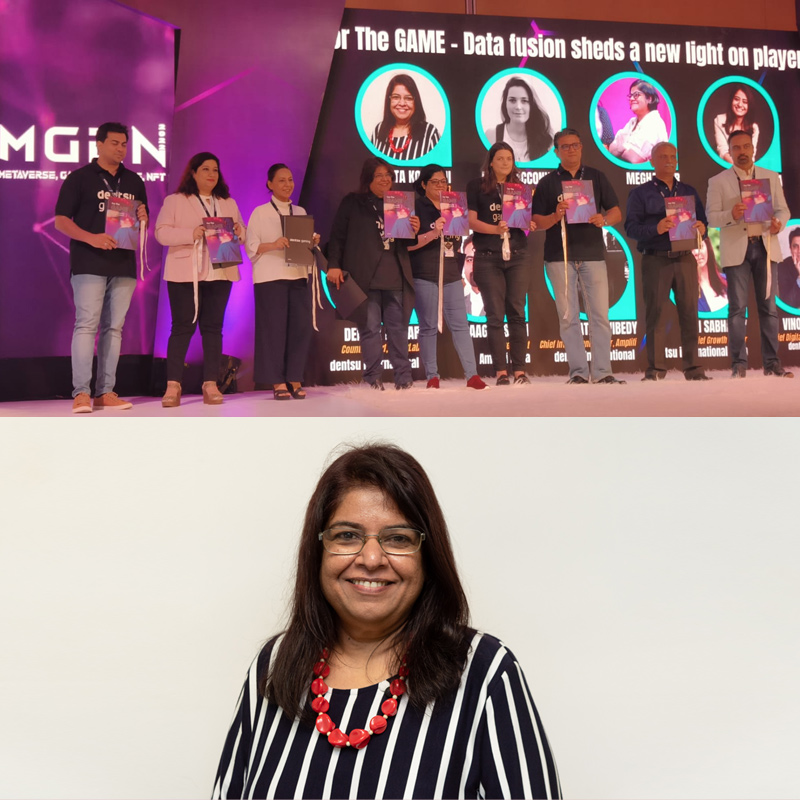
    The MGEN Summit will begin at 10 am with the welcome note being delivered by Animation Xpress founder, chairman and editor-in-chief Anil Wanvari and Carat India CEO Anita Kotwani which will be followed by fireside chats and panel discussions. One of the key highlights of the summit would be the launch of the gaming report ‘For The GAME – Data fusion sheds a new light on players’ by one of the largest advertising agency networks in the world – dentsu.

    The panel discussions will be based on : ‘Decoding the evolution of the game consumers’ behaviour’, ‘RMG Platforms: The massive growth story & How to enhance the customer experience’, ‘Dawn of the Indian Web 3.0’, ‘Carving the brands’ stories’, ‘Esports’ future: What can we expect?’ and ‘Deep diving into the dazzling world of content creation and live streaming’.

    Here’s what the industry experts have to say about MGEN Summit and GEM Awards:

    Carat India Vice President Megha Nair said, “We at Dentsu, are super stoked to announce the very first edition of the MGEN Summit 2022- India’s largest Games, Esports, Web 3 summit. It is an absolute honour, and we take great pride in being the pioneers as an agency to branch into Gaming as an exclusive vertical, yet inclusive to our mainstream media/creative services. This only opens doors for our brands to explore the real potential of the gaming world with a holistic approach.”

    She went on to say, “Along with our proud partners Animation Xpress, we look forward to unravelling a power-packed summit having great support and presence from our friends at some of the top brands like Intel, Sony Pictures, Nestle, Mastercard, Wings and so on. The event will be no short of industry experts as well! Gear up to draw some great insights from top players like Reliance Games, SuperGaming, CrazyLabs, Rooter, Yudiz, Kwalee, Deltatech Gaming, Wazir X, Fanclash and many more. We aim to draw you closer with our lens on the evolution of Gaming, Esports, Web 3.0, Content and live streaming with fireside chat sessions, panel discussions, real world brand stories and the very icing on the cake – The official release of the Dentsu Gaming report.”

    “The very scale of the event defines how serious we are when it comes to the world of gaming. Animation Xpress has been the backbone in turning this vision into an on-ground reality. They have been the powerhouse since inception when it comes to curating events like these and I see them skyrocketing towards bigger success. All in all, I would like to say the first step is always the hardest and we have taken it. In a few years, when we lookback, this summit would have definitely left a mark in the history of Gaming in India,” she added.

    SuperGamer communications manager and writer Rishi Alwani says, “There are few publications dedicated to the Indian games industry to the degree AnimationXpress is and it shows from the selection of themes to its speaker list. It’s pretty obvious the team knows the domain, which is heartening when you consider how rare that is to come by. This made supporting MGEN a no-brainer.”

    Penta Esports founder and CEO Anurag Khurana mentions, “I am looking forward to the MGEN Summit by AnimationXpress. The discussion topics have a varied range and the speakers are from a diverse set of backgrounds. I am sure it will be enriching for everyone in terms of knowledge sharing and meeting people from the industry under one roof.”

    Sharmilee Daru PR and 4WD Gaming founder Sharmilee Daru says, “Given the fast-paced gaming growth in India, we expect to see many new businesses, international brands and secondary gaming support systems entering the space. It is crucial for these companies to effectively deliver their brand ethos and establish themselves in the rapidly growing ecosystem. Events like these help in the mainstreaming of the industry by bringing the community together for meaningful exchange of ideas and valuable collaborations.”

    Trinity Gaming India co-founder and CEO Abhishek Aggarwal shares,  “With the second highest population of gamers in the world, the Indian gaming industry is on the cusp of exploding with opportunities for business and the gaming community at large. Going forward, we expect greater focus on the gamer ecosystem which will open doors for new career paths and revenue streams, keeping the creator economy agile.”

    Reliance Entertainment – Digital CEO Amit Khanduja comments, “We are very excited to partner with AnimationXpress.com as the Industry Support Partner for the MGEN Summit 2022. As Reliance Games and Zapak Games, we have always strived hard and pushed the envelope when it comes to developing and publishing games that have entertained more than 500 million gamers across the world. As one of the leading players in the gaming industry, both in India and globally, we are committed to growing the gaming ecosystem. With this collaboration with AnimationXpress at the MGEN Summit 2022, we reiterate our mission of putting India as the global gaming destination.”

    Illusion Reality Studioz CEO and Contiloe Pictures group CFO Nitin Dadoo says, “Metaverse, today, is no longer a futuristic idea. We are witnessing how the idea of the metaverse is reshaping the world, especially within the entertainment industry. At Illusion Reality Studioz, we intend to become the go-to space for quality animation and VFX, including this space. We have already started creating worlds in the metaverse and while they are in the initial stages, it is a very firm step from our end in that very direction. We’re looking forward to giving people a special preview / experience at MGEN. They are doing a fabulous thing by bringing together the entire new age gaming ecosystem together on one platform and we’re excited to be a part of this community.”

    Xfinite chief operating officer Vikram Tanna shares, “Over the past few years, new gaming IPs, platforms, esports tournaments, esports teams, gaming content channels, content creators and more, have triggered gaming to a mainstream entertainment choice for consumers. The sector is poised to become one of the fastest growing verticals of media. Today, we need collective effort from industry leaders, platforms, and consumers to accelerate this growth further.

    AnimationXpress.com’s Metaverse, Games, Esports, NFT Summit (MGEN) Summit and Awards is a platform of international repute that has been bringing together domain experts to discuss and drive the growth of the gaming industry. This interaction amongst the best of minds is much needed as we transition from Web 2.0 to Web 3.0 and I am looking forward to learning and contributing in the best way I can.”

    Loco founder Anirudh Pandita says, “We are excited to be a part of the MGEN Summit 2022. The summit will bring together some distinguished industry leaders and shed light on important topics such as eSports, metaverse, and NFTs. Today, the gaming community has become a primary source of entertainment for the younger generation, and to provide an unparalleled gaming and entertainment experience, impetus needs to be laid towards innovation from within. At Loco, our product efforts, coupled with our pioneering efforts in building the gaming community in India, has enabled us to become the leading independent game streaming platform globally.”

    After the MGEN Summit the event will proceed towards the most happening fragment of the evening, GEM Awards. Another highlight of the evening is the cosplay competition, which will see participation from several cosplayers across Mumbai.

    We welcome you all to join us on-ground for MGEN Summit and GEM Awards to get insights into the dynamic gaming and Web3 industry on 2 December at The Lalit, Mumbai.

    To register for the summit, click here: https://www.animationxpress.com/mgen-registration/registration.php
  • Rooter signs on top YouTuber Lokesh Gamer in an exclusive long-term streaming deal   

    Rooter signs on top YouTuber Lokesh Gamer in an exclusive long-term streaming deal  

    Mumbai: Game and esports content platform Rooter has signed an exclusive long-term deal with streamer Lokesh Raj Singh, popularly known as Lokesh Gamer. Going forward, the YouTube star will live stream all of his gameplay—including his Free Fire matchups—exclusively on the Rooter platform. The association further strengthens Rooter’s presence in India’s game streaming space, which is currently estimated to have more than 400 million gamers. More importantly, it moves the platform one step closer to its vision of building the largest and most engaging gaming content library for Indian esports enthusiasts and game streamers.

    Rooter currently hosts streamers, including most of India’s biggest esports teams (Godlike, Orangutan Gaming, and more) as well as 30 upcoming esports teams. In recent months, it has also signed deals with popular streamers such as Jonathan, Shreeman, Neo, Rox, and more, increasing its repository of top gaming content. Its association with Lokesh, who has over 15 million subscribers on his gaming channel, marks another stellar addition to the growing cast of gaming streamers on the platform.

    Rooter co-founder & COO Dipesh Agarwal said, “The market for live game streaming and game-based content creation as a medium of entertainment has exploded over the last few years. As the largest and most preferred game streaming platform in India, our aim is to be the destination for the most engaging and interactive content experiences. We have been strengthening our tech capabilities and product features, which have attracted many popular streamers and tonnes of fans. Bringing top creators like Lokesh on board is another step towards our long-term goal of becoming the de facto live streaming and engagement platform for Indian gamers and gaming enthusiasts.”

    Lokesh Gamer said, “Rooter has built a strong presence in the Indian live game streaming space in the last few years. With several interesting product features like the capability of directly streaming from the app, personalised user feeds, and monetization models, they’ve created great opportunities for content creators to grow and fans to enjoy engaging content on the platform. I am excited to partner with Rooter and look forward to interacting with their strong gaming community and delivering entertaining live streams.”

    User interest in game streaming on Rooter has increased significantly; nearly 120k hours of gaming content are streamed every day on the platform, attracting over 70 lakh daily views.

    The company added that top streamers have also seen their follower base increase drastically since beginning their streaming operations on Rooter. For instance, in just six months of streaming on Rooter, popular creators like Jonathan and Shreeman Legend have built a follower base of one million on the platform. Other popular Rooter gamers, like CeltzRoxx, have also posted healthy growth in key metrics, with an eight per cent week-on-week increase in their follower count.

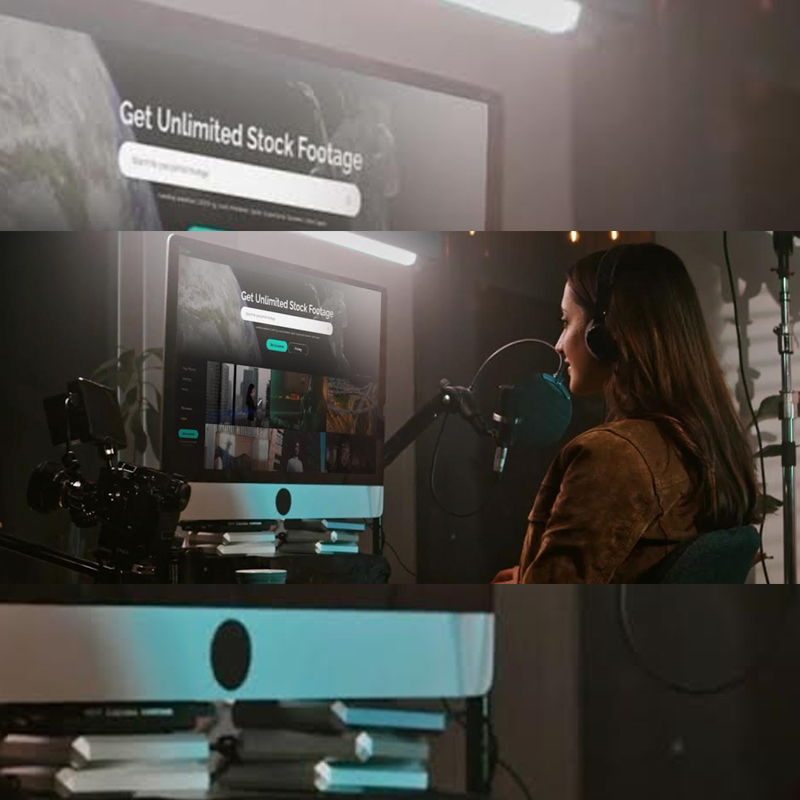
  • Artlist Footage enters India with Dot Films

    Artlist Footage enters India with Dot Films

    Mumbai: Artlist Footage, a platform for cinematic stock, has formally entered the market for Indian stock with Dot Films, with a custom production themed around “gully cricket.”

    “We are excited to collaborate with Dot Films to create authentic & high-quality content about Indian culture for our catalogue,” said Artlist Footage.

    The footage for this project has been shot over the course of a day in Delhi NCR with a sound pre-production pipeline preceding the weeks of the shoot. This marks the first  step in the creation of high-quality reusable content in the country that is up to global standards and native to the subcontinent.

    https://artgrid.io/filmmaker/963/dot-films

    “Being able to do this for Artlist Footage is our interests coming full circle in some ways. Our journey of making films started with expressing our style with stock footage.  That pivoting to ‘creating’ stock footage is absolutely serendipitous, not to mention vastly vital for the Indian market,” said Dot Films co-founder & producer Yashi Paswan. 

    With one foot in the door, Artlist Footage will be arranging for more India-themed projects while partnering with other ‘art-first’ production houses like Dot Films.