Category: iWorld

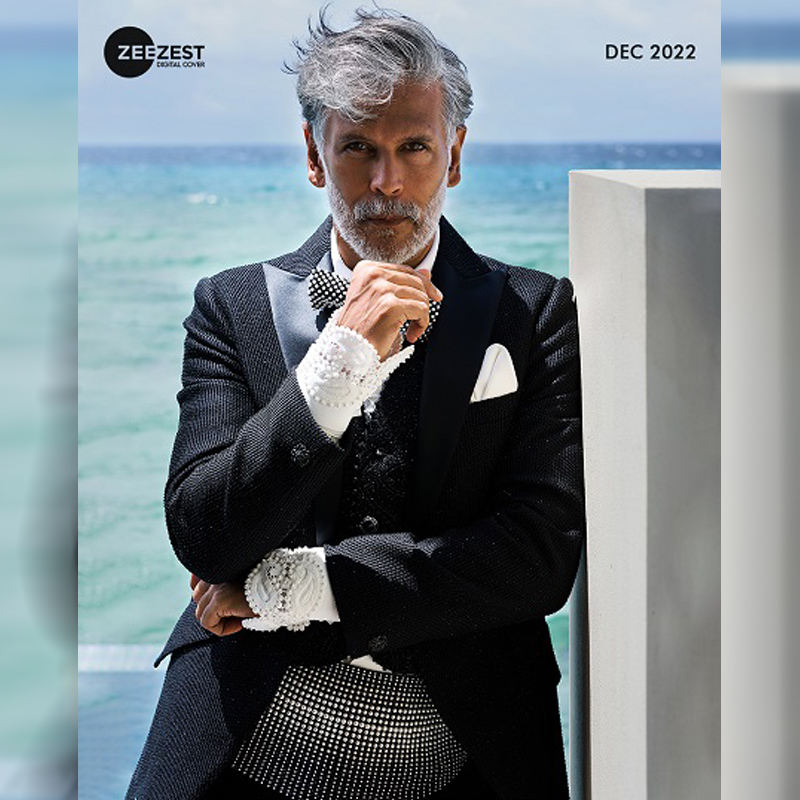
  • ZeeZest.com ropes in Milind Soman to be the face of its digital cover for December 2022 issue

    ZeeZest.com ropes in Milind Soman to be the face of its digital cover for December 2022 issue

    Mumbai: Fitness enthusiast, leading model, and actor Milind Soman has been roped in as ZeeZest.com’s digital cover star for December 2022.

    Over two days, in the exotic location of the Maldives, at The Residence Dhigurah situated on Kooddoo Island, ‘Ultraman’ Milind Soman spoke about himself, the various journeys in his life, his goals, and of course, his love story with wife Ankita Konwar. Be it his curious conversation with Narendra Modi, where Soman self-admittedly could not stop talking while the prime minister listened, or sharing his thoughts on love and that “the greatest love stories come from struggle,” Soman’s interview on ZeeZest.com is nothing short of intriguing, filled with anecdotes from the various chapters of his life. And amid all of that, not once did he compromise on his daily fitness routine, even while shooting across four different locations.

    Talking about an unexpected call from the PMO and his meeting with the prime minister, he shares, “I was very impressed when a busy person like the PM can take time out to meet someone without any specific agenda. That is being really organised, that’s how I see it. It’s kind of embarrassing, as I realised most when I spoke and he listened. I even asked him if he wanted me to stop, and he said he was happy to listen to me. I remember speaking to him about how we can promote indigenous sports in India instead of focusing only on Olympic sports. We obviously connected on yoga and Ayurveda, which are close to both of us.”

    ZeeZest.com’s digital cover shoots, shot exclusively by celebrated photographer and lifestyle influencer Atul Kasbekar, are an endeavour to interact and engage with lifestyle audiences on digital mediums of their choice. Featuring diverse celebrities, the glamorous photoshoots capture the many moods, passions, and aspirations of movers and shakers of influence today.

    As one of the digital media leaders in the country, ZeeZest.com is a millennial-friendly platform featuring some of the biggest celebrities such as Kate Winslet, Emma Corrin, Farhan Akhtar, Manoj Bajpayee, Prateek Kuhad, Ali Fazal, and Vir Das and bringing their fans up close and personal to their icons.

    Talking about being the digital cover for ZeeZest.com, Soman says, “I usually don’t do a lot of editorial shoots, but when I do, it has to be something special, exciting, and fun. Then this opportunity with Zee Zest presented itself to shoot in the Maldives, and who wouldn’t like to shoot in the Maldives! The Zee Zest digital cover shoot lived up to my expectations and was a great experience.”

    Launched in 2021, ZeeZest.com is a unique lifestyle and entertainment website that binds its viewers by helping them discover, engage with, and fulfil their thirst for homegrown and international content across six diverse lifestyle pillars: travel, food, health, fashion & beauty, culture, and homes. As a multiformat website, ZeeZest.com has over 4.5 million monthly active users along with an average of 12.5 million monthly page views. With diverse content formats, ZeeZest.com has emerged as an authority on living the good life.


    Zee Zest Digital Cover Star December 2022 Milind Soman

  • Trai issues tariffs for SMS, alerts via CAP platform

    Trai issues tariffs for SMS, alerts via CAP platform

    Mumbai: The Telecom Regulatory Authority of India (Trai) on Tuesday issued Telecom Tariff (69th Amendment) Order 2022 on the tariff for SMS and cell broadcast alerts disseminated through the Common Alerting Protocol (CAP) platform during disasters/non-disasters.

    DoT allows SMS/cell broadcast free of cost only for a definite period and for events where specific requests for free of cost messages come from NEC/NCMC/SEC/Nodal authorities,” Trai said. However, there are occasions when the government would like to send alert messages to the public forewarning of a possible disaster or occasions where the public has to be informed of special events such as the holding of relief/vaccine/medical camps/specific law and order-related situations, etc.”

    During both disasters and non-disasters, the department of telecom (DoT) requested Trai to provide a tariff for SMS and cell broadcast alerts and messages that TSPs will distribute via the CAP platform.

    Accordingly, as per extant practice, Trai issued a consultation paper on “Tariff issues related to SMS and cell broadcast alerts disseminated through the Common Alerting Protocol (CAP) platform during disasters/non-disasters” on 3 November 2021, seeking comments and counter comments from stakeholders by 1 December 2021 and 15 December 2021, respectively.

    After considering the views of all stakeholders/participants and the analysis thereof, the authority inserted schedule XIII to the principal tariff order in clause three of the Telecommunication Tariff Order 1999, which provides the following tariff for SMS and cell broadcast alerts disseminated by service providers through the CAP platform.

    The authority decided to prescribe a tariff of paisa two only for SMS alerts/messages sent during disaster and non-disaster situations, other than those sent as per directions issued under the Disaster Management Act, 2005.

    Considering the significance of alerts/messages sent as per directions issued under the Disaster Management Act, 2005, the authority has decided that no charges shall be levied for such SMS/cell broadcasts—alerts/messages sent either during a disaster, prior to notification of a disaster, or after the disaster has expired.

    Trai said TSPs shall broadcast messages to all subscribers through cell broadcast free of charge during disaster and non-disaster periods.

  • Trai asks TSPs to submit periodical reports on revenue & usage

    Trai asks TSPs to submit periodical reports on revenue & usage

    Mumbai: The Telecom Regulatory Authority of India (Trai) on Tuesday issued a direction to all Telecom Service Providers (TSPs) to submit the report on revenue and usage to the authority on a quarterly basis within 45 days from the date of the end of the respective quarter, except for the fourth quarter of the financial year, for which the report shall be submitted within 60 days from the date of the end of the quarter.

    The department of telecommunications (DoT) has amended the Unified Licence Agreement, wherein the format of ‘Statement of Revenue’ and ‘License Fee’ for access services has been revised and the term applicable gross revenue (ApGR) has been included before the adjusted gross revenue (AGR), and accordingly, the authority has decided to revise the formats for submitting the report on revenue and usage.

    Format-A (for wire-line services), Format-B (for limited mobility services), and Format-C (for full mobility services) have been annexed to the direction. The reports may also be sent electronically to the e-mail ID fa@trai.gov.in.


  • aha unveils its original ‘RathaSaatchi’ trailer

    aha unveils its original ‘RathaSaatchi’ trailer

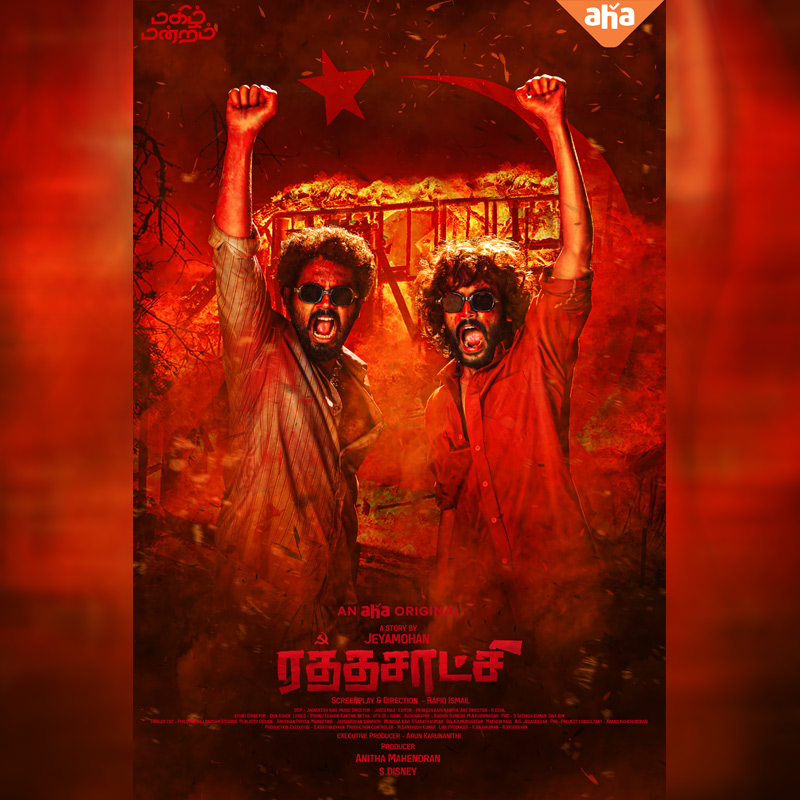
    Mumbai: aha is set to release an original film, RathaSaatchi in Tamil, on 9 December, which talks about the valour of the revolutionaries, revolt, and revenge, and has launched the trailer.

    The film is helmed by debutant director Rafiq Ismail and bankrolled by Turmeric Media and Magizh Mandram.

    aha CEO Ajit Thakur said, “We believe the story is the most important aspect of any film project. It’s a film with soul; hopefully, everyone will appreciate how the subject has been presented.”

    The film, which is an adaptation of the short story Kaithiga from the book “Venkadal,” extols the rebellious spirit of Appu, the most wanted fugitive who fought against slavery and dishonest politicians. Additionally, it clarifies the difficulties and struggles that Appu had, as well as those of his supporters, who abandoned him for understandable reasons.

    The film’s distinguishing feature is Jeyamohan’s highly regarded script. The impressive cast, which also includes Kanna Ravi, Elango Kumaravel, Kalyan Master, Kalieaswari, Arjun Ram, Arumugam Bala, Praveen, Vinod Munna, and Madras Vinoth, is sure to catch viewers’ attention. The soundtrack for RathaSaatchi was composed by Javed Riaz, and Jagadheesh Ravi shot the movie.

  • dentsu’s ‘Fame for the Game’ report: The place of brands in the gaming economy

    dentsu’s ‘Fame for the Game’ report: The place of brands in the gaming economy

    Mumbai: Brands can gain a lot of value from their participation in the gaming economy. dentsu Gaming has published its ‘For the Game’ report in association with AnimationXpress.com which surveys how brands play a vital role in the gaming culture.

    This report discovers how brands can position themselves in the gaming culture, be accepted by gamers, and resonate with them. Gamers evaluate brands not only based on their products and marketing but also on their involvement in the gaming experience and community.

    According to CCSxGWI data, people can have conflicting feelings about brands’ presence in gaming. On one hand, 32 per cent of respondents believe it is acceptable for brands unrelated to esports to sponsor teams or events. In contrast, intrusive pop-ups and ads are a major source of annoyance for 27 per cent of users.

    Responding to gamers’ motivations and frustrations is one of the most effective ways to add value to the gaming experience or community.

    With 61 per cent of respondents believing that women should be encouraged to play games, brands can sponsor female streamers to promote a more diverse and inclusive space.

    When a game becomes too expensive to progress, 28 per cent of respondents are frustrated, and 23 per cent are frustrated when game interest declines.

    With the meteoric rise of streaming, gaming has moved beyond the realm of individual play to engage audiences. It has evolved into a primary channel for vibrant fandoms, a culture-shaper, and a source of limitless opportunities for marketers.

    Media is a powerful vector for brands looking to connect with gaming audiences and better align with gaming culture.

    Brands can actively shape gaming culture by designing or co-designing immersive experiences that leverage innovative technology, their intellectual property, and the intellectual property of renowned gaming third parties.

    The report suggests that brands must genuinely understand gamers, starting with their motivations. Rather than rushing in, a brand should take incremental steps to build a durable and credible presence for the community, bringing value through experiences both within and outside games. Successful brands are the ones that learn from and evolve with this always-changing world.

  • India will become a hub of drone technology: I&B minister Anurag Singh Thakur

    India will become a hub of drone technology: I&B minister Anurag Singh Thakur

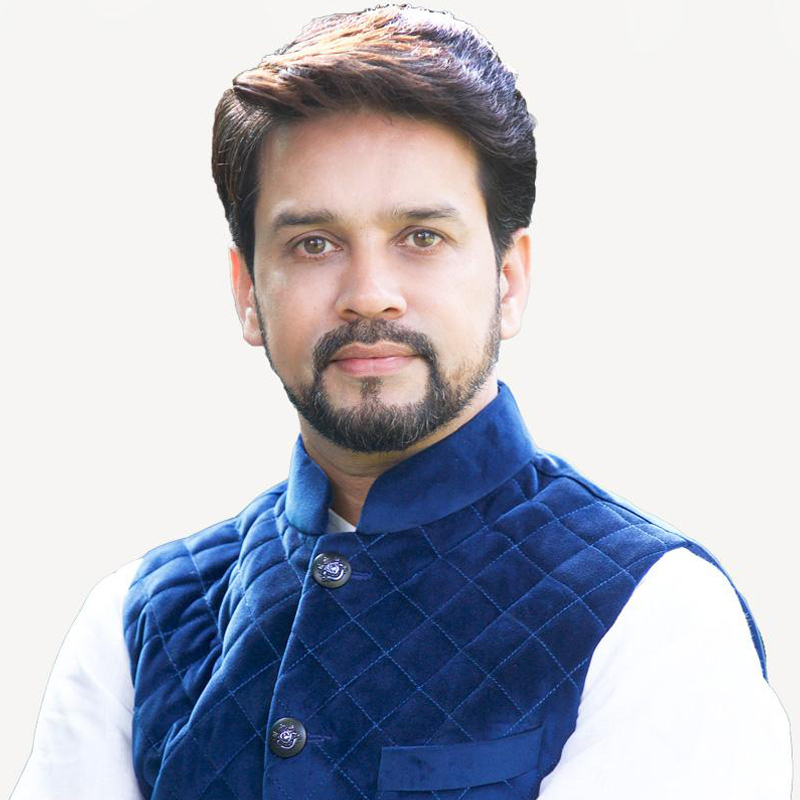
    Mumbai: India will become a hub of drone technology, and India will require at least one lakh drone pilots by next year, says the union minister of information and broadcasting Anurag Singh Thakur. He was addressing the crowd after the flagging of the “Drone Yatra 2.0” in Chennai today.

    “Technology is truly transforming the world at a rapid rate, and it has never been more relevant than now as its applications are solving some of the most pressing problems on the planet,” said the minister. He added, “Prime minister Modi once remarked that ‘India has a billion solutions to a million problems.’ As the country of a billion plus people, India is increasingly leveraging technology to stay ahead of the curve.”

    Detailing the advancements in drone technology in India, he said that during the beating retreat, the entire nation was mesmerised by the display of 1000 ‘Made in India’ drones by Indian start-up ‘Botlab Dynamics’ led by an IIT alumni. As a part of the SWAMITVA scheme (Survey of villages and mapping with improvised technology in village areas), the survey of the land and houses are being prepared through drones in the villages, he added. Drones are increasingly being used to sprinkle pesticides and nano fertilisers in the fields in rural villages.

    He said that recently, the ministry of civil aviation (MoCA) and directorate general of civil aviation (DGCA) had granted conditional exemption to the Board of Control for Cricket in India (BCCI) for the deployment of drones for live aerial cinematography of the India cricket season in 2021.

    He remarked that as part of the “Kisan Drone Yatra,” inaugurated by PM Narendra Modi, 100 Kisan Drones were sent to villages across the country to spray pesticides. He cited Prime Minister Narendra Modi’s statement that “Kisan Drone is now the beginning of a new age revolution in this direction.”

    He appreciated the great effort made by Garuda Aerospace, India’s largest drone manufacturing facility. While visiting the facility, the minister witnessed the advanced tools and manufacturing process of Garuda Kisan Drones, which PM Modi had inaugurated earlier this year. He expressed his happiness regarding the achievement made by the facility in such a short time. Engineers in the facility explained to the minister in detail the workings of the advanced ‘Make in India’ drones.

    He reiterated the government’s commitment to promote the use of technology in the agriculture sector in order to increase farm production. It is envisaged that these drones will help in streamlining the use of pesticides in farms, which will further improve the profitability of our farmers.

    In May this year, PM Modi inaugurated India’s biggest drone festival, Bharat Drone Mahotsav 2022, where he interacted with Kisan drone pilots. Promotion of drone technology is another medium for advancing our commitment to good governance and ease of living.

    He also said that drone technology is essential for various fields, from defence to agriculture, health, and entertainment. India is also moving towards creating a strong drone manufacturing ecosystem in the country through schemes like the Production Linked Incentive (PLI), he added.

    He said that the Modi government strives to boost the demand for cutting-edge drone technology and services in a three-pronged approach. The new Drone Rules of 2021 are an effective policy that provides incentives in the form of PLI for drones and drone components, as well as creating indigenous demand, with 12 ministries of the central government tasked with carrying it out.

    Stating that India will require at least one lakh pilots in 2023, he said that each pilot will earn at least Rs 50–80 thousand a month. If you take the conservative average, even Rs 50,000 × 1 lakh youth × 12 months = Rs 6,000 crore a year worth employment could be created in the drone sector, he said.

    Apart from this, industries and government agencies that use drones will also be impacted. He appreciated Garuda Aerospace’s plan to make one lakh ‘Made in India’ drones in the next two years.

    Garuda’s Drone Skilling and Training Conference, which is to be conducted in 775 districts across the country, hopes to reach 10 lakh youth. With an aim to train one lakh youth to significantly impact not just the drone ecosystem or generate employment for youth, but hopes to create a massive impact in agriculture, mining, government departments & other industries.

    While noting that the country currently has over 200 drone start-ups, the minister stated that this number will grow in order to create lakhs of new job opportunities for the youth.

    Effective policies, incentives to industry, and “ease of doing business” are providing the much-needed impetus to the drone sector, which shows huge potential in India, he said. “Aligned to PM Modi’s vision of ‘Atmanirbhar Bharat,’ I am confident that the growing innovation and cutting-edge drone technology ecosystem will ensure a self-reliant and self-sustainable New India in the Amrit Kaal.”

    The minister also operated a drone to mark the inauguration of the first Drone Skilling & Training Conference. The minister awarded the certificates to the students who completed the drone pilot training.

  • Focus needs to move from eyeballs to mindshare for brands to use gaming effectively: AnimationXpress’ dentsu MGEN Summit

    Focus needs to move from eyeballs to mindshare for brands to use gaming effectively: AnimationXpress’ dentsu MGEN Summit

    Mumbai: At a session at AnimationXpress’ dentsu MGEN Summit that looked at how brands can tell stories through gaming as a medium, several points were made. One is that lots of work needs to be done for brands to use gaming effectively in a digital marketer’s strategy. While there are some examples, like Reliance Games’ use of ‘Little Singham,’ there are few. But at the same time, advertisers and agencies have to do a better job when it comes to leveraging games to tell stories. Also, because one has a highly immersed audience, one should look at gaming as a marketing medium and not an advertising medium. Gaming does allow for hyper-segmentation of the audience. It is up to brands to improve their storytelling on gaming platforms.

    The speakers were Nestle India marketing manager Soumya Bhatia, Indicold founder Kartik Jalan, InMobi director products & business systems Vijay Vishnu, Carat India vice president Megha Nair, and Reliance Games senior vice president Ninad Chhaya. The moderator was AnimationXpress.com founder, CEO & editor-in-chief Anil Wanvari.

    Chhaya admitted that his company is failing when it comes to persuading brands and agencies to invest in gaming. Globally, gaming has been massive, and revenues are much higher than those from movies and music combined. His company was one of the first companies to start gaming. Now there is an effort being made to create awareness among brands and marketers. The good news is that brands and marketers are becoming more aware of the power of gaming. The challenge for him is that Indian marketers are still catching up with web 2.0 in terms of social media. A paradigm shift needs to happen to move from eyeballs to minds. That is what gaming delivers. He added that gaming is part of a digital marketer’s strategy and is not a checkbox on innovation.

    Bhatia conceded that gaming will unlock a demographic that currently web 2.0 is doing. However, in the future, since the media mix is going to change, web 2.0 will not unlock this demographic. But the challenge is that marketing is a science. Every medium solves a marketing problem. What gaming will unlock for brands is not clear yet. What do brands say? Understanding the language is a challenge. That is not the case on TV or with social media, where brands know what to say and how to say it. She disagreed with Chhaya and said that gaming is still a checkbox because there are restrictions and limitations on what it can do for brands.

    Nair said that brands understand where consumers are going. It is not fair to suggest that agencies are not doing much about gaming as a media vehicle. Following the pandemic, there is a greater awareness of the importance of understanding consumers, both male and female. So gaming is not part of a checkbox. She stressed that it is part of the media mix at dentsu. There are multiple examples at dentsu Gaming where brands have used gaming as a medium effectively. She gave the example of ACCA, which works in the area of financial qualification. A web-based game was created. As a result, a lot of consumers became aware of ACCA, and a lot of them got on board with it.

    Nair revealed, “dentsu Gaming is creating opportunities for a lot of brands.” She also pointed out that there need not be a bifurcation in terms of how endemic and non endemic brands can look at this space. “The way it should be looked at is essentially what the objective is. If a brand just wants awareness and eyeballs, then web 2.0 is the place to be. Web 3.0 will increase engagement from a storytelling standpoint. There is so much more that can be done with a connection to the user. The ecosystem needs to be better,” she said.

    When asked if, after 20 years in the network, his company has not yet built an ecosystem in which brands can participate, Chhaya responded that the company has built an ecosystem, but perhaps not to the scale that it could be. The challenge is to work with agencies and brands to make an integrated marketing plan. He mentioned doing work with ‘Little Singham,’ which is one of the biggest IPs in the casual gaming space. Hershey’s integrated its Jolly Ranchers Lollipop brand into it. An average game session lasts seven minutes. There are three sessions amounting to 21 minutes. There is time to tell stories. In comparison to a print ad or a 30-second YouTube video of a TV commercial, ‘Little Singham,’ you can see that kids enjoy gaming. So it is leveraged to tell a brand story. There have to be more conversations with brands to tell them that this is 21 minutes of a kid’s mindshare. He also stressed that gaming is not just about eyeballs. Kids play the game day in and day out. 

    One tie-up that the United Nations Environment Programme did with Little Singham was to create awareness about plastic pollution. Kids were being educated not to dispose of plastic bottles in a careless manner. So there is a need for brands, agencies, and gaming companies to work together to come up with unique storytelling ideas.

    At the session, it was noted that while brands want eyeballs and ROI, they have to realise that gamers are a very immersed audience. Compared to that, when one watches a news channel, one’s attention is dispersed. When the pandemic set in, gaming was integrated by InMobi on Glance’s feed. The result was a 2X growth in engagement on the platform. Bhatia made the point that in gaming, one needs to look at it as a marketer, not an advertiser. “You have a consumer who may be immersed for 21 minutes in a day. The aim is to engage with the audience in a way that brings my brand alive,” she emphasised.

    Gaming, she noted, allows the opportunity for brands to build a lasting relationship with consumers. It is about having consumers interact with one’s brand. The session also noted that gaming has to be looked at with a different mindset by brands and agencies.

    Another point made during the session was that the personality of the game itself is important. There are many categories of games, like first-person shooter games. For instance, there is Candycrush, but not every brand wants to have the same personality as Candycrush. Brands must approach games as if they were a platform, or even a celebrity. Why does a brand engage a Bollywood star for an endorsement deal? It is because that star has a certain personality, and the brand shares those personality traits. The same approach should be adopted for gaming. Go for gaming if a game fits the brand. Do not force yourself to fit. A brand needs to add value for the game’s users, the panellists concluded.

  • Virtual identities are connecting ageing brands with younger audiences: dentsu’s Jamie McConville

    Virtual identities are connecting ageing brands with younger audiences: dentsu’s Jamie McConville

    Mumbai: In a presentation at the MGEN Summit, which was organised by Animation Xpress and explored the areas of the metaverse, games, esports, and NFT, densu’s director of global solutions Jamie McConville noted that virtual identities are connecting ageing brands with younger audiences. Virtual identities enable brands to show up in unexpected places. But for a virtual identity to work, the brand must decide what its true purpose is. Otherwise, it will remain a novelty. It is important for virtual identities to be authentic and truthful.

    She noted that individuals have had virtual identities for a long time. “It is something that we use without thinking about it. However, for business, it has been a bit of a slow journey.” She noted that only recently have businesses started to take virtual identities more seriously. “Now is the time for businesses to get started. But you have to remember that the people you are talking to are veterans in this space.” She added that there is a huge opportunity for brands to get more personal in terms of how they express themselves digitally. Right now, brands present themselves as the same, and there is not much personality to them in the digital world. Often, it is just a logo.

    “There is more of an authentic way in terms of how brands can talk to audiences. Through a virtual identity, there is a great opportunity for brands to personify themselves, and they can be a human brand everywhere they are. That doesn’t mean they have to be the same everywhere they go.”

    Virtual identities are one tool that can be used. She gave the example of luxury brands and financial products that use it. This helps ageing brands in these categories connect with younger audiences. In South Korea, Shinhan Insurance uses “Rozy,” a virtual influencer. The aim is to appeal to gen-z. Another issue is that brands show up on social media in a predictable manner. They also tend to be risk averse. A brand, by definition, should be unique. Again, virtual identities give brands new ways to do that and allow them to show up in unexpected ways. For instance, the American fast food chain Wendy’s teamed up with Fortnite for a game called Food Fight. They went inside the game and attacked Team Burger’s freezers. This went viral. It was both fun and authentic, as Wendy’s does not do frozen beef. They were not trying to force it.

    She also noted that virtual identities are allowing brands to create delightful automated experiences. Virtual identities are also allowing brands to invest in their own character IP. Unicharm in Japan, after years of depending on Disney IP, decided to invest in its own property, Moony Chan, and build it as a character in itself. She also mentioned how virtual identities help to establish characters that are relevant to all local audiences.

    She also noted that strategy comes first. Brands need to decide the purpose of the virtual identity. Why are they doing it? Otherwise, it is just a novelty. The brand has to next think about what its star power is. Why should people care about a brand’s virtual identity? Why should people want to interact with a brand’s virtual identity? Don’t fall into gimmicks. Brands must develop personality and characteristics that strengthen the virtual identity. It is also important to ideate at speed.

    The way in which a brand can express their virtual identity can take various forms, she noted. There is no right or wrong here. It depends on the audience that the virtual identity is talking to and the message that it is delivering. She also mentioned watchouts. The first point made was that virtual identities often have real people behind them. She gave the example of Capitol Records dropping AI rapper FN Meka from the label after a backlash over cultural appropriation and gross stereotypes. The founders and creators of FN Meka were not black, which led to a row. Also, the rapper’s voice was done by a black artist who got no money or credit for doing so. “Brands can get cancelled for things like this,” she cautioned.

    The second warning was brands trying to be too realistic. Being realistic is not necessarily a bad thing, but being too realistic can lead to the virtual identity falling into an uncanny valley. This refers to a computer-generated figure or humanoid robot bearing a near-identical resemblance to a human being. Unfortunately, this arouses a sense of unease or revulsion in the person viewing it. “If people see it as being too real and not quite human, they cannot handle it.”

    Conversations that do not fit are the third thing brands should avoid when developing virtual identities. Virtual identities cannot handle some things. “They can handle some conversations. There are some who cannot. Yes, it is a virtual identity, but you still have real impact and real responsibilities.”

  • Prime Video displaces Netflix to take top spot in Parks Associates’ top 10 list of OTT SVoD services in US

    Prime Video displaces Netflix to take top spot in Parks Associates’ top 10 list of OTT SVoD services in US

    Mumbai: Parks Associates has released its updated list of the top 10 US subscription over-the-top (OTT) video services, based on estimated numbers of subscribers through September 2022 from the firm’s OTT Video Market Tracker. The research firm reports that 83 per cent of broadband households have at least one OTT service, with 23 per cent having nine or more OTT subscriptions.

    Parks Associates noted that Netflix is not ranked first in the Top 10 US Subscription OTT Video Services for the first time in the report’s history. The firm’s research shows Prime Video has surpassed Netflix in the number of paid subscribers. Also in 2022, Peacock entered the top 10 list for the first time, while Showtime moved off the list.

    The others in the top 10 in order are Hulu, Disney+, HBO Max, ESPN+, Paramount+, Apple TV+, Peacock, and Starz.

    “Streaming services are introducing new content, services, and partnerships that are changing how consumers interact with video. Netflix’s ad-supported plan gives the company a way to win back subscribers who left over high subscription prices. It also gives Netflix a path to creating unique accounts for those who have been content to share passwords with friends and family in the past. It’s an exciting time to track these services, with lots of disruption and change,” said Parks Associates VP of research Jennifer Kent.

  • Game Awards: Disney+ Hotstar, Voot, MX Player, Airtel, Rooter & Loco to stream the event on 9 Dec

    Game Awards: Disney+ Hotstar, Voot, MX Player, Airtel, Rooter & Loco to stream the event on 9 Dec

    Mumbai: The Game Awards, an award show for the gaming industry, will be in its ninth edition in 2022. It has announced the on-ground event at the Microsoft Theatre in Los Angeles in December. Nodwin Gaming, the gaming and esports arm of Nazara Technologies, with streaming partner Disney+ Hotstar, will broadcast the event live in India on 9 December from 6–10 a.m.

    Created and produced by Geoff Keighley, The Game Awards felicitate the best-of-the-best in the global gaming fraternity, which encompasses design, development, esports, art, audio, direction, streaming, events, and a lot more. Every year, the industry brings out the best content and products with cutting-edge technology. It is at The Game Awards where the top names in all the verticals are honoured.

    “We are honoured to bring The Game Awards yet again to India in partnership with Nodwin Gaming. As a truly global celebration of gaming, we look forward to celebrating the year’s best games and previewing what’s next at this year’s show, which will have a live audience of fans for the first time in three years,” said The Game Awards creator Geoff Keighley.

    “The Game Awards are a true embodiment of the art form of gaming on the global stage. Nodwin Gaming is proud to have joined hands with TGA to host a stellar event that brings together the gaming and esports communities. The grand celebration of gaming features the best artists and movie stars, in addition to a plethora of categories from the industry itself. Looking forward to sharing and celebrating the love of gaming across the nation,” said Nodwin Gaming MD & co-founder Akshat Rathee.

    Nodwin Gaming continues its support for The Game Awards by rebroadcasting the ceremony in India, thereby bringing the global phenomenon to one of the fastest-growing gaming markets in the world.