Category: iWorld

  • Netflix sets guardrails for AI in film and TV productions

    Netflix sets guardrails for AI in film and TV productions

    MUMBAI: Netflix has moved to head off potential controversy over the creeping use of artificial intelligence in film and television, issuing sweeping new guidance for filmmakers, vendors and production partners. The rules, circulated globally this week, make clear that while generative AI (GenAI) can be deployed as a creative aide, it must not slip quietly into final cuts without disclosure, scrutiny and, in some cases, written approval.

    The streamer has stressed that AI is welcome for ideation — moodboards, concept sketches, mock posters — but warns of red lines when it comes to intellectual property, talent likeness and story-critical material. In other words, it’s one thing to ask an algorithm to imagine a dystopian cityscape for a pitch deck; quite another to use it to conjure a new character, rewrite an actor’s performance, or mimic a celebrity’s voice.

    The dos and don’ts

    The 20-page guidance has outlined a hierarchy of acceptable uses. Low-risk experiments that are non-final, non-identifiable and non-copyrighted can usually proceed with a simple “socialise and share” approach. But any GenAI-generated material that:
    * incorporates Netflix’s proprietary assets (scripts, footage, unreleased stills),
    * alters talent performances beyond cosmetic fixes,
    * relies on copyrighted datasets (such as celebrity faces or artistic styles), or
    * appears as final on-screen deliverables,
    must be escalated to the company for legal review and explicit sign-off.

    Perhaps the sharpest line the guidelines draw is around talent. Synthetic replicas of performers — whether de-aged faces, digital bodies or AI-generated voices — require documented consent, in line with union rules. Even subtle digital alterations, such as tweaking lip-sync or emotional delivery, are flagged as reputationally sensitive. Netflix says it permits the use of AI for minor industry-standard post-production tweaks (noise reduction, continuity fixes, cosmetic adjustments), but not for material changes that could distort intent or replace union-covered work.

    The streamer, says it is acutely aware of the reputational stakes. It warns against AI-generated content that could mislead viewers into believing fabricated events are real — such as fake news clips or invented statements attributed to journalists. It has also cautioned against undermining union jobs, an especially hot-button issue after last year’s strikes in Hollywood over the threat posed by AI.

    Vendors and AI studios delivering to Netflix are being told to adhere to the same standards, even if they build custom workflows by stitching multiple tools together. Confidentiality remains non-negotiable: all inputs — from scripts to actor headshots — must be protected inside secure, enterprise-level tools that prevent reuse or resale of data. Production partners have been reminded that they are personally responsible for checking licences, terms and conditions of any third-party AI software.

    The guidance draws a hard distinction between temporary AI-assisted mock-ups and content that makes it into the final cut. A background prop generated by AI may appear harmless, but if a character reads it aloud, it becomes story-relevant and must undergo rights clearance. Netflix insists partners flag such cases early to avoid last-minute legal headaches.

    Why now?
    The move reflects the industry’s jittery embrace of GenAI. While many creatives are already experimenting with it in design, concept art and even scriptwriting, studios are scrambling to balance innovation with ethics, copyright law and union agreements. Netflix is positioning itself as neither a Luddite nor a cheerleader — encouraging experimentation, but within guardrails designed to protect talent, data and audience trust.
    The message from Los Gatos is blunt: AI may be the new toy in the toolbox, but when it comes to finished stories and performers’ rights, the humans are still in charge.

    You can find the detailed guidelines here.
     

  • Zee5’s ‘Tehran’ races to 100 million minutes in record-breaking debut

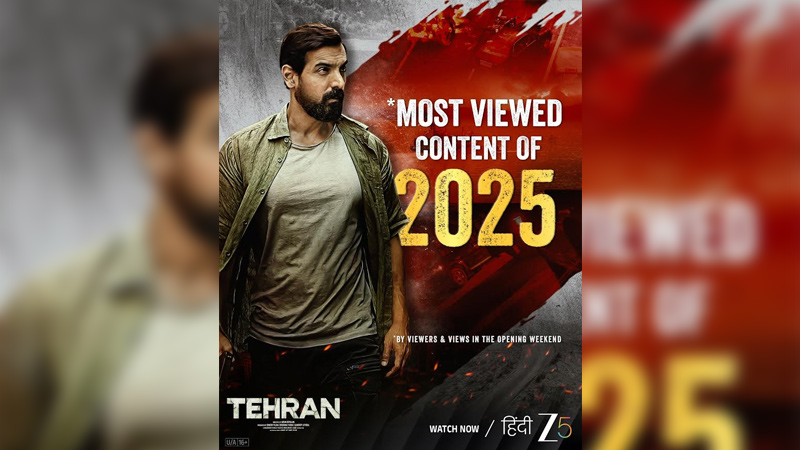
    Zee5’s ‘Tehran’ races to 100 million minutes in record-breaking debut

    MUMBAI: The John Abraham-starrer became the fastest Hindi film of 2025 to cross the 100 million streaming minutes mark on Zee5 and it did so in just 72 hours of its Independence Day weekend premiere. By the end of its launch week, the geo-political thriller had clocked up a staggering 200 million minutes, securing its place as the platform’s most-watched Hindi release of the year.

    The film didn’t just win over Indian audiences. Streaming across 190 plus countries, Tehran broke into Zee5’s global Top 5 for 2025, trending in the US, UK, MENA and APAC proof that its tense narrative struck a chord with the diaspora.

    A slick marketing blitz only added to the spectacle. From a visual projection on Mumbai’s Bandra-Worli Sea Link to hoardings across UP, MP and Mumbai, Tehran was unmissable. The promotions even included Zee5’s first-ever exclusive screening at the Sushma Swaraj Institute of Foreign Service in Delhi, capped with a candid Q&A session with John Abraham himself.

    Zee5 business head (Hindi), Kaveri Das, credited the success to the film’s “intelligent narrative” and said the response reflects the appetite for “stories that entertain while sparking conversations.”

    Meanwhile, Abraham called the audience’s love “truly overwhelming” and said the film reinforced his belief in pushing boundaries and said, “Geo-political thrillers are a genre I truly believe in, and this proves viewers want stories that go beyond entertainment, bold films that stay with you long after the credits roll.”

    Directed by Dinesh Vijan, the thriller stars John Abraham, Neeru Bajwa, Manushi Chhillar and Madhurima Tuli, and is set against the backdrop of the 2012 magnetic bomb blast near the Israeli Embassy in Delhi. With its blockbuster premiere, Tehran has firmly joined the ranks of Zee5’s most successful titles, reaffirming the streamer’s grip on premium homegrown content.


  • Game over? Gaming giants roll the dice on life after India’s RMG ban

    Game over? Gaming giants roll the dice on life after India’s RMG ban

    MUMBAI: When the house always wins, sometimes the only move left is to change the game. That’s exactly what India’s biggest online gaming giants are scrambling to do after the Promotion and Regulation of Online Gaming Bill, 2025 pulled the plug on all real-money contests skill or chance alike.

    Fantasy sports kingpin Dream11, India’s largest operator, is preparing to close its real-money business. CEO Harsh Jain told employees there was “no legal pathway to continue operations once the law takes effect.” In public remarks, Jain added, “We have always been a law-abiding company and have always conducted our business in compliance with the law. While we believe that progressive law would have been the way forward, we will respect the law and fully comply with the Promotion and Regulation of Online Gaming Bill 2025.”

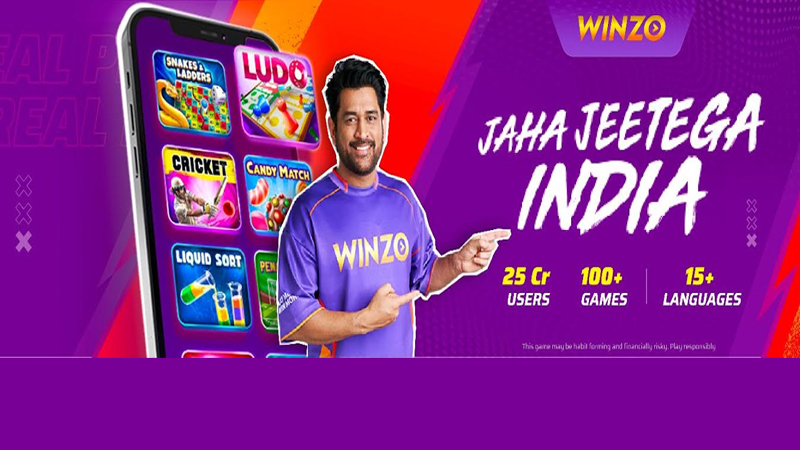
    Winzo has officially launched in the United States, following its Brazil entry in 2023. With this, the company now straddles three of the world’s top four mobile gaming markets India, Brazil, and the US together worth 65–70 billion dollars. Positioned as a Tech Exports 2.0 story, Winzo aims to take Indian gaming IP, talent, and culturally relevant content global through its plug-and-launch distribution model. Backed by 250 million users, 100 plus games, 15 languages, 100 plus patents, and its 50 million dollars Zo Fund, Winzo is scaling innovation beyond India while responsibly exiting real-money formats at home.

    “The launch of Winzo in the United States is a proud milestone for us and for India’s digital entertainment ecosystem. Our vision has always been to empower Indian game developers to reach global audiences. Entering the U.S., the world’s largest and most influential gaming market, is a decisive step towards that mission. We are equally excited to introduce ZO TV, our new short video format, which further diversifies our content offerings and strengthens Winzo’s position as a global hub and one stop destination for interactive entertainment,” said Winzo co-founders Saumya Singh Rathore and Paavan Nanda.

    The financial impact was immediate. Jain revealed that after the bill’s enactment, “95 per cent of revenues disappeared,” describing the legislation as a “knockout blow.” Still, he struck a note of resilience, insisting Dream Sports has “sufficient reserves to sustain its business during this transition” and can adapt by leaning on other ventures like Fancode, Dreametgo and Dream Game Studios.

    The pivot is not just about apps. Dream Sports is now pushing an AI-first strategy, with Jain saying the technology could disrupt “every part of sports: content, commerce, performance, and coaching.” Beyond tech, it is doubling down on grassroots development. At the first Telangana Sports Conclave, COO Sumit Pandey highlighted how the Dream Sports Foundation is backing long-term athlete journeys. “By investing in inclusivity and accessibility,” he noted, the company hopes to carve a sustainable role in India’s sporting ecosystem beyond gaming.

    Meanwhile, Zupee has pulled the plug on its cash contests, but insists the fun isn’t over. Announcing the withdrawal of its RMG offerings, the Gurugram-based company reassured its 150 million-strong user base that its platform will continue to host fan favourites like Ludo Supreme, Ludo Turbo, Snakes & Ladders and Trump Card Mania.

    “Our foremost priority has always been our users, and we remain committed to offering them innovative, responsible, and joyful gaming experiences,” the company said in a statement. “We will continue to focus on engaging, and culturally rooted free-to-play gaming formats…” It added that the aim now is to serve players with entertainment that is “fun, engaging and responsible.”

    MPL (Mobile Premier League), backed by Sequoia and Pegasus, has also hit pause on money-based offerings in India. The platform is funnelling resources into free-to-play titles at home, while going aggressively global with eyes on Europe, the US, and Latin America.

    Games24x7, operator of Rummycircle and My11circle, has stopped accepting deposits and shut its real-money engine. While tight-lipped publicly, industry watchers note the company’s focus may shift towards broader tech plays such as Techxpedite, its accelerator for AI, gaming and tech startups.

    For some, the ban was simply the end of the road. Flutter Entertainment, the global gambling powerhouse behind Junglee Rummy, announced a full India exit, cutting off over 1,100 employees and chalking up a 200 million dollars revenue loss for 2025. CEO Peter Jackson voiced frustration: “We were disappointed… this regulation might push users toward unregulated markets lacking consumer protection and economic contributions.”

    Gameskraft, one of India’s biggest rummy operators, also chose compliance over confrontation. “As a responsible and law-abiding corporate entity, Gameskraft has no intention of pursuing any legal challenge to the legislation. We fully respect the legislative process and remain committed to operating within the framework of the law…” a spokesperson said. They stressed the company’s ongoing commitment to “constructive dialogue with policymakers and stakeholders, responsible innovation, player protection, and regulatory alignment.” Gameskraft noted it had stopped all ‘Gameplay’ and ‘Add Cash’ services as of August 21.

    Not every player was equally exposed. Nazara Technologies, whose stock briefly dipped seven per cent on the news, clarified that it has no direct involvement in real-money gaming and therefore faces little business impact. “The bill is unlikely to significantly affect our financial performance,” the company said.

    Industry associations, however, remain combative. AIGF, EGF and FIFS warned in a letter to home minister Amit Shah that a blanket ban could wipe out Rs 20,000 crore in annual tax revenue and drive players to offshore platforms raising risks of fraud, money laundering and data breaches.

    Delta Corp’s Adda52, India’s top poker platform, is also feeling the squeeze. Its stock has plunged nearly 34 per cent in a year, with an additional nine per cent shaved off after the Bill passed. But unlike pure-play fantasy or rummy firms, Delta still has chips left on the table, its casinos in Goa, Sikkim and Daman remain unaffected. Even before the ban, Delta had lined up a demerger of its hospitality and real estate arms, ring-fencing casino operations for the long haul.

    Between AI-powered sports labs, grassroots investments, free-to-play contests and casino strongholds, the industry is scattering in every possible direction. The only certainty? Real money has left the building but the game is far from over.

  • Gameskraft halts Rummy cash play after new online gaming bill enforcement

    Gameskraft halts Rummy cash play after new online gaming bill enforcement

    MUMBAI: The cards have been reshuffled in India’s online gaming arena and this time, it’s the law dealing the hand. Following the enactment of the Promotion and Regulation of Online Gaming Bill, 2025, which prohibits all real-money games, skill or chance, Gameskraft has announced a full stop to gameplay and cash deposits on its Rummy platforms from 21 August 2025.

    While users can no longer add money or play, the company stressed that withdrawal services remain active, with all account balances “safe and secure.” Gameskraft said it is working with banking partners, auditors, and legal advisors to ensure a seamless process for players cashing out.

    Unlike previous flashpoints between gaming companies and regulators, Gameskraft made it clear there would be no legal challenge this time. “We fully respect the legislative process and remain committed to operating within the framework of the law,” the company stated.

    The focus now shifts to the future. The company revealed it has begun structured internal discussions to explore new business models in line with the bill, guided by what it calls its pillars of responsible innovation, player protection, and regulatory alignment.

    Gameskraft has also reassured stakeholders that it has cleared all regulatory dues, proactively communicated with employees, partners, vendors, and service providers, and safeguarded their interests during this transition.

    Calling compliance “non-negotiable”, the company said the moment, while disruptive, is also an opportunity to “reimagine what’s next responsibly, lawfully, and for long-term value creation.”

    With the ban cutting across India’s booming real-money gaming sector, the industry is now in reset mode. For Gameskraft, once a major player in the Rummy space, the challenge is no longer just winning the game, it’s reinventing it.
     

  • Indian game makers unite under new industry body

    Indian game makers unite under new industry body

    MUMBAI: India’s game publishers and developers have found a single banner. A new industry body, the Indian Game Publishers and Developers Association (IGPDA), has been launched to give the sector a unified voice and global ambition.

    The association brings together studios, publishers, training outfits, facility providers, and investors. Its brief: to champion homegrown intellectual property, showcase Indian stories, and build skills across animation, VFX, gaming, and comics.

    Nine firms are on the founding roster, from Nazara Technologies (World Cricket Championship) and Gametion (Ludo King) to nCore Games (FAU-G: Domination), Reliance Games (WWE Mayhem), SuperGaming (Indus Battle Royale), Tara Gaming (The Age of Bhaarat), underDOGS Studio (Mukti), Aeos Games (Unleash the Avatar), and Dot9 Games (Apna Games).

    “For the first time, India’s developers and publishers have a unified voice,” said NCore founder and IGPDA chairman Vishal Gondal. “This is about more than games — it’s about building iconic IP and creating a cultural legacy for India.”

    IGPDA has already pitched a partnership with the Maharashtra government to position Mumbai as a global gaming hub through policy incentives. Its first event is slated for later this year in Mumbai.

    The launch comes hard on the heels of the Online Gaming Bill, which won presidential assent on 22 August. The law bans real-money platforms — betting, gambling, lotteries, card games with cash stakes, and fantasy sports — but draws a clear line between those and what it calls “online social games.”

    The government says it will promote esports and safe online gaming as a job creator, export booster, and innovation driver.

  • Winzo reinvents, rolls out  short drama championship

    Winzo reinvents, rolls out short drama championship

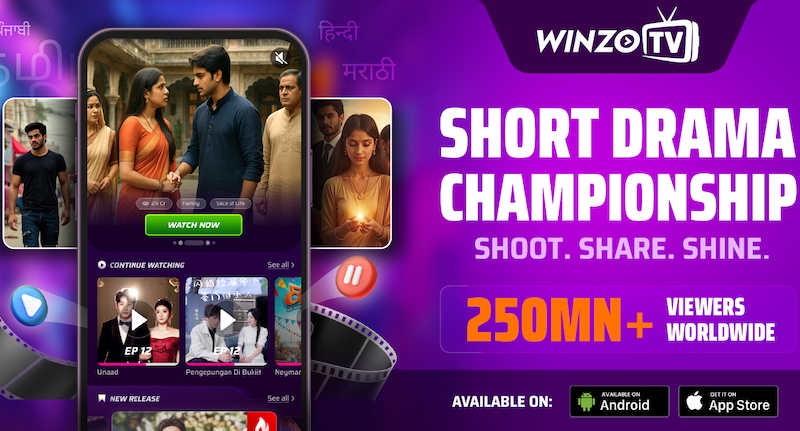
    NEW DELHI: Homegrown interactive entertainment platform, Winzo, is scripting a new chapter. Best known for its real-money gaming empire of 250m users, 100+ competitive titles and a 15-language spread, the company has announced the launch of the Winzo Short Drama Championship — billed as the world’s first global contest for microdrama creators.

    Winners will bag full production sponsorship, long-term content deals, and guaranteed slots on Winzo TV, the firm’s freshly unveiled short-form storytelling platform. Entries will be judged on originality and narrative power, with final selections based on audience engagement. Winning dramas will also be showcased at marquee events, plugging India’s storytellers into a worldwide stage.

    “We’ve always believed India’s cultural capital is its greatest export,” said Winzo co-founder Paavan Nanda. “We built Winzo to democratise opportunity for creators — first in gaming, and now in storytelling. India has the talent and scale to lead the global microdrama revolution.”

    The move comes days after the government passed the Online Gaming Bill, forcing real-money game operators to rewire their business models. Winzo’s pivot positions it not only as a gaming major but also as a potential exporter of Indian narratives, from Bharat to the world.

    Applications are open at winzotv.com, with Winzo calling on production houses and content creators to partner and reach its 250m-strong global audience.

  • William V takes charge as CFO of Jio Blast Esports

    William V takes charge as CFO of Jio Blast Esports

    MUMBAI: William V has been appointed chief financial officer of Jio Blast Esports, the joint venture between Reliance’s Jio Platforms and Denmark’s Blast ApS. He will oversee financial strategy, governance and operational efficiency as the company pushes into India’s fast-growing esports sector.

    A chartered accountant by training, William has more than two decades in senior finance roles. He currently also serves as CFO at JioAds. Before joining Reliance, he spent seven years at Dentsu Aegis Network as director of finance and group treasury, following a decade at Star India where he handled US GAAP reporting, Sox compliance and project evaluation. Earlier stints included Darashaw and L&T Finance.

    At Jio Blast Esports, William is tasked with driving financial planning, compliance and automation while supporting long-term value creation in an industry that sits at the crossroads of gaming, sports and entertainment.

  • Supreme Court tells comedians to apologise for mocking disabled

    Supreme Court tells comedians to apologise for mocking disabled

    NEW DELH: The supreme court on Monday ordered five stand-up comics, including YouTuber Samay Raina, to publish public apologies on YouTube and other social platforms for cracking jokes at the expense of persons with disabilities (PwDs).

    A bench of justices Surya Kant and Joymalya Bagchi was hearing a plea by SMA Cure Foundation, represented by senior advocate Aparajita Singh, which flagged offensive remarks by Raina, Vipul Goyal, Balraj Paramjeet Singh Ghai, Sonali Thakkar alias Sonali Aditya Desai and Nishant Jagdish Tanwar.

    The court said it would determine financial penalties later, but made clear that “the degree of repentance should be higher than the degree of offending”. It also allowed the information and broadcasting ministry to join the proceedings, with attorney general R Venkataramani asked to draft guidelines on social media speech, ensuring dignity without imposing a gag.

    Justice Bagchi warned that comedy which commercialises speech by ridiculing communities crosses the line: “Humour is part of life. We laugh at ourselves. But when it targets others and breaches sensibility, it becomes problematic.”

    Justice Kant added that penal consequences under the IT Act should match the harm caused.
    Singh suggested that the comedians use their influence to spread awareness about disability rights, calling it the best form of apology. The judges asked the comics to respond to this proposal, noting that influencers have a duty not to hurt marginalised communities.

    The matter stems from Raina’s alleged jokes about the cost of treatment for spinal muscular atrophy, which the foundation said mocked both patients and their families. The court earlier compelled the comedians’ attendance, though their presence has now been dispensed with, provided they honour their undertakings.

    The bench stressed that free speech under Article 19 cannot override the right to dignity under Article 21. As Justice Kant put it: “Today it is the disabled, tomorrow it could be something else. Where will this end?”

  • High on hope News18 Kerala anti drug campaign heads to Kottayam

    High on hope News18 Kerala anti drug campaign heads to Kottayam

    MUMBAI: Kerala’s battle cry against narcotics is getting louder and this time, it’s echoing through Kottayam. News18 Kerala’s anti-drug drive, AD 2025, is drawing packed crowds, celebrity cheer, and spirited debate as it rolls across the state, determined to keep Kerala high on hope, not on drugs. After firing up audiences in Cochin on 10 June and Kozhikode on 15 July, the campaign now heads to K.E. College, Mannanam, on 26 August, from 10:00 am. The roadshow culminates in a grand finale in Thiruvananthapuram next month, but not before it sparks yet another round of tough conversations and cultural performances.

    Each stop so far has been more than a lecture, it’s been a movement. From unpacking the root causes of drug use to spotlighting law enforcement, from discussing how addiction tears through families to stressing early intervention and education, the campaign has stitched together the voices of government, media, NGOs and citizens into a single powerful chorus: collective responsibility.

    The earlier editions saw top dignitaries, police officials, excise officers, celebrities, and cultural icons share the stage, stirring both thought and emotion. Audiences, especially the youth responded with enthusiasm, pledging to act against a menace that has seeped into communities.

    The Kottayam edition promises no less. On the panel: the district collector, police commissioner, excise officer, a social influencer, a psychologist, a student representative and more, ensuring every perspective from law to lived experience is on the table.

    With turnout and public engagement already exceeding expectations, AD 2025 is proving to be more than a campaign. It’s becoming Kerala’s collective pledge for a drug-free tomorrow.

  • Winzo levels up, takes India’s gaming power play to the US market

    Winzo levels up, takes India’s gaming power play to the US market

    MUMBAI: From Delhi to Dallas, Winzo has just hit its biggest checkpoint yet. India’s largest homegrown digital entertainment platform has officially launched in the United States, levelling up its ambition to export desi gaming tech, IP, and talent to global arenas. The move marks Winzo’s entry into the world’s largest gaming market by revenue, hot on the heels of its Brazilian foray in 2023. That places the company squarely at the crossroads of three of the planet’s top four mobile gaming markets India, Brazil and the US together worth an estimated 65–70 billion dollars with over 20 billion annual game downloads.

    With a 250 million-strong user base back home, Winzo’s ecosystem already spans 100 plus competitive games across esports and social formats in 15 languages, backed by more than 100 tech patents. Among them: its Real-Time Game Engine, GenAI-powered vernacular companion, live streaming stack, one-click integration tech and AI-driven cybersecurity solutions.

    The platform also brings financial muscle via its 50 million dollars Zo Fund, fuelling early-stage tech ventures and creating a pipeline of Indian innovation for global markets. Alongside gaming, Winzo is rolling out Zo TV, its new short-video format, aiming to be a one-stop hub for interactive entertainment.

    “This is a proud milestone for India’s digital entertainment ecosystem,” said co-founders Saumya Singh Rathore and Paavan Nanda, noting that the expansion represents “Tech Exports 2.0” where Indian developers can finally take culturally resonant games and esports to the most lucrative gaming market in the world.

    While Winzo continues to expand abroad, it is also doubling down on its Indian audience, even as it responsibly rolls back select offerings impacted by regulatory shifts. For the company, the US debut isn’t just a market entry, it’s a statement that India’s gaming story is no longer just local, but truly global.