Category: iWorld

  • Flipkart strikes the right chord with 10-minute Ganesh Chaturthi delivery

    Flipkart strikes the right chord with 10-minute Ganesh Chaturthi delivery

    MUMBAI: When devotion meets delivery, even an Aarti can arrive in ten minutes. Flipkart Minutes, the quick commerce arm of Flipkart, struck a festive note this Ganesh Chaturthi with a digital-first campaign that blended tradition, rhythm, and rapid service. The centrepiece was a film created with FCB Kinnect, where the Ganesh Aarti was reimagined without lyrics replaced instead by the everyday symphony of claps, utensil taps, and beats. The creative twist showed how simple, familiar sounds can evoke connection and devotion, even outside a temple setting.

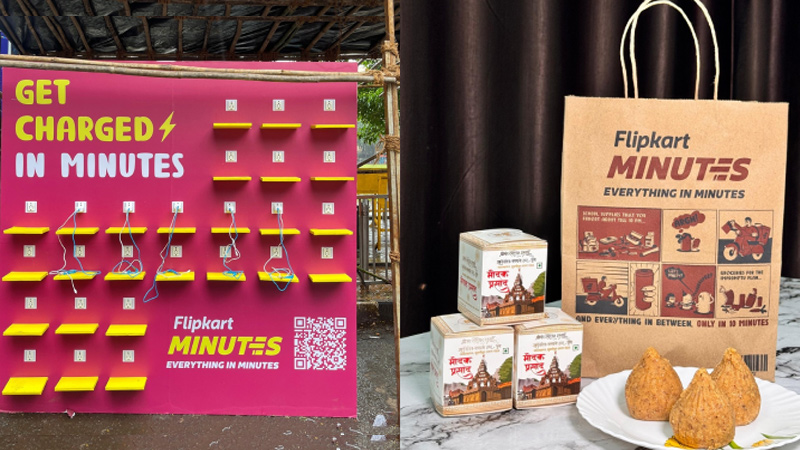
    But Flipkart didn’t just stop at the screen. Between 27 August and 6 September, the platform offered 10-minute prasad delivery from Siddhivinayak temple in Mumbai and Shrimant Dagdusheth temple in Pune, available at a nominal cost alongside regular orders. Devotees also found rapid mobile charging stations set up in high-footfall areas to keep the celebrations powered through long processions and pandal visits.

    Adding a playful touch, complimentary manjiras traditional percussion instruments were tucked into select orders in Mumbai on the festival’s first day, echoing the campaign’s musical theme. By weaving together prasad, percussion, and practical convenience, Flipkart Minutes positioned itself as more than just a service, it became a seamless part of the celebration.
     

  • Reliance AGM: Mukesh Ambani unveils JioHotstar’s new AI-led features

    Reliance AGM: Mukesh Ambani unveils JioHotstar’s new AI-led features

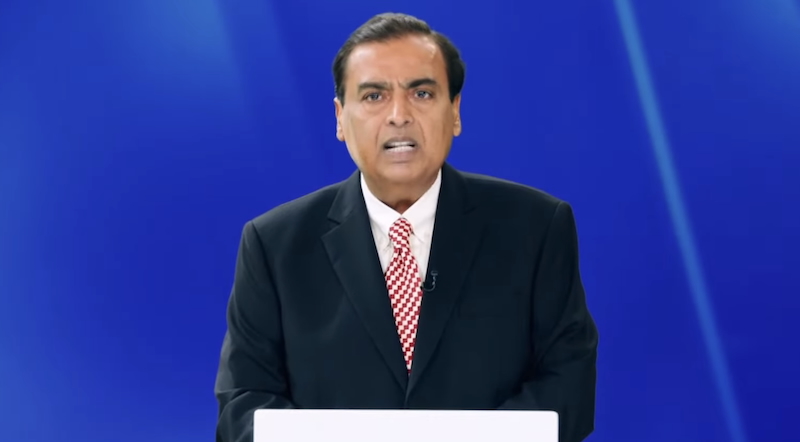
    MUMBAI: Reliance Industries chairman Mukesh Ambani  declared at the firm’s annual general meeting held today that JioStar has reshaped India’s media landscape within months of launch. The media and entertainment arm now boasts over 3.2 lakh hours of programming—six times more than its nearest rivals—with 30,000 hours added annually.

    The JioHotstar app has surged to 600m users in just three months, including 75m connected TVs. With 300m paying subscribers, Ambani claimed it has become the world’s second-largest streaming platform, achieved entirely in India. Reliance also commands a 34 per cent share of India’s TV market, equal to the next three networks combined.

    To cement its lead, Ambani unveiled a trio of AI-driven features. Riya, a voice-enabled assistant, promises effortless content discovery across shows, films and sports. Voice Print uses AI voice cloning and lip-sync to let stars “speak” in viewers’ own languages without losing authenticity. And JioLenZ offers multiple, personalised viewing options at the click of a button.

    “We have created an experience that combines the best of content, software and AI,” said Ambani. “JioStar will continue to expand across platforms and geographies as we serve a billion screens.”

  • Reliance joins hands with Google Cloud to put India’s AI future on steroids

    Reliance joins hands with Google Cloud to put India’s AI future on steroids

    MUMBAI: Reliance Industries has never done things by halves. On 29 August, India’s largest private company unfurled its latest grand project: a sweeping expansion of its alliance with Google Cloud, centred on a new, dedicated AI-first cloud region in Jamnagar, Gujarat. The ambition is as audacious as it is familiar. Having once upended India’s telecoms industry with Reliance Jio and cheap data, Mukesh Ambani is now training his firepower on artificial intelligence, promising to democratise access to computing muscle for the world’s most populous country.

    The project is being pitched as India’s “AI leapfrog moment.” Reliance will design, build, and power state-of-the-art cloud facilities, all running on renewable energy and plugged into Jio’s sprawling fibre and digital network. Google will provide the brains: its AI hyper computer, a secure and integrated generative AI stack, and the know-how to run workloads of breath taking intensity. The facility, Reliance says, will meet global service-level standards and support the most demanding AI use cases—from training large models to building next-generation applications for consumers and enterprises.

    Why Jamnagar? The coastal city is already the beating heart of Reliance’s refining and petrochemicals empire. It is also becoming a symbol of the company’s reinvention: its green energy giga factory is rising there, and now the AI cloud campus will sit alongside it. Running on renewable power, the project ticks boxes for sustainability even as it scales to hyper speed. Jio, meanwhile, will string high-capacity fibre links connecting Jamnagar to metros like Mumbai and Delhi, effectively wiring India’s AI ambitions to its business and political capitals.

    Mukesh Ambani cast the partnership in almost civilisational terms: “Just as Jio and Google came together to democratise the internet for every Indian, we will now democratise intelligence for every Indian,” he declared. The subtext was clear: Reliance does not want to merely be a customer of AI; it wants to be the platform on which India builds its AI future.

    For Google, the tie-up is equally strategic. The American giant has long struggled to monetise India at scale, despite Android’s dominance. Its alliance with Reliance, first forged through a $4.5bn investment in Jio Platforms in 2020, has been its best bet. Sundar Pichai, Google’s boss, was almost wistful: “Our work together over the last decade has helped bring affordable internet access to millions. And now, we are building on this to help shape the next leap with AI. This is only the beginning.”

    The beginning it may be, but the context is fiercer. Microsoft has partnered with the Adani group to push Azure into Indian enterprises. Amazon Web Services (AWS) has invested heavily in local data centres. By anchoring Google Cloud in Reliance’s infrastructure, Ambani is offering it the biggest distribution muscle in the country—from India’s biggest retailer to its mightiest mobile operator.

    Reliance has always built moats around scale and integration. Hydrocarbons fed petrochemicals; petrochemicals funded telecoms; telecoms birthed digital platforms; retail wrapped around them. Now AI is being woven into every strand. Reliance’s retail arm, one of the world’s fastest-growing, will be powered by predictive analytics and AI-first services. Its digital platforms can churn out generative-AI-powered customer tools. Even its energy and refining business can tap AI for predictive maintenance, efficiency, and emissions management.

    The bet is as much about geopolitics as economics. AI compute has become a strategic resource, akin to oil in the 20th century. By hosting a dedicated, hyperscale AI cloud region in India, Reliance and Google are hedging against global bottlenecks in semiconductors and compute availability. They are also offering Indian enterprises and the government a “sovereign-flavoured” cloud alternative to relying wholly on Western or Chinese platforms.

    The entire project will be underpinned by Reliance’s push into renewable power. The AI data centres, notorious for their energy hunger, will be fed through Reliance’s green energy parks and hydrogen initiatives. Jio’s high-capacity fibre, spanning metros and regions, adds the digital sinew to match the green muscle. The combination allows Reliance to brand the initiative not merely as profitable, but as sustainable—a key card to play with regulators, policymakers, and global investors.

    For India, the stakes are towering. Domestic enterprises, startups, and public sector organisations often face prohibitive costs in accessing cutting-edge AI compute. By pooling Reliance’s infrastructure with Google’s stack, the hope is to lower barriers and accelerate adoption. Small businesses may soon have access to AI tools that were once the preserve of Silicon Valley. Universities and research institutes could run high-performance AI models without prohibitive cost. And the government could scale citizen-facing AI services in health, education, and agriculture.

    But challenges remain. Building AI facilities is one thing; ensuring India has the talent, regulation, and guardrails to use them responsibly is another. AI also raises thorny issues of bias, surveillance, and security. Reliance’s ambition to become India’s AI backbone will inevitably attract scrutiny—whether from privacy hawks, antitrust watchdogs, or foreign competitors.

    Yet, if history is a guide, Reliance has a knack for bending markets to its will. When Jio entered telecoms in 2016, it offered free calls and dirt-cheap data, triggering a brutal price war that wiped out rivals and left India with the world’s cheapest mobile internet. Now, Ambani appears ready to repeat the trick with AI: offer access at scale, bundle services across Reliance’s ecosystem, and set the floor so low that competitors struggle to keep up.

    The Jamnagar AI cloud, then, is not just about servers and software. It is about a new architecture of power: technological, economic, and political. If it works, Reliance and Google may indeed make India a global leader in artificial intelligence. If it fails, it could end up as another white elephant in the deserts of Jamnagar.
    For now, though, one thing is certain. India’s AI race has just been given a jolt of steroids—and Mukesh Ambani is holding the syringe.

    (The picture featured above is representational of two businessmen joining hands and there is no intention to insinuate that it  resembles either Mukesh Ambani or Sunder Pichai. It is an AI generated image)
  • Boss move! Bigg Boss 19 smashes OTT records with blockbuster JioHotstar debut

    Boss move! Bigg Boss 19 smashes OTT records with blockbuster JioHotstar debut

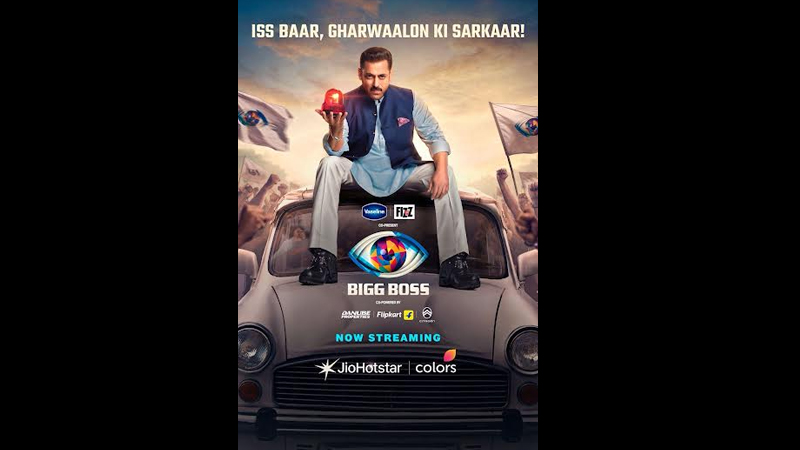
    MUMBAI: The house isn’t just full, it’s overflowing. Bigg Boss Season 19 stormed onto JioHotstar with India’s biggest-ever OTT launch, pulling in record-breaking Day 1 numbers that set the stage for a fiery season ahead. The opening episode clocked a 2.3x surge in reach and a 2.4x jump in watch-time compared to last year, while peak concurrency doubled over Bigg Boss 18’s launch. For a franchise that has ruled non-fiction TV for 18 years, this digital-first outing has levelled up the game.

    It wasn’t just the audience piling in brands rushed in too. With 11 marquee sponsors across FMCG, auto, lifestyle, and personal care ranging from Vaseline, Appy Fizz, Flipkart and Lakme Peach Milk to Citroën, Manforce and Lux Cozi, the season has lured a mix as diverse as the housemates themselves. For advertisers, Bigg Boss continues to be more than a show; it’s a cultural juggernaut with unmatched reach and recall.

    Keeping fans hooked round the clock, JioHotstar has added interactive features like live chats, polls, and a 24×7 live feed, ensuring audiences don’t just watch but actively play along. And of course, fronting it all is Salman Khan bringing charisma, banter, and that signature mix of star power and swagger that keeps audiences coming back.

    As Alok Jain of JioStar put it, “The overwhelming response reflects not just the property’s scale but the deep bond audiences share with Bigg Boss.” With the launch already rewriting records, Season 19 is shaping up to be more than entertainment, it’s a 24×7 obsession.

  • Game on as Parliament clears Bill giving esports its sporting stripes

    Game on as Parliament clears Bill giving esports its sporting stripes

    MUMBAI: India just hit “start” on a new sporting era. On 21 August, Parliament passed the Promotion and Regulation of Online Gaming Bill, 2025, a landmark move that bans all online money games but officially elevates esports to the league of legitimate competitive sport. For the first time, esports has been uncoupled from gambling, betting, and fantasy money play, and placed firmly under the ministry of youth affairs and sports, which will set tournament standards, support academies, and weave esports into India’s sporting fabric.

    The timing was pixel-perfect. Days earlier, 19-year-old Ved Bamb, better known by his gamer tag Beelzeboy, became India’s first esports World Champion by defeating Spain’s Leo Marin at the Pokémon Go Worlds. Esports has been steadily climbing the podium: officially recognised by India in 2022, it debuted as a medal sport at the Asian Games in Hangzhou and snagged a historic bronze in DOTA 2 at the 2022 Commonwealth Esports Championships. Next year, it returns to the Asian Games medal tally and will also feature at the 3rd Asian Youth Games in October.

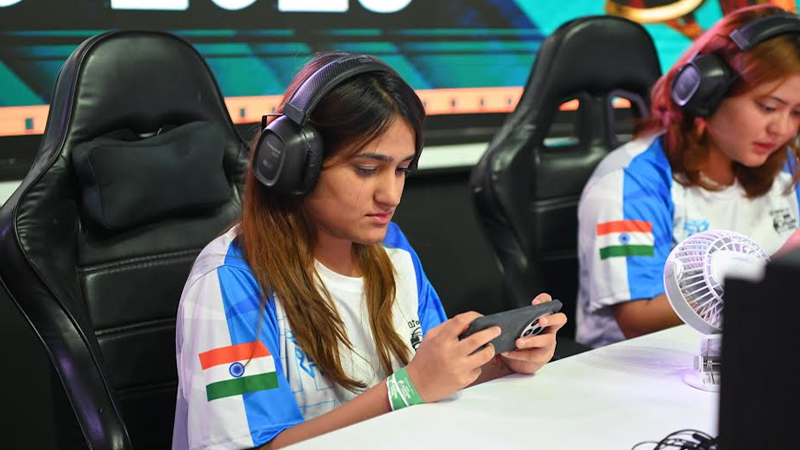
    Back home, esports is levelling up from grassroots to glory. This year’s Khelo India Youth Games in Bihar featured esports as a demo sport, with states like Maharashtra, Tamil Nadu, Nagaland, and Bihar championing tournaments. Nationally, the Waves Esports Championships, backed by the Ministry of Information and Broadcasting, signalled that esports is no longer niche, but mainstream. Nodwin Gaming’s flagship Battlegrounds Mobile India Masters Series (BGMS), with a Rs 1.5 crore prize pool in its fourth season and female athletes competing for the first time, shows the professional rigour that mirrors cricket or football.

    “The Bill unlocks a zero-to-hero pipeline from state-level championships to global majors,” said Nodwin Gaming cxo-founder & MD Akshat Rathee which is grooming players for EVO, Esports Nations Cup, and even Counter-Strike Majors. S8ul, India’s most celebrated esports org, has its athletes training in Navi Mumbai bootcamps and recently competed at the Esports World Cup in Riyadh, where the prize pool crossed Rs 600 crore. Nodwin Gaming co-founder Animesh Agarwal called the government’s clarity a “game-changer” that will win parents’ trust and bring more young talent into the fold.

    The ecosystem’s growth isn’t just about skill but also kit. With PC and console titles set to feature in the 2026 Asian Games and possibly the Olympic Esports Games in 2027, high-performance gear is becoming non-negotiable. Cyberpowerpc India COO Vishal Parekh noted: “If cricket needs pitches, esports needs world-class rigs.” His company has donated PCs worth lakhs to bridge the infrastructure gap and prepare India’s next champions.

    As India marks National Sports Day, esports now stands shoulder to shoulder with traditional sports. With structured training, global tournaments, and government backing, the nation’s gamers are no longer just chasing high scores, they’re chasing history.

  • UMI strikes the right chord with Maddock Films in global music alliance

    UMI strikes the right chord with Maddock Films in global music alliance

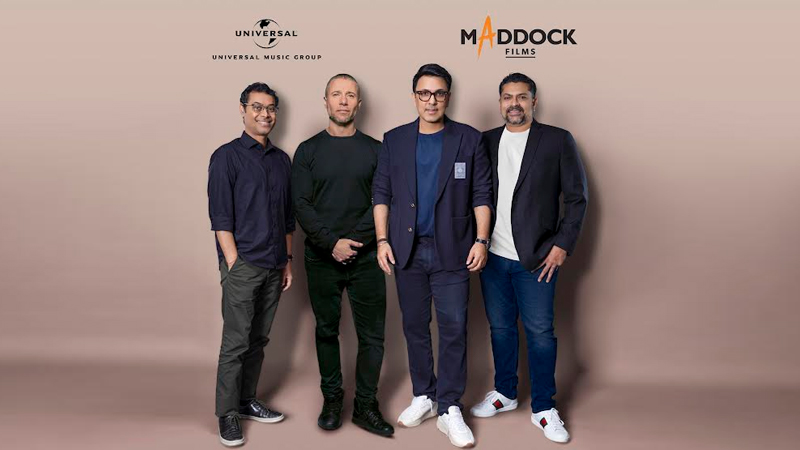
    MUMBAI: The movie business just got a new soundtrack partner and this time, it’s playing to a global beat. Universal Music India (UMI), the Indian arm of Universal Music Group, has inked a strategic tie-up with Maddock Films and its new music label, Mad For Mussic, founded by producer-director Dinesh Vijan. The deal will see UMI serve as Maddock’s worldwide strategic partner for future film soundtracks and allied offerings.

    For UMI, it’s more than just a duet, it’s a full-blown re-entry into India’s most dominant music category: film soundtracks. With UMG’s global network as its amplifier, Maddock’s repertoire will now find international stages, while UMI cements its foothold in a market where movies and music are inseparable.

    Maddock Films, which has carved its niche with hits like Stree, Bhediya, Munjya and the upcoming Thama, has long treated music as central to its storytelling. Its chartbuster “Pardesiya” from Param Sundari is a case in point, having ruled social media and streaming platforms alike. “Our cinema is the cinema of real India,” said Vijan. “Music has always been one of its pillars. With UMG, we’re ready to scale that ambition.”

    Universal, of course, is no stranger to Hindi film soundtracks. Its catalogue has spanned classics from Sholay and Deewar to Devdas and Bombay. But this partnership marks a sharp pivot to contemporary hindi film industry, with an eye on both local dominance and global resonance.

    Calling the deal “a crucial step forward,” UMG’s Adam Granite hailed Vijan as “a first-class storyteller with an unparalleled ear for music.” UMI’s India MD Sanujeet Bhujabal called Maddock’s output “fearless, forward-thinking storytelling,” while India SA chairman & CEO Devraj Sanyal noted that the move comes at “the perfect time” for UMI to re-enter the Indian film music market.

    With Maddock’s track record of genre-defining cinema from horror-comedies to mainstream hits and UMI’s global muscle, the stage is set for Hindi soundtracks to travel farther and louder than ever. Call it a match made in musical heaven, with India’s stories and songs primed for a world tour.

  • Lovnish Bhatia joins Worldwide Media as vice president – digital product

    Lovnish Bhatia joins Worldwide Media as vice president – digital product

    MUMBAI: Worldwide Media, a subsidiary of the Times Group, has named Lovnish Bhatia as vice president – digital product. Based in Mumbai, he will spearhead the publisher’s digital strategy, mobile platforms and product innovation.

    Bhatia brings more than 20 years of experience across digital media, operations and business development. He was most recently head of operations at Wify Technologies, after a brief stint as a new business development consultant.

    Earlier, he served as chief operating officer at Timesaverz, led services at Hettich India, and drove business development for video advertising firm Vdopia, where he was instrumental in securing the ICC World Cup 2011 digital sales mandate for Star India.

    His media career began at Sony Entertainment Television in 2000, followed by digital sales leadership roles at NDTV Media and Viacom18, where he introduced digital syndication and online-only monetisation models.

    With a career spanning technology, advertising, consumer services and media, Bhatia is expected to play a key role in accelerating Worldwide Media’s digital transformation.

  • Fast channels surge 14 per cent this year as news and horror fuel boom

    Fast channels surge 14 per cent this year as news and horror fuel boom

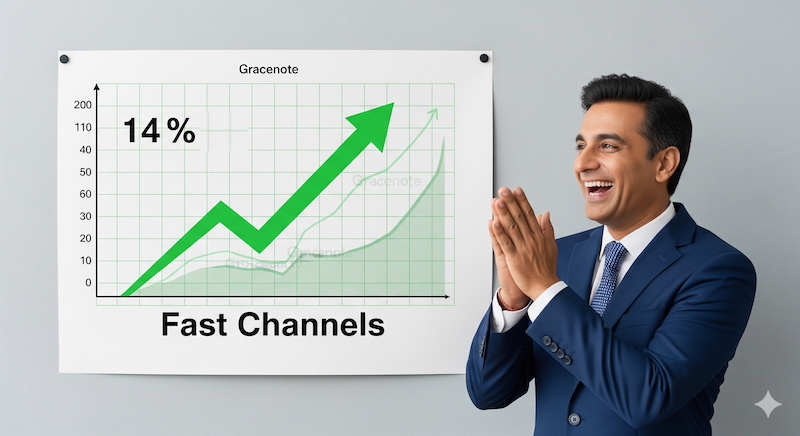
    MUMBAI: Free ad-supported television (Fast) is enjoying a blistering run. The number of Fast channels worldwide has climbed nearly 14 per cent since the start of 2025 and 76 per cent since 2023, according to fresh analysis from Gracenote, the content data arm of Nielsen.

    The firm has expanded its Data Hub to track nearly 1,850 active Fast channels, enabling direct comparisons with subscription video-on-demand (SVOD) catalogues from the likes of Amazon Prime Video, Apple TV+, Disney+, Netflix and Paramount+. The enhanced tool now covers more than 645,000 TV shows, films and sports programmes across SVOD and a further 197,000 across Fast.

    Fast is skewing younger than its subscription rivals. Almost half of its content has been produced in the past five years, compared with only a third for SVOD. Stretching the timeframe to 15 years, Fast jumps to nearly 80 per cent of programming, versus 68.5 per cent for SVOD.

    Television dominates both formats, but especially Fast: 93.1 per cent of its content comprises TV programming by episode count, compared with 88.8 per cent on SVOD platforms.

    Genre trends are diverging. Documentaries make up the largest Fast slice at 16.1 per cent, followed by drama (10.6 per cent) and news (9.9 per cent). Yet it is news and horror that are powering growth, up 37 per cent and 30 per cent respectively. On SVOD, sports led the charge in the past quarter with a 13.2 per cent bump, ahead of films (10 per cent) and TV (9.2 per cent). Sports on Fast dipped 3.7 per cent in the last three months but remain up 14 per cent year to date.

    Among the big streamers, Amazon bulked up most aggressively, expanding its catalogue by 12.6 per cent quarter on quarter. Paramount+ followed with a 6.4 per cent increase. Overall, SVOD offerings grew 9.8 per cent in the same period.

    Gracenote, which covers video content in more than 70 languages and 80 countries, is pitching its Data Hub as a strategic compass for distributors, producers and advertisers eager to map where audiences are headed.

  • Netflix wins Japan rights for 2026 World Baseball Classic

    Netflix wins Japan rights for 2026 World Baseball Classic

    TOKYO: Netflix will be the exclusive home of the 2026 World Baseball Classic in Japan, under a rights deal with World Baseball Classic Inc (WBCI), the body jointly run by Major League Baseball and the MLB Players Association. The streamer will carry all 47 games live and on-demand for Japanese subscribers.

    The sixth edition of the tournament will feature 20 national teams across four pools in Tokyo, San Juan, Houston and Miami from 5 March 2026. Defending champions Japan will again be in the spotlight.

    MLB deputy commissioner for business and media Noah Garden said the deal reflected “the growing popularity of the tournament” and WBCI’s ambition to expand through digital platforms. Netflix Japan vice president of content Kaata Sakamoto called the tie-up a chance to “deliver a new kind of viewing experience that brings fans even closer to the action.”

    MLB Players Inc  president Evan Kaplan added that the partnership would give Japanese fans front-row access to “one of the sport’s most unique stages, where the world’s top players compete for national pride”.

    For Netflix, the deal is the latest step in its tilt towards live sport, positioning it at the heart of one of baseball’s biggest international events.

    Could we see it snap up some premium cricket media rights in India? That’s a delivery  media observers have been waiting for Netflix to bowl for quite a while now.

  • Forum BIFF 2025 marks 30 years of K-Arts with big-picture rethink on Asian film education

    Forum BIFF 2025 marks 30 years of K-Arts with big-picture rethink on Asian film education

    BUSAN: The 30th Busan International Film Festival will stage a special Forum BIFF to mark the 30th anniversary of the Korea National University of Arts’ (K-Arts) school of film, TV & multimedia, with a hard look at how Asian film education can reinvent itself for the future.

    Founded in 1995, K-Arts has been the launchpad for a generation of Korean and Asian filmmakers, building co-production bridges with Japan and China, running pan-Asian short-film labs, and powering the global surge of K-content. This year’s forum, themed Revisiting the path of Asian cinema, will spotlight those achievements while grappling with the future: how to sustain cross-border learning, plug into AI-driven change, and keep Asian schools at the cutting edge.

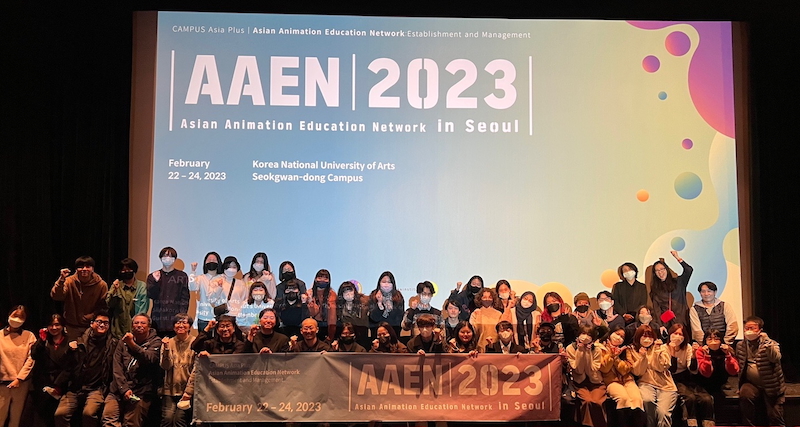
    Sessions will examine collaborative short-film programmes, Korea-Japan and Korea-China co-productions, and the AMA+ scholarship that has seeded talent from across the region. The Campus Asia Plus initiative — linking Korea, Japan, China and Asean — will be in focus for its efforts to build an Asian animation education network that meshes advanced learning, exchange and industry tie-ups.

    The three-part forum will run on 20 September, moderated by professors Choi Yongbae and Steve M. Choe of K-Arts. It will feature a keynote by cinema studies professor Kim Soyoung, presentations from animation professor Lee Jungmin, filmmaking professor Pyeon Jangwan, Cambodian director and AMA+ alumnus Him Sotithya, and producer Ahn Jihye. The closing panel will pull in film critic Lee Seunghee, Japan Institute of the Moving Image president Tengan Daisuke, Beijing Film Academy professor Liu Yu, Yale lecturer Tian Li, and Indonesian director Makbul Mubarak.

    The conversation will stretch from the past three decades of K-Arts’ influence to the next thirty years of Asian cinema education — and what it will take to keep pace with technology and global demand.
     
    BIFF 2025: 17–26 September

    Asian Contents & Film Market: 20–23 September