Category: iWorld

  • Netflix battles boredom with Kurukshetra, Mahabharata comes alive in animation

    Netflix battles boredom with Kurukshetra, Mahabharata comes alive in animation

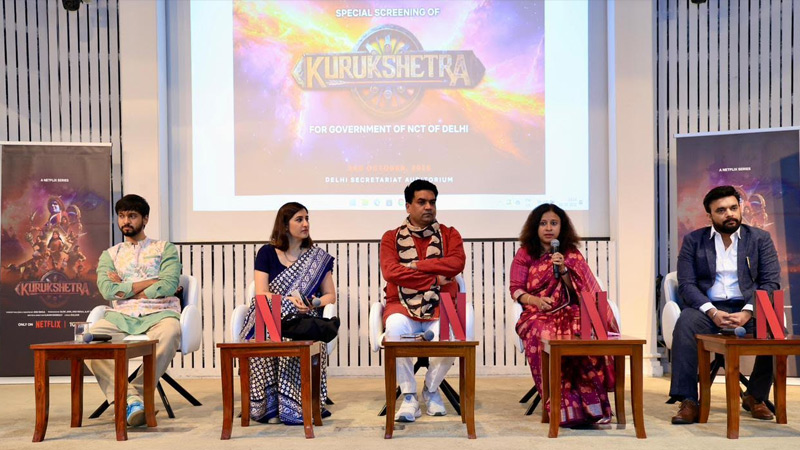
    MUMBAI: Forget history class, Netflix is taking viewers straight to the battlefield. The streaming giant, in collaboration with the GNCT of Delhi, hosted a special screening of Kurukshetra, its first animated mythology series, at the Delhi Secretariat Auditorium, blending epic storytelling with anime flair.

    The event saw dignitaries including Kapil Mishra minister for art, culture & language, and Niharika Rai, IAS, managing director & CEO, Delhi Tourism, gracing the premiere. A fireside chat with series writer-director Ujaan Ganguly and Hitech Animation CEO Ashish Thapar offered insights into bringing India’s epic war to life for a modern audience.

    Comprising 18 episodes, Kurukshetra revisits the Mahabharata through the eyes of 18 warriors over 18 fateful days, mixing poetry, anime, and music. With the legendary Gulzar lending his lyrical genius, the series balances reverence for the original epic while presenting it in a format that resonates with both younger and older audiences. The series launches on October 10, 2025, exclusively on Netflix.

    Shri Kapil Mishra praised the initiative, saying, “The history of the Mahabharata is an integral part of Delhi’s heritage, and Kurukshetra brings this to life in a way that is accessible to millions of future generations… I urge the creative community to continue sharing India’s real history hidden stories, tales of brave women, and examples of courage and sacrifice.”

    Echoing this sentiment, Niharika Rai added, “This collaboration reflects our shared commitment to showcasing India’s cultural richness. Kurukshetra makes this timeless epic accessible to younger generations while honouring its legacy. Preserving our epics in modern formats is vital, and Delhi Tourism is proud to partner with Netflix for this screening.”

    Netflix director of global affairs for India Mahima Kaul, highlighted the global reach: “Kurukshetra resonates with those who grew up with the Mahabharata and wish to share it with younger audiences in a fresh format. Available in multiple Indian and international languages, subtitled in 34 more, and inclusive with Hindi audio description, this epic can now be experienced by audiences everywhere.”

    With Kurukshetra, Netflix cements its role as a storyteller rooted in India’s culture, bringing the country’s rich tapestry of narratives to screens worldwide, one warrior at a time.

  • Pitch to Get Rich: Where fashion meets big business

    Pitch to Get Rich: Where fashion meets big business

    MUMBAI: India’s fashion scene is getting a glamorous makeover. Jiohotstar is set to premiere Pitch to Get Rich on October 20, a reality series that fuses Hindi cinema’s sparkle with entrepreneurial grit. Produced by Dharmatic Entertainment and the Fashion Entrepreneur Fund, the show features a Rs 40 crore investment pool aimed at turning creative fashion ideas into thriving businesses.

    Fourteen aspiring founders will compete in a first-of-its-kind format, pitching their fashion ventures while navigating real-world business challenges. Celebrities and industry leaders, including Akshay Kumar, Karan Johar, Manish Malhotra, and Malaika Arora, join forces with top business tycoons to mentor, judge, and invest in India’s fashion talent.

    Dharmatic Entertainment CEO Apoorva Mehta said, “Pitch to Get Rich is more than entertainment. It’s a stage for dreamers who want to build, innovate, and shine globally.” Founder of FEF Sanjay Nigam added, “The show champions ‘Make in India’ while inspiring the next generation of fashion entrepreneurs.”

    With homegrown talent in the spotlight, Pitch to Get Rich promises a thrilling mix of style, strategy, and star power, streaming exclusively on Jiohotstar.

  • Goquest stars in Africa with JioStar’s exclusive content distribution deal

    Goquest stars in Africa with JioStar’s exclusive content distribution deal

    MUMBAI: When it comes to Africa, Goquest Media clearly has the Midas touch and now it’s shining brighter with JioStar. The global independent distributor has bagged the exclusive rights to distribute JioStar’s linear programming across the African continent, cementing its reputation as the go-to bridge between Indian content powerhouses and African audiences.

    The move isn’t Goquest’s first rodeo. The company previously partnered with Disney Star as its sole distributor in Africa, a collaboration that raised the bar for taking premium Indian entertainment global. With JioStar following suit, the mandate marks another milestone in Goquest’s growing dominance of the African broadcast market.

    “Africa has long been a core market for us,” said Goquest Media managing director Vivek Lath. “For leading global players to bypass building internal sales teams and instead rely fully on Goquest is the strongest endorsement of our capability. We are excited to expand JioStar’s footprint across Africa and continue building bridges between world-class content and audiences who deeply resonate with it.”

    For JioStar, Africa is not just a market, but a priority growth frontier. With two bespoke channels already in place, one in English and the other in isiZulu, the broadcaster has steadily carved out a cultural connection with audiences. A company spokesperson noted, “Our channel brands, shows and characters are household names. By appointing Goquest as our exclusive distributor, we ensure our content portfolio is scaled with precision and market expertise.”

    From isiZulu soaps to English-language dramas, the partnership underscores a larger truth in Africa, Indian entertainment isn’t just imported, it’s embraced. And with Goquest at the helm, JioStar looks set to script its next big chapter on the continent.
     

  • Sheher Ghumawa hits the right note for Soulmates

    Sheher Ghumawa hits the right note for Soulmates

    MUMBAI: Turn up the volume, the party has just begun. Tips Films and Tips Music have dropped Sheher Ghumawa, the high-octane first track from their upcoming film Soulmates, and it is already shaping up to be the season’s dance anthem.

    Belting out the vocals is none other than Mika Singh, with Sunny Vik’s foot-tapping music and Raj Fatehpur’s playful lyrics making it a surefire crowd-pleaser. The track, out on 30 September, leads up to the digital release of Soulmates on 17 October.

    The video adds an extra splash of colour, pairing Mika Singh with Hira Warina in a vibrant, visually striking sequence that matches the track’s celebratory mood.

    “This song sets the tone for Soulmates, uplifting, energetic and fun,” said Tips Music managing director Kumar Taurani. Mika Singh called it “infectious” and promised it will stay on party playlists for a long time. Composer Sunny Vik added that working on the song was about finding “the perfect balance of fun and meaning.”

    For actress Hira Warina, the track was pure joy to be part of. “It instantly lifts your mood,” she said.

    With its addictive rhythm and feel-good vibe, Sheher Ghumawa looks set to soundtrack many nights out before Soulmates hits screens in October.

  • Sonu sets Dal Lake afloat with melodies in Srinagar’s first mega concert

    Sonu sets Dal Lake afloat with melodies in Srinagar’s first mega concert

    MUMBAI: When the valley sings, the world listens. On Sunday, 26 October 2025, Srinagar will echo with music as Sonu Nigam headlines the first-ever live concert of its scale in Kashmir, a spectacle curated by NDTV Good Times at the Sher-i-Kashmir International Conference Centre (SKICC), framed by the shimmering Dal Lake and the mighty Himalayas.

    The evening will be more than a setlist of filmy hits. It will carry the weight of history, with Nigam paying tribute to Mohammed Rafi, the golden voice of Indian cinema, on the year marking a century of his birth. For fans, hearing Rafi saab’s immortal melodies reimagined against Dal Lake’s twilight shimmer promises to be nothing short of spine-tingling.

    “It is more special because we have not seen the celebration of 100 years of the late Mohammed Rafi sahab at Dal Lake. Can you imagine!” said Sonu Nigam. “The whole world knows my connection with my peer, my guru, my inspiration but celebrating his legacy at Dal Lake in Kashmir, celebrating the zest of Kashmir, is going to be really wonderful and special. Looking forward to see you all there.”

    The choice of SKICC as the venue is no accident. Nestled on Dal’s banks, its quiet grandeur will transform into a stage where nature becomes part of the performance. As dusk falls, the lake will mirror the stage lights, turning the concert into a once-in-a-lifetime union of landscape and sound.

    NDTV CEO & editor-in-chief Rahul Kanwal framed the event as a cultural milestone: “Good Times was created as a canvas for India’s most extraordinary cultural expressions. To bring Sonu Nigam to Srinagar, with the Dal Lake as his stage, is an affirmation of India’s confidence in presenting its heritage, its beauty, and its artistry to the world. This concert is a defining cultural moment for Kashmir and for the country.”

    Adding to that, NDTV Good Times chief experiences officer Rahul Kumar Shaw said: “When we said Good Times will be about extraordinary experiences, this is what we meant. The first one is here Sonu Nigam at Dal Lake, a never-seen-before cultural spectacle that puts Srinagar on the world stage. We are the first ones in many years to come here and create something of this scale, and it is a privilege to do so in Kashmir, a land whose people have an unmatched spirit. We’ve promised audiences that every NDTV Good Times experience will be bigger, richer, and more immersive, and this evening is exactly that, a concert you don’t just attend, but one you carry back with you.”

    For Kashmir, long immortalised in poetry and cinema, this isn’t just about melodies under the stars. It is about reclaiming a space on the cultural world map, showing the valley as a venue of celebration, pride, and artistry.

    Tickets for the concert, available exclusively on District, are already in high demand, with limited seating adding urgency to what is billed as one of Kashmir’s most significant cultural events.

    On 26 October, as Sonu Nigam’s voice floats over Dal Lake, the valley will not just host a concert, it will witness music, memory and mountains merge into history.

  • Ross Video acquires ioversal to offer clients  immersive experience solutions

    Ross Video acquires ioversal to offer clients immersive experience solutions

    OTTAWA: Ross Video is buying ioversal, the German creator of Vertex, a platform for immersive audiovisual experiences that has powered interactive exhibits and large-scale productions worldwide. The deal, announced on Thursday, marks the Canadian firm’s first serious push into experiential technology, extending its reach beyond traditional broadcast and live sports production.

    Vertex unifies video, audio, lighting and control systems into a single suite, allowing production teams to orchestrate complex installations—from projection mapping spectacles to interactive museum displays—without wrestling with multiple incompatible systems. The platform has earned its stripes through high-profile deployments, though Ross declined to disclose financial terms or specify which installations.

    “Vertex gives our customers a powerful new way to tell their stories,” said David Ross, chief executive of Ross Video, the family-owned firm his father founded in 1974. “It extends our live production solutions into the experiential world, opening creative possibilities that inspire audiences everywhere.”

    The acquisition fits Ross’s strategy of building an end-to-end production ecosystem that spans broadcast studios, sports venues, corporate events and cultural institutions. For customers already using Ross’s switchers, graphics systems and production control gear, Vertex offers a natural extension into permanent installations and experiential work—areas where margins can be fatter than in the commoditised broadcast kit business.

    Jan Hüwel and Martin Kuhn, ioversal’s co-founders, will join Ross along with their team, bringing decades of expertise in media servers and interactive control systems. “Joining Ross Video is a natural next step in our journey,” said Hüwel. “Ross shares our passion for empowering customers and our belief that innovation should always serve creativity.”

    Kuhn added that the tie-up would help Vertex reach a broader audience. “From the beginning, our mission has been to simplify complex audiovisual productions so creators can focus on storytelling,” he said. “Together, we’ll unlock incredible new possibilities for experiential media.”

    Ross Video, headquartered in Ottawa, has been on an acquisition spree in recent years as it seeks to fend off competition from software-defined production tools and cloud-based workflows. The privately held company does not disclose revenues but is estimated to generate several hundred million dollars annually from sales of production switchers, graphics systems and robotics to broadcasters and live-event producers.

    The firm plans to showcase Vertex through demonstrations and events in coming months, highlighting how the platform integrates with Ross’s existing production kit. Whether customers—many of whom are wrestling with tighter budgets—will embrace yet another platform remains to be seen. But Ross is betting that simplifying the chaos of experiential productions will prove irresistible to creative teams tired of duct-taping incompatible systems together.

  • Hulu goes global as Disney drops Star and overhauls its streaming app

    Hulu goes global as Disney drops Star and overhauls its streaming app

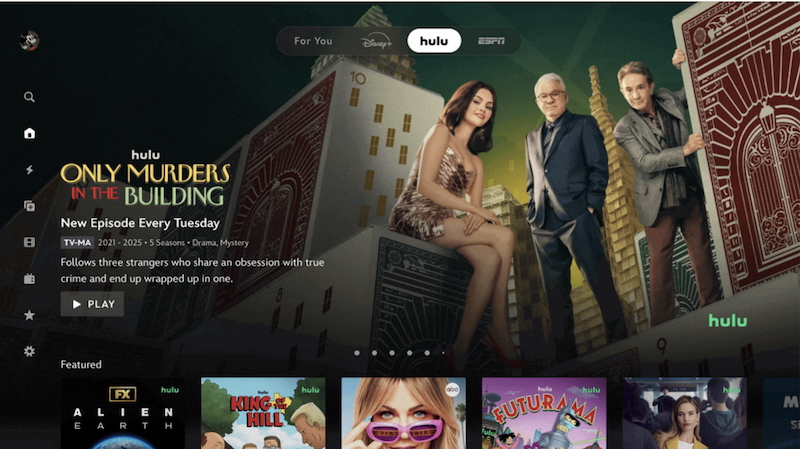
    BURBANK: Disney is ditching Star. From 8 October, Hulu—until now available only in America and Japan—will become the entertainment brand for adult content on Disney+ in international markets. The move sets the stage for a full merger of Disney’s streaming apps next year, as the media giant tries to simplify its cluttered digital offering.

    The rebrand comes with a sweeping redesign of Disney+. Subscribers will encounter a new “For You” landing page, powered by algorithms that promise to learn viewing habits over time. A navigation bar across the top splits content by service—Disney+, Hulu and ESPN—whilst a “Live” hub corrals news, sports and round-the-clock streams into one place. New badges will flag season finales, fresh series and recently added films.

    Behind the scenes, Disney has rebuilt its recommendation engine from scratch. The new system will surface personalised suggestions across the platform, with user profiles made more prominent to keep viewing habits separate. The homepage gets a visual refresh too: a video carousel replaces static images, brand rows showcase the latest releases with cinematic artwork, and the overall design aims for something sleeker and more modern.

    Mobile users will see widgets arrive on iOS devices, offering one-tap access to shows and films. Disney promises “mobile-first” features in the coming months, though it has kept details vague. The company describes these changes as merely the opening salvo, with more updates planned before the unified app launches next year.

    The timing is no accident. Disney has been haemorrhaging money on streaming—its direct-to-consumer division lost $512m in the most recent quarter—and needs to cut costs whilst growing subscribers. Consolidating brands and improving discovery could help keep viewers hooked, reducing the churn that has plagued the industry. Whether audiences embrace the changes or simply long for the days when finding something to watch wasn’t quite so algorithmic remains to be seen.

  • NBA takes a shot at AI with AWS as its official cloud partner

    NBA takes a shot at AI with AWS as its official cloud partner

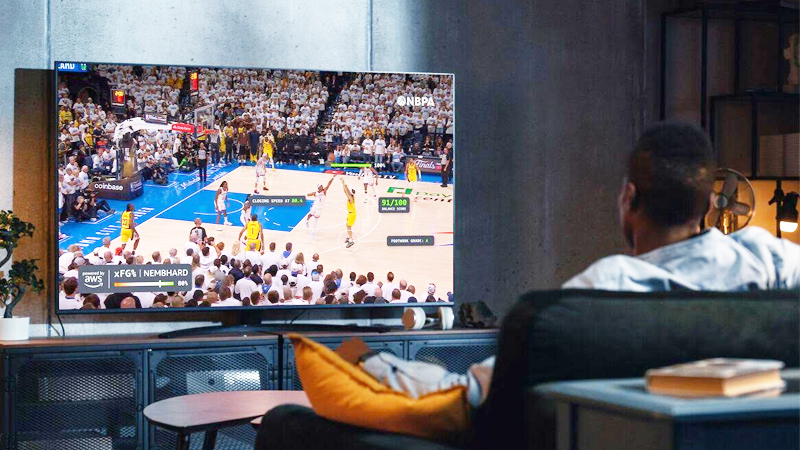
    MUMBAI: From slam dunks to cloud chunks, basketball is getting a digital makeover. The National Basketball Association (NBA) has inked a multi-year deal with Amazon Web Services (AWS), making the tech giant its official cloud and cloud AI partner across the NBA, WNBA, NBA G League, Basketball Africa League and NBA 2K League.

    The partnership will tip off with the launch of NBA Inside the Game powered by AWS, a basketball intelligence platform designed to crunch billions of data points and spin them into real-time insights, snappy stats and interactive fan experiences. Think play-by-play breakdowns, AI-driven analysis, and content that takes fans closer to the action than ever before whether on the NBA App, NBA.com, or social channels.

    “Partnering with AWS provides us with an opportunity to elevate the live game experience through innovation and offer fans a deeper understanding of the game of basketball for years to come,” said NBA executive vice president and head of media operations and technology Ken DeGennaro. “AWS has a proven track record of delivering unique statistical insights and offering transformative experiences that will resonate with NBA fans around the world.”

    For AWS, it’s a chance to show off how its AI infrastructure and cloud firepower can change the game. “At AWS, we’re excited by the NBA’s vision to push the boundaries of what’s possible in sports. This partnership will showcase how cloud and AI can reimagine the game of basketball from generating new insights to creating experiences that bring fans closer to the game they love,” said AWS vice president of professional services & agentic AI, Francessca Vasquez.

    The deal not only strengthens AWS’s growing sports tech portfolio but also positions the NBA as a pioneer in using AI and cloud-driven storytelling to keep fans dunking into data and drama. With this courtship, the game won’t just be played on hardwood—it’ll be streamed, simulated, and supercharged in the cloud.

  • Subscription economy will balloon to $1.2 trillion by 2030 as consumers drown in services

    Subscription economy will balloon to $1.2 trillion by 2030 as consumers drown in services

    HAMPSHIRE: The subscription economy is heading for $1.2 trillion by 2030, up 67 per cent from $722 billion this year, according to Juniper Research. But consumers are growing weary of endless monthly bills, and providers face a reckoning: deliver distinctive value or watch customers bail.

    Digital video services will dominate, accounting for over a third of global subscription spending by 2030. But the fastest-growing category is mobility-as-a-service, where users subscribe to access multimodal transport. That market will explode by 540 per cent between 2025 and 2030.

    The growth masks a brewing crisis. Simply mixing adverts with subscription fees whilst raising prices is not a long-term solution, warns Juniper Research fintech research vice-president Nick Maynard. “As consumers grow increasingly weary of endless subscriptions, providers must deliver distinctive value to maintain growth. Simply relying on hybrid models risks alienating already fatigued customers.”

    The fix, according to Juniper, is bundling and flexible management. Combining subscriptions into bundles allows users to make informed decisions with a single view. Add flexible management options and users feel more empowered—which increases satisfaction and reduces churn.

    “Managing subscriptions can be a challenge for consumers, particularly as the number of subscriptions increases,” said Maynard. “We have seen many bank and fintech apps focus on subscription management as a key issue for users. Therefore, subscription providers must look at bundling and flexible management to ease the user experience, or they will lose control of subscription management to third parties.”

    The warning comes as banks and fintech firms increasingly position themselves as subscription gatekeepers, offering tools that let users track, manage and cancel services from a single dashboard. If subscription providers don’t simplify the experience themselves, they risk ceding control to intermediaries.

    Juniper’s study analysed over 71,500 datapoints across 61 countries over five years, making it the most comprehensive assessment of the subscription economy to date. The research includes a competitor leaderboard and examination of future market opportunities.

  • Gracenote says advertisers are botching connected TV with wrong targeting tactics

    Gracenote says advertisers are botching connected TV with wrong targeting tactics

    NEW YORK: Connected television was supposed to be the performance marketer’s dream: precision targeting on the biggest screen in the house. A decade in, it’s not delivering. American advertisers will spend $26.6 billion on CTV this year, up 12 per cent from 2024, according to the IAB. Yet 27 per cent cite lack of insight into whether ads reach their intended audience as their top challenge. Nearly a third rate CTV only “moderately effective” despite pouring money in.

    The problem is a mismatch between strategy and medium. Marketers are treating CTV like social media—chasing users with demographic and behavioural targeting—when they should be focusing on what people watch, not just who’s watching. A Gracenote survey of 600 American brand and agency executives found 30 per cent rank brand awareness as their top CTV objective, with customer retention a distant fourth. Yet 80 per cent still prioritise audience-based targeting over contextual approaches.

    “CTV has not delivered the scale and premium reach that marketers expect of the largest screen in the house largely based on the use of narrow targeting tactics,” said Gracenote VP of partnerships Jake Richardson. “By taking better advantage of contextual targeting capabilities with their CTV campaigns, they have new opportunities to drive both return on ads spend and the scale they’ve been looking for.”

    The irony is sharp. CTV now accounts for 48 per cent of American viewing time, overtaking live television’s 46 per cent in the first quarter of 2025. Ad-supported content makes up 45 per cent of streaming viewership. The audience is there, engaged and watching ads. But marketers haven’t adapted their playbook.

    Nearly 46 per cent of survey respondents have shifted at least 26 per cent of their budgets to CTV over the past three years. Among financial services, retail, technology and healthcare brands, that figure rises to 52 per cent. A quarter now allocate 40 per cent or more of total budgets to CTV. Yet confidence remains shaky. Only 28 per cent consider their CTV spending “extremely effective.”

    The culprit, according to Gracenote, is fragmentation and missing metadata. With 85 per cent of CTV buys purchased programmatically, incomplete or inconsistent content data leaves platforms blind. Nearly 70 per cent of respondents say lack of standardisation is at least a modest challenge when developing campaigns.

    Free ad-supported television (Fast) channels illustrate the problem. Gracenote tracked nearly 1,850 active Fast channels distributing more than 182,000 programmes as of July 2025. Pluto TV, Tubi and The Roku Channel accounted for 5.7 per cent of total American television usage in May 2025, up 36 per cent year-on-year. Yet the metadata is patchy. Before enrichment, 55 per cent of sports programmes on  Fast  channels lacked original air date information. A sample of 28 sports programmes shared by Rain the Growth Agency found only eight included proper content titles—three simply said “tv.”

    This matters because knowing whether a sports event is live, which teams are playing, or whether it’s a playoff game is crucial for advertisers. TV listing data can distinguish an MLB game between the Los Angeles Dodgers and San Francisco Giants from a Liga MX match between Santos Laguna and Pumas UNAM—both aired live on Fast channels on 12 July 2025.

    When asked if standardised content metadata would boost confidence in CTV planning, 62 per cent of respondents said yes. More than half said it would justify higher spending. When asked about TV schedule information, 72 per cent said it would help with planning and investing—rising to 78 per cent among financial services, retail, technology and healthcare advertisers.

    The solution, Gracenote argues, is contextual targeting at programme level. Only nine per cent of respondents currently prioritise this approach, compared with 29 per cent for demographic targeting. Yet contextual signals—knowing a programme has a TV-MA rating, includes adult language, has a gritty mood, or involves arms trafficking—provide the brand suitability insight that audience targeting can’t.

    The pitfalls of over-focusing on existing customers are well documented. Nike’s 2020 direct-to-consumer pivot, which neglected broader brand building, became a cautionary tale last year. Despite CTV’s addressable nature, excluding anyone outside the funnel inhibits future growth. Marketers want CTV for brand building, but to capitalise they’ll need to embrace a simple truth: what people watch matters as much as who’s watching.

    The survey was conducted online between 10 and 20 July 2025, polling brand and agency associates with director-level titles or above across media, entertainment, telecommunications, retail, financial services, automotive, consumer goods and healthcare.