Category: Over The Top Services

  • Red Chillies taps into young audience for ‘Dilwale’ via Hotstar tie-up

    Red Chillies taps into young audience for ‘Dilwale’ via Hotstar tie-up

    MUMBAI: Red Chillies Entertainment’s Shah Rukh Khan – Kajol starrer Dilwale in association with Rohit Shetty Productions has drawn up a comprehensive plan to reach young digital audiences by inking a strategic marketing alliance with Star India’s over the top (OTT) platform Hotstar.

    Dilwale’s promotions on Hotstar kid-started almost five weeks before its scheduled release.

    The production house has employed a start-to-end approach, which is showcasing all the great video elements released – starting from the trailer to two song videos and entertaining behind-the-scenes videos. Additionally, a one-hour video with Shah Rukh Khan and Kajol for Hotstar’s original show M Bole Toh has also been specially shot. The content momentum will be sustained right through the release weekend from Friday – Sunday.

    Dilwale content will also reach Hotstar’s film-lovers worldwide through Hotstar.com, with cross promotions across the Star network’s international TV channels. The TV cross-promotions of the Dilwale content on Hotstar will also roll out in India across Star Network channels.

    The Dilwale content will also be cross promoted across tentpole hotstar properties like On Air with AIB, Cricket, ISL and EPL amongst others.

    Dilwale marks the return of Khan and Kajol on screen. The movie, directed by Shetty, also stars Varun Dhawan and Kriti Sanon.

    Red Chillies Entertainment CEO Venky Mysore said, “Dilwale is the biggest film we have made and therefore we decided to promote it across all platforms, especially via Hotstar. Hotstar is a unique platform for a large, fast-growing and important young digitally active audience, which is an important segment for any film marketer today. We have taken a pure content-driven approach with several Dilwale video elements. We are delighted with the great response and the reception it is receiving through Hotstar – both in India and, through its website, across the world.”

    Hotstar head Ajit Mohan added, “We are delighted to partner with Dilwale to introduce an exciting movie to our audiences in India and across the world through hotstar. Hotstar is introducing a whole new way of promoting and marketing a movie premiere, and I must compliment Red Chillies Entertainment for their strategic, and brave new approach to reach a large and young digital audience in India and worldwide.”

  • YuppTV launches on-demand movie streaming service

    YuppTV launches on-demand movie streaming service

    MUMBAI: Over-the-top (OTT) player YuppTV has launched its on-demand movie streaming service called YuppFlix.


    Backed by its library of more than 5000+ movies in 12 languages, YuppFlix will offer users on-the-go entertainment across genres like comedy, thriller, romance, action, drama and devotional.


    YuppFlix will offer instant movie updates through ad campaigns and push notifications, internet premiers of upcoming movies.


    Speaking on the launch, YuppTV founder and CEO Uday Reddy said, “The Indian expat communities living overseas have limited access to legal regional movie content. Having established YuppTV as the digital destination for over-the-top Indian content, we felt the time was right for us to launch YuppFlix as the premier on-demand digital movie solution for Indian expats. With our extensive database of movies in Tamil, Hindi, Telugu, Malayalam, Bengali, Punjabi and Kannada, we are confident of delivering high-quality digital movie solutions for our users across the globe.”


    YuppFlix’s catalogue has over 25,000 hours of on-demand content accessible with a subscription.

  • YuppTV enters Red Herring’s top 100 global company list

    YuppTV enters Red Herring’s top 100 global company list

    MUMBAI: YuppTV, an OTT platform, has entered the reputed Red Herring’s list of top 100 global awards. The awards identify and honour the leading private companies from North America, Europe and Asia.


    Red Herring’s list is a mark of distinction for promising new companies and entrepreneurs.


    Red Herring CEO and publisher Alex Vieux said, “Choosing the companies with the strongest potential was by no means a small feat. After rigorous contemplation and discussion, we narrowed our list down from hundreds of candidates from across the globe to the top 100 winners. We believe YuppTV embodies the vision, drive and innovation that define a successful entrepreneurial venture. YuppTV should be proud of its accomplishment.”


    Red Herring’s editorial staff evaluated the companies on both quantitative and qualitative criteria, such as financial performance, technology innovation, management quality, strategy, and market penetration. This assessment of potential is complemented by a review of the track records and standing of start-ups relative to their peers, allowing Red Herring to see past the “buzz” and make the list a valuable instrument of discovery and advocacy for the most promising new business models from around the world. 


    Speaking about the new accomplishment, YuppTV CEO and founder Uday Reddy added, “When we were recognized as one of the top 100 North American companies earlier this year, we were absolutely thrilled with the distinction especially given that there were so many great companies. However, to have been selected as one of the top 100 global companies really confirms our belief that we have a service that our customers love and that so many new customers around the world will want.”

  • Balaji Telefilms denies specific intent to sale of stake in digital business to global firm

    Balaji Telefilms denies specific intent to sale of stake in digital business to global firm

    BENGALURU: Balaji Telefilms Limited has denied any specific intention of selling a stake in its digital business to a global firm  in a response filed at the bourses. The Stock Exchange had asked for a clarification from Balaji Telefilms about a report published in the Economic Times that said the Balaji Telefilms was in talks with a global firm to sell a 20 percent stake, and the deal valued Balaji’s digital business at Rs 1,900 crore.


    In its response, Balaji Telefilm said that the company, during its normal course of business, keeps exploring various opportunities to enhance shareholder value, including fund raising opportunities. There are, however, no specific discussions/negotiations by the company regarding sale of its stake in the digital business subsidiary. The response says that Balaji Telefilms was cognizant of its regulatory responsibilities and would keep the Stock Exchanges informed in case of any specific developments.


    The response further said that Balaji Telefilms was working towards getting the necessary approval(s) from its shareholders in the matter which was already informed to the Stock Exchanges in its Outcome of Board Meeting  letter date November 9, 2015, stating that the Board of Directors of the Company in its meeting held on November 9, 2015, had approved to raise funds not exceeding Rs 250 crore by way of QIP/GDR/ADR/FCCB/other securities linked to equity/preference shares/any security or instrument representing convertible securities and to increase the authorised share capital of the company  from Rs 20 crore to Rs 26 crore, subject to approval of shareholders.


    Balaji Telefilm said that it had no comment to offer on the price movement mentioned by the Stock Exchange letter, as this was a function of the market.

  • After IPKKND, five other television shows OTT can bring back!

    After IPKKND, five other television shows OTT can bring back!

    MUMBAI: Some time ago, television lovers were pleasantly surprised when Star India announced that it was bringing back one of their most loved TV shows and chart toppers,  Iss Pyaar Ko Kya Naam Doon as a web series on Hotstar. The web series would not be made up of repeats. An eight episode mini-serines with brand new content titled Iss Pyaar Ko Kya Naam Doon Ek Jashn was planned

    Under the ‘Entertainment Mafia’s’ banner of productions, each episode will be 10 mins long and will take the lead characters’ ‘Arnav’ and ‘Khushi’s’ story forward since the serial went off air 3 years ago..

    Read more here

    It wouldn’t be an exaggeration to say Iss Pyaar Ko Kya Naam Doon is what made its leads, Sanaya Irani and Barun Sobti into the superstars that they are today. The show went off air in 2012 leaving its huge fan base in both India and abroad wanting for more. So much so that they strived hard to keep forums discussing the show alive with fanfics and self-compiled music videos. Now that the show is back, albeit for a brief period that is eight 10 minutes per episode long, fans are ecstatic over the development. Some are even hopeful that this will become a trend, so that they can reconnect with their favourite shows that went off air.

    Revisiting old shows that had built a sense of loyalty and fan base amongst viewers  is a great way to introduce traditional television watchers to their Over The Top services  like — Ditto TV for ZEEL, Sony Liv for Sony, and of course Hotstar for Star India.

    Getting a time slot during the television prime time band is difficult considering the tough competition between channels to garner more eyeballs and more so, in the Hindi GEC genre. Shows with slightly unconventional content, which didn’t strike well with all demographics at the same time often needed to be pulled off to make space for the next big thing. In fact 2015 saw many shows with very short life spans, they didn’t even make it through half the year.

    Being a more dedicated, customisable and targeted platform, OTT can be a great way to re-introduce such shows and give them another run chance to cultivate a niche audience.

    Taking a cue from Star India, Indiantelevision.com has compiled a list of popular shows that went off air, shows which can be revisited through the networks’ respective digital arms.

    1: Left Right Left [ Air time:  2006 – 2008 on Sab TV ]

    Under DJ’s Creative Unit’s production  banner, the youth centric show Left Right Left came as a daring move from Sab TV when contemporary Hindi GECs were sticking to the ‘saas bahu’ formula on the prime time slot..

    With its catchy opening song to edgy content and a powerful team of young actors including Rajeev Khandelwal as Captain Rajveer Singh Shekhawat, Left Right Left was a show ahead of its time when it comes to the youth genre in Indian television. Perhaps that’s why it earned itself a season two on the channel, though it wasn’t able to create the same fervour as its predecessor. None the less, fans of the show are still seen raving about it, and watching its repeats on YouTube. The show’s opening song and episodes that have been uploaded on YouTube see frequent traction as well. Relaunching the show on Sony Liv might bring a smile on the faces of these fans.

    2  Pavitra Rishta: [ June 2009 to October 2014 on Zee Tv]

    In Balaji Telefilms’  trademark mark style,  soap opera Pavitra Rishta  had a unique positioning with its audience —  it was not only appealing to the mothers and aunts in the family, but progressive ideas and dynamic actors like Sushant Singh Rajput and Ankita Lokhande, allowed several youngsters to take interest in the show. The actors’ successful careers post the show only proves how popular it was. Not to mention the show’s reel couple ended up being a couple in real life.

    With close to 1500 episodes, the show has a huge fan base, as is obvious from a slew of Facebook groups and other fan clubs that regularly update their fanfics. While both the leads of the show have gone on to shine in the industry, making the idea highly unlikely, but returningPavitra Rishta on Ditto TV sounds like an awesome idea to the millions of fans of the show. ZEEL are you listening?

    3. Manmarziyan:  [ April 2015 to August 2015 on Star Plus ]

    Created by Swastik Pictures, Manmarziyan addressed the young independent women in India whose idea of a successful life isn’t marrying rich and settling down, but chasing after their dreams. The show was an experiment for both the channel as well as the production house

    With this modern approach content, the show struck a chord, but, only with a niche audience and therefore had to be pulled off air. Post which many fans of the show came with several petitions to see it back on air. As a response to them, if not on television, Manmarziyan can be brought back and continued on Hotstar.

    4. Na Bole Tum Na Maine Kuch Kaha [Jan 2012 to Oct 2012, 2013 on Colors TV]


    With a very unique storyline, Sunshine Productions’ Na Bole Tum… was yet another show that left tele lovers asking for more, so much so that the craze remains even after the second season aired on 2013 with a 12 year leap from the first season. Aakanksha Singh and Kunal Karan Kapoor emerged as powerful actors throughout the series and connected the audience to the not so conventional characters, Mohan Bhatnagar and Megha Vyas. Log on to any popular television drama fan club or group on the web and you see fan letters and petitions pouring in requesting a season three! With  the Colors TV lineup packed with new shows, fans may have to hold on to their season three plans, unless the recently announced VOD service from Viacom 18, VOOT takes up the chance and offers the show’s fans a chance  revisit to their favourite show.

    5. Geet Hui Sabse Parayee: [ April 2010 to December 2011 on Star One]

    Another gem from Star India, Geet Hui Sabse Parayi, is known for several reasons — for touching upon a serious social issue, for introducing yet another unconventional heroine, and for the sizzling chemistry and jaw breaking comic exchanges between the leads  Drashti Dhami and Gurmeet Chaudhary. Produced by Endemol, the show was well received by both youngsters and the plus 40 viewers.  The popularity of the Drashti-Gurmeet couple on screen was perhaps only next to Sanaya and Barun Sobti in Iss Pyaar Ko Kya Naam Doon. In fact, for some, Geet and Maan still remain the classic bubbly girl and angry young man pair on small screen.Though the show had to be axed due to the channel undergoing a revamp, several fans maintain an active fan page for it.

    Fan made videos featuring the leads in latest romantic songs have entertained fans of the shows even now. Ask them if they wish the story continued from where they left off, you would get an emphatic and unanimous yes! So maybe after IPKKND Hostar can pick up Geet for them?

    While we have listed just five, there are several other shows that fans would love to have back in a cool new digital avatar.

  • Few Brave Men: AIB’s journey so far on Hotstar

    Few Brave Men: AIB’s journey so far on Hotstar

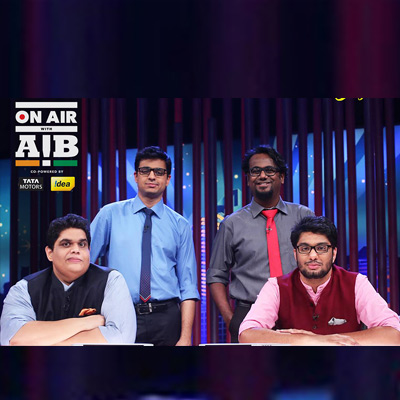
    MUMBAI: Peter Ustinov once said, ‘Comedy is simply a funny way of being serious’. Ustinov’s take on comedy has not been entertained much in India until now.  That is, until All India Bakchod (AIB), and how well they are known for doing the things which are not supposed to be done. And one of things that are not to be done is the new show ‘On Air with AIB’, with tagline of 'Tragedy mein Comedy’, a satire on social and political issues with information and humor.

    On Air with AIB consists of 20 episodes, 10 each in English and Hindi. So far, 4 episodes have been streamed on Hotstar and telecast on Star Plus and Star World for Hindi and English viewers respectively.  

    On Air with AIB haaddressed issues such as the Bihar elections, Police brutality, outdated government laws, Fire safety, Corruption, and Mysterious deaths of whistleblowers. The episodes are approximately 23 minutes long. The fourth English episode of On Air with AIB addressed the social media silliness that followed the Paris terror attacks and about the public spaces which are being acquired by rich.

    But then news comedy has been attempted before when Shekhar Suman did it way back in 1997 with the evocatively named Movers and Shakers. It did work that at time and with On Air with AIB, the expectations are high, people expect them to be humorous, sarcastic and gibe to a new level, because of their earlier shows and videos on the digital platform.

    For the starters On Air with AIB was promoted via a hilarious series of hoardings designed to resemble political posters.

    On Air with AIB’s format has been compared to American shows like Last Week Tonight with John OliverLate Night with Seth Meyers which focus on political, social issues. AIB's founding member Tanmay Bhat explains, “The format has been there from long time. We had shows’ in India, but they have been very light, On Air with AIB is a factual news show. There have been many comment based shows, but they’re nothing like what we are doing. There have been other comedy shows which addressed social and political issues like Satyamev Jayate which had serious approach toward the issues discussed. “

    He further adds, “We want to raise the issues , issues which are not being covered but are relevant for people across demographic and geographical differences,  that cater to both urban and rural audiences." 

    Bhat says that On Air with AIB has been a good experience, its format was new for his team, but it has been very challenging and great fun. Though AIB were the pioneers of humor and roast comedy in India, factual comedy has not been easy for them.

    Tanmay adds, “It has been completely different from what we used to do. We are not used to news comedy. This is the first time we are doing a show which is a heavily researched content based show. It has been a difficult process to perform, but at the same time it has been an enriching experience. We have a 15 member research team, we have to go through PDFs, research documents and government sites.”

    “Our teams have face challenges like how do we deliver the issue to the audience? How can it be simplified? How do we present it to 20 year olds and make them smarter and informed?”

    On Air with AIB is produced in two languages – English and Hindi. For the English feed, Rohan Joshi and Ashish Shakya take the charge whereas the Hindi feed is executed by Tanmay Bhat and Gursimran Khamba. It is the first time the team has been divided into two parts. Tanmay explains, “The division is because of the format and language feed of the show. I and Khamba are more comfortable speaking in Hindi. But we could swap if we felt the need."

     AIB has 11.7 lakh followers on Twitter. Its Facebook page has close to 17 lakh likes. On YouTube, the group has more than 14 lakh subscribers. The response has been overwhelming states Tanmay, “People comment, applaud and are outraged. On Air with AIB is creating awareness amongst people, every time we talk about any issue on the show, people respond to us as they did not know about the issues we speak on earlier."

     “OTT has provided a platform for us, not only as creators and artist and at the same time the broadcast players get original content. OTT gives content creators a better distribution channel."  Tanmay explains.

    The show is produced by Only Much Louder (OML), who also manages AIB and the deal between Hotstar and OML is for three years.

     Speaking on the deal with AIB, Only Much Louder Limited director Ajay Nair said, “The show format needs a fair amount of resources. AIB has been on YouTube for long time but this time we wanted to do a long format. We have been working and researching for quite a time with a large team. We were talking to other platforms besides Hotstar, and it worked well with them. Apart from OTT they wanted to take to television which was good deal. As you can see, it is doing really well. ”

    Whether it is YouTube or Hotstar or DittoTV or Zenga TV or Hooq or Voot or Are or nexGTv, all players have taken their first few steps to understand what consumers want, how they want to consume their content, and how much are they are willing to transact to view that content.

    Nair revealed, “It is as expensive as any other television show. We manage other artists also besides AIB, we do lot of thing on digital and then we look at other platforms. We focus on all the platforms; 25 per cent to 30 per cent focus on other platforms and up-to 70 per cent on YouTube. The Hotstar app is free, it is not subscription based."

    Despite the factual news format; it's always good to see serious facts wrapped in humor. The last question remains is whether All India Bakchod will be able to keep the pace of critical social conversations that John Oliver and John Stewart kept in their shows. Will AIB keep up their voices? Will they sustain the expectations put up on them? Well, only time will tell.

    A quote by Nathaniel Branden penned comes to mind, “The first step toward change is awareness. The second step is acceptance.” AIB is creating the awareness part and the audience has to accept it.

  • Mobile Video Monetization: The Way Forward

    Mobile Video Monetization: The Way Forward

    Players in the delivery ecosystem must start collaborating to increase the size of the market; Simplified regulatory framework that facilitates content-sharing needed.


    Digivive’ flagship, award-winning application nexGTv offers users entertainment across multi-screen devices, be it mobile, tablets or laptop/PCs. The choice of entertainment is a suite of movies, Live TV, TV shows and videos. Besides ranking among the top 10 entertainment applications in App Stores, nexGTv has also won ‘The Best Digital Experience’ award at the prestigious World Communication Awards 2014, at London. It runs seamlessly across 2G/EDGE/3G/4G and Wi-Fi networks across platforms such as Android, iOS, BlackBerry and Tizen, enabling consumers to remain entertained irrespective of bandwidth limitations and operating platform. Digivive’s General Manager of Marketing Gaurav Sahni shares his perspective about monetizing one of the most exciting mediums  today – mobile video.


    Rise of OTT and Mobile Video


    Wikipedia defines ‘entertainment’ as ‘a form of activity that holds the attention and interest of an audience, or gives pleasure and delight’.That definition is so very apt, but nowadays, another keyword is rapidly becoming part of this definition – i.e. mobile. It’s increasingly becoming the new mass media for information, supplanting traditional media channels, even the internet, which is starting to bring about an inevitable transformation into our social, demographic, and psychological work environment, impacting usage and consumption in varied ways.


    Going forward, mobiles and more especially smartphones are expected to become the main drivers or carriers of all kinds of information including entertainment. Like in the rest of the world, the ongoing digital transformations in India including access to mobile internet are progressively catalysing the move towards rapid penetration of mobile entertainment including audio and video (includes Live TV, Video on Demand, TV Shows, Movies, etc.). However, growth in mobile video is expected to far outstrip the growth in mobile audio. In fact, reports indicate that mobile video is expected to form nearly three quarters of all mobile data traffic by 2019. A recent Ericsson Mobility report highlighted that India showed the fastest growth in net additions to mobile subscriber base followed by China. Current IAMAI and KPMG reports indicate that India will have around 236 million mobile internet users by 2016, and 314 million by 2017 which echoes reports from other sources.


    The explosive growth of smartphones in India over the past couple of years indicates the keenness of Indian audience to stay abreast and embrace the latest digital trends. Social media,  content sharing, e-shopping and permeation of 3G networks together with steps undertaken by  telcos to launch 4G have created an undisputable case for mobile entertainment, fuelling enthusiasm of content players and consumers alike. In fact, a lot of industry experts expect 4G to be an inflection point for mobile video in the coming years. Rising incomes, including a proportionately higher spend on entertainment is expected to be supplemented by an increase in internet-enabled devices, cheaper handsets and availability of affordable data plans.


    According to industry reports, mobile video traffic exceeded 50 percent of traffic for the first time in 2012 globally. With data consumption outstripping voice traffic on networks and growing in an unprecedented manner, demand for content availability over multiple platforms such as mobile, tablets and laptops, is creating new opportunities for content owners, providers, publishers, communication service providers as well as technology providers, all of which are now working to not only understand, but also leverage these radical changes for business growth and consumer benefit.


    With service provider owned data pipelines stabilizing, internet access has revolutionized the entire Over-the-Top (OTT) business ecosystem, not only creating new businesses but also newer ways of working that have opened  up innovative revenue streams even for existing ventures. OTT video – a prime example is growing in leaps and bounds, aided by a growing consumers push to consume video anywhere, at any time and on any device.


    These developments are not just affecting existing industry dynamics and setups but throwing up new challenges that have the power to format entire media, mobile, entertainment, regulatory and content ecosystems. While the Indian OTT market is comparatively nascent, it nevertheless holds substantial promise for both free (ad-supported) and paid (subscription-led) services, given the rising smartphone penetration in most cities, citizen and subscriber mobility, complimented by enhanced data usage on the networks.


    Monetizing Mobile Video: The Way Forward


    Industry participants including providers of services, content, publishers and broadcasters alike have started to realize the potential of mobile TV and video. For content owners and broadcasters, OTT means new distribution opportunities, opening avenues to expand viewership and revenue both via paid and advertising models. For service providers, OTT creates a new revenue generation opportunity by ensuring delivery of entertainment at the last mile, using their data pipes.


    With mobile emerging as one of the most effective and truly personal advertising platforms, companies are devising ever newer strategies to target and engage audiences via innovative and programmatic formats which are increasingly becoming self-learning or intuitive. Aside from social networking, mobile are the ‘media of choice’ for online bookings, financial transactions, shopping, essential services, entertainment and even employee communications. Tech companies are increasingly using such platforms for targeted communication while promoting their apps.


    However, like all industries, the rapidly evolving mobile video domain in India is also facing its own set of emerging challenges. As competition over viewers, advertisers, eyeballs, content, pipelines, hits, and subscriber lifecycles intensifies, lack of consensus over reporting metrics, pricing, formats, network quality of service (QoS) and likely revenue share serve to dampen an otherwise spirited and expanding market. There is also uncertainty over choosing mobile web or in-app channels for meeting advertisement targets.


    In spite of the above concerns, mobile video has proven to be highly successful in several markets, delivering higher user engagement on mobile devices. Of late, advertisers have also started to embrace video advertisements on the mobile as part of their cross-channel strategy.


    The question about having an ideal monetization framework that splits available revenue evenly between all players however, remains. In order to monetize the opportunity, content owners, broadcasters, aggregators, publishers and service providers need to start collaborating to first define and increase the size of the addressable market. With television and cable transmission going digital, there exists tremendous scope of expansion under the framework of the Government’s digital inclusion program especially in Tier 2 and 3 cities and beyond for an entertainment-starved populace.


    Much like the Cable and TV industry, creation of a progressive and simplified regulatory framework that facilitates content-sharing, boosts access to mobile entertainment, and ensures a level playing field for all is also a critical need of the hour. While ‘content’ is increasingly regarded as King, the industry is rapidly realising the role and importance of every other player including aggregators, advertisers as well as bandwidth owners or service providers to ensure the creation, curation and delivery of a complete and immersive mobile entertainment experience.


    Additionally, while advertising has been and remains a proven mechanism to earn revenue or recover cost, players in the digital and mobile ecosystem as well as end-consumers, are increasingly realizing that creation and distribution of quality content is costly. ‘Subscription’ therefore, appears to be a viable mechanism being slowly embraced by industry players.


    To each his own seems to be the short-term mantra and while one can see the entire category being rife with innovative business models, an ideal or near perfect monetization structure seems to be sometime away, given the proliferation and abundance of not just content, but also mobile TV apps, together with a consumer base that is highly fragmented and keen on ‘digital snacking’.


    The information shared, views and opinions expressed in this article are those of the author and do not necessarily reflect the scope of knowledge and views of The Indian Television Group, its affiliates, or its employees.



  • What Indian OTT players can learn from the US market

    What Indian OTT players can learn from the US market

    India’s consumers are just about beginning to experiment with video on demand content delivered over the internet. And a flood of OTT platforms and content creators has suddenly flowed onto the digital highway. Whether it is YouTube or Hotstar or DittoTV or Zenga TV or Hooq or Voot or Arre or nexGTv they have taken their first few steps to understand what consumers want, how they want to consume their content, and how much are they are willing to transact to view that content. 


    More evolved OTT markets like the US have already got a headstart and have got immense learning thanks to the availability of fat pipes of bandwidth making OTT almost ubiquitous. Can Indian OTT players learn from those experiences? Some tend to disagree, because the Indian consumer is unique and as different from the American subscriber as chalk is rom cheese. 


    But nonetheless for those who want to still find out how the US OTT market is performing and have not managed to get their hands on this study we are encapsulating it for you. Clearleap is a company that works with the likes of HBO, Scripps, and A+E Networks to deliver viewing experiences across screens. It has conducted a survey to learn more about which streaming services US consumers use, what their viewing habits are, and what they value most in an OTT offering. The results offer a look at how average users perceive streaming services, and how they engage with them.


    The Key Takeaways from the report are:


    Going OTT isn’t an option anymore – it’s a mandate. To stay relevant, reach audiences and grow revenue, content providers need to not only provide a streaming option to consumers, but also address the unique behaviours of today’s younger television viewers. In order to be successful in today’s television market, prospective OTT providers should follow the best practices below:


    (a) Ensure a good value. Consumers are willing to pay slightly more (up to $25 per month) if the service has the content they want. Balancing great content and a fair price is the key to attracting viewers and minimising churn.


    (b) Make it easy to browse, discover new content, and channel surf. While younger viewers may be more knowledgeable about what they want to watch after they log in, older viewers may not be as familiar with the content available on each service. Improve your user experience by including simple features that encourage discoverability and surface relevant content proactively.


    (c) Optimise for screens of all sizes, as tablet and smartphone viewing is significant. Mobile video will only grow in popularity. Get ahead of your viewers’ evolving habits by optimising your service for all screens at launch, and offering apps on key devices such as streaming boxes, mobile phones, and gaming consoles.


    (d) Offer tiered pricing solutions to match login-sharing habits. Especially since younger streaming service users are prone to sharing, new services should offer tiered subscription packages that prompt users to pay slightly more to watch content on multiple devices at the same time.


    (e) Consider the gaps in the market. While movies and TV series are widely available on Netflix, Amazon, and Hulu, live television is missing from the streaming market. Many current streaming service users wanted broadcast channels (41.26 per cent) in their ideal offering, with sports (28.15 per cent), local (20.28 per cent), and news (15.91 per cent) also highly rated by respondents. Content owners should capitalise on the white space by investing in live content that isn’t already easily accessible online.


    To Read the full report, click here

  • YuppTV includes Al Jazeera on its platform for global consumption

    YuppTV includes Al Jazeera on its platform for global consumption

    MUMBAI: With an aim to provide comprehensive content that includes quality international news to subscribers in many key markets around the world , except for USA, YuppTV today announced the launch of the globally recognized ‘Al Jazeera’ news channel on its platform and added another news services provider to its bouquet of offerings


    Announcing the launch, YuppTV CEO Uday Reddy said, “We are thrilled to launch Al Jazeera English for consumers across the world today, except for the USA. Al Jazeera English is a fresh voice in international news and we believe the channel will offer pioneering news viewing experience to people. We strongly believe our viewers will benefit from this launch immensely.”


    Al Jazeera Media Network Executive Director of Marketing and Distribution Abdulla Al Najjar said, “The mission of Al Jazeera is to deliver captivating content which tells the human story; we are therefore naturally excited to partner with YuppTV, which is one of the leading over-the-top content players. Al Jazeera English offers audiences, on a variety of platforms, an unparalleled look at the world and shines a light on under-reported regions which are rarely covered by other international news channels. We trust this will mark the beginning of a new and exciting international partnership.”


    YuppTV says that it is accessible on more than 25 internet enabled devices, delivering more than 200 Indian television channels worldwide in 14 Indian Languages.

  • “There is a market for “failed” and low-budget films on OTT”

    “There is a market for “failed” and low-budget films on OTT”

    Netflix shook up the cinema establishment in the US when it had the temerity to release Beast of No Nation simultaneously in theaters and on its streaming platform. The movie, acquired at a cost of Rs 78 crore, did not do well at the theatrical box office (less than $100,000 gross), but it got more than 3 million views on the Netflix app.


    However, CEO Reed Hastings are going ahead with their strategy of doing simultaneous releases of future projects like The Ridiculous Six, Crouching Tiger Hidden Dragon II in the coming months.


    Indiantelevision.com got in touch with Essel group OTT player ditto TV CEO Debashish Ghosh on what he thought about Netflix ‘s bold gambit, whether it would be tried in India, and whether it would work with Indian viewers.  Read on to hear his views in one of the more entertaining interviews we have had in some time.


    Excerpts:


    Q: Were you stunned by Netflix’s move to do an OTT release for Beast of  no Nation simultaneous with the theatres like the mainline exhibition community in the US was- so much so that they refused to release the film and it got a limited release?

    “Stunned” may well be too sharp a rhetoric – since its not unnatural for subscription OTT platforms to find ways to showcase content PRIOR to standard and accepted platforms. Otherwise why would a consumer pay?

    That’s one of the reasons we at DittoTV are also looking at driving “content before TV / Anywhere” as a proposition as well. Significantly before!

    But please don’t ask for more details as of now – give me 15 days and then we shall give you an exclusive if you want it.


    India is in the nascent phase of OTT. But it has a strong heritage of filmmaking and is probably the largest producer of films worldwide.

    No doubt about that. But the mindset of film producers understandably is different here – especially the mainline ones – as they prefer making money upfront rather than later.  While we understand why, it is still a limiting factor as well – for most OTT platforms – which are not also producers of films as well.


    How large is your film catalogue for OTT both Bollywood and  international?

    We do not yet have a significant International Catalogue of movies but there are some imminent actions on that soon.  As far as Bollywood is concerned – we can only put up content on our platform – for which we have rights. And we have a library of around 3000 movies – which are already up and running.


    Does films get views? How much of your audience watches catalog films on OTT? How much time? And how often?

    Not really – if you ask me. Especially Bollywood – most of those movies are already available in myriad other platforms – and there is no REAL Uniqueness here. And thanks to Pirates and Torrents there will never really be.  So playing the game with the strengths of Movies alone – is not a viable proposition – at least today. And even platforms like YRF or Eros are struggling on account of that fact.

    Having said that – it’s not as though people don’t watch movies on OTT platforms – but it’s few and infrequent and essentially driven by some sort of unique demand – on the part of the consumer (note: NOT the platform). For example : “ I am having a debate about a particular dialogue with my friend and I want to prove a point about a move when I am outside at a bar!” Such scenarios are so infrequent that they don’t drive business case – frankly.


    OTT players have just begun their run in the space with original content for television shows. Is acquiring films exclusively for premieres the logical next step? How far are the Indian players from doing something like Netflix did?

    This question you have to ask Netflix actually. Are THEY making money for the movies that they are acquiring at huge costs and efforts? Or are they doing it because they today have money to spare? And can using it for drumming up PR mileage like your article will serve to do?

    Though that’s strictly not a bad strategy – if you ask me. But then you need to have international valuation and dollars to burn. Most OTT platforms cannot afford it. So it won’t be commonplace. And Business case will NOT let even Netflix sustain the movie strategy for too long.


    Will there be sufficient views for a movie released on an OTT platform? Will there be enough ROI on big-ticket movies on OTT?

    Well not really. But someone like Netflix can surely show the way and experiment – (Thanks to their success and surplus funds) – so that all other platforms can learn at their expense 😉


    Will the exhibition industry accept film premieres on OTT? Or will they revolt like they did in Kamal Hassan’s case?

    Ask the industry – they are the rich folk! OTT people are poor and struggling anyways – don’t rub salt on their wounds.


    Will premiering films on OTT affect the revenue flows from theaters?

    Not at all – to my mind. Theatres and OTT are not just about content – it’s about their respective experiences – and there is nothing overlapping about those distinct experiences.  I won’t say that the audiences are different – because that’s too passe 🙂

    How can Bollywood use OTT platforms better?

    By synergising and using OTT for its advantages. Theatrical and Satellite releases are all about the movie in itself. So instead of treading that trodden path – OTT platforms and Producers can synergise and think together to bring greater value to the consumer. Like releasing unseen footage, shooting goof-ups, candid reactions of stars (post doing a tough shot for instance) etc. – on OTT platforms – over and above the film – or contextual to the film. Digital OTT platforms have many intrinsic advantages that need to be leveraged – which unfortunately neither the Film Industry understands nor do the OTT platforms innovate sufficiently enough – mostly since they are so fund strapped – thanks to paying huge content rights monies to producers.


    There are 800 films released each year. Many don’t make it to the theaters. Some disappear after day 1. Do you think there is a market for such films on OTT? Would it make sense for smaller budget films to take this route? Will you premiere such niche content on your platform? What would the deals look like: revenue shares, or minimum guarantees (MGs) or outright purchases?

    Too many questions in one!  But yes – there is surely a market (even if that’s not a big one) for theatrically “failed” or smaller budget films on OTT. And yes OTT platforms should premiere such content – but as I said producers (big or small) are looking at quick upfront returns. And if their need can be logically channelised – all of this is possible and even more. But mindsets need to change (for the better) for that – and change is always very difficult.

    Such deals should be revenue share and not MG / outright – as the risk is equal on both sides.


    Will films work in SVOD or T-VOD? Or AVOD?

    TVOD or AVOD is where it works for the consumer as of now. But AVOD does not really pay for its costs.  SVOD for movies has not really worked – even for Netflix (remember Game of Thrones?).