Category: Over The Top Services

  • Demand for telco OTT video & broadband; Netflix, Viu long way to go: MPA

    Demand for telco OTT video & broadband; Netflix, Viu long way to go: MPA

    MUMBAI: Media Partners Asia (MPA) yesterday launched the Asia Video Consumer Panel, a research report offering detailed insights into how consumers engage, use and interact with video content in emerging and mature markets, focusing on TV and digital video platforms, including key regional and local OTT video operators.

    MPA, a leading independent consulting and research provider focused on Asia media & telecoms, offers a range of customized services to help drive business development, strategy & planning, M&A, new products & services and research.

    The panel covers six Asian markets – Hong Kong, Indonesia, Malaysia, Philippines, Singapore and Thailand – with a 1,000 user panel size in each market, taking in millennial and older demos as well as skewing towards mobile in emerging markets such as Indonesia, Malaysia, Philippines and Thailand.

    Commenting on the report’s key findings, MPA vice president Aravind Venugopal said: The importance of bundling with telecom and IP-based pay-TV operators to drive online video adoption is becoming critical, as illustrated by our survey. As we are still very much in the first innings of the SVOD online video cycle in most Asian markets, the journey for most platforms from building awareness to generating trial users, and then to finally converting them to regular users, is long and arduous.

    In four of the markets surveyed – Hong Kong, Singapore, Malaysia and Philippines – local players have taken the lead when it comes to building awareness and conversion, led by incumbent pay-TV and free TV operators, a number of which are reliant on local and Asian content, and in certain cases, sports. Global and pan regional SVOD services focused on providing international content, are fighting to take the lead, though conversion has been low in general. In terms of both awareness and conversion, Netflix and iflix both lead in selected markets with Viu also robust across most markets.

    Some of the key highlights of the panel include:

    Telco and pay-TV integration. The importance of bundling and OTT integration deals with telecom and pay-TV operators to drive adoption has emerged as key with most survey respondents indicating that they opted for OTT services via their telco or pay-TV operator. Netflix was an exception, with a high proportion of subscribers indicating that they opted for a direct sign up.

    NPS in negative territory. Net Promoter Scores or NPS, which range from -100 to 100 and measure the willingness of customers to recommend a company’s products or services to others, were largely negative in most markets. The exception was Netflix, which received a positive score in four of the six surveyed markets, and also leads the NPS rankings in four of the six markets surveyed. Users in Indonesia, Singapore and Hong Kong tended to award negative NPS to almost all SVOD-based OTT video service providers. Users in Thailand, Malaysia and Philippines appeared to be more positive about OTT video service providers.

    Key features. Feature sets that were most often highlighted as being essential to users was the ability to stream online video to TV, followed by the ability to download. These are also reflective of the type of content contained in the services, as well as the type and quality of broadband infrastructure available.

    Content. The importance of day and date content, particularly Hollywood movies, was reflected in the survey with the genre coming out on top of the list of ‘must have’ genres for a premium SVOD service. This was closely followed by new Korean dramas, new Chinese dramas and new Hollywood series. Sports is also increasingly important.

    UI /UX and lack of localization. A significant proportion of users indicated that they were unable to locate/find shows in the services – indicating either a lack of content, or limitations of the UI/UX – this, significantly, was highlighted as an issue even for Netflix. A numbers of respondents also indicated that the poor dubbing/subtitling of shows was a concern.

    Pay-TV consumption. In two emerging Asian markets (Thailand, Indonesia) and in Hong Kong, the consumption of pay-TV is trending lower, with streaming/on-demand services accounting for a vast majority of content needs. In some instance (i.e. Hong Kong), the incumbent pay-TV operator (i.e. Now TV) is driving the legal consumption of streaming video services.

    Piracy. There remains increasing prevalence of pirated STBs. On average, 5-10% of the surveyed base admitted to using a pirate STB to access pay-TV services.

    Payment mechanisms. In the Philippines, Thailand and Malaysia, the frequent topping up of prepaid credit balances is commonplace; on average, respondents topped up their services over three times a month. This provides insight on how much consumers are willing to pay for SVOD services and potentially supports the case for sachet pricing.

    The Panel, conducted in partnership with BDRC Continental, covers six Asian markets (with a total sample size of 6,000 individuals), cutting across a broad range of demographics. The full findings from the second phase of this survey will be released in April 2017, providing readers with updated views, new data and additional metrics.

  • Demand for telco OTT video & broadband; Netflix, Viu long way to go: MPA

    Demand for telco OTT video & broadband; Netflix, Viu long way to go: MPA

    MUMBAI: Media Partners Asia (MPA) yesterday launched the Asia Video Consumer Panel, a research report offering detailed insights into how consumers engage, use and interact with video content in emerging and mature markets, focusing on TV and digital video platforms, including key regional and local OTT video operators.

    MPA, a leading independent consulting and research provider focused on Asia media & telecoms, offers a range of customized services to help drive business development, strategy & planning, M&A, new products & services and research.

    The panel covers six Asian markets – Hong Kong, Indonesia, Malaysia, Philippines, Singapore and Thailand – with a 1,000 user panel size in each market, taking in millennial and older demos as well as skewing towards mobile in emerging markets such as Indonesia, Malaysia, Philippines and Thailand.

    Commenting on the report’s key findings, MPA vice president Aravind Venugopal said: The importance of bundling with telecom and IP-based pay-TV operators to drive online video adoption is becoming critical, as illustrated by our survey. As we are still very much in the first innings of the SVOD online video cycle in most Asian markets, the journey for most platforms from building awareness to generating trial users, and then to finally converting them to regular users, is long and arduous.

    In four of the markets surveyed – Hong Kong, Singapore, Malaysia and Philippines – local players have taken the lead when it comes to building awareness and conversion, led by incumbent pay-TV and free TV operators, a number of which are reliant on local and Asian content, and in certain cases, sports. Global and pan regional SVOD services focused on providing international content, are fighting to take the lead, though conversion has been low in general. In terms of both awareness and conversion, Netflix and iflix both lead in selected markets with Viu also robust across most markets.

    Some of the key highlights of the panel include:

    Telco and pay-TV integration. The importance of bundling and OTT integration deals with telecom and pay-TV operators to drive adoption has emerged as key with most survey respondents indicating that they opted for OTT services via their telco or pay-TV operator. Netflix was an exception, with a high proportion of subscribers indicating that they opted for a direct sign up.

    NPS in negative territory. Net Promoter Scores or NPS, which range from -100 to 100 and measure the willingness of customers to recommend a company’s products or services to others, were largely negative in most markets. The exception was Netflix, which received a positive score in four of the six surveyed markets, and also leads the NPS rankings in four of the six markets surveyed. Users in Indonesia, Singapore and Hong Kong tended to award negative NPS to almost all SVOD-based OTT video service providers. Users in Thailand, Malaysia and Philippines appeared to be more positive about OTT video service providers.

    Key features. Feature sets that were most often highlighted as being essential to users was the ability to stream online video to TV, followed by the ability to download. These are also reflective of the type of content contained in the services, as well as the type and quality of broadband infrastructure available.

    Content. The importance of day and date content, particularly Hollywood movies, was reflected in the survey with the genre coming out on top of the list of ‘must have’ genres for a premium SVOD service. This was closely followed by new Korean dramas, new Chinese dramas and new Hollywood series. Sports is also increasingly important.

    UI /UX and lack of localization. A significant proportion of users indicated that they were unable to locate/find shows in the services – indicating either a lack of content, or limitations of the UI/UX – this, significantly, was highlighted as an issue even for Netflix. A numbers of respondents also indicated that the poor dubbing/subtitling of shows was a concern.

    Pay-TV consumption. In two emerging Asian markets (Thailand, Indonesia) and in Hong Kong, the consumption of pay-TV is trending lower, with streaming/on-demand services accounting for a vast majority of content needs. In some instance (i.e. Hong Kong), the incumbent pay-TV operator (i.e. Now TV) is driving the legal consumption of streaming video services.

    Piracy. There remains increasing prevalence of pirated STBs. On average, 5-10% of the surveyed base admitted to using a pirate STB to access pay-TV services.

    Payment mechanisms. In the Philippines, Thailand and Malaysia, the frequent topping up of prepaid credit balances is commonplace; on average, respondents topped up their services over three times a month. This provides insight on how much consumers are willing to pay for SVOD services and potentially supports the case for sachet pricing.

    The Panel, conducted in partnership with BDRC Continental, covers six Asian markets (with a total sample size of 6,000 individuals), cutting across a broad range of demographics. The full findings from the second phase of this survey will be released in April 2017, providing readers with updated views, new data and additional metrics.

  • Pokkt launches Apple tvOS SDK

    Pokkt launches Apple tvOS SDK

    MUMBAI: Pokkt has announced the launch of its brand new SDK for Apple’s tvOS. With this, it plans to enable publishers in monetizing their Apple TV apps with premium video ads.

    Pokkt adds this new premium channel to its growing inventory bucket giving brand advertisers the ability to target quality audiences in India and South East Asia markets.

    “Brands can simply take advantage of the capacity and authority of big screen video combined with the advantages of digital. We know banners won’t work here. Video is the most logical form of advertising on the Apple TV platform, not just for it’s inherent impact but also the amount of brand lift, recall and storytelling capabilities,” said Pokkt co-founder and COO Vaibhav Odhekar.

    The tvOS SDK will be sold both direct and programmatically.

    “Developers in the highly lucrative OTT space can now bring new experiences to the big screen and control monetization goals within their tvOS apps.” added Pokkt co-founder and CTO Manish Tewari. He further added, “Our SDK will enable Developers to plan and condition how video ads play within their Apple TV app.” He confirmed with the launch, that Developers will be able to develop for the Apple TV just like they otherwise did for iOS, with minimal overhead effort.

    Pokkt’s tvOS SDK is now live and available for download on the their dashboard.

  • Pokkt launches Apple tvOS SDK

    Pokkt launches Apple tvOS SDK

    MUMBAI: Pokkt has announced the launch of its brand new SDK for Apple’s tvOS. With this, it plans to enable publishers in monetizing their Apple TV apps with premium video ads.

    Pokkt adds this new premium channel to its growing inventory bucket giving brand advertisers the ability to target quality audiences in India and South East Asia markets.

    “Brands can simply take advantage of the capacity and authority of big screen video combined with the advantages of digital. We know banners won’t work here. Video is the most logical form of advertising on the Apple TV platform, not just for it’s inherent impact but also the amount of brand lift, recall and storytelling capabilities,” said Pokkt co-founder and COO Vaibhav Odhekar.

    The tvOS SDK will be sold both direct and programmatically.

    “Developers in the highly lucrative OTT space can now bring new experiences to the big screen and control monetization goals within their tvOS apps.” added Pokkt co-founder and CTO Manish Tewari. He further added, “Our SDK will enable Developers to plan and condition how video ads play within their Apple TV app.” He confirmed with the launch, that Developers will be able to develop for the Apple TV just like they otherwise did for iOS, with minimal overhead effort.

    Pokkt’s tvOS SDK is now live and available for download on the their dashboard.

  • Viacom appoints Bob Bakish as acting CEO

    Viacom appoints Bob Bakish as acting CEO

    MUMBAI: So Bob got the job after all. As expected, the board of directors at Viacom yesterday appointed Robert “Bob” Bakish as the acting president & CEO, effective 15 November – the date when the temporary replacement to Philippe Dauman, leaves the company. Bakish also got the additional charge of the Viacom Global Entertainment Group as its president & CEO.

    This new business unit combines Viacom’s International Media Networks division with the company’s Music and Entertainment Group, which houses some of the company’s most iconic brands including MTV, Comedy Central, VH1, Spike and Logo. In addition, TV Land and CMT will join the Global Entertainment Group portfolio under him.

    What this means is that the Indian company Viacom18 Media (its joint venture with Network18 group – now owned by Reliance Industries) will have a direct line to Bakish as it has been doing over the past nine years, ever since he took over the international media networks division. Viacom18 Media is headed by the group CEO Sudhanshu Vats.

    A statement put out by Viacom states that Viacom’s Kids and Family Group will be re-established as the “Nickelodeon Group” to fully focus on building upon the success of the number one media network for kids, and exploit the broad array of growth opportunities in all facets of the kids segment, including recreation and hospitality. BET Networks, home of leading brands among African American adults, will continue to function as a dedicated and separate group.

    Said Viacom board chairman Tom May in the release: “Bob’s record of innovation and achievement at Viacom, combined with his strategic vision and leadership ability, make him highly qualified for this position. We are determined to move forward aggressively to strengthen Viacom for the future, whether as a stand-alone company or in a potential combination with CBS. There is a great deal of opportunity ahead and Bob is a superb leader to drive this effort, fully empowered to take the actions necessary to position Viacom for success.”

    Said Viacom vice chairman Shari Redstone: “To be a successful leader in the industry today requires continuous flexibility, a global perspective, a commitment to innovation and an embrace of change. Bob is an exemplary forward thinker who embodies these traits, embraces disruption and brings teams along with him. Under his leadership our great employees will be supported in their efforts to bring world class content and experiences to our audiences, while we continue to drive improvements in Viacom’s financial performance.”

    “I look forward to working closely with the Board of Directors, senior management and our talented and hardworking people around the world to realize the full potential of Viacom’s outstanding assets for the benefit of our audiences, partners and stockholders,” added Bakish. “Content is the lifeblood of our business and my near-term focus will be to nurture our creative output and brands, ensuring they remain distinctive, differentiated and powerful in an increasingly competitive global media landscape.”

    Bakish has been the president and CEO of Viacom International Media Networks, and its predecessor company MTV Networks International, since 2007, with oversight of all of Viacom’s media networks and related businesses outside the US. In this role, he has driven the development of its international portfolio of core TV brands, with MTV and Nickelodeon being joined by Comedy Central, Paramount Channel, BET, Spike and Nick Jr. on pay and free TV platforms worldwide. In addition, Bakish has overseen the creation and growth of the company’s Viacom18 Indian joint venture, which includes the Colors general entertainment networks, as well as the acquisition of Channel 5 in the U.K.

    Under Bakish, the company has consistently grown profitability while expanding its TV, online and geographic footprint. Viacom’s 200 plus TV channels now reach approximately 3.9 billion cumulative television subscribers across more than 180 countries and broadcast in more than 40 languages. Bakish has also overseen the transition from TV to multiplatform distribution, with VIMN significantly growing online engagement with its video content, having launched a range of cutting edge digital properties including the Viacom Play Plex suite of mobile streaming apps that give on-demand access to the best TV content from its brands, all while building its branded presence on 3rd party video-on-demand and social media platforms, with an estimated 850 million fans and followers worldwide.

    Bakish’s growth strategy for VIMN has also involved substantially increasing the amount of original programming produced by Viacom internationally, driven in part by the recently opened Viacom International Studios in Miami, and Channel 5 Productions in the UK. In addition, he has expanded the off-screen presence of VIMN’s brands through live events, stores, theme parks and hotels.Bakish has delivered significant growth in some of the world’s most valuable media markets including established markets like the U.K., Italy and Spain, as well as higher growth markets such as India, Mexico, Brazil, China, Russia and Africa.

  • Viacom appoints Bob Bakish as acting CEO

    Viacom appoints Bob Bakish as acting CEO

    MUMBAI: So Bob got the job after all. As expected, the board of directors at Viacom yesterday appointed Robert “Bob” Bakish as the acting president & CEO, effective 15 November – the date when the temporary replacement to Philippe Dauman, leaves the company. Bakish also got the additional charge of the Viacom Global Entertainment Group as its president & CEO.

    This new business unit combines Viacom’s International Media Networks division with the company’s Music and Entertainment Group, which houses some of the company’s most iconic brands including MTV, Comedy Central, VH1, Spike and Logo. In addition, TV Land and CMT will join the Global Entertainment Group portfolio under him.

    What this means is that the Indian company Viacom18 Media (its joint venture with Network18 group – now owned by Reliance Industries) will have a direct line to Bakish as it has been doing over the past nine years, ever since he took over the international media networks division. Viacom18 Media is headed by the group CEO Sudhanshu Vats.

    A statement put out by Viacom states that Viacom’s Kids and Family Group will be re-established as the “Nickelodeon Group” to fully focus on building upon the success of the number one media network for kids, and exploit the broad array of growth opportunities in all facets of the kids segment, including recreation and hospitality. BET Networks, home of leading brands among African American adults, will continue to function as a dedicated and separate group.

    Said Viacom board chairman Tom May in the release: “Bob’s record of innovation and achievement at Viacom, combined with his strategic vision and leadership ability, make him highly qualified for this position. We are determined to move forward aggressively to strengthen Viacom for the future, whether as a stand-alone company or in a potential combination with CBS. There is a great deal of opportunity ahead and Bob is a superb leader to drive this effort, fully empowered to take the actions necessary to position Viacom for success.”

    Said Viacom vice chairman Shari Redstone: “To be a successful leader in the industry today requires continuous flexibility, a global perspective, a commitment to innovation and an embrace of change. Bob is an exemplary forward thinker who embodies these traits, embraces disruption and brings teams along with him. Under his leadership our great employees will be supported in their efforts to bring world class content and experiences to our audiences, while we continue to drive improvements in Viacom’s financial performance.”

    “I look forward to working closely with the Board of Directors, senior management and our talented and hardworking people around the world to realize the full potential of Viacom’s outstanding assets for the benefit of our audiences, partners and stockholders,” added Bakish. “Content is the lifeblood of our business and my near-term focus will be to nurture our creative output and brands, ensuring they remain distinctive, differentiated and powerful in an increasingly competitive global media landscape.”

    Bakish has been the president and CEO of Viacom International Media Networks, and its predecessor company MTV Networks International, since 2007, with oversight of all of Viacom’s media networks and related businesses outside the US. In this role, he has driven the development of its international portfolio of core TV brands, with MTV and Nickelodeon being joined by Comedy Central, Paramount Channel, BET, Spike and Nick Jr. on pay and free TV platforms worldwide. In addition, Bakish has overseen the creation and growth of the company’s Viacom18 Indian joint venture, which includes the Colors general entertainment networks, as well as the acquisition of Channel 5 in the U.K.

    Under Bakish, the company has consistently grown profitability while expanding its TV, online and geographic footprint. Viacom’s 200 plus TV channels now reach approximately 3.9 billion cumulative television subscribers across more than 180 countries and broadcast in more than 40 languages. Bakish has also overseen the transition from TV to multiplatform distribution, with VIMN significantly growing online engagement with its video content, having launched a range of cutting edge digital properties including the Viacom Play Plex suite of mobile streaming apps that give on-demand access to the best TV content from its brands, all while building its branded presence on 3rd party video-on-demand and social media platforms, with an estimated 850 million fans and followers worldwide.

    Bakish’s growth strategy for VIMN has also involved substantially increasing the amount of original programming produced by Viacom internationally, driven in part by the recently opened Viacom International Studios in Miami, and Channel 5 Productions in the UK. In addition, he has expanded the off-screen presence of VIMN’s brands through live events, stores, theme parks and hotels.Bakish has delivered significant growth in some of the world’s most valuable media markets including established markets like the U.K., Italy and Spain, as well as higher growth markets such as India, Mexico, Brazil, China, Russia and Africa.

  • Originals are a big play for us, says Viacom 18’s Gaurav Gandhi

    Originals are a big play for us, says Viacom 18’s Gaurav Gandhi

    If you look at Gaurav Gandhi’s CV, you will see that this NMIMS graduate began as a strategic business media executive with the Sam Balsara-promoted Madison Communications way back in 1998. He then took the plunge into television, joining Turner as a researcher and planner, and then, Star India. He followed that up with a stint in NDTV Imagine. 

    But, for the past six years, he has been associated with the Viacom18 brand – first as the commercial head, then moving on to distribution of traditional television with various assignments in Sun18 and IndiaCast, before being given the responsibility of steering the company into the digital space in late 2015. 

    Burning the midnight oil for more than seven months, he and his team, rolled out their first offering – a VOD service called Voot in March 2016. Rivals such as Star India, and Zee TV had their versions – Hotstar and DittoTV — in play for a longer period. But, that did not faze Voot COO who is known to be a feisty fighter. He is quite clear of the direction that Voot is taking, and he spoke about its journey so far in a tete-a-tete with Indiantelevision.com’s Megha Parmar. Read on to get some Gandhi insights on the Indian OTT space.

    How has the response to Voot been so far?

    The response has been very good. We are happy where we are. To get to be the third largest streaming website in watch time in a short period that we have is very encouraging. It’s been a good journey. We know that, as a market, we have close to 100 million users now, which will go to 400 million. So, the 4x growth is happening in the market, and we are riding that well.  There are three things that really encourage us. First, 45 minutes per day per user on an average is a very good number, so the watchtime is there. We have a large user base now, which excites us. Second is the fantastic response to our content. Of our three properties (TV, kids and originals), specifically for television, there is so much to do around a reality show. Thirty per cent of the views come from the extra stuff that we do around it. We shoot a lot of things along with our TV counterparts. And having 50+ advertisers on board definitely gives us a sense that we are going in the right direction.

    What were the learnings in the past few months?

    There has been a lot of learning. With our kids, we know exactly what is going on.We have a publishing cycle in place and the way it works is to make sure that we refresh it thrice a day. Kids will come back from school by 4 pm, and we thought that we should put our best content there and market it. Reality happened to us at 9 pm as the kids were watching it at that point of time when their parents are busy with dinner. That was the learning, which came alongside. Actually, the father’s phones have been used far more on weekends.

    We initially were of the opinion that 500 cities are enough for us but, in the third month, we crossed 1000 cities. There are viewers in 1100 cities right now who regularly consume Voot.  It’s all been a great learning. We had originally thought that it was about currency or new shows, but the catalogue has been watched by people for new stuff.

    People repeatedly come to us for something they love such as the MTV show, Kaisi Yeh Yaariyan. We look at the data and have witnessed that a lot of people consume data when in office between 1:30 am and 3 pm. There is a big surge of content.

    The kids demo peaks at 9 pm, the GEC at 10 pm and youth escalates from 11 pm to 1 at night. Our traffic only goes down from 2:30 am to 5 am. That is the time when we have some time with us, say, to solve a technical problem. Those things are very different. This is a consumer business, B2C, as against the past. We have not been going to  the consumers directly. We are consumer brands now, and that is an interesting proposition.

    When you say that 75 per cent of video consumption is now happening through WiFi and it is expected to change after digitization, after which a majority of the consumption will happen through telcos. The telcos are also coming into play with their own offerings of VOD and aggregation OTT platforms such as Jio, Wynk, Idea TV. Are the VOD platforms going to be at a disadvantage?

     Let me be honest with you, there is no dearth of platforms, and there will be none going forward. It’s like we have approximately 600 to 800 channels right now technically, and it still has a demand because people are watching. We are ultimately providing content. Those are platforms wherein everything is available but ours is a video-on-demand platform where you can choose what you want to watch and at what time.

    If you are talking from the content front, if you have a clear direction on the partnerships, the consumers as well as the content creation that you are doing, I don’t see a threat. Second, telcos are building services out. How we work with them and tie up is yet to be seen. The fact that we are over the top, we are available to every single person. We are an OTT service and we are available to all.

    Telcos are only concerned about one thing: consumer data. We work very closely with Jio and many other players. I think, from a telecoms perspective, they want to give their users everything possible and encourage them to consume data. From our point of view, we are talking about the fact that we want maximum viewership and that converts to eyeballs, money, and so on. So it’s very much a complementary situation. We provide content, and they get the users to use that content on their network. We get our eyeballs they get their consumption.

    What type of growth do you see after 4G rolls out completely?

     I see currently 120 million digital video users overall to go to 400 million next year. That’s three and a half times growth. You are doubling the user base over digital video every year. Now, if that is the case, all the players will grow automatically. Obviously, there will be top three, four, five, naturally who will see more growth because of more content.

    The other part of India is an interesting challenge because top five or six companies control 80 per cent of the IP. They are investing on the IPs and they are building more and more. Naturally, they will have a bigger advantage. Telcos will build their interesting products. How you will work with the telcos and how they launch their products will be interesting to see.

    Currently, it’s an ad-supported market largely, and that leads to getting more eyeballs because you are making it available to a large set. We foresee growth to be fairly phenomenal in the next 36 months for everyone in the market. We want to grow at a faster pace — naturally.

    So, you think an ad supported model is faring well for you, and that is the way to go? Or, will you also experiment with other models?

    There are multiple models that you can play with. The reason that, today an ad supported model works, and is the right way is because of three main reasons. One, people are psychologically prepared to pay for content. You get 400 channels for Rs 300, and if you go back 10 years, the cable TV monthly subscription was around Rs 200. Channels have increased, it’s become digital, HD has arrived, etc., but the amount you are paying is the same. People think that this is our birthright, we will get it anyhow. So, there is a big mindset shift that needs to happen and it has to happen with the distribution industry. But, till then, the value of content in the mind is benchmarked to the amount you pay on TV, especially if it a subscription base. If it is event based, for eg, paying for a movie where you are paying for the experience of movie, you will not pay the same amount for watching a movie at home. You are paying for the outing, the experience, so there is a challenge.

     The second challenge is data prices, that are very high. To pay for data and to pay for content together for a consumer is very steep today.

    The third one is payment gateways. How do you pay for content? Not many people have credit cards, and people are not using it for recurring charge.

    I see this mindset changing in the next 36 months as well. The data prices will fundamentally come down, you will have data, bundled deals of content, you will have better speed connectivity, you will be offered premium services, HD service and various other services. Even the gateways will emerge. All these things will allow me to do a subscription model or a TVOD model as well. But, the large belly of the business is the ad-supported model.

    To run an advertising model you need humongous volumes. If you are a niche player, however good you might be, you can’t get business on advertising because the whole model of advertising is built on the number of eyeballs.

    It is a very expensive business. There are technology costs which are very high, there are content costs, there are costs of marketing and acquiring a customer, there are costs of streaming to the customer.

    The more content you watch on Voot or Hotstar or Youtube, there are two things which tend to happen. You are charged for data and it will also cost more to me as well as I have to pay the CDN (content delivery network) cost. So, the more you watch, the more I am paying. So I have to recover that cost. Unless you are a large volume player, you can’t do ad-supported. If you are a small player, you have to charge a sensible price to recover that cost. Netflix  – taking the sliver of the market at that price point, saying I only want these people – is one model. You are paying Netflix month on month.

    I think there will be more interesting models emerging in India going forward to break the psychological barrier in people’s mind. It’s not only an affordability barrier, but also a psychological barrier.

    We have to traverse the journey from ‘completely free’ to ‘completely pay.’ That journey has to pass through the consumer’s point of view, who is trying to pay for somethings. Once you are hooked on, then you tend to convert into a smaller package. The consumers will convert, but you can’t straight away give them a shock that tomorrow morning you will have to pay Rs 700. You will then get some, but a small portion.

    However, that’s not enough as in this country you have to build volumes. We are in the volume business. But, with some products, you can say that I want to play the international market game and play on the subscription part. It makes a lot of sense.

    But, one player has minimalised its rate to say the cost of a samosa. What do you have to say about that?

    We are not comparing with them. They only offer channels and not video on demand. I don’t know how are they doing it. Any strategy in my mind has to be sustainable. If they are able to offer all the channels in the world at Rs 20, then I think cable companies should talk to them and figure out why are they not charging that amount for the same channels.

    But, think of it logically. If you have all channels, everything for life at Rs 20 per month, then why would you pay the cable operators? You can choose to acquire customers from any route. You have a different way of acquiring customers and then you can hope them to stay hooked. I think it’s a marketing strategy from their point of view. People use different marketing strategies. But, I don’t think it makes business sense.

    I personally consume Voot content while it also is a ritual for me to catch up on Splitsvilla. But, there is a lag of around eight hours. Why?

    Splitsvilla has a humongous catch-up. There was a day where the Splitsvilla Sunday numbers were bigger than the next three days put together combined in a total value. I am a firm believer that consumers should have an ad model but you also need to understand that an ad supported model, you are getting this absolutely free as compared to me providing it to a cable or a DTH operator who is charging customers for it. There needs to be some gap. I could make this little pay and make it at the same time. But, if it is absolutely free here, you can play it, Chromecast it, share it, then personally I don’t feel that it is the right model. But, you can argue with me why it has to be eight hours? Why can’t it be six hours or a four hour lag? Those things are workable from my point of view but currently we have started with this strategy to put it up next morning. So, the way it works is TV airs it, we then process it, which takes about two to three hours. The team comes up here at 5am and publishes it on for the TV, tablet, mobile, website, etc. By 7:30 am, the content gets published most of the times.
    Is there scope of providing live content? How much, according to you, can the window be narrowed which also makes sense to your business?
    I am not going to comment on live, but, from case to case, we might have a much shorter window. I can narrow it down to zero also but, right now, I am not taking up that call because putting it up in the morning makes sense. You have to look at the larger thing. Currently, TV is measured on ratings and that’s how channels and advertisers are making money. TV has a large business there. This type of an emerging business has a separate sales, cost, structure, separate consumer base; we have to grow both businesses. It can’t be at the cost of the other. Definitely, it can’t be that you are actually working against the partners of yours especially on the distribution side by providing it free or live at the same time. I know some of my competitors have done it on the same time or even before, but as a stunt it is fine. But, if you do it continuously, I think it is should be made a free channel, which should be also free for the cable operators.

     I think giving it absolutely free at the same time is something I am not completely convinced right now. It is just a commercial business challenge to figure out whether it makes sense.

    We at the same time are also trying to increase the ARPU of the consumers. The business will grow but it also needs value. If I say that the same channel is available here for free and you stream it whereas there you are charging Rs 600 for it, then why will you pay? For what? The consumers will come and leave. We are just four months old, and this is an evolving space for us. At this time, we feel a six to eight hours lag is good. But, sometimes we reduce the lag.

    Do you plan to have Colors Infinity content on Voot?

    We do have it with us. The stage is there. We already have all the Indian productions of Infinity. At this time, it will only be home-grown content because the international content has two challenges, one is the third-party rights and the international players are a little more circumspect about putting content on ad-supported models. They want to put it on premium models. So, we are working with them to see what we can do. We have the format for ‘24’ with catch-up available. So, we get the stuff we create here. I think it is a journey. There are only two large ad-supported models in the world i.e China and India. They have never seen many big ad-supported models in the world.

    It’s a shift for us as well. If you talk to large players, they come to India and are amazed by the advertising growth here. Their mindset has changed. Netflix charges $8 in US which is like Rs 500 for us. But, that is their price point. I think as you are playing with the consumers in the market, you also have to adjust your prices and look at that.

    Some are B2B players who don’t talk to consumers directly. It takes sometime for them to figure out their life. So, I think it will take some time to convince the big studios to put their content on the ad-supported model in English.

    How are your originals doing onVoot?

    Very good. We only started with a few. There is a surge in catch-up audience or the ones who were more skewed towards TV content. ‘Chinese Bhasad’ has done well for us. ‘Badman’ has won awards India and internationally as well. ‘Shaadi Boys’ have seen a crazy demand and we have some episodes in place for the next season to come up shortly. The kind of traction we get for trailers is mind-blowing. I have got my competitors writing to us saying the content is phenomenal. Just now, someone from Star wrote that you are killing it with your shows. So, we are very happy with the response. I think the idea really is to create differentiated content that people don’t get on television but also have it relevant. We don’t want flaky things at all. We want to connect with the audience, and this is mature show. This is for everybody who is either married or is in relationship. It is not for a 15, 18 or 20 year old.

    Do you plan to package separately for your originals on Voot?

    As we speak, we have launched six shows. But, overtime, we will create a separate section of Voot Originals on the app. That is the way for us. Totally! Originals are a big play for us.

    Data is crucial for OTT and VOD. Are advertisers buying (agreeing with) the data you are giving them. What do they expect?

    Fifty advertisers on board, it’s not a small number. Everybody can see us as the third largest platform in the country in terms of size, in terms of minute data. You look how we have gotten million downloads. We are amongst the first guys who shared our data weekly dashboard to advertisers. Before us nobody used to do that. We are proud of what we have pursued in the first few months but it’s a long way to go. So advertisers are very keen. We have deals with several agencies, all the big clients are on board, we have long term deals as well.

    What is the sweet spot for advertising rates for OTT and VOD platforms? Let’s say for Voot?

    That is very hard, I can’t guesstimate. Let me tell you that we are on the higher end of the market. Because you know what you get here are the premium audiences – in the sense that they would not be buying Porsche and BMW but a loyal audience who can actually be fully measured and targeted.  You will be able to get a sponsorship opportunity, content, several integrations and lot more things surrounded. Sometimes, you are able to own the entire show as well.

    SonyLiv, Hotstar, Amazon Prime are going to be bidding for IPL rights? Where will that place platforms such as Voot as compared to the one who gets it?

    See, we don’t play in sports. Whether it comes on OTT or television, the reality of it is very simple. When there is cricket and when there is India playing, people are watching something. I do not buy the fact people are watching both things at the same time. The statement that you are watching TV and you are watching Voot or Hotstar or whatever it might be does not work.

    I actually believe that a sport, especially cricket, is something which you watch with a lot of people together. It’s an event-based thing. People watch it so numbers are there is no doubt about it. But, in my mind, it’s not as if those two hours or four hours or three hours of a match impacting my Voot journey too much. Contrary to that, I think we have a clear strategy on three big or four big types of content and I want to put my money behind that and that’s why what I am doing with kids, originals, reality. It is a clear indicator that I was actually putting my money before advertisers came on. I commissioned the shows in originals before they came on right. I am not waiting for the next guy to come who will give me money so that I can start.

  • Originals are a big play for us, says Viacom 18’s Gaurav Gandhi

    Originals are a big play for us, says Viacom 18’s Gaurav Gandhi

    If you look at Gaurav Gandhi’s CV, you will see that this NMIMS graduate began as a strategic business media executive with the Sam Balsara-promoted Madison Communications way back in 1998. He then took the plunge into television, joining Turner as a researcher and planner, and then, Star India. He followed that up with a stint in NDTV Imagine. 

    But, for the past six years, he has been associated with the Viacom18 brand – first as the commercial head, then moving on to distribution of traditional television with various assignments in Sun18 and IndiaCast, before being given the responsibility of steering the company into the digital space in late 2015. 

    Burning the midnight oil for more than seven months, he and his team, rolled out their first offering – a VOD service called Voot in March 2016. Rivals such as Star India, and Zee TV had their versions – Hotstar and DittoTV — in play for a longer period. But, that did not faze Voot COO who is known to be a feisty fighter. He is quite clear of the direction that Voot is taking, and he spoke about its journey so far in a tete-a-tete with Indiantelevision.com’s Megha Parmar. Read on to get some Gandhi insights on the Indian OTT space.

    How has the response to Voot been so far?

    The response has been very good. We are happy where we are. To get to be the third largest streaming website in watch time in a short period that we have is very encouraging. It’s been a good journey. We know that, as a market, we have close to 100 million users now, which will go to 400 million. So, the 4x growth is happening in the market, and we are riding that well.  There are three things that really encourage us. First, 45 minutes per day per user on an average is a very good number, so the watchtime is there. We have a large user base now, which excites us. Second is the fantastic response to our content. Of our three properties (TV, kids and originals), specifically for television, there is so much to do around a reality show. Thirty per cent of the views come from the extra stuff that we do around it. We shoot a lot of things along with our TV counterparts. And having 50+ advertisers on board definitely gives us a sense that we are going in the right direction.

    What were the learnings in the past few months?

    There has been a lot of learning. With our kids, we know exactly what is going on.We have a publishing cycle in place and the way it works is to make sure that we refresh it thrice a day. Kids will come back from school by 4 pm, and we thought that we should put our best content there and market it. Reality happened to us at 9 pm as the kids were watching it at that point of time when their parents are busy with dinner. That was the learning, which came alongside. Actually, the father’s phones have been used far more on weekends.

    We initially were of the opinion that 500 cities are enough for us but, in the third month, we crossed 1000 cities. There are viewers in 1100 cities right now who regularly consume Voot.  It’s all been a great learning. We had originally thought that it was about currency or new shows, but the catalogue has been watched by people for new stuff.

    People repeatedly come to us for something they love such as the MTV show, Kaisi Yeh Yaariyan. We look at the data and have witnessed that a lot of people consume data when in office between 1:30 am and 3 pm. There is a big surge of content.

    The kids demo peaks at 9 pm, the GEC at 10 pm and youth escalates from 11 pm to 1 at night. Our traffic only goes down from 2:30 am to 5 am. That is the time when we have some time with us, say, to solve a technical problem. Those things are very different. This is a consumer business, B2C, as against the past. We have not been going to  the consumers directly. We are consumer brands now, and that is an interesting proposition.

    When you say that 75 per cent of video consumption is now happening through WiFi and it is expected to change after digitization, after which a majority of the consumption will happen through telcos. The telcos are also coming into play with their own offerings of VOD and aggregation OTT platforms such as Jio, Wynk, Idea TV. Are the VOD platforms going to be at a disadvantage?

     Let me be honest with you, there is no dearth of platforms, and there will be none going forward. It’s like we have approximately 600 to 800 channels right now technically, and it still has a demand because people are watching. We are ultimately providing content. Those are platforms wherein everything is available but ours is a video-on-demand platform where you can choose what you want to watch and at what time.

    If you are talking from the content front, if you have a clear direction on the partnerships, the consumers as well as the content creation that you are doing, I don’t see a threat. Second, telcos are building services out. How we work with them and tie up is yet to be seen. The fact that we are over the top, we are available to every single person. We are an OTT service and we are available to all.

    Telcos are only concerned about one thing: consumer data. We work very closely with Jio and many other players. I think, from a telecoms perspective, they want to give their users everything possible and encourage them to consume data. From our point of view, we are talking about the fact that we want maximum viewership and that converts to eyeballs, money, and so on. So it’s very much a complementary situation. We provide content, and they get the users to use that content on their network. We get our eyeballs they get their consumption.

    What type of growth do you see after 4G rolls out completely?

     I see currently 120 million digital video users overall to go to 400 million next year. That’s three and a half times growth. You are doubling the user base over digital video every year. Now, if that is the case, all the players will grow automatically. Obviously, there will be top three, four, five, naturally who will see more growth because of more content.

    The other part of India is an interesting challenge because top five or six companies control 80 per cent of the IP. They are investing on the IPs and they are building more and more. Naturally, they will have a bigger advantage. Telcos will build their interesting products. How you will work with the telcos and how they launch their products will be interesting to see.

    Currently, it’s an ad-supported market largely, and that leads to getting more eyeballs because you are making it available to a large set. We foresee growth to be fairly phenomenal in the next 36 months for everyone in the market. We want to grow at a faster pace — naturally.

    So, you think an ad supported model is faring well for you, and that is the way to go? Or, will you also experiment with other models?

    There are multiple models that you can play with. The reason that, today an ad supported model works, and is the right way is because of three main reasons. One, people are psychologically prepared to pay for content. You get 400 channels for Rs 300, and if you go back 10 years, the cable TV monthly subscription was around Rs 200. Channels have increased, it’s become digital, HD has arrived, etc., but the amount you are paying is the same. People think that this is our birthright, we will get it anyhow. So, there is a big mindset shift that needs to happen and it has to happen with the distribution industry. But, till then, the value of content in the mind is benchmarked to the amount you pay on TV, especially if it a subscription base. If it is event based, for eg, paying for a movie where you are paying for the experience of movie, you will not pay the same amount for watching a movie at home. You are paying for the outing, the experience, so there is a challenge.

     The second challenge is data prices, that are very high. To pay for data and to pay for content together for a consumer is very steep today.

    The third one is payment gateways. How do you pay for content? Not many people have credit cards, and people are not using it for recurring charge.

    I see this mindset changing in the next 36 months as well. The data prices will fundamentally come down, you will have data, bundled deals of content, you will have better speed connectivity, you will be offered premium services, HD service and various other services. Even the gateways will emerge. All these things will allow me to do a subscription model or a TVOD model as well. But, the large belly of the business is the ad-supported model.

    To run an advertising model you need humongous volumes. If you are a niche player, however good you might be, you can’t get business on advertising because the whole model of advertising is built on the number of eyeballs.

    It is a very expensive business. There are technology costs which are very high, there are content costs, there are costs of marketing and acquiring a customer, there are costs of streaming to the customer.

    The more content you watch on Voot or Hotstar or Youtube, there are two things which tend to happen. You are charged for data and it will also cost more to me as well as I have to pay the CDN (content delivery network) cost. So, the more you watch, the more I am paying. So I have to recover that cost. Unless you are a large volume player, you can’t do ad-supported. If you are a small player, you have to charge a sensible price to recover that cost. Netflix  – taking the sliver of the market at that price point, saying I only want these people – is one model. You are paying Netflix month on month.

    I think there will be more interesting models emerging in India going forward to break the psychological barrier in people’s mind. It’s not only an affordability barrier, but also a psychological barrier.

    We have to traverse the journey from ‘completely free’ to ‘completely pay.’ That journey has to pass through the consumer’s point of view, who is trying to pay for somethings. Once you are hooked on, then you tend to convert into a smaller package. The consumers will convert, but you can’t straight away give them a shock that tomorrow morning you will have to pay Rs 700. You will then get some, but a small portion.

    However, that’s not enough as in this country you have to build volumes. We are in the volume business. But, with some products, you can say that I want to play the international market game and play on the subscription part. It makes a lot of sense.

    But, one player has minimalised its rate to say the cost of a samosa. What do you have to say about that?

    We are not comparing with them. They only offer channels and not video on demand. I don’t know how are they doing it. Any strategy in my mind has to be sustainable. If they are able to offer all the channels in the world at Rs 20, then I think cable companies should talk to them and figure out why are they not charging that amount for the same channels.

    But, think of it logically. If you have all channels, everything for life at Rs 20 per month, then why would you pay the cable operators? You can choose to acquire customers from any route. You have a different way of acquiring customers and then you can hope them to stay hooked. I think it’s a marketing strategy from their point of view. People use different marketing strategies. But, I don’t think it makes business sense.

    I personally consume Voot content while it also is a ritual for me to catch up on Splitsvilla. But, there is a lag of around eight hours. Why?

    Splitsvilla has a humongous catch-up. There was a day where the Splitsvilla Sunday numbers were bigger than the next three days put together combined in a total value. I am a firm believer that consumers should have an ad model but you also need to understand that an ad supported model, you are getting this absolutely free as compared to me providing it to a cable or a DTH operator who is charging customers for it. There needs to be some gap. I could make this little pay and make it at the same time. But, if it is absolutely free here, you can play it, Chromecast it, share it, then personally I don’t feel that it is the right model. But, you can argue with me why it has to be eight hours? Why can’t it be six hours or a four hour lag? Those things are workable from my point of view but currently we have started with this strategy to put it up next morning. So, the way it works is TV airs it, we then process it, which takes about two to three hours. The team comes up here at 5am and publishes it on for the TV, tablet, mobile, website, etc. By 7:30 am, the content gets published most of the times.
    Is there scope of providing live content? How much, according to you, can the window be narrowed which also makes sense to your business?
    I am not going to comment on live, but, from case to case, we might have a much shorter window. I can narrow it down to zero also but, right now, I am not taking up that call because putting it up in the morning makes sense. You have to look at the larger thing. Currently, TV is measured on ratings and that’s how channels and advertisers are making money. TV has a large business there. This type of an emerging business has a separate sales, cost, structure, separate consumer base; we have to grow both businesses. It can’t be at the cost of the other. Definitely, it can’t be that you are actually working against the partners of yours especially on the distribution side by providing it free or live at the same time. I know some of my competitors have done it on the same time or even before, but as a stunt it is fine. But, if you do it continuously, I think it is should be made a free channel, which should be also free for the cable operators.

     I think giving it absolutely free at the same time is something I am not completely convinced right now. It is just a commercial business challenge to figure out whether it makes sense.

    We at the same time are also trying to increase the ARPU of the consumers. The business will grow but it also needs value. If I say that the same channel is available here for free and you stream it whereas there you are charging Rs 600 for it, then why will you pay? For what? The consumers will come and leave. We are just four months old, and this is an evolving space for us. At this time, we feel a six to eight hours lag is good. But, sometimes we reduce the lag.

    Do you plan to have Colors Infinity content on Voot?

    We do have it with us. The stage is there. We already have all the Indian productions of Infinity. At this time, it will only be home-grown content because the international content has two challenges, one is the third-party rights and the international players are a little more circumspect about putting content on ad-supported models. They want to put it on premium models. So, we are working with them to see what we can do. We have the format for ‘24’ with catch-up available. So, we get the stuff we create here. I think it is a journey. There are only two large ad-supported models in the world i.e China and India. They have never seen many big ad-supported models in the world.

    It’s a shift for us as well. If you talk to large players, they come to India and are amazed by the advertising growth here. Their mindset has changed. Netflix charges $8 in US which is like Rs 500 for us. But, that is their price point. I think as you are playing with the consumers in the market, you also have to adjust your prices and look at that.

    Some are B2B players who don’t talk to consumers directly. It takes sometime for them to figure out their life. So, I think it will take some time to convince the big studios to put their content on the ad-supported model in English.

    How are your originals doing onVoot?

    Very good. We only started with a few. There is a surge in catch-up audience or the ones who were more skewed towards TV content. ‘Chinese Bhasad’ has done well for us. ‘Badman’ has won awards India and internationally as well. ‘Shaadi Boys’ have seen a crazy demand and we have some episodes in place for the next season to come up shortly. The kind of traction we get for trailers is mind-blowing. I have got my competitors writing to us saying the content is phenomenal. Just now, someone from Star wrote that you are killing it with your shows. So, we are very happy with the response. I think the idea really is to create differentiated content that people don’t get on television but also have it relevant. We don’t want flaky things at all. We want to connect with the audience, and this is mature show. This is for everybody who is either married or is in relationship. It is not for a 15, 18 or 20 year old.

    Do you plan to package separately for your originals on Voot?

    As we speak, we have launched six shows. But, overtime, we will create a separate section of Voot Originals on the app. That is the way for us. Totally! Originals are a big play for us.

    Data is crucial for OTT and VOD. Are advertisers buying (agreeing with) the data you are giving them. What do they expect?

    Fifty advertisers on board, it’s not a small number. Everybody can see us as the third largest platform in the country in terms of size, in terms of minute data. You look how we have gotten million downloads. We are amongst the first guys who shared our data weekly dashboard to advertisers. Before us nobody used to do that. We are proud of what we have pursued in the first few months but it’s a long way to go. So advertisers are very keen. We have deals with several agencies, all the big clients are on board, we have long term deals as well.

    What is the sweet spot for advertising rates for OTT and VOD platforms? Let’s say for Voot?

    That is very hard, I can’t guesstimate. Let me tell you that we are on the higher end of the market. Because you know what you get here are the premium audiences – in the sense that they would not be buying Porsche and BMW but a loyal audience who can actually be fully measured and targeted.  You will be able to get a sponsorship opportunity, content, several integrations and lot more things surrounded. Sometimes, you are able to own the entire show as well.

    SonyLiv, Hotstar, Amazon Prime are going to be bidding for IPL rights? Where will that place platforms such as Voot as compared to the one who gets it?

    See, we don’t play in sports. Whether it comes on OTT or television, the reality of it is very simple. When there is cricket and when there is India playing, people are watching something. I do not buy the fact people are watching both things at the same time. The statement that you are watching TV and you are watching Voot or Hotstar or whatever it might be does not work.

    I actually believe that a sport, especially cricket, is something which you watch with a lot of people together. It’s an event-based thing. People watch it so numbers are there is no doubt about it. But, in my mind, it’s not as if those two hours or four hours or three hours of a match impacting my Voot journey too much. Contrary to that, I think we have a clear strategy on three big or four big types of content and I want to put my money behind that and that’s why what I am doing with kids, originals, reality. It is a clear indicator that I was actually putting my money before advertisers came on. I commissioned the shows in originals before they came on right. I am not waiting for the next guy to come who will give me money so that I can start.
  • Planetcast forays into OTT segment

    Planetcast forays into OTT segment

    Mumbai: Planetcast Media Services Limited (formerly Essel Shyam Communication Limited) today announced its foray into OTT segment by introducing its OTT solution targeted towards existing broadcasters and non-TV content owners. Planetcast OTT is a new, turnkey OTT solution for media companies, publishers and content creators to build advanced OTT app and web based entertainment ecosystem and deploy it in a highly cost effective manner.

    Planetcast OTT solution is aimed towards exponential increase in ROI for broadcasters, media companies, video content owners and publishers who wants to take their content over the top. Planetcast OTT empowers the customers to quickly launch, manage and monetize new OTT offerings.

    Planetcast, with its OTT solution will break the glass ceiling which prevents passionate media companies and content owners from making OTT market entry due to the high cost attached to it. An out of the box solution, it enables the customers to deploy premium OTT experience within the time limit and within their budget. Planetcast OTT solution will have a simplistic interface which does not require engineers to manage or build services, Planetcast is very clear about OTT product offering, its to make customer’s life simple and hassle free.

    Commenting on the occasion, M.N Vyas, Executive Director, Planetcast said “Indian market is responding positively towards OTT services and media companies are highly optimistic about tapping into the fast growing opportunity OTT offers. Media companies were not able to do so due to high cost and ambiguity in the market, Planetcast OTT solution will put an end to all this as it will enable the media companies to launch quick, cost effective and easy to manage OTT services across all connected devices.”

    Commenting on the occasion, Sanjay Duda, Chief Marketing Officer, Planetcast said “The global OTT market is projected to surpass $64.9 billion by 2021 , its too big a business not to be done. Media companies and content owners can increase their business exponentially through OTT offerings and I am confident that they will find a like minded partner in Planetcast. Our solution is cost effective, easy to deploy and easy to manage. Our two decades of successful broadcast industry operations is the biggest differentiating factor behind Planetcast OTT solution.”

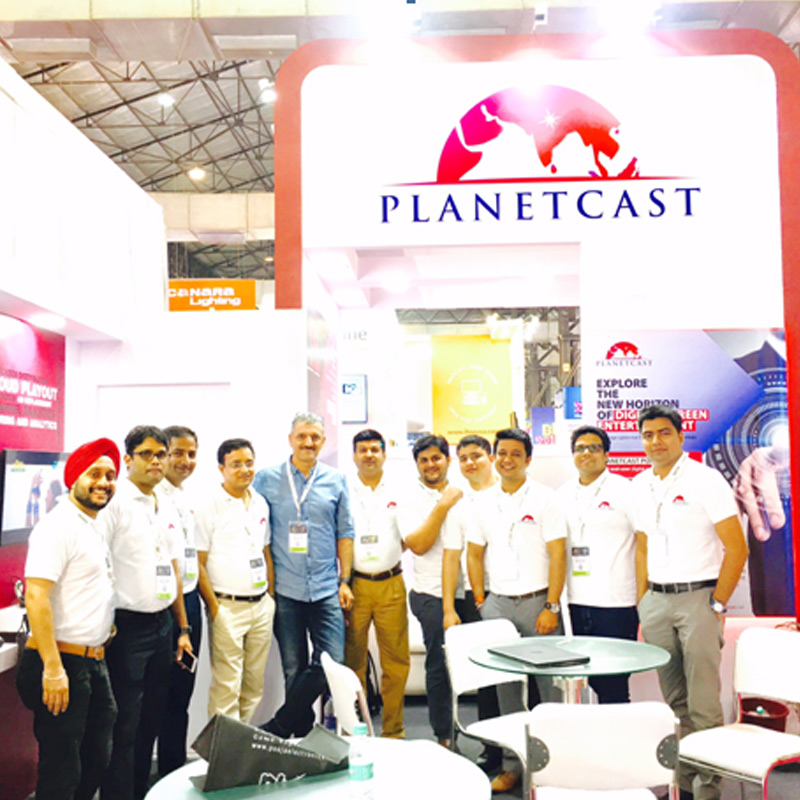
    Planetcast will give a sneak peek into its OTT solution at Broadcast India 2016, Mumbai, booth number B-212-1. The product will be available in December 2016.

  • Planetcast forays into OTT segment

    Planetcast forays into OTT segment

    Mumbai: Planetcast Media Services Limited (formerly Essel Shyam Communication Limited) today announced its foray into OTT segment by introducing its OTT solution targeted towards existing broadcasters and non-TV content owners. Planetcast OTT is a new, turnkey OTT solution for media companies, publishers and content creators to build advanced OTT app and web based entertainment ecosystem and deploy it in a highly cost effective manner.

    Planetcast OTT solution is aimed towards exponential increase in ROI for broadcasters, media companies, video content owners and publishers who wants to take their content over the top. Planetcast OTT empowers the customers to quickly launch, manage and monetize new OTT offerings.

    Planetcast, with its OTT solution will break the glass ceiling which prevents passionate media companies and content owners from making OTT market entry due to the high cost attached to it. An out of the box solution, it enables the customers to deploy premium OTT experience within the time limit and within their budget. Planetcast OTT solution will have a simplistic interface which does not require engineers to manage or build services, Planetcast is very clear about OTT product offering, its to make customer’s life simple and hassle free.

    Commenting on the occasion, M.N Vyas, Executive Director, Planetcast said “Indian market is responding positively towards OTT services and media companies are highly optimistic about tapping into the fast growing opportunity OTT offers. Media companies were not able to do so due to high cost and ambiguity in the market, Planetcast OTT solution will put an end to all this as it will enable the media companies to launch quick, cost effective and easy to manage OTT services across all connected devices.”

    Commenting on the occasion, Sanjay Duda, Chief Marketing Officer, Planetcast said “The global OTT market is projected to surpass $64.9 billion by 2021 , its too big a business not to be done. Media companies and content owners can increase their business exponentially through OTT offerings and I am confident that they will find a like minded partner in Planetcast. Our solution is cost effective, easy to deploy and easy to manage. Our two decades of successful broadcast industry operations is the biggest differentiating factor behind Planetcast OTT solution.”

    Planetcast will give a sneak peek into its OTT solution at Broadcast India 2016, Mumbai, booth number B-212-1. The product will be available in December 2016.