Category: Over The Top Services

  • Marvel’s Runaways to telecast same day as US on Hooq

    Marvel’s Runaways to telecast same day as US on Hooq

    MUMBAI: Hooq announced a new exclusive Marvel offering- the first three episodes of Marvel’s Runaways will debut on 21 Nov with brand new episodes coming every week to Hooq, same day as the US telecast.

    Hooq chief content officer Jennifer Batty said, “We’re very excited, Runaways ticks all the boxes that we are looking for in a comic book Entertainment series! Everyone thinks their parents are evil when they are a teenager BUT what happens when you find out they really are evil!?! With showrunners like Josh Schwartz and Stephanie Savage, producers of The O.C. and Gossip Girl, also available on Hooq, we can expect the series to break away from some of the conventions and tropes that muddle teenage dramas. The 1st 3 episodes of Runaways drop on Hooq within 12 hrs of the US on Nov 22nd, and a brand-new episode will follow each week, same day as the U.S. and fully localized for our viewers.”

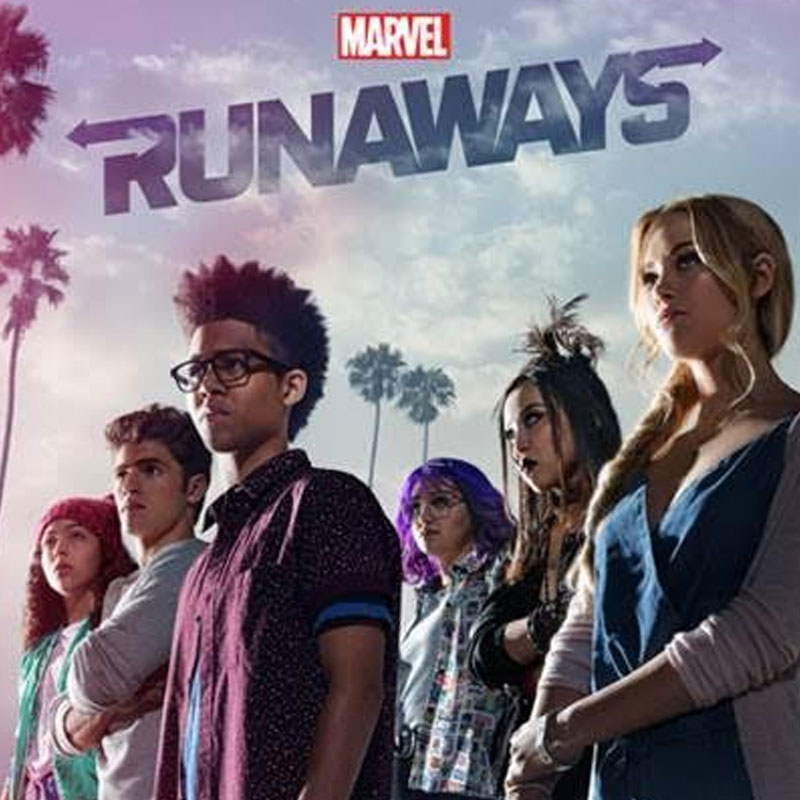
    The series, based on the Marvel Comics superhero team of the same name, follows the story of six teenagers who unite against a common enemy: their parents, who reveal themselves to be super-villains in a sinister group called the Church of Gibborim. Running away from their respective homes, the teenagers decide to work together to right the wrongs of their parents, and set on a journey to discover the secret of their origins in a fun and original spin on the superhero narrative. Helping them in this struggle are larger-than-life characters such as Gert, a superheroine with a telepathic connection to a genetically engineered dinosaur known as Old Lace.

    Runaways stars Rhenzy Feliz (Teen Wolf), Lyrica Okano (The Affair), Virginia Gardner (Project Almanac), Ariela Barer (Yo Gabba Gabba!), Gregg Sulkin (Sixty Six, Wizards of Waverly Place) and Allegra Acosta (100 Things To Do Before High School).

    Runaways comes at the back of an exclusive landmark deal between Hooq and The Walt Disney Company that gives Hooq exclusive rights to three of Marvel’s series: Marvel’s Inhumans, Marvel’s Runaways and Marvel’s Cloak and Dagger.

  • Amazon Prime Video to stream new AMC series in 28 countries

    Amazon Prime Video to stream new AMC series in 28 countries

    Mumbai: Amazon announced an output agreement with AMC Studios through which Amazon Prime Video will have first window rights to select new AMC series in 28 territories including India,Australia, Germany, Italy, and Japan as well as second run rights in many other countries.

    Prime Video members will be able to stream via the Amazon Prime Video app for TVs, connected devices, including Fire TV, and mobile devices. They can also download it to mobile devices for offline viewing at no additional cost.

    Amazon Prime Video VP worldwide television acquisition Brad Beale commented, “This is another step in our efforts to extend the selection of premium TV shows available to Prime Video members worldwide.”

    AMC Studios president of business operations Rick Olshansky said, “AMC Studios and Amazon already enjoy a successful programming partnership. This agreement underscores the high global demand for AMC’s must-have content and franchises and enables us to bring our popular shows to a wide global audience.”

    The first new AMC show coming to Amazon Prime Video worldwide in 2018 will be the anthology series The Terror, executive produced by Ridley Scott (Blade Runner 2049), David W Zucker (The Man in the High Castle), and Guymon Cassady (Game of Thrones) and based on the true story of the Arctic expedition of Captain John Franklin that inspired the novel by acclaimed sci-fi author Dan Simmons. Set in 1847, it follows a Royal Navy expedition crew on a search for the Northwest Passage. The ship is attacked by a mysterious, stalking predator and the crew plunges into a suspenseful and desperate game of survival.

  • Netflix expects rapid content growth from India

    Netflix expects rapid content growth from India

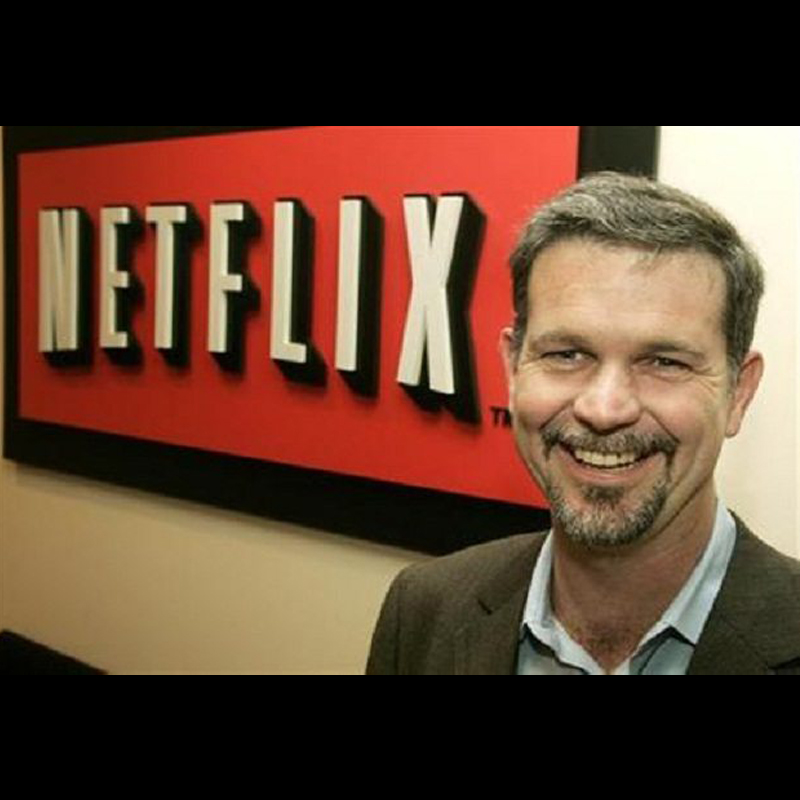
    MUMBAI: When Netflix CEO and president Reed Hastings comes calling—and it was his second visit to India this year—you know it means serious business. On a content partnership and library programming hunt, the video-streaming service’s team met up with several Indian media houses, including Shah Rukh Khan-promoted Red Chillies Entertainment and other independent production houses last week.

    Hastings and the Netflix team had a meeting late last week with the editorial team of Network18, a part of Viacom18, an equal Indian joint venture of the US media giant Viacom and a group company of India’s oil-to-energy-to-telecoms-to-broadcast conglomerate Reliance Industries Limited (RIL).

    Netflix later clarified on Monday to Indiantelevision.com that Hastings met up with the editorial team of Network18 before his interview was conducted on the business news channel last week and that no business was discussed.

    Incidentally, Viacom18 not only sits on a huge library of Indian language programming and the ability to produce fresh shows but is also active in the studio business having produced several Hindi blockbusters. Its latest production Padmavati, though, has run into a history vs. fiction controversy and, according to an official statement from the company, the 1 December 2017 release of the film has been voluntarily deferred.

    Both RIL chief Mukesh Ambani and Hastings believe that digital holds a great future for content distribution. Ambani on Friday at the Viacom18 10th anniversary bash here extolled the “synergies” that can come from the talent in the “Viacom18 family and digital distribution” (of Voot and Reliance Jio) where there’s “no limit to growth”. Hastings, in an interview to CNBC-TV18 channel last week, said Netflix “makes TV watching so easy because it is on the internet.”

    Expect Rapid Content Increase from India, says Hastings

    Excited about the one billion plus Indians who “are just wild about entertainment and television market,” Netflix CEO Reed Hastings is betting big here and wants to source more content—originals and Bollywood related—even as his team hunts for partnerships. 

    “You should expect rapid increase (in Indian content on Netflix), dozens of series a year from now will be underway,” Hastings told business news channel CNBC-TV18 in an interview aired late last week when asked to give a sense of investments being made in content from India for the rest of the world. “Of course, there are the global shows we have like Narcos, filmed in Columbia, popular all around the world. We have got a new German original Dark…and then we are adding more Bollywood films. We are also adding Sacred Games and originals that we are doing here in India.”

    Though he has “never completed a whole Bollywood movie” having sampled several of them, Hastings said he does “get the subtlety” of the content and it was fascinating to see the “breadth of entertainment (in India) and how that works”.

    According to Hastings, Netflix is a comparatively new player in India, being active for just two years, but would be indulging in producing more content for the Indian market and simultaneously the world too.

    He also did not envisage that uneven bandwidth infrastructure in India could pose problems to streaming services. “We launched in Mexico five years ago, which had a relatively slow internet, and it has just accelerated tremendously because people want to watch Netflix, YouTube, other content sourced online and it is moving to the internet life,” he said. “In India, in last two years with Reliance Jio, just the biggest explosion in bandwidth (has happened) that the world has ever seen. It is just incredible what is happening here in India. As we go to other countries, (we are) saying an investment like Reliance Jio is transformative for the society.a”

    Though Netflix globally is spending crazy amounts on content and customer acquisition—its content budget is approximately $8 billion—analysts say the company is also adding to its liabilities.

    Despite reporting an impressive earnings report for Q3 of 2017 in October, analyst Ryan McQueeney of US’ Zacks Investment Research pointed to some shortcomings: “Netflix’s third-quarter report revealed that its long-term debt now totals $4.89 billion. This is up nearly 46 per cent from the $3.36 billion in long-term debt that it started the year with, and it marks a 106 per cent growth in debt from the end of the year-ago period. Investors should also note that Netflix said its total liabilities have reached $13.62 billion, up from $10.91 billion at the end of 2016 and $9.82 billion in the prior-year quarter.”

    However, such criticism hasn’t deterred Netflix or its co-founder yet. “Content is best when it really has a local flavour, but then it is approachable by other people,” Hastings said in the CNBC-TV18 interview, adding, “We have an American comedian, Hasan Minhaj, who does stand-up in California and he is popular all over the world now on the Netflix platform. Same is with Narcos. So you get all these interesting crossovers.”

    Netflix relies a lot on data and technology to source and create content. Pointing out that the 110 million-member global company has reached its position because it was producing content that people were “excited about”, Hastings said that they use artificial intelligence to help them figure out what was best.

    “We call it informed intuition. While we want the creatives to have a lot of data but ultimately, it is a judgment call of a human being with a creative vision and that is the intuition. The intuition is the most important part but we would like it to be informed by how other shows have done,” he explained.

    Like a true champ, Hastings did not shy away from giving credit to his competitors where due. “Hotstar is doing a great job here in India. They are leading in the subscription internet category. There are a lot of other global internet companies, YouTube, Facebook, Amazon and Apple. So there are many competitors – the traditional media companies and the entire internet sector. And what that is doing is everybody is bidding to have the most valuable content. So the prices now for creators are increasing,” he told the TV channel interviewer.

    Netflix-Red Chillies Partner For Multilingual Spy Series

    A new multilingual Netflix original series, based on the book Bard of Blood, in partnership with Shah Rukh Khan’s Red Chillies Entertainment has been announced. Penned by young Indian author Bilal Siddiqi, the book will be brought to life as an eight-episode high-octane political espionage thriller series for more than 109 million Netflix members around the world.

    Khan said in a statement, “We have always tried to create world-class content and entertainment from India. Netflix has shown that Indian stories have a global audience and we would love to use this platform and its reach to tell more stories.”

    Set against the backdrop of the Indian sub-continent, the multilingual series will tell the story of an expelled spy, Kabir Anand, who is recalled from his new life as a Shakespeare professor in Panchgani to save his country and long-lost love. A combination of combat skills, intellectual background and personal circumstances propel Kabir to avenge the past and face his deadliest enemies in a race against time. The series will be shot on location and the characters will interact in Hindi, Urdu, English and other languages.

    “We believe in the global vision of Red Chillies to create groundbreaking content out of India. It’s exciting to deepen our relationship with Red Chillies and expand our slate of originals in India,” Hastings said.

    In a series of tweets, dwelling on the partnership, Khan said “Netflix and Red Chillies chill” and later joked “think will cast Reed Hastings in the series too. He is a natural.”

     

  • Apalya appoints Deepa Kulshrestha & Bharat Prem as VPs

    Apalya appoints Deepa Kulshrestha & Bharat Prem as VPs

    MUMBAI: Apalya Technologies, a video delivery company, has announced the appointment of Deepa Gupta Kulshrestha as vice president and head of sales and Bharat Prem as vice president of global sales.

    Kulshreshtha will lead the business development efforts and set strategic direction for sales while Prem will drive global sales of its OTT platform myplex in the telco/ broadcast/ pay TV sections of the media spectrum.

    Apalya CEO Vamshi Reddy said, “I am delighted to welcome Deepa and Bharat to Apalya. Both are highly effective, accomplished leaders with proven track records of growing a business into a global leading brand. Their end-to-end understanding of the media ecosystem and adaptive approach towards new businesses will help catalyse our goals of accelerated growth.”

    Prior to joining Apalya, Deepa worked with Ericsson where she headed the media vertical & media delivery and also set up the Partner Program. Her 24 years of experience encompasses various roles such as sales lead in Redback, head of sales operations for SAARC in UTStarcom and project manager in Nokia.

    In a career spanning 22 years in media and broadcast, Bharat has led various global sales functions. Bharat has worked in the media & broadcast industry with the likes of France Telecom (GlobeCast) & Ericsson in the last 14 years. Prior to this, he was working in the IT & e-commerce space with the likes of Wipro & Commerce One (US).

    Global online TV episode and movie revenues for 138 countries is expected to touch $83 billion in 2022, more than double the $37 recorded billion in 2016. The global OTT TV & video forecasts report estimates that $9 billion will be added in 2017 alone. 

  • Eros Now’s OTT content hops on Roku TV & LG Smart TVs

    Eros Now’s OTT content hops on Roku TV & LG Smart TVs

    MUMBAI: Eros International has collaborated with TV Roku and webOS-enabled LG Smart TVs to make its OTT content from Eros Now available globally. Eros’ vast library of Bollywood and regional language films, TV shows, and originals will be shown.

    Commenting on the partnership with LG smart TVs, Eros Digital CEO Rishika Lulla Singh said, “We are excited to partner with one of the largest and formidable brands in consumer electronics. Smart TVs are increasingly becoming a must-have in every household today. This partnership offers a seamless viewing experience for Eros Now users which furthers our vision of being platform agnostic.”

    Users will also be able to enjoy a range of exciting features including full-length movies, thematic curated playlists, multi-language subtitles for movies, music video playlists, regional language filters, and access to a watch a list of titles.

    LG Electronics India director home entertainment Younchul Park said, “At LG, we constantly look at partnerships that can offer value proposition to consumers and our association with Eros Now is a step forward towards this endeavour. The market for smart TV is experiencing an upsurge in India. Availability of good content can certainly enhance the overall consumer experience of smart televisions. We are very confident that good content will further drive smart TV sales in India and create a conducive eco-system for us to cater to the ever-increasing demand.”

    Talking about the partnership with Roku, Singh said, “We are happy to collaborate with a leading streaming innovator like Roku and continue our global expansion to provide seamless user experience. Eros Now’s extensive premium content can now reach millions of homes across North America and the UK through the Roku platform.”

  • Eros Now enters South Africa with Telecel Global

    Eros Now enters South Africa with Telecel Global

    MUMBAI: Eros Now has become the first Indian OTT player to enter the South African market through a strategic partnership with telecommunications provider Telecel Global.

    As part of this partnership, Eros Now will be available to Telecel customers as a bundled service with their prepaid and postpaid data plans, IPTV and set-top box with multi-purpose quad service applications. Subscribers will now have access to Eros Now’s library of popular movies, music, TV shows, and originals. Eros Now will leverage on a committed number of annual paid subscribers from this association with Telecel.

    Commenting on the partnership, Eros Digital CEO Rishika Lulla Singh said, “We are excited to enter South Africa in association with Telecel. With this partnership, we continue to expand our global customer reach and strengthen our philosophy of being platform agnostic. Knowing the growing demand among South African viewers for online video content, we will be able to provide the best of Indian entertainment to customers, whenever and wherever they want it”.

    Additionally, Telecel Global is expanding its market presence and services into South Africa. Telecel Global CEO Aimable Mpore said, “This partnership with Eros Now is one step forward towards reaching out to our ethnic customers in South Africa by offering them content customised to their taste and bringing them closer to their mother land.”

    Popularly referred to as ‘The Mobile Continent’, South Africa has seen a high rate of mobile phone adaptation. As per a Nielsen report, mobile video is particularly prominent in African regions.

  • Bloomberg Quint launches WhatsApp business news service

    Bloomberg Quint launches WhatsApp business news service

    MUMBAI: Bloomberg Quint has launched a WhatsApp service for decision makers and executives on the go. The service will connect subscribers to Bloomberg Quint’s comprehensive daily coverage of global and domestic business news, market movements and views from the country’s most influential corporate leaders.

    With WhatsApp emerging as one of the top channels for consumption and sharing of news, Bloomberg Quint has launched this service to deepen its engagement with users and augment its distribution footprint. Subscribers to the service receive Bloomberg Quint’s much-acclaimed “All You Need To Know” morning podcast, alerts and updates on the economy, corporate and markets news. Users can also interact through hashtag-based search to consume content of their interest such as markets, opinion, business and politics.

    To subscribe, users have to click on the link and save the number as a WhatsApp contact, and message ‘Start BQ’ to initiate their subscription. Within days of launch, the service has garnered a strong positive response from users.

    This service follows the recent launch of Bloomberg Quint’s BQ LIVE, the digital live streaming business news service available across its site, the Bloomberg terminal and leading social and video platforms.

    Speaking on the launch, Bloomberg Quint CEO Anil Uniyal said, “As a brand, we believe in being accessible to our users wherever they are. WhatsApp evidently is a platform of choice for top executives to consume and share content with peers and thus this service is integral to our digital-first philosophy. The initial response has been overwhelming and we are committed to scaling up this service in terms of users and features.”

    Bloomberg Quint provides business news and insights to India’s decision-makers, executives and entrepreneurs. With a native, platform-first philosophy in content, Bloomberg Quint has fast emerged as one of the engaging business brands on digital. Bloomberg Quint’s content spans engaging and innovative mobile-friendly formats including live video streaming and produced video, published articles, op-eds, data info graphics and charts, social content, newsletters, polls and live chats, photo essays and contests across its own and partner platforms including The Quint, Twitter, Yahoo, Facebook.

    Bloomberg Quint reaches more than 2 million monthly users across its on-site and partner platforms. More than 50% of Bloomberg Quint’s audience comprises of C-level executives and entrepreneurs. During Budget 2017, Bloomberg Quint delivered over 50 million in reach, including 15 million video views and more than 25k shares on social media, ahead of several legacy players in the space.

  • Falcon Media to help MSOs gain ground against OTTs

    Falcon Media to help MSOs gain ground against OTTs

    MUMBAI: The dynamics of the over-the-top (OTT) segment in India are about to change. Even as OTT content is replacing people’s desire for TV, Falcon Media House (Falcon) and Media Nucleus are working towards ensuring that cable channels effectively compete with OTT players.

    Falcon is looking to join hands with multi-system operators (MSOs) in the country to enable cable channels to stream on a new OTT service. The idea of this collaboration is to empower MSOs to gain a stronghold into the current digital market.

    Media Nucleus, with which Falcon has partnered in India, has enabled more than 5 million subscribers in India on the digitisation front working with top MSOs. It plans to extend the value proposition to existing Indian clients in the portfolio by offering a buffer free, seamless video experience using solutions from Falcon’s recent acquisition, Quiptel Technology (Quiptel). Media Nucleus will handle the market while Falcon will provide the live mega platform for cable operators.

    Falcon CEO Gert Rieder and Quiptel CEO Sandip Sarda were in India to scope out the market. As things stand, Asia, Africa, and North America are the main geographies of focus for them.

    In an interaction with Indiantelevision.com, Sarda discussed their venture and the benefits to MSOs. He says, “I think we are bringing a disruptive technology. We are going to make things easier for content providers, even the small operators, to reach the market. Our concern is how will cable operators survive as they are challenged by OTT and how can we give them a parallel system to provide services to their existing customers so that they can watch cable on the go. We want to empower small content providers.”

    Rieder believes that as the traffic is moving to mobile devices, they are not only helping cable operators but also broadcasters who want to see themselves in the digital space. They will get a bigger footprint and advertising revenue from that.

    Earlier in the year, Falcon acquired Quiptel for 9.5 million pounds. Talking about the acquisition, Rieder says, “We have acquired Quiptel because it has unique technology and unique software, which allows the use of public internet for video streaming. Quiptel has multiple patents that we own and we enable distribution of video on public internet by giving a certain level of quality and low cost of production. We are working on how to create an independent platform that enables people to reach out to the audience.”

    The surge in video on demand (VOD) in India is pegged at 78 per cent, according to Accenture 2017 Digital Consumer Survey, which reports this as the growth in the number of consumers of VOD services in India. Due to high cost of entry, however, the market has largely seen the arrival of large players and broadcasters such as Star India, Colors, Balaji Telefilms in addition to Netflix and Amazon Prime.

    According to estimates, by 2020, more than 50 per cent of internet traffic will be from mobile devices and more than 80 per cent of all internet-related traffic will be video related.

    Looking at the current scenario, Rieder and Sarda believe that audience is moving away from linear TV. Says Rieder, “The most advanced markets in the world such as the US and Europe have seen a drop of 10 to 15 per cent per year in cable subscription because nobody wants to pay 100 dollars a month for 60 channels when you only watch two of them. The same trend is coming to India in spite of relatively cheap cable connection services. India will see 100 million unique users daily on streaming services by 2020.”

    The impending resurgence of cable operators vis-à-vis OTT players is what led to them to enter India, a priority market. Sarda says, “We see huge content consumption but also barriers to entry because of the cost and existing big players with deep pockets. We are working on enabling the niche classes to tie-up not just for the Indian market but for Africa, the Middle East and the UK, where Bollywood is popular.”

    Sarda believes that the challenge is to sustain people’s interest when videos start to buffer leading to lower time spent. “We are eradicating the buffering issue and lowering the cost for MSOs. So that in future, every dollar they make, they don’t need to pay 80 cents to the technology provider.”

    When a new internet user joins the queue to watch the same video, the video starts to buffer. If buffering builds up, Quiptel’s technology takes users to a different streaming route for a seamless experience. There are up to 16 routes to divert the traffic.

    Sarda says that OTTs will end up usurping cable TV players’ market share if they don’t broaden their horizons. For cable providers, hooking up new users is a big cost. “We will provide cable operators with our software and apps that will enable them to reach out to anybody and anywhere as long as they have rights. So, a consumer from Delhi travelling out of the city can watch his local cable channel through any hand-held device.” The glass-to-glass latency for streaming TV channels live would not be more than 45 seconds.

    He points out that if existing OTT players reduce their distribution costs, they can stop bleeding and rake in the moolah. Moreover, the drifting viewership doesn’t allow advertisers to confidently place their bets.

    Rieder and Sarda are not shy about discussing the competition. They say that a content delivery network such as Akamai could be their competitor as well as a customer. Clearing the confusion, Sarda says, “An OTT service provider would need Akamai. A lot of our people don’t use a content delivery network (CDN) because of our special routine mechanism to distribute video packages. The only reason when people might need a CDN is when they get a heavy load and can’t offload it. Akamai could buy our platform to send its stream from wherever its network ends to users’ mobiles.”

    As MSOs and OTTs go toe to toe once again, it will be interesting to see how MSOs, armed with new technology, fare against the surge of OTTs in round two.

  • OTT leads over TV on brand discussions among viewers: Study

    OTT leads over TV on brand discussions among viewers: Study

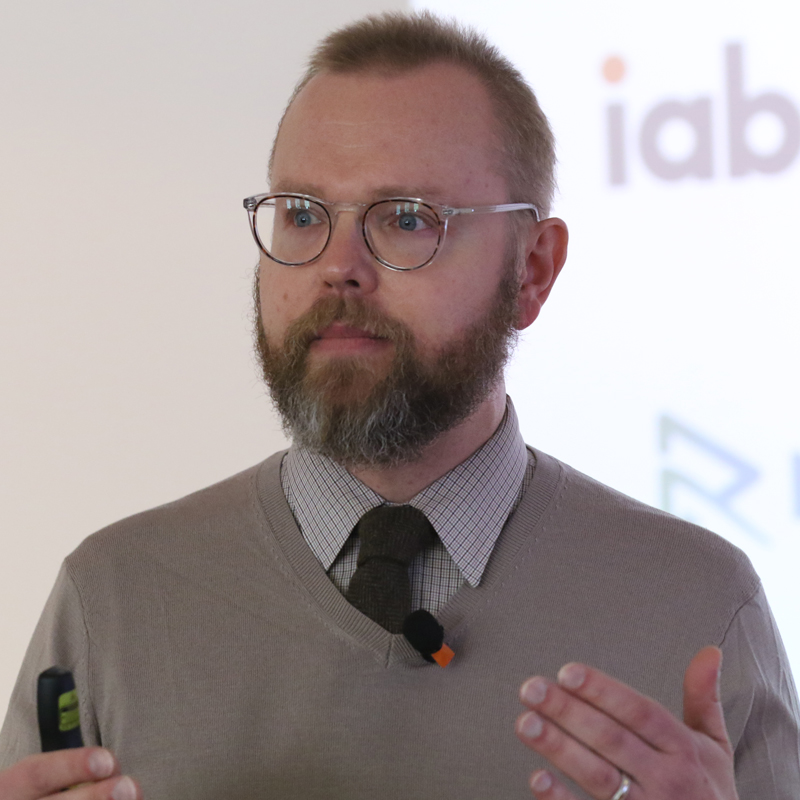
    MUMBAI: A study by the Interactive Advertising Bureau (IAB), a US-based not-for-profit research company, has found that 56 per cent of people who co-view OTT talk about the brands they see while viewing content on TV screens. Co-viewing is the act of watching with others. On TV it is 50 per cent. The survey was conducted on viewers aged 13-64 in the US.

    According to the study titled The OTT Co-Viewing Experience: 2017, 93 per cent of people co-view on TV through platforms such as OTT, linear TV, VOD, and DVR. This if followed by computer at 55 per cent, smartphones at 49 per cent and tablet at 39 per cent.

    OTT has a higher impact than TV when it comes to brand-related awareness. Whether its discussion about brands they see, changing their own or someone else’s mind about a brand, discuss it on social media, make a note to purchase it later, search information online or actually buy it, OTT leads over TV.

    Moreover, 64 per cent feel it is fun to watch with others while 69 per cent engage in talks about the video with their partners. 36 per cent of OTT videos are live programmes and the platform also gets people to watch longer format content (more than 30 minutes).

    Co-viewing on OTT has younger demographics aged 18-34 years compared to TV co-viewing of 13 to 64. These are the two top mediums for co-viewing in the US. Co-viewing content for OTT is picked collaboratively and the motive is to unwind themselves. It is also most prevalent among spouses (59 per cent on OTT) followed by children (41 per cent on OTT).

    Furthermore, 92 per cent of co-viewers pay moderate to full attention to the content while 69 per cent are focused on the ads. The study also found that OTT viewers tend to watch double the amount of ad-supported content than subscription services without ads.

    IAB research and impact senior VP Chris Kuist said, “Watching TV has always had an important social component and this has absolutely continued as OTT platforms become ever-more important parts of people’s viewing rituals. This social aspect of biggest screen in the house is powerful and is being amplified on OTT platforms in ways that can greatly benefit marketers.”


  • SportsFix & Accedo tie up for live OTT sports feeds

    SportsFix & Accedo tie up for live OTT sports feeds

    MUMBAI: Accedo has tied up with SportsFix to deliver dedicated OTT sports live streaming service in the ASEAN region. SportsFix has also selected the Brightcove Live platform to deliver premier live and VOD local sports content across the region.

    SportsFix, launched in Malaysia in August 2017, is ASEAN’s first OTT platform that delivers live and VOD sports content, with a focus on live streaming as a premium offering. The platform was conceptualised and launched to serve a large untapped niche segment of overseas foreign workers in the region.

    SportsFix streams popular local, regional and international sports content on its platform and works closely with Telecommunication operators across the region to deliver the content directly to millions of mobile devices.

    SportsFix CEO Carl Kirchhoff comented, “Accedo’s platform and excellent team helped us launch in record time with all Telcos in Malaysia and allows us to aggressively roll-out localised services in ASEAN in 2018. Accedo’s proven expertise in this region and agile development of a suite of customisable products were the main reason for choosing Accedo.”

    Accedo CEO Michael Lantz added, “Sports entertainment is one of the key drivers for video services and innovation across the globe. The mix of live and VOD sports content from both regional and international matches are likely to prove extremely popular amongst consumers.”

    SportsFix is currently available via mobile web and by Q1 2018 can be expected on iOS and Android, SportsFix is using Accedo One Inisght to analyse usage and engagement metrics across those platforms.