Category: Over The Top Services

  • GroupM report forecasts global online media time spent to overtake TV in 2018

    GroupM report forecasts global online media time spent to overtake TV in 2018

    MUMBAI: For the first time ever, time spent on online media will overtake linear TV globally in 2018, according to GroupM’s State of Digital report. The report, which researched consumer media consumption and advertising investment trends worldwide, tabulated consumers’ time spent with each media format along with average time spent with media overall.

    GroupM predicts consumers will spend an average of 9.73 hours with media in 2018, up from 9.68 hours in 2017. Online media will have a 38 per cent share of the total engagement; TV will have a share of 37 per cent.

    The increased inclination for online media will support growth of e-commerce, too. GroupM predicts 15 per cent growth to $2.442 trillion in 2018 from cumulative transactions worth $2.105 trillion in 2017.

    In a scenario wherein the digital revolution is gaining more momentum, Google and Facebook continue to be the key growth drivers. While Google search is critical to clients, YouTube is increasingly important for scaled, ‘premium’ video. Facebook’s success is partly due to the delivery of younger audiences via Instagram.

    While examining programmatic (automated) ad investment trends, the report found 44 per cent of online display investment was transacted programmatically in 2017 versus 31 per cent in 2016. This is expected to rise to 47 per cent in 2018.  Programmatic is smaller for online advertisement trends. From 22 per cent in 2017, it is predicted to rise to 24 per cent this year.

    Also Read :

    SonyLIV and Republic World announce a strategic tie-up to expand digital presence

    Viacom18 Motion Pictures forays into digital content

  • SonyLIV and Republic World announce a strategic tie-up to expand digital presence

    SonyLIV and Republic World announce a strategic tie-up to expand digital presence

    Mumbai, May 2, 2018: SonyLIV, the premium video on demand (VOD) service by Sony Pictures Networks’ India (SPN) and Republic TV, India’s No. 1 English news channel, today announced their strategic partnership, where Republic TV’s live news and on-demand videos will be available round the clock to viewers of SonyLIV.

    With this strategic partnership, RepublicWorld further expands its English news digital presence on OTT platforms to give audiences access to reliable news on platforms of their choice. SonyLIV also adds a new genre to its existing plethora of content. This will give its 30 million strong and growing monthly active users unrestricted access to quality news & analyses and on-demand video content by Republic TV.

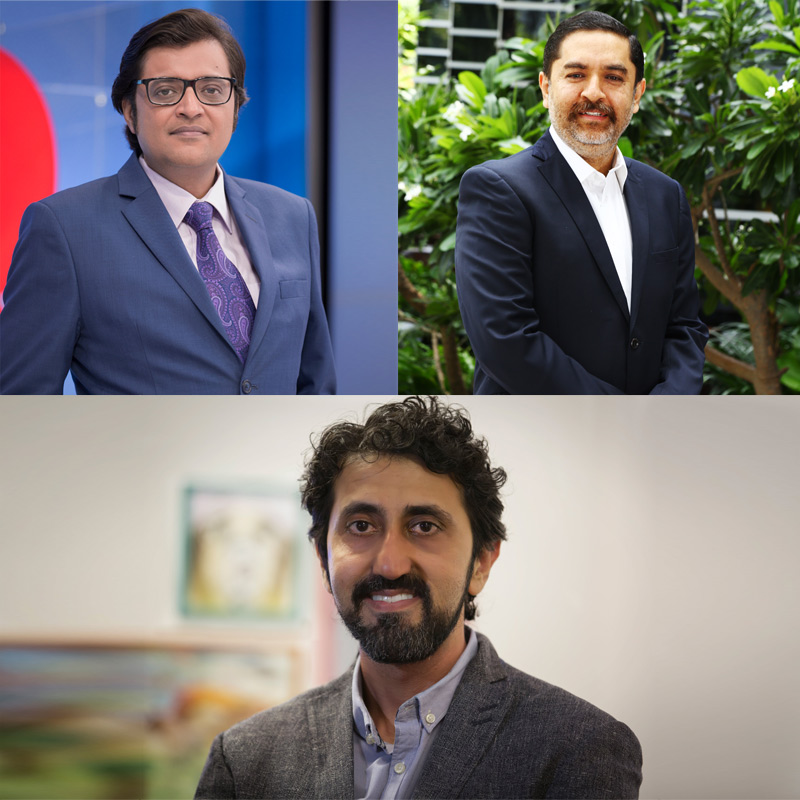
    SonyLIV currently offers a wide range of content through TV shows, LIVE Sports, Food, Linear TV, Movies, Originals, Short Films and Music. Republic TV, founded by prolific journalist Arnab Goswami, broke records in the first week of its launch by gathering 52 percent market share and has retained its number one ranking for the past 50 weeks, setting a record in Indian media.

    Link: https://bit.ly/2JNIIBI

    Comments:

    Uday Sodhi, EVP and Head-Digital Business, Sony Pictures Networks (SPN):

    “With the digital ecosystem ever evolving, we are constantly striving to give our viewers the best in entertainment. We are delighted to announce our partnership with Republic TV. By adding a new genre to our already existing content portfolio, we want to provide our digital savvy viewers the best in news to stay abreast of the latest happenings across the country and the world over. We will continue in our endeavor to innovate and provide a myriad of on-the-go entertainment options to our ever-discerning audience.”

    Arnab Goswami, Editor-in-chief, Republic TV:

    “We are extremely proud of our partnership with SonyLIV. Republic TV’s prime message is freedom. Through our digital presence, we want to give our viewers the freedom to consume our content whenever they want, wherever they want, however they want. With this, we have further cemented ourselves as a media-tech company, which reflects in our tagline – Republic – Digital. TV. Media.”

    Vikas Khanchandani CEO, Republic TV:

    “OTT today is an easy-access on-the-go platform which connects millions of viewers. Republic TV, as a brand, has been the most widely recognized and consumed English news channel in India right since its launch. The more we spread our wings across platforms, the more we realize the affinity for our content. SonyLIV as a platform is known for distributing quality sports and entertainment content from across its stable. We’re excited about the partnership with them, and to have Republic TV as the first news brand on the platform. I’m confident we’ll be able to expand our audience base manifold as we build partners across the digital ecosystem. We will be the largest English News Video brand in the country agnostic of platforms.”

  • Netflix, Amazon may contribute to rising production cost in India

    Netflix, Amazon may contribute to rising production cost in India

    MUMBAI: Netflix and Amazon Prime Video are known for loosening their purse strings when it comes to production cost. The threat of driving up costs is already looming over the Hollywood industry. As the OTT giants have begun to mark their territory in India, there is a concern that production cost may rise here as well.

    Recent reports state that Netflix and Amazon are throwing money to lure top talent from Hollywood. In addition to that, Netflix is also driving up Hollywood salaries by offering big pay rises. Traditional players have been sweating it out in competing with the rising cost. Netflix’s $300 million deal to poach Ryan Murphy from 21st Century Fox was a classic example of this development. Robert Kirkman, the creator of the hit show The Walking Dead, signed a two-year deal with Amazon last August.

    Both companies have renewed their focus on India and, in order to understand the market, it is likely that they will look to poach talent from rival companies. The quest to offer premium content will also lead to higher production cost.

    When Eros Digital COO Ali Hussein was asked if because of Netflix and Amazon’s higher investment the overall cost of Indian ecosystem will go up or not, he said though there’s not a definitive answer to this. But, in general, the cost will definitely go up. Along with that, he also feels that it depends on how smartly the work is being done in the existing ecosystem to have a certain amount of control over the cost.

    “If in any business, the demand is high, the supply chain cost will go up. Across all businesses, when there is a large demand for episodic or original web content, how do you ensure you are able to maintain a certain quality of production with a growing talent pool? It’s not just the cost of the celebrities or directors, it is the technical cost and that of the entire process,” says Hussein.

    ALTBalaji CMO Manav Sethi thinks the cost has already increased due to international players splurging but the output quality has not increased much. In addition to that, the companies have less understanding of the Indian market, which has unorganised, segmented content making.

    According to Bodhi Tree Multimedia founder Mautik Tolia, the increasing number of productions from Netflix and Amazon will not have any short-term impact on overall production costs. This is because the volume of content being produced at the moment by the duo is very limited compared to overall content production in India.  It will only drive the premium talent costs upwards such as A-list actors and directors. But at the same time platforms are providing opportunities for new and fresh talent, making the content creation process more inclusive and might actually bring down the talent costs as a fresh pool of talent will get injected in the system. “It all depends on what path the platforms will take forward whether they emulate the traditional studio systems going for safer bets with established stars and directors or punting in and promoting new talent. This remains to be seen,” Tolia says on the possible future scenario.

    However, one of the main reasons for spending more money on production is to increase premium quality content. “Overall, I believe that content quality in digital both for domestic as well as international players is improving and there will be a premium for quality content,” Arre co-founder Ajay Chacko says.

    Endemol Shine CEO Abhishek Rege also thinks Netflix is only shelling out money to get premium content. “Costs in digital will be higher than that of what we see in television because digital needs better quality of content,” he says.

    Where there’s a fear that Netflix and Amazon may shake up the Indian ecosystem like they are doing in Hollywood, the scenario is less viable in India despite the fact that production cost will definitely go up. Indeed, the streaming giants will aggressively try to acquire top talent from the industry but other OTT players can opt for fresh talent. In the next four to five years, the traditional players, including Bollywood and broadcasters, will face a tough challenge from these international players. However, with new content strategies, the cost can be controlled to a certain level.

  • Viacom18 Motion Pictures forays into digital content

    Viacom18 Motion Pictures forays into digital content

    MUMBAI: Viacom18 Motion Pictures, India’s fully integrated motion pictures studio, has delivered a plethora of critically and commercially successful movies. It has always disrupted certain reliable formulas to ensure that the content remains true to its audience. Now, it is venturing into the digital space with Tipping Point, which will feature a host of web series, short films and non-traditional formats to entertain its online audience. The brand will extend the banner’s ethos by creating contemporary, engaging and path breaking content for online audiences. 

    Viacom18 Motion Pictures COO Ajit Andhare said, “Having conquered the big screen through unconventional narratives, it is time for Viacom18 Motion Pictures to make its mark in the rapidly emerging digital content space. Tipping Point – our digital content brand will appeal to consumers looking for edgy, contemporary, provocative yet relatable content typically missing in the traditional or mainstream media. Through Tipping Point, Viacom18 Motion Pictures will evolve from being a film studio into a holistic content studio, reaching beyond theatrical offerings into millions of screens on mobile & personal devices with its unique storytelling.”

    As a part of the Tipping Point’s offering, the brand has announced collaborations with some of the best from the entertainment industry.

    Speaking on this collaboration, producer Imtiaz Ali said, “Excited about my foray into digital series – very happy that Window Seat Films and I are working with the team at Viacom18 Motion Pictures. I have lived with this story for a long time and eager to bring it to life now.”

    The list of soon-to-be-launched web series include ‘X Ray–Selected Satyajit Shorts’, a 12-part series presentation directed by the National award-winning filmmaker, Srijit Mukherji, an untitled crime thriller created by Imtiaz Ali, ‘Jamtara’ a story about a small district in Jharkhand, known to be India’s phishing capital, directed by Soumendra Padhi and ‘Best Days’, a psychological thriller by Abhishek Sengupta of the web-series Lakhon Mein Ek fame.

    Also Read:

    Viacom18 Motion Pictures ‘unconventional Indian cinema’ journey

    Eros International Media and Viacom18 Motion Pictures Announce International Distribution Agreement

    Zee Music Company joins hands with Viacom18 Motion Pictures

  • We are fundamentally changing storytelling: Hotstar CEO Ajit Mohan

    We are fundamentally changing storytelling: Hotstar CEO Ajit Mohan

    Ajit Mohan is not your flashy kind of guy. Quiet, unassuming normally, he opens up and the words flows easy when it comes to talking about his pet project—the fast-growing Star India-owned OTT service Hotstar. Over the past three years, he has gradually—with the support of Uday Shankar and Sanjay Gupta and, of course, the Murdochs—grown the service, setting new download, watch time and quality records.

    With huge money riding behind the cricket rights that Star India has acquired, Mohan is going to play a crucial role in helping monetise what some are calling very expensive acquisitions. Moreover, the global big boys are gearing up to carve out huge slices of India’s one-billion-plus mobile populace. Netflix, Amazon, Facebook, YouTube and JioTV are the majors with deep pockets that will pull out all the stops in terms of content—local and global originals—to gain traction. But Mohan, while respectful of the other players, is quite clear that he and his team will be digging in their heels and will battle without yielding any quarter.

    He was in Bali at APOS and he had a conversation with MPA’s Vivek Couto on stage. Excerpts from the interview:

    So, what’s the latest that has happened that has got the team excited?

    We crossed 7.1 million concurrent users last week. We are gunning for the largest number of concurrent users online. To the best that we know, it is eight million. And that is the number we are aiming for in this IPL. At 10 million, many elements of the internet ecosystem will be tested and challenged. We want to get to eight million before we get to 10 million. If I circle back three years ago when we launched Hotstar, 1.5 million was what was testing what the internet ecosystem could take. I think a lot of different parts of the networks are really geared up. I think we are a much better tech company than we were three years ago. I do believe there is a path to 10 million but I don’t want to jinx it.

    Tell us a little bit about your journey at Hotstar.

    A good friend of mine who works for one of the global tech companies told me in 2014 when I was about to take up the position: “Many broadcasters have gone down this path. You should try it. Because it’s good to try things in life. But in six months, you will probably figure out that this is probably not for a media company.”

    And, for me, if I step back and think about what’s happening in Asia, a few things stand out. I think the global tech majors have done an amazing job in shaping many markets. But I think they have also been quite successful in seeding this narrative that there is no future for old media companies. We are establishing that, especially at Hotstar, that the narrative is not true. That if you really build a service that has its DNA in storytelling and you build technological capabilities around it. I think, the future is very much for people who are grounded in stories but who have the aggression and forward-looking approach in building real technical capabilities. And I genuinely believe that one of the myths that has been broken is the belief that it would be short-form content that would work on the mobile. And most of the world is seeing the internet for the first time on a mobile. I think that has been turned on its head. The consumers’ appetite is for great stories; it’s for curated long-form content, the kind of stories that have worked for the last 40-50 or 400 years. And for me that is the big proof of concept that Hotstar has provided for the rest of the world that it is for us to shape this future. That we are very much at the centre of the story.

    What is the transformation that is taking place at Hotstar?

    While our DNA is in storytelling, we were quite conscious that we needed to become a technology company. Over the last three years, we have worked to build serious technological capabilities inside the company. I don’t think it is possible to outsource technology or to build a service by a patchwork of technology partners. Today, we have more than a 100 engineers who work at Hotstar. We are looking at doubling that in the next six to nine months. And, for me, even the scale that we are able to do today is because we have people inside the company, who are tuning technology to address the scale that’s being driven by the demand from consumers.

    I think the second point is I do believe that great stories shine, one way in which we have been different than even some of the pioneers in streaming is we did not look at stories from the lens of “it’s the same content and it is on a different screen. Or it’s the same content that’s on broadcast that is available on demand.” I think we have looked at it saying we can change the format of storytelling. We can create new experiences. As an example, in cricket, what we did was we created a new proposition where consumers could come and watch a match but they could also play a game while watching the match. And more than 20 million people who have taken part in the watch and play feature. So, all of a sudden, the proposition is not watching the same content, it’s fundamentally changing storytelling. That is core to what we are doing at Hotstar.

    Unlike other tech companies in the world, I don’t think we have the desire to do everything. We have not turned around and said look now we are really doing well in one genre, now let’s get into food; and let’s be a food app, an ecommerce app. We believe the biggest opportunity is in video. And it fundamentally is creating experiences around video, and we have obsessively been focused on doing that one thing really well.

    What kind of content is being consumed nowadays? Is it primarily sport?

    We have been more vocal about the sports numbers, but the reality is that most of our consumption is on TV shows and movies. Then there are days when there is a large cricket match, the scale is dramatic for that day. But if I look at it over a year, then 75-80 per cent of our watch time still comes from outside of sports. We’re not a sports platform. What’s special is that we are bringing together TV shows, movies, sports, news—all on a single platform. In less than one year of introducing news on our platform, we are already one of the largest video destinations for news in India.

    One of the interesting challenges we have is we have made the choice to put everything in a single service and I think that’s a challenge some of our peers may not have; we have a lot of diverse content. And as much as one of our objectives is to match the right content to the right users, one of the challenges we face every day is the risk of alienation. Because India is not a single country with the appetite for the same stories everywhere. For instance, if we serve a Tamil movie to someone whose language is Hindi, you are signalling to the user that you don’t understand him.

    So, we have an interesting technology challenge of leveraging the scale of bringing everything together and yet create a platform that a set of users feels is deeply personal and intuitive.

    We are finding that at the beginning of Hotstar a lot of people were coming in and looking at it as a catch-up destination. They would see an episode of a TV show if they did not watch it on TV. More and more people were introduced to the proposition of the platform, to start looking at it as a primary screen. Today, hardcore users are watching as much time in a month or more in a month as much as the core user of that television show on broadcast TV. It no longer is a catch-up destination. For a lot of people, it is the primary screen.

    What is the demographic of the user today?

    Maybe it is no longer conventional wisdom. There is a belief that content is for millennials, whoever they are, and in Asia almost every one is a millennial, it is a very young audience. The content on TV would be very different from what works for on demand or on the mobile. The average age in India is 26-27, they are young audiences. What works on TV works well on Hotstar as well.

    I think it is fundamentally about great stories. There is no format for millennials that anyone has cracked so far that stands out. The second thing that does stand out— maybe because we have cracked some of the classical streams of distribution in the cable and satellite industry—we are not seeing that people are consuming one set of content. We have consumers who are watching Game of Thrones as well as a Tamil movie or Homeland and a Hindi TV show. I think some of the stereotypes that have been created in broadcast television is that there are users for a certain kind of an Indian TV show; there are users for an American TV show.

    We are finding that those boundaries, those stereotypes don’t exist. People’s appetite does not seem to conform to the constraints we have set from a distribution point of view in the old world. We are seeing, on average, between 45 and 60 minutes a day in terms of people coming in and spending time. And that’s where I think of the constraints of three years ago when data costs were high especially relative to what they were used to paying for pay TV and the bandwidth was very patchy. That’s changed: there is no fear of data charges anymore. If you leave aside what we in India call masala content, our belief is that we are doing watch time every day on Hotstar maybe the same or more than what YouTube does in India. For me, it is a big shift from what the environment was three to four years ago.

    How’s the advertiser client looking at you following your direct to brand strategy, which has potentially cut out the agency?

    The proposition that we have offered to the advertisers for the past couple of years, we believe it works from a consumer point of view as well. Brands have been built on TV because consumers were paying attention. And in the transition from linear television to video-on-demand services, a lot of advertisers got excited about the great data that was available: you can slice and dice audiences, you could target specific audiences. But I think what was lost in that process and I think now there is consciousness of that: you had a lot of awareness about of your users, you could play around on dashboard, but those consumers are not paying enough attention. It is difficult to pay attention to a two-minute video when you are scrolling around stuff. 

    And, therefore, our big pitch to advertisers was this marries the best of what worked for TV, real engagement, with the audience understanding that comes with digital. And if I bring together the best of both worlds, we have a proposition for you as an advertiser that is fairly unique.

    It’s not been easy. I think the tech companies have done a fabulous job of building that— some of them only self-serving. It’s been our mission to tell people that it is possible to build brands on digital by bringing the power of engagement and data.

    We launched the Hotstar ad server a few weeks ago that allows smaller advertisers to connect with us directly. Our objective is not to cut out the agencies. Agencies have been great partners for us. They have had huge belief in what we are doing. But I believe Google and Facebook have done a phenomenal job; you do have to have a platform for smaller advertisers who may not have the scale of the marketing spend or even the capabilities to hire these types of agencies. It is early days and we are saying that a small advertiser in a small town of India or an early-stage start up should have the same access to Hotstar as the largest marketer, which is Unilever.  

    We have been successful in commanding a premium because of the advertiser proposition I spoke about. But I think as the market expands dramatically, I think it is an open question where will CPMs land.

    What is your view on subscription?

    On the subscription side, just as there was skepticism that India was ready for online streaming, there is skepticism whether Indians will pay for it. And we are taking on the mantle and as a leader we are saying: if you create differentiated content, we do believe subscription can take off in India. And I think that party started with American shows and movies. We do believe that we have the best English proposition in India. We believe that the best American films and TV shows, and live sports and local TV shows being made available to users before they watch on TV, I think we are going at it a lot more aggressively. The early focus of the first three years was on building the platform, getting tech right, building up the scale. We have 15 million users this month, that is massive scale.

  • Sports organisations dive into creating own digital ventures

    Sports organisations dive into creating own digital ventures

    MUMBAI: When cord-cutting started to become a phenomenon, there was a perception that live sports was one of the reasons why people wouldn’t cut the cord. In last two years, however, sports have proved to be a game changer for over-the-top (OTT) services. As a result, several major sports federations are taking initiatives to launch their own streaming services.

    Broadcasters have become frenzied when it comes to bidding for sporting tournaments with everyone letting their purses loose. Traditional broadcasters have led the way till now but sports federations are trying to make a mark of their own for dedicated and new fans.

    Recent reports suggest that La Liga, Spain’s football governing body has planned to launch an OTT service. It aims to secure €1.3 billion a year for the TV rights, but pay-TV operators are not willing to pay such a sum. Football fans across the globe eagerly wait for La Liga matches but yet broadcasters view the amount as a non-profitable sum.

    The availability of OTT platforms is enabling La Liga organisers to stick to the amount they are demanding. Javier Tebas, president of La Liga recently said at a conference in Barcelona, that if the bids don’t meet their expectation they won’t grant the rights. Moreover, the OTT platform La Liga is already working on will be a free multi sports streaming service adding more value to it.

    Another world class tournament, which has a fan worldwide, has a full-fledged plan to launch its OTT F1 TV.  While La Liga’s plan to make its OTT service free, F1 TV is going to be a subscription-based commercial free service. Aimed at core fans of Formula One, its plans to ace digital transformation is definitely a huge one.

    Like many OTT players worldwide, who don’t want non-paying viewers to jump out, the Formula One committee will offer a less expensive, non-live subscription tier, F1 TV Access. It will provide live race timing data and radio commentary, as well as extended highlights of each session from the race weekend. Knowing the fact that streaming live sports with lowest latency might be a challenge, it has relied on Tata Communications for CDN and connectivity services.

    The inclination to reach the global audience through a digital platform touched the Winter Olympics too. One of the main aims of the digital coverage is to engage fans more with the ongoing tournament to keep the excitement high. 2018 was the first year to witness digital coverage of this ancient sporting event. Olympic Channel aired Olympic Games coverage live for the first time on its global digital platform at olympicchannel.com and mobile apps for Android and iOS.

    Such attempts allow sports organisations the opportunity to reach fans on own terms and develop a direct relation with them. Along with coping with change in viewers’ habit, it may help them to evade the complex bidding process.  

    Though the trend seems new, WWE is one of the earliest examples to dive into OTT streaming service in 2013. WWE saw multiple benefits from offering its OTT subscription service to viewers including addition of more than a million active subscribers within a short term according to reports.  Other than that, what they got is data. A spokesperson from the company itself said, they could track when viewers are watching, what device they are using, how long they are watching, etc.

    By using your own OTT app federations can directly know their audience by gathering data. Using this information of viewer’s habit and demographics, the organisations can revamp the branding of the leagues in future. Especially, in such a context when on-demand sports content is a must in the future.

  • India’s Supari Studios’ video series – ‘Doppelgangers’ wins laurels at the 22nd Annual Webby Awards

    India’s Supari Studios’ video series – ‘Doppelgangers’ wins laurels at the 22nd Annual Webby Awards

    MUMBAI:  Supari Studios announced that its documentary series ‘Doppelgangers’ is the Winner of The Webby People’s Voice Award in Film & Video: Sports (Branded) at the 22nd Annual Webby Awards while competing with a crusade of other video series. Supari is the only Indian agency to win this prestigious award this year.

    The video was first selected after a 2,000-bench jury siphoned out the best out of millions of videos and then put up for a global People’s choice voting.  

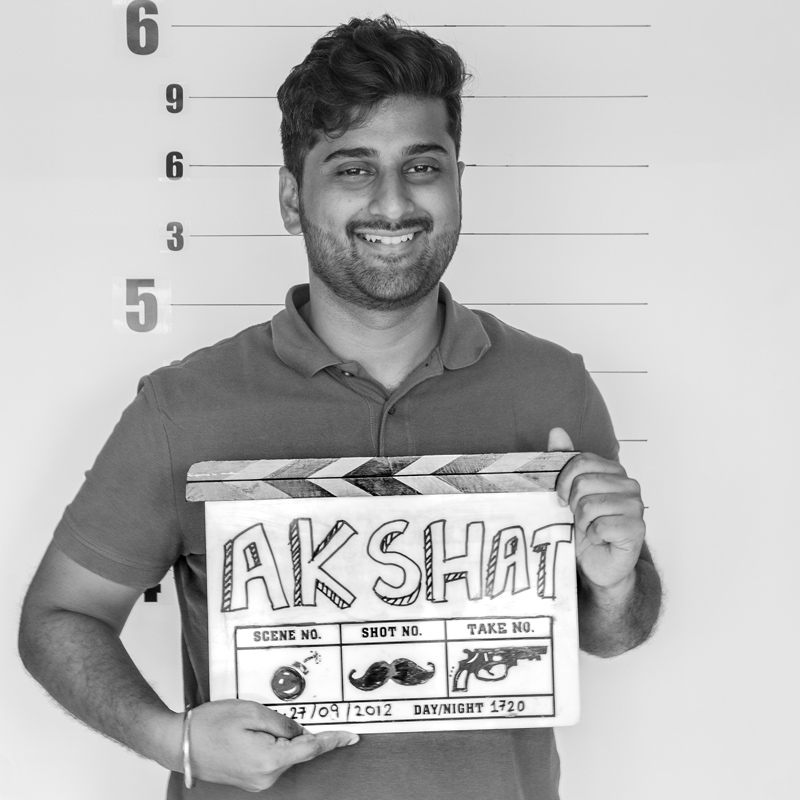
    ‘Doppelgangers’ is a documentary series for Red Bull directed by Akshat Gupt. The series  explores the parallels that exist between famous international disciplines and ancient Indian art forms. As part of the series, international experts from the fields of motorcycle stunt riding, B-Boying, and bouldering, visit the worlds of ancient Indian art forms that align with their expertise. The international performers meet their counterparts in a first-time introduction to their doppelgangers. Through the course of the series, viewers not only witnessed certain similarities and understood the complexities and uniqueness of each sport but also learnt the sacrifices and passions of the athletes themselves.

    You can watch the series here – https://www.redbull.tv/show/AP-1TX9HWH492111/doppelgangers  

    Akshat Gupt, Director of the series and founder of Supari Studios adds, “It’s a mark of great distinction for all of us at Supari Studios to be awarded with the Internet’s biggest honor. It’s a testament to the hard work that the whole team put in for this series. There is great talent when it comes to creativity in India and we are happy that the world is now noticing that too.”

    Commenting on this win, Advait Gupt, Co-Founder, Supari Studios says, “Our focus on the digital domain has allowed us to try unique formats and engagement models. Having won the Webby’s while competing globally and being the only Indian brand in the category truly validates our mission of developing content that is recognized globally. We are certain that through the efforts of the teams at Supari Studios we will continue to create compelling campaigns. Our partnership with Red Bull has been nothing short of extraordinary – not only in terms of the nature of our engagement as a content studio, but also through the creative synergies and relationship that we have built with the entire team”.

  • Shemaroo Entertainment Strengthens its Live Darshan Offerings

    Shemaroo Entertainment Strengthens its Live Darshan Offerings

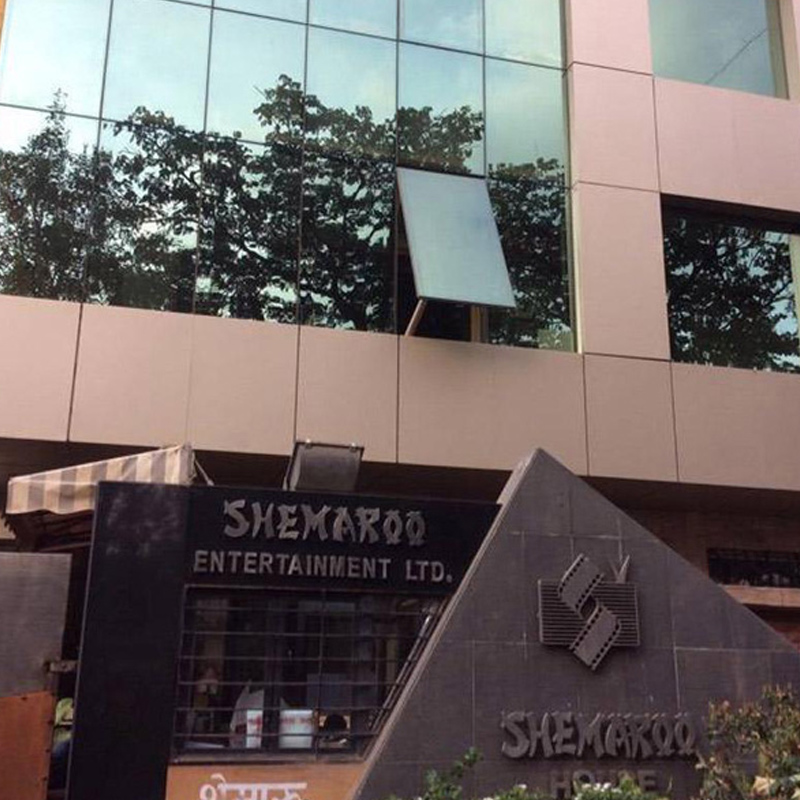
    National, 27th April, 2018: Religious diversity has been a defining characteristic of Indians for centuries. It plays a central role in people’s daily life through its temple ceremonies, festivals, pilgrimages and family religious traditions. Shemaroo Entertainment, one of India’s leading content powerhouse has a strong focus on its devotional offering and provides live streaming of over ten of the most revered religious temples across India, every single day.

    Shemaroo recently acquired the live streaming rights for Shani Shignapur in Maharashtra and Ajmer Sharif in Rajasthan.  It will give the Indian devotees an opportunity to enjoy live darshan of these holy places from the comfort of their homes and even on the go.

    Shani Shingnapur, a prehistoric temple in West India situated at 84 kms from Aurangabad, Maharashtra is devoted to Lord Shani. On the other hand Ajmer Sharif Dargah of Khwaja Moinuddin Chishti is one of Rajasthan’s most popular landmarks. Lakhs of devotees of all religions from across the world visit it every year. 

    The live feed of these two temples will be telecast on all digital platforms including mobile, internet, satellite and DTH channels.

    Kranti Gada, Chief Operating Officer (COO), Shemaroo Entertainment Ltd shared, “In this fast paced life where we constantly lack the time, energy and the ability to frequently visit popular places of worship, we  see a growing demand for direct live feeds from temples. We understand the challenges of modern life and technology helps us overcome these. Keeping the spirit and understanding the needs of the consumer, we are powering content to provide virtual experience of deities to the devotees. We are quite delighted, that the management of Shani Shignapur and Ajmer Sharif have supported us in reaching out to their devotees”.

    Shemaroo Entertainment provides live feeds from various holy locations across the length and breadth of the country including, Karni Mata temple in Bikaner, Iskcon and Babulnath Temple in Mumbai amongst many others.

  • YuppTV- Cosmos-Maya partner for kids content

    YuppTV- Cosmos-Maya partner for kids content

    MUMBAI: Cosmos-Maya and YuppTV have entered into a partnership paving the way for more kids content on the over-the-top platform. Cosmos-Maya owns a content bank of more than 1000 hours and runs a highly successful bouquet of digital channels under the umbrella brand WowKidz. The latest offering by WowKidz on YuppTV will be available from 27th April.

    “We are pleased to venture into the kids’ entertainment space with Cosmos-Maya. Kids are a very captive and influential audience and with the help of Cosmos Maya’s popular content on WowKidz we hope to expand our content library and offer them a spectacular experience on our platform. This association aligns with our vision of creating an offering that caters to audiences of all age groups,” YuppTV CEO Uday Reddy said.

    With the help of this association,  Yupp TV subscribers will be able to enjoy popular shows such as Motu Patlu , Vir – the Robot Boy, Chacha Bhatija, Eena Meena Deeka, Kisna among others. The Kids content on YuppTV will be available in three languages Hindi, Tamil, and Telugu.

    “YuppTV enjoys an envious reach across the global diaspora with over 14.5 million mobile downloads worldwide and this partnership will allow us to reach this audience in multiple Indian languages. With the introduction of our specially curated content on WowKidz, YuppTV too will be engaging with a new audience for the first time. Through this association we hope to introduce our content to kids across geographies especially in the US, UK, Europe, Australia, Canada, etc. further augmenting our footprint across the world,” Cosmos-Maya CEO Anish Mehta said.

    Also Read :

    YuppTV ventures into fitness and wellbeing, partners with Brilliant Living TV

    YuppTV to stream IPL 2018 in several international markets

  • Viu India plans to expand in Tamil market

    Viu India plans to expand in Tamil market

    MUMBAI: As over-the-top (OTT) service Viu completed its two-year journey, it launched its latest digital series Kaushiki which is set to release on 27 April. Going forward, the platform plans to deliver more than 20 originals this year along with entering the Tamil market very soon.

    The platform promises more regional content like this exciting thriller Kaushiki, comedy film High Jack, new seasons of already popular shows like What the Duck and adaptations of popular international entertainment formats such as Tollywood Squares.

    For Kaushiki, Viu will release four episodes in a go and then one a week. “When we launched Pelli Gola and PillA in last year in Telugu, we had extremely high number of viewers coming back repeatedly week on week, when we were releasing episodes,” Viu India CMO Shantanu Gangane said.

    Viu has already launched seven new originals in Q1 2018 and has lined up 20 originals from now until the end of the year in Hindi, Telugu and Tamil. Viu plans to launch into the Tamil market by this year with the six new originals. For the new content, both syndicated and original content is on offer. Other than Indian content, Korean content also has also got a niche following across India.

    “Since day one, Viu has emphasised global expertise coupled with local execution, as you can clearly see from our track record. We’re doubling down on that for 2018, ramping up our offering of quality originals at an exciting pace and engaging viewers in new ways, including bringing fresh content to the Tamil market. I couldn’t be prouder of what our team has accomplished in India and I’m certain that our best years are ahead,” Viu India country head Vishal Maheshwari said.

    While cross-platform partnership has been one of the best options to surge users, Viu is not an exception. It has made content available to digital and non-digital audiences through partnerships with TV channels like Gemini, Star Maa and digital platforms such as Dailyhunt. The highly-rated No.1 Yaari is one example of Viu’s cross-platform content association.

    In addition to that, Viu has had success with advertising partners such as with Hong Kong tourism for It Happened in Hong Kong, a romantic comedy that redefined wanderlust. It has many other strategic partners including Samsung, Amazon Pay TV, Amazon Fire TV Stick, Daily Hunt and Xiaomi.

    While the channel owns IPs of all the originals, syndication has been one of the revenue streams for the platform. To stand out in the crowd, the platform has got tech as a strong backbone. Moreover, the company has massive set up in Pune which after the technical aspect. Along with an in-house team, the company also relies on partners to remain agile.

    The OTT platform has some unique strategies to attract consumers. Rather than putting original premium content behind pay-wall, it has kept it in front of the wall. The company wants to go forward in the future with fresh content as well as entering into a new market.

    Also Read :

    Viu Original ‘It Happened in Hong-Kong’ Redefines Wanderlust

    Viu announces the launch of its latest Original, ‘Love, Lust and Confusion’