Category: Over The Top Services

  • SonyLIV lines up an innovation filled FIFA World Cup 2018

    SonyLIV lines up an innovation filled FIFA World Cup 2018

    MUMBAI: The world’s most popular tournament – FIFA World Cup 2018 is just around the corner. SonyLIV, one of the premium OTT platforms in India, is the official mobile and internet broadcaster for FIFA and will be the go-to destination for all football lovers once the World Cup kicks off.

    This year SonyLIV brings to its viewers a host of innovations that will make watching the game more engaging on all screens. Features like key moments, highlights, match playbacks (VOD) and real time updates are available for a seamless viewer experience. The #ScreamLoud campaign by SonyLIV echoes the passion of fans and ardent followers of the game who are so involved that they end up screaming to cheer for their favourite star or country.

    To encourage exciting conversations with football fans through the season, SonyLIV has launched the first ever-social Facebook chatbot in the OTT entertainment space. The bot is intelligent and equipped to handle all queries and will update the user with match fixtures, points table and help set reminders for games.

    On Match Centre, viewers can see live scores, player positions, team information, match statistics and live commentary. To make their experience more engaging, users can set reminders or view the entire schedule, while the points table gives a quick update on the standings, scores, etc. Additionally, SonyLIV has also created a fan-zone on second screen, which users can access on their mobile phone or tablet and experience features like predictions, emotion meter, polls, contests, even as they watch the game in real-time.

    Some of the other features also include, viewing missed games with snippets and clips of key moments from every match along with highlights. To cater to the widest possible range of viewers, SonyLIV will be available in six simultaneous audio feeds – Hindi, Bengali, Tamil, Telugu, Malayalam and English.

    The FIFA World Cup 2018 will stream via SonyLIV on partner platforms like Xiaomi’s MI Phones and MI TV, Amazon Fire TV, Apple TV, Android TV, CTV and JIO feature phones.

    Subscribers get access to the live feed of all the matches without any delay while non-subscribers can still watch their favourite team play but with a delay of 5 minutes. SonyLIV has also introduced a ‘Super Sports’ pack at just Rs.199 for 6 months.

    SonyLIV is the biggest platform for all major football championships like UEFA Champions League, UEFA Europa League, La Liga, Serie A, Ligue 1 and more. So, this FIFA World Cup 2018, enjoy the best players and teams in the planet battle it out for football glory only on SonyLIV.
  • Global OTT subs to cross 265 mn by ’22: Park Associates

    Global OTT subs to cross 265 mn by ’22: Park Associates

    MUMBAI: The number of households worldwide with an OTT video service subscription will exceed 265 million by 2022. The popularity of over-the-top (OTT) video services, such as Netflix, Amazon, and Hulu has driven a steady increase in adoption of smart TVs and streaming media players since 2010, according to `Global Connected Living Outlook: Expanding IoT Momentum’ by Park Associates’.

    “Fifty-three percent of the US broadband households own a smart TV, and both smart TVs and streaming media players are continually improving the user experience to accommodate the shifting habits of consumers, including integration with voice-based digital assistant ecosystems,” said Kristen Hanich, Parks Associates’ research analyst.

    “The rise of these digital assistants is another key trend over the last few years, with Apple Siri, Amazon Alexa, Google Assistant, Microsoft Cortana, and Samsung Bixby, among others, now on the market. Both smart home and connected entertainment developers are working to integrate this functionality into their products,” Hanich was quoted in an official statement put out by Park Associates.

    The `Global Connected Living Outlook: Expanding IoT Momentum’ provides a comprehensive overview and assessment of the markets serving consumers’ connected lifestyle. The report identifies key trends and market developments in service categories, including broadband, television and video, digital content, residential security, home energy management, home support services, and connected health and wellness, as well as connected consumer product categories, including home networks, smart home devices, and connected consumer electronics.

    The report identifies key companies to watch in each product category and includes five-year forecasts for select product categories.

    The global study reveals that consumers now own an average of 8.6 connected CE products in their home, an 87 per cent growth in the average volume of devices since 2010. Some of the highlights of the report are the following:

    More than 70 per cent of the US broadband households have an internet-connected entertainment device.
    17 per cent own both a smart home device and an internet-connected entertainment device.
    Parks Associates estimates over 265 million households worldwide will have a total of more than 400 million OTT video service subscriptions by the end of 2022.

    “With IoT expansion comes added expectations of interoperability,” said Park Associates Research Quality & Product Development director Jennifer Kent, adding, “Consumers prioritize general device interoperability over staying within a specific brand ecosystem when considering a purchase; three-fourths of consumers find it important to consider any smart home product brand that will work with other products in their home and 49 per cent find this very important.”

    Also Read :

    Traditional pay TV under pressure from OTT services: Horowitz report 

    Regional OTT content more than just catch-up TV    

    OTT platforms discuss need for regulation

    Apple bags rights to novel ‘Shantaram’ for drama series

  • Eros Now appoints Rachin Khanijo as VP marketing

    Eros Now appoints Rachin Khanijo as VP marketing

    MUMBAI: Eros Now, the digital platform of Eros International, has appointed Rachin Khanijo as VP marketing. In April this year, the streaming service expanded globally and is now available to Amazon Prime members on Amazon Channels across the US and UK with a subscription fee of $7.99  and £5.99 per month respectively. Eros Now is led by Rishika Lulla Singh.

    According to reports, Eros Now’s paid subscriptions grew from 5 million at the end of 2017 to 7.9 million in the first quarter of 2018. That’s a 58 per cent increase from the previous quarter.

    Khanijo has over 13 years of extensive experience in varied roles in broadcast media and digital. Before joining Eros Now, Khanijo was hitherto brand director- filmfare, femina and good homes at World Wide Media (WWM) a Times Group company.

    He also has experience of working with broadcasters. At Zee Entertainment Enterprises Ltd (ZEEL), Khanijo  worked as a marketing head of &TV for four years. Prior to that, he was with Viacom18  as a associate director of Colors channel for more than 5 years.

    He started his carrier with Ogilvy and Mather as an account executive in 2005. He then moved to Sony Entertainment Television as an assistant marketing manager of AXN.
    With an in-depth knowledge of TV broadcasting, his expertise lies in subscription, business planning, forecasting and contracts. 

    He holds a MBA degree in marketing from LLAM Mumbai.

    Also Read:

    Eros Now gearing up to build its brand with SVOD and movie positioning

    Eros Now reinforces its promise of non-stop entertainment, anytime anywhere with ‘Bolo Kya Dekhogey’ brand campaign

  • Traditional pay TV under pressure from OTT services: Horowitz report

    MUMBAI: A recent report from Horowitz Research’s State of Pay TV, OTT and SVOD reveals that three-quarters (76 per cent) of TV content viewers report subscribing to a traditional pay-TV—cable, satellite, or telco—service, down from 86 per cent in 2014.

    According to the study, just 71 per cent of 18-34 year-olds subscribe to a traditional pay-TV service, compared to 75 per cent of 35-49 year-olds and 81 per cent of TV viewers 50+. Although TV viewers are watching more TV content than ever before—the study reveals that TV content viewers report watching an average of 6.5 hours of TV a day—the fact that there are many lower cost services competing for consumers’ video budgets is impacting the perceived cost-benefit ratio of traditional pay-TV.

    74 per cent of cable TV subscribers, 78 per cent of satellite TV subscribers, and 80 per cent of fibre TV subscribers say that they are satisfied with their TV service overall. However, when asked how “worth it” the TV services they subscribe to are cable, satellite, and fibre TV subscribers are less likely to say that their TV service is worth it compared to most over-the-top services, reveals the study.

    public://+.png

    Seventy percent of satellite and fibre subscribers and 62 per cent of cable subscribers say that their service is worth it; between 8-13 per cent say their pay-TV is not worth it. On the other hand, 91 per cent of Netflix subscribers say that Netflix is worth the money, and 83 per cent say that Hulu is worth it. Digital pay-TV providers Sling TV and Hulu with Live TV also fare better than traditional pay-TV, with 79 per cent of Sling TV subscribers and 77 per cent of Hulu with Live TV subscribers saying their service is worth it.

    In addition to exploring the value of TV and video services, the study also asked how interested TV viewers would be in either switching to a service such as this from their cable/satellite/fibre service (if they currently had pay-TV service) or subscribing to one (if they did not currently have pay-TV service). Nearly half (48 per cent) of pay-TV subscribers express interest in a dMVPD (digital MVPD); this rises to 58 per cent among 18-34 year-olds.

    Horowitz SVP of insights and strategy Adriana Waterston says, “The majority of subscribers to over-the-top services like Netflix, Hulu, and Amazon Prime are also multichannel subscribers; a smaller percent of them are cord-cutters and cord-nevers. Those services are essentially VoD ‘on steroids,’ and they have tended to supplement, rather than cannibalise, the services offered by traditional providers.”

    While these data are based on a broad, general description of dMVPDs and may not translate into actual cord-cutting, they do indicate a willingness among consumers to explore these services, and cost plays a major role. Nearly all of those interested in dMVPDs cite the lower cost as a key factor why they are interested in a dMVPD. Beyond cost, the viewing and technology experience that consumers have come to expect from over-the-top services is highly valued and, in many cases, more user-friendly than many traditional MVPDs’ set-top box guides.

    Waterson concludes, “The new dMVPDs do compete directly with traditional providers by offering linear television, including sports and local channels in many markets, DVR service, and other elements of traditional multichannel, but for a lower price and with the app-driven, consumer-friendly OTT experience that has transformed consumers’ expectations about how and where they can access their content. It is incumbent on traditional players to continue to assert their value proposition at the same time as they pivot their businesses to serve consumers’ evolving expectations.”


  • ZEE5’s original web series, Zero KMS, gains traction

    ZEE5’s original web series, Zero KMS, gains traction

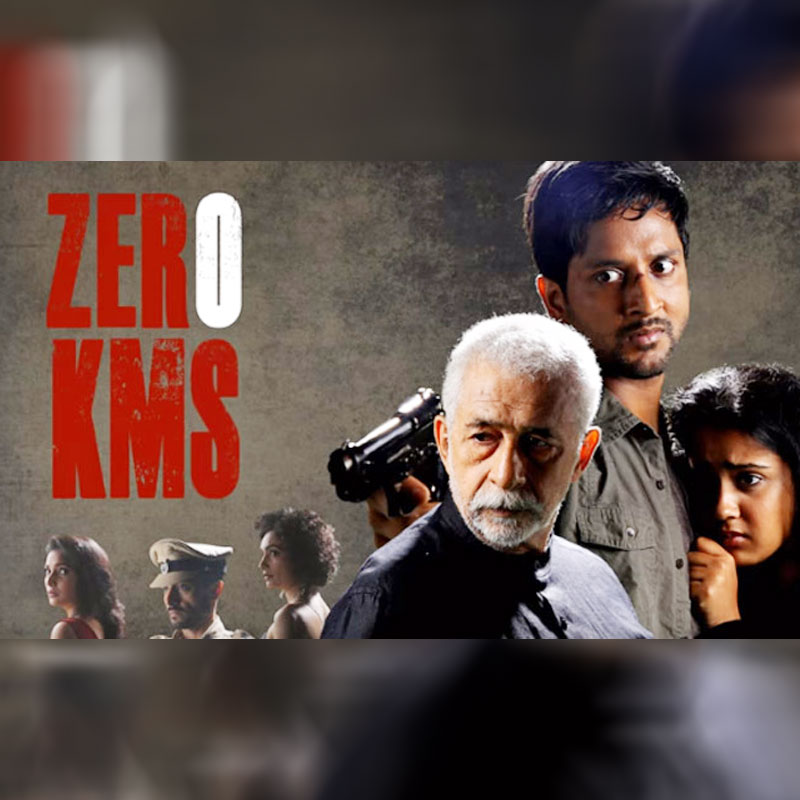
    MUMBAI: Zero KMS, the original offering from India’s most diversified OTT platform for language  ZEE5, has already become the talk of the town since its launch six days ago. Marking the debut of actor Naseeruddin Shah in the digital space, this hard-hitting action packed thriller series has garnered a rating of a staggering 9.6 on IMDB (Internet Movie Database).

    Directed by Q (Qaushiq Mukherjee), the web series forces the viewers to take notice of issues that are plaguing the society. Missing people, flesh trade and drug abuse some of the subjects tackled in the series. 

    Naseeruddin Shah (Guru) and Tanmay Dhanania (Arjun) are the central characters of this web series. Set in Goa, Zero KMS, in a nutshell, is about Arjun fighting to find justice against heinous crimes.

    Commenting on the show, the director stated, “I am very excited that the audience likes Zero KMS. It’s encouraging to see that people are connecting with a different kind of narrative.”

    This thriller series can be binge watched in six languages- Hindi, Marathi, Bengali, Malayalam, and Telugu and Tamil. With a slate of 20 originals to be launched in 2018, the platform will have more than 90 shows by the end of March 2019.

    Also Read:

    Diverse language content the pivot for ZEE5’s growth

    Zee5 launches 20 originals to drive up subscription


  • Airtel TV breaches 5 crore downloads mark on Android

    Airtel TV breaches 5 crore downloads mark on Android

    MUMBAI: Indian telecom giant Bharti Airtel’s video streaming app, Airtel TV, has clocked over 5 crore downloads on Google Play, the company said on Thursday. To mark the occasion, the telco has extended free subscription to Airtel prepaid and postpaid users from June 31 to December 31.

    “We are thrilled at achieving this milestone and being able to scale up the app so rapidly. This is a strong endorsement from our users and a result of our unrelenting focus on delivering a world-class in-app experience,” Bharti Airtel  CEO – Content and Apps , Sameer Batra, was quoted as saying by NDTV.

    The app, which offers more than 375 live TV channels, over 10,000 movies and shows, was given a face lift in 2017 to enhance its reach. The recently concluded edition of the Indian Premier League (IPL) was streamed for free on Airtel TV. The app offers 15 language options.

    In order to improve engagement through quality content, Airtel TV has partnered with Eros Now, SonyLIV, HOOQ, Hotstar, Amazon and AltBalaji. That’s not all. The company intends to pursue a similar model going forward to further innovate its offerings.

  • After acquiring 2.5mn subscribers, ALTBalaji to go international

    After acquiring 2.5mn subscribers, ALTBalaji to go international

    MUMBAI: ALTBalaji, the OTT platform of Balaji Telefilms, has made all the right noises since its inception in April 16, 2017. With 2.5 million subscribers on the ALTBalaji platform, the company now wants to scale up its investments in the digital domain with two major plans – double the original shows in the next 10 months and enter into international markets.

    In an astute move, the company has collaborated with Sony Entertainment to procure IP rights of the show Dil Hi Toh Hai. As per industry norms, channels tend to get the IP rights when such deals are struck. On this occasion, however, Balaji Telefilms has managed to retain the rights of the show. The episodes will be available on ALTBalaji 24 hours after they are aired on Sony.

     “As far as we go, we feel we are investing a lot in our digital future as a company and that’s why it’s important for us to slowly also be invested in all the digital rights of the content that we create and therefore it is a first step in that direction,” ALTBalaji CEO and group COO Nachiket Pantvaidya told Indiantelevision.com.

    Pantvaidya claims no revenue was sacrificed to acquire these rights.

    “I am trying to say it is just not about retaining rights. You have a ready avenue to exploit that. We have done this strategically so it’s not just we retain the right and do nothing with it,” he added.

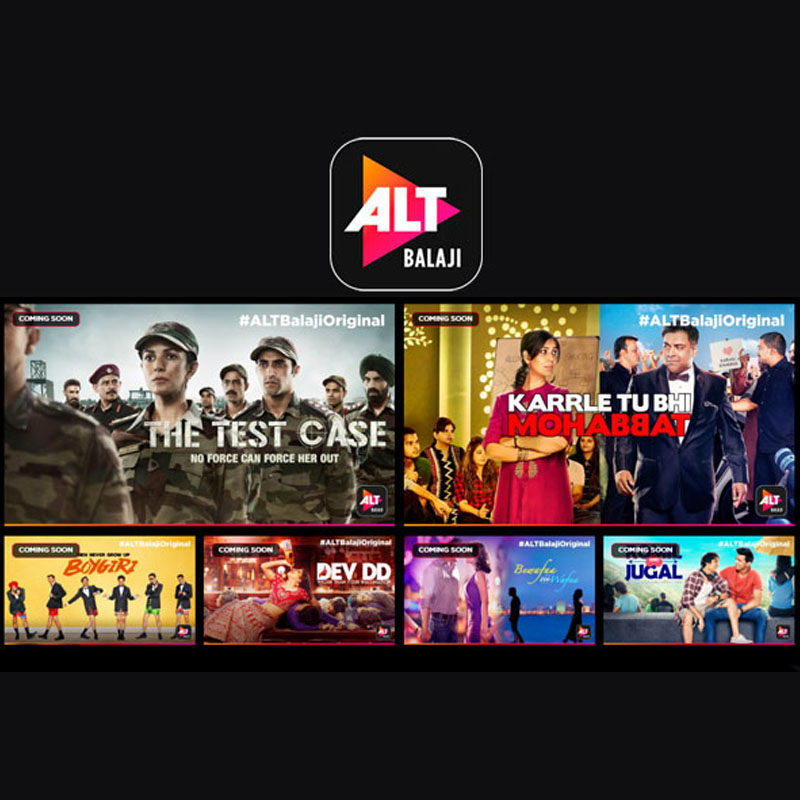
    Since its launch, ALTBalaji has been very aggressive with its original shows. From Bose: Dead or Alive to Kehneko Humsafar Hain and Ragini MMS, the brand has made an attempt to appeal to a wide segment of the Indian society. Not narrowing down its target audience has enabled the brand to build an audience in Tier II and Tier III cities.

    ALTBalaji’s success in India has given the company confidence to spread its wings overseas.

    “Our next target is to launch our service internationally by dubbing it in two languages Bahasa, Sinhala. We have also a Bangla dub plan which will target countries like Malaysia, Indonesia and Bangladesh. In addition, we will also try to get the higher ARPU nations like US and UK to consume our content,” said Pantvaidya of his company’s next moves.

    While some platforms are planning to stream more digital first movies, ALTBalaji is banking on episodic content. Future episodes and seasons keep the user constantly engaged with the platform, the Balaji team believes.  And if the numbers are anything to go by, they might as well stick to their current formula of programming.

    When it comes to subscriptions, the quarterly package contributes to 65% of the traffic. The company’s partnerships with Jio, Vodafone, Airtel, contributes 60-70% of its revenue. Moreover, 90% of its traction comes from mobile devices.

    With a plan to have a library of 42 original shows including 6-7 kids show by next March, the platform wants to stick to the SVOD model at least for the next ten months.

     While we often refer to OTT platforms as catch-up TV, ALTBalaji wants to increase its subscriber base by relying on original shows rather than being dependent on commissioned content.

  • Supari Studios reveals the secret behind a stadium experience at home in HD with Dolby Audio

    Supari Studios reveals the secret behind a stadium experience at home in HD with Dolby Audio

    MUMBAI: Award-winning content studio, Supari Studios creates another leg to brand Dolby’s campaign – “Ghar Pe Dolby Hai Kya”, addressing the brand’s focus on educating the HD viewer on the complete HD experience in the living room with Dolby Audio. The latest ad-commercial unravels the promise ‘Zabardast Experience Ke Liye Chaahiye, Zabardast Technology’ – For an unmatched experience, you need irresistible technology. The commercial aims to educate the audience that ‘Dolby Audio is the Sound of HD’ and that their current HD experience is incomplete without a Dolby audio enabled Sound bar/Home theatre.

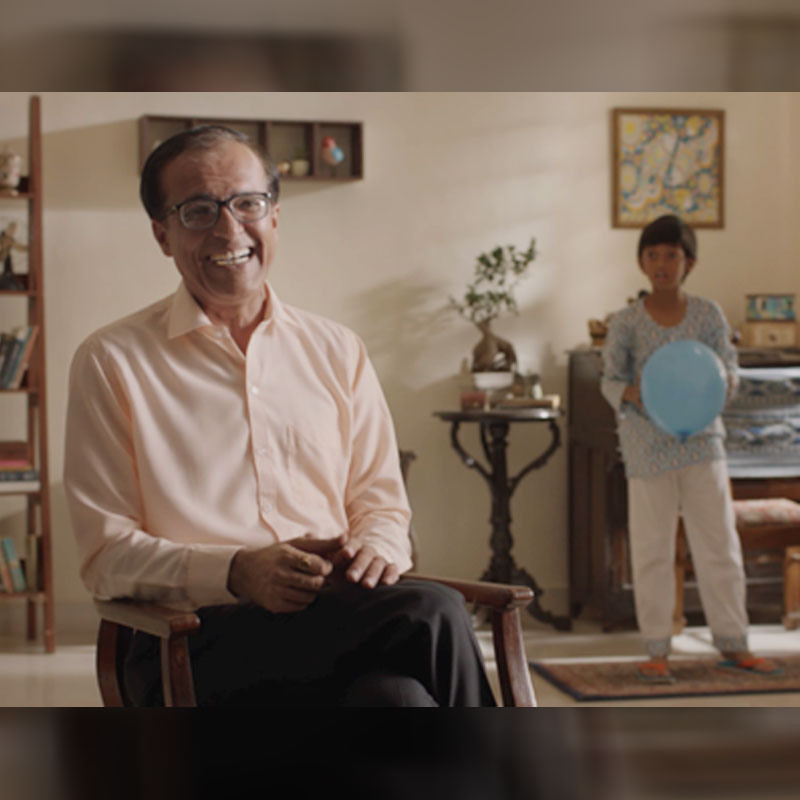
    This is the third film in this campaign series, the first film showcased the protagonist Mr. Chaubey who levels-up from “Mono” sound to a surround sound experience after Mono (his son) undergoes rigorous training sessions at home. In the second film, Chaubey brings home the cricket stadium experience with High Definition surround sound. Riding on the success of the two films, Supari Studios along with Dolby extends the series around Chaubey family and other quirky characters to make the audio technology at home synonymous to the sound of HD.

    Speaking about the campaign, Supari Studios, Executive Producer, Manoti Jain said, “Working on brand Dolby has been close to our heart. The latest commercial around the theme ‘Ghar Pe Dolby Hai Kya?’ aims at spreading awareness on how Dolby technology enhances our daily living room experience. We were entrusted to come up with a simple narrative that explains the “Zabaradast” experience that the technology brings. We chose the mockumentary format to deliver this message, something that we are very proud of. This is our third film.”

    Supari Studios, Film Director, Nisha Vasudevan, said, “This film was really fun to work on. What was interesting is that we already had a comic language and visual aesthetic in place, which was put together by Bopanna (director of the first two films in this series). I really enjoyed building on what he’s already created. I extended the same deadpan humour and still, awkward moments into this film. The DP, Siddharth Vasani, and I planned to use the same breathing camera for the documentary feel, however we tweaked the colour palette a little bit to make it a little more saturated and pronounced for this film. We’ve also used similar settings and of course, the original Mono and Chaubeyji are ever-present. The new cast members, Sharmaji and the grandmother, were selected to stand out against the original two – and they really hold their own on screen by bringing a few “haha” moments to the otherwise deadpan film. I also think the film has very good comic pacing thanks to the editor, Amitesh Mukherjee. We spent a lot of time trying to figure out where we needed pauses and where we needed to push the narrative forward. This has been fun.”

    The ad-commercial ‘Zabardast Experience ke Liye Chaahiye, Zabardast Technology’ follows the mockumentary format established with the previous legs of the ‘Ghar Pe Dolby Hai Kya?’ campaign constructed around the protagonist ‘Chaubey’. The new ad-commercial brings back familiar character, ChaubeyJi, and introduces new ones, like SharmaJi, to showcase how Dolby Audio adds another dimension to the living room experience. Sticking to the mockumentary style treatment, the script flows with ‘Chaubey’ reliving his story by telling the viewers about his achievements and how he & his son ‘Mono’ solved the case of an incomplete HD experience at his neighbour’s place. The film, therefore, highlights the importance of all components for a PHD or Poora (Complete) HD experience that requires an HD TV, an HD Set-Top-Box, HD channel subscription, and a Dolby Audio enabled soundbar or Home theatre. The film has been worked on with the idea of driving home the point how a Dolby Sound bar makes your home entertainment equivalent to a stadium like experience.

  • India to enter top 10 OTT video markets in 2022: PwC

    India to enter top 10 OTT video markets in 2022: PwC

    MUMBAI: With a steadily increasing demand for online video consumption, India is set to occupy a spot in the top ten (over-the-top) video markets in the world in four years, reported the Times of India quoting a study from global accounting firm PricewaterhouseCoopers (PwC).

    The report titled Global Entertainment & Media Outlook 2018-2022 (Outlook) adds that the OTT video market in India is growing at a compound annual growth rate (CAGR) of around 23 per cent.

    According to the report, OTT video revenue in India reached Rs 2,019 crore in 2017 and is likely to hit Rs 5,595 crore by 2022.

    The report also notes that Indian entertainment and media industry is likely to reach Rs3.5 trillion (Rs353,609 crore) by 2022.

    ” India is expected to post an impressive growth in the entertainment and media Sector at a CAGR of around 11 percent, over the next five years. This is not only on the back of traditional media, such as TV subscription and advertising, cinema and advertising, expected to post robust growth, but also non-linear media such as OTT, gaming and  Internet advertising expected to  significantly high growth rates,” PwC India, partner & leader — entertainment & media, Frank D’Souza told Indiantelevision.com

    The findings of the PwC study do not come as a surprise given the flurry of activity in the Indian OTT space in the last two years. Global giants Netflix and Amazon Prime Video, local brands like ALTBalaji, and those owned by broadcasters like Star India’s Hotstar, Sony Entertainment Television’s SonyLIV and Zee Entertainment Enterprises Limited’s ZEE5 are all locked in a fierce battle for India’s OTT pie.

    Viu India country head Vishal Maheshwari said, “This report shines a great light on the OTT market. Original content will play a major role in the growth of the SVOD segment which projected to reach 81.6% of the total in 2022. If OTT players in India produce high quality content, consumers will likely end up with a handful of different subscriptions. Also, with one of the largest populations of millennials who are looking for quality and relatable alternative entertainment avenues, we believe India will surpass other nations to become the largest contributor to the growth of digital entertainment.”

    This intense competition among the Video on Demand(SVoD) platforms was the primary reason behind subscription services generating over 70 per cent of the revenue in 2017. This trend, according to the report, is bound to grow further with SvoD contributing to 79.4% of the total market revenue by 2022.

    India, however, did not find place in the top 10 global SVOD countries by revenue last year. However, for countries with the highest SVOD CAGR in 2017, India was on the number three spot after Indonesia and Philippines.

    Also Read :

    Star India mulls adding VR to PKL 6

    Star unveils Re.Imagine Awards for IPL ad campaigns

  • Netflix stock hits 121 per cent YOY growth

    Netflix stock hits 121 per cent YOY growth

    MUMBAI: Following a Barclays Capital analyst report, which said Netflix’s “aggressiveness” could reshape movie distribution, the giant subscription video service soared to another stock market record. On 5 June 2018, Neflix’s stock closed up 1.1 per cent to $365.80– a new record. The stock is up 91 per cent year-to-date, and 121 per cent year-over-year.

    Barclays Capital media analyst Kannan Venkateshwar wrote, “We believe the economics for companies with global streaming scale like Netflix may be more favourable than theatrical releases, over time.”

    He added that Netflix is scaling up its theatrical film business to focus on a small subset of movies over time.

    “We believe Netflix’s increased aggressiveness around original movies and its emphasis on nontheatrical releases, if sustained, is likely to make this skew worse and could reshape the nature of movies and its economics in the coming years.”

    Venkateshwar feels that the troubling economics for theatrical producers will push legacy studios to do things differently like as releasing movies simultaneously on TV and theatrical.

    “Day-and-date movie releases or films released simultaneously theatrically and across different windows, could become a way for companies such as Disney to drive global growth for its streaming business,” he added.

    “Movie distribution could, in general, follow much more of a barbell distribution — with the big movies needing to get bigger to justify the cost of theatrical releases while small movies go direct to consumers through streaming services.” said Venkateshwar.

    Given the frequency of digital disruptions, there is a real chance that the movie business could witnessed a transformation much like the pay TV industry.