
MUMBAI: ZEE5 has been a forerunner in presenting unique content that challenges one’s beliefs and thoughts. In the past few months, the fastest growing OTT platform has successfully launched interesting Original concepts backed by innovative formats such as Khaar, Lal Bahadur Shastri's Death – An Unfinished Story, Sigai (Tamil), Khoj, Mehram and so on. ZEE5 has now announced the launch of its fourth original film Veergati, inspired by real events, releasing on Republic Day. Produced by Roshan Kanal’s Daytee Pictures, Veergati presents the poignant tale of a martyr’s tragic fate forcing viewers to question the core fundamentals of patriotism and one’s duty towards the country.
Category: Over The Top Services
-

Amazon Prime Video launches a brand new song for upcoming Prime Original Series, Four More Shots Please!
MUMBAI: Dedicated to timeless friendship, Amazon Prime Video has released the latest single from the album of Prime Original Series Four More Shots Please! Singer extraordinaire and popular heart-throb, Darshan Raval, has lent his voice to the ballad, Yaara Teri Yaari.
The serenade, which contrasts the upbeat title track, takes listeners on a nostalgic journey as it reminisces precious moments spent with close friends. The track is accompanied by a video that has the four leading ladies from the show sharing classic friendship moments – be it helping each other choose the right outfits, to enjoying fun-filled dinners, to sipping fine wine and downing ‘Four More Shots Please!’. The video captures the joy of female bonding and the innocence in the bond of friendship.
“Friendship to me means some of the best times of our lives and my attempt was to capture that spirit in a song. Everyone has best friends they can count on no matter what, with no questions asked and it is a bond that is innocent and special with an irreplaceable charm. Working with the Amazon team and shooting with the awesome cast was a great experience for me. I am certain that the listeners will relate to the lyrics of this song and will remember their own friends”, said Darshan Raval, when talking about the single.
Amazon Prime Video has the largest selection of latest & exclusive movies and TV shows, stand-up comedy, biggest Indian and Hollywood films, US TV series, most popular Indian & international kids’ shows, and award-winning Amazon Prime Originals, all available, ad-free, with a world class customer experience. Besides Kannada, the platform also includes titles available in Hindi, Marathi, Tamil, Telugu and Bengali.
To watch the upcoming Prime Original Series Four More Shots Please! and newest releases in Hollywood & Bollywood, the latest US TV shows, kids’ favorite toons and Amazon Prime Originals, please visit www.PrimeVideo.com or download the Amazon Prime Video app today and sign-up for a Prime membership only at ₹999 annually or ₹129 monthly.
-
Comment: Self-regulation a positive step for OCC platforms, but…
At a high profile event in Delhi last week, a section of the Indian digital industry, comprising some of the biggest global players and domestic thoroughbreds who now define themselves as online curated content (OCC) platforms, announced a self-regulatory code — distancing itself from user-generated content or UGC platforms.
That the formal launch of the self-regulatory code, signed by nine platforms till now, was preceded by a bit of drama, backroom politics and media leaks involving the content and phrasing of the code — highlighting the proponents and critics of the self-regulatory mechanism — is another tale worthy of another time and place as the devil always lies in the fine print, though a Reuters report did bring out the divergent views.
The objectives of this OCC Code, drafted by an industry body Internet and Mobile Association of India (IAMAI) after consultations with the stakeholders are as follows:
• Empower consumers to make informed choices on age-appropriate content;
• Protect the interests of consumers in choosing and accessing the content they want to watch, at their own time and convenience;
• Safeguard and respect creative freedom of content creators and artists;
• Nurture creativity, create an ecosystem fostering innovation and abide by an individual’s freedom of speech and expression; and
• Provide a mechanism for complaints redressal in relation to content made available by respective OCC Providers.Though highly laudable and praiseworthy a move, there’s no denying the fact that with curated content getting increasingly edgy in India in an hitherto unregulated environment, the government, nudged by the judiciary, has been actively toying with the idea of setting government-mandated guidelines, a fact that has been officially denied in and out of the parliament. The looming general elections in a few months time has made the government, probably, more circumspect.
But it would be interesting to analyse the move of the fledgling OCC industry that boasts of several billions of investments in original Indian content by international and domestic players like Netflix, Amazon Prime Video, Hotstar, Zee5, Voot, Reliance Jio, etc.
Types of streaming services
The online video industry primarily has two segments:
# Curated video on demand (VoD) applications, which refer to digital applications that provision proprietary content for which application/platform concerned indulge in curating the content made available.
# UGC platforms/applications refer to those platforms/applications that allow users to upload content and make it available for other users to stream. In this case, the entity owning the application performs no role in curating/editorialising the content made available through its platform.
# There’s a third category too of streaming services that are a hybrid of curated and UG content.
As the professional video streaming applications exercise editorial control (curation) over the content made available through their platforms, they are liable for such content.
On the other hand, UGC platforms enjoy certain protection within the Indian law framework as they can be classified as “intermediaries” under Section 79 of the IT Act, 2000. They shall not be held liable for the content distributed through their systems if they did not initiate the transmission; select the receiver of transmission and select or modify the information contained in the transmission.
However this provision is not a blanket protection as the platform can in no situation escape the responsibility to act in conformity with law as the same section clearly states “the intermediary observes due diligence while discharging his duties under this act and also observes such other guidelines as the central government may prescribe in this behalf” and “the intermediary has [not] conspired or abetted or aided or induced, whether by threats or promise or otherwise in the commission of the unlawful act”.
The said safe harbour continues to operate only for 36 hours, which means the intermediary has only 36 hours to acknowledge the receipt of complaints from the aggrieved user and a period of 30 days to respond to the same.
While Section 79 of the IT Act was originally intended to provide time to intermediaries to act in alacrity with the law and get their act in order, however, in practice it has been abused by UGC and social media platforms that have used it as a protective wall to prevent any action against them.
Existence of self-regulatory mechanisms for content industry
Self-regulatory/co-regulatory mechanisms for content regulation have long held field for governance of editorialised or curated in content in India.
The print media has Press Council of India (PCI); the news and current affairs broadcast has News Broadcast Standards Authority (NBSA); non-news broadcast has Broadcast Content Complaints Council (BCCC) under the Indian broadcasting Federation and advertisement sector has Advertising Standards Council of India (ASCI).
TV content, generally, is regulated in multiple ways that range from statutory regulation to self-regulation. The content or programmes on these channels are regulated by the Cable Television Networks (Regulation) Act, 1995, which consists of a programme and the advertising codes that all content transmitted or retransmitted on television must adhere to. The programme and the advertising codes are collectively called “codes” and are mentioned in the Cable Television Networks (Rules), 1994.
The programme code largely regulates the content that should be shown on TV. For example, the programme code prohibits airing any content that may not be suitable for public viewing that may be otherwise prohibited under the Cinematograph Act, 1952. This code also prevents the airing of content that may be in contravention of prevalent policies such as obscenity, communal disharmony, child pornography, etc.
However, to ensure the independence of the media, a self-regulating provision has also been acknowledged by the state. To that end, IBF and NBA’s guidelines for regulating all content on TV across all forms of transmission — cable, terrestrial, DTH, IPTV, etc. — have helped, but have raised some questions too. The self regulatory codes will be applicable on NBA and IBF members who can be penalised by the self-regulatory bodies, but what about the non-members? Not all the 650-odd on-air TV channels out of the 800+ government permitted channels are members of IBF or NBA or both.
Still, the need and importance of self-regulatory mechanisms in India was observed by the Supreme Court of India in the case of Common Cause vs. Union of India where it affirmed and recognised the self-regulatory mechanism put in place for advertising content by ASCI.
Case for self-regulation by OCC platforms
As envisioned by the Indian government’s Digital India initiative, access to digital services (government and entertainment services included) is now at the centre of India’s collective rise transcending urban/ rural, income and gender divides.
At present the OTT space is being regulated by the Ministry of Electronics and Information Technology (MeitY), which, as per government rules, is the ministry in charge of making policies in all matters relating to information technology, electronics and internet except licensing of Internet Service Providers. It is also in charge of matters relating to the Information Technology Act, 2000.
Information Technology Act, 2000 as India’s primary cyber law legislation provides for punishment for new offences such as publishing or transmitting obscene materials, materials containing sexually explicit acts and materials depicting children in sexually explicit acts.
Moreover, intermediaries are subject to the Information Technology (Intermediary guidelines) Rules, 2011, which require intermediaries to publish rules and regulations as well as a privacy policy, and terms and conditions or user agreements that inform users not to use the platform to upload or transmit information that is grossly harmful, harassing, blasphemous, defamatory, obscene, pornographic, paedophilic, libellous, invasive of another's privacy, hateful, or racially, ethnically objectionable, disparaging, relating or encouraging money laundering or gambling.
Well aware of any government’s leanings towards an Orwellian Big Brother-regime, Supreme Court has noted the value and importance of the internet as a medium, and has warned against excessive censorship underlining the importance of keeping the internet open and free. This is notably evidenced by the striking down of Section 66A of the Information Technology Act 2000 in a historic case few years back, which upheld the freedom of speech and expression. The court held that words like ‘offensive’, ‘annoying’, ‘menacing’, ‘insulting’ used in the section as grounds for restriction on speech on the internet were too vague and that this would have a chilling effect on speech on the internet.
Presently, there is no single regime regulating online content. This makes online content platforms soft targets and vulnerable in the whole scheme of things as they are subject to multiple existing criminal and civil laws. Some media reports some time back highlighted the self-censorship of content being undertaken by some OTT platforms – much before the self-regulatory code were announced and by those platforms that have not yet signed on for the last week’s announced codes.
Implementing a framework for self-regulation for curated VoD platforms could work as a guiding principle for OCC platforms and could ensure that the stakeholders regulate their content in a responsible and professional manner, protect users from illegal, infringing and discriminatory content (after all pirated content too cannot be allowed a free run as it results in loss of big time revenue), while being mindful of the need to nurture creativity, foster innovation and abide by the citizens’ freedom of speech and expression, and their right to receive information.
To create an environment of responsibility in the online video space, it is necessary for the VoD industry to appreciate the genuine need of consumers for a safer viewing experience. In the Indian context, the needs of consumers get enhanced due to emphasis on family viewing as multiple-devise or solo viewing is still not a mass phenomenon.
In the Indian scenario, the industry shall have to contend with the diverse socio-cultural and economic strata that exist within our society that bring along a complex set of different sensitivities.
With such a background, it is important, that the curated VoD industry agrees to a common set of principles, which reflect the following:# Empowering consumers to make informed choice regarding appropriate content for their families and themselves;
# Protecting interests of consumers in making available content they want to view;
# Safeguarding the freedom of creative community, while achieving the above two objectives.
The self-regulatory code for OCC platforms made public by IAMAI does address most of the aforementioned points, but also raises questions like:
# Will the days of edgy domestic and international content for Indian consumers be soon over?
# Will it lead the government to crack the whip via mandated guidelines if such self-regulation fails to rein in the errant ones?
Questions that only the future can answer as we at Indiantelevision.com still haven’t laid our hands on a future-predicting crystal ball.
However, enlisted below are some self-regulatory regimes from other parts of the globe that seem to be working? These global practices around regulations in curated VoD space indicate that many regulators and governments have refrained from imposing heavy regulatory control to avoid burdening the segment with legacy regulations and allowing it to grow optimally. Importantly, user choice and control have been prioritised over blocking of content to ensure protection of minors. Built in safe guards (like age filters and proper messaging about content type) have helped prevent access to objectionable content on an opt-in basis.
Comparative Summary of OTT-Content Regulatory FrameworksJurisdiction
Regulatory Approach
Description
Canada
Self-Regulation
Canada has a strong system of self-regulatory practices which encourage industry partnerships with government as well as with each other to come up with codes of practice. The Canadian Association of Internet Providers (CAIP) became one of the first industry associations to come up with a code of conduct and this has been leveraged as a template for a number of online-industry designed codes to address various concerns like protection of personal information and protection of consumers of E-commerce.
Japan
Self-Regulation
In the absence of an independent regulatory commission, Japan’s internet industry is another jurisdiction to have embraced self-regulation. Non-governmental, non-profit organisations have been formed, with the support of for profit organisations, to regulate the industry. This includes the Content Evaluation and Monitoring Association and the Internet Content Safety Association
Australia
Australian Communications and Media Authority (ACMA)
Co-Regulation
Legislative scheme requires ACMA, which is the converged regulator for broadcasting, telecom and the internet, to give the industry an opportunity to develop co-regulatory solutions before other forms of intervention are considered, with the regulator maintaining reserve powers to intervene when co-regulation has not adequately addressed issues of concern.
-
Netflix adds 8.8 million paid subs in Q4; stock falls as spending weighs on profits
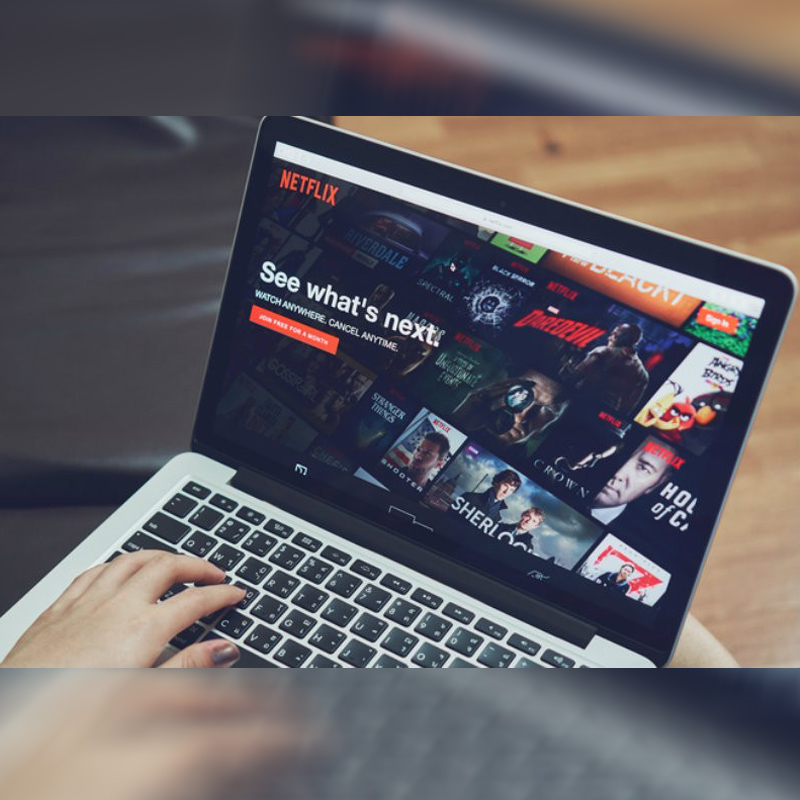
MUMBAI: Netflix in its Q4 earnings beat Wall Street expectation in terms of international subscriber growth but the same in its domestic market remains tepid. For the quarter, the online video platform reported 1.5 million domestic subscriber addition and 7.3 million new subscribers internationally.
Netflix posted mixed result in terms of revenue also. The company beat Wall Street estimates on earnings per share (EPS) but fell a bit short on the total revenue. It posted EPS of 30 cents versus 24 cents consensus estimate. On the other hand, against Wall Street's estimation of 4.21 billion revenue, the online video player reported $4.187 billion in revenue.
As a result, Netflix stock fell 4.31 per cent thanks to slower domestic subscriber addition and revenue growth. The most closely watched stock gave the hope of bigger boom among investors. Notably, the copman beat its own projection in terms of subscriber addition. On the back of new 8.8 million global paid memberships in Q4, the subscriber addition went up to 29 million paid subscribers for the full year of 2018. It is clearly 33 per cent higher if compared to 22 million paid subscribers addition in 2017.
“We added a record 8.8 million paid memberships (1.5 million in the US and 7.3 million internationally), higher than our beginning-of-quarter expectation for 7.6 million paid net adds and up 33 per cent year over year. For the full year, paid net adds grew 33 per cent to 29 million versus the 22 million we added in 2017,” the company commented in a letter to shareholders.
Few days ago, Netflix announced its increase in US prices for the first time since 2017. The hike in subscription rate will be applied also to subscribers in Latin American and the Caribbean, where Netflix bills in US dollars. The most popular subscription plan will see the largest hike costing $13 a month, up from $11. Wall Street showed high enthusiasm by sending the stock shooting skyward after the announcement.
“We change pricing from time to time as we continue investing in great entertainment and improving the overall Netflix experience. We want to ensure that Netflix is a good value for the money and that our entry price is affordable. We just increased our US prices for new members, as we did in Q4 in Canada and Argentina, and in Japan in Q3. The new pricing in the US will be phased in for existing members over Q1 and Q2, which we anticipate will lift ASP,” the company added in the letter.
Apart from its well-known and critically acclaimed shows, Netflix is expanding its film market also. As claimed by the company, its films drew bigger attention in the last quarter. Netflix has also mentioned the relevance of international productions again as good ones enjoy viewership both inside and outside the country. “We’re making significant investments in productions all over the world because we have seen that great stories transcend borders,” the OTT platform commented.
For the first quarter of 2019, Netflix forecasts global paid net additions of 8.9 million, with 1.6 million in the US and 7.3 million internationally. The revenue forecast for Q1 19 represents 21 per cent year over year growth.
Next year is going to be a tough one for Netflix as its rivals like Disney, AT&T, NBC Universal, Apple are gearing up for their own online services. Given the strength of Disney’s scale, AT&T’s reach, anyone can assume the intensity of the challenge.
“There are thousands of competitors in this highly-fragmented market vying to entertain consumers and low barriers to entry for those with great experiences. Our growth is based on how good our experience is, compared to all the other screen time experiences from which consumers choose. Our focus is not on Disney+, Amazon or others, but on how we can improve our experience for our members,” Netflix said.
-
Netflix releases the trailer for Soni
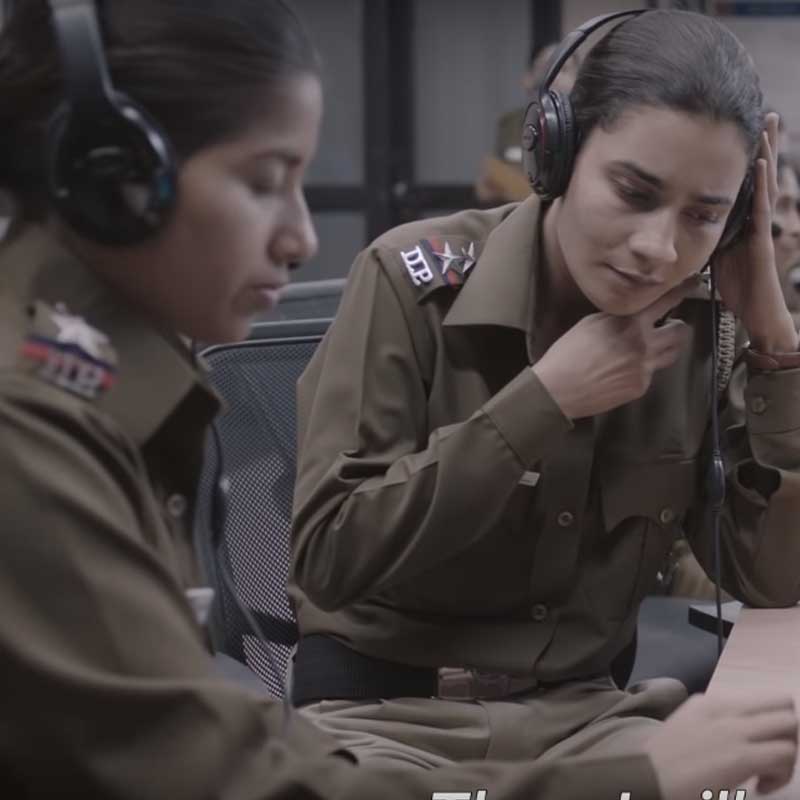
MUMBAI: Netflix today launched the trailer for the critically acclaimed film Soni, will launch on the service in 190 countries on January 18, 2019. The film has been a festival favourite and featured across the programs at the 75th Venice Film Festival, the Mumbai Film Festival, BFI London Film Festival among others last year.
Soni is directed by Ivan Ayr and features the talented star cast of Geetika Vidya Ohlyan (Soni) and Saloni Batra (Kalpana) – who with their strong and fierce performances are sure to win the hearts of audiences across the world!
A thought provoking film chronicling around the injustices and struggles that the women face everyday, Soni explores how the society is confined to a narrow set of patriarchal ideologies and reveals the gender biases in the contemporary society.
-
Netflix raises US prices for the first time since 2017
MUMBAI: Is Netflix feeling the heat of well-funded competitors? The king of OTT platforms is increasing its US prices for the first time since 2017. The hike in subscription rate will be applied also to subscribers in Latin American and the Caribbean, where Netflix bills in US dollars. The move comes at a time when Disney is gearing up for its streaming service launch and NBC has just entered the market.
The move is aimed at easing a large, debt-fueled investment in new films, series and documentaries this year. According to media reports, company executives are looking for more money to pay escalating content bills.
The most popular subscription plan will see largest hike costing $13 a month, up from $11. Despite the hike, it costs lesser than HBO, whose streaming service charges $15 per month. The cheapest subscription will run $8.99, up from $7.99. The change in subscription will be effective for new customers immediately and for existing customers it will be rolled out during the next three months.
“We change pricing from time to time as we continue investing in great entertainment and improving the overall Netflix experience,” the company said in a statement.
Wall Street put its faith on the move as the company’s stock surged $21.70 to finish at $354.64 on Tuesday, its highest closing price in nearly three months. It shows that investors believe the price increase won’t significantly slowdown Netflix’s subscriber growth.
-

Amazon Prime Music introduces innovative Hands Free Feature to enjoy music using voice on its mobile app
MUMBAI: Amazon Prime Music further deepens its focus on innovative voice features with the introduction of Hands Free feature that enables listeners an effortless, lean-back music listening experience on their Amazon Prime Music mobile app. Starting today, Amazon Prime Music listeners can simply ask Alexa to play music wherever they go, while the app is open on any iOS and Android smartphones, without tapping the Alexa icon.
Listeners can now directly ask Alexa to play music from their favourite movie soundtracks, play music by mood, activity, era, genre, artists or create a playlist just by asking while eliminating the need to tap the Alexa icon. When the Amazon Prime Music app is open and in the foreground on any iOS and Android smartphones, customers can utilize the innovative voice features they can use on Echo devices to play music and can now simply say, “Alexa” to play, pause, repeat, move back and forth between songs and much more.
· In the middle of a run? Just ask, “Alexa, play the Dance party playlist I was listening to last week” while enjoying your workout
· In a mood to cook while listening to latest Bollywood songs? Like something and want to add to your playlist? Simply say, “Alexa, add this song to the playlist ‘My Favourite Hits’” and continue to enjoy cooking
· Busy with weights at the gym and want to start a new song to keep you motivated? Simply ask, “Alexa, play my workout playlist”. No need to interrupt your weights routine.
Commenting on the launch, Sahas Malhotra, Director, Amazon Prime Music, said, “We want to make music listening as easy and enjoyable as possible. The launch of the Hands Free feature on the Amazon Prime Music app eliminates yet another step between you and your music, giving you the freedom from tapping the Alexa icon and simply asking for your favorite music. Since its initial launch in the US in 2018, providing Hands Free listening in the app has been one of the top requests by our listeners for the music app. And, today, Amazon Prime Music is making mobile music streaming even better by enabling this new functionality in our app for our listeners. This brings the voice-forward music listening experience that customers love on Echo devices to the rich, visual mobile app interface”.
The Hands Free feature in the mobile app makes the other recently launched voice-enabled features even more delightful to use and easier to enjoy. For example, in a mood to know what music is trending in other parts of the world across cities or countries? Just ask, “Alexa, play popular songs in New York”, discover similar music to what listeners are listening to with “Alexa, play more like this” and Alexa will then select and play songs similar to that favourite track, making it easier to sit back and enjoy. That’s not all – listeners don’t ever have to search or browse for their recently played songs or music they haven’t heard in a while – all they have to do is ask, “Alexa, play recently played songs” or “Alexa, play songs I haven’t heard in a while” by artist, genre or time to truly enjoy an immersive music discovery and listening experience on Amazon Prime Music.
To get started with the Hands Free music listening with Alexa in the Amazon Prime Music app, listeners can update the app for iOS or Android today or download. Listeners can always turn the feature on or off through the Amazon Prime Music app’s settings. Learn more at:
-
ZEE5 maintains momentum with 56.3 mn MAU in third quarter
MUMBAI: Media conglomerate Zee Entertainment Enterprises Limited (ZEEL) on Tuesday published its third quarter financial results with its OTT ZEE5 demonstrating continued growth.
ZEEL’s super streamer clocked 56.3 mn monthly active users (MAU) as of December, with a 36 per cent increase since September 2018.
“ZEE5 is scaling up in line with our expectations and is on course to become India's number one digital entertainment platform," said ZEEL chairman Subhash Chandra.
Since its February 2019 launch, ZEE5 has adopted an aggressive content strategy, producing original shows in several genres including comedy, drama, reality, thriller, and docu-drama.
According to ZEEL’s filing with the BSE, users currently spend an average of 31 minutes per day on the app. The platform delivered similar engagement numbers in Q2 as well.
“ZEE5 is quickly establishing itself as a leading digital entertainment platform,” tweeted ZEEL MD and CEO Punit Goenka, who seemed pleased the OTT’s growth trajectory.
“Our expanding list of partnerships with telecom operators and ecosystem players, coupled with innovation in pricing, will make ZEE5 accessible to a wider audience,” he added.
Last year, ZEE5 signed content deals with telecom majors Reliance Jio and Airtel.
In the first leg of its global rollout, the OTT platform has focussed on South Asian audience across the world.
Both in international and domestic markets, ZEE5 is confident of scaling up on the back of regional content.
Since the beginning, the platform has emphasised on content in the “language of comfort”. In line with its regional play, the platform also launched regional subscription packs for Tamil, Telugu and Kannada users.
During the last quarter, ZEE5 launched Rangbaaz, Karenjit Kaur S2 and Babbar Ka Tabbar S2 in Hindi, Chitra Vichitram and B. Tech in Telugu, What’s Up Velakkari and Alarm in Tamil, Date with Saie in Marathi and Kaali in Bengali.
Two flagship shows of the platform Karenjit Kaur, Rangbaaz have created quite a buzz in a short span.
In a bid to strengthen its live offerings, ZEE5 also added a dedicated section for news and even live-streamed the very popular Sunburn music festival.
-

Amazon Prime Video drops the full title track of upcoming Prime Original Series Four More Shots Please!
MUMBAI: There’s a new anthem for friendship and female bonding in town and Four More Shots Please! is the clarion call! Amazon Prime Video, today dropped the entire title track of Four More Shots Please! Releasing shortly after the no-holds-barred trailer, this title track reinforces the theme of the show which encourages women to live life on their own terms, shed all inhibitions and celebrate their friendships.
Keeping with the theme of the series, with music by Mikey McCleary, the track has an electrifying mood along with an upbeat mood and a catchy hook. While the music depicts the fun, bold side of the women on the show, the powerful lyrics, penned by Mikey McCleary, Ankur Tewari & Natania Lalwani, is an ode to the fierce and fearless contemporary Indian woman and their friendships. The dramatic vocals by Naquita D’Souza are paired to perfection, adding strength to the overall track, making this friendship anthem a must-add in everyone’s music playlist!
The Prime Original Series Four More Shots Please! stars Sayani Gupta, Kirti Kulhari, Bani J and Maanvi Gagroo along with a stellar ensemble cast comprising of Prateik Babbar, Lisa Ray, Milind Soman and Neil Bhooplalam along with Amrita Puri and Sapna Pabbi. Replete with pop cultural references, Four More Shots Please! is the one thing you need to watch to get into the mind of the modern Indian woman. The show launches on Prime Video on 25th January 2019.
-

ZEE5 bridges boundaries to #ShareTheLove with Pakistan, Bangladesh
MUMBAI: Three months after its soft launch across 190+ countries, digital entertainment platform ZEE5 is now zooming in on specific priority markets. Close on the heels of the launch of its brand campaign Dil Se Desi in APAC, MENA and Africa targeting the Indian and South Asian diaspora, ZEE5 today rolled out a customized campaign, aptly titled ‘Share the Love’ for two important neighboring markets, Pakistan and Bangladesh.
Exuding the same playfulness and pep as #DilSeDesi and crafted by ZEE5 with Publicis Capital, the campaign #ShareTheLove is themed around the similarities that we share with Pakistan and Bangladesh in terms of our culture, food and of course our entertainment. Bringing in a strong bouquet of content which resonates with audiences in these markets, including Hindi and Bengali original shows like Rangbaaz, Kaali and the upcoming Sharate Aaj, original movies like Aranyadeb and Tigers as well as digital premieres like Namaste England and Praktan; ZEE5 ‘shares the love’.
Amit Goenka, CEO, ZEE International and Z5 Global said, “Indian content, especially our TV shows, movies and music gets tremendous love across the globe, and especially so from the sub-continent due to the relatability. We are glad to announce our availability in Bangladesh and Pakistan vide our new campaign #ShareTheLove and we look forward to getting a tremendous response from these markets’.
“Good content transcends borders and especially so with Pakistan and Bangladesh where there is so much shared context of culture and language. This high energy TVC captures our innate similarities and showcases the content that we all love to watch, which is now available on ZEE5. With this message at its core, #ShareTheLove is sure to resonate beautifully with audiences in these markets.” adds Archana Anand, Chief Business Officer, ZEE5 Global
ZEE5 offers 1,00,000 hours of Indian Movies, TV Shows, Cine plays, Music, Videos and a slew of exclusive Originals, across 12 languages – English, Tamil, Hindi, Malayalam, Telugu, Kannada, Marathi, Bengali, Oriya, Bhojpuri, Gujarati and Punjabi. It also offers 60+ popular Live TV channels.
The ZEE5 App can be downloaded from Google Play Store or the iOS App Store. ZEE5 is also available on www.ZEE5.com. The app is also available on Samsung Smart TV, Apple TV, Android TV and Amazon Fire TV.