Category: Over The Top Services

  • Access, language variety, local partnerships to drive next billion subscribers

    Access, language variety, local partnerships to drive next billion subscribers

    MUMBAI: Despite the overwhelming growth of the OTT sector, players still need to pay more focus on issues such as content discovery, distribution, partnerships across verticals.

    The Future of Video India 2019 organised by Asia Video Industry Association (AVIA) hosted a session on “Capturing the next billion subscribers”. ZEE5 India CEO Tarun Katial, Amazon Prime Video India director and country general manager Gaurav Gandhi, Viacom18 Digital Ventures marketing and partnerships head Akash Banerji and Discovery digital business and partnerships director Issac M John participated in the panel moderated by TriLega partner Nikhil Narendran.

    Gandhi pointed out that screens and connectivity are the routes to the next billion users in the sector. According to him, the next important aspect is the hunger for content. Going against the common notion that Indian consumers are price conscious, he said that they are, in fact, value-conscious who will not mind paying for the right content at the appropriate price point.

    “Then there are questions of access and distribution. How easy is it to get these content or service by virtue of mobile phones, apps and then is the option of easy payment. Another important part is bringing the ecosystem together whether it’s cable companies or telcos trying to make sure they are able to offer customers the service,” he added.

    Discovery’s John spoke about the importance of content in regional languages as the next wave of consumers is coming from rural India. He also added that short-form content is going to drive content consumption citing the popularity of TikTok videos. According to John, offering unique content can create a clear demarcation of value.

    Banerji said that the next billion subscribers are not certainly going to come on the back of OTT videos only. It’s going to be multiple industries spanning retail, travel, etc. Banerji emphasised on the role of technology so the streaming services work seamlessly in tier II and III markets. He opined that ensuring the product works even in patchy network is a necessity, especially for someone who is possibly coming to the internet universe for the first time.

    Terming the present phase an exciting period, ZEE5 CEO Katial said everybody knows video, vernacular and voice search are going to change the game. He added that India will have an ad-supported model along with premium content behind a paywall but both will keep evolving.

    Gandhi pointed out content discovery, getting customers to see value in content and making them pay for it, and piracy as the hurdles to overcome. In addition to that, the media veteran spoke about the unsatiated demand for content which is a challenge for creators to fulfil in relevant languages. Katial agreed with Gandhi’s view giving an example of the demand for returning seasons of popular shows. In addition to that, he threw light on the need for personalisation and segmentation on the platforms with proper technology.

    While Banerji said that content is going to be a key differentiator for further growth, he cited the example of the FMCG industry for sales, distribution and brand building. For ensuring distribution in far-flung places, he thinks to work closely with local partners, local broadband players and local cable/DTH players is important. From the marketing aspect, he mentioned how FMCGs do micro marketing by working with local radio stations and print mediums. He even raised the question of attracting those not in the internet universe or older audiences.

    However, the experts reaffirmed the co-existence of linear TV and digital content at least for the next five to ten years. Demand for all types of content is increasing even as the TV becomes more accomodating to TV and non-TV content.

  • Courage knows no Gender – Watch Taapsee Pannu introduce the teaser of Prime Exclusive Series Laakhon Mein Ek Season 2

    Courage knows no Gender – Watch Taapsee Pannu introduce the teaser of Prime Exclusive Series Laakhon Mein Ek Season 2

    MUMBAI: Witness a courageous fight against the system in the new season of Prime Exclusive Series Laakhon Mein Ek. Courage as a virtue, has for generations, intuitively and subliminally, been associated with the male gender. Laakhon Mein Ek Season 2 questions this narrative.

    Taaspsee Pannu, actor extraordinaire and a vocal speaker of women’s rights, in the teaser video of Prime Exclusive series – Laakhon Mein Ek, asks some tough questions on the visual and verbal language used to describe courage.

    Taapsee Pannu says, “The phrase I have often heard used to project courage on screen or in real life is ‘Be a Man’, which often disturbs me because I believe women are equally, if not more, courageous. Prime Exclusive Series Laakhon Mein Ek Season 2 is  a series where through Dr. Shreya – the protagonist of the show, we see the fearlessness of a woman as she bravely fights against the system and proves that courage cannot and should not be defined by gender.”

    Taapsee Pannu, known for the fearless characters she plays on screen, introduces the teaser of the show openly calling out societal norms of courage being closely and exclusively associated with the male gender.

    Dr. Shreya is posted in Sitlapur village to conduct a cataract camp. The villagers are not the biggest believers in government aided healthcare due to lack of proper medical supplies thanks to dirty politics, and the medical staff isn't the dream team one would want where one’s health is concerned. Dr. Shreya, portrayed by Shweta Tripathi, decides to fight the system to try and bring about change, but the question is – Will she change the system or will the system change her?

    Amazon Prime Exclusive Series Laakhon Mein Ek – Coming Soon only on Amazon Prime Video.

    Amazon Prime Video has the largest selection of latest & exclusive movies and TV shows, stand-up comedy, biggest Indian and Hollywood films, US TV series, most popular Indian & international kids’ shows, and award-winning Amazon Prime Originals, all available, ad-free, with a world class customer experience. The service includes titles available in Hindi, Marathi, Tamil, Telugu, Kannada, Punjabi and Bengali and Gujarati.

    To watch the upcoming Prime Original Series Laakhon Mein Ek and newest releases in Hollywood & Bollywood, the latest US TV shows, kids’ favorite toons and Amazon Prime Originals, please visit www.PrimeVideo.com or download the Amazon Prime Video app today and sign-up for a Prime membership only at ₹999 annually or ₹129 monthly.

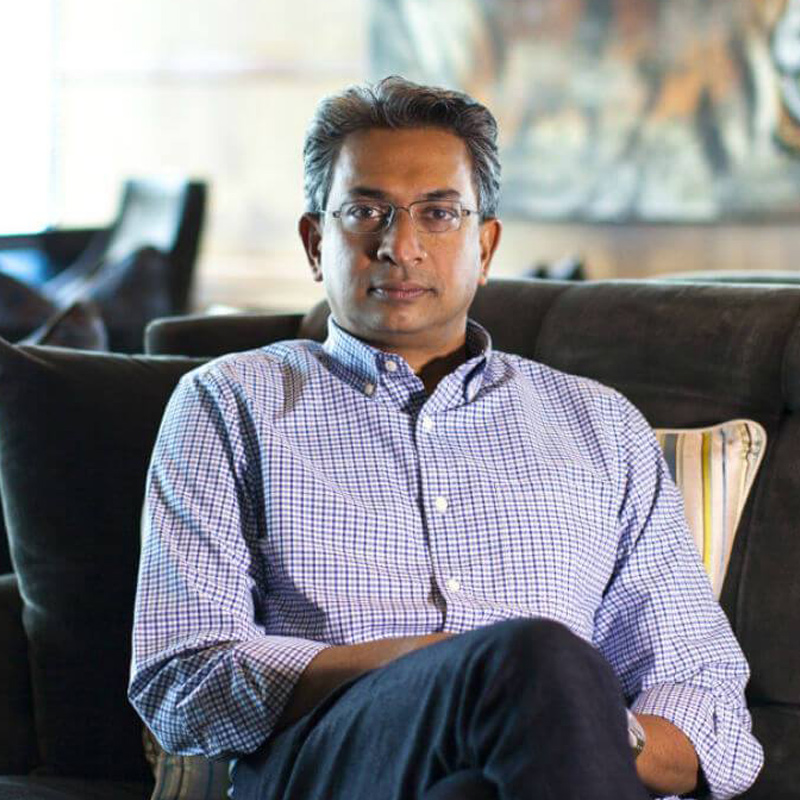
  • Rajan Anandan resigns as Google Southeast Asia and India VP

    Rajan Anandan resigns as Google Southeast Asia and India VP

    MUMBAI: Google Southeast Asia and India VP Rajan Anandan has resigned from the company. Currently, in notice period, Anandan will be working with the company till the end of April.

    Country director-sales Vikas Agnihotri will take on the responsibility in the interim for Google India, till Google India finds a new MD.

    Hailing from Sri Lanka, Anandan leaves Google after spending a little over eight years at the company. He was previously MD of Microsoft India till August 2010. Prior to that, he was vice president and country general manager at Dell India. Anandan is also an active angel investor and a member of the Indian Angel Network.

    Google Asia Pacific president Scott Beaumont said in a statement, “We are grateful to Rajan for his huge contribution to Google over the past eight years. His entrepreneurial zeal and leadership have helped grow the overall internet ecosystem in India and Southeast Asia, and we wish him all the best in his new adventures.”

  • Draft National e-Commerce Policy: Why international OTT platforms need not worry just yet

    Draft National e-Commerce Policy: Why international OTT platforms need not worry just yet

    MUMBAI: The national e-commerce policy draft appears to have created quite a stir in India's OTT business. In its current form, the proposed policy is bound to pose a regulatory hurdle to international streaming giants, some say. Despite the clear distinction in the dynamics of OTT and e-commerce sector, the policy appears to bring the former under its ambit. That has given rise to speculation over the future of popular OTT platforms like Netflix, Amazon Prime Video and Hotstar.

    At the heart of the problem is the way e-commerce has been defined in the ‘Draft National e-Commerce Policy’ by the Department for Promotion of Industry and Internal Trade (DPIIT). The draft says, e-commerce is “buying, selling, marketing or distribution of goods, including digital products and services; through electronic network". Notably, it also refers to the FDI policy in e-commerce which restricts platforms with foreign direct investment to “exercise ownership or control over the inventory sold” on it. This poses a threat to Netflix Originals, Amazon Prime Video Originals and Hotstar Specials, argue some.

    The situation, however, isn't as dire as it is being made out to be.

    Given the obvious dissimilarities between the two services, there is a need to craft a separate policy for OTT platforms, if at all. Content consumption and buying products online doesn't make for a fair comparison.  When it comes to OTT apps, there is no fixed delivery period unlike an e-commerce platform. OTT platforms cannot swap the inventory model of business with an instant delivery model.

    While subscription based video-on-demand services carry out transactions, they don’t provide an option for permanent download of digital goods that could be regarded as a replacement of physical goods. Unlike e-commerce companies, OTT apps also don’t connect companies while providing content to subscribers.

    Policies of this nature don’t get finalised without struggle in the Indian regulatory system. The authority itself will go through multiple layers of discussions before sending off the final draft. In addition to that, stakeholders also have a fair chance to argue against what they'd like to believe are the flaws in the draft. The upcoming Lok Sabha election will also offer a breather to stakeholders when it comes to any potential forward movement on the bill. Industry sources Indiantelevision.com spoke to claim there is a good chance we may not see a final policy even before 2020.

    According to legal experts, the intent of the policy is good for small retailers in the country. But bringing digital services and data storage issues along with e-commerce platforms will cause more ambiguities for the entire digital economy. Moreover, lack of clarity on how the implementation will happen is being highlighted as a major problem of this draft. They have also pointed out the need for open house discussions to address some of these issues.

    However, it is certain that if the draft in current form becomes the law of the land, international OTT players will be left with no option than to adopt a marketplace model. That, however, would make little sense, as it would force them to showcase their content on other OTT platforms, as per the definition of what constitutes e-commerce. The micromanagement of ownership and control over content will only harm the industry, which is still at a nascent stage of growth.

    While there is a perspective that the proposed policy will help homegrown OTT players, there is also a danger that a less competitive market may lead to fall in quality content. Along with the emergence of homegrown players, the localisation strategy of international OTT players has driven the growth of demand for original conten. Depriving Indian viewers of international shows and original programming may also reduce their enthusiasm for streaming platforms overall.

  • TRAI tariff order to drive people to online consumption

    TRAI tariff order to drive people to online consumption

    MUMBAI: Of late, there have been several speculations on the impact of the TRAI tariff order on consumers including hike in monthly cable bill and migration to OTT platforms.

    The research agency YouGov conducted a study to find its impact among 1,020 respondents. As per the study, 92 per cent are aware of the new TRAI tariff order while 76 per cent have already made alterations to their DTH subscription as per the new guidelines.

    “In general, 3 in 5 (62 per cent) of North India residents look at the new TRAI framework favourably. On the other hand, a third of residents from South India (32 per cent) are not so optimistic about the new regulation and more than half (54 per cent) feel they may have to spend more on their subscription going forward,” the report says.

    However, despite TRAI’s onstant claim that the new order will bring down cable bill, 54 per cent of those who have made modifications to their channel subscription said they pay more than what they paid earlier. On the other hand, 32 per cent feel they pay lesser than what they paid earlier. Only 14 per cent feel there has been no change as they pay the same amount as before.

    Interestingly, 59 per cent of the customers who have already switched to new plans think this rule is going to be favourable for end customers like them. Even among those who haven’t yet upgraded their subscription, 58 per cent look at this change favourably.

    The research also shows that 49 per cent of the respondents feel that the new regulatory framework will increase the amount of time they spend watching original content on OTT. In addition to that, two out of five people feel this move will increase the amount of time they spend online watching TV content.

    “The countrywide implementation of the new regulation is bound to have an impact on viewership and advertisers need to revisit their media plans in accordance with the changing consumer behaviour. Although TV viewing may not change drastically, we see the likelihood of people moving online. Advertisers thus need to carefully align and study how they can reallocate their budgets,” YouGov India general manager Deepa Bhatia commented.

  • Draft e-commerce policy: ‘Originals’ uncertainty to persist till efficient implementation course is charted

    Draft e-commerce policy: ‘Originals’ uncertainty to persist till efficient implementation course is charted

    India is emerging as a strong market for the over-the-top (OTT) service providers. Increased access to affordable internet, consumer preference for ‘Original’ content, and the ability to carry exciting entertainment in one’s pocket devices have given the perfect boost to this setup. While the consumers are happy about the service offerings, and the edgy content that is coming their way, social activists, government agencies, and moral vigilantes find this unsettling. The concerns around regulation, potential use and abuse of the platforms and welfare of the presumably gullible consumers have ensued, resulting in legislative speculation.

    Although several public interest litigations seeking stricter legislative regime have been filed in the past, the concerned agencies have chosen to defer to the extant framework. Interestingly, Telecom Service Providers (TSPs) also will for the licence regime to be applicable to the OTT players. Recently, a draft National E-Commerce Policy was released by the Department for Promotion of Industry and Internal Trade, bringing in a greater degree of uncertainty around the operation of OTT platforms in the country.

    The draft policy defines e-commerce as “buying, selling, marketing or distribution of (i) goods, including digital products and (ii) services through electronic network.” Further, the draft policy also uses the terms ‘e-commerce’, ’electronic-commerce’, and, ’digital economy’ interchangeably. It is not far-fetched to presume that OTT platforms will be part of this wider scope. With this definition holding true, the OTT service providers will also be subjected to Press Note 2 (2018 Series) with respect to Foreign Direct Investment (FDI) in e-commerce.

    To clarify, Press Note 2 does not permit FDI in inventory-based model of e-commerce. This is concerning, because Netflix Originals, Amazon Prime Originals, and Hotstar Specials, all focus on the creation and ownership of the content that they stream. Netflix became the first OTT player to foray into the space of providing original content streaming services when it acquired House of Cards in 2011 (show first aired in 2013). Since then, Netflix has been building on the Originals segment and has created a sizeable repository. This ownership of the content that they stream qualifies the OTT players as inventory-based entities, and so the draft policy delineates them from the marketplace-model which stands to benefit relatively.

    All these platforms have made notable investments in creating original content and preserving exclusivity. Needless to say, a lot of the investment money comes from the parent companies, which are not domestic entities. This might no longer be the case, when the draft policy becomes the law of the land.

    All these OTT players have introduced their Indian consumers to a lot of international content and have also invested heavily in sourcing locally created content to connect to their consumer base better. Several OTT players have also engaged with local artists for multiple projects, allowing them to appeal to a global market with relative ease. An embargo on the inflow of capital might result in considerable changes in content creation and delivery.

    It can be expected that the players might have to move to a marketplace model, to ensure that they can avoid being covered under the scope of Press Note 2 and continue to benefit from FDI. A walkaround solution could be streaming of Original content across competing platforms, a tad bit too much to ask of OTT players for this nascent Indian digital economy. If the draft policy is effected as-is, the OTT players will find it difficult to stream the in-house productions/ Original content on their own platforms.

    Along with the issues discussed herein, the implications around collection and processing of data will also add to the cost of compliance for the OTT players. Bringing in heavy-handed regulations will not be the best solution in the present case. Allowing the OTT players to innovate and compete freely will empower consumers with greater choices. As the current trade demonstrates, even home-grown OTT players are making efforts to bring home richer customer experience with original content.

    Under the extant framework, where the OTT platforms are regulated under the Information Technology Act, 2000, and the rules thereof, amongst other claims, subjecting the sector to the proposed regulatory and governance mechanism will not bode well with the players. The harrowing uncertainty will continue to plague the concept of ‘Originals’ till an efficient course of implementation is charted for the draft Policy.

    (Bagmisikha Puhan is senior associate and Abhishek Malhotra is managing partner at TMT Law Practice. The views expressed here are their own and Indiantelevision.com may not subscribe to them)

  • ZEE5 associates with gift technology stalwart Qwikcilver

    ZEE5 associates with gift technology stalwart Qwikcilver

    MUMBAI: ZEE5, India’s fastest growing OTT platform ties up withQwikcilver,a global leader in end-to-end gifting & stored-value solutions.ZEE5 e-gift cards will soon be available across major marketplaces & ecommerce destinations such as Amazon, Snapdeal, Woohoo, PayTM among others, as a gifting option. It enablesthe receiver access to the unlimited content choices on the platform for a specific period.

    Manish Aggarwal, Business Head, ZEE5 Indiasaid,“Gifting is inherited in Indian culture. We choose our gifts keeping usability, likes and preferences in mind. Through this association with Qwikcilver, ZEE5 will be available as a gift card and consumers can enjoy their daily dose of entertainment and it also allows us to offer audiences the ease of choice, access and convenience. Our growth in the past year has been spurred, to a great deal, by key partnerships across the ecosystem and with Qwikcilver, we hope to continue this journey.”

    T P Pratap, Co-Founder &Director, Qwikcilversaid,“We are thrilled to be associated with ZEE5 – India’s fastest growing OTT brand.It has been our constant endeavor to bring on board, strategic partners for the long term, that help to scale the business& strengthen our customer’s faith in us.For a fast-growing brand likeQwikcilver that has pioneered & established leadership across the Gift Card category, this collaboration with ZEE5 will anchor as a first of a kind partnership.”

    With over 3500 films, 500+ TV shows, 4000+ music videos, 35+ theatre plays and 90+ LIVE TV Channels across 12 languages, ZEE5 truly presents a blend of unrivalled content offering for its viewers across the nation and worldwide. With ZEE5, the global content of Zindagi as a brand, which was widely appreciated across the country, has also been brought back for its loyal viewers.
     

  • Apple join hands with Eros Now for content distribution

    Apple join hands with Eros Now for content distribution

    MUMBAI: Apple Inc has announced a distribution partnership with over-the-top (OTT) streaming platform, Eros Now– owned by Eros International Plc.

    The Cupertino-headquartered firm, which launched its new Apple TV Plus services on Monday, will showcase Eros Now content on various devices, including iPhones, iPads, Macs and Apple TV.

    Eros International chairman Kishore Lulla said, “Apple has a mammoth distribution network and is looking to consolidate its content play. This is a win-win situation for both of us."

    As part of the deal, Eros Now will be available across Apple devices and users can subscribe as part of bundled as well as a-la-carte service. Also, it is looking at an RPU (revenue per user) of $1-4 per month from countries such as Saudi Arabia, UAE, Africa, Indonesia, Malaysia, Thailand, Europe, Canada, and the US.

    The deal will also help to get the benefit of a share in the subscription revenues. “While monetisation will evolve over time, we expect average revenue per user (ARPU) between $1 and $4 depending on market and plans,” Lulla said. 

    Eros Now has also made a recent investment of $70 million over 50 shows for Eros Now Quickie, which features short, on-the-go, snackable content. 

    In the past, the OTT platform has partnered with several companies such as Virgin Media and netgem.tv for global distribution. 

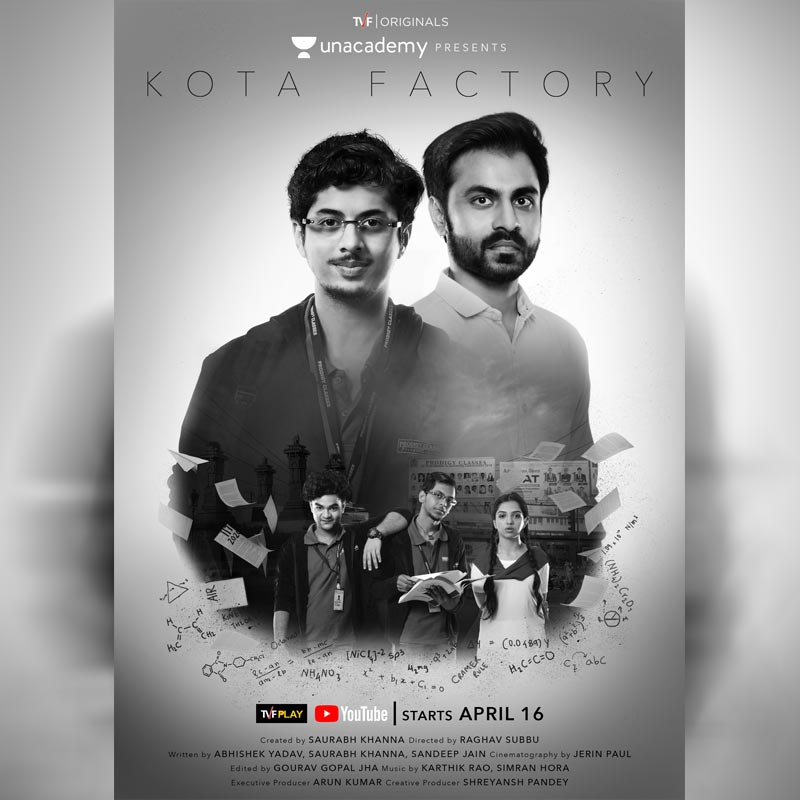
  • The Viral Fever and Unacademy bring forth the life of IIT aspirants with TVF Original ‘Kota Factory’

    The Viral Fever and Unacademy bring forth the life of IIT aspirants with TVF Original ‘Kota Factory’

    MUMBAI: Delivering on its promise of providing true value brand solutions whilst entertaining Millennials, The Viral Fever (TVF) has partnered with Unacademy – India’s largest learning platform – to launch ‘Kota Factory.’ This TVF Original is part of TVF’s commitment of expanding its content slate in 2019 to include more genres and contemporary narratives; giving viewers across the country a fun summer line-up! Taking a step further, the series will be released in ‘Black and White’.

    Set to launch on 16th April on TVFPlay and YouTube, Kota Factory revolves around the lives of IIT aspirants based in Kota, the coaching center industry and the vicissitudes of a student’s life. Starring Mayur More, Jitendra Kumar, and Ahsaas Channa; seamlessly and naturally integrates the various Unacademy offerings into the narrative.

    Sameer Saxena, Chief Content Officer and Head, TVF Originals said, “Today brands use various marketing tactics to connect with consumers, branded content being one of them. At TVF, we strongly believe that branded content should be organic and seamless, and the focus should be on making viewers internalise the values the brand is trying to present through the content. And that's exactly what TVF is a pro at! We are extremely delighted to collaborate with Unacademy on a show like Kota Factory which is the first Black and White web series in India, reinforcing TVF's status as a disrupter in the world of digital content. The show falls perfectly in line with our promise to deliver quality content to our viewers while helping brands craft winning branded content.”

    Shweta Sivasankaran, Head of Marketing, Unacademy, “We are excited to collaborate with TVF on Kota Factory. Unacademy is a platform that brings expert teachers and dedicated students together. The show is a tribute to the principles that Unacademy stands for. It is also an opportunity to reinforce our brand story while connecting with our learners in an engaging way.”

    Kota Factory revolves around the life of Vaibhav (Mayur More) a 16-year-old student who moves to Kota with hopes of clearing JEE and getting into an IIT. The show follows his journey as he learns to cope and compete under pressure with the help of his friends, teacher and Unacademy.

  • ZEE5 now available on Jio KaiOS platform

    ZEE5 now available on Jio KaiOS platform

    MUMBAI: ZEE5, India’s fastest growing OTT platform, announced an association with Reliance Jio Infocomm Ltd., India’s leading digital services provider. As part of the partnership, a bespoke version of the ZEE5 app will now be available on Jio KaiOS feature phones.The partnership aims to bring on board the 40mn+ users of Jio Feature phones in the country today, who are seeking engaging entertainment options in addition to the features that the phone inherently offers. 

    Tarun Katial, CEO, ZEE5 India says, “We, at ZEE5, are focussed on bridging the digital entertainment dividebetween metros, semi-urban and rural markets. And, in this, we believe Jio is our perfect partner. With the rich repertoire of regionally relevant stories in the form of web shows, movies, docu-dramas, we are perfectly poised to be the content partner to Jio that has a robust presence in these markets.Through our library that houses music, TV shows, news and such, the audience will now have access to content on-the-go and at their convenience. ZEE5 is constantly looking at building value for its subscribers and advertisers alike, and with this partnership we are confident of filling a vacuum for brands who are seeking inroads into the regional audience’s mindspace.”

    Through this alliance, Jio KaiOSsubscribers will have access to the substantial VOD (Video On Demand) offering on the ZEE5 platform:

    • Unrestricted content offering across popular Hindi and regional channels – ZEE TV, & TV, ZEE Anmol, Zing, ZEE Marathi, ZEE Tamil, ZEE Bangla, ZEE Yuva, Sarthak TV, ZEE Kannada, ZEE Cinema, ZEE Action, & Pictures, ZEE Café, &flix, ZEE ETC and so on
    • An exhaustive collection of music across genres such as film music from Hindi and regional movies, Indi-pop, categorised by mood, event telecasts and so on
    • Popular movies across languages such as Hindi, Bhojpuri, Marathi, Bengali, Tamil, Telugu and Malayalam

    Spurred by smart devices and wider availability of high-speed data services, the viewers will have access to the vast regional content library that ZEE5 has curated over the past year.

    As of December 2018, ZEE5 has 56.3 mn monthly active users, who spend an average of 31 minutes on the platform per day. ZEE5 has consistently been amongst the top-5 free and grossing entertainment apps in India as per the Google Play store rankings. With this foray into KaiOS via Jio, ZEE5 is confident about charting a similar story.