Category: Over The Top Services

  • When AI met Arjun, Mahabharat gets an epic tech twist

    When AI met Arjun, Mahabharat gets an epic tech twist

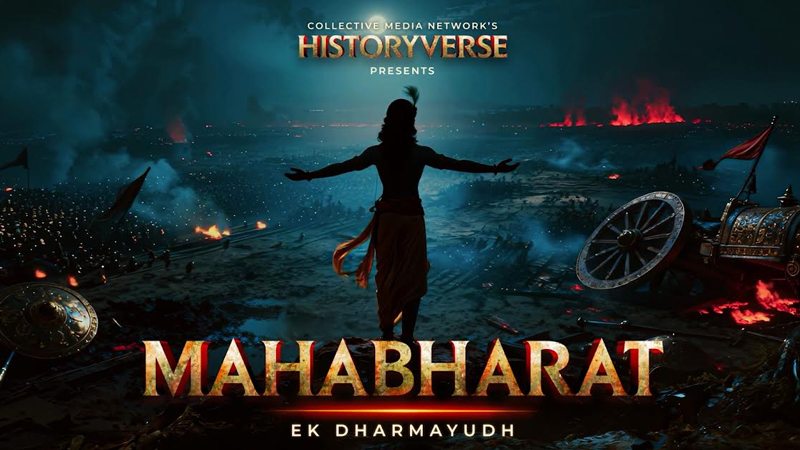
    MUMBAI: Some battles never end, they just get a software update. Collective Media Network’s Historyverse has dropped the trailer for Mahabharat enabled by AI, a retelling of India’s most enduring epic where myth meets machine. Set to premiere on Waves OTT on 25 October 2025, followed by a Doordarshan telecast every Sunday at 11 am from 2 November, the series promises to blend nostalgia with next-gen storytelling.

    The trailer feels like déjà vu dressed in digital armour, familiar faces of dharma and destiny, rendered with the power of artificial intelligence. Behind the screens, a team of writers, researchers, technicians, and engineers at Collective Artists Network’s Galleri5 have built this brave new Kurukshetra pixel by pixel, turning age-old verses into a visual feast that bridges the past and the future.

    “For many of us, watching the Mahabharat on TV was part of our childhood, those Sunday mornings meant something special,” said Collective Artists Network founder & group CEO Vijay Subramaniam. “With Mahabharat enabled by AI, we wanted to bring that memory back, but make it feel fresh, relevant, and made for this time. It’s emotional, it’s big, and it’s built with care.”

    At the heart of this digital dharma lies a collaboration between Collective Media Network and Prasar Bharati, a pairing that merges old-school television tradition with cutting-edge creativity. Prasar Bharati CEO Gaurav Dwivedi noted, “This is exactly the kind of innovation that keeps our cultural legacy alive for generations to come. It’s exciting to see how technology can reawaken stories that unite people.”

    For viewers, the AI-driven Mahabharat is less of a reboot and more of a renaissance, a chance to relive the grandeur, the moral conflict, and the emotion that once glued an entire nation to its TV screens. Only this time, Bhishma’s armour gleams with digital precision, Krishna’s wisdom echoes through neural networks, and the battle for truth plays out in ultra-HD.

    As Historyverse puts it, the project isn’t just a show; it’s a statement that even in a world ruled by algorithms, the human heart still craves stories of courage, loyalty, and fate. So come October, when conch shells sound and pixels clash, audiences will witness an epic reborn not rewritten, just re-coded.

  • Hrithik Roshan brews a storm with Prime Video

    Hrithik Roshan brews a storm with Prime Video

    MUMBAI: Hindi cinema’s Greek God is ready to stir up a storm, quite literally. Hrithik Roshan has joined hands with Prime Video for his first-ever streaming venture, producing a gripping new thriller series titled Storm (working title) under his banner HRX Films, a division of Filmkraft Productions.

    Created and directed by Ajitpal Singh, the series promises an intense cocktail of ambition, secrets, and survival set in the beating heart of Mumbai. With Parvathy Thiruvothu, Alaya F, Srishti Shrivastava, Rrama Sharma, and Saba Azad leading the cast, production is set to roll soon.

    Speaking about the collaboration, Prime Video vice president APAC & MENA Gaurav Gandhi said, “Hrithik is one of Indian cinema’s most distinguished creative forces. This partnership marks an exciting milestone for us, bringing together his artistic vision and our global storytelling platform.”

    HRX Films founder Hrithik Roshan said, “Storm presented the perfect opportunity to make my debut as a producer in the streaming space. The world Ajitpal has created is raw, layered, and powerful. It’s a story that will resonate with audiences not just in India but around the world.”

    Storm marks a dynamic new phase for HRX Films, led by Hrithik and Eshaan Roshan, and signals Prime Video’s continued investment in bold, homegrown narratives with international appeal.

    With its layered characters, powerhouse female leads, and an undercurrent of suspense, this is one storm viewers will want to get caught in.

  • Applause’s Sameer Nair spills the secret sauce for hit storytelling

    Applause’s Sameer Nair spills the secret sauce for hit storytelling

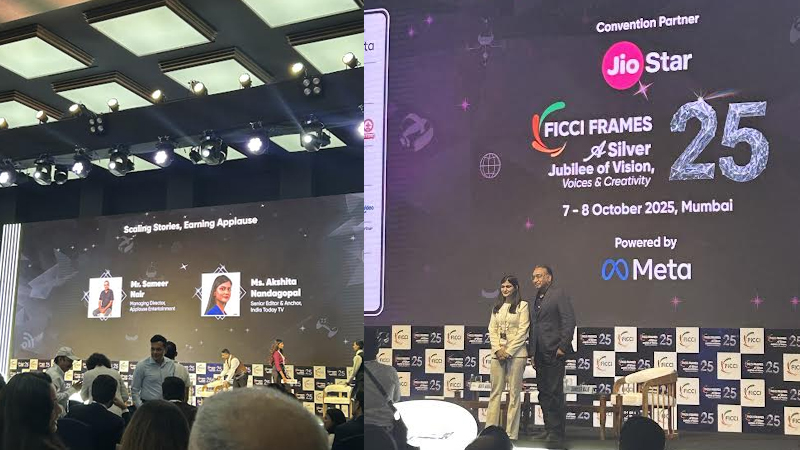
    MUMBAI: At Ficci Frames’ silver jubilee edition, a candid panel discussion between Applause Entertainment managing director Sameer Nair and India Today senior editor and anchor Akshita Nandagopal, brought the house down with humour, insight and a healthy dose of industry nostalgia.

    Moderating the fireside chat ‘Scaling stories, earning applause,’ Nandagopal kicked off by asking if Applause Entertainment had cracked the “OTT code,” given its slate of acclaimed shows like Criminal Justice (2019-present), The Hunt (2025) and Black Warrant (2025).

    Nair brushed off the idea of any secret formula. “Storytelling is a difficult enterprise,” he said. “You put in all the hard work and finally show it to an audience, sometimes they love it, sometimes they don’t. What we try to do is tell stories that feel real, even if they entertain first.”

    Citing his fondness for contemporary history, Nair explained how Applause often draws inspiration from real people and events, and banks on the entertainment factor. Black Warrant, he pointed out, isn’t about the dark underbelly of the Tihar Jail and the inmates as much as it is about “three young people on their first day at work; only, their workplace happens to be the Tihar Jail.” The company’s celebrated Criminal Justice series, meanwhile, has gone far beyond its British and American counterparts. “By the fourth season, we weren’t adapting anymore. We were living in the world of Madhav Mishra,” he said with a grin.

    Continuing the conversation on creativity in Indian storytelling, Nandagopal asked Nair, “Creativity is always a buzzword, but sometimes it feels boxed in a certain way. You can’t talk about uncomfortable topics; you have to be mindful of controversy and what entertains an Indian audience. Do you think creativity is constrained like that?”

    Amusedly, Nair interjected, noting that this isn’t unique to India. “In the eight years we’ve been doing this, we haven’t really got into much trouble, so we must be doing something right. We don’t have an agenda; we’re telling stories that make you think, but not what to think. We find compelling characters, research their worlds, and present their stories as balanced and entertaining as possible. They are people like you and me.”

    He brought up The Hunt as an example, which begins with the assassination of Rajiv Gandhi but quickly transitions into a police procedural. “It’s not about politics; it’s about crime and justice… In the process, you get to know the characters. There’s one scene where Sivarasan, the one-eyed LTTE mastermind, sits in a theater watching a Rajnikanth film. We loved putting that in, it humanises him without glorifying anything.”

    When Nandagopal brought up the theme of change, both broadly and through the lens of content, Nair noted how some formats have stood the test of time. “KBC is a classic because it has a great format and Mr. Bachchan,” he said, crediting both star power and familiarity for its relic appeal. “Audiences talk about change all the time, but they also love familiarity. Sometimes you don’t want a murder mystery; you just want to relax.” To which, Nandagopal nodded and said, ‘It’s a comfort watch. A lot of us do that. We’ve been watching a lot of the classics that we’ve seen before. Knowing that that’s something that’s predictable. We know what we’re expecting there. And yet we love to watch it.

    Looking back at the first Ficci Frames two decades ago, Nair painted a vivid picture of how dramatically the industry had evolved. “In 2005, television ruled everything. There was no Facebook, Twitter or Youtube, even the iphone didn’t exist. By 2015, digital platforms had become the barbarians at the gate. Now, in 2025, we’re minor players compared to Netflix, Youtube and social media. And just as we adjusted to that, AI arrived.”

    The conversation soon turned to the elephant in every creator’s room: will AI replace creativity or enhance it? Nair’s reply was measured. “AI will be a great tool if it can create that suspension of disbelief,” he said. “When you see a dinosaur chasing you in Jurassic Park, you believe it. If AI can make you believe without breaking the illusion, it’s magic. But if it looks fake, we might as well be watching animation.”

    He added that AI, much like earlier leaps in filmmaking, from special effects to computer graphics, would revolutionise the process but not erase human creativity. “Even an AI actor needs direction, a script and a story,” he said. “If machines create everything end to end, without human emotion, we’ll just be watching something intelligent but soulless. We must use it wisely.”

    As the conversation veered back to Applause’s future, Nair revealed that the company has recently acquired the rights to Jeffrey Archer’s books and has a robust slate of upcoming projects. Upcoming projects include new seasons of Criminal Justice and Black Warrant, the next installment of the Scam franchise, and a Tamil feature Bison directed by Tamil director and screenwriter Mari Selvaraj. He also teased Gandhi, a three-season epic inspired by Indian historian and author Ramachandra Guha’s books. “It’s not about Gandhi,” Nair chuckled and said, “it’s about Mohandas before he became the Mahatma: an 18-year-old who goes to college in London, and does all the standard things that rebellious teenagers do.”

    For Nair, storytelling remains deeply human: an approach that has shaped Applause Entertainment’s diverse slate, from thrillers rooted in true events to expansive biographical dramas.

    In a world where algorithms and art are learning to coexist, it’s a fitting reminder that great storytelling, no matter the medium, will always find its audience.

  • India orders streaming giants to make content accessible for disabled viewers

    India orders streaming giants to make content accessible for disabled viewers

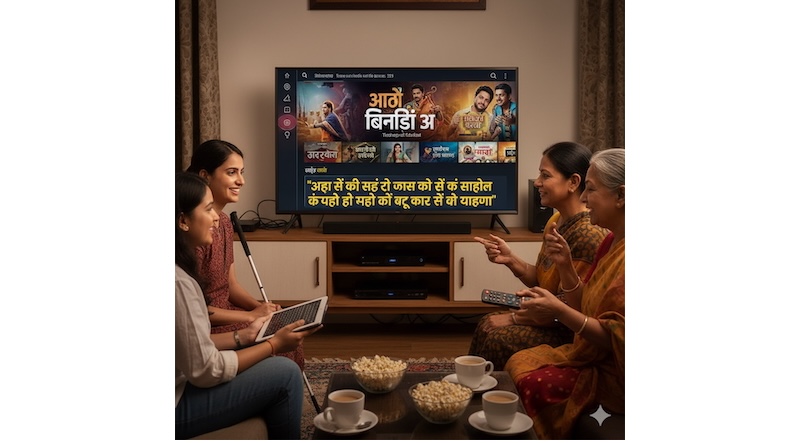
    NEW DELHI: India’s streaming platforms face a shake-up. The ministry of information and broadcasting has issued draft guidelines forcing OTT services to make their content accessible to people with hearing and visual impairments. The clock is ticking: platforms have six months to comply with the first phase, and two years to retrofit their entire libraries.

    The regulations, published on 7th October, mark the government’s most aggressive push yet to enforce disability rights in the digital sphere. Every new release must carry at least one accessibility feature—closed captioning for the deaf, audio descriptions for the blind, or Indian Sign Language interpretation. No exceptions for Bollywood blockbusters or binge-worthy series.

    The ministry is demanding 30 per cent of existing content be made accessible within a year, rising to 60 per cent after 18 months. The endgame? Full compliance across every title, from prestige dramas to reality shows, within 24 months. Platforms must also rewire their interfaces to work with assistive technologies and plaster accessibility indicators—(AD), (CC), (ISL)—on everything from trailers to thumbnails.

    The rules stem from the Rights of Persons with Disabilities Act, 2016, which the government has been nudging OTT platforms to follow since an advisory in April. India ratified the UN Convention on the Rights of Persons with Disabilities in 2008, but enforcement has lagged. Now the ministry wants quarterly reports tracking progress, with a joint secretary-led committee poised to police compliance.

    Live streams, podcasts and clips under ten minutes get a pass. But for everything else, the message is clear: subtitle it, describe it, sign it—or face scrutiny. The consultation period ends on 22 October.

    For India’s 26.8m disabled citizens—and the streamers courting them—the game just changed.

  • AI writes the next scene in storytelling

    AI writes the next scene in storytelling

    MUMBAI: From scripts to circuits, storytelling just got smarter. At FICCI Frames 2025, the stage buzzed with ideas as tech titans from Jiohotstar, Meta, and Google explored how artificial intelligence is reshaping the way India watches, interacts, and connects with stories.

    In a session titled “The AI-Powered Media Revolution: From Personalisation to Interactive Storytelling,” the panel featured Jiohotstar chief product officer Bharath Ram, Meta India group director – finserv, media, travel and services Shweta Bajpai, and Google India head of industry for tech, media & telecom Siddharth Shekhar, moderated by NDTV Entertainment editor Abira Dhar

    Bharath Ram highlighted how Jiohotstar’s India-built AI is revolutionising both content and advertising. “The biggest advantage of developing AI solutions in India is the ability to iterate fast, learn fast, and build products rooted in local sensibilities,” he said, adding that Jiohotstar’s vast catalogue, from Special Ops to Bigg Boss, provides fertile ground for AI-driven insights.

    “Our AI helps us decode what truly captures viewers’ imagination and connects brands to audiences more meaningfully,” he explained, noting that smarter prediction models are already enabling advertisers to reach the right audience at the right moment.

    Taking storytelling beyond the screen, Bharath also spoke about the rise of fandom participation, where viewers don’t just watch content, they live it. “People want to be part of the story. The future lies in building interactive experiences that let fans express their passion,” he said, hinting at Jiohotstar’s plans to boost audience engagement across its entertainment properties.

    The discussion painted a vivid picture of a media landscape in motion, one where AI transforms viewers into collaborators, and platforms like Jiohotstar, Meta, and Google are scripting a new era of personalised, participatory entertainment.

    Because in the age of AI, the story doesn’t just unfold, it evolves with you.

  • Vertigo TV gets viewers giddy with global micro & vertical dramas

    Vertigo TV gets viewers giddy with global micro & vertical dramas

    MUMBAI: Vertigo TV, the newly launched vertical drama app from One Take Media, is off to a flying start—grabbing eyeballs with its snackable, binge-worthy content that’s tailor-made for the smartphone generation.

    In just three months, Vertigo TV has packed in over 100 shows, offering a dizzying mix of Chinese, Korean, Japanese, Spanish, English, and Hindi micro-dramas. Each series unfolds in ultra-short, one-to-two-minute episodes, with entire story arcs wrapped up in 40 to 60 instalments—perfect for on-the-go binge sessions.
    vertigo TV

    “The app of today,” as founder and CEO Anil Khera calls it, Vertigo TV mirrors a fast-twitch attention economy where Gen Z and millennials crave instant storytelling hits without the drag. Every drama is shot vertically, optimised for quick breaks, commutes, or those between-meeting scrolls.

    Built to hook viewers within 10 seconds, the app’s catalogue pairs high-octane plots with slick production values and a global-meets-local flavour. Subtitled international dramas sit alongside desi originals, giving Indian audiences a front-row seat to the world’s fastest-growing storytelling trend.

    Priced at Rs 499 a year, Vertigo TV is now live on Android and iOS, and ready to rattle India’s crowded streaming scene. With its bold micro-drama format and lightning pace, One Take Media isn’t just chasing attention—it’s rewriting how India watches stories, one vertical at a time.

    For partnerships, email info@onetakemedia.in or visit www.onetakemedia.in

  • Nearly 25 per cent of Prime Video’s Indian content viewership comes from abroad

    Nearly 25 per cent of Prime Video’s Indian content viewership comes from abroad

    MUMBAI: Indian stories are winning hearts worldwide. At Ficci Frames 2025, Prime Video India’s senior leadership showcased how Indian content is not only thriving domestically but also making waves internationally.

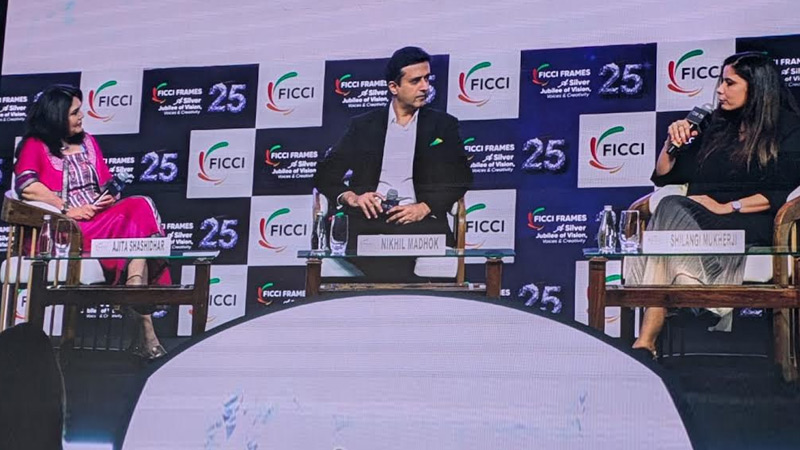
    Under the session titled “Made in India: I-Dramas — Are Our Stories Ready to Travel Across Borders?” SVOD director & head Shilangi Mukherji and Originals director & head Nikhil Madhok, shared insights with journalist Ajita Shashidhar about what makes Indian narratives resonate globally.

    The stats speak for themselves: Indian content has consistently trended in the top 10 on Prime Video worldwide in 2024, with nearly 25 per cent of viewership coming from outside India. According to Madhok, the key is authenticity. “Original, rooted stories travel beyond Indian shores. While production quality matters, it’s authenticity that connects with global audiences,” he explained.

    Mukherji highlighted Prime Video’s localisation strategy, ensuring content reaches multi-lingual audiences in India and internationally. “Through subtitles, dubbing, and culturally relevant storytelling, we surprise and delight viewers everywhere,” she said. About 60 per cent of Indian users stream content in four or more languages, reflecting the platform’s pan-Indian appeal.

    Prime Video’s originals, from The Family Man and Mirzapur to Paatal Lok and Dupahiya, have become global favourites, with most franchises renewing for multiple seasons. Madhok emphasised the platform’s commitment to nurturing new talent alongside established creators, enabling first-time filmmakers to reach worldwide audiences.

    The platform’s growth in India is backed by innovation in access and pricing, including Prime Lite, mobile-first annual plans, and tiered subscriptions. Prime Video also combines theatrical releases with streaming, ensuring filmmakers can choose the best format for their stories. Starting 2026, three to four Indian films from Amazon MGM Studios will premiere in theatres annually.

    Mukherji concluded that global resonance requires intentional localisation and collaboration across the industry. Madhok added, “All it takes is one standout story to spark wider recognition. We’re seeing green shoots in all our Originals, and the future is bright for Indian storytelling.”

  • Stories from the heartland go global

    Stories from the heartland go global

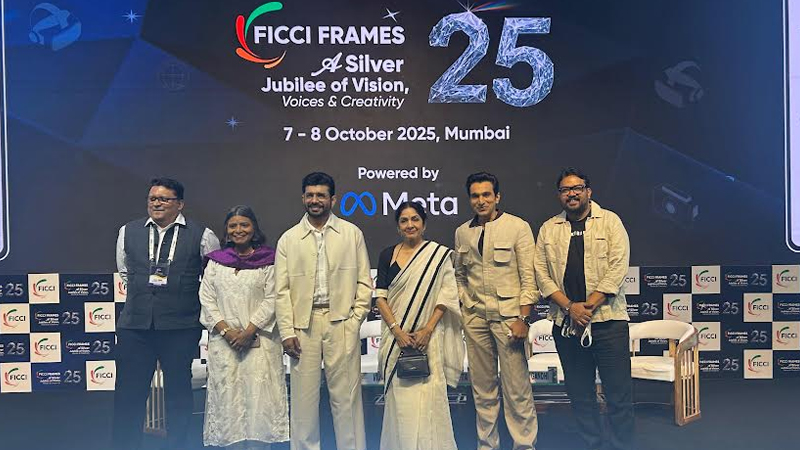
    MUMBAI: Stories that stay rooted, yet take flight, that’s the new India calling. At FICCI Frames 2025, a star-studded panel on “Local Roots, Global Reach: Indian Storytelling from the Heartland” turned into a masterclass on why stories told with heart are now travelling the farthest.

    Moderated by broadcast journalist Anuradha Sengupta, the session featured The Viral Fever president Vijay Koshy, actors Neena Gupta, Pratik Gandhi, Faisal Malik, and Vineet Kumar Singh, voices that have lived and shaped India’s storytelling renaissance.

    “Anything that comes from the heart will touch the heart,” said Neena Gupta, drawing applause as she spoke of how authenticity, not algorithms, drives real connection.

    Pratik Gandhi reflected on his own journey after Scam 1992, “Stories can come from anywhere, but emotions are universal,” he added, noting how success opened creative doors rather than data dashboards.

    Vijay Koshy traced this evolution from Youtube freedom to OTT patronage. “We learnt the hard way in the digital world. Platforms are the new patrons, much like kings once funded artists,” he said, recalling how Panchayat, a show rejected by many, went on to become a cultural phenomenon precisely because “nothing was happening” in it.

    For Vineet Kumar Singh, heartland tales are India’s timeless truth. “Whether it’s Mother India or Panchayat, every story that mirrors real life finds its way to people’s hearts,” he said, reflecting on how viewers discover themselves in the stories of small towns and forgotten bylanes.

    Neena Gupta, ever candid, summed it up, “I think we should always try to go to the resources you have,” underlining how creators can draw on their own experiences and surroundings to tell authentic stories.

    The discussion also delved into the shifting sands of streaming. Sengupta reminded the panel that subscription models are giving way to ad-led formats. Koshy, however, remained optimistic. “We are not afraid. Authenticity will always survive,” he said with quiet conviction.

    As the session wrapped, Vineet shared a moving anecdote about Supermen of Malegaon, a small-town film that won hearts globally. “When it ended at the Toronto International Film Festival, the applause didn’t stop. That’s the power of stories from our soil,” he smiled.

    From villages to viral screens, India’s storytellers seem to have found their sweet spot: telling tales that are homegrown, heartfelt, and now, truly world-bound.

  • Orange Alert as Media Chiefs Call Time on Sour Regulation

    Orange Alert as Media Chiefs Call Time on Sour Regulation

    MUMBAI: When your brightest industry minds start comparing creativity to citrus fruit, you know the discussion’s got some zest. At FICCI FRAMES 2025, the session titled “Regulating the Orange Economy: Past, Present, and Future” turned into a spirited masterclass on what’s holding back India’s most vibrant export creativity itself.

    Moderated by Koan Advisory’s Vivan Sharan, the panel brought together some of the sharpest voices in Indian broadcasting Avinash Pandey (CEO, Indian Broadcasting and Digital Foundation), Krishnan Kutty, head of cluster, Entertainment (South) – JioStar, Anil Malhotra (COO, Zee Media), and Yatin Gupta (COO, GTPL Hathway). Together, they dissected the bitter-sweet evolution of India’s media and entertainment (M&E) industry from its liberalisation glory days to today’s tangled web of red tape and regulation.

    Avinash Pandey kicked things off with a nostalgic rewind. “We were declared an industry in 1996, and for a brief while, we were actually treated like one,” he said dryly, drawing laughter from the crowd. He recounted how the early 2000s saw broadcasting boom as a sunrise sector driven by investment, private innovation, and minimal interference.

    “Then came a time when the government helped us grow,” he continued. “But today, every little aspect from pricing to packaging is regulated. We are living under a 2005 framework in a 2025 economy.”

    Pandey’s lament set the tone. The orange economy shorthand for industries fuelled by creativity and culture has turned ripe, but over-regulation, panelists warned, risks turning it sour.

    Krishnan Kutty of JioStar took the baton, calling for “a lighter hand and a smarter head” in policymaking. He drew a sharp comparison between legacy broadcasters and digital-first platforms. “Television is capped, controlled, and scrutinised. OTT platforms, meanwhile, stream what they want with almost no oversight,” he said.

    Kutty argued that the answer isn’t to regulate the new, but to liberate the old. “Over-prescription kills innovation. Consumers don’t need protection from choice they need access to more of it.” His words echoed across an audience that included broadcasters, policymakers, and streaming executives all trying to decode the new power balance between screens.

    Anil Malhotra from Zee Media added historical perspective and a dose of irony. “Cable TV arrived in India in 1985. It was regulated only in 1995. Broadcasting began in 2005, got regulated much later,” he said. “Regulation always comes late to the party and then overstays its welcome.”

    Malhotra argued that in a digital-first world, it makes no sense to hold traditional media hostage to older rulebooks. “If the government doesn’t regulate new tech like OTT and AI, it must deregulate the old. Otherwise, you’re penalising the legacy systems that built India’s media strength in the first place.”

    He also called for a “policy audit,” a comprehensive review of old broadcasting rules to identify those that have outlived their relevance. “We need regulation that enables, not restricts,” he stressed.

    GTPL Hathway’s Yatin Gupta brought the discussion closer to ground reality and homes still running on coaxial cables. “We’re the most regulated part of the media chain,” he said bluntly. “Every rate, every fee, every package is dictated. Yet, we’re expected to compete with digital platforms that face no such limits.”

    Gupta pointed out that India’s cable homes have dropped from 150 million a few years ago to around 100 million today, a staggering 30 per cent loss in a market still hungry for affordable entertainment. “We can’t evolve if we’re boxed in,” he added. “If the aim is to take India fully digital, we must support the legacy infrastructure that connects Bharat to the world.”

    He called for skill development, broadband integration, and hybrid models that let cable operators transform into full-fledged digital service providers. “If we don’t, we’ll end up with an uneven playing field and an excluded audience.”

    By the time Avinash Pandey took the mic again, his tone had sharpened. “Regulators talk about ‘orderly growth’,” he said with a knowing smile. “That’s a Soviet-era phrase. You can’t dictate how creativity grows, it defeats the very nature of innovation.”

    He urged policymakers to think of the media sector as a living organism, one that thrives on unpredictability. “Creativity doesn’t follow command-and-control models. It needs chaos, experimentation, and freedom to fail.”

    The audience broke into applause when he declared, “If you want free markets, let the market breathe.”

    Despite the fiery debate, the panel didn’t write television off. Far from it. “TV still delivers high-quality entertainment at the lowest cost per viewer,” Pandey noted. “There are over 100 million Indians yet to own a television. Growth is far from over but it will stall if innovation is strangled.”

    The panellists agreed that the future of India’s media sector lies in convergence television and digital not competing, but coexisting. With global streamers investing heavily in Indian stories and regional content booming across states, the creative economy stands at a crossroads.

    As the discussion wound down, what emerged was less of a gripe and more of a roadmap: deregulate the old, modernise the law, empower talent, and let creativity not bureaucracy set the tone.

    In a nation bursting with storytellers, artists, and innovators, the message was clear: the Orange Economy shouldn’t be juiced dry by rules made for an analogue age.

    If India truly wants to be a global creative powerhouse exporting not just IT services but imagination, it must give its creators the same freedom its coders enjoy. Or as one delegate quipped while leaving the hall, “You can’t make lemonade with red tape.”
     

  • From Bahubali to Billion Views India Aims for a Creative Content Super League

    From Bahubali to Billion Views India Aims for a Creative Content Super League

    MUMBAI: If cricket can become a family blockbuster, why not Indian stories? That was the rallying cry from Sony Pictures Networks India managing director & CEO Gaurav Banerjee at FICCI Frames 2025. Addressing a packed room of media moguls, policymakers, and creators, he asked a question that hit home: What’s stopping India from birthing a content giant, an IPL of entertainment that’s global in scale yet rooted in our own stories?

    Banerjee painted a vivid timeline of India’s entertainment inflexion points. First, the early 2000s witnessed Kaun Banega Crorepati, a game show with a Bollywood superstar as its face, a world-first. Then came the 2008 Indian Premier League, which turned cricket into family entertainment and spawned a robust talent pipeline. And more recently, pan-India phenomena like Satyamev Jayate, Anupama, and films like Bahubali showcased the universal appeal of Indian storytelling. But, he pointed out, the last big leap happened nearly a decade ago leaving a glaring creative gap waiting to be filled.

    “The challenge,” he said, “is building an ecosystem where creativity meets scale where every year can give rise to a new Lagaan or a Squid Game created right here in India.” Banerjee argued that the key lies in aggregating human capital. Citing Enrico Moretti’s The New Geography of Jobs, he explained that regions flourish when innovation-driven industries cluster talent, research, and enterprise, essentially a Silicon Valley of creativity.

    Drawing a parallel with the IPL, Banerjee highlighted how structured scouting, talent pipelines, and consistent investment can create world-class outputs. “Every season in the IPL introduces at least six new cricketers,” he said. “We need a similar mechanism to unearth and nurture storytellers local, authentic, and ready for global stages.”

    The proof, he noted, already exists in pockets. The Malayalam film industry has produced films like Loka Chapter 1, which, despite a budget under Rs 30 crore, has raked in over Rs 300 crore at the box office. “This is not a one-off,” Banerjee enthused. “Films like Avesham, 2080, and Manjula Boys have built an ecosystem of excellence. Loka is the latest chapter in this evolution.”

    So how can India scale this success? Banerjee outlined three steps. First, building creative institutions and centres of excellence to scout and nurture talent. Second, forging deep collaboration between academic centres and creative firms akin to Stanford and Silicon Valley to create a continuous dialogue between innovation and execution. Third, reforming regulation to be enabling rather than restrictive. “Creativity is human capital at its purest,” he said. “Yet, current labour and regulatory frameworks are anchored in a colonial past. To unleash India’s creative potential, we must reimagine rules and give imagination room to breathe.”

    Banerjee stressed that creativity is no longer peripheral. It fuels jobs, innovation, exports India’s identity, and amplifies soft power. “If India wants to write the next chapter of global leadership,” he said, “we must invest in creativity with the same vision and boldness as we do in new technologies.”

    Closing with a clarion call, Banerjee urged policymakers, media leaders, and creators to think globally, experiment boldly, and champion a future where India’s creative economy sits at the heart, not the margins, of the nation’s growth story.

    From the IPL’s cricketing pitches to the studios of Kochi and Mumbai, India’s content revolution is poised to go prime time and this time, the audience is the world.