Category: Over The Top Services

  • Netflix to spend Rs 3000 crore on Indian content

    Netflix to spend Rs 3000 crore on Indian content

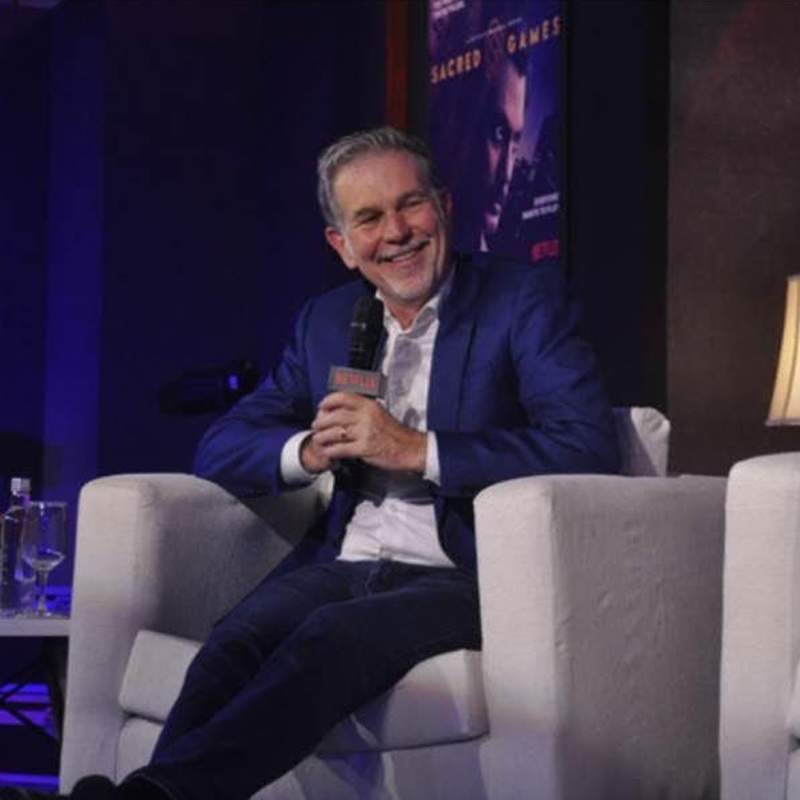
    MUMBAI: Netflix is upping its India game significantly as the streaming giant is ready to spend Rs 3000 crore on Indian content for this year and the next. Netflix founder and CEO Reed Hastings spoke about the investment during his India visit on Friday while illustrating the country’s important in their business.

    "We launched in 2016 and we have continued to invest. So we have a lot of content from the United States, the UK and Spain. We are developing our Indian content here,” Hastings said at the Hindustan Times Leadership Summit, according to media reports. "This year and next year, we will spend about Rs 3,000 crore developing content and you will start to see a lot of stuff hit the screens," he added.

    He also added that top performing Netflix shows from India include Sacred Games, Little Things and Delhi Crime. Talking about content made in India and watched by the world, Reed highlighted Mighty Little Bheem, which since its release in 2019,  has been watched by 27 million households around the world, including Latin America, Australia and New Zealand.

    Since launching here four years ago, Netflix has licensed hundreds of Indian films and shows, and invested in over 40 Netflix originals – almost all of which have been commissioned by Indian executives who live locally, know the culture and speak the language. These originals have been shot in over 20 cities across the country, including Delhi, Jaipur, Mumbai, Hyderabad, Lucknow, Kolkata, and Kochi.

    "The next 5-10 years will be the golden age of television. You are seeing unbelievable and unrivalled levels of investment. Partially from the global companies like Apple, Amazon, Disney and Viacom. There are all investing here in India as well as in the UK and the US. We are seeing more content made than ever before. It's a great export,” he said.

    "The internet has the possibility to really transform the Indian content market to be export-driven. So far, we have had some amazing successes. Sacred Games travelled around the world. We are really excited about those stories," he added.

  • Netflix available in more than 300 mn pay-TV households

    Netflix available in more than 300 mn pay-TV households

    MUMBAI: A new report from UK research firm Ampere Analysis has said that Netflix is available in more than 300 million pay-TV households. It also added that more than 50 million of those have come during 2019.

    The reach through Pay TV partnerships is almost double the company's current global subscriber base of 158 million. Netflix has been active in signing deals with pay-TV operators to extend its global reach. This year also, Netflix has signed more than 15 deals with major international pay-TV operators.

    While Western Europe has highly contributed to the growth, Netflix is available in about 86 per cent of all pay-TV homes in North America. The report also found that the streaming platform was available in about one-quarter of pay TV households in the Middle East and North Africa at the end of 2018, driven by its regional partnership with operator OSN. However, the partnership ended in August 2019, leaving Israel as the only market in the region with existing deals.

    The scenario is different in Central and South America, Asia Pacific and Central and Eastern Europe are blank canvases for Netflix. There are 400 million pay-TV subscribers in the region excluding China but Netflix has availability to about 40 million of those. While India is a key market for Netflix, fewer than one per cent of all pay-TV households in India subscribe to the OTT platform.

    “These onboarding deals give Netflix pay TV reach in every region bar SubSaharan Africa, while the Western European pay TV market has shown the most rapid growth for these deals,” the report said.

  • Esports, streaming wars, shopvertising to dominate digital media trends in 2020

    Esports, streaming wars, shopvertising to dominate digital media trends in 2020

    MUMBAI: Technology will continue to disrupt and reshape the digital media industry in 2020, presenting new opportunities and challenges for advertisers and media owners. While digital media will continue to grow globally, the coming of new technologies, platforms and digital touch points will force marketers to readapt their skills, engagement models and measurement capabilities to meaningfully engage with consumers in a cluttered media market.

    This emerging digital paradox – the co-existence of growth and expansion potential in digital media alongside the deluge of digital touch-points which will make it more difficult to connect with consumers – is the focus of the Kantar’s global 2020 Media Trends and Predictions report. In this fast-changing digital media landscape, marketers will also need to navigate the ‘data dilemma,’ to meet consumer demand for relevant, personalised content. And as third-party cookies start to crumble, advertisers will need to find alternative measurement solutions, the report says.

    The curse of the plenty? Streaming wars to continue in 2020

    Nowhere is the deluge of digital touch points more visible than in the crowded OTT space. Considered a niche space with limited players just a few years ago, there are now dozens of big OTT players in every OTT market in the world now. 2019 also saw the entry of Apple TV + and Disney + to the club whereas HBO Max and Warner Media are also getting in action.  

    This increased competition for customer retention and acquiring new customers may seem healthy, providing more choices to consumers, but subscripting fatigue can lead to industry consolidation, the report predicts.

    The report quotes TGI Global Quick View Data to show that 44 per cent of connected consumers in Great Britain who pay for online streaming services have at least two subscriptions, 18 per cent pay for at least three, and seven per cent pay for four or more. This means that entry for new subscription-based services might not be easy.

    “Consumers will continue to use advertiser-funded and subscription-based services, but the ever-increasing amount of available content and platforms will lead to a paradox of choice; more is not always better,” the report says, adding that content will be key to stand out in this crowded OTT market.

    Esports: The next frontier of expansion

    Originally, a hobby for teenagers, esports has now gone truly mainstream. Esports is huge. Over 1.2 million people claim to watch esports in Great Britain alone, according to the TGI survey. In Brazil, nearly one third (32 per cent) of internet users, around 30 million people, say they are active esports fans. This growth is also reflected in the increase in the number of minutes streamed on Twitch, the leading esports platform. Twitch usage totalled 292 billion minutes in 2016 and is expected to reach 600 billion by the end of 2019.

    Global brands like Gillett, Mastercard, Dell, Coca Cola, Toyota, Intel, Nike are already sponsors of esports tournaments.

    The report predicts that as esports tournaments gain more mainstream prominence in 2020, they will present lucrative opportunities for the media owners and advertisers who are ready to capitalise on them.

    2020 will also see more traditional sports move into esports: for instance, football clubs establishing their own esports teams, and Formula One streamed
    over Twitch with gamification.

    And as coverage of esports expands into traditional media, the report predicts, esports players will become well-known celebrities and influencers in their own right.  

    Shopvertising: When shopping meets advertising on digital media

    Content meets commerce in Western markets with shoppable ads on Snap and Amazon, Google, Pinterest ‘shop the look’ ads, and Facebook’s dynamic ads. Brands globally are flocking to formats like Instagram’s shoppable posts.

    Even on TikTok, the ByteDance-owned short-form video platform popular for lip-syncing clips and user-generated challenges, video ads redirect to microsites where people can shop.

    The report also talks about a new frontier of shoppable TV. South Korea's LG is enhancing TV sets with shoppable Augmented Reality (AR) in home shopping shows.

    The report predicts that with the rise of social commerce, direct commerce revenues could boost ad revenues for online media owners and more media channels will experiment with their versions of shoppable ads.

    The experimentation with shoppable formats in digital and traditional media will speed up this year, the report adds.

  • TVF launches new series ‘Cubicles’ in association with DSP Mutual Fund

    TVF launches new series ‘Cubicles’ in association with DSP Mutual Fund

    MUMBAI: Walking its talk to launch new innovative shows, pioneers in digital content and entertainment, The Viral Fever along with leading asset management company, DSP Investment Managers Private Limited is all set to add a new original to its repertoire with the release of TVF Originals ‘Cubicles’. Set in a modern day context, Cubicles is a fresh take on the life of millennials who are ready to dive into the corporate world and their experiences of the many firsts during this journey. The 5-episode series will release on weekly on TVFPlay and TVF’s YouTube Channel starting 10th December.

    Cubicles is an episodic series centred around the life of Piyush, a fresh entrant into the corporate world. The show depicts this work life and moments including his very first salary, working over weekends, failures and successes that are a part of anyone’s corporate journey. Simultaneously, the series seamlessly integrates fundamental concepts on investing and mutual funds through the story. Created by Amit Golani and Directed by Chaitanya Kumbhakonum the series stars Abhishek Chauhan, Nidhi Bisht, Arnav Bhasin, Shivankit Singh Parihar, Badri Chavan among others.

    Further elaborating the association, TVF Originals Chief Content Officer and Head Sameer Saxena said, “On being one of India’s foremost storyteller in the digital domain, at TVF, we have always used creativity and our reach for stories that our audiences can garner value from. Cubicles in association with DSP Mutual Fund, once again has given the opportunity to connect with millennials and educate them about the need and importance of early investing as well as about Mutual Funds as a concept. Having understood the perceptions associated with Mutual Funds in general amongst millennials, through a story telling format, Cubicles sheds light on good investing principles such as investing early & regularly for the long term, diversifying appropriately, the importance of remaining rational, how to get good investment advice etc.  Being one of India’s leading Mutual Fund companies, it was only apt that TVF partners with DSP Mutual Fund for this series.  We are certain that millennials will not only enjoy the series but will also benefit from it.”

    Speaking on the association with The Viral Fever, DSP Investment Managers consumer marketing head Abhik Sanyal said, ‘Investing seems fun and easy when you get the results in your favour- after all, who doesn’t want to get rich! But without having at least a basic idea of the fundamental principles of good investing, one would be dependent simply on luck to do well and will not have a sense of control over their decision-making. When we spoke with the team at TVF, Cubicles emerged as a great fit for us to showcase these fundamental concepts, but in a relatable, entertaining and slice-of-life manner. Just a reflection of the lives of regular, 9-5 salaried, working professionals: no extra drama, no extra tragedy, no extra chaos- just real life, the way it is. ‘Cubicles’ is our first foray into a web-series partnership and fits in perfectly with DSP Mutual Fund’s communication credo of making finance fun. We hope this contemporary, new-age way of engaging with millennials excites them while helping them understand some good investing principles too.’

    Having established itself as as India’s largest digital entertainment platform with a number of hit shows under its belt, The Viral Fever continues to strengthen its content play as well as its associations with brands in India.

  • Jiocinema to bring Sun NXT’s South Indian blockbuster catalogue to Jio users

    Jiocinema to bring Sun NXT’s South Indian blockbuster catalogue to Jio users

    MUMBAI: JioCinema, the on-demand video platform yet again surprises millions of Jio users, especially the South Indian Movie Buffs!

    In association with Sun NXT, the online video streaming platform from Sun TV Network, JioCinema will present the best of south Indian movie catalogue to Jio users across the country.

    JioCinema will host all the movies available on the SUN NXT platform across 4 South Indian languages viz: Tamil, Telugu, Kannada & Malayalam.Fans will have access to an unbeatable catalogue of over 4,000 South Indian movies from Sun NXT’s library. South Indian movie buffs can explore this extra strong entertainment in a highly optimized and world-class video streaming experience offered by JioCinema.

    Jio users have exclusive access to JioCinema and can be a part of JioCinema’s “Super South Swag” with their favourite stars Thalaivar Rajnikanth, Ilayathalapathy Vijay, Allu Arjun, Thala Ajith Kumar, Mammootty, Mahesh Babu and many more.The unbeatable catalogue of South Stars from Tollywood, Kollywood, Sandalwood & Mollywood can be enjoyed on the mobile app or the website.

    JioCinema is known for its wide ranging and versatile on-demand video experiences, including exclusive original videos across genres and vernacular languages. Sun NXT is the top destination for the biggest blockbusters from south Indian studios and hosts the latest and most popular TV content from the southern region. The association between the two digital platforms will help deliver the best of south Indian video content to the south Indian movie fans on Jio.

    JioCinema already has the widest content including 10,000+ Movies, 1 Lakh+ TV Show Episodes & Originals. And now, with the movie catalogue of SunNXT, it becomes the first choice of the users to enjoy unlimited South Indian Blockbusters.

  • Continuously launching content targeted at different taste clusters ensures good retention: ZEE5’s Aparna Acharekar

    Continuously launching content targeted at different taste clusters ensures good retention: ZEE5’s Aparna Acharekar

    MUMBAI: Among the home-grown over-the-top platforms, ZEE5 has shown most aggression in creating its original content library. As a part of its content strategy for the upcoming year, franchises will play a key role along with a line-up of nearly 20 original films.

    “We’ve lined-up enough shows till March 20-21 with backup shows too. This 20-21 is going to be huge. If 19-20 was big then 20-21 is going to be bigger and I don’t know how 21 -22 will be,” ZEE5 India programming head Aparna Acharekar shares ecstatically.

    The OTT platform plans to focus on its franchise shows. “Franchise will be key to content strategy. So, some of our successful shows from 18-19 and 19-20 will go into new seasons. Some new shows will be introduced as now we have acquired newer taste clusters and new audiences. Every month we will have series, films and regional content launch. This is in addition to all the commercial movie acquisitions,” she adds further.

    Sharing her understanding of the Indian audience, she notes that the platform looks at audiences from the point of view of taste clusters rather than classifying them demographically. According to her, it’s not really about one type of content and audience is not behind one genre. There are shows which do well across age groups and cities. Moreover, she also mentions that tastes also evolve over a period of time. According to her, people are happy to sample all sorts of genres.

    “OTT is now maturing. It’s really now not so early for us but the Indian consumer is happy to pay for content. The Indian consumer wants good engaging content so all the fear we always had around whether the Indian consumer will pay or is it only free audience, I think that is over. The industry need not worry about it anymore as Indian consumers are happy to pay for good content. He is value-conscious but at the same time if there is enough interesting content for him he is happy to take a long term subscription also,” she says.

    According to her, from a consumer retention point of view, consistent releases and a good line up for all sorts of taste clusters is very important. “Continuously launching content targeted at different taste clusters ensure that there is good retention on a platform and then, of course, the complete convenience, the experience of making payment easy is also important,” she adds.

    Re-emphasising the regional boom in OTT, she said that regional audiences give healthy responses to OTT.  They not only consume content of their language but also happily adopt content dubbed in their language.

    “We have seen very good adoption of ZEE5 because we also give consumers an option to change the display language of the app. So if somebody is not comfortable navigating in English, he can change the display language to Hindi, Tamil or Telugu or any of the 12 different Indian languages we offer and we have seen a great uptake for that also. In fact, with every passing month, we see more uptake of this and the relative share of English as a display language going down,” she adds.

    The challenge of finding good scripts and writers is still there. There are good content makers but it is difficult to learn the art of the writing for the medium. Writing for a 400-minute series is like a two-hour-long movie. Additionally, every episode needs to be engaging.

  • VMate to incubate 1 lakh video creators from Bihar

    VMate to incubate 1 lakh video creators from Bihar

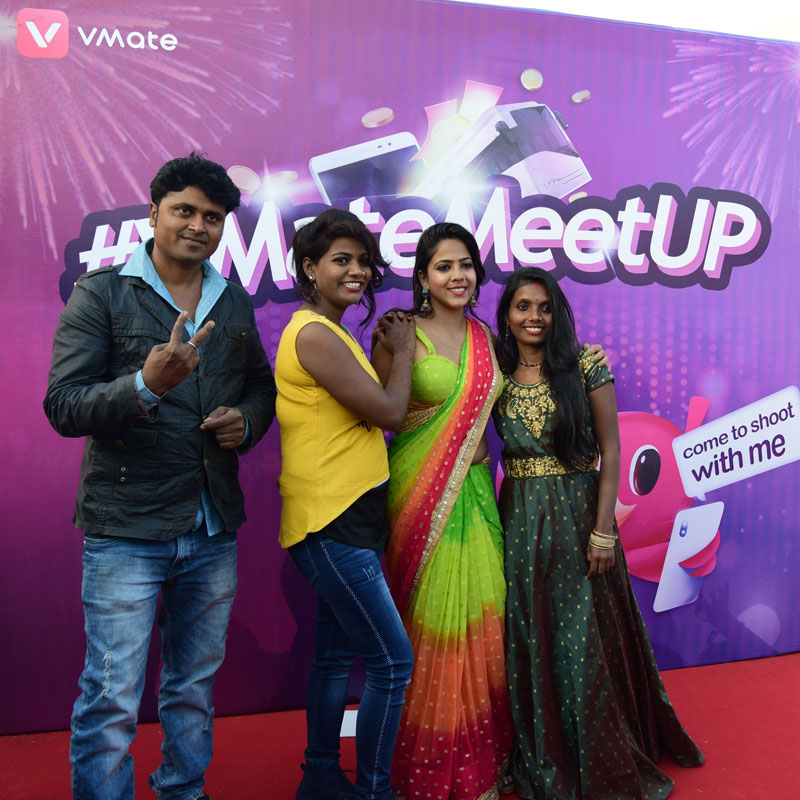
    MUMBAI: VMate, a trending short video platform, organized a 3-day bus tour for creators meet in Bihar covering Muzzafarpur & Patna to announce its focus on the state for incubating around 1 lakh talented video creators. During the creators meet, the top 12 VMate creators who are earning more than INR 1 lakh a month were invited from all over India. They delivered power-packed live performances and shared the benefits of VMate platform with the audience, like getting fame, learning new skills, earning money and others.

    The meetup opportunity was lapped up by the fans who met their favorite creators in person and learned the tricks of the craft from them. These fans also got the opportunity to win goodies, earphones, smartphones, etc. through a Lucky-draw activity organized in the event.

    Also, the top 10 winners of the VMate 'Roshan Karo India' campaign were felicitated who had won a car, bike, TV's and other exciting gifts. Among the winners of 'Roshan Karo India', Ms. Sangeeta Navik, a typical housewife from a rural background and the winner of the grand prize -a Maruti Suzuki Alto was present during the creator's meet. Her story inspired many in the audience to become a creator on VMate.

    One of the top creators, named Ms. Anju Singh addressed the audience and shared her journey on VMate. Anju said "I had a love marriage and our families didn’t support us; we were living in Mumbai at a meagre salary of INR 15,000 but VMate has changed our life beyond expectations. From living under a broken roof to earning INR 1.5 lakhs a month has turned our fortunes and I am grateful to VMate for this opportunity.”

    Ms. Komal Singh – a popular VMate video creator from Bihar said, “VMate actually helped me to earn name, fame, and money by doing what I love the most, that is dancing to Bhojpuri songs. Initially, my family members were bit reluctant and being a married woman, it was not easy. But with time and dedication, everything fell in place. People now recognize me and I am able to support my family financially also.” 

    With its focus on Bihar, VMate has allotted a fund of INR 1 cr. for the people of the state and aims to provide free training in video-making skills to one lakh content creators. Utilizing their newfound skills, creators can then participate in VMate campaigns to earn money and also win rewards such as a car, bike, mobiles, etc. Over 1 lakh people across India have already won rewards on this platform.

    The trending short video platform also plans to launch its free online VMate academy shortly. At the academy, people across India can learn the art of video making. VMate academy will help the aspiring creators to realize their talent and earning potential.

  • Preventing content piracy in the cloud era

    Preventing content piracy in the cloud era

    Sacred Games Season 2, an original Indian series by Netflix, ended up being one of the many victims of rampant content piracy in India. The series was available on illicit websites and other digital mediums on the internet even before the original content was made available.

    The online TV and movie revenue lost to piracy in India is expected to reach USD 3.08 billion by 2022. This is a development we’ve seen not just India; revenue losses and lost monetisation opportunities by virtue of content theft and piracy continue to plague the global media & entertainment industry today. The cost of global online streaming piracy will hit $52 billion by the year 2022, according to a report by Digital TV Research. Nearly 190-billion visits were made to illegal piracy websites in 2018, of which 17.4 Billion were from the US, followed by the Russian Federation (14.5 Billion), Brazil (10.3 Billion); with India (9.6 Billion) and the United Kingdom (5.75 Billion) as the other top nations affected by online piracy. In terms of the type of content pirated, almost 50 percent of the visits to pirated websites were for television shows, and 20 percent of visitors were looking for the latest movies.

    The widespread availability of online video content, instigated by factors like ubiquitous high-speed data connectivity, hyper-connected devices and living room experiences – are all playing their part in the explosion of video content consumption online, making it lucrative for pirates to steal a portion of the pie. As more and more viewers are moving to mediums and platforms that are digitally native, circumvention of subscriptions and geo-based restrictions to access premium content with no loss in experience or quality, motivates end-users to embrace pirated means of consuming content.

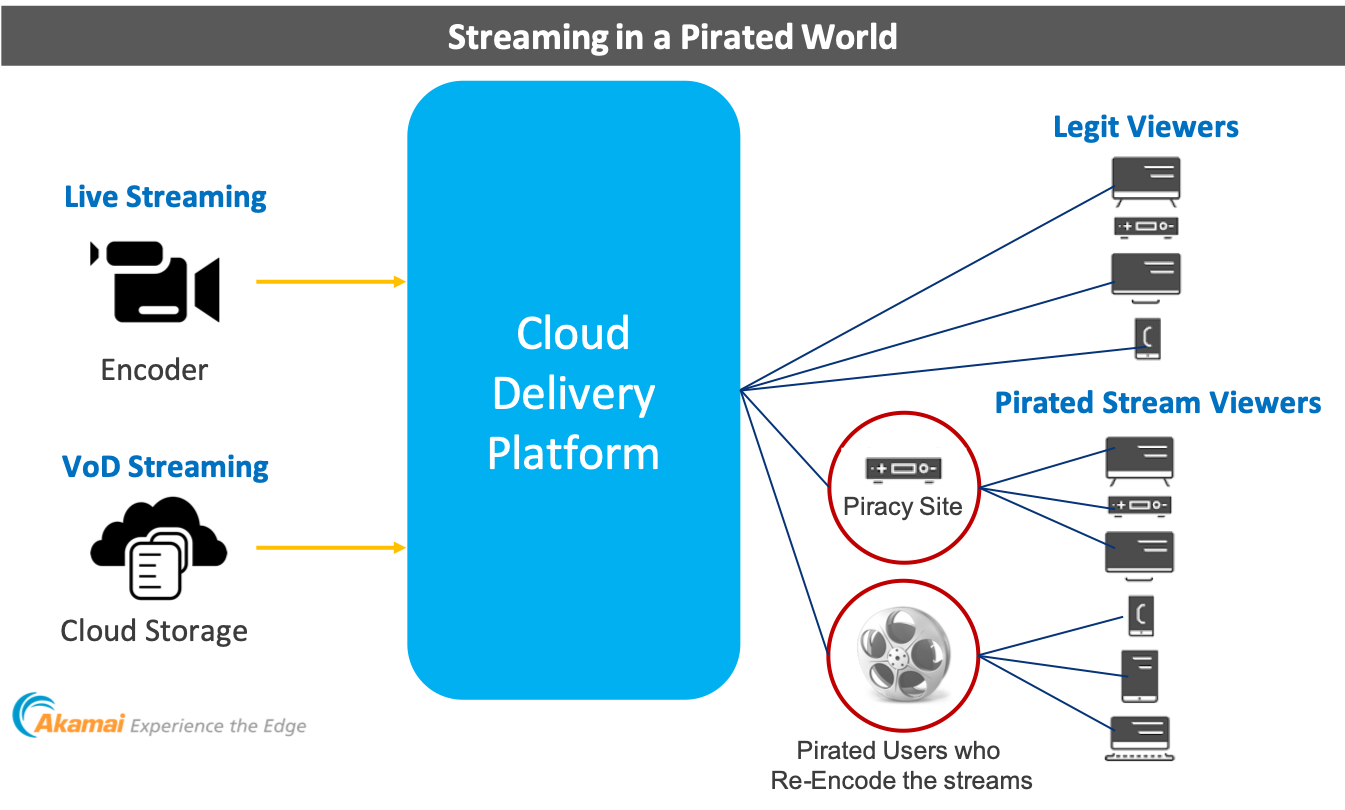
    There are multiple ways in which digital content piracy exists today. There might be genuine users who are paying for the content but start sharing their credentials with other users. Pirate sites might sign up with content providers in a single-user model but then start re-distributing content. There are sophisticated piracy tools like re-encoders or stream ripping tools being used to grab content and redistribute it. Another popular content piracy technique is circumventing geo-restriction by using Virtual Private Networks (VPNs) and proxy servers to mask unauthorized IP addresses to make it look like an authorized IP which might lead to media companies breaching contractual obligations with their rights' holders due to content viewership from unauthorised regions.

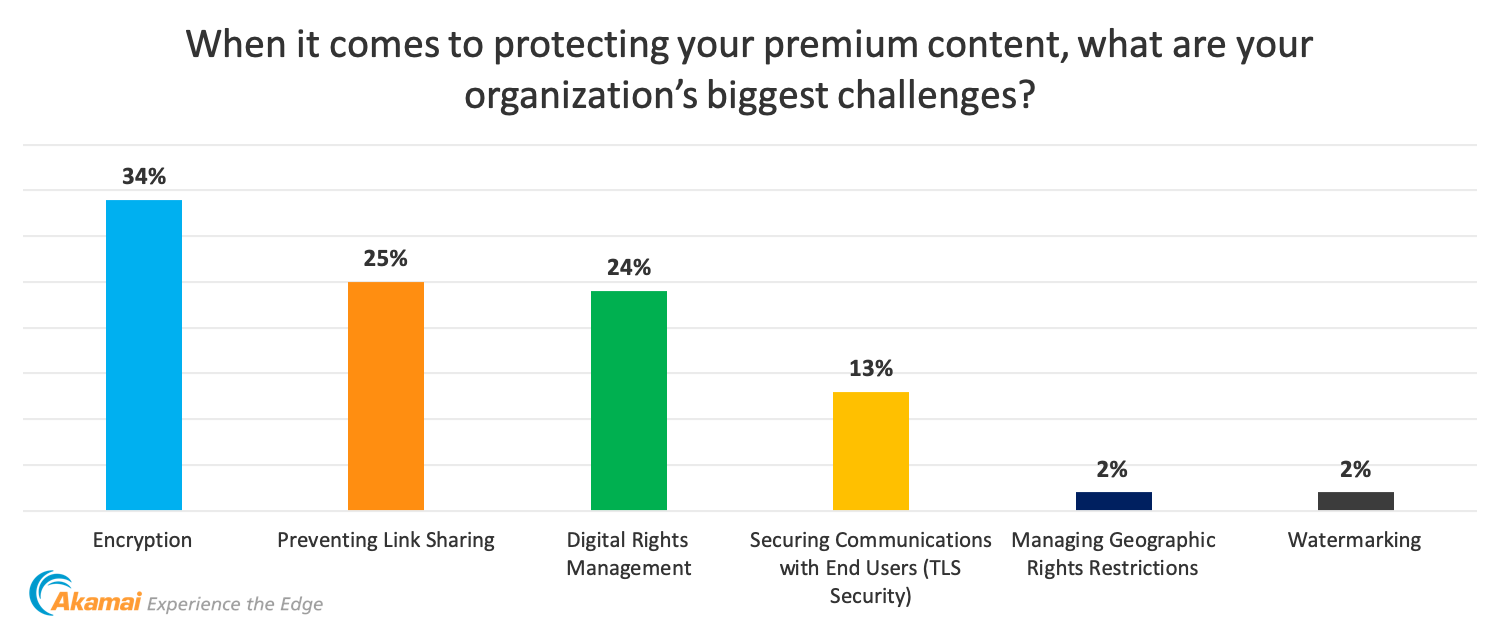
    According to a survey of almost 200 media technology influencers and decision-makers conducted by Akamai in 2018, attacks on media organisations are widespread and of different types. Service downtime, caused by DNS based attacks or DDoS attacks were listed as an important area of concern, the second most important was protecting premium video content.

    For media & entertainment organisations, monetising premium video content and protecting it against unauthorised usage and distribution is key to a successful video strategy. Based on the survey, organisations face a few challenges in implementing technologies to prevent content piracy.

    The Akamai content protection portfolio is designed in a way to help media organisations defend themselves against critical threat vectors so that organisations can focus on their core, which is creating and managing content; while offloading content distribution and the threats related to safeguarding it. The portfolio aims at helping organisations prevent content piracy, unauthorised access and maximise monetisation opportunities. The portfolio provides a few key capabilities including user authentication, access revocation, geo-restrictions, encryption, watermarking and securing last mile delivery using Standard TLS.

    Security in the media & entertainment industry means securing the entire content delivery path from the content provider to the viewer – adopting a holistic approach to security. Any media company that wants to serve or distribute its content to these end-users or viewers needs to protect itself from attacks that can originate at multiple points across the content delivery path. Content consumption has changed over the last few years, and in that, it has shaped the next wave of technology, and how we interact with it. If viewers believe that Content is King, companies should invest well to protect it.

    (The author is product marketing manager, media and entertainment, APJ, Akamai. The views expressed are his own and Indiantelevision.com may not subscribe to them.)

  • SPI International and DocuBay announces content distribution partnership

    SPI International and DocuBay announces content distribution partnership

    MUMBAI: SPI International has announced a license agreement with DocuBay, the international membership VOD streaming service dedicated to premium documentary feature films. The license deal includes seven of SPI International’s visually groundbreaking and insightful premium titles such as Turandot, Small Cams – Big Beasts, Time Hopper, Eye to Eye with Everest: Death on a Mountain, Invisible Wildlife Photographer, Riders in the Land of the Setting Sun, and Rwanda 17. All films are now available to stream in 180+ countries on the DocuBay app and website.

    “SPI International brings together international documentaries of the highest quality with world-class partners. We deliver the award-winning, premium documentaries that our global audience expects from us, every day,” said SPI International content sales head Hubert Ornass-Kubacki. “It is very exciting to share that our first distribution agreement with DocuBay includes seven of our best documentaries and that both parties are eager to keep growing this partnership for many years to come” continued Ornass-Kubacki.

    “SPI International’s tremendous catalogue of exceptional content is right in line with DocuBay’s mission of providing viewers with the best in independent feature documentary films,” said DocuBay COO Akul Tripathi. “With DocuBay now available to a global audience, we look forward to growing our community of documentary film fans through strategic partnerships with premium content distributors such as SPI International” continued Tripathi.  

  • Reimagining SonyLIV: the story begins

    Reimagining SonyLIV: the story begins

    MUMBAI: Way before international streaming giants entered the Indian over-the-top (OTT) market, Indian broadcast networks had already rolled out their digital offerings. Sony Pictures Networks India's (SPNI) digital arm SonyLIV – one of the early-movers in the “streaming race”, is now undergoing transformation under a new leadership team. While its business has largely been driven by advertising revenues and catalogue offerings till now, the streamer is all set to increase its focus on subscription and original content.

    Led by digital veteran Uday Sodhi for around half a decade, SPNI rejigged its team, plonking in old-time SPNI executive Danish Khan to lead it, adding to his responsibilities as business head of its leading GEC Sony Entertainment Television. Khan roped in the A-Team that works with him at SET, Ashish Golwalkar and Aman Srivastava, to also help him revitalise SonyLIV. Golwalkar, the content head at SET will now help build the streamers slate, while Srivastava, who steered the rebranding and positioning of SET, will also have the digital business marketing title on his visiting card. Amogh Dusad as head – programming and new initiatives, digital business has been given the mandate of strategic planning, operations, viewership management and analytics for SonyLIV.

    Golwalkar says his experience at SET will help him steer the streamer’s content play well. “As we jokingly say that on SET, in any case, we make digital content. The digital traction of SET is very good because as a channel we are largely urban. We are focussed on metros and newer metros and the urban markets and digital growth is also happening here which very nicely coincides,” he says with a twinkle in his eye. “In terms of learning, of course, it is a different medium. So we will have to evaluate the content basis that.”

    “However, there are certain inherent aspects that we have as a network in terms of the ethos of content and the kind of people we talk to. I think we will take a lot of synergies from that piece and we will navigate those people who are already there on the network and look after how we navigate them to our own digital platform as opposed to them straying to some other OTT platforms. I think that’s going to be a challenge but I think we’ll do it,” he adds.

    Golwalkar confesses that for any streamer the real traction for subscription is driven by premium sports or premium content and SonyLIV is going to play both. As the network already has premium sports properties, the major focus will be on originals for the next few months.  “Anyway, we did not have any significant original content play before this,” he says.

    In terms of language, Hindi and English are going to be important languages, followed by Marathi and Bangla as SPNI already has linear television channels in those markets. The platform will also consider some of the south languages also.

    “We already have Sony Pictures Television content, some of it is with other OTT platforms. So we will see how we can attract more studios and international content to SonyLIV, the talks are on. These relationships with the international studios are forged over many years. Some of the relationships we already have and some of them we intend to kind of build,” he comments on English content portfolio.

    “We have just started SVOD last year. We started the relationship with Lionsgate which gives us almost 400-500 hours of content. Some of the bigger shows from their slate include Power, Anger Management, Sweetbitter. We strengthened our Hollywood offering with SPT content also. We believe that there is an audience for English content also. It has just been six to eight months into the journey.  I think we will continue to push and strengthen Hollywood offering,“ comments Amogh Dusad, another key person in the transformation.

    “We are looking at the entire piece like a strong SVOD service coming and the idea is to be in touch with the consumers whether online or offline or on any social media or the basic consumptions on the app to ensure that what we show on the app  is in sync with his /her taste and preferences. And a lot of work is going to happen in the next two months,” Dusad adds.

    The reason for the SVOD shift: with higher investment in originals and acquisition of premium TV content, reliance on just ad revenues is proving a challenge for Indian streamers. The subscription curve is growing at a faster clip than the ad revenue one, although the Indian market is going to remain an ad-led one as per experts. A recent KPMG report projects subscription revenue from OTT platforms to grow to Rs 22 billion in FY20 and Rs 62 billion by FY23.

    “The insights tell you what are the triggers that get a person to start sampling the product and what is it that keeps the person as well. So what it helps especially for us is to design the consumer experience around that,” explains Srivastava. “So, one is an experience which is on the app, the other is the interaction with the brand outside the product as well. We will also have to work on is where do you get the consumers as insights will play a role where you find a like-minded set of audiences. All of these help in defining the consumer journey – some of who are on the platform, some of who are not on the platform and some who are not even aware of the platform. So we are going to work around all three sets of people using all kind of insights we get on or outside the platform.”

    Is pricing going to stay put or will a new package be drawn up?

    “Everything is up for change. As all were saying, all businesses go through a transformation, so SonyLIV, the digital business in SPN, is going through one such transformation and everything is up for discussion. What we are very sure is that we are going to shift the focus more towards subscription, currently, a large bulk of it is ad revenue. It’s a no-brainer that if anyone wants to have a play in this, we will have to drive subscription,” Golwalkar sums up.