Category: Over The Top Services

  • Aim to make product smarter, broader, deeper in 2020: ZEE5’s Rajneel Kumar

    Aim to make product smarter, broader, deeper in 2020: ZEE5’s Rajneel Kumar

    MUMBAI: A large numbers of Indians enjoy OTT experience across locations, languages, devices at any convenient time nowadays. Consumers as well as the industry players mostly talk about content but what goes on behind the seamless experience often goes unnoticed. From hyperpersonalisation to recommendation, consumer data platform, Zee Entertainment Enterprises Ltd (ZEEL)’s digital arm ZEE5 has undertaken a number of innovations in technical segment along with content in 2019. In 2020, the platform, which boasts of 8.9 milion daily active users, aims to make the product smarter, broader, deeper.

    ZEE5 business head-expansion projects and head of product Rajneel Kumar took us through the back-end journey of the streaming platform during a candid conversation recently. In a freewheeling chat, he shared ZEE5’s innovations in 2019 and outlook for 2020.

    In three words he summed up his aim in the product side for the year 2020 – smarter, broader, deeper. When he said smarter, Kumar meant it is about how they create products which are more intuitive for the users and constantly keeps evolving. By the term broader he meant how the platform can serve wider cross-section of the consumers in the country ranging from high-end smart TV users to low-end handset users. Making the product deeper is about creating an engaging experience on the platform to be able to give more to the consumer very conveniently across various needs.

    “2019 was a very active year for us in trying to take our product significantly ahead of what we started off with and where we wanted to end with it. There are couple of areas in which we specifically focused on where we partnered with various organizations and with a lot of them we have seen the results come already and with some of them the results are still to come out but they will be out in 2020 with all the work we have done,” Kumar stated.

    The platform is extensively focusing on hyper-personalization which starts with a combination of a bunch of various heads including recommendation. Last year, ZEE5 worked with an Israeli company called Talamoos in the segment and that resulted in a massive uplift of content consumption of each user. Kumar added that recommendation is a journey that keeps improving not only on the content side but also on the experience side. In 2020, on the hyperpersonalisation side, the company is looking at customising the whole experience of the user as far as his entire journey on the application is concerned. While content is one part of it, navigation is the other part of it, notification and communication to him is another part of it.

    “The second part that we focused on getting a CDP in place which is a consumer data platform which becomes the heart and soul on which you start to do all segmentation and build out various clusters of consumers you can target for both communication and up selling so well and so forth. That’s when we worked with a company called Optimove. We rolled out a CDP which has been great at creating both consumers insights and taking action on it as far as communication to the users are concerned,” he said.

    ZEE5 also paid high attention in the previous year on how to give great playback experience to users. The company has come out with a progressive web app (PWA) which has a new interface, a new player, certain features and sections which were not available earlier. On the playback part of it, the platform worked with a foreign company Kaltura. Kumar claims to see good traction and results coming out from PWA implementation.

    While a lot of premium users now have started to consume content on large screen devices, ZEE5 worked highly last year on making living room experience better. They worked with large cross-section of manufacturers and operating system owners.  As people started to buy smart TVs back in 2015, the consumers who had brought it then face the challenge of support for the operating systems that were launched then. Hence, ZEE5 dedicated its focus on making its presence on these devices on being backward compatible to cover a broad spectrum of users.

    According to Kumar, the fundamentals of a great consumer experience first start with discoverability as the consumer present on the platform wants to discover content. To improve discoverability, ZEE5 has several heads under it including UI, UX. For better recommendation, the platform also looks at how consumers discover the launch of content and how they navigate through it.

    “Another part is recommendation. When I come to the platform how do I come to the content which is more relevant to me, which is where a lot work is done, in not only learning the users past behaviour but also looking at his persona and people like him and being able to see if he has watched this content and somebody else has watched other content, and what is it the most likely  he is also able to watch, not only his behaviour but also behaviour of the segments which is there,” he added.

    “The second part of it is how do I make it seamless for him across the platform and we do a significant amount of work on the player by itself. That's why we have gone from a refresh from the earlier player to a new player,” Kumar pointed out.

    For better consumer experience, ZEE5  is also focusing on handling languages. “We have 12 languages. So, when a user comes you are not forcing him to communicate in a non-native language which is where we give him the option right away to a native language of his choice and start his journey which helps him in navigation and looking at the content and leading more about the content which he needs,” he added.

    ZEE5 being a large multi-lingual OTT platform it cannot be focused on only the youth segment, Kumar added. From the very onset, ZEE5’s focus has been to be inclusive of the whole platform which includes people who are not that digitally native.

    “We focus on how do we make it easy to navigate in their choice of language. Number two, we have worked on voice search and being able to discover content purely using your voice. Number three, by being able to handle all types of handsets. Not only the higher-end handsets but also lower-end handsets, handsets which are not necessarily IOS, Android but KaiOS,” he added.

    Kumar predicted smarter use of AI and ML for the OTT segment in 2020. According to him, key trends in the industry in the tech segment will be how OTT platforms make an easier user experience, easier  payment journeys, grow the user base using AI and ML. 
  • DocuBay partners with IFFS to distribute select titles worldwide

    DocuBay partners with IFFS to distribute select titles worldwide

    MUMBAI: DocuBay, the global membership video-on-demand streaming service by IN10 Media Network has announced its partnership with the International Film Festival of Shimla (IFFS) that will bring IFFS documentaries featured in last year’s film festival. Select titles will be featured under their own category or “Bay” called IFFS Bay and is now available for global streaming on the platform. DocuBay was also the official streaming partner of the IFFS, which took place in the historic and scenic town of Shimla in the Himalayan foothills.

    Notable titles which will be featured on DocuBay includes authenticity and about how ayurvedic treatments might be the key to great health and lasting wellness. No Woman’s Land, about women in a Himalayan village defying the laws that keep them from inheriting property. Behind The Bars, about how learning homemaking skills like stitching and baking help to rehabilitate prisoners and Dan the Himalayan Ibex, about a community of women determined to fight threats to the Ibex and help keep them alive despite hunters, poachers, and a declining habitat.

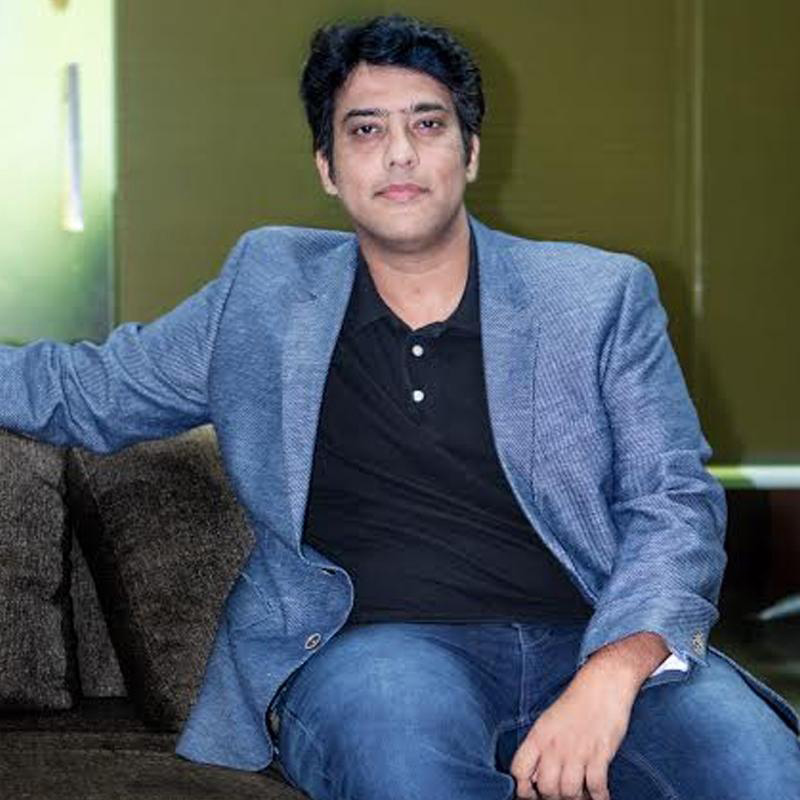
    DocuBay chief executive officer Akul Tripathi said, “Working with independent filmmakers and film festivals like the IFFS reinforces our commitment to providing a platform for storytellers to showcase their work worldwide. We’re very proud to highlight these features on DocuBay and look forward to further building relationships with independent filmmakers and other international film festivals to become a global voice for the factual film community.”

  • ZEE5 to premiere State of Siege: 26/11 on 24 Jan

    ZEE5 to premiere State of Siege: 26/11 on 24 Jan

    MUMBAI: Few years after the 26/11 terror attack shook the financial capital of the country, several films attempted to portray the rather grim and harsh reality of the fateful day. Few films also realistically portrayed the series of tragic events.

    ZEE5, India’s largest video streaming platform will soon premiere ‘State of Siege: 26/11’ based on renowned author and journalist Sandeep Unnithan’s book – Black Tornado: The Three Sieges of Mumbai 26/11.

    The eight-episode series unravels #TheUntoldStories and is a true to account narrative of the various events that turned into the prolonged terror siege of Mumbai on 26 November 2008.

    “The nation will witness unheard incidents from the 26/11 attack. ZEE5’s State of Siege: 26/11 will give you a perspective as to how it all ended in just 60 hours and the crises and challenges faced by our unit. Also, the show will give answers to everyone who thinks why the commandos were late to reach for the mission,” said Nariman (Chabad) House colonel Sundeep Sen, the second-in-command combating terrorists.

    The show, produced and created by Contiloe Pictures producer and creator Abhimanyu Singh and co-creator and director Matthew Leutwyler, features an impressive cast comprising Arjan Bajwa, Arjun Bijlani, Vivek Dahiya, Sid Makkar, Mukul Dev, Tara Alisha Berry, Khalida Jaan, Jyoti Gauba, Roshni Sahota, Suzanne Bernert, Naren Kumar and Jason Shah.

  • Eros Now partners with EUROSTAR Group

    Eros Now partners with EUROSTAR Group

    MUMBAI: Eros Now, the cutting-edge digital over-the-top (OTT) South Asian entertainment platform owned by Eros International, a global Indian Entertainment Company, has announced its partnership with UAE-based digital retail giant, EUROSTAR Group. The association enables the large diaspora from the Indian sub-continent and locals across GCC countries to access Eros Now’s vast content library of more than 12,000 movies, music videos, original shows, short format content quickie and more.

    The massive fan base of Indian entertainment content in the GCC markets can now take advantage of monthly and annual subscription packs of Eros Now from their nearest EUROSTAR-serviced retail outlet. The partnership promises to deliver entertainment and enhance customer convenience by offering seamless access to the premium OTT platform.

    Expats from India, Sri Lanka, Bangladesh, Pakistan and Egypt living in UAE and other GCC markets are massive fans of Indian entertainment, especially Bollywood movies and stars. Eros Now, apart from offering a huge Bollywood film catalogue, is also known as the one-stop destination for regional films in Tamil, Telugu, Malayalam, Kannada, Gujarati, among other Indian languages. The Company’s direct-to-digital offerings, ground-breaking original shows and short-format content category, quickie, further encourages GCC market consumers to avail subscription from EUROSTAR retail outlets.

    Eros Now chief executive officer Ali Hussein said, “We at Eros Now believe in constantly enhancing consumer experience and expand reach by partnering with relevant leading brands globally. The partnership with EUROSTAR is a testament to our endeavor in offering easy accessibility and unparalleled entertainment to the massive consumer base across GCC countries. We are confident that with a plethora of choices as well as regional languages to choose from, audiences in GCC will find there is no better place to go.”

    EUROSTAR spokesperson and executive director Shaan Jethwani said, “We are happy to partner with India’s leading OTT platform Eros Now to offer their bouquet of content to our audience. The increasing demand for Indian entertainment content in GCC markets is the driving force behind this decision. With EUROSTAR’s legacy on Pay TV distribution, we envisage to deliver its vast entertainment content to a massive consumer base across GCC countries.”

  • Eros Now Channel live on Wasu Media for Chinese users

    Eros Now Channel live on Wasu Media for Chinese users

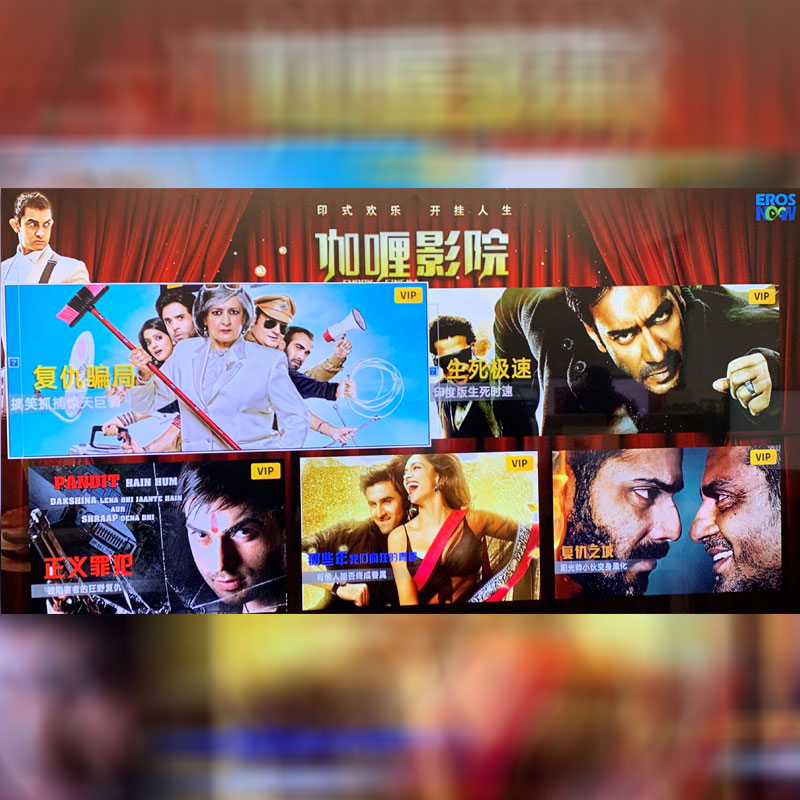
    MUMBAI: Eros Now, the cutting-edge digital over-the-top (OTT) South Asian entertainment platform owned by Eros International Plc (NYSE: EROS) (“Eros” or “the Company”), a global Indian Entertainment Company, in 2019 had announced a partnership with Wasu Media, a major cable television, broadband network OTT and IPTV service provider in China. Eros Now is pleased to reveal that the service is now live on Wasu Media in China and able to deliver Bollywood and digital original series to the Chinese viewers.

    Eros Now further cements its position as a pioneer as it is the only Indian OTT player which will have live services for Video on Demand in China, including on Wasu Media and iQiyi.

    Wasu Media, which has a strong base in the country, reaches 125 million users via its Cable TV, OTT and IPTV distribution network to more than 100 cities in China is now providing Eros Now a platform to further expand its subscriber base. The partnership will enable Wasu Media to provide Bollywood content as a SVOD service to Chinese viewers and further enhance the demand that Bollywood content has seen in China over the last few years.

    There is a massive cultural overlap in the viewing behaviour of Chinese audiences with that of South Asian audiences. This has been demonstrated by the success of movies like Dangal, Bajrangi Bhaijaan and Andhadhun released in China over the last few years with significant success at the Chinese box office. The trend now has escalated to digital platforms with Eros Now at the forefront with this transformation of building viewership of Indian movies with digital viewers in China.

    Eros Digital chairman & CEO Rishika Lulla Singh said, “Eros Now is the most popular destination for Bollywood & Indian movies across the globe. We are glad to go live in China in partnership with Wasu Media which caters to 125 million users in the country. The partnership with Wasu Media and uCast ties in with our ethos of connecting with Bollywood fans across the world. Through such alliances, we will continue to build on our global reach for Eros Now.”

    Wasu New Media Operations general manager Lu DanQiang said, “Wasu Media's partnership with Eros and uCast significantly promotes the development of Indian film and television in China, delivering more Bollywood content to Chinese audiences. Chinese film fans now have the opportunity to watch high quality Indian film and TV content, which is win-win cooperation for both parties.”

  • SonyLIV ropes in Manish Aggarwal as digital business growth and monetization head

    SonyLIV ropes in Manish Aggarwal as digital business growth and monetization head

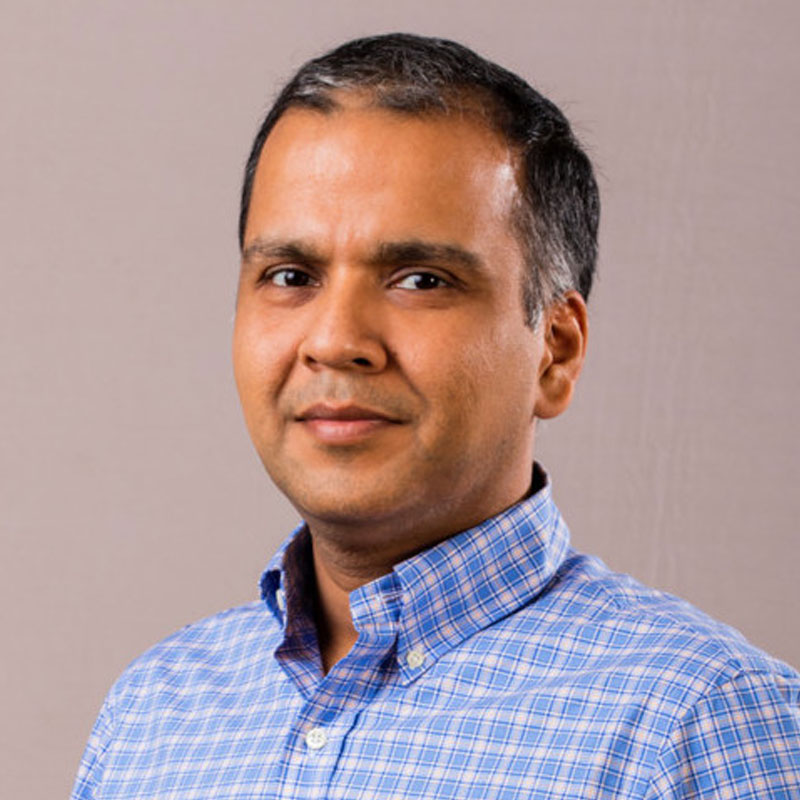
    MUMBAI: As the digital business of Sony Pictures Networks (SPN)witness’s expansion in the leadership team, SonyLIV on boards Manish Aggarwal to strengthen the squad. Manish as Head – Growth and Monetization, Digital Business, will be responsible for strategizing the subscription business (Both India and International) of SonyLIV. He will also be responsible tomaximize revenue through, syndication, licensing and partnership for the platform.

    Aggarwal comes with over 19 years of experience traversing leadership roles in verticals like content acquisition, partnerships, advertising revenue maximisation, consumer insights generation and innovations in digital. Prior to joining Sony Pictures Networks, Manish worked with Zee Entertainment Enterprises Pvt. Ltd as Principal Cluster Head-Advertising Sales. He has also worked with Le Ecosystem Technology India Pvt. Ltd, Myntra Designs Pvt. Ltd and Procter & Gamble to name the few.

  • Amazon Prime Video to launch ‘The Forgotten Army – Azaadi Ke Liye’ on 24 Jan

    Amazon Prime Video to launch ‘The Forgotten Army – Azaadi Ke Liye’ on 24 Jan

    MUMBAI: Amazon Prime Video has launched the trailer launch of its first Indian Original releasing in 2020 – the highly anticipated Amazon Original Series The Forgotten Army- Azaadi Ke Liye. 

    Created and Directed by the national award winning filmmaker, Kabir Khan, the war epic is based on true events and narrates the journey of the extraordinary young brave men and women who formed a part of the Indian National Army (INA) and fought against the British for India’s Independence. The series marks the digital debut of Sunny Kaushal and the acting debut of Sharvari in lead roles, alongside Rohit Choudhary, Karanvir Malhotra, M.K Raina, TJ Bhanu and Shruti Seth.  

    The Forgotten Army- Azaadi Ke Liye is set to release across 200 countries and territories on January 24, 2020, exclusively on Amazon Prime Video.

    Amazon Prime Video India director and head, content Vijay Subramaniam, said “We have had a great run in 2019 and are delighted to open the new year with one of our biggest shows till date. The Forgotten Army – Azaadi Ke Liye, is a story close to our hearts and one that Kabir has wanted to make for over 20 years. It is the ultimate example of the engaging content we want to continue to create in India for Prime Video – compelling stories with world class production values. We’re extremely proud to bring this show to our audiences and fittingly, on this Republic Day weekend.  We are sure they will enjoy watching it.”

    Creator and director, Kabir Khan said, “Being the first script I’ve ever written, The Forgotten Army – Azaadi Ke Liye is a project I am very passionate about. It is a tale that is larger than life and bringing it to screen would not have been possible without the support and trust exhibited by Amazon Prime Video. The journey of these soldiers of the INA is a story that needs to be told and it has taken several years of extensive research to gather fragmented memories of these incredibly brave men and women who fought so selflessly for India’s independence. The reaction to the teaser alone has been overwhelming and I hope the audience gives the same kind of love to the show as well. This project has been a labour of love – from custom creating hundreds of bicycles from the 1940s, to recreating the Singapore of that era, to finding just the right cast to give life to these characters, our only effort has been to truly represent the journey of these fiercely brave men and women to whom we owe our freedom.”

  • Eros Now joins hands with Ooredoo Qatar

    Eros Now joins hands with Ooredoo Qatar

    MUMBAI: Eros Now, the premium online video streaming platform, popular for its massive Bollywood, regional film library and captivating originals, has announced its partnership with Ooredoo Qatar–an international telecommunications company headquartered in Doha. Eros Now, through this partnership, promises to cater to Qatar’s wide audience base.

    Eros Now, the cutting-edge digital over-the-top (OTT) South Asian entertainment platform is owned by Eros International Plc, a leading global company in the Indian film entertainment industry.

    The Middle East region and Qatar in particular is home to a robust population of South Asians. The content in this region is consumed by both the South Asian diaspora as well as citizens of the country who are equally enthusiastic for watching entertaining content from Bollywood. The unprecedented demand for Indian content for both films and originals makes Eros Now a popular choice for consumers.

    Eros Now’s objective is to offer its wide array of content across genres and Indian regional languages to Ooredoo’s vast subscriber base. Eros Now and Ooredoo, who provides services in nine countries across the region including Qatar, also plan to replicate similar alliances in new markets in the future.

    Eros Now chief executive officer Ali Hussein said, “Eros Now’s content has a universal appeal and Qatar is one of the significant markets for the platform. The inconceivable demand for the Indian content in Qatar has enabled the two companies to join hands and offer audiences the finest films, originals, music and more.”

    Ooredoo director PR and corporate communications Manar Khalifa Al-Muraikhi said, “This partnership will not only strengthen our portfolio but also help us build bridges for connecting with our global audience. Love for Bollywood is just a conversation starter that seamlessly will turn into a topic of discussion, and we are thrilled to partner with an Indian OTT giant.”

  • TVF eyes regional content and new genres in 2020

    TVF eyes regional content and new genres in 2020

    MUMBAI: After a year of “phenomenal growth”, The Viral Fever (TVF) is looking at 2020 to be more exciting and hectic. While TVF will continue to work with OTT platforms it collaborated with in 2019, it is also open to uploading content on its own app TVFPlay. The premium and one of the early digital content creators of India will also look at regional shows in this year.

    “In that way, we are very unique. We are one of the leading content creators. At TVF what we want to be known as the guys who give the best stories, best shows in the country. Where we do it, that’s something we are open to. We are open to collaborating with other OTTs, we are open to putting it on our own app,” TVF Originals chief content officer and head Sameer Saxena said talking about how they want to build TVF’s identity going forward.

    “We are actually looking at regional shows in 2020. We are working on Marathi shows. We want to line up shows in Tamil and Telugu too. In 2020, we will get into regional space and we will later expand into other languages,” Saxena commented.

    In 2019, the platform has produced shows for major OTT platforms like Amazon Prime Video, Netflix, SonyLIV, MX Player, etc. According to Saxena, the deals have worked in favour of brand TVF. He said the alliances have helped them to increase reach because all these platforms have their own set of audience. Hence, working with them opens up the opportunity to reach them. The platform is also looking at expanding these numbers.

    The company produced Immature on MX Player, Tripling season 2 and Gullak for SonyLIV. Kota Factory was another hit from the creator which went on TVFPlay and YouTube. Saxena noted that they want to continue short-form content and branded content pieces for TVFPlay. They are concentrating on short form for TVFPlay which they are not doing for any other OTT platform.  

    “We will continue to work with brands; we will do short-form content. These channels can be a learning stage for new writers,” he added on TVFPlay.

    “Overall content strategy for TVF would be to make more shows, make shows in different genres, languages. We are exploring supernatural and horror amongst others,” he commented.

    Talking about noticeable changes in the OTT ecosystem, Saxena said that more players have come in and different types of stories are being told across platforms. He also added that new types of stories are getting accepted too. Saxena perceives it as a great sign as going forward TVF also wants to tell different stories.

  • Internet to be disruptive force in video distribution to rural areas

    Internet to be disruptive force in video distribution to rural areas

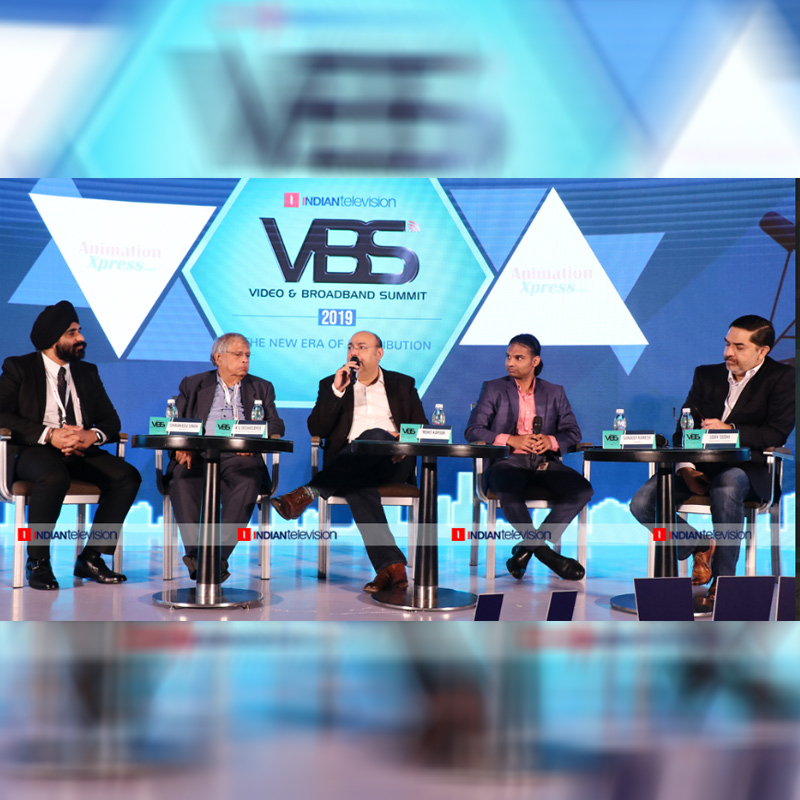
    MUMBAI: Internet has become a new medium for delivering video to consumers. It has been reaching around 400 million consumers with a free to watch option on their mobiles. VBS 2019 organised by Indiantelevision.com created a platform for industry doyens to discuss the changing role of the internet in video distribution.

    A panel discussion of Video and Broadband Summit 2019 focused on the Internet's role in video distribution. It was moderated by digital strategy consultant Uday Sodhi with MediaKind APAC marketing head Chiranjeev Singh, Win Broadband Services MD and CEO K V Seshasayee, Jio advertising & strategy VP Mohit Kapoor and Google media and entertainment industry head Sandeep Ramesh as the panellists.

    They shared their views on the internet being a new medium of delivering content. They agreed that while the internet will impact video entertainment distribution, there is enough space in the Indian media industry for all stakeholders, from internet providers, OTT players to media networks, to co-exist and complement each other. The panellists also believe the internet has emerged as another prominent distributor in the broadcast industry.

    Google’s Ramesh briefed the audiences on how internet disrupts the videos delivered to the consumers today and how things will be going forward. He said, "From the consumer’s point of view, video on demand is a habit. Once the consumers move to video on demand, they will not come back. This will happen as it is a secular change. All entertainment will be available online, sooner or later, and consumers will have a desire to watch the content wherever they want. This change will have implications on the content makers and distributors, but from the advertising stand point, digital advertising will be benefitted."

    Jio’s Kapoor highlighted an important fact, which is the innovation of smartphones. He said that Jio introduced Jio phones which have feature phone segments and are smart phones, sold for a price between Rs 700 and Rs 1,500. Around 100 million phones have been sold and consumers are using feature phones, but not using internet for viewing content or videos. About broadband, he informed out of 250 million homes in India, 50 million homes is Jio’s target, which will be achieved. Compared to the US or any other country, India is ahead in content consumption. Currently, average consumption of internet is around 8.5 – 9 GB. Jio is offering more than 11 – 12 GBs monthly.

    Win Broadband’s Seshasayee said, “All content providers and aggregators are focusing on tier 1 and 2 cities and few are trying to reach tier 3 cities. As per the statistics, out of more than 400 million Indian viewers who do not have internet access, the ones who have the access are using 2G, which will be obsolete within two months. As per mobile consumption statistics, 60 per cent consumers are consuming videos on mobile. So, if there are places with no internet access, there are opportunities for the country providers to enter that market, make use of the available resources and find an alternate solution to the problem.”

    Sodhi said that there is a huge opportunity created by the internet, daily in the dark areas. For around 700-800 million users who do not get cable to DTH in their homes, internet may become a way for them to deliver content.

    MediaKind’s Singh said that internet has actually enabled content creators and owners to reach consumers directly, which is happening with OTT platforms. This is a challenge for linear TV. Consumers watch linear TV for live updates like breaking news. The lag between the live TV and the OTT platform for the same content is narrowing down, which is now around maximum five seconds. So, consumers are moving to OTT platforms. We need to make sure that the consumers get enough value for the services they are paying for.

    The panelists also agreed that internet is a great opportunity for LCOs as well. They can provide OTT and video service to consumers in rural areas. LCOs can also build a library of YouTube videos, but monetisation or cost should be nominal because ultimately the content is free for the consumers.

    Kapoor said that in a few years, all countries will have OTT apps. Countries will spend a huge amount of money on programming. There will be a competition but that will happen when fibre will reach homes and the app or video will show up on the screens.

    He further said that the first thing which will happen is that India will get real broadband. The starting speed will be 100 mbps and will go higher in gbps. Once broadband will be available, consumers will realise that what they are paying for. He gave an example by saying that he has not viewed cable in a while, and his TV runs on broadband. As per the statistics, there were 20 – 25 million consumers who were consuming 1 GB internet in a month, but now the number has increased to 400 million consumers using 1 GB internet in a day.