Category: Over The Top Services

  • Discovery to premiere special show ‘PANDEMIC: COVID-19’

    Discovery to premiere special show ‘PANDEMIC: COVID-19’

    MUMBAI: Discovery, Discovery HD and recently launched streaming service Discovery Plus will stream PANDEMIC: COVID-19, a one-hour special that gives an in-depth look at the COVID-19 pandemic sweeping the globe on 15 April at 10 pm.

    As many have heard through the news, COVID-19 is believed to have transmitted from animals to humans in a market in Wuhan, China. But how does this happen? Experts will shed light on its treatment and transmission, which initially baffled doctors and scientists who first encountered early patients who fell ill. The special will also look at how, within a matter of weeks, COVID-19 spread throughout China and beyond, alarming healthcare professionals and scientists.

    PANDEMIC: COVID-19 will take viewers inside the fight to contain the pandemic with the latest news on how the government is coordinating to test and treat patients, and to prevent further spread. Experts will reveal why COVID-19 is unique, why the world was so unprepared for it and what could have been done differently to contain its spread.

    The special will also trace the origin of the outbreak in the United States to the first patient, its rapid spread in Seattle and probe the dramatic and unexpected transmission across the country. Viewers will hear from the leading experts in medicine on the frontlines as well as academia, government officials and patients with first-hand accounts.

    PANDEMIC: COVID-19 is produced for Science Channel by ITN Productions. For ITN Productions, executive producers are Ian Russell and Sarah Jane Cohen and producer is Nick Powell. For Discovery and Science Channel, Executive Producer is Gretchen Eisele.

    Is the US prepared to face this global pandemic unrivalled in modern history? Every day the story takes another dramatic turn, as the number of infected and reported dead in the United States continues on an upward trajectory. PANDEMIC: COVID-19 will look at the effects of the drastic measures happening across America as institutions, schools and businesses are shut down to prevent transmission. This timely special will shed insight from those leading the fight to find answers as well as a possible cure.

    University College London cell biologist Dr Jennifer Rohn says, “The normal circulating strain in the bats probably isn't causing much of a disease. But when it reaches humans, that's when all havoc breaks out, because it's in a new environment. Respiratory viruses have one aim: that is to get inside a human cell and use it as a factory to make thousands or millions of replacement copies that will then spread onto new cells. So often the cells will, will literally blow apart, as the virus is producing its millions of progenies.”

    “The virus, people say sometimes is a piece of bad news wrapped in protein. It is a vector for getting genetic information into a cell and that genetic information just contains a blueprint to make more viruses. They were able to tell that although this virus was new, it was closely related to the original SARS virus,” explains Professor Thomas Friedrich from University of Wisconsin-Madison, in the documentary. “With viruses it's much more challenging because mostly, they use our own cells to make more viruses. And so they're using our own cellular machinery, we can't poison that without poisoning ourselves.”

    Highlighting the speed with which Covid-19 spread, professor Dave O'Connor, University of Wisconsin-Madison says, “I think this is an important reminder that we live in an interconnected world where viruses that emerge anywhere in the world, can be a threat to the entire world.” He adds in the documentary, “A vaccine for this virus is unlikely to be available in the next 12 months. What that means is these other sorts of preparedness measures need to be put into place, because we're not going to have a vaccine. And so expecting this to be like the movie Contagion is simply unrealistic.”

  • Jeffrey Katzenberg’s Quibi OTT makes quiet India launch

    Jeffrey Katzenberg’s Quibi OTT makes quiet India launch

    MUMBAI: Almost silently, without any hoopla or noise, the $1.75 billion-funded, Jeffrey Katzenberg-promoted short video streaming service Quibi made its debut in India on 6 April. Launched in the thick of the CoVid-2019 pandemic, Quibi, which is short for Quick bites, has a price point of Rs 699 a month for the ad-free service and is available for consumption only on smartphones.

    Interested viewers can download it from the Google Play stores and the Apple store and try it free for 90 days before they have to cough up the monthly fee. (The US version has two services ad-loaded at $4.99, and ad-free at $7.99 a month.)

    The app’s promise is that it has no long-form catalogue movies or shows; every piece of content on it is 10 minutes or less and almost every one of them is an original.

    The app launched with 50 shows, but the idea is to launch fresh content every week to take the catalogue up to 175. The slate covers everything from drama to comedy to documentaries to news to sports. On its launch day, Quibi saw over 300,000 downloads.

    The big plus of Quibi is its turnstile feature which allows viewers to seamlessly switch between landscape and vertical portrait views without affecting the viewing experience. In fact, each show is edited keeping these two views in mind and two streams are delivered.

    Former eBay boss Meg Whitman, who is the CEO of Quibi, stated at CES in Las Vegas in January that as compared to YouTube and platforms where shows were being made at $200 or $5,000 a minute, the spends on her service were $100,000 for a minute of content, speaking highly about its quality and the makers.

    In a LinkedIn post, Whitman said, “Quibi was created to entertain, inform, and inspire by reimagining the way mobile users consume premium video content on their phones. The world is a very different place today than it was even two weeks ago. It is our hope that Quibi will provide a small moment of laughter, inspiration, or information during this unprecedented moment in our lives. I am so proud of the hard work of the entire Quibi team who have poured their hearts into building this new technology platform from the ground up. And, thank you to everyone who has made this possible, from our incredible content creators to our outstanding brand partners.”

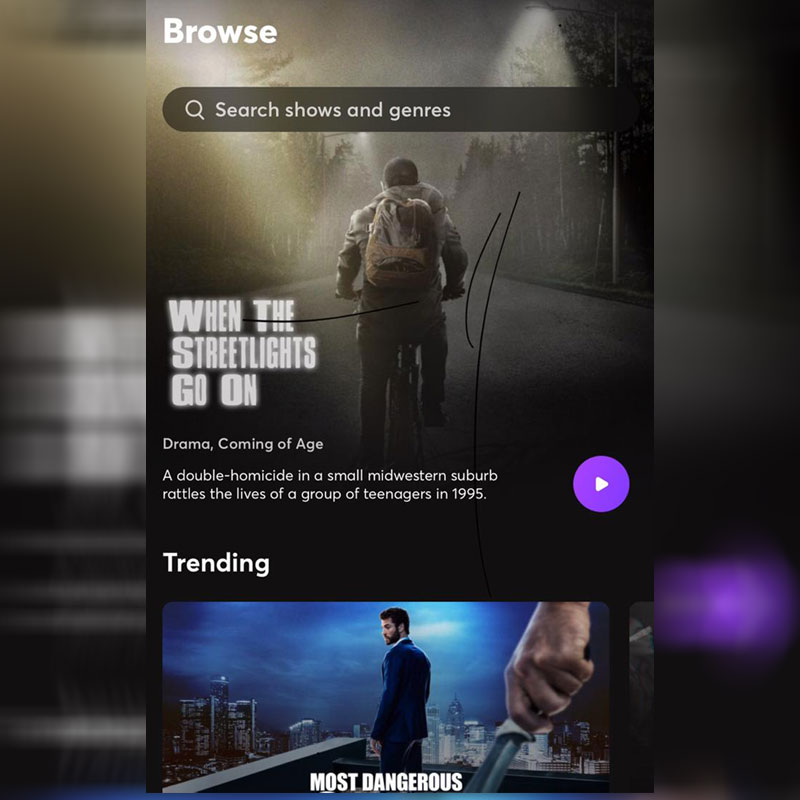
    Among the top-notch creators who have been signed on for the service include: Steven Spielberg, Guillermo del Torro, Lena Waithe and Catherine Hardwick. This apart, there are special news shows being readied for it by NBC, BBC and Entertainment Weekly. Some of the shows which were trending on Quibi at the time of writing included: Most Dangerous Game, punk’d, Chrissy’s Court, The Report by NBC News, Fierce Queens, Shape of Pasta, Survive, Flipped, Thanks a Million, When the Streetlights Go on, etc.

    During CES, Katzenberg and Whitman had stated that the service was for consumption on the go, during metro commutes, lunch or tea breaks or when someone had 10 minutes or less to spend on entertainment. With most consumers at home in many nations courtesy the COVID-2019 lockdown, the duo can be sure that viewers during the trial period will probably consume way beyond that.

  • OTT: The new kid in town for brands to reach their TG

    OTT: The new kid in town for brands to reach their TG

    MUMBAI: OTT consumption has been on a steep upward curve in India for the last three years. Now, after the country has entered a lockdown phase, taking social life out of lives, the media and entertainment industry is suddenly abuzz with a new wave of growth. More people are maintaining social-distance and staying at home, tasting new content and exploring new platforms in this unprecedented crisis. While the staggering change in the M&E landscape is already underway, the sudden lifestyle change is truly a bonanza for OTT platforms. 

    According to the latest BARC-Nielsen report, the time spent per user on video streaming apps excluding YouTube grew by 11 per cent in the second week of lockdown. Original series has driven the growth, followed by movies. The statistics only reaffirms that the new-age viewers don’t let go of any opportunity to binge, be it a lockdown, a vacation or even commute time during a busy day. 

    Therefore, it’s not surprising that advertisers and agencies, who have been riding the AVoD bus, rolling out campaigns or getting into branded integration deals with the streamers, will take more OTT platforms into consideration for media planning. That is good news for India's media and entertainment companies like Star, Zee, Sony and Viacom18. Their linear television business model has been hit by economic static, especially as production has stopped and advertising revenue will see a bump.  

    Despite the huge reach of linear TV, the new-age urban audience have already been considering streaming services as its source of entertainment. IPSOS Predictions 2020 also state that 72 per cent of urban Indians watch more TV from streaming services opposed to cable TV. This shift to OTT is now being accelerated by the stay-at-home direction, especially as theatres have been shut down and leading GECs are unable to churn out fresh content.

    Even before this sudden surge in viewership, brands are looking at OTT platforms primarily because of these factors for the last couple of years to reach out to end consumers. They also look for brand safety, integration opportunities, full video views, and indeed, the ability to sharply target a specific set of consumers/cohorts. Home-grown players like ZEE5, Hotstar, VOOT, MX Player and SonyLIV are gradually taking space in the media mix of brands. Moreover, now that live events and big sporting tournaments are getting cancelled, coupled with the absence of new content on TV, advertisers can potentially shift ad spend to digital despite scaling back on the expense. The platforms can increase ad-inventory based on an increase in viewing hours as well as revenue per user. 

    ZEE5 has seen a staggering 22 per cent increase in MAU and a 15 per cent increase in DAU compared to last month. The platform has witnessed the upsurge in viewership across all geographies. Because viewers have plenty of free time, the streaming service has seen the highest increase in binge-watching with double-digit growth in long-form content consumption. Moreover, the platform has revealed its content lineup for April with a mix of popular old shows, Korean shows, and digital original films.  

    "In the era of social distancing and limiting exposure to the external world, consumers and viewers are turning to forms of digital entertainment and Eros Now is playing its part. We have seen an increase of 200 per cent in paid subscribers on a daily basis and App Annie shows a 78 per cent increase in daily traffic on the platform,” Eros Now CEO Ali Hussein said.

    The platforms are experimenting with the pattern of content offering, too. ZEE5 has made some of its premium and new original content available for free, breaking down the paywall, the first player in the industry to do so. Amazon Prime Video has also rolled out a similar strategy making a selection of kids and family content available free to watch for all Amazon customers. Eros Now consumers can access two months of free Eros Now subscription if they subscribed prior to 31 March.

    While a social cause is undoubtedly driving such decisions, OTT platforms are going to see a jump in users even after the crisis is over. As more audiences are getting to taste the premium content, many of them will later opt for subscriptions. Other than that, if this lockdown continues for more than a month, a significant chunk of ad spend will also start moving towards OTT from TV as the latter will be bereft of fresh content for a long time. As brand-building activity has suddenly stopped, many brands will look at OTTs to reinitiate the spending given the recent boost in viewership. However, we will see more clarity in the space in due course of time.

    According to the FICCI-EY 2020 report, digital advertising grew to Rs 191.5 billion in 2019, 24 per cent higher than in 2018. Ad growth was driven by increased digital media consumption across social media, news, gaming, sports and entertainment, leading to a growth in sellable inventory.

    GCPL media services head Subha Sreenivasan Iyer said that the ability to target a specific set of consumers/cohorts is what makes sense for brands while choosing OTT platforms. She also added that there's a wide variety of content, multiple types of readily-available audience, enabling sharper targeting across OTTs.

    Loreal media head Neel Pandya pointed out the factors which drive brands to OTT platforms: brand safety, ability to drive full video views, content associations and partnerships that can go beyond advertising and more creative and out-of-the-box thinking.

    He added that apart from conventional video buying options, there are opportunities in OTT platforms that can be used to influence consumers across the journey. The key factors include building salience through associations and integrations, building advocacy by creating content and leveraging celebs that also have massive social media following. He added that OTTs help drive consumers to the brand's online shop through innovative formats designed to drive traffic.

    GroupM change planning and transformation principal consultant Vishal Jacob noted that while all the brands are depending on TV, they don’t mind expanding their spend to online video. He noted that when it comes to online video, predominantly there are two options –YouTube and OTT.  But, he added, OTT players provide full visibility to the ads and a stronger brand safety environment. According to Jacob, OTT advertising is largely dominated by CPG players like Colgate, Unilever, GSK, Pepsi, etc.

    GroupM India partnerships and trading president Ashwin Padmanabhan stated that as OTT platforms have started engaging a huge number of consumers, significant ad spend is moving there. He added that brands like ZEE5, Hotstar, Voot, SonyLIV are investing in technology, leading to higher engagement and brands are looking at capitalising that.

    “In essence, content on OTT is quite similar to TV in its audio-visual and storytelling but with a large scope of multi-level targeting by way of multiple cohorts. So categories that choose TV are a natural fit for OTTs as well,” GCPL’s Iyer added.

    However, there are a few existing challenges. As Indiantelevision.com spoke to experts, all of them mentioned the need for a single currency to measure ROI. “A single currency is the need of the hour,” as Iyer puts. GroupM’s Jacob also added that a lot of brands are now questioning the effectiveness of OTT platforms as it has been taken largely on words till now. 

    “Duplication among OTT and other digital platforms is very high. And currently, there is no major platform where we can do unified targeting reducing this duplication and bring about efficiencies,” Loreal’s Pandya echoed the tone. However, this challenge bothers linear TV, too. 

    “Another (challenge) is the cost-effectiveness; it’s important to remember that running longer films/edits may not really be a viable option given the costs,” Iyer added. Pandya said that keeping aside tentpole properties, the platforms still lack the scale that some of the large platforms have.

    However, leaving aside the challenges, ad spends on OTT are set to grow. According to experts, advertising on OTT will see an increase between 10 to 15 per cent in 2020 (the numbers may be revised after the COVID-19 impact is taken into account). The future looks more promising as 26 per cent growth is expected by 2025.

  • Streaming music competition ramping up, as COVID-19 lockdown alters consumption habits

    Streaming music competition ramping up, as COVID-19 lockdown alters consumption habits

    MUMBAI: Streaming subscriptions remain the number one growth driver in the global music market, accounting for more than 70 per cent of spend on music last year. Yet, as measures to halt the spread of COVID-19 begin to reshape the lives of consumers, music streaming is experiencing a temporary drop in consumption.

    “We may have expected to see an uptake in the use of streaming music services, as people become confined in their homes,” says Alexandre Jornod, market analyst at Futuresource Consulting. “However, that’s not the case, with early indicators showing the contrary. Streaming consumption in countries in lockdown appeared to have dropped between 15 per cent to 20 per cent. This is linked to consumers adjusting to new confinement rules, which have removed key music listening situations like the daily commute, as well as office and gym time.”

    Music a shared pastime

    With families spending time at home together, music consumption is also becoming more of a shared activity. Whereas before the outbreak, people were using separate accounts to play different music throughout the day; smart speakers are now likely to be increasingly used and with a single account used to play music in the household. In the same way, radio has seen an increase in consumption, as listeners seek human curation, live news, friendly voices and companionship. There is also tough competition from gaming in addition to movie and TV show streaming. These activities require a higher level of attention and tend to be favoured when some extra time is freed up as a result of routines being interrupted.

    New routines, new opportunities

    “Once consumers become accustomed to the situation and establish new routines, we expect streaming music to get back to levels similar to before the crisis, with premium subscriber uptake to show renewed growth, particularly in H2, largely compensating for any slowdown in H1,” says Jornod. “Home listening will dominate, with a shift in the music types and genres as consumers seek out lean-back mood playlists as opposed to searching for specific songs or artists.”

    Spotify and Apple flying high

    Spotify and Apple continued to lead the way last year, accounting for over 60 per cent of global subscriptions between them, a leadership trend that will continue. Spotify retained the global number one position, though Apple captured the top spot in the USA. 

    Amazon Music also experienced strong growth with its multiple streaming plans catering to a wide audience, although its subscriptions are closely linked to Echo smart speaker geographies, which skew heavily towards the USA and the UK. YouTube Music, despite lagging behind the competition in terms of subscribers due to its late re-entry to market, has the potential to become a key player thanks to its established YouTube audience. Smaller players like Deezer, Tidal and Napster are focusing instead on strategies such as targeting local markets, serving niche audiences or B2B operations.

    “Streaming music subscriptions also benefit from markets where physical media has been historically strong and they are now transitioning to streaming,” says Jornod. “The likes of Germany, Japan and France are experiencing accelerating adoption, whereas maturing markets in North America and Europe are seeing a focus on value-added features as a differentiator. Watch out for a rise in podcasts beginning to exert its influence, as well as enhanced listening experiences such as Hi-Res audio, Dolby Atmos Music and Sony 360 Reality Audio.”

  • DocuBay inks acquisition deal with US-based Big Media

    DocuBay inks acquisition deal with US-based Big Media

    MUMBAI: DocuBay, the premium membership video-on-demand streaming service by IN10 Media Network, signed a global acquisition deal with US-based Big Media, a leading independent content production and distribution studio. The acquired documentary films launch DocuBay’s latest category or ‘Bay’ called TechBay, which deals with a broad range of technological advancements including the fascinating and very topical issues of artificial intelligence, space technology, and cutting-edge medical developments, among others. The licensed titles and new TechBay category are now available for global streaming on DocuBay (along with the recently announced CrimeBay) in 180+ countries, with the app available on platforms such as the App Store, Google Play, Fire TV, MiTV, and Apple TV, among others.

    Notable titles acquired include:

    -Germ Warfare: The Battle Against Superbugs analyses how science is fighting the rapidly emerging threat of antibiotic-resistant superbugs

    -AI or Artificial Intelligence: Creating the Code for Consciousness questions whether AI can be taught the complexities of human behavioural norms

    -Life Beyond Earth looks at the possibility of life evolving in the oceans of distant worlds including places within our own solar system

    -The Next Great Extinction Event explores whether Earth is headed for another mass extinction because of human interference.

    DocuBay content acquisition head Adita Jain stated: “We’ve been really looking forward to launching a category on technology, and big media helped us realise this effort.  Offering fresh, relevant content through categories like the new TechBay is critical to continually engage viewers. We have more new bays in store and can’t wait to share them with DocuBay’s global community of documentary film fans.”

    Sales & acquisitions senior director Shivani Verma stated: "Our association with DocuBay expands the availability of Big Media special features to audiences around the world. With this partnership, Big Media will be able to serve passionate audiences worldwide with content that inspires, informs and entertains."

  • Netflix launches improved parental controls for families

    Netflix launches improved parental controls for families

    MUMBAI: Netflix, based on feedback from its members, has launched new, improved controls on its service to help parents, guardians and elders make the right viewing decisions for their families. 

    Parents can now:

    ●      PIN protect individual profiles to prevent kids from using them;

    ●      Tailor their kids’ Netflix experience by filtering out titles that are not appropriate for their age;

    ●      Remove individual series or films by title. When this filter is used, the blocked title(s) won’t show up anywhere in that profile;

    ●      Easily review each profile’s setting using the “Profile and Parental Controls” hub within account settings;

    ●      See what their kids have been watching within the profile created for them; and

    ●      Turn off auto play of episodes in kids profiles. 

    These controls can be added to the Netflix profile by going to account settings on a laptop or a mobile browser.

    “Choice and control have always been important for our members, especially parents. We hope that these improved controls will help parents make the right choices for their families,” said Netflix kids product manager Michelle Parsons.

    Recognising that every family is different and to give them more viewing choices, Netflix is investing in a wide variety of kids and family films and TV shows from all over the world, including award-winning animated films like Klaus, interactive shows like Carmen Sandiego: To Steal or Not to Steal and kids’ series such as Boss Baby. The Indian kids series Mighty Little Bheem is the most-watched preschool series on Netflix globally, and the second-most watched kids’ series for Netflix worldwide. 

    Since its launch in April 2019, Mighty Little Bheem has been watched by over 27 million households worldwide, including in Latin America, Australia and New Zealand. Netflix has also announced Ghee Happy, an animated show about Hindu deities who, as children, attend a special daycare and discover their own powers.

  • Story Ink, Locomotive Global Inc acquire screen adaptation rights for ‘The Making of Star India’

    Story Ink, Locomotive Global Inc acquire screen adaptation rights for ‘The Making of Star India’

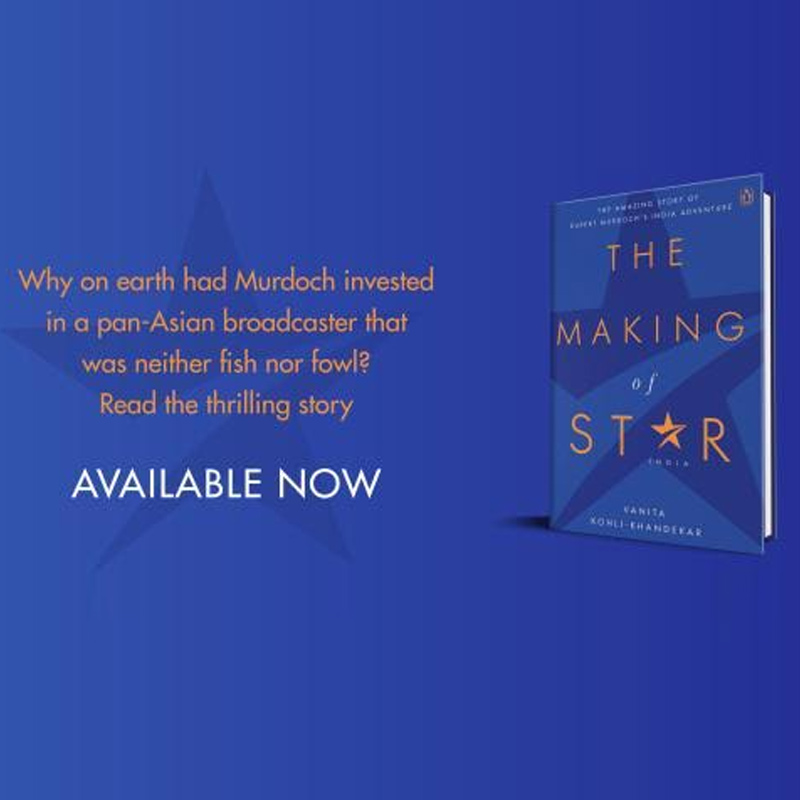
    MUMBAI: India is getting its very own version of Mad Men on the life and times of the broadcasting world. The meteoric rise of Rupert Murdoch’s Star India during the satellite boom of the 1990’s will now be the base for an upcoming digital drama series. Locomotive Global and The Story Ink have acquired the screen adaptations for Vanita Kohli-Khandekar’s book ‘The Making of Star India’.

    The book takes the reader through the fascinating journey of Star: how Rupert Murdoch bought Star TV, then a pan-Asian broadcaster, from Hong Kong businessman Richard Li, and its transformation over the years into one of the three largest media companies in India.

    Story Ink founder Sidharth Jain and Locomotive Global co-founder Sunder Aaron will produce a 10-episode, multi-season, scripted drama series using the book as a base. The fictional series will be based on the heady days of Indian television, during the 90’s and 2000’s, rather than a literal translation of the book.

    Jain stated, “Our aim is to create a global quality scripted series. A ground-breaking new show that will be akin to Mad Men meets Succession, and set in the roaring rah-rah early days of the Indian television industry of the late 1990’s and early 2000’s.”

    The on-screen adaptation will carry the audience on a journey through the meteoric rise and revolution of the Indian television industry. Jain and Aaron’s objective is to produce a premium drama series that will be made available to viewers via a global streaming platform partner. 

    Aaron commented, “We aim to pull the curtains back and present the story of Indian television in an unconventional and groundbreaking way that people around the world will find compelling to watch. Today more than ever before, viewers of premium drama series want to lose themselves in an authentic world they find fascinating and yet never knew existed.”

    “As a teenager, I won awards for fiction; I found my profession in non-fiction. Now over two decades later a piece of non-fiction I have written is being used to create a drama series. Life comes full circle,” shared Kohli-Khandekar in a LinkedIn post.

    One such show that has been previously attempted was TVF’s Thinkistan that explored the advertising industry in the 1990s.

  • VMate launches corona anthem

    VMate launches corona anthem

    MUMBAI: Short-video platform VMate has launched the VMate corona anthem, a foot-tapping number based on the now-popular anti-corona slogan ‘Go Corona, Corona Go Go’.

    The VMate corona anthem, however, is an extension of the viral mantra and spreads the right message related to the pandemic that has brought the world to its knees and resulted in the government enforcing an unprecedented 21-day countrywide lockdown. The anthem asserts that India would emerge as the winner in the ongoing war against the deadly virus. At the same time, it spreads all the right message related to the prevailing situation, advising people to wash their hands repeatedly and wear masks. The anthem further advocates ‘social distancing’ by urging all to make ‘Namaste’ – the Indian way of greeting each other – a trend.

    Link – https://www.youtube.com/watch?v=W9E-AGW3-P0

    The lyrics of the anthem, ‘India ki jeet, Corona ki haar, Go Corona, Corona Go Go…India se tu ab door ho’, which roughly translates to ‘India will triumph and Corona will lose in the war against the pandemic’. The song has been composed and sung by Advait Nemlekar, who has worked in popular Bollywood films like ‘Saand Ki Aankh’ and some blockbuster Gujarati movies, including ‘Gujjubhai the Great’. His latest association was with ‘Special Ops’ series that starred critically acclaimed actors Kay Kay Menon and Vinay Pathak. The VMate corona anthem’s video showcases performances by several creators on the app and has been choreographed by Hemanshu Patel.

    The anthem is a manifestation of VMate’s commitment towards strengthening the fight against the pandemic, which has posed possibly the biggest challenge faced by mankind in the modern era. Earlier, the app had roped in doctors and medical professionals to ensure that only validated information reached the users. The step was also aimed at busting myths doing rounds on various social media platforms. Apart from this, VMate also launched a #21DaysChallenge, wherein creators were asked to take up a fresh challenge on each day of the lockdown. The idea behind the initiative was to keep users busy, engaged and entertained at homes in a creative manner during the lockdown.

    This was followed by the launch of three innovative corona-related games on the short video app. 

  • ShemarooMe partners with Indian embassy in Paris

    ShemarooMe partners with Indian embassy in Paris

    MUMBAI: As the world adapts to the new normal of social distancing due to the COVID-19 pandemic, ShemarooMe, the video streaming platform of Shemaroo Entertainment Ltd, has collaborated with the Indian embassy in Paris to connect with Indian nationals and people of Indian origin in France with a view to reinforce their eternal bond and love for Bollywood.

    Following a campaign similar to that in the US launched in association with the consulate general of India in New York, ShemarooMe – #SociallyDistantVirtuallyConnected, the OTT platform partnered with the embassy of India in Paris to organise a watch party on 5 April 2020, of the iconic comedy film, Chupke Chupke. It, thereafter, offered two weeks’ of free subscription of ShemarooMe, particularly to ensure that interested audiences could keep themselves entertained when they are locked down within the confines of their residences practising social distancing and quarantine amid the COVID-19 pandemic.

    The initiative of live streaming of the film received an overwhelming response with well over 26,000 Bollywood enthusiasts glued to the event. For the embassy of India in Paris and ShemarooMe, this was a perfect way to celebrate and unite people through their love for Bollywood during these unprecedented challenging times. One expects that this initiative will gain further popularity in the coming few days and more and more enthusiasts will avail themselves of the opportunity to see Bollywood and other regional film classics over the upcoming fortnight. 

    Embassy of India in Paris charge d’affairs Ankan Banerjee  commented, “As we stand together to combat the spread and negative impact of the novel Coronavirus, I am pleased to see the love and solidarity that individuals are expressing across the globe. While we religiously follow social distancing, at the same time, we should also make efforts to unite to strengthen the human bonds through a virtual connection. This notable initiative by ShemarooMe to bring people together as one big family and watch its content with a two-week free subscription will further bind the Indian families closer together. We greatly admire SheemarooMe’s unique offer and look forward to watching the iconic movie Chupke Chupke through this newly created virtual connect to our favourite Bollywood.”

    Embassy of India in Paris minister (consular) Shrila Datta Kumar noted, “With tough times ahead for all of us, we need to find newer incentives to keep the morale high and keep ourselves motivated and happy. I appreciate ShemarooMe’s unique initiative to connect us virtually to Bollywood and other Indian regional movies. As we practice social distancing, two weeks of free subscription of the App, along with hosting a watch party for Bollywood lovers, the all-time favourite classic movie Chupke Chupke, will surely connect across all age groups. It is a laudable effort by Shemaroo to bring the people together through this campaign #SociallyDistantVirtuallyConnected, in these difficult times.”

  • MyTeam11 launches knowledge-based MyTeam11 Quiz

    MyTeam11 launches knowledge-based MyTeam11 Quiz

    MUMBAI: Fantasy sports platform MyTeam11, with a user base of over 15 million users, today launched MyTeam11 Quiz, a one-of-a-kind, knowledge-based sports quiz contest for sports fans.

    With the addition of MyTeam11 Quiz, the fantasy gaming giant also becomes the first fantasy sports platform in the industry to offer knowledge-based online competition.

    MyTeam11 Quiz will be hosted on the MyTeam11 application comprising hourly competitions in a 10-question format on a daily basis, primarily testing a sports lover’s knowledge in various sports. The uniqueness about this quiz would be that winners apart from showcasing their in-depth knowledge in sports would also stand a chance to earn real cash rewards. Old users can access the daily quiz contests on their dashboard while new users can sign in by downloading the application from the website or app store.

    MyTeam11 COO-co-founder Sanjit Sihag said: “Our users are ardent sports lovers who have high technical understanding and knowledge about their games. At a time when LIVE sports are suspended globally because of COVID-19, it was important for us to provide them with enough reasons to keep their minds engaged and sports quiz rightfully fits the bill.”

    He further added: “Quizzing is a passion for many and I am confident that this will not only interest the ardent fantasy gamers but also attract a large sports-loving audience across the length and breadth of the country who like stimulating their brains using their knowledge in sports. As we progress we will also add other genres to diversify the quiz content and increase the mass appeal of the product.”

    MyTeam11 is already the home for six major fantasy sports like cricket, Kabaddi, volleyball, basketball, football and hockey, the latest addition to the bouquet. The launch of MyTeam11 Quiz comes as the second major announcement by the brand after it launched SportsTiger, a multi-sport aggregator in February.