Category: Over The Top Services

  • Where’s Quibi headed for in the OTT world?

    Where’s Quibi headed for in the OTT world?

    MUMBAI: The streaming video landscape continues to fragment in 2020, as a growing number of streaming services join the fight for subscribers and users within an already competitive space. As a result, the global number of SVoD subscriptions is estimated to exceed 1 billion by mid-2020. Other streaming video services across social media players, esports and AVoD are also expected to show impressive growth.

    The subscription streaming market has been further amplified by the stay-at-home lockdown period, which is not only encouraging a rise in TV viewing but also a change in behaviour, as gaps in live TV scheduling, particularly sports, encourage consumers to look elsewhere for entertainment alternatives. Beyond SVoD, this is also expected to fuel uptake of premium AVoD services such as Pluto TV. According to Futuresource’s Living with Digital consumer research, at the end of 2019, one in seven American households were active monthly users of Pluto TV, with Tubi just a little lower.

    Quibi is a platform that sees a potentially rich corner for targeting millennial audiences with mobile-specific content. As the name indicates, ‘quick bite’ entertainment will consist of scripted and non-scripted content across a range of genres, including comedy, drama, reality and news updates. A-list creators, including Steven Speilberg, Ridley Scott and Catherine Hardwicke, are on board to produce and direct shows exclusively for the service, with Quibi’s new film-making technology ensuring a seamless experience, whether viewing in portrait or landscape.

    Its launch during lockdown presents itself as a double-edged sword. As mentioned, consumers now have more time to experiment with new services, but equally, solo mobile-viewing is based to fit around people’s lifestyles and “normal” routines: when arriving early to meet your friends at the bar, commuting to work or school, exercising at the gym – all of those activities that are now on hold for the foreseeable future. The marked increase in SVoD viewing on TV sets over the recent weeks ultimately comes at the expense of content viewing on mobile devices.

    Another key point here is: who are Quibi’s rivals? Its unique proposition addressing mobile viewing at a monthly price means that it is not only competing with major SVoD players like Netflix, Hulu, Amazon, and beyond, but other free services that also focus on mobile viewing. This includes the likes of Facebook Watch, Snap Originals, IGTV, Tik-Tok and of course, YouTube. Although YouTube is the market leader for short form content worldwide, people do not only watch its content on smartphones or tablets. In fact, Futuresource’s consumer research shows that just 42 per cent of YouTube watchers in the top five Western European countries and USA use a tablet or smartphone as their main viewing device to view the service. As the quality and professionalism of content on YouTube increases, consumers are finding additional value in watching on a larger screen. This means that Quibi faces potential competition from all sides, as it looks to exploit what it has identified as a gap in the market. However, Quibi has recently announced that it will enable casting to compatible TVs in May.

    Quibi launches with a free 90-day trial, a longer period than currently offered by Netflix, Amazon Prime, Apple TV or Disney+. This is highly unusual for such a service launch, and its major challenge will be converting these to paying subscribers. While the trial provides a valuable period to garner user behaviour and shape the future direction of the service, will most users have exhausted the content that interests them by the time the trial expires?

    Quibi will be judged on both the quality and originality of the content it provides, benchmarked against the key SVoD and AVoD players as mentioned above. Whether the service can command the attention it needs in a considerably fragmented market remains to be seen.

    The author is principal analyst at Futuresource Consulting
     

  • ZEE5 appoints Rahul Maroli as senior VP and business head, SVOD

    ZEE5 appoints Rahul Maroli as senior VP and business head, SVOD

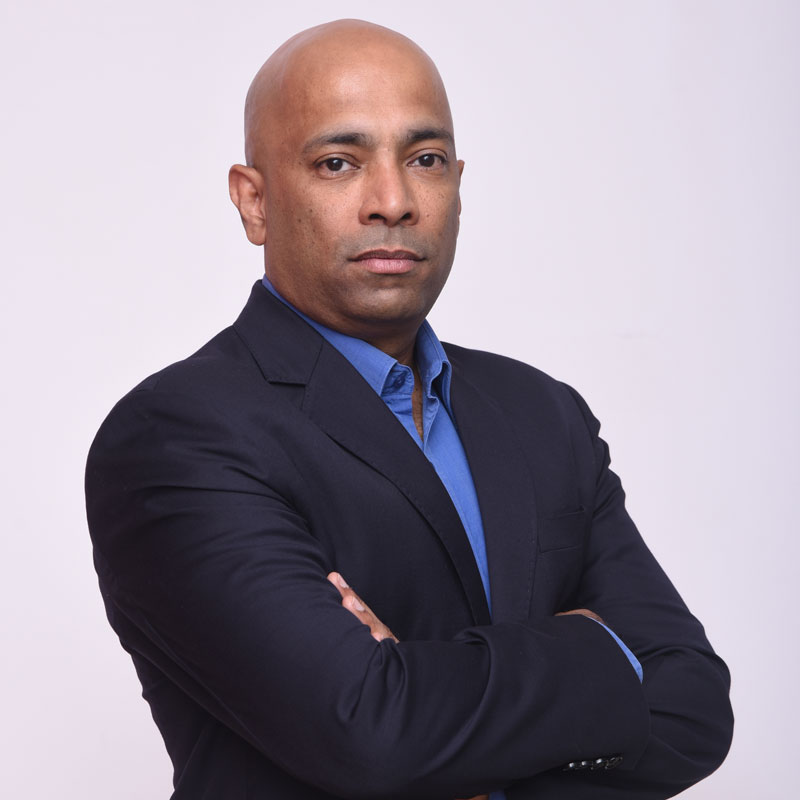
    MUMBAI: ZEE5 India, the digital entertainment destination of Zee Entertainment Enterprises Limited (ZEEL), has appointed Rahul Maroli as senior vice president and business RM head SVOD.

    In his new role, Rahul’s primary focus will be to build the subscription video on demand business through acquisition, growth and engagement of subscriber across B2B and B2C segments. He will be responsible for business development, customer success, brand and marketing functions at ZEE5.

    As a business leader with 18+ years of experience, Rahul has been steering market-leading companies in the automotive, mobility, e-commerce and consumer businesses. His last assignment was with Ola where he led the enterprise business, Ola Places and Strategic Alliances. Earlier, he conceptualised and started Ola Fleet Technologies and built Ola’s cab-leasing and asset management business.

    Prior to Ola, for over a decade, he led sales, marketing and operations for LeasePlan India, a leading player in the business mobility industry.

    An alumnus of Xavier Institute of Management and Entrepreneurship, Rahul holds an MBA in marketing & finance.

  • Delhi High Court to hear plea against Netflix web series ‘Hasmukh’

    Delhi High Court to hear plea against Netflix web series ‘Hasmukh’

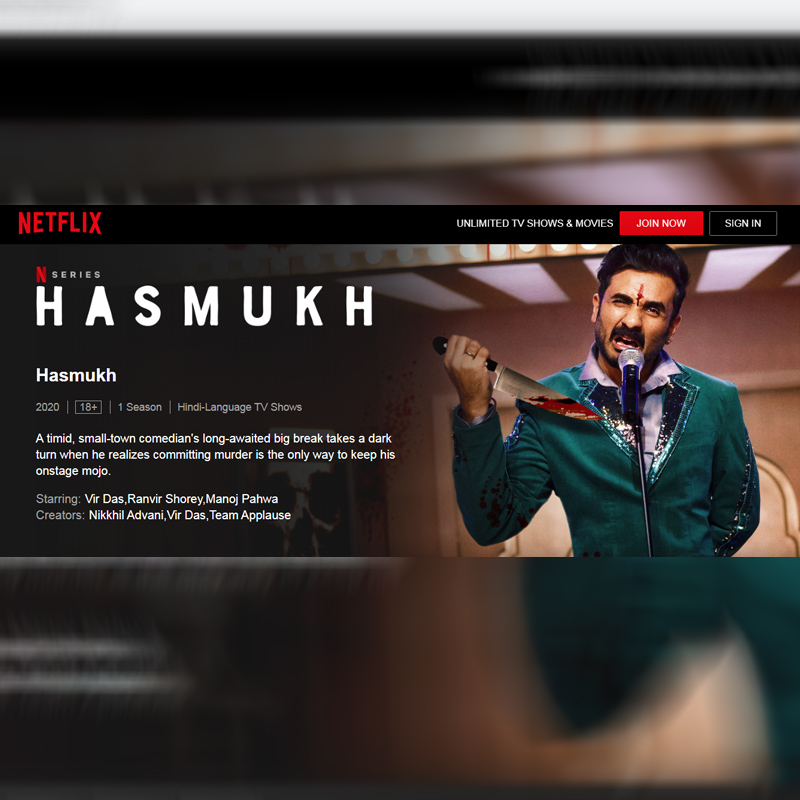
    MUMBAI: The Delhi High Court on Monday will hear a plea by a lawyer seeking to restrain Netflix from streaming a web series. The lawyer community has taken umbrage at the Netflix web series Hasmukh, because it “maligns their image and reputation.”

    The plea, moved by Supreme Court lawyer Ashutosh Dubey, points out that in episode 4 of the web series, lawyers have been branded as “thieves, scoundrels, goons and rapists.”

    The lawyer wants deletion of the contents from the series. He has also sought court directions to the producers, directors and writer of the series to tender an unconditional apology for “maligning the image of the lawyers' community.”

    "Statements (in the series) are highly disparaging, defamatory and bring disrepute to the profession of law, and lawyers and advocates in the eyes of the general public," said Dubey.

    While seeking a permanent injunction on airing the series, the advocate has maintained in his suit that the said remarks have “caused utmost damage to the legal profession and impugned the image of lawyers in the eyes of millions of viewers/subscribers, who visit the streaming website where the show is being streamed." 

  • Is it all gloomy for independent OTT players?

    Is it all gloomy for independent OTT players?

    MUMBAI: Though everyone is ravenous to take a bite out of India's rich streaming phenomenon, it's not all hunky dory for independent players. Consumer acquisition, retention and chalking out a sustainable monetisation plan are tougher than they seem. While deep-pocketed giants may survive, the road is rocky for independent platforms. 

    The downfall of two ambitious players

    Towards the end of 2019, Hong Kong-based over-the-top (OTT) platform Viu shut down its India business. The company cited highly competitive nature and the requirement of heavy investment without a path to sustained monetisation. Viu’s downfall was followed by Singapore-based telecom company, Singtel-backed, Singapore-based HOOQ. The service, available across Singapore, the Philippines, Thailand, Indonesia and India, which was also backed by Warner and Sony, filed for liquidation last month in Singapore. HOOQ said in a statement that it had been unable to grow fast enough to keep up with global and regional rivals and also noted “significant structural changes” in the OTT video market in the five years since its launch.

    The statements of both Viu and HOOQ show the inability to grow a viable business model amid stiff competition. While the wave of online content started with small independent creators in the country, it's time for them to either join hands with bigger players or exit. Especially, when players like Netflix and Disney+Hotstar are earmarking billions for this market. Homegrown players are also investing highly. The sheer amount of content library, production quality along with smart UIs speak in their favour. 

    What lies ahead for independent players?

    “There is a global recession right now and these OTTs are vouching on a lot of these global fundings, private equity fundings. COVID-19 has a big impact and there will be a recession in many countries and lot of the funding activities will slow down. Because of the current crisis, if their mtrics like success rate, viewership, time spent etc., are not good, many OTTs will also shut down in near to medium term despite being well-funded. India is an extremely fragmented market. We have 35 plus OTTs causing all the more chances of many more shutting down,” Elara Capital VP – research analyst (Media) Karan Taurani says.

    SBICap Securities institutional equity research head Rajiv Sharma brings up three aspects. He talks about customer acquisition which is becoming an expensive exercise for independent OTT platforms with more serious players coming into the picture. He also adds that Netflix can amortise content produced in India in 130 markets. Broadcasters have catch-up TV content, the movies which they had acquired for the broadcasting business as a source of basic traffic for engagement.

    “Independent platforms have a small library, no access to other content or market and moreover, they are working on a small budget. Their mortality rate is high because users will watch something and delete it. So low stickiness means higher customer acquisition cost and whatever they are producing, they are not able to amortise it over a higher set of users. So per unit content cost or production cost is higher. These are the reasons we are seeing independent platforms struggling,” Sharma explains.

    Is it all gloomy for smaller and independent players?

    Platforms like ALTBalaji, Hoichoi are thriving without funding from any big network, broadcaster or tech giant. These two platforms have witnessed good uptake in users with an attractive content slate. Moreover, they have collaborated with existing rivals also to increase their reach and find an alternative source of revenue. While we tried to find what are the factors that help them to survive, both of the platforms cited the parent company’s long-term experience of producing content, hence understanding of consumer preference.

    “I think understanding of the customers is very important and having control over content is very important. Twenty five years of understanding consumers is very important because as we make a show or acquire a  movie, we exactly know what a consumer might want. We have been in the business long. It's not a question of money only. Another thing what works well for SVF is that we  have made 150 plus movies till now. We have relationships with all the producers of the business. So, when we wanted to license a movie, we could do it from every person in the industry. We had production experience, key understanding of content, relation with the industry and talents,” Hoichoi co-founder Vishnu Mohta says.

    “Being from the house of Balaji Telefilms, who have been catering to the audiences ever-changing preferences for over 25 years now, ALTBalaji has an advantage unlike no other of having a deep understanding and familiarity with the viewer’s consumption preferences. With content being our biggest differentiator, we have been catering to all kinds of audiences through our diverse content offerings spanning multiple languages. Moreover, Indian originals have picked up pace in the past few days as audiences are on the lookout for local relatable content and are spending more time online. With content being king, there is a growing acceptance amongst consumers to pay for unique narratives and good story telling which keeps them hooked to their screens,” Balaji Telefilms group COO and ALTBalaji CEO Nachiket Pantvaidya states.

    Yupp TV, another OTT platform which is tuning its business towards ed-tech direction in India, thinks that being an early mover, consolidation has helped it.YuppTV and YuppMaster founder and CEO Uday Reddy acknowledges, “ All the players who are in space are big broadcasters. They are already in the content space. They are just evolving from linear to digital. I don’t think many independent players are left now. If they don’t invest in capital, they won’t be able to sustain.”

    With the COVID-19 crisis, things are bound to change once the situation normalise.

  • Vikram Tanna leaves Discovery; joins Mzaalo as COO

    Vikram Tanna leaves Discovery; joins Mzaalo as COO

    MUMBAI: Vikram Tanna has left Discovery Inc. after a stint of three years to join Mzaalo (Xfinite Global plc) as chief operating officer. At Discovery, he was head – advertising, sales, and business head of regional clusters, South Asia.  

    Prior to Discovery, Tanna was with Star India where he worked for more than eight years.

    Mzaalo is an ad-supported video-on-demand platform offering global access to premium web series and movies. It is an entertainment-based digital platform which offers TV shows, movies, games, music videos, etc. Users can consume premium content without having to subscribe.

    Xfinite, the digital platform that owns Mzaalo, uses blockchain technology and helps create a new generation of media producers and consumers.  

    Follow Tellychakkar for the consumer facing news & entertainment

  • Airtel launches new prepaid data pack with Disney+ Hotstar VIP subscription

    Airtel launches new prepaid data pack with Disney+ Hotstar VIP subscription

    MUMBAI: Airtel has come up with a new prepaid data pack which gives the user subscription to one year of Disney Plus Hotstar VIP. A prepaid recharge plan of Rs 401 comes bundled with the OTT platform’s subscription which also offers 3GB of high-speed data access for 28 days.  

    Airtel launches the pack at a time when OTT consumption is witnessing a very high growth across the country due to the ongoing lockdown. Airtel has listed the new pack on its
    website mentioning the subscription, and details like shows, movies, and kids content from Disney+, exclusive Hotstar Specials, and live sports.  

    Disney+ made its entry in India on 3 April 2020 in conjunction with Hotstar as the latter upgraded to Disney+ Hotstar with a fresh new look and enhanced user interface. The service already boasts of eight million subscribers, as Walt Disney Direct-to-Consumer and international chairman Kevin Mayer shared earlier this month.

  • Voot Select to stream latest episodes of Shark Tank – Season 11

    Voot Select to stream latest episodes of Shark Tank – Season 11

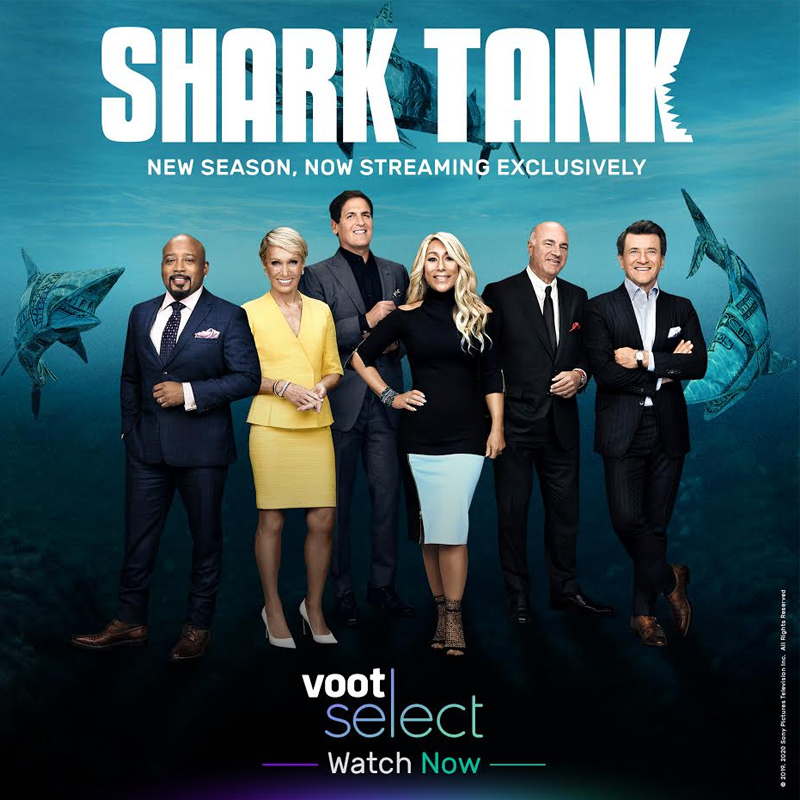
    MUMBAI: Shark Tank – Season 11 will stream exclusively in India on Viacom18’s OTT platform Voot Select on 25 April, followed by the Indian-television premiere on 18 May, airing Monday to Friday at 9pm, only on COLORS INFINITY.

    Yes, the Sharks are circling and they’re hungry for more in the latest season of multi-Emmy-award-winning reality show Shark Tank. Over ten glorious seasons, Sharks – Kevin O’Leary, Mark Cuban, Barbara Corcoran, Lori Greiner, Robert Herjavec and Daymond John, have invested millions of dollars from their own capital, resources and expertise into ideas, concept-products and people, transforming them into booming moneymakers. The latest season will see them swim deeper in search of game-changing and clutter-breaking pitches that can be taken to the next level and turned into lucrative businesses. 

    Commenting on the multi-platform premiere for one of the most-popular business-reality shows, Ferzad Palia, head – Voot Select, youth, music and English entertainment, Viacom18, said: “We introduced India to Shark Tank when we launched Colors Infinity, and the show has amassed a huge fan-following, despite being a business-reality show. Establishing itself as one of the most-watched shows on the channel, viewership for it has been constantly growing with every new season. While continuing to serve our loyal television viewers, we are now taking the show to an even larger audience base by showcasing it first on our OTT platform – Voot Select as part of our digital-first strategy. This multi-platform approach will essentially serve as an impactful interplay for us, expanding our audience profile to include digital-first patrons.”

    Appearing individually in various episodes as guest judges alongside Sharks – Mark Cuban, Barbara Corcoran, Lori Greiner, Robert Herjavec, Daymond John and Kevin O'Leary will be founder-CEO of Stitch Fix, Katrina Lake; founder & CEO of KIND, Daniel Lubetzky; international tennis champion & founder of Sugarpova, Maria Sharapova; and co-founder & CEO of 23andMe, Anne Wojcicki. 
     

    Some of the pitches to watch-out for on Shark Tank – Season 11:

    Tadah!: A falafel inspired frozen culinary business that donates 25% of its profits to non-profit organizations advocating for social change.


    Beardaments: Founder Jason McOmber, came up with the idea of ornaments for beard after a few drinks at a Christmas party, and turned it into a $600,000 company. Looking to expand, he’s now in the Shark Tank.


    SlumberPod: Initially none of the Sharks were biting into the pitch for SlumberPod – a cover that can be put over a travel crib to give babies a dark place to sleep. Shark Robert Herjavec exclaimed that “It’s A Tent!”, but the profitability of the business led the Sharks to reconsider. 


    Just the Cheese: A snack startup that made Sharks Mark Cuban and Lori Greiner come back with an offer after going out earlier, only to counter a royalty offer made by Shark Kevin O’Leary. 


    ‘The Yard’ milkshake bar: Made in a mason jar and decorated with a variety of sweet treats, this product created a three-way battle between Kevin O’Leary, Lori Greiner and Mark Cuban for a stake in the company.

    Get ready to witness some of the craziest concepts turn into the lucrative business prospects on Shark Tank – Season 11, streaming exclusively from April 25 on Voot Select; and airs Monday to Friday from May 18 at 9pm only on COLORS INFINITY
     

  • Have 10-12 banked shows to sustain even if lockdown continues: ALTBalaji’s Nachiket Pantvaidya

    Have 10-12 banked shows to sustain even if lockdown continues: ALTBalaji’s Nachiket Pantvaidya

    MUMBAI: Balaji Telefilms’ digital arm ALTBalaji recently completed three years. While the management always spoke of profitability and breaking even faster rather than cash-burn and tons of investment, the platform seems on track in achieving its ambitions despite the COVID-19 climate. Though production may be halted, content-hungry subscribers have flocked to the streaming service for their dose of entertainment. Despite the setback, the OTT platform is confident that it has enough shows in the bank to woo subscribers for the next few months even if lockdown persists.

    Follow Tellychakkar for the consumer facing news & entertainment

    In an interview with Indiantelevision.com, Balaji Telefilms group COO and ALTBalaji CEO Nachiket Pantvaidya spoke about the growth during post COVID-19 period and overall outlook FY21.

    Edited excerpts:

    ALTBalaji had a good run in the first three years focusing on the Hindi-speaking market. Will there be any significant change in the content strategy going forward?

    We are currently focusing on ensuring that we dominate the Hindi speaking markets and then move ahead. If you look at the geography and demography of the country, 70 per cent of the content consumed is Hindi. As a platform, it makes sense to focus your efforts in one direction and win over the Hindi-speaking population. Hence, this year we are first going to focus on ensuring that we dominate the Hindi space. 

    We will gradually move towards other regional markets as well in the coming years. A host of our Hindi offerings have also been dubbed in Indian and international languages like Tamil, Telugu, Malayalam, Bahasa, Arabic, etc. amongst others. We shall continue to focus on expanding our language content library in the coming years.

    ALTBalaji had the mantra of breaking even within 2021 which you are nearing as per the last investors call. What will be the big target now?

    ALTBalaji has been working towards its goals and is the first OTT platform already on the road to profitability. With our costs getting controlled in the first half of fiscal 2020 and the loss margin further reducing at the end of the current fiscal, we are aiming to break even in 2020-2021.

    Given the national lockdown, all content production has come to a standstill; we continue to monitor the situation closely. We are very confident that the demand for content will increase once the situation returns to normal and are well prepared to resume business and ramp up content sales once the lockdown is over.

    Do you expect a significantly higher-than-expected jump in FY 21 under the current situation?

    We are looking at a 1.7 million active subscription base which is a high record for us. We are adding roughly 17,000–20,000 subscribers per day, that’s nearly doubling the run rate from where we were in February. In Q3, we had already said that our losses were down to single digits, and we are hopeful that in the next 12 months period, we will break even ALTBalaji's business.

    Could you share the current growth under COVID-19? Which genres see more uptake? Did any particular demography or age group consume more content on the platform?

    Indian originals have picked up pace in the past few days as audiences are on the lookout for local relatable content. We believe in creating shows which appeal across segments however, with narratives that are unique or untold.  

    For instance, shows like Kehne Ko Humsafar Hain, Karrle Tu Bhi Mohabbat, It Happened in Calcutta, Baarish, Dil Hi To Hai etc., are mostly consumed by women in 25-45 years TG across India. However, thrillers like Apharan, Ragini MMS, Code M are consumed by men in the 22-45 age bracket. In addition to the above, shows such as Mentalhood, The Test Case, MOM: Mission Over Mars, Bose: Dead/ Alive, The Verdict – State vs Nanavati are being consumed extensively by urban Indians across age groups.

    Shows launched in earlier months continue to see good engagement as consumers are now watching more of the library that we have successfully built. The ALTBalaji library as of date has 60-plus shows with engaging content for mass Indian audiences.

    What has been the growth of new subscribers? How will you retain them once the lockdown is lifted?

    Watch times and subscriptions have been seeing strong growth during this period and we are witnessing a high level of growth in all our key markets and demographics. ALTBalaji is witnessing strong uptake of digital subscriptions with an average of 17,000 subscriptions added per day post lockdown vs an average of 10,600 in March 2020 pre-lockdown, a growth of 60 per cent. As of date, the platform has over 1.7 million active direct subscribers.

    With the SVOD OTT space in the country becoming increasingly price-sensitive, we have facilitated growth by keeping our pricing extremely low, at less than a rupee a day (Rs 300/- annually). What works best for us is to concentrate on consumer segmentation behaviour, understanding how to retain the customers better and working on onboarding the new segment who have just been acquainted with the internet. With content being king, there is a growing acceptance amongst consumers to pay for unique narratives and good storytelling which keeps them hooked to their screens. Having said that, we are confident that having sampled our portfolio of exciting, original digital series to a wider audience that has a higher propensity and capacity to subscribe, we will continue as one of the top OTT platforms. 

    Due to the stoppage in production, do you expect any rescheduling of your content slate? Has there been any change in the guidance of expected originals during the calendar year?

    So far, we are on track in terms of the show launches. We have 11-12 shows that have been shot already and only need post-production and editing, which can happen from home as well. So we actually have a stock of 10-12 shows which can be put out in the next six to seven months even if the unfortunate lockdown continues for a few more months. We are in a good position to give out one to two shows per month for the next five to six months. We are now launching, in the next 25 days, Baarish season two and KKHH season three.

    How has the overall ecosystem changed since you started the journey?

    Having set milestones and breaking new grounds for over three years, our journey has been fairly business-positive and will continue to do so. Since its inception, ALTBalaji has been on top of the consumer mind for its unique narratives and clutter-breaking original Hindi content and we have aggressively grown on the back of innovative business strategies. Moving from strength to strength, we’ve today become a major player in the Indian OTT industry and gained further encouragement by the massive increase in subscriber base. With a substantial bouquet of original content across genres that keeps viewers engaged, our app has consistently ranked amongst the top three grossing video streaming apps in the country across the app store (Source: App Annie).

    According to a recent report by PwC, the OTT market is set to grow at a rate of 22 per cent to reach Rs 12,000 crore in the next four years. The soon-to-arrive 5G networks will only work as a shot in the arm for OTT platforms to scale further heights. Digital is an ever-evolving medium and when it comes to OTT players, competition across the industry is soaring high with everyone trying to secure their places in the minds of consumers.

    Last year you struck a deal with ZEE5. How has it helped you? Are you planning any similar deal?

    With our collaboration with ZEE5, we aim towards leveraging each other’s strengths in the OTT domain, to co-create original content. This association is a collaborative process of co-understanding consumer insights and co-marketing to serve the viewer better while reaping in increased dividends for both. ALTBalaji and ZEE5 have established their content strength globally, and the synergy resulted in two of the largest home-grown video streaming platforms coming together to expand their subscription base and grow the binge-watching culture globally.

    ALTBalaji has also successfully completed the first-ever syndication of a digital series to a broadcaster with three hit digital shows now airing on prime time television. Karrle Tu Bhi Mohabbat, Baarish, and Kehne Ko Humsafar Hain are now available between 9 pm and 11 pm on Zee TV. This deal helped generate additional revenues via syndication fees and created a larger consumer funnel for us.

  • Ex-Viacom18 COO Raj Nayak launches online chat show ‘Fridays with Raj Nayak’

    Ex-Viacom18 COO Raj Nayak launches online chat show ‘Fridays with Raj Nayak’

    MUMBAI: From off-screen to on-screen – that’s how former Viacom18 COO Raj Nayak envisions his future. The man behind the popularity of one of TV’s top reality shows, Bigg Boss, is now stepping into the shoes of a host with his new chat show: Fridays with Raj Nayak.

    Follow Tellychakkar for the consumer facing news & entertainment

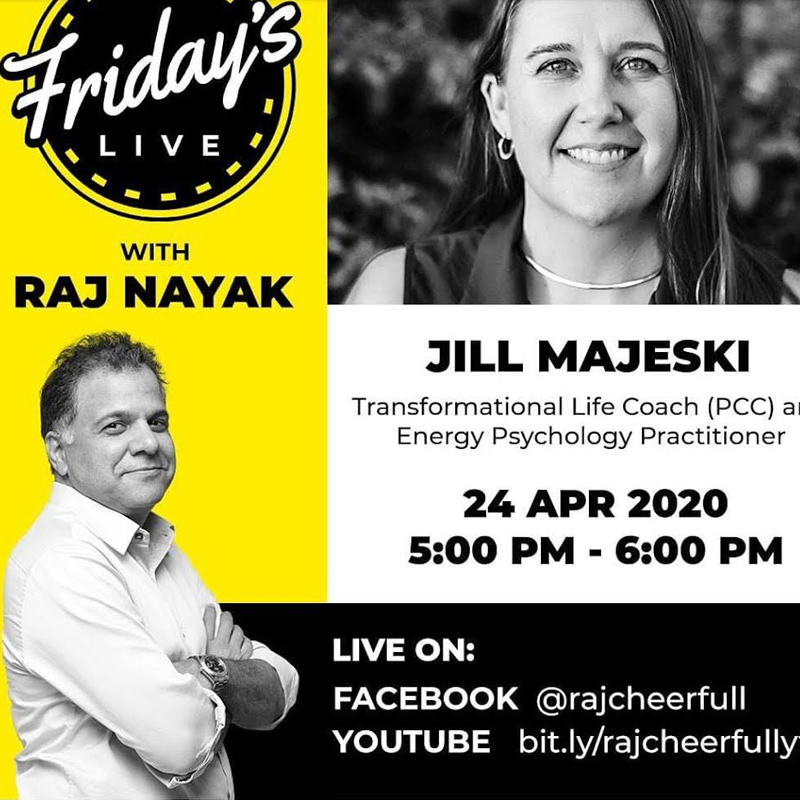
    The hour-long live show will see Nayak speaking to people from a wide range of backgrounds including, but not restricted to, Bollywood, politics, sports, media, etc. The only criterion is that the person has to be interesting or eclectic in his/her field. It will be streamed live on YouTube and Facebook for the first episode on 24 April while viewers can catch Nayak getting up close and personal with his guests on multiple platforms simultaneously in the upcoming episodes.

    “I anyway had the intention of doing a show someday. On my show, I will converse and address aspects of people that aren’t known which is beyond just their professional lives,” Nayak says to Indiantelevision.com.

    His plan is to get 52 guests for a full year edition.

    This show is akin to testing the waters. Eventually, his aim is to try to get a show of his own on TV. “If I feel I am capable to do that and if there is an opportunity and good feedback then I think my relationship with the broadcast industry may help me achieve my aim,” he says.

    Although the launch timing coincides with the COVID-19 pandemic-induced lockdown, Nayak doesn’t want to harp on that but rather make it more positive. While the initial timing of the show is from 5 pm to 6 pm every Friday, that may change depending on factors such as traffic, guest availability and audience research.

    Nayak’s challenge is to research about his guests on an almost stalker-ish level. “I don’t just want to know about their work. I want to know about things like does my guest have a dog and what’s the name of her dog. I want to know the person’s views on politics and many other things. That is the level of research that will go into my shows,” he says.

    Right now, it’s a one-man-army show with Nayak handling all aspects including advertising, marketing, media, guest selection, etc. However, the show is produced by House of Cheer, the media and entertainment company he launched late last year.

    Until lockdown persists, the show will be conducted virtually via Zoom app. A makeshift set in a corner of his home is ready for the live stream. The first episode will feature transformational life coach (PCC) and energy psychology practitioner Jill Majeski. Nayak says he is in the process of identifying other guests for future episodes.

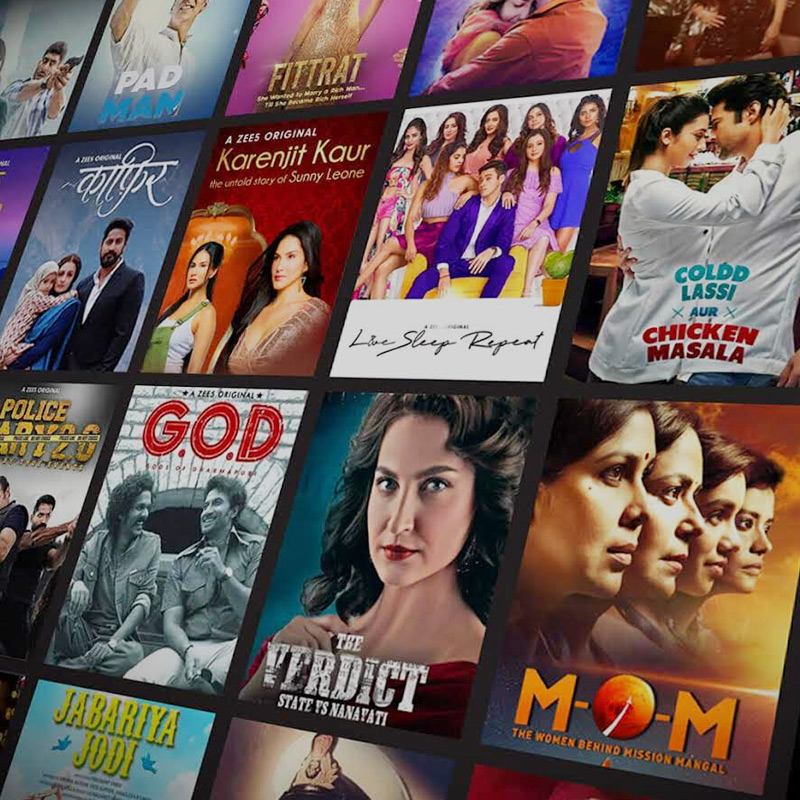
  • ZEE5 emerges as top pick for brands, courtesy user growth, ad-suite, transparent measurement

    ZEE5 emerges as top pick for brands, courtesy user growth, ad-suite, transparent measurement

    MUMBAI: Brands cannot overlook over-the-top (OTT) platforms while planning media mix. Broadcaster-led streaming services like ZEE5, Hotstar, VOOT with their impressive number of monthly active users and large scale of content have started taking away some of the TV ad dollars. But the lack of unified measurement has been one of the major concerns of brands as they want clarity on impact and reach. However, while the industry is grappling with the hardship, ZEE5 has initiated numerous partnerships to offer measurable results to its advertiser community.

    ZEE5 entered partnerships with Moat, a standard verification across the digital industry that measures viewability of video and display ads. The streaming service’s digital creatives are exceeding Moat benchmarks thus giving more confidence to brands that users are spending more time viewing them and ads are reaching completion more frequently. While the Moat benchmark of ad playing to completion is 39.4 per cent, ZEE5 has touched 71 per cent. For Moat’s audibility, the benchmark for the percentage of impressions where the video was audible at a given period of time is 47.5 per cent, while ZEE5 has almost doubled to 93.9 per cent.

    A recent report from Deloitte Global predicted that revenue from ad-supported video services will reach an estimated $32 billion in 2020 whereas Asia (including China and India) will lead with $15.5 billion in revenue in 2020, nearly half of the global total. Although the report came out before COVID-19 crisis and there might be changes in statistics, but the increasing affinity of brands towards streaming services is significantly noticeable. At such a critical juncture, ZEE5 will have an edge over others on the back of credibility from a third-party tool.

    Last year, ZEE5 also integrated with Nielsen to deliver the best accountability for brands and partners on their advertising front. The Nielsen Digital Ad Ratings (DAR) provides a method of measuring online advertising audiences, delivering reach, frequency and gross rating point (GRP) metrics along with demographics like age and gender. Moreover, DAR reports demographic information from Facebook, with Nielsen correction & calibration factors.

    ZEE5 has been taking proactive measures as AVOD business is poised for growth. The Deloitte report also added that these streaming services are in the process of convincing advertisers to shift some of the TV ad budgets to streaming video by placing forward innovative ad models and personalised content. 

    As brands look at more consumer insights and metrics while deciding on marketing mix spends,  ZEE5 also offers data from the Media Rating Council (MRC). MRC is a standard devised to determine whether an ad impression is viewable or not. According to MRC, a display ad will be considered as “viewable” if 50 per cent of the ad creative is visible for at least one second in the viewable space of the browser. ZEE5 is overreaching CTR and VTR also, as per MRC standard. While other OTT platforms have 30-40 per cent VTR, ZEE5 has more than double, ranging between 75-85 per cent. At the same time, ZEE5 achieves 0.5-1 per cent CTR while other OTT platforms attain 0.2-0.5 per cent.

    ZEE5 is leaving no stone unturned to maximise the ROI for brands. It launched an industry-disrupting ad-suite last year which helps deliver brand KPIs on aspects like reach, saliency, lead generation and SOV while allowing for segmentation, personalisation and measurability to ensure higher returns on marketing investments. 

    AdVault helps advertisers to reach its target through a vast range of solutions as per the campaign needs. AMLI5 supports bands to intensify the impact by offering influencers marketing, social media, content marketing, brand integrations, SMS-email campaigns. On the other hand, Play5 helps brands integrate with the content through customised gamification, branded polls and quiz. Wishbox enhances the chart aiming at higher engagement through video commerce. Infonomix leverages the flexibility and effectiveness of Ad Suit to deliver value through action led campaign planning.

    ZEE5’s humungous number of monthly active users have already accentuated its top position in the pecking order of the streaming services. The platform has also been named ‘India’s Most Desired Video Streaming Brand’ by TRA’s Most Desired Brands 2020 report. The smart user interface and depth of content across languages have taken it beyond the premium tier easily. ZEEL’s big bet on OTT has undoubtedly emerged as a way for brands to reach masses on the back of its content, tech and data.