Category: Over The Top Services

  • Petition filed against new intermediary and digital media rules before Delhi HC

    Petition filed against new intermediary and digital media rules before Delhi HC

    KOLKATA: Last month, the Centre notified new rules for digital media which caused a stir amid the industry’s online content providers. Now, a petition has been moved before the Delhi high court challenging the new rules under the Information Technology Act to regulate internet intermediaries, over-the-top (OTT) platforms and digital news media.

    The plea has been filed by the Foundation of Independent Journalism. It will be heard on 9 March by a division bench headed by chief justice DN Patel.

    Several journalists, lawyers and activists have decried the rules as an attempt to muzzle freedom of press by laying the ground for tightening executive control over digital media. The Editors Guild of India last week demanded the repeal of these rules.

    The government laid down new rules for social media platforms on 25 February, making a distinction between social media intermediaries and significant social media intermediaries. In a gazette notification, it also specified five million registered users in India as the threshold for significant social media intermediaries.

    “Social media platforms have done exceedingly well in terms of business and the number of users, while also empowering ordinary Indians. But it is very important that crores of social media users must be given a proper forum for resolution of their grievances against use and abuse of social media in a time-bound manner,” said union information technology minister Ravi Shankar Prasad.

    Each significant social media intermediary would be required to appoint a chief compliance officer, a nodal contact person for 24×7 coordination with law enforcement agencies and a resident grievance officer. All three would be resident Indians. They will also have to publish a monthly compliance report mentioning the details of complaints received and action taken.

    They will also have to give a prior intimation, in cases where they remove/disable access to any information (social media post) on their accord. So, the platforms will now have to communicate to the users, the grounds and reasons for such action and give users adequate opportunity to dispute the action taken by the intermediary.

    The government also asked the significant social media intermediaries providing services primarily in the nature of messaging to enable identification of the first originator of the information.

  • Netflix India in step with global trend of nearly 50% female representation: Srishti Behl Arya

    Netflix India in step with global trend of nearly 50% female representation: Srishti Behl Arya

    KOLKATA: Netflix added inclusion as its cultural value in 2017. Recently, the streaming giant released its first ‘inclusion report’, which revealed that women comprised 47.1 per cent of its workforce. The company, a vocal proponent of gender equality, has featured women in the lead role in many of its original shows and films as well. The balance between an inclusive internal community and female representation on screen is being followed in India as well, Netflix India international original film director Srishti Behl Arya said.

    Since joining Netflix in 2018, Behl Arya has been front and centre in building the streamer’s local content library. She has seen the industry grow and evolve – from the time when there were only a handful of women on film sets, before streaming platforms had entered the scene. She used to be the only woman on set as an assistant director; things have come a long way since then, but there is still a lot to be done. For starters, said she, we need to reach a point when we stop referring to “women director” as something extraordinary.

    “As far as Netflix is concerned, we have even put out an inclusion report globally, we are showing that almost 50 per cent of our workforce is women and that’s the same thing we are seeing in India as well. Not just in the workforce but also in leadership positions,” Behl Arya shared during a virtual interaction. In 2021, the company will be working with 18 women directors and it is already collaborating with over 1,000 women creators in various roles.

    She further added that last year, 50 per cent of Netflix’s film titles had a woman producer or a woman director. Nearly half of its entire content had women playing central roles. Moreover, the company is giving equal opportunity to newer people as well, rather than riding on established names alone.

    “As you see all the members, you see all our subscribers are divided between male and female. When the population of the world is divided in such a way, it’s not right to not represent half the population of the world. That’s a very logical next step for us. And I think what has happened is more and more female members are also finding their voice now. That itself is giving rise to more and more stories about women and more stories, very importantly, from women’s point of view,” she noted.

    Behl Arya reemphasised how Netflix is committed to diversity of all types. According to her, it will come by including more and more voices and stories, as more people want to see themselves reflected on screen.

    The Netflix executive also said the change is also about giving women access to tools to aid their quest for equality and representation. The streaming giant recently created a $100 million global fund for creative equity aimed at more inclusive pipelines behind the camera. $5 million of that fund will be deployed for women all over the world. As part of the initiative, Netflix will be conducting screenwriting workshops for women over the course of a year. In India, the company had many first time female producers, writers, directors.

    “The idea is to enable women to come forward and provide comfort for them to share their stories and that is something that we are actively working on. In fact, right now, in one of our titles, we have a first-time female cinematographer,” she commented.

    There is a common notion that companies hire women leaders in tried and tested roles. However, the scenario is entirely different for Netflix. “We have great representation in the tech side at our Los Gatos office. We have lots of women working on our film side, all our regions, we have them in our production management, VFX, we have women working in marketing and different aspects of it. India office is also following the global trend of close to 50 per cent representation of females. There is no function we can say that is not touched by women,” she remarked.

    While many OTT platforms boast their ratio of female viewership, Netflix India takes a different approach. Behl Arya clarified that Netflix does not divide viewers on the basis of gender, age. It’s the viewing of the title that matters.

    “We have the same high bar for all the countries we are programming and for all the employees and the same standard, we want to maintain all our subscribers. It helps us think things a little differently from how other traditional players think,” she stated.

    Overall transformation in the industry, including at Netflix, was not easy to come by. Women have increasingly stepped up in uncomfortable circumstances to prove their competence. Along with that, men also frequently supported and enabled them.

    “As we break more and more bastions, we will find more and more opportunities to prove how good we are and we are here to entertain and do it really well and it just makes sense to work with more and more people bringing in the diversity,” Behl Arya shared on a confident note.

    Despite the positive changes, one may observe there are only a few women in the upper echelons, which applies to video streaming services too. However, Behl Arya begged to differ. She cited the example of industry leaders like Ekta Kapoor who runs the OTT platform ALTBalaji; Reliance media segment has Jyoti Deshpande at the top, south-based Annapurna Studios CEO Supriya Yarlagadda, ex-Sony Pictures Networks’ (SPN) film production division head Sneha Rajani. Having said that, she raised an important point.

    “There are women in the position but I think that we are still not used to seeing them so they stand out. That’s exactly my dream is that one day gender will not stand out because it will be so common,” she summed up.

  • SC grants interim protection to Amazon Prime Video’s Aparna Purohit

    SC grants interim protection to Amazon Prime Video’s Aparna Purohit

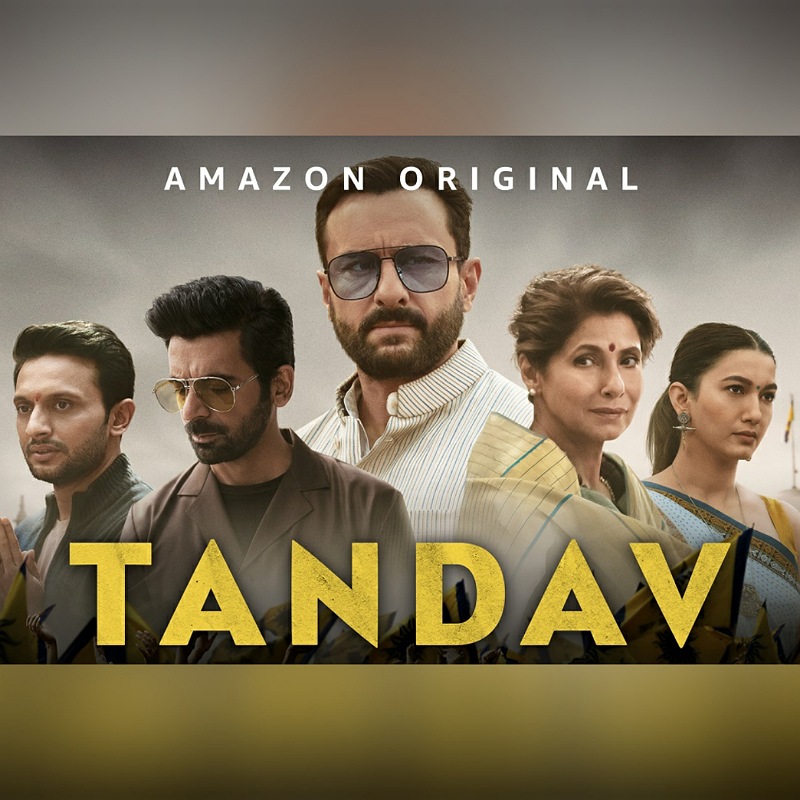
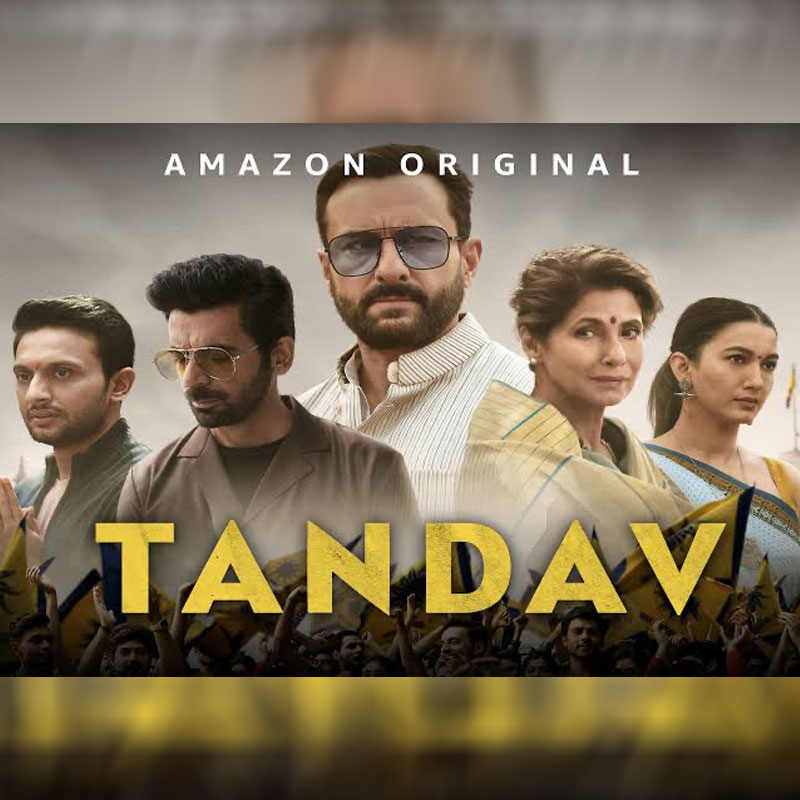
    New Delhi: The Supreme Court on Friday granted interim protection from arrest to Amazon Prime Video's India originals head Aparna Purohit in the FIR registered by Uttar Pradesh police in connection with the web series, Tandav.

    The court was hearing Purohit’s appeal challenging the Allahabad high court order which had denied her petition for an anticipatory bail in FIR filed in greater Noida, reported Bar & Bench. The protection was granted subject to the condition that she would cooperate with the investigation.

    The top court also observed that the latest guidelines issued by the Centre to regulate the content on the over-the-top (OTT) platforms were insufficient. "We went through the technology intermediary guidelines. But there's no teeth. No power of prosecution. These are just guidelines. No mechanism to control it. Without legislation you cannot control it," the bench noted.

    Solicitor general Tushar Mehta informed the court that the government will prepare a draft law and submit it before court for consideration.

    Tandav, a nine-episode political thriller on Amazon Prime Video, landed in controversy after some Hindu groups accused the makers of hurting religious sentiments through certain scenes which allegedly mocked Hindu deity Shiva. This led to registering of FIRs in several cities, barely days after it was released on the OTT platform on 15 January. Amidst the furore, director Ali Abbas Zafar has already issued an unconditional apology on social media stating that the makers have utmost respect for the sentiments of the people of our country. 

    Amazon Prime Video too, on multiple occasions, has apologised to viewers whose sentiments were hurt by certain scenes in the show. Additionally, the objectionable scenes were either removed or edited, the company stated. “Amazon Prime Video again deeply regrets that viewers considered certain scenes to be objectionable in the recently launched fictional series Tandav. This was never our intention, and the scenes that were objected to were removed or edited when they were brought to our attention. We respect our viewers’ diverse beliefs and apologised unconditionally to anyone who felt hurt by these scenes,” the streamer said in a statement.

  • SC favours OTT guidelines, says screening needed

    SC favours OTT guidelines, says screening needed

    KOLKATA: The Supreme Court on Thursday remarked that there should be pre-censorship of OTT content like films while hearing a plea by Amazon Prime Video India originals head Aparna Purohit. She had moved the apex court challenging Allahabad high court order denying anticipatory bail to her in connection with the Tandav controversy.

    "We are of the view that some screening of OTT content should take place,” the bench comprising justices Ashok Bhushan and S Subhash Reddy said. "In fact, some platforms even show pornography.”

    Being informed of the new rules announced by the government to regulate OTT content, the bench directed solicitor-general Tushar Mehta to place the rules on record and circulate it.

    Senior advocate Mukul Rohatgi, appearing for Purohit, stated that it was shocking that she, neither a producer, nor an actor, has still been made an accused in the cases against Tandav. The Allahabad high court had rejected Purohit’s bail plea on 25 February, pronouncing that “…the applicant had not been vigilant and has acted irresponsibly making her open to criminal prosecution in permitting streaming of a movie which is against the fundamental rights of the majority of citizens of this country.”

    The matter will be again taken up on Friday.

    Tandav, which premiered on Amazon Prime in January this year, has been embroiled in a series of controversies. A petition was filed against the makers and actors for hurting religious sentiments by mocking Hindu deities in some scenes of the web series. They were also accused of showing the Uttar Pradesh police in bad light. Multiple complaints – including three FIRs in Uttar Pradesh – were filed against the makers of the show as well as the actors involved.

    Yesterday, Amazon Prime Video once again issued an unconditional apology for the “objectionable” scenes in Tandav, and reiterated that all such scenes were deleted or edited.

  • Epic On now streaming on Airtel Xstream platform

    Epic On now streaming on Airtel Xstream platform

    KOLKATA: Premium OTT platform Epic On has tied up with Airtel Xstream to offer its users the Epic On subscription at a special price.

    The partnership would allow Xstream users to access the comprehensive library of thousands of hours of titles ranging from movies, TV shows, and documentaries.

    There is a constant rise in demand for OTT from not just the urban and tier-1 cities, but also within the tier-2 and tier-3 cities across India. The upsurge continued through the year 2020 as outdoor entertainment venues remained under an extended lockdown. Amid this, streaming platforms have grown phenomenally and consumers have re-calibrated their expenses from outdoor entertainment to OTT subscriptions. 

    IN10 Media Network managing director Aditya Pittie said, "IN10 Media Network is committed to engaging with its audience across varied geographies and demographics through its outstanding content. With handpicked TV shows, documentaries, and movies we have witnessed the franchise of Epic On grow, and Airtel’s reach and distribution will further bolster its growth.”

    Epic On chief operating officer Sourjya Mohanty said, “We are elated to collaborate with Airtel Xstream and offer our content on their platform. This partnership will allow us to cater to a larger segment of entertainment seekers across India by augmenting our reach in tier II and III markets. Through the discounted subscription model on the Airtel Xstream platform, we will be able to provide our premium content to a new set of the digital audience.”

    Airtel Xstream customers can now avail of the Epic On subscriptions at a discounted price. A one-month Epic On subscription will cost the Airtel Xstream customers Rs 29 whereas and annual subscriptions are available at Rs 249.

  • ShortsTV forays into OTT space with Airtel Xstream

    ShortsTV forays into OTT space with Airtel Xstream

    KOLKATA: ShortsTV has partnered with Airtel to launch its first video-on-demand service on Airtel Xstream that can be enjoyed on both the mobile app as well as television screens. ShortsTV is now available at a nominal subscription of Rs 99 per month and Rs 499 for a year.

    ShortsTV through Airtel Xstream offers an expansive catalogue of quality short films that includes shorts which were nominated for and won at The Academy Awards, Cannes, BAFTA, and high-quality CGI animation from international independent and local Indian filmmakers. Equipped with a specially curated library of over 4,000+ titles from across the globe spanning genres such as comedies, musicals, documentaries, thrillers, dramas, and animation, the service is here to allure all the short film fans and offer a seamless binge-watching experience. The catalogue includes short films across English, foreign, and local Indian languages, including Hindi, Gujarati, Bengali, Marathi, Kannada, Tamil, Malayalam and Telugu.

    ShortsTV chief executive Carter Pilcher said, “TV and mobile phones are both integral to the Indian viewing experience—a perfect combination for ShortsTV and our ground-breaking short movie entertainment. ShortsTV is present in over 60 million TV households in India already, and our partnership with Airtel Xstream will bring us to Airtel’s 340 million subscribers. From Oscar nominated movies to travel documentaries to exciting new films from India’s hottest new directors – ShortsTV is amazing entertainment.”

    “Short films are slowly making their presence felt among mainstream cinema, thus adding momentum to the growth of shorts on the Indian movie map. At ShortsTV, we always believed in providing a global platform for filmmakers to showcase their work since the audience's affinity towards the short format is growing. Understanding the rise in content consumption on the small screen, our partnership with Airtel Xstream will not only help us extend our reach into the Indian heartland but also provide an opportunity for Indian filmmakers to expand in India and beyond,” ShortsTV Asia president Tarun Sawhney said.

    ShortsTV’s catalogue of short films features critically acclaimed stars such as Benedict Cumberbatch, Emilia Clarke, Jude Law, Nawazuddin Siddiqui, Naseeruddin Shah, Radhika Apte, and others. Some of the unique shorts available on the platform include internationally popular Oscar winner Skin, BAFTA nominee The Voorman Problem, Cannes Jury prize winner Swimsuit 46.

    The top short films from best of India and Latin America like Natkhat starring Vidya Balan, Shameless starring Sayani Gupta, Safar starring Shweta Tripathi, Soundproof starring Soha Ali Khan, Trapped starring Abhishek Banerjee, The Lillies Seller will be showcased as part of Worldwide Film Festival from 24 to 27 February. In addition to an enviable selection of short films, the service also features various segments on local film festival coverage, film school vignettes, ‘making-of’ features, interviews with directors, actors, and other leaders in the industry.

  • SonyLiv’s Scam gets season two, will tell The Telgi Story

    SonyLiv’s Scam gets season two, will tell The Telgi Story

    MUMBAI: After delivering a monster hit with Scam 1992: The Harshad Mehta Story, SonyLiv and Applause Entertainment are looking to recreate the magic with the second season of the Scam franchise.

    Tentatively titled Scam 2003: The Curious Case of Abdul Karim Telgi, the show will be adapted from the Hindi book Reporter ki Diary authored by journalist Sanjay Singh, who broke the story of the 2003 stamp paper scam by notorious counterfeiter Abdul Karim Telgi. 

    The series promises to be an intriguing watch as it will capture the life of Telgi, born in Khanapur in Karnataka, and his journey to becoming the mastermind behind one of India’s most ingenious scams spread across multiple states which shook the entire country. It is estimated that the scam value was allegedly around Rs 20,000 crores.

    Applause has roped in the talented Kiran Yadnyopavit, known for his contribution to the Marathi film industry, to write and develop the story along with author Sanjay Singh, with Hansal Mehta back at the helm. 

    Applause Entertainment CEO Sameer Nair said, “Scam 1992 has helped establish a solid ground for the Scam franchise where we aim to tell stories about the various scams that our country has witnessed, the people behind it, their motivations and machinations. The success of Scam 1992 endorsed our belief about the audiences’ interest in such stories. We are extremely thrilled to announce The Telgi Story as the next season. There is some great potential we see in this story and are absolutely delighted to partner once again with StudioNext, SonyLiv and Hansal Mehta in taking forward this franchise.”

    Sony Pictures Networks India Sony Entertainment Television, SonyLiv & StudioNext EVP & business head Danish Khan said, “We are delighted to partner with Sameer Nair and his fantastic team at Applause for season two of Scam. We look forward to collaborate with Hansal Mehta to bring an absolutely compelling show for our SonyLiv premium subscribers.”   

    Director Hansal Mehta said, “I am delighted to be back with exploring yet another fascinating story following the immense success of Scam 1992. The new season of this franchise will focus on another riveting story that shook the country a few years ago – the stamp paper scam. I am looking forward to collaborating again with team Applause, SonyLiv and StudioNext, partners who think alike and encourage creative thought.” 

    Scam 2003: The Curious Case of Abdul Karim Telgi, is being produced by Applause Entertainment in association with StudioNext. The riveting series will be hitting the shoot floor later this year and stream exclusively on SonyLiv.

  • Bombay HC orders Amazon Prime Video to take down Telugu film ‘V’

    Bombay HC orders Amazon Prime Video to take down Telugu film ‘V’

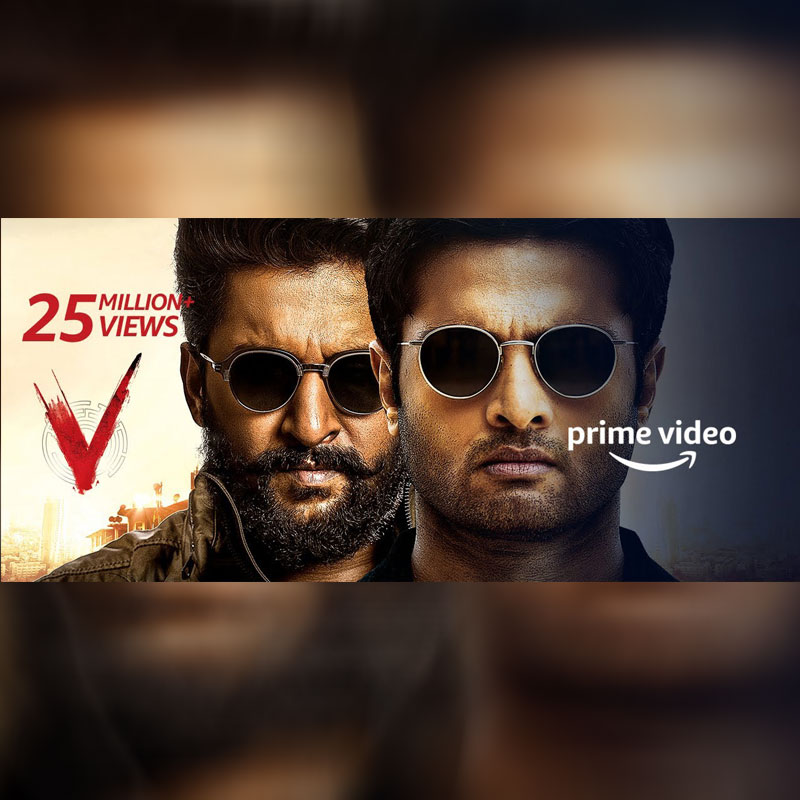
    NEW DELHI: The Bombay high court has directed OTT platform Amazon Prime Video to take down Telugu movie V following a defamation suit filed by a Mumbai-based actor. Sakshi Malik has sought the deletion of a scene in the film in which her portfolio picture was used without her permission. The court has ordered that the film be restrained until the scene in question is deleted.

    V, starring Telugu actor Nani and Aditi Rao Hydari, released on 5 September 2020 and has been removed from the streamer following the high court’s order. A single bench headed by justice GS Patel has asked the makers of the film, Venkateshwara Creations, to take down the telecast of the film in all versions, irrespective of language and subtitles until the said deletion, reported Livelaw. 

    In her complaint, Malik stated she had commissioned a photo portfolio which was later shared on her Instagram account in 2017. The actor accused Venkateshwara Creations of using the picture in the movie V to depict a commercial sex worker.

    The court order read, "It seems to me self-evident that it is not possible to use the image of any person for a commercial purpose without express written consent. If images are to be used without such express consent, they must be covered by some sort of legally enforceable and tenable licensing regime, whether with or without royalty. Simply using another's image, and most especially a private image, without consent is prima facie impermissible, unlawful and entirely illegal. In a given case, it may also be defamatory, depending on the type of use.”

    The actor’s counsel, Alankar Kirpekar and Saveena T Bedi, argued that the actions by the filmmakers resulted in an unauthorised invasion of privacy. The judge said, “The fact that the image has been illicitly used is bad enough. It only makes matters worse when used in a plainly derogatory and demeaning vein.”

    The judge further added that the defendants will have to show the actor and her lawyers the altered portion before the court allows its re-release on Amazon Prime Video. 

  • Guest column: Implications of the new digital media code for online content platforms

    Guest column: Implications of the new digital media code for online content platforms

    NEW DELHI: The Information Technology (Intermediary Guidelines and Digital Media Ethics Code) Rules 2021, framed under the Information Technology Act 2000, were notified on 25 February 2021. The Rules apply to publishers of online curated content (OCC), intermediaries, including social media intermediaries and significant social media intermediaries (ie those with 5,00,000 or more users), and publishers of digital news and current affairs.

    The rules have been issued amidst the backdrop of, and perhaps in response to, various public interest litigation matters that remain pending across the country, alleging that content published on significant OCC platforms is seditious, defamatory, contemptuous, infringing, obscene, offensive, and, or, is otherwise illegal.

    Regulation of OCC platforms

    The rules prescribe a Code of Ethics and guidelines for OCC platforms and publishers of digital news and current affairs content. These entities and their compliance with the rules will be overseen by the ministry of information and broadcasting (MIB).

    The rules prescribe a three-tier regulatory mechanism to ensure publishers (including OCC platforms) comply with the code. Further, the factors to be considered before publication of content on an OCC platform include the effect of the content on the sovereignty of India;  whether it could affect friendly relations with another state, incite violence or disturb public order; whether it could affect India’s multi-religious and multi-racial fabric; and, whether its publication would otherwise be prohibited under any law for the time being in force.

    The rating categories are to be assigned to the content after considering the depiction of themes and messages, violence, nudity, sex, language, drug and substance abuse, horror within the content and the target audience of the content.

    Implications of the rules on OCC platforms in India

    Under the Rules, ‘online curated content’ includes content which is owned, licensed, or contracted to be transmitted, and is made available on demand, including through subscription. The definition of ‘publisher of online curated content’ specifically excludes individuals who are not transmitting content in the course of a systematic business, professional or commercial activity.

    The Rules apply only to persons engaged in the distribution of content for commercial purposes, and clearly are not intended to regulate user-generated content uploaded on social media platforms. On a plain reading, it appears that the Rules may also regulate channels of social media influencers and celebrities on significant social media platforms such as YouTube, as these channels may be considered publishers of OCC. However, the rules do not make any specific reference to individuals generating content or social media influencers, and the position with respect to social media influencers is unclear. For instance, in the absence of a clarification, content on YouTube channels such as IISuperwomanII would pass the test of being ‘curated catalogues’ as these channels usually contain a mix of comedy sketches, podcasts, interviews, short films and news critiques, addressing an identified audience.

    The rules do not expressly address situations where news may be disseminated through non-traditional channels or could be considered to have been disseminated through an OCC platform (for example, Last Week Tonight on Disney+ Hotstar and the ScoopWhoop Unscripted YouTube channel). In theory, such OCC publishers may be required to comply with the entirety of the code, ie part I which addresses publishers of digital news and current affairs and part II which addresses OCC.

    The three-tier regulatory mechanism is similar to the self-regulation model that is already in place for non-news and news television broadcasters, and the rules have, therefore, been promulgated as an attempt to provide a level playing field to digital content platforms as opposed to the traditional forms of television and cinema broadcasting.

    The rules prescribe sanctions in the form of warning, requiring an apology, reclassification, editing, modification, deletion, and even blocking of access to the publisher of content violative of the rules. The new regulations do not suggest content censorship, and only prescribe matters to be considered before classifying and publishing content. Given that television content in India is quite conservative in comparison to the content currently available on OCC platforms, there is apprehension amongst the stakeholders that OCCs may be subjected to a similar level of ‘excessive’ censorship. However, OCC platforms have a distinct advantage over television – sophisticated software that enables age-gating of content and creation of buckets of content for different age groups. The interdepartmental committee of the MIB should bear this advantage in mind when issuing directions, orders or penalties under the rules.

    The rules may encourage OCC platforms to err on the side of caution and restrict the publication of content where apprehensions may arise regarding that content’s rating. This approach may adversely affect content creators’ constitutional right to freedom of speech and expression. In this context, it will be interesting to see whether the rules do, in fact, level the playing field not only in terms of regulation of various media but also result in availability of similar kinds of content across all modes of distribution. In any event, the rules may provide a much-needed structure to the OCC space.

    (The note has been authored by Kaushik Moitra, partner and Karnika Vallabh, associate at Bharucha & Partners. The views expressed in this article are their own and indiantelevision.com need not subscribe to them.)

  • Pay-per-view takes off in India, but has a long way to go

    Pay-per-view takes off in India, but has a long way to go

    KOLKATA: While the last year has seen the entry of new over-the-top (OTT) players, it has witnessed the burgeoning of new business models as well, pay-per-view being one of the most noticeable trends. A number of new entrants, along with some of the existing over-the-top players, launched this transactional model. Very recently, online ticketing player BookMyShow and telecom player Vi introduced their own on-demand services under the TVoD category.

    Despite it being the latest bandwagon, experts are sceptical about pay-per-view’s success in the market. For the value-conscious Indian viewers, who are much more inclined to pay for bundled catalogues, this model will tempt only a minuscule set of audiences. But with effective pricing and marquee content, pay-per-view may increase its attractiveness.

    Vi announced the launch of its pay-per-view streaming service, available on Vi Movies and TV app, in collaboration with Hungama Digital Media. Vi customers will be able to rent premium Hollywood movies at Rs 120 and others at Rs 60 for a period of 48 hours.

    Media expert Rajiv Sharma thinks content under this model should not disappear so soon. According to him, the model can work better if the library is phenomenal, and moreover, whatever is being picked up should be available for long term, at least for six months.

    While movie theatres being shut for a long time led to a line-up of movies pending releases, there is a huge backlog that will not hit theatres right now for multiple reasons. Hence, some of the pay-per-view platforms feel that consumers might shell out for watching movies at home, Elara Capital VP research analyst (media) Karan Taurani said. But he also pointed out that most Indians pay for cinemas considering it as an outing and for the overall experience. So, it can be challenging to get consumers to just pay for one content.  He also mentioned that the model has been tried and tested by DTH players but they have not been able to scale it up.

    ShemarooMe was one of the first players to launch a pay-per-view service ShemarooMe Box Office during lockdown. Zee Entertainment Enterprises Ltd rolled out Zee Plex in October. In early February, BookMyShow’s streaming service debuted under the TVoD model, offering 600 movie titles and 72,000 hours of content. Notably, BookMyShow Stream allows users to either buy or rent a movie and the price point ranges between Rs 40 to Rs 700. Some smaller regional players are also testing the waters with this model.

    Kuarte Digital’s Uday Sodhi noted that the pay-per-view model is not new in India. Earlier, telecom operators had tested this model or other aggregators like Apple also went for this pricing model, albeit OTT platforms have been trying it for the first time in the wake of Covid2019.

    “This model is still at a very nascent stage. Also, if you look at BookMyShow streaming service, this is more of an evolved ticketing system for movies. TVoD is a good proposition for live events, sports coupled with effective pricing. It is very unlikely for major OTT platforms to choose TVoD for mainstream entertainment content,” Sodhi added.

    However, according to Sharma, if pay-per-view is strategised properly, it will give users more flexibility and control over payout. An average user sometimes watches only one-two content in a month paying for the library. With a proper price gap, it might attract that part of the user base. Even so, every piece of content cannot be a marquee property, “killer content” is very rare, which is one of the biggest gaps for this model.

    Among the top players, SonyLIV is dipping its toe in the pay-per-view pool by introducing WWE to its viewers with the WWE Network pack curated specially for fans of pro wrestling. Most experts are of the view that the chances of major platforms exploring this model are very rare. Instead, they will look at innovative comprehensive pricing like Netflix did with its mobile only plan, Taurani stated. To reach critical mass, the subscription should be the focus area for bigger players as of now, experts believe.