Category: Over The Top Services

  • Netflix & Gobelins expect big things from young Indian brains in animation industry

    Netflix & Gobelins expect big things from young Indian brains in animation industry

    NEW DELHI : Animation and visual effects have become an integral part of storytelling in films, and it is practically impossible to think about a movie without special effects and computer graphics. In an attempt to find and nurture young Indian brains in the animation industry, OTT giant Netflix, in association with Gobelins and Amity School of Film and Drama conducted a 'visual storytelling' animation course from 15 to 19 March 2021. 

    The animation course helped participants to understand the art of storytelling using images, and the program indicated that India is soon going to become the powerhouse of the animation and VFX industry in the future. 

    Most participants in the course were graduates and teachers from famed animation schools in the country. 

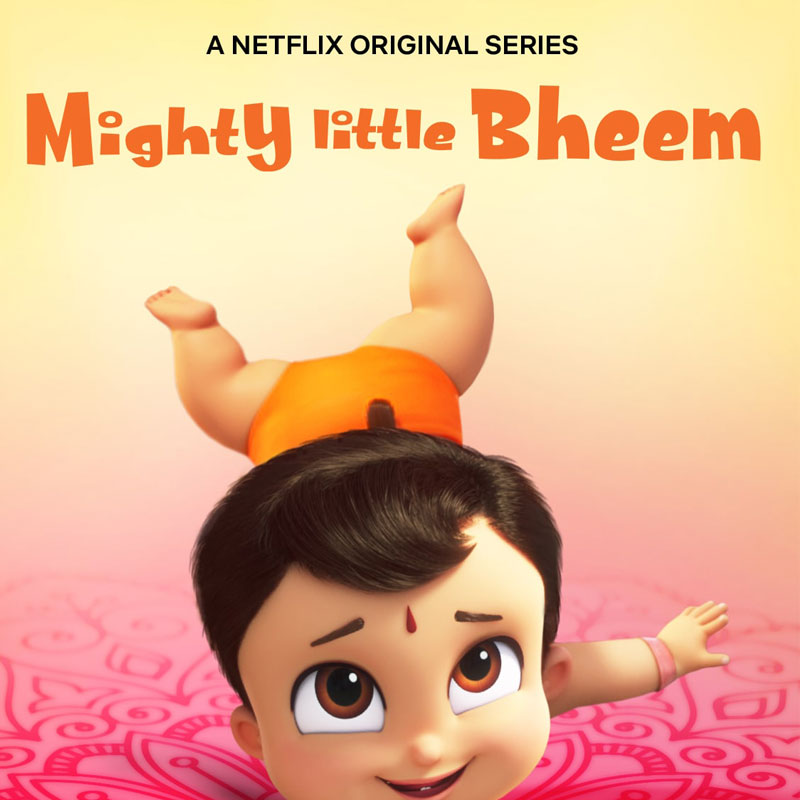
    During the session, students were introduced to storyboarding and animation principles. Some of the activities included sessions on animation principles, storytelling fundamentals, character design, storyboards, and gesture design. There were guest lectures by expert animation studio heads including Guillaume Dousse (Sun Creature) and Anish Mulani (Fractal Picture). The group also heard from Green Gold Animation founder Rajiv Chilaka, who created Netflix’s beloved preschool hit series Mighty Little Bheem. 

    Students also received personalised coaching from faculty, helping them develop personal projects for formats across film, television, and animation. As OTT giants like Netflix and institutions like Gobelins L'école de L'image are concentrating on India to pick impeccable talents, experts believe that it could celebrate India’s storytelling culture and help bring more of it to the world. 

  • As podcasts take off in India, how can the medium win more consumers & brands?

    As podcasts take off in India, how can the medium win more consumers & brands?

    KOLKATA: There are stories to listen to, lessons to learn, advice to follow – podcasts have all sorts of content in store. The plethora of genres, the intrusive experience are among many reasons that have made the audio format fairly popular all across the world, especially with millennials. Though podcasts kicked off the block in the Indian market relatively later, they have nevertheless amassed a loyal following here. India has emerged as the third largest podcast listening market, after the US and China, according to reports.

    Podcasts might be relatively novel and known to a fewer number of people here, but the country has a long history of listening to content disseminated through the spoken word. Audio has been widely accepted by the Indian audience as well as brands at large. But are businesses showing interest in the podcast trend? Aawaz.com CEO Sreeraman Thiagarajan believes the medium offers an interesting avenue to reach consumers.

    “Every single person loves anything audio whether its podcast, whether its audio stories, audio shows, they are really committed to listening to those,” said Thiagarajan during a panel at Pixels 2021, hosted by IAMAI and moderated by Hubhopper CEO & founder Gautam Raj Anand.

    “It may not be as big as video. Podcast definitely appeals to an affectionate audience. It is longer in format and can be curated by the users as per their own choice. You need to think of telling an audio story, creating compelling audio experiences, living your brand into it and not just think of it as ad insertions, not equate it with a display campaign, performance campaign,” he added.

    Gaana podcasts & monetisation products VP Vipul Bathwal noted that when music streaming platforms introduce podcasts, there is some sort of captive audience available to leverage the medium. It may not be as large as the user base that turns up solely for music, but there is an overlap that can be leveraged. The role a platform like Gaana has to play, he said, is of taking this format to a larger audience.

    Although a small portion of music listeners engage through podcasts but those who do, they engage very deeply, shared Bathwal, basing this nugget off of the trends they have witnessed. Hence, the metric brands should look at advertising via podcast should be more related to a very strong brand recall from the audience which is highly engaged but may not have the same sort of volume as music. It is more about quality of the audience rather than the quantity, he explained.

    “If I am an advertiser, my goal is to reach the audience. Most of our targeted campaigns are across formats. Music is bigger than any format. But each format offers some sort of advantages in exposing the brand to a certain set of audience but does the brand care through which format I am reaching? Not till now,” he highlighted.

    Opportunity for creators has also increased as podcasts are easier to produce. Hungama senior vice president Soumini Sridhara Paul mentions that good storytelling and authenticity are extremely important for this format. It is also important to build a community and good content library for small podcasters to monetise their content. Moreover, they should look at collaborations as well.

    At the initial stage, podcasts are going to need some popular faces to get more attention from consumers as well as to give ideas about what can be created. From a business point of view, and platform point of view, there is a need to have content with popular faces whether that is from Bollywood or other fraternities. While creativity and uniqueness are mandatory, there is no harm in a novelty value, be it face or a name, opined Paul.

    While all other online content is gradually marching towards interactivity with the audience, interactive podcasts are still a tough nut to crack, mentioned Thiagarajan. Either there is synchronous communication like Clubhouse or asynchronous communication like podcasts. Anything that comes in between should look at features like polls, Q&A, comments for interactive experience, he suggested. Another way to do this is creating a podcast by getting people to offer ideas on what they want to hear. However, podcast as a content format is meant to be heard uninterruptedly, she emphasised.
  • Discovery+ now available on Jio set-top box for JioFiber users

    Discovery+ now available on Jio set-top box for JioFiber users

    KOLKATA: Starting today, SVoD streaming service Discovery+ will be available on the Jio set-top box. Through this partnership, Discovery+ will bring to JioFiber users its world-class content across 40+ genres such as science, adventure, food, lifestyle animation among others.

    The streaming app has launched on JioFiber with an impressive line-up of hundreds of marquee shows across 60 different sub-genres and in multiple languages including Hindi, English, Tamil, Telugu, Malayalam, Kannada and Bengali.

    The partnership will give JioFiber customers an opportunity to access Discovery Network’s premium shows and specials including the incredibly successful Into The Wild series featuring superstars Rajinikanth and Akshay Kumar; some of the greatest hits like Man vs Wild, Gold Rush, Expedition Unknown, 90 Day Fiancé, How The Universe Works, among others as well as popular Indian titles like Breaking Point, Revealed: Rashtrapati Bhavan, Himalayan Tsunami, and India 2050, to name a few. Consumers will also be able to access all the latest discovery+ originals such as, Vande Bharat Flight IX1344: Hope to survival, Secrets of Sinauli, Mission Frontline, Super Soul and Ladakh Warrior that debuted over the past couple of months.

    Discovery direct-to-consumer APAC head Issac John said, “We believe that discovery+ is a product for every Indian household. Our partnership with Jio presents a distinct opportunity to take discovery+ and its repository of incredible storytelling to deeper pockets of the country facilitated by Jio’s unparalleled reach and remarkable service.”

    All new and existing JioFiber users on Rs 999 and above plans can enjoy world-class, real-life content by downloading the discovery+ app on the Jio app store.

    The news comes a day after discovery+ announced a high-volume, multi-territory deal with leading independent distributor All3Media International. More than 250 hours of premium non-scripted content features in the acquisition, including Race Across the World, Naked Attraction, The Undateables and titles from All3Media International’s Gordon Ramsay portfolio.

  • Chingari ties up with MorningStar Records to fortify regional reach

    Chingari ties up with MorningStar Records to fortify regional reach

    NEW DELHI: Homegrown short video platform Chingari has entered into a partnership with MorningStar Records, an independent platform for artists in Punjabi, Haryanvi, Bhojpuri, Indiepop, and other genres.

    The tie-up is aimed at bringing unexplored talent from India's massive languages market closer to a wide audience. Over 90 per cent of the Indian population resides in tier-2, 3 and 4 cities. This population is bursting with talent that can and should be tapped for global viewership, said the company in its media statement. The platforms will cater to a host of Indian languages and styles, including Haryanvi, Bhojpuri, Punjabi, Rajasthani, Garhwali, Gujrati, Indie-pop, and Desi hip-hop.

    "The association is an excellent opportunity to promote the regional artistic talent of India. We believe that the right talent should be valued, no matter where it comes from. Both Chingari and MorningStar Records aim to provide a neutral platform to all regional and independent artists who dream to make it big but are looking for support,” said Chingari app co-founder & CEO Sumit Ghosh.

    “The partnership gives us a big reach and helps us connect with upcoming talent. We, at Morningstar Records, promote independent artists and content creators in the regional music space,” added Morning Star CEO Sahil Gupta.

  • OTT regulation: SC stays all petitions in high courts

    OTT regulation: SC stays all petitions in high courts

    KOLKATA: The Supreme Court has stayed all proceedings dealing with petitions filed on the matter of content regulation on OTT platforms. The court will hear the matter in two weeks after Holi. 

    A bench headed by justice DY Chandrachud passed the order while hearing a plea by advocate Shashank Shekhar Jha, appearing for Justice for Rights Foundation, that has sought the establishment of an autonomous body for monitoring of content on online video streaming services.

    Earlier, the central government filed a petition seeking transfer of OTT related petitions pending before various high courts to the Supreme Court. The apex court had issued a notice in this regard. However, the Punjab and Haryana high court continued hearing the case on merits, solicitor general Tushar Mehta submitted.

    Now, the court has clearly mentioned that all the proceedings of such petitions in lower courts across India would be stayed for now.

    Meanwhile, the government has informed apex court in an affidavit that the Information Technology (Intermediary Guidelines and Digital Media Ethics Code) Rules, 2021 were framed upon receiving several complaints from the public as well as lawmakers regarding content streaming OTT platforms.

    The affidavit also mentioned that digital or online media, films and audio-visual programmes made available by online content providers, news and current affairs content on online platforms have been brought under the purview of the ministry of information and broadcasting (MIB) last year.

  • Online video surpasses 1 billion subscriber mark globally

    Online video surpasses 1 billion subscriber mark globally

    KOLKATA: For the first time ever, online video services have surpassed the one billion subscriber mark globally. In the pandemic hit year 2020, the overall subscriber base has reached 1.1 billion, recording a 26 per cent year-on-year growth, according to a report from Motion Picture Association.

    The global home/mobile entertainment market has raked in $68.8 billion in revenue, marking a 23 per cent increase over 2019. In the United States, subscriptions have crossed 308.6 million, representing a 32 per cent growth from 2019, and the home/mobile market increased 21 per cent, reaching $30 billion.

    While the global market for theatrical and home/mobile entertainment distribution fell 18 per cent to $80.8 billion, the surge in the digital entertainment market has helped partially offset the decrease in the global box office caused by theatre closures during the pandemic.

    “Despite the challenges to the global economy brought on by the Covid2019 pandemic, the film television, and streaming industry has once again risen to the occasion,” said Motion Picture Association chairman and CEO Charles Rivkin.

    “Streaming experienced another huge boom, with new entrants into the market and more than one billion subscriptions worldwide for the first time ever. We kept audiences connected and entertained wherever they were and whenever they desired. Theatrical and home entertainment remain two essential parts of this dynamic and iconic industry, and I am confident that movie theatres will experience a great comeback in the months ahead,” he added.

    However, cable TV revenue is still larger than the online video market. Cable revenues for global industry stood at $116 billion.

    55 per cent of US adults reported that their viewing of movies or shows/series through an online subscription service increased, while 46 per cent reported that their viewing via pay TV increased. More than 85 per cent of children and over 55 per cent of adults watch movies or shows/series on mobile devices.

    Daily viewers of movies or shows/series on mobile devices skew more heavily towards the 18-24 and 25-39 year-old age groups, as well as the Hispanic/Latino and African-American/Black ethnicity groups.

    The global box office market for all films around the world was $12 billion in 2020; Within that number, the US/Canada box office market was $2.2 billion. The top three box office markets outside the US and Canada were China ($3 billion), Japan ($1.3 billion ), and France ($500 million ).

  • Password sharing costs US streamers $25 bn every year, report says

    Password sharing costs US streamers $25 bn every year, report says

    KOLKATA: Several reports suggested recently that Netflix is testing a feature to curb widespread password sharing. It makes sense for the streaming giant, as it is losing about $6.2 billion each year due to the prevailing trend of multiple unauthorised people using the same account. Overall, the issue has led to a loss of $25 billion for US streaming platforms.

    According to media reports, Citi Global Markets analyst Jason Bazinet said in a note it is going to be an important issue for HBO Max, Disney+, Peacock, Spotify as well. “As streaming services move to center stage, thwarting this theft will be of growing importance for shareholders,” he wrote.

    Research firm Magid recently said that Netflix could significantly increase its slow domestic subscription growth by cracking down on password sharing. It also added that 33 per cent of US SVoD subscribers share passwords.

    Recently, another research note from Bank of America also said that a significant portion of users share their passwords with non-subscribers. Hence, an attempt to curb the practice will be definitely helpful.

    “In our streaming survey, we asked a pool of Netflix subs if they shared the service with another household…and 26 per cent said they did, and 50 per cent of these said it was shared with family in multiple locations,” it added.

    Last week, reports emerged that Netflix is in the process of trialling a crackdown on ineligible users who access the streamer's content through password sharing. Some users have reported seeing a screen saying, "If you don't live with the owner of this account, you need your own account to keep watching." Studies over the years have estimated that the number of password freeloaders on Netflix number in the millions.

    "This test is designed to help ensure that people using Netflix accounts are authorised to do so," the BBC quoted a Netflix spokesperson as saying.

  • Zee5 partners with Sahaj to go deeper into rural India

    Zee5 partners with Sahaj to go deeper into rural India

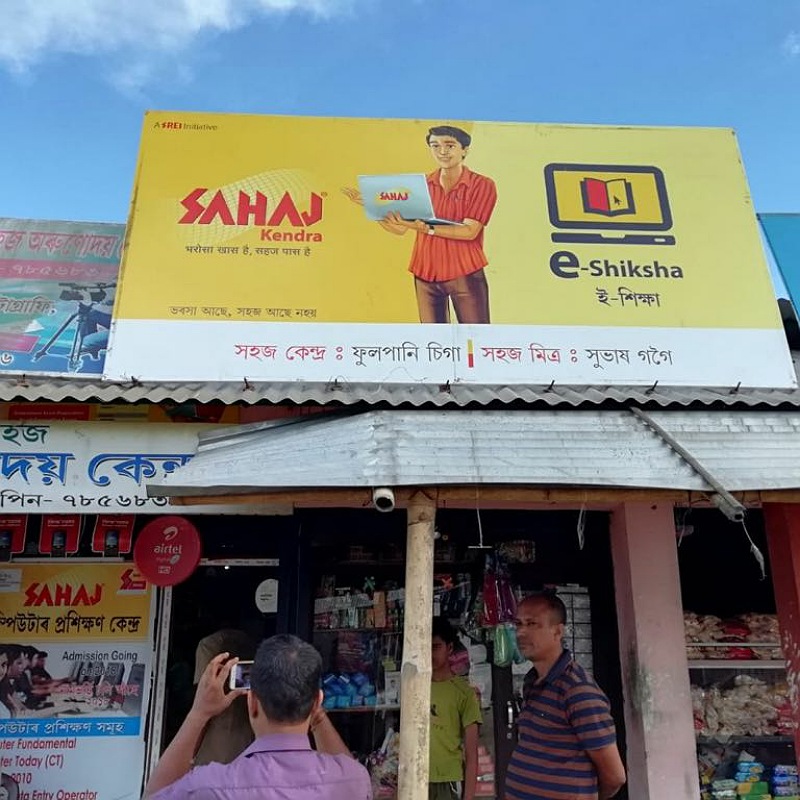
    KOLKATA: With the aim of strengthening its focus on Bharat, OTT platform Zee5 has struck a strategic partnership with Sahaj Rural Development Foundation to bring financial and digital inclusion to rural India.

    Through this first-of-a-kind association, Zee5 becomes the first OTT player to cater to the country’s underserved rural market at scale, through the retail network established by Sahaj. Zee5 will design a special ‘Chhota’ pack for Sahaj customers offering 10 per cent discount on its premium subscription, thereby leveraging the massive untapped opportunity of over 300 million rural internet subscribers in the country.

     Zee5 will now get access to more than 76,000 gram panchayats, and over 96,000 tier-3 and tier-4 rural locations in 24 states and union territories. With a robust portfolio of purposeful, compelling, diverse, and multi-lingual content in over 12 Indian languages, Zee5 continues to take eventful strides in enticing the masses to subscribe to the platform and consume entertainment anytime, anywhere, and in the language of their choice.

    Zee5 India chief business officer Manish Kalra said the move comes at crucial time, when rural India is on the cusp of driving a robust wave of digitisation in the next 12 months.

    “We want to fuel this change by democratising access to diverse content across genres and languages. Our partnership with Sahaj is one such step towards strengthening our connection with the entertainment-loving audience from Bharat, providing them with an unlimited and instant access to our premium content library, thereby unlocking unparalleled scale and reach across 24 states and union territories of India,” he added.

    On its part, Sahaj has been breaking boundaries to accelerate digital transformation in rural India ‘Bharat’ for more than 12 years and has access to 500 million+ rural customers through its wide network of over 100,000 retail outlets, 'Sahaj Mitr', said CEO Amit Kumar Singh.

    “The limited awareness about digital transactions beyond urban centers has restricted the popularity of OTT content in rural India. The partnership between Sahaj and Zee5 will bridge this urban-rural digital divide and offer rural customers an opportunity to enjoy premium OTT content just like their urban counterparts. With this partnership, Sahaj further strengthens its focus on staying at the forefront of identifying consumer trends in the rural market,” he explained.

    Since its inception, Zee5 has successfully struck a chord with many Indians within the country. As of December 2020, the platform recorded 65.9 million MAUs and 5.4 million DAUs. Zee5’s repertoire of content includes Indian and global movies, catch-up content, and live TV, shows, news, music, live events, and much more. With a rich library of over 120+ originals, Zee5 offers content in 12 Indian languages and in the last three years, it has had 85+ regional launches: 55+ web series, 5 short films, and 25+ movies in Tamil, Telugu, Marathi, Kannada, and Bengali, across genres. Additionally, the platform offers content in – Hindi, English, Punjabi, Bhojpuri, Gujarati, and Odia.

  • Next Billion Users head Caesar Sengupta quits Google

    Next Billion Users head Caesar Sengupta quits Google

    NEW DELHI: Google’s Next Billion Users head Caesar Sengupta is on his way out from the company after nearly 15 years, he said in a LinkedIn post on Monday.

    “After over 15 wonderful years at Google, I have decided to venture out and start on a new mission. I remain very positive about Google’s future but it's time for me to see if I can ride without training wheels,” he wrote in a note titled 'Thank you Google…'

    Sengupta, who was based out of Singapore, led the tech behemoth’s ambitious payments plans, including their grand digital payments bet – Google Pay. Since his recruitment to the firm in 2006, he has worked on the ChromeOS, NBU initiative, Google Pay, payments platform and Google Finance— all important business lines and growth areas for Google— and thanked the teams in his post. He also led strategic investments and acquisitions by the search giant in local companies including Jio Platforms, InMobi's Glance, and Dunzo.

    Sengupta's last day as vice president and general manager – payments and NBU initiative will be on 30 April.

    He joined Google right after his MBA at The Wharton School. He completed his Masters in science with distinction in research, computer science, at Stanford University, before his MBA.

    Though his exact plans after Google are not known, it is believed he will float his own new venture.

  • New IT guidelines not intended to control OTT platforms: I&B minister

    New IT guidelines not intended to control OTT platforms: I&B minister

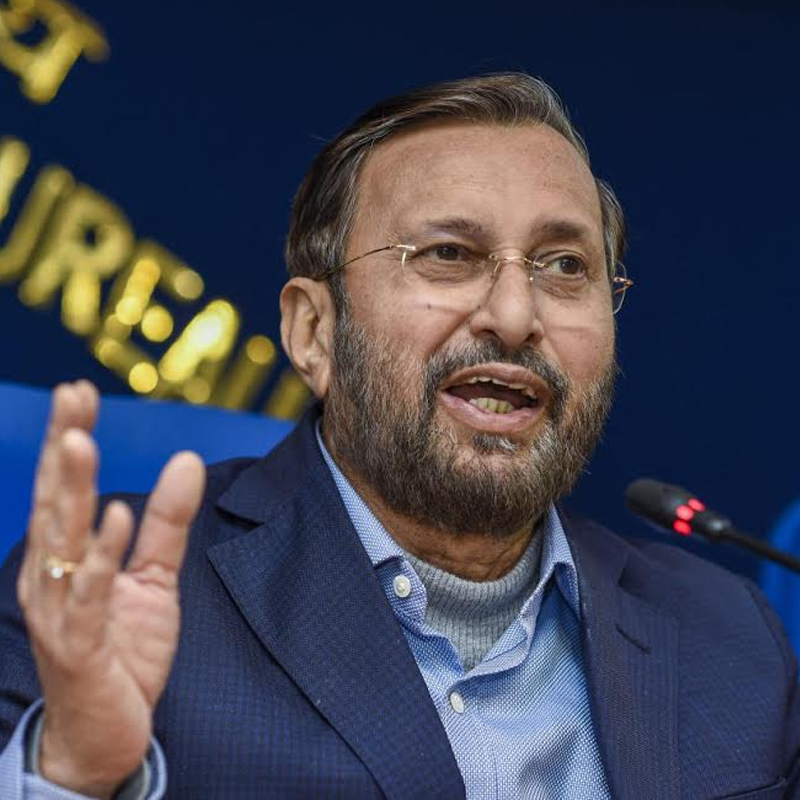
    NEW DELHI: The government has attempted to provide a level-playing field for various digital platforms through the new guidelines on over-the-top (OTT) platforms, said union information and broadcasting minister Prakash Javadekar, amid concerns that the new rules may pose a threat to the freedom of expression.

    The minister mentioned that digital technology platforms have played a key role in promoting transparency and introducing a corruption-free atmosphere in governance.

    “Through these guidelines on OTT, we have tried to bring about transparency and provide a level playing field to various media platforms, be it electronic, print, or digital media. It is just for fair-facilitation for self-regulation and not intended for controlling the OTT platforms,” said Javadekar, while speaking at a digital media conclave organised by a private TV network in Mumbai.

    The new rules released by the government on 25 February ask for a three-tier grievance system and content classification for digital platforms. First, self-regulation by the platform through a grievance redressal officer; second, by an institutional self-regulatory body of industry experts, and third level of oversight through an interdepartmental committee constituted by the government.

    While this may create a forum where users can voice their complaints, there are concerns that it could also lead to an increase of content-related disputes in the country. Several video streaming platforms are already mired in controversies over their content, the latest being Amazon Prime’s Tandav and Netflix’s Bombay Begums.

    The formulation of guidelines took place expeditiously, revealed Javadekar, with more than 50 cabinet meetings held virtually to ensure that there weren't any delays in the decision-making.

    The union minister also talked about the decision to broadcast the old Doordarshan TV series like Ramayana, Mahabharat during the pandemic and how it registered record-breaking viewership.