Category: Over The Top Services

  • Natasha Dave rises at Netflix, taking APAC talent reins

    Natasha Dave rises at Netflix, taking APAC talent reins

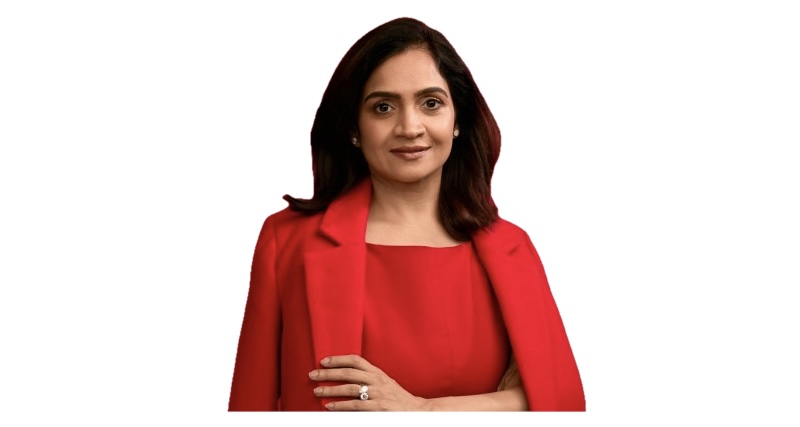
    MUMBAI: In a move that highlights Netflix’s commitment to empowering its talent across the Asia-Pacific region, Natasha Dave has been named the talent management lead for APAC. Dave, a seasoned HR leader with over 18 years of experience in talent management, strategic HR partnership, and organisational development, transitions to her new role after two and a half years with Netflix, where she previously served as HR business partner for India.

    Describing her journey at Netflix as a transformative experience, Dave credits the streaming giant’s culture and values for shaping her professional growth. Before Netflix, she led talent initiatives at GroupM India and Mindshare, managing chaos with a method to the madness and driving people-centric strategies. Her extensive career also includes leadership roles at Housing.com, Altisource, Intelenet Global Services, HSBC Securities, and Computer Sciences Corp.

    As she steps into her new role, Dave is set to steer Netflix’s APAC talent management strategy, ensuring that the region’s talent thrives in a dynamic, high-performance culture

  • US-based Flickfusion Media’s Chull OTT launches with a bang, promises unfiltered stories for India’s restless streamers

    US-based Flickfusion Media’s Chull OTT launches with a bang, promises unfiltered stories for India’s restless streamers

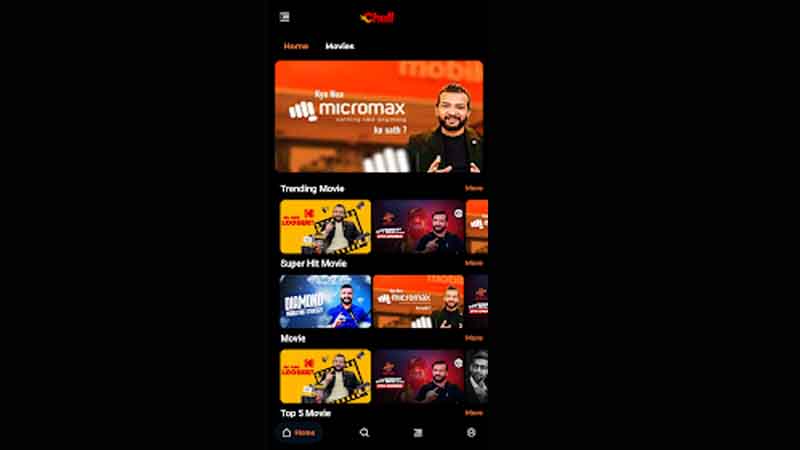
    MUMBAI: In a market already brimming with over-the-top content, a new disruptor has made its debut with more ‘chull’ than chill. Flickfusion Media INC, a U.S.-based digital media company, officially launched Chull OTT in India, aiming to rewrite the rules of streaming with stories that are unfiltered, unafraid, and unapologetically local.

    Launched from Mumbai, the platform draws inspiration from the Hindi slang ‘chull’ — that unstoppable itch for change. And that’s precisely what the platform claims to bring to India’s estimated $13 billion OTT market by 2030. While global giants continue to churn out algorithm-tested content, Chull OTT bets on regional narratives, experimental formats, and bold, emotionally resonant storytelling.

    “We’re here to shake things up by offering fresh, bold, and emotionally gripping stories that mainstream platforms often overlook,” said Flickfusion Media INC CEO Deepak Joshi. “India’s vibrant storytelling culture deserves a space where creativity isn’t restricted by formulas — and Chull OTT is that space.”

    The platform enters the scene with a slate of multi-language content across Hindi, Tamil, Telugu, Kannada, and Bangla.

    The promise?

    Uncensored originals spanning drama, comedy, and documentaries. An AI-powered recommendation engine tailors content based on viewing behaviour, while the app is fine-tuned for low-bandwidth environments — a nod to India’s thriving tier two and tier three markets.

    Chull OTT also comes armed with a clean, user-friendly interface and aggressive pricing. Subscriptions start at Rs 79 a week, Rs 149 monthly, Rs 329 quarterly, and Rs 579 annually — designed to fit screens and wallets alike.

    Collaborations with regional creators, local production houses, and telecom partners are already underway. The company has promised strict adherence to data privacy and cultural sensitivity standards, hoping to build trust as well as audience share.

    Whether it is a gritty docuseries about small-town India, a rebellious rom-com, or a no-holds-barred stand-up special, Chull OTT says it isn’t playing safe — and that might just be its most binge-worthy promise.

  • Balaji hits it for six with cricket-fan dramedy debut

    Balaji hits it for six with cricket-fan dramedy debut

    MUMBAI: When the cricket’s on, life takes the back seat, plans are paused, emotions run high, and remote controls become battlegrounds. Balaji Originals clearly gets the memo. Making its digital debut with The Great Indian Cricket Fan, Balaji Telefilms is tapping into the sacred Indian ritual of watching cricket with irrational passion and comedic chaos. Streaming now on YouTube with two episodes dropping every week, the series is part sitcom, part stadium and wholly relatable.

    With Abigail Pande, Yuvraj Dua, Priitamm Jaiswal, and Neha Bharti leading a spunky ensemble, the show isn’t about players, it’s about the people glued to their screens, frantically adjusting lucky cushions and whispering “don’t jinx it!” into the ether. From missed deliveries (both Swiggy and romantic) to household tiffs over match-day superstitions, TGICF is a breezy tribute to the cricket-fuelled frenzy we call everyday life.

    Set during a high-octane cricket season, the show swings between emotional googlies and laugh-out-loud yorkers capturing how fans experience every ball, boundary and breakdown like they’re on the pitch themselves. Think café screenings turning into mini-Wankhedes, and friendships forged or fractured over favourite captains.

    Balaji Telefilms Ltd head for brand revenue & partnership Kavvya Bharathi said, “Balaji has always been known for its compelling storytelling that deeply resonates with audiences in the heartland. With The Great Indian Cricket Fan, our first offering under Balaji Originals, we’re excited to expand our reach and connect with a younger demographic by tapping into India’s unmatched passion for cricket. This dramedy captures the true spirit of a cricket fan their loyalty, their rituals, and the electric atmosphere in local cafés during matches. Releasing during the summer break, the series brings the thrill of the stadium straight into living rooms, promising joy, nostalgia, and entertainment with every episode,”

    Expressing her excitement, Abigail Pande shared, “Honestly, it was so much fun shooting for The Great Indian Cricket Fan. The energy on set was absolutely palpable! If you’ve been missing Sia Dhillon, you’re going to love this show because I genuinely loved being a part of it. The concept is fresh and something we haven’t really explored before. While we’ve often seen stories around football fan rivalries, cricket which is practically a religion in India hadn’t been tapped into like this. From passionate fan clubs to the electrifying vibe in cafés during big matches, and how these spaces turn into mini-stadiums for fans, we’ve tried to capture it all. This show will definitely make you want to head to a café with your gang and cheer for your favorite team!”

    Yuvraj Dua added, “Being a sports enthusiast since childhood, I naturally gravitated toward sports journalism and then social media found its way into my life. But through all the transitions, one thing remained constant: my love for cricket. When I signed The Great Indian Cricket Fan, the first thought that crossed my mind was wow, a show about sports! This time, I wouldn’t be acting; I’d just be myself in front of the camera. I’ve always been that crazy cricket fan: canceling dinner plans, ghosting WhatsApp groups, sitting in the same spot for hours because India was doing well and I didn’t want to jinx it! The madness, the emotions, the superstitions we’ve all lived it. And the fact that this is Balaji Originals’ first-ever show makes it even more special. To be one of the first faces representing a platform launching something so rooted in our culture, it’s a proud, full-circle moment for me.”

    With Gen Z relatability, millennial nostalgia, and desi family drama all stitched together in one innings, The Great Indian Cricket Fan is Balaji’s pitch-perfect attempt to bowl over a digital-first crowd.

    And remember in India, when the match begins, the drama’s only just getting started.

  • Prime time for India as Amazon’s streamer doubles down on desi drama

    Prime time for India as Amazon’s streamer doubles down on desi drama

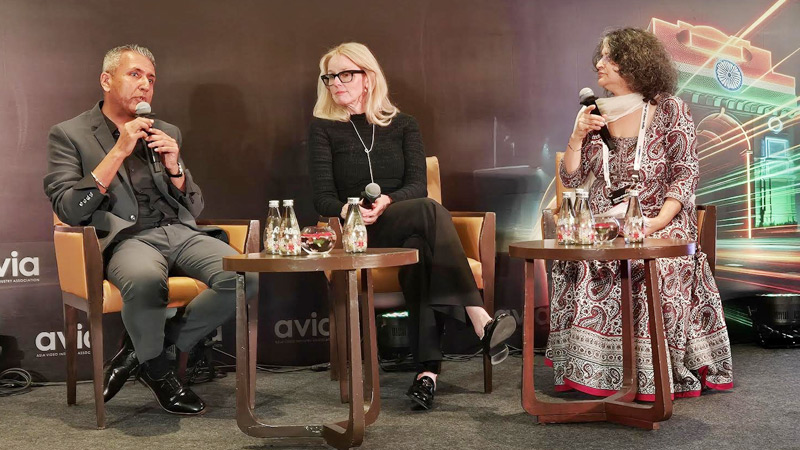
    MUMBAI: At a lively fireside chat during AVIA’s Future of Video India conference, part of the first-ever WAVES summit, Kelly Day, head of international & VP, Prime Video, and Gaurav Gandhi, VP for Asia Pacific & MENA, lifted the curtain on Amazon’s streaming strategy with India in a starring role.

    Kelly Day waxed lyrical about the enduring allure of the big screen, declaring, “We believe in the theatrical window,” and reaffirming Prime Video’s intent to back the box office while keeping its streaming chops strong. The aim? Around 14–15 global theatrical releases a year, because nothing beats the magic of popcorn-fuelled premieres unless you can also watch it at home in your PJs.

    But beyond the cinema, it’s the everything hub approach that’s taking centre stage. “We want to be the first place people think of when they want to watch something,” said Day, noting that with over 200 million Prime members worldwide, Prime Video is less about being everything to everyone and more about helping everyone find exactly what they want.

    For India, that means layering choice upon choice. Gaurav Gandhi detailed how the country has become Prime’s petri dish for innovation TVOD (Transactional Video on Demand) is booming with 7000 plus titles, and 60 per cent get rented every month across 95 per cent of India’s pin codes. The subcontinent is also home to 25 plus channel partners, making it second only to Japan in Prime’s global “channels” play.

    “India is a super important locale,” Gandhi noted, adding that it’s not just a growth engine for Prime sign-ups but also a massive content factory, with one of the largest original slates outside the US. Even more impressive? One in four views of Indian content comes from overseas, proving that regional stories are finding global legs.

    And when it comes to customisation, India’s Prime menu is a buffet: from Prime Lite to full-fat Prime, mobile-only editions to programming in 10 Indian languages, the streamer’s playbook here is all about slicing and dicing its offerings to match the country’s many moods. “We’re learning from India and taking that learning global,” Gandhi quipped.

    So while other platforms try to decode the Indian market, Prime Video seems to have cracked the subtitles and is quietly exporting the script.
     

  • Prime Video goes K-razy: CJ ENM deal brings Korean hits to the global stage

    Prime Video goes K-razy: CJ ENM deal brings Korean hits to the global stage

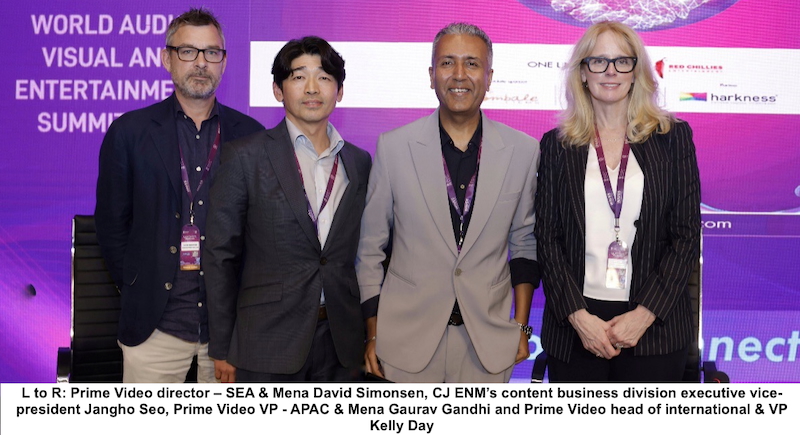
    MUMBAI: Prime Video is diving deep into the K-drama wave. At the Waves Summit in Mumbai on Saturday, the streamer announced a blockbuster global pact with South Korean entertainment powerhouse CJ ENM locking in multi-year worldwide rights (barring Korea and China) to some of Korea’s most popular and upcoming screen gems.

    Set to kick off in late June with fantasy-romance series Head Over Heels, the partnership will see Prime Video release a slew of exclusives through 2025 and 2026 from Studio Dragon and CJ ENM Studios. Prime members can also binge a revamped line-up of beloved back-catalogue titles like Her Private Life, Another Miss Oh, and gritty fan-favourite Mouse.

    All this will be served with subtitles in 28 languages and dubbing in 11—part of Prime Video’s bid to make Korean content irresistibly accessible to fans from São Paulo to Seoul.

    “This strategic collaboration with CJ ENM reinforces Prime Video’s commitment to bringing the best of Korean entertainment to our customers worldwide,” said Prime Video head of International & VP Kelly Day. “Korean content continues to resonate deeply with global audiences. We’ve witnessed the borderless appeal of Korean storytelling with the phenomenal success of shows like Marry My Husband, No Gain, No Love which not just captured hearts across continents, but also found their place in the Top 10 most-watched non-English language International Originals from 2024, posting super strong viewership outside their country of origin. We are now thrilled to offer new and exclusive titles, alongside a catalogue of consumer favourites exclusively to Prime Video’s global consumer base, in a language of their preference.”

    “At Prime Video, our ambition is to be the first-choice entertainment hub for consumers. From the best of global content, to popular stories from Asia, we want to be a destination where consumers can effortlessly discover their next favourite story. As Korean content continues to find massive audiences worldwide, we’re thrilled to bring these captivating narratives exclusively to our worldwide audiences,” said Prime Video vice president, APAC & Mena Gaurav Gandhi. “Our strategic collaboration with CJ ENM marks a new chapter in this journey, giving Prime members front-row access to some of the most  compelling and innovative content from Korea.”

    “We’re thrilled about this partnership with Prime Video, which allows us to bring our unique Korean stories to an even broader global audience,” said CJ ENM’s content business division executive vice president Jangho Seo. “Korean entertainment has been winning hearts around the world with its compelling narratives, relatable characters, and outstanding production quality. We’ve already seen tremendous success with titles like Marry My Husband and No Gain, No Love, which achieved remarkable viewership milestones on Prime Video and reaffirmed the universal appeal of our storytelling. Through Prime Video’s extensive global reach and strong commitment to multi-language subtitles and dubbing strategies, we are excited to make our upcoming titles even more accessible and enjoyable for audiences across cultures and languages. This collaboration not only strengthens CJ ENM’s global footprint but also reflects our shared vision with Prime Video to deliver captivating stories to fans worldwide. We look forward to building on this momentum and deepening our connection with viewers everywhere.”

    The move cements Prime Video’s growing bet on Korean drama as a frontline act in its global expansion. For subscribers, it’s a K-lovers’ dream. For the industry, it’s another sign that Hallyu isn’t just here to stay—it’s scaling up.

  • Netflix bets big on Bharat: Ted Sarandos touts $2bn impact, calls India the next Korea

    Netflix bets big on Bharat: Ted Sarandos touts $2bn impact, calls India the next Korea

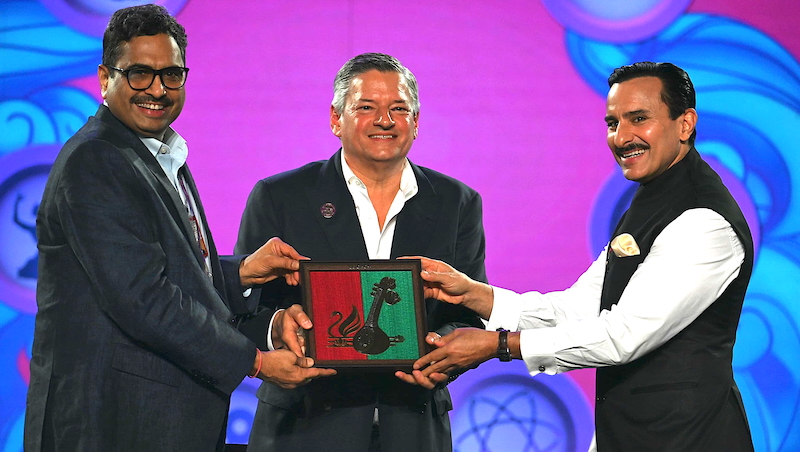
    MUMBAI:  “Don’t globalise it. Localise it, then watch it fly.” That was Netflix co-CEO Ted Sarandos’ mantra to Indian creators at the government of India’s Waves  Global Summit 2025, where he shared the stage with actor Saif Ali Khan in a high-wattage fireside chat titled Streaming the New India: Culture, Connectivity & Creative Capital.

    Sarandos came bearing stats—and swagger. Netflix’s investments in India from 2021 to 2024, he revealed, have generated over $2 billion in economic impact, filming across 23 states and 100+ cities, and collaborating with over 25,000 local cast and crew. “That’s not just entertainment—it’s employment, infrastructure, and skill-building,” he said.

    And the viewership numbers? Eye-watering. In 2024 alone, three billion+ hours of Indian content were streamed globally on Netflix—nearly 60 million hours a week. An Indian title made it to the global Top 10 non-English list every single week of the year.

    Saif Ali Khan, now a veteran of both big screens and binge-worthy epics, waxed lyrical about the creative freedoms offered by streaming. “It’s a gift,” he said. “Long-form storytelling lets you explore characters with nuance and intimacy. Streaming is a creative playground—with no school bell ringing at the end.”

    When asked how Indian creators can crack global markets, Sarandos dropped the algorithmic truth: “If you try to engineer something for the world, you end up making it for no one,” he warned. “The most successful global stories—Korea’s Squid Game, Spain’s Money Heist—were deeply local. India must do the same. If it’s not loved here, it won’t work out there.”

    He didn’t mince words. “Don’t water it down for the west. Audiences don’t want diluted. They want real.”

    According to Sarandos, India is teetering on the edge of a Squid Game-scale global breakout. “Korea had years of storytelling before its global moment,” he said. “India is now at that inflection point. The creative base is solid. The reach is already here.”

    Netflix is doubling down on that bet, with buzzy upcoming titles like The Royals and The B*****s of Bollywood joining global juggernauts like Squid Game S2, Stranger Things, and Wednesday.

    When asked if streaming would cannibalise cinemas, Sarandos played diplomat. “India is fan-first,” he said. “Theatres and streaming aren’t rivals—they’re tag-team partners.” Streaming, he added, simply meets audiences where they are. “In India, films move from theatre to streaming at record speed. That’s not disruption—that’s democratisation. India, in many ways, was ahead of the curve.”

  • Dish TV hits play button on creator-led OTT with Watcho Fliqs

    Dish TV hits play button on creator-led OTT with Watcho Fliqs

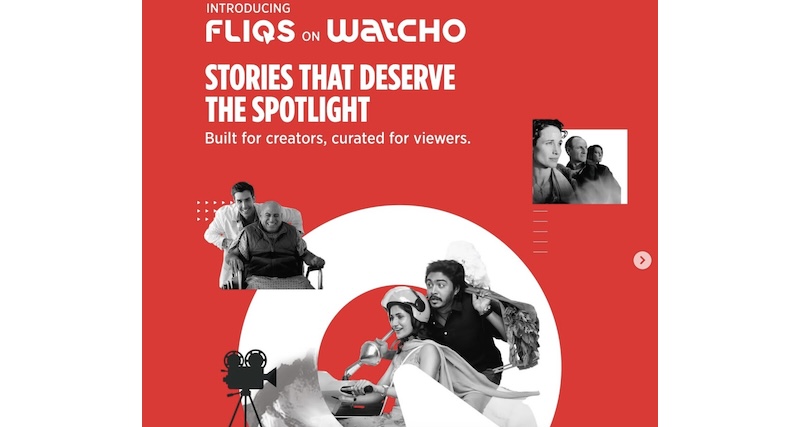
    MUMBAI: Dish TV India, the country’s first direct-to-home (DTH) trailblazer, is now gunning for a front-row seat in India’s creator economy. After kickstarting the conversation with Content India 2025 Summit earlier this year, the company has now pulled back the curtain on Watcho Fliqs —a content segment within its Watcho app that could give every professional creator their own OTT stage.

    Unveiled at Waves  2025, Fliqs promises to be more than just another tile on the crowded streaming screen. It’s Dish TV’s answer to a shifting digital appetite—where creators want control, consumers want choice, and no one wants to pay Rs 499 a month to find out they’ve seen it all.

    “With Fliqs, we are taking a big and bold leap towards redefining what an OTT service can be. This isn’t just another content launch—it’s a statement of intent,” said  Dish TV India CEO & executive director Manoj Dobhal.  “Fliqs represents a new generation of curated, exclusive digital storytelling that aligns with the evolving consumer demand for distinct, high-value content. While the industry has seen a proliferation of platforms, very few offer something truly differentiated. Fliqs fills that gap by bringing untold stories, original productions, and exclusive titles into a highly personalized, affordable ecosystem. 

    “It supports India’s growing community of independent storytellers by providing a premium platform to showcase their work, reach wider audiences, and unlock monetization opportunities—strengthening Dish TV’s commitment to digital-first creative entrepreneurship.”

    Fliqs serves up award-winning originals, regional marvels, cult international titles, and short-format snacks—all in a tightly curated, multi-lingual menu. With rates starting from as low as Rs 9 per title and a buffet of free content to boot, the platform is wooing value hunters and taste seekers alike.

    But it’s not just the catalogue doing the heavy lifting. A sleek UI, AI-powered recommendation engine, and multi-screen features offer users a hyper-personalised ride through a universe of fresh entertainment.

    Watcho CTO & business head V.K. Gupta added: “Fliqs  is our solution to evolving consumer demands for uniqueness, exclusivity, and control over their entertainment. It’s not just an add-on, but a transformational layer within Watcho, offering a smarter, more relevant experience. With Fliqs,  Watcho strengthens its position in the OTT market, marking the start of a larger content evolution.” 

    Going forward, Watcho’s Fliqs  will continue to scale up with exclusive dubbed English content, regional blockbusters, and classic gems you won’t find on rival platforms. The real twist? It puts India’s storytellers in the director’s seat—creatively and commercially.

    As the digital content ecosystem matures, Dish TV seems determined to rewrite the playbook—from content carrier to creator catalyst.

  • India’s entertainment giants plot $6 billion global gold rush by 2030 with fresh new strategy

    India’s entertainment giants plot $6 billion global gold rush by 2030 with fresh new strategy

    MUMBAI: India’s entertainment scene has never lacked drama, but now it is scripting a blockbuster for the world stage. Content India’s latest report, ‘The Future Of The Indian Entertainment Business In Partnership With The World’, published today, sets a racy new agenda: a potential $6 billion boost to the industry by 2030 if India plays its cards right.

    The findings, drawn from the one-day Content India Summit in Mumbai on 1 April and powered by data from Allied Global Marketing, outline how global partnerships, technology adoption, and a sharper content game could fuel India’s charge. The event, a DishTV and C21Media collaboration, has paved the way for a three-day Content India bash in March 2026.

    “It is clear that the Indian entertainment business is a force to be reckoned with on the global stage. But it has the opportunity to make an even bigger impact globally by partnering with international players on its own terms,” said DishTV CEO & ED Manoj Dobhal.

    Currently, India’s 551 million OTT users deliver just $2.1 billion in revenue. In contrast, South Korea’s entertainment exports dominate global charts. Without change, India’s OTT pie might touch $5 billion, or $9 billion with minor local fixes. But bold action could unlock a whopping $15 billion market, transforming India into a global soft power, argued Allied’s Jamie Crick at the summit.

    The report flagged gaping gaps. Comedy tops audience preference (30 per cent), yet only 10 per cent of premium content serves laughs, while drama, crime, and thrillers hog 60 per cent of new releases. Authentic, local content—preferred by 86 per cent of OTT viewers—is a must.

    Mobile may be India’s stereotype, but connected TVs are booming. YouTube’s connected TV usage quadrupled between 2022 and 2024. Ninety-two percent of online video minutes flow through YouTube, not premium OTT.

    The report pushed for lighter, family-friendly formats and deeper collaboration with creator ecosystems.

    On the global stage, India can draw lessons from South Korea’s Hallyu wave and Spain’s Money Heist effect. Local authenticity with universal themes wins hearts—domestically and internationally.

    New growth drivers include positioning India as the world’s most cost-effective production partner, leveraging its premium series costs ($1 million-2 million per episode) compared to US ($5 million-15 million). AI-powered efficiencies can further sweeten the deal.

    The Indian diaspora—35 million affluent consumers—remains an underplayed hand. Targeting them with broader genres, beyond nostalgia, offers a smart bridge to global glory.

    C21Media founder and the report’s editor David Jenkinson summed it up, “The world is changing fast… India can be at the heart of that. Of course, there are many challenges. But they are all addressable and the upside is significant for all.”

    The report stressed a tight checklist for future growth: urgent action, strategic alliances, tech savviness, emotionally rich storytelling, and strong institutional backing.

    “The future of Indian entertainment will not be gifted. It must be built”, it concluded.

    C21Media


  • India tunes into the future: D2M phones set to beam broadcast content straight to mobiles

    India tunes into the future: D2M phones set to beam broadcast content straight to mobiles

    MUMBAI: Say hello to television without the internet. At Waves 2025, India’s flagship World Audio Visual & Entertainment Summit to be held at Jio World Centre in Mumbai, a game-changing coalition of technology players will unveil the roadmap to bring direct-to-mobile (D2M) broadcasting to the fingertips of Indian consumers.

    The ambitious push is led by FreeStream Technologies, an IIT Kanpur-incubated deeptech startup, alongside mobile giants Lava International and HMD Global, powered by chipsets and infrastructure from Tejas Networks (formerly Saankhya Labs), with global validation from US-based broadcasting behemoth Sinclair Inc.
    The tech, hailed as a breakthrough in both communications and accessibility, allows live TV, emergency alerts, educational content, and multimedia programming to be delivered directly to mobile phones via terrestrial broadcast signals — bypassing internet or mobile data altogether.

    “This is India’s moment to lead the world in next-gen broadcasting. Lava and HMD are laying the foundation of a robust device ecosystem, and their commitment to scaling up proves D2M is more than a proof of concept — it’s a national opportunity,” said FreeStream Technologies director Sumeet Nindrajog.

    Lava, known for its made-in-India ethos, is ensuring that the price-point doesn’t become a hurdle. “Our D2M featurephone design cleverly integrates the modem and apps in a way that keeps costs low — something that has always defined Lava,” said Lava International executive director Sanjeev Agarwal.

    HMD — the home of Nokia phones — is matching that energy. “HMD has always been about delivering meaningful innovation. With D2M, we’re enabling consumers to access live content and alerts on their devices, without needing Wi-Fi or mobile data,” said HMD CEO & VP India & APAC. Ravi Kunwar. “This is a global first, and we’re proud to be building it in India.”

    Behind the scenes, it’s Tejas Networks’ award-winning SL-3000 D2M chipset — the tech’s beating heart — that makes it all possible. A product of Saankhya Labs (now part of Tejas and the Tata Group), the chip is designed for mobile broadcast reception, even in dense or low-connectivity environments.

    “This isn’t just about watching TV — this is about creating a national broadcast backbone that can deliver everything from emergency alerts to targeted education, from CDN offload to next-gen advertising,” said Tejas Networks  EVP and co-founder of Saankhya Labs Parag Naik. “It’s an empowerment platform, aligned with PM Modi’s vision of a digitally empowered India and Viksit Bharat.”

    Tejas has also built out the full core network platform to support nationwide rollout — integrating both broadcast and broadband layers, a capability rare even by global standards.

    From the other side of the Atlantic, Sinclair Inc, a pioneer of ATSC 3.0 — the broadcasting standard enabling D2M — praised India’s swift strides. “The adoption of ATSC 3.0 in affordable mobile devices underscores the foresight of our global investments, and vindicates our ‘mobile-first’ strategy,” said Sinclair Inc president & CEO Chris Ripley. ““India is now in the driver’s seat. Our next focus is B2X — Broadcast to Everything — which will be vital to achieving the goals of 6G and next-gen applications.”

    Sinclair’s One Media unit has been working with Indian partners to future-proof mobile broadcasting as a core digital infrastructure. Their role isn’t just investor — they’re co-developers and global evangelists.

    Backed by policy momentum and partnerships with Prasar Bharati, the D2M ecosystem has already undergone field trials across live networks. The next step? Nationwide field deployment, with Lava and HMD readying devices for market at scale.

    D2M is now not just a tech demonstration — it’s a political, social and commercial opportunity:
    * To decongest mobile data networks,
    * To deliver content equitably across rural and urban India,
    * And to anchor India’s leadership in media-tech manufacturing.

    With global standards, Indian R&D, and mass-market readiness coming together, Waves 2025 could well be remembered as the moment India turned its phones into broadcast hubs.
  • Supreme Court puts OTT and social media sleaze on notice

    Supreme Court puts OTT and social media sleaze on notice

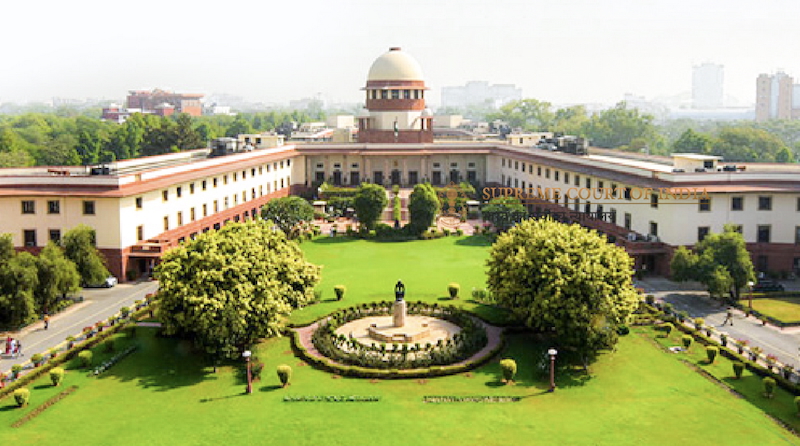
    MUMBAI:  The supreme court on Monday fired a warning shot across the bows of the government, streaming giants, and social media platforms, flagging the unchecked spread of obscene and sexually explicit content online.

    A bench led by justice B R Gavai and justice Augustine George Masih issued notices to the Centre and a who’s who of Big Tech — Netflix, Amazon Prime Video, Meta, X Corp, Google, Apple, Ullu, and ALTT — after a public interest litigation (PIL) filed by journalist Uday Mahurkar and others called for urgent curbs on indecent material floating unchecked across digital platforms.

    “This petition raises an important concern,” said justice Gavai, cautioning that the issue was best left to the executive or legislature lest the court be accused of overreach. Nevertheless, he nudged solicitor general Tushar Mehta, representing the Centre, to act: “Do something… something legislative.”

    Mehta did not dispute the concerns, describing some content as so perverted “that even two respectable people cannot sit together and watch,” but stressed that censorship was not an option. He added that regulations under the Information Technology (Intermediary Guidelines and Digital Media Ethics Code) Rules, 2021, were in place — and more were under contemplation.

    The petitioners, represented by advocate Vishnu Shankar Jain, called for the establishment of a National Content Control Authority to monitor and regulate streaming and social media output until a comprehensive law is enacted. The plea warned that without action, the flood of sexually explicit, paedophilic and perverse material could corrupt young minds, fuel deviant behaviour, and trigger a rise in crimes against women and children.

    “What was once an individual vice has now become a public menace,” the petition thundered, accusing platforms like X, Instagram, Facebook, YouTube, Netflix, and Ullu of promoting explicit content without adequate checks.

    While the Supreme Court has not set a timeline for the next hearing, the Centre’s response will be pivotal in shaping how India reins in its booming but increasingly controversial digital content ecosystem. For India’s streaming giants, the party might just be about to face a reality check.