Category: Over The Top Services

  • OTT and the future of sports broadcasting

    OTT and the future of sports broadcasting

    Mumbai: According to a recent study ‘Can OTT sports platforms shake up the broadcast landscape’ by data and analytics firm Ampere, the growing number of pure-play and generalist OTT services in the sports rights market is putting the traditional rights model under stress.

    In Europe, the likes of DAZN and Amazon Prime Video are beginning to eat into the market share of traditional rights holders, accounting for nearly 10 per cent of sports spends annually. Globally, though, the figure stands at slightly below six per. In cases where OTT services increased the number of bidders for rights, the value of rights has increased. For instance, DAZN’s entrance to German UCL market grew the total value by 62 per cent for 2018-21 cycle. For 2021-24, OTT services have secured all rights to the UCL in Germany, with the new deals increasing the total value by 58 per cent. However this trend did not hold in cases where the overall number of bidders came down, where the impact was negative.

    What this suggests is that pure OTT players have the potential to impact an upward growth in sports rights value together with traditional buyers, especially in cases where the value of rights has stagnated over the years. In the short term, until OTT platforms reach a comparable or higher level of subscription than pay-TV, they will keep adding value to the game.

    The study outlined four broad ways in which OTT services are impacting the sports media landscape – targeting digital-first audiences, making premium sports more affordable, super-serving specific categories of sports fans, and creating a range of D2C opportunities like out-of-market selection, co-exclusivity, and exclusive D2C for rights holders. 
    Case in point: IPL stagnation in rights value is a far-cry for a cricket crazy nation as India. Take for instance, the next (2023-27) cycle of IPL rights that has an aggressive set of bidders in the fray, including the content behemoth Amazon Prime Video. 

    Reliance’s bid, which is likely aimed at more data revenue through Jio, than subscription and ad revenue through the media business under Viacom18, will make the ‘Amazon vs RIL vs Disney vs Sony pitch’ more interesting. The winner will be announced around end-March or early April. 

    While Star’s September 2017’s bid of Rs 16,347.50 crore or ~$2.3 billion (amounting to a 158 per cent increase over the previous deal worth $1.03 billion) for just half the number of years was jaw-dropping, equally noteworthy was Facebook’s individual bid of R. 3,900 crore for the digital rights alone. From less than five per cent in the overall pie of 2008 deal, digital had grown by 25 per cent (4.5 times) in 2017, being seen as a standalone package. 

    According to market buzz, IPL’s digital rights value will see similar growth of around 25-30 per cent for this cycle and understandably so. From 2017 to now, IPL has seen considerable value addition in terms of both OTT viewership as well as digital technology. The overall value is expected to soar up to of $ five billion. A senior BCCI official recently told news agency PTI, “With two new teams about to fetch anything between Rs 7000 to Rs 10,000 crore, IPL broadcast rights could more than double to reach $ five billion (~Rs 36,000 crore).”

    The OTT value ad
    Hotstar got on to a flying start with the first match of IPL 2015 registering 7.2 million views on the app; six times the viewership of the first match of IPL 2014 on starsports.com. In the seven years since it began streaming the IPL live, the league’s viewership has grown from around 40 million in 2015 to 300 million in 2019, increasing every year. While the viewership for the 2020 edition on Hotstar could not cross the previous year’s benchmark, it ranged between 5.7 million and 6.7 million throughout the next (2021) season.

    What’s more significant about these numbers is that they were reached despite the matches being played behind a paywall. Going back to the Ampere study, sports OTT audiences currently make up 25 per cent of total sports audience, and there nearly 800 mn to convert. This is a significantly younger audience with 75 per cent aged between 18 and 44 years. Not only are they willing to pay more, but are also spending more time and are more engaged with both live and non-live programming on the OTT services. In addition to accessibility of content and flexibility of billing options, OTT services are more affordable and unbundled, offering higher control to viewers. They target fans of sports which struggle to find sufficient space on traditional broadcasting platforms. 
    Echoing a similar viewpoint, Grapes national business head – Rajeesh Rajagopalan says, “by virtue of being both precise and personal, OTT services have consolidated the scattered viewership for niche sports, or sports other than cricket in India. The badminton and kabbadi leagues that have come into existence today, is because OTT players started buying these rights.” Pointing out another positive contribution of sports streaming, he states, “OTT being way more innovative with advertising than TV, offers scope even for the smaller brands with medium or modest budgets, provided they have a clearly-defined objective.”

    “The decline in TV viewership of niche sports due to NTO will add to the popularity of sports streaming, which has been on the rise since the onset of the pandemic. The growth is expected to come from tier 2 and 3 cities. It will be spearheaded by DTH platforms providing OTT as a part of their services,” adds Zenith VP Linu John.

    Commenting on the OTT opportunity for brands in India Havas Media Group India head–digital services Rohan Chincholi remarks that from the consumers’ standpoint, India is a market with the lowest cost per GB (~Rs seven per GB) & from the advertisers’ standpoint, there is a massive 350 million+ OTT viewership in India. Of these, paid subscribers are to the tune of ~80 million+ and they subscribe to over two OTT platforms each. 

    “Hotstar is projecting to reach close to 100 per cent of OTT users in India this IPL which speaks volumes about viewers’ interest in streaming sports. However, these audiences are not loyal to one OTT service. Cricket has the potential to garner mass reach in a short span, which is where the platforms win via subscriptions and repeat usage,” observes Chincholi.  
    On the kind of advertising being explored this season he adds, “from an advertising perspective, bundled sponsorships, associations and standalone buys will be a function of clients’ budget. Ad rates will command a premium on all marquee streaming events.  Cost per reach will be higher than any other video sharing/social platform but it’s also a function of audience targeting and data layering – transacting audience cut, connected TV audience.”

    Building on the point WATConsult AVP media planning and strategy Shanu Jain shares that about 70 per cent deals are bundled under different sponsorships including presence on different IPL collaterals, Live prediction, pre & post shows brand integrations, special packages, while around 30 per cent of them are standalone on mid-roll video ads. They command 35-40 per cent premium than normal rates on GEC and other video streaming platforms like YouTube. “Majority of IPL viewership comes from the age bracket of 15-30 years, and Hotstar leads the way in innovative ad formats and inventories. A lot of new ad formats have been introduced to facilitate better recall and user engagement, beginning with pre-rolls every time you start the match to drive higher relevance, and integrating the brand communication at different intervals, to additional options like group chats, contests and regular CTW ads have helped brands look at efficiencies in-terms of audiences who’re watching and clicking on the ads,” notes Jain. 

    OTT services globally have only just started to move the dial in the sports rights market which continues to be dominated by legacy players. They have an increasingly significant part to play alongside TV buyers by helping sports appeal to young hard-to-reach demographic. The Ampere study indicates that while the OTT audiences’ higher willingness to pay may make them look more attractive, their size compared to traditional TV broadcasters must be taken into account to ascertain whether this actually equates to higher revenues or not. 
  • Lionsgate Play partners with Sony Music for ‘Jugaadistan’

    Lionsgate Play partners with Sony Music for ‘Jugaadistan’

    Mumbai: Lionsgate Play has partnered with Sony Music for their upcoming Indian original series “Jugaadistan.”

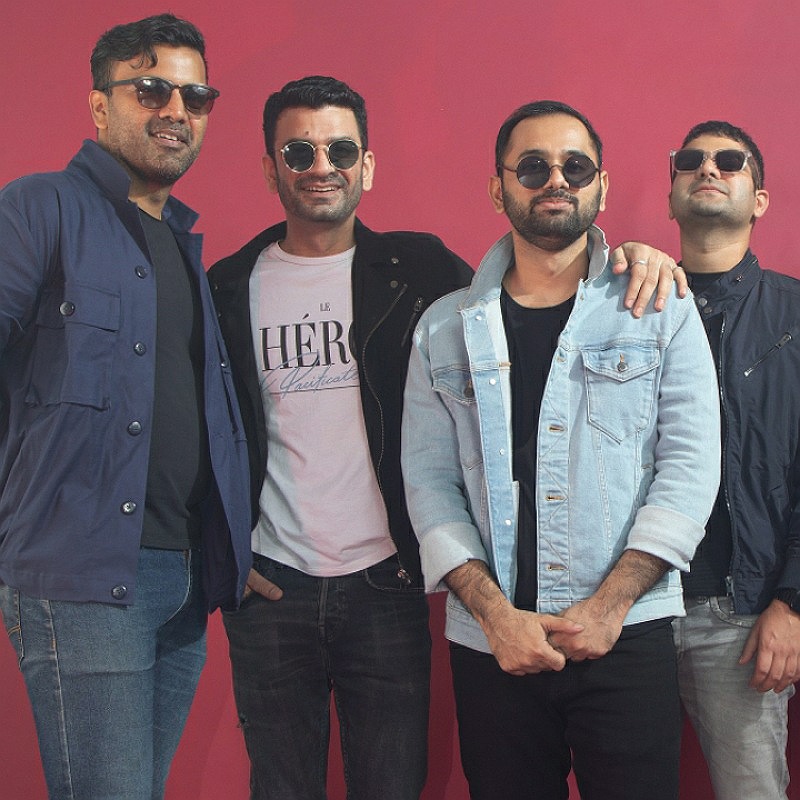
    Sony Music has picked a diverse album that reflects the theme of the show and brought homegrown music band Indian Ocean and have songs by Akasa, Mika Singh and The Yellow Diary amongst others. They will be promoting it under their banner.

    The show’s stellar background music complements and completes the vast narrative with ease. Put together by Anurag Saikia, Khamosh Shah, Prabhdeep Taba Chake, Traffic Jam and Moussak – the songs blend mainstream voices with the music of celebrated underground artists. The

    “Right from the word go, we paid a lot of attention to the music of the show,” said Lionsgate managing director South Asia and networks – emerging markets Asia Rohit Jain. “It is a campus drama, and we didn’t want the usual run-of-the mill songs for it. Each track has been crafted with attention to detail and reflects the theme and mood of our story. We are glad that so many artists agreed to come and do the music for the show. We tried to keep the album’s vibe very diverse so that the songs appeal to college goers across the country. And for those who’ve passed out and adulted, it’s a trip back to good times!”

    “There is novelty in this album and that was our biggest draw,” said Sony Music India executive director Sanujeet Bhujabal. “We were mesmerised by the use of the sounds by artists who come from such different worlds and yet fit in so beautifully with the album. It was a delight hearing the beats of Indian Ocean, the Yellow Diary and Akasa in a mainstream show, though they are well known for their pop tracks. And yet, the show has found such talented indie artists to score their background music. This is an eclectic album that is bound to strike a chord with everyone.”

    “In today’s dynamic global music ecosystem, we at Lionsgate want to give our audience a holistic experience which includes music by the finest,” said Lionsgate vice president licensing and content partnerships Gayathiri Guliani. “The music created for ‘Jugaadistan’ is created with the best of singers, composers and artists that give a desi yet urban vibe. ‘Jugaadistan’s’ music connects instantly to all age groups. We couldn’t have looked for a better partner than Sony Music for ‘Jugaadistan’s’ music to reach new heights.”

  • GUEST COLUMN: Venturing into AI world – Dealing with the Cookiepocolypse

    GUEST COLUMN: Venturing into AI world – Dealing with the Cookiepocolypse

    Mumbai: Technological advancements have been at the helm of our evolution. The last decade witnessed some stellar advancements and shifts in our behavior. Recalling a few; we upgraded from 3G to 4G almost in a blink, smartphones and tabs lead the device usage stats and social media has become the new “news finder.” The most important “world wide web feature,” that has been around for a couple of decades, and now is on the verge of sunset is cookies.

    And with this development being pronounced crucial by leading tech firms including Google and Apple, naturally, the most pressing question in every marketer’s mind is, how do we continue to target effectively in a cookieless world? The answer certainly is – Artificial Intelligence (AI).

    The rise of the new change

    Cyberlaw caretakers are under the constant dilemma of addressing the rising concerns about how digital consumer data is being gathered, stored and utilised. Browser giants like Apple Safari, Firefox, and Google Chrome have either already unplugged their third-party cookie storage approach or are working towards the same.

    This means the digital marketing space is transforming rapidly. However, this doesn’t necessarily ring a bell of disaster for the marketers. Pico targeting and communication with relevance between businesses and users can still see the light of the day by maximizing first-party data collection on websites. This consent-based data gathering helps to boost the users’ trust, dependency and retention on the platform.

    But the marketing fraternity’s concern remains – how do we precisely target communication to the select user cohorts without cookies? The answer, as mentioned earlier, most definitely is by using artificial intelligence. As the times change, our transformation from digital natives to AI natives is just a few miles away. And the cookieless web world might as well streamline the situation more ardently.

    How can AI help deal with a cookieless web?

    To begin with, AI systems comprise complex neural networks that are trained with billions of data points. On the back of this data, the AI begins to learn and understand actions, predict results and recommend best-suited actions to achieve the desired marketing goal. The most heartening news for marketers is the fact that AI has immense capabilities to provide deep insights into the constantly evolving customer base and improve the understanding brands and businesses have of their users. And all of this without cookies.

    From enabling multichannel communication to relevant advertising, AI has the calibre to effectively cement the gap that will spring up in the cookieless world. Thousands of advanced AI models analyze and learn from billions of first-party data with the help of deep learning algorithms and NLP. This further helps the AI to make accurate predictions and provide recommendations in real-time.

    As we move towards more stringent privacy frameworks, AI is already revealing high efficiency in improving ROI and amping up business growth incredibly. Additionally, with AI holding the omnichannel communication fort high, marketers can precisely target user cohorts across multiple channels without worrying about the lack of cookies.

    (About Author: Neel Pandya is the Pixis CEO for Europe and APAC)

  • Prime Video spotlights the importance of immersive entertainment in new campaign

    Prime Video spotlights the importance of immersive entertainment in new campaign

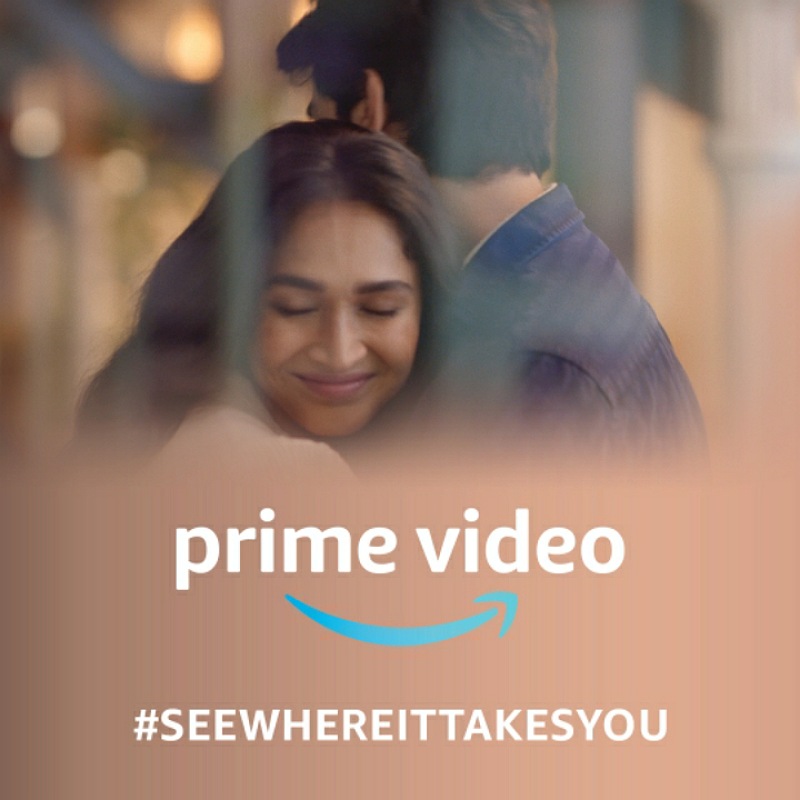
    Mumbai: Amazon Prime Video on Thursday unveiled its new brand campaign called ‘See Where It Takes You’ in India. The campaign showcases the role of Prime Video in customers’ lives and highlights how immersive entertainment inspires us all to pursue our life’s ambitions and goals. 

    In the five-year journey of Amazon Prime Video in India, it has become evident that great content not only entertains but also nurtures the potential to spark action to bring about a positive change in people’s lives. With the central thought of ‘See Where It Takes You,’ the new campaign highlights the endless possibilities that start with entertainment and attempts to foster a two-way conversation between storytellers and fans, communities and creators.

    Conceptualised by Amazon Prime Video and Ogilvy India, the 360-degree campaign will run across TV, print, digital and social channels. The films have been directed by Shashanka Chaturvedi, and produced by Good Morning Films.

    Showcasing two of Prime Video India’s most iconic shows “The Family Man” and “Four More Shots Please!”, the campaign features two films – the first of which was launched this week. The film takes a relatable setting in the life of a young couple and depicts how the popular Amazon Original show “The Family Man” not only delivers an immersive entertainment experience, but also inspires them to rekindle their romance. The narrative also weaves in the X-Ray feature that amplifies the engaging experience Prime Video offers.

    “Over the past five years, our customers have increasingly looked to us as a trusted friend – one they could rely on to entertain them withsome of the best shows and movies across genres and languages,” said Amazon Prime Video India director –SVOD business Sushant Sreeram.  

    “With users streaming on Prime Video from 99 per cent of India’s pin codes, we take this responsibility seriously, as a service that not only entertains but also inspires. We have constantly worked towards bringing communities and creators together in a manner that ignites fandom and fosters meaningful communication,” added Sreeram.

  • Roku unveils Advertising Watermark to protect from ad spoofing

    Roku unveils Advertising Watermark to protect from ad spoofing

    Mumbai: Roku Inc on Thursday announced its Advertising Watermark free technology to help advertisers and publishers validate the authenticity of video ads originating on the Roku platform. Touted as the industry’s first authentication solution built for TV streaming, Roku’s Advertising Watermark gives marketers the confidence that their advertising spend is reaching real Roku users.

    “Today, device spoofing occurs when scammers pretend that a desktop or mobile device is a TV streaming device. Roku’s Advertising Watermark integrates with the Roku operating system to automatically verify publisher ad requests and impressions so that advertisers know they are reaching genuine Roku users,” said the statement. “While ad spoofing in TV streaming remains rare, this technology will help the industry deter bad actors and improve ad effectiveness.”

    Ad technology providers integrating Roku’s Advertising Watermark at launch include Basis Technologies, Google, Human, Innovid, and Magnite. Publishers using Roku’s Advertising Watermark to sell their own ad inventory include Discovery, Fox, and more. Additionally, OneView by Roku will be the first ad buying platform to offer ad inventory automatically validated by Roku’s Advertising Watermark.

    “As America’s top TV streaming platform, we are uniquely positioned to help the industry preempt device spoofing,” said Roku VP of product management Louqman Parampath. “This is powerful and free technology that will help advertisers accelerate their shift to TV streaming with even more confidence.”

    Human co-founder and CEO Tamer Hassan remarked, “Roku is moving the industry forward with a solution that combats spoofing across the ad supply chain before it becomes a major issue. Together in partnership with Roku, we are creating a collectively protected ecosystem that brings even more trust and quality in a world where all TV will be streamed.”

    “Roku’s Advertising Watermark assures our advertiser clients that they are buying genuine Discovery inventory on Roku devices. We’re excited that Roku has brought its data, operating system, and ad technology together to easily prevent ad spoofing,” added Discovery VP – programmatic solutions Bill Murray.

  • Nielsen Media Impact to include streaming data from connected TV

    Nielsen Media Impact to include streaming data from connected TV

    Mumbai: Nielsen will expand coverage offered by Nielsen Media Impact (NMI), a national media planning and optimisation solution, to include streaming data from connected television sets (CTV). This NMI enhancement, fuelled by Nielsen’s Streaming Platform Ratings data, will allow advertisers, agencies, and media owners to better understand the full cross-platform audience reach of TV, digital, radio, print, out-of-home, and now even more robust streaming channels in their media planning scenarios.

    The ability to identify the incremental reach of streaming apps in the media planning process unlocks true, cross-platform media planning so advertisers can capitalise and reach consumers regardless of device. With media consumption habits changing and a growing portion of viewing happening on streaming apps, it’s critical for marketers to plan across the platforms that consumers utilise the most in order to reach the right audiences and improve ROI.

    According to Nielsen’s latest The Gauge report, consumers are spending an average of 180 billion minutes per week streaming content. The addition of streaming data to NMI gives advertisers, agencies and media owners the most complete view of their plans’ footprints. This enhancement enables advertisers, agencies, and media owners to find cost efficiencies and determine optimal media mixes to reach advanced audiences and better achieve business goals.

    Now, advertisers and agencies can execute against more granular plans and optimisation models that showcase the full scope of investment scenarios across every media platform, enabling them to better reach their target audiences on the right platforms, at the right time, with the right message.

    “Nielsen is committed to helping the industry make data-informed decisions about their media plans that maximise efficiency and drive results,” Nielsen SVP planning products Jay Nielsen. “With streaming data from the TV glass now available directly in our media planning tool, clients can more easily reach advanced audiences and navigate the fast changing landscape with the confidence that they’re spending every dollar as effectively as possible.”

    Nielsen is capable of providing app-level streaming data in NMI, which is fuelled by Nielsen’s Streaming Platform Ratings data. Nielsen Streaming Platform Ratings provides a macro view of how consumers engage with various streaming platforms. Using people-powered panels and proprietary metering technology, it measures what content is streamed, the device used to stream and the streaming source application.

  • Binance announces strategic partnership with SM Brand Marketing

    Binance announces strategic partnership with SM Brand Marketing

    Mumbai: Blockchain ecosystem and cryptocurrency infrastructure platform Binance has signed a MoU to build a comprehensive partnership with SM Brand Marketing (SMBM), a subsidiary of a South Korean entertainment company SM Entertainment.

    As part of the comprehensive partnership, Binance and SMBM will establish a global Play-to-Create (P2C) ecosystem. The partnership will begin with cooperation in the NFT sector and the creation of a joint eco-fund.

    Conceptualised by Soo-Man Lee, the music executive of SM, P2C allows users to reproduce content using IP. “By using the tools and IP provided within the e-commerce and metaverse platforms, users can recreate content and products in the forms of games, music, dance, and goods,” said the statement.

    Within the P2C ecosystem, these contents and products can be converted into NFTs, allowing users to earn profits while also gaining recognition for their originality. The P2C ecosystem is a step forward from the existing Play-to-Earn (P2E) model, it added.

    “Binance is happy to be working with SMBM to advance the current P2E ecosystem into a P2C ecosystem,” said Binance NFT global head Helen Hai. “We would like to provide SMBM with the robust technology that can support the numerous Kpop global fans who enjoy recreating content based on their favorite Korean celebrities and want to earn passive income through their hobbies.”

    With the strategic partnership, Binance and SMBM will collaborate to create an ecosystem where global creators can easily participate in recreation using IP and profit from their original content and projects in a transparent manner. The P2C ecosystem created through recreation will also enhance the creative culture within the K-pop industry. Fans, artists, and companies are brought together to join forces on these e-commerce and metaverse platforms, the statement said.

    Binance and SMBM will be working jointly on the blockchain mainnet, NFT, and eco-fund to establish the P2C ecosystem. Binance will also provide the technology infrastructure for the overall blockchain and NFT ecosystem. Meanwhile, SMBM will provide the vast IPs managed by SM, including EXO, Red Velvet, NCT, aespa, and more, and support with content planning and platform construction, it added.

    “By combining together SM’s production capabilities, SMBM’s e-commerce platform capabilities, and Binance’s technology infrastructure, we expect this comprehensive partnership will bring great innovation in the establishment of the P2C ecosystem and expansion of businesses in the blockchain industry,” stated SMBM CEO Sung-su Lee. “It is also an opportunity for fans to build a new participatory creation culture through recreation and to gain economic benefits by being on the blockchain.”

  • Tarak Mehta anime to stream on Netflix from 24 February

    Tarak Mehta anime to stream on Netflix from 24 February

    Mumbai: An animated series based on Indian television’s daily sitcom “Taarak Mehta Ka Ooltah Chashmah” will stream on Netflix from 24 February, the makers of the show Neela Films have announced.

    Titled “Taarak Mehta Kka Chhota Chashmah,” the family comedy entertainer show is created and authored by Asit Kumarr Modi and stars a host of actors including Dilip Joshi, Shailesh Lodha, Munmun Dutta, and Mandar Chandwadkar, among others.

    The Neela Film Productions’ animated series which has aired two successful seasons on TV since 2021 also features popular characters from its parent show in hyperbolic comic avatars.

    Neela Film Productions founder and director Asit Kumarr Modi said good content can be seamlessly adapted across mediums and they are thrilled to bring the animated series on OTT for their audience. “The show’s animated version will be available to our viewers on Netflix. Humour can bring positive transformation in the society, and at Neela Film Productions, spreading joy is pivotal to our ethos. We’re glad that our viewers, especially kids, will get to enjoy ‘Taarak Mehta Kka Chhota Chashmah’ on OTT as well.”

    “Taarak Mehta Ka Ooltah Chashmah,” the original Hindi sitcom, is based on Chitralekha magazine’s weekly Gujarati column ‘Duniya Ne Undha Chasma’ by late columnist-playwright Taarak Mehta.

    The TV show first aired in 2008. It is running in its 14th year with over 3,300 episodes.

  • Netflix release slate for 2022 set to outpace 2021

    Netflix release slate for 2022 set to outpace 2021

    Mumbai: Streaming giant Netflix is slated to release 398 shows in 2022 which is with more original TV content expected to air on the platform, according to a study by Ampere Analysis.

    “In 2021, Netflix released 395 original TV shows globally including 259 commissioned and released in the same year. Including only shows scheduled for release, those already in the can, and shows that will complete production, 2022 Netflix is set to break this record,” said Ampere Analysis research director Richard Cooper.

    Netflix has already released 55 TV shows by the second week of February and has announced additional 56 premiere dates this year. The company has announced another 97 titles separately that are scheduled to release sometime in 2022 but with no hard release dates confirmed as of yet.

    “However, it’s from within Netflix’s extensive commissioned ‘in-production’ slate that the remainder of 2022’s titles can be found,” said Cooper. “The streamer has a further 88 TV shows that have already finished production and are premiere ready, effectively just waiting to drop on to the platform.  Netflix has a further 102 shows that are still currently either at the script or shooting stages but which we expect to finish production in 2022 in time to air this year.”

    All these shows are already commissioned and in Netflix’s production pipeline. This 2021 beating total excludes any 2022 shows yet to be commissioned, produced, and aired this year. 

    “Were the streamer’s 2022 commissions for same year release only to match the number in 2021, the final year tally of Netflix original releases could easily cap 650 new titles, a 65 per cent uptick on the previous year,” observed Cooper.

  • Case Study: When short-form video enables long-form video

    Case Study: When short-form video enables long-form video

    Mumbai: What is the most strikingly common feature between “Mirzapur: Season two,” “Bigg Boss: Season 15,” and the Indian Premier League (IPL) 2021? All three are big-ticket, entertaining OTT releases in the past year. But an even more compelling factor is that they have captured the attention of the audiences via multiple campaigns hosted on short-video app Josh. This is significant of a larger pattern, wherein, OTT platforms are now seeing the increasing benefit in reaching out to the audiences through homegrown short-video apps.

    Onset of Josh’s OTT saga

    India has a voracious appetite for video content. The success story of these offerings showcases the fact that both short-form and long-form videos are proactively meeting the content needs of users across the country. The video content boom, which began in the early days of the pandemic, with nearly 350 million people consuming videos online in India, will only rise upwards. As per a Bain & Company report, it is further expected to reach 600 – 650 million in 2025.  While short-form videos provide users with snackable content that is quick and easy to consume, long-form video caters to their need for in-depth content with a lengthier viewing experience.

    A new trend to have emerged in recent times is that OTT platforms are leveraging these consumption patterns in collaboration with short-video platforms to promote their own content and reach wider audiences. This is where Josh’s saga with popular OTT platforms begins. The app has crafted and curated some of the most successful campaigns using hashtags, soundboards, filters, and influencers to promote a variety of web series, movies, sports leagues, and reality shows.

    Promoting Web Series

    In a long-standing partnership with Amazon Prime Video, Josh has promoted several popular Prime productions such as “Mirzapur season 2,” “Sherni,” “Jai Bhim,” “Sarpatta” and “Malik.” The partnership boasts spectacular results with the most popular campaign gaining 170+ million video views, 5.5K UGC videos, and 15+ million hearts.

    Furthermore, Josh’s partnership with Voot has resulted in exciting campaigns for the new season of the popular reality TV show “Bigg Boss.” Two campaigns, the #BiggBoss15AsliFan and the #BiggBossOTTChallenge, were launched to promote season 15. With unique soundboards specific to different local languages, dynamic filters, and hashtags to enhance top-of-the-mind recall, they garnered a total of 654+ million video views, 30K+ UGC videos, and 51+ million hearts.

    What is interesting is that Josh’s campaign trail is not limited to web series, but also covers other genres of entertainment such as music, movies, and sports, among others.

    Amplifying sport challenges

    Sports shows have an inbuilt tendency to attract audience frenzy. With its reach and power of amplification, Josh added to the existing thrill with some popular campaigns.

    For the Abu Dhabi T-10 League on Voot, Josh created filters, in-video transitions, and a theme song. The challenge succeeded in its mission of engagement, garnering 272+ million video views, 12+ K UGC videos, and 21+ million hearts.  To organically promote the latest season of IPL and the anthem created by Nucleya for the teams with Disney+ Hotstar, an influencer-led campaign titled #IndiaKiVibeAlagHai was created. Best of Josh’s creators were given free reign to choose the team they wanted and amplify the tournament on the app. The campaign garnered 16+ million video views, 50+ influencer videos, and 310+K hearts.

    When the Pro Kabaddi League returned to our screens for its latest edition on Star Sports, the app promoted it via a fun and engaging #LePanga challenge. Creating a sport-centric hook step, a dynamic filter, a catchy soundboard, the campaign garnered 179+ million video views, 5.9+ K UGC videos and 13.9+ million hearts.

    The power of Bharat’s short video

    As a homegrown short-video app, Josh has held an understanding of local context. Using its tact of connecting effortlessly with local audiences, it helped create a captivating campaign for Zee Bangla’s show “Uma.” With the hashtag #UmaChallenge, which is based on the show’s theme of cricket, female users were asked to balance a ball on a bat for 10 seconds. The app helped the platform reach out to a vast Bengali user base in the country creating over eight million video views, 140+ UGC videos, and 630+ K hearts.

    Summing the impact of Josh’s local reach, VerSe innovation chief revenue officer Sunil Kumar Mohapatra said, “As a homegrown short-video app, we understand the users of Bharat and their content needs. As OTT platforms increasingly meet the local language content needs of Bharat, we, at Josh, by leveraging our talented creator community and our understanding of the local context are enabling these platforms to reach out to wider and relevant audiences, as we operate at the intersection of our user preferences, creators needs, and brand propositions.”

    Indeed, short-video platforms are becoming an increasingly viable route for OTT platforms to promote their content largely because of their snackable quality. The method of promotion becomes even more effective given the rise of local language content and homegrown short-video apps that have cracked the code of engagement for such content and its audiences.