Category: Over The Top Services

  • VidNet 2022: Why do narratives like ‘Gullak’ work on OTT?

    VidNet 2022: Why do narratives like ‘Gullak’ work on OTT?

    Mumbai: SonyLiv web series “Gullak” produced by The Viral Fever, which concluded its third season recently, is a revelation for OTT platforms on creating franchises that span multiple seasons and do not lose their appeal. The simple premise of the show revolves around the interactions of a middle-class family ‘The Mishras’ including the father Santosh Mishra (played by Jameel Khan), mother Shanti Mishra (played by Geetanjali Kulkarni), elder son Anu Mishra (played by Vaibhav Raj Gupta) and younger son Aman Mishra (played by Harsh Mayar). The outstanding response to the web series in its third season highlights the importance of good writing when creating for OTT platforms.

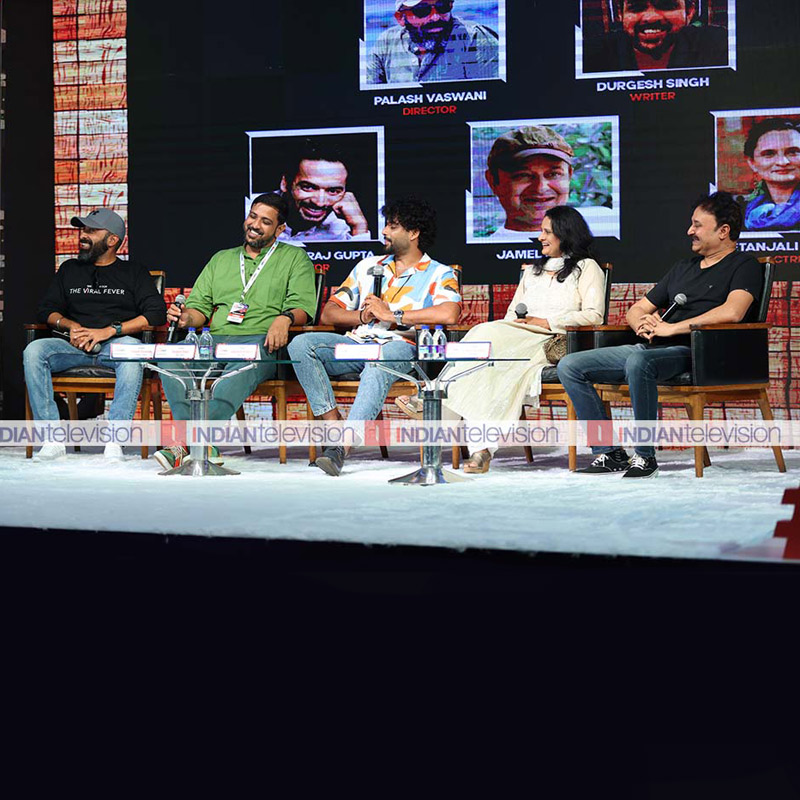
    At IndianTelevision.com’s VidNet Summit 2022, held recently, the director, writer and cast of the show for the third season of “Gullak” gave a masterclass on the making of the series. The creators spoke about sustaining the relatable middle-class aesthetic and narrative of the show and the cast spoke about the evolving traits of each character in successive seasons. The session was joined by director Palash Vaswani, writer Durgesh Singh, actor Vaibhav Raj Gupta, Geetanjali Kulkarni, and Jameel Khan.

    The two-day industry event was supported by technology partners Dell Technologies and Synamedia, summit partners Applause Entertainment and Viewlift, industry support partners Gupshup, Lionsgate Play and Pallycon, community partners Screenwriters Association and Indian Film and Television Producers Council, and gifting partner The Ayurveda Co.

    The director of the show Palash Vaswani started the masterclass session by stating that the content we see made for audiences in the Hindi-speaking belt depicts characters holding a gun or presented as caricatures. “Gullak is different because it is not a show about the ten per cent of the population but the other 90 per cent who are underrepresented in the media. This is a life that we’ve all lived and the show is a potent ground for telling stories that have not been heard before. I found the opportunity to tell that story exciting.”

    Writer Durgesh Singh spoke about the moments that inspire the writing of the show. “I was in Bhopal two days back at an Indian coffee house. There were four uncles in their mid-fifties discussing Ukraine president Volodymyr Zelensky. Mind you, they were not talking about the ongoing Ukraine-Russia conflict but they were commenting on how fit Zelensky was at the age of 44,” he shared. “In this country, while infrastructure is developing fast, people’s mindsets and attitudes are changing more slowly. The reason small-town stories are working in cinema, TV and OTT is that people in small towns have migrated to big cities and they want to see the stories that take them to the space where they have spent their childhood. That’s the insight behind the success of ‘Gullak’.”

    Actor Vaibhav Raj Gupta who plays the elder son in the Mishra household ‘Anu Mishra’ spoke about his character arc in the latest season. He said, “Whenever a new season of ‘Gullak’ launches, I go watch the previous season to understand the character arc. Earlier, Anu Mishra has been struggling to earn money and, in this season, he’s finally begun earning. That’s the new dynamic that we explored.”

    Speaking about his inspiration for bringing out the character traits in Anu Mishra, he noted, “I also come from a middle-class household and I have a younger sibling. I’ve noticed how the people at home treat you if you’ve not excelled academically or are an earning member. For example, parents start treating you with respect once you become an earning member. I learned from those interactions and incorporated that experience into my character.”

    Geetanjali Kulkarni, a Marathi theatre actor, who played the role of ‘Shanti Mishra,’ said that season three continues with the arc after her character is diagnosed with diabetes in season two. She reflects that there is a lot more sensitivity to the character interactions in season three, where the characters fight, but there’s also more making up. “There’s a maturity and wisdom in the characters of ‘Gullak’ because the characters are growing older. As a theatre actor, after doing 25-50 shows we start playing around with the material, not necessarily worrying about the lines or people’s responses. Similarly, in the third season of ‘Gullak’, we’ve become more playful with our characters.”  

    Jameel Khan, who plays Santosh Mishra, agreed with Kulkarni and affirmed, “There’s a lot less conflict and yelling in the third season of ‘Gullak’ as compared to season one and two. There was also sensitivity in the season where we paid close attention to every relationship in the family. There has always been a ‘dostana’ between the parents and children in the Mishra household but the third season also brought a sensitivity to the relationship between husband and wife. In a middle-class household, there is an attitude that we must suppress the womenfolk in the household and I find that disturbing. ‘Gullak’ takes a mirror to society in an entertaining manner and reflects their aspiration to move ahead in life.”  
  • Vidnet 2022: ‘OTT has spurred the era of fearless storytelling’

    Vidnet 2022: ‘OTT has spurred the era of fearless storytelling’

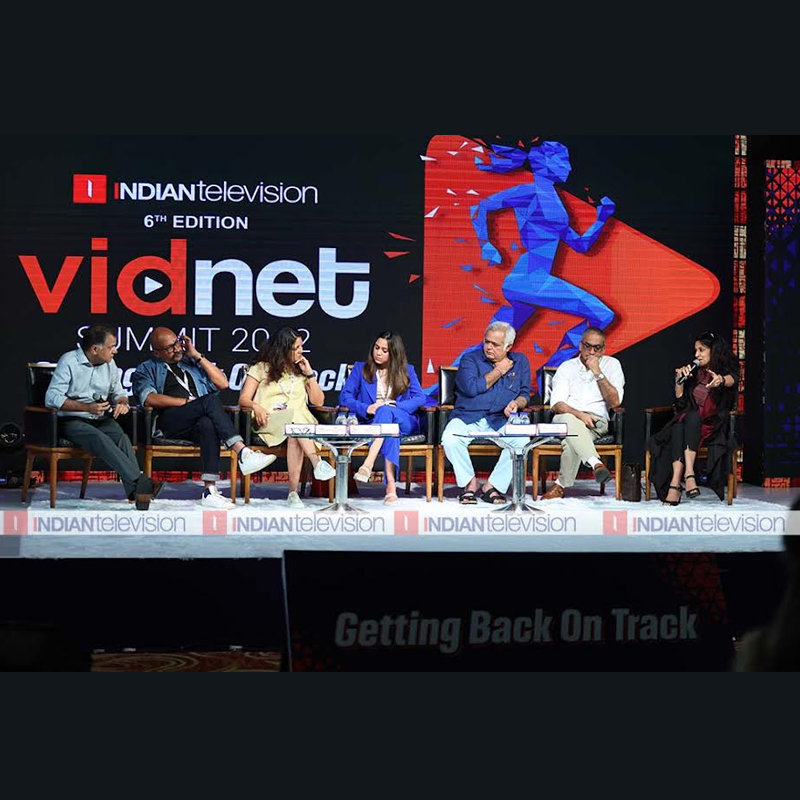
    Mumbai: India has entered a new era of creative storytelling. Whether it is the hegemony of Hindi-language content or big-name stars driving audiences to films, the rules that determined successful content have been broken. The focus in storytelling is on good writing that hearkens back to the 80s and 90s Doordarshan era with fine shows like “Wagle Ki Duniya,” “Hum Log,” or “Nukkad” to name a few. During a panel session on ‘Era of Creative Storytelling’ held recently at IndianTelevision.com’s VidNet Summit 2022, panellists affirmed that while content is governed by certain rules, the ones that have been breakthroughs have always upturned the rules.

    The two-day industry event was supported by technology partners Dell Technologies and Synamedia, summit partners Applause Entertainment and Viewlift, industry support partners Gupshup, Lionsgate Play and Pallycon, community partners Screenwriters Association and Indian Film and Television Producers Council and gifting partner The Ayurveda Co.

    The session was joined by director, writer and producer Suresh Triveni, Excel Entertainment producer Rucha Pathak, Applause Entertainment head of content Deepak Segal, Banijay Asia executive vice president – business and content Mrinalini Jain, film director, writer and producer Hansal Mehta, and Zee Studios head of content Ashima Avasthi Chaudhuri. The discussion was led by House of Cheer founder and CEO Raj Nayak.

    We’ve all heard of the Korean show “Squid Game” but few consumers outside of India have heard of an Indian original production that is not a film. Raj Nayak started off the discussion by asking creators why India’s content has not travelled as much as we would like?

    “I believe that stories have to stay authentic to where they originate from,” said Zee Studios Ashima Avasthi Chadhuri. “Do I need to make a story in English language for it to be accepted globally? No. Do I need to shoot the story in an international setting to make it appealing? No. It is not the language or budget of a production that determines whether the story travels but rather the emotion which must be universal.”

    “Scam 1992” director Hansal Mehta believed that, too often, creators of a show get caught up in figuring out the end result i.e., revenues. They ask complicated questions like ‘is the show accessible to a global audience?’ or ‘projected box office earnings for a film during the weekend’ rather than investing in the creative process. “When we made ‘Scam 1992,’ we didn’t think if we’re making it for Netflix or Amazon Prime Video. Nobody commissioned us to create it. We sold it after the cuts were made and it was picked up by a young OTT platform (SonyLiv). Its success proved that good content is greater than the platform and will find its way to the audience.”

    Suresh Triveni, who directed “Jalsa,” was also of the view that producing the film first and then selling it to the platform (Amazon Prime Video) gave him the creative freedom to tell the story that he wanted. But the question whether commissioned or acquired content works better is something that every creator needs to answer for themselves, he noted.  

    TV and film producers were putting content back in the box, figuratively, by looking at metrics like weekend box office projections and weekly TV ratings, according to Chaudhuri. “Film producers were looking at the Friday (weekend box office) result and TV broadcasters were looking at the Thursday result (TV ratings). OTT is a brilliant platform because the content is here to stay and the audience will find the story at some point in time.”

    There’s also the fact that writers on OTT are becoming more fearless, observed Banijay Asia’s Mrinalini Jain. “We do all sorts of shows and some have a structure that works and others are scripts that we take a punt on. There are writers who are still finding their voices and don’t have a lot of work behind them but they have the conviction. That gives me confidence that maybe I should take a punt on them. There has to be space for flaws and being judged in storytelling because that’s the society we’re living in. Fearlessness in writing is the best thing I’ve come across in the evolution of OTT storytelling.”

    Adding further, Triveni observed that movies and TV shows have been following the business of trends. “I think there is a lack of appreciation of literature in India. We’re not reading enough or going regional in terms of finding our stories. The industry that resides in Bombay is in an echo chamber and we’re busy churning out content. Our variety will come through our literature that genuinely needs to be explored.”

    Addressing the view that there is not enough variety of content on OTT platforms, Excel Entertainment’s Rucha Pathak felt that OTT platforms will undergo the same change in perspective that film creators realised many years ago. “When I was in the studio side of the business, everyone was making films with big name stars and studios realised that to differentiate the script is really important. The film industry saw a merging of commercial and non-commercial cinema and I think the same will happen in the OTT world. Now that I’m on the producer’s side, I know that a good story really depends on the showrunner’s, director’s and writer’s vision.”

    The most asked question during the session was how can writers pitch their ideas to studios and OTT platforms? Applause Entertainment Deepak Segal replied stating, “The writer who comes to pitch their story to us must have conviction. Secondly, as a studio if I’ve put out three crime thrillers then I’m not looking to create another one. During the pitching stage, we also need to understand the myriad factors that the story will bring to the table. Then it is up to the platform or studio to decide whether they have the wherewithal to do the show.”

    Speaking from personal experience, Segal also remarked, “Don’t pitch a story by saying that it is a big project because then we’ll say I’m not the studio to make this happen. Studios are never looking to undercut creators and will pay whatever cost is required to make the show. Also, don’t ever pitch a film script and say it can also be turned into a web series. There’s a different way of writing a feature film versus a web series versus a TV show. Luckily, we learnt about character arcs and tropes that are being used in the web series format from the adaptations that we created.”

  • ‘Stranger Things’ Season 4 to be released on Netflix

    ‘Stranger Things’ Season 4 to be released on Netflix

    Mumbai: The fourth and most awaited season of American science fiction horror drama television series “Stranger Things” is all set to make its premiere on Netflix on 27 May.

    Starring Winona Ryder, David Harbour, Finn Wolfhard, Millie Bobby Brown, Gaten Matarazzo, Caleb McLaughlin, Natalia Dyer, Charlie Heaton, Noah Schnapp, Sadie Sink, Joe Keery, Cara Buono, Dacre Montgomery, and Maya Hawke, the upcoming season of this series is creating a lot of buzz across social media.  

    Let us tell you that not just “Stranger Things” but a lot of American TV shows, films and other programming in different languages are emerging as a favorite of viewers on OTT platforms.  

    According to industry estimates, 30 percent of overall viewership of leading OTT applications comes from American content, streamed in foreign languages such as Turkish, German and Korean — including their dubbed versions in the hindi and other regional languages.  

    While the originals engage the audience in urban areas, the dubbed versions ensure maintain the momentum in regional markets.  

    Recently, “Extraction” and “The Kissing Booth” by Netflix registered significant growth in the Hindi and Tamil markets. Amazon Prime Video’s “The Boys”, “The Tomorrow War”, “Wonder Woman” and “Parasite” are also doing exceptionally well in Hindi and Tamil speaking belt. Considering this shift in audience behaviour, Walt Disney has decided to leverage the regional market by dubbing content into regional languages and making it available even on its cheaper price plans.


  • VidNet 2022: How can Indian OTTs reach 100 million subscriptions?

    VidNet 2022: How can Indian OTTs reach 100 million subscriptions?

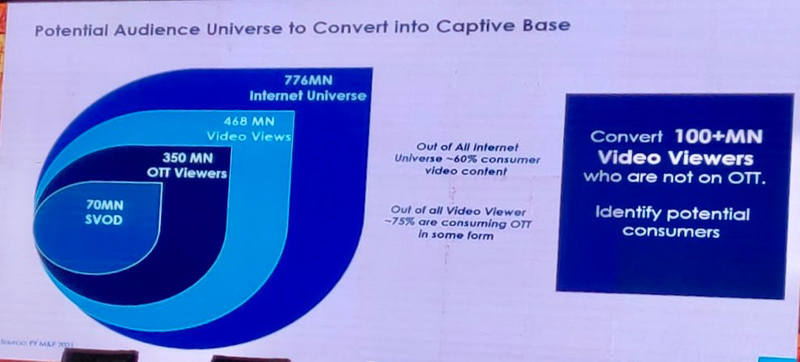
    Mumbai: In 2021, OTT paid subscriptions in India touched the 70-80 million mark, according to the latest report by Boston Consulting Group. The subscriber numbers remain in flux with high levels of churn and potential marketing efforts are required to generate and acquire new users. The streaming giant Netflix has also reported a decline in its subscriptions for the first time in a decade. The company recently reported that it lost 0.2 million subscribers in the first quarter of 2022. In such a scenario, what can OTT platforms do to drive new subscriptions and reach the magic 100 million subscribers in India?

    That was the agenda for the panel discussion at IndianTelevision.com’s VidNet Summit 2022 held on Wednesday. The two-day summit was supported by technology partners Dell Technologies and Synamedia, summit partners Applause Entertainment and Viewlift, industry support partners Gupshup, Lionsgate Play and Pallycon, and community partners Screenwriters Association and Indian Film and Television Producers Council and gifting partner The Ayurveda Co.

    The conversation was joined by Endemol Shine India CEO Abhishek Rege; International Media Acquisition Corp chairman and CEO Shibashish Sarkar; Swastik Productions and One Life Studios founder and chief creative officer Siddharth Kumar Tewary and Mzaalo (Xfinite Global Plc) COO Vikram Tanna.

    Speaking in this context, Abhishek Rege pointed out that the 100 million is merely an arbitrary number and what OTTs should look at is the revenue model. To entice new customers OTT platforms are offering free trial subscriptions, non-paywalled content and lowering the price of subscription plans, which is eating into their bottom line.

    He gave the example of Amazon’s Kindle device and added, “There was a Kindle available for $79 that served ads and then you paid a little bit more to get the ad-free version. That’s the kind of space we need to look at as OTT players and content creators if we want to land up at better revenues.”

    Mzaalo’s Vikram Tanna observed that for a long time the consumption of media in India has always been subsidised by advertising. The trend continues today with devices like DD Free Dish that offer TV channels for free. “When you look at the mass audience the solution to the problem lies in technology. They are the future consumers for us all. I believe we need to figure out how to make free content profitable. Can you reward the community for consuming content and return a part of the revenue that you earn back to them?” he pointed out.

    Mzaalo is a part of Xfinite Global Plc, which is a decentralised entertainment ecosystem. They have a digital token called XET that is listed on the cryptocurrency exchange. Tanna stated, “We believe in equal distribution of value creation among stakeholders of the ecosystem. Since content drives commerce and we all remember moments rather than the entire content piece, we tried to figure out if you can buy, sell and resell NFTs of content. Of course, they will have multiple other utilities.”

    Tanna concluded his remarks by adding that to reach the magic 100 million target the two pillars that will drive the growth of OTTs will be content and technology.

    Speaking from a content standpoint, Swastik Productions’ Siddharth Kumar Tewary said, “We’re just at the tip of the iceberg of what’s going to happen in terms of content. Content is the biggest driver of subscribers on OTT platforms and he felt that one piece of content doesn’t necessarily reach 100 million people. Platforms need to give the audiences all varieties of content to consume, similar to TV. The only difference is that content consumption on TV was led by appointment viewing and now people can watch anytime they want.”

    He added, “Every platform is different and serves a different audience. While the numbers will come, whether it is SVOD or AVOD, not every platform may be necessarily targeting 100 million subscribers.” Sharing a metaphor, Tewary noted that there are brands that cater to the masses and brands that cater to the classes across categories and we don’t compare them purely by the numbers to understand how big they are. So why should we judge OTTs that way?

    Commenting on whether the growth of OTTs is being driven by content or distribution partnerships, Rege also stated, “The content that we have served to OTT audiences is scaled up and has succeeded not to an extent, though not as much as we’d like.”

    He added, “Content on OTT is certainly different from mainstream TV. Over time an audience that is used to TV needs to be slowly nudged to OTT with simpler content. For them, jumping into OTT content that is nuanced will not get absorbed quickly. However, there is a demand for different types of content on OTT platforms compared to TV.”

    International Media Acquisition Corp’s Shibashish Sarkar believes that compared to 100 years of print, more than 30 years of TV, OTT which is only six years old is still a nascent media and will continue to grow, defying expectations. He questions the way audiences are segmented and served content across platforms.

    “Historically, on TV, we like to segment the audiences as tier 2 and tier 3. These descriptions of audiences don’t hold anymore,” he affirmed. “Going back six months, three out of four blockbusters were South Indian dubbed films. They were attracting audiences in a small town in Rajasthan as well as in Nariman Point in Mumbai. Divisions like language barriers, genres and other content divisions have become redundant,” Sarkar added further.

  • Vidnet 2022: Gen-Z, millennials driving OTT consumption pattern along with non-urban audience, says Carat report

    Vidnet 2022: Gen-Z, millennials driving OTT consumption pattern along with non-urban audience, says Carat report

    Mumbai: The OTT ecosystem in India has been evolving by leaps and bounds in recent times with amazing and diverse content being churned out on the plethora of platforms on the connected web today. Even as the OTT subscription market in India continues to grow at a gradual pace, it remains an exciting prospect for an increasing number of marketers and advertisers who are keen to promote their brands and ads on these emerging platforms.

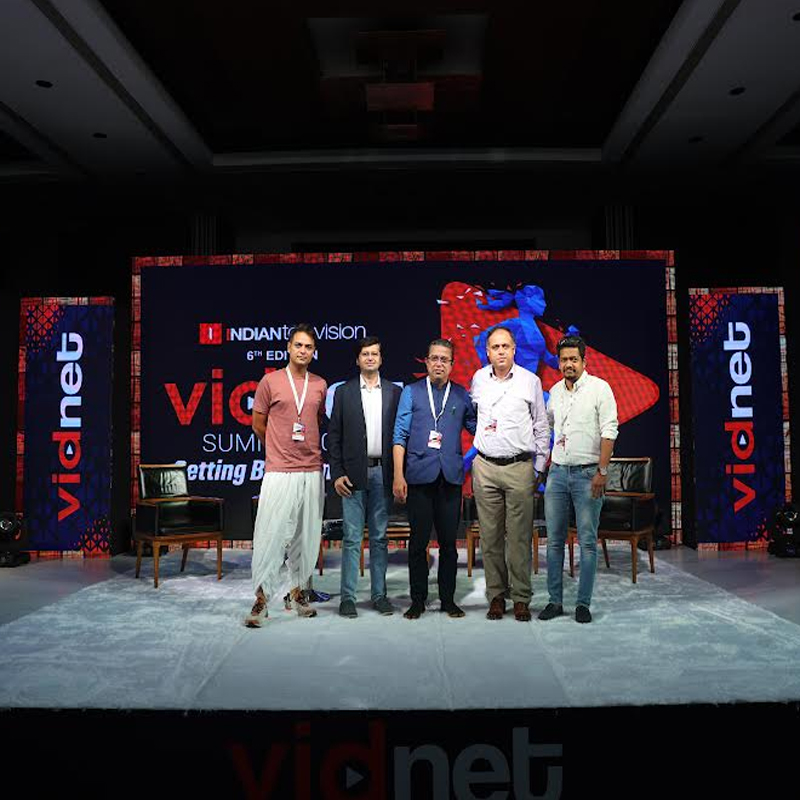
    IndianTelevision.com organised the sixth edition of its Annual Vidnet Summit with an aim to have an in-depth look at the way forward for the OTT ecosystem and all the platforms on it, and the opportunities and the challenges in the space. The two-day summiit had technolgy partners Dell Technologies and Synamedia, summit partners Applause Entertainment and Viewlift, industry support partners Gupshup, Lionsgate Play and Pallycon, community partners Screenwriters Association and Indian Film and Television Producers Council and gifting partner The Ayurveda Co.

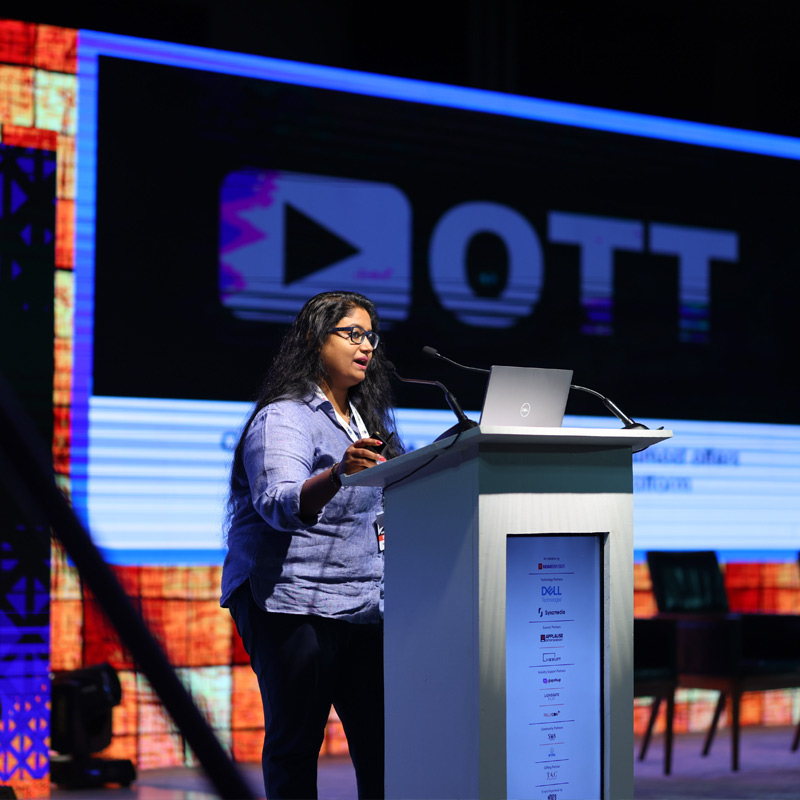
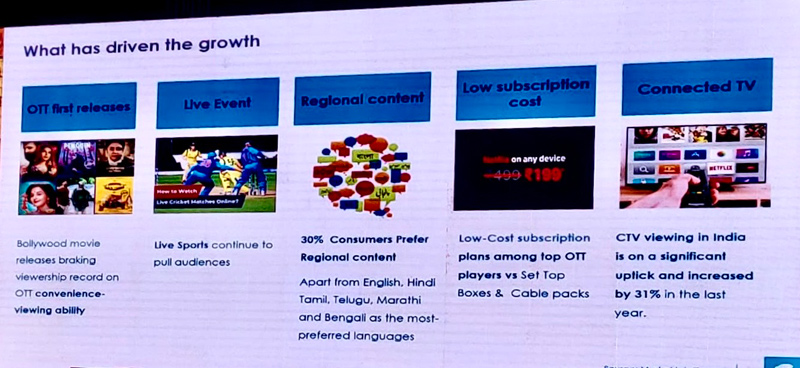
    The first day of Vidnet 2022 saw an interesting mix of sessions on the subject with bristling conversations from industry experts and stakeholders on the various panels. The day’s sessions kicked off with an informative report on ‘OTT Consumption & Advertising Trends’ presented by Carat India associate vice president- strategy Sayami Podder. The report provided insights on the key factors that have driven the growth in the space such as OTT first releases, low subscription cost, regional content, live events and Connected TV. The report also looked at who is driving the growth and estimated that the large potential audience base of 70-80 million paid subscribers comprises the age group of 15-35 years, while amongst women consumption is driven by the 25-35 years age group.

    The report also estimates that the viewing time spent on these streaming platforms have gone up from two hours pre-covid to 4.45 hours, even as the minutes of consumption have spiked from 181 to 204 billion minutes in 2021.

    Video consumption of non-fiction content beyond television on streaming platforms is also on the rise, as per the report, with the viewership for such series on Netflix alone growing by over 250 per cent.

    Digital viewership of non-cricket sports too saw an increase of 310 per cent, according to the report, while the IPL audience is expected to become even bigger with a 20-30 per cent spike in match watch time over IPL 2021 on Disney+ Hotstar.

  • GUEST COLUMN: Relevance of conversational AI in adtech sector

    GUEST COLUMN: Relevance of conversational AI in adtech sector

    Mumbai: Conversational AI, which allows contextual dialogue through advanced algorithms that enable superior, result-oriented, human-like conversations, emerged due to the shortcomings of traditional chatbots. Individuals were often fraught with the challenge of searching for a specific product or customised financial services online and being disappointed since all the results displayed were irrelevant due to certain mismatched algorithms. Likewise, a bot interaction cannot yield the desired outcome if the keywords do not match with the pre-programmed list. This can trigger the user to the extent that they may altogether discontinue the existing services or shift their business to another organization. Needless to say, bot responses can be predictive, repetitive, disengaged, impersonalised, and more often than not, far placed from the real solution.

    Owing to its advantages, adtech industry has been one of the fastest to leverage the benefits of Conversation AI since it has the potential to catapult the ecosystem to the next realm. These advertisements are the most effective ways of instilling a sense of personalisation that drives a long-lasting, meaningful connection between the brand and its target audience. Conversational advertising allows customers to exchange information with brands, providing the latter with unprecedented levels of insight into customer impressions.

    Conversational AI becoming critical

    Conversational AI experiences have been found to drive multiple minutes of engagement, increase conversion rates, and provide a transparent and opt-in way for consumers to share insight about their preferences by brands in categories as diverse as retail, automotive, financial services, and lifestyle, among others. Conversational advertising uses AI bots, to create natural, automated interactions that assist in accelerating purchase intent, brand recognition, and conversions when compared to static ads.

    The emerging AI tech enables virtual assistants to comprehend questions, deduce consumer intent, and answer appropriately. Customers are kept engaged throughout the conversation with customer-focused and relevant information. As conversational AI assistants can now respond to both text and speech commands, they are providing users with more convenient interaction possibilities.

    Conversational Advertising uses existing display and OLV advertising channels to build two-way connections between businesses and customers. When compared to modern digital advertising or one-way mass media, it’s no surprise that customers like the ability to respond. New age consumers are increasingly shifting from visiting stores and websites, reading reviews, and getting recommendations from social media influencers, to technology-guided mechanisms that provide the best fit within the least turnaround time.

    Evolution of adtech through conversational AI

    1) Sophisticated audience targeting

    Personalisation is one of the reasons why digital advertising is superior to traditional advertising. Finding the correct target demographic for an advertisement used to be like shooting in the dark. But now, owing to consumer data, Conversational AI sifts through terabytes of data in a matter of seconds and analyses it to pinpoint the target audience for a marketing campaign. These advertisements have the power to listen, understand and offer customised solutions.

    2) User engagement through personalised interactions

    By utilising data to drive customised interactions, conversational AI increases user engagement. When a consumer is indecisive about making a purchase, they are likely to go online and search for the products, leading to conversions only if they find the relevant information. In its absence, they will switch to another brand without batting an eyelid. This is where a Conversational AI can assist in converting the lead. By leveraging the customers’ data, it can create responses that improve user experience through deep engagement, thereby prompting an increase in conversion rates.

    3) Conversational AI-based intent analysis

    Understanding the target audience’s intent is crucial for marketing and advertisement. A conversational AI chatbot provides a broader perspective to the customer’s intent analysis by building a detailed consumer persona through its multichannel presence. It provides the quickest way to sift through large amounts of data and take action.

    4) Predictive analysis adaptation model

    Predictive advertising is built on predictive analytics that creates ads based on what consumers are likely to do in the future. What if businesses already knew what consumers were going to look for? This would save companies millions of dollars in advertising if they understood what to advertise for? That is why AI and predictive analytics are at the forefront of advertising technology.

    Bottom line

    Conversational AI can help with various issues that arise during a customer’s interaction with the company. By leveraging ASR to translate, NLP to interpret, and NLG for dialogue generation, ML lies at the core of creating personaliaed conversations at scale. Not only does this method generate leads and accelerate the conversion rate, but it also enables seamless integration into pre-existing CRM tools for an engaging experience. With its self-learning capabilities, conversational AI is expected to reimagine adtech and customer engagement in the future.

    (About Author: Amitt Sharma is the founder and CEO of VDO.AI)

  • Netflix announces ‘Exploding Kittens’ mobile game and animated series

    Netflix announces ‘Exploding Kittens’ mobile game and animated series

    Mumbai: Netflix has announced that it will launch a mobile game and a show from the popular card game franchise “Exploding Kittens.” The franchise has sold over 18 million games to date, it said.

    “Exploding Kittens: The Game” will launch on Netflix in May, followed by an adult animated comedy series coming in 2023, starring Tom Ellis, Abraham Lim, Lucy Liu, Ally Maki, Mark Proksch, and Sasheer Zamata.

    The series comes from showrunners Shane Kosakowski and Matthew Inman; executive producers Mike Judge, Greg Daniels, and Dustin Davis of Bandera Entertainment; executive producers Peter Chernin and Jenno Topping for the Chernin Entertainment Group; and executive producers and creators of the “Exploding Kittens” franchise, Elan Lee and The Oatmeal’s Matthew Inman.

    “The co-development of a game and animated series breaks new ground for Netflix,” said Netflix head of adult animation Mike Moon. “And we couldn’t think of a better game to build a universe around than Exploding Kittens, one of the most inventive, iconic and original games of this century! Netflix is the perfect place to explore this growing franchise and we are so fortunate to be working with this incredible team!”

    “Our goal is to offer our members great entertainment they’ll love in whatever format they may enjoy – whether it be a game or an animated series,” stated Netflix head of external games Leanne Loombe. “As we expand our mobile games catalog, we’re excited to partner with the Exploding Kittens digital team to bring this enjoyable game to all age groups, including a few exciting updates exclusively for our members.”

    “Netflix is the only service that could bring ‘Exploding Kittens’ to life in both a series and a game,” said Exploding Kittens chief creative officer and creator of “Oatmeal” Matthew Inman. “We actually launched ‘Exploding Kittens’ on kickstarter as a weekend project, but our community has been the heart and soul of the company over the past six years. The new series and game will give our fans new ways to connect and interact with the franchise.”

  • Shilpa Shetty Kundra launches her own VFX studio – SVS Studio

    Shilpa Shetty Kundra launches her own VFX studio – SVS Studio

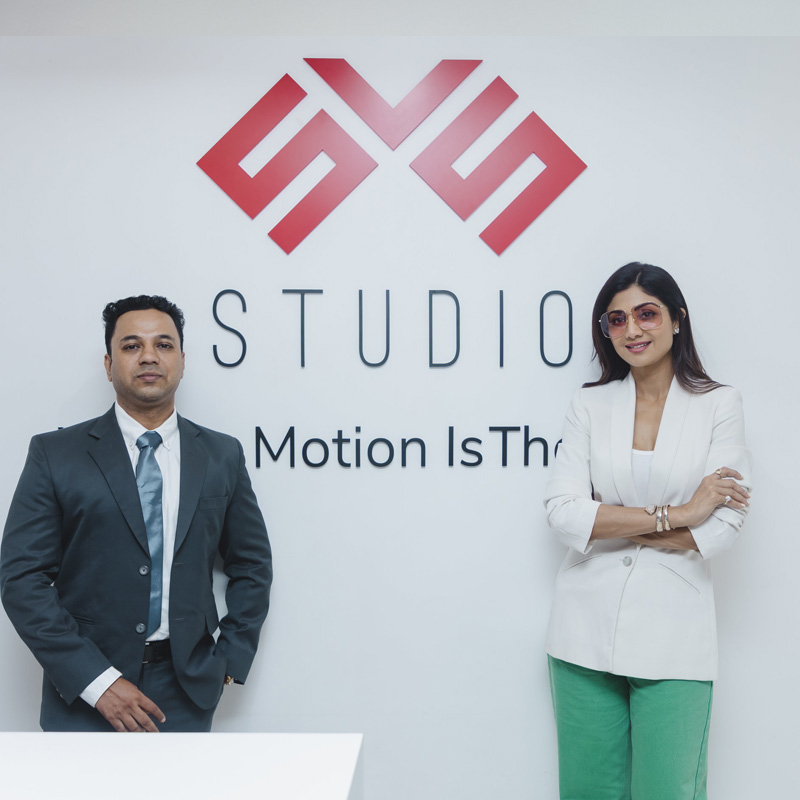
    Mumbai: Actor Shilpa Shetty has teamed up with VFX industry veteran Sandeep Mane to launch VFX company SVS Studio Pvt Ltd. Mane will lead the company as managing director.

    With a career spanning 15 years in the field of VFX, Sandeep Mane brings a vast amount of experience along with a very talented senior team under his umbrella. He has worked on blockbuster films such as “Baahubali 2,” “Bajirao Mastani,” “Padmaavat,” “Simmba,” “Dangal,” “Housefull 3,” “Golmaal Again” and many more. Before joining SVS, Mane has worked for companies such as Prime Focus, NY Vfxwaala, and Anibrain.

    “I am excited to venture into the VFX industry, being a part of the film industry, I understand the importance of good VFX. It can make or break a movie,” said founder-chairman Shilpa Shetty Kundra. “Our focus is on providing production houses in India and across the globe with world-class quality VFX.”

    SVS Studio is located in the heart of the film industry in Andheri West, Mumbai India.

    “The AVGC industry is booming. We plan to create more employment, train and develop skills and invest in new-age technology to stay ahead of the ever-evolving VFX industry providing production houses with end-to-end solutions,” said Sandeep Mane.

  • ‘The Kashmir Files’ to have its OTT premiere on Zee5

    ‘The Kashmir Files’ to have its OTT premiere on Zee5

    Mumbai: After the super successful theatrical run both domestically and internationally, director Vivek Ranjan Agnihotri’s latest hard-hitting drama “The Kashmir Files” is going to have its world digital premiere on Zee5. The official date of its digital release is yet to be announced.

    The film recently crossed Rs 250-crore-mark at the box office and broke all records in the post-pandemic era. “Wth its digital release on Zee5, ‘The Kashmir Files’ will be accessible to the viewers of across 190+ countries in multiple languages like Hindi, Tamil, Telugu and Kannada,” said the streaming platform in a statement.

    The film is produced by Zee Studios and Tej Narayan Agarwal, Abhishek Agarwal, Pallavi Joshi and Vivek Ranjan Agnihotri, and it is written and directed by Vivek Agnihotri and features a stellar cast of actors including Mithun Chakraborty, Anupam Kher, Darshan Kumaar, Pallavi Joshi and Chinmay Mandlekar.

    Living up to its title, “The Kashmir Files” is a true story, based on video interviews of the first-generation victims of “Kashmir genocide” of Kashmiri Pandit community. The film garnered positive response from critics and fans alike and even struck an emotional chord with many including superstars like Aamir Khan and Akshaye Kumar among others.

    Commenting on the digital release of “The Kashmir Files,” Zee5 chief business officer Manish Kalra said, “At Zee5, we are building a platform that empowers its audiences as much as it entertains them. We are always looking for real, relatable stories to connect with the Indian audience. Over the last few years, we have accelerated and expanded our offerings while partnering with the best of talent and content creators to design a slate that makes us the platform of choice for entertainment seekers.”

    “’The Kashmir Files’ is not just a film but an emotion and a movement,” said director Vivek Ranjan Agnihotri. “I am glad that the theatrical release received such overwhelming response across the world and now with its World Digital Premiere on India’s largest homegrown video streaming platform – Zee5, the film will reach more people and will continue to strike a chord in millions.”