Category: Over The Top Services

  • DNEG renews visual effects services agreement with Netflix

    DNEG renews visual effects services agreement with Netflix

    The leading technology-enabled visual effects and animation company, DNEG, has signed a multi-year agreement with Netflix. The agreement covers the provision of visual effects and virtual production services for Netflix series and feature programming.

    This agreement extends and expands on a previous agreement that the companies signed back in September 2020 and creates a pipeline of Netflix programming work for DNEG through 2025.

    The DNEG-Netflix agreement aligns DNEG’s scale and global footprint as one of the world’s largest content services companies with Netflix’s diverse programming slate. As part of the agreement, DNEG will build upon its existing award-winning Netflix work with a significant expansion of its premium VFX work, both domestic and abroad. DNEG’s redefine division will also supply VFX services and top-end creative supervision for select Netflix programming.

    DNEG has previously delivered visual effects services for Netflix episodic series including Locke & Key seasons one and two, Shadow & Bone, The Irregulars, Cursed, Altered Carbon seasons one and two, Jupiter’s Legacy, Away, The Letter For The King, Black Mirror seasons four and five and The Dark Crystal: Age of Resistance as well as a number of Netflix movies. DNEG won a Visual Effects Society Award for its work on Altered Carbon and a BAFTA TV Craft Award for its work on Black Mirror. ReDefine has delivered VFX for Netflix movies such as “The White Tiger”, “Mimi and Sweet Girl”, and is currently in production on the upcoming Adam Sandler movie, “Hustle”.

    Commenting on this agreement, DNEG chairman and CEO Namit Malhotra said, “Netflix is the leader in the field of streaming content, and DNEG is at the forefront of VFX and virtual production services. This agreement is transformative for DNEG and creates the opportunity for further expansion of our global scale and further investment in DNEG’s industry-leading technology.”

    He added, “The signing of this multi year agreement reflects the success of our partnership with Netflix to-date and validates DNEG’s strategic direction and worldwide growth initiatives.”

    Malhotra continued, “This deal allows us to continue providing Netflix with the very highest levels of quality and service across its programming globally. I am proud of the long relationship DNEG enjoys with Netflix and our work on some of their most popular and critically acclaimed shows. To meet the strong demand for our services and drive even further growth, DNEG is looking to expand our capacity up to 40 per cent by year-end 2022.”

    DNEG, which in recent years has won seven Academy Awards® for its visual effects work, including six of the last eight awards, is already working with Netflix on a number of projects in its upcoming slate, including the highly anticipated Stranger Things Season four; Rian Johnson’s Knives Out two; fantasy action-dramas The School for Good and Evil and Avatar: The Last Airbender; origin story The Witcher: Blood Origin; and upcoming fantasy comedy-adventure Slumberland for director Francis Lawrence. DNEG Animation is providing animation services for the much anticipated animated feature film Nimona, which will be released by Netflix in 2023.

  • GoQuest Media licenses drama package deal to Disney+ Hotstar

    GoQuest Media licenses drama package deal to Disney+ Hotstar

    Mumbai: GoQuest Media has licensed a drama package deal to Disney+ Hotstar. The video streaming platform has acquired the Indian rights to three thrilling European dramas, Civil Servant and Debt to the Sea produced by Serbian telecommunications and cable TV operator Telekom Srbija & Traitor produced by multi-service provider Elisa Estonia and Estonian public broadcaster ERR.

    Produced in conjunction with Film Danas and directed by Miroslav Lekic and Ivan Zivkovic, Civil Servant is a gripping spy thriller series that follows a young, ambitious Serbian Secret Service (BIA) agent, Lazar Stanojević (played by Milan Marić, winner of the Shooting Stars Award at Berlinale and the Chopard Talent Award at the Moscow Film Festival) as he negotiates the rules of the international spy game in the modern world. He quickly learns that all is not what it seems, and he is left fighting the distrust that he has for everything he thought to be true. Despite this, his sense of duty still makes him make dangerous decisions to try to protect his nation, his family and himself.

    Dark secrets, ancient myths and an unrelenting sea determine the life of the characters in Debt to the Sea produced in association with Monte Royal Pictures International and directed by Goran Gajic. The arrival of a mysterious stranger triggers an unstoppable wave of events for the unnerved inhabitants of a beautiful but deadly Montenegro coastal village. Fractured families, old friends and young lovers are forced to find answers in their tragic pasts and uncertain futures.

    Disney+ Hotstar has also acquired the spy thriller Traitor directed by Ergo Kuld. Inspired by recent spy scandals in Estonia, Traitor is a captivating thriller which begins in 2004, just before Estonia joined NATO and became a top target for Russian intelligence. Greed and the need for recognition lead recruit Alfred Vint (played by Tambet Tuisk who received the Best Actor Award at EFTA 2020, Estonian Film and TV Awards) to cooperate with Russian intelligence, leading to a thrilling cat-and-mouse game with determined young Estonian counterintelligence officer Marko Arrak (Veiko Porkanen).

    GoQuest Media Managing Director Vivek Lath added, “Spy dramas have enjoyed consistent success with Indian audiences on streaming platforms. Both Civil Servant and Traitor have the story, casting, and production brilliance to build a new fanbase in the country.”

    “Debt to the Sea is perfect for those who enjoy psychological thrillers with myths, murders, and family secrets set against a stunning seaside location like Montenegro. We are very excited that these exceptional Eastern European titles are now premiering in India and hope that Disney+ Hotstar audiences will enjoy them as much as we did,” he added.

  • EORTV appoints Shobhit Attray as executive director

    EORTV appoints Shobhit Attray as executive director

    EORTV has appointed television actor Shobhit Attray as executive director. EORTV, launched by industry veteran cinematographer and director Deepak Pandey, will focus on gender equality and acceptance. 

    Attray has become a popular name in every India household by being a part of top-rated serials including “Prithvi Raj Chauhan,” “Meera,” “Mahavir Hanuman,” “Na Aana Is Desh Laado,” “Aaj ki Housewife sab Jaanti Hai,” “Jai Jai Jai Bajrangbali,” “Baba Aiso Varr Dhundo,” “Muskaan,” and more. 

    In response to this new role as an Executive Director, Shobhit Attray said, “We’re thrilled to have some of the best content on our app and our audience is loving it so much, which is a testament to the way audiences have adopted EORTV as their preferred platform for entertainment. EORTV is the first LGBTQ focused platform, which has a clear vision to bring change in the mindset of people and create a revolution.”

    Shobhit thinks gender equality & acceptance is our focus & EORTV will try its best to tell the society through its story. “This will inspire the society to live a happy, free life without judgement towards all types of people in our community,” he further added.

    On being asked about acting projects, he said, “I love acting, it’s my playground, something that brought me to Mumbai and gave me the life of dreams. I’m always game for all the acting projects, acting is in my blood.”

  • PFT is best to help M&E companies embrace cloud technology: CEO Ramki Sankaranarayanan

    PFT is best to help M&E companies embrace cloud technology: CEO Ramki Sankaranarayanan

    Mumbai: As media and entertainment companies increasingly make the move towards digital this spells a big opportunity for players like Prime Focus Technologies (PFT). It is the creator of Enterprise Resource Planning (ERP) software, CLEAR, for the Media And Entertainment (M&E) industry. It offers streaming platforms, studios, and broadcasters transformational AI-led technology and media services powered by the Cloud that help them lower their Total Cost of Operations (TCOP) by automating their content supply chain.

    PFT works with major M&E companies like Walt Disney-owned Star TV, Hearst Television, Channel 4, Sinclair Broadcast Group, A&E Networks, Warner Media, PBS, CBS Television Studios, 20th Century Fox Television Studios, Lionsgate, Showtime, HBO, NBCU, TERN International, Disney+ Hotstar, Cricket Australia, BCCI, Indian Premier League and more. PFT is the technology subsidiary of Prime Focus, which offers M&E industry services.

    IndianTelevision.com caught up with Prime Focus Technologies founder and CEO Ramki Sankaranarayanan to find out more about the company’s plans and growth strategy.

    What are Prime Focus’ focus areas for 2022?

    Driven by the need for velocity in a changing landscape of ever-increasing volume and variability, we feel that our customers are incredibly busy meeting their supply chain demands. One of the toughest challenges facing them is the coordination amongst vendors globally to meet the launch windows and yet be in control.

    With leading brands going global with their streaming platforms, there is a massive demand for content, not just for bringing back catalogue but also for commissioning originals worldwide. And we play a role in both. We endeavor to help our clients manage their supply chain on the Cloud.

    We enable bringing catalogue back to streaming platforms faster with AI (Artificial Intelligence) by discovering content segments, preparing cut downs, compilations and marketing clips, conform and create new versions, and re-time subs/dubs. We want to automatically generate, transcribe, and trans-create subtitles for our customers to expedite the entire process. In addition, with modern MAM, onboarding vendors, tracking consumption, reviewing vendor-specific dashboards, and more, we believe bottlenecks can be avoided, and our customers can take control of the supply chain.

    With originals, through Vision Cloud, we are looking at AI Everywhere across the content supply chain — Segmentation, Content Discovery, Conform, Content Localisation, Subtitle Retiming, Compliance and more.

    Our concentration is also on providing support for a complete spectrum of mastering, compliance, localisation, and versioning services specialised in managing projects to deliver the highest quality while adhering to tight turnaround times. We are hyper-focused on helping customers meet all these challenges, focusing on content supply chain automation in 2022.

    As we mark 100K hours of AI processing this year, what is worth mentioning is that our ‘Making AI work for you’ proposition has been hugely successful as our AI data and action tool kits have become one of the best in the entire industry.

    What is the strategy to grow the business?

    PFT believes in continuing to invest in innovations required for automation so that we can reimagine the supply chain with the application of AI in business processes wherever applicable. In addition, we focus on making AI work for our customers to ensure dramatic cycle time reduction and drastic reductions in reducing the TCOP further and let them take complete control.

    Further work order automation will undoubtedly expand our purview to manage tasks, internal resources, assets, and workflow orchestration across the multi-vendor supply chain for content versioning, localisation, QC, mastering, and delivery.

    PFT has been working closely with media and entertainment (M&E) companies to evangelise the benefits of moving to the Cloud and address dilemmas related to that important decision. With over 13 years of highly successful global hybrid cloud deployment experience, PFT is the best place to help M&E companies embrace cloud technology to drive business outcomes like greater efficiencies, lower cost of operations, and net new revenues. In addition, PFT shares its wealth of knowledge and best practices with customers wanting to make that ‘Journey to the Cloud’ but may not know when and how.

    What trends are we seeing in technologies used by the media and entertainment industry this year to improve their P&L?

    The M&E industry has been harnessing AI and extensive data processes for quite some time now. The industry had its initial issues of business returns not being significant compared to the AI/ML (Machine Learning) introduction costs. However, the missing point was that any M&E enterprise’s business problems in their totality could not be solved accurately by any one or more off-the-shelf AI solution in the market.

    The experiments with limited resources, budgets and the choice of available AI offerings hit a wall with the search for a complete solution that has adequate accuracy to make AI work for the business use cases.

    We are witnessing an acute interest in AI now, more than ever, and people are cautiously exploring the Cloud and how Cloud can impact costs and thereby influence P&L.

    With native media recognition, Vision Cloud makes AI work for our customers by solving real-world business problems through its perfect blend of consulting and technology, providing accurate and actionable data. It fuses the expertise of home-grown models along with world-class AI engines like AWS, Google and Microsoft, all wrapped in our secret sauce, ‘Machine Wisdom’ to make AI data more accurate and actionable.                    

    There is greater use of asset management in remote post-production areas (to continue to enable remote work in the post-pandemic era). Post-production and workflow have drastically changed. The need to ‘go remote’ has accelerated the need to embrace Remote Postproduction. In addition, the pandemic has made the industry successfully embrace virtualised edit workstations.

    • Footage required for a project has grown, and the I/O departments have expanded in size. Round-the-clock interventions have become more demanding for storage management, ingesting and restoring content for postproduction. There is an acute need to run postproduction workflows on the Cloud — create work orders, tasks within the postproduction process, etc. Collaboration is vital— share media and metadata, seek review and approval even from the remotest locations.

    CLEAR offers remote postproduction Adobe workflows with automatic, single-click backups from home to the Cloud and restoration to “my workspace” with different iterations every day.

    How has Covid-19 impacted the increased use of technology and workflows?

    Covid has impacted virtualisation at large in such a positive way. With new tools and techniques in production and postproduction, we have ensured non-stop workflows. In addition, cloud technology has made remote postproduction so easy and manageable.

    Using online tools for collaboration helped deal with the inabilities of being face to face during the pandemic, with reviews/ approvals of dailies/cuts managed effortlessly. Editors can collaborate on projects, share media and metadata, seek review and approval regardless of where they are, use visual mark-ups and free-hand annotation, and chat and share notes.

    In our case, over 600 editorial staff and thousands of artists continued working from home, generating Academy-winning work, all during the Covid times, thanks to technology and workflows. In addition, Prime Focus’ DNEG (VFX), animation, and stereo conversion arm, won its sixth Academy award in the last few years, substantiating that increased use of technology and workflows have been so much for the better.

    How important is Cloud technology, and how long did it take for you to develop CLEAR?

    Cloud adoption is already mainstream; if you are not on Cloud even now, you are already behind your competition. In 2022, more than $1.3 trillion in enterprise IT spending is at stake from the shift to cloud, growing to almost $1.8 trillion in 2025, according to Gartner.

    Cloud has explored and enabled new possibilities, making AI possible. With agility, it has helped to centralise business processes in the supply chain while adhering to utmost security standards. It provides flexibility and scalability, and those who were already on Cloud before the pandemic could adapt to remote working more easily than the others. It drives collaboration efficiency, and it offers better insights from big data.

    We are in the third generation of CLEAR. We started in 2008; CLEAR was born in the Cloud solving for 4Vs (variety, variability, visibility, and velocity) in the content supply chain. The 4 Vs are imperative for us in producing content as each holds its own forte’ Variety for PFT ranges from the genre, location, and talent to consumer preferences. Through velocity, we refer to our solving complex problems in lesser times in the digital age in tandem with consumer choices. Of course, we also believe in creating everything new; our variability is in new challenges, choices, suppliers, or content. Lastly, we believe visibility is essential to ensure transparency of all processes across the production supply chain.

    Deployed globally, CLEAR is now a leading choice for content enterprises to deliver compelling results and offers never-before-seen advantages to media and entertainment businesses in managing their content.

    Today, digital has made everybody a content creator. What is Prime Focus Technology’s strategy to enable companies to manage digital assets easier?

    Thanks to Cloud, best-of-breed tools are available today to the content creators worldwide – they can store, edit, manage, and distribute content. Cloud has made it viable for any creator to pick the world’s best application for every need, every user, and business case. Moreover, some of the best tools are now in the power of a browser with commercially easier and pay-per-use models.

    PFT believes in leveraging the power of AI to manage digital assets. Our CLEAR Vision Cloud, a Media Recognition AI platform, is a fusion of home-grown AI engines (over 35 & counting) and best-of-breed AI models enveloped by PFT’s unique Machine Wisdom layer. Some use cases deployed for our customers include

    · Conformance: Automatically conform regional edits, subtitles and dub tracks on global masters in a multiple frame rate baseline.

    · Segmentation: Eliminate play-out errors drastically and increase monetisation by auto-generating frame-accurate segmentation metadata.

    · Localisation: Automatically generate, transcribe, and trans-create subtitles in over 60 languages.

    · Marketing: Locate the right clips needed to build a variety of cross-platform promo material with the high-quality discovery of data automatically.

    · Content QC: Automatically quality-control the bag and tag versions of several promos daily to deliver 100% quality and prevent leakage in your advertising revenue.

    We make AI work for the customers by providing suitable learning to the AI models for specific content and business needs, altering the models to adjust for the specific nuances.

    What’s the importance of metadata in content discovery?

    Metadata is the key to transforming any audio-visual content into a dynamic asset. Tags have changed decision-making from days, weeks, and often months into seconds. Metadata aims to facilitate quick searches for specific content, making the quality of the tags used extremely important. The value of metadata in our current time is even further enhanced because the quantity of content that already exists and what is now being created are so extensive.

    If AI techniques can help human evaluators review new or existing content and create valuable metadata, it can help organizations unlock additional value in these assets.

    Using AI to improve metadata processes can help an organisational business case. Making the most of digital content often requires M&E enterprises to move beyond basic asset management and embrace new-age, Cloud-based MAM solutions. With extensive data models and built-in tools for cataloging and metadata tagging, such solutions help organise content in useful ways, make it easily accessible, and open new avenues to monetize assets. Ultimately, they streamline and improve the overall efficiency of digital content creation, boost monetisation, and drive creative enablement.

    Finally, how important are events like NAB and IBC?

    NAB and IBC are always great meeting places. It’s excellent having face-to-face interactions with people, learn about their challenges, and get to know what’s new in the arena. There was a much-relaxed atmosphere; unlike the previous NABs, it was well organised, complete with safety measures and protocols.

  • Vidnet’22: Industry experts talk about availability of original content remain unexplored in OTT space

    Vidnet’22: Industry experts talk about availability of original content remain unexplored in OTT space

    Mumbai: Over the top, commonly known as OTT, has come a long way in the last five years. According to a new report by independent transaction advisory firm RBSA Advisors, India’s streaming market is predicted to be worth $15 billion by 2030 and out of which the video market will grow to $12.5 billion size and the audio will be $2.5 billion.

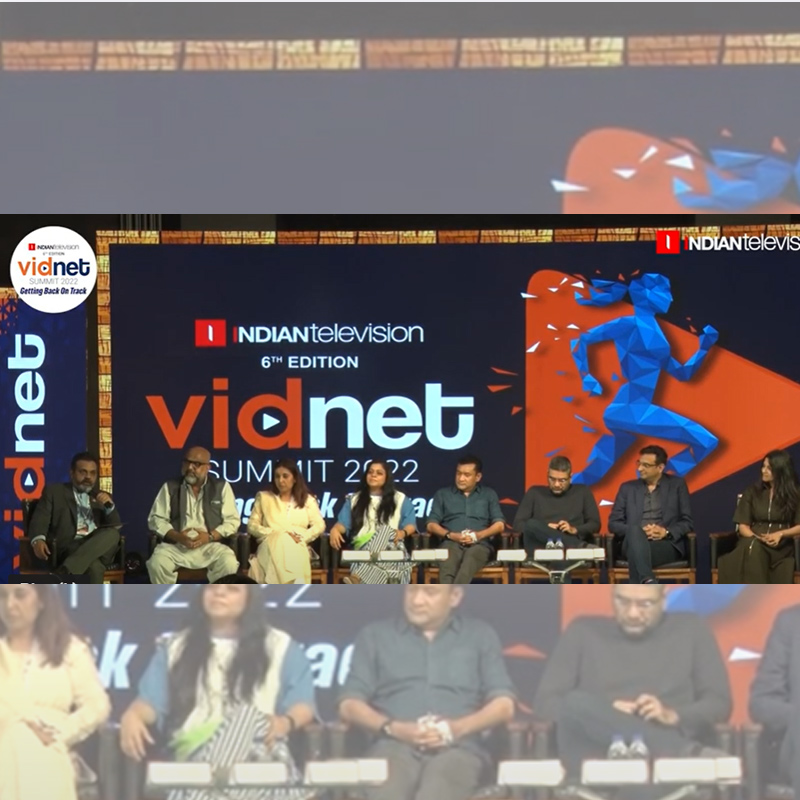
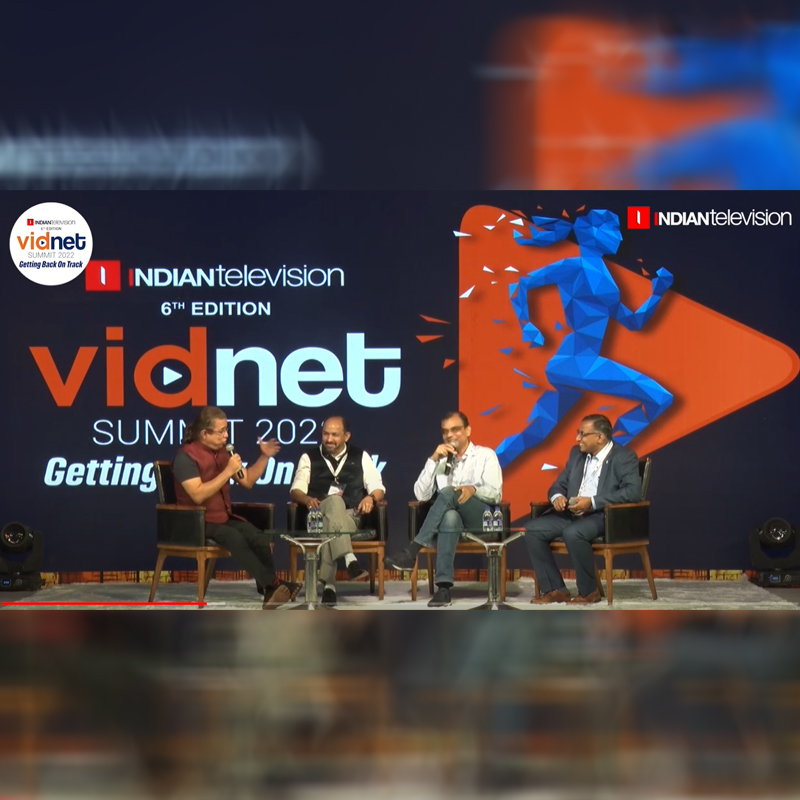
    During the sixth edition, Indiantelevision.com’s pioneering Vidnet Summit held in April brought together the industry experts to deliberate views on the evolution of OTT space and how the new order will be.  

    The experts such as Lyca Productions CEO Ashish Singh, Fremantle India Television Productions managing direct Aradhana Bhola, MX Player chief content office Gautam Talwa, Indian film direct and screenwriter Ken Ghosh, Eros Now head of content Puja Rajadhyaksha, Juggernaut Productions OTT president and COO Samar Khan, Ullu head-content strategy and business alliances Nivedita Basu and moderated by Bodhitree Multimedia Ltd managing direct Mautik Tolia were among the panelists present during the discussion of the topic ‘The Evolution Of OTT Content: The New Order’, recently held in Mumbai.

    Reminiscing the initial days of OTT, Tolia highlighted how challenging it was to produce OTT content, to ensure that it reaches the right audience in the market.

    “When we started our first Youtube show, it was twelve-minutes long, we were so worried if the audience would watch it, how would they deal with buffering, will they like it? and other challenges,” he said.  

    Further, he also put some light on the evolution of the OTT space, he named a few shows like Mirzapur, etc., which really helped the industry become bigger.

    Opening up the conversation, he asked Khan about how he’s seeing the new order or second phase of OTT taking place?

    Specifically, pointing out the challenges that the second phase of OTT is presently struggling with, he said, “If we look at the content required on an annual basis across the top OTT platforms- the biggest challenge is to find new stories for the next phase of OTT. If all the platforms launch just one show per month, on an average the industry would require 85-90 shows every year. But where are the stories?”

    In addition, he said, “the second challenge is to find talent to tell those stories on screen.”

    However, Rajadhyaksha disagreed with Khan. She said, “there’s a lot to be explored in the country.” She feels that OTT creators are not struggling with the content, there will be a surge in the regional content. She added, “As the mindset of the young Indian audiences is evolving, topics like women empowerment, cultural and inspiration stories,etc., are yet to be explored. So, finding new stories is not a challenge.”

    Basu who has recently joined Ullu thinks that stories are around us all the time, creators need to present them beautifully to leave an impact. Quoting the example of stories like Gullak, Mai, she said, “We don’t really need to hunt for something new but to present what is there with all our heart.”

    During the conversation, she also revealed that Ullu will launch a new Hindi GEC.

    Revealing this, Basu said, “We are going to launch a new Hindi GEC in future. While I announce this news, you all may think that there’s no space for a new GEC but we see a space. We are coming up with a completely new phenomenon where audiences will get to see OTT type content on TV.”

    Taking the conversation to the creators side, Tolia said, “In the initial days, there was a lot of passion to create. But now, as the OTT space is evolving, there’s a hassle to create new content within short deadlines.”

    Throwing up the next question to Ken, he asked, “As the industry has taken up a speed, now directors, writers and actors are working on multiple projects at the same time. With this speed, how will enthusiasm sustain?”

    Ken answered, “Yes, that’s true, creators are now pacing up, working more than one project simultaneously. But to sustain, industry needs to go slow.”

    “There is no need to make fake deadlines and there’s no need to run behind the stars but to invest the right amount of time in the content making process,” he said.

    Taking the discussion ahead, he asked Gautam how do we not fall into the trap of just creating content without understanding the needs of the audiences? Gautam answered, “content fatigue is there. It is important to have clarity on who you’re making content for.”

    Tolia asked Gautam, “compared to other platforms, MX Player has been extremely prolific. How are you able to churn out the number of shows you do with the same quality?”

    Gautam asserted, “We spend a good amount of time, well planned out, and give so much attention to writing.”

    Singh, who has closely seen the industry evolve over the last six-seven years, thinks that OTT has changed the dynamics of the industry from revenue point of view, from production point of view and in all other spheres.

    He said, “In the last few years, we have only learnt what OTT is! We are just on the tip of the iceberg, there’s a lot to explore. And in the coming years, we have a lot to create and present”.

    “We are one-sixth of the population and we are yet to make our own Squid Game, Money heist and a lot more,” Singh added.

    Shifting the conversation to the unscripted content on OTT, Bhola said that there’s a lot of space to grow even in the unscripted content space.

    Calling herself a radical optimist, she said, “We cannot say that there are no new stories. In fact, this is the best time to create content. However, we need to focus in terms of coming up with new seasons, we need to go slow.”

    Concluding her statement Bhola said, “There’s a lot of room to create content in India. We are super rich in terms of culture and we have a lot to create and show to the world.”

    Watch the entire panel discussion on The Evolution Of Ott Content: The New Order by clicking on the link here:

  • Global SVOD subscriptions to grow by 485 million: Research

    Global SVOD subscriptions to grow by 485 million: Research

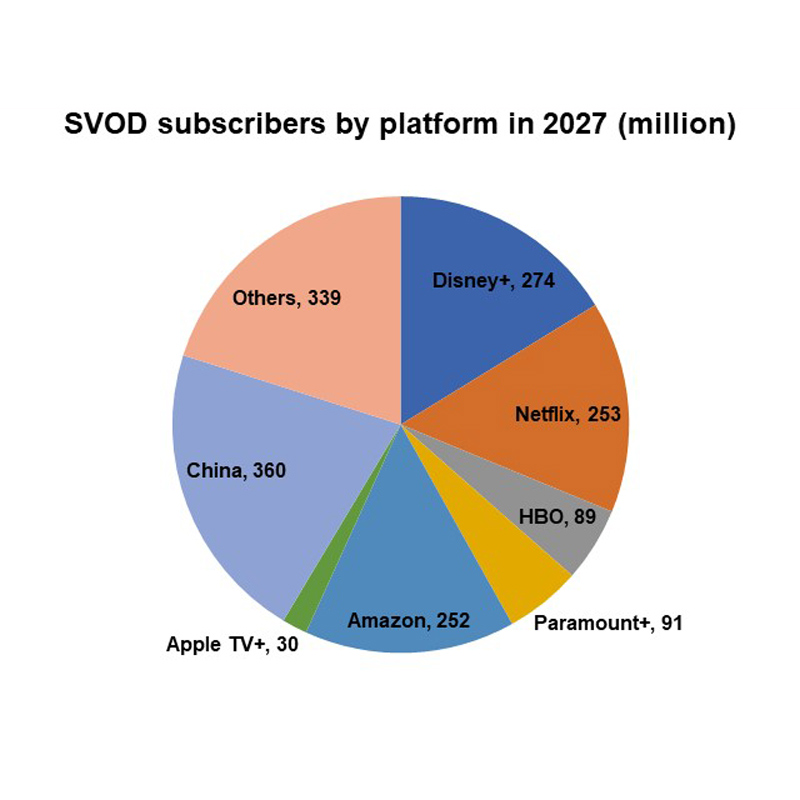
    MUMBAI: Global Subscription Video On Demand (SVOD) subscriptions will surge by 485 million between 2021 and 2027 to reach 1.69 billion. Six US-based platforms will have 988 million paying SVOD subscribers by 2027, up from 612 million in 2021, according to a report by Digital TV Research.

    Digital TV Research principal analyst Simon Murray said, “Our Netflix forecasts for 2027 are 29 million lower than our February update – at 253 million. Netflix needs to boost its content to counter its fresher and cheaper rivals.”

    Despite losing four million subscribers in North America, a total of 31 million subscribers Netflix will add between 2021 and 2027.

    It is estimated that Disney+ will overtake Netflix in 2025. Disney+ will add 144 million subscribers between 2021 and 2027 to take its total to 274 million Disney+ Hotstar will roll out to 13 Asian countries by 2027. These countries will supply 114 million (42 per cent) of the global Disney+ subscriber total, but only $1.58 billion (11 per cent) of Disney+’ revenues ($14.7 billion) by 2027.

    Netflix will remain the revenue winner, with $34 billion by 2027 – similar to Disney+, HBO Max and Paramount+ combined. However, the Netflix total is only $4 billion more than 2021 as subscriber growth decelerates and average revenue per user (arpu) is squeezed.

  • We aim to double our current subscriber base: OIL CEO Yugal Kishore Sharma

    We aim to double our current subscriber base: OIL CEO Yugal Kishore Sharma

    Mumbai: OneOTT Intertainment Ltd (OIL), the broadband subsidiary of NxtDigital Ltd (NDL), the media vertical of the Hinduja Group crossed one million wired home broadband subscribers. OIL added over 200,000 subscribers in the fourth quarter of FY22 recording a growth of 65 per cent over FY21.

    In an interaction with IndianTelevision.com, OIL CEO Yugal Kishore Sharma speaks about the progress made and the goals for the broadband subsidiary.

    What targets has OneOTT Intertainment set for the year?

    OIL has achieved a robust growth clocking a CAGR of close to 75 per cent in the last six years and we hope to continue this momentum in fiscal 2023. Whilst we remain on track to add over half a million customers, if not more, in this fiscal; we do have an ambitious plan to double our current subscriber base. This will propel us into India’s top three private internet service providers.

    What is the game plan to get there?

    At OIL, the success mantra has been our focused approach to extend a consistent customer experience bundled with ‘predictable & proactive customer responsiveness and care.’ The success of this mantra is reflected in our performance; in Q4 of FY22, we added over 200,000 customers, a milestone achievement by any yardstick.

    We launched a FTPD or ‘faster-than-pizza-delivery’ initiative that challenges our customer responsiveness to be faster and more efficient than that of QSR brands. This has led OIL to enhance its SLAs resulting in lowest-customer-Churn well below the industry average of one per cent.

    What is the USP of OneOTT Intertainment versus competition?

    The USP is embedded in one of our groups principle ‘Partnership for Growth.’ This is a model that is driven actively by NxtDigital across the digital distribution space; and as a subsidiary of NxtDigital we have adapted the model effectively in the broadband industry. OIL has evolved an industry first and innovative ISPs Aggregator Model that has contributed to rejuvenating India’s passionate entrepreneurs running small and medium ISPs.

    The model continues to successfully consolidate and unify the MSO ISP Industry as a strategic alliance partner. We’re pleased to state that we should have more than 50 such ISPs or alliance partners within our OIL umbrella in the first half of this fiscal.

    What growth in digital consumption was seen during a lockdown? How were you able to capitalise on it?

    Team OIL, along with its parent digital platforms company NxtDigital, introduced the industry to its vision of providing an always-on-high-speed-internet-access to transform the lives of the customers for their on-demand entertainment. In fact, we have aptly coined a new term for such a service demand – Intertainment.

    OIL is better prepared to offer its Intertainment services across OTT, live TV, VOD, movies, and gaming. At the onset of the first lockdown, our customers and their family members had to work, study and play from home, thereby, increasing the bandwidth consumption by almost 50 per cent. OIL through its Intertainment platform along with an innovative product-mix and promotional bundles was able to meet customer demands without passing any incremental cost.

    Which are the key cities and towns where you see the most potential?

    Our vision is a reflection of our groups mission – to facilitate digital inclusion in India through innovative technology, keeping alive the entrepreneurship spirit of small and medium ISPs. We aspire to serve as many as citizens as possible across the country. We will continue to leverage the vast network of over 1,500 cities and towns that NxtDigital currently delivers digital television and other services to.

    What is the big challenge in delivering high speed to consumers?

    There are challenges, but we’re also grateful to the government for bringing in appropriate guidelines to help the industry accelerate and grow. We are sure that two key issues that do often serve as stumbling blocks viz Right of Way (RoW) permissions and the need for standardisation on concurrency and contention ratios across ISPs and TSPs will be addressed soon.

    Could you talk about the tie-ups that you have with companies like Facebook, Nokia?

    OIL’s strategic alliance with Facebook India has made fast internet not just available but also reliable and affordable on Wi-Fi and other last-mile-access technologies at Dharavi and other such areas.

    We are very conscious about best-in-class technology and have partnered with leading technology companies like Nokia, Juniper, Huawei and others across core, aggregate, access, analytics and security solutions. OIL’s Technology Partners have also come up with innovative ‘Enterprise-5G’ solutions that can be leveraged extensively.

    Finally what is your view on 5G and how it will revolutionise data consumption?

    With 5G, the world will be much faster connected on mobile internet with 10 times data speeds as compared to current networks. This newfound capability could see the emergence of cutting-edge solutions to benefit users.

    The top ISPs along with ‘Enterprise-5G’ spectrum could have the capability and resources to build large campus-wide connectivity solutions for enterprise networks powered on a common 5G backhaul. 5G rollout topology is on a ‘small-cell-architecture’ network which is in a radius of half a kilometre vis-à-vis 1.5~2 Kms of a cellular network architecture. This would complement OIL’s Fibre-To-The-Home (FTTH) network roll-out and related services.

  • Instagram shares top trends and themes from Indian Memeaverse

    Instagram shares top trends and themes from Indian Memeaverse

    Mumbai: Photo sharing site Instagram has revealed that memes have become a pivotal part of pop culture on the platform and it shared the top trends and themes from the memeaverse in India. Comedy, crypto, gaming and astrology memes are the most popular memes on Instagram. Comedy memes are well liked with the prominence of topical memes like #sharktankmemes and rise of regional memes like #gujjumemes and #tamilmemes.

    Globally, with over three million people following #meme, memes are the way people express themselves, to communicate who they are and how they feel at a certain moment. To discuss trends in memes, share best practices and celebrate meme culture, memers and creators from around the world came together virtually for the second annual Global MemeCon (formerly known as Global Meme Summit), organised by Instagram. An exclusive viewing party was also held in Mumbai with top memers and creators from India in attendance, where trends pertaining to the Indian memeaverse were shared. 

    Facebook India (Meta) director media partnerships Paras Sharma said, “Trends from the Indian memeaverse highlight how memes fuel culture and we’re glad to share them, so more people in the ecosystem understand the meme space even further. Now with Reels, memes have evolved from photos, GIFs, to short videos, and creative tools like remix, collab and original audio, are helping accelerate creativity in memes all across India.”

    Ankit Chauhan aka @oyeankit, a meme creator from Surat, who’s rib tickling memes have traversed the internet and travelled internationally too, was one of the speakers at the global MemeCon. He said, “It’s great to see the meme community come together and chart the ways and means by which memes can be intertwined with culture even further. I was glad to be representing India at the Summit and highlight some of my memes that have travelled from Surat to San Francisco and beyond, on Instagram!”

    BoAt co-founder, CMO Aman Gupta said, “Memes are an extremely interesting content format and are most representative of youth lingo and appeal. #SharkTankMemes is the perfect example, as people meme-d moments and dialogues from the show on Instagram, and pushed it to pop culture status. Creators are certainly flag bearers of this meme-language and I hope the trends from Instagram provide the structure for people, communities and brands to think about memes more intentionally.”

    Top trends from the Indian memeaverse:

    Top followed meme hashtags in India

    #funnymemes
    #gujjumemes
    #tamilmemes
    #memesdaily
    #marathimeme

    Trending hashtags

    #iplmemes
    #telugumemes
    #kgf2 
    #gujjumemes
    #willsmith

    Topical and cultural moments that created meme-storms:

    Choti Bachi Ho Kya?
    Shark Tank India memes
    Your accent is so sexy
    Hera Pheri Memes
    Mr McAdams

  • Vidnet’22: How OTT is accelerating tech infrastructure investments

    Vidnet’22: How OTT is accelerating tech infrastructure investments

    MUMBAI: How has the exponential growth in consumption of OTT content impacted the tech – especially hardware – infrastructure needs of those running streaming platforms or serving video entertainment to consumers?

    That was the main question that was discussed during the tech session at the sixth edition of Indiantelevision.com’s pioneering Vidnet Summit held in end April. Titled Rise of Digital Revolution – Accelerated Growth Led by Disruptive Innovation in the world of OTT, the session featured Dell Technologies medium business leader Radhesh Shankaranarayanan, Sony Pictures Networks India head of Sony LIV Technology Manish Verma,  NXTDigital COO Rouse and Indian Television Dot Com founder, CEO & editor-in-chief Anil Wanvari as the moderator.

    Ten years from now, this period will be called the digital revolution period across the globe, expounded Shankaranarayanan, referring to the industrial and information revolutions which transformed the world in every way in earlier centuries. “There was a pressure or push to move into digital before this, but the pandemic has actually accelerated the digital drive completely.”

    Specifically pointing out to the media and entertainment ecosystem he opined that production houses have suddenly seen a huge amount of video content business flowing into them and, as a result, the  demand for Dell workstations and servers has  skyrocketed.

    “Earlier this segment used to be very niche in terms of technology adoption, but today I have seen so many production houses mushrooming in the last couple of years,” he revealed. “I am currently talking to at least 400-odd production houses in the country- right from Delhi to Trivandrum. Hence we want to be as close to  content creation that’s happening. We are really keen on offering even more of them solutions which will help them keep pace with the burgeoning needs by offering them workstations with the fast video processing power they need.”

    What demonetisation has done to the payment industry, I think the lockdown has done for the OTT industry, added SPNI’s Manish Verma.

    “We have seen consumption increasing crazily during the lockdowns and it has essentially increased in three different areas. One is the premium VOD (video-on-demand) service, people have actually started paying for content where earlier they used to find means to not to pay. Second is sports, which is a very good driver of consumption for us, we offer multiple live sports. That’s where we have seen good consumption happening and that’s always been there.”

    Third big area was interactivity- KBC Play along, wherein users can play the same KBC on their devices, while the show is on air, adds Verma. “All three areas require a lot of backend infrastructure, which has increased exponentially for us. We need to make sure that our backend infrastructure is scaled properly to handle the traffic, so that when concurrent users are coming in there is no latency.” 

    Another phenomena that is happening is the shift in devices from personal mobile viewing patterns to consumption on bigger screens such as smart TVs for a better viewing experience, he noted.

    NXTDigital’s Rouse Koshy offered his perspective on how his cable network was impacted on the tech infrastructure front by the increase in video consumption.

    “The pandemic didn’t hit us as hard as these guys (OTT platforms) hit us!” he expressed. He went on to add that in the last one and a half year, the company started digitising and coming up with combo products such as broadband with video etc.

    “Now in the last six months we have also started aggregating all OTT platforms and selling it as a bouquet.” This transformation is going to be a challenge, admitted Koshy as cable TV operators have a different mindset and to train them to transform is going to be a “humongous exercise.”

    4K adoption will need to further demand for tremendous processing power houses of workstation going forward, noted Shankaranarayanan,  even as 8K is still distant.

    “I am seeing this as another huge additional spend coming in hardware, software and cloud infrastructure along with 5G opening up a totally new experience,” he explained

    Going forward, we see this trend of gaming and music, apart from entertainment genres as a part of OTT platforms, revealed Koshy, which would further accelerate hardware needs at the consumer end.

    With 5G emerging, we will need to further scale up infrastructure, bandwidth requirement, affirmed Verma in response to Wanvari’s observation about the telecom spectrum transition happening globally which is expected to hit India in the next 12 months or so.

    When it comes to Metaverse, it’s too early for us to say how it’ll take off, Koshy confessed, and whether it will end up as a fad. Shankaranarayanan was more optimistic about the surge in hardware infrastructure investments  that the metaverse era is going to bring with it. “The compute power is going to be huge, and for that the Dell  has products which can cater to the requirement so consumers can have a seamless experience,” he highlighted.

    Watch the entire panel discussion on the Rise of Digital Revolution –  Accelerated Growth Led by Disruptive Innovation in the world of OTT by clicking on the link here: 

  • Regional OTT players veer towards aggregation model

    Regional OTT players veer towards aggregation model

    Mumbai: With 53 over-the-top platforms (OTT) offering video, music, gaming and news content in India, regional and niche OTT platforms are veering towards an aggregation driven model to grow revenues. A report by E&Y stated that 400 million consumers will consume content via telco and aggregator bundles by 2025 as data prices increase.  

    Video aggregators such as Amazon Prime Video Channels, JioTV+, Tata Sky Binge and telcos have become important drivers for regional and nice OTT platforms to reach a wider audience. As per E&Y report, 85 per cent of viewership volumes of certain OTT platforms were generated by telcos.

    “We believe that top three-four aggregators would dominate the market,” observed Hoichoi chief operating officer Soumya Mukherjee. “While it is difficult to predict the future, it does seem that regional OTT is heading towards an aggregation model. That’s because it takes a lot of investment and time for any player to enter the regional space.”

    Bengali OTT player hoichoi is a successful example of a regional OTT player that has grown its subscription base, majorly driven by content. In its three years in the market, the platform has released over 100 original web series and many films.

    “There were two inflection points in the history of OTT. First when the Jio revolution took place in 2016 and data became really cheap. The second was in 2020 when Covid-19 happened and the OTT industry got a boost,” said ViewLift director sales – APAC and EMEA Manish Manwani.

    When major OTT platforms such as Amazon Prime Video, Netflix and Zee5 began investing in regional content pieces, it expanded the market for regional content.

    “When these big players entered the OTT market with their regional content, we realised there is a market out there,” said Oho Gujarati and CineMan Productions founder Abhishek Jain. “When bigger platforms are marketing their regional content, it is indirectly having a positive impact on us because our library of content is much bigger.”

    Last year was a fantastic period for the growth of regional original content. According to E&Y, 47 per cent of OTT originals and 69 per cent of films released on streaming platforms were in regional languages (non-Hindi).

    The challenge for regional OTT platforms is that most of their budgets are spent on creating content with little left over for marketing. According to Hoichoi’s Mukherjee, 60 per cent of the company’s P&L goes into producing content with little to no advertising. While hoichoi has become an established brand in the Bengali market, it is tougher for other regional OTT players.

    “In some regional markets like Bengali, there’s already an established ecosystem and all one had to do was adapt the content for OTT,” said Oho Gujarati’s Jain. “Specifically, talking about Gujarati content, there is no legacy industry. There’s only one general entertainment channel and I don’t know how much it is working. The audiences predominantly watch movies in the theatre and local language films have only just started.”

    He added, “The challenge for a regional OTT player like us is that we have to create an ecosystem for Gujarati content and then adapt that and bring that to OTT. In the ten months of existence of Oho Gujarati, we’ve featured nine debutant directors, six debutant writers and 34 debutant actors.”

    Most of the regional OTT players are coming from a production background, however, technology is the backbone of such platforms. While it is important to create good content, experience in terms of payment options, auto renewals, marketing automation and data tracking are also critical aspects of the user experience. Relying on aggregators or partners allows these platforms to focus on what they do best – churn out amazing content, without having to reinvent the wheel from scratch.

    “We expect to see more bundled products like Amazon Channels, where platforms with large reach provide that to smaller/ boutique/niche OTT players on a revenue share basis,” said the E&Y report.