Category: Over The Top Services

  • OTT global revenues to increase significantly in 2022: Report

    OTT global revenues to increase significantly in 2022: Report

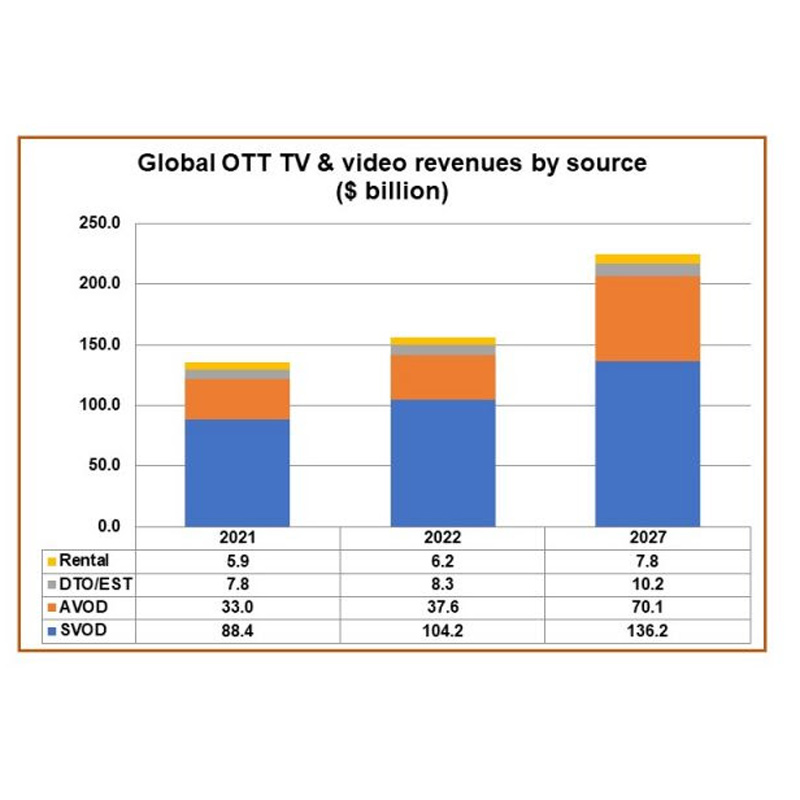
    Mumbai: Global revenues from OTT TV episodes and movies will reach $224 billion in 2027. According to the reports, this will be up from $135 billion in 2021.

    About $21 billion will be added in 2022 alone, according to Digital TV Research.

    SVOD revenues will climb by $48 billion between 2021 and 2027 to total $136 billion. AVOD revenues will increase by $37 billion between 2021 and 2027 to reach $70 billion.

    From the 138 countries covered, the top five will command 65  percent of global OTT revenues by 2027. OTT revenues will exceed $1 billion in 25 countries by 2027; up from 17 countries in 2021.

    Digital TV Research principal analyst Simon Murray said, “The US will command 45 per cent of global revenues by 2027. We forecast that US revenues will climb by $45 billion between 2021 and 2027 to reach $106 billion.”

  • ‘We’re a company of technologists and storytellers’: Disney+ Hotstar’s Content Head Gaurav Banerjee

    ‘We’re a company of technologists and storytellers’: Disney+ Hotstar’s Content Head Gaurav Banerjee

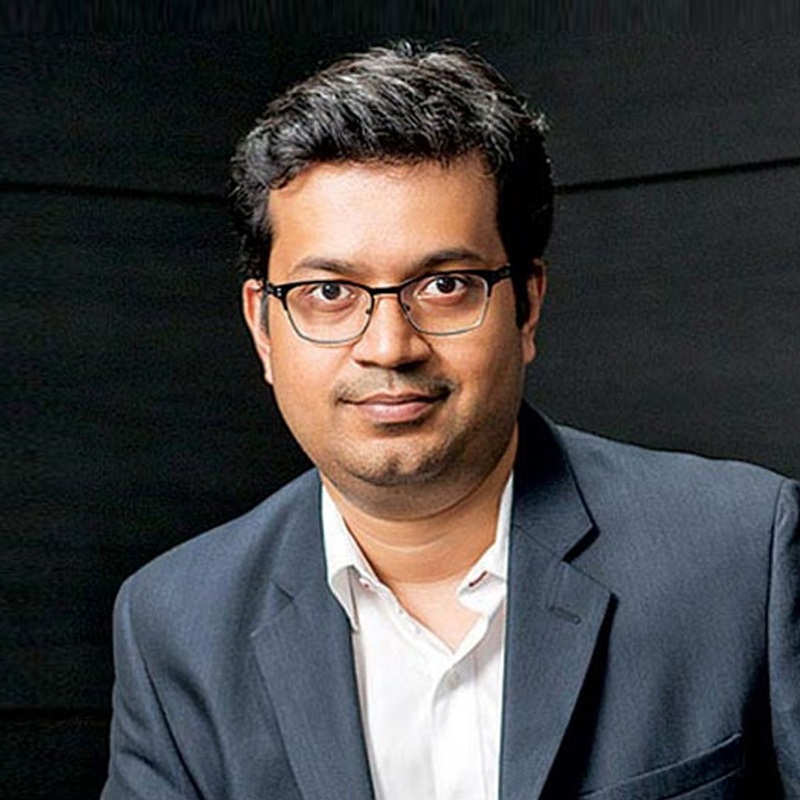
    Mumbai: Gaurav Banerjee has successfully straddled the realms of television and digital to deliver the most popular content in India. He runs Star India’s content studio that has delivered nine out of the top 15 web series and six out of the top 10 Hindi TV shows in the country. On the TV side, he’s responsible for popular shows such as Diya Aur Baati Hum, Sasural Genda Phool and on the digital side he’s responsible for hits such as Aarya and Special Ops amongst others.

    He began his career at Star TV Network as a primetime anchor and senior producer at Star News. He launched the Bengali news channel of the group Star Ananda in 2005 and later moved to lead the content strategy of the network’s regional entertainment channels in 2008. Banerjee was responsible for expanding the network’s reach in two key markets West Bengal and Maharashtra with the channels Star Jalsha and Star Pravah, respectively. In 2009, he led the content strategy for the Hindi entertainment channel Star Plus as general manager. He propelled Star Plus into a leading brand with hit shows like Yeh Hai Mohabattein and Mahabharata. In 2015-16, he took charge of Star India’s content studio and refreshed the storytelling approach for Star Plus and Star Bharat.

    Transforming India’s Content Landscape

    Banerjee is a man on a mission to transform India’s content landscape. He is leading Disney+ Hotstar’s foray into original content and has produced several Hotstar Specials that appeal to the unique tastes of digital audiences. While media executives are accustomed to treating television and digital as disparate creative ecosystems, Banerjee’s view is that good content can find its audience on any medium.

    Disney Star head content for HSM entertainment network and Disney+ Hotstar Gaurav Banerjee joined The Adaptation Company creative entrepreneur specialist and producer Sunil Doshi for a candid fireside chat at an event held recently in Mumbai. He spoke about driving the storytelling agenda at Star India, the advantage of being a legacy media company, producing innovative content for Disney+ Hotstar and helming Star India’s writers’ program.

    Edited Excerpts…

    Sunil Doshi: The traditional wisdom says that creating stories for television medium and creating stories for OTT medium are two different things. How have you successfully straddled both these words making Disney+ Hotstar a leader with enviable subscriptions?

    Gaurav Banerjee: We’ve always thought of ourselves as a storytelling and content company. When we’re looking at a script, we want to understand three simple things. First, how is the story going to be fresh to us and our viewers as well? Second, whether it might be relevant to our audience. Third, who is the storyteller and why is he/she excited to tell this story.

    We’ve always approached our scripts essentially using this process. We don’t think too much about distribution in the beginning phase because linear television and streaming are just different ways of distributing content. We’re comfortable with the idea that consumers can choose what technology or distribution platform works for them best. There may be format related choices depending on the media (some formats sit better on TV while others sit better on digital) but those are second order questions.

    Fundamentally, Star has a rich tradition of storytelling that goes back two decades. When we entered digital, we wanted to be native to the digital world and so, we expanded the brief of what we were as a company. Today, we’re a company of technologists and storytellers. The journey we have traversed has taken us from being a company with a consumer and storyteller mindset to a company that understood the product, technology, engineering and storytelling.

    Sunil Doshi: The economic models of streaming are changing. There is global inflation and war in Ukraine. There are streaming platforms that are gaining subscribers and others that are losing subscribers. Amidst all of this do you see Disney+ Hotstar as a technology company or a creative company?

    Gaurav Banerjee: I think Disney+ Hotstar is both. We see ourselves as a content platform that is always thinking about how to create technology that is intuitive for our viewers in India today. As we were building this platform eight years ago, we realised to achieve the scale we needed to reside on mobile phones. This was different from what was happening in the West where streaming was happening on connected TVs in people’s homes. The fact that we were mobile-first meant that our technology needed to be different.

    We were a legacy media company thinking about streaming. There were two advantages to this. First, we knew India’s consumers because we were the biggest broadcaster in the country and second, we understood storytelling having done it for two decades. The fundamentals we arrived at to be a platform that had scale were three things. First, we needed to have a big presence in live sports. Second, we needed to have a big presence in the movie business. Third, we needed to have a really big presence in drama.

    From day one, our content portfolio has tried to traverse and build on these three pillars. I’ve been in TV for 22 years now and these are the big pillars of Indian television. These three pillars take care of most of the entertainment needs of consumers.

    Sunil Doshi: You’ve dealt with technology. Now, you’ve done some exciting content innovations at Disney+ Hotstar where traditional TV content is feeding streaming content. What is your creative team doing to spot such opportunities?

    Gaurav Banerjee: Star is an interesting company with a great culture. While in some ways we’ve been leaders of entertainment in this country, we’ve always thought of ourselves as challenges.

    When we entered the digital space, we felt that there was a bias working against us. We were this legacy media company that has entered the streaming space and was not accustomed to the industry jargon or ways of working. We didn’t create this ecosystem or arrive here first. But we asked some fundamental questions and reimagined this world.

    The first decision we took was that streaming is something that can and should happen at scale. Therefore, the kind of content that is made for streaming should be high quality but cater to all audiences and not some niche.

    We took two strategic decisions, first, we decided to put our best content on streaming platforms. So, our linear TV content is first available on Disney+ Hotstar for paying subscribers. We observed that a lot of fans of the show will catch up on the latest episode during the day without waiting for it to be telecast at 10 pm on Star Plus.

    In a traditional setup, if we had taken such a decision, I would be worried because I’m doing something that’s threatening the ratings and viewership of the TV show. However, we changed the way we incentivized creative teams to focus on building a great show and not where consumers are supposed to watch it.

    There was a real feeling that TV shows, TV producers, and TV actors are in some way not good enough for digital. As someone who’s coming from a television background, we were clear that we were not going to participate and fuel this bias against TV content in any way.

    That’s why I’m incredibly proud of our Anupama prequel that’s streaming on Disney+ Hotstar called Namaste America. The show reveals when the first cracks appeared in Anupama’s marriage before the events in the TV series transpired. Another popular franchise Bigg Boss was doing well for our regional channels in Telugu and Tamil. Here, we felt a digital-only version with Stars like Kamal Haasan and Nagarjuna would work and both those seasons have done well. There are franchises such as “Special Ops” where we did a spin-off series that was just four episodes which worked on digital. We’re open to more experiments on OTT like Namaste India, Bigg Boss and Dance+.

    Sunil Doshi: I consider Star television as a thought leader as they have created so many iconic IPs. In the near absence of TV schools and film schools in our country, where is the new talent that is going to fuel creativity on digital and television going to come from?

    Gaurav Banerjee: We look at ourselves as an IP creation company. If we keep creating high-quality IP and continue to capture the imagination of audiences then monetisation will follow. That also means that we’re in the business of finding the best creative people, the best creative ideas and jostling with them in a healthy environment. The writing and creative community deserve our empathy because as an executive I’m looking at several scripts every day but they’re working on 1-3 stories and putting pen and ink to paper. We need to be conscious that we’re doing a good job of finding the best creative talent and treating them with empathy.

    When I was a student, I wanted to get into the creative business and understand how to make a TV show or film. This was in the year 1998 and after coming out of college I discovered there were only two places in India of any repute where you could learn to become a filmmaker or TV producer. One of them admitted 15 people and the other admitted 18 people. There were just 33 seats and I hoped to get one of those 33 seats. The luck of the draw.

    I got lucky but I realised this is a small number for an industry that is so big. For several years, I struggled to find new writers to bring to television. The belief we had as broadcasters is that there is a market need and so someone will come and build these institutions to feed this market. But nobody came. I urged both the institutions known for TV and filmmaking to start a course that teaches students how to write TV series. But that did not happen. How is the industry going to get better if no one is going to share knowledge, best practices and learn from each other?

    Star India put together a budget, teachers and a syllabus and a website to launch the program. We hired people and essentially, I asked all my writer friends in the industry to come to take classes and get the program going. We hired someone to put together a syllabus as this was a specialised program. I don’t know how many other companies are there where you can go to the CFO and say we’re spending a few X crores and there’s going to be no monetary return at the end of it. With a new show, you can get some revenue but with the writer’s program, no money is immediately going to come. It was just something to set up these budding writers and hopefully, if they become good writers, they might write something for us in three to four years but not necessarily.

    The great thing about our company and my pitch was that as long as the industry improves and there’s great writing then it is understood that we will also improve. That’s how we created the Star writers’ program and we had about 35-40 writers on our payroll over the last three to four years. While it undoubtedly has had its share of problems, it is also something that we’re very proud of.

  • Watcho announces “The Morning Show” featuring Ali Asgar & Siddharth Sagar

    Watcho announces “The Morning Show” featuring Ali Asgar & Siddharth Sagar

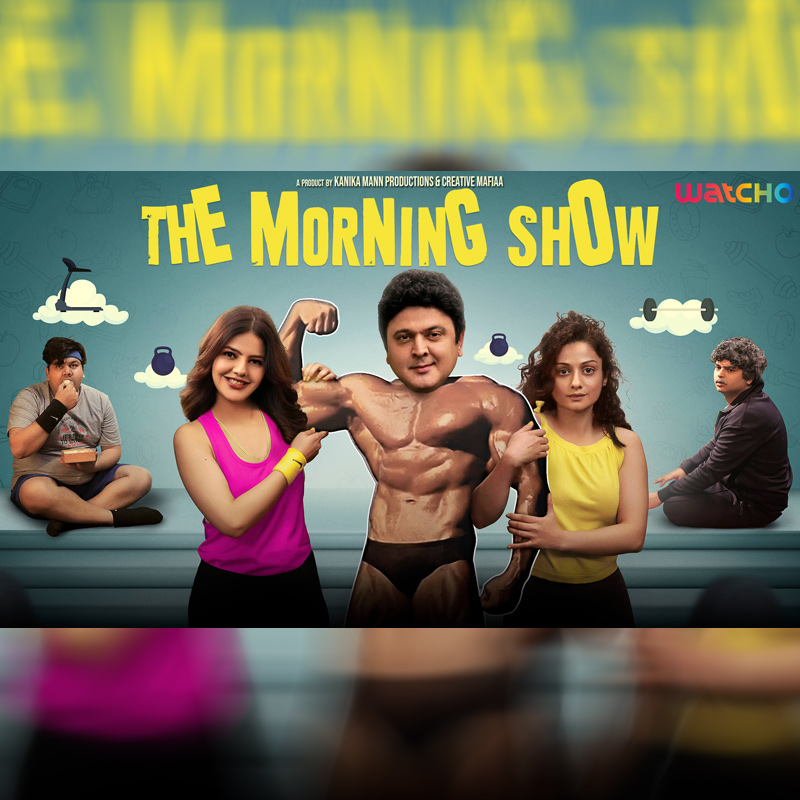
    Mumbai: The OTT platform, Watcho has announced an original series The Morning Show, a light-hearted comedy web series showcasing content in a format that is innovative, fresh, and out of the box. 

    Known for bringing snackable content #Funfatafat, Watcho’s new web series The Morning Show is releasing on 20 May in Hindi. 

    The Morning Show is a one-of-a-kind character-oriented show conceptualized by Manoj Sabharwal and produced by Team Creative Mafiaa.

    The show will feature Ali Asgar and Siddharth Sagar of Kapil Sharma show fame, Vanshika Sharma, Parree Pande, Rahul Grover, Mukesh Sharma, and Nazish Mann.

    The show revolves around the individuals that go to the gym every day. The CCTV camera snooping on the gym members is a key protagonist in the entire story. The protagonist, the amusing characters, and the daily chaos at the gym make the show hilarious and entertaining to watch. Watcho’s new web series has 9-episodes, each lasting a 20-minutes duration.

    From a gym owner who is a struggling actor to a receptionist who is always on the phone or an affluent married couple trying to maintain their class at the gym; each character has a unique personality and amusing quirk.

    Commenting on the launch, DishTV India, DishTV & Watcho head- marketing Sukhpreet Singh said, “Comedy continues to resonate with our growing audience base and we are confident that the format of ‘The Morning Show’ which is fresh and engaging will make the viewers laugh out loud. Humour comes in many flavours and ‘The Morning Show’ will give a taste of everything, making it an all-in-all family entertainer.”

    Bringing in a unique assortment of snackable content cutting across all genres, Watcho offers many original shows including web series like Bauchare-E-Ishq, Happy, Gupta Niwas, Jaunpur, Papa Ka Scooter, Aghaat, Cheaters – The Vacation, Sarhad, Mystery Dad, JaalSaazi, Dark Destinations, It’s My Pleasure, 4 Thieves, Love Crisis, Ardhsatya, Chhoriyan, and Rakhta Chandana along with also having original influencer shows like Look I Can Cook and Bikhare hain Alfaaz.

  • Divya Dixit, SVP – Marketing, Partnerships & Revenue of Alt Balaji moves on

    Divya Dixit, SVP – Marketing, Partnerships & Revenue of Alt Balaji moves on

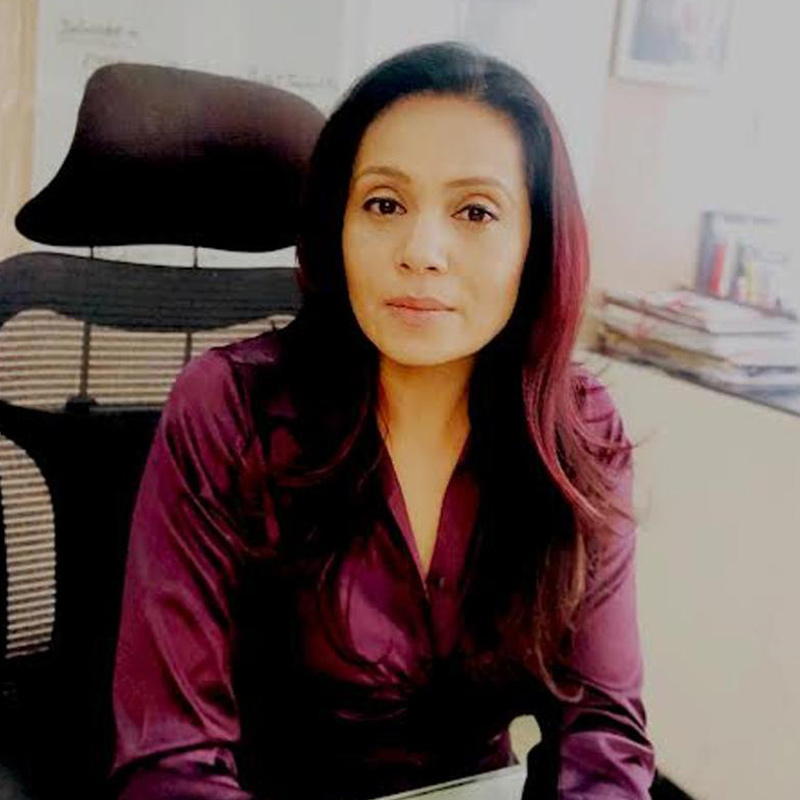
    Mumbai: Altbalaji senior vice president marketing partnerships and revenue Divya Dixit has moved on. She confirmed the development to Indiantelevision.com and is currently serving her notice period.

    Dixit joined Balaji Telefilms in September 2018 and has been leading its OTT platform Altbalaji’s direct subscription growth and marketing for its originals. She was previously associated with Zee5 as vice president of marketing and direct revenue.

    Dixit has two decades of experience in the media industry with stints at Star TV Network, Saregama India, UTV, Sony Entertainment Television and Percept.

  • Vamsi Murthy joins Disney+ Hotstar as ED and Head-content marketing

    Vamsi Murthy joins Disney+ Hotstar as ED and Head-content marketing

    Mumbai: Disney+ Hotstar has appointed Vamsi Murthy as executive director and head content and partnerships marketing. He announced his new role on LinkedIn.

    Vamsi was previously associated with BookyMyShow as head of marketing from May 2021. He has been associated with Zee5 as vice president marketing, Myntra Jabong as director brand marketing and MakeMyTrip.

    He has completed his MBA in marketing from Welingkar Institute of Management and is an alumnus of SIES College of Commerce.

  • Disney+ Hotstar releases trailer for ‘She-Hulk: Attorney At Law’ in different languages

    Disney+ Hotstar releases trailer for ‘She-Hulk: Attorney At Law’ in different languages

    Mumbai: Disney+ Hotstar has released a new trailer and key art for Marvel Studios’ She-Hulk: Attorney at Law. It will stream exclusively on Disney+ Hotstar in Hindi, Tamil. Telugu, Malayalam and English from 17 August.

    The new comedy series stars Tatiana Maslany as She-Hulk/Jennifer Walters, a lawyer who specializes in superhuman-oriented legal cases.  

    Executive producer Kevin Feige, president of Marvel Studios and chief creative officer of Marvel, welcomed Tatiana Maslany to The Walt Disney Company’s 2022 Upfront presentation this afternoon at Basketball City on Pier 36 in New York.  

    The pair shared details about the upcoming series, including the August 17 launch date, and debuted the new trailer for attendees.  

    Directed by Kat Coiro- episodes 1, 2, 3, 4, 8, 9 and Anu Valia- episodes 5, 6, 7 with Jessica Gao as head writer, She-Hulk: Attorney at Law follows Jennifer Walters as she navigates the complicated life of a single, 30-something attorney who also happens to be a green 6-foot-7-inch superpowered hulk.

  • Optiminastic Media launches OTT production house 4Dots Production

    Optiminastic Media launches OTT production house 4Dots Production

    Mumbai: Digital marketing agency Optiminastic Media has launched 4Dots Production, a full-fledged OTT production house. The launch of 4Dots Production marks Optiminastic Media’s foray into the digital entertainment industry.  

    4Dots Production will work closely with OTT, digital and social media platforms to create interesting web shows for millennials across India and the world. “The production house aims to bridge the existing gaps in the current ecosystem with content that is immersive, unique, fresh and first of its kind thus creating newer opportunities and engagement techniques for brands and platform custodians,” said the statement. 

    4Dots will bring together some of the most talented, experienced and hands-on professionals from the entertainment space and aims to create an engaging concept-oriented project that targets the millennial consumer. For its maiden project, it has partnered with director Arbaaz Afzal, DOP Nawaraj Thapa, executive producer Ganesh Kharal, associate director Aradhya Mahashilkar, and writer Siddharth Goyel.

    Speaking on launching a specialist production house, Optiminastic Media founder Akshae Golekar said, “Over the last four years, Optiminastic Media has had an interesting journey dotted with many milestones across the internet marketing industry. The OTT sector in India and globally is filled with opportunities and keeping this in mind, and with the intent of becoming a significant part of this sector, we have launched 4Dots Production as a production house that will innovate, design and create shows specifically for OTT and digital platforms. There currently is a dearth of production houses that create such content and we believe that with the right partners by our side, we can bridge this gap. We have partnered with some of the industry’s most talented people and will work closely with them as we embark on this new journey.” 

  • Ullu to continue making edgy content: Vibhu Agarwal

    Ullu to continue making edgy content: Vibhu Agarwal

    Mumbai: OTT platform Ullu, launched in 2018, will not move away from creating edgy adult content, said founder Vibhu Agarwal at an event held recently. Instead, Agarwal has launched a Hindi general entertainment channel (GEC) ‘Atrangii’ accompanied by a catch-up OTT platform to cater to the family audience.

    “When I entered the OTT space, I sought to create content that is fresh. All OTT platforms were creating the same kind of content, whether it is a suspense or a thriller. As a businessman, I wanted to enter a white space that no one has addressed before,” said Vibhu Agarwal.

    The platform had found itself on the wrong side of public opinion after it was accused of featuring ‘edgy’ and ‘sleazy’ content to its audiences. It was reported that Agarwal was moving away from creating edgy adult content with a Ullu 2.0 strategy after the ministry of information and broadcasting introduced The Information Technology (Intermediary Guidelines and Digital Media Ethics Code) Rules, 2021.

    Agarwal said, “We have built a certain audience and subscription base, based on the kind of content that ULLU makes. The content is not wrong because there are people watching it. We’ve offered a buffet of shows including horror, suspense, thriller and brought many good actors into the ecosystem with shows like ‘Tandoor,’ ‘Peshawar,’ ‘Cyanide’ and others.”

    “That’s why we are launching our second OTT platform and entering the GEC space that’s going to bring both live and catch-up content for audiences,” he added. “The content on this platform will be separate from ULLU and will be more in line with GEC content. This will not be a ‘saas-bahu’ style GEC because again we’re looking at an unaddressed white space. Instead, the channel will feature limited series that will focus on the quality of content.”

    Agarwal said that the ministry of information and broadcasting has been open minded when it comes to the kind of content served by OTT players. “The IT Rules that came out on 24 February 2021 don’t bar OTTs from showcasing any kind of content. They have only asked for the classification of content where OTT platforms should showcase a disclaimer on the nature of content that they are showing. They have also mandated the creation of a self-regulatory body for addressing grievances when it comes to content on OTT platforms.”

    The pandemic led to an increase in content consumption on OTT platforms. Agarwal observed that the three-month release slate of OTT platforms was condensed to 15-25 days to cater to the demand for content. ULLU platform itself ensured to release a new web original at least once or twice a week. Going forward, he stated that the platform has a plan to release up to three originals per week.

    Agarwal predicts that, while regional OTT platforms are subscription-driven businesses right now, they will all switch to an advertising-led model due to the intense competition in the OTT space. “When you speak about investing in regional content, most national OTT platforms are only investing in South content because they are able to monetise it easily. I believe that regional OTT platforms that serve content in languages such as Gujarati, Punjabi, Haryanvi, Bhojpuri etc. will have to become advertising video-on-demand platforms. Only the global players with deep pockets will be able to remain subscription-driven. Most Indian owned platforms will have to shift to an AVOD model whether they cater to Hindi-speaking audiences or any other regional language.”

    “Ullu content will be distributed in international markets as well but not via the app,” stated Agarwal. “There is a large international Indian audience that would like to watch our content which is dubbed in English. The problem is to activate payment gateways in international markets. The viewership and subscription outside of India is limited because of few payment options. Also, most of our consumption occurs on mobile platforms, whereas in the US and UK mobile data is not as cheap. Audiences there watch content on devices such as Roku that are more popular. That’s why we are planning to distribute our content via local agencies.”

    Agarwal noted that 80 per cent of OTT platforms don’t pay enough attention to technology which is the biggest enabler of OTT user experience. “The app should be user friendly and every feature should work,” he said.

  • Indian movies on Netflix’s top-10 global chart

    Indian movies on Netflix’s top-10 global chart

    Mumbai: Indian films are attracting the global audience immensely. Half of the films featured in Netflix’s global non-english top 10 are from India this week.

    Alia Bhatt starrer crime drama “Gangubai Kathiawadi”, which hit #1 worldwide last week on Netflix continues to trend, along with Netflix’s action thriller “Thar”.  Tamil action thriller “Beast” and its Hindi version “Raw” as well as romantic drama “Radhe Shayam’s” Hindi version also made it to the Top 10.

    The global top 10 non-english films list has featured 21 films from India, including 7 original Indian films launched during this time. These include Kartik Aaryan starrer, “Dhamaka”, Taapsee Pannu and Vikrant Massey’s “Haseen Dillruba” and “Navarasa”, helmed by Mani Ratnam and Jayendra Panchapakesan.

    Netflix India’s Director-Films and Licensing Pratiksha Rao said, “Films have always been integral to the rich storytelling culture in India and the diversity and variety of films being made today, from all corners of the country, is incredible. Our members in India love watching films – evident from how on Netflix, films make up a larger percentage of viewing in India than they do globally. Streaming has the unique ability to combine the best of entertainment and technology, enabling great stories to travel and making global entertainment a reality. We’re thrilled to see Indian films on Netflix find audiences across the country and the world.”

    Netflix continues to expand its film slate with the most differentiated and entertaining films. Netflix was the first streamer in India to invest in original films, which include hits such as International Emmy nominee “Lust Stories”, “Pagglait”, “The Disciple (Marathi)”, “Jagame Thandhiram” (Tamil)  and Malayalam cinema’s favourite superhero film, “Minnal Murali”. In addition, Netflix partners with the Indian film industry to bring an incredible variety of theatrical films to its members, including “Sooryavanshi”, “Badhaai Do”, “Shyam Singha Roy”, “Beast”, and “Kurup”. The powerful lineup of films includes “Jersey”, “RRR” along with original films such as Vishal Bhardwaj’s “Khufiya”, Vasan Bala’s “Monica”, “O My Darling” and Zoya Akhtar’s “The Archies”, which is currently filming.

  • Programmatic is enabling the transition of OTTs to open internet: Tejinder Gill

    Programmatic is enabling the transition of OTTs to open internet: Tejinder Gill

    Global technology platform The Trade Desk helps marketers advertise on the ‘open internet’ i.e., outside the ecosystems of Google and Facebook. The Trade Desk can deliver campaigns across a multitude of devices such as computers, mobile devices, OTT, connected TV (CTV) to reach quality audiences at scale via video, audio, display and native ads.

    Founded in November 2009, the company launched in India almost a year ago, setting up their leadership teams in Delhi and Bangalore. It immediately integrated with leading OTT players including Disney+ Hotstar, Zee5, SonyLIV, MX Player and Voot and publishers to enable programmatically-driven advertising and bring transparency to the purchase of online inventory.

    The Trade Desk is only a demand-side platform, meaning it optimises and solves for advertisers only. It helps them understand the break-up of their media investments at scale in a complicated supply-side ecosystem that has up to seven to eight partners. Its most important USP (unique selling point) is that it offers marketers more choices to advertise outside the established walled garden ecosystems.

    Helming The Trade Desk’s business in India is Tejinder Gill who is responsible for the business growth strategy, executing the company’s vision and long-term goals and leading the product development. He is spearheading the expansion of programmatic across digital, audio, video and connected TV for Trade Desk. Gill has more than 17 years of experience, starting his career in 2008 with Yahoo, he was later part of LinkedIn’s leadership team for six years and Truecaller’s executive management team for nearly five years.

    In conversation with IndianTelevision.com, The Trade Desk India general manager Tejinder Gill spoke about the challenge that the company is trying to solve, online advertising trends, growth of advertising video-on-demand (AVOD), moving away from third-party identifiers and more.

    Edited excerpts:

    On the challenges addressed by The Trade Desk

    We are all about open internet which means anything outside the walled gardens. The biggest keyword missing in India, when it comes to digital media buying, is choice. Marketers want to get a certain reach and scale that you can only get within the walled gardens. So, the vision we saw was how to build an open internet advertising platform at scale.

    Let’s say, $100 is spent on advertising. Almost $53 goes to Google, $28 goes to Facebook and the remaining $19 is shared among the rest of the players which includes any player other than these two. The biggest reason that marketers are looking for a third choice is that these platforms make their own rules. They withhold data and the inability to measure performance in these walled gardens has led to a lot of frustration among marketers.

    I have observed that 70 per cent of the time spent by a user is on the open internet while 70 per cent of marketer’s budgets are spent on walled gardens. This is disproportionate. The biggest challenge for me is to educate marketers and partners about the benefit of the open internet and how we can solve for reach and scale.

    Think about the open internet as a bunch of different islands and walled gardens as continents. However big you are, you will always remain an island. Our platform makes these islands come together, and talk to each other so that everything is more accessible. The future will see all publishers come under the open internet umbrella. And programmatic is enabling this transition.

    Publishers still have direct sales teams to sell their premium inventory and sponsorships but the bulk of their inventory is now available on programmatic. That means all their pipes are connected to us. We’re building a marketplace where advertisers can pick and choose any inventory they want. They can use any measurement tool or any data partner that they want.  Individually, you can never win the game of scale, but together the open internet is a very strong value proposition for marketers to move away from walled gardens.

    When I joined the company 16 months ago, and the next month we complete a year of launch in India, programmatic talent was a big issue. We addressed this with Trade Desk-Edge Academy certifications, and interestingly, 40 per cent of members who have taken the certification in Asia-Pacific (APAC) are from India. I have built a diverse leadership team across Delhi and Bangalore since then.

    We’ve done strategic partnerships with publishers, OTTs and connected TV manufacturers to be the platform of choice for marketers. This includes partnerships with Samsung TV, OTT platforms such as Disney+ Hotstar, Zee5, SonyLIV, Voot and MX Player and audio streaming services such as Gaana, JioSaavn, and Spotify.

    On the rise of programmatic video advertising

    The OTT consumer base has gone up in the last two years. There are new players entering the global and local markets creating more competition. While linear TV has been there for many years, consumer trends are changing. Some consumers are opting for cutting the chord as a result of the adoption of OTT platforms. OTT offers a seamless viewing experience across devices making it the preferred platform for consumers and building an attractive reach and scale for marketers.

    Online curated content platforms (OCCs) are offering premium high-quality content. An OTT platform attracts a large and diverse audience. The biggest difference between a user-generated content platform and an OCC platform is brand safety. Since curated content will be safer and more positive in nature, brands will want to invest in it. It also helps that you can put a data layer on top of it that delivers better performance, measurement and offers real-time insights to marketers.

    The biggest difference between linear and OTT platforms is the application of data intelligence. Linear TV has always relied on third party intelligence. The impact of an OTT campaign is measurable and you can take the insights and apply them to any other campaign.

    It is also more controlled. For example, suppose you want to target a consumer only three times a day then you can apply a frequency cap. If you want to target him once on Disney+ Hotstar, Voot and SonyLIV then you can adjust your parameters accordingly. This translates to a better consumer experience.

    The one thing that marketers love about programmatic is optimising their media dollars and talking to the same user across the media funnel. This means that whether I’m watching TV, mobile, laptop, OTT or audio, the same message will be played in a different format across.

    A study we did last year in partnership with YouGov found that 55 per cent of Indians prefer to see an ad versus paying for content. This indicates that the future business model for OTT platforms will be one that will be supported by subscription and advertising.

    Our founder Jeff Green predicted three years ago that Netflix will embrace advertising. Today, international players such as Disney+ and Netflix are planning to launch ad-supported models.

    On moving away from third-party cookies

    Third-party cookies are a three-decade-old technology and a shrinking part of the internet. Now, we have to think of a more sophisticated solution and we’ve created our own identifier called UnifiedID 2.0. It is a string of numbers and letters that cannot be reverse engineered to reveal the identity of the user, say for example his email ID.

    If third-party cookies go away, what are the scenarios that marketers arrive at? Walled gardens get more control over the internet. Paywalls keep consumers from accessing content. Consumers having to login multiple times to access the internet.

    That’s why the future will have multiple identity solutions that will be interoperable, meaning that these identity solutions will work across the ecosystem and will need to talk to each other. Our identity solution has got a lot of adoption in the Western market and we’re hoping APAC will start running it soon.

    On the trends in programmatic video advertising

    There are a few trends that I see.

    Connected TV (CTV) will drive the next phase of growth. We expect CTV to hit 40 million devices in the country in the next two years. This means that budgets will start moving from linear TV to connected TV.

    Marketers will start asking everyone about more real-time business outcomes. Marketers will move away from metrics such as CPA (cost-per-action), CPC (cost-per-click), CPM (cost-per-mile) and start measuring in more detail. For example, in-store footfall.

    A cookie-less future is good. It is happening for the benefit of the entire industry. Advertising will be able to target with more precision enabling brands to present different ad opportunities at different points in time. I think this is a new approach for the future.

    Five years ago, when we launched programmatic the idea was to automate the entire paperwork also known as programmatic guarantee. That’s not the real advantage of programmatic. Programmatic is all about decisioning i.e., it is about choices. If a marketer wants to buy audiences who may reside on OTT, mobile, CTV then he can find them across channels and devices. That’s the biggest trend that will drive programmatic in India over the next two years.

    Decisioning is different from upfront media buying. In upfront media buying, an advertiser blocked the front page of a Times of India or a 15 sec slot on a channel. The advertiser would pay upfront and get the ad displayed.

    In a real-time environment, the advertiser wants more control. He wants to pick up the right audience, at the right time and at the right price. The advertiser can control whether that ad should reach 1000 or one million consumers and pay for the reach that he wants. The journey of the ad needs to be mapped. That’s why I say decisioning will take precedence over the existing programmatic guarantee.