Category: Over The Top Services

  • Nitin Kothari joins OMTV as chief technical officer

    Nitin Kothari joins OMTV as chief technical officer

    Mumbai: Sanatan storytelling platform OMTV has appointed Nitin Kothari as CTO. He will head the technology part and will aim to make OMTV a media tech company by introducing AR/VR for live darshan shows.

    He has been working in the technology space for over 30 years, with extensive experience in design, development, and implementation of complex business software solutions. His expertise lies in business analysis in the finance, manufacturing, and accounting domains. He is an all-rounder, from tech-entrepreneur to product leader and an accomplished tech architect across the complete product suite – mobile, web, and back-end systems. Passionate about design thinking and user interface (UI), he has built and managed web and mobile-based products across various domains for organisations in India, the UK and the US.

    He said, “My constant endeavour is to apply business sense in developing applications where the effort would lead to large impacts on business processes and results. I am happy to be part of this organisation which is doing some good stuff and putting technology into this genre, which is considered to be very old school. I get more excited when I am thrown a challenge to execute something new on the platform. I hope with tech availability I will be able to match the vision of the founders.”

    OMTV founder and MD Nitin Jai Shukla said, “Over the period of Nitin’s professional expertise, he has proven skills in managing teams to work in sync with the corporate set parameters and motivating them to achieve business and individual goals. In his professional career, he has exhibited excellence in developing, piloting, and implementing new business processes. Nitin has a sound ability to identify risks / issues that could affect the project and put in place the required effective solutions. A thorough professional with a proactive attitude, energetic, self-motivated, and capable of thinking and generating new design solutions and ideas. With a soft demeanour, he is very assertive. A team is only happy when we work with like-minded people, and their passion for technology only helps us to experiment and come up with new ideas. I’m happy to have a person who is like-minded and his passion for technology will help us to make the user experience extraordinary.”

    OMTV aims to compete with platforms from the OTT industry. For that, they want to infuse a lot of technology into the whole ecosystem. Spirituality is seen as something very primitive and we need to be tech ready. OMTV has recently closed a pre-seed funding round and is now raising its seed funding to become a revenue-making company. OMTV is also planning to introduce AI in the UGC (user generated content) space and a lot of tech features on the app.

  • Netflix, Dark Horse Entertainment extend its partnership

    Netflix, Dark Horse Entertainment extend its partnership

    Mumbai: OTT platform Netflix and Dark Horse Entertainment have extended their partnership. Under this multi-year deal, Dark Horse will continue to give Netflix a first look at its IP for both film and TV.

    Netflix and Dark Horse recently collaborated on the third season of The Umbrella Academy, which in its first four weeks reached the Netflix Global Top 10 in TV in 91 countries with 283.55 million hours viewed (as of July 17, 2022).

    New projects in active development under the Dark Horse Entertainment banner include:

    Bang! will star Idris Elba (The Harder They Fall, Concrete Cowboy, Luther) and will be directed by David Leitch (Bullet Train, Atomic Blonde, Deadpool 2).

    Based on the comic series by Matt Kindt and Wilfredo Torres, the feature film adaptation of the spy thriller will be written by Kindt (Ninjak vs. the Valiant Universe) and Zak Olkewicz (Bullet Train, Fear Street Part 2: 1978).

    When a terrorist cult sets out to start the apocalypse with a series of novels meant to brainwash their readers, the world’s most celebrated spy is sent to track down and kill the author responsible.

    Mind MGMT will see Curtis Gwinn (Stranger Things) executive produce this series adaptation of the comic book series by Matt Kindt. A young woman stumbles onto the top-secret Mind Management program. Her ensuing journey involves weaponised psychics, hypnotic advertising, talking dolphins, and seemingly immortal pursuers, as she attempts to find the man who was Mind MGMT’s greatest success—and its most devastating failure. But in a world where people can rewrite reality itself, can she trust anything she sees?

    Additional Dark Horse projects in development with Netflix include Revenge Inc., a drama series focused on a secret, underground company that specialises in revenge with Matthew Arnold as showrunner/executive producer and executive producers Mike Richardson, Keith Goldberg and Chris Tongue, as well as Lady Killer, an action thriller film about a 1950s housewife leading a secret life as a highly-trained killer for hire, with Blake Lively starring and producing, based on the comic series by Joelle Jones and Jamie S. Rich.

    Previous Dark Horse Entertainment releases include the Netflix film Polar, starring Mads Mikkelsen; the Netflix animated series Samurai Rabbit: The Usagi Chronicles, returning later this year with a second season; and the animated film Chickenhare and the Hamster of Darkness, which recently spent four weeks in the Netflix Film (English) Top 10.

  • Content investment in India, Korea, and Southeast Asia to rise in 2022: MPA Report

    Content investment in India, Korea, and Southeast Asia to rise in 2022: MPA Report

    Mumbai: The video content budget in India, Korea, and Southeast Asia will grow by 15 per cent and reach $12 billion in 2022, according to the latest edition of Asia Video Content Dynamics, published by Media Partners Asia (MPA).

    In 2022, India and Korea will drive the bulk of the increase, but all markets and all verticals are expected to grow. The film industry will be the fastest, growing by nearly 140 per cent as theatres screen fresh movies. Online video will grow the most, by nearly $700 million.

    It increased by 21 per cent last year to $10.4 billion. Except for theatrical, all content verticals saw significant growth. OTT content was the fastest growing vertical, increasing 83 per cent year on year to become the second largest vertical, accounting for 26 per cent of industry investment. Korea & India saw particularly strong OTT investment growth, while Thailand and Indonesia made significant contributions.

    This report examined video content consumption, investment in video content, and production costs in seven key Asian markets: India, Indonesia, South Korea, Malaysia, Philippines, Thailand, and Vietnam. Free-to-air (FTA), pay-TV, online video, and film are among the verticals examined, along with key players and the production value chain.

    Also read: India’s OTT video market to reach $3 bn in 2022; estimated to double by 2027: Report

    Commenting on the findings of the report, MPA vice president Stephen Laslocky said, “Inflation, particularly with online originals, is a factor driving up content costs.”

    He went on to say that online video operators, broadcasters, and producers must see that higher budgets translate into more premium viewing experiences, or the cost increases will be unsustainable.

    According to this report, Pay-TV was the largest vertical, accounting for 46 per cent of total industry content investment, reflecting well-developed pay-TV markets in India and Korea. FTA ranked third with 25 per cent of the total.

    “Internationally successful programmes remain the content licensing holy grail, which thus far, only Korean dramas and some anime, as well as US and UK content, have sustainably achieved. Some Thai content has succeeded outside of Thailand. Quality production values and strong storylines with a focus on younger online demographics will be the building blocks of future investment strategies,” Laslocky added.

    While talking about the expanding online video sector, he expressed that it has been a boon to independent producers. He said, “Profit margins have stabilised at 10 per cent or more across much of the region. More can be done to bolster independent producers, including additional compensation for original concepts, commensurate rewards for breakout successes, and expanded use of pipeline deals (which allows producers to more reliably recoup overheads).”

    “In exchange, producers need to be transparent with production costs. Commissioners need to be willing and able to audit costs,” he added.

    Declining TV ratings 

    TV ratings continue to decline in measured markets. User-generated content (UGC) platforms continue to dominate video consumption, with their share of total video consumption ranging from 82 per cent in Korea to 95 per cent in Vietnam. While YouTube remains the leader, TikTok is driving growth in Southeast Asia. Premium video, both AVOD and SVOD, captures the majority of the balance.

    The consumption of television and online video is diverging. On TV, drama is generally the most watched genre, while variety, including reality, often ranks #2. Movies, kids, and news can be significant drivers of viewership, and sports can over-index with top-rating TV programs. Viewership of some key TV genres is transitioning to YouTube, where they generate significant classified consumption.

    Meanwhile, with premium online video, series account for approximately 90 per cent of consumption, with dramas accounting for the majority of viewership, while movies account for approximately 10 per cent. Dramas account for nearly all of the top titles. Except for India, variety consumption is largely driven by acquired Korean programming.

    Box office revenues 

    In 2021, box office revenues, admissions, and releases all performed poorly. Film costs fell by two per cent as pandemic restrictions delayed release dates in many markets, but delayed tentpoles performed well in 2022.

    Some markets, including India and Indonesia, are expected to recover completely. In other markets, a return to pre-covid may take until 2023. Returning to pre-covid levels in other markets may take until 2023. Elsewhere, prospects may be marginally better but permanently harmed.

  • Vodafone Idea Q1 FY23 revenue soars by 13.7 per cent; loss at Rs 7396.7 crore

    Vodafone Idea Q1 FY23 revenue soars by 13.7 per cent; loss at Rs 7396.7 crore

    Mumbai: Vodafone Idea announced its first quarter results for financial year 2022-2023. The company reported revenue of Rs 10,410 crore up by 13.7 per cent year-on-year (YoY). It reported a loss of Rs 7396.7 crore.

    The company reported earnings before interest, tax, depreciation and amortisation of Rs 4330 crore and capital expenditure (capex) stood at Rs 8400 crore compared to Rs 12,100 crore in the corresponding quarter last year.

    Vodafone Idea’s total gross debt as of 30 June stands at Rs 1,99,080 crore, comprising of deferred spectrum payment obligations of Rs 1,16,600 crore and AGR liability of Rs 67,270 crore that are due to the government, and debt from banks and financial institutions of Rs 15,200 crore.  Cash and cash equivalents were Rs 8600 crore.

    The company’s average revenue per user (ARPU) improved to Rs 128 up 3.6 per cent quarter on quarter (QoQ) from Rs 124 in Q4FY22. On a YoY basis, ARPU witnessed strong growth of 23.4 per cent aided by tariff hikes.

    Vodafone Idea’s subscriber base declined to 240.4 million as compared to 243.8 million in Q4 FY22, however, its 4G subscriber base continued to grow and with one million customers added in Q1, its 4G base now stands at 119 million.

    The company reported high data usage per 4G customer at ~14.3 Gb/month.

    Vodafone Idea Limited MD and CEO Ravinder Takkar said, “We continue to witness 4G subscriber growth on the back of superior data and voice experience offered by Vi GIGAnet as well as due to our focus on creating differentiated digital experience for our customers.

    He further said, “In the recently concluded spectrum auction, we have acquired sufficient spectrum in our key markets to offer superior 5G experience to our customers.”

    “We also completed the first tranche of fund raising in the form of preferential equity contribution of ~Rs. 49.4 billion from our promoters, including the incremental infusion of ~Rs. 4.4 billion by Vodafone Group in July 2022. We continue to remain engaged with lenders and investors for further fund raising.”

  • Why did government retract Data Protection Bill

    Why did government retract Data Protection Bill

    Mumbai: Union IT Minister Ashwini Vaishnaw has withdrawn the Data Protection Bill from Lok Sabha on 3 August 2022. The centre will review the policy and come up with a ‘comprehensive legal framework’ for regulating online data privacy. The new regulation on data protection will help the overall internet ecosystem, safeguard against cybercrime, and secure non-personal data.

    The Data Protection Bill was first introduced on 11 December 2019. The bill was referred to the Joint Committee of the Houses for examination on 16 December 2021 & later, the committee presented the report in the Lok Sabha. The joint parliamentary committee raised concerns and provided 93 recommendations that explain why the government cannot invade one’s privacy. The government will introduce the new regulation during the winter session of the parliament this year.

    Why did political parties oppose the bill?

    In 2019, the opposition parties such as Congress and Trinamool Congress vehemently protested against this bill as it violated the fundamental rights of the citizens. The opposition believed that the bill provided power to the government to access the personal data of individuals, and it lacked transparency and was opaque.

    It is imperative to provide adequate protection to people on their privacy rights. Currently, India is the fastest growing data-generation nation in the world with over 700 million Internet users and more than 400 million smartphone users.

    Which data can the government have access to?

    Data is usually generated through four sources such as personal data, bank accounts data, medical records and employment data. Other data is generated from web searches and visits to any web portals. The data helps to understand and identify people’s choices, preferences and histories.

    It is also generated through a cache that comes from social media posts, tweets, phone calls, emails and videos. It is also generated through coordinates from the real-time location. Stacks of data are also collected from one’s spending patterns when an individual purchases online, via modes of payment used, and transactions made through payment gateways.

    It is that personal data many individuals would like to keep private and the government exercising control on accessing it- is a serious matter of concern. There needs to be a mechanism and policy in place to process such data without breaching people’s trust and protecting its safety & security.

  • More education, awareness & upskilling are important as we solve some interesting problems in the Web3 space: Chingari CTO  Tariq Wali

    More education, awareness & upskilling are important as we solve some interesting problems in the Web3 space: Chingari CTO Tariq Wali

    Mumbai: Launched back in 2018, the short-video app Chingari has made rapid strides. Since then, the home-grown app has emerged as the one-stop destination for entertaining, engaging videos across diverse categories such as dancing, singing, transformation, innovative skills, etc. Chingari’s eclectic platform entertains 150 million+ users across India and witnesses videos in 15+ languages.

    The app has been working towards adding value to its content creators by enabling them to create unique content that gets liked, shared and rewarded through Gari Social Tokens. This fosters content monetisation and puts the power of content creation directly in the hands of the creators. The first Indian social crypto token, Gari, has been listed on several top global centralised exchanges, including HUObi, FTX, KuCoin, Gate.io, OKEx, and MEXC Global. Chingari is bringing the web3 revolution to the creator economy with its Gari token. Gari is now available on the Chingari app, and creators can start making videos and earning Gari Social Tokens.

    Indiantelevision.com caught up with Chingari’s chief technology officer, Tariq Wali. He describes himself as, “There is not a silver bullet to build and run a successful startup. A start-up is anything but its products that don’t just work but delight their users. Technology is an enabler to solve user/business problems. Most of my time goes into what I call building the organisation, and that’s a combination of people, process, product, and technology.

    “I come from a systems/software/video engineering background, having seen scale and disruption in technology enabling startups early on – my engagement could be anything from providing direction to engineering and product to solve complex problems, design and architecture to any trivial issue that impacts Chingari users and ensuring we have the right instrumentation towards the reliability of our products.

    “That said, I lead data, backend, AIML, DevOps/SRE, and product as lead/manager/comrade, ensuring all our investments are protected and setting the vision and building towards our two-year roadmap.”

    Edited Excerpts:

    On the short-video industry that has evolved over the past few years

    Tariq: It has evolved significantly. A lot has happened in the last two to three years. Globally, the video industry has shot up on account of content being consumed digitally in different forms, like connected televisions, mobile devices, short-form content, long-form content, and live linear content. User-generated content (UGC) was one thing that was slightly behind.

    At some point, Tiktok led that race, and when it got banned, it gave birth to homegrown short video apps. That was a few years ago. Now India is leading from the front in the short video space. The UGC short is a real thing. It has created a new industry called the “creator economy.” This is a full-time job that pays money to millions of creators around the world, including in India.

    On web2 platforms, creators and influencers would create content and not get paid for it. But in web3, creators get paid. Chingari is the world’s first social media product on a blockchain and has a blockchain economic design to it. We incentivise content creators to create content. Users are also incentivised to consume that content. The creator economy is an industry like e-commerce.

    On the challenges of growing rapidly at scale

    Tariq: Lack of tech talent. The challenge is that there is rapid growth in tier two and three cities, with improved internet penetration and the exploitation of smartphones. Everyone has access to the internet and social media. They are also getting onto short-form video platforms, which means scale and tremendous growth. Engineering maturity for a tech organisation like ours to have engineering muscle to build products and services to support that kind of growth is very important. Globally, there is a shortage of web3 talent in short-form content.

    For a company like ours, it becomes twice as challenging. We have to attract the right talent. That is where we have to innovate. More education, awareness, and upskilling are all important as we solve some interesting problems in the web3 space. 

    On Chingari’s USP

    Tariq: We have a strong business model that is very unique. Other short-video businesses do not have that. We are a crypto web3 organisation. Web3 is the birth of a new Internet. The Internet that you know of today is a product of the exploitation that has happened over the past two decades. Google, Facebook, Instagram, and Amazon, or “big tech,” created these social media products and amassed massive amounts of user data. That data was exploited by these companies. Users get nothing. On the other hand, web3 is creating a new Internet which is de-centralised, transparent, and borderless.

    Chingari creates products and services around a community. We are about a community, not about a user. The users become the community. Other short video apps are about users and exploiting their data. They run that old rat race. We are not doing that. We build everything for the community, and the community has a say in what we build.

    There is a process of governance. We have 3,00,000 active community members on one of our channels. Then there are another few hundred thousand members on Twitter. We have an open source roadmap. There is a clear visibility of what we are building and why. We have a token system wherein users can buy a token, which shows that they believe in the project. They invest in that token, which has utility. That token acts as a currency on our platform and is called Gari.

    On the business model

    Tariq: Creators make money from creating content. The videos get shared on the network. It gets likes, shares, downloads, and so on and so forth. You make money out of it. The more time users spend on the platform watching and engaging with the content, the more money they make. Our programme is called Gari Mining. It is about engaging with content. You kind of mine the content. The network of users spends time on a daily basis and the pool of tokens is allocated on a daily basis. Both creators and users make money.

    There are other things. We have an NFT marketplace coming up. We have a management and processing fee for the transactions done on the blockchain. Our monetisation opportunities are around NFTs, the token utility use cases. There are also a small number of crypto-led advertisements and partnerships.

    On Chingari app’s usage and targets that have been set for the year

    Tariq: We have nearly one million crypto users on the platform. We have 45 million users on the short video side. We have a significant number of users converting to the crypto wallet. The Gari miners spend a significant amount of time on the platform. Their engagement is unparalleled compared to any other short video app in the world. Some spend hours watching content as they get paid for it.

    We are definitely on-boarding a lot more crypto users this year. The aim is to take on board as many as possible. We are scaling short video, which is our core product, to transition it to be a pure-play web3 product. There will be a social media component to it. We have audio rooms. We are building a live video which will also have rich crypto integration in it.

    On trends being seen in terms of the kind of short form content being consumed

    Tariq: There is a wide range of content available, including dance, music, motivational, DIY, fitness, and sports. There is a higher tendency for people to consume more dance and entertainment content.

    On the app’s tech features that help users create more innovative content

    Tariq: We have significantly invested in the cameras. That is a USP for us. We have made that experience seamless for creators to create beautiful, high-quality videos. We have given them the right set of tools to create those videos and service them on the platform. Then there are features like boosting one’s profile or boosting one’s post with tokens. You can ensure that your post gets viral and has a wider reach. The success of our platform lies in A.I. ML.

    Everything is intelligently processed. The content gets uploaded and it is then moderated, classified, and categorised to determine its premiumness. Content is run through the recommendation pipeline. So ultimately, there is a multi-stage AI/ML recommendation and content management system that gives the right kind of content to the user at any given point of time.

    On regional languages

    Tariq: We work in 13 languages. We are going international. We have Indonesia, Turkey, and the US. We will enter Europe. There is good interest both in the token and in the product. Tamil and Telugu are doing really well in India. Regional is the future, though the majority of content consumption in India is still in Hindi and English.

    On the role of NFTs and crypto for the Chingari app

    Tariq: We are building an NFT video marketplace. To some extent, web3 NFTs have been associated with art and music. But nothing is there around video, especially with UGC. We are the first ones to really build it. The goal isn’t just to be the first to do it. We are solving a very unique problem. The creator economy has massive potential globally. We are solving this with crypto through web3, transparent incentivisation and engagement. Now we are taking things to the next level with a creator-led NFT marketplace where anybody can basically create, buy, sell, mint, and auction UGC videos. We reckon it will fare well.

    On the confusion regarding crypto regulation

    Tariq: I think that with any innovation that has the potential to disrupt incumbent industries, those industries view it as a threat. Crypto can disrupt the banking, finance, and insurance industries. The government and the industry realise this. Policymakers recognise it. So there is going to be some amount of resistance. India has 100 million users in the crypto space, and a lot of good people realise the potential that crypto and web3 have. It shows that India is leading from the front in web 3. Polygon and Chingari are examples. India has the largest web developer talent in the world. We have to capitalise on that.

    There is massive potential for other verticals as well, like tech, healthcare etc. Regulatory pressure will be there. There will be resistance, but it will sort of become conducive at some point, one way or another. Crypto projects are such that one keeps building and solving things, innovating. That is the philosophy. The process of creating a new Internet is not going to be easy. You are going to be disrupting things. There will be challenges and hurdles, but we have to marry them.

    On the importance of e-commerce in terms of building a creator economy

    Tariq: I don’t think we have cracked that nut really well. There is potential in the short video space for e-commerce, but our focus is a lot on the user experience. We do not want to introduce anything intrusive that hampers the user experience.

    On the boost that Jio, 5G have given the short video industry

    Tariq: The quality of experience and services needs to improve for the video industry. Our backbone systems have to improve a lot. If 5G is the answer, then it has to scale and fly, but I do not think that it has made a big difference as yet for the commercial or consumer Internet. There is still network congestion in many cases in a city like Bengaluru, but it is a very important problem that needs to be solved by telcos and the government. We do have the benefit that data here is far cheaper than in other countries, but the download and bandwidth improvement that we are promised with 4G or 5G needs to happen.

    On data privacy

    Tariq: It is very important. It is a significant part of everything that we do. It is about security being layered into how and what we build.

    On fund raising plans and an M&A possibility

    Tariq: Yes, we are in discussions to raise funds. The sentiment towards funding should be positive because, as I said, we are building in the web3 and crypto space. Engineering muscle and capital are needed to solve interesting problems. We are positive about our future due to the problems that we are solving and the roadmap and community that we have. We are not looking to acquire anyone.

    On the factors that determine valuation

    Tariq: “Valuation” in our case is about what we are doing, the roadmap. Of course, it is about users, engagement, growth, and expansion. It is also about the vertical that you are in. I think that on that checklist we are really green. We scored really well on those points. We are the first short video platform of this scale on the blockchain. It is not just that we are on blockchain. We are doing something really unique and interesting in a way that nobody else is doing. Instagram, Youtube, and Tiktok cannot do it. But we are doing it.


  • Pocket Aces’ infotainment channel Nutshell reaches milestone; registers 4x growth

    Pocket Aces’ infotainment channel Nutshell reaches milestone; registers 4x growth

    Mumbai: Pocket Aces’ newest channel, Nutshell, which focuses on non-fiction infotainment content, has garnered one million followers on Instagram and is now open for brand collaborations. The channel has been steadily growing across platforms with a highly engaged audience that consists of a healthy mix of millennials and Gen-Z from metro tier I and tier II cities, clocking in an average of 42 million viewers a month.

    Launched in November 2019, Nutshell is India’s fastest-growing non-fiction infotainment channel that provides research-based stories aimed at feeding curious minds.

    Nutshell’s strategy focuses on leveraging this demand for knowledge by building deep communities in interest categories such as history, geo-politics, personal finance, start-up culture, and sexual health and wellness, and becoming the go-to destination for informational videos and discussions around these categories.

    Speaking about the success, Nutshell channel head Andre Borges said, “Over the last few months, we have been testing the market to clearly understand what audiences need and want to watch. We have thoroughly embedded Nutshell within communities of people in these interest categories, allowing the channel to have access to a lot of data about what the audiences are thirsty for. After scaling Instagram, scaling our content and subscribers on YouTube and Discord is next for us.”

    Pocket Aces business head of D2C content Rayvanta Kumar said, “At Pocket Aces, we have already built large GEC channels such as FilterCopy and Dice Media, and one vertically focused channel in Gobble. Infotainment is a huge vertical globally and works amazingly for Indian audiences who love sharing information with their families and friends. We get to use our playbook of the community approach even more deeply here, and that means we are creating a hyper-engaged set of audiences. To give advertisers access to these audiences, we are now opening brand partnerships on Nutshell, and have already worked with some early partners such as Amazon Prime, Deserv, Edufund, Basis, Wint Wealth, etc.”

  • GUEST ARTICLE: 96% of NFT projects will fail, and why?

    GUEST ARTICLE: 96% of NFT projects will fail, and why?

    Mumbai: The year 2020 was unprecedented in many ways, but what was undeniably phenomenal was the rise of the crypto world, drawing new users to it. However, this dramatic escalation of the crypto world has seen another new market in the digital sphere-the NFTs, which has gathered much attention and somewhat spread like wildfire, which no one can stop. Nowadays, it can be seen that celebrities from around the world are getting into the NFT space and the press is flooded with success stories.

    It may seem that investing in NFTs is the quickest way to earn money. But, just like any other thrilling experience, there will definitely be challenges involved. As per various reports, it has been analysed that 95 per cent of investors lose money since they lack proper research and, therefore, they follow short-term projects which have no value. Amidst the crypto crash this year, it appears that the bloodbath in the crypto market has affected NFT sales too. According to a report in The Guardian, NFT sales reached a 12-month low mark in June 2022.

    Reasons why most NFT projects will fail

    A majority of NFTs (about 96 per cent) will come crashing down hard, not just temporarily, but permanently, because the creators lack experience in implementing their roadmap in the proper way or are unable to cope with emerging issues in order to establish a long-term and sustainable business. Several NFT projects are just a quick way to grab the cash with no real value or utility backing the digital asset. The main issue with the NFT marketplace is poor marketing strategy; the supply presently outweighs demand, as does the lack of actual value and utility backing NFTs, which in turn will affect the sentiment around the project.

    While large brands, companies, and innovators start exploring the NFT space and incorporating the technology themselves, they will soon begin to realise what a valuable NFT looks like when compared to all the useless NFTs presently overflowing the markets.

    The reality that modern-day NFT creators and investors fail to recognise is that, with the help of NFTs (a digital technological space), one can either build a brand from the ground up or increase the trust, value, and transparency of existing brands. In contrast, NFT creators have created nothing more than just a picture, which has little to no actual value or utility at all. The creators are not even building a brand or developing a strong intellectual property, failing to deliver quality, and even providing nothing to their customers besides the NFT itself. People need to understand that just because someone is an artist doesn’t mean the person will be a successful NFT project person.

    In addition to that, these days’ news regarding NFTs that are making headlines are mere stories about people making huge profits by selling and purchasing NFTs. These types of news tend to create the impression that either NFTs are a get-rich-quickly scam or that any NFT can easily make you a million dollar profit, while both are just untrue to a certain degree. It requires a lot of hard work and talent to benefit from the NFT business.

    There’s more to understand on NFTs!

    Going by the present market scenario, it seems that rug pulls have become the go-to scam of the NFT ecosystem, and as a result, several projects are facing difficulty in gaining the community’s confidence. Moreover, projects are failing due to a poorly organised team with no experts, poor synchronicity, and also a lack of adequate financial planning. Many NFT ventures are unable to maintain an engaged and vibrant community of supporters, which is probably the numero-uno factor behind building a project. Plus, there is a lack of uniqueness when a project is simply a copy of an existing one with the same features, benefits, and processes or if it does not grab the attention of the audience; thus, they are not able to make it to the live market.

    Currently, the NFT space is a perfect example of an overhyped market driven by greed. It’s not an easy task to head an NFT project, and in most cases, it is a tough grind to stand out and survive past launch. NFTs are just going to be another way of branding and marketing a business. Although most NFT projects are failing, that doesn’t imply that all of them are worthless. There are still some projects worth your attention, and you can definitely make profits if you understand the logic behind failing projects so that you can act in the opposite way.

    Therefore, the next time someone is thinking about purchasing an NFT, the advice is to do the research, don’t spend more money than you can afford to lose, and only purchase NFTs that spark interest. You must have the ability to build a legit business out of social media. All you need is to be extra careful when diving into this unregulated platform.

    The author of the article is JorrParivar creator, founder, and operator Digital Pratik.

  • GUEST ARTICLE: How blockchain and the metaverse are revolutionising esports and boosting fan engagement

    GUEST ARTICLE: How blockchain and the metaverse are revolutionising esports and boosting fan engagement

    Mumbai: The gaming and esports industries, both in India and worldwide, have come a long way since their humble beginnings. From physical world cardboard games to playing Super Mario on 16-bit gaming consoles to the era of PlayStation and XBox to now playing e-games, fantasy, and multiplayer esports battle tournaments on smartphones, gaming has really evolved and become more organised and interactive with time. What is the next stage of evolution for the esports and gaming industries?

    To answer that, the next big growth frontier for the esports domain will be based on the dual wonders of metaverse and blockchain-based gaming, which are bound to transform the industry and take fan engagement to a whole new level. But the questions are how and why? Let’s delve deep to find out.

    The market and the promise

    Blockchain technology is already positively transforming the esports industry as we know it. If there is a time for blockchain-based gaming, then it is now. Today, global investors, brands, media outlets, and consumers are nothing but immensely bullish about the possibility of esports and blockchain-based gaming in the metaverse. As per insider intelligence estimates, the total viewership of esports is expected to grow at a 9 per cent compound annual growth rate (CAGR) between 2019 and 2023. A report by the Federation of Electronic Sports Associations of India (FEAI) predicts that the total size of India’s esports industry will be more than Rs 1,000 crore by 2025. In another latest report published by Finder, India has gained the top spot in terms of the adoption of NFT gaming and play-to-earn games, with 34 per cent of the surveyed reporting having played P2E games, and an additional 11 per cent of them willing to play such games in the near future.

    What do all of these statistics tell us? It tells us that a gaming revolution is on the horizon, and furthermore, esports within the metaverse and blockchain technology’s applications in esports are poised to be big in the coming decade. The concept of metaverse and blockchain, coupled with augmented reality and NFTs, are inter-related, with critics now arguing that blockchain, with its decentralised architecture, can help esports and games thrive both in the real-world as well as in the metaverse, by overcoming the shortcomings of centralised data storage.

    Blockchain – the disruption driver in esports arena

    The biggest advantage of blockchain is its decentralisation, which removes intermediaries and empowers players to be the decision-making authorities while adding real-world value to their virtual assets, including in-game ones. The decentralised structure of blockchain helps to bring all the stakeholders of esports like players, sponsors, media, team managers, and advertisers under one roof, thus enabling easy management and distribution of prize money, media rights, sponsorship, and fan engagement.

    With the rise of blockchain-based esports and non-fungible tokens (NFTs) in esports, a new gaming model is emerging based around real asset ownership. And thereby, the new “play-to-earn” model is enabling esports to move away from free-to-play and pay-to-play models. In addition, through blockchain applications, players can get rewarded with cryptocurrencies for playing—which will be another advantage along with the emergence of the ‘metaverse’.

    Furthermore, blockchain addresses two of the industry’s major concerns: security and vulnerability, by making transactions safe, transparent, and fair by providing a decentralised, transparent ledger where no single entity controls the network, making attack or hacking nearly impossible. Also, due to low transactional costs, it is easier to transfer money or any other tokenized asset across the globe, thus democratising the sector and improving accessibility for stakeholders.

    Fan engagement 2.0: blockchain and the metaverse 

    Blockchain gaming can take fan engagement to the next level by placing players and the fans at the heart of everything they do – from the creation of fan-centric ecosystems that will enable greater interaction between fans and teams, improving relationships with sponsors, unlocking new revenue streams and much more! To begin with, fan loyalty solutions can be created through blockchain technology, which provides a frictionless way for sponsors, partners, and fans to utilise loyalty tokens across the ecosystem. Fans can also be rewarded for taking certain actions, such as interacting with the team, making purchases from sponsors, or watching advertisements.

    NFTs, for example, can be viewed as the digital equivalent of trading cards in the future, with entire leagues, teams, and individuals licencing them today. Harnessing NFTs can unlock multiple opportunities for esports fans, who can use NFTs to unlock access to VIP spaces, clubs, and channels hosted by leading esports teams, which will allow fans to get closer to their favourite teams and gain a sense of camaraderie. Teams could also build a virtual version of their stadium in the metaverse and sell NFTs as tickets to fans for tours. Over time, NFTs can additionally become the digital tool for membership, rewards, access, and other aspects of ongoing fandom.

    Also, blockchain technology can be used to create and develop tokenized membership or fan tokens that may be purchased by fans and used to unlock discounts, rewards, exclusive content, etc. It can also unlock ways of interacting with pro teams/orgs wherein fans can use their token to get exclusive content, digital collectibles, merchandise, or behind-the-scenes sessions. Fans can even use their token to gain voting rights for their favourite epsorts teams and players, giving them a greater sense of belonging to their favourite epsorts teams and players. Moreover, given that blockchain-based platforms are extremely secure, flexible, and easy-to-scale, fans can make use of digital wallets to store and redeem tokens with ease, make transactions incredibly fast, and earn their rewards quicker than traditional loyalty platforms.

    On the other hand, esports in the metaverse will evolve to be a close-to-reality experience. What are the ways that the metaverse will make gaming more immersive and boost fan engagement? To start with, we will move from a physical event to an immersive hybrid model where instead of attending a tournament arena to watch the players, one could enter a virtual environment that places one within the play environment itself. Thus, esports tournaments in the metaverse could virtualize the entire experience for fans in a never-seen-before manner.

    In conclusion

    While metaverse is still in its early stages as of today, there is a growing interest in the Indian start-up ecosystem in the adoption of web 3.0 and blockchain in this sector. No wonder we are witnessing a revolution in gaming with blockchain. The intersection of blockchain, metaverse, and esports is certain to make gaming more integrated with our real-world experiences and will also make fan engagement more deeply personal, unique, and innovative. Together, blockchain and esports will create an ecosystem that will work seamlessly and make gaming more immersive, fun, and engaging for players.

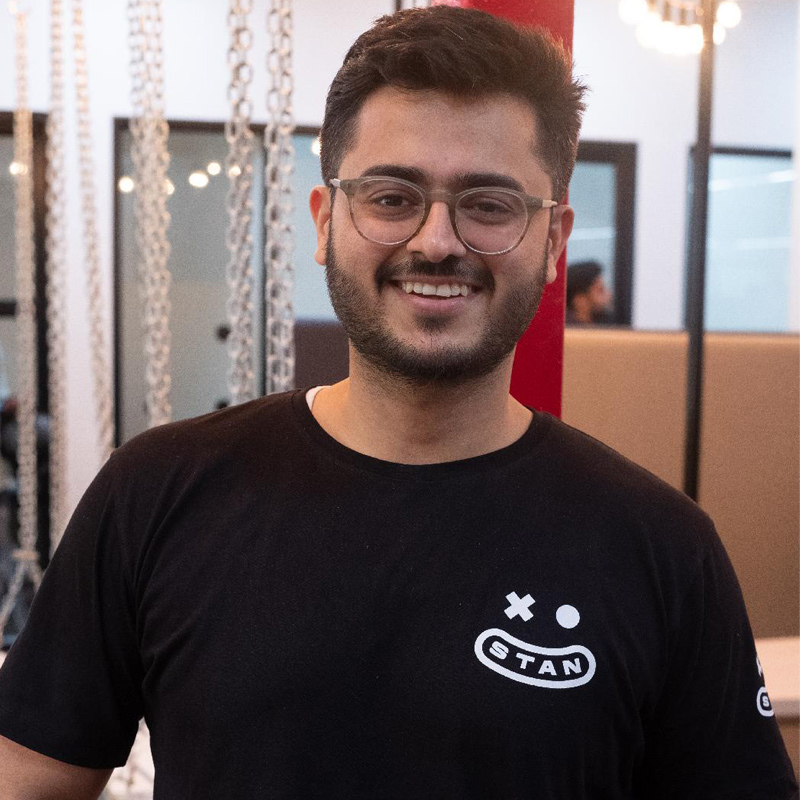
    The author of the article is Stan co-founder and CEO Parth Chadha.

  • The Quint & ManoramaOnline partner with Ideabrew to distribute podcasts

    The Quint & ManoramaOnline partner with Ideabrew to distribute podcasts

    Mumbai: Ideabrew Studios has partnered with The Quint and ManoramaOnline to create, host, and distribute podcasts. As part of this partnership, Ideabrew studios will host, distribute, and monetize over 30 existing shows, including top shows like Urdunama, Qisse Kahaniyan, and The Big Story. Together, they will also work to create rich content through new brand-led shows that appease the listener as well as benefit the brand partner.

    The Quint executive editor Shelly Walia said, “The Quint has been a leader among digital news media companies in leveraging the power of sound through its episodic and serialised podcasts. Collaborating with Ideabrew Studios opens exciting prospects for us in terms of not only reaching out to our habitual listeners and finding a new audience – but also getting to know them better.”

    She further added, “The data provided by Ideabrew is helping us better measure user numbers, understand user behaviour, and study demography in a more systematic manner. This year, there’s been an uptick in listenership across podcasting channels as the world returns to post-pandemic normalcy – and for The Quint, the tie-up provides a timely opportunity to capitalise on this revival.”

    Ideabrew and ManoramaOnline launched a strategic podcast collaboration in early 2022, resulting in significant amplification and reach for their podcasts as well as scale for the business partnership.

    ManoramaOnline CEO Mariam Mammen Mathew said, “We are happy to start our relationship with podcast creators and hosting platform IdeaBrew. In a short time, our listeners have responded well to the interesting and rich content in English and Malayalam languages on different podcast platforms. Podcasting is disrupting the traditional radio space, making it an exciting time for the news industry. We are happy about creating rich news content that’s true to our brand and a refreshing cultural and technological change across our newsrooms.”

    With 23 popular shows across genres in Malayalam and English, this is already a head start. Mariam added, “This partnership is going to give us a fillip to push out the several projects in our pipeline.”

    Ideabrew CEO Aditya Kuber said, “Whether it’s Covid-19 updates, political discord, a new space launch, or the latest celebrity shenanigans, news channels carry 24-hour news, giving you something to constantly ponder or worry over. Through our medium of audio content, Ideabrew aims to disrupt the way the audience receives and responds to daily news. Our podcasts are designed to engage in healthier outlets that allow our audiences the flexibility to choose when they want to consume their news and also provide stimulating formats in the form of in-depth analysis, interviews, or opinions from experts on the subject to make the news informative, wholesome, and entertaining.”

    He further added, “We are excited about making steady inroads into the news category by partnering with the best news providers across the country to make audio the preferred medium to receive national, regional, and local news in different languages. Our premier association with the HW News Network has been phenomenal, attracting a new and far younger audience through podcasts, giving the brand a distinctive extension to get their content out.”

    Ideabrew Studios’ current partners for whom they create and host audio shows are Sakal News, HW News, and Reason.