Category: Over The Top Services

  • MyySports gets $2 mn investment from its newly appointed Mathew Cyriac

    MyySports gets $2 mn investment from its newly appointed Mathew Cyriac

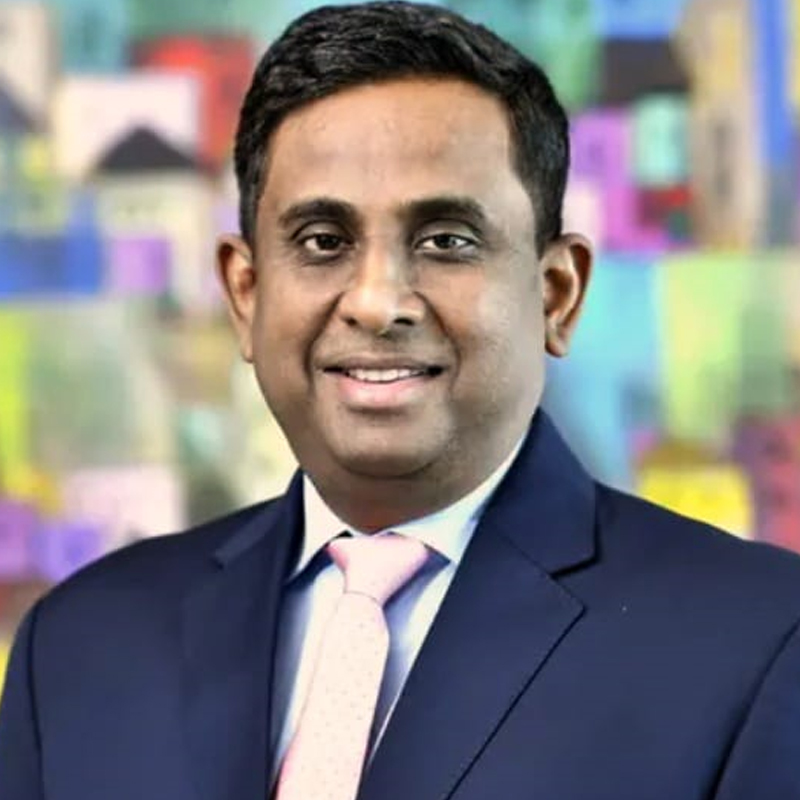
    Mumbai: Mathew Cyriac has invested $2 million in MyySports. Mathew is an existing board member and now joins as a co-founder. He is also the founder of Florintree Advisors.

    Saurav Banerjee founded MyySports in 2021. MyySports is a sports-tech start-up which, through its app, provides simple creator tools, allowing millions of sports lovers to create, socialise and monetise their content. The app is independent of sports and geography. MyySports has recently acquired a gaming company MyyHashstash.

    Speaking on this development, MyySports co-founder and director Mathew Cyriac said, “India is at the cusp of a digital revolution with 1 billion smartphones in the hands of the people. MyySports enables capturing and socialising the sporting journey of every sports enthusiast. With its unique offering, MyySports is all set to capture the large sports community on its digital platform. I am pleased to partner with Saurav on this exciting journey.”

    MyySports founder Saurav Banerjee added, “I am extremely happy to have Mathew as a co-founder. He is a prolific investor with an unbeatable track record and has made over five investments in the sports sector. MyySports will gain immensely from his vast experience. A warm welcome on behalf of the entire MyySports team.”

  • Nodwin Gaming’s upcoming digital festival DreamHack to celebrate chess

    Nodwin Gaming’s upcoming digital festival DreamHack to celebrate chess

    Mumbai: Nodwin Gaming’s upcoming DreamHack event, scheduled from 4-6 November will also celebrate “chess.” This is in addition to the gaming fun at the event.

    In partnership with comedian Samay Raina & ChessBase India, Nazara Technologies’ Nodwin Gaming has planned a chess celebration which includes an open tournament, a death-match between two grandmasters—Gukesh D and Arjun Erigaisi, Comedians over the Board (COTB), free chess workshops, along with some fun activities like hand-and-brain, a Simul exhibition, and a meet-and-greet with other chess stars. A total prize pool of Rs 10 lakh has been announced for the winners of the DreamHack Rapid and Blitz chess tournaments that are open to all.

    “By bringing a much respected and one of the oldest sports like chess to the DreamHack, we’re giving fans the experience of a lifetime! The super success of our chess league showed us how loved the game is in India and how passionate this community is, which is why we wanted to celebrate chess at DreamHack. Chess is also played over the internet just like gaming and also features the fabled over-the-board competition, exactly like a LAN event. The synergies and similarities are extremely evident and we believe that these two communities will love what they have to offer to each other,” said Nodwin Gaming COO & co-founder Gautam Virk.

    “The vision of ChessBase India has always been to make chess the most popular sport in the country. Nodwin has been a wonderful partner in this odyssey of popularising chess. I am very happy that chess is going to be a part of an iconic event like Dreamhack. I am extremely thrilled and so looking forward to it,” said ChessBase India co-founder & CEO Sagar Shah.

    A deathmatch between two chess players—the 16-year-old India number two and world number 18, Gukesh D, and the 19-year-old India number three and world number 19, Arjun Erigaisi, is scheduled for 5 November. The winner of this match will take home Rs 3,00,000 and the runner-up, Rs 2,00,000.

    “I am excited and eagerly looking forward to battling it out with Arjun Erigaisi, my fierce rival on the board and close buddy off it. I am looking forward to a great match,” said Gukesh D.

    Erigaisi added, “I was closely following the first edition of the deathmatch between Anish and Vidit. It was so thrilling and intense. Now I’m super delighted to be playing the second edition of Deathmatch, that too against a very strong opponent like Gukesh. Also, as far as I can recall, this is going to be my first one-on-one OTB, that too in my backyard in Hyderabad. So all in all, extremely excited.”

    For the first time, Comedians on the Board (COTB), an event in the world of chess that has always been hosted online by Samay Raina, will go live at DreamHack. Eight of the strongest chess-playing stand-up comedians, including Tanmay Bhat, Samay Raina, Biswa Kalyan, Joel D’souza, Anirban Dasgupta, Vaibhav Sethia, Manik Mahna, and Sumit Sourav, will face off against each other to win the Rs 5,00,000 prize and to become the ultimate COTB champion on 4 November.

    On the workshop front, there is a line up which includes: How to stream chess in an effective way by Samay Raina; How to make chess exciting in terms of teaching and commentating by Sagar Shah; and What is needed to pursue a career as an arbiter by one of India’s finest chess arbiters, IA Vivek Sohani.

    DreamHack will go live from 4-6 November at Hall 1 and 3, Hitex Exhibition Centre, Hitec City, Hyderabad.

    The tickets for Chess at DreamHack Hyderabad are priced at Rs 1, 299 can be bought at DreamHack India’s website.

  • Netflix to stream Malayalam film ‘Ariyippu’

    Netflix to stream Malayalam film ‘Ariyippu’

    Mumbai: After a good response on the film festival circuit, Mahesh Narayanan’s Malayalam film, Ariyippu, is all set to stream on OTT platform Netflix. The film made history as the first Indian film in 17 years to compete at the Locarno Film Festival in the international competition section. The film is also nominated for the Asia Pacific Screen Awards 2022 and will premiere at the Busan International Film Festival on 12 October 2022.

    Ariyippu centres around the lives of a struggling Malayali couple who dream of migrating out of the country for a better life. The film also explores emotional, social, and marital imbalances in their relationship.

    Ariyippu is being screened at the BFI London Film Festival, Marrakech International Film Festival, and Hong Kong Asian Film Festival. As the film continues to tour other major film festivals across the world, audiences globally will soon be able to stream the film exclusively on Netflix.

    It is directed by Mahesh Narayanan and produced by Shebin Backer Productions and Kunchako Boban Productions in association with Moving Narratives.

    Narayanan said, “With the ongoing recognition and love for our film, we are extremely honoured that Netflix is bringing the film as direct-to-digital globally, which will help cinephiles across the world experience the film very soon.”

    Netflix India VP of content Monika Shergill commented, “At Netflix, we are constantly working towards bringing you the most entertaining and compelling stories. We are excited to bring Ariyippu (declaration), a powerful film on the complex theme of a man-woman relationship, directed by the acclaimed director and producer, Mahesh Narayanan, along with stellar performances by Divya Prabha and Kunchacko Boban. Just like Minnal Murali won immense love across the world, we want our members to be won over by the dramatic universe of Ariyippu on Netflix.”

  • Decentralized social network for web3.0 creators Soclly launches in India

    Decentralized social network for web3.0 creators Soclly launches in India

    Mumbai: Soclly, a social network for web 3.0 influencers, educators, and artists, made its debut in India. The three co-founders of Soclly, Prayag Singh, Naresh Katta, and Charan Kumar Borra, have created a platform that allows web3 creators to interact with their audience. As of now, Soclly has around 15+ web3 creators from a range of streams.

    The concept of Soclly was first established in 2021. The co-founders got in touch with the creators and voiced their worries. It has become apparent that authors frequently receive spam and trolls in their direct messages, and since the majority of users submitted fillers in the DMs, which increased noise, there was no way to select users based on the quality of their queries.

    The creators were unable to establish a personal connection with their audience. After having a discussion with a creator, the audience hardly ever posts anything on social media about how much better the interaction was. This is a problem that Soclly has attempted to address through its platform.

    Singh said, “We built the MVP of the product and showcased it to the web3 creators after collecting their feedback. We launched our product for the masses after 1.5 years of rigorous development and testing in the hopes of educating everyone about the amazing world of web3.0 while also assisting creators in monetizing their skills and maintaining a relationship with their actual interested followers.”

    Booking 1:1 meetings with Web3 creators using stablecoins is one of Soclly’s primary benefits. Once the meeting is over, users can rate and share their experience, which is stored on the blockchain, also known as decentralised reputation.

    They have also built an option for creators to share their earnings for social good.

  • YuppTV introduces “Janya”, a disruptive solution in the TV industry

    YuppTV introduces “Janya”, a disruptive solution in the TV industry

    Mumbai: South Asian content provider YuppTv has announced the launch of Janya, a cloud-based playout solution. Janya is a disruptive solution that provides live TV and on-demand playout infrastructure in the cloud.

    Janya’s cloud playout solution enables any news, entertainment, or sports broadcaster the opportunity to immediately set up channels on the cloud-based platform, accessing a larger audience without upfront capital investment, limited resources, and operations. With the evolution and growth of OTT, the Janya cloud playout solution helps broadcasters be compatible with the OTT platforms and monetise through advertising with the implementation of SCTE-35 markers.

    The current market for live TV and on-demand video content is driven by hyperlocal content curated according to mass consumption. Janya addresses the hyperlocal requirements to create multiple channels with a low-cost but efficient setup.

    Leveraging Janya’s multi-channel set-up and ad-monetisation capabilities, broadcasters will be able to launch channels on FAST (free ad-supported television) networks through its cloud playout infrastructure.

    Janya’s cloud playout infrastructure also provides other innovative and interesting features such as interactive polls and graphics, cloud-based video editing, live debates, and live events.

    Speaking on Janya’s launch, YuppTV, Janya founder & CEO Uday Reddy said, “Video content production and distribution is witnessing a transformative phase in the present age. With the introduction of a cloud-based playout, OTTs, news, sports, and entertainment channels have an opportunity like never before. Janya allows various video content providers a platform to reach out to a larger audience, leveraging its technology to cater to the hyperlocal needs of the masses, creating new avenues for revenue generation through advertisements and more, all without the hassle of upfront capital investments, enabling multi-channel opportunities for broadcasters.”

  • Planet Marathi founder launches  ‘Planet Goem’  for exclusive Konkani content

    Planet Marathi founder launches ‘Planet Goem’ for exclusive Konkani content

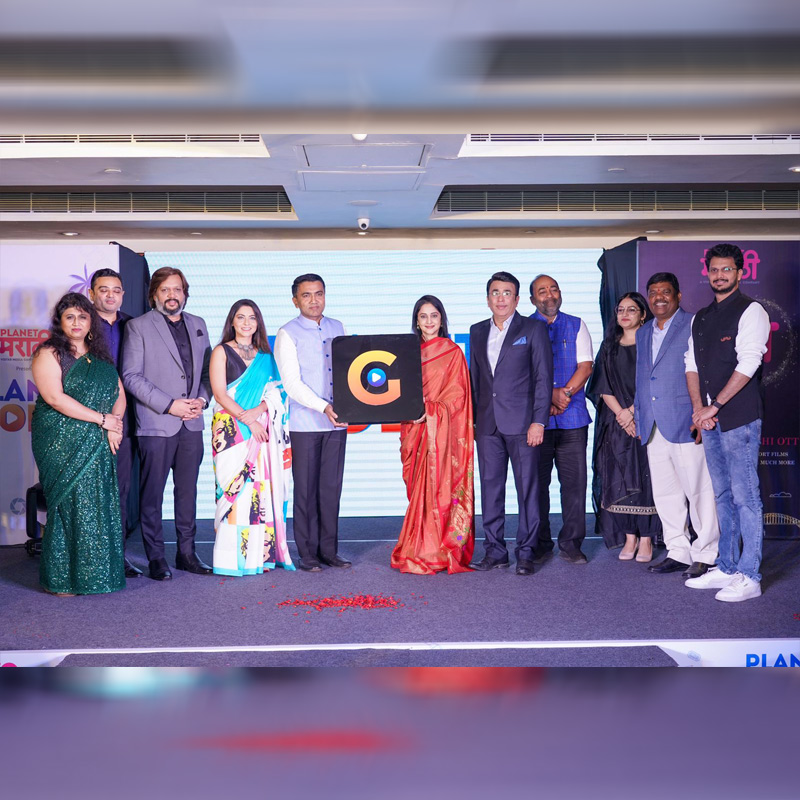
    Mumbai: Planet Marathi founder Akshay Bardapurkar has revealed his new venture, Planet Goem, which is an exclusive Konkani content OTT. The entity aims at boosting Goa’s media, entertainment, and cultural economy and was launched by the Goa chief minister Dr. Pramod Sawant. The app’s brand ambassador, renowned actress Sonalee Kulkarni, was also present at the grand unveiling launch.

    Planet Goem, an over-the-top (OTT) service, will offer exclusive Konkani language content in the form of movies, web series, chat shows, plays, short-format videos, music, news, and much more.

    It will be possible to access this over-the-top platform on any Android, iOS, or TV device. Beyond just being an OTT, Planet Goem wants to establish Goa as a top spot for media and entertainment needs. Accordingly, a film institute will be built in the state and affiliated with a reputable international university.

    To educate students for the impending digital era, some courses will be provided in animation, web 3.0 technologies, gaming, and blockchain. To improve the employability of young people and individuals across India, this skill centre will provide diploma, degree, and certificate courses as well as masterclasses from top teachers. To further this along, a partnership with multinational firms like There Digital, Unreal Engine, and Kingdom Technologies will be formed. These firms will be brought to Goa to set up studio services that would entice top-tier performers and filmmakers to work there.

    With an emphasis on talent, education, entertainment, and technology, Akshay now hopes to reform and revitalise Goa’s media and entertainment sector. Akshay Bardapurkar met with the Goa chief minister earlier this year to explore the prospects and potential of the industry, and he has since revealed his vision.

    During the launch, Goa chief minister Dr Pramod Sawant said, “Our state welcomes Planet Goem with open arms. The various offerings, including OTT, the film institute, and the skill centre, are a welcome boost to our economy, which will benefit from being diversified from its dependence on tourism. Our rich cultural heritage and language will now get an organised web platform aimed at increasing the recognition and popularity of our humble Konkani industry. We are confident about Akshay Bardapurkar’s vision for the industry, careers, and facilities and will extend our support towards initiatives meant for the betterment of Goa.”

    Planet Marathi OTT and Planet Goem founder & CEO Akshay Bardapurkar said, “Regional industries are an untapped gold mine of immense potential and power. Planet Marathi OTT has seen a great run in Goa and has earned eager audiences who have given Marathi content so much love. Goa’s entertainment sector remains unexplored, and we wish to put the spotlight on the capabilities of this industry and its talent. Our focus will be to advance opportunities for the state of Goa by creating varied opportunities through web content, learning and training avenues and by creating Goa’s very own film city.”

    Planet Goem aims to take Goa beyond being a tourist destination and entice professionals to the state’s entertainment industry.

  • QYOU Media India launches its direct-to-consumer app Q PLAY

    QYOU Media India launches its direct-to-consumer app Q PLAY

    Mumbai: On Tuesday, QYOU Media India announced its first direct-to-consumer app, Q PLAY, to rapidly expand their media business.

    The app offers all five QYOU Media India channels, namely The Q, Q Marathi, The Q Kahaniyan, The Q Comedistaan, and Q GAMEX. The best content from social & digital media creators will be available on all channels thanks to QYOU Media India’s distinctive programming style. With Q PLAY, unique, fresh, relatable, and exciting content will be found in one app, one destination, with many newer channels set to be added in the future.

    The ad-supported download-and-watch app can be downloaded on the Google Play store and directly on smart TVs and mobile devices without any registration hassle.

    Commenting on the launch, QYOU Media India chief operating officer Krishna Menon said, “The launch of Q PLAY opens a myriad of new possibilities. It enables us to be independent in addition to relying upon third-party platforms for distribution. The launch of this app will deepen our audience engagement by attempting to fill a need for relatable and entertaining content. We are thrilled to launch Q PLAY into the market. While it will take us time to build and grow our user base, Q PLAY is the tip of the spear around our digital objective to create a growing one-on-one customer relationship around our brand.”

    Embed Link: https://youtu.be/2p1XB3RTslw

    The direct-to-consumer (D2C) model in India is expected to grow exponentially and reach a value of $100 billion by 2025. Much of this is being driven by the mass adoption of social media and the use of influencer marketing as direct conduits to young Indian consumers. QYOU Media India currently reaches over 125 million viewers weekly on Q branded content channels. The company has a goal of driving that number to 200 million in the next three to six months. Q PLAY is designed to begin to leverage that audience scale to employ a direct relationship between the company and its user base. Q PLAY will additionally leverage both the large number of blue-chip advertiser brand relationships enjoyed by the company along with the recently announced data initiative to mine data from all sources of distribution, thus driving stronger monetization via more targeted content and ad campaigns.

  • Grihalakshmi’s ‘Home Chef’ winds up its third season

    Grihalakshmi’s ‘Home Chef’ winds up its third season

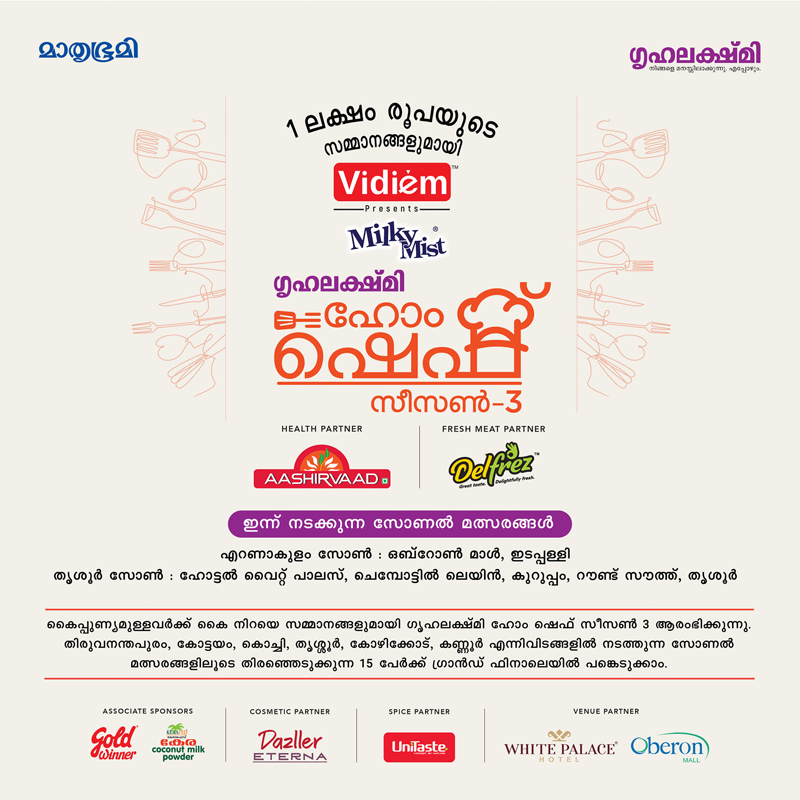
    Mumbai: Grihalakshmi, Kerala’s fortnightly women’s magazine, has completed season three of its culinary competition, Home Chef. The third season of Home Chef was one of Kerala’s culinary superstars’ most eagerly anticipated competitions.

    The competition’s theme was to bring interesting dishes enriched with traditional Kerala flavours. The competition’s zonal rounds were held in Ernakulam, Trivandrum, Thrissur, Kannur, Kottayam, and Kozhikode.

    For the final round, 15 people were chosen. At the grand finale, the eminent judge panel included Grand Hyatt Chef De Cuisine Latha, Ibis Hotel Executive Subin Mecheri, and Lilly Babu Jose.

    The virtues for selecting the winners were the accuracy of the dish, the taste, the use of traditional ingredients, and the presentation. The winner was Maimoona Haneefa, and her winning dish was chakkapodi idikkozhi thoran. Sheeba Saneesh finished second with an ambazhanga prathaman. Shamla Ummar and Thakkarakizhi finished third.

    The grand finale was held at Ernakulam Town Hall. The winner received Rs 50,000. The second and third place prizes were Rs 30,000 and Rs 20,000, respectively.

    Vidiem, the competition’s presenting sponsor, also gave the winners gas stoves. Milky Mist was the competition’s co-presenting sponsor. Other sponsors include Aashirvaad, Delfrez, Gold Winner, Kera Coconut Milk Powder, Dazller Eterna, and UniTaste.

  • One Take Media Co. to present K-drama ‘Weightlifting Fairy Kim Bok-Joo’

    One Take Media Co. to present K-drama ‘Weightlifting Fairy Kim Bok-Joo’

    Mumbai: One Take Media Co. has announced its “New Week, New Drama” return with popular drama Weightlifting Fairy Kim Bok-Joo this week for its audience.

    This show has a lovely couple in the lead, Lee Song-Kyoung and Nam Joo-Hyuk, playing Kim Bok Joo and Jung Joon Hyung, respectively. A coming-of-age story about a group of college athletes who are fighting for their dreams, experiencing and finding love in the process, and growing every step of the way. 20-year-old Bok Joo is a weightlifter who is pursuing her dream of winning a gold medal, but she then finds romance for the first time in her life. The characters in this drama are elite athletes in weightlifting, swimming, and rhythmic gymnastics who work hard to achieve their goals in life. Watch this space next week for new show updates.

    One Take Media Co. is set to bring its all-popular Korean dramas dubbed in Hindi and in their original Korean language with English subtitles. Also, as informed recently, they have launched their OTT app, Playflix.

    According to a recent Netflix study done in India, the number of Indians watching Korean dramas has surged by 370 per cent and BTS (Bangtan Boys), a South Korean boy band formed in 2010 and debuted in 2013 under Big Hit Entertainment, is India’s fourth most streamed, according to Spotify’s 2020 data.

  • GUEST ARTICLE: Thinking about data ownership in the web3.0 world

    GUEST ARTICLE: Thinking about data ownership in the web3.0 world

    Mumbai: It has been almost two decades since we saw the rise of the internet and various applications like Facebook, Twitter, Gmail, etc. They have brought a revolutionary change in everyone’s lives. From sending messages or doing a video call, there is a powerful solution available for everything. But even though they solve major problems, there is one major concern: user data.

    Data ownership and web2.0: Introduction 

    Most of the applications we use today store a huge amount of data on their servers to design advanced models and algorithms to show advertisements and information. This information includes not only your name and email address but also the posts you read, advertisements you click, and so on. To be more precise, although you can use such applications for free today, you are giving a huge amount of data to the companies in return.

    This has raised several concerns related to data privacy and preservation. As per the recent survey done by termly.io, in 2013, hackers breached Yahoo’s systems and stole information from over three billion accounts. However, the information did not include any sensitive figures like payment data or bank account numbers.

    Likewise, in March 2021, hackers scraped data from Facebook and exposed 533 million users’ information from all across the world. This has all the important information like user locations, biographical, etc. 

    But with constant technological improvements and the emergence of concepts like web3.0, there has been a new gleam of hope seen among everyone, which would return the data ownership to the users.

    Data ownership and web3.0

    By leveraging blockchain, web3.0 addresses several storage, centralisation, and data ownership concerns. Web3’s architecture does not use centralised servers to store data, but rather a large group of nodes spread across the globe.

    Such nodes act like a bridge for the exchange of data between the decentralised applications and end users. A large number of decentralised applications are non-custodial and community-governed. Also, it secures all intellectual property rights algorithmically, giving users a true experience of data ownership. However, the underlying blockchain makes the process quite transparent and preserves privacy through advanced cryptographic algorithms.

    How does web3 achieve its goal of sovereignty over user data and privacy?

    Web3 utilises some of the most advanced features of blockchain and distributed ledger technology to protect users’ data and privacy.

    Encryption: Every asset, message, or even financial transaction is encrypted. Encrypted data is only accessible by decrypting it and requires private keys.

    Private Keys: A private key is like your UPI pin, cryptographically made. It proves data ownership, digital identity, and the blockchain public address.

    Authenticity: With private keys, users own their data and have the absolute right to share it. Users can leverage all the benefits from the data collected and profit earned from assets.

    New ways of consuming data without compromising users’ control over it

    For example, if user data were democratised, big corporations and users would be able to profit together. Recently, there was a conflict of interest between Apple and Meta-related user data.

    Apple has given a choice to users to share data or not. Individual users’ ability to choose whether or not to share their data has no bearing on any small-scale business seeking to advertise to a specific audience.

    Further, there could be a decentralised marketplace where small-scale businesses could pay the communities for their data exchange instead of paying large entities like Facebook for the same information. This would provide a new source of income for the community members.

    Internet data is not just about making great profits or advertising. There is also a segment of people who collect data, not for profit but to invest in something new. Researchers and surveyors often look for user data to support their research or an invention.

    If we could monetise the data, it would help the users earn some passive income and motivate them to increase the amount of data available to work for the betterment of society and research.

    One such great example is credential data networks. The credential data network allows developers to build better products and communities. It opens up a collaborative infrastructure for users to get rewards where their credentials are used. This helps users earn income and build a large data network.

    Challenges while adopting web3 for data ownership

    Web3 has opened up numerous opportunities but is still in the work-in-progress stage. There are a lot of challenges and hurdles coming up while adopting decentralised applications, bringing a revolutionary paradigm shift in how we consume the internet. One such challenge is regulation. It isn’t easy to regulate things in web3.0. Several experts believe it would open up new ways of conducting cybercrime and online abuse, among several other things.

    Secondly, the user wallets that store account information like private keys have a bad user experience, and it is difficult to understand their usage by any layman. It is difficult for people to understand the terminologies of wallets, gas fees, keys, and much more. A lot of work is needed to onboard users and help them learn such concepts.

    What does the future look like with web3?

    The internet is constantly evolving, and recently many issues have come up regarding the safety of users’ data. Web3 opens up new opportunities for people to control their data by leveraging credential data networks and decentralised social graphs. Products like Soclly are leveraging a decentralised social graph called the lens protocol to revolutionise social media applications.

    The decentralised architecture stores data across numerous scattered ledgers. This eventually reduced the chance of hacking and gaining access to the data significantly. Not only this, but it also gives the opportunities to the users to own their data rather than centralised companies such as Meta and Google to own them. In a nutshell, this new age technology will bring a bright future for internet users to own and control their data.

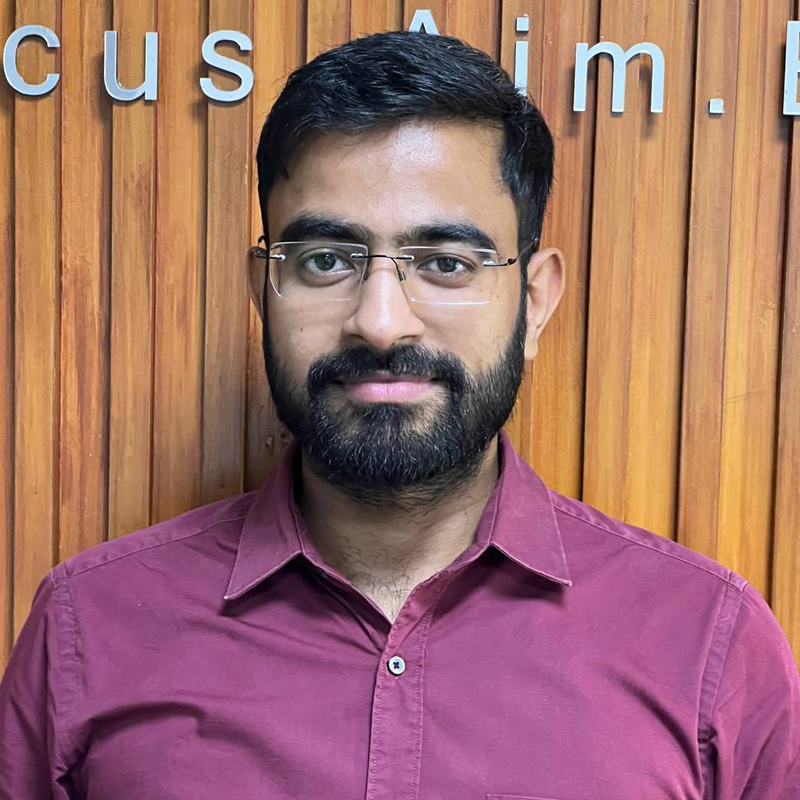
    The author of this article is Soclly co-founder Prayag Singh.