Category: Over The Top Services

  • Amazon miniTV shares a glimpse of the hip-hop dancers ready to battle it out on Hip Hop India!

    Amazon miniTV shares a glimpse of the hip-hop dancers ready to battle it out on Hip Hop India!

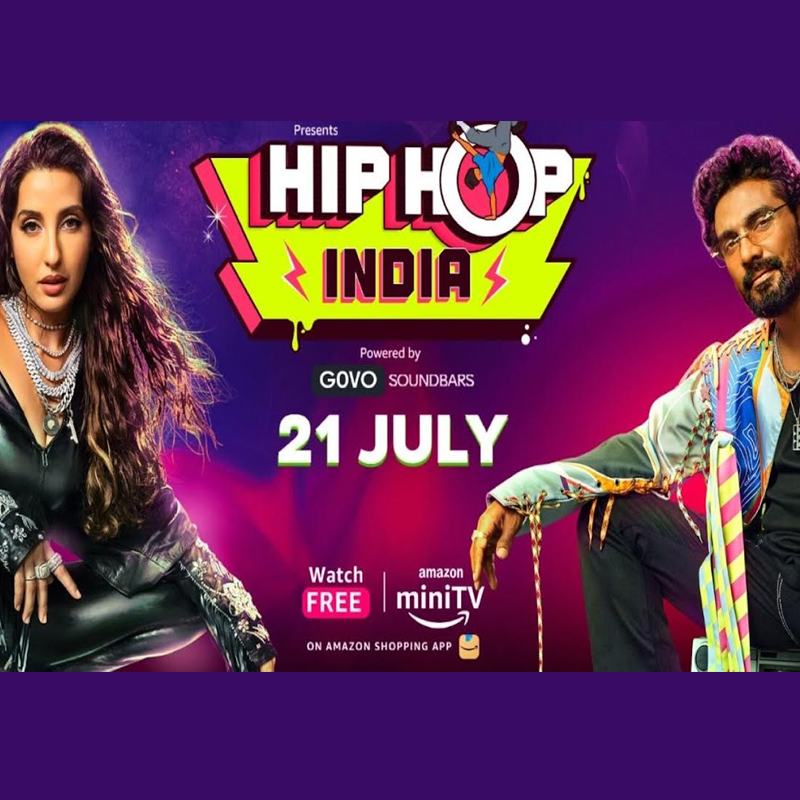
    Mumbai: Amazon miniTV – Amazon’s  free online video service is all set to get the ball rolling and create waves in the dance community with its hip-hop-based dance reality show, Hip-Hop India. The platform has a glimpse of the contestants ready to set the stage on fire with their jaw-dropping performances. With anticipation already running high with the service unveiling Nora Fatehi and Remo D’Souza as the judges for India’s first Hip Hop centric reality show, the preview has taken the excitement levels significantly higher!

    The quick peek promo shows Nora and Remo being wow-ed by the performances as participants across multiple categories  – Solo, Duo and Dance crews battle for the top honour.  The high-energy video also shows host of the show, Wicked Sunny a.k.a Vikalp Dwivedi, encouraging the participants to give it their all. Hip Hop India will stream from 21 July, exclusively on Amazon miniTV for free within Amazon’s shopping app and Fire TV.


  • “Offering a free tier is a great way to attract new users to an OTT platform”: Havas Media India’s R Venkatsubramanian

    “Offering a free tier is a great way to attract new users to an OTT platform”: Havas Media India’s R Venkatsubramanian

    Mumbai: The recent announcement by Disney+ Hotstar that smartphone users in India can watch this year’s Asia Cup and ICC Men’s Cricket World Cup for free on the OTT mobile platform, came as a pleasant surprise by both cricket and non-cricket fans. The Asia Cup 2023 will be held in September in India, and the Asian country will also host the ICC Men’s Cricket World Cup, which will last nearly two months, from 5 October to 19 November.

    This strategic decision comes after this year’s IPL, which set record viewership numbers for both linear TV and digital platforms. The media rights for the games were split for the first time with Disney Star getting the TV rights and JioCinema nabbing the digital rights. Interestingly, JioCinema streamed it for free on their platform.

    Disney+ Hotstar’s decision to make cricket free-to-view will reportedly benefit the 540 million smartphone users across the country. Interestingly, Disney Star has secured the broadcasting rights for all ICC tournaments till 2027.

    A famous quote by French poet Anatole France which says, “The greatest virtue of a person is curiosity”, stays true till date. Many people are generated with curiosity to know whether this decision will affect linear TVs, SVOD revenue and also the reaction of various brands to this, will they be ready to invest more, medium or less etc.

    To answer all this questions, Indiantelevision.com caught up with Havas Media India, president- investment & Havas Play, MD, R Venkatsubramanian to give some interesting insights on this decision…

    Edited excerpts

    On Hotstar maximising its revenues via free streaming of the World Cup on the mobile device

    Hotstar, the leading sports platform in India, has been charging consumers to access sports content until now. They used to provide a free 5-minute trial for sports content, and around 380-400 million viewers took advantage of this offer during the IPL each year, while approximately 50-60 million viewers paid for IPL access. However, in 2023, JIO offered free access to watch the entire IPL match on Hotstar, resulting in over 400 million viewers.

    With Hotstar offering free access to watch the ICC World Cup, they are expected to attract a larger audience from 2-tier and smaller cities. This expanded reach presents an opportunity to attract more brands, both big and small, for advertising on Hotstar. As a result, Hotstar can maximise its revenue.

    On linear TV being consumed more widely than mobile phones and the strategy affecting linear TV

    Hotstar’s decision to offer free streaming of the World Cup on mobile devices is expected to impact linear TV. Although linear TV still holds a wider consumer base, the popularity of streaming services, increasing smartphone ownership, and the trend of on-the-go content consumption are narrowing the gap between the two mediums. By providing free streaming on mobile devices, Hotstar is likely to accelerate the shift towards mobile viewing habits.

    However, it’s worth noting that linear TV remains the primary medium for consuming sports and offers a cinematic experience. There are still individuals who prefer traditional TV viewing and will continue to do so. Broadcasters should continue producing content for the large screen, and live events will continue to attract a significant audience on linear TV. The key to success for linear TV lies in adapting to the evolving landscape, making their content accessible to mobile viewers, and finding ways to differentiate themselves from streaming services. Linear TV still holds significance, especially for impactful product launches by brands.

    On SVOD revenue declining gradually by streaming free on mobiles as many will move towards free content rather than the paid subscription

    It is true that streaming free content on mobile devices could lead to a decline in SVOD revenue. When high-quality free content is readily available, some individuals may be less inclined to pay for a subscription. However, it is important to consider that not all free content is equal in terms of quality.

    SVOD providers can offer features that are not available with free content. For example, SVOD platforms can offer exclusive content, ad-free viewing, and the ability to download content for offline viewing. These features could make SVOD subscriptions more attractive to consumers, even if there is free content available. As the market for streaming services continues to grow and more people adopt SVOD platforms, there is still room for increased demand and the potential for differentiated content to make a significant impact. This could offset any decline in revenue caused by free content.

    Overall, it is too early to say whether streaming free content on mobile devices will lead to a decline in SVOD revenue. SVOD providers can leverage unique features and the growing market demand to maintain their revenue streams and adapt to the evolving streaming landscape.

    On brand’s reaction to this move whether they will invest here heavily as compared to IPL

    The scenario of Dhoni lifting the IPL trophy compared to Rohit Sharma lifting the ICC World Cup trophy would indeed create a significant difference. ICC Trophy is very prestigious as compared to IPL and India will play against Pakistan and other strong teams. So yes, brands will definitely consider investing money in ICC WC and especially if it is happening in India.

    Brands will have a positive reaction to Hotstar’s move to stream the World Cup for free on mobile devices. The world cup falls right in the middle of the festive, and it’s in the interest of the brand to make that investment and connect with key TG. Digital offers a great platform to reach the key TG allowing geo-targeting and demographic TG segregation, targeting both, youth and families.  It is most likely that some brands will invest heavily in the World Cup, as classically cricket offers a good return on their investment.

    On the strategy of OTT platforms attempting to create free tiers in their services

    Offering a free tier is a great way to attract new users to an OTT platform. This is especially true for platforms that are still relatively new or that are trying to expand into new markets.

    Even if users only use the free tier, they are still more likely to become paying subscribers in the future. This is because they will be exposed to the platform’s content, and they will be more likely to want to access more of it.

    Free tier does not generate direct revenue, it can still generate revenue indirectly. For example, platforms can show ads to users on the free tier, and they can also collect data about users that can be used to target them with advertising.

    Free tiers should offer a limited selection of content. This will help to keep costs down and it will also help to ensure that users are more likely to upgrade to a paid subscription if they want to access more content.

    Free tiers can also offer exclusive content. This will give users a reason to sign up for the free tier and it will also help to differentiate the platform from its competitors.

    The process of upgrading from the free tier to a paid subscription should be easy and seamless. This will help to ensure that users who are interested in upgrading do so quickly and easily.

    YouTube offers a free tier that allows users to watch a limited selection of videos with ads. Netflix and Amazon Prime Video also offer free trials, granting users temporary access to a limited range of content without charge for a limited period of time.

    On the free streaming by Jio during IPL giving a boost to small & medium enterprises

    The free streaming of IPL by Jio during IPL did give a boost to small and medium enterprises (SMEs) to be seen on IPL. This is because the free streaming allowed a wider audience to watch the IPL, which in turn gave SMEs a larger audience to reach with their advertising and able to target their respective local markets.

    By streaming the IPL for free, SMEs could tailor their advertisements to the specific audience watching the IPL on Jio. This ensured that their ads reached viewers who were more likely to have an interest in their products or services, increasing the effectiveness of their advertising campaigns.

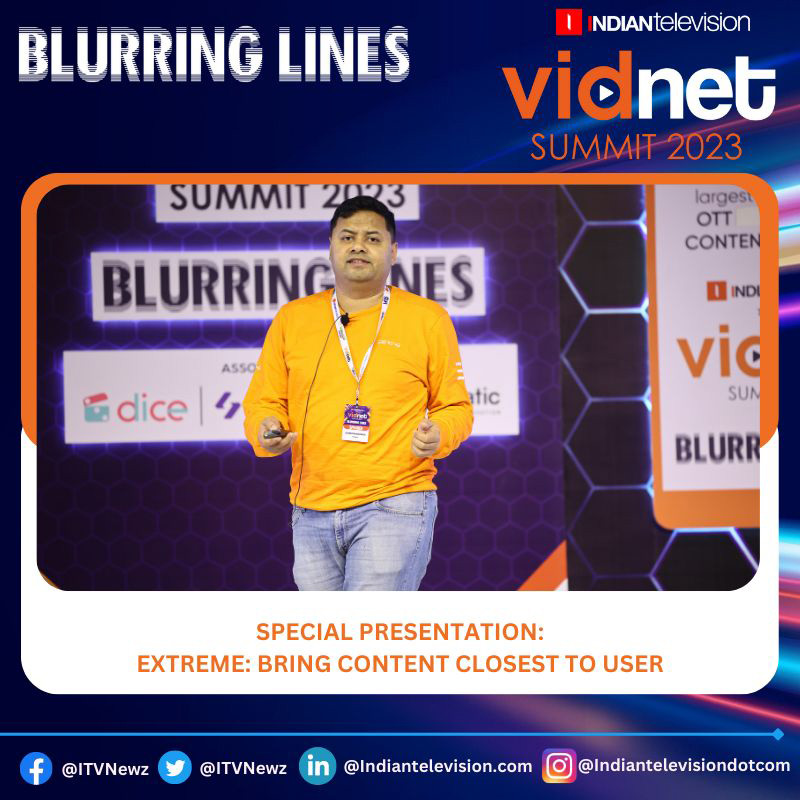
  • Bring content closest to the user – Raunak Maheshwari – ED & CEO EXTREME

    Bring content closest to the user – Raunak Maheshwari – ED & CEO EXTREME

    Mumbai: Today the lines are blurred as the streaming business is getting more complex and complicated, as monetization gets unclear. There is so much disruption happening, AVOD is offering SVOD and vice versa. Premium content is provided absolutely free, and much more is happening in this sector. Subscriber add-ons are slowing down. Time spent viewing OTTs has plateaued for almost each and every platform, and high churn continues despite attractive annual schemes being offered by them. However, the good news is that the Rs 10-12 million paid OTT subscription market in India continues to excite an increasing number of advertisers who are willing to put out their ads on these platforms. Mobile continues to be the main device of consumption even as connected TVs are increasingly getting into Indian homes. Investments in content continue to burgeon as viewers’ insatiable appetite continues to demand more and more.

    It is certain that this new ecosystem is calling for new relationships to be forged, new partnerships to be developed as TV manufacturers, Cable TV, DTH, and telcos and other aggregators’ presence as gatekeepers to their customers is increasingly being felt. So, what is the way forward for the OTT platforms? Where do the opportunities lie? What are the challenges?

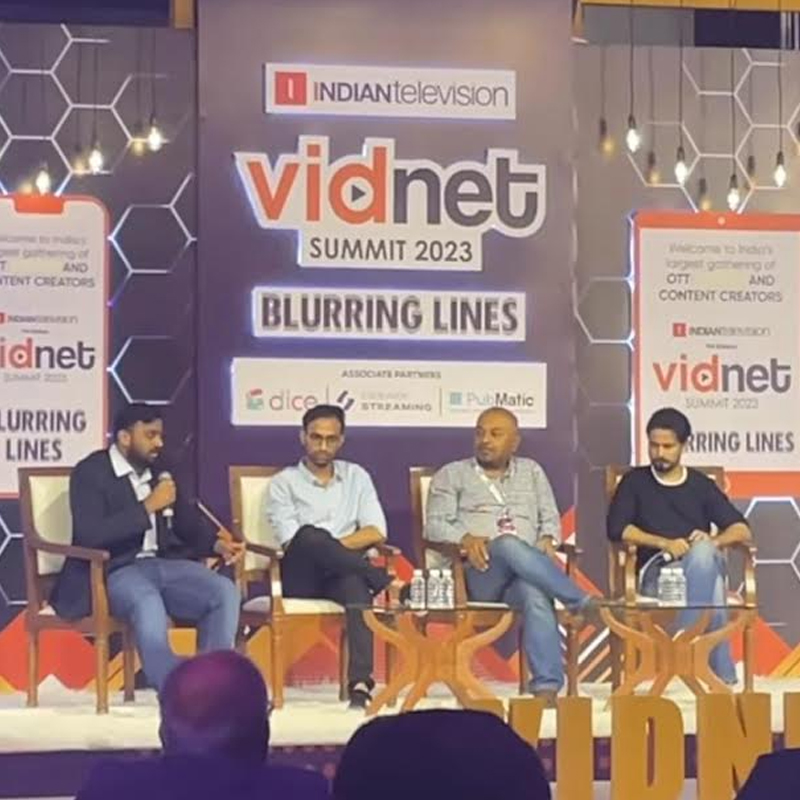
    This year’s Vidnet 2023 looked at all these scenarios and more, and found answers to some of these questions along with experts from the industry.

    Raunak Maheshwari spoke to multiple stakeholders about how Extreme has played its part in the wireline broadband revolution in India and how it can further help bring content closer to the end user further enhancing end-user experience for video content.   

  • Vidnet Summit 2023: Creating a world in 6-10 episodes

    Vidnet Summit 2023: Creating a world in 6-10 episodes

    Mumbai: Today the lines are blurred as the streaming business is getting more complex and complicated, as monetization gets unclear. There is so much disruption happening, AVOD is offering SVOD and vice versa. Premium content is provided absolutely free and much more happening in this sector. Subscriber add-ons are slowing down. Time spent viewing on OTTs has plateaued for almost each and every platform, and high churn continues despite attractive annual schemes being offered by them. However, the good news is that the paid OTT subscription market in India continues to excite an increasing number of advertisers who are willing to put out their ads on these platforms. Mobile continues to be the main device of consumption even as connected TVs are increasingly getting into Indian homes. Investments in content continue to burgeon as viewers’ insatiable appetite continues to demand more and more.

    It is certain that this new ecosystem is calling for new relationships to be forged, new partnerships to be developed as TV manufacturers, Cable TV, and DTH, and telcos and other aggregators’ presence as gatekeepers to their customers is increasingly being felt. So, what is the way forward for the OTT platforms? Where do the opportunities lie? What are the challenges?

    This year’s Vidnet 2023 looked at all these scenarios and more, and found answers to some of these questions along with experts from the industry.

    The seventh session was chaired by Indiantelevision.com founder, CEO & editor in chief Anil NM Wanvari. The panelists were Zee5 chief content officer Nimisha Pandey, film director & screenwriter Alankrita Shrivastava, Atomic Films writer, director, and producer Karan Anshuman, House of Talkies founder & producer Sidharth Jain, Pocket Aces head of development-Dice Media & writer, actor & creative director Kartik Krishnan and The Night Manager- creator & director Sandeep Modi.

    Wanvari began the discussion by asking the question, “How do you decide whether a show deserves six to eight episodes, and not two or three? What goes behind that decision?”

    Pandey said, “We don’t decide how many episodes the show should be. It is truly and always the story that dictates how many episodes it deserves, or how many episodes it needs to tell itself. Of course, you have to be honest enough to hear it and not try and force fit any mathematics into it. But if you read a story, it will tell you the pace it should have.”

    Shrivastava pointed out, “Normally when one has a story, you are thinking of characters, a world, a universe – you know instinctively whether it’s a feature film, a mini-series, or a series. And I think for me a series means it’s going to be about six or eight episodes. It could be 12 – depending on the story if I feel it has that kind of an expanse. But the stories that I have thought of, I don’t think they should have so many episodes. Mini-series are not that popular in India. So, it depends on the story, on the length of the episodes – various factors come into play. But as a writer, as a creator, you instinctively know what you’re going for, whether it’s a film or a longer format in terms of a series. Many times when you start working on it, you don’t know actually how many episodes it will be. And once you start developing it, you realise that the number of episodes could vary, as the writing progresses. It is more of a collaborative decision and a lot of other factors come in such as the time required, there are budgets. Though there are a lot of factors that are at play, I don’t think that is the most relevant thing – I think what matters is what is the story that you’re telling, how are you building the universe, what you want to say, what are your characters doing – that’s the most important thing.”

    Anshuman brought out, “It is not only the story that dictates this; definitely the platform has a lot of say in what they are looking for. This genre of storytelling – the OTT style – started in 2016 – it was new. Before that, we only had feature films or aiming for 500 episodes. I don’t know if it’s only the story that dictates because we have grown up looking at the two-hour format or if you’re in television, you wondered how you keep this going forever. And in this era now where you want to tell a story in six or eight, or even 10 hours – that’s why you have seasons, I guess, where you have the scope to expand you would just do another season. As far as I am concerned, I usually have a lot more to say as compared to what they end up screening or carrying forward on paper as well.”

    Krishnan mentioned, “It depends on the themes – it depends on what you want to say in one particular season. There is a reason why Breaking Bad has six or more seasons, and Friends has 10 seasons and so many episodes. So it becomes a part of what the network or the platform says, and about what the audience feels. It also depends on how much love and appreciation it receives – it takes that kind of direction. A three hours film like Lagaan doesn’t trouble you, but there are some films that are under two hours but feel stretched – objectivity is necessary. It is about having the balance between holding the audience’s interest and ending it in eight or nine episodes if need be. It’s about honesty, and not about indulgence.”

    Modi opined, “The Night Manager was originally made in 2015 – had six episodes, each an hour long. But the same show was sold in many countries as eight episodes of 40 minutes. When the adaptation came to me, it was never a question of the number of episodes. As producers, we are interested in knowing if our money is locked by the number of episodes that we produce. Is it going to be a per-episode earning, or based on a project? The honesty comes in based on that. If it is money based on a project, then we will be true to what the story requires. Sometimes producers push for an episode more as the finances would not work at a less number of episodes. As a creator, I am always keen to see the business in a 360 way. While it is very easy to go into a shell and say that as a creator and say that our job is only to look at the creative, it is the most expensive art form. A lot of people’s jobs and livelihoods are involved – unless you understand how the enablers, the platform, and the producers are seeing it, you will not be able to take everyone along – it is a collaborative art form. So that’s why there are many reasons why they ask to add or reduce an episode – so I ask why that – I ask questions. Also, a lot of creators hate data. I love data because it can be interpreted in so many ways – because as long as you’re open to sharing data, we can discuss and see whether the data is beneficial to us or if it is just messing up our brains. Data can mean one thing one day, the other day it could mean something else and change things. So most of the time the answers come from understanding the business and different points of view.

    For Night Manager, there was so much story that we needed to pack into it, it felt like it may not hold in five or six episodes. We wanted to design a dip in the show – the joy of some episodes will only be when there is stability/slow pace and not always running around. So, we realised that it doesn’t matter whether we do six or seven episodes. So, once it was told to us, it was a home run after that.”

    Jain elucidated, “Those days are over when a platform calls and says that they want a book – it’s gone two years ago. Platforms want good projects, they want clarity on the vision. It is about what the audience expects from a story, and not cheating them on their expectations. It is about sticking to your gut and instinct. About the release strategy – sometimes a series is to be released later, so the writing is adjusted a bit accordingly. It’s so many things, but ultimately it’s the story because you can’t bore the audience. So you can’t do that at the cost of anything else. It should stick, and the purpose of the show and the story should be delivered sincerely.”

    Towards the end of the session, Wanvari spoke about opportunities in the writing field, to which Modi said, “The industry is very open – it’s a misconception that you got to be a big name to get your foot into the door. It is pretty democratic. To add to that, this is the best decade ahead of us, it is the best opportunity for us to tell diverse stories and we all have multiple projects in the pipeline because the platforms are really supportive. You got to back to your roots and see what you’re really good at. Don’t be like anybody else, do what you’re good at.”

  • Masterclass: Decoding City of Dreams With Cast & Crew at Vidnet Summit 2023

    Masterclass: Decoding City of Dreams With Cast & Crew at Vidnet Summit 2023

    Mumbai: Today the lines are blurred as the streaming business is getting more complex and complicated, as monetization gets unclear. There is so much disruption happening, AVOD is offering SVOD and vice versa. Premium content is provided absolutely free and much more happening in this sector. Subscriber add-ons are slowing down. Time spent viewing on OTTs has plateaued for almost each and every platform, and high churn continues despite attractive annual schemes being offered by them. However, the good news is that the paid OTT subscription market in India continues to excite an increasing number of advertisers who are willing to put out their ads on these platforms. Mobile continues to be the main device of consumption even as connected TVs are increasingly getting into Indian homes. Investments in content continue to burgeon as viewers’ insatiable appetite continues to demand more and more.

    It is certain that this new ecosystem is calling for new relationships to be forged, new partnerships to be developed as TV manufacturers, Cable TV, and DTH, and telcos and other aggregators’ presence as gatekeepers to their customers is increasingly being felt. So, what is the way forward for the OTT platforms? Where do the opportunities lie? What are the challenges?

    This year’s Vidnet 2023 looked at all these scenarios and more, and found answers to some of these questions along with experts from the industry.

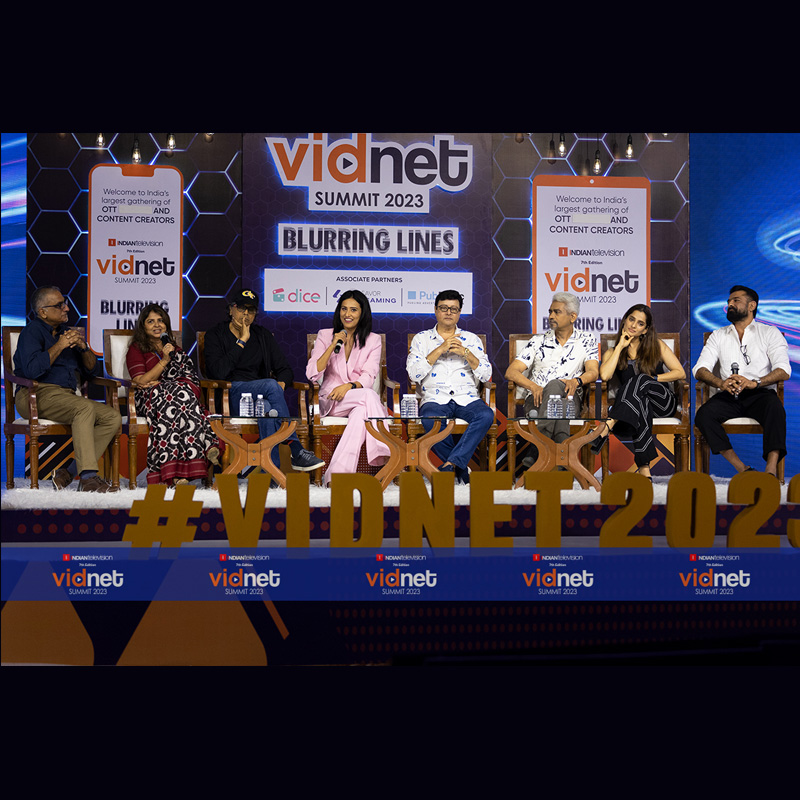
    The City of Dreams is Applause’s first original for HotStar. Season one & two did really well and this year Season 3 dropped on HotStar. The show has garnered good reviews. This year at Vidnet 2023 we did a masterclass with the producer, director and the main star cast of The City of Dreams.

    The moderator of this masterclass was TV presenter & entertainment journalist Namitaa Sachdeva and the panellists were writer-director Nagesh Kukunoor, Applause Entertainment content head Deepak Segal, producer Elahe Hiptoola and actors Atul Kulkarni, Priya Bapat, Sachin Pilgaonkar, Eijaz Khan.

    Sachdeva began the session on a light note by singing a few lines from Sachin Pilgaonkar’s romantic hit film song – “Bade Achche Lagte Hain”.

    Thereafter the trailer for the latest season which was released on 26 May 2023 was played.

    Further moving onto the topic of the masterclass, she asked, “‘City of Dreams’ when we hear this name, Mumbai comes to our mind, so what was the vision behind giving this title?”

    To this, Kukunoor replied saying, “The initial approach was to tell a lot of intersecting stories set in Mumbai. So we called it ‘City of Dreams’. I mean it was as simple as that. Then we went through almost about 20 titles, at least. Then finally six months later again circled back, just before the release and said no City of Dreams sounds correct. So that’s how we ended up.”

    Expressing her love for the series, she asked Deepak Segal, “What inspired you to come up with a project like City of Dreams as a political drama?”

    Segal with a hearty laugh said, “Nagesh inspired us! Actually, when Nagesh said initially we were looking at various stories intersecting in one city of different characters, but when Nagesh and Rohit Banawlikar co-wrote it, then we realised that this dynamic of power struggle that is there in various states in India and politics has a lot of potential. Then if you throw into the mix, a woman who wants to stand up for our own, a father who is supremely patriarchal, an uncle who’s very machiavellian, a devoted cop who becomes her friend across three seasons without questions, he just does follows her. And so, that character mix was so strong that we knew that these characters are going to grow and the relation dynamics will have a certain chemistry. I mean, if you take even Gurav Kaka and Poornima’s story is she eats for the first time because he brings her food and so it’s not exactly you scratch my back I’ll scratch yours but there is a grudging respect, there is even love for a certain character traits of that person. I mean she does love Gaikwad even though he made her give up her first love and so the thickness of the characters thrown into this dynamic, the potential was really good that’s why we decided to go for it and as the writing emerged of course, the twists and turns as you can see.”

    Moving on to the actors, Sachdeva first questioned Sachin Pilgaonkar, “We can see all the layers in your character from season one till season three the graph has risen. So can you please tell us from first season to the third season, what kind of research did you do? You do it with so much effortlessness. Whenever we see you, you express it with your eyes. How do you do that so effortlessly?”

    Pilgaonkar said, ”Well, I first of all need to be charged about whatever I’m doing. I’m charged in the sense, as an actor. So that’s what I experienced when I read the all episodes of the first season. First of all, I was very glad that I was working with a friend for the first time. We never worked together before, except City of Dreams. But I got the opportunity to work under him because I’m a director’s actor, and I’m not a hypocrite when I say this. People who work with me know! But after that I met Nagesh and asked him what made him sign me or choose me or select me. So, he explained to me a few things and the graph of the first season I got to know I understood him and then I left myself in his area.

    He further added, “As an actor, when I reached home on the first day, I said ‘Nagesh tell me what’, that was my first line and that happened from the first day of the shoot till the last day of the third season I shot. The same thing happened, I followed him totally. Look following is not the only thing which is important. First understanding him is more important. So I tried to understand him, and what he wants, then tried to follow, and rest is history! I feel very lucky to have such good actors with me. Otherwise, you wouldn’t have loved to hate Gurav Kaka so much.”

    To this, Sachdeva then asked him, ”It’s really difficult for us to love a person on screen, and at the same time to hate a person asking, How did you do that?”

    Pilgaonkar in a fun tone said, ”I didn’t need to do anything that is the audience who’s supposed to love and hate or to do both the things at a time. What I need to do is just encourage them to do so. I mean doing your efforts and yet being effortless.”

    Taking Pilgaonkar’s last sentence forward, Sachdeva praised Atul Kulkarni and asked him, ”How did you prepare for this character, particularly from season one till season three, we can see those nuances that you are going through, and any kind of extra research that you do, or any kind of important thing that you keep in mind while selecting your roles or choosing this one?”

    Kulkarni replied, “It’s always the script, I think. Actors can do only that much. So whatever is offered, I think is extremely important. And as far as City of Dreams is concerned, I think the heroes are the writer, Nagesh Kukunoor, and of course Rohit Banawlikar. It had to be that well-written. When we’re talking about 29 episodes, we are talking about six-seven films.  So to write that kind of stuff and keeping that line intact, keeping it interesting, keeping the audience intrigued, it is mostly about the writing, according to me. And when you get that strongest script, and that stronger director, I don’t think that actors need to do much.”

    Sachdeva added, “But apart from writing, there is something that an actor brings to life, the character. And that’s what you do to each of your characters, every one of you.” She then moved on to question Priya Bapat.

    “Priya we can see that layers from season one to season three in your character as well. Firstly, wonderfully portrayed the role of a homemaker, the role of a woman, the role of a mother, the role of a wife, and the role of a strong, fierce, confident woman as a politician. So what went behind the preparation of your character? And one more thing that I want to ask from you is, there are a lot of things that society expects from a woman that you have to do this, okay, then you can do that. And, there is a backstory that is shown in the series with you that a lot of things that you could not do, because your father didn’t want you to do. So how did you take it in real life and also, with respect to your character?” asked Sachdeva.

    Bapat said, “So as Atul rightly said, I think the first thing is the script and it’s the most important thing because when an actor gets the script, that’s the actor’s whole world. And then for me, it is very important to sit with the director and hear. It was very, very important to know from Nagesh sir, what to do, what not to do. How does he see Purnima Gaikward in terms of her presence to what how will she walk, how will she talk, what will be her pace of talking, everything. So I think those details are not something that you discover in one day, it is a process. So you either discover it, when you are reading the script couple of times, or you try and find the ‘sur and the rhythm’ that the writer has already written in the script. There is always a there’s always a rhythm that is there in the dialogue. And if you try and find that, then you will also know what the director and the writer are trying to tell you from that scene or the character. So that is one way of going about it.”

    She further added, “I think the best part or the most exciting thing or the learning process for this character has been, the first day I remember when I met Nagesh sir, he told me that ‘I want you to be brave and innovation free.’ And I think that is what Purnima has taught me and that character has given me in terms of everything, I think learning new things as an actor, unlearning my earlier processes of how to approach a character and not judging your character at all.”

    Sachdeva then commented saying that unlearning is even more difficult than learning to which Bapat went on to say, “It is, but when you have a director like Nagesh Sir, it is not difficult. I think we just surrender, every actor on set just surrenders to his process, because you have to, and I always say that he held my hand and he showed me a way and he told me that just walk on this path you will find Purnima. I think when you have a director like him you really don’t struggle. I mean, of course, you do struggle but with his help, the process becomes much easier.”

    Sachdeva then asked Eijaz Khan, “Of course your timing came very late in the series, but it has come now. So what do you have to say about that?”

    To which Khan replied with a smile, “I consider myself the hero of the series. Whenever I read the script, every actor tries to see from his point of view. I thought in the first season as well that the audience is seeing whatever is happening through all those six stories through Wasim’s point of view because he’s the connecting thread of all stories. And in season two, of course, he tries to change his path and come and work with Purnima. That was very interesting. And, we are not in the habit of saying that you should watch season three. Because for the first qtime we are giving an interview after the release of season three.

    Season three was very interesting because we got to explore different dynamics with Poornima and Wasim. I was a little scared but after the first few days I think with Nagesh Sir instilling this confidence in us, we were okay. So I never felt that this character is big or small.”

    Moving on to Elahe Hiptoola, Sachdeva asked, “I would love to ask you, Elahe, you and Nagesh sir have worked on so many projects together. So what similarities do you find in him and you and what are the points where you disagree with each other?

    Hiptoola said, “Oh, yeah. Many times we disagree. I hate it when he kills characters. I hate it when he says that, ‘isko uda denge’, I’m like why does he have to die, ‘he’s bechara’. Every time there is someone dying, I have a problem. So all the people who are dead on the stage, please know that I fought for you very hard. You know this was the first show that Nagesh has written where there are bad people. If you see all our movies, there are no villains. The world that he creates is always so nice. It’s always free of villains it has happy endings. Like I always say that if we can’t control our life at least we can control the reel life that we make unlike real life why do we have to have more problems? City of Dreams was unlike anything that he had written. It shook me in the beginning also. I was like there are prostitutes, there are bad people, there are drugs and this ‘Maaram peeti’ (rampageousness). But I guess it worked and it was fabulous.”

    Questioning Nagesh Kukunoor on the casting, Sachdeva asked, “It must have been a process for you to cast all the ensemble season actors and bring them together under one frame. So how challenging was that to bring them together? Who was your first choice and whom did you cast at number one?”

    Kukunoor replied, “The best part about the industry now is there are a lot of good casting directors that weren’t there a little while ago. With City of Dreams, there were lot of different actors to look at. The ones who kinda came as an obvious choice were Sachin and Atul. Atul blindly said yes, but if anyone has watched season one, he sleeps through eight episodes. So he just went on the promise that the character had more to do and I as dishonestly as possible said yes. It’s not in my hands, if the show well, we have subsequent seasons and if the show tanks after one season, then it was just a hollow promise. But lucky for us, we did okay. And then I got to explore his character further in two seasons, the two of them sitting in the far end were the ones who were a real challenge to cast. And in this case since Deepak is sitting here with applause, I have to give them credit that they entirely backed me on one very important thing. I was writing about a Marathi family having no clue about Marathi families. I was terrified but you know, you create a universe while you’re telling a story and you move on with it.”

    He further added, “One of the things that I remember is Deepak, in one of the early meetings, said we should cast Maharashtrians, for them to bring that kind of element. And I was like, y’all are going to back me on no names. Because initially, everyone goes down that standard list of 10 or 20, actresses. It’s like, that’s all the industry has, right? Every project begins with that same stupid 10 people list and you sit there scratching your head, every time! They (Applause) were very clear, they said just think outside the box, go with whatever. So we started this huge audition process and after three hours, it was down to two actresses. I won’t say who the other person is but I had completely decided to go with the other person. I had made a mental decision. I remember the last meeting in the office I had with Priya and the other person. One of the things about Priya is she’s one of the nicest people you can meet. This why I don’t like to meet actors, because they’re very nice and then on set, they either act poorly or they show their true colours. And I remember I genuinely liked Priya as a person, how far I met her and stuff like that. But I said, my gut tells me I have to go with the other person and as that other person walked out, she said something on her way out. Then I said, okay, I’m going with Priya! It was that dramatic. I mean, both the auditions are fabulous.  Then the person sitting at the far end Eijaz, we looked for Wasim Khan, for how many months Deepak? At least couldn’t land a damn actor. Finally, when we thought we had someone. Unfortunately, again, I can’t give names. Everything was done and a couple of readings happened and he (the other person) panicked. He left the meeting with me and then he called Elahe and said I can’t do it. So we’re again back to the drawing board. This time when we were looking I was in the US, and they sent me one audition of Eijaz and it is arguably one of the best auditions I’ve seen in my life. I looked at the audition and said ‘Oh My God!’ He in his head had decided who Wasim was, and he brought Wasim to the table. And one of the things I told Eijaz to his face, very rarely do I come to shoot something, and a lot of times I look at him and say what would Wasim say in a situation like this? And he’d say bla bla bla and I’d scratch what I wrote to go with that. We did this all throughout seasons two and three. So I mean, he’s just absolutely fabulous.”

    Sachdeva then came back to asking Segal, “If I asked you how did you decide to maintain or strike a balance between staying true to the political aspect of the show? Along with that giving a compelling and gripping story to the audience. We have seen Applause doing so much of good work. But if you especially talk about this political drama, what was that?”

    Segal said, ”I think Nagesh can answer this better. But actually, the way we make shows in applause is we complete the whole series. So our investment is rather large in the product, which we, along with the makers are convinced about completely. So actually, when Hotstar showed faith in us and said, yes, we want this one. So that kind of took a lot of weight off our shoulders. And then, of course, success in this field is getting more and more seasons to it because the exact metrics are never shared with us. So how we narrowed down on this with a lot of discussion with Nagesh and the story he finally came up with.”

    She then asked him, “What do you do to maintain that entertainment aspect alive along with the theme of political drama?”

    To this, Segal said an interestingly witty line to which all the panelists along with the audience burst out laughing along with a huge round of applause, that is, “Everything that you make should be entertaining, whether it’s a tragedy or a comedy or action. If it’s not entertaining, then you won’t get Applause”.

    Concluding the masterclass, Sachdeva asked one last question to each one of the panelists, that is, “One word that comes to each of your mind when we say City of Dreams as a project and for city of dreams – Mumbai”.

    Deepak Segal: “When I heard that title for first time, I thought it was about Bollywood but then it turned out to be about the politics and as entertaining as anything we could have thrown up on the subject of value. And one word for Mumbai, for somebody of my age – Marine drive.”

    Elahe Hiptoola: “One word for the project would be ‘Superhit’ and for Mumbai, it would be Churchgate station.”

    Eijaz Khan: “When I think of City of Dream, it’s season four and for Mumbai it is ‘Spirit’.”

    Atul Kulkarni: “Season four, but what Nagesh had promised me while doing season one. He wanted to do Godfather Two kind of season three.”

    Sachin Pilgaonkar: “City of Dreams for me is a ‘game changer’ and Mumbai to me is ‘cunningly polite’.”

    Priya Bapat: “City of Dreams for me is a dream coming true and Mumbai city is ‘home’.”

    Nagesh Kukunoor: “Two words – ‘new horizon’ for the show because I got an opportunity to go into places that I normally don’t as a writer-director and for this city, it’s a Marathi word ‘Gardi’. ”
  • Vidnet Summit 2023: Accelerating Consumer Demand and OTT Uptake Through Experiences

    Vidnet Summit 2023: Accelerating Consumer Demand and OTT Uptake Through Experiences

    Mumbai: Today the lines are blurred as the streaming business is getting more complex and complicated, as monetization gets unclear. There is so much disruption happening, AVOD is offering SVOD and vice versa. Premium content is provided absolutely free and much more happening in this sector. Subscriber add-ons are slowing down. Time spent viewing on OTTs has plateaued for almost each and every platform, and high churn continues despite attractive annual schemes being offered by them. However, the good news is that the paid OTT subscription market in India continues to excite an increasing number of advertisers who are willing to put out their ads on these platforms. Mobile continues to be the main device of consumption even as connected TVs are increasingly getting into Indian homes. Investments in content continue to burgeon as viewers’ insatiable appetite continues to demand more and more.

    It is certain that this new ecosystem is calling for new relationships to be forged, new partnerships to be developed as TV manufacturers, Cable TV, and DTH, and telcos and other aggregators’ presence as gatekeepers to their customers is increasingly being felt. So, what is the way forward for the OTT platforms? Where do the opportunities lie? What are the challenges?

    This year’s Vidnet 2023 looked at all these scenarios and more, and found answers to some of these questions along with experts from the industry.

    The moderator for this session was Indiantelelvision.com founder, CEO & editor-in-chief, Anil Wanvari and the panellists were Endeavor Streaming, sales director, India & ME, Vinit Mehta, Epic ON COO Sourjya Mohanty, Sony LIV head of technology Manish Verma, NXTDIGITAL COO NK Rouse.

    Before getting to the panellists, Wanvari asked the audience what the consumers want in OTT. People gave various answers from getting entertaining content and looking for relevant recommendations to experiencing a buffer-free quality stream.

    Wanvari moved to the panellists for the answer, to which Mohanty said, “ Apart from what the audience said, the customers are also looking at beyond the content, what are those avenues for engagement. These are some of the experiences that people are looking for. Secondly, they are also going beyond something very lateral. Will I be able to get gratification by spending my time within the OTT? These are some of the things they are looking for.”

    Mehta said, “The way I look at OTT today, its three C’s: content, commerce, and community. The way OTT has evolved, I think content is obviously a given, its stable stakes, and you have to have fresh content uploaded on a weekly or periodic basis to engage the audience. But in terms of commerce and community, a lot of work has been done to create community features like chatting on OTT or social viewing or watching the game or matches together with others. People have experimented with that, I think now with the Jio experience with IPL where they had multi-camera views, localisation of content etc.”

    Rouse said, “We are in a very price-sensitive market. But when it comes to experience with OTT platforms, definitely UI, personalised recommendations as well as what I am seeing is how you get a seamless sort of navigation or content discovery. And if the customer needs to be taken care of, I think they will come back to your platform.”

    Verma commented, “I feel that consumers when they are coming to the app, we want to reduce the friction for the consumers to reach the content, as quickly as they can because it’s all about content and content is both AVOD and SVOD. Now if a user is landing into the application, how quickly I can give them access, if the content is paid, how quickly I can make sure that users are able to sample the content so that they can figure out which content I want to watch? If they are ready to pay, how can I quickly enable them to make the transaction successful, if it is AVOD content, how do I ensure that advertisements are really not hampering the experiences, we are sort of making some innovations around it. Reducing the friction is one of the key areas for us to focus on.”

    In the end, Wanvari raised a question on how to increase consumer engagement to which Mohanty said, “I think given the part where the content is king, but from the platform part, working on the basics is the first level of activity. Once the basics are right, you have the monetisation in place and the innovation starts. The value of depth is about making the basics right and earning the money and then interactivity and all of that can be sort of layered above that.”

  • Celebrate 16 Years of ‘Mad Men’ with these iconic scenes

    Celebrate 16 Years of ‘Mad Men’ with these iconic scenes

    Mumbai: If Don Draper can’t advertise it, no one can! Over the years, Mad Men has given fans intense drama, snappy dialogues, and iconic characters. A show that has gone down as one of the most memorable sit-coms to be ever made, Man Men completes 16 golden years on 19 July 2023. To honor this milestone, Lionsgate Play invites you to take a walk down memory lane and cherish your favorite moments from the legendary series. As you get your weekend plans in order, here are some unforgettable scenes from the coolest cats of New York that will help you commemorate the anniversary.

    ‘That’s What The Money Is For’ – Don Draper

    John Hamm showcases Don Draper’s true emotional versatility in arguably one of the most memorable scenes throughout the series. It starts off with Don being the angry boss, demanding Peggy to stay back and work, knowing very well that it’s her birthday. Given that she has a meal prepared, she insists on leaving. It is then that Don delivers the iconic line – ‘That’s what the money is for’. Somehow they still end up in a diner, on good terms, enjoying their night.

    A ‘trip’ to remember – Roger Sterling

    Roger’s role as a charismatic and entertaining character throughout the series remains unmatched. One of his most hilarious scenes is him consuming substances hand-in-glove with his wife and going through a rollercoaster of hallucinations. From seeing his hair change color to him being at a baseball game Eventually, he and his wife end their relationship with an oddly calm conversation. This scene encapsulates who Roger is and stands as a perfect example of him; fun and crazy but also calm and reasonable.

    An Ode To Bert Cooper – Bert Cooper

    After the death of Bert Cooper, Don takes one final glance at his office and sees Bert standing there. Realising that Bert is only part of his imagination, he bears witness to Bert singing to him, for the very last time, in what can only be marveled at as a musical masterpiece. A perfect ode to a quirky, mysterious man that captured everyone’s heart.

    An Emotional Goodbye – Peggy Olsen

    From being Don’s office girl to one of the industry’s leading advertisers, Peggy Olsen’s journey to the top is challenging, gritty, and inspiring. This makes her goodbye all the more surreal. Realising that she can no longer work for Don and branch out on her own, Peggy decides to leave in what is an emotional yet powerful goodbye, making it her most memorable scene in the show.

    Joan Stands Up For Herself

    As one of the strongest characters on the show, Joan is put through many emotionally challenging situations but no one did her as dirty as Greg did. After enduring a traumatic time with Greg, Joan finally regains the strength to kick him out of her and her kid’s life, getting rid of him once and for all. This moment is iconic as it allows her inner strength and fortitude to shine through.

  • Vidnet Summit 2023: Understanding Diverse India: The Real Bharat

    Vidnet Summit 2023: Understanding Diverse India: The Real Bharat

    Mumbai: Today the lines are blurred as the streaming business is getting more complex and complicated, as monetization gets unclear. There is so much disruption happening, AVOD is offering SVOD and vice versa. Premium content is provided absolutely free and much more happening in this sector. Subscriber add-ons are slowing down. Time spent viewing on OTTs has plateaued for almost each and every platform, and high churn continues despite attractive annual schemes being offered by them. However, the good news is that the paid OTT subscription market in India continues to excite an increasing number of advertisers who are willing to put out their ads on these platforms. Mobile continues to be the main device of consumption even as connected TVs are increasingly getting into Indian homes. Investments in content continue to burgeon as viewers’ insatiable appetite continues to demand more and more.

    It is certain that this new ecosystem is calling for new relationships to be forged, new partnerships to be developed as TV manufacturers, Cable TV, and DTH, and telcos and other aggregators’ presence as gatekeepers to their customers is increasingly being felt. So, what is the way forward for the OTT platforms? Where do the opportunities lie? What are the challenges?

    This year’s Vidnet 2023 looked at all these scenarios and more, and found answers to some of these questions along with experts from the industry.

    The moderator for this session was 91 Film Studios founder & CEO Naveen Chandra followed by panellists: Arha Media & Broadcasting Media Pvt.Ltd. head of content & non-subscription revenue business Vasudev Koppieni, Oho Gujarati co-founder Amit Desai and Enterr10 Television Pvt. Ltd. head Akshat Singhal.

    Chandra started the session with Koppieni and gave a short introduction on how Arha, a brand new platform at that time, launched an OTT platform to the Telugu audience, who are a huge movie going audience as majority of the people here are film lovers, got people to come out of theatres and watch OTT.

    Koppieni said, “I start with the positioning statement of aha, which says we are 100% Telugu when it comes to AP and Telengana land, an in Tamil Nadu we say we are 100% Tamil, so that positioning statement was coined when we saw we can become a leading regional player and or strength lies in the regional which means owning our own language and culture. That is the day when the entire thing changed and that one positioning statement of saying 100%Telugu or Tamil defined every aspect of our platform.”

    Before getting to Desai, Chandra gave a brief description on how launching Gujarati content on OTT is challenging as the content already dominated in Hindi TV serials by the likes of Kyuki Saas Bhi Kabhi Bahu Thi, Sarabhai Vs Sarabhai, Taarak Mehta Ka Ooltah Chashmah etc which depicts the stories of real Gujarati family. Desai responded, “It has been a challenge to launch an OTT platform in Gujrati. But that challenge was even there when we tried to make our first Gujarati feature film which was released in multiplexes. What we have understood from our experience is that most of the time as content producers or workers , we always tend to underestimate our country’s  audience. We always are of the opinion that this is not going to work with people or they won’t like this. But the response we received for the feature films was great. The encouragement gave us the courage to venture into OTT and we were also positively surprised that many Gujarati audience ] were waiting for an OTT channel in Gujarati.

    Chandra asked Singhal, “How do a Bhojpuri app can capture the YouTube ecosystem as for many years YouTube has breen providing free content whether movies, music online. To which Desai said, “Obviously YouTube is huge and they have all the old content and everything. But one thing unique about our app is we have all the old blockbuster exclusive films which are not avaiolable on YouTube and we also release every new movie on Saturday. There is a misconception among people that regional folks don’t like to pay for a content, but if you provide frequent films like we do, people will see value in your content so they will definitely pay.”

    Chandra concludes the session by saying, “Just like the reputation of the regional industries is to be on time and to finish their projects on time, we would also end the session on time!”

  • Vidnet Summit 2023: The role of subscription in an increasing AVOD/FAST world

    Vidnet Summit 2023: The role of subscription in an increasing AVOD/FAST world

    Mumbai: Today the lines are blurred as the streaming business is getting more complex and complicated, as monetization gets unclear. There is so much disruption happening, AVOD is offering SVOD and vice versa. Premium content is provided absolutely free and much more happening in this sector. Subscriber add-ons are slowing down. Time spent viewing on OTTs has plateaued for almost each and every platform, and high churn continues despite attractive annual schemes being offered by them. However, the good news is that the paid OTT subscription market in India continues to excite an increasing number of advertisers who are willing to put out their ads on these platforms. Mobile continues to be the main device of consumption even as connected TVs are increasingly getting into Indian homes. Investments in content continue to burgeon as viewers’ insatiable appetite continues to demand more and more.

    It is certain that this new ecosystem is calling for new relationships to be forged, new partnerships to be developed as TV manufacturers, Cable TV, and DTH, and telcos and other aggregators’ presence as gatekeepers to their customers is increasingly being felt. So, what is the way forward for the OTT platforms? Where do the opportunities lie? What are the challenges?

    This year’s Vidnet 2023 looked at all these scenarios and more, and found answers to some of these questions along with experts from the industry.

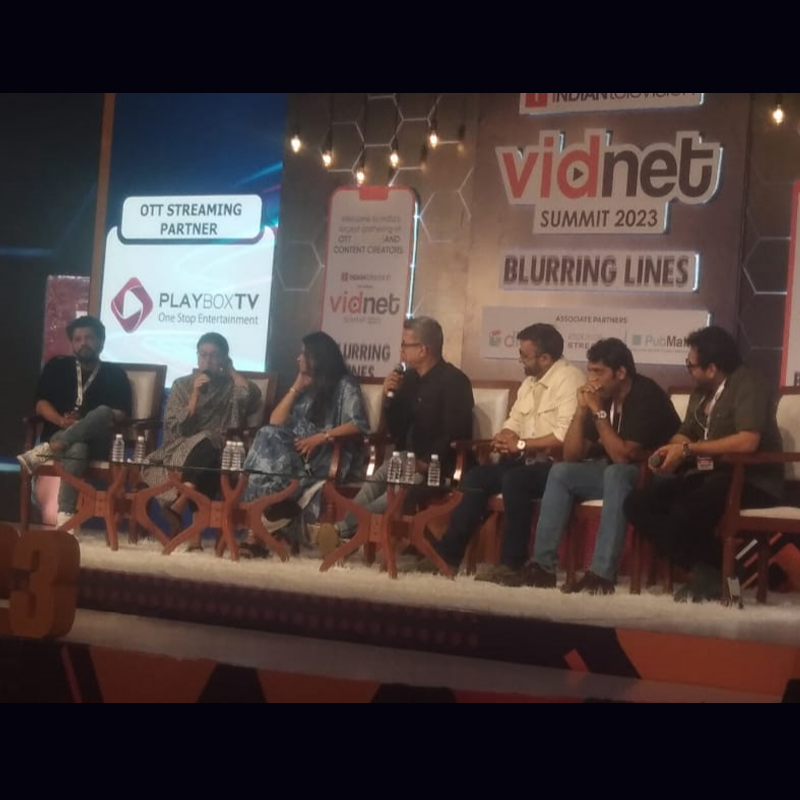
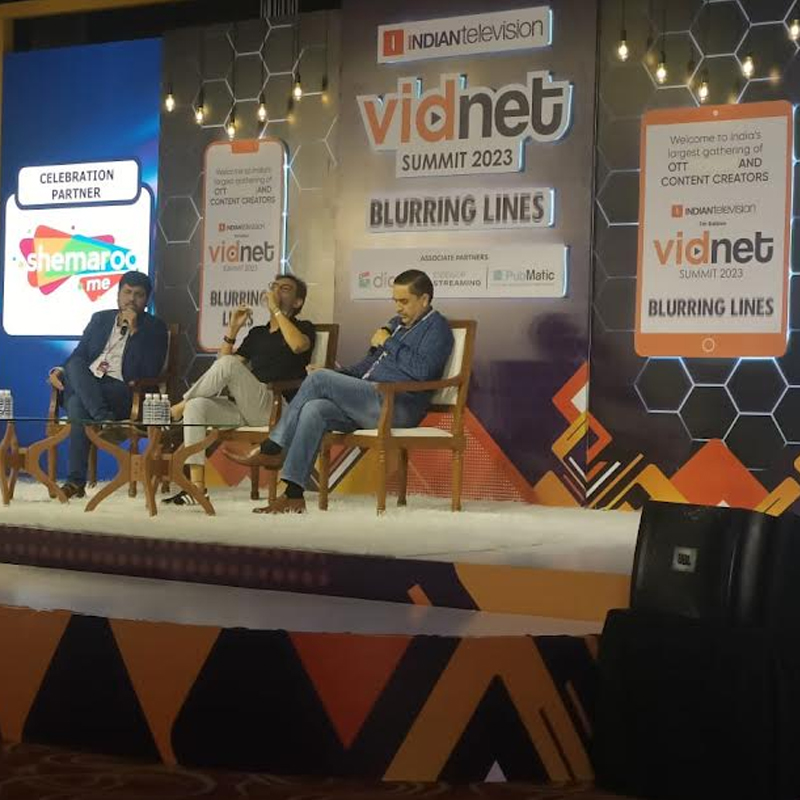
    The fourth panel was chaired by Kurate Digital Consulting founding partner Uday Sodhi, and the panelists included ShemarooME head – OTT Abhishek Joshi and PlayboxTV founder & CEO Aamir Mulani. The topic of the panel discussion was – The role of subscription in an increasing AVOD/FAST world.

    The question is where is the money? Sodhi started by talking about subscription, “How do you see the subscription ecosystem, how many subscribers are there in India today, what is the growth rate, and how is the market evolving?”

    Mulani said, “Subscribers are always there, and will always be there. But the only transition that is happening today is that the consumer is platform-agnostic. If the content is right/good on one platform, then the consumer would go to that platform. Loyalty is missing from the subscriber front – the loyalty is for good content not for the platform. It was always like that. It has been so since the old television days – earlier people used to switch channels, and now they switch platforms.  The only way forward is to make sure you get a recurring subscription by bundling OTT. That is my view to getting recurring subscription revenue out of this scenario.”

    Joshi mentioned, “2015 – OTT was born in the country. It has been eight years now. In entertainment, there has not been a single true innovation in this ecosystem, there have only been interventions. The interventions have been from the environment – one, was Jio, and the other was unfortunately covid. During the bad times of covid, the OTT businesses, subscribers grew multifold.”

    He added further, “Coming to the point of subscriptions, one unique subscriber subscribes to 2 – 2.5 subscriptions, so about 50-55 million unique subscribers in the country would have about 100-125 million subscriptions in the country. But what we should also realise is that we as an industry, knowingly or unknowingly, have created a line between haves and have-nots.  Earlier that was not the case. Content should and has always been democratic. What we have unknowingly done is if you have the ability and capability to pay, then you get a chance to watch or experience premium content. Or go to the free side, and watch what the world is watching.

    In a country like India, where there is mass, free content will always generate more engagement, more users, and more consumers. Hence the opportunity to build a steady revenue stream. Whereas that is not true when you are asking for two things – eyeballs, and money. So that’s a slightly steep curve.”

    On a concluding note, Sodhi brought up the point about password sharing– how to protect and stop password sharing, or is this something we have to live with? Mulani revealed that technically, everything is possible – it’s that as a platform they don’t want to do it. “It’s also about sampling your content and making people talk about it. It’s very easy to protect all of this, but globally also it has been noted that even if you get 10 per cent of the paying audience, it will help you get 90 per cent of revenue from it. Joshi concluded by pointing out the truth, “Password sharing is for the rich – the poor can’t afford it.”

  • Vidnet Summit 2023: Is Connected TV Driving The Next Phase of  Advertising Growth on OTT?

    Vidnet Summit 2023: Is Connected TV Driving The Next Phase of Advertising Growth on OTT?

    Mumbai: Mumbai: Today the lines are blurred as the streaming business is getting more complex and complicated, as monetization gets unclear. There is so much disruption happening, AVOD is offering SVOD and vice versa. Premium content is provided absolutely free and much more happening in this sector. Subscriber add-ons are slowing down. Time spent viewing on OTTs has plateaued for almost each and every platform, and high churn continues despite attractive annual schemes being offered by them. However, the good news is that the paid OTT subscription market in India continues to excite an increasing number of advertisers who are willing to put out their ads on these platforms. Mobile continues to be the main device of consumption even as connected TVs are increasingly getting into Indian homes. Investments in content continue to burgeon as viewers’ insatiable appetite continues to demand more and more.

    It is certain that this new ecosystem is calling for new relationships to be forged, new partnerships to be developed as TV manufacturers, Cable TV, and DTH, and telcos and other aggregators’ presence as gatekeepers to their customers is increasingly being felt. So, what is the way forward for the OTT platforms? Where do the opportunities lie? What are the challenges?

    This year’s Vidnet 2023 will look at all these scenarios and more, and find answers to some of these questions along with experts from the industry.

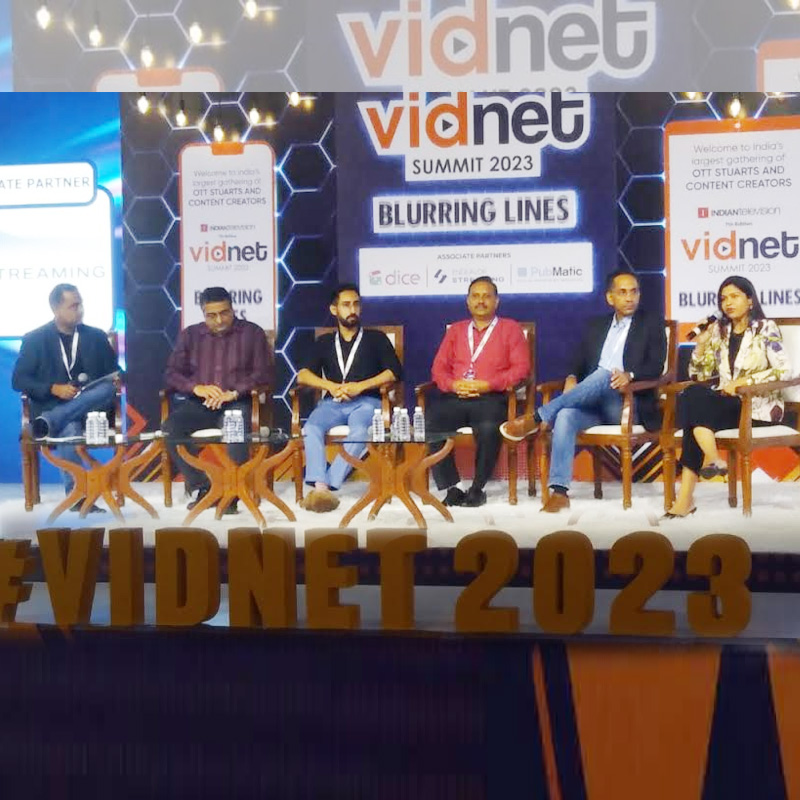
    The moderator for this session was EssenceMediacom India managing partner Vishal Shah and the panellists were Mahindra & Mahindra (Automatic) head- integrated media & agency relations Sonam Pradhan, Sugar Cosmetics head of marketing Avtej Sawhney, Parle Products Pvt. Ltd. senior category head Krishnarao Buddha Thomas Cook (India) Ltd. president & group head- marketing, service quality, value added services & innovations Abraham Alapatt and ITC Ltd. head media & brand PR Jaikishin Chhaproo.

    Shah began the session by asking, “What is the role of CTV and OTT playing in driving the marketing, advertising and communications for different brands which you all are working for and the different categories?”

    To this, Pradhan answered, “ For us, CTV is one of the most critical platforms that we need to be present on. I dont need to stress the emphasis on it, but when it comes to the premium audience that brands like Mahindra needs to target. If I am not present on CTV, I miss the audience sitting in my house. So how do I not miss the audience sitting in my house that’s exactly the kind of sample size I would like to put for everybody who is a Mahindra audience. So ranging from the different brands that we have, from the most premium vehicle to the commercial vehicles, CTV becomes an integral part of my media campaigns.”

    Alapatt shared his views, “CTV is an essential part of our media plan given the data that are already available and we can discuss the data accuracy later. Right now it is available at about 88 to 89 per cent of urban households typically use CTVs or have access to it. 60 million people watch YouTube on CTV and that’s really the slice of the audience we would like to target.”

    Buddha told, “We at Parle believe in being where our audiences are. Though we acknowledge that CTV is being adopted quite quickly and very fast particularly post covid and with production of 4g and 5g. Considering the nature of our product portfolio which is extremely mass in nature we have Parle platina which is the premium offering. We do acknowledge and look forward to certain concrete numbers before we sort of start boarding CTV.”

    Sawhney commented, “ I think it’s a trend that’s here to stay. We got 28 million households with CTV and expected to go up to 40-50 million in the next four-five years. Of course, we will see if it really pans out that way. It obviously changes the way we are able to deploy our media money. It gives us access again in a world where now there are four-five screens in a household we suddenly got CTV, which again allows you to go back and put your ads on the big screen. And I also feel that the size of the screen also has a very big role to play in terms of retention and consideration for brands. The way we do our planning regarding conversions also kind of changes in CTV.”

    Chhaproo said, “As an advertiser, one of the key things is I am going to have an ROI for whatever I do. I am gonna make sure whatever investments are going in are reaching out in terms of connecting with the audiences. Today if you want to dig into any data for CTV, there will be only a handful of inputs and numbers you will get.”

    Lastly, Shah concluded the session by saying that CTV is definitely promising and all of the panellists shared the same view that the numbers are consistently growing and it cannot be ignored.