Category: Over The Top Services

  • GUEST ARTICLE: How short video platforms are helping in local community building

    GUEST ARTICLE: How short video platforms are helping in local community building

    Mumbai: The short video platform space has exploded and expanded in the last few years. It’s not the future. It’s the present. At present, most creators have embraced and explored in a way we haven’t seen before. It has also given life to many apps and platforms catering to the needs of budding creators. These are exciting times, and Tiki has been pivotal in this growth. Not just with the content but also by helping build a local creator community with the necessary tools.

    According to a recent study, 59 per cent of gen-z use short-form video apps to discover things before exploring longer versions. The short video space has never been short of options, and there are many homegrown apps playing their trade too. The buggy UI, underwhelming experience, and lack of support for tier-II and tier-III city creators limit them to a small bunch of top-level influencers from metropolises. There has been a general lack of compassion on social media – a void Tiki aims to, and has somewhat, been able to fill quite successfully. Tiki offers an accessible platform for the creators to interact seamlessly online and help build on a community via offline meetups.

    With these meetups, creators help each other understand the latest trends and techniques for creating quality short-form videos. The community brings them together and gives them a sense of belonging. It will help expand the creator community and give them opportunities to make a difference in society.

    Through the meetups voluntarily organised by them, the creators feel:

    A sense of belonging when they are familiar with other creators.

    A sense of appreciation when they get recognised for their effort and achievement.

    A sense of support when they know that they are growing as a creator and making an impact.

    Tiki believes that a platform is only as good as its creators. These emotions help them find a home. Tiki is built on the collective power of its creators’ creative energy. To incentivize people to form and organise themselves into tribes, Tiki aims to tap into the intrinsic human desire to be recognized. The Tiki creator community allows the creators to represent the platform and be ambassadors for Tiki. In a span of six months, Tiki has gone from two meetups per month to over 700 by July 2022. All these meetups are organised through a structured process of event organisation, activity curation, and event documentation. Up until now, over 5,000 offline creator meetups in 22 states and 200+ cities all over the country have been organised. The idea of Tiki meetups was sown and germinated by the creators, and its positive results have been reaped by the creators. It’s an open, inclusive, and self-evolving community that also aims to give back to a larger community—our society. The Tiki community has made an impact in their real-life community and helped over 20,000 people in need.

    These events are also an opportunity to identify leaders through the Tiki City Ambassador (TCA) program. Tiki provides financial and promotional support for elected leaders who promise to organise and bring people together. To date, 15 registered Tiki community ambassadors across the country are organising two grade-A events per month. Relationships are strengthened with every online and offline interaction, and the Tiki Family Guilds achieve an impressive 97 per cent day one retention rate and 90 per cent active participation rate. This is consistent even as the total Family G membership doubles in size every month.

    This means that the community is achieving its objectives both in depth and breadth. Increasing creator stickiness while expanding its reach to cover new and aspiring creators.

    The opportunities for creators exploring short video applications in India are endless. Tiki has created an atmosphere of inclusivity and uniqueness for the creator community that needs to be leveraged to achieve the larger goal of making India a hub of talent. Creators need to come forward and leverage new opportunities, as the future of Tiki will be led by the creator community.

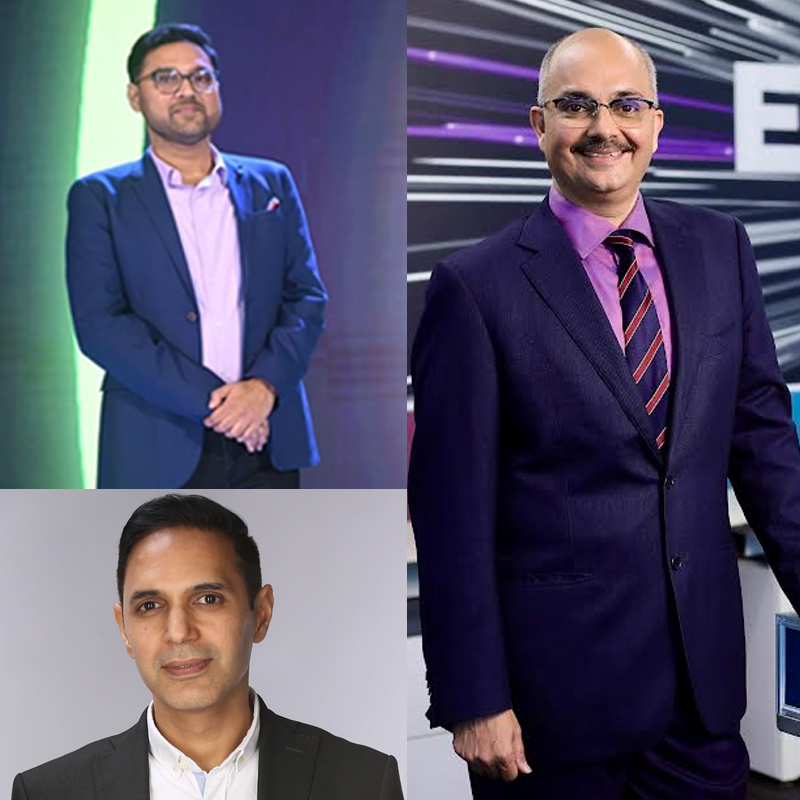
    The author of this article is Tiki CEO Ian Goh.

  • Prime Video brings new series ‘Half Pants Full Pants’

    Prime Video brings new series ‘Half Pants Full Pants’

    Mumbai: Half Pants Full Pants, Prime Video’s latest comedy-drama, will be available on the service beginning 16 December. The eight-episode, lighthearted series features joyful childhood memories and promises to be a delightfully nostalgic ride. The series, directed by V. K. Prakash and produced by OML Studios, stars child actors Ashwanth Ashokkumar and Kartik Vijan and renowned actors Ashish Vidyarthi and Sonali Kulkarni.

    Adapted from Anand Suspi’s eponymous book, Half Pants Full Pants is set in a small town in South India before the age of the internet and mobile phones, where the adventurous and ambitious seven-year-old boy Anand, aka Dabba, lives. He and his friend, the obedient and well-mannered Giddi, embark on adventures that will warm the hearts of audiences and make them long for the good old simple days of mischief and innocence.

    Commenting on the launch, director V. K. Prakash said, “Half Pants Full Pants is an experience that takes us back to a simpler time where life was untouched by technology and yet sparkling with wonder. Through the story of Dabba, his family, and friends, the series captures the magic of childhood in a period without phones or the internet—an unhurried pace of life that we often yearn for.”

    He continued, “The cast and crew unanimously gravitated towards telling this story because of its simplicity and innocence. We cannot wait to share this with the world.”

    OML Entertainment content creative head of OTT, Akansh Gaur said, “We are extremely excited to associate with Prime Video for this series and bring it to audiences across the world. Half Pants Full Pants is a wholesome show that will resonate with viewers because of its universal theme of exploring childhood nostalgia in the 1980s,”

    “The joy of discovery and the fickleness of dreams told through the eyes of a seven-year-old is something that we believe will engage viewers. We are looking forward to everyone being taken back to the warmth of their childhood by watching this show, ” he added.

  • Organisations are likely to reorient their businesses to take advantage of the metaverse: IAMAI, Deloitte report

    Organisations are likely to reorient their businesses to take advantage of the metaverse: IAMAI, Deloitte report

    Mumbai: The metaverse technology is likely to see exponential growth in the coming years with rising awareness about its applications, rapid advancements in the digital infrastructure, and digital natives gaining purchasing power. But the success of metaverse penetration will depend on the time organisations take to understand its relevance to their businesses and the pace of this ecosystem’s development. The ability to increase technical skills and readiness as well as deal with rising cyber threats will be critical to its adoption. Governments can play an important role by enacting appropriate regulatory policies and providing incentives for the adoption of next-generation technology.

    The recent uptick in the adoption of emerging technologies is due to several factors. One of the key drivers is the economic potential within the metaverse. It is primarily driven by web 3.0’s capabilities to accelerate digital transformation and the creator’s economy.

    Web 3.0 facilitates immutable ownership, i.e., a digital record of ownership that cannot be tampered with, seamless transactions, and the interoperability of digital assets. This allows creators to create and own content digitally within the secured framework of a “decentralised” (distribution of ownership) ecosystem (platforms and apps). Creators can earn revenue from their own creations across decentralised platforms that provide an alternative pathway to monetise their content.

    Further, the basic tenets of the metaverse (immersive experiences) have been in operation in the gaming industry for almost two decades.

    On one hand, as the supply side of the metaverse ecosystem develops, more organisations are likely to reorient their businesses to take advantage of this evolving technology. Several organisations have already announced their metaverse offerings, which may help achieve the required scale and demand to improve cost-effectiveness and adoption rates. On the other hand, the demand side of this ecosystem has been driven by demography, along with phygital worlds, virtual work/play facilitated due to the pandemic, and Moore’s law playing its role in making the infrastructure affordable.

    IAMAI and Deloitte launched a report on “Metaverse: The Hype, Possibilities, and Beyond.” The report highlights the possibilities of different types of metaverse architectures and their potential across enterprises.

    The report noted that in media and entertainment, NFTs are already used as loyalty instruments for delivering privileged experiences. For instance, exclusive engagement with actors can be driven more efficiently in an immersive virtual environment without the hassles of real-world events. Production houses and content creators can plan for an exclusive metaverse release of content designed to be enjoyed by NFT holders.

    Tourism companies can offer B2B loyalty reward systems in their metaverse ecosystem exclusively for their collaborating partners, such as e-commerce brands or hospitality businesses. Subscription-based loyalty or reward programmes will allow for special immersive offerings (virtual events and tours) as well as the trading of virtual digital assets for their collaborating partners and brands. It can be a unique way of creating exclusive, long-term relationships for the tourism companies.

    In fashion and retail, the most common consumer loyalty programmes have been related to transferring rewards digitally for physical transactions. With the metaverse and NFTs, the model can turn-around with the possession of digital versions of physical goods, leading to concessions and discounts in physical transactions. In addition, the digital versions can also act as instruments for providing privileged experiences in an immersive environment.

    Travel and tourism companies can collaborate with retail and fashion brands to provide travellers with a unique shopping experience in the virtual space, complementing the overarching experience of destination visits or event bookings. They can integrate virtual digital assets as a mode of exchange, which will create an additional mode of transaction in the virtual space.

    For a beverage company, the metaverse can provide an added procurement channel, i.e., one that is more interactive and real-time, even as it democratises the service solutions provided by vendors and designers. A designer can showcase the possible designs by creating a digital avatar or even a NFT of the brand in the virtual space shared by all stakeholders. At the same time, a payment design company can enable instantaneous payment transfers through a virtual digital asset. Compliance activities such as IP transfers can also be carried out in this shared space.

    Headline projections for metaverse growth and adoption have resulted in higher levels of engagement, primarily due to two factors: a changing consumer base and the associated change in consumer behaviour; and early adoption of metaverse by enterprises and use cases on metaverse resulting in tangible business gains. 

    Consumer base and preferences: Gen-Z has become the world’s largest generation, surpassing the millennials. It is estimated that by 2030, gen-z will constitute 30 per cent of the workforce and drive aggregate consumption through their independent disposable income. This tectonic shift in the composition of consumer demography will necessitate a change in various aspects of doing business. Brands and businesses must consider gen-z’s preferences to tap into the opportunity.

    From shopping to education, from work to leisure, gen-z’s lives are inextricably tied to the digital realm. Popularly dubbed the “digital natives” or “dot com kids,” the generation Z, followed by the generation alpha, has grown up with social and interactive media and spends considerable time consuming content online.

    The propensity of this consumer segment to consume digital goods and services will allow enterprises to creatively use the metaverse to drive demand for new products and immersive and elevated experiences.

    Experience of early adopters: While large-scale enterprise-level adoption of the metaverse has yet to materialise, results from early adopters are fueling market sentiments favourably towards it. In the post-pandemic era, businesses are re-imagining their operations for continuity and growth. From entertainment to fashion, several enterprises rolled out use cases for the metaverse and its components.

    New forms of customer experiences and engagements, remote working collaborations, etc. are some areas where enterprises have showcased tangible business benefits.

    Growth in the metaverse and its adoption in India and elsewhere depend on the economic and technological barriers to the underlying technologies. The cost of compatible devices (VR, headsets, smart wearables) and the ability to develop technical skills and readiness will also influence the scale of adoption.

    In other words, the evolution of the metaverse is favourably related to the progress of the network platforms, VR hardware, network infrastructure, etc. At any given time, each of these will be at different stages of maturity; some might be evolving, a few might be maturing, and the rest might be still at a conceptual or primitive stage.

    Applicability framework of metaverse: The determinants for adoption of the metaverse will be unique to every industry and use case. Hence, to service the evolving consumer base and consumption patterns, technical feasibility, industry-defining precedents, and regulatory approaches could be the primary drivers of adoption. As use cases satisfy the applicability framework, adoption levels will vary across sectors.

    With immersive experiences as its core offering, the media, entertainment, and gaming industries will lead the adoption journey. Industries such as fashion, consumer durables, real estate, retail and e-commerce, banking, health care, and manufacturing may take a phased approach to adopting certain components of the metaverse and gradually expand the offerings. Once a stable immersive ecosystem is established to achieve scale and cost-effectiveness and technologies mature in the future, the definition of the metaverse will evolve and include the desired attributes per the above framework.

    Sneak peek into the future: metaverse for enterprises: Advocates for a free Internet prefer that the metaverse be built openly and decentralisedly on web 3.0 principles, with blockchain technology enabling permissionless access and decentralised platform governance. This enables developers and users to own their creations and trade on decentralised applications. Further, there will be greater opportunities for monetising digital assets in the open metaverse.

    However, this may not be the only approach through which the metaverse is built or adopted in the future. The preference of enterprises to own and monetise digital assets, as well as the inherent concerns about customer retention and safety in an immersive world, may drive the development of the closed metaverse.

    In a closed metaverse, private organisations may own the platform, offering services with limited access to authorised entries. Apart from mitigating platform switching, this may allow standards and protocols to be predefined by the owning entities, thereby allowing them to build robust business models around the platform. 

    Challenges and risks: The high cost of wearable hardware, such as ocular glasses, haptic suites, etc., limits its large-scale adoption. The ubiquitous availability of network infrastructure required to enable high-functioning metaverses is an ongoing process. To that extent, the affordability of underlying technologies, which is a product of market sentiment and government policy, will play a huge role in the widespread adoption of the metaverse.

    Unlike mobile numbers and e-mail IDs, a robust identifier balancing the requirements of a holistic metaverse experience with the safety of individuals is yet to be developed. At present, it is quite easy to create digital avatars of individuals without their consent and impersonate them across multiple immersive worlds.

    However, this opens up the possibility of severe reputational harm. In addition to fraud and impersonation, harassment, assault, bullying, and hate speech in the virtual world (for example, in games) pose serious challenges. While the violation of physical space in real life is deterred by larger social constructs and safety mechanisms, they cannot be effectively transposed to the digital world. The anonymity built into platforms compounds such challenges since violations of users’ trust and safety cannot be completely investigated. The ability of platforms and the communities/entities that govern them to provide a safe experience and secure digital assets for users will inevitably be critical to the widespread adoption of technology.

    This might not be an easy task, as even established metaverse platforms have struggled internally to integrate safety features into their metaverse services. Building robust security and threat monitoring mechanisms into such platforms, prioritising cybersecurity assessment, developing threat intelligence and response capabilities, and bolstering security through threat identification and response competencies must be key focus areas for widely accepting and adopting the metaverse technology.

    The metaverse has so far been driven by virtual digital assets and a lack of compliance with anti-money laundering (AML)/know your customer (KYC) requirements, opening up the possibilities for nefarious activities. In addition, challenges around data thefts, payment frauds, etc. are emerging.

    Regulations and laws can shape the adoption of technology. For instance, in India, the legal and regulatory position on the use of virtual digital assets, smart contracts, etc., has yet to gain some clarity. Hence, the large-scale adoption of the metaverse may face difficulties in the near future.


  • OTT platform Zee5 announces Bangla originals 

    OTT platform Zee5 announces Bangla originals 

    Mumbai: Zee Entertainment Enterprises Ltd.’s (ZEEL) OTT platform Zee5 has unveiled a new content slate of 10 big-ticket originals along with much-awaited movies for the global Bengali diaspora starting in 2023. Expanding its SVod offerings, Zee5 confirmed that it will eventually release a web series every month, ranging from whodunit murder mysteries, crime dramas, psychological thrillers, sleuth adventures with the quintessential Bengali comedy and romance. The high-octane slate brings forth a gamut of emotions through the unique stories on offer, featuring collaborations with the best storytellers from the region and some of the most sought-after stars of Bangla cinema to create the next chapter of Bengali entertainment with Zee5.

    Consolidating its presence in the Eastern market, Zee5 said that it is one of the first national OTT players to announce an exclusive, specially curated slate in the region for its global audiences across 190+ countries.

    Speaking about the expansion, Zee5 India chief business officer Manish Kalra said, “Bengal has been a hotbed of entertainment, with both Bangla stories and talent making their presence felt on the global map. We at ZEE5 have received an overwhelming response to the titles released in the last two years from our Bangla viewers. Now it is time to expand our base in the Eastern market, connecting with the audience with more relatable stories and creating new opportunities for the talent ecosystem here. We have released a slate that shall enable viewers to watch their favourite stars in new avatars backed by intriguing plots and captivating storytelling. In addition to the Bengali slate, we have an extensive line-up of Hindi content and popular titles in other languages. I am hopeful that audiences will enjoy their Zee5 experience as we continue to strive to bring them extraordinary entertainment.”

    “We are stoked to present the Bangla OTT viewer with a large and exclusive offering of 10 original titles and some of the best hand-picked movies from the market. We are working with the most prolific storytellers and actors who have not only proven their performance chops in keeping viewers hooked on what will happen next (Erpor Ki), but have also earned widespread viewer affection. Besides that, we have stories from different parts of West Bengal that reflect its cultural essence and the variedness of its landscape. We have stories that emerge from our Bangaliana but also reflect the challenges and complexities of this new world we live in. We are confident that our content slate will excite the OTT Bangla viewer and address their need for pace, thrill, and adventure. We look forward to their response to our bouquet of content offerings,” added ZEEL chief cluster officer east Samrat Ghosh.

    Highlighting Zee5’s content strategy, Zeel president of content in international markets Punit Misra said, “Creating great content through an in-depth understanding of our viewers and the cultural ethos of the many Bharats that constitute India has resulted in Zee5’s consistent growth across languages. Our creative team has a distinctive approach to content design that we call #SoulToScreen where great viewer and cultural understanding meets inspired creativity to deliver delightful content experiences. Through partnerships with some of the finest content creators in the Bangla entertainment industry, we have been successful in curating a content slate that embodies the true cultural essence of today’s Bengal. Our content slate is reflective of the Bengali OTT viewers’ growing appetite for high-octane, edge-of-the-seat entertainment presented in a contemporary avatar that celebrates the new codes of ‘Bangaliana’. We hope that this labour of love by our team will be worthy of love and recommendations from viewers of Bangla OTT content globally.”

    Presenting an entire spectrum of the thriller genre like never before, the line-up features the murder mystery Raktokarabistarring Raima Sen and Vikram Chatterjee, revolving around a Bengali joint family with an ocean of secrets. Shikarpur, starring actor-director Kaushik Ganguly and Ankush Hazra, marks the latter’s first big fiction OTT debut. It walks viewers through the journey of an underdog detective striving to gain the title of Shikarpurer Sherlock. Kantaye Kantaye is a series based on the detective novel “Shonar Kanta” by Narayan Sanyal, featuring national award-winning actress Ananya Chatterjee, and will showcase Saswata Chatterjee. Directed by Arindam Sil, Shabash Feluda is about Satyajit Ray’s ace detective Feluda solving a complex crime involving murder and cross-border espionage, starring Parambrata Chatterjee and Ritwick Chakraborty in a Feluda franchise for the first time.

    Chhotolok is another whodunnit human story. It is director Indranil Roychowdhury’s first OTT fiction series and features a cast that includes Indrani Haldar, Priyanka Sarkar, Ushasi Ray and Gaurav Chakrabarty. While Abar Proloy will bring back the Proloy franchise by Raj Chakraborty, Swetkali, a spooky thriller about cold-blooded murders revolving around an age-old goddess idol, will mark Oindrila’s OTT debut. Also on the line-up is director Anjan Dutt’s Seven, a thriller showcasing the vices of human nature, starring the auteur himself. Teni Madhab Shil er Full Panjika, a quirky musical romantic thriller, and Matsyanyay, a story about the scams of a family running a unique medicine business from Parambrata Chattopadhyay’s Roadshow Movies, round out the slate of originals. 

    Chakraborty mentioned, “With OTT paving its way, the audience has a lot of content to select from. I am glad that we are associating with a platform like ZEE5 who believes in narrating impactful, raw, and relatable stories; Abar Proloy is one such story. The web series not only has an impressive narrative but is also relatable and has an intense depiction of heinous crimes and monsters in society. It is realistic, sensitive, and unsettling, with intriguing sequences that will trigger some thoughts and questions. All I can say is, brace yourselves for Abar Proloy, which will soon stream on Zee5.”

    “I feel there is nothing like a mystery to engage and deeply involve the audience. Essaying the character of Feluda was like stepping into the shoes of Sherlock. It is a privilege to be recognised for Ray’s fantastically sketched characters. The web series is an adventurous escapade that will get your adrenaline pumping. The guessing game will keep the audience hooked and enthralled till the end. In the world of entertainment, we are progressing with unique scripts that blend history, thrill, and all the other ingredients required for a perfect thriller! With ZEE5 onboard, I am sure the series will reach every length and breadth of the nation. I am really looking forward to the premiere of the series on the platform,” added Chatterjee.

    The platform also has a slew of exclusive movies, including Bhoy and Uttaran (both starring Ankush Hazra); Ananta(starring Ritwick Chakraborty); Joy Kali Kolkatawali (starring Nusrat Jahan and Soham Chakraborty); Mini (starring Mimi Chakraborty); Boudi Canteen (starring Subhashree Ganguly and Parambrata Chattopadhyay); and Abar Kanchanjangha (starring Saswata Chatterjee and Arpita Chatterjee); Jotugriha (starring Bonny Sengupta, Parambrata Chatterjee, and Payel Sarkar); and Mahananda (starring Gargi Roy Chowdhury & Ishaa Saha).

    Currently the fastest-growing OTT platform in India, as per the latest industry reports, Zee5 claims to have achieved the highest-ever global daily active users (DAUs) of 11.4 million, while the global monthly active users (MAUs) stood at 112.4 million. Viewers can enjoy Zee5’s offerings for Rs 699 per year.

  • Top Indian Action-themed Series to Consider Watching

    Top Indian Action-themed Series to Consider Watching

    Action-themed TV shows produced in India almsot feel more authentic than those made in Hollywood. Though they don’t usually have as many special effects, their action sequences can still be impressive and engaging. Let’s check out some top action series choices.

    Bard of Blood

    Bard of Blood is an action-packed spy thriller series based on the 2015 novel of the same name. It’s a Netflix exclusive that was released to the streaming platform in 2019. It’s one of many limited series produced by Netflix and consists of seven episodes in total.

    Emraan Hashmi stars as Kabir Anand, a former spy living a new life. However, he leads a hostage-rescue mission and has to confront his past demons in the process.

    Mirzapur

    Mirzapur is one of India’s most favoured web series. It’s an action crime thriller starring Aditya Baranwal as Akhandanand Tripathi, the mafia don of Mirzapur. He’s a man obsessed with power and runs a carpet manufacturing company that’s a cover for an illegal arms and drugs business. The premise is that a tragedy at a wedding triggers all sorts of events that cause headaches for Tripathi and his son.

    Available exclusively on Amazon Prime, its first season was released in November 2018, with the second following in October 2020. A third has been confirmed, though its release date is currently unknown.

    Betaal

    Betaal debuted on Netflix in 2020. It’s a limited series with just four episodes. Starring Vineet Kumar Singh and Aahana Kumra, it’s a zombie horror with a decent amount of action. The basis is that when tribal villagers are displaced to make way for a motorway, an ancient curse is unearthed, along with a horde of British zombie soldiers.

    The series focuses on the high-stakes battle between the living Indian soldiers of today and the once-dead British soldiers who are now deadly zombies.

    Conclusion

    Indian influence as evident by these series, is beginning to flourish and it’s not only limited to TV. There are countless Indian movies and even casino games such as Pearls of India which explore the Indian theme in one way or another. However, please note that the mentioned series are just a sample of Indian action-themed TV series. So, give these shows a watch and see what you make of them, but also try and find others which are equally as exciting to watch!

  • Digital media dominates consumers’ choice in India but growth in consumption appears to be slowing: YouGov

    Digital media dominates consumers’ choice in India but growth in consumption appears to be slowing: YouGov

    Mumbai: YouGov’s Global Media Whitepaper 2022 across 18 international markets shows that in India, two-thirds of urban Indian consumers (67 per cent) reported having visited websites/apps in the last 12 months, and six in ten (59 per cent) intend to continue this activity in the next 12 months.

    The whitepaper sought to understand how media behaviour has changed over the last year and what the future media landscape might look like in the coming year.

    When comparing global future media behaviour to the previous 12 months, YouGov research shows that media penetrations remain high and stable across various types of media. Digital media continues to dominate consumer choice, with websites or apps registering the highest penetration.

    More than half have streamed video and music (53 per cent and 51 per cent respectively) in the previous 12 months, and a similar proportion (48 per cent and 50 per cent) are likely to do so in the coming 12 months.

    Watching TV (both live and non-live) appears to be more popular than watching movies in a theatre, but engagement with cinema may increase in the future.

    Listening to the radio and attending live events were the least consumed forms of media in the past twelve months, and consumption is likely to remain similar in the future as well.

    Exploring consumption of different media channels by age, annual penetration of websites/apps remains high across all age groups, whereas engagement with social media starts to drop off among adults aged 45+.

    Traditional media activities such as watching live TV and reading newspapers/magazines have lower engagement among those under 24. Younger audiences are significantly more likely to stream music and videos, play video games, listen to podcasts, and attend live in-person events or watch movies at the cinema than watch TV or read newspapers/magazines.

    If one looks at the ‘net growth scores’ for each media activity (calculated by subtracting lower consumption from higher consumption percentages) in the last 12 months, we see polarisation between digital media activities and outdoor in-person activities.

    At the top end of the scale, websites and apps registered the highest ‘net growth’ score in the last 12 months (+57 per cent), followed by social media (+45 per cent), streaming music (+36 per cent) and streaming video (+35 per cent). On the other hand, traditional media like radio registered a negative ‘net growth score’ of 10 per cent, along with in-person mediums such as live in-person events (five per cent) and watching a movie in a theatre (three per cent).

    Looking ahead to the next 12 months, growth in consumption of digital media types appears to be slowing, but penetration of traditional media (such as newspaper/magazine, and radio) is expected to grow in the next twelve months.

    In-person media activities are likely to pick up in the future as well. Watching a movie in a theatre shifts the ‘net growth’ score from a negative (three per cent) ‘net growth’ score in the last 12 months, to a positive (five per cent) score in the next 12 months.

    The gap between those expecting to increase their number of outings at live events (rather than decrease) is also closing, with a one per cent ‘net growth’ score in the next 12 months (compared to five per cent in the previous 12 months).

    As media behaviour continues to evolve, it is key for marketers and advertisers to understand which media consumption habits are most likely to stick and which are set to grow among current consumers.

  • OTT subscribers up 20% this year to 424 million: Ormax’s report

    OTT subscribers up 20% this year to 424 million: Ormax’s report

    Mumbai: Ormax Media has released the largest audience research study to size the OTT universe in India, titled The Ormax OTT Audience Sizing Report 2022. The research, based on a sample size of 13,500 across urban and rural India, was conducted from July to September 2022.

    Ormax Media released select findings of the report, which reveal that the Indian OTT audience universe is currently at 423.8 million (or 42.38 crore) people. This translated into a penetration of 30 per cent, which means that three out of 10 Indians watched online videos at least once in the last month. The report breaks this universe down by gender, age, NCCS, pop strata, states, and cities.

    Speaking about the need for the report, Ormax Media founder & CEO Shailesh Kapoor said, “India’s OTT audience universe has grown rapidly since 2018, with a boost during the pandemic years of 2020 and 2021. Now that we are in a more settled post-pandemic period, this annual report is an important reckoner for the OTT industry to understand how their audience base is growing and where this growth is coming from. Unlike other reports that rely on desk research, this report is based on primary audience research across India.”

    The report also reveals that there are currently 119 million active paid OTT subscriptions in India, across 49 million paying (SVoD) audiences, i.e., an average of 2.4 subscriptions per paying audience member. 65 per cent of these paid subscriptions are from male audiences. The top six metros contribute only 10 per cent to India’s OTT universe but 33 per cent to total paid subscriptions in India. Mumbai, Delhi, and Bengaluru are the top three, with more than 8.5 million active paid subscriptions each.

    Speaking about the findings, Kapoor said, “A large share of the 20 per cent growth in audience base has come from rural India and small towns. The metropolises have reached saturation levels, with more than 79 per cent OTT penetration. Platforms will have to rely on smaller markets for the next phase of growth. From an SVoD perspective, the most significant finding has been that the average number of subscriptions has remained static at 2.4 per paying user. This data point holds immense strategic value, as it suggests that subscription growth will come from more people paying for subscriptions than the same people paying for more subscriptions”.

    The full report is available by subscription for streaming platforms, production companies, media agencies, and other companies associated with the OTT category in India.

  • Tiki joins The Game Awards 2022 as global distribution partner

    Tiki joins The Game Awards 2022 as global distribution partner

    Mumbai: Tiki has announced its partnership with The Games Awards as their global distribution partner in India. With this, Tiki has gone the extra mile to contribute to the fastest-growing segment of the media and entertainment industry in India: the gaming sector. Tiki is the only short video platform in India to offer live streaming of the ceremony, and along with that, the brand has launched a collaborative hashtag #RealVSGame filter for the creators.

    The Game Awards brings together game creators, esports athletes, digital influencers, fans, and the entertainment industry for a night of awards, exclusive game world premieres, and musical performances. In 2021, it delivered over 85 million live streams and was hailed as “the Oscars for the gaming world” by the New York Times. It is one of the largest live-streamed events of the year on the internet.

    On the collaboration, Tiki CEO Ian Goh said, “Tiki is thrilled to announce that we’ve joined hands with The Game Awards (TGA) as its global distribution partner to bring world-class entertainment content to our 30 million-strong Tiki community. The amplified cultural impact of gaming, combined with the promise of the metaverse, has generated a plethora of opportunities for the creators. Gamers are passionate and tech-savvy but are also quite interested in fashion, fitness, and food. Therefore, Tiki aims to become a one-stop destination for all the needs of our creators.

    Commenting on the partnership, TGA executive producer and host Geoff Keighley said, “Our partnership with short video platform Tiki highlights our commitment and effort to acknowledge and support the gaming sector in India. Through social media, the entertainment industry has the ability to vastly grow its audiences, not just locally but at a regional level as well. We bring together a diverse group of game developers, gamers, and notable names from popular culture to celebrate and advance gaming’s position as the most immersive, challenging, and inspiring form of entertainment. We strive to recognise those who improve the well-being of the community and elevate voices that represent the future of the medium via Tiki.”

    The Indian short video market has experienced massive growth in the last two to three years. Short video formats are making inroads everywhere, from entertainment to commerce, edutainment to customer service, and even enterprise discussions. They are, undeniably, the medium of the future, and no one can afford to miss this train.

  • GUEST ARTICLE: AI is revolutionising content creation, and the opportunities are limitless

    GUEST ARTICLE: AI is revolutionising content creation, and the opportunities are limitless

    Mumbai: Cloud-based artificial intelligence (AI) solutions continue to change and expedite nearly every element of content creation and dissemination. With increasing power and sophistication, these technologies are bringing new levels of precision, efficiency, compliance, and cost savings to broadcast operations. This presentation draws on and shows real-world AI solutions developed by prominent content producers and distributors, addressing use cases from production to post-production and dissemination. Artificial intelligence (AI) is now present in every aspect of our life.

    The content industry has undergone a paradigm shift as a result of technological advancements dominated by artificial intelligence (AI), data science, and machine learning. By publishing excellent long-form content, brands position themselves as experts in their respective industries, resulting in credibility, trust, and loyalty. Various artificial intelligence (AI) technologies on the market now offer to make incredible copies for businesses. Automation, in conjunction with artificial intelligence, has the potential to alter the whole digital marketing landscape, particularly the content marketing business.

    In a time of overabundance of content, AI plays a vital role in simplifying the content that is provided to the consumer.

    Machines that can simulate cognitive processes seen in the human mind are referred to as “artificial intelligence” (AI). The more you use it, the more it becomes ingrained in you as a person. From the perspective of content marketing, AI cannot create content but can help develop a strong content strategy and produce more individualised content for users. There are numerous choices. AI may be a huge asset for a forward-looking marketer in terms of boosting sales, cutting expenses, and creating a significant competitive edge.

    Using AI to create content

    The way content is made today is changing thanks to AI. The application of artificial intelligence (AI) in content marketing has significantly increased during the past two years. Finding a topic, doing internet research, assembling your thoughts, and then putting those thoughts into words are the first steps in creating high-quality content. Perhaps the process has been sped up by the use of AI. AI is being used by many businesses to create content strategies and improve their offerings. It can really weave a given set of words into a story in a way that is far more captivating and leads to eventual interaction between the words and people.

    The increasing use of chatbots by different brands across industries to solve simple problems or respond to FAQs is proof of their expanding adoption. In order to support native language engagement without human intervention, multilingual chatbots are proving to be increasingly effective. While people can spend time on planned work and preparation, they significantly lessen the burden.

    Automated content generation and brand management help business owners and marketers cut costs and save time.

    The secret to a successful strategy is conducting relevant and insightful content research. It takes a lot of time, though. AI can assist marketers with pertinent comments and recommendations for optimization in this situation. AI assists us in ensuring that the material we produce is not only relevant but also seen by the intended audience.

    Any brand in the B2C or B2B industry is able to leverage AI for content marketing. It might not be practical for many firms to make full-scale investments in AI. While many firms might exploit it to gain honour, in the end, it is the consumer’s total experience that matters.

    Does AI have a role in content creation?

    Influencer marketing can benefit from the integration of AI. The suitable influencers and pertinent content trends can be found in this industry by using AI as a matchmaker. What will become popular on social media is always a mystery. Trying and failing is the process. AI can aid in this agonising process by supplying you with details on the appropriate demography, subjects that the algorithm is picking up on, etc., to help you focus your thoughts. You can further personalise your material with the use of this information, which will improve your chances of having a successful campaign.

    Another broad phrase, “AI in content marketing,” refers to several technologies, including machine learning, computer vision, and natural language processing (NLP), to create marketing tactics that produce a good outcome for the company.

    For instance, creating marketing plans that deliver the intended results requires time and effort. Customer analysis, historical purchase history, and customer feedback are all necessary for the full process, which necessitates a tremendous amount of manual study and labour. Predictive analysis, which is possible with AI, allows marketers to complete the same tasks and create strategies with a better success rate depending on the knowledge and data the technology provides.

    We will examine more applications of AI in content marketing that are genuinely transforming the sector for both marketers and businesses.

    The next step

    Automation of content using AI is here to stay as a result of the rapid advancement of technology. In just a few clicks, users can now create full long-form blogs, social media captions, blog ideas, and meta descriptions.

    The sector is fragmented by its very nature, with numerous companies offering various solutions. Additionally, one can produce high-quality output using AI and ML. A comprehensive solution for the complete content lifecycle is what marketers require. To solve complex workflows, this would require a combination of the appropriate tools and talent.

    The author of this article is entrepreneur & content creator and SociallKnot founder Shweta Tanwar Mukherjee.

  • ZeeZest.com ropes in Milind Soman to be the face of its digital cover for December 2022 issue

    ZeeZest.com ropes in Milind Soman to be the face of its digital cover for December 2022 issue

    Mumbai: Fitness enthusiast, leading model, and actor Milind Soman has been roped in as ZeeZest.com’s digital cover star for December 2022.

    Over two days, in the exotic location of the Maldives, at The Residence Dhigurah situated on Kooddoo Island, ‘Ultraman’ Milind Soman spoke about himself, the various journeys in his life, his goals, and of course, his love story with wife Ankita Konwar. Be it his curious conversation with Narendra Modi, where Soman self-admittedly could not stop talking while the prime minister listened, or sharing his thoughts on love and that “the greatest love stories come from struggle,” Soman’s interview on ZeeZest.com is nothing short of intriguing, filled with anecdotes from the various chapters of his life. And amid all of that, not once did he compromise on his daily fitness routine, even while shooting across four different locations.

    Talking about an unexpected call from the PMO and his meeting with the prime minister, he shares, “I was very impressed when a busy person like the PM can take time out to meet someone without any specific agenda. That is being really organised, that’s how I see it. It’s kind of embarrassing, as I realised most when I spoke and he listened. I even asked him if he wanted me to stop, and he said he was happy to listen to me. I remember speaking to him about how we can promote indigenous sports in India instead of focusing only on Olympic sports. We obviously connected on yoga and Ayurveda, which are close to both of us.”

    ZeeZest.com’s digital cover shoots, shot exclusively by celebrated photographer and lifestyle influencer Atul Kasbekar, are an endeavour to interact and engage with lifestyle audiences on digital mediums of their choice. Featuring diverse celebrities, the glamorous photoshoots capture the many moods, passions, and aspirations of movers and shakers of influence today.

    As one of the digital media leaders in the country, ZeeZest.com is a millennial-friendly platform featuring some of the biggest celebrities such as Kate Winslet, Emma Corrin, Farhan Akhtar, Manoj Bajpayee, Prateek Kuhad, Ali Fazal, and Vir Das and bringing their fans up close and personal to their icons.

    Talking about being the digital cover for ZeeZest.com, Soman says, “I usually don’t do a lot of editorial shoots, but when I do, it has to be something special, exciting, and fun. Then this opportunity with Zee Zest presented itself to shoot in the Maldives, and who wouldn’t like to shoot in the Maldives! The Zee Zest digital cover shoot lived up to my expectations and was a great experience.”

    Launched in 2021, ZeeZest.com is a unique lifestyle and entertainment website that binds its viewers by helping them discover, engage with, and fulfil their thirst for homegrown and international content across six diverse lifestyle pillars: travel, food, health, fashion & beauty, culture, and homes. As a multiformat website, ZeeZest.com has over 4.5 million monthly active users along with an average of 12.5 million monthly page views. With diverse content formats, ZeeZest.com has emerged as an authority on living the good life.

    Zee Zest Digital Cover Star December 2022 Milind Soman