Category: Gaming

  • Rajya Sabha clears sweeping ban on online money gaming despite opposition uproar

    Rajya Sabha clears sweeping ban on online money gaming despite opposition uproar

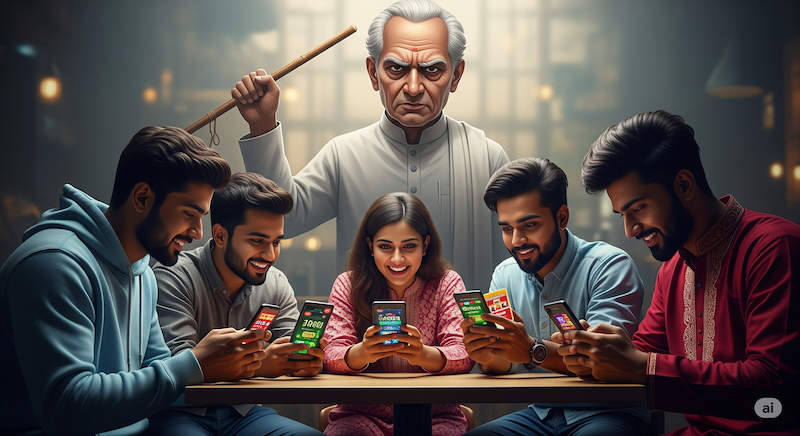
    NEW DELHI: The Indian parliament on Friday pushed through a controversial law banning the operation, facilitation and advertising of online money games, amid noisy opposition protests over the lack of debate.

    The Promotion and Regulation of Online Gaming Bill, 2025—passed by voice vote in the Rajya Sabha a day after clearing the Lok Sabha—makes online money gaming punishable with up to three years in prison and fines of as much as Rs 1 crore. Offences will be cognisable and non-bailable.

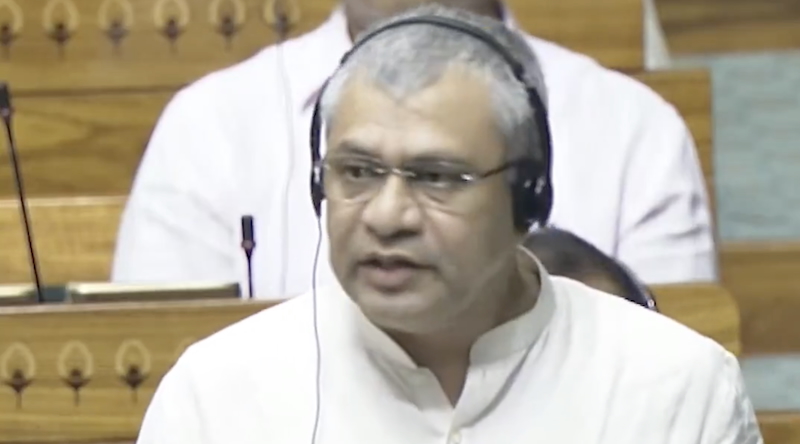
    Tabling the bill, electronics and IT minister Ashwini Vaishnaw likened money-gaming addiction to drug abuse and accused powerful vested interests of fuelling terror finance through gaming platforms. He said roughly 45 crore Indians had lost money online, with annual losses pegged at Rs 20,000 crore.

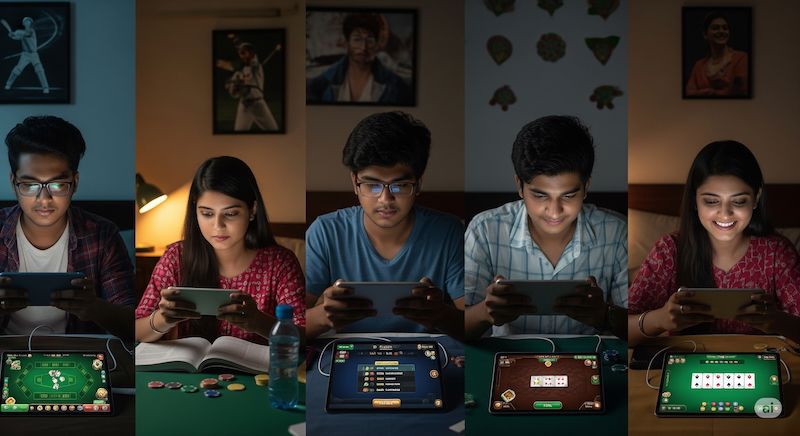
    The legislation bans all forms of online betting and gambling—from fantasy sports and poker to rummy, lotteries and other card games—and bars banks and payment providers from processing related transactions. 

    Advertising such services will invite up to two years’ jail and fines of Rs 50 lakh, while facilitating payments could mean three years in prison and Rs 1 crore in penalties. Repeat offenders face enhanced sentences of up to five years and Rs 2 crore in fines.

    Opposition leader Mallikarjun Kharge hit out at the government for forcing the bill through without discussion, even as union minister Kiren Rijiju said protests made a debate impossible.

    Vaishnaw stressed the bill distinguishes between harmful money games and esports. Speaking to ANI, he said the government aims to “promote and encourage the good parts” of online gaming, and to make India a hub for development through the planned Indian Institute of Creative Technologies.

    Prime minister Narendra Modi, addressing an NDA meeting, hailed the online gaming ban as a reform with “far-reaching impact”, while accusing the opposition of reducing the monsoon session to disruption.

    NDTV reported that the government will also act against “big people” attempting to sway opinion through media and social media campaigns against the ban.
  • India draws battle lines between esports and online gambling

    India draws battle lines between esports and online gambling

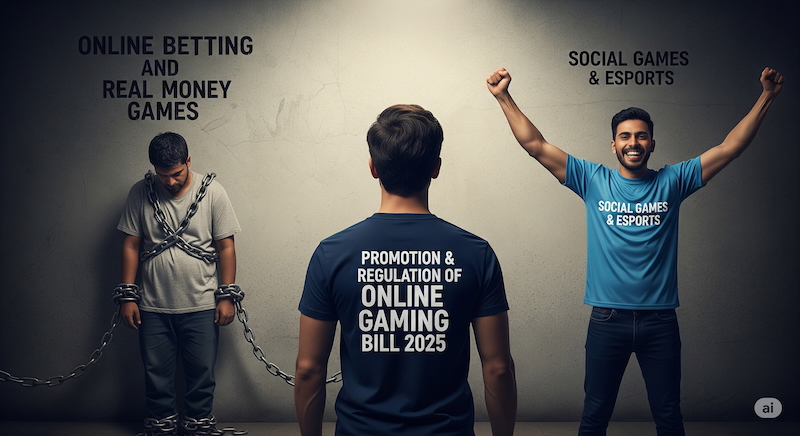
    MUMBAI: India’s Lok Sabha has passed the Promotion & Regulation of Online Gaming Bill 2025, creating a stark divide between legitimate esports, casual gaming  and what lawmakers term predatory gambling platforms. The legislation, which now heads to the Rajya Sabha, has split the gaming industry down the middle.

    Real-money gaming firms are crying foul, claiming the bill sounds their death knell. But esports pioneers are celebrating what they see as long-overdue recognition. Rajen Navani, chairman and managing director of JetLine group, says the cabinet’s approval “is a decisive step that separates esports and social video gaming from wagering-led real money gaming.”

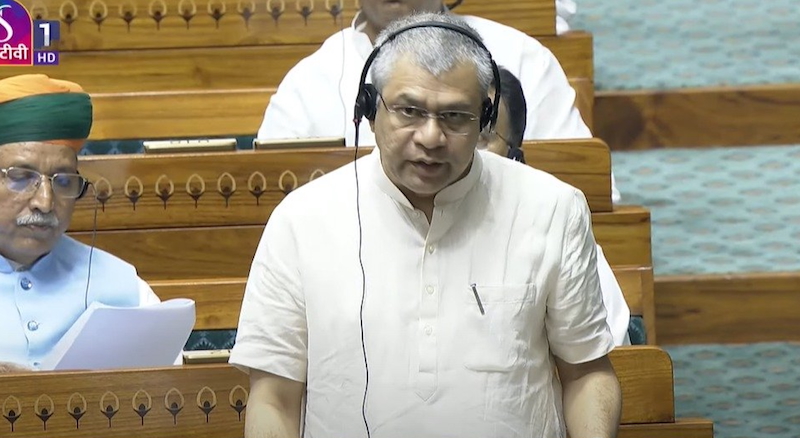
     Minister of railways, information & broadcasting and electronics & information technology Ashwini Vaishnaw,  pulled no punches when tabling the bill. “Online money gaming firms are opaque in nature,” he told parliament. “There are multiple hazards linked to online money gaming. This also impacts national security such as money laundering and terror funding.”

    The minister drew a clear distinction between educational esports and what he characterised as destructive gambling platforms. “The government wants to support esports and casual games. We want to protect the interest of society,” Vaishnaw said, urging unanimous passage.

    The legislation establishes a central regulatory authority with Rs 50 crore in initial capital expenditure and Rs 20 crore in annual recurring costs. The watchdog will oversee compliance, shape policy and encourage innovation in legitimate gaming.

    Crucially, the bill formally recognises esports as competitive sport, promising government backing for training academies, research centres and technology platforms. Social and educational games will receive similar support, with built-in safeguards ensuring age-appropriate content.

    For Navani, who pioneered esports in India, the clarity provides “a strong tailwind” that should boost investment in tournaments, infrastructure and jobs. 

    Real-money gaming operators, however, face an uncertain future as regulators prepare to separate wheat from chaff in India’s booming digital gaming market.

  • India’s gaming giants face extinction as government prepares blanket ban

    India’s gaming giants face extinction as government prepares blanket ban

    MUMBAI: India’s booming online gaming sector is bracing for devastation after electronics and information technology minister Ashwini Vaishnaw introduced the Promotion and Regulation of Online Gaming Bill, 2025, in the Lok Sabha on Wednesday. The proposed legislation threatens to outlaw all real-money gaming platforms, regardless of whether they involve skill or chance—a move that could obliterate 86 per cent of the industry’s current revenue streams.

    The bill proposes harsh penalties for violators: up to three years imprisonment and fines of Rs 1 crore for operators, and two years jail plus Rs 50 lakh fines for advertisers. Banks and financial institutions facilitating transactions for money games face similar punishment. Repeat offenders could face between three and five years behind bars with higher fines.

    Market leaders including Dream11, Games24x7, Winzo, GamesKraft and My11Circle now face an existential crisis. India’s online gaming market, currently valued at $3.7 billion and projected to reach $9.1 billion by 2029, could see its financial lifeline severed overnight.

    The All India Gaming Federation, E-Gaming Federation and Federation of India Fantasy Sports have written jointly to home minister Amit Shah, warning that the legislation would “destroy over 200,000 jobs, result in over 400 companies shutting down, and weaken India’s position as a digital innovator.”

    The industry argues that legitimate platforms will be forced to close, pushing crores of users towards illegal matka networks, offshore gambling sites and unregulated operators. The sector has grown into a Rs 2 trillion industry, generating Rs 31,000 crore in annual revenue and over Rs 20,000 crore in taxes whilst expanding at 20 per cent compound annual growth rate.

    The bill defines an online money game as one where users pay fees or deposit money “in expectation of winning in return of money or other stake.” It explicitly excludes esports and online social games such as casual entertainment formats without monetary stakes. A proposed Online Gaming Authority would determine whether games qualify as money games and oversee the sector.

    MeitY secretary S Krishnan said the legislation aims to recognise the industry’s creative intent whilst restricting undesirable segments. The government cited instances of severe financial distress and suicides linked to online money gaming during cabinet deliberations, noting particular concerns about addiction among children and youth.

    The move represents a decisive shift from tax-and-regulate to prohibit-and-enforce. Authorities have already imposed a 28 per cent goods and services tax on gaming revenues since October 2023, followed by a 30 per cent tax on net winnings from FY 2024-25. Over 1,400 illegal betting and gambling sites have been blocked since 2022.

    Players themselves will not face criminalisation under the proposed law, being treated as victims rather than offenders. Free-to-play and subscription-based games where users pay fixed fees without wagering during gameplay will remain permissible.

    Industry insiders warn the legislation could violate constitutional principles whilst strengthening illegal offshore operators—described as “one of the biggest national security threats to the country today.” India’s gamer base has grown from 360 million in 2020 to over 500 million in 2024, with foreign direct investment in the sector crossing Rs 25,000 crore by June 2022.

    The Lok Sabha session was adjourned until 2pm shortly after the bill’s introduction amid opposition protests, leaving the industry’s fate hanging in the balance.

  • India bans online betting as gaming crackdown intensifies

    India bans online betting as gaming crackdown intensifies

    MUMBAI: India’s cabinet approved sweeping legislation on Tuesday that will make online betting a criminal offence, dealing a severe blow to the country’s booming digital gaming sector. The Online Gaming Bill, set to be introduced in parliament on Wednesday, represents the government’s most aggressive move yet to regulate an industry projected to reach $9.1 billion by 2029.

    Under the new law, banks and financial institutions will be barred from processing payments for real-money gaming platforms, effectively choking off funding to betting operations. The legislation also prohibits advertisements promoting monetary gaming whilst encouraging skill-based games and e-sports.

    The crackdown follows a surge in fraud cases linked to offshore betting platforms and their celebrity endorsers. Unauthorised betting already carries penalties of up to seven years in prison under existing criminal provisions, but the new bill strengthens enforcement mechanisms and expands the scope of punishable offences.

    Real-money games currently account for 86 per cent of revenues in India’s online gaming market, valued at $3.7 billion in 2024. The sector has been under increasing scrutiny since the government imposed a 28 per cent goods and services tax in October 2023, followed by a 30 per cent levy on net winnings.

    The ministry of electronics and information technology is expected to serve as the central regulator, with powers to block unregistered or illegal gaming sites. Since 2022, authorities have already blocked more than 1,400 betting and gambling websites.

    The legislation aims to create uniform regulations across states whilst preserving their constitutional authority over gambling matters. The government has issued advisories warning parents and teachers about gaming addiction, whilst broadcasters must now carry disclaimers about financial risks in gaming advertisements.
    Industry observers warn the ban could drive the sector underground, potentially exposing users to greater fraud risks. However, officials argue the measures are essential to protect consumers from addiction and financial exploitation in an increasingly unregulated digital landscape.

  • Gaming veteran Rahul Razdan launches Giga to blur entertainment boundaries

    Gaming veteran Rahul Razdan launches Giga to blur entertainment boundaries

    MUMBAI: Rahul Razdan, the architect behind some of India’s most audacious digital ventures, has emerged from Reliance Jio’s corridors to launch Giga, his latest gambit to reshape gaming and entertainment. The 51-year-old, who spent nearly a decade building JioChat into a multimedia powerhouse, now promises to deploy artificial intelligence to revolutionise how humans engage with games.

    Razdan’s pedigree reads like a who’s who of India’s digital transformation. As president of Tencent’s Indian operations between 2012 and 2014, he orchestrated WeChat’s meteoric rise, briefly dethroning established messaging giants. The app’s coup de grâce came via an audacious marketing blitz featuring Bollywood stars and a record-breaking QR code cake made from 7,500 individual cakes.

    His tenure at Jio proved equally theatrical. JioChat became the first app to bear the Jio brand, even predating the network itself. Under his stewardship, the platform birthed India’s pioneering vertical video ecosystem and hosted the award-winning KBC Play Along game, where users played alongside television’s prime-time quiz show in real time.

    Before his corporate conquests, Razdan co-founded ibibo.com, crafting what he claims was India’s first internet business with multiple revenue streams firmly embedded. The venture, backed by South Africa’s Naspers and China’s Tencent, pioneered social gaming with local flavour and real-money integration.

    Giga’s cryptic website teases that “the 400 pound gorilla is coming soon,” offering little beyond Razdan’s promise to blur traditional entertainment boundaries. His track record suggests punters should pay attention. After all, this is the same executive who recently pivoted to filmmaking at 51, producing an award-winning animated short that swept international festivals from London to Buenos Aires.

    Armed with degrees from the School of Planning and Architecture and IIM Indore, plus two decades navigating India’s digital rapids, Razdan appears intent on proving that gaming’s next act has only just begun.

  • Dave & Buster’s opens 22,000 sq ft dining and gaming hub in Mumbai

    Dave & Buster’s opens 22,000 sq ft dining and gaming hub in Mumbai

    MUMBAI: Mumbai, get ready to eat, drink, play, and win all in one go. Dave & Buster’s, the iconic American dining-and-gaming powerhouse, has made its grand Mumbai debut at Infiniti Mall, Andheri West, in partnership with Malpani Group. After a hit first innings in Bangalore, the brand is now levelling up the city’s entertainment game with its trademark “Eat. Drink. Play. Watch.” promise.

    Sprawling over a mammoth 22,000 sq. ft., this is Mumbai’s biggest entertainment hub yet packing more than 60 arcade games, Nitro Bowling, Hi-Tech Darts, and a food-and-drink line-up that swings from indulgent bites to Instagram-worthy cocktails. The vibe is part carnival, part sports bar, part social lounge shifting gears from laid-back afternoons to high-energy nights.

    “Bringing Dave & Buster’s to Mumbai is not just a launch, it’s the next chapter in redefining how Indians experience entertainment,” said Malpani Group director Shreya Malpani. The group, which holds the exclusive India franchise, is no stranger to big-ticket leisure, it also helms Imagicaaworld Entertainment Ltd.

    Designed as more than just a venue, Dave & Buster’s Mumbai aims to be the go-to for everything from post-work de-stressing and weekend gaming marathons to corporate outings and family dinners that end with a fistful of prize tickets. With curated zones, evolving music, and tech-driven fun, it’s pitched to blend global standards with local flavour and keep Mumbai playing long after the first game ends.

  • JetSynthesys recruits Surender Thakur as revenue head

    JetSynthesys recruits Surender Thakur as revenue head

    MUMBAI: JetSynthesys, the Mumbai-based gaming and digital entertainment outfit, has snared Surender Thakur as its new revenue head. The appointment sees the former national sales head of Viacom18’s live entertainment arm jump ship to the next-generation tech company.

    Thakur brings nearly two decades of media muscle to JetSynthesys, which crafts immersive experiences across gaming, esports, music and youth culture. At Viacom18, he spearheaded sales strategy for large-format properties including Vh1 Supersonic and bespoke brand integrations, leading sales teams nationwide.

    His media pedigree runs deep: three years at HT Media’s Fever FM and Radio One, where he headed business operations and drove profitability. Before that, an eight-year stint at Radio One saw him climb from retail sales head to station chief. He cut his teeth at Radio City and Mid Day, handling everything from classified ads to consumer durables at the English daily’s Rs 100-crore operation.

    The hire signals JetSynthesys’s intent to monetise India’s booming gaming and esports scene more aggressively. With digital entertainment revenues surging post-pandemic, the company appears keen to leverage his live events expertise to bridge traditional media and gaming cultures.

    For  Thakur, it’s a chance to apply his sponsorship and IP curation skills to India’s most dynamic entertainment sector. The move also reflects the blurring lines between conventional media and gaming, as brands chase younger audiences across platforms.

    JetSynthesys now has a seasoned revenue warrior to navigate this brave new world of digital entertainment

  • IAMAI announces new leadership for Digital Gaming Committee

    IAMAI announces new leadership for Digital Gaming Committee

    MUMBAI: The Internet and Mobile Association of India [IAMAI] announced the appointment of Bhavit Sheth, co-founder & COO of Dream Sports (Dream11), as the new chairman of its Digital Gaming Committee. Nikhil Bansal, Industry Head – Gaming & eServices at Google has been appointed as the co-chairman of the Committee.

    Sheth and Bansal takes over the leadership from Bhavin Pandya, co-founder, Games 24X7, who served as a chairman of the committee and Dilsher Malhi, founder and CEO, Zupee, and Ankush Gera, co-founder & CEO, Junglee Games, as co-chairs of the committee.

    The IAMAI Digital Gaming Committee represents the interest of India’s rapidly growing digital gaming ecosystem, which includes game developers, platforms, technology providers, and service partners. The committee plays a pivotal role in driving dialogue with policymakers, advocating for responsible gaming, and supporting the sustainable growth of the sector.

    Bhavit Sheth, with his deep experience in building one of India’s largest sports technology companies, brings valuable insights into entrepreneurship, user engagement, and industry advocacy. Nikhil Bansal, through his role at Google, brings a global perspective on digital gaming trends, monetization strategies, and regulatory best practices.

    On his appointment, Sheth said: “It’s an honour to take on the role of Chairman of IAMAI’s Digital Gaming Committee. The sector has immense potential to drive innovation, create jobs, and contribute to the vision of Digital India. I look forward to working closely with industry peers and policymakers to promote responsible gaming and build a sustainable ecosystem that benefits players, creators, and the broader community.”

    Bansal said, “I’m excited to join as co-chairman of IAMAI’s Digital Gaming Committee and collaborate with stakeholders to unlock new opportunities for growth. India’s gaming landscape is evolving rapidly, and by fostering dialogue, best practices, and innovation, we can help shape an inclusive and thriving industry that delivers great experiences for millions of gamers.”

  • Google says it prepared to open Play Store gates for real-money gaming in India

    Google says it prepared to open Play Store gates for real-money gaming in India

    MUMBAI: Google has told India’s competition watchdog it is finalising a business model to accommodate the country’s booming real-money gaming (RMG) sector, in a proposal that could see all permissible formats return to the Play Store. The Competition Commission of India (CCI), which is conducting an ongoing antitrust probe, has invited public comments on Google’s plan until 20 August.

    All India Gaming Federation (AIGF) chief executive Roland Landers  called the move “a timely and welcome step” toward a fairer and more transparent digital ecosystem. He noted that Google’s recognition of certificates issued by self-regulatory bodies such as the All India Skill Gaming Council (AISGC) would “empower responsible operators, support innovation, and ensure a safer experience for Indian consumers.”

    The AISGC, chaired by a former supreme court justice, has since 2018 applied a detailed legal and analytical framework to determine whether a game qualifies as one of skill under Indian law.

    AIGF, the country’s largest and oldest gaming industry body, said the proposal could lower entry barriers, level the playing field for smaller firms, and boost jobs and digital inclusion. The federation represents more than 120 members, including many MSME startups, who together serve over 40 crore Indian gamers and are collectively valued at more than $10 billion.

    If the CCI approves the plan, India’s gaming sector — long hobbled by inconsistent platform policies — could be set for a growth spurt.

  • From Panels to Portfolios Comic Con and IICT Team Up for Creator Power

    From Panels to Portfolios Comic Con and IICT Team Up for Creator Power

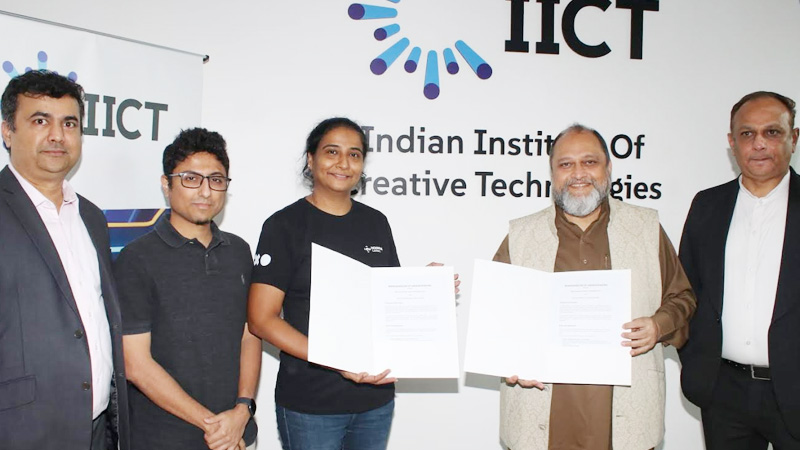
    MUMBAI: When cosplay meets classroom and panels turn into portfolios, you know India’s creative industry is getting its origin story right. In a move straight out of a well-scripted crossover, Comic Con India and the Indian Institute of Creative Technologies (IICT) have inked an MoU to jointly supercharge India’s animation, gaming, comics, and extended reality (AVGC-XR) ecosystem.

    The partnership, announced during the launch of the IICT-NFDC campus in Mumbai and the unveiling of the WAVES Outcome Report, was signed by Ashish Kulkarni, Board Member, IICT, and Shefali Johnson, CEO, Comic Con India. The high-powered event also saw the presence of government heavyweights like Devendra Fadnavis, deputy chief minister of Maharashtra, Ashwini Vaishnaw, union minister for I&B, Railways and IT, and Sanjay Jaju, secretary, ministry of information & broadcasting, a clear signal that India’s creative economy is getting serious state backing.

    Comic Con India, now part of Nodwin Gaming, has long been the country’s pop culture mothership, attracting fans, creators, and cosplayers in droves. On the other side, IICT, a newly announced National Centre of Excellence for AVGC-XR aims to be the IIT of the creative world, with a mission to train top talent, foster original IP, and bridge academia with the industry.

    The MoU packs in more than just fanfare. IICT students will get a dedicated showcase zone at Comic Con India events, along with masterclasses from top creators in gaming, comics, animation, and XR. The partnership also includes hackathons, design jams, behind-the-scenes internships, and initiatives to promote youth-led fan art and indie content creation.

    The collaboration comes at a time when India’s AVGC-XR sector is levelling up. As per the FX & Beyond: Shaping India’s AVGC Landscape report, the sector accounted for 20 per cent of the broader M&E industry in 2023, with revenues of 3.9 billion dollars. That figure is projected to rise to 6.8 billion dollars by 2026. Perhaps more crucially, AVGC-XR is expected to generate 160,000 new jobs annually with a roadmap to reach over 2 million direct jobs by 2030.

    “We are proud to collaborate with IICT as part of the broader AVGC-XR vision for India,” said Shefali Johnson. “Through Comic Con, students can gain mentorship, connect with pop culture communities, and better understand the commercial dynamics of their craft.”

    Ashish Kulkarni added, “This partnership aligns perfectly with the government’s vision of making India a global creative content hub. We aim to carve pathways for Indigenous IP using a transmedia ecosystem and build a vibrant pipeline of cultural ambassadors from India.”

    For fans, creators, and students alike, this crossover has franchise potential. With India looking to go from content consumer to content powerhouse, the IICT-Comic Con alliance might just be the origin story the AVGC-XR sector needs.

    Get your pens and pixels ready.