Category: Gaming

  • BGMI players to co-create Rondo anthem for the game’s biggest map drop

    BGMI players to co-create Rondo anthem for the game’s biggest map drop

    MUMBAI: If you thought dropping into a new BGMI map was exciting, imagine having your words immortalised in its official anthem! Krafton India is handing the mic to the BGMI community, giving players the power to co-create the official Rondo anthem. With the highly anticipated launch of Rondo, BGMI’s latest battleground, fans now have a once-in-a-lifetime chance to influence the game’s legacy.

    This initiative isn’t just about launching a map—it’s about making the community’s passion heard, quite literally. Players can submit their words and lyrics describing what Rondo means to them via:

    1    Instagram comments – Dropping lyrical heat on BGMI’s official posts.

    2    In-game mail survey – Making their mark straight from the game.

    Select words from the community will be transformed into the official Rondo anthem, ensuring players’ voices live on in BGMI history. As a tribute, the anthem will be integrated into BGMI’s 3.7 update as the new lobby music—so every time players gear up, they’ll hear the echoes of their own creativity.

    The first teaser of the anthem lands on 13 March, while the full track, featuring stunning cinematic visuals of Rondo’s vast landscapes, goes live on 18 March. To turn up the hype, Krafton India is rolling out an all-new campaign, ‘Aao Kabhi Rondo Mein’, inviting players to explore the battleground in ways they never have before.

    The campaign runs from 7-16 March, so get involved and claim your spot in BGMI’s musical and gaming history. 

  • Segwise’s AI puts a creative spin on Ad performance for game publishers

    Segwise’s AI puts a creative spin on Ad performance for game publishers

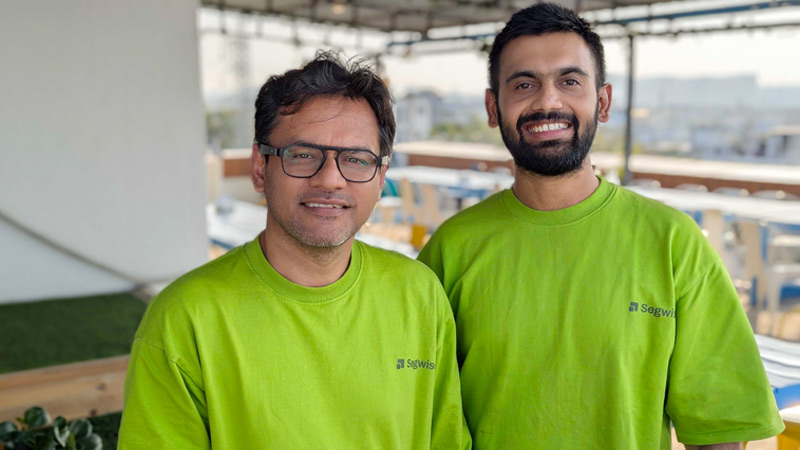
    MUMBAI: When it comes to digital ads, knowing what works is half the battle. Segwise, the AI-first User Acquisition (UA) platform, has unveiled its latest game-changer Creative Analytics and Insights, an AI-powered tool that dissects ad creatives to pinpoint what’s boosting engagement and what’s dragging performance down.

    For mobile game and app publishers, the struggle to manually track and analyse creative elements like backgrounds, characters, emotional hooks, and calls-to-action is a time-consuming puzzle. Segwise’s multimodal AI eliminates the guesswork by automatically tagging creative components across all major ad networks, helping publishers optimise their ads for better returns.

    “We believe AI will soon be the backbone of every UA team,” said Segwise co-founder and CEO Brijesh Bharadwaj. “We built this platform to automate the tedious parts of campaign analysis so marketers can focus on strategy and scaling their ROAS.”

    Adding more firepower to Segwise’s vision is PeopleFun Games former CEO Carol Miu who joins as an advisor. “Better monitoring and granular creative analytics can mean millions in ad savings. Segwise is building a UA platform that makes this effortless, and I’m excited to be part of the journey,” she said.

    The Creative Analytics AI Agent compiles and analyses creative data across networks and geographies, revealing trends, detecting creative fatigue, and ensuring UA teams spend smarter, not harder. It’s the second addition to Segwise’s fast-growing AI-driven UA platform, following its AI Campaign Monitoring and Alerting Agent, which was voted number one Marketing Product of the Week on Product Hunt last year.


  • Stan teams up with Fancraze to revolutionise cricket fandom

    Stan teams up with Fancraze to revolutionise cricket fandom

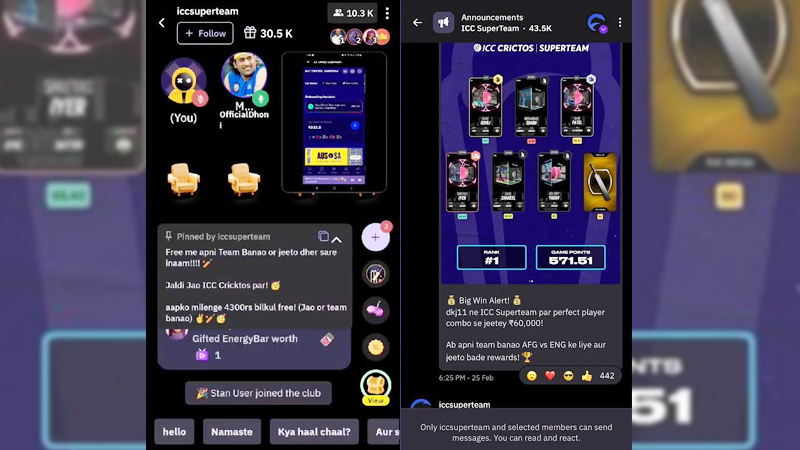
    MUMBAI: Gaming community startup Stan, backed by Nazara, has announced a strategic partnership with Fancraze, the creator of ICC Crictos Superteam. This collaboration will integrate Fancraze’s licensed digital collectibles from the International Cricket Council (ICC) with Stan’s interactive community-driven platform, offering cricket enthusiasts an innovative way to engage with the sport.

    This first-of-its-kind alliance will provide fans with dynamic experiences, including live audio rooms, influencer-led communities, quests, and VIP events. By blending digital ownership with interactive social elements, the partnership aims to deepen fans’ connection to cricket through exclusive and immersive activities.

    Stan founder & CEO Parth Chadha stated, “Cricket and gaming are more than just entertainment in India—they are a way of life. At Stan, we have built India’s largest online gaming community, and our collaboration with Fancraze will create an electrifying hub where users can play, compete, and celebrate cricket like never before. This will bring fans closer to the action, excitement, and rewards in an unprecedented way.”

    Fancraze founder & CEO Anshum Bhambri added, “We are thrilled to join forces with Stan to introduce a fresh and innovative experience for our users. By merging digital ownership with social gamification, we are elevating fandom to new heights. This partnership is a significant step towards creating a more interactive and immersive space for cricket enthusiasts.”

    This collaboration marks a new era in cricket fan engagement, leveraging technology to transform the way supporters connect with the game and its players.

  • Indie game developer 7Seas makes splash with JioGames partnership

    Indie game developer 7Seas makes splash with JioGames partnership

    MUMBAI: Independent IP-based game developer and a company whose name suggests they might be terribly fond of pirates, 7Seas Entertainment Ltd, has announced a partnership with JioGames that will bring their titles to millions of smartphone and set-top box users across the subcontinent.

    The Bombay stock exchange-listed company, which rebranded from the less aquatic-sounding 7Seas Technologies Ltd some time ago, has already launched seven games on the JioGames platform, with more apparently swimming their way to users soon.

    JioGames, part of the ever-expanding Reliance empire that appears determined to have its corporate tentacles in every aspect of Indian daily life, will now offer 7Seas’ eclectic collection of casual, adventure, puzzle, and sports titles to its substantial user base.

    Users can now download titles with such imaginative names as Sweet Boom, Gobble Chase, and the particularly intriguing Soccer Brawl—which suggests a game where Wayne Rooney’s more controversial career moments might be celebrated rather than penalised.

    Managing director L. Maruti Sanker, who presumably doesn’t need to be told that there are actually only four oceans and seven seas, expressed his enthusiasm for the partnership: “This marks a significant milestone for us since JioGames is a leading brand and fast-growing conglomerate, with huge gamer base.”

    He added that the partnership would “immensely benefit the gaming community,” a community well-known for their patient and appreciative response to corporate announcements.

    The ISO:9001-2008 certified company—a credential they seem particularly keen to mention despite it being a general quality management standard rather than a specific gaming achievement— says it has been “shaping India’s gaming landscape for years,” according to the announcement.

    With the Indian mobile gaming market continuing its explosive growth, the partnership represents another strategic move by Reliance’s digital entertainment division to capture the attention spans and thumb movements of the nation’s growing army of casual gamers.

  • Nazara Technologies acquires 60 per cent  stake in Funky Monkeys Play Centre

    Nazara Technologies acquires 60 per cent stake in Funky Monkeys Play Centre

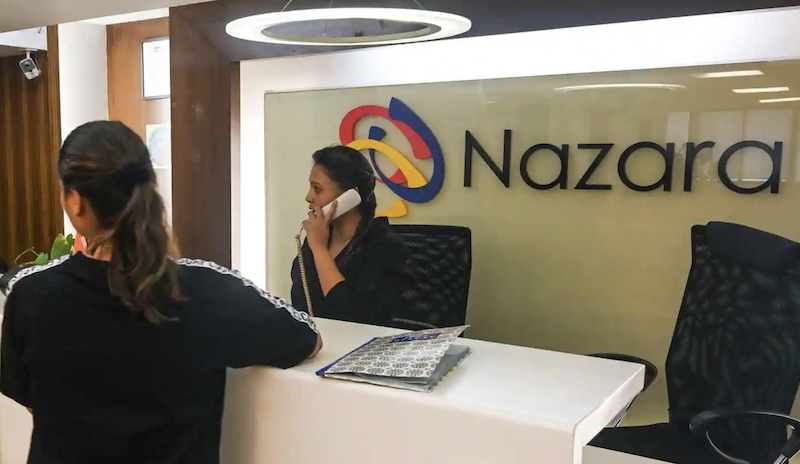
    MUMBAI: Nazara Technologies Ltd has acquired a controlling 60 per cent stake in Funky Monkeys Play Centre Pvt Ltd through a two-part transaction valued at approximately Rs 43.7 crore the company announced last week (on 24 February).

    The gaming and sports media platform completed the acquisition through a combination of fresh equity subscription and purchase of shares from existing shareholders. Nazara first subscribed to 361,773 newly issued equity shares at Rs 10 each for Rs 15 crore, securing a 21.43 per cent stake in Funky Monkeys.

    In the second leg of the transaction, also completed today, Nazara purchased an additional 651,204 shares from existing shareholders for Rs 28.7 crore, bringing its total ownership to 60 per cent of the play centre operator’s equity share capital.

    As a result of the transaction, Funky Monkeys Play Centre has become a subsidiary of Nazara Technologies, which had previously disclosed its acquisition plans in a regulatory filing on 2 December 2024.

    The regulatory filing confirms that the transaction complies with Regulation 30 of the SEBI Listing Regulations, with Nazara having now informed stock exchanges of the completed acquisition.

    Funky Monkeys operates indoor play centres for children across India, adding to Nazara’s growing portfolio of gaming and entertainment businesses.

  • Konami marks Holi with efootball event featuring Gurpreet and Jonathan

    Konami marks Holi with efootball event featuring Gurpreet and Jonathan

    Mumbai: Konami Digital Entertainment, B.V. Konami is set to bring the vibrant spirit of Holi to its flagship football simulation, efootball, with a special campaign running from 1 to 26 March 2025. The initiative will highlight India’s thriving efootball community, featuring national football captain Gurpreet Singh Sandhu and renowned esports player Jonathan Gaming.

    The campaign, which bridges mainstream football and esports, will see Jonathan Gaming play a key role in community engagement, while Sandhu is expected to make a significant announcement during the event. Other top gaming personalities involved include Gamerfleet, Sharkshe, RK Reddy, Snax, and Eagle Gaming.

    At the heart of the celebration is the ‘Goal Ke Rang’ efootball tournament, where players will compete for the title of India’s efootball champion and a €1,000 prize pool. Additional in-game campaigns exclusive to India will also be unveiled.

    Expressing his enthusiasm, Gurpreet Singh Sandhu stated, “Football and gaming both require skill, strategy, and passion, qualities that unite players on and off the pitch. This campaign is an exciting way to celebrate Holi with fans and bring that competitive spirit to efootball.”

    efootball general producer, Makoto Igarashi stated, “This campaign is about uniting football and gaming enthusiasts, whether through competition, collaboration, or the shared love of the sport. India’s efootball community is thriving, and we hope this Holi celebration with Gurpreet, Jonathan, and some of India’s biggest gaming voices makes a lasting impact.”

  • Biometric Authentication – Fingerprint, Facial, and Voice Recognition Trends

    Biometric Authentication – Fingerprint, Facial, and Voice Recognition Trends

    Biometric authentication is transforming the way we secure our digital identities, offering a seamless and highly secure alternative to traditional passwords and PINs. From unlocking smartphones to securing financial transactions, biometric technology is making authentication faster and more convenient.

    With advancements in AI, machine learning, and deep learning, fingerprint scanning, facial recognition, and voice authentication are evolving rapidly, with these biometric trends shaping the future of digital security.

    Fingerprint Authentication – A Secure Classic

    Fingerprint authentication remains one of the most widely used biometric security methods. Its reliability, ease of use, and speed have made it a standard feature in smartphones, banking apps, and workplace security systems.

    Latest Trends in Fingerprint Authentication:

    . In-display Fingerprint Sensors – Found in modern smartphones, these sensors allow for seamless screen unlocking without physical buttons.

     . Ultrasonic & Optical Scanners – Ultrasonic sensors create a 3D map of a fingerprint, improving security, while optical scanners use light to capture details. 

    . AI-enhanced Fingerprint Matching – AI-powered systems now detect fingerprint patterns more accurately, reducing the chances of false rejections.

     . Multi-fingerprint Authentication – Some security systems now require two or more fingerprints for added protection, useful in high-security industries.

    With fingerprint authentication becoming more advanced, it remains a top choice for quick and reliable biometric security, and is commonly used in mobile device security, banking and payment authentication, smart home security, and attendance tracking in workplaces.

    Facial Recognition – The Future of Contactless Authentication

    Facial recognition technology has seen tremendous growth in recent years, thanks to artificial intelligence and improved camera sensors. This hands-free authentication method is increasingly being used for security, payments, and identity verification.

    Latest Trends in Facial Recognition:

    . 3D Facial Mapping – Advanced depth sensors now create detailed face models, reducing the risk of spoofing. 

    . Live Detection AI – AI algorithms can now distinguish between a real face and a photo or mask, preventing fraud. 

     . Cloud-based Recognition – Businesses and governments are adopting cloud-based solutions for real-time facial authentication.

     . Privacy-focused Face Recognition – Some companies store facial data locally on a device rather than in centralized databases to enhance user privacy.

    Facial recognition provides a balance between security and convenience, making it one of the fastest-growing biometric authentication methods. It has been a powerful transformer in smartphone unlocking, airport security and border control, and payment authentication. The latter is particularly prominent for web-based shopping and entertainment services, for example, online slots providers, which require facial recognition and authentication before a deposit can be accepted and processed.

    Voice Authentication – Secure and Convenient

    Voice authentication is gaining traction as an effortless and secure biometric method, using AI to analyze unique voice patterns, pitch, and speech characteristics. Since voice authentication can work through any device with a microphone, it is widely accessible.

    . Latest Trends in Voice Authentication:

    . AI-driven Voice Recognition – Advanced AI can now identify slight variations in a person’s voice, enhancing security.

     . Fraud Prevention with Voice Biometrics – Banks and customer service centers use voice authentication to detect fraudsters. 

    . Voice Recognition in Smart Assistants – Devices like Alexa, Google Assistant, and Siri now recognize individual users for personalized responses. 

    . Multi-factor Voice Authentication – Some systems combine voice biometrics with other authentication factors for increased security.

    Voice authentication is particularly useful for hands-free interactions, with its boundless potential already being harnessed to optimize banking authentication, enhance personalization in virtual assistants, and refine security measures for digital gaming platforms.

    The Future of Biometric Authentication

    As cybersecurity threats evolve, biometric authentication is becoming a crucial component of digital security. Whether it’s unlocking your smartphone with a fingerprint, verifying transactions with facial recognition, or using voice authentication for secure access, biometric technology is enhancing both security and the user experience.

    With AI-driven improvements, biometric authentication will continue to expand into new industries, including healthcare, banking, and gaming. As businesses look for more secure and user-friendly authentication methods, biometrics will play a key role in protecting sensitive data and ensuring only authorized users gain access.

    So, whether you’re making a mobile payment or logging into your gaming account, biometric authentication ensures your experience is both secure and seamless.

    Disclaimer: This article does not have journalistic/ editorial involvement of indiantelevision.comindiantelevision.com group or its websites does not endorse/ subscribe to the contents of the article/advertisement and/or views expressed herein.

    The reader is further advised that Online Casino, Betting, Online Gaming , Crypto products, Financial Investments/Engagement , NFTs, Products associated with health, wellness, and food are unregulated and can be highly risky. There may be no regulatory recourse for any loss from such transactions or risk associated with health conditions. 

    Indiantelevision.com group shall not in any manner, be responsible and/or liable in any manner whatsoever for all that is stated in the article and/or also with regard to the views, opinions, announcements, declarations, affirmations etc., stated/featured in the same. The decision to read hereinafter is purely a matter of choice and shall be construed as an express undertaking/guarantee in favour of indiantelevision.com (indiantelevision.com group) of being absolved from any/ all potential legal action, or enforceable claims. The content may be for information and awareness purposes and does not constitute financial advice. 

  • Shura Games unveils ‘Spice Secrets’ in early access

    Shura Games unveils ‘Spice Secrets’ in early access

    Mumbai: Bengaluru-based Shura Games, a proud member of the Krafton India Gaming Incubator (KIGI), has released early access for its debut title, Spice Secrets: A Culinary Adventure. This innovative puzzle game blends interactive storytelling with authentic culinary education, allowing players to solve puzzles, master mini-games, and recreate classic Indian dishes such as dosa, idli, vada, and holige.

    Guided by the charming narrator, Nani, players will uncover hidden culinary secrets while restoring her kitchen. As part of KIGI, the development team received extensive mentorship, refining key aspects of the game, including design, engineering, playtesting, and market strategy. This structured support has ensured a polished, immersive experience for players.

    Spice Secrets: A Culinary Adventure is now available in early access, inviting players to embark on a unique gastronomic journey.

  • India’s Competition Commission Investigates Google’s Real-Money Gaming Policies

    India’s Competition Commission Investigates Google’s Real-Money Gaming Policies

    With the Competition Commission of India (CCI) launching an investigation into Google’s restrictive policies on real-money gaming (RMG) applications, India’s digital gaming industry is witnessing a regulatory showdown. The incident came to light when a leading Indian gaming platform, WinZO, accused Google of discriminatory policies favoring a few gaming apps while excluding others.

    These developments have added to the regulatory challenges Google has faced in India. Earlier, the company was penalized for abusing its dominance in the Android ecosystem by enforcing restrictive policies that favored its own services over competitors.

    . In 2022, the European Commission fined Google €4.34 billion ($5 billion) for favoring its search engine and Play Store ecosystem.

    . In 2021, South Korea’s Fair Trade Commission fined Google $177 million for anti-competitive Play Store policies.

    All About Google’s Gaming App Policy and WinZO’s Complaint

    The controversy traces its roots to 2022 when Google revised its gaming app policy and permitted a few RMG apps, mainly fantasy sports and rummy, on its Play Store. However, WinZO’s app, which offers a wide range of games like carrom, puzzles, and racing, was excluded. As a result, the company argued how Google’s selective acceptance has generated a two-tier system that favors some developers while disapproving others.

    As per the CCI order, “By granting preferential treatment to select app categories, Google effectively creates a two-tier market where some developers are accorded superior access and visibility while others are discriminated against and thus, left with a competitive disadvantage.” The regulator also stated that Google may have violated Sections 4(2)(a)(i), 4(2)(b), and 4(2)(c) of India’s Competition Act and a detailed investigation was required to look through the issue.

    Moreover, WinZO went on to criticize Google for what it calls an “unreasonable and restrictive” approach due to which developers are forced to distribute their apps outside the Play Store through direct downloads via the sideloading method. The company further alleged that when users attempt to make payments, Google begins flagging the platform as risky, thereby warding off potential players. 

    Regulatory and Market Implications

    India’s online gaming industry is at a critical juncture as regulatory uncertainty has clouded its rapid expansion. Despite the Indian government actively working on new regulations introduced in 2023 and 2024, challenges remain.

    . India’s gaming market is projected to grow from $3.7 billion in FY24 to $9.8 billion by FY29, reflecting a 20% CAGR, according to a 1Lattice report.

    The introduction of 28% GST on gaming transactions in 2023 has added further strain to the industry, significantly impacting revenue streams for major gaming firms.

    . Reports indicate that leading gaming companies like Dream11 and MPL have experienced revenue declines of 20-30% in FY24-25, driven by the increased tax burden

    With both taxation and Google’s restrictions in play, many RMG platforms now struggle to scale their operations in India, leading to slower innovation, investor uncertainty, and a shift toward offshore markets. 

    Case Study of Alternative Strategies

    As regulatory and platform restrictions tighten, many emerging gaming platforms are adopting alternative distribution strategies to circumvent Google Play’s limitations. Brands like Parimatch and other web-based new casinos bypass these restrictions by offering direct APK downloads while leveraging influencer marketing on platforms like Telegram and YouTube to engage Indian players effectively.

    Following this approach helps gaming companies to maintain user engagement without relying on Google’s ecosystem. These methods involve distributing APK files directly through their websites, which allows them to avoid Play Store commissions and restrictions on payment processing. Additionally, they can also seek influencer-driven marketing that helps build trust and visibility in a market where digital word-of-mouth plays a crucial role.  
    Another emerging trend is the development of web-based gaming platforms. Here, games run directly in browsers without requiring a Play Store listing, providing a seamless user experience while bypassing App Store policies altogether.

    Next Steps to Watch for in the Investigation

    If the CCI enforces regulatory action against Google, it could reshape India’s digital gaming landscape with fair competition and greater accessibility for gaming platforms. Meanwhile, the industry’s swift adaptation to alternative distribution strategies signals that Indian gaming firms are ready to challenge the status quo-whether through legal battles or innovative market approaches.

    Simultaneously, we see several gaming platforms already adapting to the situation by utilizing alternative distribution models, exploiting influencer networks, and investing in direct user acquisition strategies.

    Disclaimer: This article does not have journalistic/ editorial involvement of indiantelevision.comindiantelevision.com group or its websites does not endorse/ subscribe to the contents of the article/advertisement and/or views expressed herein.

    The reader is further advised that Online Casino, Betting, Online Gaming , Crypto products, Financial Investments/Engagement , NFTs, Products associated with health, wellness, and food are unregulated and can be highly risky. There may be no regulatory recourse for any loss from such transactions or risk associated with health conditions.

    Indiantelevision.com group shall not in any manner, be responsible and/or liable in any manner whatsoever for all that is stated in the article and/or also with regard to the views, opinions, announcements, declarations, affirmations etc., stated/featured in the same. The decision to read hereinafter is purely a matter of choice and shall be construed as an express undertaking/guarantee in favour of indiantelevision.com (indiantelevision.com group) of being absolved from any/ all potential legal action, or enforceable claims. The content may be for information and awareness purposes and does not constitute financial advice.

  • “Our focus remains on building a truly global gaming company from India”- Nazara  Technologies CEO Nitish Mittersain

    “Our focus remains on building a truly global gaming company from India”- Nazara Technologies CEO Nitish Mittersain

    It’s game to go global. In fact that’s the only game it looks like it is willing to play. Nazara Technologies, under the leadership of CEO Nitish Mittersain, is charting an ambitious course to become a global gaming powerhouse built from India.   One would find it hard to believe that Nitish is  anything more than 35 years of age, he carries oodles of boyish charm with him everywhere. (He’s actually 45). The boyish looking executive who’s grown Nazara from a bedroom operation to one of the most impressive gaming and experiences companies to emerge from India.

    Hailing from a business family, Mittersain began coding at  the age of eight, had tech pioneer and actor Shammi Kapoor as a mentor, set up a website building business when he was just 15.  Nazara followed when he was 19. It nearly went belly up with the dot com bust with huge debts piled up; its saving grace was that it  had a relationship with cricket’s God Sachin Tendulkar. Hence it  managed to attract investment from Westbridge Capital.

    Since then there’s been no looking back. A massive IPO has seen the company raise capital, followed by  acquisitions galore – both in India and overseas as Mittersain  goes about his business building a group touching various aspects of the gaming ecosystem and one which can rival other scaled enterprises globally.

    Nazara’s latest quarter financials saw a bunch of investors, analysts probing him during an investor call  to check if the company’s story still holds merit. He parried all with extreme ease, grace and aplomb.

    Indiantelevision.com decided to paraphrase Mittersain’s  responses during the investor call, to give you insights into how this young gaming entrepreneur is single mindedly cobbling together a global Indian gaming enterprise. Excerpts: 

    On Nazara’s great Q3 FY2025 performance.
    Our Q3FY25 performance demonstrates the strength of our diversified portfolio. Revenue reached Rs 534.7 crore, representing 67 per cent  year-on-year growth, while EBITDA grew 39 per cent to Rs  52.4 crore. The core gaming segment was particularly strong, growing 53 per cent  year-on-year, driven by our Fusebox Games acquisition and solid performance from existing titles like Animal Jam. 

    For the first nine months of FY25, we’ve reported revenue of Rs  1,103.7 crore and EBITDA of Rs  102.4 crore, showing consistent growth across our business segments.  Gaming contributed 29 per cent  of total revenues and 56 per cent of EBITDA in Q3, while eSports delivered 43 per cent of revenues and 32 per cent of EBITDA. This balance demonstrates the resilience of our business model and the success of our diversification strategy.

    On the strategic thinking behind the recent capital raises through preferential placement that the company has resorted to recently. 
    The Rs  495 crore raised through preferential placement to Aksana Estates LLP represents more than just capital – it’s a strategic partnership that validates our vision. Having established entrepreneurs like Arpit Khandelwal and Mithun Sacheti, the founder of CaratLane, join us as co-promoters brings valuable expertise to our growth journey and provides us with substantial financial flexibility. Having Plutus Wealth and Mithun Sacheti cross the 25 per cent  threshold and join as co-promoters is a significant validation of our business model.

    While some investors might view dilution with concern, we’re seeing unique opportunities in the global gaming market. The current environment, characterized by post-COVID normalization and higher interest rates, has created situations where high-quality assets are available at attractive valuations. Our strategy isn’t about short-term arbitrage – we’re building a sustainable global gaming company by acquiring strong assets and growing them systematically.

    Picture courtesy inc42

    On how the company evaluates potential acquisitions, particularly in terms of IP valuation
    We look at multiple factors. First, we assess the historical performance – app store ratings, download numbers, current user base, revenue trends, and profitability. Second, we evaluate growth potential under Nazara’s ownership – can we expand the business through improved live operations or market reach? Finally, we consider valuation metrics, typically based on EBITDA multiples within our acceptable range. For instance, with our recent game acquisitions from Zepto Labs, we saw strong existing performance metrics combined with clear opportunities for growth under our management.

    On the company’s IP licensing strategy, particularly with brands like Barbie and Big Brother.
    Our IP strategy represents a shift from our traditional approach of relying solely on original content. We’ve observed that popular IPs can significantly reduce user acquisition costs through organic downloads and improved click-through rates. These partnerships, such as Kiddopia’s agreements with Mattel for Barbie and Moonbug Entertainment for Little Angel, typically involve minimum guarantees plus revenue sharing arrangements. Even with these costs, we expect better profitability compared to traditional user acquisition spending. The success of Fusebox’s Love Island game has given us confidence to pursue similar partnerships with Big Brother globally and Bigg Boss in India.

    On  how  Nodwin  Gaming is performing, and what’s the path to profitability
    Nodwin continues to build market leadership in eSports and youth engagement. Their Q3 revenue grew 23 per cent  year-on-year, but the like-for-like growth was actually 48 per cent excluding Wings, which was deconsolidated. While profitability has been impacted by strategic investments and events like the NH7 Weekender cancellation, we’re seeing strong performance from proprietary IPs and live events. Nodwin has expanded its footprint to 20 countries and made strategic acquisitions in influencer management (Trinity Gaming), content distribution (AKF Gaming)  and event production (StarLadder). Their international revenues now account for 48 per cent of total revenue, demonstrating successful global expansion.

    We’re deliberately prioritising growth over immediate profitability because we believe building market leadership and strong moats now will create significant value in the future. The youth attention economy, particularly in emerging markets, represents a massive opportunity that requires scale and presence to capture effectively.
     

    On PokerBaazi, and its growth trajectory
    PokerBaazi is the dominant poker platform in India, and our strategy is focused on building an even stronger moat through brand development. Their gross gaming revenue grew 67 per cent  year-on-year in Q3, with healthy growth in both traded value and deposits. Rather than focusing on performance marketing, they’re investing heavily in brand building through strategic sponsorships like Shark Tank and IPL. The core business is very profitable – quarterly EBITDA fluctuations mainly reflect the timing of brand spending. This approach should create a more defensible market position over time.
     
    On the approach while developing games – both in India and internationally
    We’re implementing a hybrid model that leverages global expertise with Indian capabilities. Take Fusebox Games for example – their core team of about 35 people in the UK drives game design and narrative, while we’re increasingly shifting development and engineering work to India. This allows us to combine international design expertise with India’s strong engineering talent pool.

    Through Nazara Publishing, we’re also bringing international games to the Indian market, providing localised support and marketing. This aligns with our view that India’s gaming market will see significant growth in terms of paying users over the next five years. Simultaneously, we’re investing in local studios and capabilities to create games in India for the global market, responding to the government’s vision of India as a gaming development hub.

    Nitish and His brands

    On the company’s G-commerce initiative and its potential impact
    G-commerce addresses a fundamental challenge in the Indian gaming market – low monetisation through both in-app purchases and advertising. By integrating e-commerce within gaming environments, we aim to create new revenue streams through affiliate fees. We’re in advanced stages of a pilot with ONDC, scheduled for launch in Q4FY25. If successful, this could be a significant innovation not just for India but globally. The concept leverages Indians’ familiarity with online shopping while providing game developers with better monetisation options than traditional advertising.

    On challenges post Apple’s  IDFA changes and how Nazara addressing them.
    The post-IDFA environment has certainly changed the landscape for user acquisition. We’re adapting through multiple strategies. First, our IP partnerships help generate organic downloads and reduce acquisition costs. Second, we’re seeing ad agencies and platforms develop new models that work within the privacy-first framework. Third, we’re exploring alternative channels and focusing on markets where Android remains dominant. The situation has stabilised over the past 18 months, and we’re seeing companies, including ourselves, successfully adapt their user acquisition strategies to this new reality.

    On the  role  AI will play in Nazara’s future operations
    We see AI as both an opportunity and a tool across our business. In game development, we’re exploring AI applications for content creation, testing, and personalization. In user acquisition, AI helps optimize targeting and spending. For eSports, AI assists in content creation and production efficiency.
    However, we maintain a balanced view. While AI can enhance efficiency and create new possibilities, the core of gaming remains human creativity and engagement. We’re focused on using AI to augment rather than replace human capabilities, particularly in areas like game design and community engagement.
    The real opportunity lies in using AI to better understand and serve our users while maintaining the human elements that make games and eSports engaging. We’re investing in AI capabilities but always with a clear focus on enhancing rather than replacing the core gaming experience.

    On guidance for future growth
    We’re maintaining our FY27 EBITDA target of Rs  300 crores and are confident in achieving it. Our recent capital raise and strong cash position give us the flexibility to pursue both organic and inorganic growth opportunities. 2025 presents particularly attractive M&A opportunities in the global gaming market, especially given current valuations. We’re seeing potential in both established markets and emerging economies, particularly in mobile gaming and eSports. Our focus remains on building a truly global gaming company from India, leveraging our expertise across different segments and geographies.

    (Picture of Nitish punching courtesy INC42)