Category: Gaming

  • From Trackside to Global Fans: LiveU Transforms Tabcorp – Sky Racing Coverage through Remote Production

    From Trackside to Global Fans: LiveU Transforms Tabcorp – Sky Racing Coverage through Remote Production

    MUMBAI  LiveU, a leader in live IP-video and remote production solutions, today announced the successful implementation of its comprehensive IP remote production solution at Tabcorp – Sky Racing, transforming how Australia’s leading betting and entertainment company broadcasts live horse racing events. Sky Racing shares its live feeds with audiences worldwide, including viewers in Hong Kong, United States, and Europe.

    Covering over 160,000 live horse races per year – broadcasting live on 150 channels on a huge range of formats (linear and digital) – Sky Racing also produces its own content. Using LiveU’s IP remote production solution, it now broadcasts horse races from eight tracks in Queensland (QLD) with high quality, low latency and resilient transmissions, managed from its central production hub in Brisbane. The remote production set-up has eliminated the need for traditional SNG trucks, Outside Broadcast trucks and full on-site crews, substantially reducing travel, accommodation, and equipment costs. 

    At its more remote locations Sky Racing has been able to reduce its costs by almost 80% by removing the whole satellite process and using LiveU. They’ve also reduced the need to send expensive OB trucks all over the state as they have moved to a model where they have designed a remote modular rack system with LiveU encoders installed in all their venues. The rack system can be turned on and tested remotely and from there the live feeds come directly into their centralized broadcasting hub. The production team can log in and support the system from anywhere in the world. Having a centralized hub has allowed further cost savings with certain staff being able to multitask between multiple venues (Director, CCU, Replay and Technicians for example).

    “LiveU’s remote production solution has transformed how we deliver live races in Queensland for aggregation and distribution to our domestic and international markets,” said Jamie Ford, Technical Operations Manager – QLD, Tabcorp – Sky Racing. “By deploying their LU810 encoders across our tracks and using our production hub in Brisbane, we’ve achieved what was previously unthinkable – maintaining broadcast quality while significantly reducing operational costs and complexity. The system’s resilience and low latency, with seamless cellular backup and flexible return feeds, ensures we never miss a moment of action while maintaining the feeds needed in both directions.”

    LiveU’s solution features LiveU’s multi-cam LU810 fixed encoders at each race track, supporting primary transmission of between 8 to 16 cameras (or other sources) per location, over high-speed WAN, sending up to four signals per device. For an extra layer of resilience, a cost-effective backup solution is in place using both LU810 encoders and separate LU810-M (modem) encoders connected via cellular. This set-up leverages the public internet for baseline reliability and can instantly switch to cellular if needed, removing the requirement for costly SNG backup trucks.

    Production teams stay in sync between the field and the hub using LiveU’s remote production tools, including Video Return, Audio Connect, and IP Pipe. From the central production hub, teams can monitor up to 36 live camera feeds from eight different race tracks simultaneously with LiveU’s Transceiver letting operators customize and control return feeds for each track independently. 

    Ryan Osinga, Manager, Technical Services and Solutions, Tabcorp – Sky Racing, summed up, “We’ve ended up with a product that is cheaper, more reliable, and more resilient, it’s got more features, lower latency and we have a significant reduction in costs. For us the LiveU solution ticked every single box that we had.”

    “Tabcorp went all-in on remote production for Sky Racing and we worked very closely with them to ensure that the solution was adapted to their production needs,” said Chris Dredge, Country & Sales Manager, LiveU Pacific. “The flexibility of the LiveU EcoSystem meant that we could devise an innovative workflow that worked for them, optimizing their resources on-the-ground and centrally. It’s a great use case for multi-venue events and we’re already seeing potential for similar projects elsewhere.”

    Watch the video clip to see the full production in action: 

    About LiveU 

    LiveU offers a set of high-quality IP-video solutions for any live production – the LiveU EcoSystem. Built on its open, adaptable platform, the LiveU EcoSystem adds efficiency and shortens workflows across the entire video production chain, from contribution and production to distribution. Through innovative story-centric workflows, we help customers share their stories with a global audience in the most dynamic and engaging way. At the core of our EcoSystem lies LRT™ (LiveU Reliable Transport), LiveU’s pioneering protocol for IP bonding and wireless connectivity, ensuring rock-solid resiliency and low latency from any location. Customers can go live from anywhere with our advanced, network-agnostic connectivity solutions – combining cellular (including private 5G), fiber and satellite. With over 5,000 customers in 150 countries and world-class customer support, LiveU’s technology is the solution of choice for global broadcasters, sports, public safety and other organizations., visit www.liveu.tv, or follow us on X, Facebook, YouTube, LinkedIn or Instagram.  

    About Tabcorp 

    Tabcorp is Australia’s largest gambling company ‘creating the most engaging betting and entertainment experiences business’. Its brands include TAB, Australia’s biggest multichannel wagering brand, Sky Racing, the largest aggregator and distributor of horse racing content globally, Sky Sport Radio and MAX, Australia’s leading gaming services provider. Tabcorp is listed on the Australian Securities Exchange (ASX). 

    LiveU is working directly with the media arm, Sky Racing. For more information, visit https://www.tabcorp.com.au/

  • India’s gaming sector poised for explosive growth: Winzo report at GDC, 2025

    India’s gaming sector poised for explosive growth: Winzo report at GDC, 2025

    MUMBAI: India’s online gaming companies are gearing up for a blockbuster debut on public markets that could unlock a whopping $26bn in investor value, according to a report unveiled yesterday at the Game Developers Conference (GDC) in San Francisco.

    The India Gaming Market Report launched by WinZO Games and the Interactive Entertainment and Innovation Council (IEIC) at the India Pavilion, offers a tantalising glimpse into the sector’s meteoric rise. Currently worth $3.7bn, the industry is expected to surge at a 19.6 per cent compound annual growth rate to reach $9.1bn by 2029—and a staggering $60bn by 2034.

    “India stands at the cusp of a remarkable transformation in the global gaming ecosystem,” declared San Francisco consul general of India Srikar Reddy at the launch. The report suggests the sector’s public market potential could balloon to $63bn by 2029 if projections hold true.

    The document paints a picture of a market primed for explosive growth. With 591 million gamers—roughly 20 per cent of the global total—and approximately 11.2 billion mobile game downloads, India’s digital playground is expanding rapidly. The country now boasts around 1,900 gaming companies employing 130,000 skilled professionals.
     

    GDC

    Foreign investors are certainly not playing around, having poured $3 billion into the sector. A hefty 85 per cent of this foreign direct investment has flowed into the pay-to-play segment, which has cracked the once-vexing challenge of monetising Indian gaming assets.

    Nazara Technologies, India’s lone publicly listed gaming company, currently commands the highest premium among global gaming stocks. Apply similar multiples to the broader sector, and you get the eye-watering $26bn valuation potential cited in the report.

    “The online gaming industry in India is on an unprecedented growth path,” said WinZO  co-founder Paavan Nanda,  who launched the report alongside co-founder Saumya Singh Rathore. The duo’s company is no small player itself, boasting over 250 million registered users across India and Brazil.

    The report also highlights how Indian gamers overwhelmingly favour casual and hyper-casual games developed in regional languages, heralding what it calls “the renaissance of Indic content ‘Made in India, for the World’.”
    Despite its impressive growth, India’s gaming market currently represents just 1.1 per cent of the $300bn global market—suggesting plenty of room to level up. If projections hold, the user base could swell to 952 million by 2029, creating over two million jobs along the way.

    The report’s launch coincided with the second edition of the India Pavilion at GDC, showcasing games from major players and indie developers alike. The pavilion was a joint effort by WinZO, the Ministry of Information & Broadcasting, the Game Developer’s Association of India, and Nazara Technologies.

    In the game of global tech dominance, India’s gaming industry is clearly playing to win.

  • Lightfury hits it out of the park with e-cricket reveal at GDC 2025

    Lightfury hits it out of the park with e-cricket reveal at GDC 2025

    MUMBAI: Lightfury Games is taking India’s gaming industry global, announcing its highly anticipated AAA title E-Cricket at the Game Developers Conference (GDC) 2025 in San Francisco. The teaser and demo, unveiled today, showcase a groundbreaking, high-fidelity cricket gaming experience built on Unreal Engine 5, with next-gen visuals and AI-powered mechanics.

    Developed in collaboration with Amazon Web Services (AWS), E-Cricket leverages Amazon Gamelift Streams to bring console-quality gameplay to virtually any device with a browser with no high-end hardware required. Designed for both Esports athletes and cricket lovers, the game promises a competitive multiplayer ecosystem with live tournaments, immersive gameplay, and innovative mechanics that redefine the sport in a virtual arena.

    “AWS is proud to support LightFury Games as they showcase their ground-breaking work on this new title at GDC,” said AWS head of immersive technologies Chris Lee. “Amazon GameLift Streams empowers studios like LightFury Games to deliver exceptional experiences without hardware limitations and unlocks new opportunities for game developers worldwide.”

    “It’s an impactful opportunity for an Indian AAA game studio to showcase at GDC, marking an incredible milestone for the industry,” said Lightfury Games CPTO and co-founder Anurag Banerjee. “Amazon GameLift Streams is going to revolutionise mobile gaming in India – the world’s second-largest mobile market. By delivering high-fidelity visuals on mobile devices through any web browser (without app installations) and requiring only high-speed internet, this technology makes premium gaming more accessible and affordable. It reshapes the industry, unlocking bold new opportunities for gameplay, engagement, and monetisation, allowing us to take this game to the masses like never before,” he added.

    “We have announced the release of a blockbuster AAA E-Cricket game made in India, for India and the world. We are fully committed to launching it in early 2026 and are moving full steam ahead. With the right combination of world-class tech, and global and Indian talent, we are confident of building India’s AAA gaming ecosystem, and positioning the country as a key player on the global Esports stage,” said Lightfury Games CEO and co-founder Karan Shroff.

    With E-Cricket, LightFury Games is swinging for the fences, aiming to bring world-class gaming innovation to India and beyond.
     

  • Gamerji hits a six with Sportsdraft, adds IPL auction fun to esports play

    Gamerji hits a six with Sportsdraft, adds IPL auction fun to esports play

    MUMBAI: Ever dreamed of owning an IPL team, only to realise your wallet’s emptier than a stadium during a rain delay? Good news—Gamerji just bowled an irresistible googly your way. Forget bidding goodbye to your savings; now, you can outbid your mates for Kohli or Rohit—all without spending real cash!

    Ahmedabad-based esports juggernaut Gamerji has announced the launch of Sportsdraft, its first in-house, non-fantasy, non-RMG cricket gameplay. Set to officially go live next week, Sportsdraft mimics IPL-style player auctions, letting users virtually bid on their favourite players to build winning squads. With 16.7 million users in India and the middle east, Gamerji clearly knows how to spin a good game—and this might just be their best delivery yet.

    Sportsdraft introduces cricket lovers to a fresh style of digital gaming. Participants join leagues through Gamerji’s app or website, strategically bid on players with virtual currency, and assemble dream teams to compete for glory (and Gamerji diamonds). Miss the timer by a whisker? Say goodbye to your star batsman, swiftly auctioned to your cleverer competitor.

    Gamerji founder & CEO Soham Thacker shared his excitement, saying, “With India’s unbeatable run in the ongoing Champions Trophy and world’s biggest league IPL starting in just a few weeks, the cricket fever is on. Our users and telecom customers’ feedback encouraged us to develop Sportsdraft. It is a non RMG gameplay designed to engage players in building their squads using points earned on the Gamerji platform. The official game launch is scheduled for next week but traction from the beta launch has already shown 35 per cent of Gamerji users playing Sportsdraft, we expect this to double as we reach IPL season commencement.”

    He further clarified, “The gameplay itself is not the conventional fantasy model. It is a season-long experience that involves drafting players and getting the thrill of owning a team rather than just selecting players randomly, putting your squad in, and staking. This is about actually experiencing the excitement of team ownership because you get exclusive rights to those players. No one else has those players when you play in your league.”

    Participants can also pick their ‘Power Player’ to double points and challenge friends in thrilling daily head-to-head battles. Victors earn Gamerji diamonds, redeemable for gift vouchers—because who doesn’t like winning free stuff?

    Founded by serial entrepreneur Soham Thacker in 2019, Gamerji already hosts 1,400 tournaments daily, aiming to boost its user base from 16.7 million to 30 million within the next year. Considering India’s esports market hit $200.7 million in 2024, projected to soar to $919 million by 2033 with an impressive CAGR of 18.42 per cent, Gamerji is playing the long innings smartly.

    Is virtual cricket auction the future? Perhaps. For now, Gamerji’s Sportsdraft sounds like the perfect game to bring friends together—and then tear friendships apart over outbidding each other for Dhoni.

  • Binance Closes Record-Setting $2 Billion Institutional Investment From UAE-Based MGX

    Binance Closes Record-Setting $2 Billion Institutional Investment From UAE-Based MGX

    Abu Dhabi-based technology investment company MGX has made a record-breaking $2 billion investment in the leading cryptocurrency exchangeBinance. The transaction, conducted in an unnamed stablecoin, marks the first institutional investment in Binance. It also stands as the largest single investment in a cryptocurrency firm and the biggest digital asset-funded placement, including stablecoins.

    At the same time, the deal representsMGX ‘s first-ever crypto-focused investment. The company is dedicated to accelerating the adoption and development of cutting-edge technologies, with a strong emphasis on artificial intelligence (AI). To achieve this, MGX has established strategic partnerships both in the UAE and globally while channeling investments into high-impact sectors where AI can drive large-scale economic transformation—ranging from software, semiconductors, and infrastructure to life sciences, physical AI, and tech-enabled services.

    Currently, Binance ranks as the world’s largest cryptocurrency exchange, with its cumulative trading volume exceeding $100 trillion. The platform is trusted by over 260 million registered users across more than 100 nations.

    Binance provides a diverse range of digital asset services, including trading, finance, institutional offerings, and payments, as well as Web3 features, research, and social good initiatives. According to CoinMarketCap, users traded nearly $20 billion in cryptocurrencies on Binance’s spot market and over $62 billion in derivatives pairs on the exchange in the past 24 hours alone.

    Accelerating Crypto Adoption

    Binance CEO Richard Teng described his company’s deal with MGX as “a significant milestone for the crypto industry and for Binance.” According to him, the two organizations will “shape the future of digital finance.”

    “Our goal is to build a more inclusive and sustainable ecosystem, with a strong focus on compliance, security, and user protection. Binance remains committed to working with regulators worldwide to establish transparent, responsible, and forward-thinking policies for the crypto industry. Our ongoing investments in security and compliance reinforce our mission to foster a secure and trusted digital financial ecosystem,” he added.

    Teng, a former CEO of the Abu Dhabi Financial Services Regulatory Authority (FSRA), played a key role in developing one of the world’s first cryptocurrency regulatory frameworks. According to a press release published on Binance’s website, his expertise in regulatory strategy has been instrumental in shaping the exchange’s compliance approach.

    MGX Managing Director Ahmed Yahia believes that his company’s investment in Binance reflects its commitment to advancing blockchain’s transformative potential in digital finance. He emphasized that the demand for secure, compliant, and scalable blockchain infrastructure and solutions “has never been greater.”

    “Binance has long been a driving force in cryptocurrency innovation, from exchange technology and tokenization to staking and payments. Together, we are committed to building a more inclusive and robust digital finance ecosystem,” Yahia added.

    The UAE’s Growing Role in Crypto Adoption

    Over the past few years, the UAE has emerged as a global leader in digital asset adoption. Since Dubai’s introduction of the Virtual Assets and Related Activities (VARA) framework for cryptocurrencies in February 2023, numerous crypto firms have relocated their headquarters to the Gulf nation, drawn by its progressive regulatory landscape.

    Even before the introduction of the VARA framework, Binance had already established a strong presence in the UAE. The company recognizes the nation as a global hub for innovation and forward-thinking digital asset regulation.

    As of March 13, 2025, Binance employs approximately 1,000 people in the UAE—around 20% of its global workforce of 5,000. Two of Binance’s subsidiaries operate under licenses issued by UAE regulators, further solidifying the company’s long-term commitment to the region.

    A Record-Breaking Raise

    Binance’s $2 billion raise marks a new record in the cryptocurrency space. Moreover, it nearly doubles the total value of all digital asset venture capital (VC) deals in February 2025. Last month, venture capitalists funded 137 crypto firms with a combined $1.11 billion, according to a report by The TIE.

    In February, the top-funded sectors included business service providers, DeFi, security services, payments, and artificial intelligence. However, despite strong VC activity, the largest single raise last month by a crypto company was $79.95 million—a figure that pales in comparison to Binance’s massive $2 billion deal.

    With Binance’s investment eclipsing last month’s total VC funding, this record-setting placement could set the stage for an increase in institutional and venture capital investments in the coming months. As regulatory frameworks continue to evolve and institutional interest in crypto expands, the exchange’s latest funding milestone signals growing confidence in the long-term potential of digital assets.

    Disclaimer: This article does not have journalistic/ editorial involvement of indiantelevision.com.indiantelevision.com group or its websites does not endorse/ subscribe to the contents of the article/advertisement and/or views expressed herein.

    The reader is further advised that Online Casino, Betting, Online Gaming , Crypto products, Financial Investments/Engagement , NFTs, Products associated with health, wellness, and food are unregulated and can be highly risky. There may be no regulatory recourse for any loss from such transactions or risk associated with health conditions.

    Indiantelevision.com group shall not in any manner, be responsible and/or liable in any manner whatsoever for all that is stated in the article and/or also with regard to the views, opinions, announcements, declarations, affirmations etc., stated/featured in the same. The decision to read hereinafter is purely a matter of choice and shall be construed as an express undertaking/guarantee in favour of indiantelevision.com (indiantelevision.com group) of being absolved from any/ all potential legal action, or enforceable claims. The content may be for information and awareness purposes and does not constitute financial advice. 

  • Crypto Industry Collaboration in the Wake of the Bybit Theft

    Crypto Industry Collaboration in the Wake of the Bybit Theft

    The crypto market is no stranger to major hacks, but the recent Bybit theft set a staggering new record. North Korea-affiliated hackers from the notorious Lazarus Group drained approximately $1.5 billion in ETH from the crypto exchange. Unlike previous disasters involving FTX, Celsius, or Terra, Bybit managed to avoid collapse thanks to swift and coordinated industry collaboration.

    Facing a potential liquidity crisis, Bybit secured emergency support from key crypto firms, includingBinance, Bitget, and Galaxy Digital. Through transparency, decisive action, and collective efforts, the company demonstrated how strong industry collaboration could help exchanges weather even the most severe attacks.

    Binance CMO Rachel Conlans commented on recent cyber attacks in the crypto industry, “The evolving nature of cyber threats in the crypto industry reinforces the need for exchanges and custodians to continuously strengthen their security frameworks. As threats continue to grow in sophistication, so must our defenses. The recent attack was a phishing attack on the UI system, underscoring the importance of securing all aspects of any exchange’s infrastructure, including user interfaces, to protect against such sophisticated threats. This is a wake-up call for the industry to implement multi-layered security, real-time threat detection, and robust risk mitigation strategies. 
    Conlan added, “In the crypto world, trust and security are the cornerstones of crypto adoption, and it is critical that platforms work proactively to keep ahead of emerging risks, guaranteeing user safety and safeguarding user accounts remains the top priority.”

    How the Bybit Hack Unfolded

    In the following sections, we’ll explore exactly how the Bybit hack happened and examine how the crypto exchange navigated the crisis. Let’s dive in!

    The Attack

    The hack began with a targeted compromise of AWS session tokens belonging to a developer at Safe, Bybit’s multisig wallet provider. Lazarus hackers exploited this access by injecting malicious JavaScript code into Safe’s frontend user interface. According to Safe’s detailed post-mortem report, this compromised interface tricked Bybit’s team into signing what appeared to be a legitimate wallet transaction but was in fact unauthorized.

    As a result, Bybit inadvertently approved the transfer of roughly 401,000 ETH—valued at nearly $1.5 billion—to wallets controlled by the hackers. To obscure their trail, the attackers quickly dispersed these funds through numerous intermediary addresses. This strategy, common among sophisticated cybercriminals, aimed to confuse blockchain analysts and hinder tracing efforts.

    The hackers then converted portions of the stolen ETH into other cryptocurrencies, such as BTC and DAI. They utilized decentralized exchanges, cross-chain bridges, and no-KYC instant swap services to move assets between different blockchains and obscure transaction paths.

    Interestingly, the Lazarus Group initially kept a substantial portion of the funds dormant across multiple wallets. North Korean hackers often use this tactic to avoid immediate detection and strategically delay their laundering operations. However, within just ten days following the theft, they successfully laundered 100% of the stolen crypto—approximately $1.4 billion.

    Bybit’s Response

    Bybit’s rapid reaction to the hack proved critical. Within minutes of detecting the breach, the exchange isolated the compromised cold wallet, halting further unauthorized transfers. A forensic investigation was immediately launched, involving blockchain analytics firms, cybersecurity specialists, and law enforcement to track the stolen assets. 
    To prevent similar incidents in the future, Bybit partnered closely with Safe to overhaul its multisig wallet security protocols. The exchange also implemented stricter manual verification processes for high-value transactions and enhanced its wallet infrastructure. These decisive actions helped restore user confidence and stabilize the situation.

    Despite the enormous loss, Bybit reassured customers that all funds remained fully backed and accessible. Notably, the exchange kept withdrawals open, sending a strong signal of transparency. This crucial step helped prevent panic and maintained user trust during an uncertain period.

    How Industry Collaboration Helped Bybit Survive the Aftermath of the Attack

    Collaboration with leading crypto firms was vital in quickly securing Bybit’s financial stability. Within just 72 hours, the exchange raised emergency liquidity, totaling 447,000 ETH through loans and support from Binance, Bitget, and Galaxy Digital. By strategically injecting liquidity rather than purchasing Ether on the open market, Bybit prevented price volatility and rapidly replenished its reserves.

    Transparency remained central to Bybit’s recovery efforts. CEO Ben Zhou publicly addressed users through a live-streamed Q&A just 30 minutes after the breach became public knowledge. In the following days, Zhou continued providing daily updates on fund recovery, security enhancements, and internal investigations.

    To further reassure users, Bybit completed a full proof-of-reserves audit on February 24. The audit independently verified the exchange’s solvency and confirmed that user assets were backed 1:1. This proactive transparency set a new industry standard for crisis management following major hacks.

    Blockchain’s inherent transparency also supported recovery efforts. Public transaction records enabled industry participants and authorities to swiftly trace stolen assets. Through rapid coordination with global exchanges and regulators, more than $40 million worth of the stolen crypto was successfully frozen—highlighting the value of real-time industry cooperation.

    This collaboration extended beyond immediate recovery. Bybit continued working closely with law enforcement agencies and cybersecurity experts to seize additional assets and identify the attackers. These unified efforts underscored the crypto industry’s growing maturity and commitment to security.

    Ultimately, Bybit’s crisis highlighted the increasing importance of collective action. With hackers becoming more sophisticated, industry-wide coordination, transparency, and swift response capabilities are more critical than ever. Bybit’s survival serves as a powerful example of how effective collaboration can help crypto companies overcome even the most severe security threats.

    Disclaimer: This article does not have journalistic/ editorial involvement of indiantelevision.com.indiantelevision.com group or its websites does not endorse/ subscribe to the contents of the article/advertisement and/or views expressed herein.

    The reader is further advised that Online Casino, Betting, Online Gaming , Crypto products, Financial Investments/Engagement , NFTs, Products associated with health, wellness, and food are unregulated and can be highly risky. There may be no regulatory recourse for any loss from such transactions or risk associated with health conditions.

    Indiantelevision.com group shall not in any manner, be responsible and/or liable in any manner whatsoever for all that is stated in the article and/or also with regard to the views, opinions, announcements, declarations, affirmations etc., stated/featured in the same. The decision to read hereinafter is purely a matter of choice and shall be construed as an express undertaking/guarantee in favour of indiantelevision.com (indiantelevision.com group) of being absolved from any/ all potential legal action, or enforceable claims. The content may be for information and awareness purposes and does not constitute financial advice. 

  • Nazara Technologies COO Sudhir Kamath cashes out chips after impressive run

    Nazara Technologies COO Sudhir Kamath cashes out chips after impressive run

    MUMBAI:  In a departure,  that’s sent ripples through India’s gaming industry, Nazara Technologies’ chief operating officer Sudhir Kamath is folding his hand after a two-and-a-half year winning streak.

    The gaming and sports media powerhouse confirmed yesterday that Kamath will step down from his post on 1 April, with the veteran executive citing family reasons for his departure from the Mumbai-based firm’s C-suite. It made this declaration through a regulatory filing with the Bombay stock exchange. 

    “Kamath is exchanging his corporate royal flush for a full house back home,” quipped one industry insider, referencing the executive’s previous life as co-founder and CEO of online poker platform 9stacks, where he dealt cards for over five years before Nazara poached him in October 2022.

    His decision to relocate to his native city marks the end of a diverse career that has seen him play across multiple tables – from McKinsey’s consulting halls and Nigerian oil fields to the competitive word tiles of the Scrabble Association of India, where he spelled out success as president from 2020 to 2022.

    During his tenure at Nazara, Kamath helped the company level up its operational strategy while navigating the increasingly competitive gaming landscape. industry analysts suggest his departure comes at a pivotal moment as India’s gaming sector faces regulatory challenges and fierce competition from international players.

    While Nazara’s managing director Nitish Mittersain and board  has yet to name a successor, the company’s shares remained stable following the announcement, suggesting investors aren’t throwing in their cards just yet. The firm continues to expand its portfolio across esports, gamified learning and mobile gaming.

    For Kamath, who once turned an amazing return as an early investor in fruit exporter INI Farms, this latest move appears less about game over and more about selecting a new avatar closer to home.

  • Game on, but play fair: India’s gaming industry rolls out ethics code

    Game on, but play fair: India’s gaming industry rolls out ethics code

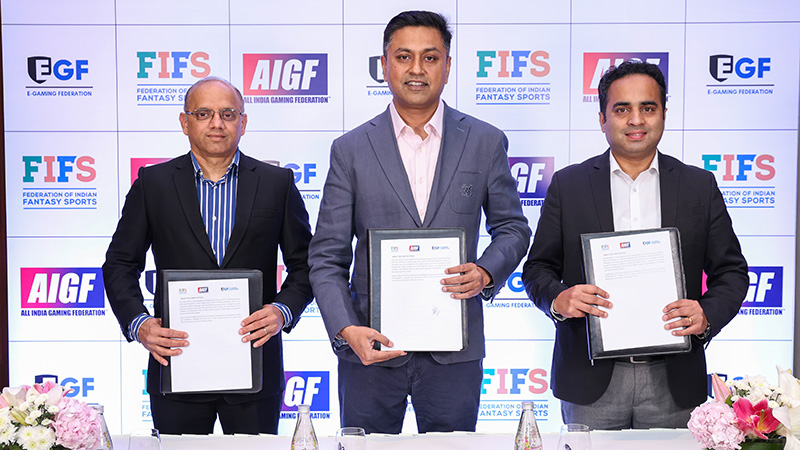
    MUMBAI: The All India Gaming Federation (AIGF), the Federation of Indian Fantasy Sports (FIFS), and the E-Gaming Federation (EGF) have come together to set the rules of engagement—quite literally. With the launch of their code of ethics (CoE), the gaming industry is hitting pause on unchecked practices and fast-tracking a new era of responsibility, transparency, and fair play.

    This isn’t just about PR-friendly promises—it’s a concrete roadmap for player safety, ethical advertising, and industry accountability. The CoE mandates stringent KYC processes, age restrictions, self-imposed spending limits, and annual third-party audits. Gaming platforms with annual revenues above Rs 100 crores have six months to get their act together, while smaller operators have nine months to comply. Those who play by the rules will receive a certification—valid for a year and renewable only after a fresh audit. No loopholes, no excuses.

    India’s online gaming industry is no stranger to scrutiny. With over 50 crore gamers navigating skill-based real-money games, the need for structured regulation is long overdue. The CoE’s principles include:

    Responsible gaming: Strict age-gating, no operations in restricted states, and robust KYC enforcement.

     Player protection: Data security and proper management of player funds.

     Fair play: Ensuring integrity and transparency in gameplay.

     Informed choices: Players can set limits, self-exclude, and make better decisions.

     Support for vulnerable users: Resources to help at-risk players.

     Ethical advertising: No misleading promotions or shady marketing tricks.

    AIGF CEO Roland Landers made it clear that ethical gaming is the foundation for long-term industry growth. “As the largest and oldest industry association, we at AIGF believe that a thriving gaming industry must be built on the pillars of responsibility, transparency, innovation, and player protection. This Code of Ethics reinforces our commitment to fair play, compliance with Indian laws, and fostering a secure and responsible gaming environment. Through collaboration with other industry federations, we are setting new benchmarks for ethical gaming, strengthening the credibility of India’s online gaming sector, and building a sustainable, globally competitive ecosystem.”

    FIFS director general Neil Castelino echoed the sentiment. “This joint code marks a significant step forward in our commitment to fostering a safe, fair, and responsible gaming environment in the country. By working together as an industry, we are setting a unified standard that prioritizes player well-being, integrity, and accountability across the industry. This we believe will be pivotal in ensuring a safe environment for the 24 crore FS users in the country.”

    Meanwhile, EGF CEO Anuraag Saxena didn’t mince words, “National interest, consumer interest, and the industry’s interest have all suffered too long. Unethical gambling operators have been parasitically harming the nation, its exchequer, and its people. I’m delighted that the industry is collaborating on the joint code-of-ethics today. The adoption of these standards reinforces our commitment to accountability through third-party audits, responsible gaming policies, and ethical business practices. Sunlight is the best disinfectant, and the industry taking due cognizance of this is a great step ahead for gaming in India.”

    The gaming industry is no longer playing defence. With the code of ethics in place, India is setting a global benchmark for responsible gaming, ensuring that players can enjoy the thrill—without the pitfalls.


  • Iqoo levels up mobile gaming with India’s top gamers on board

    Iqoo levels up mobile gaming with India’s top gamers on board

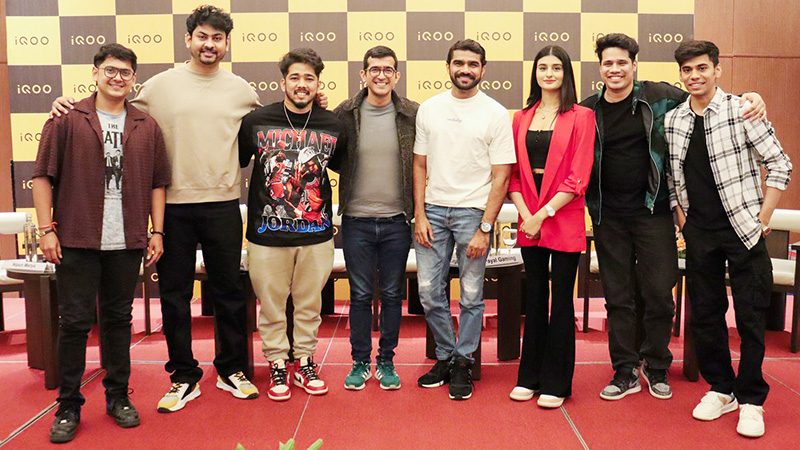
    MUMBAI: Iqoo is taking mobile gaming to the next level, forging a power-packed alliance with seven of India’s biggest gamers, Dynamo Gaming, Gamerfleet, Mortal, Payal Gaming, Scout, Shreeman Legend, and Ungraduate Gamer. Together, they will test, refine, and certify Iqoo smartphones, ensuring a next-gen gaming experience built by gamers, for gamers.

    Kicking off this high-stakes collaboration is the Iqoo Neo 10R, the first smartphone tested and certified by these gaming legends. Armed with the Snapdragon 8s Gen 3 processor and India’s slimmest 6400mAh battery, the Neo 10R is set to launch on 11 March 2025, promising unparalleled gaming endurance and performance.

    As part of this industry-first initiative, these gaming stalwarts will not only stress-test every Iqoo device but also use them as their primary smartphones during live YouTube streams. By directly incorporating their insights, Iqoo ensures its smartphones meet the intense demands of pro and casual gamers alike.

    “These gamers are the real questers, the catalysts behind India’s Esports culture,” said Iqoo CEO Nipun Marya. “By collaborating with them, we are ensuring iQOO smartphones push the boundaries of Android gaming, delivering an experience gamers truly deserve.”

    With the Indian gaming market projected to reach 9.2 billion dollars by FY’29 (Lumikai-Google report), Iqoo is doubling down on its commitment to Esports, solidifying its position as a key player in the industry. The brand has already made significant strides, including partnering with six BGMI Esports teams and over 100 gamers in December 2024, onboarding a 23-year-old Gen Z chief gaming officer in 2023 to gather firsthand gaming insights, and serving as the official mobile phone partner for Esports in the 2022 Asian Games.  

    This gamer-driven innovation strategy positions Iqoo as a key player in shaping India’s Esports future. With cutting-edge devices and gaming champions at the helm, Iqoo is not just playing the game, it’s changing it.


  • India Today group unveils AI pop stars in groundbreaking musical initiative

    India Today group unveils AI pop stars in groundbreaking musical initiative

    MUMBAI: The India Today Group (ITG) has orchestrated another technological crescendo in its innovation symphony, launching a revolutionary new music genre called A-Pop featuring two virtual vocalists who promise to hit all the right algorithmic notes.

    Just two years after introducing Sana, reportedly India’s first AI news anchor who has since evolved from digital debutante to virtual veteran, the media powerhouse is now harmonising human creativity with artificial intelligence in the musical realm.

    “A-Pop is more than a genre — it is a fluid, evolving, and collaborative creative process,” explains ITG vice chairperson & managing director Kalli Purie. “It merges human imagination with AI capabilities, producing music that is unrestricted by conventional limitations.”

    The virtual virtuosos making their melodic debut are Aishan and Ruh, each with carefully crafted personalities that blend the authenticity of human backstories with the boundless potential of digital existence.

    AISHANAishan, a 22-year-old musical wunderkind with roots in Bareilly and Jodhpur, has been fine-tuning his craft since 17. This digital dream weaver blends indie acoustic, pop and R&B into a sonic tapestry that reflects his fabricated yet relatable life experiences. When not composing computer-generated compositions, this binary Bieber can be found embracing mountain scenery, sporting designer trainers, and maintaining his “old-money” aesthetic.

    Inspired by new people and sounds, his lyrics reflect his thoughts and experiences. An ambivert, he connects with fans but values his quiet moments. A Nainital soul, he’s drawn to the mountains, while also being a dog lover, bike enthusiast, sneakerhead, and food explorer, all with a classy, old-money style. 

    His virtual counterpart Ruh, a 24-year-old Delhi native, embodies the spirit of freedom in both personality and performance. This pixelated pop princess brings vibrant energy to new-age music while ostensibly travelling the world, absorbing diverse cultural influences that inform her distinctive sound. Her programming prioritises authenticity and self-expression, values designed to resonate with the group’s younger audience demographic. 
     

    RUHWith an extroverted, vibrant personality, she embraces adventure and travel, exploring new cultures to create new-age pop music. A passionate music lover, she uses it to express herself boldly and authentically. Driven by personal freedom, self-expression, and individuality, she inspires others to live authentically and pursue their passions without fear of judgment. 

    “Our latest foray into music is a sterling example of what the fusion of human creativity and AI can produce,” notes Purie. “A team of music professionals spent relentless hours over several weeks working with AI-led technology to create this pioneering work.”

    The virtual vocalists represent a new movement where the boundaries between human and machine creativity become increasingly blurred. Their songs may feature human-written lyrics with AI composition, or machine-generated verses with human musical arrangements, all delivered through synthesised voices that never tire or demand royalties.

    Unlike their flesh-and-blood counterparts, these digital divas can produce multilingual music, engage with fans around the clock, and personalise content based on audience preferences—offering a performance that’s literally inhuman in its consistency and availability.

    For listeners keen to tune into this binary balladeering, Aishan and Ruh’s musical offerings are available across all major streaming platforms, including YouTube, Spotify, Amazon Music, Apple Music, and Saavn. Fans can also follow their carefully curated digital lives on social media, where these virtual performers will be hitting high notes and high engagement metrics for the foreseeable future.