Category: eNews

  • InMobi and NDTV bring native advertising on mobile to India

    InMobi and NDTV bring native advertising on mobile to India

    MUMBAI: NDTV Convergence (NDTV) and InMobi are together bringing the first fully native ad experience to mobile users in India.


    Talking about their latest offering, NDTV CEO Vikram Chandra said, “NDTV has always believed in providing users with the most credible content across all platforms and ensuring the best user experience while consuming this content. This is another step towards further enhancing the experience by ensuring native in-stream ad formats, which will provide great value to our advertisers in a non-intrusive environment. We are excited to partner with InMobi to launch this offering.”


    As NDTV continues to embrace native ads for mobile, the unique offering provides tangible benefits like five times the conversion rate and user engagement than standard display ads, higher ad viewership of up to 1.5 times more than banner ads and more importantly, a new-found trust for mobile ads, which are experienced as content and less intrusive.


    InMobi Revenue & Operations vice president Atul Satija said, “InMobi Native Ads match the app experience entirely in terms of visual form and function, so that your brand’s audience can enjoy a non-intrusive, engaging ad experience while using an app. We have witnessed a phenomenal increase in demand for Native ads worldwide. InMobi is thrilled to partner with NDTV to bring the Native Ad experience to India,” said Atul Satija, Vice President – Revenue & Operations, InMobi.


    NDTV has been at the forefront of creating best-in-class content experiences across all screens. Together with InMobi, NDTV will now offer a bouquet of innovative ad units native to its news content, thereby further re-inventing the user experience.

  • Empowering women with internet can change India’s future, believes Google

    Empowering women with internet can change India’s future, believes Google

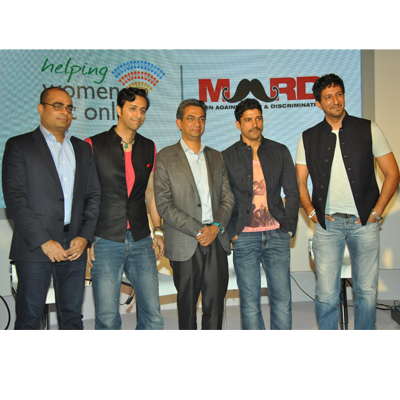
    MUMBAI: Google India today announced the launch of a new social campaign called #ReachForTheSky, in association with Farhan Akhtar’s MARD initiative to increase internet literacy among women in India.


    The joint campaign will also look to build support from existing Internet users and encourage more women to learn and use the internet to excel in their lives.


    Speaking about the campaign and the importance of getting women online, Google India VP and managing director Rajan Anandan said, “There are 616 million women in India and close to half are below the age of 25. Empowering the young women population with information and internet could transform India’s future.”


    In November 2013, Google India had launched its first digital literacy initiative campaign in India called ‘Helping Women Get Online’ (HWGO) in collaboration with Intel, HUL and Axis Bank.


    Along with boosting the overall internet adoption, the initiative aims to bridge the huge gender disparity prevalent India. “The first phase has been very successful. For the first time last year, the number of women using the internet has grown 35 per cent as against 31 per cent by men,” Anandan added.


    Anandan also revealed that this initiative is not a part of the company’s CSR and said, “Google’s mission is to get more people online and as the number of women using Internet increases, it would be a good thing for the country as well as the company.”


    Talking about the association and the launch of the campaign, Farhan Akhtar, said, “MARD is a progressive movement for a more gender equal world. There is lack of encouragement for women to use internet or technology and we need to come together to address this issue. Technology is not just the domain of men. I am excited to join this initiative, to gather support and encourage men to support and help young girls and women to learn and use the internet to improve lives.”


    Sharing more details about the campaign, Google India marketing head Sandeep Menon said, “Our mission is to help bring 50 million women online in India. In the last nine months we have undertaken a number of initiatives reaching over one million women across five states in India, covering 30 cities and 55 small towns.”


    The company has also been working closely with educational institutions for the campaign to reach the remotest parts of the country by imparting basic internet and computer training to students and teachers. The company has also have introduced HWGO Internet Cart, a mobile way of reaching out to women in villages to give them the internet experience and are planning to roll it across more states of the country.


    Talking about association with Akhtar, Menon reckoned, “Since the launch of HWGO, we have worked with a number of partners, HUL, Samsung, Aircel. One of the partners was MARD, and we soon realised our aims were very well aligned. It was a natural fit.”


    Menon also added that they would also launch two media campaigns. “Farhan will help us enroll multiple stars. There will be a number of familiar faces joining the cause as that is a powerful medium. Also, for people looking for facts and statistics, we will have a campaign that will provide statistical data to shake up people and inspire them to join the campaign.”


    To rope in more existing internet users to join the campaign to help get more women online, the company will be only opting for digital marketing.


    “We will be taking the digital route completely for this, not going to take the campaign on mainline media at this point of time. We will be propagating the campaign on different mediums and sites including Youtube, economictimes.com. The campaign will be launched across social media,” revealed Menon.


    MARD also plans for global outreach and will continue to address gender equality issues across the world and in India, MARD Canvas Talent CEO and Artist Innovations & Repertoire director Anurag Rao said, “MARD will work with content makers around the world in a pledge to engage hearts and minds through art and music, for a more gender equal world #ReachForTheSky is just the start.”


    The campaign was also launched with a musical work ‘Chulein Aasmaan’, composed by Salim-Sulaiman and performed by Akhtar and Shraddha Pandit. Written by the two of them, the song, that was released on Youtube today, highlights the importance of equal opportunity, possibilities and the impact it can have on women.

  • BBC Earth Lands on BBC.com

    BBC Earth Lands on BBC.com

    MUMBAI: BBC Earth – the BBC Worldwide factual brand behind global blockbusters such as Planet Earth, Walking with Dinosaurs and Blue Planet – today launches its new digital home on BBC.com. The stunning site captures BBC Earth’s passion for adventure and exploration bringing visitors a visual feast of incredible imagery, world class videos and stories that will offer fans a new perspective on the world.


    From the depths of the ocean to the outer reaches of the universe visitors to the new section will be able to explore ten content strands including a mix of newly commissioned content as well as awe inspiring moments from the BBC’s Natural History Unit archives, which will be housed in the Amazing Moments section and will offer hundreds of clips, launching with 25, including Attack Of The Praying Mantis with new clips to be published daily.  Other key strands include: Discoveries a section dedicated to uncovering fascinating stories such as Are Dolphins Cleverer Dogs, to Strange & Beautiful, which explores topics including The Twisted World of Sexual Organs to A Colourful Life, home to specially commissioned short films exploring the beauty of nature through colour.  First to launch will be Life in White dedicated to the beauty of nature’s polar ice caps and nature’s use of the colour.


    Matt Walker, former news editor at New Scientist and editor of BBC Food and BBC Nature, has taken up the reins as Editor working alongside a number of BBC Earth’s network of experts in science and nature. 


    Matt Walker, Editor for BBC Earth on BBC.com said: “BBC Earth offers a different perspective on the world and we want to celebrate all the wonders of the natural world from your back garden to the farthest star. We share a never ending curiosity with our audience and being digital allows us to interact more closely with them. We want people to share their own content with us and their network through social media and show us what inspires them. Our mission is to bring visitors to BBC Earth something amazing every single day and we have an incredible wealth of content to offer from mind bending stories to stunning photography and film that will change the way you think about our universe.”


    Matt added: “Like our other non-news sections BBC Earth hopes to attract new visitors to BBC.com which is increasingly becoming the go to site for a wealth of new and topic led content.”


    Jo Sermon, Director of BBC Earth commented: “The launch of BBC Earth on BBC.com is an opportunity for us to transform our relationship with audiences and give people a place to connect with our content beyond the television. Its home for the huge breadth and range of content that BBC Earth encompasses and we can be immediate in sharing new stories. Audiences will be able to explore their world and discover its wonders whenever and wherever they want and there will always be something new to excite them.”


    “This is great news for fans of the natural world globally, as well as in India. As one of the world’s most renowned producers of natural history content, we are very pleased that bbc.com/earth will provide our audience with a deeper connection to the natural world, inspiring and entertaining them at the same time,” said Myleeta Aga, SVP & General Manager India and Content Head Asia.


    BBC Earth builds on the existing portfolio of specialist sections BBC Autos, BBC Capital, BBC Culture, BBC Future and BBC Travel, commissioned for BBC.com.  Each of these bespoke sections seeks to offer visitors to BBC.com a deeper understanding of the story behind the headlines, across a plethora of topics and from a wealth of specialists.  To date the non-news sections have attracted an average of 6.8 million unique users contributing to the 76 million unique users BBC.com attracts on a monthly basis across mobile and desktop. 


  • The Huffington Post Partners with The Times of India Group to Launch “Huffington Post India”

    The Huffington Post Partners with The Times of India Group to Launch “Huffington Post India”

    MUMBAI: The Huffington Post Media Group and The Times of India Group, India’s largest media conglomerate, today announced their partnership to launch an Indian edition of The Huffington Post, a leading global source of breaking news, opinion, entertainment, and community.
     

    The English-language website will combine The Huffington Post’s award-winning news and blogging platform with the local expertise and reach of The Times of India Group. Targeting India’s rapidly expanding Internet user base, which is expected to reach 370 million by 2015, HuffPost India will cover everything from politics, media and entertainment to technology, religion and lifestyle, and open up The Huffington Post’s blogging platform to anyone in the country with a story to tell.


    The announcement was jointly made by Arianna Huffington, President and Editor-in-Chief of the Huffington Post Media Group, and Satyan Gajwani, CEO of Times Internet (TIL), the digital arm of The Times of India.
     

    “I’m delighted to launch HuffPost India, which will be our 12th edition since we began our international expansion three years ago,” said Huffington. “In addition to being a hub for global news and a country that embodies much of the ancient wisdom the world desperately needs now, India has deep personal significance to me. When I was 17, I studied comparative religion at Visva-Bharati University, outside of Calcutta, and traveled across India, falling in love with the country — a love affair that has continued to this day. So I’m extremely grateful for the chance to bring HuffPost to India to tell the stories that matter most — and just as important, to help people throughout India tell their stories themselves, in words, in pictures and in video.”
     

    “The Huffington Post is the first real digital-first news success story globally, and their impact is seen across the world,” said Gajwani. “They’ve coupled a best-in-class technology platform with a fresh way of approaching the world’s issues today. We’ve demonstrated our ability to meaningfully grow international media brands, such as Business Insider, Gizmodo, and more. We are excited to combine HuffPost’s world-class product with our local reach with consumers and advertisers to tailor-make a great new destination for Indian consumers.”
     

    “As the world’s largest democracy, and with a middle class of more than 250 million people, India is a critical destination for any global media company,” said Huffington Post Media Group CEO Jimmy Maymann. “And with Indian household consumption predicted to continue to grow nearly 20% per year, this partnership gives us an ideal entry into what is expected to become the world’s fifth-largest consumer market within the next ten years.”


    The Huffington Post and The Times of India Group will establish an editorial team based in New Delhi. The site is slated to launch later this year

  • Times Internet partners with Crain Communications to launch Ad Age India

    Times Internet partners with Crain Communications to launch Ad Age India

    MUMBAI: Times Internet (TIL), a premiere digital product company and the digital arm of India’s largest media conglomerate, The Times of India Group has inked a partnership with Advertising Age to launch Advertising Age (Ad Age) India. Ad Age is the leading source of news, intelligence and conversation for the global marketing and media community. Ad Age India will combine the authoritative status of this marquee publication with the rapidly growing and evolving Indian media and marketing ecosystem to create a vibrant platform for the industry.  In addition to a comprehensive coverage of the strategic topics, insights, news, trends and ideas across the region; Ad Age India will work with thought leaders across the industry to deliver value to its readers.  


    The alliance is a part of the Times Local Partners (TLP), a business unit of TIL that partners with global digital companies across publishing, product and platform to help them launch / grow in India, APAC & ME. Ad Age joins the growing TLP portfolio, which has already rolled out the Indian editions of Askmen, Gizmodo, Lifehacker, Techradar, Remodelista,  ReadWrite,  Business Insider & IGN.


    Talking about the partnership,Times Local Partners business head Puneet Singhvi said “We are very excited about bringing Ad Age to India. Ad Age has achieved an iconic status amongst the media and marketing community globally and we look forward creating a strong platform for the fraternity through Ad Age India. We are confident that Ad Age India will soon become a marketing communication brand to trust and the one that the industry follows. We also plan to roll out the regional versions of the highly revered Ad Age Lists soon. ”


    “India has emerged as one of the world’ fastest-growing ad markets with a vibrant and innovative community of advertising, media, and marketing leaders,” said Allison Arden, Vice President and Publisher of Ad Age. “Ad Age is thrilled to join with Times Internet in bringing our distinctive global news, intelligence, and insight to Indian readers.” 


    TLP will be putting together a strong editorial and insights team to publish local industry news, trends & analysis alongside the global coverage of strategic topics for marketers and media. TLP will also leverage the media reach that the Times Group has across platforms to grow Ad Age India strongly. 

  • MyGov.in to increase government-citizen interaction

    MyGov.in to increase government-citizen interaction

    NEW DELHI: A new portal, MyGov.in, a platform for the people, especially the youth, to connect with the government actively, has been launched by the central government.


    Department of Electronics and Information Technology secretary RS Sharma said that the portal, managed by the National Informatics Centre, empowers people to contribute towards good governance through various tasks and discussions. 

    Citizens can upload documents, case studies, pictures, videos, other work plans etc. on the platform. They can volunteer for various tasks and submit their entries. These tasks would then be reviewed by other members and experts. Once approved, these tasks can be shared by other members on MyGov. Every approved task would earn credit points for completing the task. Thus, MyGov presents an opportunity to the citizens to participate in multiple theme-based discussions and to share their thoughts and ideas with a wide range of people.  

    The platform has been divided into various groups namely Clean Ganga, Girl Child Education, Clean India, Skilled India, Digital India, Job Creation etc. Each group consists of online and on-ground tasks that can be taken up the contributors. The objective of each group is to bring about a qualitative change in that sphere through people’s participation. 

    Sharma said the platforms ‘Discuss’ and ‘Do’ will take feedback from the community and improve on a continuous basis. He said his department has plan to have a mobile app for mygov.in, for people to contribute while on the move and enable them to send theme-related pictures, report in-context problems and issues etc.


    The platform may even be extended to act like public audit platform for government projects. For example, citizens giving feedback on status of completed infrastructure projects, on availability of various social sector programmes etc.

  • Google’s Nikesh Arora heads to SoftBank

    Google’s Nikesh Arora heads to SoftBank

    MUMBAI: SoftBank Corp. has announced that Google’s Nikesh Arora will be joining the company in October as vice chairman of SoftBank Corp. and CEO of SoftBank Internet and Media Inc (SIMI).


    He will be report to SoftBank Corp. chairman and CEO Masayoshi Son.


    Arora joins SoftBank after almost a decade at Google, first running their European business operation and for the last five years as its chief business officer.


    “As we enter the next phase of our expansion I can’t think of a better person than Nikesh to help us chart that course. As Vice Chairman, he will work closely with me in defining, implementing and managing our global growth strategy. In addition, as CEO of SIMI he will be directly responsible for overseeing our Internet, telecommunications, media and global investment activities, which we have been developing over the last few years,” said Masayoshi Son.


    “I have had the good fortune of getting to know Nikesh over the last five years. He brings a rare set of skills: amazing financial and strategic acumen; a decade of executive experience at one of the fastest growing companies in history; a deep understanding of the telecommunications industry. This makes him uniquely qualified to help guide us through our next stage of growth. Our intention is to nominate Nikesh to the SoftBank Corp. board at our next shareholder meeting,” he concluded.


    Before joining Google, Arora was a telecom analyst at Putnam Investments. He then went on to create his own mobile data start-up in 2000 and also worked with T-Mobile in various capacities including as CMO of its European Business and a member of its board.


    At Google, Arora was responsible for all partnerships, marketing, sales and customer activities in addition to being part of the company’s management team. Arora has an MBA from Northeastern University, a Master’s Degree in Finance from Boston College and graduated as an Electrical Engineer from IIT-BHU. He is also a CFA.

  • American Court issues injunction in case relating to re-transmission of broadcast signals over internet

    American Court issues injunction in case relating to re-transmission of broadcast signals over internet

    NEW DELHI: Insisting that it was not striking a blow against new communications technology, the American Supreme Court has ruled that the engineers at the new firm of Aereo had — so far — not found a way to avoid violating television networks’ copyright privileges by delivering their programmes to Aereo’s customers for a small monthly fee.


    In what is clearly a landmark decision, the SC reversed a lower court decision denying an injunction to broadcasters in a case in which the court considered “whether a company ‘publicly performs’ a copyrighted television programme when it retransmits a broadcast of that program to thousands of paid subscribers over the Internet.”


    The petition was filed by American Broadcasting Companies against Aereo.


    The case arose from a broadcaster petition to reverse a lower court ruling that denied an injunction against Aereo.


    The injunction was sought to shut down the service while the question of copyright was determined.


    Broadcasters claim Aereo is violating their copyright by reselling TV signals—like a cable operator—without permission. Aereo says it is not reselling signals, but “renting” individual antennas to monthly subscribers who pay $8 to $12 monthly for the multichannel service targeting second-screen devices.


    However, senior Supreme Court lawyer Amy Howe who is an expert on copyright and edits the SCOTUS Blog wrote: “Aereo performs petitioner’s works publicly within the meaning of the transmit clause of the Copyright Act.”


    Analysing the order, the blog said the analytical technique the Court used in finding a likely copyright violation by Aereo was to compare its streaming of internet-based TV programmes to cable TV systems’ snatching of TV broadcasts out of the airwaves for re-delivery to customers.  Congress had meant to bar that kind of programming in a major 1976 revision of the Copyright Act, the Court said, and it applied that change directly to Aereo’s clever new business model.


    The over-the-air TV broadcast industry had taken the case to the Supreme Court, claiming that its very survival was at stake.  Aereo’s system, the industry contended, was offering a very cheap version of TV programming to its customers while paying not a cent in royalties to the TV networks and their program developers.  This was threatening to draw the networks’ own paying customers away, depriving it of revenues that have been replacing their declining take from advertising, the TV firms said.


    The Court, in its six-to-three ruling, said nothing about rescuing the TV broadcasters, basing its ruling on a fairly simple application of what it means to “perform” a copyrighted program through distribution to “the public.”   Aereo’s system, Justice Stephen G. Breyer wrote for the majority, both performs the copyrighted programs and does so through delivery to the public.


    Aereo has developed a system in which it uses thousands of tiny antennas, each tuned to respond to an individual customer’s internet demand for a particular TV programme, and through those antennas it delivers to each customer only their own personal copy.   Aereo contended that it simply was supplying the technology hardware — like a DVD recorder — to enable its customers to get access to TV programmes that were broadcast over the air.


    The Court rejected that claim, concluding that Aereo was not simply an equipment provider. It was putting on the TV shows for its customers, the public.


    However the Court said it was issuing only a narrow ruling.  It said it was dealing, at this point, only with Aereo’s system so far as it enabled its viewers to view copyrighted TV programmes “live,” or after only a brief delay. Justice Breyer stressed that the decision said nothing about downloading a TV programme in order to recover it and keep it on hand for somewhat later viewing. Justice Breyer also said the new decision was not dealing with other potential time-shifting download technologies.


    Aereo’s case will now return to lower courts, and it appears that Aereo may have some opportunity there to salvage some of what its offers to its customers.  

  • Content marketing most tightly integrated with Search Engine Optimisation: Study

    Content marketing most tightly integrated with Search Engine Optimisation: Study

    NEW DELHI: The year 2013 was marked by updates that have altered search marketing irreversibly.


    Post-hummingbird, marketers are forced to think of organic search in a whole new light – with practice such as link-building taking a back-seat and SEO becoming more content-centric than ever before. Social signals are being taken seriously by brands.


    According to a study by Regalix, 56 per cent marketers integrate content marketing with search engine optimisation while 61 per cent marketers use responsive web design as a part of their mobile SEO.


    A total of 76 per cent marketers use social media to support and boost SEO, and 71 per cent marketers use broad-based information keywords to capture leads at the top of the purchase funnel. Around 47 per cent of B2B marketers believe that growth of mobile ads and mobile content is not significant to them.


    Interestingly, 96 per cent marketers use search engine marketing to provide informational/educational content and 68 per cent marketers use paid search to accelerate lead generation.


    Regalix senior vice president Nimish Vohra said, “Search is a foundational channel within the marketing mix and it plays a crucial role in making purchase decisions. For any marketer, it is obviously profitable to adopt a cost-effective marketing strategy.” He added, “Marketers today are forced to re-think and re-invent strategies for paid search, with the increased usage of mobile devices and hence mobile ad formats.”


    Detailed findings of the report include an analysis of marketers’ goals for using organic and paid search and various tactics used to effectively attain those goals.


    The survey found that paid search marketing is being used at the top of the purchase funnel, majorly for enhancing lead generation. Around 68 per cent marketers use paid search to accelerate lead generation; while 63 per cent marketers use it to sell products and services online.


     Marketers use a variety of tactics for lead generation as a part of paid search marketing. The majority, around 71 per cent marketers, use broad-based information keywords to capture prospects at the top of the funnel.


    A total of 61 per cent of marketers reported using “exact match” and “negative keywords” to avoid appropriate/irrelevant clicks.


    The survey found that the top three goals for search engine marketing are providing educational/informative content (96 per cent), getting established as thought leaders (86 per cent), and enhancing brand reputation and awareness reported by 83 per cent marketers surveyed. As many as 95 per cent marketers were found using search engine marketing for promoting satisfaction and inducing loyalty among their existing customers.


    It was demonstrated in the survey that Search Engine Optimisation is used by marketers to advance prospects and buyers through the purchase cycle and is not directed to any one stage in the purchase funnel. However, different keywords are used to target prospects/buyers at different stages.


    The survey found that 76 per cent marketers use generic informational keywords to enhance awareness around brands, products and services and direct prospects to their site.


    A total of 52 per cent marketers use keywords directing prospects to comparison pages on site to help prospects compare their solution with their competitors, and 43 per cent marketers also use keywords illustrating specific features such as cost, benefits etc.


    Only 15 per cent marketers use special offers or discounts to provide them with the necessary push to make a purchasing decision, while 46 per cent marketers use the same keywords directing prospects to comparison sites.


    The survey demonstrated that 50 per cent of marketers use keywords indicating discounts or special offers to induce purchase.


     It was found that only 9 per cent marketers make use of keywords that direct prospects to blog posts easing the consumption process.


    A total of 19 per cent marketers surveyed use keywords that direct buyers to blog posts that create a positive impression in the minds of their customers, hence leaving them content and satisfied with their purchase.


    Around 53 per cent marketers use keywords that direct to blogs where buyers can engage with the brand directly.


    A total of 25 per cent marketers use keywords with special discounts and offers to existing customers to make them purchase more and keep returning to the brand.


    Content marketing was found to be most tightly integrated with search engine optimisation. With SEO becoming more content-centric, it was found that 42 per cent marketers apportion 20 to 40 per cent of their budgets towards content marketing. Less than 20 per cent of budgets are apportioned towards display, paid and organic search.


    The survey also found that organic search marketing will see increased investment this year, while at the same time paid search will see reduced investment. Thus, 48 per cent marketers reported that they will increase investment in search engine marketing by 10 to 30 per cent in 2014 while 80 per cent marketers indicated a reduction in paid spends by 10 per cent. 


    The survey found that the top three metrics for gauging PPC campaigns’ performance are directly related to conversion rates. A total of 84 per cent marketers were found using conversion rates to measure the success of PPC campaigns, 72 per cent were using the number of leads and 50 per cent marketers cost per click metrics to determine the return on PPC investments.


    When it comes to organic search marketing, 92 per cent marketers were found using site traffic metrics to determine the success or failure of Search Engine Optimisation efforts. Since SEO is used to target prospects/buyers during each stage of the buying cycle, marketers also use conversion metrics to determine its performance.


    The survey was conducted by Regalix and respondents included CMOs and mid-level marketing professionals from leading B2B companies. The State of Search Marketing 2014 was compiled using the survey results and covers the latest search marketing trends, tactics, metrics and challenges faced by B2B marketers in today’s dynamic market environment.


    Regalix is an award-winning Global Innovation company that leverages technology and marketing to help companies grow.

  • Use social media as a tool for participative governance: Pranab Mukherjee

    Use social media as a tool for participative governance: Pranab Mukherjee

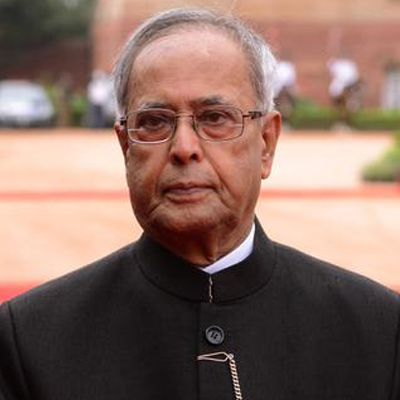
    NEW DELHI: Social media will be used as a tool for participative governance, directly engaging people in policy making and administration and “fully realizing our softpower potential,” said President Pranab Mukherjee on Monday, 9 June.


    He also acknowledged the fact that there is a need to integrate emerging technologies like social media into “external interchange, with particular emphasis on the country’s rich spiritual, cultural and philosophical heritage.” According to Mukherjee, the government will revive ‘Brand India’ riding on the strengths of 5T’s: Tradition, Talent, Tourism, Trade and Technology.


    He added that e-governance brings empowerment, equity and efficiency and has the power to transform peoples’ lives.


    In his first address to the joint sitting of the 16th Lok Sabha and the Rajya Sabha, he said: “The backbone of my government’s new ways of working will be a Digital India. IT will be used to drive re-engineering of government processes to improve service delivery and programme implementation. We will strive to provide Wi-Fi zones in critical public areas in the next five years.”


    He added: “My government will rollout broad band highway to reach every village and make all schools e-enabled in a phased manner. Technology will be used to prepare our children for a knowledge society. The National e-governance plan will be expanded to cover every government office from the centre to the Panchayat; to provide a wide variety of services to citizens.”


    He noted: “Our rich cultural heritage is the very foundation on which rests the unity of our diverse nation. Indian languages are repositories of our rich literature, history, culture, art and other achievements. My government will launch a national mission ‘e-Bhasha’ that will develop digital vernacular content and disseminate our classic literature in different languages. My government will also provide the required resources for the maintenance and restoration of national heritage sites.” 


    FICCI president Siddharth Birla has welcomed the announcements relating to national e-governance plans and usage of social media for participative governance, as that “would help restore the credibility of institutions, improve investor confidence and reignite investment inflow in the country,” he said.