Category: eNews

  • India ready for data revolution with 350 million plus Net users: Minister

    India ready for data revolution with 350 million plus Net users: Minister

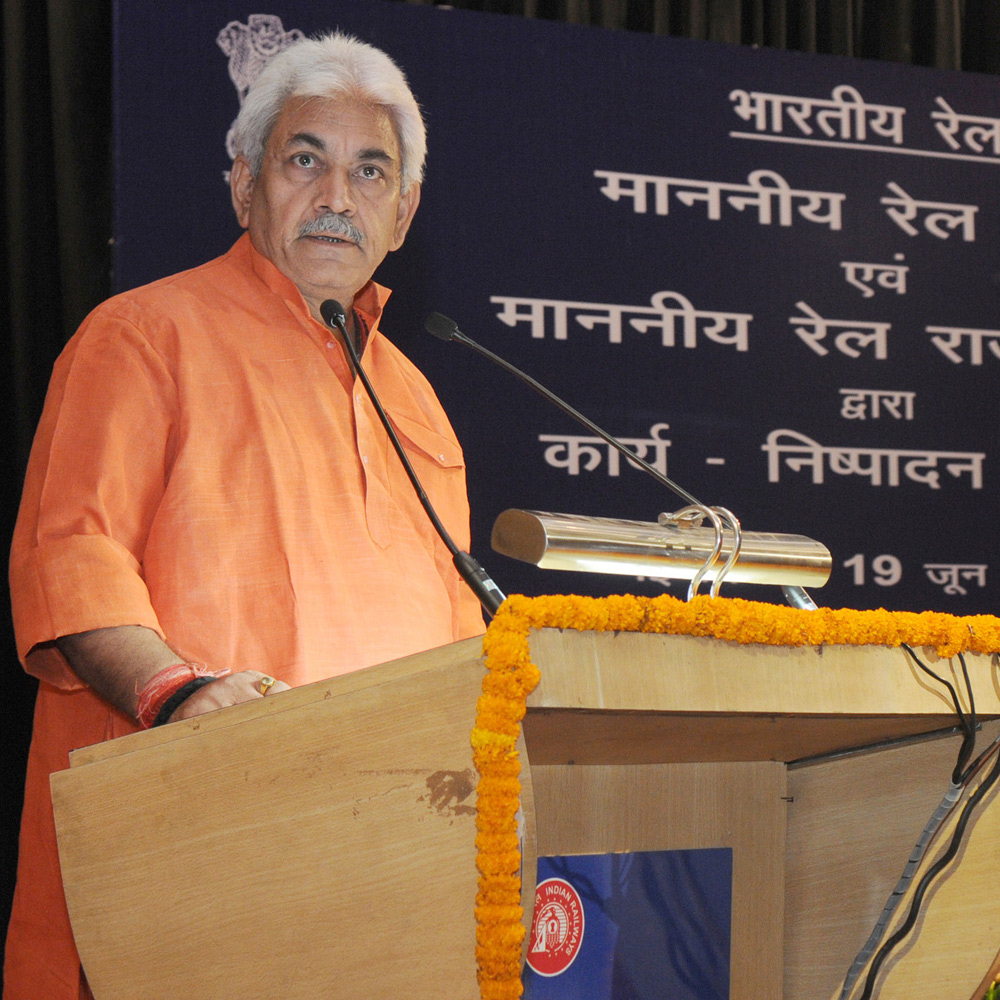
    NEW DELHI: India’s Telecoms minister Manoj Sinha has said the sector had been growing at a phenomenal pace and was considered as the fastest growing telecom market in the world with the second largest subscriber base with more than 1060 million connectivity, 160 million broadband connections and 350 million plus internet users.

    India is ready for another digital and data revolution, the minister said while inaugurating the 8th Telecom Export Promotion Council’s Buyer-Seller meet earlier this week here.

    (India’s mobile phone revolution has been spurring many media players, global and domestic, to enter the OTT space despite challenges. It is also expected that, with the introduction of 4G technology, the market for streaming video will grow in India.)

    Sinha said the rapid growth of the telecoms sector has fuelled the demand for telecom equipment, including mobile phones, which was worth about $ 20 billion in 2015-16 and is estimated to exceed $ 30 billion by 2020.

    Sinha added that India has all the ingredients of a globally competitive telecom industry like a large domestic market, world class talent, focus on R&D and IPR creation, beside a robust framework for electronic manufacturing, including set-top boxes used in a variety of telecoms and broadcast services.

    According to the Minister, Indian manufacturers have already made significant strides in exports of IT and telecom products to several countries and established that Indian IT and telecom products are of world-class quality and globally competitive on technology and price.

    The massive thrust on ‘Make in India’ and ‘Digital India’ initiatives offers a large opportunity for creation of innovative products and services and India is poised for another digital and data revolution.

    Sinha told the representatives from 28 participating countries from South Asia, South-East Asia, the Caribbean, Latin America and Africa that India holds the distinction of being the fastest growing telecom network, especially with advent of increased broadband penetration.

    Meanwhile, joining issue with his colleague, Electronics and IT minister Ravi Shankar Prasad said that, during the last fiscal ending March 2016, the sector recorded an export of $ 108 billion, which is around 45 per cent of services export from India. The sector gave direct employment to 3.7 million people and around 200,000 additional employment was created in just the past year.

    Prasad said the prime minister Narendra Modi’s government was determined to create a knowledge-based society to “improve effeciency and reach of the services.”

    He said unlike industrial revolution (that India missed), the country was all set to take lead in the ongoing digital revolution.

  • India ready for data revolution with 350 million plus Net users: Minister

    India ready for data revolution with 350 million plus Net users: Minister

    NEW DELHI: India’s Telecoms minister Manoj Sinha has said the sector had been growing at a phenomenal pace and was considered as the fastest growing telecom market in the world with the second largest subscriber base with more than 1060 million connectivity, 160 million broadband connections and 350 million plus internet users.

    India is ready for another digital and data revolution, the minister said while inaugurating the 8th Telecom Export Promotion Council’s Buyer-Seller meet earlier this week here.

    (India’s mobile phone revolution has been spurring many media players, global and domestic, to enter the OTT space despite challenges. It is also expected that, with the introduction of 4G technology, the market for streaming video will grow in India.)

    Sinha said the rapid growth of the telecoms sector has fuelled the demand for telecom equipment, including mobile phones, which was worth about $ 20 billion in 2015-16 and is estimated to exceed $ 30 billion by 2020.

    Sinha added that India has all the ingredients of a globally competitive telecom industry like a large domestic market, world class talent, focus on R&D and IPR creation, beside a robust framework for electronic manufacturing, including set-top boxes used in a variety of telecoms and broadcast services.

    According to the Minister, Indian manufacturers have already made significant strides in exports of IT and telecom products to several countries and established that Indian IT and telecom products are of world-class quality and globally competitive on technology and price.

    The massive thrust on ‘Make in India’ and ‘Digital India’ initiatives offers a large opportunity for creation of innovative products and services and India is poised for another digital and data revolution.

    Sinha told the representatives from 28 participating countries from South Asia, South-East Asia, the Caribbean, Latin America and Africa that India holds the distinction of being the fastest growing telecom network, especially with advent of increased broadband penetration.

    Meanwhile, joining issue with his colleague, Electronics and IT minister Ravi Shankar Prasad said that, during the last fiscal ending March 2016, the sector recorded an export of $ 108 billion, which is around 45 per cent of services export from India. The sector gave direct employment to 3.7 million people and around 200,000 additional employment was created in just the past year.

    Prasad said the prime minister Narendra Modi’s government was determined to create a knowledge-based society to “improve effeciency and reach of the services.”

    He said unlike industrial revolution (that India missed), the country was all set to take lead in the ongoing digital revolution.

  • US hails Indian progress in Internet, cyber security

    US hails Indian progress in Internet, cyber security

    NEW DELHI: India and the United States are setting up sub working groups on priority areas to provide a mechanism for continued engagement in the areas of Internet of Things, Standards and Electronics and Internet governance.

    They also resolved to hold digital video conferences to discuss Government procurement practices of ICT goods and services, policy issues for unmanned aerial vehicles, and e-commerce.

    These decisions were taken at the meeting of the United States-India Information and Communication Technology (ICT) Working Group which promotes development of the ICT sector here on 27 September 2016. The participants decided to hold the next ICT Working Group in 2017 in Washington, D.C.

    The United States congratulated India on its tremendous progress in becoming the world’s second largest population of Internet users and the world’s fastest growing Internet user base.

    The participants noted that the Working Group aims to strengthen collaboration between the governments and private sector of the two countries in the field of ICT.

    Marking the occasion, the sides reviewed the deepening strategic partnership between India and the United States and their commitment to empowering citizens of both nations through increased access to the Internet and a thriving digital economy.

    Both sides discussed the accomplishments of the Digital India Programme in transforming India into a digitally empowered society and a key stakeholder in the knowledge economy.

    The two sides also discussed the Global Connect Initiative, launched by the US Department of State, to connect the next 1.5 billion people to the Internet by 2020. Participants resolved to continue collaboration with an aim to advance the goals of the Digital India Programme and the Global Connect Initiative.

    Separately on 28 September, the two sides held discussions on cyber security, where the aim is to affirm the common objectives in international cyber fora, especially the application of international law to state behaviour in cyberspace, the affirmation of norms of responsible state behaviour, and the development of practical confidence-building measures. The two countries decided to hold the next round of the Cyber Dialogue in Washington in 2017.

    The Cyber Dialogue is a forum for implementing the framework for the India–US cyber relationship.

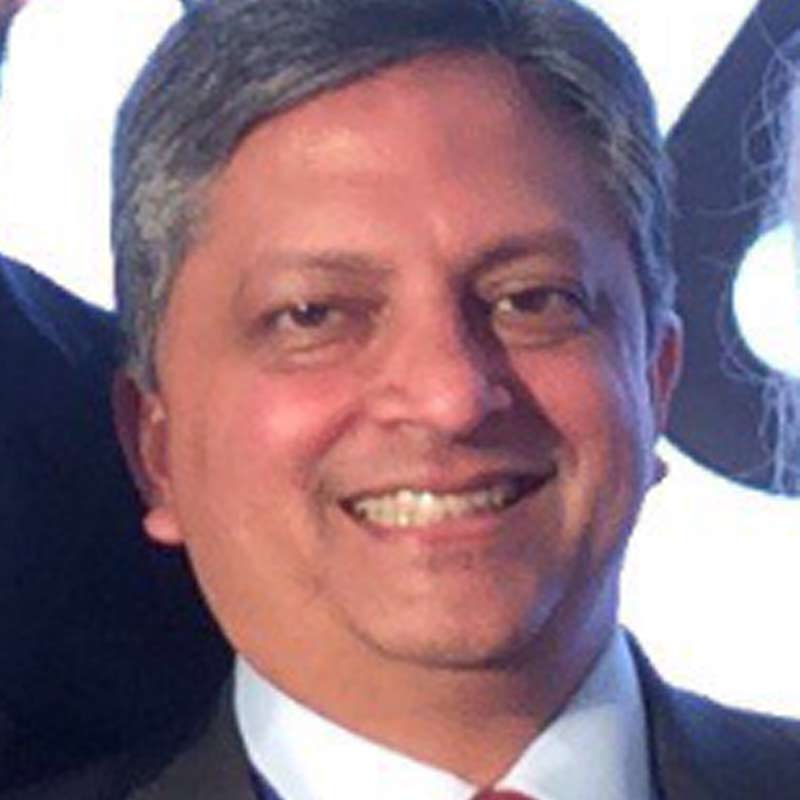
    The whole-of-government Cyber Dialogue, fifth in the series, was led by the US National Security Council Senior Director for Cyber Policy Samir Jain (in the pix) and India’s External Affairs Ministry Joint Secretary for Policy Planning and Global Cyber Issues Santosh Jha. The Department of State Coordinator for Cyber Issues Christopher Painter and the National Security Council Secretariat Joint Secretary Abhimanyu Ghosh co-hosted the Dialogue.

    Some other American and Indian government organisations too participated in the discussions.

  • US hails Indian progress in Internet, cyber security

    US hails Indian progress in Internet, cyber security

    NEW DELHI: India and the United States are setting up sub working groups on priority areas to provide a mechanism for continued engagement in the areas of Internet of Things, Standards and Electronics and Internet governance.

    They also resolved to hold digital video conferences to discuss Government procurement practices of ICT goods and services, policy issues for unmanned aerial vehicles, and e-commerce.

    These decisions were taken at the meeting of the United States-India Information and Communication Technology (ICT) Working Group which promotes development of the ICT sector here on 27 September 2016. The participants decided to hold the next ICT Working Group in 2017 in Washington, D.C.

    The United States congratulated India on its tremendous progress in becoming the world’s second largest population of Internet users and the world’s fastest growing Internet user base.

    The participants noted that the Working Group aims to strengthen collaboration between the governments and private sector of the two countries in the field of ICT.

    Marking the occasion, the sides reviewed the deepening strategic partnership between India and the United States and their commitment to empowering citizens of both nations through increased access to the Internet and a thriving digital economy.

    Both sides discussed the accomplishments of the Digital India Programme in transforming India into a digitally empowered society and a key stakeholder in the knowledge economy.

    The two sides also discussed the Global Connect Initiative, launched by the US Department of State, to connect the next 1.5 billion people to the Internet by 2020. Participants resolved to continue collaboration with an aim to advance the goals of the Digital India Programme and the Global Connect Initiative.

    Separately on 28 September, the two sides held discussions on cyber security, where the aim is to affirm the common objectives in international cyber fora, especially the application of international law to state behaviour in cyberspace, the affirmation of norms of responsible state behaviour, and the development of practical confidence-building measures. The two countries decided to hold the next round of the Cyber Dialogue in Washington in 2017.

    The Cyber Dialogue is a forum for implementing the framework for the India–US cyber relationship.

    The whole-of-government Cyber Dialogue, fifth in the series, was led by the US National Security Council Senior Director for Cyber Policy Samir Jain (in the pix) and India’s External Affairs Ministry Joint Secretary for Policy Planning and Global Cyber Issues Santosh Jha. The Department of State Coordinator for Cyber Issues Christopher Painter and the National Security Council Secretariat Joint Secretary Abhimanyu Ghosh co-hosted the Dialogue.

    Some other American and Indian government organisations too participated in the discussions.

  • Online security top concern in Asia Pacific: Internet Society survey

    Online security top concern in Asia Pacific: Internet Society survey

    NEW DELHI: Online security is an area that warrants most urgent attention from policymakers, according to a recent Internet Society (IS) survey on Policy Issues in Asia Pacific.

    “As trust online has become a key issue for Internet users throughout Asia Pacific, it’s clear that people feel that current policies are not doing enough to protect their privacy and security online,” IS said in a statement from Singapore.

    The survey polled almost 2,000 end-users from across the region on their attitudes towards current Internet policy issues. Access is still the primary concern for stakeholders, but Internet security has become top of mind, replacing cloud computing as the second-most followed topic by respondents, as tracked by the annual study.

    Moreover, 58 per cent of respondents in the 2016 survey thought cybercrime needed to be addressed by governments, followed by connectivity (47 per cent), data protection (45 per cent) and privacy (44 per cent).

    As connectivity has improved over the past year –70 per cent stated that they had experienced better Internet speed and 55 per cent saw a drop in the cost of their Internet subscription — users are turning their focus to online trust.

    “The results of this year’s survey show that stakeholders in the region hold connectivity and security as paramount and feel these need urgent attention from governments,” Internet Society’s Regional Bureau Director for Asia-Pacific Rajnesh Singh was quoted in the official statement as saying.

    “As trust online has become a key issue for Internet users throughout Asia Pacific, it’s clear that people feel that current policies are not doing enough to protect their privacy and security online,” adds Singh.

    The elements of trust online are multi-faceted and are reflected in the survey’s findings. A large proportion of respondents cited data protection (77 per cent) as crucial for building confidence in the Internet. More than half also felt that consumer protection (54 per cent), transparency (51 per cent) and the ability to communicate confidentially (51 per cent) were more important than content, service, technology and applications (45 per cent).

    While many believed that policies regarding online security in their country were largely compatible with their human and civil rights, this view did not extend to privacy online. The survey reveals that 59 per cent of participants did not believe their privacy was protected online.

    Internet users were also doubtful about the impact of online security policies on their online activities. Over half indicated these policies have not increased their confidence in being able to use the Internet securely and only 34 per cent agreed that the current online security policies appropriately address the real threats and risks encountered online.

    The Internet Society is an independent source for global Internet information and thought leadership. It is also the organizational home for the Internet Engineering Task Force (IETF) and has members and chapters around the world. For the 2016 survey, maximum respondents were from South Asia (67 per cent), followed by South-East Asia (17 per cent), East Asia and Australia, New Zealand & the Pacific Islands.

    To a lesser degree, Internet users were also following developments around cloud computing (46 per cent), e-commerce (44 per cent), big data (44 per cent), consumer protection (43 per cent), the Internet of Things (43 per cent), freedom of expression (40 per cent), online child protection (38 per cent), content filtering (37 per cent), censorship (36 per cent), and net neutrality (34 per cent).

    Internet access was of greater importance to specific sectors and sub-regions, particularly rural dwellers (69 per cent) and those living in the Pacific islands, Australia and New Zealand (77 per cent).

    Respondents also opine that governments should have more people’s involvement in policy-making related to Internet. About 77 per cent of respondents say that they have not had an opportunity to participate in public consultations for government policy-making for the Internet in the past year. This figure was higher for those between 15 to 24 years old (85 per cent) and those in the private sector (84 per cent).

    Conversely, the proportion of those who have had the opportunity to participate was higher for those who identified with civil society (34 per cent) and those who live in Southeast Asia (33 per cent). The minority (23 per cent) who have had a chance to contribute to policymaking learned of these opportunities mainly through email (63 per cent). Other means included personal invitations (46 per cent), social media posts (40 per cent), government websites (26 per cent), media or press coverage (24 per cent), word of mouth (19 per cent), government press releases and advertisements (15 per cent).

    According to the IS survey, respondents accessed the Internet through various means: more than a quarter went online mainly through wireless or cellular (41 per cent) or through DSL (26 per cent) networks. The rest were using optical fibre (19 per cent), cable (12 per cent) or dial-up (2 per cent).

    Those who spend more than one-third of their income on Internet connectivity used cellular (28 per cent) more than any other means. By contrast only 6 per cent of senior citizen respondents used cellular connectivity. Women mainly used wireless Internet (43 per cent).

    Some 73 per cent of respondents also use the Internet for business purposes, the bulk (68 per cent) of which are between 25 to 44 years old. Business use was drastically lower among those who spend more than one-third of their income on Internet connectivity (51 per cent) and among rural dwellers (54 per cent).

    Those who spend more than one third of their income on Internet connectivity had mobile data as the primary mode of access available to them daily (74 per cent) with residential connection (67 per cent) and office Internet (49 per cent) trailing behind. A similar pattern is observed among rural residents. Perhaps, not surprisingly, mobile data is also the leading source of everyday access for respondents between 15 to 24 years old (78 per cent). There was a lower overall availability of private establishments with free Wi-Fi in rural areas. Southeast Asia, on the other hand, had a higher than average concentration of free Wi-Fi in cafes (67 per cent), restaurants (57 per cent), and shopping malls (54 per cent).
  • Online security top concern in Asia Pacific: Internet Society survey

    Online security top concern in Asia Pacific: Internet Society survey

    NEW DELHI: Online security is an area that warrants most urgent attention from policymakers, according to a recent Internet Society (IS) survey on Policy Issues in Asia Pacific.

    “As trust online has become a key issue for Internet users throughout Asia Pacific, it’s clear that people feel that current policies are not doing enough to protect their privacy and security online,” IS said in a statement from Singapore.

    The survey polled almost 2,000 end-users from across the region on their attitudes towards current Internet policy issues. Access is still the primary concern for stakeholders, but Internet security has become top of mind, replacing cloud computing as the second-most followed topic by respondents, as tracked by the annual study.

    Moreover, 58 per cent of respondents in the 2016 survey thought cybercrime needed to be addressed by governments, followed by connectivity (47 per cent), data protection (45 per cent) and privacy (44 per cent).

    As connectivity has improved over the past year –70 per cent stated that they had experienced better Internet speed and 55 per cent saw a drop in the cost of their Internet subscription — users are turning their focus to online trust.

    “The results of this year’s survey show that stakeholders in the region hold connectivity and security as paramount and feel these need urgent attention from governments,” Internet Society’s Regional Bureau Director for Asia-Pacific Rajnesh Singh was quoted in the official statement as saying.

    “As trust online has become a key issue for Internet users throughout Asia Pacific, it’s clear that people feel that current policies are not doing enough to protect their privacy and security online,” adds Singh.

    The elements of trust online are multi-faceted and are reflected in the survey’s findings. A large proportion of respondents cited data protection (77 per cent) as crucial for building confidence in the Internet. More than half also felt that consumer protection (54 per cent), transparency (51 per cent) and the ability to communicate confidentially (51 per cent) were more important than content, service, technology and applications (45 per cent).

    While many believed that policies regarding online security in their country were largely compatible with their human and civil rights, this view did not extend to privacy online. The survey reveals that 59 per cent of participants did not believe their privacy was protected online.

    Internet users were also doubtful about the impact of online security policies on their online activities. Over half indicated these policies have not increased their confidence in being able to use the Internet securely and only 34 per cent agreed that the current online security policies appropriately address the real threats and risks encountered online.

    The Internet Society is an independent source for global Internet information and thought leadership. It is also the organizational home for the Internet Engineering Task Force (IETF) and has members and chapters around the world. For the 2016 survey, maximum respondents were from South Asia (67 per cent), followed by South-East Asia (17 per cent), East Asia and Australia, New Zealand & the Pacific Islands.

    To a lesser degree, Internet users were also following developments around cloud computing (46 per cent), e-commerce (44 per cent), big data (44 per cent), consumer protection (43 per cent), the Internet of Things (43 per cent), freedom of expression (40 per cent), online child protection (38 per cent), content filtering (37 per cent), censorship (36 per cent), and net neutrality (34 per cent).

    Internet access was of greater importance to specific sectors and sub-regions, particularly rural dwellers (69 per cent) and those living in the Pacific islands, Australia and New Zealand (77 per cent).

    Respondents also opine that governments should have more people’s involvement in policy-making related to Internet. About 77 per cent of respondents say that they have not had an opportunity to participate in public consultations for government policy-making for the Internet in the past year. This figure was higher for those between 15 to 24 years old (85 per cent) and those in the private sector (84 per cent).

    Conversely, the proportion of those who have had the opportunity to participate was higher for those who identified with civil society (34 per cent) and those who live in Southeast Asia (33 per cent). The minority (23 per cent) who have had a chance to contribute to policymaking learned of these opportunities mainly through email (63 per cent). Other means included personal invitations (46 per cent), social media posts (40 per cent), government websites (26 per cent), media or press coverage (24 per cent), word of mouth (19 per cent), government press releases and advertisements (15 per cent).

    According to the IS survey, respondents accessed the Internet through various means: more than a quarter went online mainly through wireless or cellular (41 per cent) or through DSL (26 per cent) networks. The rest were using optical fibre (19 per cent), cable (12 per cent) or dial-up (2 per cent).

    Those who spend more than one-third of their income on Internet connectivity used cellular (28 per cent) more than any other means. By contrast only 6 per cent of senior citizen respondents used cellular connectivity. Women mainly used wireless Internet (43 per cent).

    Some 73 per cent of respondents also use the Internet for business purposes, the bulk (68 per cent) of which are between 25 to 44 years old. Business use was drastically lower among those who spend more than one-third of their income on Internet connectivity (51 per cent) and among rural dwellers (54 per cent).

    Those who spend more than one third of their income on Internet connectivity had mobile data as the primary mode of access available to them daily (74 per cent) with residential connection (67 per cent) and office Internet (49 per cent) trailing behind. A similar pattern is observed among rural residents. Perhaps, not surprisingly, mobile data is also the leading source of everyday access for respondents between 15 to 24 years old (78 per cent). There was a lower overall availability of private establishments with free Wi-Fi in rural areas. Southeast Asia, on the other hand, had a higher than average concentration of free Wi-Fi in cafes (67 per cent), restaurants (57 per cent), and shopping malls (54 per cent).

  • Irdeto promotes Jonsson as senior vice president of global sales

    Irdeto promotes Jonsson as senior vice president of global sales

    MUMBAI: Irdeto today announced that Bengt Jonsson has been promoted to senior vice president of global sales. Irdeto is a world leader in digital platform security.

    Jonsson has been a member of Irdeto’s leadership team since 2008 and will now lead the organization’s sales and account management teams worldwide. He is responsible for developing key accounts, fueling new business acquisition and offering Irdeto’s full breadth of 360 security solutions and services to Irdeto customers.

    Following a successful IBC 2016 and a series of new customer and partner wins, including new deals with Media Broadcast and Austrian Broadcasting Services (ORS), and partnerships with MStar and Scenarist, Irdeto is poised for continued growth under Jonsson’s leadership. The company is well positioned to continue this momentum under Jonsson’s leadership.

    “We believe that a holistic approach is essential for pay media operators and content owners to prosper in today’s evolving pay media landscape,” said Irdeto CEO Doug Lowther. “Bengt has proven his ability to build strong relationships with customers and partners through collaboration and open communication.”

    Based out of the company’s global headquarters in Hoofddorp, Netherlands, Jonsson joined Irdeto as vice president sales, Asia Pacific, in July 2008. He was responsible for sales in six regions, including China, Japan, north Asia, south Asia, south-east Asia and Australia/New Zealand.

    Prior to joining Irdeto, Bengt was the CEO of LyngBox Media AB, a Swedish hybrid set-top box start-up, and has also held senior management positions with Thomson’s Client Device business unit in Asia and with Nokia’s multimedia business units in Asia and Europe.

    Irdeto solutions and services enable customers to protect their revenue, create new offerings and fight cybercrime. With nearly 50 years of expertise in security, Irdeto’s software security technology and cyber services protect over two billion devices for some of the world’s best known brands.

  • Irdeto promotes Jonsson as senior vice president of global sales

    Irdeto promotes Jonsson as senior vice president of global sales

    MUMBAI: Irdeto today announced that Bengt Jonsson has been promoted to senior vice president of global sales. Irdeto is a world leader in digital platform security.

    Jonsson has been a member of Irdeto’s leadership team since 2008 and will now lead the organization’s sales and account management teams worldwide. He is responsible for developing key accounts, fueling new business acquisition and offering Irdeto’s full breadth of 360 security solutions and services to Irdeto customers.

    Following a successful IBC 2016 and a series of new customer and partner wins, including new deals with Media Broadcast and Austrian Broadcasting Services (ORS), and partnerships with MStar and Scenarist, Irdeto is poised for continued growth under Jonsson’s leadership. The company is well positioned to continue this momentum under Jonsson’s leadership.

    “We believe that a holistic approach is essential for pay media operators and content owners to prosper in today’s evolving pay media landscape,” said Irdeto CEO Doug Lowther. “Bengt has proven his ability to build strong relationships with customers and partners through collaboration and open communication.”

    Based out of the company’s global headquarters in Hoofddorp, Netherlands, Jonsson joined Irdeto as vice president sales, Asia Pacific, in July 2008. He was responsible for sales in six regions, including China, Japan, north Asia, south Asia, south-east Asia and Australia/New Zealand.

    Prior to joining Irdeto, Bengt was the CEO of LyngBox Media AB, a Swedish hybrid set-top box start-up, and has also held senior management positions with Thomson’s Client Device business unit in Asia and with Nokia’s multimedia business units in Asia and Europe.

    Irdeto solutions and services enable customers to protect their revenue, create new offerings and fight cybercrime. With nearly 50 years of expertise in security, Irdeto’s software security technology and cyber services protect over two billion devices for some of the world’s best known brands.

  • ColourCraft bags AIESEC India digital mandate

    ColourCraft bags AIESEC India digital mandate

    MUMBAI: The India chapter of the youth-run, non-profit organization AIESEC has given the mandate to ColourCraft Studio (CCS) for designing and developing multiple websites to strengthen the organization’s digital presence.

    CCS will leverage and amplify the appeal of India as a major contributor to AIESEC’s aim to address the United Nation’s Sustainable Development Goals through AIESEC’s volunteership and professional internship programs. By emphasizing on India’s rich historical and cultural background, CCS plans to project the country as an internship destination. The projects were won following a two month-long brainstorming session between CCS & AIESEC.

    ColourCraft is working on understanding what makes AIESEC such an inspiring organization for the youth worldwide and aims to emit the spirit of the organization while showcasing India as a major cultural destination for global interns.

    CCS Co-founder and business director, Aditi Gandhi said, “The trust in CCS is a huge opportunity for us to create large-scale, strategy-driven and creatively-inclined digital assets.”

    AIESEC in India B2B VP Sean Ankit Bothra said, “We were looking for a partner who would understand and communicate our core values in an out-of- the-box manner. The idea is to work together towards building effective designs and strategies to further enhance AIESEC’s iconic status.

    “We hope to explore AIESEC in India’s potential to enhance the development of today’s Indian youth and break the mindsets of Internationals about the Indian realities.”

  • ColourCraft bags AIESEC India digital mandate

    ColourCraft bags AIESEC India digital mandate

    MUMBAI: The India chapter of the youth-run, non-profit organization AIESEC has given the mandate to ColourCraft Studio (CCS) for designing and developing multiple websites to strengthen the organization’s digital presence.

    CCS will leverage and amplify the appeal of India as a major contributor to AIESEC’s aim to address the United Nation’s Sustainable Development Goals through AIESEC’s volunteership and professional internship programs. By emphasizing on India’s rich historical and cultural background, CCS plans to project the country as an internship destination. The projects were won following a two month-long brainstorming session between CCS & AIESEC.

    ColourCraft is working on understanding what makes AIESEC such an inspiring organization for the youth worldwide and aims to emit the spirit of the organization while showcasing India as a major cultural destination for global interns.

    CCS Co-founder and business director, Aditi Gandhi said, “The trust in CCS is a huge opportunity for us to create large-scale, strategy-driven and creatively-inclined digital assets.”

    AIESEC in India B2B VP Sean Ankit Bothra said, “We were looking for a partner who would understand and communicate our core values in an out-of- the-box manner. The idea is to work together towards building effective designs and strategies to further enhance AIESEC’s iconic status.

    “We hope to explore AIESEC in India’s potential to enhance the development of today’s Indian youth and break the mindsets of Internationals about the Indian realities.”