Category: eNews

  • Turner gets into digital ventures; announces key execs in leadership positions

    Turner gets into digital ventures; announces key execs in leadership positions

    MACAO:Turner International yesterday announced a new division to lead its digital innovation internationally and promoted with Aksel van der Wal, presently senior vice-president and chief financial officer, to the new role of executive vice-president, to lead the initiative effective 1 January, 2017.

    Under his leadership the new division will focus on driving profitable growth through international consumer-centric initiatives, including all of Turner’s international multiplatform suite of digital properties and its direct-to-consumer product strategy, Turner said in a statement during the on-going CASBAA Convention 2016 here yesterday.

    In close co-operation with the Turner International presidents, van der Wal has the responsibility for the existing portfolio of international products and services on the web, for smart phones, games, apps and OTT, and he will also be charged with developing new digital direct-to-consumer businesses leading a cross-platform business intelligence function that drives consumer insight and helping to implement the strategy of the non-linear ad sales business.

    Additionally, van der Wal will identify new opportunities for Turner and decide on how to engage in those new areas through technological product innovation and/or acquisitions.

    “As our industry undergoes huge evolution, the impact of digital disruption and changing consumer behaviour continues to put audience insight right at the heart of our business strategy,” Gerhard Zeiler, President, Turner International said in the statement about van der Wal’s new assignment and the company’s fresh outlook.

    “This new division will ensure that we assess new opportunities for innovation, development and acquisition through the lens of relevant, robust consumer data and through a realigned, agile organisational structure. Aksel’s experience in transformative management, his first-class understanding of both the linear and digital media landscapes and his detailed knowledge of Turner’s international operation all combine to make him a superb fit for this new role,” Zeiler said.

    In his role as chief financial officer for Turner International, van der Wal, who will report to the Turner president, will be succeeded by Trey Turner, presently Senior VP, Corporate Finance, Mergers and Acquisitions. Al the new changes will be effective 1 January, 2017.

    Based in Atlanta, Turner will report to Pascal Desroches, Executive VP and CFO of Turner, while working closely with Zeiler. He will be responsible for the company’s financial operations and will be an active partner and contributor in shaping the direction of the company’s international business and implementing its strategy.
    “Trey has the perfect experience to lead the business, capital and budgeting activities for our international businesses,” according to said Pascal Desroches, who added, “He has acquired a depth of knowledge about our company and brings great passion and significant experience to the role. We expect Trey to play a key role in helping us expand our global operations.”

    Aksel van der Wal joined Turner in 2014 as CFO, Turner EMEA and was promoted to S VP and CFO, Turner International, in June 2015. Before joining Turner, van der Wal worked for three years and served as CEO, Time Out, at its two main business sites, London and New York City. Prior to Time Out, he was CFO at online ticket exchange operation Seatwave and previously held senior financial and business development roles at Vodafone, including CFO of partner markets.

    Turner International operates versions of core Turner brands, including CNN, TNT, Cartoon Network, Boomerang and TCM Turner Classic Movies as well as country and region-specific networks and businesses in Latin America, Europe, the Middle East, Africa and Asia Pacific. It manages the business of pay- and free-TV channels as well as Internet-based services and oversees commercial partnerships with various third-party media ventures.

  • Turner gets into digital ventures; announces key execs in leadership positions

    Turner gets into digital ventures; announces key execs in leadership positions

    MACAO:Turner International yesterday announced a new division to lead its digital innovation internationally and promoted with Aksel van der Wal, presently senior vice-president and chief financial officer, to the new role of executive vice-president, to lead the initiative effective 1 January, 2017.

    Under his leadership the new division will focus on driving profitable growth through international consumer-centric initiatives, including all of Turner’s international multiplatform suite of digital properties and its direct-to-consumer product strategy, Turner said in a statement during the on-going CASBAA Convention 2016 here yesterday.

    In close co-operation with the Turner International presidents, van der Wal has the responsibility for the existing portfolio of international products and services on the web, for smart phones, games, apps and OTT, and he will also be charged with developing new digital direct-to-consumer businesses leading a cross-platform business intelligence function that drives consumer insight and helping to implement the strategy of the non-linear ad sales business.

    Additionally, van der Wal will identify new opportunities for Turner and decide on how to engage in those new areas through technological product innovation and/or acquisitions.

    “As our industry undergoes huge evolution, the impact of digital disruption and changing consumer behaviour continues to put audience insight right at the heart of our business strategy,” Gerhard Zeiler, President, Turner International said in the statement about van der Wal’s new assignment and the company’s fresh outlook.

    “This new division will ensure that we assess new opportunities for innovation, development and acquisition through the lens of relevant, robust consumer data and through a realigned, agile organisational structure. Aksel’s experience in transformative management, his first-class understanding of both the linear and digital media landscapes and his detailed knowledge of Turner’s international operation all combine to make him a superb fit for this new role,” Zeiler said.

    In his role as chief financial officer for Turner International, van der Wal, who will report to the Turner president, will be succeeded by Trey Turner, presently Senior VP, Corporate Finance, Mergers and Acquisitions. Al the new changes will be effective 1 January, 2017.

    Based in Atlanta, Turner will report to Pascal Desroches, Executive VP and CFO of Turner, while working closely with Zeiler. He will be responsible for the company’s financial operations and will be an active partner and contributor in shaping the direction of the company’s international business and implementing its strategy.
    “Trey has the perfect experience to lead the business, capital and budgeting activities for our international businesses,” according to said Pascal Desroches, who added, “He has acquired a depth of knowledge about our company and brings great passion and significant experience to the role. We expect Trey to play a key role in helping us expand our global operations.”

    Aksel van der Wal joined Turner in 2014 as CFO, Turner EMEA and was promoted to S VP and CFO, Turner International, in June 2015. Before joining Turner, van der Wal worked for three years and served as CEO, Time Out, at its two main business sites, London and New York City. Prior to Time Out, he was CFO at online ticket exchange operation Seatwave and previously held senior financial and business development roles at Vodafone, including CFO of partner markets.

    Turner International operates versions of core Turner brands, including CNN, TNT, Cartoon Network, Boomerang and TCM Turner Classic Movies as well as country and region-specific networks and businesses in Latin America, Europe, the Middle East, Africa and Asia Pacific. It manages the business of pay- and free-TV channels as well as Internet-based services and oversees commercial partnerships with various third-party media ventures.

  • CASBAA Convention kicks off with focus on deals, revenue and content

    CASBAA Convention kicks off with focus on deals, revenue and content

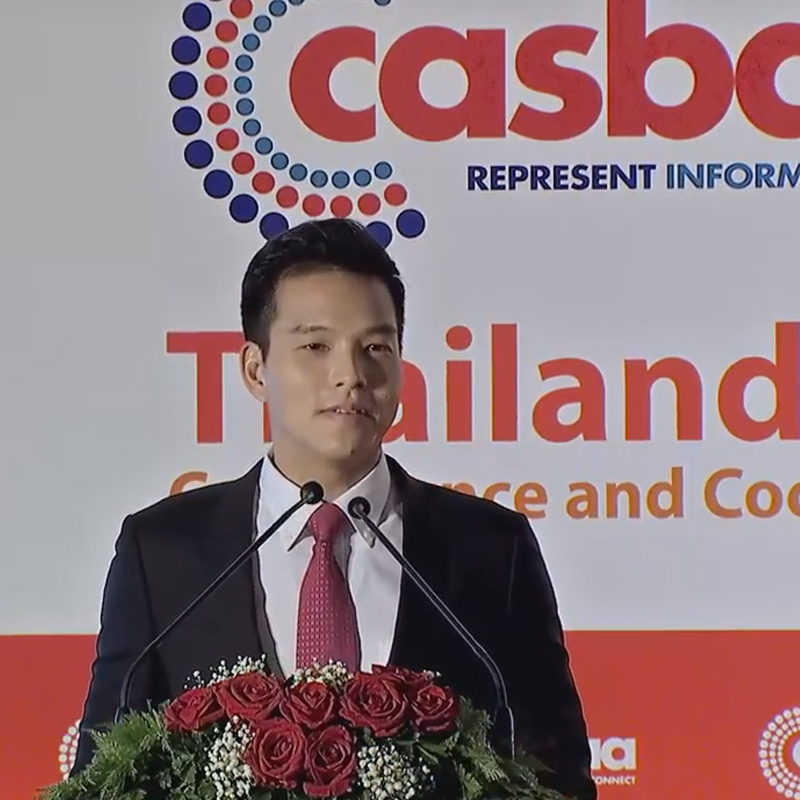
    Macau: The CASBAA Convention annual conference got underway today at its exciting new venue, Studio City, Macau. This year marks the 25thanniversary of CASBAA which is dedicated to representing key players from the cable and satellite broadcasting industry under the motto ‘represent, inform, connect’. Today’s sessions looked at the deals being made in the industry today, as well as the tools to aggregate and measure audiences. As ever, content was hotly discussed, with a focus on how content is evolving in the digital age.

    Following opening remarks by Sompan Charumilinda, Chairman for CASBAA, Irwin Gotlieb, the Global Chairman for GroupM, was first to take to that stage to discuss the changing nature, and measurement of viewing behaviors. He also touched upon how the way to reach audiences via the marketing funnel is the same but a granularity of data can now inform decisions for each stage of the funnel. He underscored how media will continue to play a role becoming more targetable, addressable and eventually part of the transaction process. Also on the subject of measurement, Ben Reneker of S&P Global Market Intelligence highlighted how machine-driven predictive measurement models are now able to inform strategic decisions on marketing and investment.

    Oliver Wilkinson, managing director for PricewaterhouseCoopers, provided statistics to illustrate that pay-TV is not dead, despite what the headlines say, and that it remains a primary form of entertainment. Yet, with digital players increasingly on their turf, content and channel providers should look to diverse and digitalize their offer. Doing deals in China was the topic for Bennett Pozil, EVP of East West Bank, who discussed the migration of content both ways as well as some of the pros and cons of doing business in China. Vivek Couto, Executive Director at Media Partners Asia, flagged the rise of digital players with the forecast that pay-TV growth would slow to about 3% as content providers looking to establish more direct to consumer offerings.

    Reaching a vast audience through tailored video and gaming content was the topic for Chad Gutstein, CEO of Machinima who highlighted that their most valued content was when viewers felt they had a connection to the creation of it. On a video note, Ricky Ow from Turner International predicted that Machinima’s e-Sports will be as successful as the English Premier League.

    James Schwab, Co-President of VICE announced the opening of the company’s first full-service office in Asia, in Jakarta, Indonesia. He discussed how their local content policy over digital channels has helped the company grow exponentially over the last few years. The recent move into TV has been important for VICE as it gives them the ability to invest more in content.

    Localized and Asian content was flagged by Henry Tan, COO of Astro, for being one of the main drivers that has seen the provider defy the trend of decline in time spent on TV, reporting healthy growth in this respect. A true understanding of the complexities of the Malaysia audience demographic is key to content that works for Astro’s market. Tan also discussed the effectiveness of current measurement models with Nick Burfitt, MD, APAC, Kantar Media. On the global stage, compelling content that tells a great story is the wining formula for Thom Beers of BoBCat whose male-oriented programmes like “Deadliest Catch” and “Monster Garage” have achieved success the world over. Norman Lao, VP International of Leyard showcased how MR – mixed reality comprising a kind of virtual reality that reacts with real physical events – will shape the content of the future.

    Piracy cropped up in conversation throughout the day with opinions polarized on whether this would continue to be an issue. In a session devoted to the subject, Avigail Gutman, Programme Director, Operational Security, CISCO, advised that the industry needed to ‘follow the money’ in combating piracy. Lucia Rangel, VP Latin America, Asia Pacific & Worldwide Game Strategy and Operations Warner Bros. agreed the problem was worldwide and that ISD boxes formed a critical part of the problem as many consumers were not even aware of the illegality of these and other streaming mechanics. A global effort was needed to fight the pirates, she commented. Desmond Chan, Deputy GM, Legal and International Operations, TVB highlighted the tangible impact piracy had already made to their business. Nickhil Jakatdar of Vuclip talked about how the content provider’s strategy was to provide a better experience than that available from pirate outfits.

    Different models of OTT content streaming were also a hot topic. Jakatdar illustrated how Vuclip’s Viu platform was a direct to consumer offering while David Weiland, EVP Asia, BBC Worldwide discussed how the ‘Beeb’ had instead opted to stream their new OTT app via their operator, Starhub. With all the different streaming options available, it was concluded that consumers could hardly keep up and would want a ‘one-stop’ shop when seeking out their viewing content.

    “Today’s Convention was a hot bed of debate on key issues facing our members today,” said Christopher Slaughter, CEO of CASBAA. “With issues on deals, revenue, appealing content, measurement, piracy and OTT streaming models all on the agenda, we hope our delegates found the sessions useful and informative, and that the information shared will be of help as they shape their business models for the fast-changing landscape in which they operate.”

  • CASBAA Convention kicks off with focus on deals, revenue and content

    CASBAA Convention kicks off with focus on deals, revenue and content

    Macau: The CASBAA Convention annual conference got underway today at its exciting new venue, Studio City, Macau. This year marks the 25thanniversary of CASBAA which is dedicated to representing key players from the cable and satellite broadcasting industry under the motto ‘represent, inform, connect’. Today’s sessions looked at the deals being made in the industry today, as well as the tools to aggregate and measure audiences. As ever, content was hotly discussed, with a focus on how content is evolving in the digital age.

    Following opening remarks by Sompan Charumilinda, Chairman for CASBAA, Irwin Gotlieb, the Global Chairman for GroupM, was first to take to that stage to discuss the changing nature, and measurement of viewing behaviors. He also touched upon how the way to reach audiences via the marketing funnel is the same but a granularity of data can now inform decisions for each stage of the funnel. He underscored how media will continue to play a role becoming more targetable, addressable and eventually part of the transaction process. Also on the subject of measurement, Ben Reneker of S&P Global Market Intelligence highlighted how machine-driven predictive measurement models are now able to inform strategic decisions on marketing and investment.

    Oliver Wilkinson, managing director for PricewaterhouseCoopers, provided statistics to illustrate that pay-TV is not dead, despite what the headlines say, and that it remains a primary form of entertainment. Yet, with digital players increasingly on their turf, content and channel providers should look to diverse and digitalize their offer. Doing deals in China was the topic for Bennett Pozil, EVP of East West Bank, who discussed the migration of content both ways as well as some of the pros and cons of doing business in China. Vivek Couto, Executive Director at Media Partners Asia, flagged the rise of digital players with the forecast that pay-TV growth would slow to about 3% as content providers looking to establish more direct to consumer offerings.

    Reaching a vast audience through tailored video and gaming content was the topic for Chad Gutstein, CEO of Machinima who highlighted that their most valued content was when viewers felt they had a connection to the creation of it. On a video note, Ricky Ow from Turner International predicted that Machinima’s e-Sports will be as successful as the English Premier League.

    James Schwab, Co-President of VICE announced the opening of the company’s first full-service office in Asia, in Jakarta, Indonesia. He discussed how their local content policy over digital channels has helped the company grow exponentially over the last few years. The recent move into TV has been important for VICE as it gives them the ability to invest more in content.

    Localized and Asian content was flagged by Henry Tan, COO of Astro, for being one of the main drivers that has seen the provider defy the trend of decline in time spent on TV, reporting healthy growth in this respect. A true understanding of the complexities of the Malaysia audience demographic is key to content that works for Astro’s market. Tan also discussed the effectiveness of current measurement models with Nick Burfitt, MD, APAC, Kantar Media. On the global stage, compelling content that tells a great story is the wining formula for Thom Beers of BoBCat whose male-oriented programmes like “Deadliest Catch” and “Monster Garage” have achieved success the world over. Norman Lao, VP International of Leyard showcased how MR – mixed reality comprising a kind of virtual reality that reacts with real physical events – will shape the content of the future.

    Piracy cropped up in conversation throughout the day with opinions polarized on whether this would continue to be an issue. In a session devoted to the subject, Avigail Gutman, Programme Director, Operational Security, CISCO, advised that the industry needed to ‘follow the money’ in combating piracy. Lucia Rangel, VP Latin America, Asia Pacific & Worldwide Game Strategy and Operations Warner Bros. agreed the problem was worldwide and that ISD boxes formed a critical part of the problem as many consumers were not even aware of the illegality of these and other streaming mechanics. A global effort was needed to fight the pirates, she commented. Desmond Chan, Deputy GM, Legal and International Operations, TVB highlighted the tangible impact piracy had already made to their business. Nickhil Jakatdar of Vuclip talked about how the content provider’s strategy was to provide a better experience than that available from pirate outfits.

    Different models of OTT content streaming were also a hot topic. Jakatdar illustrated how Vuclip’s Viu platform was a direct to consumer offering while David Weiland, EVP Asia, BBC Worldwide discussed how the ‘Beeb’ had instead opted to stream their new OTT app via their operator, Starhub. With all the different streaming options available, it was concluded that consumers could hardly keep up and would want a ‘one-stop’ shop when seeking out their viewing content.

    “Today’s Convention was a hot bed of debate on key issues facing our members today,” said Christopher Slaughter, CEO of CASBAA. “With issues on deals, revenue, appealing content, measurement, piracy and OTT streaming models all on the agenda, we hope our delegates found the sessions useful and informative, and that the information shared will be of help as they shape their business models for the fast-changing landscape in which they operate.”

  • Urban Ladder unveils new look; distribution channel

    Urban Ladder unveils new look; distribution channel

    MUMBAI: Urban Ladder now has a new logo and tagline – ‘Let’s Create’ that symbolizes the process of creating a beautiful home with the brand, with an aim to get every one on their creative side.

    The new logo and brand identity has been developed in-house by Urban Ladder’s creative and brand team. The logo encourages every individual to bring out the artist in them, hoping to inspire customers to create something new every time they look at the logo.

    The new brand identity also reflects the philosophy that will define the brand’s strategy going forward. “You’ll see us live this philosophy in many ways. Our new lines of products will reflect the changing sensibilities. We will launch new experiences and technologies that let every individual play designer. Also, a new look and voice that reflects our renewed purpose,” Urban Ladder CMO Sanjay Gupta shared with the press.

    The e-tailer is also opening up new distribution channels to reach out to new customers.

    “In the past we have feared dilution of brand Urban Ladder on other distribution channels which are not controlled and owned by us. But all the work on distinctive product design and an excellent customer experience will now ensure that the brand experience will be very consistent across different platforms. Today it is easy for our customers to walk into a friend’s home and identify an Urban Ladder product from a distance. That is the level of coherence and consistency we want the brand to have. Our new brand identity and brand purpose will help us achieve that across many new platforms and touchpoints,” and co-founder, Urban Ladder CEO Ashish Goel added.

  • Urban Ladder unveils new look; distribution channel

    Urban Ladder unveils new look; distribution channel

    MUMBAI: Urban Ladder now has a new logo and tagline – ‘Let’s Create’ that symbolizes the process of creating a beautiful home with the brand, with an aim to get every one on their creative side.

    The new logo and brand identity has been developed in-house by Urban Ladder’s creative and brand team. The logo encourages every individual to bring out the artist in them, hoping to inspire customers to create something new every time they look at the logo.

    The new brand identity also reflects the philosophy that will define the brand’s strategy going forward. “You’ll see us live this philosophy in many ways. Our new lines of products will reflect the changing sensibilities. We will launch new experiences and technologies that let every individual play designer. Also, a new look and voice that reflects our renewed purpose,” Urban Ladder CMO Sanjay Gupta shared with the press.

    The e-tailer is also opening up new distribution channels to reach out to new customers.

    “In the past we have feared dilution of brand Urban Ladder on other distribution channels which are not controlled and owned by us. But all the work on distinctive product design and an excellent customer experience will now ensure that the brand experience will be very consistent across different platforms. Today it is easy for our customers to walk into a friend’s home and identify an Urban Ladder product from a distance. That is the level of coherence and consistency we want the brand to have. Our new brand identity and brand purpose will help us achieve that across many new platforms and touchpoints,” and co-founder, Urban Ladder CEO Ashish Goel added.

  • Bittree’s redesigned website has real-time price quoting tool

    Bittree’s redesigned website has real-time price quoting tool

    MUMBAI: Bittree, a leading manufacturer of high-quality audio and video patchbays and patching systems, has announced launching of a redesigned website. The new web portal, Bittree.com, improves upon their already responsive and user-friendly experience with enhanced technical data on all their products and real-time price quoting. Customers can now visit the web site to view the large number of available products ready for immediate shipping.

    “The primary goal of our new website is to replicate the outstanding customer service experience our partners receive when communicating one-on-one with our sales representatives,” says Bittree general manager Ari Baron. “We also wanted to create a unified multi-channel user interface that could benefit our growing international presence as well as serve as a one-stop-shop for any technical data our integrators and installers might need.”

    Established in 1978, Bittree is dedicated to offering state-of-the-art patching systems that streamline signal routing and troubleshooting in media and entertainment operations of all sizes. The company offers an innovative line of audio, video, and data patchbays for use in broadcasting, postproduction, and pro A/V operations.

    New benefits of the updated website include a real-time price quoting tool that provides international partners with precise and up-to-the-minute shipping quotes, a dynamic interface that changes to reflect user input, and a simplified ordering process. These features allow international purchasers in different time zones to bid more accurately without having to speak directly with a customer service representative.

    Bittree.com also features enhanced search and download functions for obtaining technical product documentation like DWG’s, designation strip templates, circuit schematics, programming and cleaning instructions, technical and pinout drawings, and warranty information.

    Additionally, custom orders can be initiated directly through the website, and legacy products are still supported. Bittree’s international programs are designed to give their global partners the tools, support, and incentives to grow their businesses and become more profitable through the sale and service of Bittree High-Performance Patching Systems.

    Tailored for use in the post-production, pro A/V, systems integration, and radio and television broadcasting fields, Bittree’s patching solutions are rigorously tested to ensure long-term functionality and dependability, especially for mission-critical operations and live events.

    To ensure consistency, performance, and adherence to rigid quality standards, all of the company’s patching products are designed, assembled, and tested in its state-of-the-art facility in Glendale, California. Bittree is an active member of industry trade organizations NAB (National Association of Broadcasters), NAMM (National Association of Music Merchants), and SMPTE (Society of Motion Picture & Television Engineers).

  • Bittree’s redesigned website has real-time price quoting tool

    Bittree’s redesigned website has real-time price quoting tool

    MUMBAI: Bittree, a leading manufacturer of high-quality audio and video patchbays and patching systems, has announced launching of a redesigned website. The new web portal, Bittree.com, improves upon their already responsive and user-friendly experience with enhanced technical data on all their products and real-time price quoting. Customers can now visit the web site to view the large number of available products ready for immediate shipping.

    “The primary goal of our new website is to replicate the outstanding customer service experience our partners receive when communicating one-on-one with our sales representatives,” says Bittree general manager Ari Baron. “We also wanted to create a unified multi-channel user interface that could benefit our growing international presence as well as serve as a one-stop-shop for any technical data our integrators and installers might need.”

    Established in 1978, Bittree is dedicated to offering state-of-the-art patching systems that streamline signal routing and troubleshooting in media and entertainment operations of all sizes. The company offers an innovative line of audio, video, and data patchbays for use in broadcasting, postproduction, and pro A/V operations.

    New benefits of the updated website include a real-time price quoting tool that provides international partners with precise and up-to-the-minute shipping quotes, a dynamic interface that changes to reflect user input, and a simplified ordering process. These features allow international purchasers in different time zones to bid more accurately without having to speak directly with a customer service representative.

    Bittree.com also features enhanced search and download functions for obtaining technical product documentation like DWG’s, designation strip templates, circuit schematics, programming and cleaning instructions, technical and pinout drawings, and warranty information.

    Additionally, custom orders can be initiated directly through the website, and legacy products are still supported. Bittree’s international programs are designed to give their global partners the tools, support, and incentives to grow their businesses and become more profitable through the sale and service of Bittree High-Performance Patching Systems.

    Tailored for use in the post-production, pro A/V, systems integration, and radio and television broadcasting fields, Bittree’s patching solutions are rigorously tested to ensure long-term functionality and dependability, especially for mission-critical operations and live events.

    To ensure consistency, performance, and adherence to rigid quality standards, all of the company’s patching products are designed, assembled, and tested in its state-of-the-art facility in Glendale, California. Bittree is an active member of industry trade organizations NAB (National Association of Broadcasters), NAMM (National Association of Music Merchants), and SMPTE (Society of Motion Picture & Television Engineers).

  • Content piracy making b’casters invest in good tech for security: Tata Communications VP Brian Morris

    Content piracy making b’casters invest in good tech for security: Tata Communications VP Brian Morris

    Somebody had aptly said that a new development brings along with it not only benefits, but also various downsides. If technology is opening up new frontiers of content delivery to consumers, the menace of content piracy too is rising globally. So, it’s almost always a race against time to find neutralizers to a menace like piracy for content owners and technology & security companies. 

    And, Tata Communications is one such company that not only helps its customers deliver content, but also does continuous research in safety methods. That’s just one of the many reasons why the company continually makes major investments in building and improving state-of-the-art global communications network. One such example of investments is the $1.19 billion spent on the company’s global subsea fibre network — the company claims it is one of the world’s largest and most advanced —- that covers 700,000 km or more than 17 times around the world; the only Ethernet ring serving the Middle East; more than 400 points of presence on five continents, apart from ownership and operation of over 1 million sq. ft. of data centre space in 44 locations worldwide.

    In an interaction with Indiantelevision.com, Tata Communications VP and GM – Global Media and Entertainment Services Brian Morris holds forth on various aspects of content delivery, tackling content piracy and the need to have a good technology partner for broadcasters.

    Excerpts:

    As broadcasters deliver content on multi-platform like social media and OTT, how can they ensure that they have the highest levels of content security integrated within the core of their business operations and across various delivery platforms?

    Today, content owners, enabled by technology providers, are taking control in a world where the viewing patterns of consumers are dramatically changing due to advances in mobile and flexible content provisioning. The broadcasting counter-revolution is about staying ahead of the game and providing viewers with the platforms and services that give them more control when it comes to dictating their own viewing experiences.

    For broadcasters and Over the Top (OTT) and streaming network providers, this means enabling content to be delivered via non-traditional distribution channels, to support on-demand and catch-up services that allow viewers to watch whatever content they want, whenever they want, on any device.  It is also enabling the disruption of regionalization and rights management as content owners seek to extend reach and distribute their content on a global basis.

    Hence, emergence of OTT and streaming players and growing adoption of various smart devices, in an increasingly growing connected world, has forced pay-TV operators to offer their content on multiple networks and multiple devices. This gradual transformation has led to roll out of parallel systems requiring adoption of multiple service delivery and content security platforms resulting into management complexities.

    To manage the multi-service / multi-platform environment, media service providers need to adopt unified security approach to meet security requirement on any device and any type of content (live or on-demand). Below are the key trends in unified content security space:

    # Single security client combining CAS (conditional access systems) and DRM (digital rights management) functionalities to support DVB, IPTV STB and OTT based media distribution

    # Adaptive security solutions compatible with any devices (including device with HWRoT, Open STBs like Android STB, Legacy STBs without HWRoT and Open CE devices)

    # Security solutions to meet requirements for enhanced content (UHD, HD HDR, early release content) – MovieLabs , an R&D JV of six major motion picture studios, has come with new content security ECP guidelines

    # Security solutions to support open consumer devices – software based security solutions compatible with customer owned devices.

    Is forensic watermarking a step in the right direction when it comes to content security?

    It is the prerogative of content owners to do any kind of watermarking. We, at Tata Communications, are fully supportive and capable of carrying any watermarking through our infrastructure. Forensic watermark is a great help when it comes to content security. It offers a range of benefits to broadcasters and content providers and some of them are the following:

    # Single solution to fight against content redistribution across the value chain– For the content owner, the source of leak can be found out; while for the licensee, session-based watermarking enables them to identify which OTT account or smart card the pirate stream is originating from.

    # Lower total cost of ownership with easy deployment and scalability – all consumers (irrespective of the device they use) receive watermarked content, and not just those users who own watermarked enabled devices.

    # Fast time to market on deployed devices and existing workflows – there is no need for specific client side hardware, which makes it easier to deploy to existing devices.

    # Renewable, robust security based on a centralized design – central architecture is more secure, in order to make it impossible for pirates to exploit the client device and easy to renew if a breach occurs.

    The main limitation of forensic watermarking technology is the occasional occurrence of false positives in which legal copies of a document, image, video or program are tagged as unauthorized. Forensic watermarks have gained acceptance in the software and digital video industries. Other applications in which the technology holds promise include digital music and electronic books (e-books).

    With the rise of number of OTT platforms in India, are the players taking security breach or its possibility seriously as Indian security systems generally tend to be lax?

    A mega-trend noticed in the broadcasting industry in India is the rise in non-traditional content viewing and distribution. With the growing adoption of smart devices and the millennial audience of the country, with 50 per cent of the population under the age of 25, looking to consume videos on-the-go, the video-on-demand is on an exponential growth. This growth has raised a number of concerns around public safety and privacy issues, both at an organizational and a national level.

    OTT players are, therefore, looking to adopt a unified security approach that can meet the security requirement on any platform and any region. An important change noticed amongst the Indian broadcasters is the investment made in technology partners who can keep up with the demand of maximum uptime, reach and security. A strong network player can carry the content applications securely and smoothly. 

    Do you feel that the level of piracy of Indian content within and outside India is growing?

    Piracy has become a major issue for broadcasters globally. One example of this would be the final episode of Game of Thrones’ season five in 2015; it was illegally downloaded 1.5 million times before it had even aired. This shows that there is a complete breakdown of geographical boundaries and India is seeing a boom in online piracy too. The recent addition of Netflix and other big OTT players in the country is an additional reason of worry for the industry. 

    According to a study conducted by Evisional and America’s Motion Pictures Association (MPA), Indians form the largest group to download Indian copyright content from torrent sites. So, broadcasters are not only looking to harness the power of non-traditional distribution methods to get their content to the consumer, they also face a battle to decrease illegal broadcasting.

    If piracy is a growing phenomenon, are Indian broadcasters and content owners really alive to the problem and taking safety measures or these are just ad hoc moves? 

    The biggest challenge for broadcasters is: how do they make content available to global audiences in real-time and in different file formats ranging from HD TV, to tablets and smartphones to protect their content and minimize piracy? Cases like the Game of Thrones are a wake-up call. While there is no foolproof way to completely block content piracy, but iinnovative broadcasting organizations are increasingly looking to fibre to run their content on. The readily available bandwidth of fibre enables the transport of live video in higher resolutions, with more security and more potential for customization than other methods. Fibre is also ideal for moving large video files.

    Content transcoding and delivery technology in the cloud is also making headway. It enables broadcasters to move content files to the cloud and transcode them into broadcast quality formats ready for immediate transmission and secure delivery to selected destinations. This means that it is possible to make authorized content available for simulcast in HD format. with the aim of helping broadcasters and content creators transcode media files into broadcast quality formats ready for immediate delivery and transmission globally. This drastically reduces the delivery time compared with traditional solutions that rely on the physical transport of media, meaning the time to view can be reduced across all regions.

    Considering that Tata Communications also operates in APAC region, how seriously piracy is taken by players in that region?

    According to a recent report by digital TV research, OTT TV and video revenues for 17 countries in the Asia Pacific region will reach $18,396 million in 2021. Another finding shows that Game of Thrones has been crowned as the most pirated television show for a few years with data collected from the first 12 hours during season six’s premiere episode showing that India stood as the second country in top downloads. Content piracy clearly ignores geographical boundaries and the unauthorized distribution of premium content is here to stay. 

    However, with the entry of global players like Netflix, RedBull Media House, OTT players are realizing that content offering and content security are two important factors that will help them differentiate from each other. A technology partner that can help with their global distribution requirements over a secure network is becoming a need. Tata Communications’ partnership with Red Bull Media House or distribution of live Formula1 races over Sky television are some of the recent partnerships we have seen as a result of these requirements.

  • Content piracy making b’casters invest in good tech for security: Tata Communications VP Brian Morris

    Content piracy making b’casters invest in good tech for security: Tata Communications VP Brian Morris

    Somebody had aptly said that a new development brings along with it not only benefits, but also various downsides. If technology is opening up new frontiers of content delivery to consumers, the menace of content piracy too is rising globally. So, it’s almost always a race against time to find neutralizers to a menace like piracy for content owners and technology & security companies. 

    And, Tata Communications is one such company that not only helps its customers deliver content, but also does continuous research in safety methods. That’s just one of the many reasons why the company continually makes major investments in building and improving state-of-the-art global communications network. One such example of investments is the $1.19 billion spent on the company’s global subsea fibre network — the company claims it is one of the world’s largest and most advanced —- that covers 700,000 km or more than 17 times around the world; the only Ethernet ring serving the Middle East; more than 400 points of presence on five continents, apart from ownership and operation of over 1 million sq. ft. of data centre space in 44 locations worldwide.

    In an interaction with Indiantelevision.com, Tata Communications VP and GM – Global Media and Entertainment Services Brian Morris holds forth on various aspects of content delivery, tackling content piracy and the need to have a good technology partner for broadcasters.

    Excerpts:

    As broadcasters deliver content on multi-platform like social media and OTT, how can they ensure that they have the highest levels of content security integrated within the core of their business operations and across various delivery platforms?

    Today, content owners, enabled by technology providers, are taking control in a world where the viewing patterns of consumers are dramatically changing due to advances in mobile and flexible content provisioning. The broadcasting counter-revolution is about staying ahead of the game and providing viewers with the platforms and services that give them more control when it comes to dictating their own viewing experiences.

    For broadcasters and Over the Top (OTT) and streaming network providers, this means enabling content to be delivered via non-traditional distribution channels, to support on-demand and catch-up services that allow viewers to watch whatever content they want, whenever they want, on any device.  It is also enabling the disruption of regionalization and rights management as content owners seek to extend reach and distribute their content on a global basis.

    Hence, emergence of OTT and streaming players and growing adoption of various smart devices, in an increasingly growing connected world, has forced pay-TV operators to offer their content on multiple networks and multiple devices. This gradual transformation has led to roll out of parallel systems requiring adoption of multiple service delivery and content security platforms resulting into management complexities.

    To manage the multi-service / multi-platform environment, media service providers need to adopt unified security approach to meet security requirement on any device and any type of content (live or on-demand). Below are the key trends in unified content security space:

    # Single security client combining CAS (conditional access systems) and DRM (digital rights management) functionalities to support DVB, IPTV STB and OTT based media distribution

    # Adaptive security solutions compatible with any devices (including device with HWRoT, Open STBs like Android STB, Legacy STBs without HWRoT and Open CE devices)

    # Security solutions to meet requirements for enhanced content (UHD, HD HDR, early release content) – MovieLabs , an R&D JV of six major motion picture studios, has come with new content security ECP guidelines

    # Security solutions to support open consumer devices – software based security solutions compatible with customer owned devices.

    Is forensic watermarking a step in the right direction when it comes to content security?

    It is the prerogative of content owners to do any kind of watermarking. We, at Tata Communications, are fully supportive and capable of carrying any watermarking through our infrastructure. Forensic watermark is a great help when it comes to content security. It offers a range of benefits to broadcasters and content providers and some of them are the following:

    # Single solution to fight against content redistribution across the value chain– For the content owner, the source of leak can be found out; while for the licensee, session-based watermarking enables them to identify which OTT account or smart card the pirate stream is originating from.

    # Lower total cost of ownership with easy deployment and scalability – all consumers (irrespective of the device they use) receive watermarked content, and not just those users who own watermarked enabled devices.

    # Fast time to market on deployed devices and existing workflows – there is no need for specific client side hardware, which makes it easier to deploy to existing devices.

    # Renewable, robust security based on a centralized design – central architecture is more secure, in order to make it impossible for pirates to exploit the client device and easy to renew if a breach occurs.

    The main limitation of forensic watermarking technology is the occasional occurrence of false positives in which legal copies of a document, image, video or program are tagged as unauthorized. Forensic watermarks have gained acceptance in the software and digital video industries. Other applications in which the technology holds promise include digital music and electronic books (e-books).

    With the rise of number of OTT platforms in India, are the players taking security breach or its possibility seriously as Indian security systems generally tend to be lax?

    A mega-trend noticed in the broadcasting industry in India is the rise in non-traditional content viewing and distribution. With the growing adoption of smart devices and the millennial audience of the country, with 50 per cent of the population under the age of 25, looking to consume videos on-the-go, the video-on-demand is on an exponential growth. This growth has raised a number of concerns around public safety and privacy issues, both at an organizational and a national level.

    OTT players are, therefore, looking to adopt a unified security approach that can meet the security requirement on any platform and any region. An important change noticed amongst the Indian broadcasters is the investment made in technology partners who can keep up with the demand of maximum uptime, reach and security. A strong network player can carry the content applications securely and smoothly. 

    Do you feel that the level of piracy of Indian content within and outside India is growing?

    Piracy has become a major issue for broadcasters globally. One example of this would be the final episode of Game of Thrones’ season five in 2015; it was illegally downloaded 1.5 million times before it had even aired. This shows that there is a complete breakdown of geographical boundaries and India is seeing a boom in online piracy too. The recent addition of Netflix and other big OTT players in the country is an additional reason of worry for the industry. 

    According to a study conducted by Evisional and America’s Motion Pictures Association (MPA), Indians form the largest group to download Indian copyright content from torrent sites. So, broadcasters are not only looking to harness the power of non-traditional distribution methods to get their content to the consumer, they also face a battle to decrease illegal broadcasting.

    If piracy is a growing phenomenon, are Indian broadcasters and content owners really alive to the problem and taking safety measures or these are just ad hoc moves? 

    The biggest challenge for broadcasters is: how do they make content available to global audiences in real-time and in different file formats ranging from HD TV, to tablets and smartphones to protect their content and minimize piracy? Cases like the Game of Thrones are a wake-up call. While there is no foolproof way to completely block content piracy, but iinnovative broadcasting organizations are increasingly looking to fibre to run their content on. The readily available bandwidth of fibre enables the transport of live video in higher resolutions, with more security and more potential for customization than other methods. Fibre is also ideal for moving large video files.

    Content transcoding and delivery technology in the cloud is also making headway. It enables broadcasters to move content files to the cloud and transcode them into broadcast quality formats ready for immediate transmission and secure delivery to selected destinations. This means that it is possible to make authorized content available for simulcast in HD format. with the aim of helping broadcasters and content creators transcode media files into broadcast quality formats ready for immediate delivery and transmission globally. This drastically reduces the delivery time compared with traditional solutions that rely on the physical transport of media, meaning the time to view can be reduced across all regions.

    Considering that Tata Communications also operates in APAC region, how seriously piracy is taken by players in that region?

    According to a recent report by digital TV research, OTT TV and video revenues for 17 countries in the Asia Pacific region will reach $18,396 million in 2021. Another finding shows that Game of Thrones has been crowned as the most pirated television show for a few years with data collected from the first 12 hours during season six’s premiere episode showing that India stood as the second country in top downloads. Content piracy clearly ignores geographical boundaries and the unauthorized distribution of premium content is here to stay. 

    However, with the entry of global players like Netflix, RedBull Media House, OTT players are realizing that content offering and content security are two important factors that will help them differentiate from each other. A technology partner that can help with their global distribution requirements over a secure network is becoming a need. Tata Communications’ partnership with Red Bull Media House or distribution of live Formula1 races over Sky television are some of the recent partnerships we have seen as a result of these requirements.