Category: eNews

  • ‘Disruptors’ Bansals named ‘Asian of the Year’ by Straits Times

    ‘Disruptors’ Bansals named ‘Asian of the Year’ by Straits Times

    MUMBAI: Sachin Bansal and Binny Bansal, founders of Flipkart, have been chosen for the prestigious 2016 ‘Asian of the Year’ by Straits Times of Singapore as part of a group called the ‘The Disruptors’. Flipkart claims to be India’s largest e-commerce marketplace with over with over 60% market share of mobile commerce.

    The Asian of the Year 2016 awards recognises entrepreneurs “operating at the frontiers of technology’s interface with business” who have launched companies that have disrupted traditional business model for the benefit of end consumers. The other disruptors include the founders of Tencent, Go-Jek, Grab and Razer.

    Sachin Bansal and Binny Bansal, in a joint statement, stated: “It validates our commitment to creating a world-class internet company that is transforming the lives of Indians by making a better quality of life both accessible and affordable to them.”

    Awarded since 2012, the ‘Asian of the Year’ award recognises “a person or people who have contributed significantly to improving lives at home or in the wider region”. In 2014, the award was given to India’s prime minister Narendra Modi and, in 2015, it was awarded posthumously to Lee Kuan Yew, Singapore’s founding father.

    According to the award citation for 2016, The Disruptors have “made the inevitable march of technology easier to understand and accept by millions of people concerned about their old ways of life yielding to an unfamiliar new one.”

    2016 has been a year of accolades for Flipkart. Earlier this year, Time Magazine put Sachin Bansal and Binny Bansal on the list of 100 Most Influential People in the world. In September 2016, Flipkart has emerged as the ‘E-commerce company of the year’ in a nationwide consumer study conducted by Business World Group in association with Nielsen. Flipkart also emerged as the top-ranked Indian brand in the Ipsos study of India’s most influential brands in April.

  • ‘Disruptors’ Bansals named ‘Asian of the Year’ by Straits Times

    ‘Disruptors’ Bansals named ‘Asian of the Year’ by Straits Times

    MUMBAI: Sachin Bansal and Binny Bansal, founders of Flipkart, have been chosen for the prestigious 2016 ‘Asian of the Year’ by Straits Times of Singapore as part of a group called the ‘The Disruptors’. Flipkart claims to be India’s largest e-commerce marketplace with over with over 60% market share of mobile commerce.

    The Asian of the Year 2016 awards recognises entrepreneurs “operating at the frontiers of technology’s interface with business” who have launched companies that have disrupted traditional business model for the benefit of end consumers. The other disruptors include the founders of Tencent, Go-Jek, Grab and Razer.

    Sachin Bansal and Binny Bansal, in a joint statement, stated: “It validates our commitment to creating a world-class internet company that is transforming the lives of Indians by making a better quality of life both accessible and affordable to them.”

    Awarded since 2012, the ‘Asian of the Year’ award recognises “a person or people who have contributed significantly to improving lives at home or in the wider region”. In 2014, the award was given to India’s prime minister Narendra Modi and, in 2015, it was awarded posthumously to Lee Kuan Yew, Singapore’s founding father.

    According to the award citation for 2016, The Disruptors have “made the inevitable march of technology easier to understand and accept by millions of people concerned about their old ways of life yielding to an unfamiliar new one.”

    2016 has been a year of accolades for Flipkart. Earlier this year, Time Magazine put Sachin Bansal and Binny Bansal on the list of 100 Most Influential People in the world. In September 2016, Flipkart has emerged as the ‘E-commerce company of the year’ in a nationwide consumer study conducted by Business World Group in association with Nielsen. Flipkart also emerged as the top-ranked Indian brand in the Ipsos study of India’s most influential brands in April.

  • Indian gaming revenue set to hit Rs 250 billion by 2019

    Indian gaming revenue set to hit Rs 250 billion by 2019

    MUMBAI: With the growing technology, not only the number of users in India is growing steadily but the mobile gaming users increased too.

    The latest report by mobile gaming trends and gaming habits the Seattle based enterprise SaaS for mobile marketing company has stated that Indian gaming revenue is set to double in the next three years and hit Rs 250 billion by 2019, owing its growth to the increase of smartphone penetration and higher in-app spending in the market. Combined with industry estimates this proves that mobile games in India are growing at an average rate of 56 per cent.

    The report titled, ‘India & Mobile Gaming: Poised for Massive Growth’ comprises insights and data collected from over 3,500 Indian smartphone owners and over 220 million mobile app installs in India mapped from January-September 2016.

    As per the Tune report, Indian mobile gamers are more likely to buy virtual goods. In fact, 34 per cent of Indians respondents admitted to spending money in mobile games every month. Interestingly, a tiny fraction of players are the highest contributors to game revenue, just as it is seen in other markets globally. Specific to India, 2.5 per cent of Indian gamers provide over half of game revenue, and 5 per cent account for almost 80 per cent of all game monetisation in the country.

    Regional Head of Sales India Ashwiny Thapliyal said, “India is already the world’s second-biggest market for smartphones. With 221 million smartphone owners and as many as 800 million Indian citizens joining the smartphone revolution over the next decade, India will emerge as the country with biggest global opportunity for growth. India is a mobile-first country and its people are mobile-centric buyers. This is one of the many reasons why we furthered our existing commitment towards the Indian market by opening TUNE’s first corporate office in India located at Delhi/NCR in November 2016. Our India office will also serve as our strategic hub for business in Southeast Asia.”

    Another key finding revealed that women are serious mobile gamers in India, with 87 per cent playing a game at least one hour per week. This number matches the North American data, where women make up 55 per cent of all mobile gamers. Of the women surveyed, 63% said that they prefer playing single player games and 18 per cent prefer playing against another player.

    Interestingly, women prefer single-player games to an even greater extent than men.

    Tune’s mobile economist John Koetsier added, “As per our research, the number of app installs in India doubled last year and in fact, Indians downloaded more than 3X as many commerce-oriented apps per capita as the next highest country, Brazil. Although relatively nascent, Indian mobile gaming industry is catching-up fast and our research highlights the immense potential it holds for gamers, game developers, mobile publishers and advertisers.”

    Indian Gamers and their Gaming Habits:

    84% of Indian smartphone owners have games on their phones.

    37% of gamers have three or more games on their phones.

    47% of Indians in top urban cities like Delhi and Mumbai tend to install one to two games on their phone.

    Indians are very eager to try new apps: a majority install new apps every week. 90% of Indian smartphone owners download games regularly and are very willing to try new apps, especially new games.

    Those with cheaper smartphones change to new games more frequently possibly due to low storage/device memory.

    Google Play is the undisputed leader in India, taking 94% share of all game installs.

    The cheaper the phone one possesses, the more likely is an Indian consumer to get new apps straight from a friend or from the web.

    Almost 7% of people get new apps from their friends.

    Gaming Behaviour Trends: Almost 9 in 10 Indian smartphone owners play games weekly.

    86% of people play at least one game regularly and almost a third play more than three games regularly.

    Indians who own expensive smartphones worth Rs 30,000 and up are less likely to play games.

    57% of Indian mobile gamers prefer single-player games.

    Only three of the top 10 downloaded games are team or multi-player games.

    Indians are loyal gamers, with significantly higher user retention compared to global averages.

    Almost a third of Indian gamers are exceptionally loyal to the games they love, at times playing them for months at stretch.

    Just over one in 10 Indians play the same game regularly for over a year.

    50% of Indians give a game just a few days and switch to a new one, if it’s not interesting, fun, or engaging enough they switch to a new one.

    Gender Matters: Women play just as many games as men, but men play for longer.

    92% men play at least one hour per week as against 87% women who play at least one hour per week.

    57% of men play more than two hours each week, compared to 48% of women.

    Interestingly, 54% men prefer single-player games. Team games get the least attention from both Men (14%) and Women (11%). Young men i.e. teens under 17 play less than men aged 20 or above.

    Mobile Game Monetisation and in-app Purchases:

    Top games tend to be team or multiplayer games; 8 out of the top 10 grossing games in India are multiplayer or team games

    Similar to world average, 2.5% of Indian gamers provide over half of game revenue, and 5% account for almost 80% of all game monetisation in the country.

    Young gamers are the least likely to pay; 71% of Indian smartphone owners (under the age of 21) buy nothing in games every month.

    2% of gamers spend over Rs 200 each month, and almost one in 10 spend over Rs 50 every month.

    32% of gamers use digital wallet to cover their mobile game purchases, while 25% use a debit card as opposed to a credit card- widely use payment mode internationally.

  • Indian gaming revenue set to hit Rs 250 billion by 2019

    Indian gaming revenue set to hit Rs 250 billion by 2019

    MUMBAI: With the growing technology, not only the number of users in India is growing steadily but the mobile gaming users increased too.

    The latest report by mobile gaming trends and gaming habits the Seattle based enterprise SaaS for mobile marketing company has stated that Indian gaming revenue is set to double in the next three years and hit Rs 250 billion by 2019, owing its growth to the increase of smartphone penetration and higher in-app spending in the market. Combined with industry estimates this proves that mobile games in India are growing at an average rate of 56 per cent.

    The report titled, ‘India & Mobile Gaming: Poised for Massive Growth’ comprises insights and data collected from over 3,500 Indian smartphone owners and over 220 million mobile app installs in India mapped from January-September 2016.

    As per the Tune report, Indian mobile gamers are more likely to buy virtual goods. In fact, 34 per cent of Indians respondents admitted to spending money in mobile games every month. Interestingly, a tiny fraction of players are the highest contributors to game revenue, just as it is seen in other markets globally. Specific to India, 2.5 per cent of Indian gamers provide over half of game revenue, and 5 per cent account for almost 80 per cent of all game monetisation in the country.

    Regional Head of Sales India Ashwiny Thapliyal said, “India is already the world’s second-biggest market for smartphones. With 221 million smartphone owners and as many as 800 million Indian citizens joining the smartphone revolution over the next decade, India will emerge as the country with biggest global opportunity for growth. India is a mobile-first country and its people are mobile-centric buyers. This is one of the many reasons why we furthered our existing commitment towards the Indian market by opening TUNE’s first corporate office in India located at Delhi/NCR in November 2016. Our India office will also serve as our strategic hub for business in Southeast Asia.”

    Another key finding revealed that women are serious mobile gamers in India, with 87 per cent playing a game at least one hour per week. This number matches the North American data, where women make up 55 per cent of all mobile gamers. Of the women surveyed, 63% said that they prefer playing single player games and 18 per cent prefer playing against another player.

    Interestingly, women prefer single-player games to an even greater extent than men.

    Tune’s mobile economist John Koetsier added, “As per our research, the number of app installs in India doubled last year and in fact, Indians downloaded more than 3X as many commerce-oriented apps per capita as the next highest country, Brazil. Although relatively nascent, Indian mobile gaming industry is catching-up fast and our research highlights the immense potential it holds for gamers, game developers, mobile publishers and advertisers.”

    Indian Gamers and their Gaming Habits:

    84% of Indian smartphone owners have games on their phones.

    37% of gamers have three or more games on their phones.

    47% of Indians in top urban cities like Delhi and Mumbai tend to install one to two games on their phone.

    Indians are very eager to try new apps: a majority install new apps every week. 90% of Indian smartphone owners download games regularly and are very willing to try new apps, especially new games.

    Those with cheaper smartphones change to new games more frequently possibly due to low storage/device memory.

    Google Play is the undisputed leader in India, taking 94% share of all game installs.

    The cheaper the phone one possesses, the more likely is an Indian consumer to get new apps straight from a friend or from the web.

    Almost 7% of people get new apps from their friends.

    Gaming Behaviour Trends: Almost 9 in 10 Indian smartphone owners play games weekly.

    86% of people play at least one game regularly and almost a third play more than three games regularly.

    Indians who own expensive smartphones worth Rs 30,000 and up are less likely to play games.

    57% of Indian mobile gamers prefer single-player games.

    Only three of the top 10 downloaded games are team or multi-player games.

    Indians are loyal gamers, with significantly higher user retention compared to global averages.

    Almost a third of Indian gamers are exceptionally loyal to the games they love, at times playing them for months at stretch.

    Just over one in 10 Indians play the same game regularly for over a year.

    50% of Indians give a game just a few days and switch to a new one, if it’s not interesting, fun, or engaging enough they switch to a new one.

    Gender Matters: Women play just as many games as men, but men play for longer.

    92% men play at least one hour per week as against 87% women who play at least one hour per week.

    57% of men play more than two hours each week, compared to 48% of women.

    Interestingly, 54% men prefer single-player games. Team games get the least attention from both Men (14%) and Women (11%). Young men i.e. teens under 17 play less than men aged 20 or above.

    Mobile Game Monetisation and in-app Purchases:

    Top games tend to be team or multiplayer games; 8 out of the top 10 grossing games in India are multiplayer or team games

    Similar to world average, 2.5% of Indian gamers provide over half of game revenue, and 5% account for almost 80% of all game monetisation in the country.

    Young gamers are the least likely to pay; 71% of Indian smartphone owners (under the age of 21) buy nothing in games every month.

    2% of gamers spend over Rs 200 each month, and almost one in 10 spend over Rs 50 every month.

    32% of gamers use digital wallet to cover their mobile game purchases, while 25% use a debit card as opposed to a credit card- widely use payment mode internationally.
  • Encourage cashless transactions, Naidu urges officials

    Encourage cashless transactions, Naidu urges officials

    NEW DELHI: M Venkaiah Naidu, who holds the dual charge of the ministries of information & broadcasting, and urban development and housing & urban poverty alleviation, yesterday urged officials in both the ministries to facilitate cashless economy and encourage digital and online transactions.

    Addressing the officers regarding the steps being taken by the government, he said the attempt was to prevent delays through seamless transactions and end the menace of corruption and black money.

    Naidu mentioned that the government’s JAM (Jan Dhan, AADHAR & Mobile) initiative would also facilitate this transformation. In this context, he reiterated the prime minister’s JAM vision which would ensure maximum penetration of technology among the masses and maximum empowerment for the poor.

    Naidu urged all officers to provide counselling to their staff to move and adapt to a cashless and digital transactions reducing the role of physical money in day-to-day transactions. This exercise could also be conducted at the homes by officers and staff with the people associated in their day to day life as part of social responsibility. The minister also mentioned few platforms available for digital transactions including Unified Payment Interface and Mobile Wallets.

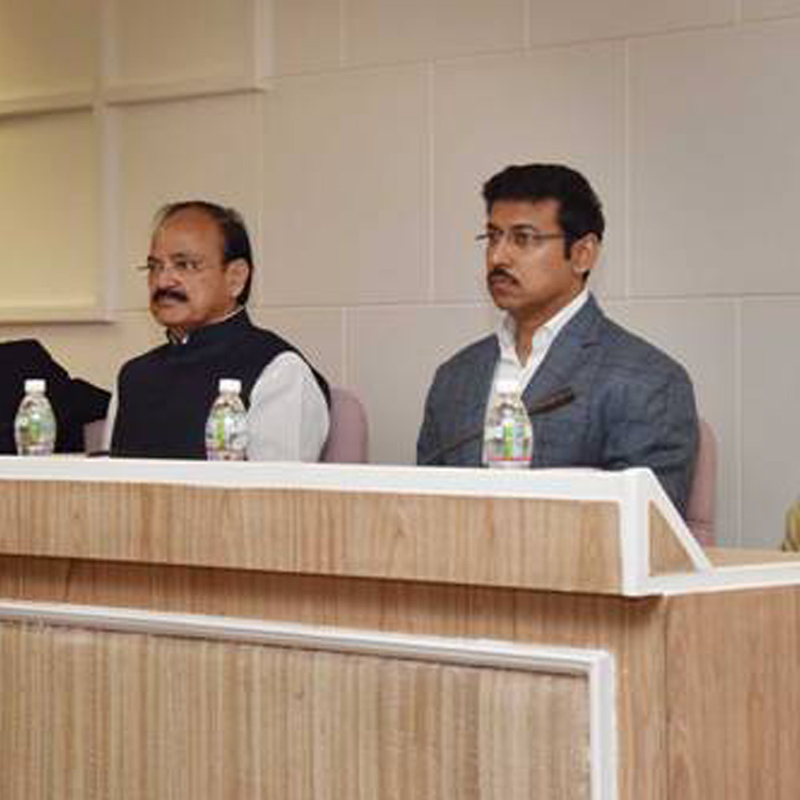
    Minister of state for information & broadcasting Rajyavardhan Rathore, ministry secretary Ajay Mittal, urban development secretary Rajiv Gauba, housing and urban poverty secretary Dr. Nandita Chatterjee, senior officers from the ministries, were also present in the meeting held at Vigyan Bhawan, NewDelhi.

    A presentation on “Government – Citizen Transactions towards less cash economy including different platforms and methods of transaction” was also made by Team NITI Ayog. The presentation was followed by a Question & Answer session, where doubts were cleared and queries answered.

  • Encourage cashless transactions, Naidu urges officials

    Encourage cashless transactions, Naidu urges officials

    NEW DELHI: M Venkaiah Naidu, who holds the dual charge of the ministries of information & broadcasting, and urban development and housing & urban poverty alleviation, yesterday urged officials in both the ministries to facilitate cashless economy and encourage digital and online transactions.

    Addressing the officers regarding the steps being taken by the government, he said the attempt was to prevent delays through seamless transactions and end the menace of corruption and black money.

    Naidu mentioned that the government’s JAM (Jan Dhan, AADHAR & Mobile) initiative would also facilitate this transformation. In this context, he reiterated the prime minister’s JAM vision which would ensure maximum penetration of technology among the masses and maximum empowerment for the poor.

    Naidu urged all officers to provide counselling to their staff to move and adapt to a cashless and digital transactions reducing the role of physical money in day-to-day transactions. This exercise could also be conducted at the homes by officers and staff with the people associated in their day to day life as part of social responsibility. The minister also mentioned few platforms available for digital transactions including Unified Payment Interface and Mobile Wallets.

    Minister of state for information & broadcasting Rajyavardhan Rathore, ministry secretary Ajay Mittal, urban development secretary Rajiv Gauba, housing and urban poverty secretary Dr. Nandita Chatterjee, senior officers from the ministries, were also present in the meeting held at Vigyan Bhawan, NewDelhi.

    A presentation on “Government – Citizen Transactions towards less cash economy including different platforms and methods of transaction” was also made by Team NITI Ayog. The presentation was followed by a Question & Answer session, where doubts were cleared and queries answered.

  • Taxing e-ways cash in on utilities

    Taxing e-ways cash in on utilities

    MUMBAI: Utility and other companies are seeing more pronounced use of plastic money or online payments — the obvious choice of the connected world in the times of demonetisation.

    Since inception, DishTV has been open to e-payment. The company is in sync with the government’s demonetisation. It has witnessed over 65 lakh unique transactions through electronic payment till date.

    The service tax component on the above transaction was approximately Rs 2600 lakh. DishTV incurred a collection cost of four per cent on the tax. The tax is in addition to state entertainment tax and the license fee levied by MIB on DTH operators. Other distribution platform are not subject to license fee.

    As per industry estimates Rs 25000 crore of turnover escapes tax compliance in Cable TV services which results in loss of direct and indirect taxes to the tune of Rs. 8000 crore to the exchequer on annual basis. Demonetisation, timely implementation of digitisation and rollout of GST will bring in much needed transparency and ensure a level playing field.

    Not only the entertainment services, the transport services too are using plastic money. Popular digital payment solution, Ola Money can be used at over 25 major utilities including BESCOM, BSES, Reliance Energy and Indraprastha Gas. It is already being accepted by over 500 merchants across online payments and offline POS, outside the Ola platform. A maximum recharge of up to Rs. 20,000 is permitted on Ola Money wallet until 30 December, 2016.

    Ola Money announced that it has enabled cashless payments through its wallet for key utilities. By selecting the ‘Bill Payment’ option on the Ola Money app and selecting their utility provider, users can instantly pay their utility bills with one touch. The RBI recently increased the recharge limit on wallets like Ola Money from Rs. 10,000 to Rs. 20,000 until 30 December to facilitate cashless transactions.

    Ola Money SVP and head Pallav Singh said, “We are proud to add 25 leading utilities to this list. We are coupling our experience in payment technology with our deep commitment to keep India moving towards a cashless economy.” Ola Money can be recharged using net banking debit cards or credit cards including MasterCard, VISA, American Express and RuPay.

    The department of telecommunications notification has extended the deadline for the acceptance of 500 rupee notes as legal tender for recharging prepaid phones for top-ups till 15 December, 2016. The Cellular Operators Association of India (COAI) director-general Rajan Mathews said, “Despite initial teething problems, demonetisation will benefit the nation by driving increased digital transactions, promoting transparency, boosting tax collection and ensuring social equity..”

    Continuing the use of old Rs 500 notes as legal tender for prepaid mobile services is crucial because industry estimates indicate between 30 per cent and 50 per cent fall in demand as customers are still struggling with less cash in hand.

  • Taxing e-ways cash in on utilities

    Taxing e-ways cash in on utilities

    MUMBAI: Utility and other companies are seeing more pronounced use of plastic money or online payments — the obvious choice of the connected world in the times of demonetisation.

    Since inception, DishTV has been open to e-payment. The company is in sync with the government’s demonetisation. It has witnessed over 65 lakh unique transactions through electronic payment till date.

    The service tax component on the above transaction was approximately Rs 2600 lakh. DishTV incurred a collection cost of four per cent on the tax. The tax is in addition to state entertainment tax and the license fee levied by MIB on DTH operators. Other distribution platform are not subject to license fee.

    As per industry estimates Rs 25000 crore of turnover escapes tax compliance in Cable TV services which results in loss of direct and indirect taxes to the tune of Rs. 8000 crore to the exchequer on annual basis. Demonetisation, timely implementation of digitisation and rollout of GST will bring in much needed transparency and ensure a level playing field.

    Not only the entertainment services, the transport services too are using plastic money. Popular digital payment solution, Ola Money can be used at over 25 major utilities including BESCOM, BSES, Reliance Energy and Indraprastha Gas. It is already being accepted by over 500 merchants across online payments and offline POS, outside the Ola platform. A maximum recharge of up to Rs. 20,000 is permitted on Ola Money wallet until 30 December, 2016.

    Ola Money announced that it has enabled cashless payments through its wallet for key utilities. By selecting the ‘Bill Payment’ option on the Ola Money app and selecting their utility provider, users can instantly pay their utility bills with one touch. The RBI recently increased the recharge limit on wallets like Ola Money from Rs. 10,000 to Rs. 20,000 until 30 December to facilitate cashless transactions.

    Ola Money SVP and head Pallav Singh said, “We are proud to add 25 leading utilities to this list. We are coupling our experience in payment technology with our deep commitment to keep India moving towards a cashless economy.” Ola Money can be recharged using net banking debit cards or credit cards including MasterCard, VISA, American Express and RuPay.

    The department of telecommunications notification has extended the deadline for the acceptance of 500 rupee notes as legal tender for recharging prepaid phones for top-ups till 15 December, 2016. The Cellular Operators Association of India (COAI) director-general Rajan Mathews said, “Despite initial teething problems, demonetisation will benefit the nation by driving increased digital transactions, promoting transparency, boosting tax collection and ensuring social equity..”

    Continuing the use of old Rs 500 notes as legal tender for prepaid mobile services is crucial because industry estimates indicate between 30 per cent and 50 per cent fall in demand as customers are still struggling with less cash in hand.

  • India television market to reach over US$ 9 billion by ’21: Report

    India television market to reach over US$ 9 billion by ’21: Report

    MUMBAI: Increasing disposable income coupled with technological advancements and growing preference for smart, energy-efficient and internet-enabled television will drive the India television market through 2021.

    According to a TechSci Research report on the India television market 2011-2021, the market is anticipated to cross US$ 9 billion by the end of 2021. With a population of over a billion, India is one of the major developing countries with huge middle class population base and rising per capita income. In recent years, Indian television market has witnessed drastic transformations, with consumer preference changing from CRT TVs to Smart TVs. With emergence of new technologies and robust adoption of these technology equipped televisions, the India television market is expected to grow at a robust pace during 2011-2015.

    TechSci Research, a leading global market research firm, serves 700 global clients with more than 600 studies across 11 industrial verticals.

    With increasing digitisation, the number of DTH users in India is expected to increase from 43 million in 2015 to 62 million by 2021. In order to ensure 100% digitization across the country, the Government of India allowed 100% FDI, through automatic route, for broadcast carriage services like teleport, cable services and head-end-in-the-sky (HITS). Backed by favorable government policies and increasing number of DTH users, the demand for televisions, especially Smart TV, is expected to increase in the next five years.

    During the last 15 years, about 90 million people shifted from rural to urban areas in India, which resulted in increase in the number of cities with more than a million population in the country from 25 in 2001 to around 50 in 2014. Moreover, more than 50 million new houses were constructed in urban India during 2001 – 2014. The same trend is likely to continue in the coming decade as well. Increasing urbanization and growing number of households are some of the factors which are expected to propel the growth of the country’s television market during 2016-2021.

    “Electricity costs are increasing every year, and will continue to rise in the future as well. With increasing electricity cost, consumers are upgrading their old electronic appliances, including television, to energy efficient appliances. LED TV as well as LCD TV are energy efficient, and both comprises of different dimming technology to save electricity. LED televisions are 30% more energy efficient as compared to LCD television. A 32-inch LCD TV consumes 95-100 watts, while LED TV of the same size consumes only about 55 watts. While, Plasma TV consumes around 140 watts, which is more than electricity consumption by LED TV, which is around 70-80 watts. Hence, with increasing electricity concerns, companies involved in the business of television in India are launching energy efficient televisions,” said TechSci Research director Karan Chechi.

  • India television market to reach over US$ 9 billion by ’21: Report

    India television market to reach over US$ 9 billion by ’21: Report

    MUMBAI: Increasing disposable income coupled with technological advancements and growing preference for smart, energy-efficient and internet-enabled television will drive the India television market through 2021.

    According to a TechSci Research report on the India television market 2011-2021, the market is anticipated to cross US$ 9 billion by the end of 2021. With a population of over a billion, India is one of the major developing countries with huge middle class population base and rising per capita income. In recent years, Indian television market has witnessed drastic transformations, with consumer preference changing from CRT TVs to Smart TVs. With emergence of new technologies and robust adoption of these technology equipped televisions, the India television market is expected to grow at a robust pace during 2011-2015.

    TechSci Research, a leading global market research firm, serves 700 global clients with more than 600 studies across 11 industrial verticals.

    With increasing digitisation, the number of DTH users in India is expected to increase from 43 million in 2015 to 62 million by 2021. In order to ensure 100% digitization across the country, the Government of India allowed 100% FDI, through automatic route, for broadcast carriage services like teleport, cable services and head-end-in-the-sky (HITS). Backed by favorable government policies and increasing number of DTH users, the demand for televisions, especially Smart TV, is expected to increase in the next five years.

    During the last 15 years, about 90 million people shifted from rural to urban areas in India, which resulted in increase in the number of cities with more than a million population in the country from 25 in 2001 to around 50 in 2014. Moreover, more than 50 million new houses were constructed in urban India during 2001 – 2014. The same trend is likely to continue in the coming decade as well. Increasing urbanization and growing number of households are some of the factors which are expected to propel the growth of the country’s television market during 2016-2021.

    “Electricity costs are increasing every year, and will continue to rise in the future as well. With increasing electricity cost, consumers are upgrading their old electronic appliances, including television, to energy efficient appliances. LED TV as well as LCD TV are energy efficient, and both comprises of different dimming technology to save electricity. LED televisions are 30% more energy efficient as compared to LCD television. A 32-inch LCD TV consumes 95-100 watts, while LED TV of the same size consumes only about 55 watts. While, Plasma TV consumes around 140 watts, which is more than electricity consumption by LED TV, which is around 70-80 watts. Hence, with increasing electricity concerns, companies involved in the business of television in India are launching energy efficient televisions,” said TechSci Research director Karan Chechi.