Category: eNews

  • Anker sets bold new course with AI, robotics and solar at IFA Berlin

    Anker sets bold new course with AI, robotics and solar at IFA Berlin

    BERLIN: Anker Innovations, the Chinese consumer-tech firm best known for power banks and chargers, is no longer content with cables and batteries. At IFA 2025 in Berlin, chief executive Steven Yang unveiled a sweeping new brand direction, positioning the group as a global leader in “smart hardware” and pledging to “ignite new possibilities through ultimate innovation.”

    The company will now operate under three unified marques: Anker for charging and energy, Eufy for home and security, and Soundcore for audio and entertainment. Yang told the audience that the pivot is rooted in three principles: break problems down to fundamentals, pursue higher standards rather than easy wins, and grow together with partners and users. The rhetoric, he said, would drive a “maker spirit” across the group — more workshop than corporate HQ.

    IFA saw the debut of the EufyMake UV Printer E1, marketed as the world’s first personal 3D-texture UV printer. Already the most funded Kickstarter hardware project ever — raising $46m from 17,000 backers — it ships to early adopters now and will reach retail in December at $2,499 / €2,499. Bundled with upgraded AI design tools, it promises to turn sketches or photos into textured prints on wood, leather or metal.

    Eufy’s Omni S2 robot vacuum introduced HydroJet 2.0 scrubbing and a 30kPa AeroTurbo cleaning system capable of deep-cleaning carpets and crossing five-centimetre obstacles. More eye-catching was Marswalker, a robotic carrier that lugs the S2 up and down stairs — a long-standing Achilles’ heel of robot vacuums. Marswalker will ship in the first half of 2026.

    In security, Eufy announced AI Core, a large-model agent running locally in the home to detect over 100 scenarios, from package deliveries to trespassers, while keeping data off the cloud. Its companion, the eufyCam S4, is a hybrid 4K/2K PTZ camera promising panoramic views and facial detail up to 15 metres.
    Soundcore meanwhile stretched from earbuds into wellness and theatre. The Sleep A30, a pair of ANC sleep buds already selling in the US, has reached Europe. They adaptively cancel noise and play AI-generated brainwave audio to tackle snoring and other disruptions.

    The brand also introduced a coin-sized wearable voice recorder with real-time transcription and 97 per cent accuracy across more than 100 languages, aimed at students, professionals and journalists.

    Perhaps the boldest move was absorbing Anker’s Nebula projector business, reborn as Soundcore Nebula. The flagship X1 Pro projector, launching on Kickstarter on 23 September, combines a 4K triple-laser engine with Dolby Vision video and Dolby Atmos multi-channel audio. Its detachable wireless speakers and powered subwoofers turn it into what Soundcore dubs the world’s first “mobile theatre station.”

    Anker’s own division doubled down on power. Its new Prime line adds AnkerSense View smart displays to show charging speeds and temperatures. The Prime 160W charger, Prime 300W power bank, Qi2 wireless charging station and triple-display docking station all pitch efficiency and compact design as their edge.

    The group’s energy arm, Anker Solix, launched the Solarbank Multisystem, a modular kit linking up to four Solarbank units with 14kW solar input and 4.8kW output. Targeted squarely at Europe’s high-tariff households, it promises up to 80 per cent savings on energy bills and a four-year payback period. Its semi-DIY installation is marketed as 85 per cent cheaper than conventional solar. Complementing it is the V1 Smart EV Charger with gesture-based control and tariff-synchronised charging. The starter kit begins at €1,898, with the EV charger priced at €499. Germany gets it first, with France and the Netherlands following on 11 September.

    The showcase in Berlin marked more than another tech fair launch. Anker is re-casting itself as a systems company, fusing AI, robotics and renewable energy into everyday hardware. If successful, Yang’s bet could move the firm up from niche accessories into the ranks of household consumer-tech giants. The risk is execution: a vacuum that climbs stairs and a solar charger that pays for itself in four years are promises the market will hold him to.

  • Samsung fires up IFA with Galaxy S25 FE and party-ready sound towers

    Samsung fires up IFA with Galaxy S25 FE and party-ready sound towers

    BERLIN: Samsung used its IFA stage in Berlin to show it is not done with surprises. Alongside a fresh midrange smartphone, the Galaxy S25 FE, it rolled out two hulking new sound towers — the ST50F and ST40F — aimed squarely at back-garden DJs and living-room party fiends.

    The Galaxy S25 FE, on sale now from $650, gives a lower-cost route into this year’s S25 line-up. It comes in four colours and runs on the firm’s new One UI 8 software — a step ahead of the S25, S25 Plus, S25 Ultra and ultra-slim S25 Edge, all of which debuted earlier in the year with One UI 7. The refresh brings a sleeker interface, smoother animations, tighter split-screen multitasking and more AI smarts baked in.

    Under the bonnet sits Samsung’s in-house Exynos 2400 processor, which lacks the punch of Qualcomm’s Snapdragon 8 Elite used in the pricier S25 models, but should hold its own. The handset features a 6.7-inch Amoled screen peaking at 1,900 nits, and a camera array built around a 50MP main sensor, with 12MP ultra-wide and 8MP telephoto lenses, plus a 12MP selfie snapper. Despite its mid-tier engine, the phone still runs Samsung’s full suite of Galaxy AI tools — including its Generative Edit photo wizardry and on-device assistant — making it the cheapest ticket into the AI-laced Galaxy ecosystem.

    If the phone is about keeping your life in order, the speakers are about blowing it apart. The flagship ST50F sound tower, priced around $700, delivers 240 watts of power, dual 165mm woofers with adjustable bass modes (Deep, Punchy or Gentle), and twin 25mm tweeters for crisp treble. It comes with four sound profiles — from “Standard” to “Stadium” — and can sync wirelessly with others for multi-speaker mayhem. Battery life stretches to 18 hours, the casing is splash-proof, and party lights — embedded in the tweeters, woofers, housing and even the handle — blink, pulse, or strobe in sync with the beat.

    The smaller ST40F, expected at $500, is built for patios and garden barbecues. It pushes 160 watts, carries dual 133mm woofers and 20mm tweeters, and offers up to 12 hours’ battery life. Both models have karaoke modes, guitar inputs, Bluetooth, USB and AUX ports, and replaceable batteries for those who fear the lights going out before the party does.

    With the S25 FE, Samsung is giving its smartphone base a cheaper AI-driven option. With the sound towers, it is giving them a reason never to sleep.

  • Samsung bets big on AI Home at IFA 2025

    Samsung bets big on AI Home at IFA 2025

    BERLIN: At Innovation For All (IFA) 2025, Samsung Electronics took centre stage with one message: artificial intelligence has moved out of the lab and into the living room. Under the banner “AI Home: Future Living, Now,” the South Korean conglomerate unveiled its vision of domestic life powered by adaptive technology — one that it claims is already attainable and accessible to millions.

    Executive vice president and head of digital appliances Cheolgi Kim framed the pitch as a shift in how technology should exist within human life. “At Samsung, we’re not just imagining the future of AI; we’re building it into everyday life,” he said. “This is the beginning of a new era — where technology supports your life in the background so that you can live it more fully.”

    The ambition is bold: move beyond the fragmented world of “smart” gadgets towards a seamless ecosystem that not only responds but anticipates. The stakes are equally high. With AI now the battleground for Big Tech and consumer electronics, Samsung is vying to prove that homes are where AI will have its most profound — and profitable — impact.

    Samsung’s SmartThings platform lies at the heart of this proposition. Once marketed as a connected-home app, it is now evolving into what the company describes as a “home operating system.” AI routines automate lighting, temperature and shading; blinds align with the weather forecast; heating systems learn daily habits; and appliances self-optimise without prompting.

    Consumer appetite, Samsung insists, is real. A global survey commissioned by the company shows two-thirds of respondents find the concept of an AI-enabled home appealing. Forty-four per cent cited streamlined chores, while 45 per cent liked the idea of controlling devices by phone or voice. More tellingly, 93 per cent described the home as a sanctuary, and 80 per cent saw it as a social hub — a place where technology should enhance human connection, not interfere with it.

    Samsung’s pitch, then, is about invisibility. The AI Home is not meant to dazzle with futuristic gimmicks but to fade into the background, adjusting conditions subtly to improve comfort and efficiency.

    The company knows that energy bills remain top of mind worldwide. According to its research, 66 per cent of consumers believe AI can help reduce costs. The SmartThings Energy service provides real-time monitoring, nudging households towards savings. Samsung claims it can cut washing-machine power use by up to 70 per cent — a figure it highlights repeatedly.

    AI SMART HOME BY Samsubng

    The emphasis on energy efficiency is strategic. Unlike voice assistants or robotic gadgets that risk being dismissed as novelties, tangible cost savings could be the lever that convinces consumers to invest in AI-enabled ecosystems. It also aligns with regulatory pressures in Europe, where energy performance standards are tightening.

    With smart homes comes a perennial concern: security. Four in ten consumers surveyed by Samsung expect AI to enhance home safety. The firm has responded with Knox Vault, a hardware-level data safeguard, and Knox Matrix, which provides cross-device protection across its ecosystem. The language here is deliberate: “vaults” and “matrices” are meant to signal seriousness, reassuring customers that AI will not become a Trojan horse for hackers.

    In a market where trust is fragile — particularly in Europe, where data privacy is heavily policed — Samsung’s ability to frame AI as safe as well as smart may determine adoption.

    Perhaps the most visible manifestation of Samsung’s AI strategy is its Bespoke AI appliance line. This year’s models showcase a shift from novelty to genuine utility:
    * Jet Bot Steam Ultra: now equipped with enhanced object recognition that can detect even transparent liquids — addressing one of the biggest challenges in robotic cleaning.
    * Bespoke AI Washer: featuring AI Wash+, it analyses fabric load and dirt levels to adjust cycles. It surpasses the threshold for Grade A energy efficiency by 65 per cent.
    * Bespoke AI Dishwasher: dynamically optimises cycles based on how dirty the dishes are, then pops its door open to accelerate drying.
    * Extractor Induction Hob: integrates the extractor into the hob itself, maximising kitchen space — a design nod to compact European apartments.

    These are not futuristic concept devices but commercial products. Samsung is betting that incremental intelligence built into everyday machines will persuade consumers to trade up.

    Samsung’s push is not confined to the kitchen or laundry. The company is embedding what it calls Vision AI Companion into larger displays, positioning it as a natural, almost human-like presence that can converse, guide and entertain. Unlike voice assistants locked into narrow commands, Vision AI is pitched as a trusted “companion” — a word chosen to evoke emotional connection.

    Hardware remains a showstopper. The 115-inch Micro RGB display delivers cinema-quality visuals with striking depth and vibrancy, while the Movingstyle TV, a portable touchscreen with a built-in battery, targets younger consumers with flexible living spaces. The Samsung Sound Tower, meanwhile, promises 18 hours of portable battery life, customisable lighting and app-controlled sound effects — signalling that AI is also about fun.

    Samsung’s AI story extends beyond the home and into its most recognisable product line: Galaxy smartphones. Having rolled out Galaxy AI to more than 200m devices in 2024, the firm now aims to double that reach, targeting 400m devices by end-2025.

    The company frames this as “democratising AI”. Features once reserved for flagships will trickle down to mid-range devices, creating a seamless experience across phones, tablets and wearables. With rivals from Apple to Huawei making similar plays, scale will be crucial.

    IFA, Europe’s premier consumer electronics show, is as much about theatre as technology. Samsung embraced the spectacle with a 50-metre-wide media art installation at Berlin’s CityCube entrance. Created with French digital artist Maotik, the piece visualises “wind” as flowing data waves — an abstract metaphor for AI’s invisible yet transformative role.

    The exhibition itself, running from 5–9 September, invites visitors to walk through fully staged AI Home environments. The message is clear: AI is not a far-off dream. It is a present-day reality to be touched, tested and bought.

    Why such a push now? First, competition. Apple, Amazon, and Chinese firms such as Xiaomi are all racing to dominate the home AI market. Google and Microsoft are extending their reach through partnerships and cloud AI services. For Samsung, whose strength lies in hardware, the opportunity is to integrate AI deeply into devices that already sit in millions of homes.

    Second, consumer economics. Global demand for white goods is relatively flat. By adding intelligence, Samsung hopes to revive upgrade cycles and command premium prices. Energy savings and convenience are framed as justifications for those higher upfront costs.

    Finally, brand positioning. By declaring that “AI is here”, Samsung differentiates itself from rivals still speaking of AI in aspirational terms. It wants to own the narrative that artificial intelligence is not just about chatbots or productivity tools, but about life’s most intimate space: the home.

    Samsung’s pitch is compelling but not without hurdles. Convincing sceptical consumers that AI is worth paying for will require more than glossy demos. Regulatory scrutiny around data will intensify. And rivals will not cede the living room easily.

    Yet if Samsung is right, the next frontier for AI is not in boardrooms or studios but kitchens and bedrooms. The company’s IFA showcase was a declaration of intent: to weave AI so seamlessly into daily life that, eventually, people may stop noticing it at all.

    For now, the AI Home is a vision Samsung insists you can live in today. The test will be whether the world believes it — and buys it.

  • IFA 2025: Berlin’s biggest tech event is a sell-out success

    IFA 2025: Berlin’s biggest tech event is a sell-out success

    BERLIN: Two days before the official opening of IFA Berlin, the doors have opened for the traditional Media Days, giving international journalists a sneak peek at the world’s largest home and consumer technology event. Over seven days, the trade show will present product launches and press conferences from leading global firms, revealing the latest innovations in the home and consumer tech industry.

    IFA 2025 is a resounding success, with 1,900 exhibitors from 49 countries filling the entire 190,000 square metres of exhibition space. Berlin will once again serve as the international hub for innovation, inspiration and exchange. IFA Management GmbH chief executive officer Leif Lindner  said, “Berlin is becoming a stage for technology, culture and community these days. Together with our partners and exhibitors, we are creating a place where home and consumer tech can be experienced in all its range.”

    GFU Consumer & Home Electronics GmbH managing director Sara Warneke added, “IFA is a unique meeting place for the global tech industry—here, trade visitors and end consumers can marvel at the innovations that will shape our everyday lives in the coming years.”

    This year’s event promises a wealth of new features alongside established sectors like home entertainment, appliances and smart homes. New formats include the Beauty Hub, Outdoor Cooking & Gardening, and The Mobility Track. The Creator Hub at the Palais provides a new platform for influencers and digital communities, while Games Ground x IFA highlights Berlin’s thriving indie gaming scene.

    The IFA Global Markets in Hall 26, taking place from 7 to 9 September, will be a sourcing platform for original equipment manufacturers and retailers. Meanwhile, IFA Next in Hall 25 will serve as a launchpad for startups and disruptive technologies. In a new partnership with the Cradle to Cradle NGO, IFA is also focusing on sustainability and a circular economy for the tech industry.

    For the media, the event offers exclusive access to press conferences and new product demonstrations before the general public. The festival-like atmosphere extends to the IFA Sommergarten, which will feature a vibrant musical lineup, including performances by Jan Böhmermann and Olli Schulz on 7 September.

  • Neha Singh Warrier joins Amazon Ads as lead content monetisation

    Neha Singh Warrier joins Amazon Ads as lead content monetisation

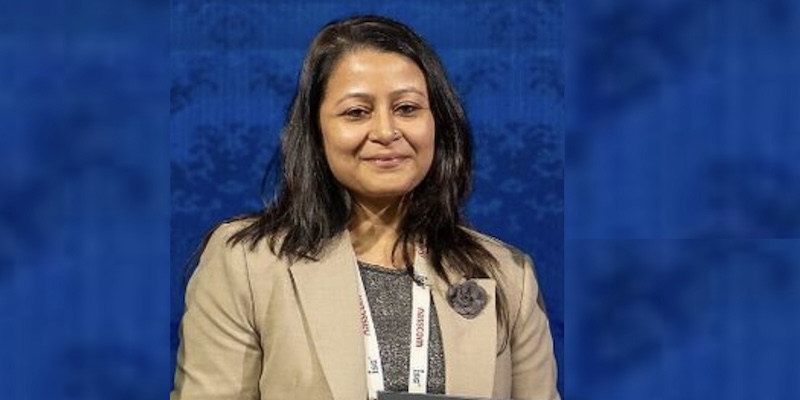
    MUMBAI: Neha Singh Warrier, a veteran in media sales with over two decades of experience, has joined Amazon Ads as lead content monetisation for the west and south regions in India. Warrier announced her new role on LinkedIn, expressing her excitement to be at the “intersection of content, commerce and technology.”

    She joins Amazon Ads after a significant tenure at Sony Pictures Networks India, where she served as associate vice president of SonyLiv digital ad sales. Her role involved transforming marketer engagement on over-the-top (OTT) platforms and securing sponsorships for major sporting and entertainment intellectual properties (IPs). Before that, she was the head of digital sales at Zee5, where she consistently exceeded revenue targets and pioneered long-term strategic sales plans.

    Warrier’s career also includes a decade-long stint at Discovery Inc, where she was an associate director of advertising sales, leading ad sales for the Discovery network’s flagship channels. She was recognised as a “stellar performer” for her role in achieving a compound annual growth rate (CAGR) of 24 per cent over ten years. She also held roles at Mirriad, CNBC-TV18, and Sony Entertainment Television, where she worked on monetising marquee IPs like Bigg Boss and Indian Idol in their inaugural years.

    A professional athlete in her early career, Warrier stated that she applies the same dedication and teamwork skills to her professional endeavours. She is known for her ability to take calculated risks and propose innovative strategies to deliver tangible results.

  • Rao and Toppo plug into Humans in the Loop with producer power

    Rao and Toppo plug into Humans in the Loop with producer power

    MUMBAI: When cinema meets circuit boards, sparks fly. Humans in the Loop, a feature tracing the life of Nehma, an Oraon Adivasi woman employed as an AI data-labeller in Jharkhand has found two heavyweight backers in filmmakers Kiran Rao and Biju Toppo, who have boarded as executive producers.

    The film, fresh off its FIPRESCI India win (shared with All We Imagine as Light), is fast becoming one of the most globally resonant indie titles to emerge from India. For Rao, whose Laapataa Ladies carried India’s flag at the 2024 Oscars, this marks her third indie collaboration after Ship of Theseus and Stolen. “I loved Humans in the Loop from the very first viewing. It is deeply moving and thought-provoking… Supporting this project felt both urgent and necessary,” she said.

    Toppo, a pioneer of Adivasi cinema, brings decades of storytelling rooted in indigenous resilience. “For too long, Adivasi perspectives have remained invisible, not just in history, but even in how we imagine the future. Humans in the Loop boldly expresses our perspective,” he noted.

    Directed by Aranya Sahay and produced by Mathivanan Rajendran, Sarabhi Ravichandran, Shilpa Kumar and Sahay under Storiculture’s Impact Fellowship and Sauv Films, the project has been years in the making. It weaves a sharp narrative on how “smart” technologies often depend on invisible human labour while sidelining indigenous knowledge systems.

    Independent filmmaking, Sahay admits, “is like walking a tightrope.” But with Rao and Toppo’s support and after a year of micro-community screenings, the film is ready for its theatrical leap. It will debut on 5 September 2025 at Cinépolis Andheri, Mumbai, before expanding to Delhi, Kolkata, Chennai, Thiruvananthapuram, and Bengaluru from 12 September. An alternative distribution model, backed by the Museum of Imagined Futures, will also drive screenings across smaller cities through a cinema of the people initiative.

    By combining a robust festival run with grassroots screenings, Humans in the Loop aims to spark urgent public debate on labour, technology and the future we are building placing the voices of India’s most marginalised at the heart of the global AI conversation.

  • Truecaller names Athul Prabhu product director for ads business

    Truecaller names Athul Prabhu product director for ads business

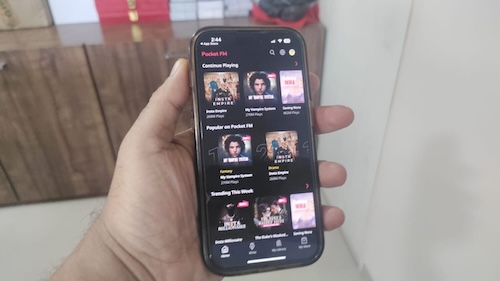
    MUMBAI: Truecaller has tapped Athul Prabhu as product director for its advertising arm, a move aimed at supercharging the company’s biggest growth engine.

    Prabhu, an ad-tech veteran with stints at Glance, TikTok, Viacom18 and Nielsen, will shape the product vision and strategy for Truecaller Ads. At Glance, he built the lock-screen app’s ad-tech infrastructure from scratch, enabling global monetisation through programmatic and direct sales.

    The appointment comes as Truecaller Ads, delivering more than 5 billion daily impressions and used by over 10,000 brands, cements its reputation as one of the world’s largest mobile advertising platforms. Hemant Arora, vice-president of the global ads business, said Prabhu’s remit will be to design a diversified suite of AI- and data-led products tuned to local markets.

    Prabhu, an IIT Kanpur graduate with an MBA from ISB Hyderabad, called the platform “uniquely positioned to redefine the future of trusted communication and digital advertising”, citing its reach and user trust as rare assets for brands.

    Advertising accounts for the lion’s share of Truecaller’s growth, and the company is betting Prabhu can turn scale into sharper monetisation.

  • Reliance joins hands with Google Cloud to put India’s AI future on steroids

    Reliance joins hands with Google Cloud to put India’s AI future on steroids

    MUMBAI: Reliance Industries has never done things by halves. On 29 August, India’s largest private company unfurled its latest grand project: a sweeping expansion of its alliance with Google Cloud, centred on a new, dedicated AI-first cloud region in Jamnagar, Gujarat. The ambition is as audacious as it is familiar. Having once upended India’s telecoms industry with Reliance Jio and cheap data, Mukesh Ambani is now training his firepower on artificial intelligence, promising to democratise access to computing muscle for the world’s most populous country.

    The project is being pitched as India’s “AI leapfrog moment.” Reliance will design, build, and power state-of-the-art cloud facilities, all running on renewable energy and plugged into Jio’s sprawling fibre and digital network. Google will provide the brains: its AI hyper computer, a secure and integrated generative AI stack, and the know-how to run workloads of breath taking intensity. The facility, Reliance says, will meet global service-level standards and support the most demanding AI use cases—from training large models to building next-generation applications for consumers and enterprises.

    Why Jamnagar? The coastal city is already the beating heart of Reliance’s refining and petrochemicals empire. It is also becoming a symbol of the company’s reinvention: its green energy giga factory is rising there, and now the AI cloud campus will sit alongside it. Running on renewable power, the project ticks boxes for sustainability even as it scales to hyper speed. Jio, meanwhile, will string high-capacity fibre links connecting Jamnagar to metros like Mumbai and Delhi, effectively wiring India’s AI ambitions to its business and political capitals.

    Mukesh Ambani cast the partnership in almost civilisational terms: “Just as Jio and Google came together to democratise the internet for every Indian, we will now democratise intelligence for every Indian,” he declared. The subtext was clear: Reliance does not want to merely be a customer of AI; it wants to be the platform on which India builds its AI future.

    For Google, the tie-up is equally strategic. The American giant has long struggled to monetise India at scale, despite Android’s dominance. Its alliance with Reliance, first forged through a $4.5bn investment in Jio Platforms in 2020, has been its best bet. Sundar Pichai, Google’s boss, was almost wistful: “Our work together over the last decade has helped bring affordable internet access to millions. And now, we are building on this to help shape the next leap with AI. This is only the beginning.”

    The beginning it may be, but the context is fiercer. Microsoft has partnered with the Adani group to push Azure into Indian enterprises. Amazon Web Services (AWS) has invested heavily in local data centres. By anchoring Google Cloud in Reliance’s infrastructure, Ambani is offering it the biggest distribution muscle in the country—from India’s biggest retailer to its mightiest mobile operator.

    Reliance has always built moats around scale and integration. Hydrocarbons fed petrochemicals; petrochemicals funded telecoms; telecoms birthed digital platforms; retail wrapped around them. Now AI is being woven into every strand. Reliance’s retail arm, one of the world’s fastest-growing, will be powered by predictive analytics and AI-first services. Its digital platforms can churn out generative-AI-powered customer tools. Even its energy and refining business can tap AI for predictive maintenance, efficiency, and emissions management.

    The bet is as much about geopolitics as economics. AI compute has become a strategic resource, akin to oil in the 20th century. By hosting a dedicated, hyperscale AI cloud region in India, Reliance and Google are hedging against global bottlenecks in semiconductors and compute availability. They are also offering Indian enterprises and the government a “sovereign-flavoured” cloud alternative to relying wholly on Western or Chinese platforms.

    The entire project will be underpinned by Reliance’s push into renewable power. The AI data centres, notorious for their energy hunger, will be fed through Reliance’s green energy parks and hydrogen initiatives. Jio’s high-capacity fibre, spanning metros and regions, adds the digital sinew to match the green muscle. The combination allows Reliance to brand the initiative not merely as profitable, but as sustainable—a key card to play with regulators, policymakers, and global investors.

    For India, the stakes are towering. Domestic enterprises, startups, and public sector organisations often face prohibitive costs in accessing cutting-edge AI compute. By pooling Reliance’s infrastructure with Google’s stack, the hope is to lower barriers and accelerate adoption. Small businesses may soon have access to AI tools that were once the preserve of Silicon Valley. Universities and research institutes could run high-performance AI models without prohibitive cost. And the government could scale citizen-facing AI services in health, education, and agriculture.

    But challenges remain. Building AI facilities is one thing; ensuring India has the talent, regulation, and guardrails to use them responsibly is another. AI also raises thorny issues of bias, surveillance, and security. Reliance’s ambition to become India’s AI backbone will inevitably attract scrutiny—whether from privacy hawks, antitrust watchdogs, or foreign competitors.

    Yet, if history is a guide, Reliance has a knack for bending markets to its will. When Jio entered telecoms in 2016, it offered free calls and dirt-cheap data, triggering a brutal price war that wiped out rivals and left India with the world’s cheapest mobile internet. Now, Ambani appears ready to repeat the trick with AI: offer access at scale, bundle services across Reliance’s ecosystem, and set the floor so low that competitors struggle to keep up.

    The Jamnagar AI cloud, then, is not just about servers and software. It is about a new architecture of power: technological, economic, and political. If it works, Reliance and Google may indeed make India a global leader in artificial intelligence. If it fails, it could end up as another white elephant in the deserts of Jamnagar.
    For now, though, one thing is certain. India’s AI race has just been given a jolt of steroids—and Mukesh Ambani is holding the syringe.

    (The picture featured above is representational of two businessmen joining hands and there is no intention to insinuate that it  resembles either Mukesh Ambani or Sunder Pichai. It is an AI generated image)

  • Lovnish Bhatia joins Worldwide Media as vice president – digital product

    Lovnish Bhatia joins Worldwide Media as vice president – digital product

    MUMBAI: Worldwide Media, a subsidiary of the Times Group, has named Lovnish Bhatia as vice president – digital product. Based in Mumbai, he will spearhead the publisher’s digital strategy, mobile platforms and product innovation.

    Bhatia brings more than 20 years of experience across digital media, operations and business development. He was most recently head of operations at Wify Technologies, after a brief stint as a new business development consultant.

    Earlier, he served as chief operating officer at Timesaverz, led services at Hettich India, and drove business development for video advertising firm Vdopia, where he was instrumental in securing the ICC World Cup 2011 digital sales mandate for Star India.

    His media career began at Sony Entertainment Television in 2000, followed by digital sales leadership roles at NDTV Media and Viacom18, where he introduced digital syndication and online-only monetisation models.

    With a career spanning technology, advertising, consumer services and media, Bhatia is expected to play a key role in accelerating Worldwide Media’s digital transformation.

  • Forum BIFF 2025 marks 30 years of K-Arts with big-picture rethink on Asian film education

    Forum BIFF 2025 marks 30 years of K-Arts with big-picture rethink on Asian film education

    BUSAN: The 30th Busan International Film Festival will stage a special Forum BIFF to mark the 30th anniversary of the Korea National University of Arts’ (K-Arts) school of film, TV & multimedia, with a hard look at how Asian film education can reinvent itself for the future.

    Founded in 1995, K-Arts has been the launchpad for a generation of Korean and Asian filmmakers, building co-production bridges with Japan and China, running pan-Asian short-film labs, and powering the global surge of K-content. This year’s forum, themed Revisiting the path of Asian cinema, will spotlight those achievements while grappling with the future: how to sustain cross-border learning, plug into AI-driven change, and keep Asian schools at the cutting edge.

    Sessions will examine collaborative short-film programmes, Korea-Japan and Korea-China co-productions, and the AMA+ scholarship that has seeded talent from across the region. The Campus Asia Plus initiative — linking Korea, Japan, China and Asean — will be in focus for its efforts to build an Asian animation education network that meshes advanced learning, exchange and industry tie-ups.

    The three-part forum will run on 20 September, moderated by professors Choi Yongbae and Steve M. Choe of K-Arts. It will feature a keynote by cinema studies professor Kim Soyoung, presentations from animation professor Lee Jungmin, filmmaking professor Pyeon Jangwan, Cambodian director and AMA+ alumnus Him Sotithya, and producer Ahn Jihye. The closing panel will pull in film critic Lee Seunghee, Japan Institute of the Moving Image president Tengan Daisuke, Beijing Film Academy professor Liu Yu, Yale lecturer Tian Li, and Indonesian director Makbul Mubarak.

    The conversation will stretch from the past three decades of K-Arts’ influence to the next thirty years of Asian cinema education — and what it will take to keep pace with technology and global demand.
     
    BIFF 2025: 17–26 September

    Asian Contents & Film Market: 20–23 September