Category: eNews

  • Prime Volleyball League adds Kannada feed as regional push gathers pace

    Prime Volleyball League adds Kannada feed as regional push gathers pace

    HYDERABAD: The RR Kabel Prime Volleyball League powered by Scapia is betting big on regional languages. From Saturday, matches will be available in Kannada—the sixth tongue added to a lineup that already includes English, Hindi, Telugu, Tamil and Malayalam. The move targets Karnataka’s volleyball-mad fanbase, particularly supporters of the Bengaluru Torpedoes.

    The tournament, now in its fourth year, is underway at Gachibowli Indoor Stadium in Hyderabad. First-day viewership on YouTube was robust, with reach spread across all regional feeds. The Kannada addition comes as the league chases deeper penetration in southern markets.

    “The support we receive from Karnataka is immense,” says Bengaluru Torpedoes co-owner and director Yashwanth Biyyala. “Providing the livestream in our local language is a sincere effort to engage more deeply with our loyal fans.”

    Prime Volleyball League  chief executive Joy Bhattacharjya frames the expansion as nation-building. “Our large viewership on the opening day demonstrates the massive, multilingual appetite for volleyball across India,” he says. “This is about more than just numbers—it’s about creating a model for deep, inclusive fan engagement.”

    The 2025 season is being broadcast live on Sony Sports Network and streamed globally via YouTube. The channel offers match highlights, recaps, behind-the-scenes footage and other content designed to hook armchair fans. Four teams clash on Saturday: Kochi Blue Spikers face Bengaluru Torpedoes, whilst Chennai Blitz take on Kolkata Thunderbolts.

    The tournament runs until 26 October. By then, the league will know whether its multilingual gambit has scored the breakthrough it so craves.

  • Rejected by Google in 2013, entrepreneur returns as boss of startup division

    Rejected by Google in 2013, entrepreneur returns as boss of startup division

    GURUGRAM: Life moves in circles, not straight lines. Ragini Das, who fumbled Google’s final interview round in 2013, has just been handed the keys to Google for Startups India this October—a delicious plot twist that took 12 years, two groundbreaking ventures and one failed final round to materialise.

    Back in 2013, Das had two shots on goal: Google and Zomato. Google said no. Zomato said yes. That rejection turned into a six-year masterclass in building consumer-tech brands. She went from selling ad space across Hyderabad, Bangalore and Delhi to spearheading Zomato Gold’s meteoric rise from zero to 2 million users, launching the subscription service across ten international markets from Australia to Lebanon. The company awarded her its first-ever “spark award” for spreading Zomato’s culture inside and outside the firm.

    In 2020, Das took the entrepreneurial plunge, co-founding leap.club—India’s largest social-professional network for women. Over five-and-a-half years, she scaled it to 25,000-plus paid members and $3 million-plus in revenue, creating an online app and India’s first women-only offline club. The  venture raised $2.2 million from venture capitalists and angel investors, with women comprising half the cap table. “If member love was an actual currency, leap.club would have been a unicorn,” Das wrote when announcing the pause in operations this June.

    After the shutdown, Das spent the summer recharging: creating art, chasing fitness goals, travelling and photographing Jimmy, her dog. Then August arrived with a role at Google that sat squarely at the intersection of everything she’d built—zero-to-ten ventures, founders, growth. Two months of conversations later, the job was hers.

    Now Das leads Google’s mission to connect Indian startups with the right people, products and practices to scale. She’s also taken on a voluntary role as chair of FICCI’s women in startups committee, championing visibility, capital access and policy influence for women-led ventures. A member of the 6 am club, she reserves weekends for mentoring young women in business and, naturally, Jimmy.

    Twelve years ago, Google’s rejection stung. Today, Das walks through the front door—as the boss. Full circle doesn’t begin to cover it.

  • Meta maps India’s digital evolution from creators to AI and micro dramas

    Meta maps India’s digital evolution from creators to AI and micro dramas

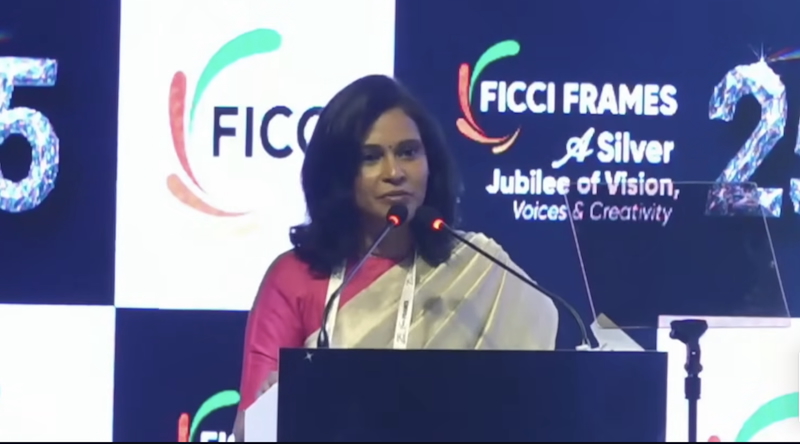
    MUMBAI: At the 25th edition of Ficci Frames, Meta’s top leadership: Sandhya Devanathan, vice president, Meta India, and Meta India managing director and country head Arun Srinivas, laid out a comprehensive view of how India’s digital, entertainment, and creator ecosystems are evolving at breakneck speed. 

    From the rise of Gen Z as the dominant consumer force to the explosion of short-form video, AI-driven content, and micro-dramas, both leaders stressed on how India is not just adapting to global digital trends, it is carving them. 

    “India’s growth is unique and inevitable,” Devanathan said, opening her session on New Age Tech Platforms: Redefining Access, Innovation and Scale. “One trillion dollars of our future economy will be driven by digital.”  

    With over four billion reels shared globally every day, she noted, India stands out as both the largest creator market and a leader in the innovation of content. 
    That digital drive, she explained, rests on India’s growing online base of over 650 million social media users and 270 million online shoppers. Yet, she noted that to make prosperity more inclusive, more small businesses need to come online. Only about five million of India’s 65 million SMEs are currently digitally enabled.
    “The Indian creator economy is among the most vibrant in the world,” Devanathan noted. “Creators here aren’t just entertainers, they are entrepreneurs, cultural catalysts, and small businesses rolled into one.”

    Meta, she explained, continues to invest heavily in tools that empower creators to monetise their craft: from performance insights and AI-powered production aids to immersive advertising formats that help brands connect authentically with their digital-native audiences. 

    Devanathan also highlighted the versatility of “many Indias”: the digitally savvy India, the vernacular-first India, and the emerging India Each requires its own approach to content, access and engagement. “Winning in India,” she said, “means understanding these layers of India and building for all.”
    Meta, she noted, sits at the heart of this digital revolution. India is now home to the largest community of Instagram creators and the biggest user base for Meta AI worldwide. The country also boasts one of the world’s largest Whatsapp communities, with over 200,000 small businesses using “Click to Whatsapp” to drive sales every month.
    Beyond platforms, Meta is investing in digital infrastructure, from the Project Waterworth subsea cable (a subsea cable network that will span 50,000 kilometres and will reach depths of up to 7000 metres) to supporting data centres that fuel AI innovation. Devanathan also spoke about Meta’s work with the Nudge Institute and Pragati AI for Impact, which harnesses artificial intelligence for social good. 

    Building on that foundation, Arun Srinivas focused on the behavioural shifts defining media and entertainment consumption in India today, particularly among Gen Z and gen Alpha audiences.

    “Gen Z isn’t the future; they’re the present,” he exclaimed. “They are already shaping how content is discovered, processed, and shared.”

    According to Srinivas, the average Gen Z consumer processes information three times faster than previous generations and takes less than 1.5 seconds to decide whether to engage with a piece of content. “They need less attention, but more repetition,” he noted, explaining how frequency, rather than single exposure, now drives brand recall and conversions.

    He also pointed to India’s massive short-form video boom, with 97 per cent of Indians watching short videos daily, surpassing television viewership. “Linear TV time is declining month on month,” he said, adding that this isn’t limited to urban India, “rural and small-town audiences are consuming just as much, if not more.”

    Among the new frontiers Srinivas spotlighted was the rise of micro dramas: serialised short videos running between one and five minutes per episode.

    “This is storytelling redesigned for the mobile-first world,” he said. “India’s short-form drama market could touch 10 billion dollars by 2030, driven by vernacular content and tier-II and tier-III audiences.”

    Startups and creators are already experimenting with dubbed Korean and Chinese mini-series adapted for Indian viewers, marking a new phase in the fusion of entertainment and digital innovation.

    Both Devanathan and Srinivas emphasised the transformative role of artificial intelligence across Meta’s platforms, from content creation and personalisation to ad optimisation and discovery.

    “AI isn’t replacing creativity; it’s amplifying it,” Devanathan said. “It’s enabling creators to produce higher-quality work faster, and helping brands find the right audiences with precision.”

    Srinivas added that more than four million advertisers globally used AI-generated creatives last quarter, producing over 15 million ad assets  and achieving double-digit ROI improvements compared to campaigns created by humans. 

    Outlining Meta’s larger ambition, he noted that the company aims to make Meta AI the world’s most widely used personal assistant. “With more than 100 billion dollars invested in AI in just four years, we’re building systems that make digital creativity more accessible and intelligent for everyone,” he said.
    Bringing that vision to life, Devanathan closed her session with an AI-generated video: a vivid cascade of colours that unfolded into the words, “Change is the canvas from which opportunity paints its masterpiece.” 

    Both leaders saw eye to eye on one message, that India’s digital future will be built at the intersection of creators, commerce, and connection.

    Srinivas highlighted how Meta’s latest tools, such as the Edits app for easy video production and new AI-powered creative platforms, are enabling India’s vast creator base to thrive. Meanwhile, Devanathan emphasised Meta’s partnerships with brands, small businesses, and policymakers to foster a sustainable, inclusive digital ecosystem.

    “Our goal,” she said, “is to ensure that India’s creative economy doesn’t just grow in size, it grows in diversity, opportunity, and global influence.”

    Concluding the session, Srinivas offered a peek into Meta’s newest innovation, the Ray-Ban Meta smart glasses, designed to merge content, communication, and AI assistance in one device.

    “These glasses are a glimpse of a future where connection becomes truly immersive,” he said.

    As both Devanathan and Srinivas made clear, India’s digital landscape is entering a new chapter, one driven by speed, creativity, and intelligence. With the next generation of consumers redefining how content is created and consumed, Meta’s vision is not just to keep pace, but to help build the infrastructure of tomorrow’s digital culture. 


  • Google taps Raveesh Dev to chase small business growth across the Americas

    Google taps Raveesh Dev to chase small business growth across the Americas

    NEW DELHI: Climbing the ladder at Google takes stamina. Raveesh Dev has just demonstrated plenty of it. After nearly ten years shuttling between roles at the tech giant, Dev has been named head of en-Americas, SMB growth, a position that puts him in charge of scaling Google’s small and medium-sized business operations across the Americas from the company’s Gurugram office.

    The promotion, announced in October 2025, caps a rapid ascent through Google’s commerce division. Dev spent the past two years as head of commerce for India, leading go-to-market strategy for advertisers in travel, retail, beauty and healthcare. Before that, he briefly helmed multichannel and consumer packaged goods operations. His track record includes steering a business generating hundreds of millions of dollars in annual recurring revenue and winning Google’s 2024 APAC sales leader award.

    Dev’s 15-year career spans media and technology. Before joining Google in 2016, he cut his teeth in advertising sales at Times Television Network, where he rose to associate account director, and earlier at Red FM and Reliance Broadcast Network. His pitch is straightforward: scale businesses, mentor teams, drive operational excellence. It’s corporate speak, but his promotions suggest he delivers.

    The Americas SMB role is no easy brief. Small businesses are notoriously fickle customers, quick to churn when platforms don’t deliver immediate results. Google’s challenge is keeping them hooked on advertising products whilst fending off rivals like Meta and Amazon. Dev’s experience in India’s chaotic, price-sensitive market may prove useful, though the Americas present their own headaches.

    Dev’s LinkedIn post struck the obligatory note of gratitude—thanking mentors, celebrating teams, expressing excitement. What matters more is whether he can translate India’s lessons into growth across vastly different markets. Google clearly thinks he can. Time will tell if they’re right.

  • From Film Sets to Fortune 500: Why Celebrities Trust Acharya Lavbhushan with Life’s Biggest Decisions

    From Film Sets to Fortune 500: Why Celebrities Trust Acharya Lavbhushan with Life’s Biggest Decisions

    From the glamour of Bollywood film sets to the high-pressure boardrooms of Fortune 500 companies, one name has quietly shaped some of the most important decisions – Acharya (Dr.) Lavbhushan. With over a decade of expertise in astrology, vastu, and numerology, he has emerged as the trusted advisor to India’s most influential celebrities and corporate leaders. Known for blending timeless wisdom with modern insights, Acharya Lavbhushan has become a guiding force for those navigating life’s biggest crossroads – be it choosing a blockbuster role, planning a global business expansion, or seeking harmony in personal relationships.

    The Bridge Between Stardom and Strategy

    When it comes to decision-making, celebrities and business leaders often face high-stakes scenarios. Actors worry about the timing of new releases, while corporate leaders weigh expansions, partnerships, or investments. In both worlds, trust in guidance is paramount, and that is where Acharya Lavbhushan comes in.

    “I believe astrology is not just about predictions but about empowering people to make informed choices. Whether it is an actor choosing a script or a CEO planning a global launch, clarity and timing are everything,” says Acharya Lavbhushan.

    His unique ability to interpret planetary alignments with practical insights bridges the worlds of glamour and global enterprise.

    Why Celebrities Turn to Him

    On the film sets of Mumbai, Acharya Lavbhushan is often a quiet but vital presence. Many actors and filmmakers consult him on:

    ●    Choosing scripts and projects that align with their astrological cycles.

    ●    Selecting release dates for films to maximise audience reception.

    ●    Managing relationships in an industry known for intense personal and professional challenges.

    ●    Maintaining mental well-being in the high-pressure world of stardom.

    Celebrities describe him as a confidant who listens without judgment and guides with both compassion and precision. His ability to simplify astrological insights makes him approachable even for those new to these sciences.

    Why Business Leaders Value His Guidance

    Away from the spotlight, Acharya Lavbhushan has built an equally strong reputation in the corporate sector. 

    Fortune 500 leaders, entrepreneurs, and start-up founders seek his advice for:

    ●    Business expansions and mergers where timing can define success.

    ●    Office vastu corrections to create work environments that encourage productivity.

    ●    Numerology consultations to optimise brand names, partnerships, or product launches.

    ●    Personal balance to help leaders handle the stress of global responsibilities.

    His ability to apply age-old wisdom to modern business challenges has made him a strategic partner for decision-makers.

    Over a Decade of Trusted Practice

    With over 10 years of experience, Acharya Lavbhushan is not just an astrologer but a thought leader in the field. His expertise spans astrology, vastu, and numerology – a rare combination that allows him to offer complete, multi-dimensional guidance.

    “Astrology is like a compass; it doesn’t dictate your journey but helps you steer in the right direction,” he explains. “When people trust me with their decisions, I consider it both an honour and a responsibility.”

    This philosophy has earned him lasting relationships with clients who return to him year after year for counsel.

    Recognition and Public Influence

    Beyond private consultations, Acharya Lavbhushan has made significant contributions through public platforms. 

    His media presence, guest appearances, and thought-leadership articles have positioned him as an authoritative yet approachable voice in his field. His online and offline courses continue to inspire students who aspire to learn astrology, vastu, and numerology with depth and authenticity.

    His reputation as one of the most reliable astrologers in India has grown not because of glamour, but because of the genuine impact his guidance creates in people’s lives.

    A Unique Blend of Tradition and Modernity

    What makes Acharya Lavbhushan stand out is his blend of traditional knowledge with a modern context. He interprets astrological charts not in rigid terms but with a perspective that fits today’s realities. For instance, a film star may be advised on emotional compatibility during co-productions, while a corporate leader may be guided on the timing of IPO launches.

    This adaptability has made his advice not only relevant but actionable in today’s ever-changing environment.

    “Every individual carries unique energy. My role is not to change destiny but to help people align with it in a way that enhances their growth and happiness,” says Acharya Lavbhushan.

    Transformative Impact on Clients

    The impact of Acharya Lavbhushan’s work is evident across sectors:

    ●    In Entertainment: Actors credit him with helping them pick the right roles and release timings, often leading to career breakthroughs.

    ●    In Business: Entrepreneurs value his insights for guiding investments, expansions, and strategic alliances.

    ●    In Personal Lives: Individuals from all walks of life turn to him for clarity on relationships, finances, and emotional well-being.

    His guidance is described as “transformative” because it goes beyond prediction to foster growth, confidence, and balance.

    Conclusion

    From guiding film stars on career-defining choices to helping corporate giants make high-stakes decisions, Acharya (Dr.) Lavbhushan has proven why he is one of India’s most trusted astrologers. His rare combination of authenticity, wisdom, and modern interpretation continues to draw people from the entertainment world and the corporate boardroom alike.

    In a world where uncertainty is constant, Acharya Lavbhushan remains a steady, guiding presence – a trusted confidant for those navigating life’s biggest crossroads.


  • What TRAI’s digital audio rollout recommendations mean for the radio folks?

    What TRAI’s digital audio rollout recommendations mean for the radio folks?

    NEW DELHI: India’s telecom regulator has thrown struggling FM broadcasters a lifeline, recommending a graduated payment structure for digital radio spectrum that defers most costs for a decade while the receiver ecosystem develops.

    The Telecom Regulatory Authority of India (TRAI) proposes auctioning two digital frequencies in each of 13 major cities—including Mumbai, Delhi, Chennai and Bengaluru—at reserve prices ranging from Rs 20.52 crore to Rs 194.08 crore. Crucially, successful bidders choosing instalment payments would pay nothing for digital spectrum components during the first five years, when device adoption will be negligible.

    The phased approach reflects harsh commercial realities. Private FM radio advertising revenues have flatlined at Rs 1,819 crore in 2024-25, barely recovering to 2015-16 levels despite more operational channels. The sector faces mounting competition from music streaming platforms and shifting listener habits.

    “The business model of radio broadcasters is primarily driven by advertising revenues, which is closely linked to listener reach,” TRAI notes in recommendations released on 3 October 2025. “Without affordable receivers, broadcasters may have little incentive to adopt digital radio.”

    Under the staggered payment plan, analogue spectrum costs would be recovered in equal instalments over 15 years. But digital spectrum fees—representing one-third of total valuation—would be waived entirely for five years, then recovered at one-third rates from years six to ten, and two-thirds rates from years 11 to 15. All payments would protect net present value using State Bank of India’s marginal cost of lending rate, currently 8.75 per cent.

    The delay acknowledges brutal adoption timelines. TRAI estimates two years for service rollout, three more for widespread device availability, and another five to reach break-even—consuming two-thirds of the 15-year authorisation period before meaningful returns materialise.

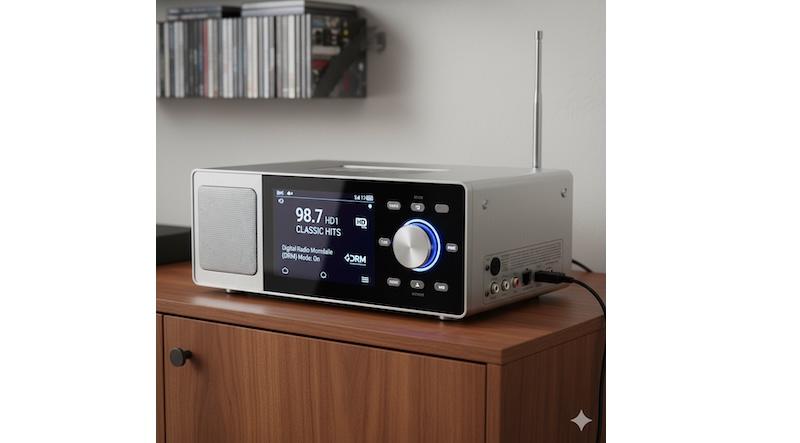
    Digital radio allows multiple channels on single frequencies through simulcast transmission—one analogue channel plus three digital channels and one data channel per frequency. But the technology requires new receivers. Mobile handset manufacturers have shown little interest in integration, despite government advisories. Vehicle infotainment systems may take 15 years to reach full penetration given replacement cycles.

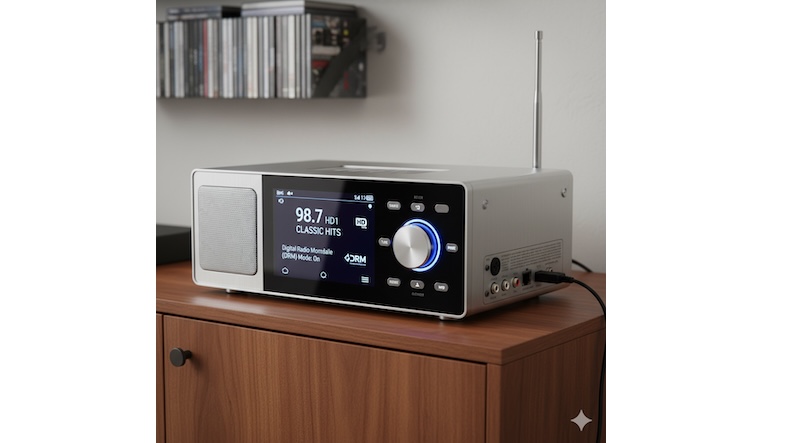
    The regulator stops short of mandating a specific technology, recommending government choose between HD Radio and Digital Radio Mondiale (DRM) after consulting industry. “Selection of technology among the two technologies suitable in VHF Band-II for deployment in India…may be done in consultation with the industry, including radio broadcasters and radio receiver manufacturers,” TRAI states.

    Both technologies are recognised by the International Telecommunication Union. HD Radio, used in North America, requires 400 kHz bandwidth. DRM needs just 300 kHz and is open-source, avoiding royalty fees. The authority warns against allowing multiple standards, citing interoperability nightmares and market fragmentation.

    Existing FM broadcasters could voluntarily migrate to simulcast by paying the difference between auction prices and their proportionate remaining licence fees. A six-month window would follow auctions for migration decisions.

    The recommendations tackle infrastructure bottlenecks head-on. Common transmission infrastructure in existing cities cannot accommodate new digital channels. TRAI proposes either broadcaster consortiums or assignment to Broadcast Engineering Consultants India Ltd  should create new facilities within three months. Mandatory co-location with government infrastructure would be scrapped.

    Prasar Bharati, the public broadcaster, should offer land, tower and transmission infrastructure at concessional rates whilst recovering operational expenses, TRAI adds.

    Annual authorisation fees would be set at four per cent of adjusted gross revenue for most cities, dropping to two per cent for three years in northeastern states, Jammu and Kashmir and island territories. The regulator proposes a new category of radio broadcasting infrastructure providers authorised to build and lease facilities commercially.

    Controversially, TRAI recommends allowing terrestrial radio streaming without user controls like download or playback. This extends reach globally whilst the authority dismisses potential copyright concerns as beyond its remit, noting broadcasters “shall be subject to Copyright Act, 1957.”

    The measured rollout—just two frequencies per city initially—contrasts sharply with July 2025’s disastrous auction, where only 63 of 730 channels found buyers across 234 cities. That debacle underscores sector weakness and justifies cautious expansion.

    Whether broadcasters bite remains uncertain. The staggered payment plan reduces upfront barriers, but fundamental economics remain challenging. Streaming platforms offer unlimited choice and user control. Digital radio offers better audio quality and emergency alert capabilities, but competes for ears in an increasingly crowded audio landscape.

    TRAI’s recommendations now await government action. Implementation timelines are unclear, but the regulator urges swift technology selection before financial bidding begins. The decade-long journey to digital radio viability starts with that choice.

  • Ross Video acquires ioversal to offer clients  immersive experience solutions

    Ross Video acquires ioversal to offer clients immersive experience solutions

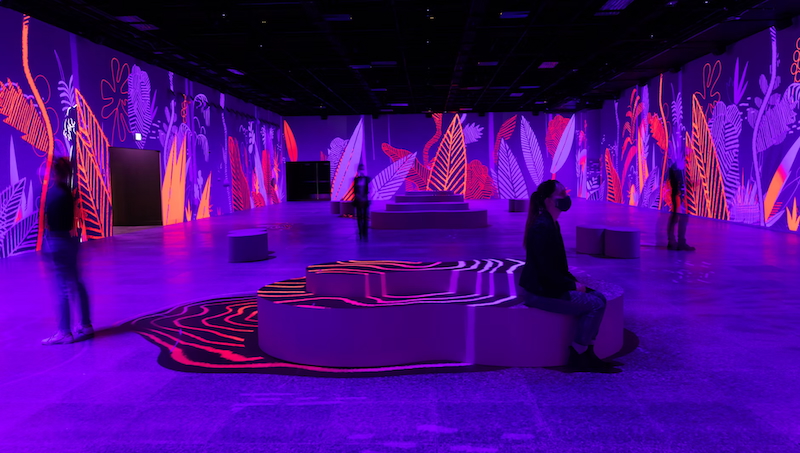
    OTTAWA: Ross Video is buying ioversal, the German creator of Vertex, a platform for immersive audiovisual experiences that has powered interactive exhibits and large-scale productions worldwide. The deal, announced on Thursday, marks the Canadian firm’s first serious push into experiential technology, extending its reach beyond traditional broadcast and live sports production.

    Vertex unifies video, audio, lighting and control systems into a single suite, allowing production teams to orchestrate complex installations—from projection mapping spectacles to interactive museum displays—without wrestling with multiple incompatible systems. The platform has earned its stripes through high-profile deployments, though Ross declined to disclose financial terms or specify which installations.

    “Vertex gives our customers a powerful new way to tell their stories,” said David Ross, chief executive of Ross Video, the family-owned firm his father founded in 1974. “It extends our live production solutions into the experiential world, opening creative possibilities that inspire audiences everywhere.”

    The acquisition fits Ross’s strategy of building an end-to-end production ecosystem that spans broadcast studios, sports venues, corporate events and cultural institutions. For customers already using Ross’s switchers, graphics systems and production control gear, Vertex offers a natural extension into permanent installations and experiential work—areas where margins can be fatter than in the commoditised broadcast kit business.

    Jan Hüwel and Martin Kuhn, ioversal’s co-founders, will join Ross along with their team, bringing decades of expertise in media servers and interactive control systems. “Joining Ross Video is a natural next step in our journey,” said Hüwel. “Ross shares our passion for empowering customers and our belief that innovation should always serve creativity.”

    Kuhn added that the tie-up would help Vertex reach a broader audience. “From the beginning, our mission has been to simplify complex audiovisual productions so creators can focus on storytelling,” he said. “Together, we’ll unlock incredible new possibilities for experiential media.”

    Ross Video, headquartered in Ottawa, has been on an acquisition spree in recent years as it seeks to fend off competition from software-defined production tools and cloud-based workflows. The privately held company does not disclose revenues but is estimated to generate several hundred million dollars annually from sales of production switchers, graphics systems and robotics to broadcasters and live-event producers.

    The firm plans to showcase Vertex through demonstrations and events in coming months, highlighting how the platform integrates with Ross’s existing production kit. Whether customers—many of whom are wrestling with tighter budgets—will embrace yet another platform remains to be seen. But Ross is betting that simplifying the chaos of experiential productions will prove irresistible to creative teams tired of duct-taping incompatible systems together.

  • Subscription economy will balloon to $1.2 trillion by 2030 as consumers drown in services

    Subscription economy will balloon to $1.2 trillion by 2030 as consumers drown in services

    HAMPSHIRE: The subscription economy is heading for $1.2 trillion by 2030, up 67 per cent from $722 billion this year, according to Juniper Research. But consumers are growing weary of endless monthly bills, and providers face a reckoning: deliver distinctive value or watch customers bail.

    Digital video services will dominate, accounting for over a third of global subscription spending by 2030. But the fastest-growing category is mobility-as-a-service, where users subscribe to access multimodal transport. That market will explode by 540 per cent between 2025 and 2030.

    The growth masks a brewing crisis. Simply mixing adverts with subscription fees whilst raising prices is not a long-term solution, warns Juniper Research fintech research vice-president Nick Maynard. “As consumers grow increasingly weary of endless subscriptions, providers must deliver distinctive value to maintain growth. Simply relying on hybrid models risks alienating already fatigued customers.”

    The fix, according to Juniper, is bundling and flexible management. Combining subscriptions into bundles allows users to make informed decisions with a single view. Add flexible management options and users feel more empowered—which increases satisfaction and reduces churn.

    “Managing subscriptions can be a challenge for consumers, particularly as the number of subscriptions increases,” said Maynard. “We have seen many bank and fintech apps focus on subscription management as a key issue for users. Therefore, subscription providers must look at bundling and flexible management to ease the user experience, or they will lose control of subscription management to third parties.”

    The warning comes as banks and fintech firms increasingly position themselves as subscription gatekeepers, offering tools that let users track, manage and cancel services from a single dashboard. If subscription providers don’t simplify the experience themselves, they risk ceding control to intermediaries.

    Juniper’s study analysed over 71,500 datapoints across 61 countries over five years, making it the most comprehensive assessment of the subscription economy to date. The research includes a competitor leaderboard and examination of future market opportunities.

  • Gracenote says advertisers are botching connected TV with wrong targeting tactics

    Gracenote says advertisers are botching connected TV with wrong targeting tactics

    NEW YORK: Connected television was supposed to be the performance marketer’s dream: precision targeting on the biggest screen in the house. A decade in, it’s not delivering. American advertisers will spend $26.6 billion on CTV this year, up 12 per cent from 2024, according to the IAB. Yet 27 per cent cite lack of insight into whether ads reach their intended audience as their top challenge. Nearly a third rate CTV only “moderately effective” despite pouring money in.

    The problem is a mismatch between strategy and medium. Marketers are treating CTV like social media—chasing users with demographic and behavioural targeting—when they should be focusing on what people watch, not just who’s watching. A Gracenote survey of 600 American brand and agency executives found 30 per cent rank brand awareness as their top CTV objective, with customer retention a distant fourth. Yet 80 per cent still prioritise audience-based targeting over contextual approaches.

    “CTV has not delivered the scale and premium reach that marketers expect of the largest screen in the house largely based on the use of narrow targeting tactics,” said Gracenote VP of partnerships Jake Richardson. “By taking better advantage of contextual targeting capabilities with their CTV campaigns, they have new opportunities to drive both return on ads spend and the scale they’ve been looking for.”

    The irony is sharp. CTV now accounts for 48 per cent of American viewing time, overtaking live television’s 46 per cent in the first quarter of 2025. Ad-supported content makes up 45 per cent of streaming viewership. The audience is there, engaged and watching ads. But marketers haven’t adapted their playbook.

    Nearly 46 per cent of survey respondents have shifted at least 26 per cent of their budgets to CTV over the past three years. Among financial services, retail, technology and healthcare brands, that figure rises to 52 per cent. A quarter now allocate 40 per cent or more of total budgets to CTV. Yet confidence remains shaky. Only 28 per cent consider their CTV spending “extremely effective.”

    The culprit, according to Gracenote, is fragmentation and missing metadata. With 85 per cent of CTV buys purchased programmatically, incomplete or inconsistent content data leaves platforms blind. Nearly 70 per cent of respondents say lack of standardisation is at least a modest challenge when developing campaigns.

    Free ad-supported television (Fast) channels illustrate the problem. Gracenote tracked nearly 1,850 active Fast channels distributing more than 182,000 programmes as of July 2025. Pluto TV, Tubi and The Roku Channel accounted for 5.7 per cent of total American television usage in May 2025, up 36 per cent year-on-year. Yet the metadata is patchy. Before enrichment, 55 per cent of sports programmes on  Fast  channels lacked original air date information. A sample of 28 sports programmes shared by Rain the Growth Agency found only eight included proper content titles—three simply said “tv.”

    This matters because knowing whether a sports event is live, which teams are playing, or whether it’s a playoff game is crucial for advertisers. TV listing data can distinguish an MLB game between the Los Angeles Dodgers and San Francisco Giants from a Liga MX match between Santos Laguna and Pumas UNAM—both aired live on Fast channels on 12 July 2025.

    When asked if standardised content metadata would boost confidence in CTV planning, 62 per cent of respondents said yes. More than half said it would justify higher spending. When asked about TV schedule information, 72 per cent said it would help with planning and investing—rising to 78 per cent among financial services, retail, technology and healthcare advertisers.

    The solution, Gracenote argues, is contextual targeting at programme level. Only nine per cent of respondents currently prioritise this approach, compared with 29 per cent for demographic targeting. Yet contextual signals—knowing a programme has a TV-MA rating, includes adult language, has a gritty mood, or involves arms trafficking—provide the brand suitability insight that audience targeting can’t.

    The pitfalls of over-focusing on existing customers are well documented. Nike’s 2020 direct-to-consumer pivot, which neglected broader brand building, became a cautionary tale last year. Despite CTV’s addressable nature, excluding anyone outside the funnel inhibits future growth. Marketers want CTV for brand building, but to capitalise they’ll need to embrace a simple truth: what people watch matters as much as who’s watching.

    The survey was conducted online between 10 and 20 July 2025, polling brand and agency associates with director-level titles or above across media, entertainment, telecommunications, retail, financial services, automotive, consumer goods and healthcare.

  • Real Bazar pitches AI matchmaking for the creator economy

    Real Bazar pitches AI matchmaking for the creator economy

    MUMBAI:The influencer marketing game is worth $24bn, yet brands still struggle to find creators who actually suit them—and creators still struggle to get paid properly. Real Bazar, a Mumbai startup launched on October 1st, reckons it has the answer: artificial intelligence that plays cupid between companies and content-makers.

    Co-founded by Abhishek Mittal and Viraj Dave, the platform uses AI to match brands with creators whose audiences and styles align with their needs, then handles everything from brainstorming reels to tracking performance and processing payments. The pitch is simple: stop wasting time on mismatched collaborations and botched content.

    “The creator economy is at a critical inflection point,” says co-founder Mittal. Brands face mounting pressure to produce short-form video content that resonates, he argues, whilst creators struggle to monetise their work effectively. Real Bazar’s gambit is to transform what he calls “transactional collaborations” into sustained partnerships.

    The platform offers three core functions. Its AI-integrated reel studio helps companies draft and optimise video content at speed. Its matchmaking engine analyses brand objectives against creator profiles, pairing them by niche, engagement and audience fit. And its collaboration hub manages negotiations, payments and performance tracking in one place.

    Whether Real Bazar can solve influencer marketing’s thorniest problems—authenticity, transparency and return on investment—remains an open question. But in a market where brands are desperate for content that converts and creators are hungry for fair pay, the startup is betting that algorithmic efficiency beats human intuition.

    The platform launched with little fanfare beyond its press release. Time will tell whether its AI can truly decode the alchemy of viral content—or whether it simply adds another layer of technology to an already crowded market.